ILLUSTRATIONS.
Reading edition
PLATES
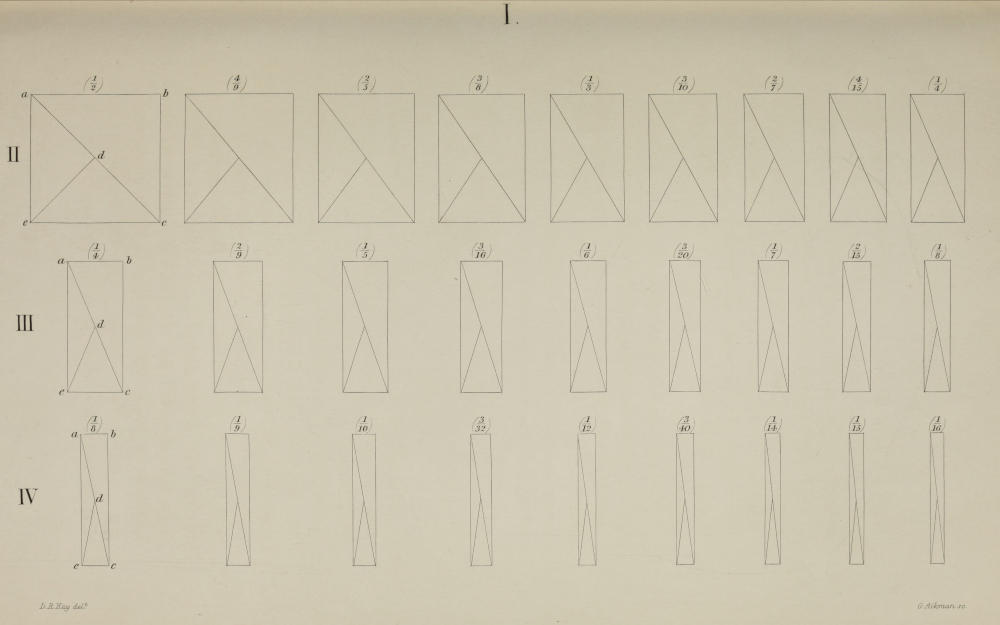
I. Three Scales of the Elementary Rectilinear Figures, viz., the Scalene Triangle, the Isosceles Triangle, and the Rectangle, comprising twenty-seven varieties of each, according to the harmonic parts of the Right Angle from ¹⁄₂ to ¹⁄₁₆.
D. R. Hay delᵗ. G. Aikman sc.
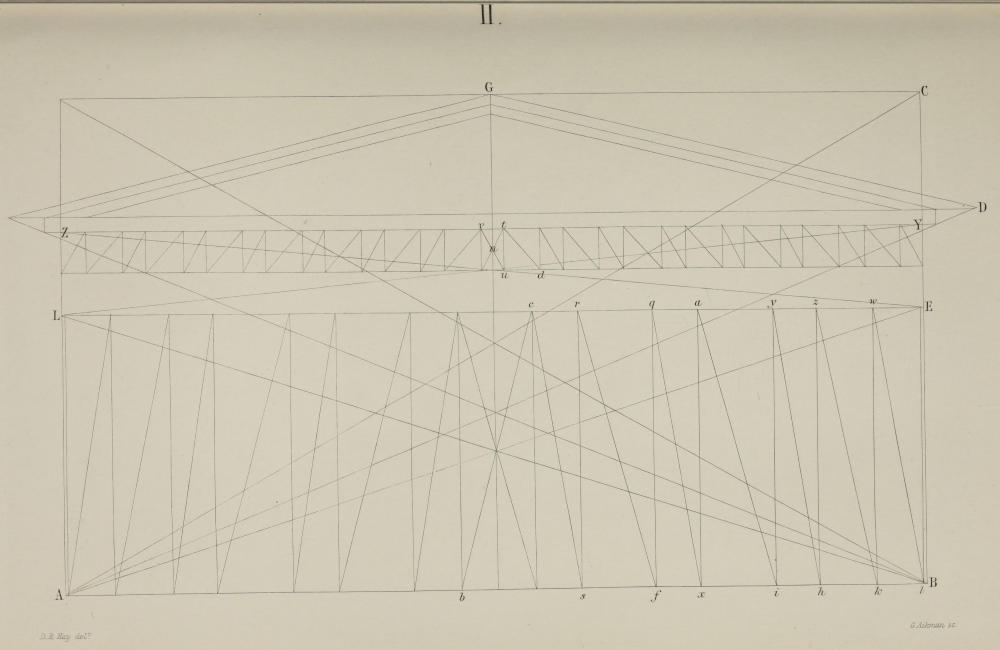
II. Diagram of the Rectilinear Orthography of the Principal Front of the Parthenon of Athens, in which its Proportions are determined by harmonic parts of the Right Angle.
D. R. Hay delᵗ. G. Aikman sc.
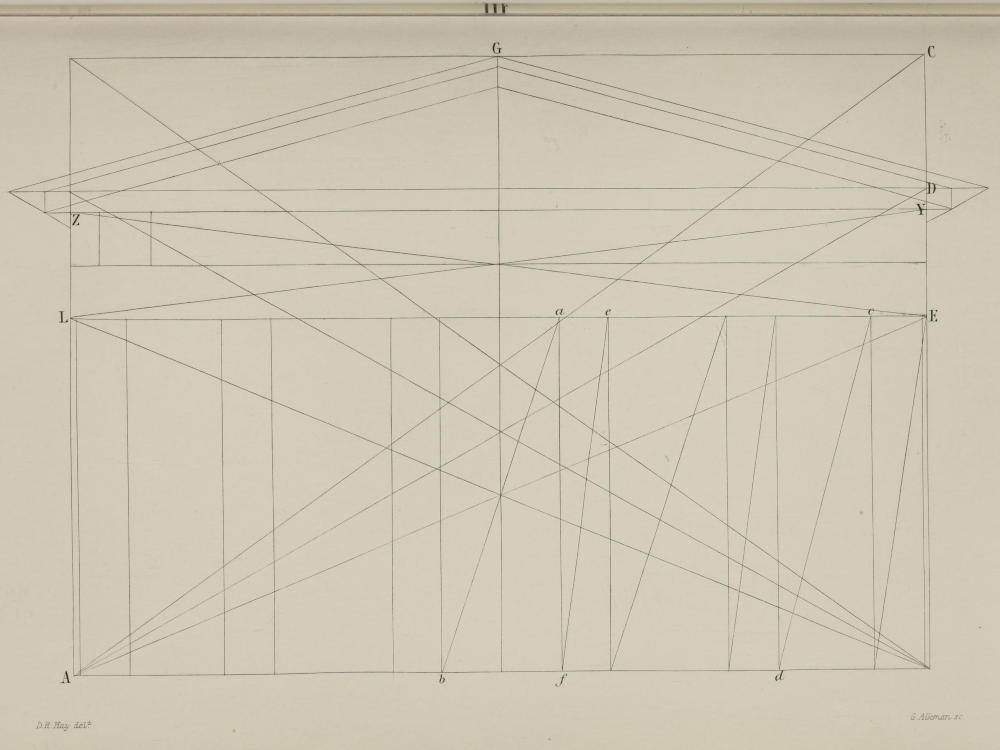
III. Diagram of the Rectilinear Orthography of the Portico of the Temple of Theseus at Athens, in which its Proportions are determined by harmonic parts of the Right Angle.
D. R. Hay delᵗ. G. Aikman sc.
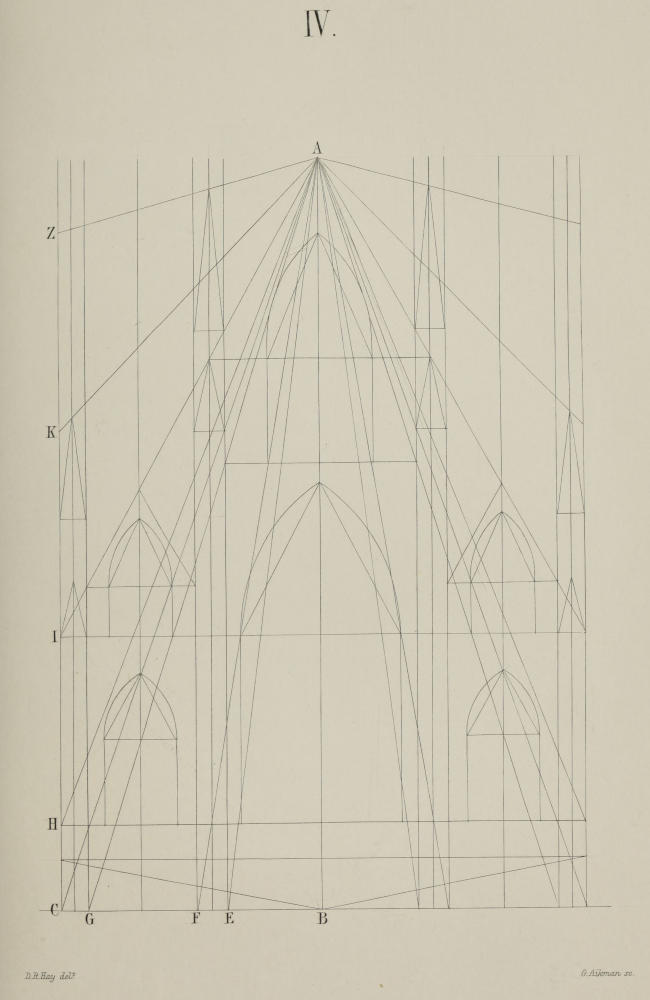
IV. Diagram of the Rectilinear Orthography of the East End of Lincoln Cathedral, in which its Proportions are determined by harmonic parts of the Right Angle.
D. R. Hay delᵗ. G. Aikman sc.
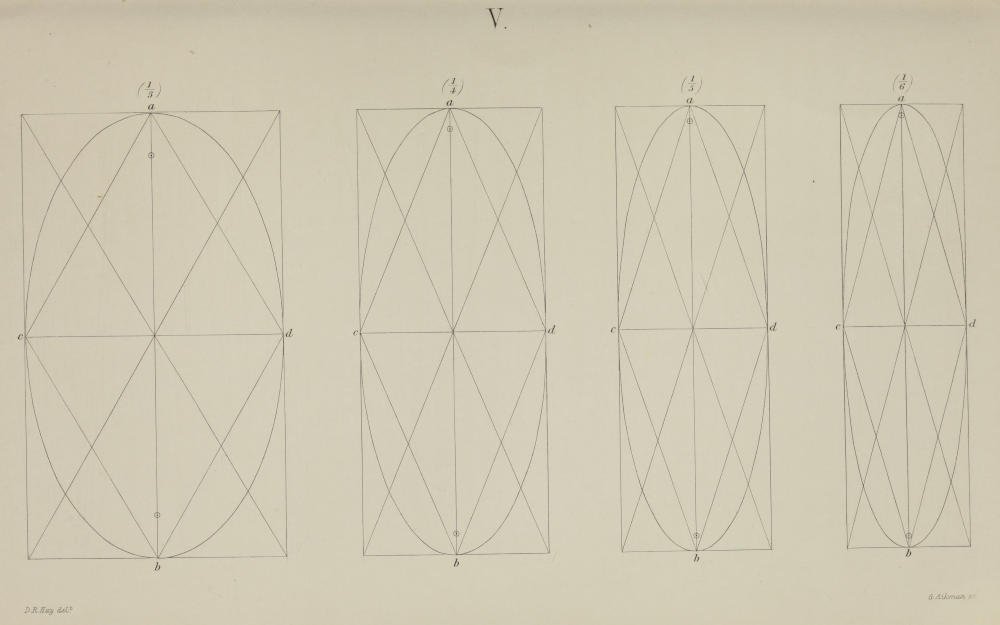
V. Four Ellipses described from Foci, determined by harmonic parts of the Right Angle, shewing in each the Scalene Triangle, the Isosceles Triangle, and the Rectangle to which it belongs.
D. R. Hay delᵗ. G. Aikman sc.
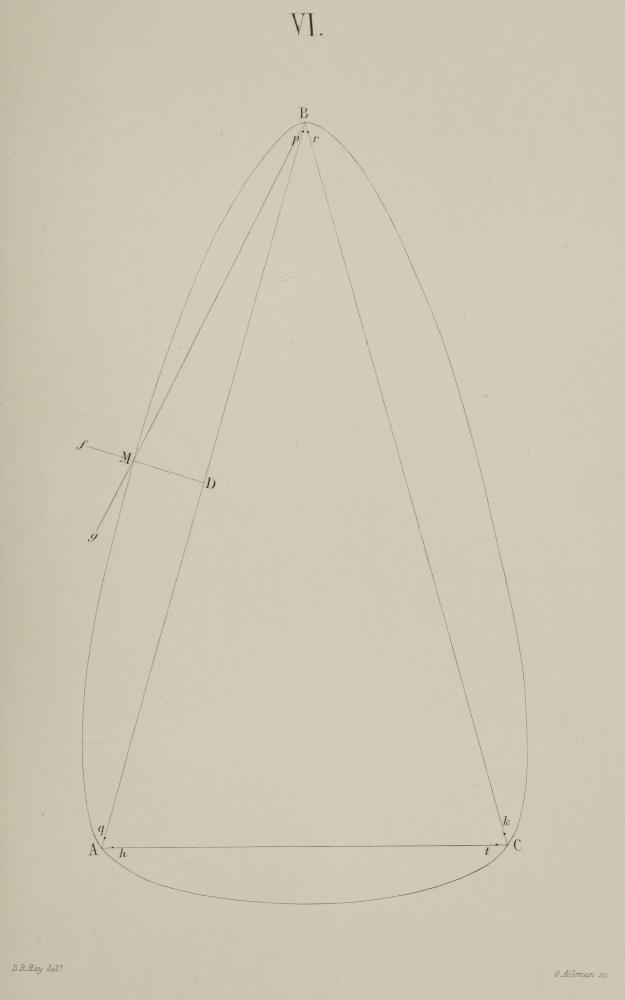
VI. The Composite Ellipse of ¹⁄₆ and ¹⁄₈ of the Right Angle, shewing its greater and lesser Axis, its various Foci, and the Isosceles Triangle in which they are placed.
D. R. Hay delᵗ. G. Aikman sc.
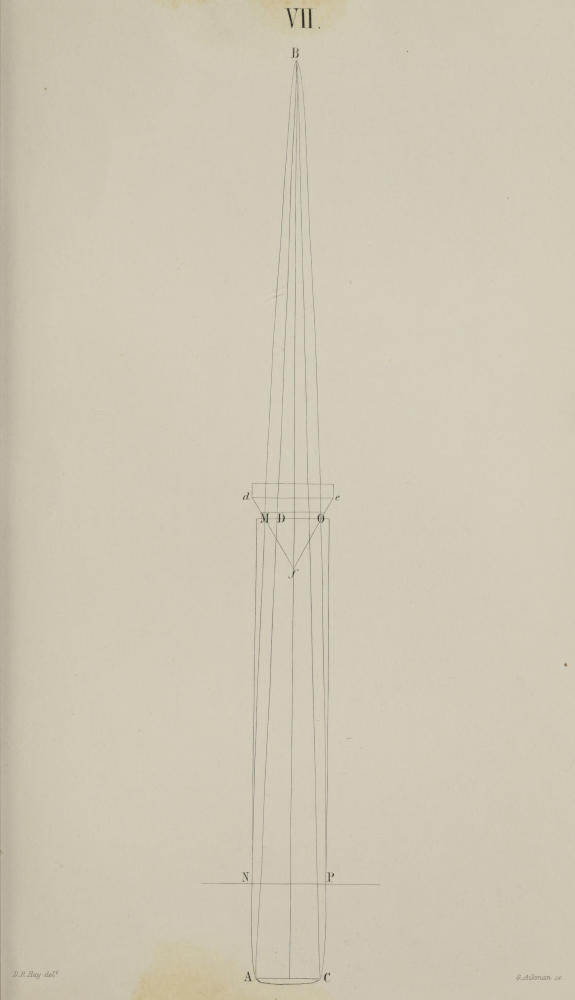
VII. The Composite Ellipse of ¹⁄₄₈ and ¹⁄₆₄ of the Right Angle, shewing how it forms the Entasis of the Columns of the Parthenon of Athens.
D. R. Hay delᵗ. G. Aikman sc.
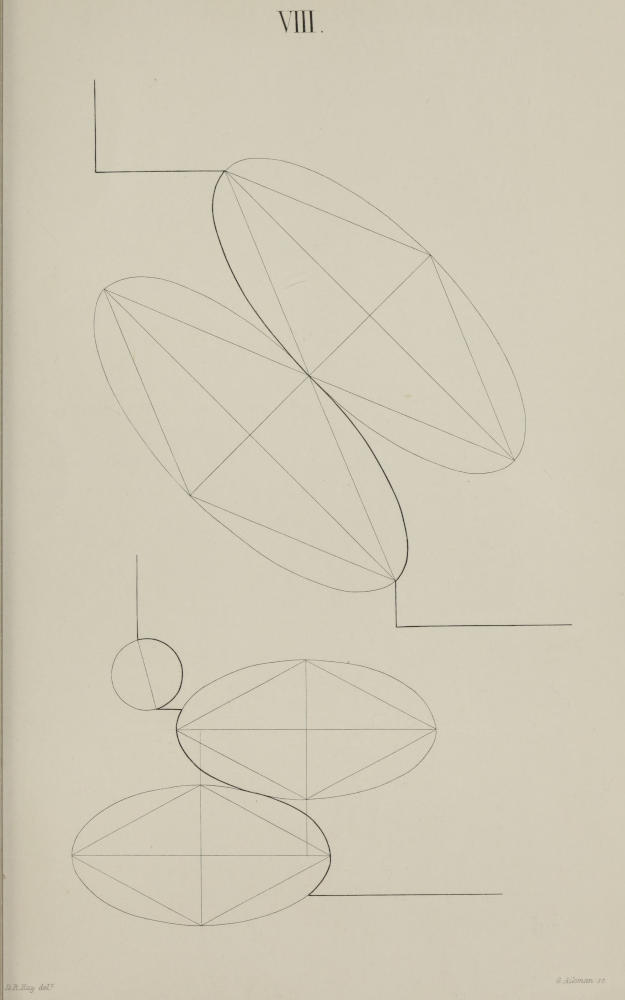
VIII. Sectional Outlines of two Mouldings of the Parthenon of Athens, full size, shewing the harmonic nature of their Curves, and the simple manner of their Construction.
D. R. Hay delᵗ. G. Aikman sc.
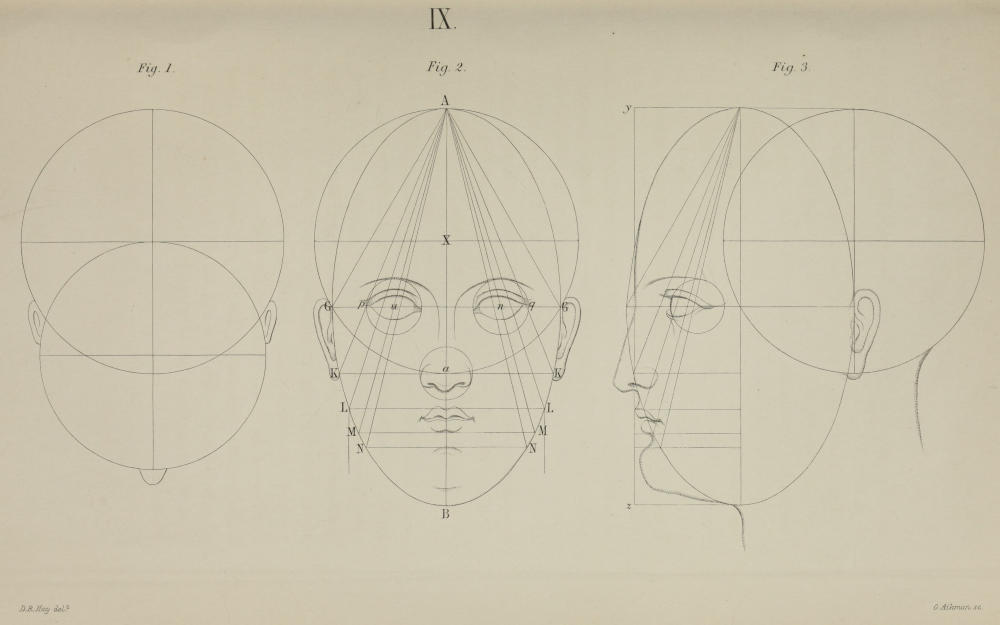
IX. Three Diagrams, giving a Vertical, a Front, and a Side Aspect of the Geometrical Construction of the Human Head and Countenance, in which the Proportions are determined by harmonic parts of the Right Angle.
D. R. Hay delᵗ. G. Aikman sc.
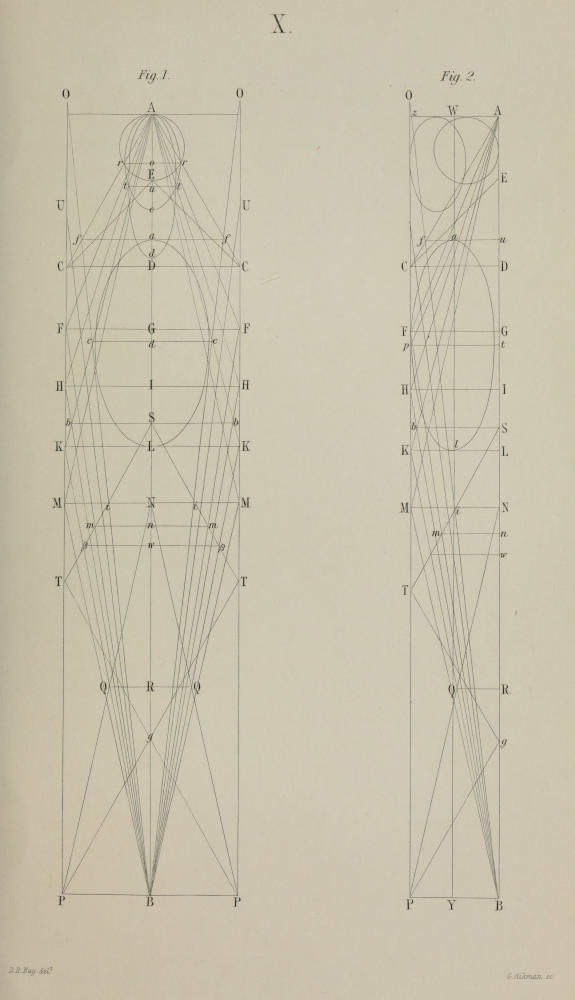
X. Diagram in which the Symmetrical Proportions of the Human Figure are determined by harmonic parts of the Right Angle.
D. R. Hay delᵗ. G. Aikman sc.
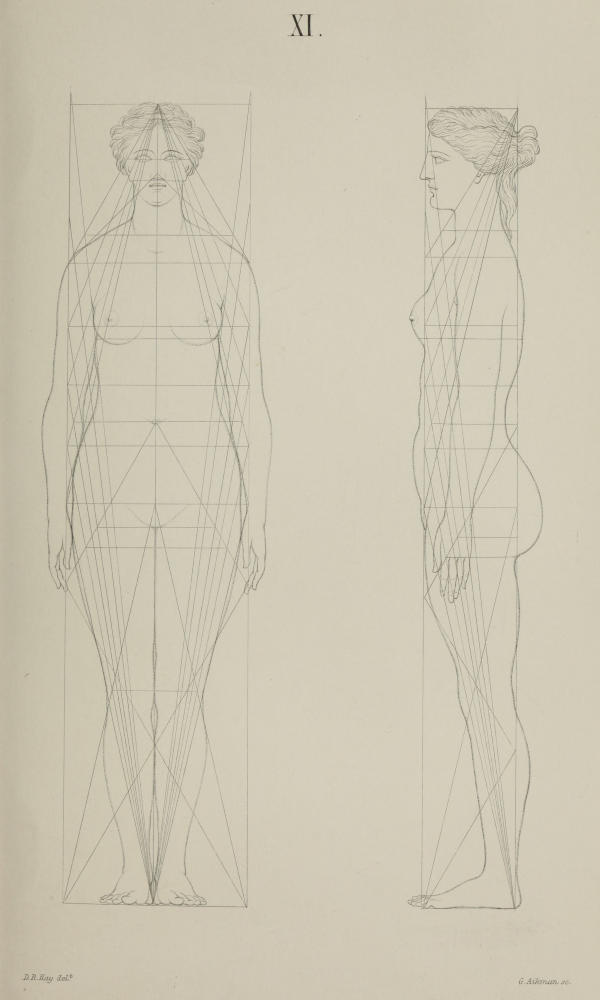
XI. The Contour of the Human Figure as viewed in Front and in Profile, its Curves being determined by Ellipses, whose Foci are determined by harmonic parts of the Right Angle.
D. R. Hay delᵗ. G. Aikman sc.
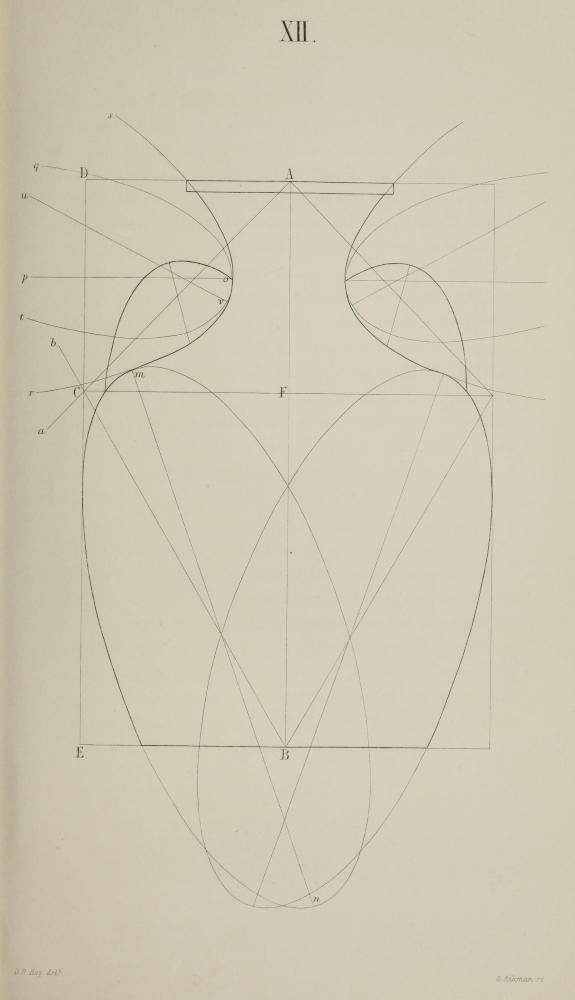
XII. Rectilinear Diagram, shewing the Proportions of the Portland Vase, as determined by harmonic parts of the Right Angle, and the outline of its form by an Elliptic Curve harmonically described.
D. R. Hay delᵗ. G. Aikman sc.
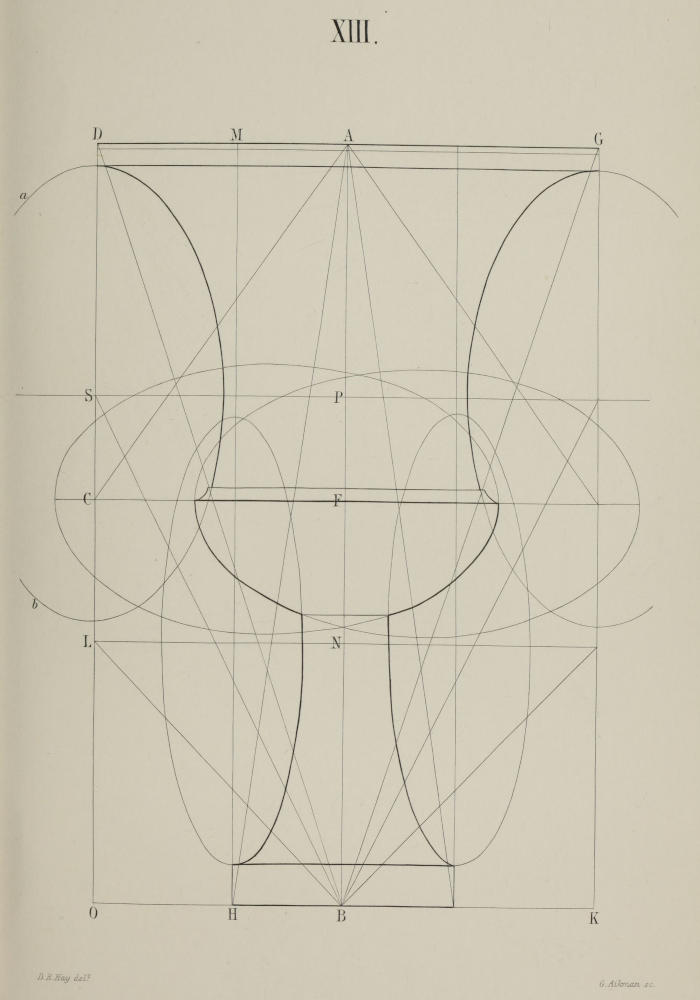
XIII. Rectilinear Diagram of the Proportions and Curvilinear Outline of the form of an ancient Grecian Vase, the proportions determined by harmonic parts of the Right Angle, and the melody of the form by Curves of two Ellipses.
D. R. Hay delᵗ. G. Aikman sc.
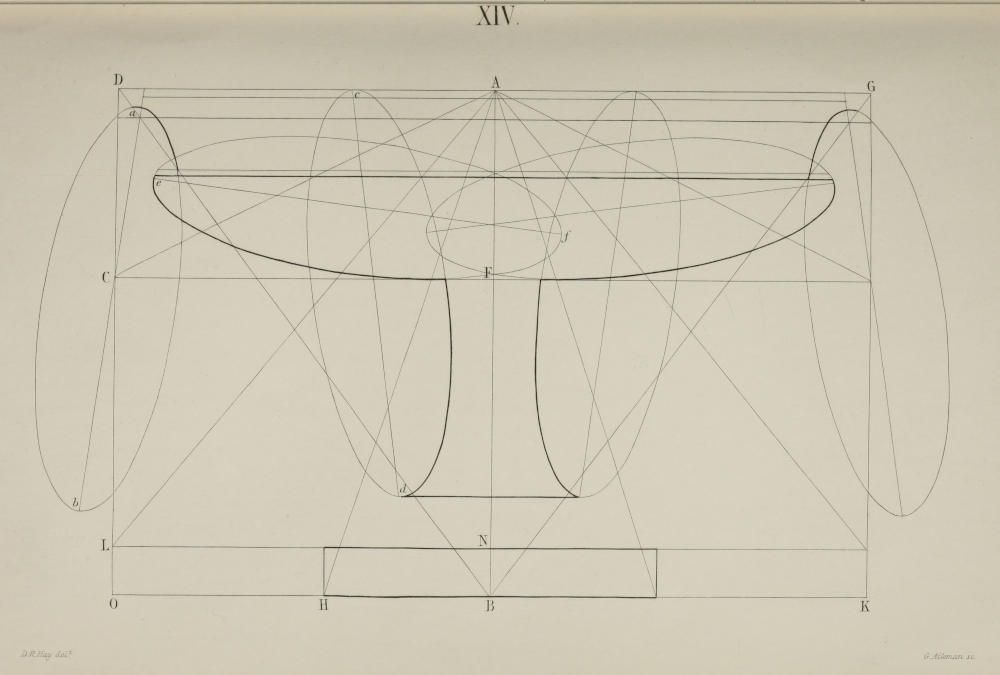
XIV. Rectilinear Diagram of the Proportions and Curvilinear Outline of the form an ancient Grecian Vase, the proportions determined by harmonic parts of the Right Angle, and the melody of the form by an Elliptic Curve.
D. R. Hay delᵗ. G. Aikman sc.
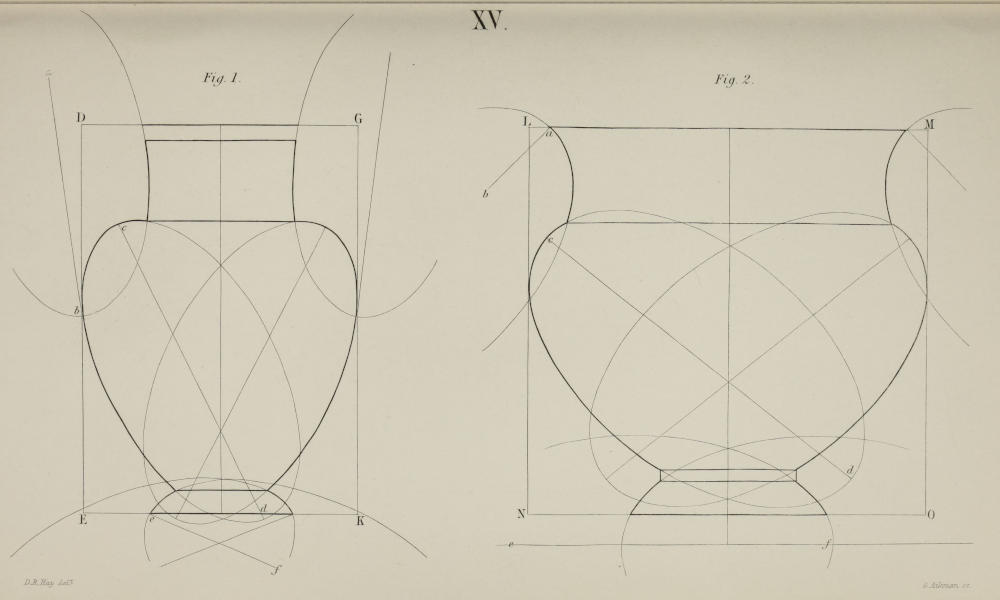
XV. Two Diagrams of Etruscan Vases, the harmony of Proportions and melody of the Contour determined, respectively, by parts of the Right Angle and an Elliptic Curve.
D. R. Hay delᵗ. G. Aikman sc.
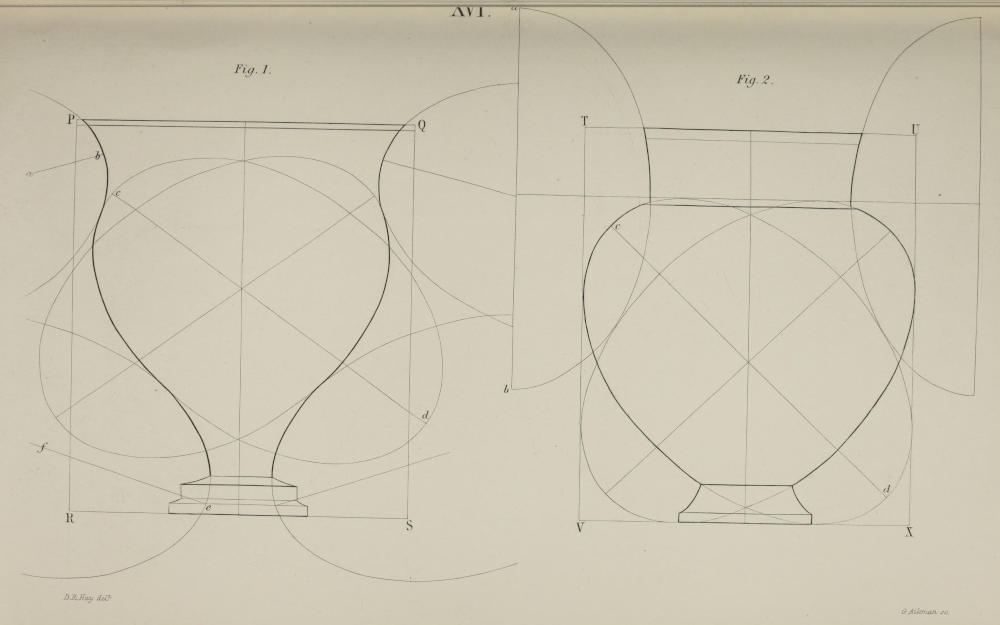
XVI. Two Diagrams of Etruscan Vases, whose harmony of Proportion and melody of Contour are determined as above.
D. R. Hay delᵗ. G. Aikman sc.
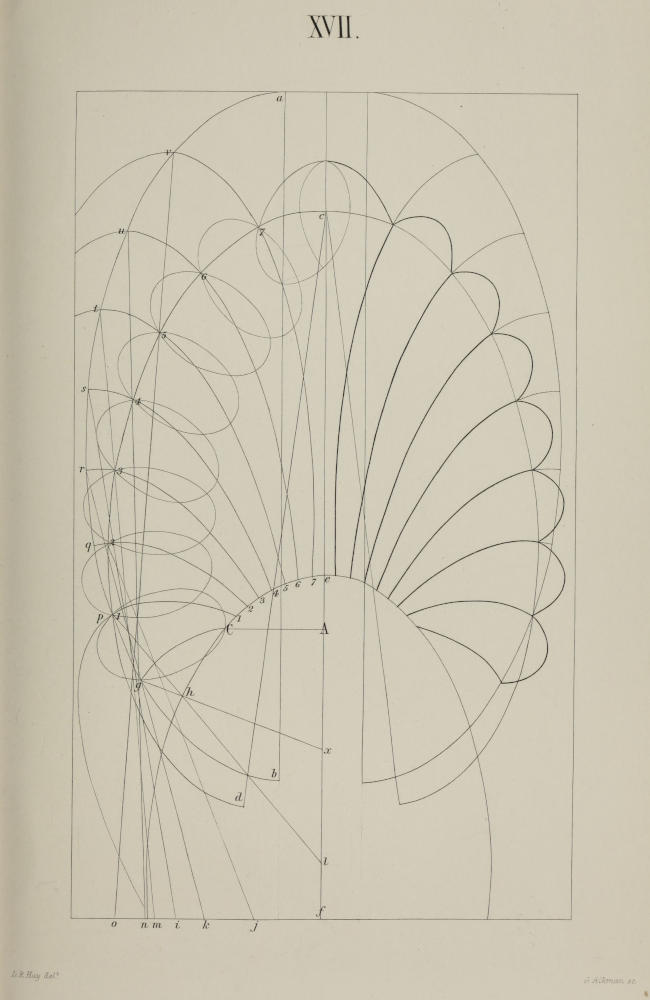
XVII. Diagram shewing the Geometric Construction of an Ornament belonging to the Parthenon at Athens.
D. R. Hay delᵗ. G. Aikman sc.
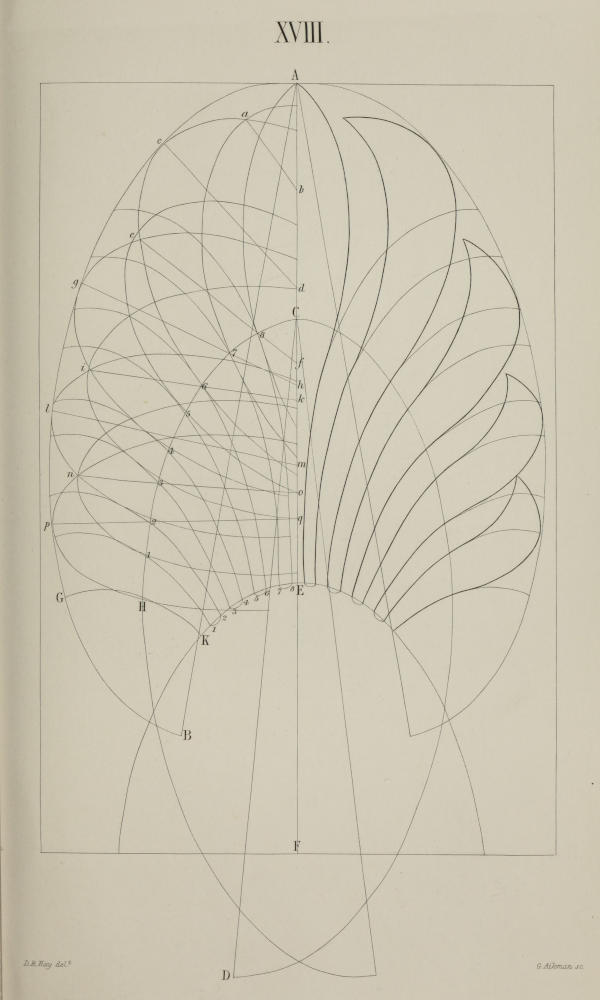
XVIII. Diagram of the Geometrical Construction of the ancient Grecian Ornament called the Honeysuckle.
D. R. Hay delᵗ. G. Aikman sc.
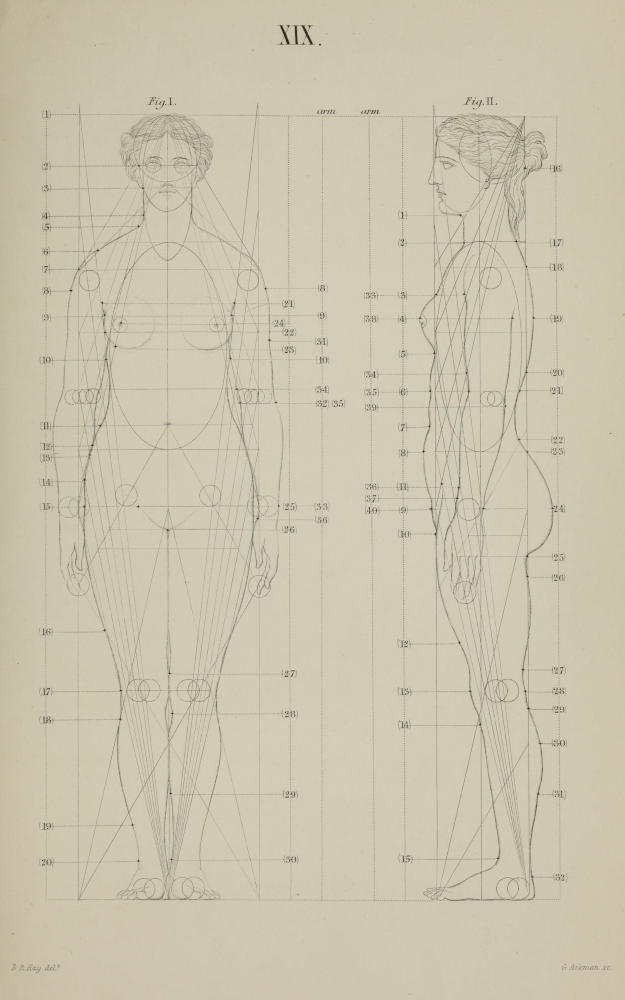
XIX. An additional Illustration of the Contour of the Human Figure, as viewed in Front and in Profile.
D. R. Hay delᵗ. G. Aikman sc.
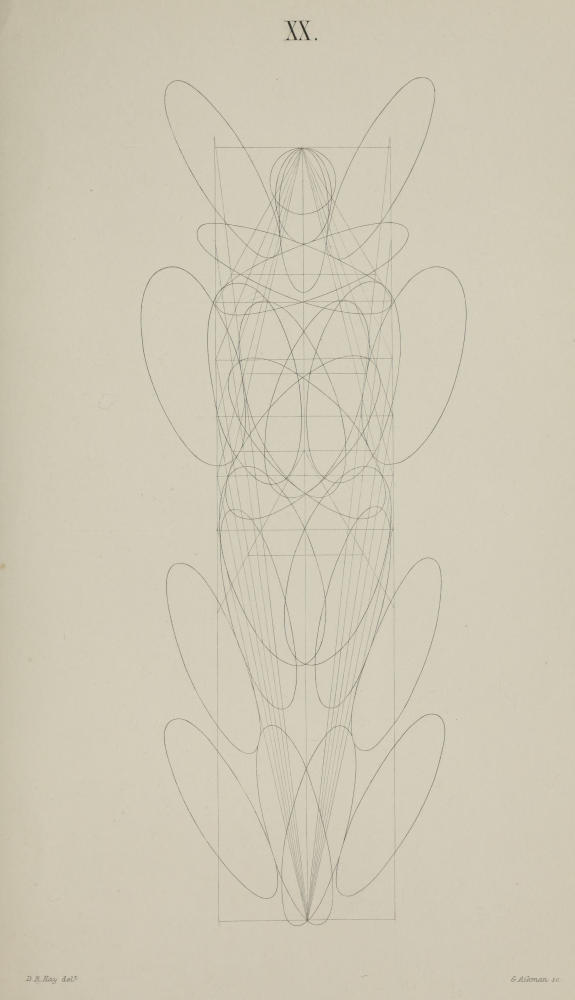
XX. Diagram shewing the manner in which the Elliptic Curves are arranged in order to produce an Outline of the Form of the Human Figure as viewed in Front.
D. R. Hay delᵗ. G. Aikman sc.
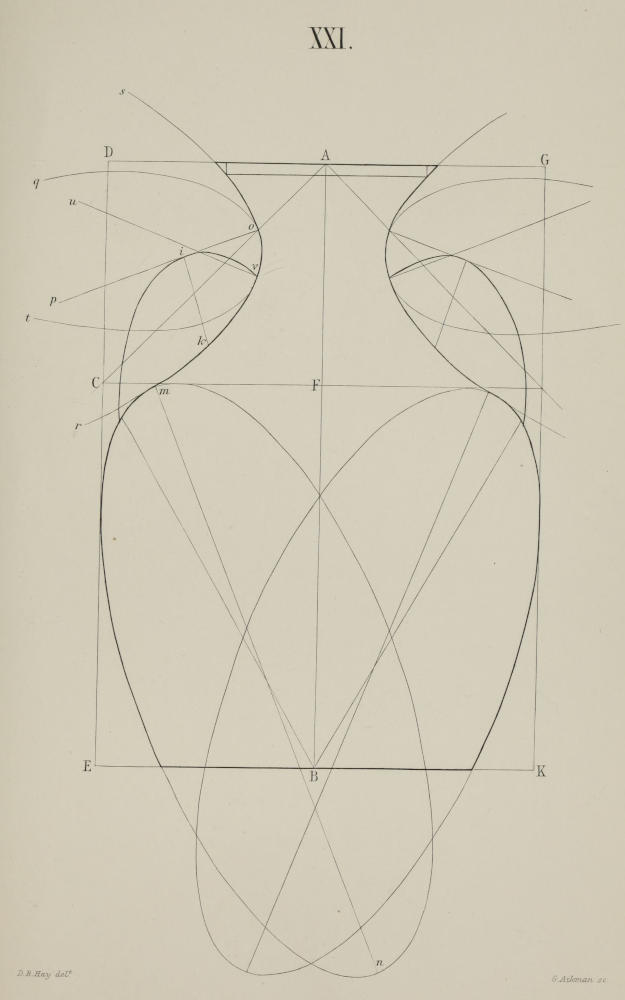
XXI. Diagram of a variation on the Form of the Portland Vase.
D. R. Hay delᵗ. G. Aikman sc.
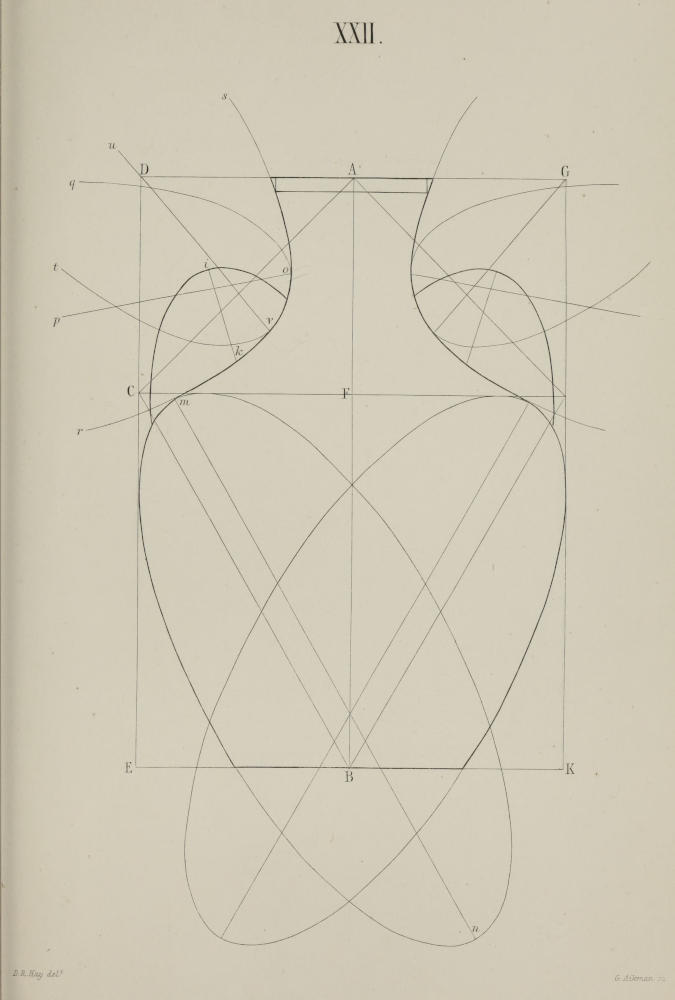
XXII. Diagram of a second variation on the Form of the Portland Vase.
D. R. Hay delᵗ. G. Aikman sc.
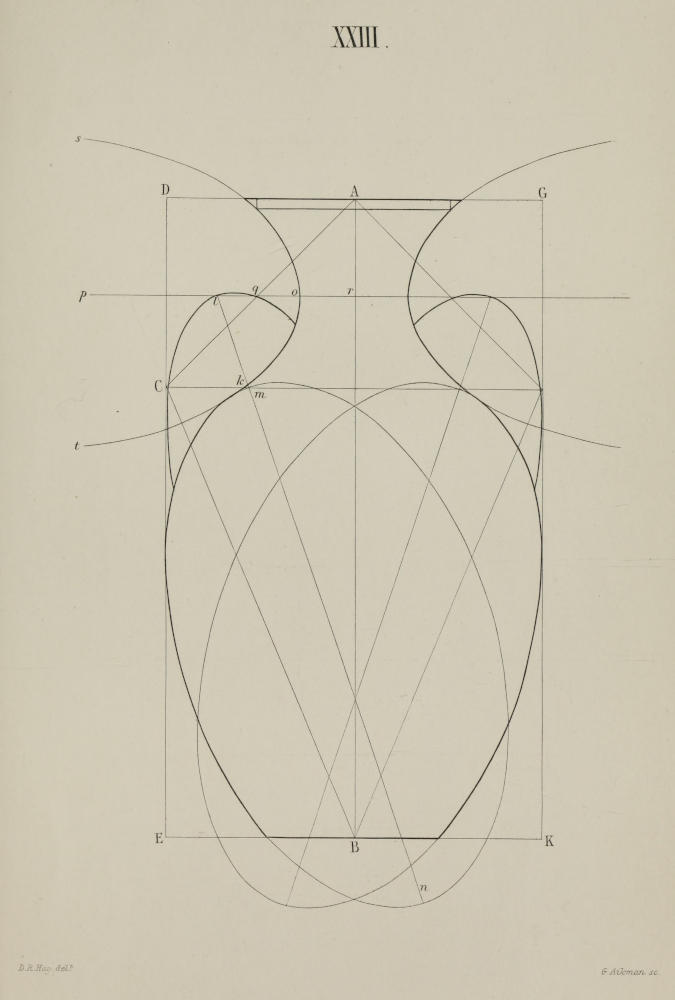
XXIII. Diagram of a third variation on the Form of the Portland Vase.
D. R. Hay delᵗ. G. Aikman sc.