Chapter IV
Reading edition
THE STRUGGLE RENEWED AGAINST THE CROWN
Parliament under the Tudors
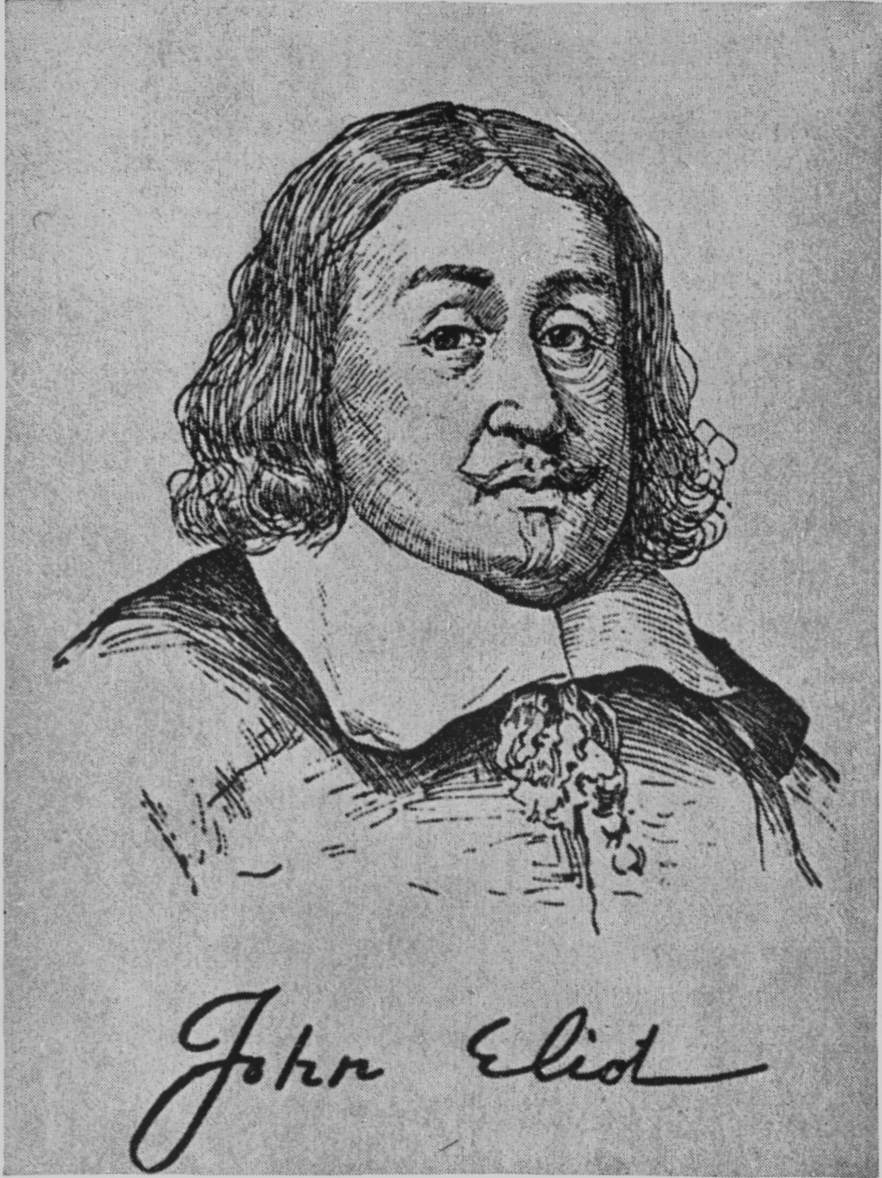
SIR JOHN ELIOT
Elizabeth scolded her Parliaments, and more than once called the Speaker of the House of Commons to account. The business of Tudor Parliaments was to decree the proposals of the Crown. "Liberty of speech was granted in respect of the aye or no, but not that everybody should speak what he listed." Bacon declared, "the Queen hath both enlarging and restraining power; she may set at liberty things restrained by statute and may restrain things which be at liberty."
Yet Elizabeth raised no objection to the theory that Parliament was the sovereign power, for her authority controlled Parliament; and so we have Sir Thomas Smith writing in 1589 that "the most high and absolute power of the realm of England consisteth in the Parliament."
In his "Ecclesiastical Polity," Book I. (1592-3), Hooker argues that "Laws human, of what kind soever are available by consent," and that "laws they are not which public approbation hath not made so"; deciding explicitly that sovereignty rests ultimately in the people.
Victory of Parliament over the Stuarts
"By many steps the slavish Parliament of Henry VIII. grew into the murmuring Parliament of Queen Elizabeth, the mutinous Parliament of James I., and the rebellious Parliament of Charles I."
As in earlier centuries the struggle in the seventeenth century between the King and the Commons turned mainly on the questions of taxation. (At the same time an additional cause of dispute can be found in the religious differences between Charles I. and the Parliamentarians. The latter were mainly Puritan, accepting the Protestantism of the Church of England, but hating Catholicism and the high-church views of Laud. The King was in full sympathy with high Anglicanism, and, like his father, willing to relax the penal laws against Catholics.)
"By the ancient laws and liberties of England it is the known birthright and inheritance of the subject that no tax, tallage, or other charge shall be levied or imposed but by common consent in England, and that the subsidies of tonnage and poundage are no way due or payable but by a free gift and special Act of Parliament."
In these memorable words began the declaration moved by Sir John Eliot in the House of Commons on March 2nd, 1629. A royal message ordering the adjournment of the House was disregarded, the Speaker was held down in his chair, and the key of the House of Commons was turned against intrusion, while Eliot's resolutions, declaring that the privileges of the Commons must be preserved, were carried with enthusiasm.
Charles answered these resolutions by dissolving Parliament and sending Eliot to the Tower.
For eleven years no Parliament was summoned. Eliot refused altogether to make any defence for his Parliamentary conduct. "I hold that it is against the privilege of Parliament to speak of anything which is done in the House," was his reply to the Crown lawyers. So Sir John Eliot was left in prison, for nothing would induce this devoted believer in representative government to yield to the royal pressure, and three years later, at the age of forty-two, he died in the Tower.
It was for the liberties of the House of Commons that Eliot gave his life. Wasted with sickness, health and freedom were his if he would but acknowledge the right of the Crown to restrain the freedom of Parliamentary debate; but such an acknowledgment was impossible from Sir John Eliot. For him the privilege of the House of Commons in the matter of free speech was a sacred cause, to be upheld by Members of Parliament, even to the death—a cause every whit as sacred to Eliot as the divine right of kings was to the Stuart bishops.
Charles hoped to govern England through his Ministers without interference from the Commons, and only the need of money compelled him to summon Parliament.
The personal rule of Charles and his Ministers, Laud and Strafford, came to an end in the autumn of 1640, when there was no choice left to the King but to summon Parliament, if money was to be obtained. Earlier in the year the "Short Parliament" had met, only to be dissolved by the folly of the King after a sitting of three weeks, because of its unwillingness to vote supplies without the redress of grievances.
Hampden was the great figure at the beginning of this Parliament. "The eyes of all men were fixed upon him, as their patriæ pater, and the pilot that must steer the vessel through the tempests and rocks which threatened it. I am persuaded (wrote Clarendon) his power and interest at that time were greater to do good or hurt than any man's in the kingdom, or than any man of his rank hath had at any time; for his reputation of honesty was universal, and his affections seemed so publicly guided, that no corrupt or private ends could bias them."
Politically, neither Hampden nor Pym was Republican. Both believed in government by King, Lords, and Commons; but both were determined that the King's Ministers should be answerable to Parliament for the policy of the Crown, and that the Commons, who found the money for government, should have a definite say in the spending of that money. As for the royal claim of "Divine right," and the royal view that held passive obedience to be the duty of the King's subjects, and saw in Parliament merely a useful instrument for the raising of funds to be spent by the royal pleasure without question or criticism—these things were intolerable to Hampden, Pym, and the men of the House of Commons. The King would not govern through Parliament; the House of Commons could govern without a King. It was left to the Civil War to decide the issue between the Crown and Parliament, and make the House of Commons supreme.
Things moved quickly in the first year of the Long Parliament. The Star Chamber and High Commission Courts were abolished. Strafford was impeached for high treason, and executed on Tower Hill. Archbishop Laud lay in prison, to be executed four years later. The Grand Remonstrance of the House of Commons was presented to Charles in December, 1641. The demands of the Commons in the Remonstrance were not revolutionary, but they stated, quite frankly, the case for the Parliament. The main points were the need for securities for the administration of justice, and an insistence on the responsibility of the King's Ministers to the Houses of Parliament. The Grand Remonstrance was only carried by eleven votes in the House of Commons, 159 to 148, after wild scenes. "Some waved their hats over their heads, and others took their swords in their scabbards out of their belts, and held them by the pummels in their hands, setting the lower part on the ground." Actual violence was only prevented "by the sagacity and great calmness of Mr. Hampden, by a short speech."
Charles promised an answer to the deputation of members who waited upon him with the Grand Remonstrance, and early in the new year came the reply. The King simply demanded the surrender of five members—Pym, Hampden, Holles, Strode, and Hazlerig—and their impeachment on the charge of high treason. All constitutional law was set aside by a charge which proceeded personally from the King, which deprived the accused of their legal right to a trial by their peers, and summoned them before a tribunal which had no pretence to a justification over them. On the refusal of the Commons to surrender their members, Charles came in person to Westminster with 300 cavaliers to demand their arrest. But the five members, warned of the King's venture, were well out of the way, and rested safely within the City of London—for the citizens were strongly for the Parliament. "It was believed that if the King had found them there (in the House of Commons), and called in his guards to have seized them, the members of the House would have endeavoured the defence of them, which might have proved a very unhappy and sad business."
As it was, Charles could only retire "in a more discontented and angry passion than he came in." The step was utterly ill-advised. Parliament was in no mood to favour royal encroachments, and the citizens of London were at hand, with their trained bands, to protect forcibly members of the House of Commons.
War was now imminent. "The attempt to seize the five members was undoubtedly the real cause of the war. From that moment, the loyal confidence with which most of the popular party were beginning to regard the King was turned into hatred and suspicion. From that moment, the Parliament was compelled to surround itself with defensive arms. From that moment, the city assumed the appearance of a garrison.
Both King and Parliament broke rudely through all constitutional precedents in their preparations for hostilities.
The King levied troops by a royal commission, without any advice from Parliament, and Pym got an ordinance passed, in both Houses, appointing the Lords-Lieutenant of the counties to command the Militia without warrant from the Crown.
A last attempt at negotiations was made at York, in April, when the proposals of Parliament—nineteen propositions for curtailing the power of the Monarchy in favour of the Commons—were rejected by Charles with the words: "If I granted your demands, I should be no more than the mere phantom of a king."
By August, Charles had raised the royal standard at Nottingham, and war was begun.
Five years later and Charles was a prisoner, to die in 1649 on the scaffold. That same year monarchy and the House of Lords were abolished by law; the Established Church had already fallen before the triumphant arms of the Puritans.
The Democratic Protest—Lilburne
That the common misery of the people was not in any way lightened by Cromwell's rule we have abundant evidence, and it cannot be supposed that the substitution of the Presbyterian discipline for episcopacy in the Church, and the displacement of Presbyterians by Independents, was likely to alleviate this misery.
Taxation was heavier than it had ever been before, and in Lancashire, Westmorland, and Cumberland the distress was appalling.
Cromwell, occupied with high affairs of State, had neither time nor inclination to attend to social reform. Democracy had its witnesses; Lilburne and the Levellers made their protest against military rule, and were overpowered; Winstanley and his Diggers endeavoured to persuade the country that the common land should be occupied by dispossessed peasants, and were quickly suppressed.
Lilburne was concerned with the establishment of a political democracy, Winstanley with a social democracy, and in both cases the propaganda was offensive to the Protector.
John Lilburne had been a brave soldier in the army of the Parliament in the early years of the Civil War, and he left the army in 1645 with the rank of Lieutenant-Colonel (and with £880 arrears of pay due to him) rather than take the covenant and subscribe to the requirements of the "new model."
The monarchy having fallen, Lilburne saw the possibilities of tyranny in the Parliamentary government, and at once spoke out. With considerable legal knowledge, a passion for liberty, clear views on democracy, an enormous capacity for work, and great skill as a pamphleteer, Lilburne was not to be ignored. The Government might have had him for a supporter; it unwisely decided to treat him as an enemy, and for ten years he was an unsparing critic, his popularity increasing with every fresh pamphlet he issued—and at every fresh imprisonment.
Lilburne urged a radical reform of Parliament and a general manhood suffrage in 1647, and the "Case for the Army," published by the Levellers in the same year, on the proposal of the Presbyterian majority in Parliament that the army should be disbanded, demanded the abolition of monopolies, freedom of trade and religion, restoration of enclosed common lands, and abolition of sinecures.
Both Cromwell and Ireton were strongly opposed to manhood suffrage, and Cromwell—to whom the immediate danger was a royalist reaction—had no patience for men who would embark on democratic experiments at such a season.
Lilburne and the Levellers were equally distrustful of Cromwell's new Council of State. "We were ruled before by King, Lords, and Commons, now by a General, Court-martial, and Commons; and, we pray you, what is the difference?" So they put the question in 1648.
To Cromwell the one safety for the Commonwealth was in the loyalty of the army to the Government. To Lilburne the one guarantee for good government was in the supremacy of a Parliament elected by manhood suffrage. He saw plainly that unless steps were taken to establish democratic institutions there was no future for the Commonwealth; and he took no part in the trial of Charles I., saying openly that he doubted the wisdom of abolishing monarchy before a new constitution had been drawn up.
Lilburne was again brought to trial, in 1653, and again acquitted, with undiminished enthusiasm. But "for the peace of the nation," Cromwell refused to allow the irrepressible agitator to be at large, and for two years Lilburne, "Free-born John," was kept in prison. During those years all power in the House of Commons was broken by the rule of the Army of the Commonwealth, and Parliament stood in abject submission before the Lord Protector. Only when his health was shattered, and he had embraced Quaker principles, was Lilburne released, and granted a pension of 40s. a week. The following year, at the age of 40, Lilburne died of consumption—brought on by the close confinement he had suffered. A year later, 1658, and Cromwell, by whose side Lilburne had fought at Marston Moor, and against whose rule he had contended for so many a year, was dead, and the Commonwealth Government was doomed.
Winstanley and "The Diggers"
The "Digger" movement was a shorter and much more obscure protest on behalf of the people than Lilburne's agitation for democracy; but it is notable for its social significance.
While Lilburne strove vigorously for political reforms that are still unaccomplished, Gerrard Winstanley preached a revolutionary gospel of social reform—as John Ball and Robert Ket had before him. But Winstanley's social doctrine allowed no room for violence, and included the non-resistance principles that found exposition in the Society of Friends. Hence the "Diggers," preaching agrarian revolution; but denying all right to force of arms, never endangered the Commonwealth Government as Lilburne and the Levellers did.
Free Communism was the creed of more than one Protestant sect in the sixteenth century, and the Anabaptists on the Continent had been conspicuous for their experiments in community of goods and anarchist society.
Winstanley confined his teaching and practice to common ownership of land, pleading for the cultivation of the enclosed common lands, "that all may feed upon the crops of the earth, and the burden of poverty be removed." There was to be no forcible expropriation of landlords.
"If the rich still hold fast to this propriety of Mine and Thine, let them labour their own lands with their own hands. And let the common people, that say the earth is ours, not mine, let them labour together, and eat bread together upon the commons, mountains, and hills.
"For as the enclosures are called such a man's land, and such a man's land, so the Commons and Heath are called the common people's. And let the world see who labour the earth in righteousness, and those to whom the Lord gives the blessing, let them be the people that shall inherit the earth.
With the common ownership and cultivation of land, an end was to be made of all tyranny of man over his fellows.
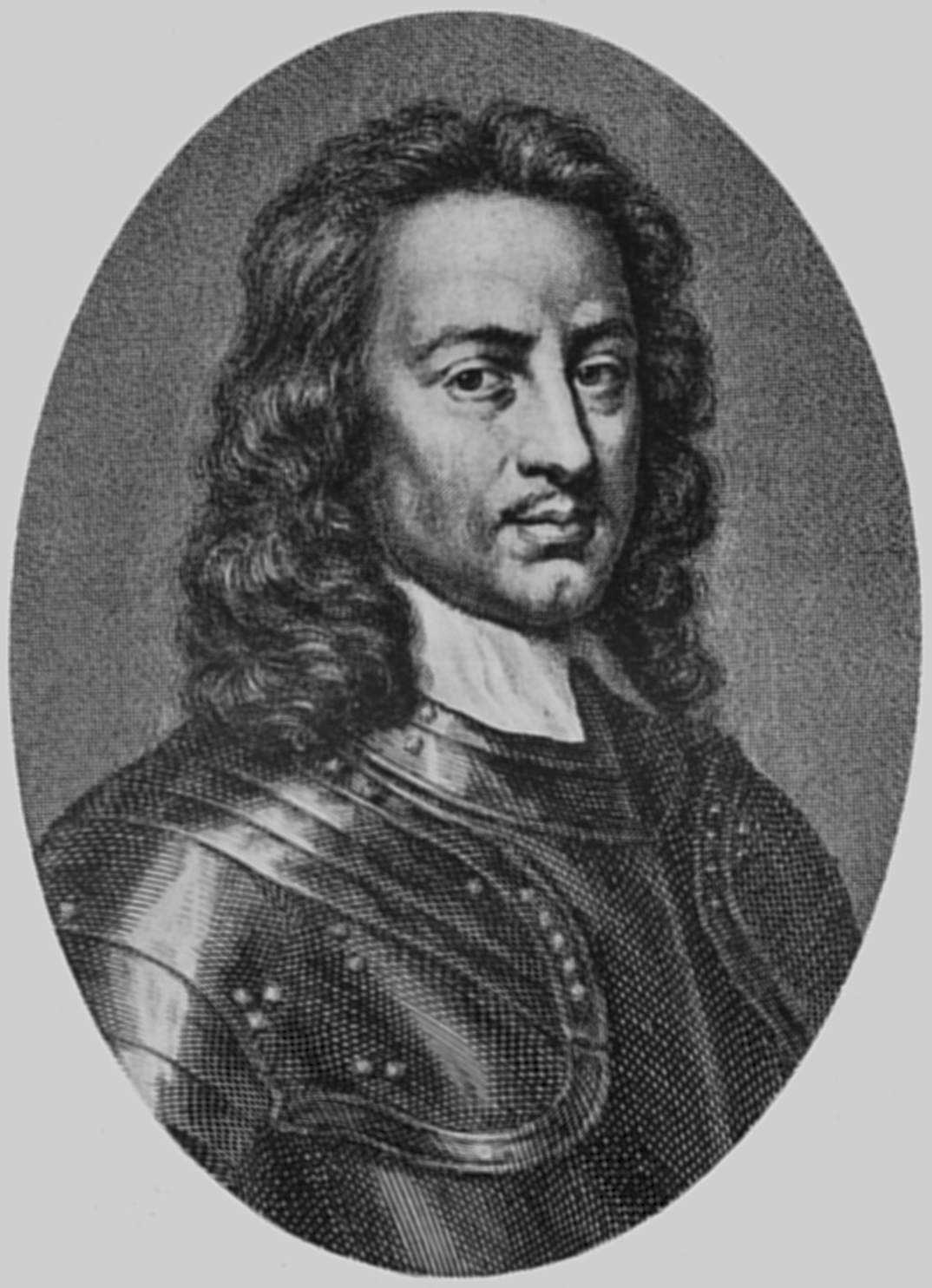
JOHN HAMPDEN
After the Engraving by G. Houbraken.
"Leave off dominion and lordship one over another; for the whole bulk of mankind are but one living earth. Leave off imprisoning, whipping, and killing, which are but the actings of the curse. Let those that have hitherto had no land, and have been forced to rob and steal through poverty; henceforth let them quietly enjoy land to work upon, that everyone may enjoy the benefit of his creation, and eat his own bread with the sweat of his own brow."
Winstanley's argument was quite simple:
"If any man can say that he makes corn or cattle, he may say, That is mine. But if the Lord made these for the use of His creation, surely then the earth was made by the Lord to be a Common Treasury for all, not a particular treasury for some."
Two objections were urged against private property in land:
"First, it hath occasioned people to steal from one another. Secondly, it hath made laws to hang those that did steal. It tempts people to do an evil action, and then kills them for doing it." It was a prolific age for pamphlets, the seventeenth century; the land teemed with preachers and visionaries, and Winstanley's writings never attracted the sympathy that was given to the fierce controversialists on theological and political questions.
Only when Winstanley and his Diggers set to work with spade and shovel on the barren soil of St. George's Hill, in Surrey, in the spring of 1649, was the attention of the Council of State called to the strange proceedings. The matter was left to the local magistrates and landowners, and the Diggers were suppressed. A similar attempt to reclaim land near Wellingboro' was stopped at once as "seditious and tumultuous." It was quite useless for Winstanley to maintain that the English people were dispossessed of their lands by the Crown at the Norman Conquest, and that with the execution of the King the ownership of the Crown lands ought to revert to the people; Cromwell and the Council of State had no more patience with prophets of land nationalisation than with agitators of manhood suffrage. Indeed, the Commonwealth Government never took the trouble to distinguish between the different groups of disaffected people, but set them all down as "Levellers," to be punished as disturbers of the peace if they refused to obey authority.
Winstanley's last pamphlet was "True Magistracy Restored," an open letter to Oliver Cromwell, 1652, and after its publication Gerrard Winstanley and his Diggers are heard of no more.
To-day both Lilburne and Winstanley are to be recalled because the agitation for political democracy is always with us, and the question of land tenure is seen to be of profound importance in the discussion of social reform. No democratic statesman in our time can propose an improvement in the social condition of the people without reference to the land question, and no social reformer of the nineteenth century has had more influence or been more widely read and discussed than Henry George—the exponent of the Single Tax on Land Values.
Winstanley was very little heeded in his own day, but two hundred and fifty years later the civilised countries of the earth are found in deep debate over the respective rights of landowners and landless, and the relation of poverty to land ownership. State ownership, taxation of land values, peasant proprietorship, co-operative agriculture—all have their advocates to-day, but to Winstanley's question whether the earth was made "for to give ease to a few or health to all," only one answer is returned.
The Restoration
Under the Commonwealth the landowners were as powerful as they had been under the monarchy. Enclosures continued. Social reform was not contemplated by Cromwell nor by Councils of State; democracy was equally outside the political vision of government. Church of England ministers were dispossessed in favour of Nonconformists, Puritanism became the established faith, Catholicism remained proscribed.
The interest in ecclesiastical and theological disputes was considerable, and Puritanism was popular with large numbers of the middle-class. But to the mass of the people Puritanism was merely the suppression of further liberties, the prohibition of old customs, the stern abolition of Christmas revels and May-day games.
Lilburne did his best to get Cromwell to allow the people some responsibility in the choice of its rulers. Winstanley proposed a remedy for the social distress. To neither of these men was any concession made, and no consideration was given to their appeals.
Hence the bulk of the nation, ignored by the Commonwealth Government, and alienated by Puritanism, accepted quite amiably—indeed, with enthusiasm—the restoration of the monarchy on the return of Charles II., and was unmoved by the royalist reaction against Parliamentary Government that followed on the Restoration.
The House of Commons itself, when Monk and his army had gone over to the side of Charles, voted, in the Convention Parliament of 1660, "that according to the ancient and fundamental laws of this Kingdom, the government is, and ought to be, by King, Lords, and Commons," and Charles II. was received in London with uproarious enthusiasm.
The army was disbanded; a royalist House of Commons restored the Church of England and ordered general acceptance of its Prayer Book. Puritanism, driven from rule, could only remain in power in the heart and conscience of its adherents.
With Charles II. on the throne the absolutism of the Crown over Parliament passed for ever from England. Cromwell had set up the supremacy of the army over the Commons: this, too, was gone, never to be restored.
Henceforth government was to be by King, Lords, and Commons; but sovereignty was to reside in Parliament. Not till a century later would democracy again be heard of, and its merits urged, as Lilburne had urged them under the Commonwealth.