TEMPERANCE NOTES AND NEWS.
Reading edition
By a Leading Temperance Advocate.
No apology is needed for opening a temperance department in The Quiver, for in the story of the temperance reformation the name of John Cassell will assuredly always hold an honoured place. At the time when he was enlisted in the ranks—1835—as a youth of seventeen, the movement had few friends and many opponents. Having once signed the "teetotal pledge," Cassell never deserted, but, on the contrary, became one of the most persuasive advocates the cause has ever had. He itinerated through the length and breadth of the land, and, under the name of "The Manchester Carpenter," gained a large number of adherents, some of whom subsequently achieved great reputations as temperance leaders. Even before Cassell had settled down in London as a publisher, he had learnt to value the printing press as an aid to temperance work, and not a few of the pamphlets, tracts, and broadsheets which played such an important part in the early days of the propaganda, owed their origin to his enterprising initiative. By-and-by he was in a position to command his own printing machines, and as early as March, 1846, he launched the Teetotal Times and Monthly Temperance Messenger, which was followed in July, 1848, by the Standard of Freedom, of which a temperance column was a leading feature. Anyone who takes the trouble to look over these early publications cannot fail to be struck by the comprehensive and statesmanlike grip of the drink difficulty which they present. It was to John Cassell that Richard Cobden wrote in 1849:—"I don't know how it is that I have never made the plunge and joined the teetotallers. Nobody has more faith than I in the truth of your doctrine, both from a physical and moral point of view, for the more work I have had to do the more I have resorted to the pump and the teapot. As for the moral bearings of the question, it is scarcely an exaggeration to say that all other reforms together would fail to confer as great blessings upon the masses as that of weaning them from intoxicating drinks." Cassell passed away at the early age of forty-eight, on April 2nd, 1865, on the same day as Cobden himself, whose friendship he had enjoyed for nearly twenty years.
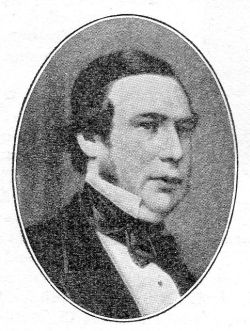
JOHN CASSELL.
(Temperance Leader and Founder of "The Quiver.")
COMING EVENTS.
Among the important events fixed for this month may be named two meetings convened by the National Temperance League for November 2nd, in Oxford, to be addressed by His Grace the Archbishop of Canterbury and Professor Victor Horsley, F.R.S., the distinguished surgeon. One meeting is specially intended for undergraduates, while the other will be open to the townsfolk. On November 4th by permission of the Lord Mayor of London, the Mansion House will extend its hospitality to the Police Court Mission of the C.E.T.S., and Bishops, Members of Parliament, and Police Court Magistrates will plead the cause of this deserving charity. On November 27th the Nonconformist Churches will observe their annual Temperance Sunday, and on November 30th a function anticipated with keen interest, the first Lees-Raper Memorial Lecture will take place in the Church House, Westminster.
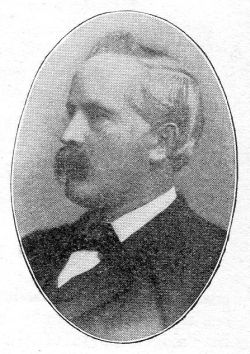
MR. A. F. HILLS
Photo: Elliot and Fry, Baker Street, W.)
SUNDAY CLOSING.
Thanks to the munificent generosity of Mr. Arnold F. Hills, who has promised a donation of £5,000, conditional upon temperance friends making up another £5,000, a determined effort is to be made to press forward the Sunday Closing question in view of the reassembling of Parliament early in the new year. The whole-hearted ardour and enthusiasm which have marked Mr. Hills' temperance labours during the past ten years have made his name a household word. He started out with the settled conviction that the greatest need of the time was the union of the temperance forces; and in the face of difficulties and obstacles which would have disheartened ninety-nine men out of a hundred, he has ceaselessly concentrated his energies to this end. The United Temperance Council, with its network of county councils and district councils throughout the United Kingdom, is the creation of his active brain; while the Temperance Parliament, which has given an opportunity to all the friends of temperance legislation to discuss their various projects, is another child of Mr. Hills' parentage.
IRISH EXAMPLE.
Visitors to Belfast cannot pass along the streets of this thriving, go-ahead city without being brought face to face with the practical efforts of the Irish Temperance League to counteract the public-houses. The League has set up nearly twenty attractive coffee stands in various parts of the town, and these do a very large business and are extremely popular. The movement was commenced in 1874, the first stand being opened on a site granted by the Harbour Commissioners, for a nominal rent, near to the berths of the cross-Channel steamers. As many as 10,000 persons have patronised the stands in one day. The hours of opening and closing are regulated according to the locality. No intoxicating liquors are allowed to be consumed on the premises; the best of food is provided; the most scrupulous cleanliness is observed; and no bills of any kind are exhibited, or anything likely to jar on the religious or political feelings of the customers.
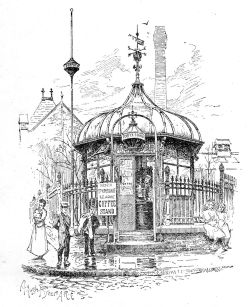
STREET COFFEE STAND, BELFAST.
THE LEES-RAPER MEMORIAL.
It will be a long time before temperance folk will forget the shock which was occasioned in May, 1897, by the sudden deaths within ten days of each other, of Dr. Lees and Mr. J. H. Raper. These two devoted workers were known in both hemispheres, and it would be impossible in such limited space to give an adequate appreciation of their marvellous gifts. Dr. F. R. Lees was ever a fighter. From his boyhood up to his honoured old age he was always eager for the fray. As a keen controversialist he was literally without a rival. The winning personality of James Hayes Raper carried all before it. He was unquestionably a platform king. Nothing could be more charming than the extraordinary facility with which he rapidly placed himself in touch with an audience; and he possessed in a rare degree the gift of being able to make an acceptable "last speech" in a programme. The Committee charged with the promotion of a memorial to these temperance worthies is to be congratulated upon having raised nearly £1,700. Of this amount, £1,500 has been invested in a terminable annuity for a period of twenty years. A Lees-Raper lectureship has been founded, and, as already stated, the inaugural lecture will be given by Dean Farrar, of Canterbury, at the Church House, Westminster, on November 30th. The Archbishop of Canterbury will preside, and the Dean has chosen as his theme "Temperance Reform as Required by Righteousness and Patriotism."
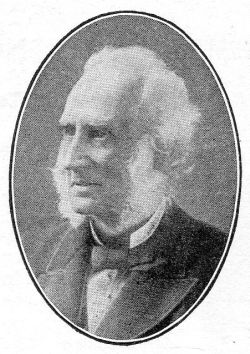
J. H. RAPER
Photo: Lambert, Weston and Son, Folkestone.)
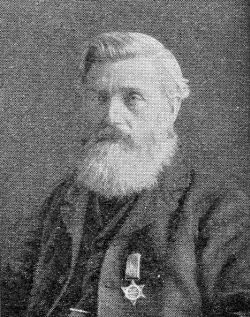
DR. F. R. LEES
Photo: William Coles, Watford.)
The House Beautiful