APPENDIX
Reading edition
ALPHABETICAL SERIES OF NORSE, NORMAN, AND ANGLO-NORMAN, OR NON-SAXON, SURNAMES.
Derived from English Official Records and from other Authentic Sources.
[The learned Canon of Carlisle assures us that not only has Normandy supplied us with many of our family names, but it enjoys the distinction of having been the first to establish an hereditary surname. Few stop to consider that a surname thus conceived is not merely an heraldic vanity or device to give social dignity and distinction to those who bear it, but is in reality a scientific advance in the working nomenclature of a race. If to "name" is but to classify, the addition or introduction of the surname simply adds completeness and precision to the racial classification. Here, then, we have in the following list a large body of surnames coming almost directly from the land in which surnames are said to have originated. If a name, therefore, be merely that by which a thing is known, it would seem that a people who have borne these names continuously (as is historically attested) for eight hundred years have in all likelihood inherited the characteristic traits, as well as the distinctive surnames, of the antique Norman race. In Kentucky, the original tone and vigor of the Norman people are unimpaired. Changes there have been; changes there will be; but, whatever changes may occur, there remains this one unalterable characteristic of the Norman race, that "the more you change it, the more it is the same."]
Abbett, a form of Abbott.
Abbey, for l'Abbe.
Abbott, or Abbot, Abbas (1180, Normandy), Abbot, Abbet, Thirteenth Century.
Abel, Aubeale, Normandy, Twelfth Century; Sir John Abel of Kent, 1313.
Aberdeen, Aberdern, Abadam, from Abadon. Normandy, 1180.
Achard, 1238, Berks.
Ackin, from Dakin.
Acland, or de Vantort, from Vantort in Mayenne; the baronets Acland.
Acton, or Barnell. From this family, Lord Acton.
Adderley, from Adderley Salop.
Addington, de Abernon, Normandy, 1112; one branch in Somerset.
Adrian, Hadrin (Normandy), Adrien (England).
Agate, a form of Haggett or Hacket.
Agne, Battle Abbey Roll.
Agnew, or Aigneaux, near Bayeux, England, Twelfth Century; Scotland, baronets Agnew.
Ains, from Aignes, near Angoulême.
Airey, Castle of Airey, Normandy; Airy—celebrated astronomer.
Albert, Walter and Peter Albert (Normandy, 1180).
Albin, or Albon, St. Auben (Robson).
Alden, Normandy, 1195.
Aldworth, or De la Mare.
Aleman (Allman).
Alfee, for Alis or Ellis.
Alison, Barnard de Alençon (Sir Archibald Alison).
Allan, for Alan.
Allanson, Alison.
Allebone.
Alley, from Ailly, near Falaise, a form of Hallett or Allet.
Alleyne.
Allison.
Allman.
Alpe, for Heppe or Helps.
Alpey, Averay.
Alvers, or Alves.
Amand.
Amber, from Ambrières.
Ambler, from Ampliers, or Aumliers, near Arras. England; Virginia.
Amblie, Hamley.
Ambrose.
Amery, from Hamars, near Caen.
Ames, from Hiesmes, Normandy.
Amherst, or Henhurst.
Amias, Ames.
Ammon, Amond, Amand.
Amory, Darmer.
Amos, Ames.
Amphlett.
Amy.
Ancell. "Ansel," a famous colored "trainer" in Kentucky.
Anders, from Andres, near Boulogne.
Andersen or Anderson (Scand.)
Anderson-Pelham, or De Lisle from the Castle of Lisle (Normandy). Sire Edmund Anderson, Chief Justice, temp. Elizabeth.
Andersons of Kentucky, a distinguished family. Connected by blood with George Rogers Clark. Major Robert Anderson, of "Sumter" fame, was of this family.
Andrew, from St. Andre, Evreux.
Andrews. Geoffrey Andreas, 1180 (Normandy). Landaff W. Andrews, a bold, able, and popular Whig leader (Ky.), conspicuous in Congress (1842), and characterized by John Quincy Adams, who admired his courage and ability, as "a Nimrod Wildfire from Kentucky." (Vide Diary.) When he objected to one of Adams' resolutions (in which he was sustained by the Speaker) he looked, says Adams, "as savage as a famished wolf"; as Circuit Judge in Kentucky, during the Civil War, he rendered certain decisions that were distasteful to the Federal authorities. "That brother of yours," said General Palmer to Mrs. Thomas Steele, of Louisville, "is a bold judge."
Angell, from De l'Angle, from Les Angles, near Evreux.
Anger, from Angers, Anjou; also Angier.
Angle, Angell.
Angwin, for Angevin.
Ankers, for Anceres, vide Dancer.
Anley, or Andley, near Rouen.
Annable, or Annabell, from Anneboutt (Cotentin).
Anne, or Anns, from L'Agne, near Argenton (Normandy).
Annesley.
Ansell.
Anstruther, or Malberbe.
Anthony, St. Antoine, near Bolbec.
Anvers, or Danvers.
Anvill, or Hanwell, from Andeville, near Valognes.
Arch, or De Arques, from the Castle of Arques, near Dieppe. Joseph Arch, a famous English "labor leader."
Archdeacon, Archidiaconus, Normandy, 1180; England, 1086.
Archer, Arcuarius (general of bowmen), Sagittarius (Normandy), 1195.
Archer, or De Bois, armorially identified with De Bosco; Boys.
Arden, or Ardern; a Norman family; came to England in 1066.
Argles, Hargle (Hargis), Normandy, 1198.
Aris, a form of Heriz or Harris.
Arle, or Airel.
Arliss.
Armes.
Armit.
Arnald, Arnold.
Arnes.
Arnold, Ernaldus or Ernaut, Normandy, 1180; in England, 1272.
Arrah, Arrow.
Arundel, Hirendale, Normandy, 1198.
Ascouga, Askew.
Ashburnham, or De Criol.
Ashley, De Esseleia, Normandy, 1198.
Ashley, Cooper, or De Columbers, from Colombières, near Bayeux.
Askew, for Ascuo.
Aspray, from Esperraye, Normandy.
Astor, Willielmus Titz—Estus or Estor, Normandy, 1180, 1198; England, 1272.
Aubrey, the Norman origin of this name established.
Aure, with an aspirate. (Hoare.) Johne de Aur was summoned in 1268 to march against the Welsh.
Auriol, L'Oriel.
Austin, William Argustinus, Normandy, Twelfth Century.
Aveling, Aveline, Evelyn.
Avens, from Avernes, Normandy, 1180.
Averance, from Avranches, Normandy, 1130.
Averell, Avril, Normandy, 1198.
Avery, Every.
Avery. Traced to Aubrey, a Norman form of Albericus.
Awdry, from Audrien, or Aldry, near Caen.
Ayers, Ayres, Ayre.
Aylard, Allard.
Ayre, Eyre.
Ayrton.
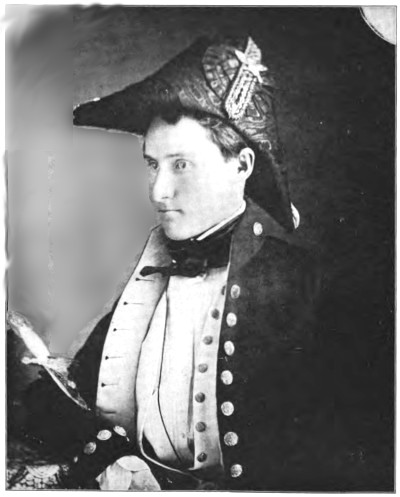
COLONEL JOHN T. PICKETT.
Babington, Normandy, 1180; England, Thirteenth Century. Bernard de Babington. Little Babington, Northumberland.
Babot, Babo, Normandy, 1195.
Bachelor, Normandy, 1195.
Back, Sir George Back, Arctic explorer. Vide Beck.
Bacon. (Roger and Francis Bacon members of this family.) Bacen or Bacco, Eleventh Century in Maine, Northman family.
Bagehot, for Bagot.
Bagot. A baronial family (Normandy); came to England at the Conquest. Henry Bagod, ancestor of house of Stafford.
Bailey, Baillie, from the Norman office of Le Bailli. The Baillies of Scotland a branch of De Quincys.
Baine, Bayne.
Baird. Ralph Baiart in Normandy before the Conquest. Godfrey Baiard in 1165 held a barony in Northumberland. From this line descended George Washington, the great American General.
Baker, Normandy, 1086; England, 1086.
Baldwin, Normandy, William Baldwinus, 1180; Robert, 1183; England, 1116.
Ballance, for Valence, Normandy, 1210.
Bally, for Baly.
Bamfyld, from Baionville, near Caen, 1093. In Thirteenth Century held lands of the Honour of Wallingford.
Banard, for Bainard, Banyard.
Bancroft, from Boncraft, near Warrington, Cheshire. See Butler.
Band, from Calvus or Le Band, England, 1083.
Bangs, for Banks.
Banks, from Banc, near Honfleur; England, 1130. The eminent savant, Sir Joseph Banks, a descendant.
Banner, 1180, Normandy, Le Baneor.
Bannester, from Banastre, now Beneter, near Estampes.
Banyard. Vide Beaumont.
Barbot, Normandy, 1188.
Barbour, from St. Barbe sur Gaillon, Normandy, where was situated the celebrated Abbey St. Barbara. (Vide British Family Surnames (Barber) London.) Barbour, a hamlet in Dumbartonshire. St. Barbe is on the Roll of Battle Abbey. William de St. Barbara, Bishop of Durham, 1143 A. D. Le Barbier, Court of Husting, London, 1258. John Barbour, a churchman and Archdeacon of Aberdeen (1357): traveled in France (temp. Edward III): employed in a high capacity in civil affairs: historian, poet, and Auditor of the Exchequer. James Barbour, born in Orange County, Virginia, U. S. Senator (1815-1825): Secretary of War: Minister to the Court of St. James. Philip Pendleton Barbour, brother of James Barbour, Associate Justice of the United States Supreme Court. John S. Barbour (Virginia), member of Congress (1823-1833). James Barbour (Kentucky), Assistant State Auditor (under Helm): President Lexington and Danville R. R.: Cashier Branch Bank of Kentucky. Doctor Lewis Green Barbour of Louisville, late of Central University, is a finished scholar.
Bardo, for Bardolph.
Bardolph, England, 1165. Held lands in Normandy (Honour of Montfort).
Barefoot, Barfot, Normandy, 1180; England soon after.
Barker. Bercarius, Normandy, 1180. Le Bercher (England).
Barker. Norman French La Bercher. English surnames Barcarius and Le Barkere. William le Barcur.
Barnes, a form of Berners from Bernieres, near Falaise; England, 1086.
Barnett. Barnet (Barney), Bernai, Normandy.
Barnewall, from the Norman family De Barneval, England, 1086 (Domesday).
Barney, armorially identified with Berney.
Barold, Vide Barrell.
Baron, from Baron, near Caen, England, 1165.
Barough, armorially identified with Barrow.
Barr, from La Barre in the Cotentin. Tiger de Barra (Normandy, 1180).
Barr. La Barr, Normandy; Norman-French, De la Barre.
Barrable, for Barbal, Normandy, 1180.
Barre, armorially identified with Barry.
Barrell, Richard Barel, Normandy, 1180. See Battle Abbey Roll.
Barrett. (Domesday) Baret.
Barrett. John Buret, 1195. Walter de la Burette, Devon, 1272.
Barrington, or De Barenton, from Barenton, near Candebec, Normandy.
Barrow, Barou was near Falaise, Normandy. England, Barene, 1560.
Barry, armorially identified with Barr.
Bartellot (or Bertelot), Normandy, 1180; England, 1272.
Bartleet, a form of Bartelot.
Bartrum, armorially identified with Bartram.
Barwell, from Berville, near Pont Andemar, 1165; England, 1086.
Baskerville, from Bacquerville, near Rouen. In 1109 Robert de Baskerville, on his return from Palestine, granted lands to Gloucester Abbey. The Baskervilles were early seated in Virginia.
Baskett. Walter Pesket, Normandy, 1180.
Bass. Richard le Bas, 1180. John Basse, England, 1272.
Bassett, from Bathet or Baset. Duke of the Normans of the Loire, 895. From this stock are descended the Doyleys (D'Ouilly), Lisores, and Downnays. Osmond Basset accompanied the Conqueror, 1066. There were Bassets in Devon, Essex, and Wales.
Bassit, from Biszeilles, near Lithe.
Bastable. Wastable, Normandy, 1180. Barnstaple (Lower).
Bastard. Robert Bastard, a baron in Devon, 1080, son of William the Conqueror. Also Baistard, Bestard.
Baswell, for Boswell.
Batcheller. Vide Bachelor.
Bateley, from Batilly, near Alençon, Normandy.
Batell, armorially identified with Battayle.
Bateman, from Baudemont in the Norman Vexin. Roger de Battemound, Northumberland, Thirteenth Century.
Bath. Ramier, afterwards De Bada.
Bathurst. Bateste, Bathurts. Thirteenth Century, Cranbrook, Kent.
Batten. Batin (Flemish?), 1272, England.
Battle. Batell.
Batty, from La Bathie, Maine, Ralph Baty, Thirteenth Century, Devon.
Baugh, or De Baa, from Bahais, near Contances.
Bavin, or Bavant, from Bavant, near Caen.
Bax, or Backs.
Bayes, for Boyes.
Bayley. Vide Baillie.
Bayne.
Baynes, from Baynes, near Bayeux.
Bazin, Normandy, 1180; England, Fourteenth Century.
Beach, armorially identified with Beche or De la Beche. From Bac in Normandy, frequently written Bech and Beche in England.
Beacham, for Beauchamp.
Beadel. Normandy, 1180. Bucks, England, 1086. Bishop.
Beadle, for Beaddell.
Beadon, from Bidon in Burgundy. Held a fee from the Honour of Wallingford.
Beale, or Le Bele, a form of Bell.
Beamand.
Beamis, formerly Beaumis, Beaumeys, or Beaumetz, from Beaumetz, near Abbeville. Dujardin Beaumetz was a famous medical savant of Paris, France, in the latter half of the Nineteenth Century.
Beamish, for Beamis.
Beamont, armorially identified with Beaumont of Yorkshire.
Beamand, the same.
Bean, for Bene.
Beard, armorially identified with Bard, a form of Baird.
Beards, for Beard.
Bearfield, for De Berville, from Berville, near Caen. William de Bareville, Normandy, 1180; Robert de B., England, 1272.
Bease, for Bisse.
Beaten, for Beaton.
Beaton, or Bethune. From the Carlovingian Counts of Artois. The Duke of Sully (Sully's "Memoirs") was of this family.
Beauchamp, from Beauchamp in the Cotentin. The same race as the Meurdracs, the Montagues and the Grenvilles. A familiar old-time name in Kentucky that has always appealed to lovers and writers of romance—notably to Charles Fenno Hoffman and William Gilmore Simms. "This illustrious name," says Lower, "is found in many countries of Europe; in Scotland, as Campbell; in England, as Fairfield; in Germany, as Schönau; and in Italy as Campobello." It was introduced into England at the Norman Conquest by Hugh de Belchamp, or Beauchamp, or de Bello Campo. Beauchamp is pronounced Beecham in England.
Beaufoy, from Beaufay, near Alençon, Normandy, 1180. John de Beaufoy, England, 1320.
Beaumont, or Bayard. Two lines in England. One of the Beaumonts held the Castle of St. Luzanne for two years against William the Conqueror.
Beaver, for Bever.
Beavill, or Beville, from Beaville, near Caen, England, 1086 (Domesday).
Beavis, armorially identified with Beaufiz, England, 1316.
Becket, or Beckett. In 1180, Malger Bechet, Rouen, John and William Beket or Bekeit, 1198. Ibid. Thomas Beket's father was of Caen. Ralph de Beket, England, 1272; hence Thomas, the famous Archbishop of Canterbury.
Becks, for Beck. Vide Beach.
Beckwith, adopted in lieu of the original Norman name of Malbisse (Lower).
Bedding, or Bedin. Normandy, 1196; England, 1272.
Bedell, from the Suffolk gens (Thirteenth Century).
Beech, a form of Beach.
Beecham, a form of Beauchamp.
Beecher, armorially identified with Beach, of which it is a corruption.
Beeden. Vide Beadon.
Beek, armorially identified with Beck or Bec.
Beeman, for Beaman.
Beeman, for Beaumont (Lower).
Beerill, for Barrell.
Beeson, for Beisin, Normandy.
Beeton, for Beaton.
Beever, for Beevor.
Beevor. Berenger de Belver, or Bevor.
Belcher. Vide Belshes, England, 1272.
Bell, from Le Bel, a common surname in Normandy.
Bellaers, for Beller, from Bellieres, near Alençon. Normandy, 1180. Ralph Beler, 1325.
Bellairs. Vide Bellaers.
Bellamy, or Bellameys, from Belmeys or Beaumitz. Vide Beamiss.
Bellany, from Bellannay, Normandy.
Bellard. Beald heard (strong). An ancient baptismal name, Balard (The Hundred Rolls).
Bellas, a form of Bellowes.
Bellchamber, for Bellencombre Castle, near Dieppe. England, 1272.
Bellet. Belet, surname in Normandy, 1180; England, 1165. The Bellets were hereditary butlers to the King.
Bellew, from Belleau or Bella Aqua, Normandy, 1180. The Lords Bellew of Ireland are of this family.
Belling. A northern clan, noble and ancient.
Bellis, armorially identified with Bellew of Cheshire.
Bellowes, armorially identified with Bellew.
Bellville, Belleville, or Bellavilla, near Dieppe, Normandy.
Belshes, a corruption of Bellassidge.
Belward, a form of Belwar, Belver, or Belvoir. See Beevor.
Bemes, for Beamis.
Bence. Robert and William Bence, Normandy, 1180; England, 1272.
Bene. Hubert de Bene, Normandy, 1180; England, 1298.
Benivell, for Beneville, from Beneville, near Havre, Normandy, 1180; William de Bendeville, England, Twelfth Century.
Benn, for Bene.
Bennet, or Beneyt, Normandy, 1180.
Bennett. Beneyt, or Benedictus, a Norman family. Bennets, Earls of Arlington and Tankerville.
Berey, for Barrey or Barry.
Beringer, Normandy, 1195.
Berks, for Perks or Parks.
Bernard. Common name in Normandy, 1180; England, 1200.
Bernes, from Bernes, near Beauvais, 1167; England, 1272.
Berney, from Berney, Norfolk; Bernai, near Lisieux.
Bernwell, or Barnwall, 1086 (Domesday).
Berrell, for Barrell.
Berrett, for Barrett.
Berry, armorially identified with Barry.
Bertie, a form of Bertin which occurs in Battle Abbey Roll, Normandy, 1195; 1433, William Bertyn, one of the Kentish gentry.
Bertin. Vide Bertie.
Bertram. An illustrious Norman name. Vide Milford.
Berwell. Vide Barwell.
Best. An abbreviation of Bessett.
Bever, or Beever, armorially identified with Belvoir or Bovor of Leicestershire.
Beverel. Richard de Beverel, Normandy, 1180.
Bevington. Vide Bovington.
Beville. Vide Beavill.
Bevir, for Bever.
Bevis, Beavis.
Bevis, armorially identified with Beaufais, or Beauvais. Beauvays, Yorkshire, 1313.
Bew, for Bews.
Bewett, armorially identified with Bluett, also Blewitt.
Bewley, for Beaulieu.
Bews, for Bayeux, Bayouse, Beyouse, Bews.
Bewsay, for Bussey, or De Busci.
Bewshea, for Bewsay.
Bick, a form of Bec.
Biddle, for Bidell. Vide Beadle.
Bidon, for Bidun. Vide Beadon.
Biggers. Durand le Bigre, Normandy, 1180. Ranulph de Bigarz, 1198.
Bigot. Richard le Bigot, Normandy, 1180; Vide Wiggett.
Biles, a form of Byles.
Bill, a form of Boyle, armorially identified with Byle or Byles.
Billes. Vide Bill.
Billett. Bellet.
Bing. Byng, Binge.
Bingham, or De Buisle, from Builly, near Neuchatel (often supposed to be of Saxon origin). John de Bingham, named from his "lordship," Bingham, in Bucks. One of the family named the heiress of Turberville.
Birbeck, from Brabant. Henry de Birbecka, 1134.
Birmingham, or Paynel. Vide Paynel.
Biron. Vide Byron.
Birt. Vide Burt.
Bishop. Radulphus Episcopus, Normandy, 1180; Sir John Bischopp, England, 1315.
Bisse, armorially identified with Bissett.
Bissell, armorially identified with Bissett. Ralph and Henry Biset, Normandy, 1180. Sir John Byset, England, 1300.
Black. Odo and Robert Niger occur in Normandy, 1180. Robertus Niger held lands in Kent, 1086 (Domesday).
Blackett. An abbreviation of Blanchett.
Blackstone, or Le Breton. Blackstone, Devon, was held 1286 by Alured le Breton. In Thirteenth Century William Blackstone held lands at Stones of the Honour of Wallingford.
Blagrave, or Le Breton. Alicia de Blackgrave, Thirteenth Century. The name Le Breton indicates a Breton origin.
Blake. Admiral Robert, the great naval commander of Cromwell, was of Somerset, in which county Walter Blache occurs, 1273.
Blakey. The French pronunciation of Blaket. Vide Bleckett.
Blanch. William Blanc and Robert and John Blanche occur in Normandy, 1180. Henry Blanche, Oxford, 1272.
Blanchard. Ralph and William Blanchart were of Normandy, 1180. Gilbert and William Blanchard had estates in Lincoln. This fine old Norman family is readily traceable from Normandy to England, and from England to America. Colonel Robert Blanchard, with his tall, handsome figure and jocund face, would have thrown no discredit on his racial descent in any country, community, or social circle. His son, William Lytle Blanchard, an accomplished gentleman, was an officer in the Confederate service. Before the opening of the Civil War he had been an associate of Halliday (and other Anglo-Normans) in the establishment of the great overland route. William Lytle Blanchard was a first cousin of General William Haynes Lytle, of Cincinnati. The Blanchards are connected with the Rowans, Bollings, Lytles, Fosters, Stoths, and other distinguished families.
Blancherville, from the forest of B., Normandy. The family had branches in Ireland.
Blanchet. Robert and Ralph Blanchet.
Blanquet, or Blanket, Normandy, 1180. In England Blanchet or Blaket.
Blashfield. Anglicised form of Blancheville.
Blaxton, for Blackstone.
Blay, for Bleay.
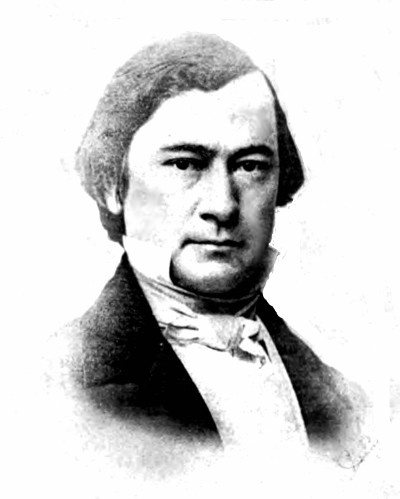
COLONEL THOMAS T. HAWKINS.
Bleakey, for Blakey.
Bleay. De Ble, Normandy, 1180. De Blee, Stafford, 1180.
Blennerhasset, or De Tillial, from Tilliol, near Rouen. Richard de Tilliol, lord of Blennerhasset, Cumberland, temp. Henry I. The younger branches bore the name of Blennerhasset. A name to which the "Burr Expedition" gave a peculiar interest in Kentucky.
Blessett, for Blissett.
Blews, a form of Blew or Blue. Etard de Blew occurs in Kent, 1199, and Robert de Bloi in Essex. The name is a form of Bloi, Bloin, or Blohin of Bretagne, often written Blue. Vide Bligh and Blue.
Bley, for Bleay.
Bligh, for De Bloin, from Bretagne. Vide Darnley.
Blindell, for Blundell.
Blizard, Blizart. Perhaps from Blesum, Blois, meaning a native of Blois. The name is evidently foreign. Blizzard, Blizard, Blezard, Blizart, Blissett. Even the best authorities have differed as to the origin of this name. One English writer says: "Perhaps it is from Blesum, Blois, meaning a native of Blois" (Blizzard, which is Norman, is an analogous form). Another and later English authority says: "Blizard, Blezard, from the Danish Blichert, a strong sword player." A correspondent of the New York Tribune, July 19, 1891, says: "The old English word blizzard, which describes so picturesquely the English snow-blast, is spoken of as an 'Americanism.' Even such philologists and lexicographers as Murray treat the word as a recent 'Americanism.' So far from its being American in origin, it was not till within the last thirty years (according to Bartlett and other American philologists) that the word was ever heard in the Eastern States, and in the Western a 'blizzard' meant a knock-down blow—not from a snow-blast, but in an argument."
In reality, Blizzard is an old English surname, and is doubtless of Norman origin. In April, 1889, the writer of this note conversed with a Federal soldier, whose full name was Stephen Decatur Blizzard. He was of Anglo-Virginian stock; he was a soldier in the Civil War, and his name may still be found on the National Pension Rolls of that date. His postal address in 1889 was "Quincy, Lewis County, Kentucky."
Possibly the "snow-blast" took its name from some windy Anglo-Norman disputant, who wielded the sword of the spirit and dealt in apostolic blows and knocks.
The word "blizzard" does not appear in Worcester's dictionary, edition 1860. It is evidently of Scandinavian origin (Danish or Norman).
Blockey. The French pronunciation of Bloquet or Ploquet. Vide Denman.
Blomefield. Vide Bloomfield. Blomfield, bishop of London.
Bloomfield, armorially identified with Blomville from the lordship so named near Caen and Toques. Thomas de Blumville had custody of the estates of Earl Bigod in Suffolk.
Blossett. The Blossetts of Normandy were barons of Beneval and Vidames.
Blount. Le Blund, or Blundus, Normandy, 1180. Frequent notices of the name, Twelfth Century, in Essex.
Blovice, for Blois, or Blesum, France. Thomas Blois, living at Norton, Suffolk, 1470, was ancestor of the baronets Blois.
Blow, for Blue or Bloy. Vide Bligh.
Blue, Blew or Blews. Etard de Bleu occurs in Kent, 1179. The name was a form of Bloi (France). The original Norman form was Le Bleu. During the Civil War there came before one of our Kentucky courts a case in which there was a very interesting introduction of names that have been long traditionally associated—Black and Blue; the former the name of a great criminal lawyer (Jeremiah S. Black), and the latter the name of his client, Blew or Blue, the perpetrator of an atrocious crime. The case showed that the criminal was sadly "off" on color. He had killed an entire family of blacks; but was finally acquitted by the ingenuity and perseverance of his great "Scandinavian" lawyer.
Black, Blake, Bleek, Bleikr (Norse). Admiral Blake was Warden of the Cinque Ports, 1651. Victor Blue, an officer in the American service, won great distinction during the Spanish-American War.
Bluett. In 1084, Bluet, Normandy; Buqueville le Blouette, the family seat. Bluet, long a name of eminence in the West of England.
Blundafield, for Blindville. Vide Blomfield.
Blundell. Vide Blunden.
Blunt. Le Blount, Normandy, 1180. Hence baronets Blunt.
Bly, for Bloi. Vide Bligh.
Boag, for Bogne.
Boase, for Bowes. (Vide Lower.)
Boat, from Buat. The Castle of Buat, near Falaise. Sexus de Bue, Surry, 1180. Vide Bowett.
Boax, for Boase.
Bobart, N. Popart, Normandy, 1180.
Bockerfield, from Bocherville or Bucheville, Normandy.
Bockett. Originally Bouquet, Normandy, 1198.
Bodel, for Budell.
Bodelly, for Botelly, or Batelly. Vide Battey.
Bodger. Boschier, Normandy, 1180. Le Boghier, England, 1272.
Body. Norse. Diminutive of Bodvarr (wary in battle). Bodi, Bodin, Bot. French Bodé, Norman-French Bot. (1195.)
Boffay, from Beaufay, near Alençon, Normandy. Boffei, Normandy, 1195. Sometimes Bophay.
Boggis. William de Bogis, 1180, Normandy.
Boggs. Vide Boggis.
Bogne, for Boges or Boggis.
Bois, from Normandy, several families, viz.: (1) De Bois Armand, hereditary servants of the Counts of Breteuil, sires of Poilly. Flourished in Leicester.
(2) De Bois-Guillauman, of the bailifry of Caux, seated in Essex, 1086.
(3) DeBois. Herbert, baron of Halberton, Devon; Hugo de Bosco, 1083, England.
(4) De Bois. Robert or Roard, Bucks, 1086.
(5) De Bois. Barony Brecknock, 1088, named after him Trebois.
Bole, or Boels.
Boles, a form of Boels. Vide Boyle.
Boleyn. Queen Anna Boleyn was great-granddaughter of Sir Geoffrey Boleyn, Lord Mayor of London, temp. Henry VI. The family had formerly been of great consequence. There were two branches of it in England. William de Bolein held one fee in York and one in Lincoln. In the preceding generation Easton and Simon de Bologne, brothers of Pharamus de B., are mentioned in a charter of the latter. The familiar pronunciation is "Bullen."
Bolland. Richard de la Boillante, Normandy, 1198.
Bollen, armorially identified with Boleyn.
Bolleng, for Boulogne, or Boleyne.
Bollowe, for Bellewe or Bellew.
Bolster, for Bolster or Balistar. Vide Alabaster or Arbalister (Norman), a general of crossbowmen.
Bolt, from Bolt, or Bout, near Bayeux. Tascelinus de Boalt, Normandy, 1180. Reginald and Richard Bolt, Oxford, 1272. "Ben Bolt" at all times and everywhere. Composed by an American; cosmopolitanized by an Englishman. An "Anglo-Norman" song.
Bolten-Nelson. From the Boltons of Suffolk descend the Earls Nelson, who obtained their title as the nearest heirs in blood of the renowned Nelson.
Bompas, from Bonpas near Perpignan; a Visigoth family.
Bonamy. Radulphus de Bono-Amico, Burgundy, 1180. Robert and William Bon Ami, 1198.
Bone, armorially identified with Bohun of Midhurst, or De Falgeres. Vide Foulger.
Bonell, or Bunel, Lords of Tissey, near Caen (Des Bois).
Boner. Bartholomew Bonaire.
Bonest, from Banaste, or Banastre. Vide Bannister.
Boney, for Bonney.
Bonfield, for Bonville, from the Castle of Bouneville, Bondeville, Normandy.
Bonham. Humphrey and William Bonhomme, Cambridge, 1272.
Bonhote, or Bounot, a form of Bonnett, with which it is armorially identified.
Bonner. Norman-French. Bounaire (courteous).
Bonnett. Roger Bonitus, Sussex, 1075. Family seat near Alençon. The name occurs in Battle Abbey Roll.
Bonney. Nicholas and Richard Bonie occur in Normandy, 1189. Agnes and Alicia Bonye, Oxfordshire, 1092.
Bonnivelle, for Bonville. Vide Bonfield.
Bonom, for Bonham.
Bonus, armorially identified with Bonest.
Boodle, for Budell. Not familiar as a "surname" in Kentucky.
Boog, for Bogue.
Booker. Walter Bochier, Normandy, 1180. The name in England is armorially identified with Borcher. In Kentucky, the Bookers are an old and prominent family. A Mayor of Louisville was (maternally) of the Booker blood.
Boole, or Boyle. Buelles or Buels occurs in Normandy, 1195.
Boolen, for Bullen, or Boleyn.
Bools. Vide Boule.
Boon, or Boone, armorially identified with Bohun. The Norman family of that name descended from Humphrey de Bohun, who accompanied the Conqueror and was ancestor of the Bohuns, Earls of Hereford, Constables of England.
Booser, for Bowser.
Boosey. Alexander de la Buzeia, Normandy, 1180. Ralph Buse, England, 1194. "Boozy" in Kentucky.
Boot. The fief of Hugo Boot is mentioned in Normandy. "Perhaps a trader's name"—says Lower.
Boothby. A younger branch of the Barons de Tateshall, 1086 (Domesday).
Borne. Walter le Borne, Normandy, 1180.
Borough, or De Burgh, otherwise Tusard, which is the original Norman name.
Borrell, armorially identified with Burrell.
Borrow, armorially identified with Borough and Burgh.
Bose, for Boss.
Boshell, for Bushell.
Bosher, a form of Bourchier (Lower).
Bosquet. Vide Bockett.
Boss. Bos or Bose occurs in Normandy, 1180; in Bucks, 1194. The original "boss," in the modern sense (overseer, manager), was doubtless a burly, bull-necked Norman. It is noteworthy that "Boodle" is from the same source.
Bossey. Vide Boosey.
Bossey. Bussey.
Bostel, for Postel. Ralph Postel, Normandy, 1180.
Bostfield, for Bosville.
Bosville. Bosville, near Candebec, Normandy.
Boswell, armorially identified with Bosville. Probably in England from the time of the Conquest. The family emigrated from England to Scotland in the reign of David I. The change from "ville" to "well" as a termination is also seen in the alteration of Rooseville to Roswell, LaVille to Larwill, etc.
Boterill. Geoffry Boterel occurs in a Beaton charter, 1081.
Botevyle, from Bouteville, near Carenton, Normandy. The name occurs in Battle Abbey Roll. Butterfield probably a form of this old surname.
Bott. William Bott occurs in Normandy, 1195. Walter Bott in Oxfordshire, 1189. The writer has seen the names William and Elizabeth Bott in old Warwickshire records, and in an old prayer-book, temp. George III (Virginian families); the name may, also, be seen to-day (Botts, not Bott) upon tombs in old graveyards in Eastern Kentucky. The literal suffix "s" to such names as Bott, Hay, etc., is said to be an Americanism.
Bottin. William Bottin, Normandy, 1180. Thomas Buting or Boting.
Botting, for Bottin.
Bottle. Roger Botel, Normandy, 1195.
Bottrell, or Botterel, or De Botereaux, from Bottereaux, near Evreux. England, Twelfth Century.
Bouche, from Buces, now Bucels, near Caen. De Bueis, Normandy, 1180. De Buche, Surrey, 1199. Roger Buche, Norfolk.
Bouchett, a form of Bockett.
Bouffler, from Bouflers, near Abbeville. James Beaufleur (or Beauflour), collector Port of India, 1322.
Boughey, armorially identified with Bowett. The Baronets Boughey are maternally descended from Fletcher.
Boughton, or Boveton, for Boventon. Vide Boynton. Baronets de Boveton were of county Warwick, Fourteenth Century.
Boulder, from Baudre, near St. Lo in the Cotentin. Walter Bulder, York, 1272.
Boully. Vide Bulley.
Boult, armorially identified with Bolt.
Boun (or "Boum"), armorially identified with Bohun of Midhurst. Vide Boone.
Bound. The same as Bowne (Lower).
Boundy, from Bondy, near St. Denis, Isle of France.
Bour, armorially identified with Boun or Bohun. Vide Boone.
Bourchier, a form of Bousser, or Boursieres, Burgundy. John De Busser was a justice in Essex and Hertford, 1317.
Bourdon. Geoffrey Bordon and others in Normandy 1180. Reginald and Roger Bordon in Gloucester, 1199.
Bourke, for Burke or Burgh. The Earls of Mayo are of this name.
Bourlet, or Borlet. Vide Barlett.
Bourner or Barner, a form of Berner or Berners.
Bousfield, from Bousville or Bouville, near Ravilly, Normandy. Walter Andrew, Serlo de Buesvilla, or Buevilla, Normandy, 1180. In 1244 William de Boevill did homage for his lands in the bailifry of Newcastle-under-Lyme.
Bousher, armorially identified with Bourchier.
Boutcher, for Boucher.
Boutell. Vide Bulteel and Bottle.
Boutroy. John and Roger Boteri, Normandy, 1180. William Buteri, or Butery in England.
Bouts. Vide Boot.
Bouvier. Hugo Bovier and John Bovier of Normandy, 1180-95. Vide Bowyer.
Bovay, for Beauvais.
Boville. A baronial family from Booville or Bueville, Normandy, Suffolk, 1086 (Domesday). The family was widely spread through England; Chief-Justice Boville came of this stock.
Bovington, or Boventon. Vide Boynton.
Bowack, or Boag.
Bowcher, for Bourchier.
Bowden, from Bodin (Lower). Petrus Bodin, Normandy, Eleventh Century.
Bowdler (from Hope Bowdler and other places, Salop). A form of De Bollers, or Bodlers, of Flanders. Vide Buller.
Bowen. Bouvignes (Bely).
Bowes, from Boves, Normandy. John de Bowes or Boves, Normandy, 1180. Hugh de Boves commanded in Poitou for King John (Roger of Wendover, 1287).
Bowett. Alexander Bonet occurs in Normandy, 1180. Bowet, England, 1321.
Bowker. Vide Booker. The names are armorially related.
Bowles, or Buelles. Vide Boyle. Hence, W. Lisle Bowles, the poet.
Bowley, for Beaulieu (Lower). Simon de Bello Loco, Normandy, 1180. Alexander de Bello Loco, Bedfordshire, 1255.
Bown, armorially identified with Bohun of Midhurst. Vide Boon.
Bowne. Vide Bown.
Bowran, or Bowering, for Beaurain, near Cambrai, Flanders. Wybert de Beaurain, Normandy, 1180. "Hence, the able writer, Sir John Bowring."
Bowry. Vide Bury.
Bowser, armorially identified with Bourchier.
Bowtell, for Boutel. U. S., Boutelle.
Bowton, for Boughton.
Bowyer. Norman-French, Bouvier. This name, as appears by the arms, was originally Bouvier (Robson). Hugo Bouvier, Normandy, 1180. Le Boyer, Kent, 1250.
Bowyn, armorially identified with Bohun. Vide Boon.
Boyall, a form of Boyle (Lower).
Boyce, a form of Bois.
Boyd. A branch of the Beeton family of Dinant. Vide Stuart. Descent from a brother of Walter, the first High Steward of Scotland.
Boydell. Helto Fitzhugh, grandson of Osborne Fitz-Tezzo, Baron of Dodelston, had issue Hugh Boydell, ancestor of this family.
Boyes, for Bois.
Boyle, from Boile, otherwise Boelles, or Builles, now La Buille, near Rouen. William de Boel, or Boêles, and Gilbert occur in Normandy, 1180. William de Buels was descended from Helias de Buel, temp. John. His son William settled in Hertford; hence Ludoric Buel Boyle, ancestor of the Earls of Cork, Orrery, Shannon and other great houses. One of the most notable members of the Boyle family (U. S. A.) was Chief-Justice John Boyle, of Kentucky; a very able, eminent, and fearless judge.
Boyle, of Scotland, from Boyville, of Normandy, otherwise Boeville (vide Bousfield). Common name in Normandy, Twelfth Century. William de Boeville (Bocville), Suffolk, 1086.
Boyles, for Boyle or Buelleis.
Boynell, armorially identified with Boyville.
Boynton, or De Brus, abbreviated from Boventon. Vide Bruce. Robert Fitz-Norman Bruis or Bruce of Boventon, York, 1129. A leading family (De Boventon or Boynton) in Twelfth and Thirteenth Centuries.
Boys, or Boyse, for Bois (French). A Huguenot Bois in Holland would become Holtz; in America, Wood. (Vide Bois.)
Boyson. William Buisson of Normandy, 1180; Roger Buzun, Norfolk, 1258.
Bozzard, or Bussard, Bascart, or Buschart, Normandy, 1198. Boscard, 1203.
Brabant, from the Netherlands. Arnold Braban (Brabant), of Hamford, occurs 1297.
Brabazon, from Brabant. Thomas Brabençon, Normandy, 1198. John Brabazon, Oxfordshire, 1247.
Brace, from Bracey.
Bracebridge, or De Ardern. The family of Arden or Ardern was Norman and went to England in 1066. Ralph, son of William de Ardern, was Lord of Bracebridge, Lincoln, Thirteenth Century. The Bracebridge family bears the arms of Arden. John Bracebrigge was living 1305. Washington Irving has made "Bracebridge Hall" famous wherever English is read. The name at least will survive. It was the peculiar distinction of the blood of Arden that it flowed in the veins of Shakespeare. His mother was an Arden, and his magical "Forest of Arden" immortalizes the name.
Bracey, from Brécy, near Caen. Henry de Brécy occurs in Normandy, 1180-95. Robert de Brécy, Cheshire. From a branch of this Cheshire family descend the present Brasseys, among whom the most distinguished was the eminent engineer, an honored servant of England during the Victorian reign.
Bracher. Allen Bracheor, Normandy, 1180. Vide Brasier.
Brack, for Brac. Vide Brake.
Bragge, for Brac. Vide Brake. Evain de Brac, Normandy, 1180. Richard de la Brache, England, 1199. Bragg entered Kentucky in 1862.
Brain, from Brain, Anjou; Yorkshire, 1199.
Bran, for Brand.
Branch, from St. Denis de Branche, Normandy; Suffolk, 1219.
Brand. Walter Brandus, Caen, 1165. William Brant, Norfolk, 1086. Simon Brand, Hertfordshire, 1325. The Brands of Lexington, Kentucky, a well-known family.
Brandram. William Brandram, Normandy, 1198.
Branis, for Brain.
Brant. Vide Brand.
Brasier. William Braisier paid a fine, Normandy, 1180. Soon after "William de Neelfa was a fugitive for slaying him." The name occurs also as Bracheor, and Broshear.
Brasil, from Bresles, near Beavois.
Brass, for Brace. Brass is one of Dickens' names.
Brassey. Vide Bracy.
Bratt, armorially identified with Brett.
Braund. Brand.
Brawn, for Braund.
Bray, from Bray near Evreux, Normandy. William de Bray occurs 1189-95. A branch of the family was seated in Devon in the Thirteenth Century. Sir Reginald Bray, the eminent architect, temp. Henry VII.
Brayne. Vide Brain.
Brazier. Vide Brasier.
Brazill, for Brasill.
Breache. Vide Brache.
Breckinridge. Vide Cabell.
Breckinridge is from Bracken-rigg, a loc n. Cumb. Robt. J. Breckinridge, John C. Breckinridge, and W. C. P. Breckinridge were descended on the maternal side from the Cabells—a famous Norman family. Vide Cabell. The Breckinridge family is directly of Scottish origin. The foregoing derivation rests upon the authority of the English genealogist, Doctor Henry Barber. But no American family has ever given more varied and striking illustrations of the power of inherited Norman blood. Scarcely a characteristic trait is lacking.
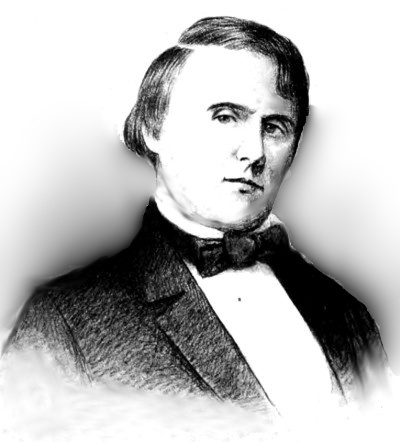
COLONEL WILLIAM L. CRITTENDEN.
Brecks, for Brake.
Brees. Vide Breese.
Breese, a form of Brice, being the Norman-French pronunciation.
Breeze. Vide Breese.
Bren, armorially identified with Brend.
Brennard, for Burnard.
Brery, or De Brereto, Breuery, near Vesoul, France.
Breton, from Bretagne. Baronial families in England (Devon, Bucks, Lincoln, etc.).
Bretell. Normandy, 1126.
Brett, from Brette in Maine, or, possibly, short for Breton. Geoffry le Bret was one of the Barons of Ireland.
Brettell, Lords of Gremonville, Normandy (Des Bois). Bretel, Kent, 1130. Bretel is near Alençon.
Brettle, for Bretel.
Breun, or Brewn, for Brun. Vide Brown.
Brew, one of the forms of Breux, Brews, or Braiose.
Brewer, (1) from Brovers, or Brueria, now Breviare, near Caen. Seated in Devon at the Conquest. (2) From the English translation of Braceator, or Braceor. Vide Brazier, Bracher.
Brewhouse, for Brewis, or De Braiose, a baronial family, from Braiose, near Argenton, Normandy. Branches in Ireland, Wales, Suffold, Sussex, Norfolk, Hants "and elsewhere." The name is frequently written Breose, Brewes, and is totally different from that of Bruce or Brus, with which it has often been confounded.
Brewn. Vide Breun.
Brian, armorially identified with Bryan.
Briant, for Breaunt, Breant, or Breante, near Havre. Fulco de Breante, or De Beent, England, temp. Henry VIII. (Roger Wendover.)
Brice, from St. Brice, near Avranches, Normandy. Robert de St. Brice, Normandy, 1180.
Brickdale, from Briquedale, Normandy. The derivation of the name from "Brickdele, Lancashire," is doubted, on the apparently sufficient ground that there is no such place.
Bride, or St. Bride, or St. Bridget. Vide Bridgett.
Bridge, or De Ponte, Normandy, 1180; England about the same time. Bridges, 1328, Middlesex.
Bridgett, for Brichet. Vide Briett.
Brient, for Brent or Briant.
Brier. Vide Bryer.
Briett. Occurs in Normandy, 1180. Ralph de Brecet, England, 1272.
Briley, from Broilly, near Valognes, Normandy. William de Broleio, 1180-95. Broily, Bedford, 1086. Bruilli, Lindores, Scotland, 1178.
Brind, armorially identified with Brend.
Brine, for Broyne, Brun, Browne.
Brinson, or De Briançon, Middlesex, 1189. Giles de Brianzon, 1324.
Britain, for Breton. (Lower.)
Brittain, for Britain.
Brittan, for Britain.
Britten, for Britain.
Brixey, from Brèze, Anjou; De Brexes, Lancashire, 1199.
Brize, for Brice.
Broach, for Brock.
Brock, from Broc, Anjou; Robert de Broc, England, 1189; also Nigel and Ranulph de Broc.
Brocke, for Brock or Broc. (Lower.)
Bronaker, from Broncort, near Langres, France. Roger Bruncort, Normandy, 1199. Probably same as Bruencort and Brucort. (1180-98, Normandy.)
Brond, for Brand.
Brontofl, from Bernetot, near Yvetol. John de Bernetot held lands in Normandy, temp. Philip Augustus. The name of Bernetôt in Normandy at length changed to Bernadotte—the name of one of Napoleon's marshals. Hence, the royal family of Sweden. Carew Isaac Taylor remarked at Newcastle in 1889 that the royal families of Europe were of Scandinavian origin. But for the Norman derivation of the Bernadottes, here explained, the royal family of Sweden might have appeared to be an exception.
Brook, for Broke. (Lower.) Brooks, for Brock; Brookes, for Broke. (Lower.)
Brosee. Brúsi, Brozi (old Norse). Brosee, now pronounced Brozee. William Brosee, the progenitor of the family in Kentucky, was a soldier in the Russian campaign under Napoleon. Among the interesting "documentary" proofs of this service (now in possession of the family) is a portrait of the old campaigner in his French uniform.
Broughton, a branch of Vernon; "Broeton," Stafford, Thirteenth Century. The arms concur with the descent from Vernon.
Brown. Vide Browne.
Brown. Gilbert le Brun, Normandy, 1180. The name Brunus or Le Brun frequently occurs in Normandy, 1180-98. Many Normans were Brun, or Browne; but, in England, all Brownes were not Norman. The line of Hanno le Brun, Cheshire, temp. Henry II, is armorially connected with an Irish line. William Brone witnessed the charter of Dunbrody, 1178; Nigel le Brun had a writ of military summons, 1309, and Fremond Bruyn was one of the barons of Ireland, 1315-17. Richard de la Ferte accompanied Robert of Normandy to Palestine in 1096. He had eight sons, the youngest of whom, surnamed Le Brun, settled in Cumberland, where he had baronial grants, temp. Henry I. The family of De la Ferte, also called Le Brun, long flourished in Cumberland. The name Le Brun gradually changed to Broyne, Brown, and Browne. Robert le Browne, M. P. for Cumberland, 1317-1339, was grandfather of Robert, from whom descended the Viscounts Montague, the Marquises of Sligo, and the Barons Kilmaine.
Brownett. Robert Brunet, Normandy, 1209.
Brownlow. The Brownlows, Lords Lurgan, bear the arms of the De Tankervilles, Chamberlains of Normandy. Vide Chamberlain.
Bruce, from the Castle of Brus, or Bruis, now Brix, near Cherbourg, where are the ruins of an extensive fortress built by Adam de Brus in the Eleventh Century. Hence the Kings of Scotland, the Earls of Elgin, the Baronets Bruce.
Brudenell, or De Bretignolles, from Bretignolles near Alençon, Normandy. William de Bretignolles, in 1263, had a writ of summons to attend with his military array at Oxford. From this family descended Sire Robert Brudenell, Chief Justice of the Common Pleas, 1520. The orthographic modifications of this Norman patronymic (from Bretignolles to Bredenell, to Bredenhill, and Brudenel) are clearly traceable upon the records.
Bruen, armorially identified with Bruin, with Brun, Le Brun, or Browne, of Cheshire.
Brunes, for Brun, now Brown.
Brunker, armorially identified with Brounker.
Brus. Vide Bruce.
Brush. Richard Broche, Normandy, 1198.
Brushett. Chapon Broste, Normandy, 1198. William Bruast, England, 1199.
Bryan, or Briowne, from Brionne, Normandy. A branch of the Counts of Brionne and the Earls of Clare and Hertford, descended from Gilbert, Count of Brionne, son of Richard I of Normandy. Wido Brionne of the Welsh line had a military court of summons, 1259. About this time the name was changed to Bryan, and the Barons of Bryan inherited it. William Jennings Bryan seems to have been, prenatally, a Kentuckian.
Bryant, for Briant.
Bryson. Vide Brison.
Buckle, or Buckell. Identified by the arms (a chevron) with Bushnell. Hence the able writer Buckle.
Budgell, for Bushell.
Budgett, for Buckett.
Buggins. Bogin, Normandy, 1180. Bogun, Derby, 1270.
Buist. Roger Baiste, or Buiste, Normandy, 1198.
Buley, or Bewley, from Beaulieu.
Bullard. A form of Pullard or Pollard.
Bullett. Beringer Bulete, Normandy, 1180. Iorceline Bolet, 1207. Normandy. In Kentucky, the Bullitts justify their Norman descent. They have achieved distinction in many lines.
Bullivant, or Bonenfant. Normandy, temp. Henry V; Cambridge, 1253. Bonenfant.
Bullon, or Bullen. A form of Boleyn. There is Bullen (or Boleyn) blood in Kentucky.
Bully, for Builly. Vide Bingham.
Bulwer. Vide Wiggett.
Bumpus, from Boneboz, Normandy.
Bunce, for Bence.
Bunker, for Boncœur. (Lower.)
Bunn, from Le Bon. (Lower.)
Burchell.
Burd, for Burt.
Burden, a familiar name.
Burden. Vide Burdon. "Burdens' Grant" (Virginia).
Burdett. French Bourdet. Vide Battle Abbey Roll.
Burdett. From the Bordets, Lords of Cuilly, Normandy. Seated in England at the Conquest. Baronets Burdett-Coutts.
Burdon. Bordon 1180, Normandy. Robert Bordon, Yorkshire, 1255.
Burfield. De Bereville, De Bareville, England, 1789. Sometimes Berewell.
Burges, Burgess. Simon de Borgeis, Normandy, 1195. Ralph Burgensis, 1198.
Burgess is an old way of spelling Burges.
Burgoyne, Burgon, Burgin. De Bourgoyne, probably Gothic, from Burgundy. In 1083 Walter Burgundiensis, or Borgoin, held lands in Devon.
Burke. Vide Burgh.
Burley. Roger de Burlie, Normandy, 1198. "White Burley," Kentucky.
Burnett. The Scottish form of Burnard. From Roger de Burnard. The name became Burnet in 1409. Bishop Burnet of Salisbury, celebrated writer, is of this gens.
Burney, a form of Berney. Vide Berney. The name of a well-known family in Kentucky. James G. Birney was the first Free-Soil candidate for the Presidency.
Burr. Robert, Roger, and Peter Burre occur in Normandy, 1180. Gilbert le Bor, England, 1227. Aaron Burr was a conspicuous and dramatic figure in the early history of Kentucky. Professor Shaler, the eminent Harvard professor, writing of Aaron Burr's expeditionary project, says that the Kentuckians "had inherited the spirit of the Elizabethan English"; and that the mass of the Kentucky people were always "filibusterish." There is not a decade in their history—he adds—that we do not find some evidence of this motive, to wit, "a natural hunger for adventure."
Burrell, or Borel. Normandy, 1180. Burrells, Burrill.
Burrough. (1) for Burgh; (2) for Burys, Burroughs, Burrowes.
Burroughs. Vide Burrough or Burgh.
Burt. William Berte, Mortanie, Normandy, 1203. John Berte, England, 1272.
Burton, or De Richmond. One of the family bore the feudal dignity of Constable of Richmond. The founder was Viscount of Nantes, Bretagne. The Baronets Burton.
Bury, from Bourry, near Gisors, Normandy. Armorially identified with the family of Bury, Earls of Charleville.
Busain, from Buisson, in the Cotentin.
Bushe. Hugh de Bucis, Normandy, 1180.
Bushwell, for Boswell.
Busse. Armorially identified with Bushe.
Butcher, for Bourchier.
Butler, or De Glanville. This family derives its name from Theobold Walter, the first butler of Ireland, to whom that dignity and vast estates were granted by Henry II. The Butlers bore the arms of De Glanville, a family of Glanville, near Caen.
Butler. A name of peculiar distinction in the heraldic genealogies. The Butler or De Glanville family derives its name from Theobald Balton, temp. Henry II. The name has lost none of its distinction in the New World. The Butlers of Kentucky are thoroughly Anglo-Norman in their fighting instincts. All the male members (5) of this branch were officers in the Revolution; all their sons but one were in the War of 1812; nine Butlers of this branch were in the War with Mexico; and in the Civil War every male descendant of Captain Pierce Butler (of Kentucky) was in the Confederate Army (vide Historic Families).
Butt, for Bott. A name made conspicuous in recent times by Sir Isaac Butt. Vide Butts, Boot.
Butter. Earls of Larnsborough, descended from Hugo Pincerna, who, in 1086, was a baron in Bedford. Hereditary butlers of the Earls of Leicester and Mellent. Several other families of distinction bore the name Butler: (1) the Butlers of Cornwall and Kent; (2) the Butlers of Essex; (3) the Butlers, Barons of Warrington, feudal butlers of Chester; (4) the Butlers of Bramfield, and others.
Butterfield, for Botevyle.
Buzar, for Buzzard.
Buzzard. Hugo and William Buscart, Normandy, 1198. Henry Boscard, Salop, 1199.
Byars, Byers, De Biars. (Lower.) In Kentucky, a familiar name. The Byars family of Mason was connected with the famous Johnston family.
Byles. Armorially identified with Boyle. A distinguished judge bore the name.
Byng, from Binge, Gerault, Normandy. Reginald Binge was one of the gentry of Essex, 1433. No one is likely to forget the Byng, who was shot pour encourager les autres.
Byron, or De Beuron, near Nantes, Normandy. Sir Richard Byron married, temp. Henry IV, the daughter and heiress of Colwick of Notts; and from him descended Lord Byron, the poet.
Cabban, or Cadban, from Cabanne or Chabannes in Perigord. Bartholomew Caban of Berkes, living 1322.
Cabbell. Walter Cabel is on record as having witnessed a charter in Wiltshire, in the Eleventh Century. This Walter Cabel came over with the Conqueror. The Normans used the word caballus, instead of equus, for horse. It was so used in Domesday Book, and it seems certain, says Doctor Brown, that the family derived its surname from that word. Hence, also, caballero. Doctor Brown gives at least forty-six different ways of spelling the name. Geoffrey Cabell owned land in Caux, Normandy, in 1180. The Cabells of Virginia are descended from the Cabells of France, in Somersetshire. In 1726 we find Doctor William Cabell in St. James Parish, Henrico, then deputy sheriff to Captain John Redford, High Sheriff of Henrico (Shire-Reeve), officially the first man in the county.
In June, 1785, "Polly" Cabel was married to John Breckinridge.
The records show that Mary H. Cabell and John Breckinridge had issue:
(1) Letitia Preston. (2) Joseph Cabell. (3) Mary H. (died in infancy). (4) Robert H. (5) Mary Ann. (6) John. (7) Robert Jefferson. (8) William Lewis.
The political and social history of these families and their annexions are quite familiar to the people of Kentucky and the South.
Cadd, or Cade. Arnulf Cades, Normandy, 1184. Eustace Cade, Lincolnshire, 1189.
Caffin. A form of Caufyn, or Calvin. Cavin, or Calvin, occurs in Normandy, 1180.
Cain, from Cahaignes, Normandy.
Cain. Sometimes of Hiberno-Celtic origin; generally, however, of Caen, or De Cadomo, Devonshire, 1083.
Caines, from the lordship of Cahaignes.
Caldecote. A Norman family bearing an English surname.
Cale. A form of Kael. A Breton name. Vide Call.
Calf. An English form of the Norman name Calxus, or Le Chauve. William Calf, Ireland, 1322.
Call, or De Kael, from Bretagne or Poiton. Walter Cael, envoy to England, Thirteenth Century.
Callis. Callass, Cales, the usual forms of Calais in Sixteenth Century.
Calver. An abbreviation of Calvert.
Calvert, from Calbert, or Cauburt, near Abbeville. The "b" being changed into "v," as usual, 1318. Henry Calverd was Member of Parliament for York. The Calverts of Maryland (Lords Baltimore). A familiar name in Kentucky. Formerly (in mid-century days and earlier) pronounced Colbert; now, we only hear Calvert.
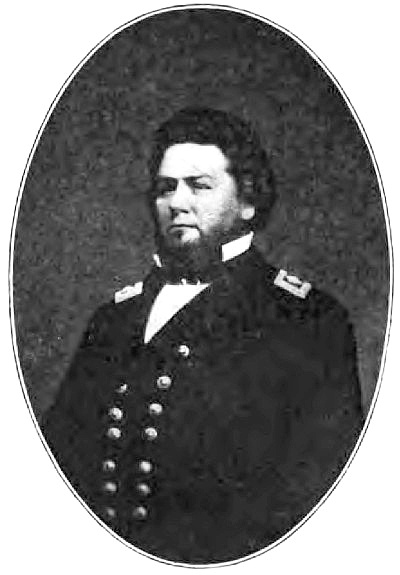
GENERAL WILLIAM NELSON.
Cambray, from the Lordship of Chambrai, Normandy. Sire de Cambrai was at the Battle of Hastings, De Chambrai, Leicestershire, 1086. Corrupted to Chambreys, or Chambreis.
Camel, from Campelles, or Campell, in Normandy. Geoffry Campelles, Normandy, Twelfth Century.
Cameron. Scoto-Celtic. But there is one English family of the name derived from Champroud, near Coutances. Ausger de Cambrun, Essex, 1157. Robert Cambron and John de Cambron, Scotland, 1200 and 1234. Cambronne, of the Guard, of fragrant memory.
Camfield, or Camfyled, a corruption of Camville, from Camville, near Coutances.
Camidge.
Camp, from Campe, or Campes, Normandy. John de Campes, England, 1199.
Campbell. Vide Beauchamp. Norman-French, de Camville (de Campo-Bello), vide British Surnames, Barber (London, 1903). As early as 1812, Doctor John Poage Campbell, of Kentucky, in a series of "Letters to a Gentleman at the Bar" (Colonel Joseph Hamilton Daveiss), gave a striking illustration of the high quality of his scholarship in his anticipation of Sir Benjamin Brodie and Professor Tyndall of our day in the detection of the germinal ideas from which the Darwinian theory of evolution is derived (vide Green's Historic Families). An interesting illustration of the intellectual life of the pioneer period in Kentucky.
Campion. William Campion, Normandy, 1184. Geoffry Campion, England, 1194. "Campian," American Colonel (Lothair).
Campton.
Candy, from Cande, near Blois. Nicholas Candy, Normandy, 1195.
Cane, for Caen. (Vide Cain.) Cany. Richard Cane, Normandy 1180. Walter Cane, England, 1272.
Canfell, for Camville.
Cann, from Cane, Normandy. Geoffry de Can, Normandy, 1195. Richard de Canne, England, 1272. (Cone, from bosne: loc n. France.) In Kentucky, Conn.
Cannel, from Chanel, now Chenean, near Lille.
Cannon. Radulfus Canonicus, or Le Chanoin, of Normandy. Robert Canonicus, England, 1189.
Cant.
Cant, for Gant.
Cantis, for Candish, or Cavendish. A Norman baronial family.
Cantor (translated Singer). Gauridus Cantor, Normandy, 1180. Christian le Chaunter, England, 1272.
Cantrell. William and Roger Cantarel of Normandy, 1188. Alberid Chanterhill, England, 1199. Richard Chaunterel, 1272. Kentucky, U. S. A., Cantrill, 1906. Judge Cantrill, Court of Appeals, Kentucky.
Cantwell. Cantelo. Chanteloup.
Cape, or Capes, from Cappes. Vide Cope.
Capel. A Breton family from La Chapelle, Nantes. Rainald de Capella, Essex, 1066. (Domesday.) William de C., Suffolk, from whom the Lords Capel, Earls of Essex. Capel, from La Chapelle, near Alençon. Seated in the West of England. Capell, for Capel. Monsignore Capel figures vividly in Lothair.
Capern, for Capron. Richard Cepron, Normandy, 1180. Robert Capron, England, 1194. Mrs. Laura Lee Capron, of Baltimore, Md., was a daughter of Richard Henry Lee, of Kentucky.
Caplin, Capelen, or Chaplain. William Capellanus, Normandy, 1180. Richard C., England, 1190. John Chaplyn, Lincoln, 1443.
Capun. Vide Capern.
Carabine, for Corbin. Robert Corbin, Normandy, 1180. Geoffry Corbin, England, 1194. Walter Corbin, England, 1127.
Carbonell, Normandy, 1180. Carbonel, Hereford, 1086. The family long flourished in Hereford, Bucks, and Oxford.
Carden. An English local name. Also a form of Cordon, Cordun: Normandy, 1180; Essex, 1086.
Cardwell, for Cardeville, or Cardunville, from Cardunville, near Caen.
Cares, from Chars, Normandy.
Carew. A branch of Fitzgerald. Cary, Carey.
Carle, for Carel, or Carrell.
Carles. Vide Carless, or Charles, from St. Karles de Percy, in the Cotentin. Charles family, in Thirteenth Century, seated in many parts of England. Carlish, for Carless.
Carne. Geoffry le Caron, Normandy, 1180. Wischard de Charun, England, 1272.
Carnell, from Carnelles, near Evreux. Geoffry de Carneilles, Normandy, 1180. Armorially identified with Charnell. In England, usually styled Charnel or Charnels. Carneal, a distinguished name in Kentucky; Thomas D. Carneal, one of the founders of Covington, in that State.
Carpenter. Bernard Carpentarius, Normandy, 1180. William Carpentarius, father of Henry Biset, baron, temp. Henry II.
Carr, or Kerr, q. v.
Carrell, or Caril, from Caril, near Ligieux. James II, after the loss of his throne, created a Baron Caryl.
Carrey, for Carey.
Carrington, for Carenton; from Carenton, in the Cotentin. Robert de Carenton granted the mill of Stratton, Wilts, to Farley Abbey, 1125.
Carritt, or Caret, for Garet.
Carrol. In England, a form of Carrell. In Ireland it is Celtic.
Carson. Probably from Corson, Normandy. Carcun, Thirteenth Century, Suffolk.
Carter. William Cartier of Normandy, 1195; 1203, William of Warwick. Thirteenth Century Ralph C. Worcester. Colonel Carter, of Cartersville, Va.
Carterfield, or Quaterville, Normandy, 1205.
Cartwright. Armorially identified with Cateryke, or Catherick. A branch was seated in Notts; another in Cambridge, and the name there changed from Cateryke to Cartwright. Of the former branch was the celebrated reformer, and of the latter, Thomas Cartwright, the great Puritan leader, under Elizabeth. Peter Cartwright, an able revivalist, was equally famous in the States of the Southwest.
Carvell. Ranulph de Carville, 1180; Robert Carvel, 1195, Normandy. England, 1199. Richard de Carville. The English derivation of this patronymic has given a name to a popular American novel.
Cary, or Pipart. Waldin Pipart held Kari, 1086. (Domesday.) William Pipart held Kari, whence the name of De Kari, or Cary. Hence, the Earls of Monmouth and Viscounts Falkland.
Case, for Chace. Armorially related to Chancy, or Canci. Vide Chace.
Casey, or Cassy. When English, it is a branch of Canci, with which it bears armorial relations. Robert de Canecio, 1180, Normandy; Geoffry de Chancy, England, 1194. Chace, Chase, or Chousey, armorially identified to Casey. In various forms appears in all parts of England; also, Hiberno-Celtic.
Cash, for Cass.
Cass. A form of Case, or Chace.
Cassell, from Cassel, Flanders. Hugo de Cassel, London and Middlesex, 1130. Vide Cecil.
Casson, for Gasson.
Castang, for Casteyn.
Castell. William Castel, Normandy, 1198. Alexander de Castro, Castel, England, 1199.
Castleman. The castellan of a castle. Ancient name; distinguished in Kentucky.
Castro, for Castell. Casto?
Cate, or Catt. William Catus, Normandy, 1180. Rudulphus Cattus, 1189. Alexander le Kat, England, 1272.
Catherick. Vide Cartwright.
Catlin, Catline, Castelline, from Castellan, bearing three castles (armorial). De Casleltan, Normandy, 1180. Sire Reginald de Casleltan, England, 1272. An eminent Chief Justice of England bore the name of Cattine. Catling, for Catlin; also, Catlyn, Catlin, a famous American painter—an illustrator of our aboriginal life.
Cato, from Catot, or Escatol, in Normandy. Hugh de Escatol, Salop, 1189.
Caton. Katune, Normandy, 1198. England, De Catton.
Cattel, or Chatel. Foreign origin—Du Chastel, or De Castello.
Cattermole, from Quatremealles or De Quatuor Molis (locality not ascertained); also, Cattermoul, Cattermull.
Cattle, for Cattel.
Cattlin, for Catlin.
Catton. Vide Caton.
Caudel, for Caudle. Roger Caldel, or Caudel, Normandy, 1180. Anistina and William Caudel (Mr. and Mrs. Caudle?), Cambridgeshire, 1272.
Caulcott. Vide Calcott.
Caulfield, Calvil, Calfhill, or Caville. Vide Cavell. Seated in Normandy, 1180. In England, Gilbert de Calvel, Northumberland, and Richard, of Kent, 1202. Sir Toby Caulfield, a renowned commander in Ireland, descended from Bishop of Worcester, temp. Elizabeth. Hence, collaterally, Earls of Charlemont.
Cave. John Cave, Adelina de Cava, Normandy, 1180. Sire Alexander de Cave, commissioner of array and justiciary. Name of Norman origin. From Cave, in Yorkshire.
Cavendish. The Gernons were a branch of the Barons of Montfichet (or Montfiquet, or Montfiket), in Normandy; so named after their Scandinavian ancestor. The Montfichets were hereditary standard-bearers, or military chiefs of London. The younger branches retained the name of Gernon. Alured Gernon, brother of William de Montfichet, had estates in Essex and Middlesex, 1130. Geoffry Gernon, of this line, was surnamed De Cavendish, from his residence at Cavendish, Suffolk, 1302. He was grandfather of Sir John Cavendish, Chief Justice to Richard II. Cavendish and Gernon bear indiscriminately the same arms. The Dukes of Newcastle, Devonshire and other great families bearing the name of Cavendish (pronounced Candish), descended from the Gernons and Montfichet. The genealogists differ on these points, but the old heralds seem to agree.
Caville, or Cavill, identified by its arms (a calf) with Calvel, or Cauvel. Robert Cauvel, Normandy, 1198. William Cavell of Oxfordshire, 1292.
Cawdery, or Coudray, Cawdray. A branch of the Beaumonts, Viscounts of Maine. (Vide Beaumont.)
Cawley, for Colley.
Cawse, Calz, or Caux, from Caux, near Abbeville. Hence the English surname, Cox or Coxe.
Cayley, from Cailly, near Rouen.
Cecil, Cicelle, or Seyssel, from Kessel, or Cassel, east of Bruges, Flanders. Its arms (escutcheon charged with the lion rampant of Flanders) are still borne in Flanders by a family of the same name. Walter de Alterens, descended from Robert Fitz-Hamon, living 1165, is derived the noble house of Cecil. The great English statesman, Lord Burleigh (William Cecil) was of this family.
Ceeley, or Seily, from Silly, Normandy.
Chabot, or Cabot. Robert Kabot, 1198. Roger Cabot, of England, 1272.
Chace, Chase, or Chausey. Armorially identified, also, with Chancy or De Canci. The name appears in all parts of England as Chancey, Chancy, etc.
Chad, for Cadd.
Chaff, from Chause. Vide Cafe.
Chaffer, Chaffen, from Chevricres, Normandy, 1195.
Chaffey, or Chaffy, a form of Chafe, or Chaff.
Chaffin, for Caffin. (Lower.)
Chalie, for Cayley.
Challands, for Chalas. Vide Challen.
Challen. A branch of the Counts of Chalons.
Challenger, or Challenge, from Chalenge, Normandy.
Challoner. Probably from Chalons.
Chamberlain, Robert, Herbert, William Henry Camerarius, or Le Chamberlain, Normandy, 1180-98. England, 1194-1200. Henry, Hugh, Ralph, Robert, Thomas, Walter, Richard Turbert Camerarius. The principal family of these was descended from the Barons of Tancarville, Chamberlains of Normandy; also, Chamberlaine, Chamberlin, Chamberlayne.
Chambers, or De Camera. William de Camera, England, 1189, Oxford, Essex, Sussex. The family appear early in York, Wilts and Norfolk. Chambre, or Camera, was in Brabant, the family seeming to have come thence at the Conquest. Governor John Chambers, of Kentucky, was one of the aides of General Harrison at the battle of the Thames;—was appointed Territorial Governor of Iowa by President Harrison.
Champ. Vide Camp.
Champin, for Campion, or Campian.
Champney, from De Champigne, Normandy.
Chancellor, Canceller, Chanslor. Chancillor, a Norman name. Ranulph Cancellarius.
Chaney, for Cheyney.
Channell. Armorially identified with Charnell. An eminent judge bore this name.
Channon. Vide Cannon.
Chant.
Chantry, from Chaintre, near Macon.
Chappel. Vide Capel.
Chappius. Calvus, Normandy, 1195. England, Cabous, 1311.
Charge, from Gaurges, in the Cotentin.
Charles. Vide Carless.
Charnell, for Carnell.
Charniter.
Charter, for Chartres.
Charteris. The Scottish form of Chartres.
Chartres. Ralph Carnotensis (De Chartres) held estates in Leicester, 1086. Ébrard de Carnot, 1148, Winchester.
Chase. Vide Chace.
Chattell. Vide Cattell.
Chatwin, for Chetwynd.
Chaucer. Geoffrey Chaucer, the poet, married a daughter of Sir Paine Roet, sister of John of Gaunt's wife, and was valectus, or esquire, to Edward III. The family of Chaucer, Chaucier, Chaucers, or Chaseor, had been seated in the eastern counties, and some members were in trade in London. The name, Le Chaucier (Calcearius) may have arisen from some sergeantry connected with the tenure of land. Probably a branch of the family of Malesoures.
Cheek. William Cecus occurs in Normandy, 1198; and in Gloucester, 1189. Walter Chike of England, 1272.
Cheiley, or Ceiley, a form of Cilly. Vide Ceely.
Cheney. Vide Cheyney.
Chenoweth. The history of this name is of peculiar interest. John Trevelesick, according to an old London record, married Elizabeth Terrel. Their son, John, received from his father a tract of land upon which he built a house, and called the place "Chenoweth," doubtless from an oak grove or woods upon the land. The initial syllable of the name is not uncommon in the genealogical nomenclature of Normandy; and Cornwall is notably a land of Norman castles and druidical groves of oak. The Trevelesick family, as was a custom of the period, took the name of the place, and was henceforth known as "Chenoweth." This change may have been partly induced by the circumstances that there was a law which required the people to take names that were "easy" to the English. There seems to have been an early etymological connection between the familiar Virginian names "Chenoweth" and "Chinn." Vide Chinn, Cheyne, Chêne, Chenoie, and the Scandinavian suffix with. In a list of names from Domesday Book we note the following: Cheneuvard, Chenuard, Cheuvin, Chenut. The Chenoweths of Kentucky are from Berkeley County, Virginia, the progenitor of the family being a "fighting pioneer."
Cherey. (1) De Ceresio. The early form, Cerisy. (2) Also from Cheeri, William Cheeri of Normandy, 1180.
Chesney, from Quesnay, near Coutances; De Chesnete in England.
Chevalier (i. e. Miles), Normandy, 1180. Reginald Miles, England, 1272.
Chew. William de Cayu, Normandy, 1180. Walter C. Kew, England.
Cheyne. Cheyney, Chinn, from Quesnay, near Coutances. Robert de Chesneto, Bishop of Lincoln, 1147. The Lords Cheyny were of this stock. Chinn is an old family name in Kentucky, and seems to be genealogically connected with the Chenoweth gens. (Vide Chenoweth.) The progenitor of the Chinn family in England and America was one Thomas de Cheyne, of Norman-French descent. Rawleigh Chinn, gent., married Esther Ball, a connection of the Washington family, and came to America about 1713 and settled in Lancaster County, Virginia. (See the "Register" for 1907, page 63.)
Chick, or Chike, a form of Cheak (Robson). A prominent Kentucky family (Boyle).
Child, the English form of Enfant. William and Roger le Enfant, Normandy, 1180. William and John Child, England, 1180.
Childers. A corruption of Challen or Challers. Vide Smithson.
Chinn. Vide Cheyney, Cheyne.
Chitty. In 1272 was Cette. Roger Cette, Norfolk.
Chivers, or Cheevers, from La Chievre, or Capra, Normandy.
Choicy, a form of Chausy.
Chollett. Collett.
Cholmelsey, or Cholmondely. William de Belwar, or Belvar, or Belvoir, married Mabilia, a daughter of Robert Fitzhugh. From this William de Belwar descended the House of Cholmondely.
Christian. Thomas and William Christianus, Normandy, 1180. Walter Christianus, England, 1199. Crestien, Cristian, Crestin, England, 1272.
Christmas. A translation of the Norman-French Noël.
Chucks, a form of Chokes, or Chioches, from Choquet, Flanders.
Church. Vide Search.
Churchill, or De Courcelle. The Churchills of Dorset, ancestors of the great Duke of Marlborough, are traceable by the ordinary heralds' pedigrees to the reign of Henry VII. The family of Wallace (Walensis) was a branch of the Corcelles. From this family came the Great Duke. One of the later Dukes of Marlborough published a charming account of his visit to Kentucky, just after the war. He was entertained at "Ashland" by Major Henry C. McDowell.
Clare. Two families. (1) De Clare of Browne. (2) The Norman House of De Clere.
Claret. Walter Clarté, Normandy, 1180. John Clarrot, England, 1272.
Clark. George Rogers Clark.
Clay, from Claye, near Méaux. The name is borne by the Baronets Clay. The Clays of Bourbon and the Clays of Fayette, says General Cassius M. Clay, are descended from the same remote ancestor.
Cliff, or Clift, Clive.
Cochrane, Cochran. The family were resident in County Renfrew (says Lower) for many centuries. Vide Peerage, Earl of Dundonal. Renfrew has strong associations with John Knox, and according to Doctor MacIntosh, the vigorous race he represented had a strong infusion of Norman or Scandinavian blood. A recent legal decision connects the name of Cochrane with one of the most important cases ever brought before a Kentucky judge.
Cockerell.
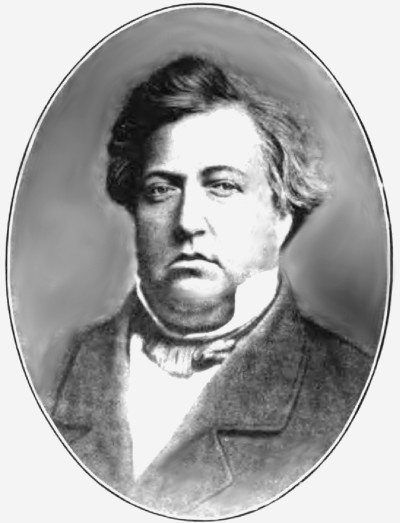
HONORABLE HUMPHREY MARSHALL.
Collins.
Collins. William de Colince or Colimes held lands at Chadlington near Oxford. Coulimes was near Alençon. Hugh de Coulimes, 1165, held a barony of four fees.
(1) The Collins family or families of Kentucky have been notably distinguished. General Richard H. Collins was a lawyer of great ability. His sons, also lawyers, were brilliant and cultivated men. John A. Collins was a member of the Cincinnati bar, and a partner of Senator Pugh. Charles and William were writers of ability and distinction. Richard was a gallant Confederate soldier and the artillerist of Shelby's command. Their father welcomed John Quincy Adams to Kentucky when he made his famous speech in vindication of Mr. Clay.
(2) Judge Lewis Collins was a native of Kentucky and derived from pure Virginian stock. He was a man of the highest character. His history of Kentucky, a valuable work, was officially recognized by the Legislature of the State. His son, Doctor Richard H. Collins, a man of marked and varied ability, continued his father's historic labors; revised the volume first published, added another volume, and increased the quantity of matter fourfold. No one has bestowed higher commendation upon this work than Professor Shaler, himself an historian of the State.
Combs.
Cooke.
Corbett.
Corbin.
Corker. De Corcres, Normandy, 1180-95.
Costello, from Mac Ostello, descendants of Hostilio de Angelo, settled in Ireland, temp. Henry. In this instance the new settler took the prefix Mac, not an uncommon occurrence in those days. The native "Macs" and "O's" of Ireland were never at peace, and the Galwagians repudiated both. When the Normans came they gave the Celts "Fitz," and characteristically enough the Celts, who were dissatisfied with "O" and "Mac," have been having "Fitz" ever since. Lower says that English settlers sometimes assume the prefix "Mac," apparently from a desire of assimilation to the Celtic race. In Ireland "O" was held in higher esteem than "Mac" In Scotland, it was just the reverse.
Courtenay.
Cowan.
Cox, or Coxe; Cocks, Le Coq; Coke; Cocus; also, De Caux.
Creasy.
Cripps. Armorially identified with Crisp.
Crittenden. A fine old name from Kent. The Crittendens of Kentucky have nobly illustrated the name. The founder of the family, John Crittenden, was an officer in the Revolutionary War. He came to Kentucky at the close of that struggle, and settled in Woodford, the heart of this State. His sons, John, Thomas, and Robert, were eminent at the bar, and Henry, who devoted his life to agriculture, was equally conspicuous for talent. John J. Crittenden received his elementary education at the local schools; afterwards attended Washington Academy (now Washington-Lee University), and completed his studies at William and Mary. The effect of his classical training is shown in the clearness, finish, and felicity of his published speeches; his peculiar power in forensic oratory must always be a matter of tradition.
The name "Crittenden" is imperishably associated with that of Kentucky. It is peculiarly a family of soldiers, lawyers, and political leaders. One soldier of the name was immortalized by his tragic fate—William Crittenden, the proto-martyr of Cuba Libre.
The history of the family is the history of the State.
Crockett.
Crook, or Crooke.
Crozier.
Cummings, or Cumming.
Cunditt.
Currier. Richard Coriarius, Normandy, 1180, from Angerville, in the Cotentin.
Curtis.
Cuss. A form of Cust. One may be a "Cuss" in Kentucky; but quite as often he is "Cust."
Dade.
Dailey.
Dangerfield, or D'Angerville.
Daniel.
D'Arcy.
Darrell.
Davie.
Davies.
Davis. Mr. Burton N. Harrison, in his graphic "Century" narrative of the Capture of Jefferson Davis, records the last "War" speech of the Southern President. It was addressed to a column of cavalry, under the command of General Duke, at Charlotte, N. C., the soldiers waving their flags and hurrahing for "Jefferson Davis." The speech was brief. He thanked them for their cordial greeting; complimented the gallantry and efficiency of the Kentucky cavalrymen; and expressed his determination not to despair of the Confederacy, but to remain with the last organized band, "upholding the flag." This was all. He said later to his faithful Secretary, "I can not feel like a beaten man."
In a private letter written by Secretary Harrison to his mother about this time (unpublished), he says: "Thaddeus Stevens recently sent us an offer to become one of Mr. Davis' counsel if it were agreeable to us to have him serve." Mr. Harrison's letters to his family are admirably written and full of interest.
It was the trained sagacity of an English statesman which in the midst of universal doubt and misconception enabled him to comprehend at a glance the difficulties encountered by Jefferson Davis in bringing order out of the wild chaos of secession in the Southern States. "He has created a Nation"—said Mr. Gladstone. Doubtless, posterity, in full possession of the facts, will be disposed to let the judgment stand. These facts have never been more ably and accurately stated than in the eulogy by Colonel William C. P. Breckinridge upon that able and daring pilot in this great extremity of the South. The eulogist was competent to speak; he was early in the field; he was close to the inner councils of the war; he saw and shared the struggle in every phase; and at the close, he calmly accepted the results. His clear and rapid summary will carry historic weight:
"When the world once understands how it was possible for the government, inaugurated at Montgomery, without a battalion of soldiers, or a ship of war, without arms or munitions of war, without provisions and military stores; a government not possessing within its borders a single factory at which a single weapon of war, or a single part of a weapon of war, could be manufactured, without credit or funds; a nation with her ports soon blockaded so as to be deprived of access to the markets of the world; a republic composed nominally of thirteen separate States, of which Kentucky, Tennessee and Missouri were practically under the control of its enemy—how such a nation could maintain such a war for a period of four years against the United States of America, and bring into the field an army more numerous than its entire adult white population, feed it, clothe it, transport it, arm it, take care of it and keep it in such condition that it won unprecedented victories, has been an unsolved mystery. When it is added that during those years personal freedom was maintained, order preserved, courts kept open and no rights usurped, thinkers will conclude that he who was the head and life, the spirit and chief must have been a very great man."
The London Times, in its obituary notice, said: "As he was the first to perceive the true nature of the struggle, so was he the last to admit that the battle was lost. He fought a losing battle with unquestionable ability and unflinching courage. His achievements will secure him an honorable place in his country's history."
In the last public address of Jefferson Davis, delivered in the capitol of Mississippi to the Legislature in joint convention, he said: "The people of the Confederate States did more in proportion to their numbers and men than was ever achieved by any people in the world's history. Fate decreed that they should be unsuccessful in the effort to maintain their claim to resume the grants to the Federal Government. Our people have accepted the decree; it, therefore, behooves them, as they may, to promote the general welfare of the Union; to show to the world that hereafter, as heretofore, the patriotism of our people is not measured by the lines of latitude and longitude, but is as broad as the obligations they have assumed and embraces the whole of our ocean-bound domain. Let them leave to their children and children's children the grand example of never swerving from the path of duty, and preferring to return good for evil rather than to cherish the unmanly feeling of revenge."
Davison.
Davy, or Davey.
Dawe.
Dawkins, or Dakin.
Dawson.
Day.
Deacon.
Dean.
Dearing, or Deering.
DeLacy, or Lacy.
Delmar. An abbreviation of De la Mare.
Denis, or Dennis.
Denney, or Denny.
Denton.
Derry, for D'Arry or D'Airy.
Desha. (Fr. Deshayes.) A grandson of Governor Desha of Kentucky, visiting many years ago the Valley of Wyoming, the ancestral home-place of the Desha family, found a venerable scion of the pioneer stock, who invariably spelt his name Deshay. Fields, woods, hedges, etc., give surnames to families. In the following line from an old French writer we find two family names, or at least words familiarly used as such:—On lui dressoit des sentiers au travers des hayes de leurs bois. The name Desha is accented on the second syllable, in Kentucky, this doubtless being the original pronunciation as implied by the ancestral orthography—"Deshay." Beyond the Seine in old Paris; beyond the Latin Quarter and the Faubourg St. Germain, near the fortifications, there stands—or did stand in the closing quarter of the last century—a block of antique villas. One of these was known as the Villa Deshayes. Captain Deshayes, of the French man-of-war Le Grand Joseph, made a gallant fight against two British frigates during the Colonial wars.
General Joseph Desha, after a brilliant military and political career, became Governor of Kentucky in 1824. His administration (says Collins, the old Whig historian) was strong and efficient. The message of Governor Desha of Kentucky, November 7, 1825, says Professor W. G. Sumner of Yale, "deserves attentive reading from any one who seeks to trace the movement of decisive forces in American political history."
Judge Bledsoe (the father-in-law of Governor Desha) is reported to have said that "Desha commenced his career with as sound a set of politics as any man in Kentucky, but it was his misfortune never to change them."
Even Desha's enemies concede that he made a brilliant and impressive appearance upon the hustings. His handsome person and carriage contributed much to this effect. He is described in that Hudibrastic skit, "The Stumpiad" (1816):
"With chapeau-bras and good broad sword, And fine as any English lord."
(Vide sketch and portrait of Desha in No. 18 of the Publications of The Filson Club: Battle of the Thames.)
Devereux.
Devine. William le Devin, Normandy, 1180-95.
Dewey.
Dickens, or Digons. Digin or Diquon, an early "nurse-name" of Richard. Digg, Diggery, Dickman, Digman, Digins, Diggins, "Dickens"—name of the novelist. Also, Dickson, Dickenson.
"Dickins," used as a nickname of Satan, is a contraction of the diminutive Devilkins.
Dietrich. (Scan.) Didrik. Didrich, Diderk, Diderisk. (From a list of Frisian Personal and Family Names—Barber.)
Dimmett, for Diment.
Dimmitt.
Dixie. Armorially identified with Dicey. From Diss, Norfolk, which belonged to Richard de Lucy, Governor of Falaise. The Confederate war-song, therefore, bears a Norman name.
Dodson. The son of Dode, Alwinus Dodesone, occurs in Domesday as a tenant-in-chief. It is an open question whether it is Scandinavian or Anglo-Saxon. Even Lower is doubtful. There is a large connection of this name in Maryland and Kentucky. One branch is connected with the Botelers of Virginia. A good English stock.
Doggett.
Doniphan. Probably an early form of Donovan. By old writers (says Lower) the name is written Dondubhan ("the brown-haired chief")—changed to Doniphan by the familiar substitution of p for b. The Doniphans of Kentucky were a strong race—lawyers, soldiers, physicians, etc. General William Nelson's mother was a Doniphan.
Joseph Doniphan came to the Fort at Boonesborough in 1777. He is said to have been the first school-teacher in Kentucky.
At the battle of Bracito, the Mexican leader of a large force called upon Colonel Doniphan (a Kentuckian) to surrender, with the alternative "no quarter."
"Surrender, or I will charge your lines!"
The answer came at once—"Charge and be damned!"
There was no surrender. The Mexicans lost.
Colonel Alexander Doniphan was a close maternal kinsman of General William Nelson, of Kentucky, and like him in many respects.
Dougles, or Dougless.
Dover, from Douvres or Dovers, Normandy. A baronet family which derived its name from a Scandinavian Dover at the conquest of Normandy, 912. Dover, Kentucky, is doubtless in the same line of descent.
Dowell, for Doel or Dol. Rivallon, Seneschal of Dol, ancestor of the Counts of Dol; connections of the du Guesclins (of France) and Stuarts (of Scotland). Passing into a Celtic environment, a Norman Dol or Dowell would naturally assume the Celtic prefix, "Mac," as in like circumstances English settlers have done. In Lord Stair's list of Macs, he gives Dowale, Douall, Dowell. McDowell is the form the name assumes in Virginia and Kentucky, one branch of the family (McDowells) being known as the McDoles, a traditional pronunciation of the name. The progenitor of the family, Colonel Samuel M. Dowell, was a Colonial leader in Virginia, and conspicuous and influential as a pioneer in Kentucky. He was President of the Convention that organized the State.
The common derivation of "Dowell" is from Dougall, and was intended in the Highlands to apply exclusively to the Lowlander; though quite as applicable to the "man from below." (Vide Lower: Dhu, black; gall, a stranger.)
Downing. Old English name familiar in Kentucky. A loc. n. Worc. (Eng.)
Drake. There is no reason to doubt that the Drakes of Devon were all originally of the same race. They bore a dragon (Draco), showing that their name had been Draco. The father of Daniel Drake came to Kentucky in the closing years of the Eighteenth Century, settling in the rich bluegrass county of Mason. Along with a rifle and an axe, he brought five books to the wilds of Kentucky, to wit, a Bible, a hymn book, an arithmetic, a spelling book, and the "Famous History of Montellion, a Romance of the Ages of Chivalry." "The Letters of Lord Chesterfield,"—borrowed by the father of Daniel from a friend in the neighboring Virginian colony—"fell in mighty close"—says the son—"with the tastes of the whole family." Chesterfield and Montellion:—ideal educators even in this "school of the woods," as it was happily termed by its most distinguished graduate, Doctor Daniel Drake.
Daniel Drake was not only a skillful physician and accomplished scholar, but he was the founder of a famous medical school, and an author whose productions, in the estimation of competent critics, have given him and his country a splendid and enduring renown. His elaborate and systematic treatise upon the Diseases of the Valley of the Mississippi is a work which lays broad the foundations of medico-geographical research in the Western Hemisphere, and foreshadows in masterly fashion the rigorous methods of physical science that are now universally in vogue. The author was an explorer by right of birth. He was a true son of his pioneer father, and a typical scion of an adventurous race. The daring navigator, Sir Francis Drake, the son of a Devonshire yeoman, was a true kinsman in spirit, and probably in blood. The same passion for exploration which drove the one to circle the universal seas in an English keel inspired the other to toil through the vast spaces of a continental wilderness and explore the haunts of pestilence upon the shores of the Mexican Gulf. It is doubtless as the author of that unique work—"The Diseases of the Great Interior Valley"—that Daniel Drake will chiefly be remembered, and certainly no one could desire a better title to remembrance. The motto of his famous "Journal," E Sylvis Nuncius, is a succinct and happy characterization of the man. He was indeed an ambassador from nature, and his credentials have passed unchallenged to this day.
Drewry.
Duckworth.
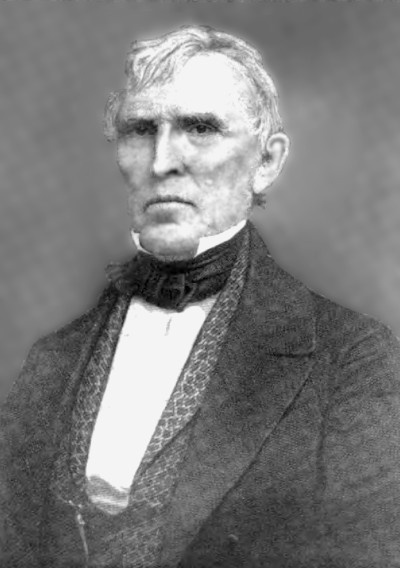
HONORABLE JOHN J. CRITTENDEN.
Dudley.
Duer.
Duncan, or Dunkin.
Duke. Le Duc, Normandy, 1180-98. Radulphus Dux (or Duke), of Bucks, England, 1199. The name keeps its old distinction in Kentucky. It will long survive in social tradition and always hold a high place in the history of the State.
An Anglo-Norman Family. Dr. Basil Duke, born in Calvert County, Maryland, 1766; died in Washington, Ky., 1828; married, 1794, Charlotte Marshall, born, 1777, in Fauquier County, Virginia; died in Washington, Kentucky, April 17, 1817. She was a sister of Chief-Justice Marshall.
1. Thomas Marshall Duke, born 1795, died about 1870; married:
1. Bettie Taylor. 2. Nancy Ashby. 3. —— McCormick.
2. Mary Wilson Duke, born February 7, 1797; married, May 7, 1818, Dr. John F. Henry; died September, 1823.
3. James Keith Duke, born, Washington, Ky., 1799; died August 2, 1863; married, February 5, 1822, Mary Buford.
4. Nathaniel Wilson Duke, born 1806; died at Paris, Ky., July, 1850; married, October 4, 1833, Mary Currie. Parents of General Basil Duke.
5. John Marshall Duke, born, Washington, Ky., October 29, 1811, died in Maysville, Ky., 1880; married Hannah Morton.
6. Lucy Ann Duke born Washington, Ky., January 11, 1814; died Rock Island, Ill.; married, January 20, 1835, Charles Buford.
7. Charlotte Jane Duke, born Washington, Ky., January 20, 1817; died February, 1886; married, January 14, 1840, Harrison Taylor, "War" Speaker of the House of Representatives. (Kentucky.)
The Dukes of South Mason are descended from Alexander Duke of Maryland, a tall, vigorous specimen of the Anglo-Norman breed who lived to be nearly one hundred years of age. His son, Dr. Basil Duke, was a brigade surgeon in the Confederate service.
Durrell, from Durell. Armorially identified with Darrell, Durrant, Durran, Durrock, and possibly Durrett. (Vide Durrett.) Note how slight a change converts the Norman name Clarte into Claret. So, Druett into Durrett.
Durrett. A surname traceable beyond the Conquest, and having all the marks of a Norman surname. If not of literal record in our various lists, it is evidence of defect in the list itself. It is a familiar tradition in Colonel Paul Durrett's family that the original form of the surname was Duret, and that the family was of French extraction. Widely separated branches of the same stock have the same tradition. Every village in Normandy—says Camden—has "surnamed" a family in England. It is easy to perceive, therefore, that the number of surnames thus derived, added to the number derived from other sources, would oblige the compilers of genealogical dictionaries from sheer exhaustion to omit many names. There is a simple process of linguistic mutation which explains the genesis of many words. It is known as transposition. It may be a transposition of letters, as in the simple name Crisp, transpose the terminal letters and we have the familiar name Crips; or it may be a transposition of syllables, of which we have a famous example in Al-macks, decelticized for Anglican uses by a simple transposition of the syllables in the Celtic surname—Mack-All. So, Durand, Durant (vide Battle Abbey Roll and D. B.), DeRuelle, Durelle, Druell, Durell, Durel, Durell (Huguenot, London, 1697), Durrell; so, too, Drouet (Nor. Fr.), Druet, Druett, Durrett. Duré is a French surname easily Normanized by the addition of the diminutive suffix et or ett, giving us Duré, Duret, or Durett; and when consonantally braced (more Anglico) by doubling the "r," we have Durrett—a familiar surname in Kentucky. Dur, the adjective, means hard, durable, enduring; the noun Dur is door; ett is a Norman suffix; giving the ancient surname Durrett a characteristic Norman stamp, structure, and cachet.
Dye, for Deye.
Dyer.
Eames. Ames.
Edmonds, or Edmunds.
Egerton.
Eckert.
Eliot.
Ellis, or Alis, from Alis near Pont de l'Arche. The sensational duel between Major Thomas Marshall and Captain Charles Mitchell was fought upon the place of Mr. Washington Ellis, near Maysville, Ky. It has been well described by Dr. Anderson Nelson Ellis, his son, an accomplished writer and physician.
Ellison.
Emet, or Emmett, from Amiot, Normandy.
English, or Inglis; families of this name are all Norman. England is another form of Anglicus.
Eve, or Ives.
Everett, from Evreux. (Normandy.)
Fail, for Faiel, Fales. William Faiel, Normandy, 1180. Reginald Fale, England, 1272.
Faint for Fant.
Falconer, or Falkner.
Farish, or Fariss or Ferris.
Farley, or Varley.
Farrer, armorially identified with Ferrers of Bere. Ferrers, Farrow, the same. A large family, well and widely connected in Virginia and Kentucky. Archdeacon Farrer is of the same gens. The name is variously spelled Farrer, Farrow, Farra, Farrers.
Faulconer, for Falconer; also Faulkner.
Fell, Fayle, or Fail, Fales.
Fickling.
Field. Richard de la Felda is mentioned in Normandy, temp. John (Mem. Soc. Ant. Norm. V. 126). Burke (Landed Gentry) states under the head De la Field that this family was originally seated in Alsace near the Vosges Mountains. The author of "The Norman People" says the name embraces both English and Norman families. Pierce's great two-volume "Genealogy" (profusely illustrated) exhibits the prodigious growth in America, including such names as Cyrus Field, Justice Field, Marshall Field, and Judge Curtis Field. The Kentucky Fields were connected by marriage with the Clays of Bourbon. Pierce's genealogy gives very pleasing views of "Auvergne," the home of the Field-Clays. This estate was inherited by Hon. Cassius M. Clay, Jr., of Bourbon. Henry Field (Eng. 1611) came to Virginia in 1635. Lieutenant Henry Field, Culpeper County, Virginia, married Ann Lightfoot, May, 1771. His will made November 19, 1777. His daughter, Judith Field, married Francis Taylor, of Maryland, in Louisville, Ky., February 14, 1774. Francis Taylor studied law with Judge Sebastian in Louisville. Lucretia, a daughter of Francis and Judith Taylor, married Captain James B. Robinson. The Fields family of Tennessee (afterward of Kentucky) are now in the North, the brothers James and Henry being conspicuous in the management of important steel and iron trusts. Their sister, Mrs. Charles D. Lanier, is a resident of New York City. Her husband (a son of the famous Southern poet) is now at the head of "The Review of Reviews."
Fillpot or Philpot, from Philipot, diminutive of Philip.
Finch.
Finney.
Fisher.
Fisk, or Fyska.
Fitch, or Fitz.
Fitzgerald.
Flanders, or Flamders. Common in England after the Conquest.
Fleet.
Fleming. The Flemings of Fleming are derived from the Flemings of Virginia.
Fleming. The Flemings of "Wigton" came from Flanders in the train of William the Conqueror. Sir Thomas Fleming came to Virginia in 1626. Colonel John Fleming (another Wigtonshire Fleming) came from Virginia to Kentucky in 1790. His grandson, John Donaldson Fleming, was also a pioneer and served with marked efficiency as United States District Attorney for Colorado.
Fletcher.
Flowers.
Foakes, or Fowkes.
Foley.
Folk. Governor of Missouri. A political leader of distinction.
Follett.
Force, de Forz.
Foreman, or Forman for Fairman. The Forman family of Kentucky (local pronunciation Fur-man) forms one of the largest and most influential connections in the State. They are Scandinavians of a high type.
Forrest.
Forrester.
Forster, or Foster. James Lane Allen was a Foster in the maternal line.
Fountain, de Fonte.
Fowke, Gerard, a Kentuckian, directed the later Horsford Excavations at Cambridge. He is a descendant of the "Elizabethan" Fowke, a Virginian pioneer. His latest paper described his explorations of the Lower Amur Valley. It was a cold trail, but the story is one of singular interest.
Fowkes, or Fowke. See Foakes.
Fowler.
Fox, or Reinard. The Norman name was translated in England after the Conquest, being previously Rainer, Renard, etc. The celebrated Fox family of England was derived from Le Fox, Normandy. Renard de Douvres is familiarly known in Kentucky as "Fox of Dover." The Fox family of Dover are descendants of a wealthy Virginian, Arthur Fox, distinguished among the pioneer citizens of the State. Judge Fountain Fox of Boyle and the Southern novelist, John Fox, were doubtless derived from the same Anglo-Norman stock.
Francis, Governor of Missouri; Organizer of the World's Fair in commemoration of the Louisiana Purchase.
Frazee, Fraser, Frazier, Fraize, a loc. n. in France. Fr. Fraiseur. From fraiser, to fortify with stakes. Samuel Frazee, a revolutionary soldier, came to Madison County, Ky., in 1792. Progenitor of a large and prominent family in the State. Doctor Lewis J. Frazee, of Louisville, was author of "A Medical Student, Europe," a mid-century publication.
Freyer, or Frier. (Old Norse.) Armorially identified in Normandy with Frere. Ansgot Frater, of Normandy, 1198. In England, 1326.
Gaines.
Gairdner, or Gardner (C. Jardinier).
Gambier.
Gamble.
Garland.
Garrard, for Gerard; Ralph and William Gerard, Normandy, 1180-95. Twenty-six of the name in England, 1272.
Garratt. Roger and William Garrett, of Normandy, 1180.
Garrett.
Gaskin.
Gaskins.
Gates.
Gault.
Gay. Ralph Gai, Normandy, 1180. Robert de Gay, a benefactor to Osney, Oxford.
Geary, or Gery, Normandy, 1165. William de Gueri. Of this name are the baronets Geary.
Gentry, Chantry. From Chaintre, near Macon.
Gibbon, or Gibbons.
Gibbs.
Gibson.
Gilbert.
Gill, Gille or Giles.
Gillman.
Gilpin, Galopin.
Glen, or Glenn.
Goble, for Gobel.
Goddard.
Godfrey.
Goggin, or Gogin, Normandy, 1195; England, 1272. William L. Goggin was a mid-century Governor of Virginia. Lucien B. Goggin, his brother, was a prominent citizen of Kentucky. This ancient surname is distinctly traceable by record from Normandy to England; from England to Virginia; from Virginia to Kentucky. And this is but one out of many names, officially recorded in Normandy, that reappear, hundreds of years afterward, in Kentucky.
Goode.
Gooding.
Goodman.
Gordon, or Berwick (Anglo-Norman, also a Celtic clan name).
Goring.
Gosling.
Gossett.
Gowan.
Graham, in all the early records of England, means Grantham in Lincoln. William de Graham, who settled in Scotland, came from Grantham. Ralph, hereditary chamberlain of Normandy, had two grandsons—(1) Rabel, ancestor of the Chamberlains of Normandy. (2) William de Graham, ancestor of Montrose and Dundee.
Grand, Le Grant, Grand; Scottish Grants are Celtic.
Graves.
Gray, Greey or Grey. From Gray, Normandy, near Caen.
Grenfell. Recalling the name of the gallant Englishman that rode with Morgan.
Gresham.
Gunn. William de Gons, Normandy, 1280. William Gun, England, 1272. Dennis Gunn, Kentucky, 1870.
Gurney, from De Gournay.
Gurdon, from Gourdon, near Calais.
Hailie, for Hailly or D'Aily.
Haines. From Haisne, near Arras.
Haley, for Hailey.
Haley, for Hailey. Percy Haley is notably Anglo-Norman.
Hall.
Halliday, or Holliday. Recalls the famous Overland Route.
Halliday, from Halyday, Normandy. A name historically associated in America with the great Overland Route, as is also Blanchard (q.v.). Benjamin Holliday, William Blanchard, and Judge Thomas A. Marshall (President of the Central Pacific) were Kentuckians born within a few miles of each other, near the northern border of the State. All pioneers of Scandinavian blood.
Halsey.
Ham. From the Castle of Ham, Normandy. William du Ham, Normandy, 1180. William de Ham, England, 1272.
Hamer. Heirmir, the name of a jarl. It was that stout fighter, General Hamer, who sent Ulysses Grant to West Point.
Hamilton. A well-known family in Kentucky.
Hamilton. Gilbert de Hamelden had estates in Surrey, holding his lands from the Honour of Huntingdon, and, therefore, from the Kings of Scotland (1254). His elder son, Walter, was one of the Barons of Scotland, and held the barony of Hamilton. The family dates from Normandy, 1130. The most illustrious descendant of this noble Scottish family was an American—Alexander Hamilton—who, according to that very eminent authority, Prince Talleyrand, "was the greatest man of his epoch," an epoch illustrated by such names as Napoleon and Washington—his greatness consisting peculiarly in this, that he was not only variously gifted—soldier, scholar, orator, administrator, political philosopher and financier, but, like William of Normandy, he was a creative or constructive statesman, and his mother, like the Maiden of Falaise, was a daughter of France. In a brilliant and powerful work descriptive of his life, he is fitly styled the "Conqueror," and an American Senator, writing upon the same lines, adopts practically the same views. The discussion in both instances is conducted with perfect frankness and in perfect taste. In a speech at the recent Home-Coming in Louisville, an eloquent Kentuckian made felicitous reference to a similar instance in which (it was alleged) destiny (or subterranean tradition) had assigned to a daughter of the people the same illustrious rôle. Whatever the facts, there is a philosophy that rises above conventions; precisely as if it should say—"In the higher planes of life, the conceptions of social evolution are sometimes predestinated and immaculate." Who knows? Thus much at least may be conceded to the maiden of the wilderness, to the daughter of the tropics, and to the Maiden of Falaise, that no three women who have figured in profane history as the mothers of great men have more profoundly affected the destinies of the English or Anglo-Norman race.
Hampden.
Hampton. Norman-French. De Hantona.
Hancock. Hancoc or Hencot—These names were gradually changed to Hancock.
Hanks. According to Lower, an old Cheshire "nick"-name of Randolph. The name Randolph has given rise to many "diminutives," as Rankin, Randolph, Randy, Ranson, Hankin, Hankey, Hanks, resembling in this respect the prolific "Peter" (q.v.). In the struggle for existence the monosyllabic "Hanks" has survived to share the distinction of the original surname. To have been borne by the mother of Lincoln is quite enough to render it illustrious for all time. A contemporary said of her that "she was a woman of superior natural endowments of mind and of great amiability and kindness of heart. She was always gentle, always kind, but far more energetic than her husband. She was quick-witted, with a great relish for the humorous and a keen appreciation of fun." Her husband generously described her occasional "complaints" as "chirping"—a gracious felicity of speech. Whatever the wit and charm of the woman, there was certainly humor, with tenderness and imagination, in the man.
Abraham Lincoln was born in Hardin County, Ky., in February, 1809, three and a half years after the marriage of his father and mother. She died in October, 1818. She was buried near the present site of Lincoln City, and lay for many years in an unmarked grave. A "sculptured monument" now marks the spot. It is a beautiful shaft of white marble and bears the impressive legend: "Beneath this shaft lies in peace all that is mortal of Nancy Lincoln, mother of Abraham Lincoln, the sixteenth President of the United States."
Hanson, Hausen (Scand).
Harben (Norman) or Harbin, de Harpin: Harbinson.
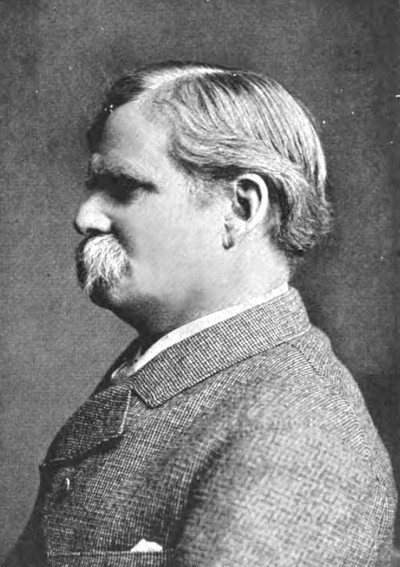
HONORABLE HENRY WATTERSON.
Harcourt. The Earls of Harcourt were descended from Bernard, "the Dane," who was chief counselor and second in command to Rollo or Rolf in his invasion of Neustria, 875, and received for his services a chateau ("Harcourt") near Brionne in France. Robert de Harcourt attended William the Conqueror to the Conquest of England. "Harcourt" is notably a name of "high life."
Harden, or Hardin. Walter Hardin, a true Norman name.
Hardin. Ben Hardin, the great Kentucky lawyer, on one occasion when traveling the circuit breakfasted with his kinsman, Major Barbour, a prominent citizen of a pious community. Mrs. Barbour, who had little taste for the profane writers, but read her Bible daily, was truly a mother in Israel; and was as hospitable to sinners as to saints. The problem before the venerable hostess was to make the conversation interesting to the great lawyer. Roosevelt and the Kaiser were not at the front in those days, and the conversation naturally flagged; but the old lady soon found a satisfactory substitute for the great modern rulers, and turned suddenly upon her imposing kinsman with the query, "Benjamin, what do you think of Solomon?" Ben had evidently studied the subject, for he answered instantly, "Solomon, madam, was a magnificent damned scoundrel."
Hardin, Hardinge, D. B. Harding, Hardingus, Hardine. In old Norse, Haddingjar. Harden for Ardern or Hardern. Ralph de Ardern was Lord of Bracebridge. The family of Arden or Ardern (with aspirate, Harden) was Norman and went to England in 1066. Bernard "the Dane" was Regent of Normandy, 940.
Harden, for Hardern or Ardern; or Arden with aspirate.
Hardy.
Harris, for Heris, Normandy. Harsee, Normandy, 1198.
Harris, for Heriz. Ralph Heriz, Normandy, 1180-'95. Ivo de Heriz, England, 1130.
Harrison. Philip and Gilbert Heriçon, Normandy, 1180. Henry Harsent, England, 1272. In Virginia, a great name.
(1) The famous French economist, Michel Chevalier, traveled in the United States in 1835. He says in one of his Lettres that he remarked at the table of the hotel a man of about 60 years of age who had the lively air and alert carriage of a youth. He was impressed by the amenity of his manners and by a certain air of command which peered even through his "linsey" habit. This, he learned, was the distinguished American general, Harrison, victor in the Battle of the Thames, one of the two very celebrated battles of the war, the other being the Battle of Tippecanoe. If a "Norman" battle was ever fought upon this continent, it was the Battle of the Thames. It might have recalled to the Conqueror his own baptism of fire. On the eve of battle the American commander changed his plans. Having learned that Colonel James Johnson's cavalry had been drilled to charge in the woods, he ordered a charge to be made by the mounted Kentuckians upon the British line, which was drawn up in a wooded strip of ground between the river and the swamp. Their artillery was planted in the wagon road which bisected the center of the British line. The column of Kentuckians flanking the artillery was launched upon the right of the Saxon line with irresistible force. Reserving their fire and reversing the movement, they charged the broken and disordered line from the rear, pouring upon it a destructive fire. The victory was complete. Colonel R. M. Johnson charged the Indians in their covert on the left; and it was here, in a close hand-to-hand struggle, that Tecumseh fell, bequeathing a lifelong controversy to his foes. It was ultimately settled, however, in the popular mind by the traditional couplet—
"Humpsy, Dumpsy, Humpsy, Dumpsy, Colonel Johnson killed Tecumseh."
Harrison. Heriçon, Normandy, 1180.
Harrop. La Herupe.
Harrow.
Hart.
Hart. LeCerf, Ralph Cerfus, Normandy, 1180-1198. In England translated into Herte, also Harte.
Harvey, Harvie, Hervey, Herveus, 1198, Normandy. Sire Hervey is mentioned in Piers Plowman. The early pronunciation of Hervey was Harvey. Now, generally pronounced as spelled.
Hatcher.
Haughton.
Hawes. Richard Hawes, Confederate Governor of Kentucky.
Hawkins. From the Manor of Hawkings, Kent, held by Walter Hawkins, 1326. Colonel Tom Hawkins of Kentucky, who fought with Lopez in Cuba, was a typical Anglo-Norman.
Hawley.
Hay, or de la Haye.
Hay, or de la Hey, Hay. Armorially identified with Hayes, from Hayes, near Blois. Vide Desha or Deshayes.
Hayles.
Hayley.
Hayne, or Haynes.
Hearn, from Heron, near Rouen.
Hedge.
Helm. Andrew de Helm, England, 1262. (Normandy, 1198.)
Herd, for Hert, Hart.
Hert.
Hewett, or Hewitt. From Huest or Huet, near Evreux. Also, Hewettson.
Hibberd.
Hickey, Hequet, Normandy.
Hicks.
Higgin, Hequet, Normandy. Higginson.
Hill. The English form of De Morete. For Helle or de Heille, near Beaurais. The family was spread throughout Kent and Surrey.
Himes.
Hitt.
Hoare. Aure from Auray, in Bretagne. Aure, with aspirate, becomes Hoare.
Hogg, or De Hoge. From La Hogue in the Contentin.
Hoghton, Hocton.
Hoide.
Hoile, or Hoyle. Norman Hoel, a familiar name in Kentucky.
Holburd, Halbert, Alberd, Albert.
Holiday, or Holliday. Ben Holliday, forerunner of the Stanfords and Huntingtons.
Holland, de Hoilant, Normandy, 1180.
Holles, for Hollis. Robert de Holis, Normandy, 1198.
Holmes (William der Holme).
Holmes. From Norse Holmer (an islet in a lake). D. B. de Holme, a tenant in chief. William du Holme, 1180-95.