PART II LONGEVITY IN THE ANIMAL KINGDOM
Reading edition
I THEORIES OF LONGEVITY
Relation between longevity and size—Longevity and the period of growth—Longevity and the doubling in weight after birth—Longevity and rate of reproduction—Probable relation between longevity and the nature of the food
The duration of the life of animals varies within very wide limits. Some, as for instance, the males of certain wheel animalculæ (Rotifera) complete their cycle of life from birth to death in 50 or 60 hours, whilst others, like some reptiles, live more than 100 years, and quite possibly may live for two or three centuries.
Enquiry has been made for many years as to whether there are laws governing these different durations of life. Even the most casual observation of domesticated animals has shown that, as a general rule, small animals do not live so long as large ones; mice, guinea pigs, and rabbits for instance, have shorter lives than geese, ducks, and sheep, whilst these again are survived by horses, deer, and camels. Of all the mammals which have lived under the protection of man, the elephant is at once the largest, and the most long-lived.
However, it is not difficult to show that there is no absolute relation between size and longevity, since parrots, ravens, and geese live much longer than many mammals, and than some much larger birds.
As a general rule it may be said that a large animal takes more time than a small one to reach maturity, and it has been inferred from this that the length of the periods of gestation and of growth were in proportion to the longevity. Buffon28 long ago stated his opinion that the “total duration of life bore some definite relation to the length of the period of growth.” Therefore, as the period of growth is, so to say, inherent in the species, longevity would have to be regarded as a very stable phenomenon. Just as any species has acquired a fixed and practically invariable size, so it would have acquired a definite longevity. Buffon, therefore, thought that the duration of life did not depend on habits or mode of life, or on the nature of food, that, in fact, nothing could change its rigid laws, except an excess of nourishment.
Taking as his standard the total period of development of the body, Buffon came to the conclusion that the duration of life is six or seven times that of the period of growth. Man, for instance, he said, who takes 14 years to grow, can live 6 or 7 times that period, that is to say, 90 or 100 years. The horse, which reaches its full size in 4 years, can live 6 or 7 times that length of time, that is to say from 25 to 30 years. The stag takes 5 or 6 years to grow, and reckoned in the same way, its longevity should be 35 to 40 years.
Flourens29 although supporting his principle, thought that Buffon had been inexact in calculating the period of growth. In his opinion a better result can be obtained by taking the limit of growth as that age at which the epiphyses of the long bones unite with the bones themselves. Using such a mode of computation, Flourens laid down that an animal lived 5 times the length of its period of growth. Man, for instance, takes 20 years to grow, and he can live for 5 times that space, that is to say, 100 years; the camel takes 8 to grow, and lives 5 times as long, i.e., 40 years; the horse, 5 to grow, and lives 25 years.
However, even if we consider only the mammalia, it is impossible to accept Flourens’ law, without considerable reserve. Weismann30 has referred to the case of the horse, which is completely adult at 4, but lives not merely 5 times that period, but 10 or even 12 times. Mice grow extremely quickly, so that they are able to reproduce at the age of 4 months. Even if we take 6 months as their period of growth, their longevity of 5 years is twice as long as it would be according to the rule of Flourens. Amongst domesticated animals, the sheep is slow in reaching maturity; it does not acquire its adult set of teeth until it is 5 years old, and cannot be regarded as adult until then. None the less, at the age of 8 or 10 years, it loses its teeth and begins to grow old, whilst by 14 it is quite senile.31 The longevity of the sheep, therefore, is not quite three times its period of growth.
If we turn to other vertebrates, the variations in the relation of growth and the duration of life are still greater. Parrots, for instance, the longevity of which is extremely great, grow very quickly. At the age of 2 years, they have acquired the adult plumage and are able to reproduce, whilst the smaller species are in the same condition at the age of one. Incubation, moreover, is very short, not more than 25 days, and in some species not three weeks. None the less, parrots are birds which enjoy a quite remarkable longevity. The incubation period of domestic geese is 30 days, and their period of growth is also short. However, they may reach a great age, cases of 80 years and of 100 years being on record. In contrast with these, ostriches, the incubation period of which is 42 to 49 days, and which take 3 years to become adult, have a relatively short life.
H. Milne-Edwards32 many years ago contended that there was no importance in the supposed law of relation between gestation and longevity. He sums up his criticism as follows: “Although the period of uterine life is longer in the horse, that animal does not live so long as a human being; and some birds, the incubation of which only lasts a few weeks, can live more than a century.”
Bunge33 has recently taken up the study of the relations between the duration of growth and longevity, and has suggested a new means of investigation. He has observed that the period in which the new-born mammal doubles its weight is a good index of the rapidity of its growth. He has shown that whilst a human child requires 180 days to reach double its weight at birth, the horse, the longevity of which is very much less, doubles its weight in 60 days; a calf takes only 47 days for this; a kid 15 days; a pig 14 days; a cat 9-1/2; and a dog only 9 days. Although these facts are very interesting, the exceptions are too great to make it possible to base a law of longevity upon them. The period of weight-doubling in the horse is nearly 7 times longer than that in the dog, and yet the longevity of the horse is not more than 3 times that of the dog. The goat, which takes much longer than the dog to double its weight, has a shorter total life.
I observed myself that new-born mice quadruple their weight in the first 24 hours. The doubling of weight in their case requires a time 36 times less long than that of the cat, and yet the cat lives only 5 times as long as the mouse.
It is fair to say, however, that Bunge himself does not draw a definite conclusion from these figures and has published them only to stimulate interest in the subject. He is against the view of Flourens, and points out that although the multiple 5 is valid for man, it is not so in the case of the horse which finishes its growth in 4 years and yet reaches the age of 40 much less often than human beings attain that of 100 years.
Although it is impossible to admit the existence of exact relations between size and the period of growth on the one side, and longevity on the other, in the mode which Buffon and Flourens have followed, it is none the less true that there is something intrinsic in each kind of animal which sets a definite limit to the length of years it can attain. The purely physiological conditions which determine this limit leave room for a considerable amount of variation in longevity. Duration of life therefore, is a character which can be influenced by the environment. Weismann in his well-known essay on the duration of life, has laid stress on this side of the problem. Longevity, according to him, although in the last resort depending on the physiological properties of the cells of which the organism is composed, can be adapted to the conditions of existence and influenced by natural selection, like other characters useful for the existence of the species.
If a species is to remain in existence, its members must be able to reproduce and the progeny must be able to reach adult life so that they in their turn may reproduce. Now, it happens that there are some animals the fecundity of which is extremely limited. Most birds which are adapted to aerial life, and the weight of which is therefore to be kept down, lay very few eggs. This happens in the case of birds of prey, such as eagles and vultures. These birds nest only once a year, and generally rear two or frequently only a single nestling. In such circumstances the duration of life becomes a factor in the preservation of the species, more important since eggs and chicks are subject to many dangers. Eggs are devoured by many kinds of animals, whilst unseasonable cold may kill the chicks. If the members of such a species were incapable of living long, the unfavourable conditions of life would soon lead to extinction. Those animals which reproduce rapidly generally have a relatively brief duration of life. Mice, rats, rabbits, and many other rodents seldom live more than 5 or 10 years, but reproduce with enormous rapidity. It is almost possible to imagine that there is some sort of intimate link, possibly physiological, between longevity and low fertility. It is a current opinion that reproduction wastes the maternal organism and that mothers of many children grow old prematurely and seldom reach an advanced age. This would seem to mean that fecundity was the cause of the short duration of life. However, we must guard ourselves against such a theory. Longevity, at least in the case of vertebrate animals, differs extremely little in the two sexes, although the cost of the new generation to the adult organism is very much greater in the case of the female than of the male parent. None the less, females frequently reach a great age, especially in the human race where women reach 100 years, or live beyond that time, much more often than men.
Low fertility, however, cannot itself be regarded as a cause of longevity, as there are some very fertile animals which none the less attain great ages. There are parrots which lay two or three times a year, producing six to nine eggs in each clutch. The ducks (Anatidæ) are distinguished for considerable longevity and very high fertility, each nest containing rarely less than six and sometimes as many as sixteen eggs. The common Sheldrake lays from twenty to thirty eggs. Tame ducks, in some parts of the tropics, lay an egg daily throughout the season. Wild ducks lay from seven to fourteen eggs in one nest. Ducks and geese, none the less, frequently attain considerable ages, ducks having been known to live for 29 years. Even the common fowl, which is a notoriously prolific bird, may reach an age of twenty to thirty years.
It will be said, however, that these birds are exposed to many enemies during youth. Chickens, ducklings, and goslings are ready prey for hawks, foxes and small carnivora. The longevity is possibly to be explained as an adaptation for the preservation of the species by compensating for the great destruction of the young. Weismann explains in this way the longevity of many aquatic birds and other creatures that are much preyed on. It must be noted, however, that the longevity cannot depend on the risks run by the young birds, but must have arisen independently. If this had not occurred, creatures, the young of which are destroyed in great numbers, would have ceased to exist, as many species have disappeared in geological time. The longevity of prolific animals, the young of which are destroyed in numbers, must be due to some cause which is neither fertility nor the destruction of their offspring. This cause must be sought in the physiological processes of the organism and can be attributed neither to the length of the period of growth nor to the size attained by the adults.
After having discussed various theories of the cause of the duration of life, M. Oustalet,34 in a most interesting essay on the longevity of vertebrates, came to the conclusion that diet was the chief factor. He thinks that there is a “definite relation between diet and longevity. For the most part herbivorous animals live longer than carnivorous forms, probably because the former find their food with ease and regularity, whilst the latter alternate between semi-starvation and repletion.” There are certainly many instances which give support to the view. Elephants and parrots, for instance, are vegetarian and reach very great ages. On the other hand, there exist long-living carnivorous animals. Many observations have made it certain that owls and eagles reach great ages, and these birds live on animal food. Ravens, which live on carrion, are also notorious for the duration of their lives. There is no exact knowledge as to the ages reached by crocodiles, but although these live on flesh, it is certain that their longevity is great.
We must seek elsewhere for the real factors that control duration of life. Before stating my conclusion, I will review what is known as to the duration of life of different animals.
II. LONGEVITY IN THE ANIMAL KINGDOM
Longevity in the lower animals—Instances of long life in sea-anemones and other invertebrates—Duration of life of insects—Duration of life of “cold-blooded” vertebrates—Duration of life of birds—Duration of life of mammals—Inequality of the duration of life in males and females—Relations between longevity and fertility of the organism
It is wonderful to what an extent the duration of life varies amongst animals, the slightest examination of the facts showing that very many factors must be involved.
As the higher animals are nearly always larger than invertebrates, if there be a definite relation between longevity and size, one would expect to find that vertebrates live longer than invertebrates. However, this is not the case. Amongst animals of extremely simple organisation, there are some which reach a great age. A striking example of this is found in sea-anemones. These animals have a very simple structure, without a separate digestive canal, and with a badly developed, diffused nervous system, and yet have lived very long in captivity. More than forty years ago, I remember having seen in the possession of M. Lloyd, the Director of the Aquarium at Hamburg, an anemone that he had kept alive for several dozen years in a glass bowl. Another sea-anemone, belonging to the species Actinia mesembryanthemum, is known to have lived 66 years. It was captured in 1828 by Dalyell, a Scottish zoologist, and was then quite adult, and probably about 7 years old. It survived its owner for 36 years, and died in Edinburgh in 1887, the cause of death being unknown. Although they are thus capable of living so long, the rate of growth of members of this species is rapid, and their fertility is very high. According to Dalyell, these anemones reach the adult condition in 15 months. The specimen in his possession, in the 20 years from 1828 to 1848 produced 334 larvæ, then after a period of sterility it gave birth, in one night (1857) to 230 young anemones. This extraordinary prolificness decreased with age, but even when it was 58 years old it used to produce from 5 to 20 at a time. In the seven years from 1872 onwards, it gave birth to 150 young anemones.35 This animal, which certainly was not more than the fortieth or the fiftieth of the weight of an adult rabbit, lived six or seven times as long.
Ashworth and Nelson Annandale have published their observations on another sea-anemone, of the species Sagartia troglodytes, which was 50 years old. It differed from younger examples only in being less prolific.
There are other polyps, such as Flabellum, which do not live more than 24 years, although we have no knowledge as to the cause of the different duration of life.
The variation in the length of the life of molluscs and insects is extremely great. Some species of gasteropods (Vitrina, Succinea) live only a very few years, whilst others (Natica heros) can reach thirty years. Some of the marine bivalves, as for instance, Tridacna gigas, can live to sixty or a hundred years.36
Insects are animals as variable in their duration of life as they are in other respects. Some live only a few weeks; some of the plant-lice, for instance, die in a month. In the same order of Insects, however, (Hemiptera) there are species of cicada which live thirteen to seventeen years, that is to say, much longer than such little Rodents as rats, mice, and guinea-pigs. The larva of an American species spends seventeen years buried in the ground in orchards, where it feeds on the roots of apple trees, and the species is known as Cicada septemdecim, because of this duration of life. In the adult stage the insect lives little more than a month, just time enough to lay the eggs, and bring into the world the new generation, which in its turn will not appear above ground until after another period of seventeen years.
Between these extremes of long and short life, there is to be found amongst insects almost every gradation of longevity. Science, in its present state, has failed to find any law governing these facts. Rules which hold good up to a certain point in the case of the higher animals break down in their application to insects. The large grasshoppers and locusts, for instance, live a much shorter time than many minute beetles. Queen bees, the fertility of which is very great, live two or three years and may reach a fifth year, whilst worker bees, which are infertile, die in the first year of their existence. Female ants, although these are small and extremely prolific, reach the age of seven years.37
We know so little about the physiological processes of insects, that we cannot as yet make even a guess at the cause of this great variation in their longevity. It is more probable that we shall find some explanation in the case of vertebrates concerning which we know much more.
Analysis of the facts shows that whilst in the evolution from fish to mammal there has been a great increase in complexity of organisation, there has at the same time been a reduction in the duration of life. As a general rule, it may be laid down that the lower vertebrates live longer than mammals.
The facts about the longevity of fish are not very numerous, but it seems clear that these animals reach a great age. The ancient Romans, who used to keep eels in aquaria, have noted that these fish would live for more than sixty years. There is reason to believe that salmon can live for a century, whilst pike live much longer. There is, for instance, the much quoted instance of the pike stated by Gessner to have been captured in 1230 and to have lived for 267 years afterwards. Carps are regarded as equally long lived, Buffon setting down their period of life as 150 years. There is a popular idea that the carp in the lakes at Fontainebleau and Chantilly are several centuries old, but E. Blanchard throws doubt on the accuracy of this estimate, inasmuch as during revolutionary times most of the carp were eaten when the palaces were overrun by the populace. There is no doubt, however, that the life of carp may be very long indeed. Not very much is known about the duration of life in batrachians, but it is certain at least that some small frogs may live twelve or sixteen years, and toads as many as thirty-six years.
More is known about the life of reptiles. Crocodiles and caymans, which are large and which grow very slowly, attain great ages. In the Paris Museum of Natural History there are crocodiles which have been kept for more than forty years without showing signs of senescence. Turtles, although they are smaller than crocodiles, live still longer. A tortoise has lived for eighty years in the garden of the Governor of Cape Town, and is believed to have reached the age of two hundred years. Another tortoise, a native of the Galapagos Islands, is known to be 175 years old, whilst a specimen in the London Zoological Gardens is 150 years old. A land tortoise (Testudo marginata) has been kept in Norfolk, England, for a century. I am informed that in the Archbishop’s palace at Canterbury, there is to be seen the carapace of a tortoise which was brought to the Palace in 1623 and which lived there for 107 years.38 Another tortoise, brought to Fulham by Archbishop Laud, lived in the Palace for 128 years. I have already referred to a specimen of Testudo mauritanica, the history of which is known for 86 years, but which is probably much older.
Very little is known as to the longevity of lizards and serpents, but it may be inferred from what I have said about other reptiles that reptiles as a class are able to reach great ages.
It is an easy inference that the great duration of life in cold-blooded animals is associated with the slowness of the physiological processes in these creatures. The circulation, for instance, is so slow, that the heart of a tortoise beats only 20 to 25 times in a minute. Weismann has suggested that one of the factors influencing the duration of life is the rapidity or slowness of the vital activities, the times taken by the processes of absorption and nutrition.
On the other hand, the blood is hot and the vital activities are rapid in birds, and yet birds may attain great ages. Although in the last chapter I gave a number of examples, the subject is so important that I propose to go further into details. The possibility of this is due to an admirable set of details brought together by Mr. J. H. Gurney.39 In his list, in which are included more than fifty species of birds, the lowest figures are from eight and a half to nine years (Podargus cuvieri, Chelidon urbica), and a duration of life so short is an exception, a period of from fifteen to twenty years being more common. Canaries have lived in captivity from 17 to 20 years, and goldfinches up to 23 years. Field larks have lived for 24 years, the Lesser Black-backed Gull 31 years and the Herring Gull 44 years. Birds of medium size may live for several dozens of years, whether they live on animal or on vegetable food, whether they are prolific or lay very few eggs. I will quote only a few instances. Of forty parrots the minimum and maximum ages were respectively 15 and 81 years, and the average 43 years. Without accepting the truth of the story mentioned by Humboldt according to which certain parrots survived an extinct race of Indians, at least we may be certain that great ages have sometimes been reached by these birds. Levaillant mentions a parrot (Psittacus erithaceus) which lost its memory at the age of 60 years, its sight at 90 years, and which died aged 93 years. Another individual, probably of the same species, is reported by J. Jennings to have reached the age of 77. Jones, Layard, and Butler are the authorities for instances of Sulphur-crested Cockatoos having reached respectively 30, 72 and 81 years. M. Abrahams states that an Amazon (Chrysotis amasonica) lived 102 years. I myself have observed two cases of great longevity in the same species of parrot. One of these birds died at the age of 82 years, apparently simply from old age, whilst the other, which was in my possession for several years before it died at the age of 70 to 75 years, was vigorous, showing no signs of senility, but died of pneumonia.
Mr. Gurney found that parrots were not the only birds capable of reaching a great age. One raven reached 69 years and another 50, an Eagle-owl (Bubo maximus) 68 years, another 53, a condor 52, an imperial eagle 56, a common heron 60, a wild goose 80, and a common swan 70 years. None of these examples approaches the legendary three centuries attributed to the swan, but it is evident that many different kinds of birds may attain great age. I can add some cases to those of Mr. Gurney. In the Royal Park at Schönbrunn, near Vienna, a white-headed vulture (Neophron percnopterus) died aged 118 years, a golden eagle (Aquila chrysaëtus) aged 104, and another aged 80 (according to Oustalet). Mr. Pycraft (Country Life, June 25th, 1904) reported that a female eagle, captured in Norway in 1829, had been brought to England and had lived for 75 years. In the last thirty years of its life, it had produced ninety eggs. The same writer mentions the case of a falcon having lived to 162 years.
The collection of facts that I have passed in review make it manifest that birds may have a great duration of life, but that reptiles surpass them in this respect. Birds certainly do not reach the very great ages of crocodiles and tortoises.
Longevity, therefore, is reduced as we ascend in the scale of vertebrate life. We find a still greater reduction when we turn from birds to mammals. Some mammals, it is true, may live as long as birds. Elephants are a good instance. It used to be thought that these giant mammals could live three or four centuries, but I can find no confirmation of the legend, which seems as mythical as that relating to the life of swans. There are no exact data as to the ages reached by wild elephants, but it has been stated that in captivity an elephant rarely but occasionally has completed its century. In zoological gardens and in good menageries, where elephants are well cared for, they seldom live more than 20 to 25 years. Chevrette, an African elephant presented to the Jardin des Plantes by Mehemet Ali, in 1825, lived for only 30 years. In the official list of the Indian Government, which gives the deaths of elephants, it appears that of 138 examples, only one lived more than 20 years after it had been purchased (Brehm’s Mammals).
Flourens, using his own formula, assigned the age of 150 years to elephants as their epiphyses do not fuse with the long bones until the age of 30. So far, I know of no fact to support the conclusion, although it seems fairly well established that occasionally an elephant may reach a century. It is stated that one elephant was in service throughout the whole period of more than 140 years in which Ceylon was occupied by the Dutch. This elephant was found in the stables in 1656. Natives with special knowledge of elephants set down their duration of life as from 80 to 150 years, but say that they begin to grow old at from 50 to 60 years of age. My general conclusion from the facts is that the life of these very large mammals is about the same as that of man who is very much smaller.
Centenarians, extremely rare amongst elephants, do not appear to exist in any other kind of mammals except man. The rhinoceros, another large mammal which is a native of the same countries as the elephant, does not reach a great age. According to Oustalet an Indian rhinoceros died in the menagerie of the Paris Museum at about the age of 25 years, and showed all the signs of senility. Another Indian rhinoceros lived for 37 years in the London Zoological Gardens. Grindon has stated his opinion that the rhinoceros may live for 70 or 80 years, but this seems rather an inference from the slowness of growth than a statement of observed fact.
Horses and cattle are large animals, but do not enjoy very long lives. The usual duration of life in horses is from 15 to 30 years. They begin to grow old about 10 years, and in very rare cases may reach 40 or more. A Welsh pony is said to have reached the age of sixty, but such a case is excessively rare. Two other extreme cases are that of a horse belonging to the Bishop of Metz which died at the age of 50 years, and the charger of Field-Marshal Lacy which died at 46.
The duration of life of cattle is still shorter. Domestic cattle show the first sign of age, a yellow discoloration of the teeth, when five years old. In the sixteenth to eighteenth year the teeth fall out, or break, and the cow ceases to give milk, whilst the bull has lost reproductive power. According to Brehm, cattle live for 25 to 30 years or more. Although the duration of life is short, cattle are not prolific. The gestation period of a cow approaches that of the human race (242-287 days), and there is only one birth a year. The total period of reproductivity lasts only a few years.
The sheep, another domesticated Ruminant, has a life even shorter. According to Grindon, sheep do not live longer than 12 years as a rule, but may reach 14 years, which in their case would be extreme age, as they generally lose their teeth at from 8 to 10 years.
Some Ruminants, such as camels and deer, apparently live longer than sheep or cattle, but I do not know exact facts about them.
The short life of domesticated carnivorous animals is well known. Dogs seldom live more than 16 or 18 years, and even before that, at an age of from 10 to 12, they usually show plain signs of senility. Jonatt has mentioned as an extreme rarity a dog of 22 years of age, and Sir E. Ray Lankester (Comparative Longevity, p. 60) cites another instance, in this case the age being 34 years. The oldest dog that I have been able to procure died at the age of 22.
It is generally believed that cats do not live so long as dogs. The average age which they may attain is usually thought to be 10 or 12 years, but certainly a cat of that age has not the decrepid appearance of an old dog. Thanks to the kindness of M. Barrier, the Director of the Ecole d’Alfort, I have had in my possession a cat 23 years old. It appeared to be quite vigorous, and died from cancer in the liver.
Most rodents, particularly the domesticated kinds, are extremely prolific and very short lived. It is extremely rare for a rabbit to reach the age of 10 years, whilst 7 years is the utmost limit for a guinea-pig. Mice, so far as I can ascertain, do not live more than 5 or 6 years.
It is plain from the facts that I have brought together, that mammals, whether they are large or small, as a rule, have shorter lives than birds. It is probable, therefore, that there is something in the structure of mammals which has brought about a shortening in the duration of their lives.
Whilst most of the lower vertebrates, and all birds, reproduce by laying eggs, the vast majority of mammals are viviparous. As the tax on the parent organism is greater when the young are produced alive than when eggs are laid, it might be thought that in this difference lay the cause of the shorter life of mammals. It is well known that an animal may be made feeble by too great fecundity, and it is conceivable that the kind of parasitic life of the embryos within the body of the mother may weaken her system.
There are many facts, however, which make it impossible to accept such a view. The longevity of mammals is nearly equal in the two sexes, although the tax on the organism caused by reproduction is much greater in the case of females than in males. Longevity, however, cannot be regarded as a character stable in each species and necessarily identical in the two sexes. The animal kingdom presents many cases of disparity in this respect, the difference in longevity in the two sexes being specially striking in species of insects. Generally, the females live longer than the males, as, for instance, amongst the Strepsiptera, where the females have 64 times the duration of life of the males. On the other hand, amongst butterflies, there are cases (e.g., Aglia tau) where the males live longer than the females. In the human race, there is a difference in the longevity of the sexes, the females having the advantage.
As in most cases of disparity in the duration of life the female lives longer than the male, it is plain that the difference cannot be assigned to the drain on the organism caused by reproduction, which, of course, is much greater in females.
Moreover, a closer scrutiny of the facts shows that although mammals do not live so long as birds, the reproductive drain is greater in the case of birds.
It is well known that the productivity of an animal is not necessarily identical with its fecundity. Fish or frogs which lay thousands of eggs at a time (a pike, for example, produces 130,000) are obviously more prolific than, for instance, a sparrow which lays only 18 eggs in a year, or than a rabbit, which in the same time gives birth to from 25 to 50. However, to produce this much smaller quantity of eggs or of young, the sparrow and the rabbit (I have chosen the most prolific bird and mammal) expend a much larger quantity of material than the frog or the fish. The sparrow and the rabbit employ in producing their progeny a bulk of material greater than the weight of their body, whilst the enormous quantity of eggs laid by the frog does not weigh more than one-seventh part of the body of the frog. It may be laid down, as a general rule, that although fecundity, that is to say the number of eggs or of young which are produced, diminishes as the organism becomes more complex, the productivity on the other hand increases, expressed in percentage of weight. The productivity, which is not more than 18 per cent. in batrachia, reaches 50 per cent. in reptiles, 74 per cent. in mammals, and 82 per cent. in birds.
It is plain that if reproduction shortens the life of mammals by weakening the organism, it must be the productivity, not the fecundity, which is the important factor. I have just shown that productivity is greater in birds than in mammals, and in consequence it cannot be on account of any greater burden of reproduction that mammals have a shorter life than birds. The shortness of mammalian life, again, cannot be attributed to the fact that mammals give birth to young, whilst the long-lived reptiles and birds produce eggs, because the longevity of the males, which produce neither young nor eggs, is none the less practically equal to that of the females of the same species. The reason of the short life of mammals must be sought for elsewhere.
III THE DIGESTIVE SYSTEM AND SENILITY
Relations between longevity and the structure of the digestive system—The Cæca in birds—The large intestine of mammals—Function of the large intestine—The intestinal microbes and their agency in producing auto-intoxication and auto-infection in the organism—Passage of microbes through the intestinal wall
We have seen that the duration of life in mammals is relatively shorter than that in birds, and in the so-called “cold-blooded” vertebrates. No indication as to the cause of this difference can be found in the structure of the organs of circulation, respiration, or urinary secretion, or in the nervous or sexual apparatus. The key to the problem is to be found in the organs of digestion.
In reviewing the anatomical structure of the digestive apparatus in the vertebrate series, one soon comes to the striking fact that mammals are the only group in which the large intestine is much developed. In fish, the large intestine is the least important part of the digestive tube, being little wider in calibre than the small intestine. Amongst batrachia, where it is a relatively wide sack, it has begun to assume some importance. In several reptiles it is still larger, and may be provided with a lateral out-growth, which is to be regarded as a cæcum. In birds, the large intestine still remains relatively badly developed; it is short and straight. In most birds, at the point where the large intestine passes into the small intestine, there is a pair of cæca, more or less developed. These cæca are absent in climbing birds, such as the wood-pecker, the oriole, and many others. They are reduced to a pair of tiny outgrowths in the eagles, sparrow-hawks, and other diurnal birds of prey, and in pigeons, and perching birds. These organs are larger in the nocturnal birds of prey, in gallinaceous birds, and in ducks, etc.40
In the large running birds, such as ostriches, rheas, and tinamous, the cæca are relatively largest. Thus, for instance, in a rhea (Rhea americana) which I dissected, the cæca were nearly two-thirds as long as the small intestine. The latter was 1·65 m. in length, whereas one of the cæca was 1·01 m., and the other 0·95 m. The weight of the two cæca with their contents was more than 10 per cent. of the total weight of the bird.
Notwithstanding the exceptions, which are relatively rare, the large intestine is badly developed in the case of birds. On the other hand, it reaches its largest size amongst mammals. In these animals, “only the posterior portion of the latter, or rectum, which passes into the pelvic cavity, corresponds to the large intestine of lower Vertebrates; the remaining, and far larger part, must be looked upon as a neomorph, and is called the colon.”41
Gegenbaur,42 another well-known authority on comparative anatomy, writes as follows on this subject:—“The hind-gut is longest in the Mammalia, where it forms the large intestine, and is distinguished as such, from the mid-gut, or small intestine. Owing to its greater length, it is arranged in coils, so that the terminal portion only has the straight course taken by the hind-gut of other Vertebrata.”
The two series of facts are not to be disputed. On the one hand mammals are shorter lived than birds and lower vertebrates, on the other hand the large intestine is much longer in them than in any other vertebrates. Is there here any link of causality, binding the two characters, or is it a mere coincidence?
To answer the question we must turn to the function of the large intestine in vertebrates. In the lower members of the group (fish, batrachia, reptiles, birds, etc.), the large intestine is not more than a mere reservoir for the waste matter in the food. It takes no share in digestion, as that is the function of the stomach and the small intestine. Only the cæcum can be thought to have some digestive property. In reptiles, the lowest vertebrates in which the cæcum is present, it is so little differentiated from the large intestine itself, that it is difficult to assign to it any specialised function. In very many birds, however, the cæca are well separated from the main digestive tube. The food material passes into them in considerable quantities, and is retained there sufficiently long for some digestive process to take place. M. Maumus has found, in the cæca of birds, secretions which can dissolve albumen and invert sugar cane, but he has been unable to make out that the cæcal juice has any action upon fatty matter. Such digestive power, however, is slight, and when M. Maumus removed the cæca in fowls and ducks, no evil consequences followed. As in many birds the cæca are rudimentary and in others absent, it may be inferred that these organs are useless, and are in process of degeneration in the class. The cæca can be regarded as playing an important part in the organism only in the case of large running birds, where they are very highly developed, but we have not precise information as to their digestive function.
The variations in the structure in the large intestine are greater in mammals than in birds. In some mammals, the large intestine is a simple prolongation of the small intestine, similar in calibre and in structure. In these conditions it may fulfil a definite digestive function. Th. Eimer43 has determined that in insectivorous bats the large intestine digests insects like the small intestine. Such cases, however, are rare. In most mammals the large intestine is sharply separated from the small intestine by a valve, and opens directly into the cæcum which may be very large. In the horse, the cæcum is an enormous bag, cylindrical and tapering, generally well filled, and holding on an average 35 litres. It is equally large in many other herbivorous animals, such as the tapir, the elephant, and most rodents. In such cases, the food remains for a considerable time in the organ and without doubt undergoes some digestive changes. In many other mammals, particularly carnivorous forms, the cæcum may be quite absent, whilst in some, as for instance, the cat and dog, it is very small; in the latter cases its digestive function must be non-existent or insignificant.44
As for the large intestine itself, apart from the special cases, such as bats, it cannot fulfil any notable digestive function. Th. Eimer was unable to find a proof of any such action in rats and mice, and the very many investigations that have been made in the case of man seem to have established the absence of digestive power in the colon.
Dr. Stragesco,45 in a recent investigation carried out under the direction of the famous Russian physiologist Pawloff, established that, in normal conditions, digestion and assimilation of food are confined almost exclusively to the small intestine in mammals, and that the large intestine plays only the smallest part. It is only in certain diseases of the digestive tract, in which, on account of increased peristaltic action, the contents of the intestine with the digestive juices are passed quickly from the small intestine to the large intestine, that some digestive work is done in the latter organ.
The large intestine (excluding the cæcum), then, cannot be regarded as an organ of digestion, although absorption of the liquids which have been formed in the small intestine, may take place within its walls. It is known that in the large intestine the contents of the gut give up their water and assume the solid form of fæcal matter. However, whilst the mucous membrane of the large intestine rapidly absorbs water, it has not a similar action on other substances.
The question of the extent to which the large intestine can absorb has been closely investigated, because of its practical importance. It sometimes happens that invalids cannot take food by the mouth, so that their life would be in danger if it were not possible to supply them with food otherwise. Attempts have been made to inject nutritive substances through the skin, or, and this is a more usual procedure, by the rectum. By such means the organism can be kept alive for a certain time, but the absorbing power of the large intestine is extremely small. According to Czerny and Lautschenberger46 the entire colon of the human being can absorb no more than 6 grammes of albumen in 24 hours, an amount which, from the point of view of nutrition, is very small. It was thought that the large intestine might more rapidly absorb albuminous material which had been previously digested and transformed to peptones, but the experiments of Ewald47 showed that even in that case the absorption was very small. According to more recent experiments of Heile,48 carried out upon dogs which had cæcal fistulas, and in the case of a man who had an artificial aperture in the colon, the large intestine does not absorb undigested white of egg, and absorbs water, cane sugar, and glucose only very imperfectly. The only substances which are rapidly absorbed through the wall of the colon are the alkaline fluids from fæcal matter. It is possible, however, to nourish invalids by rectal injections of certain nutritious substances, the most important of which is milk.49
The large intestine, which has really very slight digestive properties and cannot absorb any considerable bulk of nutriment, is an organ which secretes mucus. The latter serves to moisten the solid fæcal material, so aiding in its expulsion.
We must conclude, therefore, that the large intestine, the organ so highly developed in mammals, is an apparatus the general function of which is the preparation and elimination of the waste products of digestion. Why should such an organ be so much more developed in mammals than in the other vertebrates?
In answer to the question, I have formed the theory that the large intestine has been increased in mammals to make it possible for these animals to run long distances without having to stand still for defæcation. The organ, then, would simply have the function of a reservoir of waste matter.
Batrachia and reptiles lead a very idle life, and can move slowly, sometimes because they are protected by poison (toads, salamanders, serpents), sometimes because they have a very hard shell (turtles), sometimes because they are extremely powerful (crocodiles). Mammals, on the other hand, have to move very actively to catch their prey, or to escape from their enemies. Such activity has become possible because of the high development of the limbs, and because the capacity of the large intestine makes possible the accumulation of waste matter for a considerable time.
In order to void the contents of the intestines, mammals have to stand still and assume some particular position. Each act of this kind is a definite risk in the struggle for existence. A carnivorous mammal which, in the process of hunting its prey, had to stop from time to time, would be inferior to one which could pursue its course without pausing. So, also, a herbivorous mammal, escaping from an enemy by flight, would have the better chance of surviving the less it was necessary for it to stand still.
According to such a view, the extreme development of the large intestine would supply a real want in the struggle for existence. M. Yves Delage,50 the well-known biologist, is unable to accept this hypothesis. He thinks that the rectal enlargement would fulfil the purpose, and adds that everyone has seen herbivorous animals pass their excretions whilst running. The rectum of mammals, however, cannot serve as a reservoir for waste matter, because as soon as such matter reaches the rectum it excites the need of excretion. The waste matter accumulates in the large intestine, from which it passes into the rectum at intervals. When it has reached that region, a sensation is caused which leads to defæcation.
M. Delage is not quite definite when he speaks of mammals voiding their excretions whilst they are in motion. A horse, harnessed to a vehicle, may defæcate whilst it is walking or even running slowly. But these animals cannot defæcate when in rapid motion, and competent observers state that horses never do so whilst racing. In zoological gardens, where animals have room to run about, they stand still before emptying the rectum. M. Ch. Debreuil, who keeps antelopes in a very large park at Melun, has noticed that the excreta are always to be found in masses and not scattered about as if they had been discharged by animals in motion. Antelopes, which are animals that run and leap extremely actively, have to come to a standstill before discharging their small pellets of deer-like excreta.
In the struggle for existence, when a mammal is pursuing its prey or escaping its enemy, there is no question of the leisurely movement of a horse harnessed to an omnibus or cab, but the greatest possible activity is necessary. In such circumstances the possession of an organ within which the excreta could accumulate would be of real importance. My theory of the origin of the mammalian large intestine is intrinsically probable.
Although the capacity of the large intestine may preserve a mammal in emergencies, it is attended with disadvantages that may shorten the actual duration of life.
The accumulation of waste matter, retained in the large intestine for considerable periods, becomes a nidus for microbes which produce fermentations and putrefaction harmful to the organism. Although our knowledge of the subject is far from complete, it is certain that the intestinal flora contains some microbes which damage health, either by multiplying in the organism, or by poisoning it with their secretions. Most of our knowledge on this matter has come from the study of human patients.
Persons have been known who do not defæcate except at intervals of several days, and who, none the less, do not seem to suffer in health. But the opposite result is more common. The retention of fæcal matter for several days very often brings harmful consequences. Organisms which are in a feeble state from some other cause are specially susceptible to damage of the kind referred to. Infants are frequently seriously ill as the result of constipation. Dr. du Pasquier51 describes such cases in the following words:—“The infant is leaden in hue, with sunken eyes, dilated pupils, and pinched nostrils. The temperature may reach nearly 104° Fahr.; the pulse is rapid, feeble, and often irregular. Restlessness, insomnia, sometimes convulsions, stiffness of the neck and strabism show that the nervous system is being poisoned by toxins, and even collapse may be reached. The foul and dry tongue, the vomiting and fetid discharges show the disturbance of the digestive tract. Very often an eruption appears, as described by Hutinel, chiefly on the back and buttocks, the front of the thighs and fore-arms.” The illness may lead to death but is generally cured by simple purging.
Women in pregnancy and child-birth frequently suffer much as the result of retention of fæcal matter, and physicians are familiar with the symptoms, which have been described as follows by M. Bouchet52:—“After normal parturition, in the course of which the usual antiseptic precautions have been fully pursued, and where delivery has been complete and natural, occasionally the patient is seized with chill and headache. The breath is fetid and the tongue foul. The temperature, taken in the axilla, is nearly 101° Fahr. The abdomen is inflated and painful in the umbilical region. Palpation in the iliac fossæ reveals lumps or consolidations along the colon. Thirst is intense, and there is complete anorexy. On questioning, it is found that there has not been defæcation for several days. The treatment consists of purgatives, enemas, and milk diet. In the next few days the bowels are emptied freely, the abdominal pain ceases, the temperature becomes lower, appetite is restored, and the patient recovers.”
Those who suffer from affections of the heart, liver, or kidneys are specially susceptible to the evil results of retained fæcal matter. In such patients an error of diet or constipation may bring about most serious consequences.
Such facts are well known to physicians, and it has been established that complete emptying of the lower bowels leads at once to favourable symptoms. From the other side, it has been shown by experiment that artificial retention of the fæces by ligature of the rectum puts the body in a grave condition.
If we collect our knowledge of all the facts, we cannot doubt but that the cause of the evil is multiplication of microbes in the contents of the large intestine. When the fæcal matter is free from microbes, as is the case with the meconium of the fœtus or new-born infant, it is not a source of danger to the organism. The waste of cells and the secretions which are added to the undigested food cannot do any harm. Amongst the microbes of the gut, there are some that are inoffensive, but others are known to have pernicious properties.
The ill-health which follows retention of fæcal matter is certainly due to the action of some of the microbes of the gut. There are difficulties, however, in determining the precise mode of action of these microbes. It is generally believed that they form poisonous substances which are absorbed by the walls of the intestine and so pass into the system. The phrase auto-intoxication as applied to infants, women in labour, and patients affected with diseases of the heart, liver, or kidneys, is based on this interpretation of the morbid processes involved. Attempts have been made to isolate and study the poisons in question, but there are many difficulties in the way. To distinguish between the actions of the poisons and of the microbes themselves, the latter have been destroyed by heat or by antiseptics, or been removed by filtration. Such methods, however, may alter the poisons and so are inconclusive. MM. Charron and Le Play53 have tried to obtain exact results by heating the intestinal microbes to a temperature of about 136° Fahr., a process which probably does not seriously deteriorate the microbial poisons. Such material, injected into the veins of rabbits in large quantities, rapidly produced death, or in smaller quantities, proportionate ill-health.
Kukula54 has tried to produce this toxic action in animals, employing microbial secretions obtained from cases of intestinal obstruction. He succeeded in producing serious symptoms, such as vomiting and curvature of the neck and back, in fact, precisely the sequence of events familiar in cases of obstruction of the bowels or other retentions of fæcal matter.
Some of the products of the intestinal flora are undoubtedly toxic, such as the benzol derivatives (phenol, etc.) ammonium and other salts. Many of these toxins have been insufficiently studied, but it is well known that certain of them can be absorbed by the wall of the gut and act as poisons. A well known case is the toxin of botulism which was isolated and studied by M. van Ermenghem.55 The poison, the product of a microbe which causes serious intestinal disturbance, is so fatal that a single drop given to a rabbit produces death after symptoms similar to those observed in cases of human beings poisoned by stale food. Butyric acid and the products of albuminous putrefaction are amongst the most pernicious of the microbial poisons produced in the large intestine. It is familiar that digestive disturbance is frequently associated with discharges of sulphuretted hydrogen and putrid excreta, and there is no doubt but that the microbes of putrefaction are the cause of these symptoms.
It has been assumed for long that the retention of fæcal matter tends to putrefactive changes in the intestines, and that the evil consequences of constipation are due to this. Recently, however, bacteriologists have criticised this accepted view, on account of the small number of microbes found in the excreta of constipated persons. Strasburger was the first to establish the fact, and his associate, Schmidt, showed that putrefaction did not follow when readily putrescible substances were infected with material taken from cases of constipation. However, notwithstanding the exactness of these facts, I cannot accept the inference which has been drawn from them. The excreta discharged naturally in cases of constipation do not give a correct indication of the conditions inside the gut; whilst such matter contains few microbes, the substance removed after injection by an enema is extremely rich in bacteria. Moreover, analysis of the urine, in cases of constipation, shows an excess of the sulpho-conjugate ethers which are known to be products of intestinal putrefaction.
Not only is there auto-intoxication from the microbial poisons absorbed in cases of constipation, but microbes themselves may pass through the walls of the intestine and enter the blood. In the maladies that are the result of constipation some of the symptoms recall those of direct infection, and it is highly probable that, if special investigations were made, microbes of intestinal origin would be found in the blood of the sick children and the pregnant or parturient women whose symptoms I have described above.
The question as to the passage of microbes through the intestinal walls is one of the most controversial of bacteriological problems, and there is little agreement in the numerous publications regarding it. None the less, it is far from impossible to get a general idea of what goes on in an intestinal tract richly charged with microbes.
Although the intestinal wall in an intact state offers a substantial obstacle to the passage of bacteria, it is incontestable that some of these pass through it into the organs and the blood. Numerous experiments performed on different kinds of animals (horses, dogs, rabbits, etc.) show that some of the microbes taken with food traverse the wall of the alimentary canal and come to occupy the adjacent lymphatic glands, the lungs, the spleen and the liver, whilst they are occasionally found in the blood and lymph. Discussion has taken place as to whether the passage takes place when the wall of the gut is absolutely intact or only when it is injured to however small an extent. It would be extremely difficult to settle the question definitely, but it is easy to see that it has little practical bearing. It is known that the wall of the gut is damaged extremely easily, so that the bluntest sound can hardly be passed into the stomach without making a wound through which microbes can pass into the tissues and blood. In the ordinary course of life, the delicate wall of the gut must often undergo slight wounding, and the frequent presence of microbes in the mesenteric ganglia of healthy animals shows clearly what takes place.56
It is indubitable, therefore, that the intestinal microbes or their poisons may reach the system generally and bring harm to it. I infer from the facts that the more a digestive tract is charged with microbes, the more it is a source of harm capable of shortening life.
As the large intestine not only is the part of the digestive tube most richly charged with microbes, but is relatively more capacious in mammals than in any other vertebrates, it is a just inference that the duration of life of mammals has been notably shortened as the result of chronic poisoning from an abundant intestinal flora.
IV MICROBES AS THE CAUSE OF SENILITY
Relations between longevity and the intestinal flora—Ruminants—The Horse—Intestinal flora of birds—Intestinal flora of cursorial birds—Duration of life in cursorial birds—Flying mammals—Intestinal flora and longevity of bats—Some exceptions to the rule—Resistance of the lower vertebrates to certain intestinal microbes
In the actual state of our knowledge it is impossible to make a final examination of my hypothesis, as there are many factors about which we are incompletely informed. Nevertheless, it is possible to confront the hypothesis with a large number of accurately established facts.
Although the life of most mammals is relatively short, there are to be found in the group some which live relatively long, as well as others whose life is short. The elephant is an example of the long-lived mammals, whilst ruminants are short-lived forms. In the last chapter, I stated that sheep and cattle became senile at an early age, and did not live long. They are striking exceptions to the rule according to which the duration of life is in direct relation with the size and length of the period of growth. The cow, which is much larger than a woman, and the time of gestation of which is about the same, or a little longer, acquires its teeth at four years old, and becomes senile at an early age; it is quite old at between sixteen and seventeen, an age when a woman is hardly adult; at the age of thirty, practically the extreme limit for bovine animals, a woman is in full vigour.
The precocious old age of ruminants, the constitution of which is well understood, and which are carefully tended, coincides with an extraordinary richness of the intestinal flora. Food remains for a long time in the complicated stomach of these animals, and afterwards the digested masses remain still longer in the large intestine. According to Stohmann and Weiske,57 in the case of sheep it is a week until the remains of a particular meal have finally left the body of the animal. The excreta of sheep, normally solid, do not betray any special putrefaction in the intestine, but if the body is opened there is abundant evidence of the process. The intestinal contents are richly charged with microbes and give off a strong odour of putrefaction. It is not surprising that under these conditions, the life of sheep should be short.
Another large herbivorous animal, the horse, also dies young, after a premature old age. Although it does not ruminate and possesses a simple stomach, the process of digestion is slow, and enormous masses of nutritive material accumulate in the huge large intestine. Ellenberger and Hofmeister58 have shown that food remains in the alimentary canal for nearly four days. It remains in the stomach and the small intestine only 24 hours, but about three times as long in the large intestine. This is remarkably different from what happens in the case of birds, in which there is no stagnation during the passage of food through the digestive canal.
The structure of birds is adapted for flight, the body being as light as possible, many of the bones and the cavities of the body containing air-sacs. The absence of a bladder and of a true large intestine prevents the accumulation of excreta, these being ejected almost as rapidly as they are formed. The process of ejection, which takes place often in birds, is not so inconvenient as in mammals. The hind limbs are not used in flight, so that they offer no obstacle to evacuation. Thus birds may discharge their droppings while flying.
Such structure and habits make it not surprising that the alimentary canal of many birds contains only a scanty intestinal flora. Parrots, for instance, which are remarkably long-lived birds, harbour very few microbes in the intestine. The small intestine contains almost none, the rectum so few that the fæcal matter appears to be formed of mucus, the waste of the food, and only a very few microbes. M. Michel Cohendy, who has examined the intestinal flora at the Pasteur Institute, was unable to isolate more than five different species of microbes living in the alimentary canal of parrots.
Even in birds of prey which feed upon putrid flesh, the number of microbes in the intestine is remarkably limited. I have investigated the case of ravens which I fed on flesh which was putrid and swarming with microbes. The droppings contained very few bacteria, and it was specially remarkable that the intestines had not the slightest smell of putrefaction. Although the opened body of a herbivorous mammal, such as a rabbit, gives off a strong smell of putrefaction, the body of a raven with the digestive tube exposed has no unpleasant smell. This absence of putrefaction in the intestine is probably the reason of the great longevity of such birds as parrots, ravens, and their allies.
It might be said, however, that the long duration of life in birds is due to the organisation of these animals, rather than to the scantiness of their intestinal flora. To meet this objection, it is necessary to turn to the case of cursorial birds.
There are some birds incapable of flight, the wings of which are badly developed, but which have strong limbs, and can run with great rapidity. Ostriches, cassowaries, rheas, and tinamous, are well known examples of cursorial birds. They live on the surface of the ground, and their habits resemble those of mammals. When they are attacked by enemies, they escape by running so quickly that some of them (ostriches and rheas) outstrip even a horse. However, like mammals, they cannot discharge their secretions when they are running quickly. Tinamous (Rhynchotus rufescens), which I have observed in captivity, however quickly they may be running, stop abruptly to discharge their excretions. M. Debreuil, at my request, made observations on this matter, and assured me that the tinamous and rheas (Rhea americana) in his park always stood still for this purpose. He has noticed that the droppings, however abundant, were always deposited in heaps. With regard to ostriches, M. Rivière, director of the experimental Gardens at Hamma, Algeria, has been kind enough to give me the following information. “The discharge of excreta,” he said in a letter in January, 1901, “is less frequent than in other birds, but the comparatively small size of the enclosures here makes it impossible for me to assert that the animal could discharge its droppings if it were running for a length of time; a priori I should think that this did not happen. Normally the bird stands still for defæcation, the tuft of feathers on the tail is lifted up, and there is a violent contraction of the abdominal muscles before the sphincters of the cloaca are suddenly opened to discharge the excrement with violence.”
I believe that the remarkable development of the large intestine in these running birds has been acquired to obviate the danger which is caused by the animal having to stop for defæcation. Although the huge cæca of these birds have a digestive function, particularly on plants rich in cellulose, I cannot think that the cæca of cursorial birds have been developed for digestion. As a matter of fact, some birds which are not cursorial live on the same kind of food (herbage, seeds, and insects) and have much smaller cæca, the cæca indeed, in some, for instance, the pigeons, being quite rudimentary.
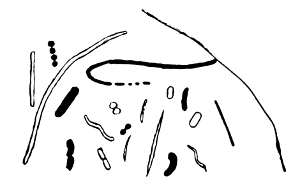
Fig. 14.—Intestinal microbes from the cæca of a Rhea.
It is not surprising that the accumulation of food material in the large intestine of running birds is associated with the presence of an extremely rich intestinal flora. Microscopic examination of the excrement of such birds shows this at once. Although the intestinal contents and excrement of many other birds show the presence of very few microbes, belonging to a small number of species, the same materials taken from running birds show enormous quantities of microbes, belonging to a large number of species. In the cæcum of the rhea (Fig. 14) there are bacterial threads, spirilla, bacilli, vibrios, and many kinds of cocci. In the tinamous, the intestinal flora is if possible even richer. According to the statistical investigations of M. Michel Cohendy, the quantity of intestinal microbes in cursorial birds is not less than that found in mammals, even in man.
If I am correct in the view that I have been explaining, cursorial birds, on account of their rich intestinal flora, ought to have a shorter duration of life than that of flying birds. I will now turn to this side of the question. Amongst cursorial forms, there are some of the largest living birds, ostriches being actually the largest living birds, whilst an extinct running bird, the Aepyornis of Madagascar, was the largest known bird. According to the rule that large animals live longer than small animals, ostriches should be able to reach a great age. The facts, however, are against this. M. Rivière, who rears ostriches in Algeria, and has a great experience of them, writes to me as follows: “I have no confidence in the stories about the longevity of the ostrich which were told me in the Sahara; they rest on no facts. My personal observation is not very large, but it is quite exact. Some of the ostriches which have been hatched here have lived for 26 years. I do not estimate the duration of life of this bird at more than 35 years, and only one case of this age have I seen myself in 20 years. The bird was a female, a good layer and sitter; she died of old age, showing all the signs of decrepitude, the skin excoriated and lumpy, the feathers degenerate and dry. The bird laid eggs until nearly the end of her life, but at irregular intervals, and the shells were granular instead of being smooth and polished.”
In a farm near Nice, where ostriches are reared, there was recently an old male called “Kruger,” which was supposed to be 50 years old.59 Countess Stackelberg has been good enough to try to get information for me about this, and informs me that although they have not exact knowledge at the farm, they believe that it must be 50 years old. M. Rivière thinks this statement very surprising, and has nothing in his own long experience to confirm it.
The facts which I have been able to get together do not attribute a long life to other running birds. Gurney mentions that a cassowary (Casuarius westermanni) lived 26 years in the Zoological Gardens of Rotterdam, and that three Australian emus (Dromaeus novae-hollandiae) had lived in the same Gardens for 28, 22, and 20 years. M. Oustalet (Ornis, 1899, vol. x, p. 62) mentions another emu of the same species which died in London at the age of over 23 years. The rhea (Rhea americana), another large running bird, does not live so long. “Boecking thinks that its duration of life should be set down at from 14 to 15 years. According to him, many of these birds die of old age.” (Brehm, Oiseaux, vol. ii, p. 517).
It is striking to compare the short life of cursorial birds, which nevertheless thrive and reproduce in captivity, with the remarkable longevity of so many other birds (parrots, birds of prey) which, although they are much smaller, have been kept alive for from 80 to 100 years. It would be difficult to find a more striking argument in favour of the view that richness of the intestinal flora shortens life. When birds become adapted to terrestrial life and acquire a huge large intestine in which microbes can abound, their duration of life is diminished.
Just as some birds, losing the aerial mode of life, have come to resemble mammals, so also some mammals have become flying animals, provided with wings and in some respects resembling birds. Bats are the most familiar instance. The large intestine, which is extremely useful to running animals, not only ceases to be an advantage but is harmful to flying creatures, insomuch as it increases the weight of the body uselessly. Bats, accordingly, have no cæcum whilst the large intestine is changed in structure and function. Instead of being a capacious tube, serving as a reservoir for the refuse of the food, the large intestine of bats has the same diameter as the small intestine. Its structure is nearly identical. It is provided with glands, and as I have already mentioned in the last chapter, it digests the food in the same way as the small intestine. In fact, the large intestine has become simply a part of the small intestine, the total length of the gut being reduced. Bats, therefore, can no longer retain their secretions but have to empty the intestine almost as often as most birds. I find that Indian fruit bats (Pteropus medius) discharge their excreta very often. Microscopic examination shows that there is an absence of microbes quite unusual in the case of a mammal. The alimentary canal of bats is nearly aseptic, containing only a few single bacteria. I have fed these fruit bats with the same food (carrots) which I have given to rabbits, guinea pigs, and mice; whilst the bats accomplished the process of digestion in 1-1/2 hours, and deposited excreta containing fragments of carrot, the rodents took very much longer for digestion and large quantities of waste matter accumulated in the cæca. The intestinal flora too, although the food in each case was the same, showed remarkable differences in these animals. It was almost absent in the bats, whilst in the rabbits, guinea-pigs and mice it consisted of a mass of microbes of different species. The excrement of the bats had no unpleasant odour, and the digestive canal of these bird-like mammals was free from putrefaction. Fruit bats fed upon fruit discharged excreta with a pleasant odour of apples and bananas. We have seen that birds which live a life similar to that of mammals acquire a rich intestinal flora and do not live so long as aerial birds. It would be extremely interesting to ascertain the duration of life of bats, mammals which live like birds and have a very scanty intestinal flora. I have been unable to get any exact information as to the duration of life of the true bats, that is to say, the insectivorous bats, as all the requests that I have addressed to specialists have proved fruitless. It appears, however, that it is a popular belief that bats live long. There is a Flemish phrase: “as long-lived as a bat,” and a similar phrase is common in Little Russia.
As for the fruit-eating bats, I have been able to ascertain that even in captivity, where the conditions are unfavourable to them, the duration of life is relatively long. I have had in my own possession a fruit bat (Pteropus medius) which was bought in Marseilles 14 years ago. It showed no signs of old age, and the teeth were in perfect condition. It died of some acute disease accidentally contracted. I know of another bat of the same species which lived in captivity for more than 15 years, and I have been informed that60 in the London Zoological Gardens, a fruit bat has lived for 17 years. If these bats were adult when caught, it would be necessary to add something to the known figures.
Although I do not know the exact duration of the life of bats, it is clearly relatively long for mammals no bigger than guinea-pigs. The difference is remarkable if we compare it with the life of sheep, dogs and rabbits, mammals very much larger in size, but possessed of a rich intestinal flora.
The series of facts that I have been discussing strengthens my conviction that the intestinal flora is an extremely important factor in the causation of senility. It must not be supposed, however, that all the known facts can be explained equally easily on this hypothesis. The harm done by microbes cannot always be measured by their abundance in the alimentary canal. In the first place, it must be remembered that some microbes are useful; moreover, microbes, even although their products are very dangerous, may exist in quantities in an organism, and yet do no harm if the organism has the power of resisting bacterial poisons. Thus, for instance, the bacillus of tetanus, which thrives in the alimentary canal, and which can endanger life if the wall of the gut is wounded, does not harm a crocodile or a tortoise, as these animals are extremely resistant to the poison of tetanus. Dr. Favorsky, by experiments at the Pasteur Institute, has shown that the poison of botulism can be absorbed with impunity by some birds, and by tortoises, although death follows if a very small quantity of it be introduced into the alimentary canal of a mammal.
The bodies of man and of higher animals are possessed of a complex mechanism which resists the harmful action of bacteria and their poisons. The various parts of this mechanism may act differently, with the result that there is great variation in the power of resistance. Thus, however abundant microbes may be in the intestine, they may bring little harm to an organism that has a high power of destruction or neutralisation of the toxins, or when these harmful products are unable to pass through the intestinal wall. It is in this way that I explain some exceptions to the general rule, which are exceptions only in appearance. Such a case is that of the nocturnal birds of prey. Although the diurnal birds of prey (eagles, vultures, etc.) have very short cæca, in which the food is never found, owls have very large cæca, which may be as long as 10 cm. (Eagle-Owl, Bubo maximus). These long cæca, however, contain debris of the food only in the enlarged terminal portion, and the food masses contain a very small number of microbes. Notwithstanding a great difference in the length of the cæca between the owls and the eagles, these two groups of birds do not differ greatly in longevity. But the difference in the cæca does not imply a corresponding difference in the intestinal flora which appears to be very scanty in both cases.
It is possible that the elephant is a more real exception to the rule. Here is a case of a mammal with an enormous large intestine and a capacious cæcum, and which none the less is capable of surviving for a century. I have had no opportunity of investigating the elephant from this point of view, and have no explanation to suggest.
Monkeys and man differ from most mammals in so far as they possess a long duration of life, although their large intestines are very capacious. I have been unable to get exact information as to the longevity of monkeys, but I understand that these animals live longer than domesticated mammals, such as the ox, sheep, dog, and cat. Anthropoid apes are supposed to be able to reach the age of 50 years. The only other mammal with a longevity similar to that of the elephant is man.
V DURATION OF HUMAN LIFE
Longevity of man—Theory of Ebstein on the normal duration of human life—Instances of human longevity—Circumstances which may explain the long duration of human life
Man has inherited from his mammalian ancestors his organisation and qualities. His life is notably shorter than that of many reptiles, but longer than that of many birds and most other mammals. None the less he has inherited a capacious large intestine in which a most abundant intestinal flora flourishes.
Gestation and the period of growth are long in the human race, and from the point of view of theoretical considerations, human longevity should be longer than it generally is. Haller, a distinguished Swiss physiologist of the 18th century, thought that man ought to live to 200 years; Buffon was of the opinion that when a man did not die from some accident or disease he would reach 90 or 100 years.
According to Flourens, man takes 20 years to grow and ought to live 5 times 20, that is to say, 100 years.
The actual longevity is much below these figures, which are based on theory. I have shown, moreover, that even if the rule based on the theory of growth can be accepted as generally true, it cannot be applied in every case, as the factors controlling duration of life are very variable.
Statistics show that the highest human mortality occurs in the earliest years of life. In the first year after birth alone, one quarter of the children die. After this period of maximum mortality, the death-rate slowly falls until the age of puberty, and then rises again slowly and continuously. It reaches a second maximum between the ages of 60 and 75, and then slowly falls again to the extreme limit of longevity.
Bodio,61 an Italian man of science, holds the view that the great mortality of infants is a natural adaptation to prevent too great an increase of the human race. This view, however, cannot be supported, and rational hygiene readily brings about a great diminution in the mortality of children. The cause of mortality is in most cases maladies of the intestinal canal, produced by erroneous diet, and with the advance of civilisation, infant mortality has been very greatly reduced.
I find it impossible to accept the view that the high mortality between the ages of 70 and 75 indicates a natural limit of human life. As a result of investigations into mortality in most of the European countries, Lexis came to the conclusion that the normal duration of human life was not more than 75 years. Dr. Ebstein62 accepts this statistical result and announces that “we now know the normal limit set by nature to the life of mankind. This limit is at the age of maximum mortality. If man dies before then, his death is premature. Everyone does not reach the normal limit; life ends generally before it, and only in rare cases after it.”
The fact that many men of from 70 to 75 years old are well preserved, both physically and intellectually, makes it impossible to regard that age as the natural limit of human life. Philosophers such as Plato, poets such as Goethe and Victor Hugo, artists such as Michael Angelo, Titian and Franz Hals, produced some of their most important works when they had passed what Lexis and Ebstein regard as the limit of life. Moreover, deaths of people at that age are rarely due to senile debility. In Paris, for instance, in 1902, of cases of deaths between the ages of 70 and 74, only 8·5 per cent. were due to old age.63 Infectious diseases, such as pneumonia, tuberculosis, diseases of the heart and the kidneys, and cerebral hæmorrhage, caused most of the deaths of these old people. Such cases of death, however, can often be avoided and must be regarded as accidental rather than natural.
Confirmation of the view that the natural limit is not at 70 to 75 years is to be found in the fact that so many men reach a greater age. Centenarians are really not rare. In France, for instance, nearly one hundred and fifty people die every year, after having reached the age of 100 or more. In 1836, in a population of thirty-three millions and a half (33,540,910), there were 146 centenarians, that is to say, one in about 220,000 inhabitants. In some other countries, particularly in Eastern Europe, the number of centenarians is still greater. In Greece, for instance, there is a centenarian for each set of 25,641 living persons, that is to say, nine times as many as in France.64
What age can be reached by the human species? Formerly it was supposed that individuals might live for several centuries; to say nothing of Methuselah, whose age of 969 years, mentioned in the Bible, is the result of a mistake in calculation, I may mention Nestor, who, according to Homer, lived for three human ages, that is to say, 300 years, or Dando, the Illyrian, and the King of the Lacedaemon, who were supposed to have reached ages of five or six centuries. These ancient records are, of course, quite incorrect. Much more confidence can be placed in some facts relating to more modern times, according to which the extreme old age reached by man was 185 years. Kentigern, the founder of the Cathedral of Glasgow, known by the name of St. Mungo, died at the age of 185, on Jan. 5th, 600.65 Another astonishing case of longevity is related from Hungary, where an agriculturist, Pierre Zortay, born in 1539, died in 1724. The Hungarian records of the 18th century contain other cases of death at ages between 147 and 172 years.
The case of Drakenberg is still more authentic; he was born in Norway in 1626 and died in 1772, at the age of 146. He was known as the Old Man of the North. He had been captured by African pirates and was held by them for fifteen years, and was engaged as a sailor for ninety-one years. His romantic history attracted contemporary attention, and the journals of the time (Gazette de France, 1764, Gazette d’Utrecht, 1767, etc.)66 contain information regarding him. The well-known instance of Thomas Parr appears to rest on good authority. Parr was a poor Shropshire peasant, who did hard work until he was 130 years old, and who died in London at the age of 152 years and 9 months. The celebrated Harvey examined the body after death and was unable to discover organic disease; even the cartilages of the ribs were not ossified and were elastic as in a young man. The brain, however, was hard and resisting to the touch, as its blood-vessels were thickened and dry. Parr was buried in Westminster Abbey.67
It appears, then, that human beings may reach the age of 150, but such cases are certainly extremely rare, and are not known from the records of the last two centuries. I cannot accept without a good deal of reserve the statements as to two persons who died in the beginning of the 19th century at the ages of 142 and 145. On the other hand, cases of duration of life from 100 to 120 years are not very rare.
Extreme longevity is not limited to the white races. According to Prichard,68 negroes have lived respectively to 115, 160, and 180 years. In the course of the 19th century there have been observed, in Senegal, eight negroes ranging from 100 to 121 years old. M. Chemin69 saw himself in 1898 at Foundiougne an old man, whom the natives stated to be 108 years of age; although he was in good health, he had been blind for several years. The same author, on the authority of the New York Herald of June 13th, 1895, mentions the case of a coloured woman in North Carolina, who was more than 140 years old, and of a man 125 years old.
Women more frequently become centenarians than men, although the difference is not very great. For instance, in Greece, in 1885, in a population of nearly two millions (1,947,760), there were 278 persons aged from 95 to 110 years, of whom 133 were male and 145 female.
In the seven years, from 1833 to 1839 inclusive, according to Chemin, there were in Paris twenty-six men over the age of 95, and forty-five women. Such facts, and many others, support the general proposition that male mortality is always greater than that of the other sex.
In most cases centenarians are notably healthy and of strong constitution. There are instances, however, of abnormal people having reached a great age. A woman, called Nicoline Marc, died in 1760, at the age of 110. Since she was two years old, her left arm was crippled. Her hand was bent under the arm like a hook. She was a hunch-back, and so bent that she appeared to be no more than four feet high. A Scotch woman, Elspeth Wilson, died at the age of 115 years. She was quite a dwarf, being only a little over two feet high. On the other hand, although they usually have a very short life, giants have been known to reach the age of 100.
Haller, in the eighteenth century, remarked that centenarians often occurred in the same family, as if longevity were a hereditary quality. It is certainly the case that the descendants of centenarians frequently reach extreme age. Thomas Parr, for instance, left a son who died in 1761, at the age of 127 years, having retained his mental faculties until death. In M. Chemin’s list of centenarians, there are eighteen cases of extreme old age having been reached by their relations. As all innate characters can be transmitted, the influence of heredity and longevity must be admitted. At the same time, it is necessary to remember the important influence of the similarity of conditions in the case of parents and children. Many cases of tuberculosis and leprosy, which used to be assigned to heredity, are now known to be due to infection in the same conditions of life, and some of the examples of the attaining of a great age by more than one member of a family may be explained by the influence of surrounding circumstances. Very frequently the husband and wife, although not related by blood, both attain extremely advanced age. I found 22 cases of this kind in M. Chemin’s list; I will give a few of them. A widow, Anne Barak, died at the age of 123, in Moravia; her husband died at the age of 118. In 1896, there was alive in Constantinople, M. Christaki, a retired army doctor of the age of 110; his wife was 95 years old. In 1886, M. et Mme. Gallot, aged respectively 105 years and 4 months, and 105 years and one month, died within two days of each other at Vaugirard, 54, Rue Cambronne. Lejoncourt mentions a South American of 143 years old, whose wife had lived to the age of 117.
It is worth enquiring if there be any relation between longevity and locality. There are some countries in which very many of the natives reach old age. It appears that Eastern Europe (Balkan States, and Russia), although its civilisation is not high, contains many more centenarians than Western Europe. I have already mentioned that Dr. Ornstein had shown the existence of many extremely old people in Greece. M. Chemin states that in Servia, Bulgaria and Roumania there were more than 5,000 centenarians (5,545) living in 1896. “Although these figures appear to be exaggerated,” wrote M. Chemin, “it is undoubtedly the case that the pure and keen air of the Balkans, and the pastoral or agricultural life of the natives, predisposes to old age.” The same author mentions several localities in France, notable for the numbers of very old people. In 1898 in the commune of Sournia (Pyrénées-Orientales) the total population was 600, amongst which there was one woman of 95 years, a man of 94, a woman of 89, two men of 85, two of 84, and two of 83, three women of 82, and two men of 80. At St. Blimont in the Department of the Somme, amongst the 400 inhabitants alive in 1897, there were six men between the ages of 85 and 93 years and one woman in her 101st year.
It cannot be accepted that it is the keen air which lengthens the life, because Switzerland, a mountainous country, is notable for the rarity of centenarians. It is more likely that some circumstance in the mode of living influences longevity.
It has been noticed that most centenarians have been people who were poor, or in humble circumstances, and whose life has been extremely simple. There are instances of rich centenarians, such as Sir Moses Montefiore who died at the age of 101, but such are extremely rare. It may well be said that great riches do not bring a very long life. Poverty generally brings with it sobriety, especially in old age, and it has been often said that most centenarians have lived an extremely sober life. They have not all followed the example of the celebrated Cornaro, who brought himself to subsist on a daily diet of no more than twelve ounces of solid food, and fourteen ounces of wine, and who, although his constitution was weak, lived for about a century. He has left extremely interesting Memoirs, and retained his intelligence until his death on the 26th April, 1566 (Lejoncourt, p. 146).
In M. Chemin’s list I have counted twenty-six centenarians, distinguished by their frugal life. Most of them did not drink wine, and many of them limited themselves to bread, milk and vegetables.
Sobriety is certainly favourable to long life, but it is not necessary, because quite a number of centenarians have drunk freely. Several of those who are catalogued by Chemin, drank wine and spirits even to excess. Catherine Reymond, for instance, who died in 1758 at the age of 107 years, drank much wine, and Politiman, a surgeon who lived from 1685 to 1825, was in the habit, from his twenty-fifth year onwards, of getting drunk every night, after having attended to his practice all day. Gascogne, a butcher of Trie (Hautes-Pyrénées), died in 1767 at the age of 120, and had been accustomed to get drunk twice a week. A most curious example is that of the Irish land-owner Brawn, who lived to the age of 120, and who had an inscription put upon his tombstone that he was always drunk, and when in that condition was so terrible that even death had been afraid of him. Some districts, even, are distinguished at once for the longevity of their inhabitants and for the large local consumption of alcohol. In 1897, village of Chailly in the Côte-d’Or had no less than twenty octogenarians amongst 523 inhabitants. This village is one of the localities in France where most alcohol is consumed, and the old people are very far from being distinguished from their younger fellows by any special sobriety.
In some cases centenarians have been much addicted to the drinking of coffee. The reader will recall Voltaire’s reply when his doctor described the grave harm that comes from abuse of coffee which acts as a real poison. “Well,” said Voltaire, “I have been poisoning myself for nearly 80 years.” There are centenarians who have lived longer than Voltaire, and have drunk still more coffee. Elisabeth Durieux, a native of Savoy, reached the age of 114. Her principal food was coffee, of which she took daily as many as forty small cups. She was jovial and a boon table companion, and used black coffee in quantities that would have surprised an Arab. Her coffee-pot was always on the fire, like the tea-pot in an English cottage (Lejoncourt, p. 84; Chemin, p. 147).
It has been noticed that many centenarians do not smoke, but this like all other traits is not universal. M. Ross, who gained a prize for longevity in 1896 at the age of 102, was an inveterate smoker. In 1897, a widow named Lazennec, died at La Carrière, in Kérinou, Finistère, at the age of 104. She lived in a hovel on charity, and she had smoked a pipe ever since she was quite young.
It is plain that any factor to which long duration of life has been attributed disappears when many cases are examined. Naturally a sound constitution and a simple and sober life are favourable to longevity, but apart from these, there is something unknown which tends to long life. The celebrated physiologist of Bonn, Pflüger,70 came to the conclusion that the chief condition of longevity is something “intrinsic in the constitution,” something which cannot be defined exactly, and which must be set down to inheritance.
In the present state of knowledge, we cannot denote the chief cause of human longevity, but the proper course will be to seek it out as we would seek out that of animal longevity. As human longevity is often local in its character, and is exhibited by married people who have nothing in common except their mode of life, we may enquire into the intestinal flora and the mechanism by which the organism resists its harmful effect as factors which influence the duration of life. It is reasonable to suppose that in persons living in the same district or under the same roof, the intestinal flora may be similar. The problem can be settled only by a series of laborious researches which have yet to be made. At present I can do no more than bring together a large number of facts regarding the duration of life in man and in animals, with the hope of suggesting the lines for future investigation.