Chapter III
Reading edition
CHAPTER III
THE SILVER STANDARD AND THE EVILS OF ITS INSTABILITY
The economic consequences of this rupture of the par of exchange were of the most far-reaching character. It divided the commercial world into two sharply defined groups, one using gold and the other using silver as their standard money. When so much gold was always equal to so much silver, as was the case previous to 1873, it mattered very little, for the purposes of international transactions, whether a country was on a gold or on a silver standard; nor did it make any difference in which of the two currencies its obligations were stipulated and realized. But when, owing to the dislocation of the fixed par, it was not possible to define how much silver was equal to how much gold from year to year or even from month to month, this precision of value, the very soul of pecuniary exchange, gave place to the uncertainties of gambling. Of course all countries were not drawn into this vortex of perplexities in the same degree and to the same extent, yet it was impossible for any country which participated in international commerce to escape from being dragged into it. This was true of India as it was of no other country. She was a silver-standard country intimately bound to a gold standard country, so that her economic and financial life was at the mercy of blind forces operating upon the relative values of gold and silver which governed the rupee-sterling exchange.
The fall increased the burden of those who were under an obligation to make gold payments. Amongst such the most [pg 88] heavily charged was the Government of India. Owing to the exigencies of its political constitution, that Government has been under the necessity of making certain payments in England to meet: (1) Interest on debt and on the stock of the guaranteed railway companies; (2) expenses on account of the European troops maintained in India; (3) pensions and non-effective allowances payable in England; (4) cost of the home administration;162 and (5) stores purchased in England for use or consumption in India. England being a gold-standard country, these payments were necessarily gold payments. But the revenues of the Government of India out of which these payments were met were received in silver, which was the sole legal-tender money of the country. It is evident that even if the gold payments were a fixed quantity their burden must increase pari passu with the fall in the gold value of silver. But the gold payments were not a fixed quantity. They have ever been on the increase, so that the rupee cost of the gold payments grew both by reason of the growth in their magnitude, and also by reason of the contraction of the medium, i.e. the appreciation of gold, in which they were payable. How greatly this double levy diminished the revenues of India, the figures on the opposite page give a convincing testimony.
TABLE XI
The Increase in the Rupee Cost of Gold Payments
163
Financial Year Average Rate of Exchange for the Year. Total Excess of Rupees needed to provide for the net Sterling Payments of the Year over those required to meet the Sterling Payments of 1874–75. Amount of this Excess due to
(1) Fall in the Rate of Exchange over that of 1874–75. (2) Increase in gold Payments over those of the Year 1874–75.
s. d. R R R
1875–76 1 9·626 86,97,980 41,13,723 45,84,257
1876–77 1 8·508 3,15,06,824 1,44,68,234 1,70,38,590
1877–78 1 8·791 1,30,05,481 1,14,58,670 1,15,46,811
1878–79 1 7·794 1,85,23,170 1,04,16,718 81,06,452
1879–80 1 7·961 39,23,570 1,65,37,394 −1,26,13,824
1880–81 1 7·956 3,12,11,981 1,92,82,582 1,19,29,399
1881–82 1 7·895 3,18,19,685 1,98,76,786 1,19,42,899
1882–83 1 7·525 −62,50,518 1,86,35,246 −2,48,85,764
1883–84 1 7·536 3,44,16,,685 2,33,46,040 1,10,70,645
1884–85 1 7·308 1,96,25,981 2,48,03,423 51,77,442
1885–86 1 6·254 −1,82,11,346 2,54,95,337 −4,37,06,683
1886–87 1 5·441 4,69,16,788 4,46,68,299 −33,47,376
1887–88 1 4·898 4,63,13,161 4,96,60,536 −33,47,376
1888–89 1 4·379 9,00,38,166 6,59,71,998 2,40,66,168
1889–90 1 4·566 7,75,96,889 6,06,98,370 1,68,98,519
1890–91 1 6·090 9,06,11,857 4,65,48,302 4,40,63,555
1891–92 1 4·733 10,44,44,529 6,54,52,999 3,89,91,530
The effect of such a growing burden on the finance of the Government may well be imagined; the condition of the Government, embarrassing at first, later became quite desperate under this continuously increasing burden. It enforced a policy of high taxation and rigid economy in the finances of the Government. Analysing the resource side of the Indian Budgets from the year 1872–73, we find that there was hardly any year which did not expire without making an addition to the existing imposts of the country. In 1872–73 there commenced the levy of what were called Provincial Rates. The fiscal year 1875–76 witnessed the addition of R.1 per gallon in the excise duty on spirits. In 1877–78 the Pass Duty on Malwa opium was raised from [pg 89] Rs. 600 to Rs. 650 per chest. An addition of a Licence Tax and Local Rates was made in the year 1878–79, and an increase of Rs. 50 per chest took place in the Malwa Opium Duty in the following year. With the help of these imposts the Government expected to place its finances on an adequate basis. By the end of 1882 it felt quite secure and even went so far as to remit some of the taxes, which it did by lowering the customs duties and the Patwari Cess in the North-Western Provinces. But the rapid pace in the fall of the exchange soon showed that a resort to further taxation was [pg 90] necessary to make up for the increased cost of the sterling payments. To the existing burdens, therefore, was added in 1886 an Income Tax, a duty of 5 per cent. on imported and also on non-illuminating petroleum. The Salt Duty was raised in 1888 in India from Rs. 2 to Rs. 2½, and in Burma from 3 annas to R. 1 per maund. The Patwari Cess of the North-Western Provinces, repealed in 1882, was re-imposed in 1888. The rates of duty on imported spirit and the excise duties on spirits were not only raised in 1890, but were afterwards added to in every province. An excise duty on malt liquor was levied in 1893, and another on salted fish at the rate of 6 annas per maund. The yield of the taxes and duties levied from 1882–83 was164 as follows:—
Sources 1882–83. 1892–93.
Rs. Rs.
Salt 5,67,50,000 8,14,90,000
Excise 3,47,50,000 4,97,90,000
Customs 1,08,90,000 1,41,80,000
Assessed Taxes 48,40,000 1,63,60,000
All this additional burden was due to the enhanced cost of meeting the gold payments, and “would not have been necessary but for the fall in the exchange.”165
Along with this increase of resources the Government of India also exercised the virtue of economy in the cost of administration. For the first time in its history the Government turned to the alternative of employing the comparatively cheaper agency of the natives of the country in place of the imported Englishmen. Prior to 1870 the scope of effecting economy along this line was very limited. By the Civil Service Reforms of 1853166 the way was cleared for the appointment of Indians to the posts reserved for the members of the covenanted Civil Service by the statute of [pg 91] 1793.167 But this reform did not conduce to any economy in the cost of the administration, because the Indian members carried the same high scale of salaries as did the English members of the Civil Service. It was when the statute of 1870 (33 Vic. c. 3) was passed permitting the appointment by nomination of non-covenanted Indians to places reserved for the covenanted Civil Service on a lower scale of salary, that a real scope for economy presented itself to the Government of India. Hard pressed, the Government of India availed itself of the possibilities for economy held out by this statute. So great was the need for economy and so powerful was the interest of the Government in reducing its expenditure that it proceeded, notwithstanding increased demands for efficient administration, to substitute the less expensive agency of non-covenanted civilians in place of the more expensive agency of the covenanted civilians. The scale on which this substitution was effected was by no means small, for we find that between 1874 and 1889 the strength of the covenanted service recruited in England was reduced by more than 22 per cent., and was further expected to be reduced by about 12 per cent., by the employment of uncovenanted Indians to the posts usually reserved for covenanted civilians.168 Besides substituting a cheap for a dear agency in the administration, the Government also sought to obtain relief by applying the pruning knife to the rank growth in departmental extravagances.169 Even with such heroic efforts to increase the revenue and reduce the expenditure the finances of the Government throughout the period of the falling exchange were never in a flourishing state.
Much more regrettable was the inability of the Government, owing to its financial difficulties, to find money for useful public works. The welfare of the Indian people [pg 92]
TABLE XII
Revenue and Expenditure of the Government of India
Year. Average Rate of Exchange. In India. In England. Final Result.
Net Revenue. Net Expenditure excluding Exchange. Surplus Revenue. Net Sterling Revenue. Exchange. Surplus (+) or Deficit (−)
d. R. R. R. £ R. R.
1874–75 22·156 39,564,216 25,897,098 13,667,118 12,562,101 1,045,239 59,778
1875–76 21·626 40,053,419 24,541,923 15,511,496 12,544,813 1,377,428 1,589,255
1876–77 20·508 38,253,366 25,355,285 12,898,081 13,229,646 2,252,611 −2,584,176
1877–78 20·791 39,275,489 27,658,021 11,617,468 13,756,478 2,123,030 −4,262,040
1878–79 19·794 44,415,139 25,778,928 18,636,211 13,610,211 2,891,902 2,134,098
1879–80 19·961 45,258,197 29,384,030 15,874,167 14,223,891 2,878,169 −1,227,893
1880–81 19·956 44,691,119 34,880,434 9,810,085 11,177,231 2,264,848 −3,031,394
1881–82 19·895 45,471,887 27,717,249 17,754,638 11,737,688 2,421,499 3,595,451
1882–83 19·525 42,526,173 25,500,437 17,025,736 13,299,976 3,050,923 674,837
1883–84 19·536 43,591,273 23,566,381 20,024,892 14,770,257 3,375,158 1,879,477
1884–85 19·308 41,585,347 24,763,779 16,821,568 13,844,028 3,363,986 −386,446
1885–86 18·254 42,635,953 27,352,132 15,283,821 13,755,659 4,329,888 −2,801,726
1886–87 17·441 44,804,774 25,124,335 19,680,439 14,172,298 5,329,714 178,427
1887–88 16·898 45,424,150 25,968,025 19,456,125 15,128,018 6,356,939 −2,028,832
1888–89 16·379 46,558,354 25,051,147 21,507,207 14,652,590 6,817,599 37,018
1889–90 16·566 50,005,810 26,367,855 23,637,955 14,513,155 6,512,767 2,612,033
1890–91 18·090 49,403,819 25,579,727 23,824,092 15,176,866 4,959,055 3,688,171
1891–92 16·733 50,023,142 27,013,618 23,009,524 15,716,780 6,825,909 467,535
[pg 93] depends upon turning to best account the resources which the country possesses. But the people have had very little of the necessary spirit of enterprise in them. The task, therefore, has fallen upon the Government of India to provide the country with the two prime requisites of a sustained economic life, namely a system of transport and a network of irrigation. With this object in view the Government had inaugurated a policy of developing what were called “Extraordinary Public Works,” financed by capital borrowings. For such borrowings India, as was to be expected, hardly offered any market, the people being too poor and their savings too scanty to furnish a modicum of the required capital outlay. Like all Governments of poor peoples, the Government of India had therefore to turn to wealthier countries who had surplus capital to lend. All these countries unfortunately happened to be on the gold standard. As long as it was possible to say that so much gold was equal to so much silver the English investor was indifferent whether the securities of the Government of India were rupee securities or sterling securities. But the fall in the gold value of silver was also a fall in the gold value of the rupee securities, and what was once a secure investment ceased to be so any more. This placed the Government in a difficult position in the matter of financing its extraordinary public works.
The English investor would not invest in the rupee securities. An important customer for the Indian rupee securities was thus lost. The response of the Indian money market was inadequate. To issue sterling securities was the only alternative to enable the Government to tap a bigger and a more constant reservoir for the drawing of capital to India; but as it was bound to increase the burden of the gold payments, which it was the strongest interest of the Government to reduce, the resort to the London money market, unavoidable as it became, was somewhat restrained,170 [pg 94]
TABLE XIII
Price Movements of the Rupee and Sterling Securities of the Government of India
171
Year. Rates of Exchange. Price of 4 per cent. Rupee Paper. Price of Sterling India Stock.
In Calcutta. In London. 4 per cent. 3½ per cent. 3 per cent.
Highest. Lowest. Highest. Lowest. Highest. Lowest. Highest. Lowest. Highest. Lowest. Highest. Lowest.
1873 22⅞ 21⅝ 105 101⅞ 97 94½ 106½ 101¼
1874 23⅛ 21¾ 104½ 99½ 98 94½ 103¾ 101
1875 22 3⁄16 21¼ 102⅞ 101¾ 94 91 106¼ 103¼
1876 22⅜ 18½ 101⅞ 98¾ 89¾ 78 105⅞ 101⅞
1877 22¼ 20 9⁄16 98⅞ 93¼ 88½ 81 104⅝ 102¼
1878 21 18¾ 96⅞ 93½ 82½ 75⅜ 104⅝ 99
1879 20⅝ 18⅝ 94⅞ 91¼ 80 77¼ 105⅜ 100⅞
1880 20⅜ 19¾ 100 92 15⁄16 81⅜ 77¾ 105⅝ 102⅛
1881 20 1⁄16 19½ 104⅝ 100 86 81½ 106⅜ 103⅞ 103⅞ 100¾
1882 20 3⁄16 19 1⁄16 102 1⁄16 95⅝ 85 81 105⅛ 102⅞ 101⅞ 99¾
1883 19 9⁄16 19 3⁄16 101⅛ 97 9⁄16 82 79¾ 104⅝ 102 7⁄16 103⅛ 101⅜
1884 19¾ 18 15⁄16 100⅝ 95 5⁄16 81¾ 78¼ 104⅜ 101⅝ 107⅛ 101¾ 96¼ 91¾
1885 19 3⁄16 17 11⁄32 98 7⁄16 92¼ 77½ 73¼ 103 1⁄16 98¾ 102¾ 97½ 91½ 85¾
1886 18 16⅛ 97¾ 97 3⁄16 73 66¼ 103½ 101¼ 102¾ 99¾ 90⅛ 86⅝
1887 18 3⁄16 15⅝ 99 3⁄16 95 5⁄16 71 11⁄16 67⅞ 102¾ 100½ 103¼ 100¼ 92¾ 95⅜
1888 17⅛ 16 100 3⁄16 97¾ 69⅜ 66¼ 102⅞ 100½ 107¼ 104⅝ 98 95
1889 16 15⁄16 16 100⅜ 97 1⁄16 69⅛ 66⅜ 109½ 106⅞ 101⅛ 99
1890 20 29⁄32 16⅞ 103⅞ 96 13⁄16 87¼ 68¾ 108½ 105¼ 100¾ 95¼
1891 18¼ 16⅝ 107 13⁄16 104 1⁄16 80¾ 74¼ 109½ 105 99 94½
1892 16 11⁄16 14⅝ 108 15⁄16 103 11⁄15 74½ 62 109½ 106⅛ 98½ 94⅞
[pg 95] with the result that the expansion of extraordinary public works did not proceed at a pace demanded by the needs of the country. The effects of this financial derangement, consequent on the fall of the exchange, were not confined to the Government of India. They were immediately felt by the municipalities and other local bodies who were dependent upon the Government for financial aid. So long as the cash balances were overflowing in the Treasury of the Government, “one of the most useful ways” to employ them was found in lending a portion of them to these local institutions. As they had just then been inaugurated under the local self-government policy of Lord Ripon's régime, and were looked upon only as an experiment, their taxing and borrowing powers were rigidly limited. Consequently, this financial aid from the Central Government by way of temporary advances was a resource of inestimable value to them. When, however, the cash balances of the Central Government began to diminish owing to the continued losses by exchange, these facilities were severely172 curtailed, so that the very vitality of these institutions was threatened just at the moment when they needed all help to foster their growth and strengthen their foundations.
Addressing the Secretary of State, the Government of India, in a despatch of February 2, 1886, observed173:—
“10. We do not hesitate to repeat that the facts set forth in the preceding paragraphs are, from the point of Indian interests, intolerable; and the evils which we have enumerated do not exhaust the catalogue. Uncertainty regarding the future of silver discourages the investment of capital in India, and we find it impossible to borrow in silver except at an excessive cost.
“On the other hand, the Frontier and Famine Railways which we propose to construct, and the Coast and Frontier defences which we have planned, are imperatively required and cannot be postponed indefinitely.
“We are forced, therefore, either to increase our sterling liabilities, to which course there are so many objections, or [pg 96] to do without the railways required for the commercial development of the country, and its protection against invasion and the effects of famine.
――――――――
“11. Nor can the difficulties which local bodies experience in borrowing in India be overlooked. The Municipalities of Bombay and Calcutta require large sums for sanitary improvements, but the high rate of interest which they must pay for silver loans operates to deter them from undertaking expensive works, and we need hardly remind your Lordship that it has quite recently been found necessary for Government to undertake to lend the money required for the construction of docks at Calcutta and Bombay, and that when the Port Commissioners of Calcutta attempted to raise a loan of 75 lakhs of rupees in September, 1885, guaranteed by the Government of India, the total amount of tenders was only Rs. 40,200, and no portion of this insignificant amount was offered at par. …”
The importation of capital on private account was hampered for similar reasons, to the great detriment of the country. It was urged on all hands, and was even recommended by a Royal Commission,174 that one avenue of escape from the ravages of recurring famines, to which India so pitifully succumbed at such frequent intervals, was the diversification of her industries. To be of any permanent benefit such diversified industrial life could be based on a capitalistic basis alone. But that depended upon the flow of capital into the country as freely as the needs of the country required. As matters then stood, the English investor, the largest purveyor of capital, looked upon the investment of capital in India as a risky proposition. It was feared that once the capital was spread out in a silver country every fall in the price of silver would not only make the return uncertain when drawn in gold, but would also reduce the capital value of his investment in terms of gold, which was naturally the unit in which he measured all his returns and his outlays. This check to the free [pg 97] inflow of capital was undoubtedly the most serious evil arising out of the rupture of the par of exchange.
Another group of people who suffered from the fall of exchange because of their obligation to make gold payments was composed of the European members of the Civil Service in India. Like the Government to which they belonged, they received their salaries in silver, but had to make gold remittances in support of their families, who were often left behind in England. Before 1873, when the price of silver in terms of gold was fixed, this circumstance was of no moment to them. But as the rupee began to fall the face of the situation was completely altered. With every fall in the value of silver they had to pay more rupees out of their fixed salaries to obtain the same amount of gold. Some relief was no doubt given to them in the matter of their remittances. The Civil Servants were permitted, at a sacrifice to the Government, to make their remittances at what was called the Official Rate of Exchange.175 It is true the difference between the market rate and the official rate was not very considerable. None the less, it was appreciable enough for the Civil Servants to have gained by 2½ per cent. on the average of the years 1862–90176 at the cost of the Government. The Military Servants obtained a similar relief to a greater degree, but in a different way. Their salary was fixed in sterling, though payable in rupees. It is true the Royal Warrant which fixed their salary also fixed the rate of exchange between the sterling and the rupee for that purpose. But as it invariably happened that the rate [pg 98] of exchange fixed by the Warrant was higher than the market rate the Military Servants were compensated to the extent of the difference at the cost of the Indian Exchequer.177 This relief was, comparatively speaking, no relief to them. The official or the warrant rates of exchange, though better than the market rates of exchange, were much lower than the rate at which they were used to make their remittances before 1873. Their burden, like that of the Government, grew with the fall of silver, and as their burden increased their attitude became alarmist. Many were the memorialists who demanded from the Government adequate compensation for their losses on exchange.178 The Government was warned179 that
“the ignorant folk who think India would be benefited by lowering present salaries are seemingly unable to comprehend that such a step would render existence on this reduced pay simply impossible, and that recourse would of necessity be had to other methods of raising money.”
Such, no doubt, was the case in the earlier days of the East India Company, when the Civil Servants fattened on pickings because their pay was small,180 and it was to put a stop to their extortions that their salaries were raised to what appears an extraordinary level. That such former instances of extortions should have been held out as monitions showed too well how discontented the Civil Service was owing to its losses through exchange.
Quite a different effect the fall had on the trade and industry of the country. It was in a flourishing state as [pg 99] compared with the affairs of the Government or with the trade and industry of a gold-standard country like England. Throughout the period of falling silver there was said to be a progressive decline relatively to population in the employment afforded by various trades and industries in England. The textile manufactures and the iron and coal trade were depressed as well as the other important trades, including the hardware manufactures of Birmingham and Sheffield, the sugar-refining of Greenock, Liverpool, and London, the manufactures of earthenware, glass, leather, paper, and a multitude of minor industries.181 The depression in English agriculture was so widespread that the Commissioners of 1892 were “unable to point to any part of the country in which [the effects of the depression] can be said to be entirely absent,” and this notwithstanding the fact that the seasons since 1882 “were on the whole satisfactory from an agricultural point of view.”182 Just the reverse was the case with Indian trade and industry. The foreign trade of [pg 100]
TABLE XIV
Imports and Exports (Both Merchandise and Treasure)
183
Year. Exports. Imports. Year. Exports. Imports.
1870–71 57,556,951 39,913,942 1881–82 83,068,198 60,436,155
1871–72 64,685,376 43,665,663 1882–83 84,527,182 65,548,868
1872–73 56,548,842 36,431,210 1883–84 89,186,397 68,157,311
1873–74 56,910,081 39,612,362 1884–85 85,225,922 69,591,269
1874–75 57,984,549 44,363,160 1885–86 84,989,502 71,133,666
1875–76 60,291,731 44,192,378 1886–87 90,190,633 72,830,670
1876–77 65,043,789 48,876,751 1887–88 92,148,279 78,830,468
1877–78 67,433,324 58,819,644 1888–89 98,333,879 83,285,427
1878–79 64,919,741 44,857,343 1889–90 105,366,720 86,656,990
1879–80 69,247,511 52,821,398 1890–91 102,350,526 93,909,856
1880–81 76,021,043 62,104,984 1891–92 111,460,278 84,155,045
TABLE XV
Nature of Industrial Pursuits in England and India
184
Distribution of Indian Exports exclusive of Treasure. Distribution of English Exports exclusive of Treasure.
Manufactured Articles. Raw Materials. Food Articles. Unclassified Articles. Total. Manufactured Articles. Raw Materials. Food Articles. Unclassified Articles. Total.
1857 11 34 22 23 100 90·9 4 4·9 ·2 100
1858 6 35 26 33 100 91·4 3·4 5·1 ·1 100
1859 6·5 40 15·5 38 100 91·5 3·8 4·6 ·1 100
1860 5·7 43·6 17·7 33 100 91·9 3·6 4·4 ·3 100
1861 5·8 46·5 15·3 32·4 100 90·4 4·8 4·8 — 100
1862 5 52 16 27 100 90·3 4 4·8 ·9 100
1863 3·7 58·7 10·6 27 100 91·0 4 4 1·0 100
1864 4 69·2 9·3 17·5 100 92·5 3·7 3·7 ·1 100
1865 3·5 68 12 16·6 100 92·1 3·6 3·6 ·7 100
1866 4·2 67·2 10·3 18·3 100 92 3·7 3·7 ·4 100
1867 4 58 11 27 100 92·2 3·8 3·7 ·3 100
1868 4 58·5 11·5 26 100 92 4·4 3·4 ·2 100
1869 4·8 60·5 14 20·7 100 92 4·2 3·1 ·7 100
1870 4·4 63·6 9 23 100 91 4 4 1·0 100
1871 3·7 65·3 11 20 100 90 4·4 4·9 ·7 100
1872 3·3 61·4 13·5 21·8 100 91·2 5·4 3·5 ·9 100
[pg 101] the country, which had bounced up during the American Civil War, showed greater buoyancy after 1870, and continued to grow throughout the period of the falling exchange at a rapid pace. During the short space of twenty years the total imports and exports of the country more than doubled in their magnitude, as is shown by Table XIV., p. 99.
Not only had the trade of India been increasing, but the nature of her industries was also at the same time undergoing a profound change. Prior to 1870 India and England were, so to say, non-competing groups. Owing to the protectionist policy of the Navigation Laws, and owing also to the substitution of man by machinery in the field of production, India had become exclusively an agricultural and a raw-material-producing country, while England had transformed herself into a country which devoted all her energy and her resources to the manufacturing of raw materials imported from abroad into finished goods. How marked was the contrast in the industrial pursuits in the two countries is well revealed by the analysis of their respective exports on opposite page.
After 1870 this distribution of their industrial pursuits was greatly altered, and India once again began to assume the rôle of a manufacturing country. Analysing the figures for Indian imports and exports for the twenty years succeeding 1870 (see table below), we find that the progress in [pg 102] the direction of manufactures formed one of the most significant features of the period.
TABLE XVI
Changes in Industrial Pursuits of India
185
Years Imports. Exports.
Manufactured. Raw. Manufactured. Raw.
Rs. Rs. Rs. Rs.
1879 25,98,65,827 13,75,55,837 5,27,80,340 59,67,27,991
1892 36,22,31,872 26,38,18,431 16,42,47,566 85,52,09,499
Percentage of increase
Total 39 91 211 43
Annual 2·8 6·5 15 3
This change in the industrial evolution was marked by the growth of two principal manufactures. One of them was the manufacture of cotton. The cotton industry was one of the oldest industries of India, but during 100 years between 1750 and 1850 it had fallen into a complete state of decrepitude. Attempts were made to resuscitate the industry on a capitalistic basis in the sixties of the nineteenth century and soon showed signs of rapid advance. The story of its progress is graphically illustrated in the following summary table:—
TABLE XVII
The Development of Indian Cotton Trade and Industry
Growth of Trade (Average Annual Quantities in each Quinquennium).
1870–71 to 1874–75. 1875–76 to 1879–80. 1880–81 to 1884–85. 1885–86 to 1889–90. 1890–91 to 1894–95.
Imports of raw cotton—thousands of cwts. 23 52 51 74 89
Exports of raw cotton—thousands of cwts. 5,236 3,988 5,477 5,330 4,660
Imports of twist and yarn 33·55 33·55 44·34 49·09 44·79
Growth of Industry (at end of each fifth year).
Number of mills 48 58 81 114 143
Number of spindles—000 omitted 1,000 1,471 2,037 2,935 3,712
Number of looms—000 omitted 10 13 16 22 34
Number of persons employed — 39,537 61,836 99,224 —
Another industry which figured largely in this expansion of Indian manufactures was jute. Unlike the cotton industry [pg 103] of India, the jute industry was of a comparatively recent origin. Its growth, different from that of the cotton industry, was fostered by the application of European capital, European management, and European skill, and it soon took as deep roots as the cotton industry and flourished as well as it did, if not better. Its history was one of continued progress.
TABLE XVIII
Development of Jute Industry and Trade
Growth of Trade. Average Annual of each Quinquennium.
1870–71 to 1874–75. 1875–76 to 1879–80. 1880–81 to 1884–85. 1885–86 to 1889–90. 1890–91 to 1894–95.
Exports—
Raw, million cwt. 5·72 5·58 7·81 9·31 10·54
Gunny bags, millions. 6·44 35·96 60·32 79·98 120·74
Cloth, million yds. — 4·71 6·44 19·79 54·20
Growth of Industry.
Number of —
Mills — 21 21 24 26
Looms, 000 omitted — 5·5 5·5 7 8·3
Spindles, 000 omitted — 88 88 138·4 172·4
Persons employed, in thousands — 38·8 38·8 52·7 64·3
This increasing trend towards manufactures was not without its indirect effects on the course of Indian agriculture. Prior to 1870 the Indian farmer, it may be said, had no commercial outlook. He cultivated not so much for profit as for individual self-sufficiency. After 1870 farming tended to become a business and crops came more and more to be determined by the course of market prices than by the household needs of the farmer. [pg 104]
TABLE XIX
Growth of Agricultural Exports of India
1868–69. 1873–74. 1877–78. 1882–83. 1887–88. 1891–92.
Wheat 100 637·41 2,313·47 5,152·36 4,914·37 11,001·44
Opium 100 118·38 123·83 122·47 120·20 116·82
Seeds 100 111·26 305·87 239·97 403·60 480·99
Rice 100 131·66 119·84 203·28 185·55 220·36
Indigo 100 116·91 121·57 142·17 140·76 126·33
Tea 100 169·35 293·17 507·25 775·09 1,075·75
Coffee 100 86·04 69·98 85·31 64·59 74·11
Such was the contrast in the economic conditions prevalent in the two countries. This peculiar phenomenon of a silver standard country steadily progressing, and a gold-standard country tending to a standstill, exercised the minds of many of its observers. The chief cause was said to be the inability of the English manufacturers to hold out in international competition. This inability to compete with his European rivals was attributed to the prevalence of protective tariffs and subsidies which formed an essential part of the industrial and commercial code of the European countries. Nothing of the kind then existed in India, where trade was as free and industry as unprotected as any could have been, and yet the Lancashire cotton-spinner, the Dundee jute manufacturer, and the English wheat-grower complained that they could not compete with their rivals in India. The cause, in this case, was supposed to be the falling exchange.186 So much were some people impressed by this view that even the extension of the Indian trade to the Far East was attributed to this cause. Already, it was alleged, the dislocation of the par of exchange between gold and silver had produced a kind of segregation of gold-using countries and silver-using countries to the exclusion of each other. In a transaction between two countries using the same metal as standard it was said the element of uncertainty arising from the use of two metals varying in terms of each other [pg 105] was eliminated. Trade between two such countries could be carried on with less risk and less inconvenience than between two countries using different standards, as in the latter case the uncertainty entered into every transaction and added to the expense of the machinery by which trade was carried on. That the Indian trade should have been deflected to other quarters187 where, owing to the existence of a common standard the situation trade had to deal with was immune from uncertainties, was readily admitted. But it was contended that there was no reason why, as a part of the segregation of commerce it should have been possible for the Indian manufacturer to oust his English rival from the Eastern markets to the extent he was able to do (see Table XX, p. 106). [pg 106]
TABLE XX
Exports of Cotton Goods to Eastern Markets
Years. Yarn, lb., 000 omitted. Piece-goods, yds., 000 omitted.
From India. From U.K. From India. From U.K.
1877 7,927 33,086 15,544 394,489
1878 15,600 36,467 17,545 382,330
1879 21,332 38,951 22,517 523,921
1880 25,862 46,426 25,800 509,099
1881 26,901 47,479 30,424 587,177
1882 30,786 34,370 29,911 454,948
1883 45,378 33,499 41,534 415,956
1884 49,877 38,856 55,565 439,937
1885 65,897 33,061 47,909 562,339
1886 78,242 26,924 51,578 490,451
1887 91,804 35,354 53,406 618,146
1888 113,451 44,643 69,486 652,404
1889 128,907 35,720 70,265 557,004
1890 141,950 37,869 59,496 633,606
1891 169,253 27,971 67,666 595,258
The causes which effected such trade disturbances formed the subject of a heated controversy.188 The point in dispute was whether the changes in international trade such as they were, were attributable to the monetary disturbances of the time. Those who held to the affirmative explained their position by arguing that the falling exchange gave a bounty to the Indian producer and imposed a penalty on the English producer. The existence of this bounty, which was said to be responsible for the shifting of the position of established competitors in the field of international commerce, was based on a simple calculation. It was said that if the gold value of silver fell the Indian exporter got more rupees for his produce and was therefore better off, while by reason of the same fact the English producer got fewer sovereigns and was therefore worse off. Put in [pg 107] this naïve form the argument that the falling exchange gave a bounty to the Indian exporters and imposed a penalty on the English exporters had all the finality of a rule of arithmetic. Indeed, so axiomatic was the formula regarded by its authors that some important inferences as to its bearing on the trade and industrial situation of the time were drawn from it. One such inference was that it stimulated exports from and hindered imports into the silver using countries. The second inference was that the fall of exchange exposed some English producers more than others to competition from their rivals in silver-using countries. Now, can such results be said to follow from the fall of exchange? If we go behind the bald statement of a fall of exchange and inquire as to what determined the gold price of silver the above inferences appear quite untenable. That the ratio between gold and silver was simply the inverse of the ratio between gold prices and silver prices must be taken to be an unquestionable proposition. If therefore the gold price of silver was falling it was a counterpart of the more general phenomenon of the fall of the English prices which were measured in gold, and the rise of the Indian prices which were measured in silver. Given such an interpretation of the event of the falling exchange, it is difficult to understand how it can help to increase exports and diminish imports. International trade is governed by the relative advantages which one country has over another, and the terms on which it is carried on are regulated by the comparative cost of articles that enter into it. It is, therefore, obvious that there cannot be a change in the real terms of trade between countries except as a result of changes in the comparative cost of these goods. Given a fall in gold prices all round, accompanied by a rise in silver prices all round, there was hardly anything in the monetary disturbance that could be said to have enabled India to increase her exportation of anything except by diminishing her exportation or increasing her importation of something else. From the same view of the question of the falling exchange it follows that such a monetary disturbance could not depress one trade more than another. If the falling or rising exchange was simply [pg 108] an expression of the level of general prices, then the producers of all articles were equally affected. There was no reason why the cotton trade or the wheat trade should have been more affected by the fall of exchange than the cutlery trade.
Not only was there nothing in the exchange disturbance to disestablish existing trade relations in general or in respect of particular commodities, but there was nothing in it to cause benefit to the Indian producer and injury to the English producer. Given the fact that the exchange was a ratio of the two price-levels, it is difficult to see in what sense the English producer, who got fewer sovereigns but of high purchasing power, was worse off than the Indian producer, who got more rupees but of low purchasing power. The analogy of Prof. Marshall was very apt. To suppose that a fall of exchange resulted in a loss to the former and a gain to the latter was to suppose that, if a man was in the cabin of a ship only ten feet high, his head would be broken if the ship sank down twelve feet into a trough. The fallacy consisted in isolating the man from the ship when, as a matter of fact, the same force, acting upon the ship and the passenger at one and the same time, produced like movements in both. In like manner the same force acted upon the Indian producer and the English producer together, for the change in the exchange was itself a part of the more sweeping change in the general price-levels of the two countries. Thus stated, the position of the English and Indian producer was equally good or equally bad, and the only difference was that the former used fewer counters and the latter a larger number in their respective dealings.
A bounty to the Indian producer and a penalty to the English producer, it is obvious, could have arisen only if the fall of silver in England in terms of gold was greater than the fall of silver in terms of commodities in India. In that case the Indian producer would have obtained a clear benefit by exchanging his wares for silver in England and thus securing a medium which had a greater command over goods and services in India. But à priori there could be no justification for such an assumption. There was no reason why gold price of silver should have fallen at a different [pg 109] rate from the gold price of commodities in general, or that there should have been a great difference between the silver prices in England and in India. Statistics show that such à priori assumptions were not groundless.
It is obvious that if silver was falling faster than commodities, and if silver prices in India were lower than silver prices in England, we should have found it evidenced by an inflow of silver from England to India. What were the facts? Not only was there no extraordinary flow of silver to India, but the imports of silver during 1871–93 were much smaller than in the twenty years previous to that period.189 This is as complete a demonstration as could be had of the fact that the silver prices in India were the same as they were outside, and consequently the Indian producer had very little chance of a bounty on his trade.
Although such must be said to be the à priori view of the question, the Indian producer was convinced that his prosperity was due to the bounty he received. Holding such a position he was naturally opposed to any reform of the Indian currency, for the falling exchange which the Government regarded a curse he considered a boon. But however plausible was the view of the Indian producer, much sympathy would not have been felt for it had it not been coupled with a notion, most commonly held, that the bounty arose from the export trade, so that it became an article of popular faith that the fall of exchange was a source of gain to the nation as a whole. Now was it true that the bounty arose from the export trade? If it were so, then every fall of exchange ought to give a bounty. But supposing that the depreciation of silver had taken place in India before it had taken place in Europe, could the fall of exchange thus brought about have given a bounty to the Indian exporter? As was explained above, the Indian exporter stood a chance of getting a bounty only if with the silver he obtained for his produce he was able to buy more goods and [pg 110]
TABLE XXI
Movements of Prices, Wages and Silver Between India and England
190
Net Imports of Silver into India. Index No. for Gold Price of Silver. Years. Index No. for Silver Prices of Commodities in India. Index No. for Wages in India. Index No. for Gold Prices of Commodities in England. Index No. for Wages in England
Years. Amount. Rs.
(1) (2) (3) (4) (5) (6) (7) (8)
1871–72 6,587,296 99·7 1871 100 — 100 100
1872–73 739,244 99·2 1872 105 — 109 105·8
1873–74 2,530,824 97·4 1873 107 100 111 112
1874–75 4,674,791 95·8 1874 116 101 102 113
1875–76 1,640,445 93·3 1875 103 97 96 111·6
1876–77 7,286,188 86·4 1876 107 98 95 110
1877–78 14,732,194 90·2 1877 138 97 94 109·8
1878–79 4,057,377 86·4 1878 148 99 87 107
1879–80 7,976,063 84·2 1879 135 100 83 105·8
1880–81 3,923,612 85·9 1880 117 99 88 106·5
1881–82 5,381,410 85·0 1881 106 99 85 106·5
1882–83 7,541,427 84·9 1882 105 100 84 106·5
1883–84 6,433,886 83·1 1883 106 102 82 108
1884–85 7,319,581 83·3 1884 114 101 76 109
1885–86 11,627,028 79·9 1885 113 106 72 108
1886–87 7,191,743 74·6 1886 110 105 69 107
1887–88 9,319,421 73·3 1887 111 114 68 108
1888–89 9,327,529 70·4 1888 119 112 70 109·8
1889–90 11,002,078 70·2 1889 125 112 72 113
1890–91 14,211,408 78·4 1890 125 113 72 118
1891–92 9,165,684 74·3 1891 128 118 72 118
1892–93 12,893,499 65·5 1892 141 110 68 117·4
1893–94 13,759,273 58·5 1893 138 119 68 117·4
[pg 111] services in India. To put the same in simpler language, his bounty was the difference between the price of his product and the price of his outlay. Bearing this in mind, we can confidently assert that in the supposed case of depreciation of silver having taken place in India first, such a fall in the Indian exchange would have been accompanied by a penalty instead of a bounty on his trade. In that case the exporter from India would have found that though the Indian exchange, i.e. the gold price of silver, had fallen, yet the ratio which gold prices in England bore to silver prices in India had fallen more, i.e. the price he received for his product was smaller than the outlay he had incurred. It is not quite established whether silver had fallen in Europe before it had fallen in India.191 But even if that were so the possibility of a penalty through the fall of exchange proves that the bounty, if there was any, was not a bounty on the export trade as such, but was an outcome of the disharmony between the general level of prices and the prices of particular goods and services within the country, and would have existed even if the country had no export trade.
Thus the bounty was but an incident of the general depreciation of the currency. Its existence was felt because prices of all goods and services in India did not move in the same uniform manner. It is well known that at any one time prices of certain commodities will be rising, while the general price level is falling. On the other hand, certain goods will decline in price at the same time that the general price level is rising. But such opposite movements are rare. What most often happens is that prices of some goods and services, though they move in the same direction, yet do not move at the same pace as the general price level. It is notorious that when general prices fall wages and other fixed incomes which form the largest item in the total outlay of every employer do not fall in the same proportion; and when general prices rise they do not rise as fast as general prices, but generally lag behind. And this was just what was happening in a silver-standard country like India and a gold-standard [pg 112] country like England during the period of 1873–93 (see Chart IV). Prices had fallen in England, but wages had not fallen to the same extent. Prices had risen in India, but wages had not risen to the same extent. The English manufacturer was penalized, if at all, not by any act on the part of his Indian rival, but by reason of the wages of the former's employees having remained the same, although the price of his products had fallen. The Indian producer got a bounty, if any, not because he had an English rival to feed upon, but because he did not have to pay higher wages, although the price of his product had risen.
The conclusion, therefore, is that the falling exchange could not have disturbed established trade relations or displaced the commodities that entered into international trade. The utmost that could be attributed to it is its incidence in economic incentive. But in so far as it supplied a motive force or took away the incentive, it did so by bringing about changes in the social distribution of wealth. In the case of England, where prices were falling, it was the employer who suffered; in the case of India, where prices were rising, it was the wage-earner who suffered. In both cases there was an injustice done to a part of the community and an easy case for the reform of currency was made out. The need for a currency reform was recognized in England; but in India many people seemed averse to it. To some the stability of the silver standard had made a powerful appeal, for they failed to find any evidence of Indian prices having risen above the level of 1873. To others the bounty of the falling exchange was too great a boon to be easily given away by stabilizing the exchange. The falsity of both the views is patent. Prices in India did rise, and that, too, considerably. Bounty perhaps there was, but it was a penalty on the wage-earner. Thus viewed, the need for the reform of Indian currency was far more urgent than could have been said of the English currency. From a purely psychological point of view there is probably much to choose between rising prices and falling prices. But from the point of view of their incidence on the distribution of wealth, very little can be said in favour of a standard which changes in its [pg 113] value and which becomes the via media of transferring wealth from the relatively poor to the relatively rich. Scrope said: “Without stability of value money is a fraud.” Surely, having regard to the magnitude of the interests affected, depreciated money must be regarded as a greater fraud. That being so, the prosperity of Indian trade and industry, far from being evidence of a sound currency, was sustained by reason of the fact that the currency was a diseased currency. The fall of exchange, in so far as it was a gain, registered a loss to a large section of the Indian people with fixed incomes who suffered from the instability of the silver standard equally with the Government and its European officers.
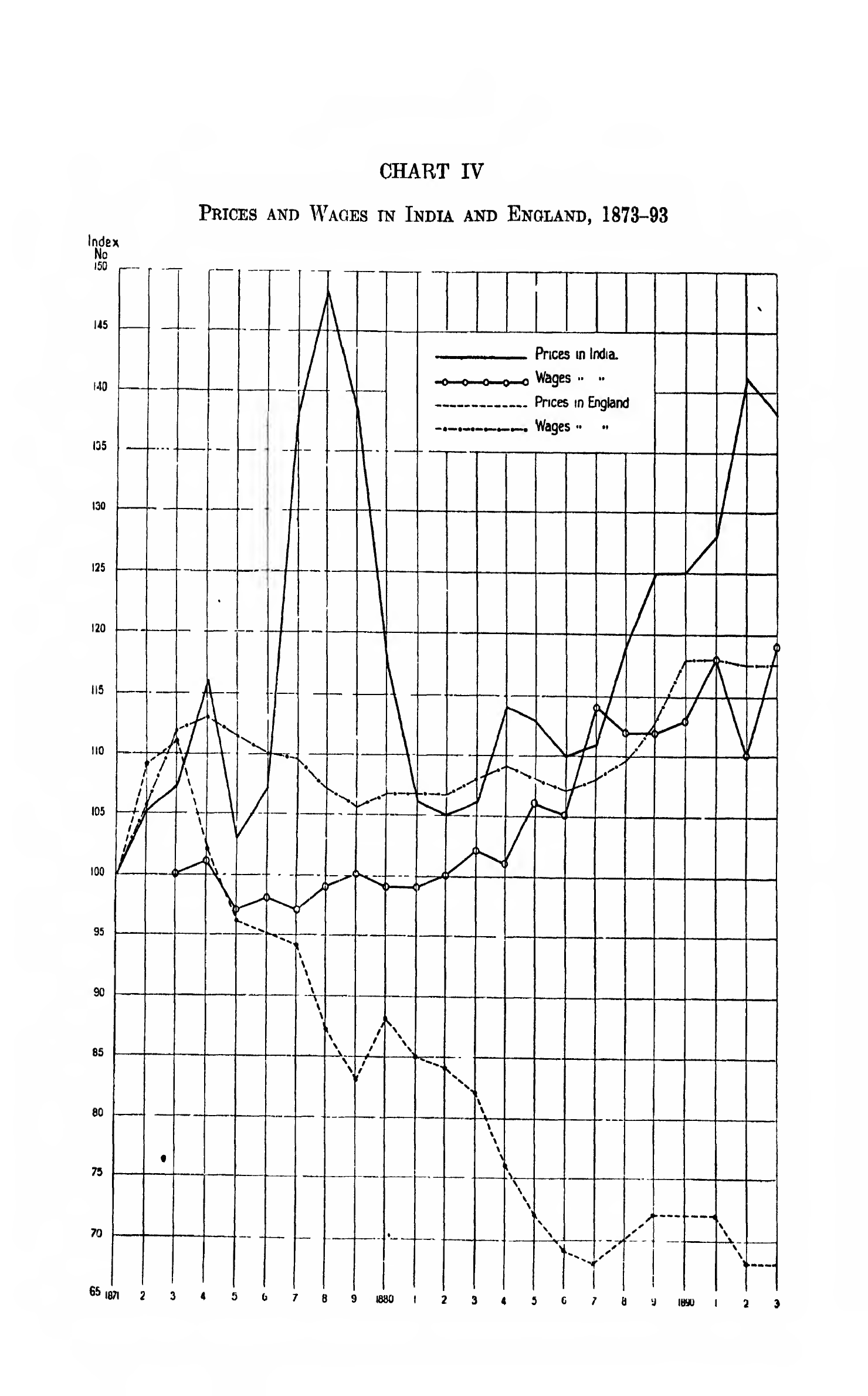
CHART IV: Prices and Wages in India and England, 1873–93
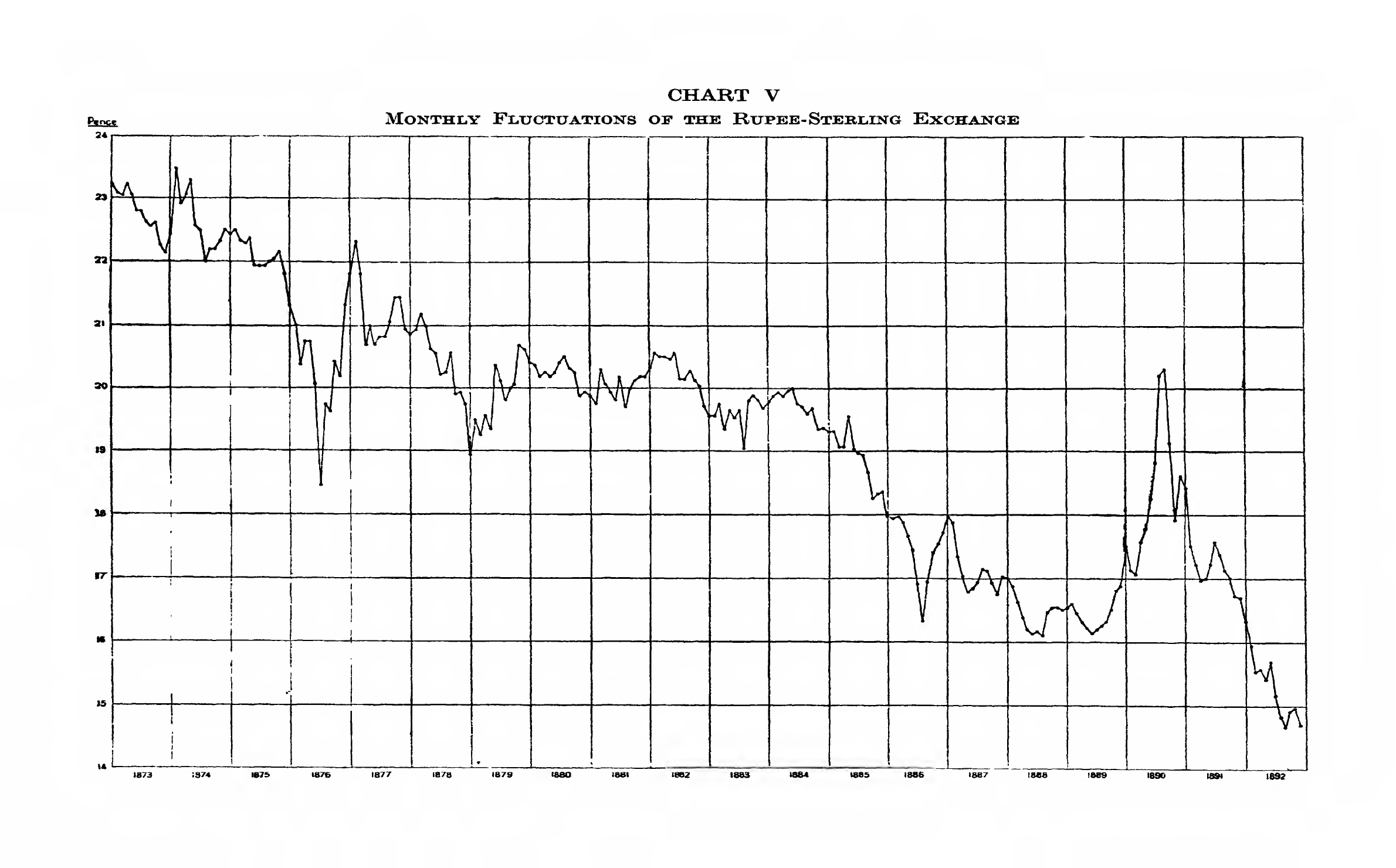
CHART V: Monthly Fluctuations of The Rupee-Sterling Exchange
So much for the fall of silver. But the financial difficulties and social injustices it caused did not sum up the evil effects produced by it. Far more disturbing than the fall were the fluctuations which accompanied the fall (see Chart V).
The fluctuations greatly aggravated the embarrassment of the Government of India caused by the fall in the exchange value of the rupee. In the opinion of the Hon. Mr. Baring (afterwards Lord Cromer),192
“It is not the fact that the value of the rupee is, comparatively speaking, low that causes inconvenience. It would be possible, although it might be exceedingly troublesome, to adjust the Indian fiscal system to a rupee of any value. What causes inconvenience alike to Government and to trade is that the value of the rupee is unstable. It is impossible to state accurately in Indian currency what the annual liabilities of the Government of India are. These liabilities have to be calculated afresh every year according to the variations which take place in the relative value of gold and silver, and a calculation which will hold good for even one year is exceedingly difficult to make.”
Owing to such fluctuations, no rate could be assumed in the Budget which was likely to turn out to be the true market rate. As matters stood, the rate realized on an average during a particular year differed so widely from the Budget rate that the finances of the Government became, to [pg 114] employ the phraseology of a finance minister, a “veritable gamble.” How greatly the annual Budget must have been deranged by the sudden and unprovided-for changes in the rupee cost of the sterling payments the table on opposite page may help to give some idea.
If Government finance was subjected to such uncertainties as a result of exchange fluctuations, private trade also became more or less a matter of speculation. Fluctuations in exchange are, of course, a common incident of international trade. But if they are not to produce discontinuity in trade and industry there must be definite limits to such fluctuations. If the limits are ascertainable, trade would be reasonably certain in its calculation, and speculation in exchange would be limited within the known limits of deviations from an established par. Where, on the other hand, the limits are unknown all calculations of trade are frustrated and speculation in exchange takes the place of legitimate trading. Now, it is obvious that fluctuations in the exchange between two countries will be limited in extent if the two countries have the same standard of value. Where there is no such common standard of value the limits, though they exist, are too indefinite to be of much practical use. The rupture of the fixed par of exchange, having destroyed a common standard of value between gold and silver countries, removed the limits on the exchange fluctuations between such countries. As a result of such variations in the value of the standard measure, trade advanced by “rushes and pauses,” and speculation became feverishly active.193
That progress of trade depends on stability is a truism which seldom comes home until it is denied in fact. It is difficult to appreciate its importance to healthy enterprise when government is stable, credit secure, and conditions are uniform. And yet so great is the handicap of instability that everywhere business men have been led by a variety of devices to produce stability in domains enveloped by uncertainty. Everywhere there have grown up business barometers forewarning business men of impending changes and so enabling them to forearm against them by timely [pg 115]
TABLE XXII
Fluctuations of Exchange and Fluctuations in the Rupee Cost of Gold Payments
194
Financial Year. Estimated Rate of Exchange on which the Budget of the Year was framed. Rate of Exchange actually realized on the Average during the Year. Changes in the Rupee Cost of Sterling Payments consequent upon Changes between the Estimated and the Realized rates of Exchange.
s. d. s. d. Rs. Rs.
1874–75 1 10·375 1 10·156 15,91,764 —
1875–76 1 9·875 1 9·626 19,57,917 —
1876–77 1 8·5 1 8·508 — 76,736
1877–78 1 9·23 1 8·791 38,43,050 —
1878–79 1 8·4 1 7·794 56,87,129 —
1879–80 1 7 1 7·961 — 84,40,737
1880–81 1 8 1 7·956 4,24,722 —
1881–82 1 8 1 7·895 10,17,482 —
1882–83 1 8 1 7·525 37,46,890 —
1883–84 1 7·5 1 7·536 — 3,62,902
1884–85 1 7·5 1 7·308 18,97,307 —
1885–86 1 7 1 6·254 56,82,638 —
1886–87 1 6 1 5·441 65,17,721 —
1887–88 1 5·5 1 4·898 71,90,097 —
1888–89 1 4·9 1 4·379 77,98,400 —
1889–90 1 4·38 1 4·566 — 27,31,892
1890–91 1 4·552 1 6·09 — 2,35,51,744
1891–92 1 5·25 1 4·733 80,09,366 —
[pg 116] changes in their operations. The whole of insurance business is aimed at giving stability to economic life. The necessity which compelled all regularly established Governments to maintain standard measures by which the true proportion between things as to their quantities might be ascertained and dealings in them regulated with certainty was motivated by the same purpose, and the meticulous precision with which every civilized country defines its standard measures, and the large machinery it maintains to preserve them from deviation, are only evidences of the great importance that an economic society must continue to attach to the matter of providing precision of expression and assurance of fulfilment with regard to the contracts entered into by its members in their individual or corporate capacities. Important as are the standard measures of a community, its measure of value is by far the most important of them all.195 The measures of weight, extension, or volume enter only into particular transactions. If the pound, the bushel, or the yard were altered the evils would be comparatively restricted in scope. But the measure of value is all-pervading.
“There is no contract,” Peel declared,”196 public or private, no engagement national or individual, which is unaffected by it. The enterprises of commerce, the profits of trade, the arrangements made in all domestic relations of society, the wages of labour, pecuniary transactions of the highest amount and of the lowest, the payment of national debt, the provision for national expenditure, the command which the coin of the smallest denomination has over the necessaries of life, are all affected”
by changes in the measure of value. This is because every contract, though ultimately a contract in goods, is primarily a contract in value. It is, therefore, not enough to maintain constancy in the measures of weight, capacity, or volume. A contract as one of goods may remain exact to the measure [pg 117] stipulated, but may nevertheless be vitiated as a contract in values by reason of changes in the measure of values. The necessity of preserving stability in its measure of value falls on the shoulders of every Government of an orderly society. But its importance grows beyond dispute as society advances from status to contract. The conservation of the contractual basis of society then becomes tantamount to the conservation of an invariable measure of value.
The work of reconstituting a common measure of value in some form or other which those misguided legislators of the seventies helped to destroy, it was found, could not be long delayed with impunity. The consequences that followed in the wake of that legislation, as recounted before, were too severe to allow the situation to remain unrectified. That efforts for reconstruction should have been launched before much mischief was done only shows that a world linked by ties of trade will insist, if it can, that its currency systems must be laid on a common gauge. [pg 118]