Note 15 — Chapter XXVI · CYSTS AND TUMORS. (continued 2)
Reading edition
Since the discovery of Spirochæta pallida in syphilis, Mulzer and Loewenthal have found spiral organisms on the surface of ulcerating tumors. Borrel also found spirochætæ in conjunction with helminthia in two enclosed mouse tumors, and also in a large tumor sent from Ehrlich’s laboratory. None of these authors attributed any significance to the presence of these organisms, but recently, through the publication of Gaylord, in the Journal of Infectious Diseases, who has found a characteristic small spiral organism in nine out of ten primary mouse tumors, and in all of the transplanted mouse tumors of three distinct strains in the New York State Cancer Laboratory, the subject has attracted new interest.
Fig. 95
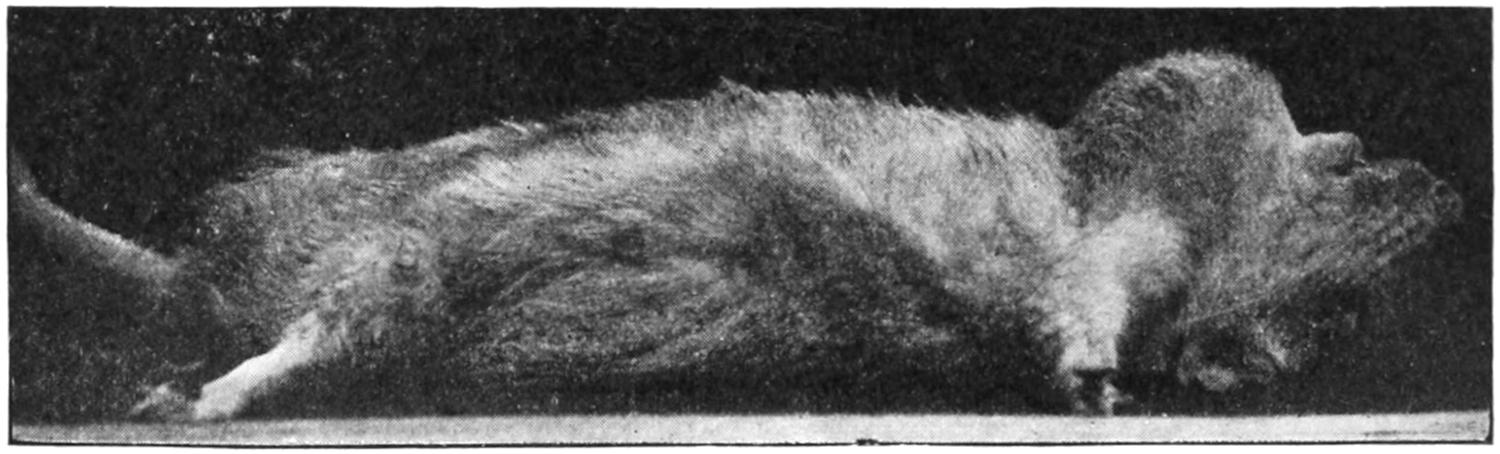
Rat with primary cystosarcoma of thyroid; cage infection in previously healthy animal kept in cage formerly occupied by rat with same condition. (Gaylord and Clowes, Jour. Amer. Med. Assoc., January 5, 1907.)
Fig. 96
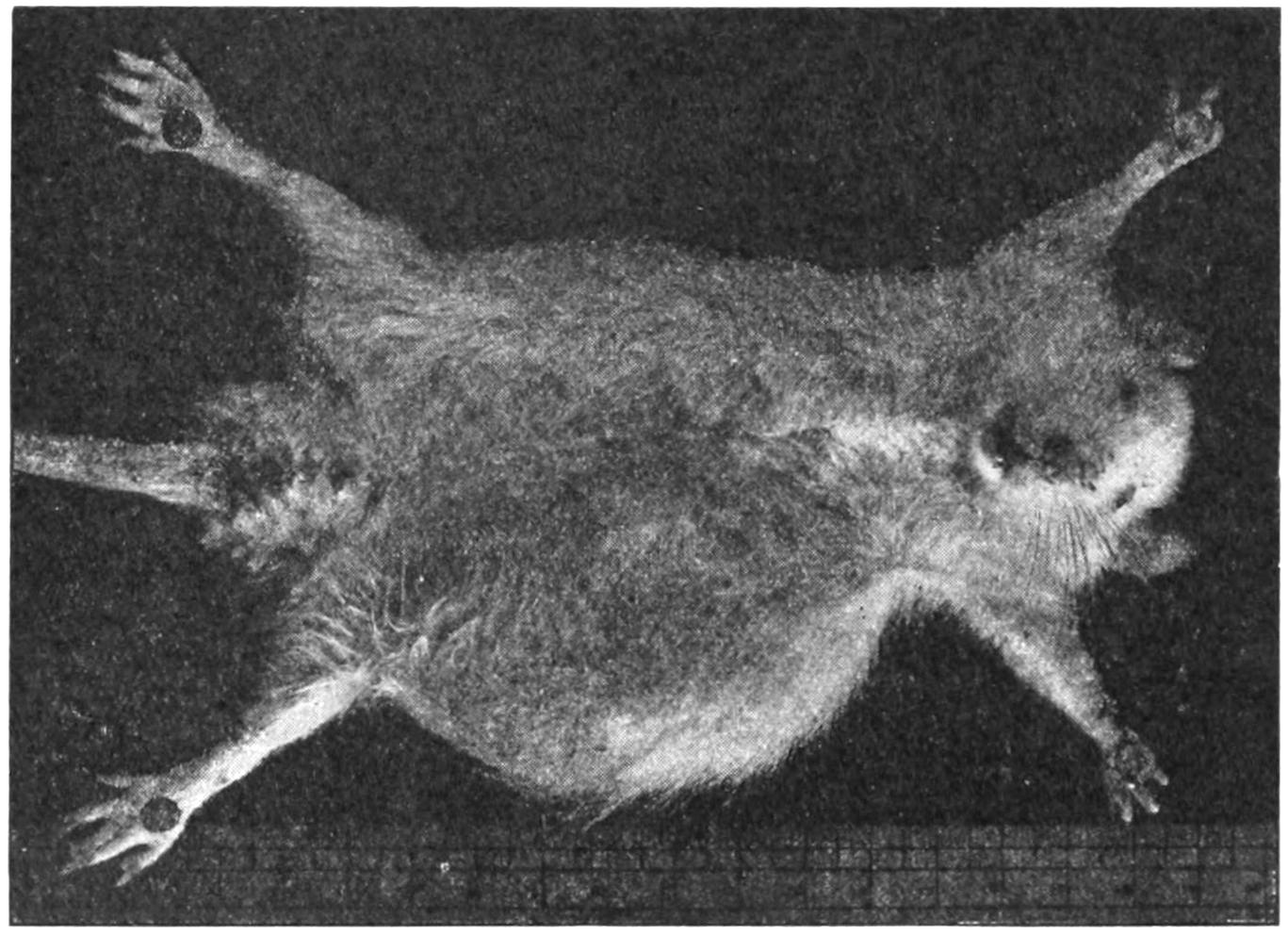
Rat with tumor produced by transplantation from that represented in Fig. 95. (Gaylord and Clowes, loc. cit.)
Gaylord’s organism is best demonstrated by the Levaditi silver method, but can be seen by experienced observers in the living fresh state. It measures from 2.5 to 7.8 microns in length, and the individuals have from four to thirteen closely packed abrupt turns. The organism measures 0.6 micron in diameter. Thus far it has been impossible to stain it with any of the aniline stains, which characteristic appears to distinguish it from the organism described by Borrel and Loewenthal. Calkins has also found this organism in a spontaneous mouse tumor in New York. The distribution of the organism in the growing periphery of the tumors, when considered in the light of Fischer’s work with Scarlet-R, would make it appear not impossible that the organism bears an etiological relation to the tumors in which it occurs.
In the light of the well-authenticated cases of cage infection and the evidence of immunity now definitely determined, the way should be prepared for the discovery of the organism or organisms of cancer. At present this organism would appear strongly in evidence as its cause.