PART V WINTER (continued 3)
Reading edition
WHEN SHIPS PUT OUT TO SEA
I
It’s “Sweet, good-by,” when pennants fly And ships put out to sea; It ’s a loving kiss, and a tear or two In an eye of brown or an eye of blue:— And you’ll remember me, Sweetheart, And you’ll remember me.
II
It’s “Friend or foe?” when signals blow And ships sight ships at sea; It’s “Clear for action! and man the guns!” As the battle nears and the battle runs;— And you’ll remember me, Sweetheart, And you’ll remember me.
III
It’s deck to deck, and wrath and wreck, When ships meet ships at sea; It’s scream of shot and shriek of shell, And hull and turret a roaring hell;— And you’ll remember me, Sweetheart, And you’ll remember me.
IV
It’s doom and death, and pause a breath, When ships go down at sea; It’s hate is over and love begins, And war is cruel whoever wins;— And you’ll remember me, Sweetheart, And you’ll remember me.
A CHRISTMAS CATCH
When roads are mired with ice and snow, And the air of morn is crisp with rime; When the holly hangs by the mistletoe, And bells ring in the Christmas-time:— It’s—Saddle, my Heart! and ride away To the sweet-faced girl with eyes of gray! Who waits with a smile for the gifts you bring— A man’s strong love and a wedding-ring— It’s—Saddle, my Heart, and ride! When vanes veer north and storm-winds blow, And the sun at noon is a blur o’erhead; When the holly hangs by the mistletoe, And the Christmas service is sung and said:— It’s—Come, O my Heart, and wait a while, Where the organ peals, in the altar aisle, For the gifts that the church now gives to you— A woman’s hand and a heart that’s true. It’s—Come, O my Heart, and wait! When rooms gleam warm with the fire’s glow, And the sleet raps sharp on the window-pane: When the holly hangs by the mistletoe, And Christmas revels begin again:— It’s—Home, O my Heart, and love, at last! And her happy breast to your own held fast: A song to sing and a tale to tell, A good-night kiss and all is well. It’s—Home, O my Heart, and love!
A SONG FOR YULE
I
Sing, Hey, when the time rolls round this way, And bells peal out, ’Tis Christmas Day! The world is better then by half, For joy, for joy: In a little while you will see it laugh— For a song’s to sing and a glass to quaff, My boy; my boy. So here ’s to the man who never says nay!— Sing, Hey, a song of Christmas Day!
II
Sing, Ho, when roofs are white with snow, And homes are hung with mistletoe: Old Earth is not half bad, I wis— What cheer! what cheer! How it ever seemed sad the wonder is— With a gift to give and a girl to kiss, My dear; my dear. So here ’s to the girl who never says no! Sing, Ho, a song of the mistletoe!
III
No thing in the world to the heart seems wrong When the soul of a man walks out with song; Wherever they go, glad hand in hand, And glove in glove, The round of the land is rainbow-spanned, And the meaning of life they understand Is love; is love. Let the heart be open, the soul be strong, And life will be glad as a Christmas song.
CHORDS
I
When love delays, when love delays and joy Steals like a shadow o’er the happy hills; When hope is gone; and no to-morrow fills The promise of to-day; still I employ My soul with thoughts of thee, Who ’rt not for me, for me! When love delays, when love delays and song Aches at wild lips, unutterable, as the sound Of ocean strives, within the shell’s mouth bound; And hope is gone for ever, slain of wrong; Still in my heart one word Keeps calling like a bird. When love delays, when love delays and sleep Seals tired eyelids,—like the sound of foam, Heard ’mid familiar flowers far from home,— When hope lies dead; in dreams, in dreams I keep Feeling thy lips’ sweet touch,— And, oh! it is too much! When love delays, when love delays and sorrow Drinks her own tears that add but to her thirst; When song and sleep and love itself seem curst, And hope lies dead; still, still I dream to-morrow Will bring some word of cheer From thee who art not here. Will love delay, will love delay till death Hath sealed these lips and locked these eyes in night? Till unto love and hate indifferent quite This form shall lie? Then wilt thou, wild of breath, Bend down and kiss me there When I no more shall care?
II
If thou wouldst know the Beautiful that breathes And beckons through the World, far must thou seek!... She is no shadow wreathed with hemlock wreaths; No drowsy sorrow whose wan eyes are weak With melancholy vigils; and no shade Of tragic sin of the sweet sun afraid: No tearful anger torn of truthless love, Who stabs her sick heart to the dagger’s hilt For vengeance sweet; no miser mood, or maid, In owlet towers!—Nay! she sings above On morning meads ’mid flowers that never wilt. If thou dost seek the Beautiful, beware! Lest thou discover her, nor know ’tis she; And she enslave thee to thy heart’s despair, And fill thy soul with yearning, utterly, For that wild-rose which is her mouth, that brings Dew-odors of the dawn; for those twin springs Of light, her eyes; the bloom of her white brow, O’er which the foliage of her dark hair lies: The melody which is her heart, that sings The poetry of love, to which all bow, Both gods and men, the love that never dies. Lost art thou then, lost as the first lone star Set in the splendor of the sunset’s wave; Lost in thy loneliness of searching far, Striving to clasp her, evermore her slave: Lost—gladly lost! a devotee to her Who, in the end, perhaps may let thee share A portion of her bliss, her heritage Of happiness in the same way and wise As woods and waters share it.—Then prepare Thy soul,—made perfect,—for its final wage, Her kiss, whose touch shall apotheosize.
III
Now that the orchard’s leaves are sere, And drip with rain instead of dew, No moon-bright fruit hangs moon-like here, And dead your long white lilies too,— And dead the heart that broke for you: How comes the dim touch of your arm? Your faint lips on my feverish cheek? Your eyes near mine? deep as a charm, And gray, so gray! till I am weak, Weak with wild tears and can not speak. I am as one who walks in dreams; Sees, as in youth, his father’s home; Hears from his native mountain streams Far music of continual foam, And one sweet voice that bids him come.
AT HER GRAVE
I
With your eyes of April blue, And your mouth Like a May-rose, fresh with dew, Of the South, With your hair as golden sweet As the ripples of ripe wheat, How you make my old heart beat!— Who are you?
II
There is something that I knew, Long ago, In your voice that thrills me through With the glow Of remembered happiness; And your look—I can not guess What it is there, nor express.— Who are you?
III
You are like her! even the hue Of her eyes!— It is strange you stop here, too, Where she lies!— Where she lies who was, you see, All to me a girl could be— But no wife.—You stare at me.— Who are you?
IV
Well, I left her. That ’s not new— God above! Men, who live so, often do. ’T is n’t love. So I broke her heart, they say,— And been wretched since that day: And our child—don’t turn away!— Who are you?
A CONFESSION
These are the facts:—I was to blame. I brought her here and wrought her shame. She came with me all trustingly. Lovely and innocent her face: And in her perfect form, the grace Of purity and modesty. I think I loved her then: would dote On her ambrosial breast and throat, Young as a wildflower’s tenderness: Her eyes, that were both glad and sad: Her cheeks and chin, that dimples had: Her mouth, red-ripe to kiss and kiss. Three months passed by; three moons of fire; When in me sickened all desire: And in its place a devil,—who Filled all my soul with deep disgust, And on the victim of my lust Turned eyes of loathing,—swiftly grew. One night, when by my side she slept, I rose: and leaning, while I kept The dagger hid, I kissed her hair And mouth: and, when she smiled asleep, Into her heart I drove it deep— And left her dead, still smiling there.
LAST DAYS
Ah! heartbreak of the tattered hills, And heartache of the autumn sky! Heartbreak and heartache, since God wills, Are mine, and God knows why! I held one dearer than each day Of life God sets in sunny gold— But Death hath ta’en that gem away, And left me poor and old. The heartbreak of the hills is mine, Of trampled twig and rain-beat leaf, Of wind that sobs through thorn and pine An unavailing grief. The sorrow of the loveless skies’ “Farewells” are wild as those I said When last I kissed my child’s blue eyes And lips, ice-dumb and dead.
AT TWILIGHT
Once more she holds me with her pensive eyes; Once more I feel her voice’s witchery Within my heart unfountain tears and sighs, And fill the soul of me. Once more she bends a silent face above; Once more I feel her hands’ soft touches shake My life, unbinding long-imprisoned love, Bidding my lost dreams wake. Once more I see her serious smile; and touch Once more the lips of her whose kisses say— “The night was long, and thou hast suffered much: At last, dear heart, ’t is day!”
DAY AND NIGHT
They said to me, “The days are not so far off When she will come, who gave her heart to thee;” And still I wait, while twilight’s lonely star, off Her long-loved hills, dips dewy to the sea. And I recall that night, which gave its soul of Calm beauty to the earth, when she did give Her love’s white starlight to the rugged whole of My barren life and bade me see and live. The days go by, and my sick soul recalls but The revelation of that evening sky: The days! whose hours are as narrow walls,—but Of whiter shadow,—where hearts break and die. The day is error’s: it can but deceive us With shows of Earth, blind with the primal curse. The night is truth’s: its myriad fires weave us The thoughts of God, the visible universe.
THREE BIRDS
A red bird sang upon the bough When wind-flowers nodded in the dew: My spring of bird and flower wast thou, O tried and true! A brown bird warbled on the wing When poppy buds were hearts of heat: I wooed thee with a golden ring, O sad and sweet! A black-bird twittered in the mist When nightshade blooms were filled with frost: The leaves upon thy grave are whist, O loved and lost!
UNREQUITED
Passion? not hers! who held me with pure eyes: One hand among the deep curls of her brow, I drank the girlhood of her gaze with sighs: She never sighed, nor gave me kiss or vow. So have I seen a clear October pool, Cold, liquid topaz, set within the sere Gold of the woodland, tremorless and cool, Reflecting all the heartbreak of the year. Sweetheart? not she! whose voice was music-sweet; Whose face was sweeter than melodious prayer. Sweetheart I called her.—When did she repeat Sweet to one hope, or heart to one despair! So have I seen a wildflower’s fragrant head Sung to and sung to by a longing bird, And at the last, albeit the bird lay dead, No blossom wilted, for it had not heard.
THE HEART’S DESIRE
God made her body out of foam and flowers, And for her hair the dawn and darkness blent; Then called two planets from their heavenly towers, And in her face, divinely eloquent, Gave them a firmament. God made her heart of rosy ice and fire, Of snow and flame, that freezes while it burns; And of a starbeam and a moth’s desire He made her soul, to’ards which my longing turns, And all my being yearns. So is my life a prisoner unto passion, Enslaved of her who gives nor sign nor word; So in the cage her loveliness doth fashion Is love endungeoned, like a golden bird That sings but is not heard. Could it but once convince her with beseeching! But once compel her as the sun the south! Could it but once, fond arms around her reaching, Upon the red carnation of her mouth Dew its eternal drouth! Then might I rise victorious over sadness, O’er fate and change, and, with but little care, Torched by the glory of that moment’s gladness, Breast the black mountain of my life’s despair, And die, or do and dare.
OUT OF THE DEPTHS
I
Let me forget her face! So fresh, so lovely! the abiding place Of tears and smiles that won my heart to her; Of dreams and moods that moved my soul’s dim deeps, As strong winds stir Dark waters where the starlight glimmering sleeps.— In every lineament the mind can trace, Let me forget her face!
II
Let me forget her form! Soft and seductive, that contained each charm, Each grace the sweet word maidenhood implies; And all the sensuous youth of line and curve, That makes men’s eyes Bondsmen of beauty, eager still to serve.— In every part that memory can warm, Let me forget her form!
III
Let me forget her, God! Her who made honeyed love a bitter rod To scourge my heart with, barren with despair; To tear my soul with, sick with vain desire!— Oh, hear my prayer! Out of the hell of love’s unquenchable fire I cry to thee, with face against the sod, Let me forget her, God!
“THIS IS THE FACE OF HER”
This is the face of her I’ve dreamed of long That in my heart I bear: This is the face of her Pictured in song. Look on the lily lids, The eyes of dawn,— Deep as a Nereid’s, Swimming with dewy lids In waters wan. Look on the brows of snow, The locks of night: Only the gods can show Such brows of placid snow, Such locks of light. The cheeks, like rosy moons; The lips of fire: Love sighs no sweeter tunes Under romantic moons Than these suspire. Loved lips and eyes and hair! Look, this is she! She, who sits smiling there, Throned in my heart’s despair, Never for me!
INDIFFERENCE
She is so dear the wildflowers near Each path she passes by, Are over fain to kiss again Her feet and then to die. She is so fair the wild birds there That sing upon the bough, Have learned the staff of her sweet laugh, And sing no other now. Alas! that she should never see, Should never care to know, The wildflower’s love, the bird’s above, And his, who loves her so.
GHOST WEATHER
Wild gusts of drizzle hoot and hiss Through writhing lindens torn in two— The dead’s own days are days like this! Yea; let me sit and be with you. Here in your willow chair, whose seat Spreads purple plush.—Hark! how the gusts Seem moaning voices that repeat Some grief here; in this room, where dusts Make dim each ornament and chair; This locked-in memory where you died: Since angels stood here, saintly fear Guards each dark corner, mournful-eyed. Through this dim light bend your dim face; Or, like a rain-mist, gray of gleam, A soft, dim cloudiness of lace, Stand near me while I dream, I dream.
THE FOREST POOL
One memory persuades me when Dusk’s lonely star burns overhead, To take the gray path through the glen— That finds the forest pool, made red With sunset—and forget again, Forget that she is dead. Once more I look into the spring, That on one rock a finger white Of foam that beckons still doth bring— Some moon-wan spirit of the night, Who dwells within its murmuring, Her life the sad moonlight. I see the red dusk touch it here With fire like a blade of blood; One star reflected, white and clear, Like a wood-blossom’s drowning bud; While all my grief stands very near, Pale in the solitude. And then, behold, while yet the moon Hangs—silver as a twisted horn Blown out of Elfland—sweet with June, White in white clusters of the thorn, Slow, in the water as a tune, An image pale is born: That has her throat of frost; her lips— Her mouth where God’s anointment lies; Her eyes, wherefrom love’s arrow-tips Break, like the starlight from dark skies; Her hair, a hazel heap that slips; Her throat and hair and eyes. And then I stoop; the water kissed, The face fades from me into air; And in the pool’s dark amethyst My own pale face returns my stare: Then night and mist—and in the mist One dead leaf drifting there.
AT SUNSET
Into the sunset’s turquoise marge The moon dips, like a pearly barge Enchantment sails through magic seas, To fairyland Hesperides, Over the hills and away. Into the fields, in ghost-gray gown, The young-eyed dusk comes slowly down; Her apron filled with stars she stands. And one or two slip from her hands Over the hills and away. Above the wood’s black caldron bends The witch-faced Night and, muttering, blends The dew and heat, whose bubbles make The mist and musk that haunt the brake Over the hills and away. Oh, come with me, and let us go Beyond the sunset lying low, Beyond the twilight and the night, Into Love’s kingdom of long light, Over the hills and away.
DEAD AND GONE
Can you tell me how he rests, Flowers, growing o’er him there? His a right warm heart, my sweets,— So, cover it with care. Can you tell me how he lies Such nights out in the cold, O cricket, with your plaintive call, O glow-worm, with your gold? If my eyes are sorrowful, Well may they weep, I trow,— Since his dead eyes gazed into them, They have been sad enow. If my heart make moan and ache, Well may it break, I’m sure— For his dead love is more, ah me! More than it can endure.
ONE NIGHT
I
A night of rain. The wind is out. And I had wished it otherwise: A calm, still night; no scudding skies; Or, in the scud, above the rout, The moon; by whose pale light my eyes Might meet her eyes; the smile that tries To come but will not; lips, that pout With seeming anger, all surmise, When I have said “I love your lies”— Lips I shall kiss before she dies.
II
What force this wind has! As it runs Around each unprotecting tree It seems some beast; and now I see Its form, its eyes; a woman’s once:— Dark eyes! that blaze as lionly As some bayed beast’s, that will not flee The pine-knots and derides the guns.— Or is it but the thought in me! The thought of that which is to be, The deed, that rises shadowy?
III
And now the trees and whipping rain Confuse them.... I must drive it hence, The memory of her eyes! the tense Wild look within them of hard pain!... Yet she must die—with every sense Strung to beholding knowledge, whence My heart shall be made whole again.— Here I will wait where night is dense. Soon she will come, like Innocence, Thinking her youth is her defense.
IV
And when she leaves,—and none perceives,— The old gray manor, where the eight Old locusts, (twisted shadows), freight With mossy murmurings its eaves, One moment at the iron gate She ’ll tarry. Then, with breath abate, Come rustling through the autumn leaves. And I will take both hands and sate My mouth on hers and say, “You ’re late”; She ’ll laugh to hear I had to wait....
V
O passion of past vows, revive Imagination, and renew The ardor of love’s language you For love’s rose-altar kept alive! Repeat the oaths that rang with dew And starlight!—Tell her she is true As beautiful.—I will contrive To make her think I have no clue To all her falseness. I will woo As once I wooed before I knew.
VI
And we will walk against the wind; The shuffling leaves about our feet; Our ruin, as the wood’s, complete, Because one woman so hath sinned And never suffered. She shall meet No murder in my eyes; no heat Of fate in holding hand that ’s pinned To hers. To make her trust to beat, I ’ll kiss her hand, her hair,—like wheat Of affluent summer,—saying “Sweet.”
VII
And should I bungle in this thing, This purpose that must see her dead To cure this fever in my head?— What other thing is there to bring Soul satisfaction? when is shed No real blood, save what makes red The baulked intention?—I will fling The mask aside!—But hate hath led Desire too far now to be fed With failure. I have naught to dread.
VIII
When we have reached the precipice That thwarts the battling of the sea, And wallows out great rocks, that knee The giant foam with roar and hiss, I will not cease to coax and be The anxious lover. Trusting she Will not suspect my farewell kiss Until it turns a curse, and we Sway for an instant totteringly, And she has shrieked some prayer at me.
IX
O let me see wild terror there Upon her face! the wilder frown Of crime’s apprisal, and renown Of my life’s injury, that bare This horror with its bloody crown!— No pity, God! For, if her gown, Suspending looseness of her hair, Delay the plunge ... the night is brown ... My heel must crush her white face down, And Hell and Heaven see her drown.
THE PARTING
She passed the thorn-trees, whose gaunt branches tossed Their spider-shadows round her; and the breeze, Beneath the ashen moon, was full of frost, And mouthed and mumbled in the sickly trees, Like some starved hag who sees her children freeze. Dry-eyed she waited by the sycamore. Some stars made misty blotches in the sky. And all the wretched willows on the shore Looked faded as a jaundiced cheek or eye. She felt deep sorrow yet could only sigh. She heard his skiff grind on the river rocks Whistling he came into the shadow made By the great tree. He kissed her on her locks; And round her form his eager arms were laid. Passive she stood her purpose unbetrayed. And then she spoke, while still his greeting kiss Stung in her hair. She did not dare to lift Her face to his; her anguished eyes to his While tears smote crystal in her throat. One rift Of weakness humored might set all adrift. Anger and shame were his. She meekly heard. And then the oar-locks sounded, and her brain Remembered he had said no farewell word; And swift emotion swept her; and again Left her as silent as a carven pain.... She, in the old sad farm-house, wearily Resumed the drudgery of her common lot, Regret remembering.—’Midst old vices, he, Who would have trod on, and somehow did not, The wildflower, that had brushed his feet, forgot.
THE DAUGHTER OF THE SNOW
Though the panther’s footprints show, And the wild-cat’s, in the snow, You will never find a trace Of the footsteps of a certain Maiden with a paler face Than the drifts that fill and curtain Hillside, valley, and the wood, Where the hunter’s wigwam stood In the winter solitude. What white beast hath grown the fur For the whiter limbs of her?— Raiment of the frost and ice To her supple beauty fitting; Wampum strouds, as white as rice, Of the frost’s fantastic knitting, Wrap her form and face complete; Glove her hands with ice; her feet Moccasin with beaded sleet. ’Though he knew she made a haunt Of the dell, it did not daunt: Where the hoar-frost mailed each tree In soft, phantom alabaster, And hung ghosts of bud and bee On each autumn-withered aster; By the frozen waterfall, There she stood, beneath its wall, In the ice-sheathed chaparral. Where the beech-tree and the larch Built a white triumphal arch For the Winter, marching down With his icy-armored leaders; Where each hemlock had a crown, And pale diadems the cedars; Where the long icicle shone, There he saw her, standing lone, Like a mist-wraith turned to stone. And she led him many a mile With her hand-wave and her smile, And the printless swiftness of Feet of frost, and snowy flutter Of her raiment; now above, Now below, the boughs of utter Winter whiteness. Led him on Till the dawn and day were gone, And the evening star hung wan.... Hunters found him dead, they tell, In the winter-wasted dell, With his quiver and his bow, Where the cascade ran a rafter, White, of crystal and of snow; Where he listened to her laughter, Promises, that were as far As the secrets of a star, And her love that naught could mar. And her countenance is this Stamped on his: and this her kiss, Haunting still his mouth and eyes, Colder than the cold December: This her passion, that defies All control, the stars remember Filled him, killed him: this is she Clinging to him, neck and knee, Where his limbs sank wearily.
THE SPIRIT OF THE STAR (Love Spiritual)
“This union of the human soul with the divine æthereal substance of the universe, is the ancient doctrine of Pythagoras and Plato.”—Divine Legation.
There is love for love: the heaven Teems with possibilities: And, when love is purely given, Love returns from where none sees: And such love becomes a ladder Reaching heavenward, from the sadder Night of Earth; from out the driven Darkness of its miseries. There is love for love: and Beauty, From her star above the Earth, Smiles, and straight each cloud of sooty Night takes on celestial worth: And, like some white flower unfolding, Love is born; and softly holding Up its face, as if in duty, Grows to that which gave it birth. Earth and Heaven are prolific Of love’s wonders: and the sky Teems with spirits, fair, terrific, Who, if loved, shall never die: Dæmons, haggard as their mountains; Naiads, sparkling as their fountains; Sylphids of the winds, pacific As the stars they tremble by.... Such was I; who long had waited For the everlasting sleep: Where, around me, worlds dilated, Waned or waxed within the deep: Where, beneath my star, a planet Whirled and shone, like glowing granite, While around it ne’er abated One white satellite its sweep. I was sad: my beauty wearied, Useless as a scentless bud Fading ere it blooms. The serried Mists of worlds, as red as blood, Streamed beneath me. And the starry Firmament above bent, barry With the wild auroras, ferried Of the meteors’ sisterhood.
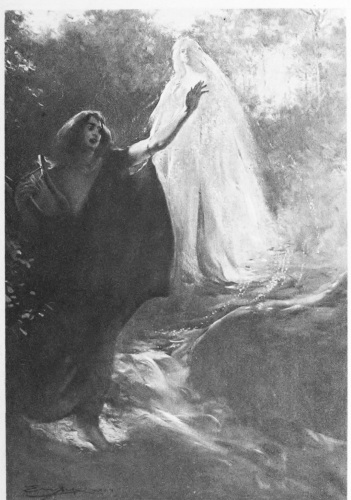
Something drew me, unreturning, Filled me with a finer flame Page 418 The Spirit of the Star
I was loveless with a yearning After love that never came; All my astral being burning Towards that world without a name, World I knew not: till, with splendor Of compulsion that was tender, Something drew me, unreturning, Filled me with a finer flame. So I left my star, whose lances Pierced with arrowy gold the heat Of heaven’s hyacinth; its glances Saddened me. No more to meet, Then I left my star; and, beating Downward, heard it still repeating Far farewells; and through the trances Of dark space its face looked sweet. Passed your moon: a melancholy Disc at first; then, vast and sharp, Lo, a world, all white and holy! Where, upon the crystal scarp Of a mountain,—like a story Of high Heaven revealed in glory,— Gradual, as if music slowly Built it, rolling from a harp,— Rose a city: cloudy nacre Were its walls, that towered round Acre upon arch-piled acre Of a marble-terraced ground: Caryatids alternated With Atlantes, sculpture-weighted: And its gates—some god the maker— Rhombs of symboled diamond. In the white light glittered swimming Domes of dazzle: swirl on swirl, Temples lifted columns, brimming Crystal flame, that seemed to whirl: Battlemented moonstone darkled; Palaces, pale-pillared, sparkled, Cloudy opal: and, far dimming, Aqueducts of ghostly pearl. Streaming steeples shone, of dædal Emblem; each an obelisk: Minarets, each one a needle, Balancing a bubble-disc; Some of diamond, like a blister Frozen; some of topaz-glister, Vinous; in whose blinding middle Blazed an orb of burning bisque. And I saw where, silvery slanted, A vast pyramidic heap Rose of spar; whereon was planted The acropolis of Sleep,— God of these:—that, looming higher, Wrought of seeming ice and fire, Where pale rainbow-colors panted, Gleamed above the lunar deep. Robed in white simarre and chiton, Visions filled its every square, Moving like a finer light on Light: and in the glory there Music rang and golden laughter; And before each shape, and after, Radiance went, that shadowed white, on Temple and on palace stair. Though they called me, I descended Earthward. For great longing drew Me and, drawing me, was blended With your world. I never knew It was Earth, until,—forsaking Heaven,—I beheld it taking,— A great azure sphere,—its splendid Way along the singing blue. And when night came, here, above you,— Sleeping by your folded sheep On the hills,—I stooped: whereof you Dreamed: I kissed you in your sleep: I, your destiny, who wrought it So you knew me: you, who thought it Not so strange that I should love you, I a spirit of the deep. ’Twas your love that sought and found me, Drew me from that star-life sad; Won my soul to yours and bound me With such love as none hath had: I am she, you may remember, That fair star that seemed an ember O’er you, that you loved.—Around me Wrap your arms now and be glad. Look above: what seems a petal, Burning, of a rose; that far Point of radiance, bright as metal, Fiery silver, is your star! Look above you: rise unto it. Let it lead you now who drew it Down to Earth, where shadows settle!— On that star no shadows are!
THE SPIRIT OF THE VAN (Love Ideal)
“Among the mountains of Carmarthen, lies a beautiful and romantic piece of water, named The Van Pools. Tradition relates, that after midnight, on New Year’s Eve, there appears on this lake a being named The Spirit of the Van. She is dressed in a white robe, bound by a golden girdle; her hair is long and golden; her face is pale and melancholy.”—Keightley’s “Fairy Mythology.”
Midsummer-night; the Van. Through night’s wan noon, Wading the storm-scud of an eve of storm, Pale o’er Carmarthen’s peaks the mounting moon.— Wilds of Carmarthen! sombre heights, that swarm Girdling this water, as old giants might Crouch, guarding some enchanted gem of charm,— Wilds of Carmarthen, that for me each night Reëcho prayers and pleadings,—all the year Unanswered,—made to listening waters white! Mountains, behold me yet again! Bend near! Behold her lover! hers, that shape of snow, Who dwells amid these pools; who will not hear My heart’s wild pleading, calling loud, now low, Unhappy, to her, ’mid the lonely hills. Whene’er a ripple trembles into glow, Where yeasty moonshine scuds the foam, straight thrills Heart’s expectation through my veins, and high With “she!” each pulse the exultation fills. But she ’tis never. Once ... and then! would I, Would I had perished, so beholding!—World, ’Twas you, O world, who would not let me die! Once I beheld her!—If some fiend had curled Stiff talons in my hair, and, twisting tight, Had raised me high, then into Hell had hurled; Fresh from that vision of her beauty white, With Heaven in my soul, I, unamerced, Shackled with tortures, yet might mock Hell’s spite. Immortal memory, quench in me this thirst!— O starlike vision, that a moment clove My sight, and then for ever left me curst! Oh, make me mad with love, with all thy love! Me, me, who seek thee ’mid these wilds when gloom Storms or drip gold the sibylline stars above!— Let thy high coming in a flash consume The light of all the stars! and make me mad, Mad with love’s madness! fill me with sweet doom! Sleep will I not now, for my soul is sad: For, should I sleep, there might come other dreams,— Sadder than thou art,—in thy beauty clad And all thy tyranny. To me it seems Better to wake here, underneath this pine, Until thy face upon my vision gleams.— Thou, who art wrought of elements divine, And I of crasser clay, clay that will think, “Since I am hers, why should she not be mine?” Again, its usual phantom, on the brink Of thy lone lake, I ask thee: “Must I yearn Forever, haunted of that vision’s wink?”— When, glassing out great circles, which did urn Some intense essence of interior light, (As clouds, that clothe the moon, unbinding, burn, Riven, erupt her orb, triumphant white,) I saw, midmost the Van, a feathering fire Dilating ivory-wan.—Expectant night Tiptoed attentive, fearful to suspire.— Wherefrom arose—what white divinity? What godhead sensed with glory and desire? Born for the moment for the eyes of me! Then re-absorbed into the brassy gloom Of whispering waves that sighed their ecstasy. Thou! in whose path harmonious colors bloom, Pale pearl and lilac, asphodel and rose,— Like many flow’rs auroral of perfume,— Thou leftst me thus, to marvel as who knows He is not dead and yet it seems he is, Since all his soul with spirit-rapture glows.— O sylph-like brow! lips like an angel’s kiss! High immortality! whose face was such As starlight in a lily’s loveliness!... The gold that bound thee seemed too base to clutch Thy chastity, though clear as golden gum That almugs sweat, and fragrance to the touch! Thy hair—not hair!—seemed rays, like those that come Strained through the bubble of a chrysolite.— No word I said: thy beauty struck me dumb. Thy face, that is upon my soul’s quick sight Eternal seared, hath made of me a shade, A wandering shadow of the day and night: A seeker ’mid the hoary hills for aid, The sole society of my sick heart, who Shuns all companionship of man and maid: Who, comrade of the mountain blossoms blue, And intimate of old trees, goes dreaming they,— As in that legendary world that drew Oracles from lips in oaks—, may sometime say Prophetic precepts to it: how were won A spirit loved to love a mortal;—yea, In vain.— But one day, frog-like in the sun, Beside a cave,—the nightshade vines made rank And hairy henbane, where huge spiders spun,— Wrinkled as Magic, I a grizzled, lank, Squat something startled, naught save skin and hair; With eyes wherein dwelt demons; flames, that shrank And grew;—familiars, who fixed me with glare As, raising claw-like hands when I drew near, Frog-like he croaked, “Thou fool! go seek her there! Woo her with thy heart’s actions! making clear Thy soul’s white passage for her coming feet!— In! in! thou fool! plunge in! Fear naught but fear!” Yet I have waited many weeks. Repeat. Acts of the heart with passionate offering Of love whose anguish makes it seven times sweet. Still all in vain, in vain. To-night I bring My self alone; my soul unfearing, see! My soul unto thee!—Shall the clay still cling Clogging fulfillment? and achievement be Balked still by flesh?—no! let me in—to die, Haply; or, for a moment’s mystery, Gaze in thine eyes: one splendid instant lie In thy white arms and bosom; and thy kiss, My elemental immortality!— Part of thy breathing waves, to laugh or hiss In foam; or winds, that rock the awful deeps, Or build with song vast temples for thy bliss. Wherein, responsive as thy white hand sweeps The chords of some sad shell, I’ll dream and roam Through glaucous chambers where the green day sleeps. Dead not with death, what secrets hath thy home Not mine then, epoched in exultant foam?... Deeper, down deeper! yea, at last I come!
THE CAVERNS OF KAF (Love Sensual)
“‘Where am I?’ cried he; ‘what are these dreadful rocks? these valleys of darkness? are we arrived at the horrible Kaf?’”—Vathek.
One, Benreddin, I have heard, Near the town of Mosul sleeping, In a dream beheld a bird, Wonderful, with plumes of sweeping Whiteness, crowned pomegranate-red: And, it seemed, his soul it led, Brilliant as a blossom, keeping Near the Tigris as it fled. Following, at last he came To a haggard valley, shouldered Under peaks that had no name: Where it vanished. ’Mid the bouldered Savageness a woman, fair, In a white simarre, stood there, Auburn-haired; around whom smoldered Pensive lights of purple air. And she led him down to vast Caves of sardonyx, whose ceiling Domed one chrysoberyl. Blast On blast of music,—stealing Out of aural atmospheres,— Beat like surf upon his ears; Then receded, faintly pealing Psalteries and dulcimers. Living figures seemed to heave High the walls, where, wild, embattled, Warred Amshaspand and the Deev: Over all two splendors rattled Arms of Heaven, arms of Hell; Forms of flame that seemed to swell Godlike: Aherman who battled With Ormuzd he could not quell. There she left him wond’ring; till The reverberant music, drifting, Strong beyond his utmost will, Drew him onward where, high lifting Pillar and entablature, Vast with emblem, yawned a door— Valves of liquid lightning, shifting In and out and up and o’er. Through the door he swept: deep-domed, Green with serpentine and beryl, Loomed a cavern, crusted, foamed, Tortuous with gems of peril: Difficult, a colonnade Seemed, of satin-spar, to braid Deeps of labyrinthed and sterile Tiger-spar that, twisting, rayed. Dizzy stones of magic price Crammed volute and loaded corbel: Irridescent shafts of ice Leapt: with long reëchoed warble Waters unto waters sang: Crystal arc and column sprang Into fire as each marble Fountain flung its foam that rang. And around him, filled with sound, Streams of resonant colors jetted: Rainbow surf that interwound Crypts and arcades, crescent-fretted: Mists of citron and of roon; Lemon lights that mocked the moon; Shot with scarlet, veined and netted, Beating golden hearts of tune. Suns arose, of blinding blue; Moons of green-dilating splendor: In whose centers slowly grew Spots like serpents’ eyes that, slender, Glared; at first, prismatic beams; Then, intolerable gleams; Hissing trails of fire, tender As an houri’s breath that dreams. Characters of Arabic, Cabalistic, red as coral, Flashed through violet veils, so quick None might read: as if, in quarrel, Iran wrote of Turan there Hate and scorn, or, everywhere, Wrought some talisman of moral Strength no Afrit’s heart would dare. Sounding splendors drew him on To another cavern; hollow; Hewn of alabastar wan; Lucid; where his gaze could follow Caves in caves; transparent flights Rolling, lost in moving lights, Glaucous gold: he like a swallow O’er a lake the morning smites. Down the dome flashed out and in Instant faces of the Peris: Restless eyes of Deevs and Jinn In the walls watched: unseen Faeries Out of rainbows rained and tossed Flowers of fire full of frost; Blossoms where the fire varies, Gold and green and crimson-mossed. Then there met him, face to face, Seven odalisques of Heaven, Swinging in a silver space Flaming censers: and the seven, Crowned with stars of burning green, Seemed to turn to incense; seen, As it rose, to be a driven Hippogrif, or rosmarine. Aloes, Nard, and Ambergris, Sandal, Frankincense, and Civet,— Genii of the fragrances,— Rein each winged aroma; give it Spurs and race it down the lull Of the caverns, clouded dull With wild manes of musk; now vivid, Vaporous white and wonderful. And Benreddin’s aching soul, In each sense intoxicated, Reached, at last, what seemed the goal Of all passion: golden-gated, Vast, a fountain: where he saw Limbs of light without a flaw; Breasts and arms of bloom; that waited For his soul to nearer draw. Houri faces shimmered there; Fluid forms.—It, with a thunder Of wild music, like the hair Of a genie, flamed from under Caverns of the demon-world: Filled with voices, high it hurled, Calling him, with beckoning wonder Of cœrulean forms that swirled. And with burning lips and eyes In he plunged: hoarse laughter greeted, Demon laughter: then sad sighs, Dying downward: passion-heated Hands seemed drawing him away, Downward: where a rocking ray Flamed and swung, and Eblis-sheeted Shadows wandered ghostly gray. . . . . . . . . . . And, ’tis said, that he was young, Young that morning. When the darting, Anguish-throated bulbuls sung, In the silent starlight starting, One, a Baghdad merchant, led By the hoarness of its head, Found what seemed a mummy: parting Hair from brow, Benreddin—dead.
THE SALAMANDER (Love Dæmonic)
“The Fire-Philosophers, and the Rosicrucians, or Illuminati, taught that all knowable things (both of the soul and of the body) were evolved out of fire, and finally resolvable into it: and that fire was the last and the only-to-be known God: as that all things were capable of being searched down into it, and all things were capable of being thought up into it.”—The Rosicrucians.
Once she breathed upon my eyes, Touched the soul that dreamed within me; All the magic that might win me Whispered to my heart with sighs— Darkness can not make them lies!... Bring me moly, hellebore! Mix them for my soul’s nepenthe, For my spirit’s dread Amenti, For the curse that comes once more With unutterable lore! Sunlight, starlight or the moon, Stormlight, firelight or the sheening Witchlight intimate no meaning Of her glory’s plenilune; Of her soul’s unriddled rune, And most awful beauty! nor Actual, nor yet ideal!— Insubstantial and yet real; Partly flame and partly star, Yet no part of what these are. I am hers and—woe is mine!... Has she drugged me with the sadness Of some elemental madness?— Like a demigod I pine ’Twixt the mortal and divine.... When I see her, lo, she stands In the luminous electre Of a star: a smiling spectre With white scintillating hands Luring to unhallowed lands. Then, behold, in fearful file, A mirage of tower and terrace, Lawn and mountain range,—that buries Flame in frost,—looms! mile on mile Of her crescent-glowing Isle: Where the lurid waters lull Shores that roll the rainbow fire; Where, with living lute and lyre, Rose-red, swiftly as a gull, Glides her star-like galley’s hull. And, behold, before I know, I am where her walls of amber, Towers of limpid ruby, clamber Over terraces below Summits of refulgent snow. Lambent lazuli and shell Colonnade her courts of marble; Where, of lightning, fountains warble Out of basined pearl, or well Into hollowed carbuncle. Rosy silver seems her skin, And a flame her arm commanding, With its gleaming hand, me, standing At her gates, to enter in, Burning as a Seraphin. Lucid darkness are her eyes, Where the frozen fire smolders; And upon her shining shoulders, Like a tangible glitter, lies Auburn hair like sunset skies. Mouth of sibilant soft flame; Lilith lips, whose roses lighten With illusive love; and brighten With wild passion and the name Of desire no man may tame. Passion, and the thoughts that wed Love and loathing; such caresses Of sweet touch as naught expresses Here on Earth, yet full of dread, Madness, whereof death is bred. She hath drawn me to her lips; Borne me through her palace portal; And the fire, which is immortal, From me like a garment slips— Ah, the spirit-part’s eclipse! As when moon and planet swoon Unto each, my body kindles, Strangely, while my spirit dwindles, Like the Earth-o’ershadowed moon, Darkening from lune to lune. Then she laughs; and leads me where Cloudy, wild, chameleon color Marbles halls with hues, the duller For her astral presence there, Beaming white with beaming hair: Where, in roses purple pale,— Dropping like a ruby bubble Through the moon dust,—“double double,” Throbs the crimson nightingale, There she lures me with some tale. Or to where the scarlet snake Coils beneath great flaming flowers; Where the musk mimosa bowers Roll their rosy clouds, and make Sunset heavens of each lake. Where the bees and moths go by, Fiery diamond; opal-burning Butterflies, and iris-turning Peacock-painted birds, that vie With the flow’rs, like fragments fly Of wild rainbow: Where, in rills, Down the rocks, that lichens redden, Constellated moss and leaden Fungus glow; and all the hills, As with flames, the orchid fills. Where, in coruscating light, Glare the golden-checkered zinnias; And the bugle-bloomed gloxinias, Making morning of each height, Float like mists of ruby white. There, beneath some blazing vine, Where the liquid moonlight glitters Of a river,—coral litters Red with grail,—like prisms in wine I have watched the fishes shine. Or, o’er sunset-colored moss, Glow-worms trail their beryls; sprinkling Green the smouldering shade; while, twinkling, With convulsive sapphire gloss, Fireflies rained blue lights across. Where the reeds seemed rays of rose, And white mirrored moons, the lotus— Each a spirit giving notice Of the inner light that glows Where the under water flows— Shapes arose of flashing spray:— Where, a wild auroral splendor, Rolled the forest,—emerald-tender As the light of breaking day,— Beckoned forms of starry ray. Through the violetish light, Winged with nautilus and lily Flame, adown the forests stilly Vistas, moony whirls of white, Floated shapes with eyes of night. I must follow where she leads.— Blinding portals of her castle To my entering feet are facile.... Love no terrible trumpet needs At her gates to bugle deeds.... Lo, my being never veils Aught from her. To her caresses All my heart knows it confesses With a faith that never fails, Though it hears the truth that wails In its soul’s admonishment, Of the curse that sits in session In each amorous expression Of her love; its violent Flame, by which my life is rent. I have drained the feverish cup Of all darkness. Made a leman Of an elemental demon; And my soul lies, staring up, Draining poison at each sup.— While she smiles on me ’tis well: I shall follow, though she make me What her self is; never wake me From the dream I can not tell, That is neither heaven nor hell: Where I drink mesmeric gold Of wild vision,—that romances In informing Protean fancies With a beauty never old, And emotion never cold.— Let me drink and never wake From the trances that environ Me, and ’neath the subtle siren See the demon, like a snake, With destroying eyes that ache. While the slow laconic look Of her eyes express no censure, Gazing in them, I adventure,— Far beyond the wisest book,— Ways her serpent fancy took. Yet I know I reverence One whose gaze in God’s negation; One who, like an emanation Of all evil, chains my sense With satanic influence. Yet, while still I hear her say, “One more kiss before the morning! One more bliss for love’s adorning! One more kiss ere break of day,” Still my soul with her must stay. Stay, nor know, nor ever see! Till her basilisk beauty flashes, And the curse, from out the ashes Of her passion, fiery, Strikes—destroying utterly.
LYANNA.
“These elementary beings, we are told, were by their constitution more long-lived than man, but with this essential disadvantage, that at death they wholly ceased to exist. In the meantime they were inspired with an earnest desire for immortality; and there was one way left for them, by which this desire might be gratified. If they were so happy as to awaken in any of the initiated (Rosicrucians) a passion, the end of which was marriage, then the sylph became immortal.”—Godwin’s “Lives of the Necromancers.”
Summer came over the Indian Ocean Girdled with fire, tiaraed with light; Her eyes all languor, her lips—a potion To quaff—of poppy. And gold and white She flashed and sparkled; all gleam and motion, All blush and blossom she came; and I, Of the race of the sylphs, o’er the Indian Ocean Followed her through the sky. Self-exiled so from the sylphs that cluster, Pulsing with pearl and burning with blue, In domes of the dawn,—where the organs bluster Low of the winds,—where they glow like dew As the day dreams up, and their armies muster, Ranges of glitter, in cloudy gold, At the gates of the Dawn, of blinding luster, To forth when her gates unfold. For Summer murmured me, “Follow! follow!” Whispered one word that was all of love.— Winged with the speed of the sweeping swallow, I followed the word she had breathed above: “Follow! follow!”—the god Apollo Never followed, with speed as strong The flying nymph through holt and hollow, As I that word of song. Fleet as the winds are fleet, yea, and fleeter Far than the stars that throb, like foam, Through the firmament’s blue, in musical metre Winnowed my wings; and the golden gloam Rang; and life was a passion, completer Than a life in Eden; and love,—a lyre That sang in my heart and made life sweeter With hope,—a leaping fire. Thus to the north my wings went maying Radiant ways, till a castle shone Gaunt on great cliffs, with the late skies graying O’er walls of war and their towers lone, With tortuous steps to the sea, where, spraying, Thundered the breakers; and terrace and stair, Rock o’er the waters, rose rosy and raying Deep in the sunset’s glare. A dewdrop burns when the dawn lights prickle: And all my being tingled with light, Bloomed when I saw her, tarrying fickle, White on the castled height: Slender she shone as the moon in sickle, The slim new-moon, like a pearl-pale streak; And golden, too, as the honey-trickle Of combs where the wax is weak. In dreams I came to her, lo! as a vision: Yea, by her side as a dream I stood; To her innermost spirit I sighed my mission, In the vestal ear of her maidenhood: And she deemed me a dream; and I made a prison Of my arms for her soul while she, smiling, slept: Her body lay still, but her soul had arisen, And looked on my face and wept: “Lyanna, I hoop thee with arms of fire!”— My words were music, a harp afloat,— “Lyanna, my heart is a vibrant wire, Thy love is its only note. Let it sing forever. Let it sound entire, Full as the angels’ who hover and harp To the glory that’s God, like a golden lyre Borne in a beam that is sharp.... “Behold me, thy rose! full of flame and splendor! Thy rose to pluck: thy ruby bloom: Thy sylphid rose, with eyes that are tender; Lips that are fire; and limbs of perfume And fragrant fire: thy heart’s defender! Thy airy lover!” ... And, bending above, Sweeter my speech than a flower’s that, slender, Tells to the stars its love. Lo, as I spoke, with thoughts that thicken, Her heart seemed filled; and she spoke; but sleep Shadowed her words, till my kiss did quicken And free, like stars from the night that leap:— “Long I have waited; and long did sicken To clasp thee thus, O my rose of love! Oft have I dreamed of thee, yea, and was stricken With joy at the thought thereof. “White are the clouds; but I saw thee whiter ’Mid dazzling domes of the dawn; and knew Tho’ bright are God’s stars, that thine eyes were brighter, Brighter and burning blue. And my heart was thine, though it held thee slighter Than hues that the mists of the morning take: And waited and yearned, and the yearning tighter Than tears in the hearts that break. “‘Lyanna! Lyanna!’ I heard thee ever Calling ‘Lyanna,’ a ripple of flame: ‘Lyanna! Lyanna!’ like song forever; And I marveled at my name. The sound was such—that if stars could sever And silver-syllable a word of beams, So would it sound.—I turned; but never Beheld thee, only in dreams. “Thou walkedst a beauty afar: a glitter Of gleaming aroma: and I, with moan, Reached thee my arms: but thy gaze was bitter, Calmer and sterner than stone: Avoiding thou passedst in scorn: a sitter, I seemed, on the uttermost bounds of bliss: When, lo! on the wind,—a flame, a flitter Of fire,—thy laugh, and thy kiss!”— I had won her love. And, behold! the thunder Trumpeted tempest: I heard the seas Lunge at the walls like a roaring wonder, And the rain-wind sing in the trees.— Lyanna my bride.—And the heavens asunder Rushed—chasms of glaring storm, where poured The thunder’s cataracts, rolling under— And showed me, horde on horde, The shouting spirits of storm.—The portal Of sleep was riven; she rose, and saw: And I said to her soul, “Of the utterly mortal Mine the eternal lot and law.”— “I love thee!” she answered.—And I, “Immortal Am I through thy love!” ... And so we fled.... Behold! when they came in the morn, astartle, Men whispered—“Lyanna is dead!”
THE SPIRITS OF LIGHT AND DARKNESS
Voices of Darkness
Ere the birth of Death and of Time, And of Hell, with its tears and its torments: Ere the waves of heat and of rime, And the winds to the heavens were as garments: Cloud-like in the womb of Space, Mist-like from her monster womb, We sprang, a myriad race Of thunder and tempest and gloom.
Voices of Light
As from the evil good Springs, and desire: As the white lily’s hood Buds from the mire: So from this midnight brood Sprang we with fire.
Voices of Darkness
We had lain for long ages asleep In her bosom, a bulk of torpor, When down through the vasts of the deep Clove a sound, like the notes of a harper: Clove a sound, and the horrors grew Tumultuous with turbulent night, With whirlwinds of blackness that blew, And storm that was godly in might. And the walls of our dungeon were shattered Like the crust of a fire-wrecked world: As torrents of clouds that are scattered, From the womb of the deep we were hurled.
Voices of Light
Us in unholy thought Patiently lying, Eöns of violence wrought, Violence defying; When, on a mighty wind, Voiced of a godly mind, Big with a motive kind, Girdled with wonder, Flame and a strength of song, Rolling vast light along, Thundered the Word, and Wrong Vanished,—and we were strong, Strong as the thunder.
Voices of Darkness
We people the lower spaces, Where our cities of silence make scorn Of the sun, and our shadowy faces Are safe from the splendors of morn. Our homes are wrecked worlds and each planet Whose sun is a light that is sped; Bleak moons, whose cold bodies of granite Are hollow and flameless and dead.
Voices of Light
We in the living sun Live like a passion: Ere the sad Earth begun We and the sun were one, As God did fashion. Lo! from our burning hands, Flung like inspired brands, Sowed we the worlds, like sands, Countless as ocean: And ’tis our breath gives life, Life to those stars, all rife With iridescent strife, Music and motion.
Voices of Darkness
We joy in the hate of all mortals; Inspire their crimes and the thought That falters and halts at the portals Of actions, intentions unwrought. We cover the face of to-morrow: We frown in the hours that be: We breathe in the presence of sorrow: And death and destruction are we.
Voices of Light
We are man’s hope and ease, Joy and his pleasure; Authors of love and peace, Love that shall never cease, Free as the azure. Lo! we but look, and light Heartens the world with might, Vanquishes death and night Hate and its burnings: And from our bosoms stream Beauty and yearnings For a diviner dream, Higher discernings.
Voices of the Break of Day
Morning and birth are ours; Light that is blown From our fair lips; and flowers, Dropped from our hands in showers, Seeds that are sown: Song and the bursting buds, Life of the fields and floods; Strength that’s full-grown: And, from our beryl jars, Filled with the clouds and stars, Pour we the winds and dew; While by our eyes of blue Darkness is rent in two, Conquered and strown.
Voices of the Dawn
Ye in your darkness are Dark and infernal; Subject to death and mar! But in the spaces far, Like our effulgent star, We are eternal.
THE WATER WITCH
See! the milk-white doe is wounded. He will follow as it bounds Through the woods. His horn has sounded, Echoing, for his men and hounds. But no answering bugle blew. He has lost his retinue For the shapely deer that bounded Past him when his bow he drew. Not one hound or huntsman follows. Through the underbrush and moss Goes the slot; and in the hollows Of the hills, that he must cross, He has lost it. He must fare Over rocks where she-wolves lair; Wood-pools where the wild-boar wallows: So he leaves his hunter there. Through his mind then flashed an olden Legend told him by the monks:— Of a girl, whose hair is golden, Haunting fountains and the trunks Of the woodlands; who, they say, Is a white doe all the day, But when woods are night-enfolden Turns into an evil fay. Then the story once his teacher Told him: of a mountain lake Demons dwell in; vague of feature, Human-like; but each a snake, She is queen of.—Did he hear Laughter at his startled ear? Or a bird?—And now, what creature Is it,—or the wind,—stirs near? Fever of the hunt! This water, Falling here, will cool his head. Through the forest, dyed in slaughter, Slants the sunset; ruby-red Are the drops that slip between Hollowed hands, while on the green,— Like the couch of some wild daughter Of the forest,—he doth lean. But the runnel, bubbling, dripping, Seems to bid him to be gone; As with crystal words and tripping Steps of sparkle luring on. Now a spirit in the rocks Calls him; now a face that mocks, From behind some boulder slipping, Laughs at him through lilied locks. And he follows through the flowers, Blue and gold, that blossom there; Thridding twilight-haunted bowers Where each ripple seems the bare Beauty of white limbs that gleam Rosy through the running stream; Or bright-shaken hair, that showers Starlight in the sunset’s beam. Till, far in the forest, sleeping Like a luminous darkness, lay A deep water, wherein, leaping, Fell the Fountain of the Fay, With a singing, sighing sound, As of spirit things around, Musically laughing, weeping In the air and underground. Not a ripple o’er it merried: Like the round moon in a cloud, In its rocks the lake lay buried: And strange creatures seemed to crowd Its dark depths: dim limbs and eyes To the surface seemed to rise Spawn-like; or, all formless, ferried Through the water shadow-wise. Foliage things with woman faces, Demon-dreadful, pale and wild As the forms the lightning traces On the clouds the storm has piled In the darkness.—On the strand— What is that which now doth stand?— ’Tis a woman: and she places On his arm a spray-white hand. Ah! two mystic worlds of sorrow Were her eyes; her hair, a place Whence the moon its gold might borrow; And a dream of ice her face: Round her hair and throat in rims Pearls of foam hung; and through whims Of her robe, as breaks the morrow, Gleamed the rose-light of her limbs. Who could help but gaze with gladness On such beauty? though within, Deep within the beryl sadness Of those eyes, the serpent sin Seemed to coil.—She placed her cheek Chilly upon his, and weak With love-longing and its madness Grew he. Then he heard her speak:— “Dost thou love me?”—“If surrender Of the soul means love, I love.” “Dost not fear me?”—“Fear?—more slender Art thou than a wildwood dove. Yet I fear—I fear to lose Thee, thy love.”—“And thou dost choose Aye to be my heart’s defender?”— “Take me. I am thine to use.” “Follow then.—Ah, love, no lowly Home I give thee.”—With fixed eyes To the water’s edge she slowly Drew him.... Nor did he surmise Who this creature was, until O’er his face the foam closed chill, Whispering, and the lake unholy Rippled, rippled and was still.
THE SUCCUBA
I have dreams where I believe That a queen of some dim palace, One, whose name is Genevieve, Weighs me with her love or malice: She is dead and yet my bride: And she glimmers at my side Offering a crystal chalice Filled with fire, diamond-dyed. I have dreams. Ah, would that I Might forget them!—I remember How her gaze, all icily Draws me, like a glowing ember, Up her castle-stair’s pale-paved Alabaster, from the waved Ocean, grayer than November, Where I linger, soul-enslaved. Walls of shadow and of night Lit with casements full of fire, Somber red or piercing white: As the wind breathes lower, higher, Round the towers spirit-things Whisper, and the haunted strings Moan of each huge, plangent lyre Set upon its four chief wings. In its corridors at tryst Flame-eyed phantoms meet. Its sparry Halls are misty amethyst: Battlemented ’neath the starry Skies it looms; the strange unknown Skies where, green as glow-worms, sown, Gloom the stars; the moon hangs barry Beryl, low and large and lone.... Can it be a witch is she? Or a vampire? she, far whiter Than the spirits of the sea!— She whose eyes are cold, yet brighter Than her throat’s pale jewels. Lo! Flame she is though seeming snow: And her love lies tighter, tighter On my heart than utter woe. Though I dream, it seems I live; And my heart is sick with sorrow Of the love that it must give To her; passion, it must borrow Of herself, unhallowed, vain; Then return it her again: Thus she holds me; and to-morrow Still will hold with sweetest pain. In her garden’s moon-white space Strangest flowers bloom: huge lilies, Each one with a human face; Knots of spirit-amaryllis; Cactus-bulks with pulpy blooms Gnome-like in the silver glooms; And dim deeps of daffadillies, Fay-like, brimming faint perfumes. But to me their fragrance seems Poison; and their lambent lustre, Spun of twilight and of dreams, Poison; and each pearly cluster Hides a serpent’s fang. And I, Looking from an oriel, sigh; For my soul is fain to muster Heart to breathe of them and die. Then I feel big eyes, as bright As the sea-stars. Gray with glitter, She behind me, moony white, Smiles, ’mid hangings wherein flitter Loves and deeds of Amadis Darkly worked. And then her kiss On my mouth falls; sweet and bitter With a bliss that is not bliss. And I kiss her eyes and hair; Smooth her tresses till their golden Glimmer sparkles. Everywhere Shapes of strange aromas, holden Of the walls, around us troop; And in golden loop on loop,— Of the lull’d eyes vague beholden,— Forms of music o’er us stoop. Yet I see beneath it all, All this sorcery, a devil, Beautiful, and white, and tall, Broods with shadowy eyes of evil: She, who must resume with morn Her true shape: a cactus-thorn, Monstrous, on some lonely level Of that demon-world forlorn. I have dreams where I believe That a queen of some dim palace, One, whose name is Genevieve, Weighs me with her love or malice: And all night I am her slave There beside the demon wave, Where I drain the loathsome chalice Of her love, that is my grave.
MASKS Cucullus non facit monachum
Live it down! as you have spoken You could live it ere you knew What love was—“a bauble broken, Foolish, of a thing untrue.”— You, Viola, with your beauty, Cloistered, die a nun? No! you— You must wed: it is your duty. There’s your poniard; for the second In this tazza dropped: the blood On it scarcely hard.... I reckoned Happily that hour we stood There upon your palace-stairway, How, with the Franciscan hood Cowled, I said, there was a bare way. In the minster there I found it— Our revenge. I saw him, wild, Stalking towards the church: around it Dogged him, marking how he smiled In the moonlight where I waited. When the great clock, beating, dialed Ten, I knew he would be mated. Heaven or my better devil!— Hardly had his sword and plume Vanished in the dark, when, level On the long lagoon, did loom, Under moonlight-woven arches, Her slim gondola: all gloom: One tall gondolier: no torches. Dusky gondolas kept bringing Revellers: and far the night Rang with instruments and singing.— From the imbricated light Of the oar-vibrating water, Gliding up the stairway, white, Velvet-masked,—the count’s own daughter! Quick I met her: whispered, “Flora, Gaston.—Mia, till they go, One brief moment here, Siora.— She’ll perceive us—she, below, See! the duchess’ diamonds sparkling Round the inviolable glow Of her throat—there, dimly darkling: “That’s Viola!” ... Thus I drew her In the church’s ancient pile— Under her black mask I knew her, By her chin, her lips, her smile. Through one marble-foliated Window fell the moon-rays. While All the maskers passed we waited. I had drawn the dagger. Turning Called her by her name. Some lie Of a passion sighed, her burning Hand in mine; when, stalking by, In the square, his form bejeweled Gleamed. My very blood burned dry With the hate his presence fueled. Our revenge! up-pushing slightly Cowl, the mask fell, and revealed Balka, as the poniard whitely Flashed. The hollow nave re-pealed One long shriek the loft repeated. Swift, I stabbed her thrice. She reeled Dead. I thought of you, the heated Horror on my hands; and tarried Still as silence. Drawn aside On her face the mask hung, married To its camphor-pallor: wide Eyes with terror—stone. One second I regretted; then defied All remorse. Your promise beckoned; And I left her. Love had pointed Me this way. I walked the way Clear-eyed and ... it has anointed Us fast lovers?—Do not say, Now, that you will go and nun it! For this man who scorned you?—Nay!— Live to hate him! You ’ve begun it.
CARMEN
La Gitanilla, tall dragoons In Andalusian afternoons, With ogling eye and compliment, Smiled on you as along you went Some sleepy street of old Seville; Twirled with a military skill Moustaches; buttoned uniforms Of Spanish yellow bowed your charms. Proud, wicked head, and hair blue-black, Whence the mantilla, half thrown back, Discovered shoulders and bold breast Bohemian brown. And you were dressed In some short skirt of gypsy red Of smuggled stuff; and stockings,—dead White silk,—that, worn with many a hole, Let the plump leg peep through; while stole, Now in, now out, your dainty toes, Sheathed in morocco shoes, with bows Of scarlet ribbon.—Flirtingly You walked by me; and I did see Your oblique eyes, your sensuous lip That gnawed the rose I saw you flip At bashful José’s nose while loud The gaunt guards laughed among the crowd. And in your brazen chemise thrust, Heaved with the swelling of your bust, A bunch of white acacia blooms Whiffed past my nostrils hot perfumes. As in a cool neveria I ate an ice with Mérimée, Dark Carmencita, very gay You passed, with light and lissome tread, All holiday bedizenéd; A new mantilla on your head: Your crimson dress gleamed, spangled fierce; And crescent gold, hung in your ears, Shone, wrought Morisco; and each shoe, Of Cordovan leather, buckled blue, Glanced merriment; and from large arms To well-turned ankles all your charms Blew flutterings and glitterings Of satin bands and beaded strings: Around each tight arm, twisted gold Coiled serpents, and, a single fold, Wreathed wrists; each serpent’s jeweled head, With rubies set, convulsive red. In flowers and trimmings, to the jar Of mandolin and gay guitar, You in the grated patio Danced: the curled coxcombs’ staring row Rang pleased applause. I saw you dance, With wily motion and glad glance, Voluptuous, the wild romalis, Where every movement was a kiss, A song, a poem, interwound With your Basque tambourine’s dull sound. I,—as the ebon castanets Clucked out dry time in unctuous jets,— Saw angry José through the grate Glare on us, a pale face of hate, When some indecent officer Presumed too lewdly to you there. Some still night in Seville: the street Candilejo: two shadows meet: Swift sabres flash within the moon— Clash rapidly.—A dead dragoon.
AT NINEVEH
There was a princess once, who loved the slave Of an Assyrian king, her father; known At Nineveh as Hadria; o’er whose grave The sands of centuries have long been blown; Yet sooner shall the night forget its stars Than love her story:—How, unto his throne, One day she came, where, with his warriors, The King sat in his hall of audience, ’Mid pillared trophies of barbaric wars, And, kneeling to him, asked, “O father, whence Comes love and why?”—He, smiling on her said,— “O Hadria, love is of the gods, and hence Divine, is only soul-interpreted. But why love is, ah, child, we do not know, Unless ’t is love that gives us life when dead.”— And then his daughter, with a face aglow With all the love that clamored in her blood Its sweet avowal, lifted arms of snow, And, like Aurora’s rose, before him stood, Saying,—“Since love is of the powers above, I love a slave, O Asshur!—Let the good The gods have giv’n be sanctioned.—Speak not of Dishonor and our line’s ancestral dead! They are imperial dust. I live and love.”— Black as black storm then rose the King and said,— A lightning gesture sweeping at her there,— “Enough! ho, Rhana, strike me off her head!” And at the mandate, with his limbs half bare A slave strode forth. Majestic was his form As some young god’s. He, gathering up her hair, Wound it three times around his sinewy arm; Then drew his sword. It for one moment shone A semicircling light, and, dripping warm, Lifting the head he stood before the throne. Then said the despot, “By the horn of Bel! This was no child of mine!”—Like chiseled stone Stern stood the slave, a son of Israel. Then striding towards the monarch, in his eye The wrath of heaven and the hate of hell, Shrieked, “Beast! I loved her! look on us and die!” Swifter than fire clove him to the brain. Then kissed her face, and, holding it on high, Cried out, “Judge thou, O God, between us twain!” And, fifty daggers in his heart, fell slain.
SENORITA
An agate black, her roguish eyes Claim no proud lineage of the skies, No starry blue; but of good earth The reckless witchery and mirth. Looped in her raven hair’s repose, A hot aroma, one red rose Droops; envious of that loveliness, Through being near which, its is less. Twin sea-shells hung with pearls, her ears; Whose delicate rosiness appears Part of the pearls; whose pallid fire Binds the attention these inspire. One slim hand crumples up the lace About her bosom’s swelling grace; A ruby at her samite throat Lends the required color-note. The moon brings up the violet night An urn of pearly-chaliced light; And from the dark-railed balcony She stoops and waves her fan at me. O’er orange blossoms and the rose Vague, odorous lips the South Wind blows, Peopling the night with whispers of Romance and palely passionate love. And now she speaks; and seems to reach My soul like song that learned its speech From some dim instrument—who knows?— Or flow’r, a dulcimer or rose.
SINCE THEN
I found myself among the trees What time the reapers ceased to reap; And in the sunflower-blooms the bees Huddled brown heads and went to sleep, Rocked by the balsam-breathing breeze. I saw the red fox leave his lair, A shaggy shadow, on the knoll; And, tunnelling his thoroughfare Beneath the soil, I watched the mole— Stealth’s own self could not take more care. I heard the death-moth tick and stir, Slow-honeycombing through the bark; I heard the cricket’s drowsy chirr, And one lone beetle burr the dark— The sleeping woodland seemed to purr. And then the moon rose: and a white Low bough of blossoms—grown almost Where, ere you died, ’t was our delight To tryst,—dear heart!—I thought your ghost: —The wood is haunted since that night.
AFTER DEATH
At moonset, when ghost speaks with ghost And spirits meet where once they sinned, Between the whispering wood and coast, My soul met her soul on the wind, My late-lost Evalind. I kissed her mouth. Her face was wild. Two burning shadows were her eyes, Wherein the love,—that once had smiled A heartbreak smile,—in some strange wise, I did not recognize. Then suddenly I seemed to see How sin had damned my soul and doomed To wander thus eternally With love and loathing, that assumed The form of her entombed.
THE OLD MAN DREAMS
The blackened walnut in its spicy hull Rots where it fell; And, in the orchard, where the trees stand full, The pear’s brown bell Drops; and the log-house in the bramble lane, From whose low door Stretch yellowing acres of the corn and cane, He sees once more. The cat-bird sings upon its porch of pine; And o’er its gate, All slender-podded, twists the trumpet-vine Its leafy weight: And in the woodland, by the spring, mayhap, With eyes of joy Again he bends to set a rabbit-trap, A brown-faced boy. Then, whistling, through the underwoods he goes, Out of the wood, Where, with young cheeks, red as an autumn rose, In gingham hood, His sweetheart waits, her school-books on her arm: And now it seems Beside his chair bends down his wife’s fair form— The old man dreams.
MEMORIES
Here where Love lies perishéd, Look not in upon the dead, Lest the shadowy curtains, shaken In my Heart’s dark chamber, waken Ghosts, beneath whose garb of sorrow Whilom gladness bows his head: When you come at morn, to-morrow, Look not in upon the dead, Here where Love lies perishéd. Here where Love lies cold interred, Let no syllable be heard, Lest the hollow echoes, housing In my Soul’s deep tomb, arousing Wake a voice of woe, once laughter Claimed and clothed in joy’s own word: When you come at dusk, or after, Let no syllable be heard, Here where Love lies cold interred.
MARCH AND MAY
Windy the sky and mad; Surly the gray March day; Bleak the forests and sad,— Oh, that it only were May! On maples, tasseled with red, No blithe bird, fluting, swung; The brook, in its swollen bed, Raved on in an unknown tongue. We walked in the wind-tossed wood: Her face as the May’s was fair; Her blood was the May’s own blood; And May’s her radiant hair. And we found in the woodland wild One cowering violet, Like a frail and timorous child, In the caked leaves bowed and wet. And I said, “We have walked in vain! To find but this shivering bud, Weighed down with its weight of rain, Crouched here in the wild March wood.” But she said, “Though the day be sad, And the skies be dark with fate, There is always something glad That will help our hearts to wait. “Look, now, at this beautiful thing, In this wood’s wild hollow curled! ’Tis a promise of joy and spring, And of love, to the waiting world. “Ah, the sinless Earth is fair, And man’s are the sin and the gloom— Come, bury the days that were, And look to’ard the days to come!” . . . . . . . . . . And the May came on with her charms, With twinkle and rustle of feet; Blooms stormed from her luminous arms And songs that were wildly sweet. Now I think of her words that day, This day that I longed so to see, That finds her dead with the May, And my life but a withered tree.
IN AUTUMN
I
Sunflowers wither and lilies die, Poppies are pods of seeds; The first red leaves on the pathway lie, Like blood of a heart that bleeds. Weary alway will it be to-day, Weary and wan and wet; Dawn and noon will the clouds hang gray, And the autumn wind will sigh and say, “He comes not yet, not yet, Weary alway, alway!”
II
Hollyhocks bend all tattered and torn, Marigolds all are gone; The last pale rose lies all forlorn, Like love that is trampled on. Weary, ah me! to-night will be, Weary and wild and hoar; Rain and mist will blow from the sea, And the wind will sob in the autumn tree, “He comes no more, no more. Weary, ah me! ah me!”
“WHEN SHE DRAWS NEAR”
I
When she draws near, I seem to hear The shy approach of some wild innocence: As if—in acorn crown— A dryad should step down From some dim oak-tree where the woods are dense.
II
When she’s with me, I seem to see The brambles blossom where just touched her dress: As, with her love’s perfume, She touches into bloom The thorns of life and gives them loveliness.
REED CALL FOR APRIL
I
When April comes, and pelts with buds And apple-blooms each orchard space, And takes the dogwood-whitened woods With rain and sunshine of her moods, Like your fair face, like your sweet face: It’s honey for the bud and dew, And honey for the heart! And, oh, to be away with you Beyond the town and mart.
II
When April comes and tints the hills With gold and beryl that rejoice, And from her airy apron spills The laughter of the winds and rills, Like your young voice, like your sweet voice: It’s gladness for God’s bending blue, And gladness for the heart! And, oh, to be away with you Beyond the town and mart.
III
When April comes, and binds and girds The world with warmth that breathes above, And to the breeze flings all her birds, Whose songs are welcome as the words Of you I love, O you I love: It’s music for all things that woo, And music for the heart! And, oh, to be away with you Beyond the town and mart.
HER VIOLIN
I
Her violin!—Again begin The dream-notes of her violin; And tall and fair, with gold-brown hair, I seem to see her standing there, Soft-eyed and sweetly slender: The room again, with strain on strain, Vibrates to Love’s melodious pain, As, sloping slow, is poised her bow, While round her form the golden glow Of sunset spills its splendor.
II
Her violin!—Now deep, now thin, Again I hear her violin; And, dream by dream, again I seem To see the love-light’s tender gleam Beneath her eyes’ long lashes: While to my heart she seems a part Of her pure song’s inspired art; And, as she plays, the rosy grays Of twilight halo hair and face, While sunset burns to ashes.
III
O violin!—Cease, cease within My soul, O haunting violin! In vain, in vain, you bring again, Back from the past, the blissful pain Of all the love then spoken; When on my breast, at happy rest, A sunny while her head was pressed— Peace, peace to these wild memories! For, like my heart naught remedies, Her violin lies broken.
MEETING IN SUMMER
A tranquil bar Of rosy twilight under dusk’s first star. A glimmering sound Of whispering waters over grassy ground. A sun-sweet smell Of fresh-reaped hay from dewy field and dell. A lazy breeze Jostling the ripeness from the apple-trees. A vibrant cry, Passing, then gone, of bullbats in the sky. And faintly now The katydid upon the shadowy bough. And far off then The little owl within the lonely glen. And soon, full soon, The silvery arrival of the moon. And, to your door, The path of roses I have trod before. And, sweetheart, you! Among the roses and the moonlit dew.
HER VIVIEN EYES
Her Vivien eyes,—beware! beware!— Though they be stars, a deadly snare They set beneath her night of hair. Regard them not! lest, drawing near— As sages once in old Chaldee— Thou shouldst become a worshiper, And they thy evil destiny. Her Vivien eyes,—away! away!— Though they be springs, remorseless they Gleam underneath her brow’s bright day. Turn, turn aside, whate’er the cost! Lest in their deeps thou lures behold, Through which thy captive soul were lost, As was young Hylas once of old. Her Vivien eyes,—take heed! take heed!— Though they be bibles, none may read Therein of God or Holy Creed. Look, look away! lest thou be cursed,— As Merlin was, romances tell,— And in their sorcerous spells immersed, Hoping for Heaven thou chance on Hell.
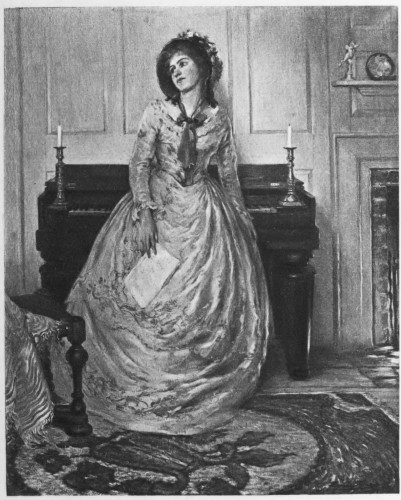
I look into thy heart and then I know The wondrous poetry of the long-ago Page 496 Reasons
REASONS
I
Yea, why I love thee let my heart repeat: I look upon thy face and then divine How men could die for beauty, such as thine,— Deeming it sweet To lay my life and manhood at thy feet, And for a word, a glance, Do deeds of old romance.
II
Yea, why I love thee let my heart unfold: I look into thy heart and then I know The wondrous poetry of the long-ago, The Age of Gold, That speaks strange music, that is old, so old, Yet young, as when ’t was born, With all the youth of morn.
III
Yea, why I love thee let my heart conclude: I look into thy soul and realize The undiscovered meaning of the skies,— That long have wooed The world with far ideals that elude,— Out of whose dreams, maybe, God shapes reality.
HER VESPER SONG
The summer lightning comes and goes In one white cloud above the hill, As if within its soft repose A burning heart were never still— As in my bosom pulses beat Before the coming of his feet. All drugged with odorous sleep, the rose Breathes dewy balm about the place, As if the dreams the garden knows Arose, in immaterial grace— As in my heart sweet thoughts arise Beneath the ardour of his eyes. The moon above the darkness shows An orb of silvery snow and fire, As if the night would now disclose To heav’n her one divine desire— As in the rapture of his kiss All my glad soul is drawn to his. The cloud divines not that it glows; The rose knows nothing of its scent; Nor knows the moon that it bestows Light on our earth and firmament— So is the soul unconscious of The beauties it reveals through love.
THE GLORY AND THE DREAM
There in the past I see her as of old, Blue-eyed and hazel-haired, within a room Dim with a twilight of tenebrious gold; Her white face sensuous as a delicate bloom Night opens in the tropics. Fold on fold Pale laces drape her; and a frail perfume, As of a moonlit lily brimmed with rain, Breathes from her presence, drowsing heart and brain. Her head is bent; some red carnations glow Deep in her heavy hair; her large eyes gleam;— Bright sister stars of those twin worlds of snow, Her breasts, through which the veinéd violets stream.— I hold her hand; her smile comes sweetly slow As thoughts of love that haunt a poet’s dream: And at her feet once more I sit and hear Wild words of passion—dead this many a year.
SNOW AND FIRE
Deep-hearted roses of the purple dusk And lilies of the morn; And cactus, holding up a slender tusk Of fragrance on a thorn; All heavy flowers, sultry with their musk, Her presence puts to scorn. For she is like the pale, pale snowdrop there, Scentless and chaste of heart; The moonflower, making spiritual the air, Like some pure work of art; Divine and holy, exquisitely fair, And virtue’s counterpart. Yet when her eyes gaze into mine, and when Her lips to mine are pressed,— Why are my veins all fire then? and then Why should her soul suggest Voluptuous perfumes, maddening unto men, And prurient with unrest?
IN MAY
I
When you and I in the hills went Maying, You and I in the bright May weather, The birds, that sang on the boughs together, There in the green of the woods, kept saying All that my heart was saying low, “I love you! love you!” soft and low;— And did you know? When you and I in the hills went Maying.
II
There where the brook on its rocks went winking, There by its banks where the May had led us, Flowers, that bloomed in the woods and meadows, Azure and gold at our feet, kept thinking All that my soul was thinking there, “I love you! love you!” softly there;— And did you care? There where the brook on its rocks went winking.
III
Whatever befalls through fate’s compelling, Should our paths unite or our pathways sever, In the Mays to-come I shall feel forever The wildflowers thinking, the wild-birds telling, In words as soft as the falling dew, The love that I keep here still for you, As deep and true, Whatever befalls through fate’s compelling.
“WERE I AN ARTIST”
Were I an artist, Lydia, I Would paint you as you merit, Not as my eyes, but dreams descry; Not in the flesh, but spirit. The canvas I would paint you on Should be a strip of heaven; My brush, a sunbeam; pigments, dawn And night and starry even. Your form and features to express Likewise your soul’s chaste whiteness, I’d take the primal essences Of darkness and of brightness. I’d take pure night to paint your hair; Stars for your eyes; and morning To paint your skin—the rosy air Which is your limbs’ adorning. To paint the love-bows of your lips, I’d mix, for colors, kisses; And for your breasts and finger-tips, Sweet odors and soft blisses. And to complete the picture well, I’d temper all with woman,— Some tears, some laughter; heaven and hell, To show you yet are human.
THE RIDE
She rode o’er hill, she rode o’er plain, She rode by fields of barley, By morning-glories filled with rain, Along the wood-side gnarly. She rode o’er plain, she rode o’er hill, By orchard land and berry; Her eyes were sparkling as the rill, Cheeks, redder than the cherry. A bird sang here, a bird sang there, Then blithely sang together; Sang sudden greeting everywhere, “Good-morrow!” and “Good weather!” The sunlight’s laughing radiance Laughed in her radiant tresses; The bold breeze made her wild curls dance, And flushed her face with kisses. “Why ride you here, why ride you there, Why ride you here so merry? The sunlight living in your hair, And in your cheek the berry? “Why ride you with your sea-green plumes, Your sea-green silken habit, By balmy bosks of faint perfumes, And haunts of roe and rabbit?” “The morning ploughed the east with gold, And planted it with holly; And I was young and he was old, And rich, and melancholy. “A wife they ’d have me to his bed, And to the church they hurried; But now, gramercy! he is dead! Thank God! is dead and buried. “I ride by tree, I ride by rill, I ride by rye and clover, For by the church beyond the hill Awaits my first true lover.”
AT PARTING
What is there left for us to say, Now it is time to speak good-by? And all our dreams of yesterday Are one with yester-evening’s sky— What is there left for us to say, Now different ways before us lie? A word of hope, a word of cheer, A word of love, whose help shall last, When we are far to bring us near Through memories of the happy past; A word of hope, a word of cheer, To keep our young hearts true and fast. What is there left for us to do, Now it is time to say farewell? And care, that bade us once adieu, Returns again with us to dwell— What is there left for us to do, Now different ways our fates compel? Clasp hands and kiss, touch lips and smile, And look the love that shall remain— When severed so by many a mile— The sweetest balm for bitterest pain: Clasp hands and kiss, touch lips and smile, And trust to God to meet again.
IN THE GARDEN OF GIRLS
Serious, but smiling, stately and serene, And lovelier than a flower, She stands; in whom all sympathies convene As perfumes in a bower; Through whom I feel what soul and heart must mean, And all their love and power. Eyes, that commune with the frank skies of truth, Beneath their cloud-like curls; Lips of immortal rose, where joy and youth Nestle like priceless pearls; Hair, that suggests the Bible braids of Ruth, Deeper than any girl’s. When first I saw her, ’t was as if within My gaze took shape some song— Played by a master of the violin— A music, pure and strong, That rapt my soul above all earthly sin To heights that know no wrong.
“COME TO THE HILLS”
Come to the hills, the woods are green— The heart is high when lovers meet— There is a brook that flows between Mossed rocks where we will make our seat, Where we will sit and speak unseen. I hear you laughing in the lane— The heart is high when lovers meet— The clover smells of sun and rain And spreads a carpet for our feet, Where we will walk and dream again. Come to the woods, the dusk is here— The heart is high when lovers meet— A bird upon the branches near Sets music to our hearts’ sweet beat, Our hearts that beat with something dear. I hear your step; the lane is passed— The heart is high when lovers meet— The little stars come bright and fast, Like happy eyes that watch us, Sweet, That see us greet and kiss at last.
EVASION
I
Why do I love you, who have never given My heart encouragement or any cause? Is it because, as earth is held of heaven, Your soul holds mine by some mysterious laws? Perhaps, unseen of me, within your eyes The answer lies.
II
From your sweet lips no word hath ever fallen To tell my heart its love is not in vain— The bee that woos the flow’r hath honey and pollen To cheer him on and bring him back again: But what have I, your other friends above, To feed my love?
III
Still, still you are my dream and my desire; Your love is an allurement and a dare Set for attainment, like a shining spire, Far, far above me in the starry air: And gazing upward, ’gainst the hope of hope, I breast the slope.
WILL YOU FORGET?
In years to come, will you forget, Dear girl, how often we have met? And I have gazed into your eyes And there beheld no sad regret To cloud the gladness of their skies, While in your heart—unheard as yet— Love slept, oblivious of my sighs?— In years to come, will you forget? Ah, me! I only pray that when, In other days, some man of men Has taught those eyes to laugh and weep With joy and sorrow, hearts must ken When love awakens in their deep,— I only pray some memory then, Or sad or sweet, you still will keep Of me and love that might have been.
CONTRASTS
No eve of summer ever can attain The gladness of that eve of late July, When ’mid the roses, dripping with the rain, Against the wondrous topaz of the sky, I met you, leaning on the pasture bars,— While heaven and earth grew conscious of the stars. No night of blackest winter can repeat The bitterness of that December night, When, at your gate, gray-glittering with sleet, Within the glimmering square of window-light, We parted,—long you clung unto my arm,— While heaven and earth surrendered to the storm.
CARISSIMA MEA
I look upon my sweetheart’s face, And, in the world about me, see No face like hers in any place. It is not made, as others sing Of their young loves, like ivory, But like a wild-rose in the spring. Her brow is low and very fair, And o’er it, smooth and shadowy, Lies deep the darkness of her hair. Beneath her brows her eyes gleam gray, And gaze out glad and fearlessly— Their wonder haunts me night and day. Her eyebrows, arched and delicate,— Twin curves of penciled ebony,— Within their spans contain my fate. Her mouth, that was for kisses curved,— So small and sweet!—it well may be That it for me is yet reserved. Between her hair and rounded chin, Calm with her soul’s calm purity, There lies no shadow of a sin. Of perfect form, she is not tall,— Just higher than the heart of me, O’er which I place her, all in all. She is not shaped, as some have sung Of their young loves, like some slim tree, But like the moon when it is young. Her hands, that smell of violet, So white and fashioned fragrantly, Have woven round my heart a net. Yea, I have loved her many a day; And though for me she may not be, Still at her feet my love I lay. Albeit she be not for me, God send her grace and grant that she Know naught of sorrow all her days, And help me still to sing her praise!
AN AUTUMN NIGHT
Some things are good on autumn nights, When with the storm the forest fights, And in the room the heaped hearth lights Old-fashioned press and rafter: Plump chestnuts hissing in the heat, A mug of cider, sharp and sweet, And at your side a face petite, With lips of laughter. Upon the roof the rolling rain, And, tapping at the window-pane, The wind that seems a witch’s cane That summons spells together: A hand within your own a while; A mouth reflecting back your smile; And eyes, two stars, whose beams exile All thoughts of weather. And, while the wind lulls, still to sit And watch her fire-lit needles flit A-knitting, and to feel her knit Your very heart-strings in it: Then, when the old clock ticks “’t is late,” To rise, and at the door to wait Two words, or, at the garden-gate, A kissing minute.
A DAUGHTER OF THE STATES
She has the eyes of some barbarian Queen Leading her wild tribes into battle; eyes, Wherein th’ unconquerable soul defies, And Love sits throned, imperious and serene. And I have thought that Liberty, alone Among her mountain stars, might look like her, Kneeling to God, her only emperor, Kindling her torch on Freedom’s altar-stone. For in her self, regal with riches of Beauty and youth, again those Queens seem born— Boadicea, meeting scorn with scorn, And Ermengarde, returning love for love.