[p24] THE FANCY FAIR; OR, GRAND GALA OF THE ZOOLOGICAL GARDENS.
Reading edition
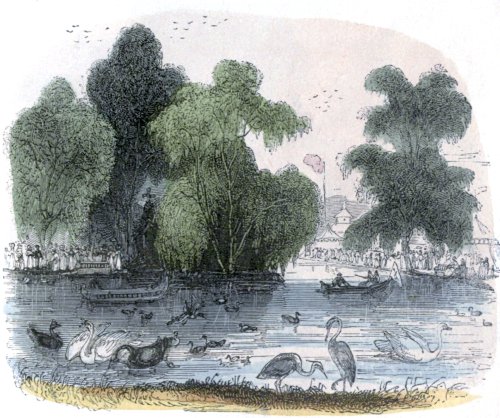
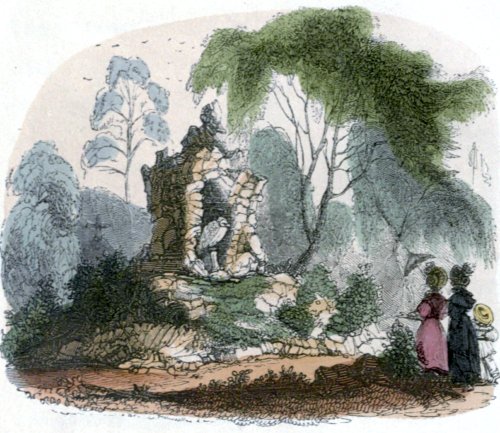
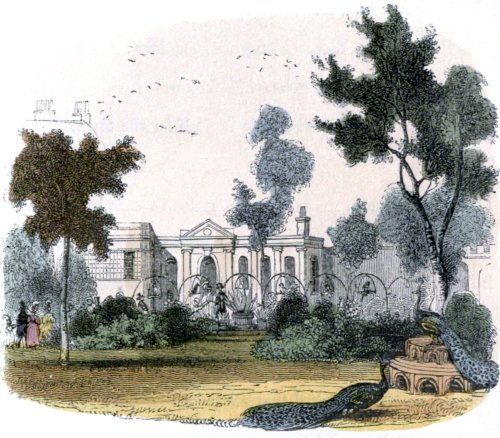
Some years are elapsed, and some worthies are gone, Since Peacocks and Butterflies mimick’d the ton, And gave, in a manner becoming their station, Their fêtes and their balls to their fellow-creation. Then Roscoe and Dorset, high-talented elves, Amused other people and solaced themselves, In describing the revels, the gibes, and the jokes, Of the creatures of earth, and the feathery folks; Of their fashion and fancy, the ebbs and the flows, And the beauty and wit of their belles and their beaux. But the world has spun round like a peg top since then, And imparted more knowledge to brutes and to men; New lights and perceptions old customs explode, And what is done now, must be done à-la-mode. [p25] Old fashions are fled, and what more can we say Than that Dorset and Roscoe might do for that day, But that Poets must deck in more dignified rhymes The wonderful deeds of these wonderful times? That Augusta may spread her renown and her glory, Her famed Fancy Fairs must be studded in story, And ages unborn learn the elegant Games Of the Gardens that bloom on the south of the Thames. Old Dryden the bard was at best but a gander, In singing the Feast of the great Alexander; For what breast with the fumes of a banquet is fired Two thousand years after the guests have retired? Our happier bard takes the season that suits, At the spur of the moment he puts on his boots, All hot for Parnassus, and cries in a hurry, “Prepare me my Pegasus! ‘Saddle white Surrey!’” It is clear that he feels what his numbers prolong, That he warms with his subject, and soars in his song. But whether his lot be unhonour’d and low, Or the wreath of the Laureat encircles his brow, [p26] With the world to admire him, mysterious elf! Is a secret of state that he keeps to himself. But come! Zoological wonders require The strains of his genius, his force and his fire; He burns with impatience the scene to display: Hark away, to the Gardens of Taste! Hark away! The sun, as he rose, was received with a cheer, From the Herald at Arms, the renown’d Chanticleer, Who proclaim’d, with a feeling of pride in his breast, That the Gardens of Surrey were fairest and best. Then at once the shrill tidings were borne on the air, That the dawn had arrived of the famed Fancy Fair, And that all that was lovely, and beauteous, and bright, Was summon’d to honour that day of delight. The sunbeam was clear on that lovely retreat; The breath of the morning was balmy and sweet; Fair flowrets, that vied with the rainbow, were seen, And trees in their livery of liveliest green. The voice of rejoicing, from children of earth, Was so mingled with cheerfulness, music, and mirth, [p27] That the mind, and the eye, and the ear, and the heart Were saluted with pleasure from every part. A thousand gay faces appear’d in the throng, And crowds of fair creatures came trooping along. Till the place, all enliven’d with joy and surprise, Was lit up with sunbeams and Beauty’s bright eyes. The groups of all ages were gather’d so well, That they threw o’er the poet and painter a spell, And the flashes of fancy, wit, feeling, and fire, Resistless compell’d them to pause and admire. Much pains had been taken to add to the grace, And preserve from disorder the pride of the place; To keep the fair flowrets from wandering away, As well as the things that were fairer than they, For placards were posted near every spot, You may stand to “admire” me, “but gather me not.” The Beasts and the Birds were so fresh and so fair, That they call’d forth the wonder of all who came there, And the Boa Constrictors so slimy and gay, That they seem’d to have painted themselves for the day. [p28] The Green-bonnet Monkey, with speckles bespread, Was proud of the verdigris tuft on his head; For it look’d, as he leap’d in his frolic and joy, Like the top of the turban of Rammohun Roy. Dame Tortoise roam’d over the green and beyond, For she pass’d on her pilgrimage right to the pond. As she gazed on the Crocodile softly she sigh’d, Though she thought that his mouth was a little too wide. The Zebra look’d sprightly, as every one saw, And the African Sheep and white-footed Nyl Ghau; And that leaper of leapers, the strange Kangaroo, That is biped and triped and quadruped too, Who out-juggles the Juggler, by hill and by dale; For he makes, when he pleases, a leg of his tail. With a soft, silky, aspect, demure and profound, A tabby Cat wander’d the Gardens around, And purr’d her applause with a quiet delight, As she gazed half-entranced on the heart-cheering sight. Among the rare wonders that caught every eye, Demanding a glance from the gay passer-by, [p29] Was the Alpaca, Zebu of Indian race, And the Camel, brought up in that beautiful place. A dome in the centre, deservedly praised, Transparent as crystal, was artfully raised, Where African Lions, and Tigers untamed, And Sloths and Hyænas, for savageness famed, And Leopards and Ladies, and Monsters and Men, Securely might meet in the very same pen. The crowd still increased on that magical ground, And thousands and thousands came trooping around. The haut ton and beau monde paced about debonair, Tall and short, enbonpoint, slender, sunburnt, and fair, While Hatred and Anger and Care fled away, And light hearts and bright eyes were the charm of the day. Then the painted balloon in its glory was bright, And it mounted on high till it sail’d out of sight. The Juggler, with tricks and illusions came forth, And the Russians with musical horns from the North, Transporting enough to make Orpheus mute: As loud as the trumpet, as soft as the lute, [p30] They fill’d every bosom, absorbing them quite, And the reeds seem’d to burden the air with delight. Such strains have rung round me in seasons gone by, When escaped from the cloister I mused with a sigh, And listed awhile to the balm-shedding breeze, As it fitfully swept through the sedge and the trees, And plaintively whisper’d with musical power, O’er the “soft-flowing Avon,” at evening hour. And now the fair parties, with Mirth for their guide, And light-hearted Laughter, a moment divide, And gaze on the Eagles, the old ruin’d wall, The Boat-house, the Temple, the Hermitage, all; Reproved, when their pleasure too freely they quaff, By that memento mori, the Afric Giraffe.1 Some visit the laughing-bird, called Cockatoo, Who drops them a courtesy, and cries “How d’ ye do?” Or Mungo, the negro, who quaintly and sly Takes his tea, Cayenne pepper, and cold apple-pie. [p31] Some gaze on the Cygnets that glide like a dream, And bend down to admire their fair forms in the stream; Some laugh at their fancies, or muse on a flower, And all are delighted, so happy the hour. Wouldst thou gaze with emotions far purer than mirth On one of the fairest creations of earth, Go at even, and breathe the pure breath of the breeze, From the seat by the Lake, ’neath those wild Willow-trees. New pleasures succeeded; the spell was of power That Variety threw o’er the varying hour, [p32] And a change of enjoyment was found by the train In losing and finding each other again. The dancing commenced, and the Fair, beyond praise, As light as the gossamer, tripp’d through the maze. What warm salutations! what laughing aloud! What sounds of enjoyment were heard in the crowd! But who were the worthies who moved with a grace And demeanour, as though they belong’d to the place? Prince Eglantine Eagle, with lightning-like glare, Threw a glance all around him to see who was there; [p33] To the Pelican Princesses bent his head low, As they proudly pass’d by with their bosoms of snow. Duke Emu, too, gazed on the heart-cheering sight, And Earl Hildebrand Harpy, so famous in fight; While the figure that walk’d so erect, I suppose, Was Sir Peregrine Penguin,—I judge by his nose. Viscount Stork, as he strutted about, gave a beck To Earl Vulture, who wears no cravat round his neck; And the Bishop was there, though he stood rather back, Array’d in his robes of red, orange, and black, Sir Archibald Ostrich moved on rather chary, And lean’d on his cousin the Count Cassowary, Discoursing of Java, and far distant lands, And African Deserts, and hot burning sands. Old warrior Flamingo came limping along, And with Commodore Cormorant join’d in the throng, Profoundly debating, with Major Macaw, The merits of martial and maritime law. Earl Heron walk’d stately with Caroline Crane, And Field-marshal Falcon, of valour so vain; [p34] While Captain Crown Pigeon, so odd in his tread, Shook the quaking-grass tuft on his fanciful head. Lord Peacock, from Asia, came dress’d very fine— His musical taste ne’er accorded with mine; And the learn’d Baron Buzzard, who gravely decided, That game, when once caught, should be fairly divided. The grenadier, Captain Curassow, was drest In his helmet, and held up his head with the best; While Fatima Pheasant, from China, display’d Her Pekin pelisse of bright silver brocade. Count Turkey expanded the finery that bound him, And gabbled high Dutch to the people around him. His Honour the Hawk loved a lark and a race, So he hover’d about near the courts of the place. Colonel Kite spoke of sporting—of young Ducks and Widgeons, And plann’d a new pent-house for Ring-doves and Pigeons. At the edge of the water, and hard by the sluice, Tête-à-tête Doctor Drake sat with old Gammer Goose. [p35] And Sir Christopher Crow wore a coat on his back, Of a true Day and Martin-like polish of black. Mother Magpie and Priscilla Parrot, in spite, Could talk without ceasing from morning to night; Spread abroad Entre nous and On dits by the score, All the news they had heard, and a hundred times more. A multitude muster’d, escaped from the plains, Of sight-loving lasses and holiday swains: [p36] Bob Bantam push’d forward and strutted before; Will Woodpecker modestly tapp’d at the door; Poor Robin, the rustic, a countrified clown, As he blush’d, look’d too simple by half for the town, There were scores in brown mantles, black, yellow, or green, From the villages round, and among them were seen, Luke Linnet, Sam Swallow, Mat Martin, and then, Bill Bullfinch, Tom Titmouse, and Rosanna Wren. But however select the fair party may be, Where beauty and fashion preside, we shall see Some characters doubtful that all should beware, And it can’t be denied that a few such were there. Those cut-throats the Sparrows, that robber the Daw, Who was pluck’d for his open contempt of the law; The pilferer Cuckoo, whom all must despise, And the chattering Jay, who tells nothing but lies; While the green-mantled, light-hearted Love-birds, ’tis said, Had been sipping too much, for their noses were red. How often it is, when the sun is most bright, That a dark cloud approaches, obscuring his light! [p37] Alas! ’tis the same with all earthly affairs, And pleasure gives place to a dark crowd of cares. The Trees were all lively, the Beasts were content, And the beautiful Birds on their pleasure were bent, Nothing doubting the multitude, struck with amaze, Came to gaze on their beauty and speak in their praise When they saw that the crowd by degrees had retired, And that they left alone were no longer admired; They gazed on the Booths that were aptly design’d To display the fair merchandize art had combined; They look’d on the spot in wrath, spleen, and despair, Rank, Beauty, Taste, Fashion, and Fancy were there, And the multitudes round such attractions preferr’d To a gambolling beast or a chattering bird. Now Envy first enter’d the fair feather’d race, And invective and dissonance rung round the place; Their pleasure, their pride, and contentment were o’er, And Discord presided where Peace was before. In the midst of the hubbub and riot around, The Trees were absorb’d in a silence profound, [p38] Till the busy Dwarf Medlar began to explain His rooted dislike to the booth-loving train. He branch’d out in florid descriptions to show That they all ought to stand on their stumps in a row In defence of their rights, now that underlings drew That applause and renown which had long been their due. Then the Oak raised his head, rather hoary with age, And shook his broad arms in the air in a rage, And exhorted them all with a feeling of pride, To maintain their ground firmly, whate’er might betide. The Giant Elm follow’d and proudly look’d down On the pitiful plots of their foes with a frown. The Ash, pale with anger, derided “the crew,” And the smooth-temper’d Purple Beech look’d rather blue. The Chesnut grew heated, and roasted them well; And bitter the taunts of the Almond-tree fell. The Apple and Pear both maintain’d, in their spleen, That the fruit of their folly would shortly be seen. The Laburnum, the Lime, and the Beech seem’d afraid, But the Hawthorn was pointed in all that she said, [p39] And the threats of the Elder were heard to abound— Like pellets from popguns they rattled around. Discontented and moody the Drooping Larch lower’d, The Crab knit his brows, for his temper was sour’d; While the Birch-tree declared that the ill-fated elves, Their opponents, were making a rod for themselves. With wrath and vexation the Maple ran o’er; The Aspen-tree trembled, the Willow wept sore; The Tulip-tree blush’d, and the Sumach-tree sigh’d, And the Dyer’s Oak thought it a stain on their pride. The Fir stood erect, for he seem’d to opine That their sun for a very brief season would shine; While the well-meaning Walnut, foreboding their fall, Crack’d a joke, for he cared not a fig for them all. The Poplar drew up with a feeling of scorn, And the Cypress looked sad, and the Yew was forlorn. The Plane smoothly spoke, and the Hazel the same, But the Scarlet Oak redden’d with anger and shame. At last they resolved, to blot out the disgrace, To stand fast by each other adorning the place; [p40] No longer their loss of applause to bemoan, But to come out next spring with a Fair of their own. While the war-whoop was raised by the Birds and the Trees, The Beasts were impatient to blow up a breeze. The Lion began with a royal bewail, And furiously lash’d both his sides with his tail. As he stalk’d through his den, his wild eyes glared around, And his roar seem’d to come from far under the ground. His anger, disdain, and despair wanted scope, So he wish’d himself back at the Cape of Good Hope. The Tiger extended, in uttering a roar, A mouth that you might have mistook for the door; But in such a dilemma, I warn you, beware How you enter in haste such a dark thoroughfare; For all who have pass’d through the passage they say, Have terribly painted their coats by the way. Poor Bruin declared it was unbearable quite, And was in a brown study till day turn’d to night; The Axis turn’d round in his rage, and just then The Sloth look’d as black as the ink in my pen. [p41] The soft, silky, self-colour’d Puma felt pain, Pale as ashes with anger he could not restrain; The Llama indignantly felt the disgrace, And spirted saliva in every one’s face; In fury the Mastiff bark’d loud for relief; The poor patient Camel was laden with grief; The Antelope wisely eloped from the fray, But the Springbok was booked for the rest of the day. The wrath of the Leopard then rose on the gale, And broke out in dark spots from his head to his tail; The Civet Cat mew’d, and did nothing but fret, And the stripes of the Zebra were blacker than jet; The Opossum was posed, and looked wondrously sage, And the Red Coati Mondi turned sallow with rage; The Hyæna declared in a quarrelsome mood, He would instantly break through his den—if he could: And the Moose Deer in ire would have bit his lip through, But he found it already divided in two. The Schoolmaster Porcupine rang, too, the chimes,— He declar’d that he’d send an address to “the Times;” [p42] Nay, write all his quills to their stumps, ere he’d stand As a laughing-stock thus to the rest of the land. When the Fair was concluded, and all the gay throng Had abandon’d the feast and the dance and the song, In quest of a calmer enjoyment to roam, For “Home,” after every enjoyment, “is Home!” The Trees toss’d their heads ’tween the earth and the heavens, And the Birds and the Beasts were at sixes and sevens. But amid the confusion, the hubbub, and din, All remember’d the proverb, “They laugh most who win!” This was certainly true at the famed Fancy Fair; Mr. Cross2 was, they say, the most pleasant man there. Let us hope, then, his genius was happily led To allay the rude storm that hung over his head;— That the future his spirited plans will repay Through many a gladsome and prosperous day; Make true the old saw, “All is well that well ends,” And Bipeds and Quadrupeds once more be friends.
THE END.