CURIOUS ADVERTISEMENTS. (continued 2)
Reading edition
☞ Save your Rags!
And ſend them to the Printing Office; you will there receive for what you think of no ſervice, money enough, which, in effect, is the ſame as having money for nothing, and is certainly better than to be at the trouble of ſweeping Rags away. If this beloved argument is thought inſufficient to procure them, then only think of the virtue of ſerving your country!
"Beauties" to be seen.
New Additions.
The BOSTON MUSEUM, North ſide the Market, has lately received many very valuable additions, among which are
The Philadelphia, New-York, and Salem Beauties, and a number of other Figures.—Alſo, a variety of natural curioſities, among which are the ſkin of the Sea-Elephant, in natural preſervation, which meaſures 8 feet in length, and 6 feet round the body, &c. The ſkin of the African Lion, a Calf with 8 legs, 2 bodies, and one head, in natural preſervation, &c. &c.
Muſeum opened every day and evening, Saturdays and Sundays excepted.
☞ Admittance to the Muſeum, 25 Cents.
The Inviſible Lady, and Acouſtic Temple, continues to be exhibited among the other curioſities, at 25 Cents admittance.
June 29.
Columbian Centinel, 1805.
A case of short weight of a load of hay is gravely advertised in the "Columbian Centinel" by the town-weigher
Mr. RUSSELL,
THIS day came Ezekiel Kingsbury, jun., of Dedham, with a Load of Hay to be weighed, which was accordingly done. After it was weighed, he drove it off round Mr. Greenleaf's corner, where he ſtopped. Mr. Jonathan Traſk, truckman, wanted to purchaſe a load of hay—went and tried to bargain with him for it, and as he was going towards the hay, he perceived a man raiſe his head on the top of the load, by the name of Draper, of ſaid town. He accordingly came to me and told me of it. I went in purſuit of Kingſbury, and overtook him juſt before he got to the Granary, and ordered him back to the ſcales to have his load weighed again, which weighed one hundred and an half leſs that it did before.—The ſeveral printers are requeſted to inſert the above, to prevent further impoſitions on the publick.
HOPESTILL FOSTER, Hay-weigher.
Boſton, Dec. 15, 1789.
It seems to have been the fashion in "old times" with people who had articles stolen from them to advertise in the papers, requesting the thief or thieves to make restitution. Probably this was the surest method of recovery, in the absence of the detective system. Joseph Tyler in the "Boston Gazette," Nov. 21, 1761, is inclined to be sarcastic, and Samuel Brazer, of Worcester, in 1802, is witty, but modest. As to stealing psalm-books, no one would dream of doing such a thing in these days. Our modern thieves are not interested in devotional books; they prefer "yellow-covered literature."
Joſeph Tyler deſires the Perſon
that borrowed his Surtout to return it, if it is not worn out.
1767.
Taken out of the Pew, No. 59,
in the Rev'd Mr. Barnard, ſenior's Meeting-Houſe, about a Month ſince, a PSALM-BOOK. The Perſon is deſired to return it, otherwiſe may depend upon being expoſed.
Essex Gazette, Sept. 28, 1773.
A MODEST REQUEST!
The two obliging Ladies, who on the night of Monday, the 29th ultimo, between ſix and ſeven o'clock in the evening, took from the Store of the Subſcriber (not by miſtake) FIVE BARCELONA HANDKERCHIEFS, are deſired to return them immediately, with ſatisfactory remuneration, or the next notice they receive will come "GREETING."
SAMUEL BRAZER.
Worcester, December 8, 1802.
The perſon who took ſix pair of SHOES, one day laſt week, under a falſe name, from a ſhop in Eſſex Street, would do well, if they wiſh to avoid difficulties, to return them immediately.
Salem, July 22.
Salem Gazette, 1800.
The Perſon who yesterday, at duſk, took a piece of black VELVET from the shop board of the Subscribers, is well known. He has now an opportunity of returning it, and if not immediately done, shall suffer the penalty of the Law.
J. & I. NEWHALL.
Salem, Nov. 5, 1805.
Pictures like the following could be seen in the "Essex Gazette" in 1771 (May 14).

Ran away from the Subscriber,
on the 4th of May, a Negro Man named Cato, of a middling Stature, has loſt the Sight of his left Eye, had on a kersey Jacket and leather Breeches. Whoever ſhall take up ſaid Negro, and bring him to his Maſter in Salem, ſhall have Two Dollars Reward, and all Charges paid, by
William Hunt.
Vessels were accommodated at "Rotting Row," in Salem, in 1812, and we presume there is room for some now.
Several BIRTHS for VESSELS are vacant at Rotting Row, the tides are favorable and the Dockage so extremely low, good and safe, as to make it an object for any one to haul his vessel there to winter.
Salem, Nov. 20.
It used to be common in the early part of this century to see such goods as "Mamoodies," "Chittabully Baftas," etc., advertised in the Salem and Boston papers.
JOHN STONE,
Has for sale,
Front street,
ONE bale MUGGA MAMOODIES; 1 do. MADRAS PAT HANDKERCHIEFS; 1 do. ALEABAD MOWSANNAS; 1 do. do. MAMODIES; 1 do. CHITTABULLY BAFTAS; 1 do. JOLLOPOUR SANNAS; 1 do. BANDANNAS;
Imported in the ship Union, Capt. Osgood, from Calcutta, and of the first chop.
Sept. 24, 1811.
In another advertisement we notice "Guzzenahs, Allebad Emerty, Taundah Khassah, Mahge Gunge." These are all India cottons.
It seems strange to us now, when we see so many boot-blacks everywhere, to learn that in 1815 the "craft" advertised in the papers, as did "wood-sawyers," too, about the same time. As coal had not then been introduced into Salem, everybody burned wood, so that wood-sawing was an occupation of considerable importance. During the war of 1813 wood became rather scarce, and some people used dried turf, or peat, as it was called, for fuel.
Boots and Shoes Cleaned.
York MORRIS reſpectfully informs the Gentlemen of Salem, that he has taken the Shop one door weſt of the Sun Tavern, where he will be happy to clean their Boots and Shoes in the beſt manner, and at the ſhorteſt notice.——He will keep conſtantly for ſale LIQUID BLACKING of a very ſuperior quality, in jugs and bottles. Alſo, a Compoſition, with which he cleans Ladies' Walking Shoes.
April 18.
This York Morris was father of the Boston colored lawyer, Robert Morris.
Boots and Shoes Cleaned.
Thomas JONES respectfully informs the Gentlemen of Salem, that he has taken the Shop (recently occupied by York Morris) two doors west of the Sun Tavern, where he will be happy to clean their BOOTS and SHOES in the best manner, and at the shortest notice.
Salem, June 13.
Wood-Sawing.
The Subscriber, being under the interdict of a Non-Intercourse law, his horses and waggons hauled into dry dock, will no longer carry freight between Salem and Boston; but, "abandoning the ocean altogether," he respectfully offers his services to his federal friends, with his saw and wooden horse, and shall be obliged to them to call upon him when they have any wood to cut. Orders will be received at his dwelling, near the Court-house.
JOHN L. MATTHEWS.
☞ Wanted to hire—two smart men. June 11 [1811].
Specific for a "religious hydrophobia" in 1819.
Cochranism Delineated,
Or a description of, and ſpecific for, a religious Hydrophobia, which has ſpread & is ſtill ſpreading in a number of towns in the counties of York and Cumberland, Diſtrict of Maine—price 12 1·2 cents—for sale at the Bookstore of
HENRY WHIPPLE.
June 12.
The following is printed in the "Massachusetts Mercury:"—
From the Georgia Gazette.
Vice Consulship of Spain for the States of North Carolina, South Carolina, and Georgia.
Meſſrs. Nicholas Johnſton and Co.
Gentlemen,
His Excellency Lieut. Colonel Don Vincent Folch, Governor of the Province of Weſt Florida, in a letter, dated Panzacola, 1ſt Auguſt, has been pleaſed to communicate to me the following:
"I have iſſued a proclamation, offering FOUR THOUSAND FIVE HUNDRED DOLLARS to any perſon who will deliver here, or in Apalache, the body of WILLIAM AUGUSTUS BOWLES, or elſe produce ſufficient proof of having killed him; which information I will thank you to make public, in order that ſome clever fellow, at the cheap rate of one gun ſhot, will place in his pocket the ſaid ſum, which ſhall be paid, with the greateſt acknowledgment of gratitude, in good Spaniſh dollars, without the leaſt delay."
Therefore I requeſt you to give this a conſpicuous place in your paper. It is, doubtleſs, a very intereſting ſubject to Spain, America and the Indians, that they be rid of this noted vagabond.
I remain, with reſpect, Your obedient ſervant, EMANUEL RENGILL.
Savannah, 25th August, 1800.
Progreſs of Refinement in America.
INDIANS' SCALPS.
Pittſburg, May 17, 1791.
We the ſubſcribers, encouraged by a large ſubſcription, do promiſe to pay One Hundred Dollars for every hoſtile Indian's ſcalp, with both ears to it,[B] taken between this date and the 15th day of June next, by any inhabitant of Alleghany county.
George Wallace,Robert Elliot,
Wm. Amberſon,A. Tannehill,
J. Wilkins, jun.John Irwin.
Salem Gazette.
A negro "pretends to be very religious." From the "Boston Gazette."
Ran away from me the Subſcriber
at Londonderry, in the Province of New-Hampſhire, on the 28th of September, a Negro Man Servant named Prince, about Forty Years of Age, about five Feet five Inches high, ſpeaks good Engliſh, had on when he went away a green Coat, blue pluſh Breeches, diaper Jacket, ſeveral pair of thread Stockings with him; he looks very ſerious and grave, and pretends to be very religious: He is the property of Major Rogers, and has been ſeveral Years in the Service to the Weſtward, and pretends to be free.
Whoever will take up ſaid Slave and bring him to me, or to Capt. Jonathan Brewer at Framingham, ſhall have FIVE DOLLARS Reward and all necesſary Charges paid by me,
James Rogers.
Dated at Londonderry, October 8, 1762.
In the "Boston Gazette," Oct. 8, 1759, some servants are advertised who among other accomplishments speak high & low Dutch. At this time two dollars and a half was the value of a pound in New York currency, while the New England currency was three dollars and thirty-three cents to a pound. To this day a shilling is 12-1/2 cents in New York, and in New England 16-2/3 cents.
Run away from Major Edmond Matthis of Albany, in the Province of New-York, the following People, viz. A Servant Man named William Fairfield, of a dark Complection, down look, black Hair, and of a middling Stature. Also a Negro Man and Woman, and a white Girl with them, about 14 Years of Age, who talks good English, high and low Dutch; the Negro Man is much pitted with the Small Pox, and speaks good English; tis suppos'd they are all together: They took with them a great many Cloaths, and its probable they will often alter their Dress. Whoever takes up said Run-aways, and safely conveys them to their abovesaid Master, shall have Ten Pounds (25 Dollars) New-York Currency Reward, and all necessary Charges paid.
Albany, Octob. 1, 1759.
Edmond Matthis.
Dr. Greenwood, of Boston, in 1788 offered his services to "give a youthful air to the countenance," and was ready to "electerise" any persons who stood "in need of that almost universal remedy."
ISAAC GREENWOOD,
DENTIST,
Acquaints the publick, that he has REMOVED from No. 49 to No. 19, Marlborough Street, opposite Meſſrs. Amorys' Store, where he continues to perform the neceſſary branches of that art, carefully and faithfully. Removing every ſubſtance tending to deſtroy the Teeth and Gums. Cures the Scurvy in the Gums, makes the Teeth white, &c. Sells BRUSHES that are ſuitable for the Teeth, with a POWDER that never fails to recommend itſelf, at 1/4 per box. Fixes NATURAL TEETH on plates of gold or ſilver, with gold ſprings, if wanted. Alſo, ſubſtitutes ARTIFICIAL TEETH, of different ſubſtances, from 2ſ. to 6ſ. each—that give a youthful air to the countenance, and render pronunciation more agreeable and diſtinct—In a word, both natural and artificial are of ſuch real ſervice, as are worthy the attention of every one. He with pleaſure attends on thoſe who may incline to employ him, provided they cannot conveniently attend on him, at his HOUSE, where he has every accommodation neceſſary for their reception.
At the ſame place may be had,

Oil, Silk, and Ladies' UMBRELLAS, cheap. Old Umbrellas repaired, oiled, newly covered, &c. Oil Silk CAPS for bathing, German Flutes, Fifes, Violins, and Strings for ditto, Reeds for hautboys, Men, Boxes and Dice for back-gammon, Cheſs men, Billiard Balls, Ivory Combs, a variety of Canes, by wholeſale and retail. Cane Strings, Whips, electrical Machines with apparatus for experiments and medical uſe—artificial Magnets, &c. &c. &c.
N.B. Said Greenwood offers his ſervice to electeriſe thoſe who ſtand in need of that almoſt universal remedy, at 1/6 each time, at his Houſe.
☞ Adviſe with your phyſicians.
May 3, 1788.
REMOVAL.
Boſton Umbrella Manufactury.
DANIEL HEWES,
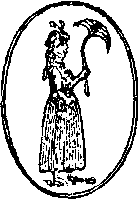
Umbrella Manufacturer; takes this early opportunity to inform his friends and the Public in general, that he has Removed from the North-Square, to
No. 55, Marlborough-Street,
at the ſign of the Umbrella——where may be had any quantity, quality, or ſized UMBRELLAS, at the ſhorteſt notice, made of better materials, cheaper, and more durable than can be imported.
Alſo,
Turned Work in Ivory, hard Woods, and Metals, executed in the beſt ſtile of workmanſhip.
☞ Caſh given for Ivory, Sea-horſe, and Sea-cows TEETH. (8w)
March 14 [1798].
The following—supposed to be—attempt at wit appeared in the "Massachusetts Centinel" in 1789.
ADVERTISEMENTS EXTRA.
Imported in the laſt veſſels from Europe, A treatise on ogling, ſimpering, flirting, gigling, painting, patching, perfuming, &c. very uſeful to every Lady—and much in demand. Alſo, The Art of burning dimples in ladies' cheeks and chins—of repairing female tongues that wear with uſing—of ſetting eyes faſhionably in their ſockets—of giving the face a beautiful pale, deathlike aſpect—and of acquiring the elegant hyſterick and other fits.
TO BE SOLD—Many elegant and beautiful copies of a moſt ſcarce and valuable work, called "The Virtue of the Times." Inquire any where.
LOST—Through careleſſneſs, thirty good years of life—of a gentleman—ALSO, forty-two years of a lady—the latter, from a deſire to appear beautifully ſlim. Whoever can inform the loſers how they can be redeemed, ſhall be handſomely rewarded.
EXTRA—BUT SERIOUS.
WANTED—much wanted—ſeveral ſmall ſums of money—ſay, from 4/6. to Ten Dollars—for which obligations, which have frequently been offered, will be given. Inquire of the Printer.
A Boston paper of 1789 prints the following unique production, copied from a late London paper. It was probably designed as a "take-off" to some of the humbugs of the day.
THOMAS TOUCHWOOD, GENT.,
Propoſes, on the laſt day of the preſent month, to ſhoot himſelf by ſubſcription. His life being of no farther uſe to himſelf or his friends, he takes this method of endeavouring to turn his death to ſome account; and the novelty of the performance, he hopes, will merit the attention and patronage of the publick.
He will perform with two piſtols, the firſt ſhot to be directed through his abdomen, to which will be added another through his brain, the whole to conclude with ſtaggering convulſions, grinning, &c., in a manner never before publickly attempted.
The doors to be opened at eight, and the exhibition to begin preciſely at nine. Particular places, for that night only, reſerved for the ladies. No money to be returned, nor half price taken. Vivant Rex et Regina.
N.B. Beware of counterfeits and impoſtors.—The perſon who advertiſes to hang himſelf the ſame night, in oppoſition to Mr. Touchwood, is a taylor, who intends only to give the repreſentation of death by dancing in a collar, an attempt infinitely inferior to Mr. T.'s original and authentic performance.
Probably camels were not seen in America before 1789. Increased interest attaches to the following advertisement from the fact that the exhibition was held near the very pump which Hawthorne commemorates in "Twice-Told Tales." This notice is taken from the "Salem Mercury," Aug. 4, 1789.
TO THE CURIOUS.
To be ſeen at Mr. Benjamin Daland's, near the town-pump, Salem.
TWO CAMELS,
Male and Female, imported from Arabia.
These ſtupenduous Animals are moſt deſerving the attention of the curious, being the greateſt natural curioſity ever exhibited to the publick on this continent. They are 19 hands high—have necks near 4 feet long—have a large bunch on their backs, & another under their breaſts, in the form of a pedestal, on which they ſupport themſelves when lying down—they have 4 joints in their hind legs, and will travel 12 or 14 days without drinking, and carry a burthen of 1500 wt.—they are remarkably harmleſs and docile, and will lie down and riſe at command.
Abraham was old and well stricken in age: And the Lord had blessed Abraham in all things. And Abraham said unto his eldest Servant of his house, that ruled over all that he had, Thou shalt go unto my Country, and to my Kindred, and take a Wife unto my Son Isaac. And the Servant took ten Camels, of the Camels of his Master, and departed; and went to Mesopotamia, unto the city Nahor. And he made his Camels to kneel down without the city, by a well of water, at the time of the evening, even the time that Women go out to draw water. Pure wisdom directed the Servant, and succeeded him in obtaining the consent of the Parents, Brethren and Kindred of Rebeccah, that she should go to the Land of Canaan, and become the Wife of Isaac. And they sent away Rebeccah, their Sister, with her Damsels and her Nurse, & Abraham's Servant, & his men, and they rode upon the Camels.—Gen. XXIV.
N.B.—The CAMELS will go from this town this evening.
In 1796 a mermaid was exhibited in Salem, and in 1800 a cassowary bird. The admission fee to the latter curiosity was for "grown persons" 12-1/2 cents, and for children 6-1/4 cents. The exact change could then be easily made, as the Spanish silver ninepences (12-1/2 cents) and fourpence halfpence (6-1/4 cents) were more common than any other silver pieces. The American dimes and half-dimes had not at that time got much into circulation in New England.
NATURAL CURIOSITY.
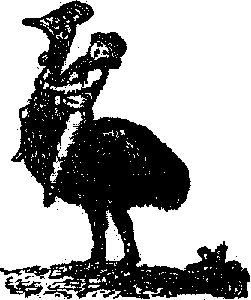
To be ſeen at Waſhington Hall, for this day only,
THE CASSOWARY,
A Bird, from the East Indies.
Its height is 5 feet, weighs near 100 pounds; it will eat half a peck of apples at a meal, ſwallow whole eggs, alſo ſtones and apples as large as eggs, and jump to a great height.—Goldſmith ſays, in his hiſtory of Animated Nature, it has the head of a Warrior, the eye of a Lion, the defence of a Porcupine, and the ſwiftneſs of a Courſer.
It is fond of all kinds of vegetables and fruits. It will pick a pea out of a Child's hand without injury. Many that have ſeen it, ſay it is the greateſt curioſity of the kind ever exhibited here. Children of ſeven years old can ride it.—Admittance for grown perſons 9 pence—Children half price.
☞ The remarkable bird, called the CASSOWARY, now exhibiting in this town, is described by Goldsmith in his 3d volume of Animated Nature, page 39, American edition.—After describing him, the Doctor observes, that "the southern parts of the most eastern Indies seem to be its natural climate. His domain, if we may so call it, begins where that of the ostrich terminates. The latter has never been found beyond the Ganges; while the Cassowary is never seen nearer than the islands of Banda, Sumatra, Java, the Molucca islands, and the corresponding parts of the continent. Yet even here this animal seems not to have multiplied in any considerable degree, as we find one of the kings of Java making a present of one of these birds to the captain of a Dutch ship, considering it as a very great rarity."
Gazette, August 8, 1800.
The following notice, taken from the "Salem Gazette," July 13, 1790, has an interest to us from what it says of the likenesses "produced from a Spark of Electricity." It is difficult to conjecture what this means; though additional interest is derived from the fact of these likenesses having been presented by Dr. Franklin's grandson.
AMERICAN MUSEUM.
Mr. Peale, of Philadelphia, has lately received a number of donations for his Cabinet of Curioſities. Among them were
Likeneſſes of the King and Queen of France, executed on white ſatin, and each produced by a ſingle ſpark of electricity.—Preſented by Wm. Temple Franklin, Eſq.——And
The Finger of Mr. Broliman (a provincial officer in the Britiſh ſervice, in the war before the laſt) who was executed at Philadelphia for the murder of a Mr. Scull. This unfortunate gentleman, ſoured by ſome diſguſt, became weary of life. In this temper of mind, he one morning roſe earlier than uſual, and walked out upon the common of the city, with his fuſee in hand, determined to ſhoot the firſt perſon he ſhould meet. The firſt perſon he ſaw was a very pretty young girl, whoſe beauty diſarmed him. The next preſented was the late Dr. Cadwallader—The Doctor, bowing politely to Mr. Broliman (who, though unknown to him, had the garb and appearance of a gentleman) accoſted him with "Good morning, Sir! What ſport?" The Officer anſwered the Doctor very civilly; and was ſo ſtruck with his gentlemanly manner and pleaſing addreſs, that he forebore to execute his deſperate reſolution: Impelled, however, by the ſame gloomineſs of diſpoſition which actuated him when he firſt ſet out, he repaired to the Centre houſe, where ſome gentlemen were engaged at billiards—The tack of one of the players happening to ſtrike his hat, the wretched man, eager for an opportunity of accompliſhing his deſire to leave the world, inſtantly ſhot Mr. Scull, one of the company, who died of the wound.
This little ſtory affords a ſtriking proof, that amiableneſs and politeneſs of manners are not only pleaſing, but uſeful, in our commerce with the world.
Salem always was famous for its collections of natural and historical curiosities, and many of its houses are now well stocked with such things. Among these collections we may mention Mr. Geo. R. Curwen's antique family portraits, china, clothing, and furniture; Mr. M.A. Stickney's rare coins, old paper money, and books, autographs, etc.; Mr. H.F. Waters's rare ancient furniture (Mr. Waters is now in London, engaged in historical research in reference to American families); Mr. John Robinson's remarkable collection of Chinese coins, and scarce views of old houses of Salem; Mr. T.F. Hunt's valuable collection of Chinese books and pictures; Rev. Dr. Bolles's fine collection of works on London; Rev. B.F. McDaniel's collection of engravings, etc.; Mr. N.J. Holden's and Mr. F.P. Richardson's collections of illustrated books, autographs, etc.; besides numerous minor collections. It is not too much to say that Professor E.S. Morse's collection of Japanese pottery is certainly not surpassed in the world; the South Kensington collection in London, which is the best in Europe, does not approach it in size or importance. One of the best museums of our country was started in Salem in the latter part of the last century, and that collection is now, as is well known, in charge of the Peabody Academy of Science. Its objects of natural history have in recent years been carefully classified and arranged under the direction of Dr. Henry Wheatland, Professors Morse, Putnam, Packard, and Robinson; and its cabinets, together with those of the Essex Institute, now contain probably more unique and valuable specimens than are to be found elsewhere in this country.
The "silhouette," or cheap portrait cut in black paper, was much in vogue in New England some seventy or eighty years ago. The process was named from M. Silhouette, an honest French minister who about 1759 was noted for his advocacy of economy in everything relating to the public welfare. He received a great deal of ridicule, and hence all inexpensive things were said to be à la Silhouette. At the rooms of the Essex Institute, and in many houses in Salem, there are numerous silhouettes of former citizens of the place. Those who remember the originals consider the likenesses often very striking.
CORRECT PROFILE LIKENESSES.
MOSES CHAPMAN

Informs the Ladies and Gentlemen of Salem that he has taken a ſhop next to Mr. Morgan's, in North ſtreet, Salem, where he will take PROFILES in the neweſt and moſt elegant ſtyle: two of one perſon for 25 cents, or if deſired, will paint and ſhade them for 75 cents.
☞ Frames, of different kinds and prices, for the Profiles may be had at the above place.
Salem, January 23, 1808.
Salem Register.
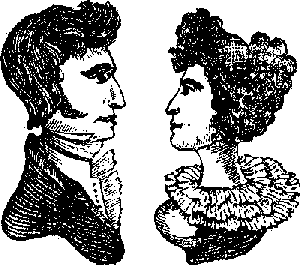
MR. BROWN
Respectfully informs the Public that having met with so extensive encouragement, he is induced to continue to cut and frame Profiles at Morse's Inn, opposite Boylston Market. Price for cutting 12-1/2 cents.
N.B. His customers are requested to apply in the morning, noon or evening, on account of his absence at other times.
Oct. 15.
N.E. Palladium, 1819.
In September, 1808, we have a notice of a circus, in which the horsemanship, according to the representations, must have equalled that of Barnum's people. It is not common to find much editorial comment in the papers of the time on such exhibitions, from which we judge that they were not considered first-class entertainments, and were not as much patronized by the clergy as at the present day.
AT THE
CIRCUS
IN BROAD-STREET, SALEM,
WILL BE EXHIBITED,
This Evening,
(If the weather permit; if not, the first fair evening)
A GRAND SCENE OF
Horsemanship,
Consisting of a number of HORNPIPES, danced by the Company on different Horses, while in full speed.
Mr. CRANDEL Dances the Hornpipe and Jumps the Whip.
Mr. FRANKLIN Dances the Hornpipe; Rides with his Toe in his Mouth; he alſo Leaps from the Ground to his Horſe in various ways.
Mr. STEWART Dances the Hornpipe; Jumps a great height from his Horſe, and with ſurpriſing agility throws himſelf into different attitudes while his horſe is in full ſpeed.
PETER dances the Hornpipe and Jumps the Whip; alſo, ſtanding erect on his toes, rides in full ſpeed once round the Circus.
Mr. STEWART performs the picking up of four Handkerchiefs from the ground; he alſo ſtands erect on his horſe, while his horſe leaps a board 3 feet from the ground.
PETER, the young African, riding backwards, dances a hornpipe; changes his poſition in a number of extraordinary leaps; jumps out of one hoop into another; and alſo, with one leap, jumps twice through a hoop; in once round the Circus leaps 4 quarters; and rides two Horſes, one forward of the other.
The Horſe Phœnix lies down, ſits up, and eats from the table with his maſter.
The Grand Still Vaulting, by the Company.
Many other Extraordinary Feats performed during the Exhibition.
The performance to conclude with the Brother Miller.
The Doors opened at 5 o'clock in the Evening. The Performance begins at 6.
Price, Boxes 1 Dollar, Pit 50 Cents.——Tickets to be had at the Circus and at the Salem Hotel.
Thoſe who pleaſe to favor the performers with their preſence, are requeſted to take Tickets before the exhibition commences.—No pains will be ſpared to render the Entertainment as agreeable as poſſible.
Sept. 27, 1808.
Monstrous Sight!
TO be seen at A. POLLARD's Tavern, Elm Street—A white Greenland Sea BEAR, which was taken at sea, weighing 1000 wt. This animal lives either in the sea or on the land. They have been seen several leagues at sea, and sometimes floating on cakes of ice.—This animal displays a great natural curiosity.—Admittance 12 1-2 cts. ... children half price.
april 28.
[Boston] Columbian Centinel, 1810.
Just before the declaration of the last war against Great Britain "Non-Intercourse Quills" were for sale. This reminds us that most young people know but little about quills of any kind, and probably not one in a hundred knows, in these days, how to make a quill pen. Quills were in pretty general use for writing until about 1835 or 1836, when steel pens took their place to some extent, although quill pens were used by many down to a comparatively recent period, and occasionally a person may now be seen using one. Steel and silver pens were made by Shakers as early as 1824, and Cushing & Appleton had steel pens as early as 1811, according to an advertisement in the "Salem Gazette."
STEEL PENS
Just received for sale by
CUSHING & APPLETON,
Oct. 6th, 1811.
NON-INTERCOURSE QUILLS.
Cushing & APPLETON have still on hand a few thousand English QUILLS, which for a short time will be sold at the present low rate, for specie, or bills of any of the banks in Essex or Boston.—— ☞ Persons in want of Quills will please to recollect, that in about two or three weeks the NON-INTERCOURSE with Great Britain takes place, which in all probability will continue during the short time that Nation may exist, at least. Such another opportunity for purchasing can therefore never occur.
Jan. 14, 1811.
J. Greenleaf sold steel pens in Boston in 1812.
Steel Pens,

A further supply of the celebrated STEEL PENS is received by J. GREENLEAF, No. 49, Cornhill.
march 11 [1812].
SUPERIOR DESK KNIVES,
Manufactured in Paris of Damascus Steel and warranted.
Also—an assortment of Steel & Silver Pens, from the Shaker Village. For sale by
JOHN M. IVES,
Dec. 11 [1824].
Essex street.
Many young people do not know that in old times blotting-paper of the kind now in use had not been introduced. Black sand was used altogether for drying the ink on freshly written letters or ordinary writing, except in books, when the writers either waited for the ink to dry, or made China paper, taken from the inside of tea-chests, a blotter. Black sand was in general use until within thirty years or thereabouts. We have seen the sand adhering to writing which had been done more than a century. No writing-desk was complete without a sand-box.
BLACK SAND,
Which is ſo uſeful to all who have any thing to do with penmanſhip—for ſale, at No. 34, oppoſite the Treaſurer's-Office, in Marlborough-Street.
☞ BOOKS and STATIONARY, as uſual.
Boſton, May 29, 1790.
Columbian Centinel.
Country Traders,
Who are in ſearch of penny-worths, are invited to the STORE of
John & Tho's Amory & Co.
No. 41, Marlborough-Street.
Columbian Centinel, 1790.
☞ IF the Small Pox should be allowed to spread in this town [Boston], the Editor assures his country customers that every precaution in his power shall be taken, that no part of his papers shall convey the infection into the country.—But it is his belief that it will not be permitted to spread—and his wishes accord with his belief, having never had the infection. Should he be necessitated to innoculate, he shall withdraw himself from his office and leave the business in the care of a person who will use every caution necessary for the purpose.
Columbian Centinel, Aug. 29, 1792.
Whereas a Perſon who
called himſelf by the Name of Charles Brown, did on the 29th of June laſt, hire a Chaiſe of Iſrael Davis, of Danvers, to go to Boſton; ſince which the ſaid Chaiſe has not been returned: This is to give Notice to any one who will diſcover the ſaid Brown or Chaiſe, and leave Word with the Printers hereof, a Reward of Ten Dollars for each, will be given by
Iſrael Davis.
The ſaid Brown is of a middling Stature, thin, looked ſickly and very poor, as if he had had the yellow Fever: He is about 30 Years of Age; wears ſhort black Hair, tied with a black Ribbon; has a blue German Serge Surtout Coat, faced with blue Calamancoe, yellow Buttons; a whitiſh Coat and Breeches; blue Sattin Jacket, with a narrow ſcollop'd Silver Lace: He has alſo a yellowiſh Thickſett Coat, blue Pluſh Waiſtcoat, yellow Leather Breeches, a laced Hat, and ruffled Shirts; appears and pretends to be a Gentleman, and has a Perſon with him as a Waiter, who calls himſelf Capt Stutſon.
The Chaiſe has ſtanding Poſts with a Canvaſs Top, the Lining is cloth coloured Broad-Cloth; the back is warped by the Sun and cracked; the Leather at the Bottom of the Floor old; large Braſs Nails on the Foot Board; the Door of the Box is pricked with Awl-Holes; one of the Staples thro' which the Reins go on the Saddle is looſe; The off-wheel has two Gripes thereon.
Danvers, July 10, 1762.
Boston Gazette.
THIS DAY PUBLISHED,
And to be Sold at the New Printing Office in Cornhill (Price four Coppers),
THE Two Mothers; or The Hiſtory of Antigone and Phroniſſa; Shewing how Antigone laughed at her good old Grandmother, and married her Daughters, before Sixteen, to a laced Coat and a faſhionable Wig,——and how the wiſer Phroniſſa inſtructed her Daughters in Reading, Dreſſing, Singing, Dancing, Viſiting, &c. in order to make them happy and uſeful in the riſing Age.
Boston Gazette, Oct. 8, 1759.
New Establishment.
The Subscriber, desirous of doing all in his power whereby he can serve the public, and at the same time benefit himself, is induced to give this public notice, that he has removed to the New Assembly House, Chestnut Street, where he proposes opening a
RESTORATOR,
for the accommodation of all who may honor him with their calls. Ample arrangements have been made and he flatters himself that superior cooking and good attendance will secure the patronage of a liberal public.
☞ SOUP will be served up at 11 a.m. on Mondays, Tuesdays, Thursdays and Fridays during the winter.
All kinds of Cakes, Wafers, French Rolls, &c. furnished at the shortest notice.
JOHN REMOND.
TURTLE SOUP.
Two GREEN TURTLES will be ſerved up, as above, This Day, at 11 and 1 o'clock. Families ſupplied by immediate application.
Salem, Oct. 24 [1815].
Salem Gazette.
Speaking Figure.
The Proprietor reſpectfully informs the publick that his exhibition will remain in Boston until ſold or removed to New-York. More fully to gratify the curioſity of the publick, the Speaking Figure is moved to a part of the room which intirely removes the ſuſpicion of any one being concealed in the chimney.—Thoſe who wiſh to ſee this moſt pleasing phenomenon of art will pleaſe to call ſoon, as this will poſitively be the laſt day.
Thoſe who have viewed the exhibition in its former ſituation will be charged half price for re-admiſſion—thoſe who have not, are admitted at 1ſ6. each, from 3 o'clock in the afternoon until 9 in the evening, by the Publick's moſt obedient,
SAMUEL PRINCE.
Boſton, Oct. 16, 1790.
Columbian Centinel.
We frequently find in old Boston papers advertisements of rare beasts to be exhibited,—in December, 1800, a "Beautiful Moose," and in August, 1801, a "Beautiful Lion."

TO THE CURIOUS.
A beautiful African LION,
To be ſeen every day in the week (Sundays excepted) in Brattle-ſtreet, next to Major King's, near the Market, where a very convenient ſituation is provided for thoſe Ladies and Gentlemen who may pleaſe to favor the proprietor with their preſence.
This noble Animal is between three and four feet high, meaſures eight feet from noſtrils to tail, and a beautiful dun colour; 11 years old, and weighs near 500 wt.—His legs and tail are as thick as thoſe of a common ſize ox. He was caught in the woods of Goree, in Africa, when a whelp; and brought from thence to New-York. Great attention has been paid in providing a ſtrong ſubſtantial Cage, and to have the Lion under very good command. The perſon who has the care of him can comb his mane, make him lie down and get up at any time; and it is ſaid by thoſe who have ſeen Lions in the Tower of London, and many parts, that he is really worth the contemplation of the curious.
☞ Admittance 25 Cents.—Children half price.
Aug. 13 [1801].
Boston Gazette.

A Beautiful MOOSE.
The curious in Natural Hiſtory are invited to Major King's Tavern, where is to be ſeen a fine young MOOSE of ſixteen hands in height, and well proportioned. The properties of this fleet and tractable Animal are ſuch as will give pleaſure and ſatisfaction to every beholder.
Price of admittance, Nine Pence.
Dec. 9, 1800.
Massachusetts Mercury.
We have before noticed the tastes of the people formerly for wax-work. In 1805 there was another curious collection in Salem.
WAX-WORK.
STREET and GROSE reſpectfully acquaint the Ladies and Gentlemen of Salem that there is now exhibiting at Waſhington Hall a new and elegant collection of well executed WAX FIGURES, (large as life,) conſiſting of the following characters, viz.
A ſtriking repreſentation of the late unfortunate DUEL between General Hamilton, and Colonel Burr. In this intereſting ſcene the General is repreſented as ſupported by his Second, after receiving the fatal wound, while the Second of Colonel Burr urges him to retire from the field. An excellent likeneſs of the Marquis De La Fayette.
The Austere Father Frowning upon his DAUGHTER, finding her with her Gallant. The handsome Coquette.
PROSPERO and CALABAN, a ſcene from the Tempeſt.
OTHELLO and DESDEMONA: this ſcene is taken from Shakeſpeare's celebrated play of the Moor of Venice. Othello is repreſented as meditating on the murder of his amiable and beautiful wife. The curtains that ſurround the bed of Deſdemona are ſuperb, and formerly encircled that of the Queen of France. The ſcene of Othello is an object of admiration.
The SALEM BEAUTY.
The FEMALE ECONOMIST, a Lady giving inſtructions to her Daughter.
TIANA, Prince of Atooi.
CALICUM, a Chief of Nookta Sound.
WYNEE, a native of Owyhee.
LIBERTY and JUSTICE ſupporting a portrait of Gen. WASHINGTON.
A BUST of General BONAPARTE, in Plaſter of Paris, ſaid to be a correct likeneſs.
A GLASS SHIP.
A Likeneſs of
A Child
Now living in Newhaven, which at its birth weighed only two pounds and fourteen ounces.
The Grecian Daughter,
Nouriſhing her Father in priſon.
A ſtriking likeneſs of
Jason Fairbanks,
Who was executed at Dedham, and of the beautiful
Eliza Fales:
He is dreſſed in the ſame Clothes that he wore at the time of his trial.
Alſo—Sundry other intereſting Figures.
Muſic on the Organ.
The Exhibition will be open from nine o'clock in the morning until nine in the evening, (Saturday evening and Sunday excepted,) and will be removed from this town ſhortly.
Admittance 25 Cents—Children half price.
☞ No perſon will be allowed to touch any of the figures above mentioned.
Salem, June 14.
Our grandfathers and grandmothers sometimes had dealings with large sums of money.
To the Curious
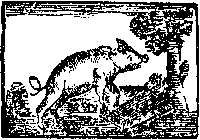
TO be ſeen at Jeremiah Bulfinch's, near the Mill-Bridge, a live
HOG,
That is thought to be the biggeſt ever raiſed in this Country, weighing upwards of 1000 weight. The price for viewing of ſaid quadruped is 4 pence.
March 2 [1791].
Herald of Freedom.
To Widow Keziah Bartlett.
Your Tax for 1810, committed to J. Newell
for Collection, isd.c.
State Tax0 3
County and Town0 14
——
$0 17
JOSEPH NEWELL.
Feb. 24, 1813.
Collector of Needham.
Boston Patriot.
To Widow Keziah Bartlett.
Your Tax for 1811, committed to Jesse Daniell for Collection, is
d.c.
State Tax—0 3
County and Town—0 13
——
$0.16
JESSE DANIELL,
Feb. 24, 1813.
Collector of Needham.
Boston Patriot.
NOTICE.
The Annual Meeting of the Boston Cent Society will be holden at the House of Mrs. MARGARET PHILLIPS, Walnut street, on Tuesday, April 8th, at 11 o'clock A.M. The subscribers are requested to attend.
Per Order
April 5.
Columbian Centinel, 1817.
ONE MILL REWARD.
Ran away from the subscriber, an indented Apprentice, of the name of JAMES BAILS. All persons are hereby forbidden to trust or harbor him on my account. (Signed)
THOMAS CAINES.
South-Boston, August 8, 1817.
Columbian Centinel.
The "Jews-Harp Club" indicates the state of music in Salem in 1815.
Jews-Harp Club.
The first meeting of this Society will be holden at the Essex Coffee House, This Evening at 8 o'clock, for the purpose of electing Officers and organizing the Society.
April 25, 1815.
In 1814 the Essex Coffee House in Salem, formerly the residence of the Hon. William Gray (Lieutenant-Governor of Massachusetts), was opened by Prince Stetson, as the following advertisements show.
ESSEX COFFEE-HOUSE.
Prince STETSON informs the public that he has closed the doors of the Salem Hotel and taken that spacious and elegant brick house, (the late mansion of the Hon. Wm. Gray,) in Essex-Street, a few rods west of the Sun Tavern, now known by the name of the ESSEX COFFEE-HOUSE; where he will be happy to accommodate Travellers, Parties, Fire Clubs, and all other guests who may honor him with their company.
He rests his claims for patronage on a Larder well supplied with the choicest viands which the markets afford—a cellar stocked with the best Wines and other Liquors which can be procured—and the assiduous attention of civil and capable Servants, together with his own personal exertions to give every satisfaction to his guests. [6w]
Salem, July 4, 1814.
THE CLOSED DOOR—OPEN.
That Mr. Stetson, on leaving the SALEM HOTEL, shut the door after him, is probable enough: it is what is expected of every well-bred man on leaving any house; but
GRAY & CARTER
beg leave to inform the public that the door is now opened again, and though the Hotel is not so spacious as the Prince-ly Mansion of their neighbour, yet being an old and well accustomed Stand, they flatter themselves that those gentlemen who have long frequented it, will not discontinue their custom, as no pains will be spared to accommodate Parties—Fire Clubs—steady Boarders, and all who may honor the house with their company. ☞ Particular attention will be paid to Gentlemen's Horses and Carriages.
July 13 [1814].
We seldom hear nowadays of so scandalous an act as is here set forth; although there was a time in England when it was proved that murders were committed solely for the purpose of selling the bodies of the victims to surgeons for dissection.
500 Dollars Reward.
Moſt daring and ſacrilegious Robbery.
Stolen, from the grave yard in Chebacco Pariſh in Ipſwich, the bodies of eight perſons, ſeven of whom were interred ſince the 13th of October laſt; the other, a coloured man, about ſix years ago. As without doubt they have all, ere this time, paſſed under the diſſecting knife of the anatomiſt, either of the rude novice in the art or of the skilful profeſſor, little hope is entertained of recovering any relict of them for the conſolation of the deeply afflicted friends. But whoever will give any information of this atrocious villainy, ſo as to detect and bring to juſtice, either the traders in this abominable traffic, or their inhuman employers, ſhall receive the above reward; and the thanks of an afflicted and diſtreſſed people.
WILLIAM ANDREWS jun. THOMAS CHOATE NATHAN BURNHAM
Ipſwich, Chebacco Pariſh,}Committee.
April 25th, 1818.
Business in "Knocker's Hole" must have been brisker in 1811 than it has been of late years. Old Salem people will remember "Roast Meat Hill."
Diſtreſs in the Baking Buſineſs!
Cash spoiling for want of good labor, as my brethren have distressed me so by giving all the workmen in this town steady employ, so that I have not bread to oblige my good customers in season. To relieve myself, I offer to six Journeymen Bakers of other towns, who can recommend themselves by good and quick dispatch in that line of business, $15 per month for this season.——Wanted, two LABORERS about the yard, two months or more; 8 in all more than my present number may have good employ by calling on
SAMUEL BATHRICK,
Baker, Mill-street, Salem, Massachusetts, easily found by inquiry.
July 12 [1811].
Sport in 1821.
TO SPORTSMEN.
The Subscriber, intending to give a grand treat to Sportsmen and Sharp Shooters, purposes to set up a number of fine TURKEYS to be fired at on FRIDAY, the 7th day of December next, and invites all who are disposed for this purpose to attend.
Good accommodations will be found at his house.
JOHN T. DODGE, jr.
Wenham, Nov. 23, 1821.
Sharp Shooting.
THOMAS D. POUSLAND informs his friends and the friends of Sport that he will, on FRIDAY, the 7th day of December next, set up for SHOOTING a number of
Fine Fat TURKEYS,
and invites all the gunners and others, who would wish to recreate themselves, to call on the day after Thanksgiving at the Old Baker's Tavern, Upper Parish, Beverly, where every accommodation can be afforded.
Nov. 23. Salem Gazette.
What was expected of a governess in 1817.
WANTED.
Wanted, an intelligent and well informed LADY, above or about forty years of age, as a governess, capable of instructing four young Children of her own sex in all the early branches, to reside in the family of their father, a gentleman of high respectability in every sense of the word, and of considerable fortune and estate, upon which he dwells, in the vicinity of Winchester, Frederick County, Virginia. It will be expected that she understands and will undertake at same time the management and direction of the household and family concerns. For further information, application may be made to the subscriber, now residing for a short time at the house of Mr. Thomas Lewis, Cambridge-street, Boston, near Mr. Lowell's Meeting-house.
august 13. ep3t JOHN HOLKER.
Columbian Centinel.
BULL-FIGHT IN NEW ENGLAND!
Many persons have supposed that bull-fights were never to be seen except in Spain; but it appears that in June, 1809, according to an advertisement in the "Essex Register," there was to be a bull-fight on the Salem turnpike, near the "Half-way House" (to Boston). As there were no reporters in those days, we are unable to give an account of the exhibition.
Sportsmen, Attend!
The gentlemen SPORTSMEN of this town and its vicinity are informed that a Grand Combat will take place between the URUS, ZEBU, and Spaniſh BULL, on the 4th of July, if fair weather, if not, the next fair day, at the Half-way House on the Salem Turnpike. There will alſo be expoſed at the Circus, other Animals, which, for courage, ſtrength and ſagacity are inferior to none. No danger need be apprehended during the performance, as the Circus is very convenient.
Doors opened at 3, performance to begin at 4. Tickets 50 cents.
After the performance there will be a grand FOX CHASE on the Marſhes near the Circus, to ſtart preciſely at 6 o'clock.
General Fencing Exhibition
Messrs. TROMELLE & GIRARD, Fencing-Maſters of the Military School of Col. de la Croix, reſpectfully inform the Gentlemen of Salem and its vicinity that they propoſe a
FENCING EXHIBITION,
at which ſeveral amateurs will be present, and during which they will play the Small-Sword, Cut-and-Thruſt, Broad-Sword, and Cudgel or Cane Fighting; to cloſe with a Duel between Meſſrs. T. & G., who will at firſt fight with Sabres, and afterwards with Small-Swords, until one of the parties falls weltering in blood.
The Exhibition will be on FRIDAY, the 30th inſt., at 7 o'clock P.M., at the Military School, Waſhington Hall, Court ſtreet.
Terms of admiſſion, One Dollar.
Tickets to be had at Mr. Crombie's Salem Hotel, and at Mr. Tucker's Sun-Tavern.
June 23.
Essex Register.
Something like the stylographic pen was advertised in 1825 in Salem.
The self-supplying
Pocket Writing Instrument,
OR
Scheffer's Patent Penograph.

The merit of this Instrument is that it contains Ink, and supplies itself as required, by which means the writer is enabled to use it for 10 or 12 hours with the same ease as with a pencil, without the aid of an Inkstand; and is manufactured in Gold or Silver, either with or without a pencil case, and so constructed that either a Metallic or Quill Nib may be applied. For sale by
June 24 [1825].
J.R. BUFFUM.
A "caravan" of 1824.
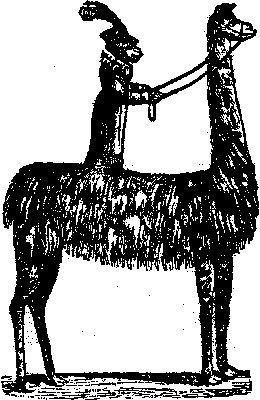
A CARAVAN OF
LIVING ANIMALS
Is now exhibiting at the Essex Coffee House, in this town.
Among the Animals are the following:—
The African Lion.
The beautiful spotted Lama, from the Coast of Peru.
The Mammoth Ox, 6 years old, 18 hands high, 16 feet in length, and raised in Chenango county, State of New York. He is well worthy the attention of the public.
The Dwarf Cow, 7 years old, 2 feet 4 inches in height, and is handsomely proportioned. This most extraordinary and wonderful production of nature has been visited by a large number of persons, in different cities, and is pronounced a complete model in miniature of her kind; she is so short that she can pass under the belly of the large Ox.
The Heifer, 3 years old, having 6 legs, and is very active.
Two large Bears, very tractable and docile.
Dandy Jack.
Saucy Jack.
The Great Ribbed Nose Baboon.
The beautiful Deer, 2 years old.
The Ichneumon, an animal famous for destroying reptiles' eggs, and is worshipped by the Egyptians.
Also, a variety of other Animals, Birds, &c.
☞ Admittance 12 1-2 cents; Children under 12 years of age, half price. Open from 9 A.M. till 9 P.M., Saturday evenings excepted. The room is conveniently fitted, so that Ladies and Gentlemen can view the animals with perfect safety.
This Exhibition is attended with good Music on different instruments. Also, Music on the Leaf. The sounds produced by the Leaf are admired by the lovers of Music.
Jan. 30.
Salem Gazette.
It may be interesting to some of our readers to see what piano music was popular in 1827-1829.
Elias Hook, the celebrated organ-builder, of the firm of E. & G.G. Hook & Hastings, was a native of Salem and kept a music-store there, moving to Boston about 1830.
NEW
Piano Forte Music.
Just published, and for sale by ELIAS HOOK,
The Maltese Boat Song; Polly Hopkins and Tommy Tompkins; The Soldier's last Sigh; 'Tis sweet to take the bonnie Lake; When I left thy shores, O Naxos; The merry Flageolet; When young men come a sighing; Comin' thro' the Rye; Love was once a little Boy; I've been Roaming; My Heart and Lute; Draw the Sword, Scotland; Adventures of Paul Pry; I have Fruit and I have Flowers; The Washing Day; The Light Guitar, and Answer; Long Summers have smiled—&c. &c. [1827].
New Piano Music.
Yon ROSE TREE. The Rock of our Salvation. Thou art my only Love. The days of good Queen Bess. Gipsey Rondo. Oh, 'tis Love. As the evening Appearing. The cup of Love. The Bells of St. Andrew's Tower. By murmuring brook. The Banner of Battle. A fragrant Rose there grew. My country no more. To live and Love. My own native Isle. Mild is thine eye of blue, sweet maid. Mary of the Ferry. Look you now. Love thee, yes, too fondly, truly. Lovely Mary. Love in the Barn. Bolivar's Peruvian Battle Song. There is a Love. The Glasses sparkle on the Board. St. Patrick was a Gentleman. The winter it is past. With Instructions—for the Piano &c. just received by
March 29 [1829].
J.M. IVES.
In February, 1829, Mr. Nazro, of the Roundhill School (Northampton?), made the following singular challenge to Edwin Forrest, the tragedian. We do not know whether or not it was accepted.
The Boston Evening Bulletin of Wednesday last contains the following:—
"A Card. If Mr. Edwin Forrest, the Tragedian, thinks that more effect can be produced by reading Tragedy than can be by reading from Scripture, Mr. Nazro, Instructor of Elocution, from Roundhill School, would deny it fully, and offers to meet him, Mr. Forrest, in any town in the United States, and read from Scripture, and Mr. Forrest shall read from Tragedy.
Boston, 25th Feb., 1829."
The "draisena" was the forerunner of the velocipede and bicycle.
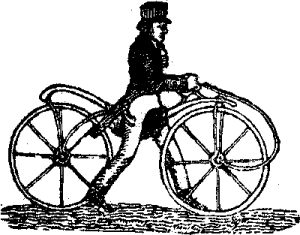
THE DRAISENA.
Ambrose SALISBURY, Wheelwright and Chaise-Maker, first introduced into this town [Boston] Machines similar to the one described below, and of which the plate will convey some idea; he has manufactured two, which may be examined at his Shop in Water-street, where the manner of using them will be explained. It is called Draisena, from the name of the Inventor.
May 7.
N.E. Palladium, 1819.
Advertisements of John Remond, for many years well known in Salem as a caterer. He used to advertise very freely. He was the father of Charles Lenox Remond, the famous colored lecturer.
Salem,
SATURDAY, NOVEMBER 11, 1820.
TURTLE SOUP
The subscriber will issue from his
houſe in Chesnut-ſtreet, on Tuesday & Wednesday next, at from 12 to 1 o'clock, SOUP made from a superior fat Turtle, weighing over 200 wt.
His old cuſtomers and the public will be supplied as usual at 50 cts per quart.
J. REMOND.
NOTICE.
The subscriber informs his customers that notwithstanding he has publicly discontinued the sale of OYSTERS, in consequence of their being in an unhealthy state during the months of July and August, still he is ready to supply them as usual, if called upon; he would observe, however, that he cannot hold himself responsible for the injurious effects they may produce on the system when eaten at this season of the year.
JOHN REMOND.
July 16 [1831].
HAMILTON HALL,
CHESTNUT STREET.
This Establishment having been purchased by a New Company, and undergone repairs, the interior of the same is so far completed that the subscriber is ready for the reception of Genteel Parties. The repairs and improvements already made; the furnace which heats the entire Dancing portion of the building,—entries, Supper Hall, etc.; the improved Chandelier, new Sofas, Ladies' drawing-room new carpeted and furnished in a comfortable manner; a reduction of former price of Hall; strict adherence to a uniform price of Help, and every care taken to select and furnish the most careful and obliging attendants, with the enchanting music of the Salem Quadrille Band, cannot fail to secure the patronage of a generous public. Did I say above, "enchanting music"? Yes. Without the fear of contradiction, during thirty years and upwards that it has been my privilege to conduct the affairs of Hamilton Hall, I have never heard from five instruments richer music sent forth than I did on the evening of the 27th November, ultimo.—There is one fact that should be known, and which is acknowledged by all who have performed there, that five pieces of music are better in Hamilton Hall than seven in any other Hall in the city.
As respects the subscriber, who is still to conduct the affairs of the establishment, suffice it to say that those who have had the pleasure, for a long series of years, to participate in such matters, are the best judges of the style, comfort, etc.
REMOND.
N.B. With the extensive cooking apparatus and other advantages of the premises, Families who do not wish to disarrange their houses, or single gentlemen who are not at House-keeping, wishing to entertain their friends, can be accommodated at reasonable prices, and everything conducted in true family style.
J.R.
Salem, Dec. 16 [1844].