Editorial
Reading edition
Some of the numbers of The Mentor have been used as the subject matter for reading clubs. That is a use of The Mentor that we most heartily welcome. We have information from one reader that the number of The Mentor on “Spain and Gibraltar” is to be used at the next meeting of a literary club in the home of the writer. This number is to be read in conjunction with a study of Washington Irving’s books on Spain—“The Alhambra” and “The Conquest of Granada.” Another club has used the article on “Dutch Masterpieces” as the core of its evening’s study, and we have it from a reader that he knows that number of The Mentor “almost by heart.” No better thing could be said of The Mentor than that it is worth knowing by heart. It means that The Mentor has become to some readers at least a fund of important information—a fund that they can literally absorb and make their own.

The New York Sun called attention editorially, a short time ago, to the yearly report of Dr. Nicholas Murray Butler, president of Columbia University, in which he deplores “too much slovenly reading matter” as an obstacle to education, “the substitution of quantity for quality,” and recalls the fact that the great lawyers of the Colonial period and the makers of the Constitution had few, but the fittest, books; knew well a few first rate books.
“One reason, aside from insufficient or incompetent instruction in the schools, for the so often complained of illiteracy, so to speak, of students, is probably to be found in the mass of stories which the Carnegie and other libraries feed to them, and which they skim through at the double quick, getting no permanent impression. Their great-grandfathers read over and over and assimilated a handful of books. The little dingy or tattered home collection was often their school, college and university.
“Let us read over again Nicolay and Hay’s description of Abraham Lincoln’s boyhood studies: ‘His reading was naturally limited by his opportunities, for books were among the rarest of luxuries in that region and time. But he read everything he could lay his hands upon, and he was certainly fortunate in the few books of which he became the possessor. It would hardly be possible to select a better handful of classics for a youth in his circumstances than the few volumes he turned with a nightly and daily hand—the Bible, “Æsop’s Fables,” “Robinson Crusoe,” “The Pilgrim’s Progress,” a history of the United States, and Weems’ “Life of Washington.” These were the best, and these he read over and over till he knew them almost by heart.’”
“Almost by heart!” Fortunate is he who has lived with a few books. In a world of volumes swollen to intolerable dimensions there are still but a few real books. They are those we make our own; that shape the mind, store the memory, are the foundation and discipline of our intellectual life.
The purpose of The Mentor is to give the gist of knowledge to be found in the world’s best books, and to give that knowledge in a form that is easy to retain. A number of Mentors thoroughly absorbed—as we might say, “learned by heart”—what a mental equipment it would mean! And the practical side, too, should be considered. Most people haven’t time to read even the world’s best books. The Mentor can be read in a few minutes.
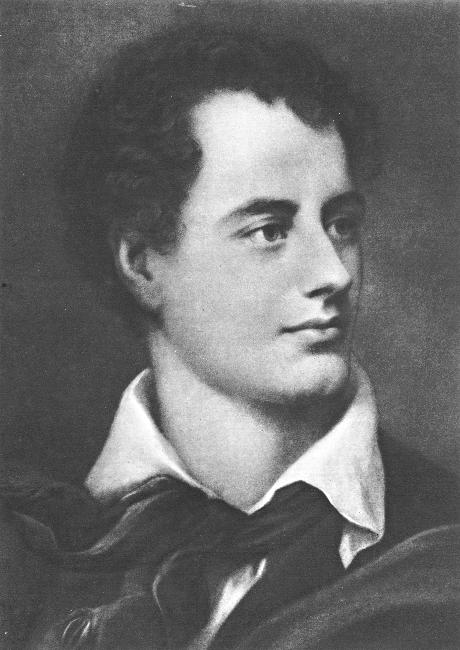
GEORGE GORDON, LORD BYRON

FAMOUS ENGLISH POETS