AMERICAN LANDSCAPE PAINTERS
Reading edition
GEORGE INNESS
HOMER MARTIN
A. H. WYANT
THOMAS MORAN
D. W. TRYON
F. E. CHURCH
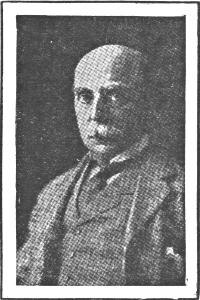
American Art Annual
By SAMUEL ISHAM
The beginnings of art in America were confined almost exclusively to portrait painting. In the earliest colonial times unskilled limners came from the mother country and made grotesque effigies of our statesmen and divines. As the settlements developed and the amenities of life increased better men came, and native painters were found, until about the end of the eighteenth century a portrait school of surprising merit arose, founded on the contemporary English school, and developed men like Copley, Stuart, and Sully. The other branches of painting, however,—history, allegory, genre, still life, landscape, and the rest,—were rarely attempted, and usually with unsatisfactory results.
Probably no artist devoted himself entirely to landscape until 1820, when Thomas Doughty, who was already twenty-seven years old, gave up his leather trade and took to painting American views in delicate gray and violet tones, with small encouragement from his contemporaries.
THOMAS COLE, THE IDEALIST
Metropolitan Museum of Art
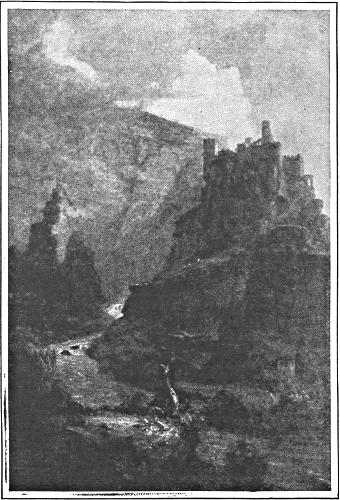
THE VALLEY OF VAN CLUSE, BY THOMAS COLE
Soon after came Thomas Cole, the real founder of the school, who emigrated to America with his father’s family when he was nineteen. He was a sensitive, delicate youth, who suffered much in his wanderings while trying to support himself, at first by his trade of wood engraving, but most of all after the chance meeting with an itinerant portrait painter led him to take up art. It was not until he came to New York in 1825 that his merits were recognized and his difficulties ceased. Some small canvases that he exhibited were quickly bought, and from this time until his death his popularity steadily increased. The quality of Cole’s work owes much to his own character, and perhaps also to his early English bringing up. He was an idealist rather than a realist. He cared less to reproduce the beauties of the nature around him than to awaken high, moral thoughts. It was not for the pleasure of the eye, but to suggest profitable musings on the grandeur and decline of nations, the transitoriness of life, the rewards of virtue after death, that he painted the “Course of Empire,” the “Voyage of Life,” and the rest. He was the founder of a romantic school, which may be traced even down to the present day. The succeeding artists did not indeed paint allegories; but they put the main interest of their pictures in the strangeness or beauty of their subject, rather than in rendering ordinary scenes with personal feeling.
CHURCH, PAINTER OF NOBLE SCENERY
Metropolitan Museum of Art
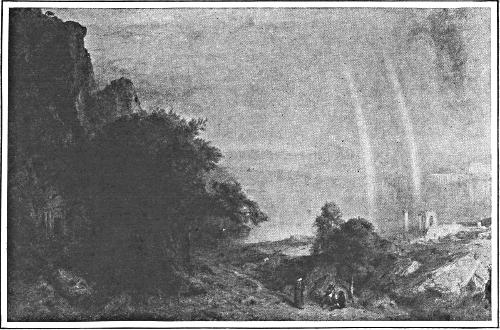
THE ÆGEAN SEA, BY F. E. CHURCH
The best known of these followers was F. E. Church, who was a pupil of Cole—and the only pupil that he could properly be said to have had; for Church lived and studied in his house for years. While he showed no desire to imitate the mystic subjects of his master, Church cared little for the common world immediately around him. He seems to have thought that the nobler the subject the nobler the picture, and he ransacked the whole earth for its beautiful, strange, or impressive scenes. The luxurious vegetation of the tropics, the isles of the Ægean Sea, the Parthenon, icebergs, volcanos,—he painted them all, set off by sunset, clouds, thunderstorms, rainbows, or whatever else would enhance their beauty, and he painted them well. He was the best artist of his school; much better than Cole, whose careful studies of real scenes are often well done, but whose workmanship degenerated rapidly when, leaving nature, he entered into the realm of pure imagination.
The succeeding men who took Church’s viewpoint and sought subjects for their exceptional beauty or majesty had an additional impulse given to their imagination by the discovery of such subjects in their own country. Church painted no important picture of his own land; but when exploring parties began to enter the great West they were accompanied by artists eager to set down marvels no less striking than those of the tropics or of Europe.
ALBERT BIERSTADT
Metropolitan Museum of Art
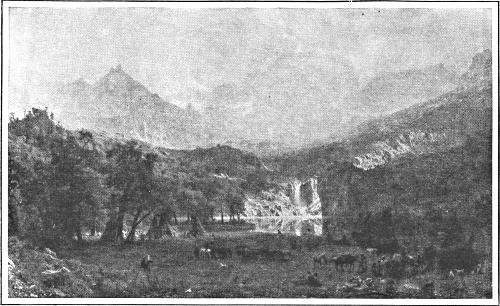
THE ROCKY MOUNTAINS, BY ALBERT BIERSTADT
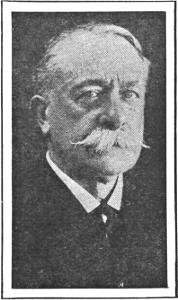
ALBERT BIERSTADT
The foremost of these artists was Albert Bierstadt, who gave to the public its first impressions of the vastness of the Rockies and all their strange fauna, the buffalo, the big trees, and the rest. The public, both educated and uneducated, enjoyed and admired the pictures which offered it a new impression of the grandeur of its country and flattered the somewhat uncouth but real pride of the time.
Other men besides Bierstadt accompanied the explorers of the West,—Whittredge, Wyant, Samuel Colman, and others,—but though they painted the plains and the Rockies they soon deserted them for other subjects. One man, however, now a veteran of his profession, has remained faithful to his early ideals.
THOMAS MORAN
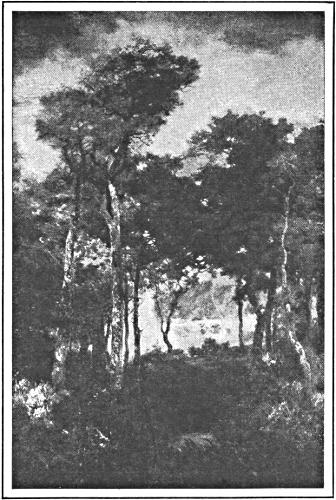
LAKE OF THE WOODS, BY THOMAS MORAN
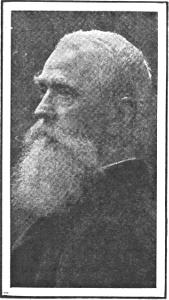
THOMAS MORAN
Thomas Moran, who was one of three brothers, all distinguished in art, came with them to this country from England in 1844, when he was seven years old. He continues to our day the traditions of Church; not directly, for his training came from an entirely different source, but by his natural preference for Nature in her more striking and impressive forms. A trip to the Yellowstone as early as 1871 furnished him with a series of subjects peculiarly his own; but, while he has always found matter for his brush in the marvels of the great West, he has added to them many of the most beautiful scenes of Great Britain, Switzerland, Venice, and the Orient, rendering them all with a sure facility and brilliance that make his canvases recognizable at a glance.
In contrast to these men, who sought to give interest and dignity to their work by choosing imaginative or strange, far-sought subjects, may be placed those whose interest was rather in the familiar native landscape that lay about them, who found in it beauty sufficient for their needs if only they could fully express the emotions with which it inspired them. The two schools are anything but rigidly separated. The idealists made careful studies from nature, and the realists attempted excursions into allegory or scenic beauty; but the fundamental difference of the point of view is sufficiently marked.
The two founders of our landscape schools are typical examples of the two temperaments. Thomas Cole, born abroad, with much of the sentimentality of Europe of that time, was a dreamer, sensitive, shy, living in his visions.
THE TRUTH AND FEELING OF DURAND’S ART
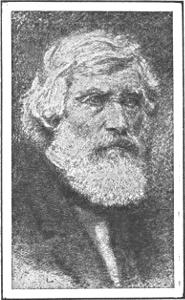
ASHER B. DURAND
Asher B. Durand, on the contrary, was of sturdy Huguenot stock, one of the many children of a farmer who cultivated his land on Orange Mountain, but whose ingenuity made him also a watchmaker, silversmith, and skilled mechanic generally. His son, after some boyish efforts at engraving, was apprenticed to that trade, and rapidly became by far the best engraver in the country, both prosperous and skilful. His masterpiece is the “Declaration of Independence,” which holds its own today as a most creditable production. He was still an engraver when Cole came to New York, and was one of the first to encourage him and buy his pictures. At this time Durand, though an older man by some five years than Cole, had not yet begun to paint. When he did some ten years later, in 1835, his first productions were portrait heads admirable in their delicate draftsmanship and sure, fine characterization; but he soon abandoned these for landscape, and for the latter part of his long life devoted himself entirely to it.
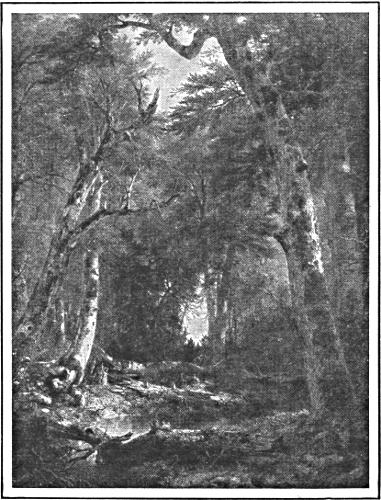
IN THE WOODS, BY ASHER B. DURAND
Durand’s landscapes, like his portraits, showed his training as an engraver in their accurate and minute drawing. Contrary to the general practice of the time, he painted many of his large canvases out of doors in face of nature. His love for nature, combined with his training as an engraver, probably accounts for his almost invariable choice of full midsummer daylight for his pictures, when vegetation was at its fullest and all its details could be minutely seen. Yet, for all his love of detail, he does not lose unity, and the color is true to the soft, warm haze of summer, and the shadows keep their local atmosphere.
Metropolitan Museum of Art
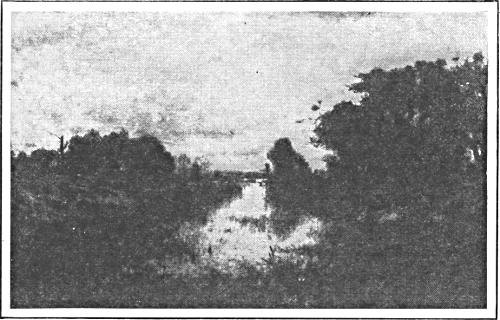
A GLIMPSE OF THE SEA, BY A. H. WYANT
THE HUDSON RIVER SCHOOL
Durand’s landscapes were popular, and there grew up about him a school of painters treating nature much as he did. They loved the country that they visited in their summer excursions, and like him they painted Lake George, the White Mountains, the Hudson, and so there grew up what has been called the Hudson River School. Durand was old when he began painting, and his followers were of a younger generation. Kensett was probably the best of them. He worked less from nature than Durand; his detail has none of Durand’s tranquil thoroughness, and his shadows are apt to be rendered by a facile generalization of brown. However, he made a decided advance over the older master in representing all aspects of nature, all seasons and all times of day, with a special leaning toward sunsets.
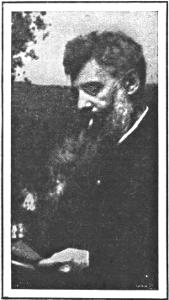
A. H. WYANT
Of the others of the school there is space to recall only a few names at random,—Whittredge, McEntee, Bristol, Sandford R. Gifford, Cropsey, and the rest. They were mostly sincere, hard-working painters, and very charming, worthy men personally. They won for themselves a social position in the old New York of the ’60’s and ’70’s greater and more important than any other artistic group has enjoyed in this country. Their paintings were also admired and bought for handsome prices, and as a whole they were prosperous. Time has dealt rather hardly with their fame. Though all of the men whose names have just been cited left works that may still be seen with pleasure, yet as a rule the pictures of the school were thin, laborious, and timid. There was no rich, strong handling of the pigment, no decorative quality to the composition, no massing of light and shade, and no revelation of individual temperament and emotion.
WYANT, MARTIN, AND INNESS
Approaches to these qualities were occasionally made; but to find them the general rule we must go to the men who are now conceded to be the culminating masters of the school,—Wyant, Homer Martin, and Inness.
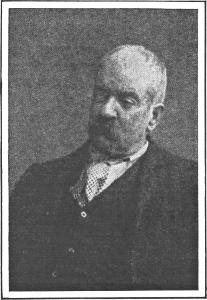
HOMER D. MARTIN
Of these Wyant holds closest to the traditions of the school. He had a larger sense of composition, a completer mastery of technic, a freer handling, and a finer draftsmanship. He represented with infinite refinement the heaped up summer clouds and the smooth, delicate tree trunk beyond which the widespread landscape was seen; but on the whole it was only a culmination of the qualities of the school and awoke no opposition. With Martin and Inness it was different. They succeeded in giving to their landscapes a deeper note of personal emotion and feeling than any of their predecessors. Both were men of exceptional spiritual and mental endowment. Their characters were formed not in a conventional model imposed by their surroundings, but by much solitary meditation. Both had begun by painting in the general style of the Hudson River School, and both found the result unsatisfactory.
Martin’s desertion of the old traditions consisted largely in a change of workmanship. Instead of the thin, smooth coating of pigment general at the time, which he himself had practised in the beginning, he used a thick impasto, laid on with a heavily loaded brush or even the palette knife. The color, too, was not used in unbroken tones, but drawn and blended together in streaks and spots, which gave it quiver and vitality. Apart from the method of painting, the manner changed also. Detail, so admired by the public of the day, was more and more simplified. The composition resolved itself into a few strong masses of light and dark, the relations between which became more and more balanced and subtle as the little incidents disappeared. His pictures in this latter manner are not very numerous, for he could not paint when he was not in the mood; but the best of them make a profound impression by their strong simplicity.
THE ART OF INNESS
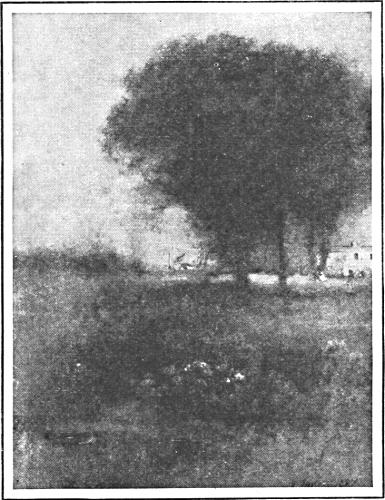
SEPTEMBER AFTERNOON, BY GEORGE INNESS
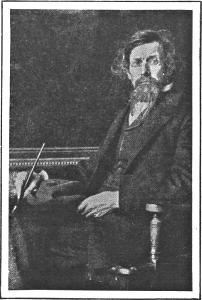
GEORGE INNESS
Inness was a much more prolific painter, and his work shows greater variety. He early felt the monotony of the old school, its lack of certain qualities that he found in engravings of European landscapes, and he used to take the prints with him when he went sketching, to try to discover wherein their merit consisted. He studied nature continually, living with it, so that at last he knew its moods and methods by heart. Toward the end of his life he painted much from memory. A landscape painting, perhaps originally sketched from nature, would change under his brush much as the scene itself might under changing lights or varying seasons. The sky filled with clouds, then cleared again, the sunlight spotted the grass or the shadows stretched across it, while the trees turned from the green of summer to the russet of autumn. Naturally work of this later period, much of it left unfinished, is very unequal in merit; but at its best it marks his highest achievement rather than the more carefully planned productions of his middle life. It is more vital and more subtle; but all of Inness’s work except his very earliest reflects the inner nature of the man. It has none of the dignified melancholy of Martin, which has also at times its note of revolt. Inness is never trivial: he keeps his seriousness; but he is never sad. Nature is to him always beautiful, always kindly.
Metropolitan Museum of Art
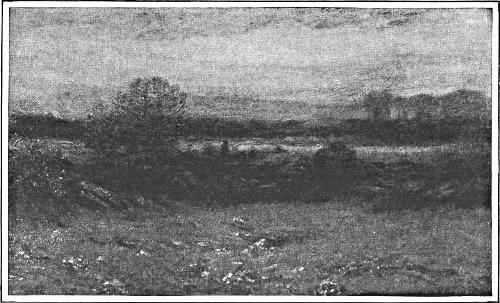
ACROSS THE FIELDS, BY D. W. TRYON
American Art Annual
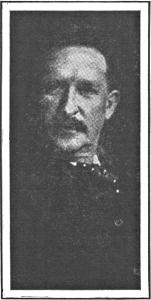
D. W. TRYON
With Wyant, Martin, and Inness our early landscape school reached its culmination. Their lives all continued after the end of the Civil War, they even did their best work after it; but they belonged to a school formed in other surroundings. After the war conditions changed. The country was less isolated, intercourse was easier, wealth had increased, and foreign paintings, calculated to show the deficiencies of native work, became increasingly common. The budding artists were no longer willing to pick up their art by their own exertions, aided by occasional counsel from their elders or such inadequate schools as the country then furnished, but departed in ever increasing numbers to the famous schools of Europe.
The difference was not that the earlier painters had ignored Europe. They traveled to see the masterpieces of art and the beauties of nature in foreign countries; but they were on the whole contented with their work and proud of their native school. The younger men absorbed enthusiasm for foreign workmanship, and adopted foreign standards.
THE SENTIMENT OF TRYON
D. W. Tryon is an example of this new spirit at its best. His sentiment, if not so deep and strong as Inness at his best, is yet more delicate and subtle. That is due to a difference of temperament; but the way in which the picture is developed is a matter of training. With Inness the first thing was to express somehow his feeling, and then the canvas was worked over until it was got into construction; with Tryon the draftsmanship was fundamental and indispensable, and the sentiment was built upon that. One may say of our recent landscapes that they show a construction gained from the study of the nude and a handling adapted from the best foreign models. This education has greatly raised the average of our art; but a few men of the older time had strength and feeling to work out a training for themselves more personal and perhaps as permanent as that of the later day. Time tests all things, and its verdict cannot be foreseen; but it is doubtful if it will place any of our modern landscape artists before Martin or Inness. Among these modern landscape painters are men of such talent as H. W. Ranger, Bruce Crane, and J. Francis Murphy, without mention of whom no article on American landscape painters would be complete.
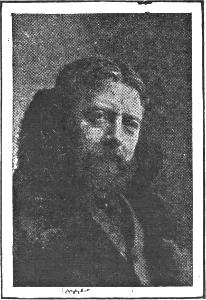
H. W. RANGER
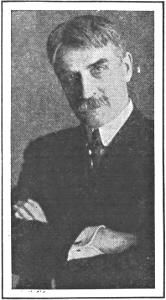
BRUCE CRANE
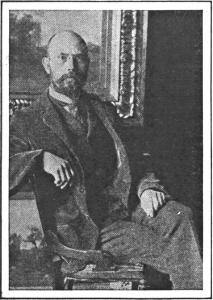
J. FRANCIS MURPHY
SUPPLEMENTARY READING

American PaintersGeorge W. Sheldon
Art in AmericaS. G. W. Benjamin
American Masters of PaintingC. H. Caffin
The Story of American PaintingC. H. Caffin
A History of American PaintingSamuel Isham
A History of American ArtK. S. Hartman
Book of the ArtistsHenry T. Tuckerman
Life and Times of Asher B. DurandJohn Durand
Homer MartinFrank Jewett Mather
George InnessElliott Daingerfield
George Inness: A MemorialAlfred Trumble
Homer Martin: A Reminiscence

QUESTIONS ANSWERED
Subscribers desiring further information concerning this subject can obtain it by writing to
The Mentor Association
381 Fourth Avenue, New York City
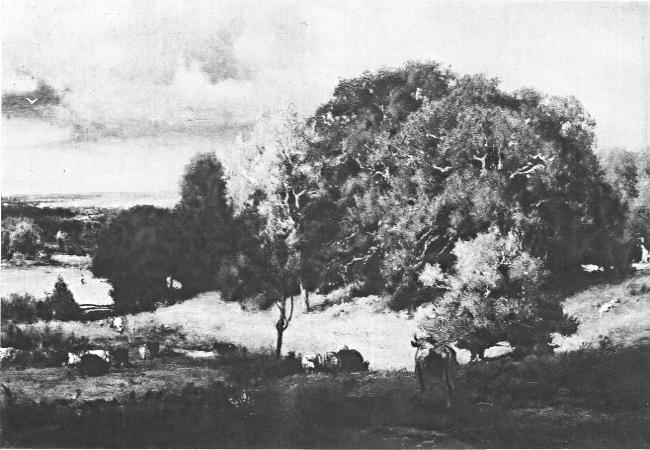
AUTUMN OAKS By GEORGE INNESS
Metropolitan Museum of Art