Book 5 — BOOK IX[283]
Alexander Teixeira de Mattos translation
BOOK IX[283]
General politics of the moment—Louis-Philippe—M. Thiers—M. de La Fayette—Armand Carrel—Of some women: the lady from Louisiana—Madame Tastu—Madame Sand—M. de Talleyrand—Death of Charles X.
When, passing from the politics of the Legitimacy to general politics, I re-read what I wrote on those politics in the years 1831, 1832 and 1833, I find that my previsions were fairly correct
Louis-Philippe is a man of intelligence whose tongue is set in movement by a torrent of commonplaces. He pleases Europe, which reproaches us with not knowing his worth; England is glad to see that, like herself, we have dethroned a king; the other sovereigns forsake the Legitimacy, which they did not find obedient. Philip has lorded it over the men who have come closer to him; he has made game of his ministers; he has employed them, dismissed them, reemployed them, dismissed them afresh, after compromising them, if anything can compromise one nowadays.
Philip's superiority is real, but it is only relative; place him in a period when society still retains some life, and his mediocrity shall come to the surface. Two passions spoil his good qualities: his exclusive love for his children and his insatiable eagerness to increase his fortune; on those two points his eyes will always be dazzled.
Philip has not that feeling for the honour of France which the elder Bourbons had; he has no occasion for honour: he fears nothing except popular risings, even as the nearest relations of Louis XVI. feared it. He is sheltered by his father's crime; the hatred of what is good does not weigh heavy on him: he is an accomplice, not a victim.
Having realized the lassitude of the times and the vileness of men's souls, Philip has made himself at home. Laws of intimidation have come to suppress our liberties, as I foretold at the time of my farewell speech in the House of Peers, and not a thing has stirred; the Government has resorted to arbitrary measures; it has murdered people in the Rue Transnonain, shot them down in Lyons, instituted numerous newspaper prosecutions; it has arrested private citizens, has kept them for months and years in prison without trial, and has been applauded for doing so. The exhausted country, which no longer understands what is happening, has suffered all. There is hardly a man whom it is not possible to face with his own past. From year to year, from month to month, we have written, said and done the exact opposite of what we used to write, say and do. By dint of having cause for blushing, we have ceased to blush; our inconsistencies escape our memory, so numerous have they become. To have done with it, we adopt the course of declaring that we have never changed, or that we have changed only through the progressive transformation of our ideas and our enlightened apprehension of the times. Events so rapid have aged us so speedily that, when men remind us of our doings of a past period, it seems to us that they are talking of some other man than ourselves: and besides, to have changed is to have done what everybody does.
Louis-Philippe.
Philip did not think it necessary, as did the Restored Branch, to be the master in every village in order to reign; he considered that it was enough to hold sway in Paris: therefore, if ever he could turn the Capital into a warlike town, with an annual roll of sixty thousand pretorians, he would think himself safe. Europe would let him alone, because he would persuade the sovereigns that he was acting with a view to stifling the revolution in its old cradle, while leaving the liberties, independence and honour of France as a pledge in the hands of the foreigners. Philip is a policeman: Europe can spit in his face; he wipes himself, gives thanks and shows his patent as a king. Moreover, he is the only Prince whom the French would, at present, be capable of supporting. The degradation of the elected Head constitutes his strength; we momentarily find in his person enough to satisfy our monarchical habits and our democratic leanings; we obey a power which we believe ourselves to have the right to insult; that is all the liberty that we require: on our knees as a nation, we slap our master's face, re-establishing privilege at his feet, equality on his cheek. Crafty and guileful, a Louis XI. of the age of philosophy, the monarch of our choice dexterously steers his ship over a liquid mire. The Elder Branch of the Bourbons is dried up, save one bud alone; the Younger Branch is rotten. The Head inaugurated at the town-hall has never thought of any one but himself: he sacrifices Frenchmen to what he believes to be his security. When men argue about what would be fitting for the greatness of the country, they forget the nature of the Sovereign: he is persuaded that he would be undone by methods which would be the saving of France; according to him, that which would give life to the Royalty would be the death of the King. For the rest, none has the right to despise him, for every one is on the same contemptible level. But, whatever may be the prosperity that forms the object of his dreams, in the last result, either he or his children will fail to prosper, because he abandons the people, from whom he holds all. On the other hand, the legitimate kings, abandoning the legitimate kings, will fall: principles are not denied with impunity. Though the revolutions may, for a moment, have been diverted from their course, they will none the less come to swell the torrent which is under-mining the ancient edifice: none has played his part, none shall be saved.
Since no power among us is inviolable, since the hereditary sceptre has fallen four times within thirty-eight years, since the royal diadem fastened by victory has twice slipped from the head of Napoleon, since the Sovereignty of July has been incessantly attacked, we must conclude from this that it is not the Republic which is impossible, but the Monarchy.
France is under the dominion of an idea hostile to the throne: a diadem of which men at first recognised the authority, which they next trod under foot, then picked up, only to tread it under foot again, is merely a useless temptation and a symbol of disorder. A master is set over men who seem to call for him by their memories and who no longer support him by their manners; he is set over generations which, having lost the sense of moderation and social decency, know only how to insult the royal person or to replace respect by servility.
Philip has within him the wherewithal to delay the march of destiny, but not to stop it. The Democratic Party alone is progressing, because it is advancing towards the world of the future. Those who refuse to admit the general causes of destruction where monarchical principles are concerned in vain look to be delivered from the present yoke by a motion of the Chambers; the latter will never consent to reform, because reform would be their death. The Opposition, on its side, which has become an industrial Opposition, will never give the death-thrust to the King of its own making, as it gave it to Charles X.: it makes a disturbance in order to obtain places, it complains, it is peevish; but, when it finds itself face to face with Philip, it draws back; for, though it wishes to have the handling of affairs, it does not wish to overthrow that which it has created nor that by which it lives. Two fears stop it: the fear of the return of the Legitimacy, the fear of the reign of the people; it clings to Philip, whom it does not love, but whom it looks upon as a safeguard. Stuffed full of offices and money, abdicating its own will, the Opposition obeys what it knows to be fatal and goes to sleep in the mire, which is the down invented by the industry of the age: it is not so pleasant as the other, but it is cheaper.
Philip's turpitude.
All these things notwithstanding, a sovereignty of a few months, of a few years, even, if you wish, will not change the irrevocable future. There is hardly any one now but confesses the Legitimacy to have been preferable to the Usurpation, in so far as security, liberty, property were concerned, and also our relations with foreign Powers, for the principle of our present Sovereignty is hostile to that of the European sovereignties. Since he was pleased to receive the investiture of the Throne at the good pleasure and with the certain knowledge of the democracy, Philip missed his opportunity at the start: he ought to have leapt on horseback and galloped to the Rhine; or rather, he ought to have resisted a movement which was carrying him without conditions towards a crown: more durable and more suitable institutions would have arisen from that resistance.
It has been said that "M. le Duc d'Orléans could not have refused the crown without plunging us into dreadful troubles:" this is the argument of cowards, dupes and cheats. No doubt, conflicts would have ensued; but they would have been swiftly followed by a return to law and order. What has Philip done for the country after all? Would there have been more blood shed by his refusing the sceptre than flowed because of the acceptance of that same sceptre in Paris, Lyons, Antwerp, the Vendée, without reckoning those streams of blood spilt, as a consequence of our Elective Monarchy, in Poland, Italy, Portugal, Spain? Has Philip, in compensation for these misfortunes, given us liberty? Has he given us glory? He has spent his time in begging for his legitimation among the potentates, in degrading France by making her the handmaid of England, by giving her as a hostage; he has tried to make the age come to him, to make it old with his House, not wishing to become young himself with the age.
Why did he not marry his eldest son[284] to some fair commoner of his country? That would have meant wedding France: those nuptials of the people and the Royalty would have made the Kings repent; for those Kings, who have already taken advantage of Philip's submissiveness, will not be content with what they have obtained: the might of the populace which appears through our Municipal Monarchy terrifies them. The Potentate of the Barricades, to become completely agreeable to the absolute potentates, ought above all to destroy the liberty of the press and abolish our constitutional institutions. At the bottom of his soul, he detests them as much as they, but he has to keep within bounds. All this remissness offends the other sovereigns; the only way to make them have patience is to sacrifice everything to them abroad: in order to accustom us to becoming Philip's liegemen at home, we are commencing by making ourselves the vassals of Europe.
I have said a hundred times and I repeat again, the old society is dying. I am not easy-going enough, nor quack enough, nor sufficiently deceived by my hopes to take the smallest interest in that which exists. France, the ripest of the present nations, will probably be the first to go. It is likely that the Elder Bourbons, to whom I shall die attached, would not even to-day find a lasting shelter in the Old Monarchy. Never have the successors of an immolated monarch worn his torn mantle long after him: there is distrust on both sides; the prince dares not rely upon the nation, the nation refuses to believe that the reinstated family is capable of forgiving it. A scaffold raised between a people and a king prevents them from seeing each other: there are tombs that never close. Capet's head was so high that the little executioners were obliged to strike it off to take its crown, even as the Caribbees used to cut down the palm-tree in order to gather its fruit. The stem of the Bourbons had propagated itself in the different trunks which, bending down, took root and rose again as haughty shoots; that family, after being the pride of the other royal Houses, seems to have become their fatality.
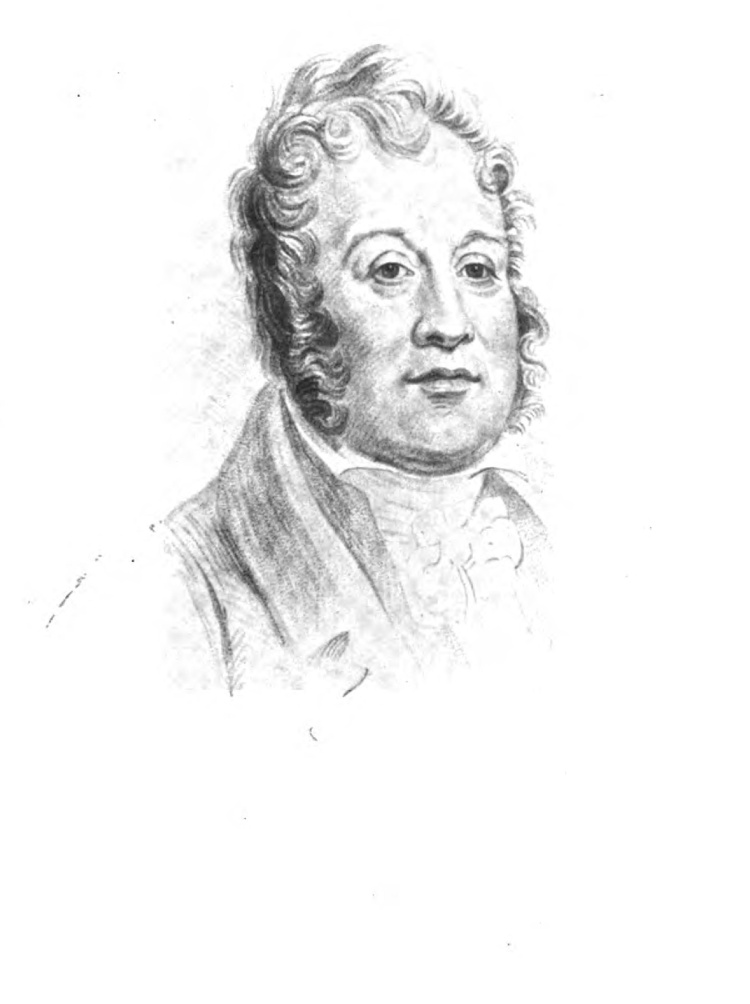
Louis Philippe.
Prospects of the Usurpation.
But would it be more reasonable to think that the descendants of Philip would have more chances of reigning than the young heir of Henry IV.? It is vain to contrive different combinations of political ideas: the moral verities remain unchangeable. There are inevitable reactions, instructive, magisterial, avenging. The Monarch who initiated us into liberty, Louis XVI., was made to expiate in his own person the despotism of Louis XIV. and the corruption of Louis XV.: and shall it be said that Louis-Philippe, he or his line, shall not pay the debt of the depravity, of the Regency? Was that debt not contracted anew by "Égalité" at the scaffold of Louis XVI., and did Philip his son not increase the paternal contract when, a faithless guardian, he dethroned his ward? "Égalité" redeemed nothing by losing his life; the tears shed with the last breath redeem nobody: they only wet the breast and do not fall upon the conscience. If the Orleans Branch were able to reign by the right of the vices and crimes of its ancestors, where, then, would Providence be? Never would a more terrible temptation have disquieted the good man. What deludes us is that we measure the designs of Eternity by the scale of our short life. We pass away so quickly that God's punishment cannot always fall within the short moment of our existence: the punishment descends when the time comes; it no longer finds the original culprit, but it finds his House, which leaves room for action.
Rising up in the universal order of things, this reign of Louis-Philippe's, however long it last, will never be anything but an anomaly, a momentary breach of the permanent laws of justice: those laws are violated in a restricted and relative sense; they are followed in an unlimited and general sense. From an enormity that has received the apparent consent of Heaven, we must draw a loftier conclusion: we must deduce from it the Christian proof of the abolition of the Royalty itself. It is this abolition, and not any individual chastisement, that will become the expiation of the death of Louis XVI.; none will be admitted to gird on the diadem, after that just man: as witness Napoleon the Great and Charles X. the Pious. To render the crown completely hateful, it will have been permitted to the son of the regicide to stretch himself for a moment, as a false king, in the blood-stained bed of the martyr.
For the rest, all these arguments, just though they be, will never shake my loyalty to my young King: were none but myself to remain in France, I shall always be proud to have been the last subject of him who was to be the last king.
The Revolution of July has found its King: has it found its representative? I have, at different times, described the men who, from 1789 to this day, have appeared upon the scene. Those men were more or less connected with the old race of mankind: we had a scale of proportion to measure them by. We have now come to generations that no longer belong to the past; studied under the microscope, they do not seem capable of life, and yet they combine with elements in which they move; they are able to breathe an air which we cannot breathe. The future will perhaps discover formulas to calculate the laws of existence of those beings; but the present has no means of appreciating them.
Without, therefore, being able to explain the changed species, we notice, here and there, a few individuals whom we are able to grasp, because of their peculiar failings or distinctive qualities which make them stand out from among the crowd. M. Thiers, for instance, is the only man that the Revolution of July has produced. He has founded the school that admires the Terror, a school to which he himself belongs. If the men of the Terror, those deniers and denied of God, were such great men, the authority of their judgment ought to carry weight; but those men, reviling one another, declare that the party whose throats they are cutting is a party of rascals. See what Madame Roland says of Condorcet, what Barbaroux[285], the principal actor of the 10th of August, thinks of Marat, what Camille Desmoulins writes against Saint-Just[286] Are we to appreciate Danton according to Robespierre's opinion, or Robespierre according to Danton's? When the Conventionals have so poor a notion of one another, how can we, without failing in the respect which we owe them, entertain an opinion different from theirs?
With its material mind, Jacobinism does not perceive that the Terror failed from not being capable of fulfilling the conditions of its continuance. It was unable to achieve its aim, because it was unable to cut off enough heads: it would have needed four or five hundred thousand more; now time was wanting for those long massacres; nothing remains but unfinished crimes whose fruit cannot be gathered, because the last sun of the storm did not ripen it sufficiently.
The French revolutionaries.
The secret of the inconsistencies of the men of the day lies in the privation of moral sense, the absence of any fixed principle and the worship of force: whoever goes to the wall is guilty and without merit, at least without that merit which assimilates with events. Behind the liberal phrases of the devotees of the Terror, you must see only what lies hidden there: the deification of success. Do not adore the Convention except in the manner in which one adores a tyrant. When the Convention is upset, go over with your baggage of liberties to the Directory, then to Bonaparte, and that without having a suspicion of your metamorphosis, without thinking that you have changed. Sworn dramatist that you are, while looking upon the Girondins as poor wretches because they have been "beaten," nevertheless draw a fantastic picture of their death: they are beautiful young men marching, crowned with flowers, to the sacrifice. The Girondins, a cowardly faction, who spoke in favour of Louis XVI. and voted for his execution, did wonderfully, it is true, on the scaffold; but who did not, in those days, run full butt at death? The women were distinguished for their heroism: the young girls of Verdun climbed the steps of the altar like Iphigenia; the artisans, about whom we are prudently silent, those plebeians of whom the Convention reaped so large a crop, braved the steel of the executioner as resolutely as our grenadiers braved the steel of the enemy. For one priest and one noble, the Convention offered up thousands of workmen taken from the lowest classes of the population[287]: this is what we always refuse to remember.
Does M. Thiers set store by his principles? Not in the least: he has cried up massacre and he would preach humanity in quite as edifying a manner; he gave himself out as a bigot for liberty, and he has oppressed Lyons, shot people down in the Rue Transnonain, and upheld the September Laws against all men: if he ever reads this, he will take it for a panegyric.
Since he became President of the Council and Minister for Foreign Affairs[288], M. Thiers is enraptured with the diplomatic intrigues of the Talleyrand School; he runs the risk of being taken for a buffoon-in-waiting, for lack of equilibrium, gravity and silence. One can turn up one's nose at earnestness and greatness of soul: but it does not do to say so, before one has brought the subjugated world to take its seat at the orgies of Grand-Vaux[289].
For the rest, M. Thiers combines with inferior manners an instinct for higher things; while the feudal survivors have become misers and turned themselves into stewards of their own land, he, M. Thiers, a great lord by second birth, travels like a new Atticus[290], purchases works of art on the roads and revives the prodigality of the old aristocracy: this is a distinction; but, if he sows as easily as he reaps, he ought to be more cautious of the intimacy of his old habits: consideration is one of the ingredients that go to make the public man.
Adolphe Thiers.
Stirred by his mercurial nature, M. Thiers has pretended that he was going to kill, in Madrid, the anarchy which I had overthrown there in 1823: a project all the bolder inasmuch as M. Thiers was struggling with the opinions of Louis-Philippe. He may suppose himself to be a Bonaparte; he may think that his pen-cutter is but an elongation of the Napoleonic sword; he may be persuaded that he is a great general, he may dream of the conquest of Europe, by reason that he has constituted himself its historian[291] and that he is very inconsiderately bringing back the ashes of Napoleon[292]. I acquiesce in all these pretensions; I will only say, as for Spain, that, when M. Thiers thought of invading her, he was deceived in his calculations; he would have ruined his King in 1836, and I saved mine in 1823. The essential thing, then, is to do in the nick of time what one wants to do; there are two forces, the force of men and the force of things: when these two are in opposition to one another, nothing is accomplished. At the present moment, Mirabeau would rouse nobody, even though his corruption would do him no harm; for, just now, none is cried down because of his vices: one is slandered only for his virtues. M. Thiers must make up his mind to one of three courses: to declare himself the representative of the republican future[293], or perch himself upon the counterfeit Monarchy of July like a monkey on a camel's back, or revive the imperial order of things. This last would be to M. Thiers's taste; but the Empire without an emperor: is that possible? It is more natural to believe that the author of the Histoire de la Révolution will allow himself to be absorbed by a vulgar ambition: he will want to remain in power or return to it; in order to keep or recover his place, he will recant anything that the moment or his own interest will seem to him to require[294]; to strip one's self before the public, there is audacity: but is M. Thiers young enough for his beauty to serve him as a veil?
Putting Deutz[295] and Judas on one side, I recognise in M. Thiers a supple, prompt, shrewd and malleable mind, perhaps the heir to the future, capable of comprehending everything, except the greatness that comes from moral order. Free from jealousy, pettiness and prejudice, he stands out against the tame and obscure background of the mediocrities of the time. His excessive pride is not yet odious, because it does not consist in despising others. M. Thiers possesses resources, variety, fortunate gifts; he troubles little about differences of opinion, bears no malice, is not afraid of compromising himself, does justice to a man, not for his probity or for what he thinks, but for what he is worth: which would not prevent him from having us all strangled, in case of need. M. Thiers is not what he is able to be: years will modify him, unless the elation of self-love should place obstacles in the way. If his brain stands firm and he is not carried away by some headstrong act, public life will reveal unheeded superior qualities in him. He must soon rise or fall; the chances are that M. Thiers will either become a great minister or remain a marplot.
Lost opportunities.
M. Thiers has already been wanting in resolution at a time when he held the fate of the world in his hands: if he had given the order to attack the English Fleet, with the superior force that we had in the Mediterranean, our success was assured; the Turkish and Egyptian Fleets, lying together in the harbour of Alexandria, would have come to swell our fleet; a success obtained over England would have electrified France. We should have at once found 150,000 men to enter Bavaria and fling themselves upon some point in Italy, where nothing was prepared in prevision of an attack. The whole world might once more have changed its aspect. Would our aggression have been a just one? That is another affair; but we could have asked Europe whether it had acted loyally towards us in the treaties, or whether, abusing their victory, Russia and Germany had enlarged their territory beyond measure, while France had been reduced to her old clipped frontiers. Be this as it may, M. Thiers did not dare play his last card; looking upon his life, he did not think himself sufficiently supported, and yet it was because he was staking nothing that he might have played for all. We have fallen under the feet of Europe; such an opportunity to recover ourselves will perhaps not occur for long.
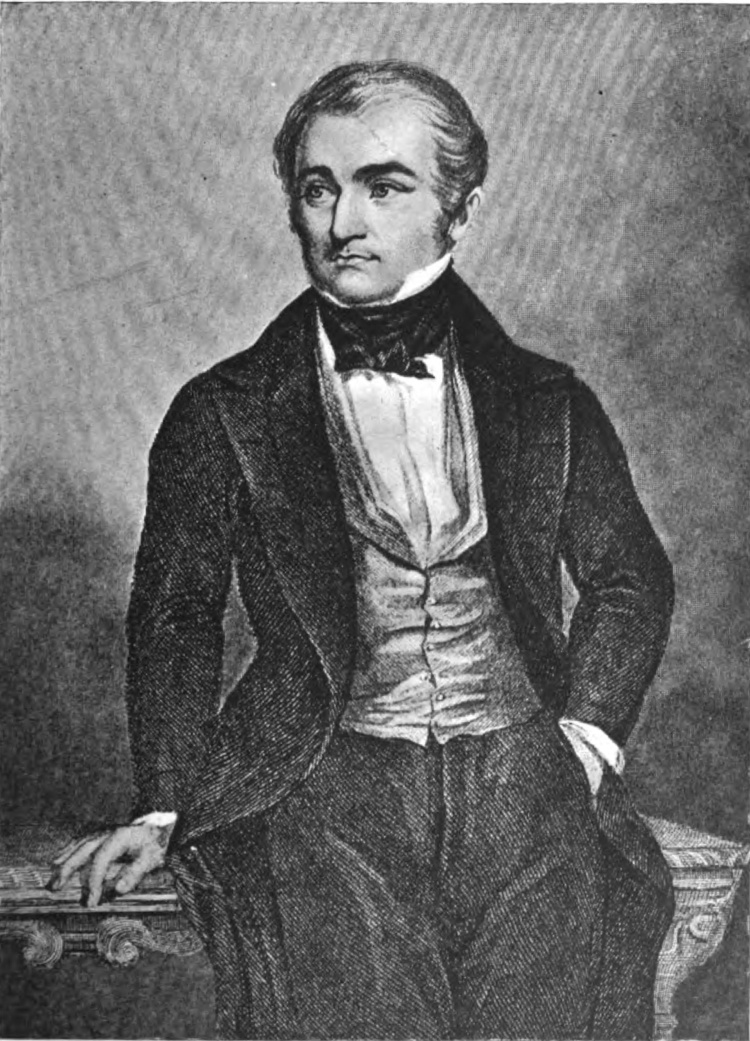
M. Thiers.
In the last result, M. Thiers, in order to save his system, has reduced France to a space of fifteen leagues which he has made to bristle with fortresses; we shall soon see if Europe is right in laughing at this piece of child's play on the part of the great thinker.
And this is how, allowing my pen to run away with me, I have devoted more pages to a man of uncertain future than I have given to persons whose memory is assured. It is a misfortune to live too long; I have come to a period of sterility in which France sees only lean generations run: Lupa carca nella sua magrezza.[296] These Memoirs diminish in interest with the days that have supervened, diminish by what they were able to borrow from the greatness of events: they will end, I fear me, like the daughters of Achelous[297]. The Roman Empire, so magnificently proclaimed by Livy, contracts and goes out dimly in the accounts of Cassiodorus. You were more fortunate, O Thucydides and Plutarch, Sallust and Tacitus, when you told of the parties that divided Athens and Rome! You were certain, at least, of animating them, not only with your genius, but also with the splendour of the Greek and the gravity of the Latin language! What could we relate of our expiring society, we Welshmen, in our jargon confined to narrow and barbarous limits? If these later pages reproduced our parliamentary tautology, those eternal definitions of our rights, our ministerial prize-fights, would they, fifty years hence, be anything more than the unintelligible columns of an old newspaper? Of a thousand and one conjectures, would a single one prove to be true? Who would foresee the strange leaps and bounds of the inconstancy of the French spirit? Who could understand how its execrations and infatuations, its curses and blessings become transformed without apparent reason? Who would be able to guess and explain how, by turns, it adores and detests, how it springs from a political system, how, with liberty on its lips and bondage in its heart, it believes in one truth in the morning and is persuaded of a contrary truth at night? Throw us a few grains of dust: like Virgil's bees, we shall cease our conflict to fly away elsewhither[298].
If, by chance, anything great should still be stirring here below, our country will remain supine. The womb of a society that is becoming discomposed is barren; the very crimes which it begets are still-born crimes, smitten as they are with the barrenness of their origin. The period upon which we are entering is the tow-path along which fatally condemned generations will draw the old world towards a world unknown.
In this year 1834, M. de La Fayette has just died[299]. I think I must have been unjust in speaking of him in former days; I think I must have represented him as a sort of double-faced, double-famed ninny: a hero on the other side of the Atlantic, a Giles on this side[300]. It has needed more than forty years to recognise in M. de La Fayette qualities that had been persistently denied him. He expressed himself in the Tribune with ease and in the tone of a well-bred man. His life was unblemished; he was affable, obliging and generous. Under the Empire, he behaved nobly and lived a life apart; under the Restoration, he was less dignified: he stooped so far as to allow himself to be called the "grand old man" of the auction-rooms of Carbonarism and the ring-leader of petty conspiracies, glad as he was to escape from justice at Belfort[301], like a vulgar adventurer. In the early stages of the Revolution, he did not mix with the cut-throats; he fought them by force of arms and tried to save Louis XVI.; but, though abhorring the massacres, obliged though he were to fly from them, he found words of praise for scenes in which some heads were carried at the ends of pikes.
La Fayette.
M. de La Fayette became exalted because he lived: there is a reputation which bursts forth spontaneously from talent and of which death increases the splendour by arresting the talent in youth; there is another sort of reputation which is the offspring of age, the backward daughter of time: without being great of itself, it is great through the revolutions in whose midst chance has placed it. The bearer of that reputation, by the mere fact of his existence, is mixed up with everything; his name becomes the sign or the banner of everything: M. de La Fayette[302] will be the "National Guard" to the end of time. By an extraordinary effect, the result of his actions was often in contradiction with his thoughts: as a Royalist, he overthrew, in 1789, a Royalty eight centuries old; as a Republican, he created, in 1830, the Royalty of the Barricades: he went away giving Philip the crown which he had taken from Louis XVI. Moulded as he was with events, when the alluvium of our misfortunes shall have become consolidated, his image will be found encrusted in the revolutionary dough.
The ovation which he received in the United States enhanced his fame to a singular degree: a nation, rising to greet him, covered him with the effulgence of its gratitude. Everett[303] apostrophized him as follows in the peroration to the speech which he delivered in 1824:
"Welcome, friend of our fathers, to our shores!... Enjoy a triumph such as never conqueror or monarch enjoyed.... The friend of your youth, the more than friend of his country, rests in the bosom of the soil he redeemed. On the banks of his Potomac he lies in glory and peace. You will revisit the hospitable shades of Mount Vernon, but him whom you venerated as we did, you will not meet at its door.... But the grateful children of America will bid you welcome, in his name. Welcome, thrice welcome to our shores; and whithersoever throughout the limits of the continent your course shall take you, the ear that hears you shall bless you, the eye that sees you shall bear witness to you, and every tongue exclaim, with heartfelt joy:
"'Welcome, welcome, La Fayette[304]!'"
In the New World, M. de La Fayette contributed to the formation of a new society; in the Old World, to the destruction of an old society: liberty invokes him in Washington, anarchy in Paris.
M. de La Fayette had only one idea, and, unfortunately for him, it was that of his century; the fixity of that idea constituted his empire: it served him as a blinker, prevented him from looking to right or left of him; he walked with a firm step along a single line; he marched on without falling into precipices, not because he saw them, but because he did not see them; blindness stood him in the stead of genius: all that is fixed is fatal, and that which is fatal is powerful.
La Fayette's funeral.
I still see M. de La Fayette, at the head of the National Guard, passing along the boulevards, in 1790, on his way to the Faubourg Saint-Antoine; on the 22nd of May 1834, I saw him lying in his coffin, following the same boulevards. In the funeral procession one remarked a troop of Americans, each with a yellow flower in his button-hole. M. de La Fayette had sent to the United States for a quantity of earth sufficient to cover him in his grave; but his intentions were not carried out[305]: when the fatal moment came, forgetting both his political dreams and the romance of his life, he expressed the wish to lie at Picpus beside his virtuous wife[306]: death restores order to all things.
At Picpus are buried the victims of the Revolution[307] commenced by M. de La Fayette; there stands a chapel where perpetual prayers are said in honour of those victims. I accompanied M. le Duc Matthieu de Montmorency to Picpus[308]; he had been M. de La Fayette's colleague in the Constituent Assembly: on touching the bottom of the grave, the rope turned that Christian's coffin on one side, as though he had raised himself on his hip to say a last prayer.
I stood in the crowd, at the entrance to the Rue Grange-Batelière, when M. de La Fayette's funeral passed by: at the top of the ascent to the boulevard, the hearse stopped; I saw it, all gilded by a fleeting ray of the sun, gleam above the helmets and arms: then the shadow returned, and it disappeared from sight.
The multitude dispersed; sellers of "goodies" cried their oublies[309], vendors of trifles hawked about paper mills, which twirled round in the same wind whose breath had shaken the plumes of the funeral car.
In the sitting of the Chamber of Deputies of the 20th of May 1834, the President[310] spoke:
"General La Fayette's name," he said, "will remain famous in our history.... While expressing to you the sentiments of condolence of the Chamber, I join to these, sir and dear colleague[311], the private assurance of my attachment."
After these words, the reporter of the sitting adds, in brackets, the word, "(Laughter)."
That is what one of the most serious lives is reduced to. What remains of the death of the greatest men? A grey mantle and a straw cross, as on the corpse of the Duc de Guise, assassinated at Blois.
Within earshot of the public crier who was selling for a son, at the gate of the Tuileries Palace, the news of the death of Napoleon, I heard two quacks shouting the praises of their antidotes; and, in the Moniteur of the 21st of January 1793, I read the following words below the account of the execution of Louis XVI.:
"Two hours after the execution, nothing remained to show that he who had once been the head of the nation had just undergone the punishment of criminals."
Following on those words came this notice:
"Ambroise, comic opera[312]."
The last actor in the drama played fifty years ago, M. de La Fayette remained upon the scene; the last chorus of the Greek tragedy delivers the moral of the play:
"Learn, O blind mortals, to turn your eyes upon the last day of life."
And I, a spectator seated in an empty play-house, amid deserted boxes and extinguished lights, remain alone, of my time, before the lowered curtain, alone with the silence and the night.
Armand Carrel.
Armand Carrel threatened Philip's future even as General La Fayette beset his past You know how I came to be acquainted with M. Carrel[313]; since 1832, I did not cease to keep up relations with him until the day when I followed him to the Cemetery of Saint-Mandé.
Armand Carrel was melancholy; he began to fear that the French were incapable of a rational feeling of liberty; he had a vague presentiment of the shortness of his life: as though it were a thing upon which he did not rely and to which he attached no value, he was always willing to risk it on a cast of the die. If he had fallen in his duel with young Laborie[314], about Henry V., his death would at least have had a great cause and a great stage; probably his funeral would have been honoured by a great display of bloodshed: he left us for a miserable quarrel which was not worth a hair of his head.
He was suffering from one of his native attacks of gloom, when he inserted an article on myself, in the National, to which I replied by the following note:
"Paris, 5 May 1834.
"Your article, monsieur, is full of that exquisite feeling for situations and proprieties which places you above all the political writers of the day. I say nothing to you of your exceptional talent; you know that I did it ample justice before I had the honour of knowing you. I do not thank you for your praises: I like to owe them to what I look upon now as an old friendship. You are rising very high, monsieur; you are beginning to stand alone, like all men made for a great fame: gradually the crowd, unable to follow them, leaves them, and we see them the better because they hold themselves aloof.
"Chateaubriand."
I tried to console him by another letter, on the 31st of August, when he was condemned for a newspaper offense. I received the following reply from him; it shows forth the opinions of the man, his regrets and his hopes:
To Monsieur le Vicomte le Chateaubriand
"Monsieur,
"Your letter of the 31st of August was handed to me only on my arrival in Paris. I would come to thank you for it, at once, if I were not obliged to devote the short time which can still be left to me by the police, who are informed of my return, to a few preparations for entering prison. Yes, monsieur, here am I condemned by the bench to six months' imprisonment for a fanciful offense and by virtue of an equally fanciful piece of legislation; for the jury wittingly let me go unpunished upon the best-founded charge, and that in spite of a defense which, so far from extenuating my crime of telling the truth to the person of King Louis-Philippe, had aggravated that crime by setting it up as an established right for the whole of the opposition press. I am glad that the difficulties of so bold a thesis, as times go, appeared to you to be almost surmounted by the defense which you read and in which it was so great an advantage to me to be able to invoke the authority of the book in which, eighteen years ago, you instructed your own party in the principles of constitutional responsibility.
"I often ask myself with a heavy heart what purpose will have been served by writings such as yours, monsieur, such as those of the most eminent men of the opinion to which I myself belong, if, from this agreement between the highest intellects of the country for the constant defense of the rights of discussion, there did not at last result, for the bulk of French minds, a resolve thenceforth to insist upon, under every form of government, to exact from all victorious systems, whatever they may be, liberty of thought, speech and writing, as the first condition of all lawfully exercised authority. Is it not true, monsieur, that when, under the last government, you asked for the most complete liberty of discussion, it was not for the momentary service which your political friends might derive from it in opposition to adversaries who had forced their way into power by intrigue? There were some who made use of the press in this way, as they have since proved; but you, monsieur, asked for liberty of discussion as essential to the public welfare, as the weapon and general protection of all ideas, young or old; that is what earned for you, monsieur, the gratitude and respect of opinions to which the Revolution of July has opened the lists again. That is why our work is incident on yours, and, when we quote your writings, we do so less from admiration of the incomparable talent which produced them than as aspiring to continue the same task at a great distance, young soldiers as we are of a cause of which you are the most glorious veteran.
"What you have wished for thirty years, monsieur, what I would wish, if I be permitted to mention myself after you, is to secure to the interests that divide our beautiful France a law of combat that shall be more humane, more civilized, more brotherly, more conclusive than civil war. When shall we succeed in bringing ideas face to face, instead of parties, and lawful and avowable interests, instead of disguises, egoism and cupidity? When shall we see speech and persuasion cause those inevitable transactions which the contest of parties and the shedding of blood also bring to pass by exhaustion, but too late for the dead in both camps and, too often, without profit for the wounded and survivors? As you so sorrowfully say, monsieur, it seems that many lessons have been wasted and that men no longer know in France what it costs to take refuge in a despotism that promises silence and repose. We must none the less continue to speak, write and print; resources most unforeseen sometimes issue from constancy. And so, of all the splendid examples which you, monsieur, have set, that which I have most constantly before my eyes is expressed in one word: Persevere.
"Accept, monsieur, the sentiments of unalterable affection with which I am glad to call myself
"Your most devoted servant,
"A. Carrel.
"Puteaux, near Neuilly, 4 October 1834."
Armand Carrel in prison.
M. Carrel was locked up at Sainte-Pélagie; I used to go to see him two or three times a week: I found him standing behind his window-grating. He reminded me of his neighbour, a young African lion in the Jardin des Plantes: motionless at the bars of its cage, the son of the desert turned its vague and sad look upon the objects outside; one could see that he would not live. Then M. Carrel and I used to go down the stairs; the servant of Henry V. walked with the enemy of the Kings in a damp, dark, narrow yard, surrounded by high walls, like a well. There were other Republicans also taking exercise in this yard: those young and ardent Revolutionaries, with their mustachios, beards, long hairs, Greek or German caps, pale faces, fierce looks, threatening aspect, were like those pre-existent souls in Tartarus that had not yet reached the light; they were preparing to break into life. Their dress acted upon them as the uniform upon the soldier, as Nessus' blood-stained shirt upon Hercules: they were an avenging world, which lay hidden behind the society of the present and which made one shudder.
In the evening, they met in the room of their leader, Armand Carrel; they spoke of what would have to be accomplished when they came into power and of the necessity for bloodshed. Discussions arose on the "great citizens of the Terror:" some, who were partisans of Marat, were atheists and materialists; others, who admired Robespierre, adored that new Christ. Had not St. Robespierre said, in his speech on the Supreme Being, that belief in God "gives strength to defy misfortune" and that "innocence on the scaffold made the tyrant turn pale in his triumphal car?" The hocus-pocus of an executioner who talks meltingly of God, misfortune, tyranny, scaffolds, in order to persuade men that he kills only the guilty, and even then in consequence of virtue; the foresight of evil-doers who, feeling the punishment draw nigh, pose in advance as Socrates before the judge and try to frighten the blade by threatening it with their innocence!
The stay at Sainte-Pélagie did M. Carrel harm: shut up with hot-heads, he fought against their ideas, blamed them, defied them, nobly refusing to illuminate his room on the 21st of January; but, at the same time, he chafed at his sufferings, and his reason was disturbed by the murderous sophistry that resounded in his ears.
The mothers, sisters and wives of those young men came to look after them in the mornings and to do their rooms. One day, as I was passing along the dark corridor which led to M. Carrel's room, I heard a bewitching voice issue from a neighbouring den: a beautiful woman, hatless, with her hair hanging loose, was sitting on the edge of a pallet-bed, mending the tattered clothes of a kneeling prisoner, who seemed less the captive of Philip than of the woman at whose feet he was chained.
M. Carrel, delivered from his captivity, came, in his turn, to see me. A few days before his fatal hour had struck, he came to bring me the number of the National in which he had taken the trouble to insert an article on my Essais sur la littérature anglaise, in which article he had, with too much praise, quoted the concluding pages of those Essays. After his death, they gave me that article written entirely in his own hand, and I keep it as a token of his friendship. "After his death:" what words I have just written without noticing it!
Armand Carrel's duel.
Though forming a necessary supplement to laws which take no cognizance of offenses against honour, the duel is a horrible thing, especially when it destroys a life full of hopes and robs society of one of those rare men who came only after the labour of a century, in the concatenation of certain ideas and certain events. Carrel fell in the wood that saw the Duc d'Enghien fall: the shade of the grandson of the Great Condé served as a witness to the illustrious plebeian and took him with it. That fatal wood has twice made me weep: at least I cannot reproach myself for having, in those two catastrophes, failed in what I owed to my sympathies and my grief.
M. Carrel, who, in his other meetings, had never dreamt of death, thought of it before this one: he employed the night in writing his last wishes, as though he had been warned of the result of the combat. At eight o'clock in the morning, on the 22nd of July 1836, he went with a quick, light step to those shadows where the roebuck gambols at that hour.
Placed at the distance measured out, he moved swiftly forwards, fired without turning sideways, as was his custom: it would seem as though there were never enough danger for him. Wounded to the death and supported in the arms of his friends, as he passed before his adversary[315], who was himself wounded, he said to him:
"Are you in great pain, sir?"
Armand Carrel was as gentle as he was fearless.
On the 22nd, I heard of the accident too late; on the morning of the 23rd, I went to Saint-Mandé: M. Carrel's friends were most exceedingly anxious. I wanted to go in, but the surgeon observed that my presence might over-excite the patient and dissipate the faint glimmer of hope that still remained. I went away in consternation. The next day, the 24th, when I was making ready to return to Saint-Mandé, Hyacinthe, whom I had sent ahead of me, came to tell me that the unfortunate young man had expired at half-past five, after suffering atrocious pain: life in all its force had waged a desperate fight with death.
The funeral took place on Tuesday the 26th. M. Carrel's father and brother had arrived from Rouen. I found them gathered in a little room with three or four of the most intimate companions of the man whose loss we were mourning. They embraced me and M. Carrel's father said to me:
"Armand would have been a Christian like his father, his mother, his brothers, his sisters; the hand of the clock had but a few hours to travel over in order to reach the same point on its face."
I shall eternally regret that I was not able to see Carrel on his death-bed: I should not have despaired, at the last moment, of making the hand "travel over" the space beyond which it would have stopped at the hour of the Christian.
Armand Carrel was not so irreligious as has been supposed; he had doubts: when from fixed incredulity a man passes to indecision, he is very near to arriving at certainty. A few days before his death, he said:
"I would give the whole of this life to believe in the other."
When reporting the suicide of M. Sautelet[316], he wrote this powerful passage:
"I have been able to carry my life, in thought, to that instant, swift as lightning, in which the sight of objects, the power of movement, speech and perception will escape me and the last forces of my mind will gather to form the one idea, 'I am dying;' but of the minute, the second that will immediately follow I have always had an undefinable dread; my imagination has always refused to guess at any part of it. The depths of hell are a thousand times less terrible to measure than that universal uncertainty:
. . . . . . . To die; to sleep; To sleep! Perchance to dream[317]!
"I have seen in all men, whatever their strength of character or belief, that same inability to go beyond their last earthly impression. There we lose our heads, as though, on reaching that boundary, we found ourselves suspended over a precipice of ten thousand feet. We drive away that terrifying sight to go to fight a duel, deliver an assault on a redoubt or face a stormy sea; we even seem to sneer at life; we display a bold, contented, serene countenance; but that is because our imagination reveals success rather than death, because our minds are much less exercised upon the dangers than upon the means of escaping them[318]."
Armand Carrel's funeral.
These words are remarkable in the mouth of a man fated to be killed in a duel.
In 1800, when I returned to France, I did not know that a friend was being born to me on the shore where I was landing[319]. In 1836, I saw that friend lowered into the grave without those consolations of religion of which I brought back the memory to my country in the first year of the century.
I followed the coffin from the residence of the deceased to the place of burial; I walked beside M. Carrel's father and gave my arm to M. Arago: M. Arago has measured the Heaven which I have sung. On reaching the gate of the little rural cemetery, the procession stopped; speeches were delivered. The absence of the cross informed me that the emblem of my affliction was to remain enclosed in the depths of my soul.
Six years before, during the Days of July, passing in front of the colonnade of the Louvre, near an open grave, I met young men who carried me back to the Luxembourg, when I was going to make my protest in favour of a Royalty which they had just overthrown[320]; after six years, I was returning, on the anniversaries of the July festivals, to associate myself with the regrets of those young Republicans, even as they had associated themselves with my fidelity. How strange is destiny! Armand Carrel breathed his last in the house of an officer of the Royal Guard[321] who did not take the oath to Philip; I, a Royalist and a Christian, have had the honour of bearing a corner of the pall which covered noble ashes, but which will not hide them.
Many kings, princes, ministers, men who thought themselves powerful, have gone off before me: I have not condescended to raise my hat to their coffin or devote a word to their memory. I have found more to study and depict in the intermediary ranks of society than in those which make men wear their livery; a gold-laced cloak is not worth the morsel of flannel which the bullet drove into Carrel's body.
Carrel, who remembers you? The mediocrities and poltroons whom your death delivered from your superiority and their fears and I, who was not of your views. Who thinks of you? Who remembers you? I congratulate you on having, at one step, finished a journey whose prolonged passage becomes so disgusting and so lonely, on having brought the end of your march within the range of a pistol, a distance which to you appeared still too great and which you hastened to reduce to a sword's length.
I envy those who have departed before me: like Cæsar's soldiers at Brundusium, from the top of the rocks on shore I cast my eyes upon the main sea and gaze towards Epirus to look if I can see the ships which have taken over the first legions come back to carry me across in my turn.
After reading the above lines again, in 1839, I will add that, having, in 1837, visited M. Carrel's grave, I found it much neglected, but I saw a black wooden cross which the dead man's sister Nathalie had planted near him. I paid Vaudran, the grave-digger, eighteen francs that remained owing for trellis-work; I instructed him to tend the grave, to sow grass on it and keep it adorned with flowers. At each new season, I go to Saint-Mandé to discharge what is due and to make sure that my intentions have been faithfully fulfilled[322].
As I am preparing to end my recollections and taking a last look round, I perceive women whom I have involuntarily forgotten; like angels grouped at the bottom of my picture, they stand leaning against the frame to watch the end of my life.
In former days, I met women who were known or celebrated in different ways. Women have changed their manner of being to-day: are they worth more, are they worth less? It is only natural that I should incline towards the past; but the past is surrounded by a mist through which objects assume an agreeable and often deceptive complexion. My youth, to which I can never go back again, produces the effect upon me of a grandmother; I hardly remember it and I should be charmed to see it once more.
A Lady from Louisiana.
A Louisianan lady came to see me from the Mississippi: I thought that I was setting eyes upon the virgin of the last loves. Célestine wrote me several letters: they might have been dated from the "Moon of the Flowers;" she showed me fragments of Memoirs which she had composed in the savannahs of Alabama. Some time after, Célestine wrote to me that she was busy with a dress for her presentation at the Court of Philip: I resumed my bear's skin. Célestine has changed into an alligator from the water of the Floridas: may Heaven grant her peace and love, for as long as those things last!
There are persons who, by thrusting themselves between you and the past, prevent your memories from coming to your recollection; there are others who become mingled from the first with what you have been. Madame Tastu[323] produces this latter effect. She has a natural turn of expression; she has left the Gallic jargon to those who believe that they make themselves younger by disguising themselves in the cloaks of our ancestors. Favorinus[324] said to a Roman who affected to talk the language of the Twelve Tables[325]:
"You want to speak with the mother[326] of Evander."
Since I have touched upon antiquity, I will say a few words on the women of its peoples and descend the ladder down to our own time. The Greek women sometimes celebrated philosophy; more often they followed another divinity: Sappho[327] has remained the immortal sibyl of Cnidus; we know very little now of what Corinna[328] did after she had conquered Pindar[329]. Aspasia taught Socrates to know Venus:
"Socrates, observe my lessons. Fill thyself with poetic enthusiasm: by its potent charm thou shalt know how to win the object that thou lovest; thou shalt enchain her to the sound of the lyre, by carrying the finished image of thy passion through her ear to her heart."
The breath of the Muses, passing over the women of Rome without inspiring them, came to quicken the nation of Clovis, still in its cradle. The langue d'Oyl had Marie de France[330]; the langue d'Oc the Dame de Die[331], who, in her castle of Vaucluse, complained of a cruel friend:
"I would know, my gentle and fair friend, why you treat me so fiercely and so harshly:"
Per que vos m'etz tan fers, ni tan salvatges.
The middle-ages handed those ballads on to the Renascence. Loyse Labé[332] said:
Oh! si j'étois en ce beau sein ravie De celui-là pour lequel vais mourant[333]!
Mediæval poetesses.
Clémence de Bourges[334], surnamed the Oriental Pearl, who was buried with her face uncovered and her head crowned with flowers because of her beauty; the two Margarets[335] and Mary Stuart[336], all three Queens, expressed ingenuous frailties in ingenuous language.
I had an aunt at about that period of our Parnassus: Madame Claude de Chateaubriand; but I am more embarrassed with Madame Claude than with Mademoiselle de Boistelleul. Madame Claude, disguising herself under the name of the Lover, addresses her seventy sonnets to her mistress. Reader, forgive my Aunt Claude's two-and-twenty years: parcendum teneris. If my Aunt de Boistelleul was more discreet, she reckoned fifteen lustres and a half when she was singing, and the traitor Trémigon no longer appeared before her old Warbler's thought save as a Sparrow-hawk[337].
When the language was settled, liberty of sentiment and thought contracted. One remembers hardly any one, under Louis XIV., expect Madame Deshoulières[338], by turns too much extolled and too much depreciated. Elegy extended, through woman's sorrow, under the reign of Louis XV. to the reign of Louis XVI., when the great elegies of the people commence; the old school came to die with Madame de Bourdic[339], who is but little known to-day, although she left a remarkable Ode on Silence.
The new school has thrown its thoughts into another mould: Madame Tastu walks in the midst of the modern choir of poetesses in prose or verse, the Allarts[340], the Waldors[341], the Valmores[342], the Ségalas[343], the Révoils[344], the Mercœurs[345], and so on, and so on: Castalidum turba. Must we regret that, following the example of the Aonides, she has not celebrated the passion which, according to antiquity, smooths the brow of Cocytus and makes it smile at Orpheus' sighing? At Madame Tastu's concerts, love recites only hymns borrowed from foreign voices. This reminds me of what is related of Madame Malibran[346]: when she wanted to tell of a bird whose name she had forgotten, she used to imitate its song.
Gorge Sand.
George Sand[347], otherwise Madame Dudevant, having spoken of René in the Revue des Deux-Mondes[348], I thanked her; she did not reply. Some time after, she sent me Lélia: I did not reply. Soon a short explanation took place between us:
"I venture to hope that you will forgive me for not having answered the flattering letter which you were good enough to send me when I spoke of René in writing on Obermann. I did not know how to thank you for all the kind expressions which you have used towards my books.
"I have sent you Lélia, and I anxiously desire that it may obtain the same protection from you. The fairest privilege of an universally accepted glory like your own is to welcome and encourage at their start those inexperienced writers for whom there can be no lasting success without your patronage.
"Accept the assurance of my high admiration and believe me, monsieur,
"One of your most faithful believers,
"George Sand."
At the end of October[349], Madame Sand gave me her new novel, Jacques: I accepted the present.
"30 October 1834.
"I hasten, madame, to offer you my sincere thanks. I am going to read Jacques in Fontainebleau Forest or at the sea-side. Were I younger, I should be less brave; but my years will defend me against solitude, without taking anything from the passionate admiration which I profess for your talent and which I hide from nobody. You have attached a new enchantment, madame, to that city of dreams whence I set out, in former days, for Greece with a whole world of illusions: returning to his starting-point, René lately aired his memories and his regrets on the Lido, between Childe-Harold, who had vanished, and Lelia about to appear.
"Chateaubriand."
Madame Sand possesses a talent of the first order; her descriptions have the truth of those of Rousseau in his Rêveries[350] and of Bernardin de Saint-Pierre in his Études.[351] Her frank style is tainted with none of the faults of the day. Lélia, though painful to read and offering none of the delicious scenes of Indiana and Valentine, is nevertheless a master-piece of its kind: of the nature of an orgy, it is without passion, but perturbing like passion; it lacks soul, and yet it weighs upon the heart; the depravity of its maxims, its insults thrown at rectitude of life could go no further than they do; but over that abyss the author sends down her talent In the Valley of Gomorrah, the dew falls at night upon the Dead Sea.
The works of Madame Sand, her novels, the poetry of matter, are born of the time. In spite of her superiority, it is to be feared that the author has, by the very nature of her works, narrowed the circle of her readers. George Sand will never belong to every age. Of two men of equal genius, of whom one preaches order, the other disorder, the first will attract the greater number of admirers: the human race refuses to accord unanimous applause to that which offends, morality, the pillow on which the weak and the just sleep; we can hardly associate with all the memories of our life books which caused our first blush, books whose pages we did not learn by heart on leaving the cradle, books which we have read only by stealth, which have not been our acknowledged and cherished companions, which are connected with neither the purity of our sentiments nor the integrity of our innocence. Providence has confined successes that do not take their origin in good within strait limits and has given universal glory as an encouragement to virtue.
Her particular talent.
I am arguing here, I know, like a man whose restricted sight does not embrace the immense "humanitarian" horizon, like a reactionary attached to a ridiculous moral system, a decrepit moral system of olden time, good at most for unenlightened minds, in the infancy of society. A new Gospel is about to take birth forthwith, placed far above the commonplaces of that conventional wisdom which arrests the progress of mankind and the rehabilitation of that poor body of ours, so sadly slandered by the soul. When the women will be running about the streets, when it will be sufficient, in order to get married, to open a window and summon God to the wedding as witness, priest and guest: then all prudery will be destroyed; there will be nuptials everywhere and we shall rise, like the doves, to nature's level. My criticism of the taste of Madame Sand's works would, therefore, possess a certain value only in the vulgar order of past things; wherefore I hope that she will not be offended by it: the admiration which I profess for her must make her excuse remarks which owe their origin to the infelicity of my age. In former days, I should have been more carried away by the Muses; those daughters of the olden sky were my fair mistresses: they keep me company in the evening in the chimney-corner, but they soon leave me, for I go to bed early, and they go to sit up by Madame Sand's fire-side.
No doubt Madame Sand will in this way prove her intellectual omnipotence, and yet she will please less, because she will be less original: she will believe herself to be increasing her power by sounding the depths of those reveries under which she buries us vulgar men, and she will be mistaken; for she stands far above that pit, that watery hollow, that proud balderdash. While we have to put a rare, but too flexible faculty on its guard against the follies of superiority, we must also warn it that fantastic writings, intimate descriptions, to employ the jargon of the day, are limited, that their source lies in youth, that each moment of time dries up a few drops of it and that, after a certain number of productions, we end with feeble repetitions.
Is it quite sure that Madame Sand will always find the same charm in what she is writing to-day? Will not the merit and allurement of the passions of twenty years depreciate in her mind, even as the works of my early days have lost their value in mine? It is only the works of the Ancient Muse that do not change, supported as they are by the nobility of manners, the beauty of language and the majesty of those sentiments bestowed upon the whole human race. The fourth book of the Æneid remains for ever exposed to the admiration of men, because it is hung up in the sky. The fleet carrying the founder of the Roman Empire; Dido, the foundress of Carthage, stabbing herself after foretelling the coming of Hannibal:
Exoriare aliquis nostris ex ossibus ultor[352];
Love causing the rivalry of Rome and Carthage to blaze forth from its torch, setting fire to the funeral pile whose flame the flying Æneas sees on the waves: these are very different from the walk of a dreamer in a wood or the disappearance of a libertine who drowns himself in a pond. Madame Sand will, I hope, link her talent with subjects worthy of her genius.
Madame Sand can be converted only by the preaching of that missionary with the bald forehead and the white beard whose name is Time. At present, a less austere voice enchains the poet's captive ear. Now I am convinced that Madame Sand's talent is in some way rooted in corruption; she would become commonplace if she became timorous. The case would be different if she had always remained within the sanctuary unfrequented by men; her power of love, restrained and hidden under the virginal fillet, would have drawn from her bosom those decent melodies which suggest the woman and the angel. Be this as it may, boldness of doctrine and voluptuousness of manners are a field which had not yet been cleared by a daughter of Adam and which, delivered to female cultivation, has produced a harvest of unknown flowers. Let us leave Madame Sand to bring forth perilous marvels till the winter; she will sing no more "when the cold winds blow:" meantime let us permit her, less improvident than the grasshopper, to make a provision of glory for the time when there shall be a dearth of pleasure. Musarion's mother used to say to her:
"Thou wilt not always be sixteen.... Will Ch‚‚‚æreas always remember his oaths, his tears and his kisses[353]?"
For the rest, many women have been seduced and as it were carried off by their young years: when the autumn days come, brought back to the maternal hearth, they have added to their cithern the grave or plaintive string on which religion or misfortune is expressed. Old age is a nocturnal traveller: the earth is hidden to her and she no longer discerns aught save the sky shining over her head.
Her eccentricities.
I have not seen Madame Sand dressed as a man or wearing the smock-frock and the ferruled stick of the mountaineer; I have not seen her drink of the bacchantes' cup or smoke, seated indolently on a sofa, like a sultana: these are natural or affected singularities that would add nothing, in my eyes, to her charm or her genius.
Is she more inspired when she sends a cloud from her mouth to mount up around her hair? Did Lélia escape from her mother's brain through a burning puff of smoke, even as Sin, according to Milton, issued from the head of the beautiful, guilty archangel amid a whirl of flame[354]? I do not know what happens in the Heavens; but, here below, Néméade[355], Phila[356], Lais[357], the witty Gnathæna[358], Phryne[359], the despair of Apelles'[360] pencil and Praxiteles'[361] chisel, Lesena[362], who was loved by Harmodius[363], the two sisters surnamed Aphyes, because they were slender and had large eyes, Dorica, whose head-band and perfumed robe were dedicated in the temple of Venus: all these enchantresses, in fine, knew none but the perfumes of Araby. Madame Sand, it is true, has on her side the authority of the Odalisks and the young Mexican girls who dance with a cigar between their lips.
After a few superior women and so many charming women whom I have met, after those daughters of the earth who said, like Madame Sand, with Sappho, "Come, in our delicious banquets, O mother of Eros, to fill our goblets with the nectar of the roses," what effect did the sight of Madame Sand have on me? Placing myself alternately in the domain of fiction and truth, I find the author of Valentine making two very different impressions upon me. In the domain of fiction: I will not speak of that, for I must have ceased to understand its language. In that of reality: as a man of a serious age, entertaining notions of seemliness, attaching, as a Christian, the highest price to the timid virtues of woman, I could not say how unhappy I was made at the sight of so many fine qualities abandoned to those prodigal and fickle hours which consume and fly.
Paris, 1838.
In the spring of this year 1838, I busied myself with the Congrès de Vérone[364], which I was obliged to publish by the terms of my literary engagements: I have told you of it in its proper place in these Memoirs.
A man has gone[365]: that guard of the aristocracy escorts to the rear the mighty plebeians who have already departed. When M. de Talleyrand first appeared in my political career, I said a few words about him[366]. Now his whole existence has become known to me through his last hour, to use the fine expression of one of the ancients.
Talleyrand.
I have had relations with M. de Talleyrand: as a man of honour, I have been faithful to him, as the reader will have observed, especially in the matter of the disagreement at Mons, when I most gratuitously ruined myself for him[367]. I was too simple; I shared in anything that happened to him of a disagreeable character; I pitied him when Maubreuil slapped his face[368]. There was a time when he ran after me in a coquettish manner; he wrote to me at Ghent, as you have read, that I was a "strong man[369];" when I was staying in the Rue des Capucines, he sent me, with perfect gallantry, a seal of the Foreign Office, a talisman doubtless engraved under his constellation. It is, perhaps, because I did not abuse his generosity that he became my enemy without any provocation on my part, if it was not because of a few successes which I obtained and which were not his handiwork. His tattle ran through society and did not offend, for M. de Talleyrand could not offend any one; but his intemperance of language has released me and, since he permitted himself to judge me, he left me free to make use of the same right in respect to him.
M. de Talleyrand's vanity duped him: he mistook the part which he played for his genius; he thought himself a prophet, while deceiving himself in all things; his authority had no value in matters concerning the future; he was quite unable to see ahead: he saw only behind him. Deprived of the strength of the outlook and light of conscience, he discovered nothing like superior intelligence, he appreciated nothing like uprightness. He made much of the accidents of fortune, when those accidents, which he never foresaw, had taken place, but only for himself personally. He knew nothing of that large ambition in which the interests of public glory are wrapped as the most profitable treasure for private interests. M. de Talleyrand, therefore, does not belong to the class of beings calculated to become one of those fantastic creatures to whom men's opinions, whether forced or deceived, are constantly adding fanciful attributes. Nevertheless it is certain that several sentiments, agreeing with one another for different reasons, concur to form an imaginary Talleyrand.
In the first place, the kings, the Cabinets, the former Foreign Ministers, the ambassadors who were once that man's dupes and who were always incapable of fathoming him are anxious to prove that they bowed only before a real superiority: they would have taken off their hats to Bonaparte's scullion. Then again, the members of the old French aristocracy who are connected with M. de Talleyrand are proud to number in their ranks a man who had the kindness to assure them of his greatness. Lastly, the Revolutionaries and the immoral generations, while railing against names, have a sneaking fondness for the aristocracy: those singular neophytes eagerly aspire to its baptism and think that they will learn fine manners from it. The prince's double apostasy at the same time charms another side of the young Democrats' self-love: for they conclude from it that their cause is the right one and that a noble and a priest are very contemptible persons.
Be it as it may with these obstacles to a true insight, M. de Talleyrand is not of the height to create a lasting illusion; he has not in him a great enough power of growth to turn lies into an increase of stature. He has been seen too near; he will not live, because his life is not connected with a national idea that survives him, nor with a celebrated action, nor with a peerless talent, nor with a useful discovery, nor with an epoch-making conception. Existence through virtue is forbidden him; dangers did not so much as deign to honour his days: he spent the Reign of Terror away from his country and returned only when the forum had become transformed into an antechamber.
Diplomatic monuments go to prove Talleyrand's relative mediocrity: you cannot quote a fact held in any esteem that belongs to him. Under Bonaparte, no important negociation was his; when he was free to act alone, he allowed occasions to escape him and spoilt what he touched. It is well averred that he was the cause of the death of the Duc d'Enghien; that stain of blood cannot be wiped out: so far from over-drawing the minister when telling the story of the Prince's murder, I spared him a great deal too much.
In his affirmations contrary to the truth, M. de Talleyrand displayed terrible effrontery. I have not spoken, in the Congrès de Vérone, of the speech which he read to the Chamber of Peers with reference to the address on the Spanish War; that speech opened with these solemn words:
"It is sixteen years to-day since I was called upon by him who was then governing the world to give him my opinion as to the struggle to be engaged upon with the Spanish people, when I had the misfortune to displease him by unveiling the future to him, by revealing to him all the dangers which were about to arise in a mass from an act of aggression which was as unjust as it was reckless. My disgrace was the fruit of my sincerity. How strange is the destiny that brings me back, after this long space of time, to repeat with the Legitimate Sovereign the same efforts, the same advice[370]!"
Talleyrand's lies.
There are lapses of memory or lies that are terrifying: you open your ears, you rub your eyes, not knowing whether to believe that you are waking or sleeping. When the retailer of those imperturbable assertions descends the tribune and goes impassively to sit down in his seat, you follow him with your eyes, hung up as you are between a kind of dismay and a sort of admiration: you are not sure that that man has not received from nature an authority so great that he has the power of reconstructing or annihilating truth.
I did not reply; it seemed to me as though the shade of Bonaparte was about to ask leave to speak and to repeat the terrible contradiction which he had once given M. de Talleyrand. Witnesses of that scene were sitting among the peers, among others M. le Comte de Montesquiou[371]; the virtuous Duc de Doudeauville[372] has described it to me: he had it from the lips of the same M. de Montesquiou, his brother-in-law; M. le Comte de Cessac[373], who was present at that scene, tells it to whoever cares to listen to him: he thought that the great elector would be arrested on leaving the Emperor's closet. Napoleon, in his rage, apostrophizing his pallid minister, shouted:
"It suits you well to decry the Spanish War, you who advised me to embark on it, you from whom I have a heap of letters in which you try to prove to me that that war was as essential as it was politic[374]."
Those letters disappeared at the time of the abduction of the archives in the Tuileries, in 1814[375].
M. de Talleyrand declared, in his speech, that he had had "the misfortune to displease "Bonaparte" by unveiling the future to him, by revealing to him all the dangers which were about to arise from an act of aggression which was as unjust as it was reckless." Let M. de Talleyrand console himself in his grave: he did not have that misfortune; he must not add that calamity to all the afflictions of his life.
Talleyrand's diplomatic errors.
M. de Talleyrand's principal mistake as against the Legitimacy was that he deterred Louis XVIII. from concluding the proposed marriage between the Duc de Berry and a Russian Princess[376]; M. de Talleyrand's unpardonable mistake as against France was that he consented to the revolting Treaties of Vienna.
The result of M. de Talleyrand's negociations is that we are left without frontiers: a battle lost at Metz or Coblentz would bring the enemy's cavalry under the walls of Paris in a week. Under the Old Monarchy, not only was France enclosed within a circle of fortresses, but she was defended on the Rhine by the independent States of Germany. It was necessary to invade the electorates or negociate with them in order to reach us. On another frontier stood Switzerland, a neutral and free country; she had no roads; no one would violate her territory. The Pyrenees were impassable, guarded as they were by the Spanish Bourbons. That is what M. de Talleyrand failed to understand; those are the mistakes which will for ever condemn him as a politician: mistakes which, in one day, deprived us of the work of Louis XIV. and the victories of Napoleon.
It has been contended that his policy was superior to Napoleon's: in the first place, we must well bear in mind that a man is purely and simply a clerk, when he holds the portfolio of a conqueror who every morning puts into it the bulletin of a victory that changes the geography of States. When Napoleon had once become inebriated, he made mistakes so enormous as to strike every eye: M. de Talleyrand probably perceived them, like everybody else; but that points to no lynx-like vision. He compromised himself in a strange fashion in the catastrophe of the Duc d'Enghien; he was mistaken about the Spanish War of 1808, although he tried, later, to disown his advice and take back his words.
However, an actor creates no illusion, if he is utterly unprovided with means of fascinating the pit: therefore the prince's life was a perpetual deception. Knowing what he lacked, he avoided, shunned whosoever was able to know him: his constant study was not to allow his measure to be taken; he withdrew into silence at seasonable times; he concealed himself during the three dumb hours which he devoted to whist. Men wondered that so great a capacity could descend to the amusements of the vulgar: who knows if that capacity was not partitioning empires while sorting the four knaves in his hand? During those moments of juggling, he inwardly worded some effective phrase, inspired by a pamphlet of the morning or a conversation of the evening. If he took you on one side to render you illustrious by his conversation, his chief manner of seduction was to load you with praises, to call you the hope of the future, to prophesy brilliant destinies for you, to give you a bill of exchange as a great man, drawn upon himself and payable at sight; but, if he thought that your faith in him was a little open to suspicion, if he perceived that you did not sufficiently admire a few short sentences with pretensions of depth, but with nothing behind them, he went away, lest he should allow the end of his wit to come to the surface. He would have told a good story, were it not that his jests fell upon an underling or a fool, at whose cost he amused himself without danger, or upon a victim, attached to his person, who formed a butt for his jokes. He was unable to keep up a serious conversation: the third time that he opened his lips, his ideas evaporated.
Old engravings of the "Abbé de Périgord" represent a very pretty man; as he grew old, M. de Talleyrand's face had turned into a death's head: his eyes were dull, so that one had a difficulty in reading them, which served his purpose. As he had received a great deal of contempt, he had soaked himself in it and placed it in the two hanging corners of his mouth.
A great manner, which came from his birth, a strict observance of the niceties, a cold and disdainful air contributed to keep up the illusion that surrounded the Prince de Bénévent. His manners exercised an empire over second-rate people and the men of the new society, to whom the society of the old days was unknown. Formerly one met persons at every turn whose ways resembled M. de Talleyrand's, and one took no notice of them; but, almost alone in the field in the midst of democratic customs, he appeared a phenomenon: in order to submit to the yoke of his forms, it suited self-love to ascribe to the minister's wit the ascendant exercised by his breeding.
When, occupying a considerable place, you find yourself mixed up with prodigious revolutions, these give you a chance importance which the common herd take for your personal merit: lost in Bonaparte's rays, M. de Talleyrand shone, under the Restoration, with the brightness borrowed from a fortune that was not his. The accidental position of the Prince de Bénévent permitted him to attribute to himself the power of overthrowing Napoleon and the honour of restoring Louis XVIII.: have I myself, like all those gapers, not been foolish enough to fall into that fable? When I was better informed, I came to know that M. de Talleyrand was not a political Warwick: his arm lacked the strength that lays low and raises thrones.
Impartial numskulls say:
"We agree, he was a very immoral man; but what ability!"
Alas, no! That hope must be lost too, so consoling for his enthusiasts, so desirable in the interests of the prince's memory: the hope of making M. de Talleyrand a demon. Beyond certain ordinary negociations, at the bottom of which he had the cleverness to place his personal interest in the first rank, there was nothing to be expected of M. de Talleyrand.
Talleyrand's mediocrity.
M. de Talleyrand kept up a few habits and a few maxims for the use of the sycophants and worthless fellows of his intimate circle. His toilet in public, copied after that of a minister in Vienna, was a triumph of diplomacy. He boasted of never being in a hurry; he boasted that time is our enemy and that we must kill it: by this he reckoned to be occupied for only a few moments.
But, as, in the last result, M. de Talleyrand did not succeed in transforming his idleness into a master-piece, it is probable that he was mistaken in talking of the necessity of getting rid of time: we triumph over time only by creating immortal things; with works that have no future, with frivolous distractions, we do not kill it: we waste it.
M. de Talleyrand entered into office[377] on the recommendation of Madame de Staël, who obtained his appointment from Chénier. He was then very destitute and he began to make his fortune five or six times over again: by the million which he received from Portugal in the hope of a signature of peace with the Directory, a peace which was never signed; by the purchase of Belgian bonds on the Peace of Amiens, of which he, M. de Talleyrand, knew before it was known to the public; by the erection of the short-lived Kingdom of Etruria; by the secularization of the ecclesiastical properties of Germany; by the jobbing of his opinions at the Congress of Vienna. The prince went so far as to try to make over some old papers in our archives to Austria; but this time he was duped by M. de Metternich, who religiously returned him the originals, after having copies taken of them.
Incapable of writing a single sentence unaided, M. de Talleyrand made men work competently under him: when, by dint of erasions and alterations, his secretary had succeeded in drafting his dispatches to his liking, he copied them out with his own hand. I have heard him read, from the Memoirs which he commenced, a few pleasing details about his youth. As he varied in his tastes, detesting to-morrow what he loved yesterday, if those Memoirs exist in their entirety, which I doubt, and if he has preserved the opposite versions, it is probable that his judgments on the same fact and especially on the same man will contradict each other outrageously. I do not believe in the story that the manuscripts have been deposited in England; the order which, they pretend, has been given to publish them not before forty years hence[378] seems to me a piece of posthumous jugglery.
Slothful and without attainments, with a frivolous nature and a dissipated heart, the Prince de Bénévent gloried in that which ought to have humbled his pride, in remaining standing after the fall of empires. The minds of the first order which produce revolutions disappear; the minds of the second order which profit by them survive. Those persons of the morrow and of their wits preside at the march-past of the generations; it is their business to endorse the passports, to confirm the sentence: M. de Talleyrand was of that inferior species; he signed events, he did not make them.
To survive governments, to remain when a power goes, to declare one's self permanent, to boast of belonging only to the country, of being the man of things and not the man of individuals: that is the fatuousness of an uneasy egoism, which strives to hide its want of elevation under lofty words. Nowadays we count many of those unruffled characters, many of those citizens of the soil: still, if there is to be any greatness in growing old like the hermit in the ruins of the Coliseum, they must be guarded with a cross; M. de Talleyrand had trodden his underfoot.
Our species is divided into two unequal parts: the men of death, loved by death, a chosen band which is born again; the men of life, forgotten by life, a multitude condemned to annihilation which is born no more. The temporary existence of these latter consists of name, credit, place, fortune; their fame, their authority, their power fade away with their person: closed are their drawing-room and their coffin, closed is their destiny. Thus befell M. de Talleyrand; his mummy, before descending into its crypt, was shown for a moment in London[379], as the representative of the corpse-like Royalty that reigns over us.
Talleyrand's depravity.
M. de Talleyrand betrayed all governments and, I repeat, raised or overthrew none. He had no real superiority, in the sincere acceptance of those two words. A fry of trite prosperities, so common in aristocratic life, does not take a man two feet beyond the grave. The evil which is not worked with a terrible explosion, the evil parsimoniously exerted by the slave for the master's benefit is no more than turpitude. Vice, the pander of crime, enters into domestic service. Suppose M. de Talleyrand a plebeian, poor, obscure, having, besides his immorality, nothing save his incontestable drawing-room wit: we should certainly never have heard speak of him. Take away from M. de Talleyrand the debased great lord, the married priest, the degraded bishop: what remains to him? His reputation and his successes have depended on that treble depravity.
The comedy with which the prelate crowned his eighty-two years is a pitiful thing: first, to give a proof of strength, he went to pronounce at the Institute the common eulogy of a poor German dolt[380] whom he did not care about. In spite of all the sights with which our eyes have been glutted, people lined up to see the great man go out[381]; next, he came to die at home, like Diocletian, showing himself to the universe. The crowd gaped at the last moments[382] of that prince three parts rotten, with a gangrenous aperture in his side, his head falling on his breast in spite of the bandage that supported it, he disputing minute by minute his reconciliation with Heaven, his niece playing beside him a part long prepared between a priest who was imposed upon and a little girl who was deceived. Weary of resistance, when his power of speech was about to leave him, he signed (or perhaps he did not even sign) the disavowal of his early adhesion to the Constitutional Church; but without giving any sign of repentance, without fulfilling the Christian's last duties, without retracting the immorality and scandal of his life. Never did pride appear so contemptible, admiration so foolish, piety so greatly duped. Rome, always prudent, did not make the retractation public, for a very good reason.
Talleyrand's death.
M. de Talleyrand failed to put in an appearance in answer to a long-standing summons issued by the Judgment Seat on High; death sought him on the part of God and has found him at last.
To analyze minutely a life as corrupted as that of M. de Lafayette was healthy, one would have to face a distaste which I am incapable of overcoming. Men of sores resemble prostitutes' carcasses: they have been so much eaten away by the ulcers that they are of no use to the dissecting-room. The French Revolution is one vast political destruction, set in the midst of the old world; let us fear lest a much more fatal destruction be established, let us fear a moral destruction through the evil side of that Revolution. What would become of the human race if a strenuous attempt were made to rehabilitate manners justly stigmatized, to offer odious examples to our enthusiasm, to show us the progress of the age, the establishment of liberty, the profundity of genius in abject natures and atrocious actions? Not daring to extol the evil under its own name, they sophisticate it: beware of taking that brute for a spirit of darkness; it is an angel of light! All ugliness is beautiful, every shame honourable, every enormity sublime; every vice has its admiration awaiting it. We have gone back to that material society of paganism in which every form of depravity had its altars. Back, those cowardly, lying, criminal praises, which pervert the public conscience, which debauch youth, which discourage good people, which are an outrage against virtue and the spitting of the Roman soldier in the face of Christ!
Paris, 1839.
When I was in Prague, in 1833, Charles X. said to me:
"So that old Talleyrand is still alive?"
And Charles X. left this life two years before M. de Talleyrand; the Monarch's private and Christian death forms a contrast with the public death of the apostate bishop, dragged against his will to the feet of the divine incorruptibility.
On the 3rd of October 1836, I wrote the following letter to Madame la Duchesse de Berry, and I added a postscript to it on the 15th of November of the same year:
"Madame,
"M. Walsh[383] has handed me the letter with which you have been good enough to honour me. I should be ready to obey Your Royal Highness' wishes, if writing could do anything at present; but public opinion has fallen into such a state of apathy that the greatest events would hardly be able to stir it. You have permitted me, Madame, to speak with an amount of frankness which only my devotion could excuse: as Your Royal Highness knows, I have been opposed to almost all that has been done; I ventured even not to be in favour of your journey to Prague. Henry V. is now emerging from childhood; he will soon enter the world with an education that has taught him nothing of the age in which we live. Who will be his guide, who will show him Courts and men? Who will make him known and as it were appear, at a distance, to France? These are important questions which will, probably and unfortunately, be resolved in the same sense as all the others. Be this as it may, the rest of my life belongs to my young King and his august mother. My previsions of the future will never make me unfaithful to my duty.
"Madame de Chateaubriand asks leave to lay her respects at Madame's feet. I offer to Heaven all my prayers for the glory and prosperity of the mother of Henry V. and I am, with profound respect,
"Madame,
"Your Royal Highness' most humble and most obedient servant,
"Chateaubriand.
"P.S. This letter has been waiting for a month for a safe opportunity of reaching Madame. This very day, I hear of the death of Henry's august grandfather[384]. Will the sad news cause any change in Your Royal Highness' destiny? Dare I beg Madame to permit me to enter into all the sentiments of regret which she must feel, and to offer the respectful tribute of my grief to Monsieur le Dauphin and Madame la Dauphine?