Grain and Seeds
Reading edition

WHEAT AND CORN FUTURES DROP STEADILY IN PRICE.
Cash Premiums Strengthen in all Markets Except Minneapolis—Flour is Imported.
The wheat market closed lower every day except two during the week ending Monday, Oct. 3, and the net decline in the different markets was 6¢ to 101⁄2¢ for the December future and 5¢ to 81⁄2¢ for the May future. Corn was influenced by wheat and followed the fluctuations of the latter. The net loss in corn was 2¢ for the December future and 1¢ for the May future. Corn touched the lowest prices for the crop on Oct. 3. The September futures “went out” on the last day of September and except at Minneapolis, owing to local conditions in that market, at the low point for most September futures since early in July.
Closing prices of the September futures were: Chicago September wheat $1.161⁄8, September corn 47¢; Minneapolis September wheat $1.411⁄4; Kansas City September wheat $1.10. At Minneapolis, September wheat closed at 7¢ over December on the last day of September, owing to a strong milling demand for choice wheat.
The declines recorded in the December futures in the different markets during the week were: Chicago December wheat 61⁄4¢ and December corn 2¢; Minneapolis December wheat 101⁄2¢, Kansas City 6¢, and Winnipeg 83⁄4¢. The May futures recorded the following declines: Chicago May wheat 5¢, May corn 1¢; Minneapolis May wheat 8¢; Kansas City 51⁄4¢; and Winnipeg 81⁄2¢.
Closing prices on Oct. 3 were: Chicago December wheat $1.183⁄8, December corn 495⁄8¢; Minneapolis December wheat $1.281⁄2; Kansas City $1.101⁄4; and Winnipeg $1.221⁄4. The May futures closed as follows: Chicago May wheat $1.233⁄8, May corn 551⁄4¢; Minneapolis May wheat $1.291⁄2; Kansas City $1.15; and Winnipeg $1.27.
FLOUR IMPORTS FROM CANADA.
There were several important developments in the general situation. One of these was a report from New York that 20,000 bbls. of Canadian flour had been bought to come to that market. This, of course, had a depressing influence on wheat prices. During August 3,700 bbls. of flour and 239,000 bus. of wheat were imported from Canada. This was for domestic consumption and not for re-export at American ports. Another bearish development of the week was a report that Hard Winter wheat on passage for Europe had been sold at 11¢ under the price at which it could be replaced. It was also reported that Hard Winter wheat was being resold in London at 5¢ under the replacement cost.
All of the news was not bearish, however. A message from the Pacific coast early in the week reported that 12,000,000 to 15,000,000 bus. of Pacific coast wheat were under contract for shipment to the Orient. Also, on Oct. 3 a message reported an additional 1,250,000 bus. of wheat sold to Japan. The impression appears to be growing in the grain trade that the United States has probably already sold for export all the wheat that can be spared and that there will be a scarcity later in the season unless there are liberal importations from Canada.
There were some changes in the cash wheat markets. At Chicago a good demand developed for No. 2 Red Winter and supplies of that kind of wheat were scarce. The premium over the December strengthened and on Oct. 3 was 5¢ to 6¢. At the same time No. 2 Hard Winter sold at 1⁄4¢ to 1¢ over December. Receipts of wheat showed a decreasing tendency at Kansas City and the premium strengthened. On Oct. 3, No. 2 Dark Hard Winter sold at 11¢ over Kansas City December, as compared with 7¢ over on Sept. 26. During the week Kansas City December wheat declined 6¢ to $1.101⁄4. No. 2 Dark Hard at 11¢ over December sold at $1.211⁄4 as compared with $1.231⁄4 on Sept. 26. That is, cash wheat on Oct. 3 was only 2¢ lower than on Sept. 26. while the December future was 6¢ lower.
GRAIN PRICES. Daily Average of Cash Sales at Certain Markets, Week Ending Friday, Sept. 30. [Cents per bushel.]
WHEAT.
Sat. Mon. Tue. Wed. Thr. Fri.
CHICAGO.
Dark Nor. Spg. No. 3 145 ... 145 ... ... 144
No. 4 134 1⁄2 ... 140 ... ... 140
Hard Winter No. 2 126 1⁄2 121 1⁄2 124 122 ... ...
Yellow Hard Winter No. 2 ... 122 1⁄4 120 ... ... 117 1⁄2
No. 3 122 1⁄2 120 3⁄4 118 1⁄2 ... ... ...
Red Winter No. 2 ... ... 124 1⁄2 ... ... 126
MINNEAPOLIS.
Dark Nor. Spg. No. 1 160 159 158 155 154 155
No. 2 157 155 153 152 148 151
No. 3 151 148 148 146 142 144
No. 4 143 140 139 138 134 135
Nor. Spg. No. 1 153 152 150 149 149 150
No. 2 145 ... 148 147 144 146
No. 3 ... 142 137 137 132 137
No. 4 136 135 134 128 130 125
KANSAS CITY.
Dark Hrd. Wir. No. 1 ... ... 133 127 1⁄2 120 124
No. 2 133 3⁄4 134 3⁄4 131 1⁄4 129 3⁄4 126 7⁄8 130
No. 3 129 3⁄4 132 3⁄8 133 126 5⁄8 122 3⁄4 126
No. 4 127 ... 130 124 ... 124
Hard Winter No. 1 122 118 3⁄4 120 1⁄4 117 3⁄8 119 1⁄2 122 1⁄2
No. 2 122 1⁄2 121 5⁄8 122 5⁄8 119 119 3⁄8 119 1⁄4
No. 3 120 1⁄4 123 3⁄4 121 3⁄4 120 118 1⁄2 117 7⁄8
No. 4 ... 118 118 5⁄8 ... 116 5⁄8 115 3⁄4
Yellow Hard Winter No. 2 119 117 115 1⁄2 113 5⁄8 ... ...
Red Winter No. 2 ... 132 130 130 128 ...
No. 3 ... 127 125 3⁄8 123 120 120
No. 4 ... 110 111 5⁄8 113 1⁄2 112 ...
OMAHA.
Dark Hrd. Wir. No. 2 ... 122 120 118
Hard Winter No. 1 118 3⁄8 116 116 116 114 3⁄8 113 1⁄2
No. 2 118 3⁄4 116 1⁄4 114 1⁄8 114 3⁄4 113 3⁄8 112 1⁄2
No. 3 117 118 115 111 3⁄4 111
Yellow Hard Winter No. 2 115 115 133 112 1⁄4 112 3⁄8 112 1⁄4
No. 3 113 112 110 3⁄4 110 110 5⁄8 111
No. 4 ... 111 109 1⁄2 ... ... 109
ST. LOUIS.
Red Winter No. 2 139 5⁄8 137 1⁄4 136 133 3⁄4 133 1⁄4 135 1⁄8
No. 3 130 7⁄8 130 7⁄8 [1]129 126 3⁄4 124 1⁄4 129 3⁄4
No. 4 127 125 [1]121 116 1⁄4 113 1⁄2 116 1⁄2
CORN.
CHICAGO.
White No. 1 53 3⁄4 52 3⁄4 51 3⁄4 50 1⁄4 49 48 1⁄4
No. 2 53 3⁄4 52 3⁄4 51 3⁄4 50 1⁄4 48 3⁄4 48 1⁄4
No. 3 53 1⁄4 51 3⁄4 51 ... ... 48
Yellow No. 1 54 52 3⁄4 51 3⁄4 50 3⁄4 49 3⁄4 48 1⁄2
No. 2 53 3⁄4 52 3⁄4 51 3⁄4 50 3⁄4 49 1⁄4 48 1⁄2
No. 3 53 1⁄4 52 1⁄4 51 1⁄2 50 1⁄4 48 3⁄4 47 3⁄4
Mixed No. 1 53 3⁄4 52 3⁄4 51 1⁄2 50 48 3⁄4 48 1⁄4
No. 2 53 1⁄2 52 1⁄2 51 1⁄2 50 48 3⁄4 48 1⁄4
No. 3 53 1⁄4 52 1⁄4 51 ... 48 1⁄2 47 3⁄4
No. 4 ... ... 50 3⁄4 ... 48 47 1⁄4
MINNEAPOLIS.
Yellow No. 1 47 46 1⁄4 45 1⁄4 44 1⁄2 43 1⁄2 42 3⁄4
No. 2 47 46 1⁄2 45 44 42 1⁄2 43
KANSAS CITY.
White No. 1 ... 46 1⁄2 46 1⁄2 ... 45 43 1⁄2
No. 2 46 3⁄4 46 46 1⁄4 ... ... 43 3⁄4
Yellow No. 1 47 45 3⁄4 45 3⁄4 46 45 1⁄2 44
No. 2 46 1⁄2 45 1⁄8 45 1⁄2 45 45 44
Mixed No. 2 43 1⁄2 43 3⁄8 ... ... ... 40 1⁄2
OMAHA.
White No. 1 42 1⁄2 42 1⁄8 41 3⁄4 40 1⁄2 39 1⁄2 38 1⁄2
No. 2 42 1⁄2 42 1⁄2 ... 40 40 38 1⁄2
Yellow No. 1 42 5⁄8 42 41 1⁄2 40 1⁄2 39 1⁄2 38 3⁄4
No. 2 42 5⁄8 42 41 1⁄2 40 1⁄2 ... 38 7⁄8
No. 3 43 1⁄2 ... ... 40 1⁄4 ... 38 1⁄2
Mixed No. 1 41 1⁄2 41 1⁄4 41 40 39 7⁄8 38 5⁄8
No. 2 41 7⁄8 41 41 40 39 1⁄4 38 5⁄8
ST. LOUIS.
White No. 1 ... 50 7⁄8 50 1⁄2 48 7⁄8 48 33 1⁄4
No. 2 52 1⁄2 51 50 48 3⁄4 48 33 1⁄4
No. 4 ... 49 ... 44 44 ...
Yellow No. 1 52 1⁄8 50 5⁄8 [1]50 1⁄2 49 1⁄8 48 47 1⁄2
No. 2 52 50 5⁄8 50 49 48 47 1⁄4
No. 3 51 1⁄2 50 49 ... 47 46 1⁄2
No. 4 50 ... 48 1⁄2 ... ... 45 1⁄2
OATS.
CHICAGO.
White No. 2 37 36 1⁄2 36 1⁄4 37 35 35
No. 3 34 1⁄2 34 33 1⁄2 32 3⁄4 32 3⁄4 33
No. 4 33 3⁄4 33 32 3⁄4 32 31 3⁄4 32 1⁄4
MINNEAPOLIS.
White No. 2 34 1⁄2 33 3⁄4 33 32 1⁄4 32 32 1⁄2
No. 3 33 1⁄4 32 1⁄2 32 31 1⁄4 31 31
No. 4 32 1⁄2 31 1⁄2 31 31 1⁄4 31 30 1⁄2
KANSAS CITY.
White No. 3 35 5⁄8 35 3⁄8 34 3⁄8 33 1⁄2 33 5⁄8 33 3⁄8
No. 4 ... 34 1⁄2 33 3⁄8 ... 33 1⁄4 ...
OMAHA.
White No. 3 31 3⁄4 31 1⁄4 30 7⁄8 29 7⁄8 30 30
No. 4 31 30 1⁄2 30 29 1⁄2 29 1⁄2 29 1⁄2
ST. LOUIS.
White No. 2 ... 37 1⁄2 [1]37 1⁄2 35 3⁄4 35 1⁄4 ...
No. 3 36 1⁄8 36 1⁄2 [1]36 34 1⁄2 34 1⁄2 34 1⁄4
No. 4 35 34 3⁄4 34 1⁄2 33 3⁄4 33 3⁄4 33 1⁄2
RYE.
CHICAGO.
No. 2 104 1⁄2 102 100 3⁄4 100 1⁄4 99 ...
MINNEAPOLIS.
Western No. 2 99 97 1⁄2 96 94 1⁄2 93 92
Daily Closing Prices of Futures.
CHICAGO.
Wheat Sept. 123 1⁄2 121 1⁄2 119 1⁄2 117 1⁄4 118 1⁄4 116
Dec. 126 126 1⁄2 123 1⁄4 120 7⁄8 123 120 3⁄4
Corn Sept. 52 1⁄4 51 50 7⁄8 49 48 1⁄2 47
Dec. 52 3⁄8 51 3⁄4 51 3⁄8 50 1⁄8 50 49 5⁄8
Oats Sept. 35 34 3⁄8 34 33 3⁄8 33 1⁄4 32 1⁄2
Dec. 37 3⁄4 37 1⁄4 37 1⁄2 36 3⁄8 36 5⁄8 36 3⁄8
KANSAS CITY.
Wheat Sept. 116 114 112 1⁄2 111 110 3⁄4 110
Dec. 117 3⁄4 116 1⁄4 115 1⁄8 113 1⁄8 114 3⁄4 112
May 121 3⁄4 120 1⁄4 119 5⁄8 117 3⁄4 119 3⁄8 117 1⁄8
Corn Sept. 42 7⁄8 42 1⁄2 41 1⁄4 40 1⁄2 39 5⁄8 39
Dec. 44 1⁄2 43 5⁄8 43 1⁄4 42 1⁄8 41 7⁄8 41 1⁄4
May 48 3⁄4 48 47 7⁄8 46 7⁄8 46 7⁄8 46 3⁄8
Oats Sept. 34 34 34 34 34 33 3⁄4
Dec. 35 1⁄2 35 34 3⁄4 34 34 33 5⁄8
Cash wheat at Minneapolis declined 2¢ to 5¢ for No. 1 Dark Northern, and 4¢ for No. 2, more than the December future declined. On Oct. 3, No. 1 Dark Northern sold at 10¢ to 18¢ over Minneapolis December and No. 2 at 6¢ to 12¢ over. The weakness in the cash market at Minneapolis was caused by a poor flour demand and increasing receipts of spring wheat. Reports from Minneapolis for some time past have reflected a very poor demand for flour.
The visible supply statement issued on Oct. 3 showed an increase of 1,636,000 bus. of wheat for the week. The total on that date was 52,795,000 bus. compared with 27,391,000 a year ago. The supply statement also showed a decrease of 726,000 bus. of corn for the week, making the total 11,765,000 compared with 7,587,000 a year ago. In the Chicago market on Oct. 3 No. 2 Mixed corn sold at 2¢ to 21⁄4¢ under December and No. 2 Yellow at 13⁄4¢ to 2¢ under.
GRAIN EXPORTS. Wheat Inspected Out Under American Grades Only—Flour Not Included. [Thousands of bushels: i. e., 000 omitted.]
Wheat. Corn. Oats. Barley. Rye.
Week ending Oct. 1:
Atlantic ports[1] 2,061 157 ... 101 214
Gulf ports[2] 2,330 158 9 ... ...
Pacific ports[3] 1,149 ... ... 483 ...
Total 5,540 315 9 584 214
Previous week 4,379 193 12 2,031 186
Corresponding week last year 7,417 ... 67 104 623
Total, July 1 to Oct. 1, 1921 85,223 6,581 344 11,357 2,528
Corresponding period last year 83,750 97 2,057 5,545 11,469
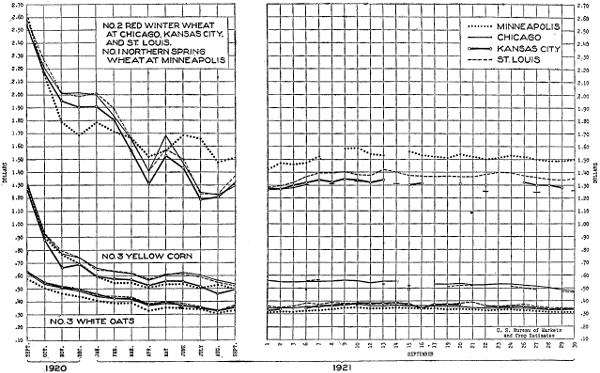
AVERAGE PRICES PER BUSHEL OF CERTAIN GRADES OF WHEAT, CORN, AND OATS AT FOUR MARKETS.
Enlarged chart.
Ocean Freight Rates on Grain and Flour Reduced.
A new schedule of grain rates for the North Atlantic service has been announced by the Shipping Board, as the outcome of a joint conference of shipping companies recently held in New York. The old and new rates on wheat and corn per 100 lbs. from North Atlantic ports are as follows:
To— Old rate. New rate.
Cents. Cents.
United Kingdom 21 17
Antwerp 22 1⁄2 16 1⁄2
Hamburg 22 1⁄2 18
Wheat flour, which takes a differential of 55¢ per 100 lbs., will be subject to a corresponding reduction, making the new rates on flour per 100 lbs. as follows: To the United Kingdom, 22¢; to Antwerp, 21¢; and to Hamburg, 23¢.
Bulk of White Clover Seed Already Sold.
Growers in southern Wisconsin had disposed of 80% of their crop of white clover seed by the end of September. The prevailing prices ranging from $30 to $40 per 100 lbs. have been fairly satisfactory to growers. The quality of the seed varies in different localities but probably averages about the same as or slightly inferior to that of last year because more of it is reported mixed with alsike and timothy.
The imports of white clover seed, principally from Germany, have tended to stabilize prices for the short crop of American seed. From July 1 to Sept. 30 there was permitted entry 538,600 lbs. and none for the same period last year.
Timothy Seed Exports to Europe.
Exports of timothy seed from New York during the two weeks ending Oct. 1, were 550,000 lbs. to Great Britain, 75,000 lbs. to Denmark, 40,000 lbs. to Germany, and 20,000 lbs. to Holland. Exports of Kentucky bluegrass from New York and Baltimore were 21,000 lbs. to Holland, 28,000 lbs. to Great Britain, and 16,500 lbs. to Germany.
The arrivals of imported seed at New York and Baltimore during the same period were: Alfalfa, 425,000 lbs. from Argentina; red clover, 113,000 lbs. from Germany, 92,000 lbs. from France, and 44,000 lbs. from Chile; white clover, 22,000 lbs. from Denmark and 11,000 lbs. from Holland; crimson clover, 105,000 lbs. from Germany; orchard grass, 179,000 lbs. from Denmark, 121,000 lbs. from Germany, and 45,000 lbs. from Holland; sunflower, 560,000 lbs. and canary, 128,000 lbs. from Argentina; rape, 187,000 lbs. from Holland and 44,000 lbs. from France; vetch, 57,000 lbs. from Sweden and 11,600 lbs. from Germany; rye grass, 22,000 lbs. from Great Britain; and grass (kind not specified) 123,000 lbs. from Argentina.
Egypt May Control Sowing of Cotton Seed.
The Government of Egypt is now considering a plan whereby it will assume control over all cotton seed used for planting purposes to preserve the standard varieties in a state of purity and to facilitate the propagation of new varieties under the most favorable conditions.
The history of the cotton industry in Egypt shows that a great number of cotton varieties have been planted which after a period of commercial popularity have almost disappeared from cultivation. Under the plan now being proposed no private person or firm will be permitted to engage in the selection or production of new varieties or strains of cotton unless licensed to do so, and even then not more than 200 acres may be devoted to the experiment. The area to be so planted must furthermore first undergo a field test for at least two years under the direction of the ministry of agriculture.
If the experiment proves satisfactory the seed obtained from the new variety or strain will be propagated and distributed by the Government under the name registered by the original producer. The Government will allow the producer a royalty on all seed used or sold for planting purposes, but will reserve the right to limit the rate of, or to discontinue entirely, its propagation.
Further information on this proposed control plan may be obtained upon request to the Bureau of Markets and Crop Estimates, Washington, D. C.
The economic importance of seeds is perhaps greater than that of any other farm commodity. Seeds are potential plants. Practically all staple foods are derived, either directly or indirectly, from plants. A shortage of seed in any country or section of a country may mean a shortage of food. The commercial supply of seeds in the United States safeguards every section of this country against a deficiency in the necessary requirements for planting annually and indirectly helps to maintain the stocks of food at uniform levels.
The best commercial grades of red clover, alfalfa, and timothy seed test 99.5% or better in purity.