Front matter
Reading edition
Not a sound; the whole works a complicated mass covering a hundred acres, driving with a silence that was magic. Not a whir nor friction. Like a living composite body pulsing and breathing the strange and mysterious force that had been evolved from Huyck’s theory of kinetics. The four great steel conduits running from the globes down the side of the mountain. In the center at a point midway between the globes, a massive steel needle hung on a pivot and pointed directly at the sun.
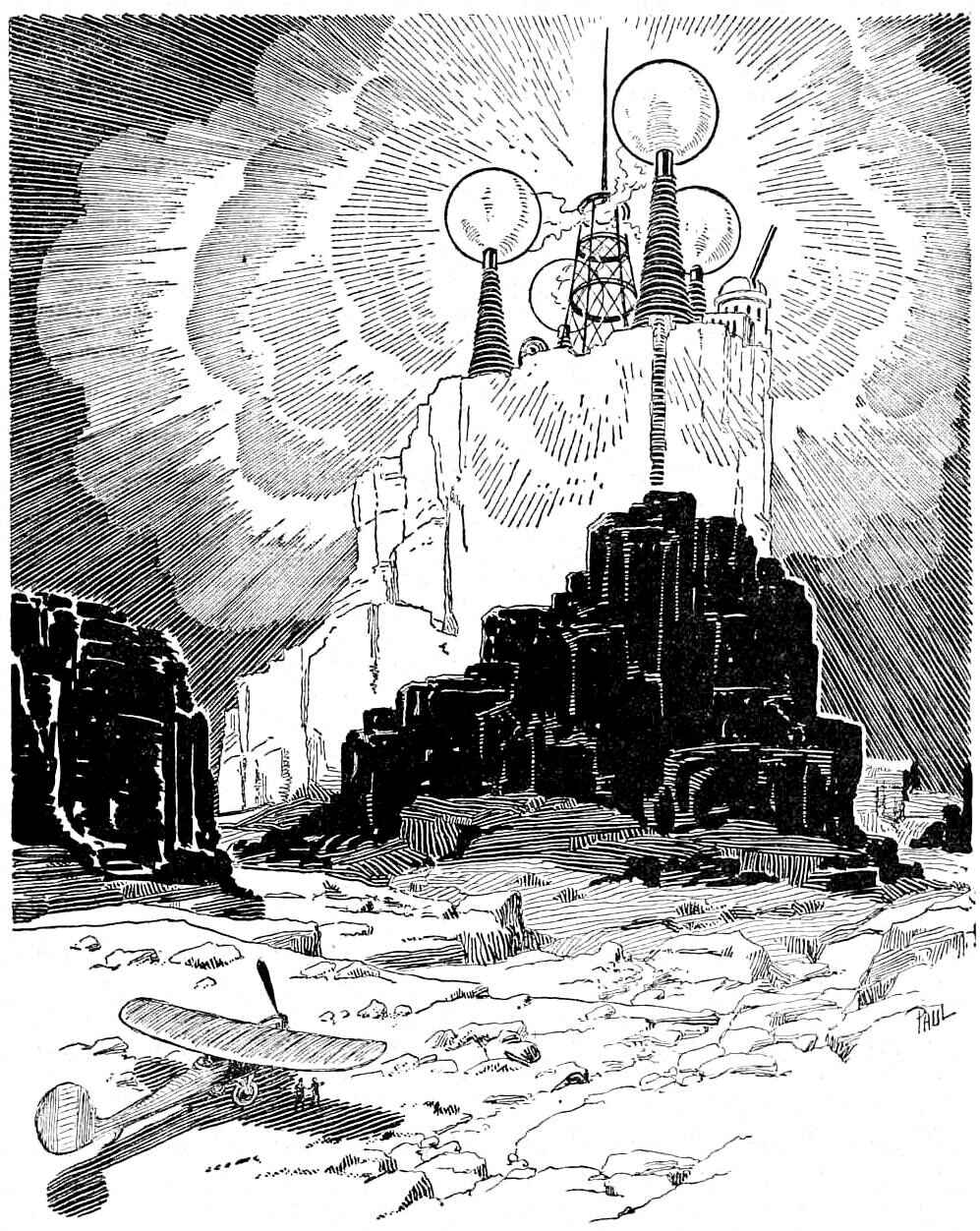
We read of the days when the powers of radium were yet unknown. It is told us that burns were produced by incautiously carrying a tube of radium salts in the pocket. And here in this story we are told of a different power, opalescence, due to another element. It can destroy mountains, excavate cavities of immeasurable depths and kill human beings and animals in multitude. The story opens with a poor little boy experimenting with a burning glass. Then he becomes the hero of the story—he studies and eventually finds himself able to destroy the earth. He exceeds Archimedes in his power. And he suddenly finds that he has unlocked a power that threatens this very destruction. And the story depicts his horror at the Frankenstein which he had unloosed, and tells of his wild efforts to save humanity, and of the loss of the cosmic discoveries of the little newsboy grown up to be a great scientist.