The Reader Critic
Reading edition
George Middleton, New York:
I read Wedded with much interest and really want to congratulate you upon your courage in producing it. As I told the author, whom I recently met, I do not think technically it is perfect: he has overdrawn the minister and made an author’s comment in his lines. I feel the last line absolutely out of key; for the effect, in my judgment, would have been much stronger if the minister had been less obviously the hypocrite. Aside from a little bungling in the opening, I think, however, that its sincerity is much more important than this captious criticism. I feel he put over quite clearly a situation in human life which should be presented. And it was courageous of you to affront public opinion, as you no doubt have, and give place to such a sincere little piece of life. I wonder when the world is going to let us talk about all the things we now smirk over and know. Once we can place these sex matters on the same plane of conversation as we do pork and cheese then they will really cease to be important. I believe in the reticences of taste and proportion—but not those of subject matter. And sooner or later the question of birth control must be given wide publicity, so that only wanted children will come into the world. So long as functionally the woman must bear the labour and thus suffer unequally in parenthood, so should we do everything through education to arm her against assuming unwilling burdens. When children are born of free choice in marriage then they will partake of a higher dignity, and parenthood itself will mean more than a functional disturbance and a matter of rebellion it now is with many. Any play which makes us question our nice polite functions about morality should be accessible to those not afraid of new ideas. It is curious how little faith the innate conservative has in human nature and the finer things of life. So afraid are they that they would bind people by old traditions and not personally-achieved opinions. Wedded presents in vivid phrase a fragment of life which has no doubt come to many a woman, and I heartily congratulate you for the courage which prompted you to give the author a hearing.
S. H. G., New York:
The November number is the best yet. I don’t like Iris’s work as well as I do Bodenheim’s; judging by these poems I think he has been too much praised. Bodenheim makes some superb contributions to language and imagery. Langner’s play doesn’t escape the querulous note in spots, but it is worth doing and is done well on the whole. Darrow’s article is well-knit and presents an idea. The best thing in the issue is Kaun’s translation. And I dislike very much your article on Emma Goldman, because it falls so far below the hardness of thought it should have had.
I have taken much to heart two articles in the first New Republic: Rebecca West’s The Duty of Harsh Criticism and the editors’ Force and Ideas. We who are saying things in public have a simply tremendous responsibility not only to feel, but to know, and to use the acid test on everything we say. Your article shows that you have been carried away by a personality to approval of a social program, and is the most convincing proof I have ever seen that belief in anarchism is a product of the artistic temperament rather than the result of an intelligent attempt to criticise and remould society. I know you did not intend it to be so; that is the reason it annoys me so much. It was a wise and necessary thing to correct misapprehensions about Emma Goldman’s personality; that you have done fairly well; though even that is marred by too much protesting and a substitution of a somewhat sentimental elation for power of mind and emotion. But your offhand generalities on the top of the third page are just the sort of shoddy thinking that justifies conservatives in dismissing social theorists with a sneer, and imprisoning them when they get dangerous. These generalities do not even accurately represent Wilde’s essay. It is not that I disagree with you; I recognize a fundamental truth in these things if it could only be disentangled, made definite, and applied. But to a discerning and unprejudiced reader it is quite evident that in order to save yourself the trouble and unromantic grind of doing this, you have made a lot of meaningless assumptions without really knowing very much about history or anthropology or psychology or any of the other wonderful tools which modern heroes have put at the service of the human will. You have the blind faith of a Catholic saint in divine revelation; the only difference is that the terms of the revelation are altered.
As a thing entirely apart from the above objection, the sporadic violence of the anarchists is puerile and ridiculous. The whole muddle in which the anarchists find themselves on account of their disagreements as to violence is an example of the necessity of efficient and intelligent organization—which is exactly what government in its essence is, to me (but is not now). My own position on anarchism has become more clearly defined than before. I stand fundamentally with Montessori on the position that the beginning and the end of revolution is improvement of the individual. I should be prepared to endorse a brutal autocracy if that bred better human stock. I am thoroughly convinced that Emma Goldman could preach until she lost her voice without producing an appreciable effect. The world has had too much preaching. There would be something finally tragic about the waste of such a personality as hers unless there were a better way of accomplishing her object. She has been working for years, yet ninety-nine per cent of Americans regard her as a sort of Carrie Nation. The more we long for her success the more we appreciate her personality, the more keenly we must criticise her method.
The question of how race hygiene must be applied is a profound and complex matter, impossible of solution by any individual. It will be solved gradually, and as a resultant of honest intellectual work by all forward looking people—more especially by your despised scientists. It will be a matter of inspired scientific education, of proper industrial conditions, of profound art stimulus, of sex reform, in short, of most of the things advocated today by the socialist party. I have a fair-to-middling imagination, but I totally fail to see how these things may properly be put into action without intelligent governmental organization. We simply must not narrow our minds by perfectionist generalities. It is the duty—and the inspiration—of the poet to understand and use science, of the scientist to develop the poet in himself, of all to face grimly every fact which concerns him and banish forever from his mind sentimentalism. Sentimentalism about ribbons and candy is sometimes pretty, but sentimentalism about the human race is a terrible form of blasphemy and the greatest of the sins of pettiness.
Now that I have spoken honestly, don’t think I have joined the ranks of irascible conservatives, and that I yell because I’ve been prodded. No one realizes more than I the necessity of greater emotion, or more sweeping vision. But let’s not make our vision sweeping by the simple process of cutting off our view!
OBLOMOFFDOM
Minnie Lyon, Chicago:
We are told by literary authorities that a certain Goncharoff occupies the place next to Turgeniev and Tolstoy in Russian literature. As to this I cannot vouch, but I can say that he has written a most profound and wonderful book called Oblomoff wherein he has depicted in convincing terms the enthralling bondage of Russia’s intellectuals in her days of stagnant inactivity. From this book was coined the phrase—“Russian Malady of Oblomoffdom”, so well did it dissect her diseased and irresolute will—a malady so universal as to make one feel that Oblomoff was written for us as well as for Russia. It certainly is a direct emphasis upon a condition which prevails so largely both in our personal and social life that few can read this inimitable pen portrait without a sneaking feeling that some of his own lineaments are limned therein.
Goncharoff writes of his hero: “The joy of higher inspiration was accessible to him—the miseries of mankind were not strange to him.... Sometimes he cried bitterly in the depths of his heart about human sorrows. He felt unnamed, unknown sufferings and sadness, and a desire of going somewhere far away,—probably into that world towards which Stoltz had tried to take him in his younger days. Sweet tears would then flow upon his cheek. It would also happen that he would feel hatred towards human vices, towards deceit, towards the evil which is spread all over the world; and he would then feel the desire to show mankind its diseases. Thoughts would then burn within him, rolling in his head like waves in the sea; they would grow into decisions which would make all his blood boil; his muscles would be ready to move, his sinews would be strained, intentions would be on the point of transforming themselves into decisions.... Moved by a moral force he would rapidly change over and over again his position in his bed; with a fixed stare he would lift himself from it, move his hand, look about with inspired eyes ... the inspiration would seem ready to realize itself, to transform itself into an act of heroism—and then, what miracle, what admirable results might one not expect from so great an effort! But—the morning would pass away, the shades of evening would take the place of broad daylight—and with them the strained forces of Oblomoff would incline towards rest—the storm in his soul would subside—his head would shake off the worrying thoughts—his blood would circulate more slowly in his veins—and Oblomoff would slowly turn over and recline on his back; look sadly through his window upon the sky, following sadly with his eyes the sun which was setting gloriously.... And how many times had he thus followed with his eyes that sunset!”
How easy to fall back upon a soft bed of concessions—and drift into a world of forgetfulness! It is just into terrible inertia—this every day and every day humdrum conservatistic acceptance of things as they are—that The Little Review comes with its laughter of the gods; it is so joyous, so fearless, so sure of its purpose, and hurls itself against it with its vital young blood and its burning young heart, and pleads with it for a re-creation of ideals in living, life, and art, and a bigger comprehension of what life and art can mean to the individual and to the race, if the individual will only open his heart and mind to these limitless freedoms. And it does not say: “Look, this is the only way;” but “come all ye who have something to offer—only let it be sincere, true, and unafraid.” And because of this big inclusiveness, we sometimes hear our friend, the sophisticated critic, say: “It lacks sophistication.”—What is sophistication anyway? Isn’t it something that has been baked and dried a long time? I wonder if every thoughtful reader does not grow weary of petty criticism! It is the twin sister (it has not the virility to be a boy twin) of Oblomoffdom, and lives as a parasite upon the brains of others. (I like that word Oblomoffdom; it covers such a multitude of indictments with an economy of words.) Let us have criticism—yes, by all means; but let it be criticism—critical in values, illuminating in meaning, clear in exposition, telling us how and why. Then we’ll give you our respectful and unbiased attention. Too much of the stuff that passes as criticism is merely a “personal attitude,” a channel for expressing a prejudice for (often) something too big for the critic’s grasp. How often, too, does one grow a bit heart-weary on hearing some big personality, some fine intellect limit itself to one vision—its own.
Why not throw that attitude aside as an outworn garment, and welcome any force, simply and gladly, that can stimulate a spark of life-urge within us? A more courageous and intense love of truth, of men, of life.
And so, we welcome you, Little Review, with a Happy New Year and a long life—as a Rebel spirit amongst us, fighting our deadly Oblomoffdom.
Statement of Ownership, Management, Circulation, Etc., required by the Act of August 24, 1912
of THE LITTLE REVIEW published monthly at Chicago, Ill., for October 1st, 1914.
Editor, Margaret C. Anderson, 917 Fine Arts Building, Chicago.
Managing Editor, Same.
Business Manager, Same.
Publisher, Same.
Owners: (If a corporation, give its name and the names and addresses of stockholders holding 1 per cent or more of total amount of stock. If not a corporation, give names and addresses of individual owners.)
Margaret C. Anderson 917 Fine Arts Building, Chicago.
Known bondholders, mortgagees, and other security holders, holding 1 per cent or more of total amount of bonds, mortgages, or other securities: None.
MARGARET C. ANDERSON.
Sworn to and subscribed before me this 17th day of Sept., 1914.
MICHAEL J. O’MALLEY, Notary Public. (My commission expires March 8, 1916.)
SCRIBNER BOOKS
Memories
By John Galsworthy
This is a charmingly sympathetic biographical sketch of a dog—a cocker spaniel that came into the author’s possession almost at birth and remained with him through life. It has none of the imaginative exaggeration common in modern animal stories—records nothing improbable at all. But the author’s insight and his power of interpretation individualize the little spaniel and bring him into the reader’s intimate sympathy.
Illustrated with four full-page colored illustrations and a large number in black and white by Maud Earl, $1.50 net; postage extra.
Half Hours
By J. M. Barrie
From the delightful, romantic fantasy of “Pantaloon” to the present-day realism of “The Twelve Pound Look” represents the wide scope of Mr. Barrie’s dramatic work. All four of the plays in this volume, though their subjects are quite diverse, are beautifully suggestive of Barrie at his best with all his keenest humor, brightest spontaneity, and deepest insight.
“Pantaloon,” “The Twelve Pound Look,” “Rosalind” and “The Will.” $1.25 net; postage extra.
Notes on Novelists
With Some Other Notes
By Henry James
Here is a book which describes with penetrating analysis and in a thoroughly entertaining manner of telling the work not only of the great modern novelists of the last century, Stevenson, Zola, Balzac, Flaubert, and Thackeray, but also takes up in a chapter entitled “The New Novel” the work of Galsworthy, Mrs. Wharton, Conrad, Wells, Walpole, Bennett and the other more important contemporary novelists. This chapter gives in a short space as keen and authoritative a criticism of present-day fiction as can be found.
$2.50 net; postage extra.
Artist and Public
And Other Essays on Art Subjects
By Kenyon Cox
There is no one writing of art today with the vitality that fills every paragraph of Mr. Cox’s work. Its freedom from what has become almost a conventional jargon in much art criticism, and the essential interest of every comment and suggestion, account for an altogether exceptional success that his book on The Classic Spirit has had within the last few years, and that will be repeated with this volume.
Illustrated. $1.50 net; postage extra.
The Poems of Edgar Allen Poe
With an Introduction by E. C. Stedman and Notes by Professor G. E. Woodberry.
Nearly half a century passed after the death of Poe before the appearance of the Stedman-Woodberry Edition of his works, which embodies in its editorial departments critical scholarship of the highest class. In this volume of Poe’s “Poems” the introduction and the notes treat not only of the more significant aspects of Poe’s genius as a poet, but his technical methods, and of scores of bibliographical and personal matters suggested by his verses. Entirely reset in larger type.
Half morocco, $4.00 net; half calf, $3.50 net; cloth, with portrait, $2.00 net.
In Dickens’ London
By F. Hopkinson Smith
The rare versatility of an author who can transfer to paper his impressions of atmosphere as well in charcoal sketch as in charmingly told description has made this book an inspiration to the lover of Dickens and to the lover of London. The dusty old haunts of dusty old people, hid forever but for Dickens, are visited again and found little changed. Where modern things have crept in they are noticed with quick observation, keen humor, and that sympathy with the human which the author shares with the great Dickens himself.
Illustrated with 24 full-page illustrations from the author’s drawings in charcoal. $3.50 net; postage extra.
Robert Frank
By Sigurd Ibsen
Henry Ibsen’s only son is the author of this drama, which William Archer, the distinguished English critic, considers convincing proof that he possesses, “dramatic faculty in abundance.” Mr. Archer defines it as “a powerful and interesting play which claims attention on its own merits,” “eminently a play of today, or, rather, perhaps, of tomorrow.”
$1.25 net; postage extra.
Established 1889
“A periodical that stands steadfastly for good literature.”—The Dial.
POET LORE
$1.00 a copy $5.00 a year
The Winter Number Contains
SIX COMPLETE PLAYS
THE WITNESS By Jaroslav Vrchlicky
THE VENGEANCE OF CATULLUS By Jaroslav Vrchlicky
SANCTA SUSANNA By August Stramm
THE BRIDE OF THE MOOR By August Stramm
SHAMBLES By Henry T. Schnittkind
WAR By J. E. Fillmore
“HUMILIS”
His Art—His Story—His Poems
EIGHT NOTABLE POEMS
BY “HUMILIS” GEORGES TURPIN STÉPHANE MALLARMÉ MADISON CAWEIN RUTH McENERY STUART
Poet Lore at Your Book Store
POET LORE may be obtained regularly at the following book stores:
BALTIMORE, MD.—Norman Remington Co., 308 N. Charles St. Hochschild Kohn & Co., Howard and Lexington Sts.
BERKELEY, CAL.—Associated Students Store.
BOSTON, MASS.—M. Andelman, 291 Tremont St. Old Corner Book Store, 27 Bromfield St. Smith & McCance, 2 Park St.
CHICAGO, Ill.—A. C. McClurg & Co., 218 Wabash Avenue.
CINCINNATI, OHIO—U. P. James, 127 West 7th St. Stewart & Kidd Co., Government Square.
CLEVELAND, OHIO—Korner & Wood Co., 737 Euclid Avenue.
LOS ANGELES, CAL.—C. C. Parker, 220 S. Broadway.
MINNEAPOLIS, MINN.—Powers Mercantile Company. Nathaniel McCarthy.
NEW YORK CITY, N. Y.—Brentano’s, Fifth Avenue at 27th St. The Rand School, 140 E. 19th St. John Wanamaker (Book Department).
PHILADELPHIA, PA.—Am. Bap. Pub. Society, 1701 Chestnut St.
PITTSBURGH, PA.—Kauffman’s (Book Department), 5th and Smithfield Sts.
ROCHESTER—William C. Edwards, Sibley Block. Clarence W. Smith, 44 East Avenue.
STANFORD UNIVERSITY, CAL.—The Stanford University Book Store.
WASHINGTON, D. C.—Brentano’s, 1200 F St. N. W. Woodward & Lothrop (Book Department).
If your Bookseller does not carry Poet Lore in stock send us his name.
THE POET LORE COMPANY :: Publishers :: BOSTON
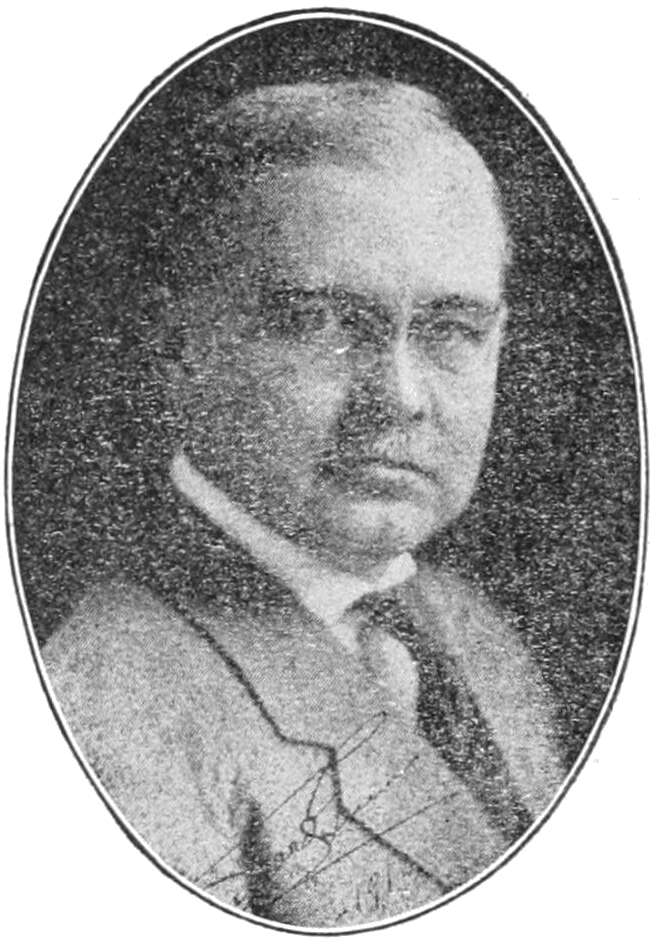
GLENN DILLARD GUNN
the well known pianist, teacher, and critic, writes of the
Mason & Hamlin
Cable Piano Company, Wabash and Jackson.
Gentlemen:
Mason & Hamlin Pianos are the most consistently artistic instruments that are made today. Not only do the Concert Grands completely satisfy the demands of the artist, but those qualities of touch, beauty, even scale, and responsive action that so eminently characterize them are possessed in a similar degree by the smaller Grands and Uprights.
Glenn Dillard Gunn.
Mason & Hamlin Pianos are for sale only at the warerooms of
Cable Piano Company WABASH AND JACKSON CHICAGO
Vol. IV PRICE 15 CENTS No. IV

Poetry
A Magazine of Verse
Edited by Harriet Monroe
The Troubadour Madison Cawein
Poems Edith Wyatt
Annie Shore and Johnnie Doon } Patrick Orr
In the Mohave
The Lost Kingdom Ethel Talbot Scheffauer
Conquered } Zoë Akins
The Wanderer
Epigrams Remy de Gourmont
Pageant } Frances Gregg
To H. D.
Qualche Cosa Veduta Hall Roffey
The Musicmaker’s Child Miriam Allen de Ford
Modern Music Alice Ormond Campbell
The Temple } Lee Wilson Dodd
Only Not to Be Too Early Old
The Comrade
Prose:
Modern German Poetry Reginald H. Wilenski
French Poets and the War Remy de Gourmont
543 Cass Street, Chicago
Annual Subscription - - $1.50
THE EGOIST
AN INDIVIDUALIST REVIEW
Those who wish a slight respite from the strain of war should read THE EGOIST.
BECAUSE
It contains no articles by naval and military experts;
No tales of atrocities;
It continues to publish its literary and dramatic articles, poetry and serial stories;
Its leaders on the war deal exclusively with the philosophic side of that phenomenon;
Its only “war news” consists of an extremely interesting personal diary of the war in Paris, kept by Mme. Ciolkowska.
CONTRIBUTORS: Dora Marsden, Ford Madox Hueffer, Allen Apward, James Joyce, Remy de Gourmont, Ezra Pound, Richard Aldington, Mme. Ciolkowska, J. G. Fletcher, H. D., Amy Lowell, F. S. Flint, Leigh Henry, Huntly Carter, R. W. Kauffman, William Carlos Williams, Frances Gregg, Robert Frost, etc., etc.
TERMS OF SUBSCRIPTION: Yearly, U. S. A. $3.25; six months, $1.65; three months, 85 cents. Single copies, post free, 7d cents.
Subscriptions should be sent to Miss H. S. Weaver, Oakley House, Bloomsbury Street, London, W. C.
At the bottom of page 1, within Amy Lowell's The Allies, there is the centered word
(Over)
which seems out of place and is not found in later editions of the text. Speculating whether this was printed on purpose, e.g., to inform the reader to turn over the page to read the rest, we decided to reproduce it here as it was printed.
Advertisements were collected at the end of the text.
The table of contents on the title page was adjusted in order to reflect correctly the headings in this issue of The Little Review.
The original spelling was mostly preserved. A few obvious typographical errors were silently corrected. All other changes are shown here (before/after):
... My petunias like censors, snowy white and full of honey? ... ... My petunias like censers, snowy white and full of honey? ...
... of the spiritual formulalist. Yet both are wrong. The Problem can be ... ... of the spiritual formulaist. Yet both are wrong. The Problem can be ...
... imposes on matural forms. The law-giver and reformer of social customs ... ... imposes on natural forms. The law-giver and reformer of social customs ...
... of his cane and withdrew from men, waiting like a sower who hath thrown ... ... of his cave and withdrew from men, waiting like a sower who hath thrown ...
... loses his way, becomes isolated, and is torn piecemeal by some manatour of conscience. ... ... loses his way, becomes isolated, and is torn piecemeal by some minotaur of conscience. ...
... Under the rock, our trusting place in the wood, ... ... Under the rock, our trysting place in the wood, ...
... rather than expose by inquisitive aestheticians. Of such is the magical ... ... rather than exposed by inquisitive aestheticians. Of such is the magical ...
... morbid, commonplace treatment of Peter, “the maginative child,” as an ... ... morbid, commonplace treatment of Peter, “the ’maginative child,” as an ...
... Mr. Thorley, who did the Balzac, has proved that in the rôle or a translator he runs ... ... Mr. Thorley, who did the Balzac, has proved that in the rôle of a translator he runs ...
... for the Catlan drama (Catalonia is a province in Spain) by picturing the characteristics ... ... for the Catalan drama (Catalonia is a province in Spain) by picturing the characteristics ...