A Brief Chronology of Abraham Lincoln
Reading edition
Feb. 12, 1809 Born on Sinking Spring Farm near Hodgenville, Kentucky.
1811 to 1816 The family, which included Abe’s sister, Sarah, lived on Knob Creek near Hodgenville, Kentucky.
Nov. 1816 The family moved to Pigeon Creek in Indiana.
Oct. 5, 1818 Abe’s mother died of “milk sickness.”
Dec. 2, 1819 Thomas Lincoln married Sarah Bush Johnston, a widow with three children, from Elizabethtown, Kentucky.
Jan. 20, 1828 Sister Sarah died.
Mar. 1830 The Lincoln family moved from Indiana to Illinois.
Apr. 19, 1831 Offut’s flatboat piloted by Lincoln got stuck on the dam at New Salem, Illinois.
Mar. 9, 1832 Announced candidacy for the Illinois Legislature.
May 8, 1832 Mustered into U.S. Army for service in Black Hawk War.
July 16, 1832 Mustered out of military service.
Aug. 6, 1832 Defeated for the Legislature.
May 7, 1833 Appointed postmaster at New Salem, Illinois.
Aug. 4, 1834 Elected to the Legislature.
Mar. 24, 1836 Sworn in as a lawyer of the Circuit Court of Sangamon County.
Aug. 1, 1836 Reelected to the Legislature for a second term.
Sept. 9, 1836 Licensed to practice law.
Mar. 1, 1837 Admitted to the bar in Illinois.
Mar. 15, 1837 Moved from New Salem to Springfield, Illinois.
Aug. 1, 1838 Reelected to the Legislature for a third term.
Dec. 3, 1839 Admitted to practice law in the Circuit Court of the United States.
Aug. 1, 1840 Reelected to the Legislature for a fourth term.
Nov. 4, 1842 Married Mary Todd of Lexington, Kentucky.
Aug. 1, 1843 First child, Robert Todd Lincoln, was born.
Jan. 7, 1844 Bought home in Springfield.
Mar. 10, 1846 Second child, Edward Baker Lincoln, was born.
Aug. 3, 1846 Elected to Congress.
Dec. 6, 1847 Took seat in Congress.
Mar. 7, 1849 Admitted to practice law before United States Supreme Court.
Feb. 1, 1850 Second child, Edward Baker Lincoln, died.
Dec. 21, 1850 Third child, William Wallace Lincoln, was born.
Jan. 17, 1851 Lincoln’s father, Thomas, died.
Apr. 4, 1853 Fourth child, Thomas “Tad” Lincoln, was born.
June 16, 1858 Delivered “house divided” speech at Springfield.
Aug. 21, 1858 First debate, with Stephen A. Douglas at Ottawa, Illinois.
Aug. 27, 1858 Second debate, at Freeport, Illinois.
Sept. 15, 1858 Third debate, at Jonesboro, Illinois.
Sept. 18, 1858 Fourth debate, at Charleston, Illinois.
Oct. 7, 1858 Fifth debate, at Galesburg, Illinois.
Oct. 13, 1858 Sixth debate, at Quincy, Illinois.
Oct. 15, 1858 Seventh and last debate, at Alton, Illinois.
Nov. 2, 1858 Defeated by Douglas for the United States Senate.
Nov. 5, 1858 First mentioned in press for President.
May 18, 1860 Nominated for the Presidency.
Nov. 6, 1860 Elected President.
Jan. 31, 1861 Visited for the last time with his stepmother.
Mar. 4, 1861 Inaugurated as President.
Nov. 8, 1864 Reelected as President.
Mar. 4, 1865 Reinaugurated as President.
Apr. 14, 1865 Shot by Booth.
Apr. 15, 1865 Died in Washington.
May 4, 1865 Buried in Oak Ridge Cemetery, Springfield, Illinois.
8
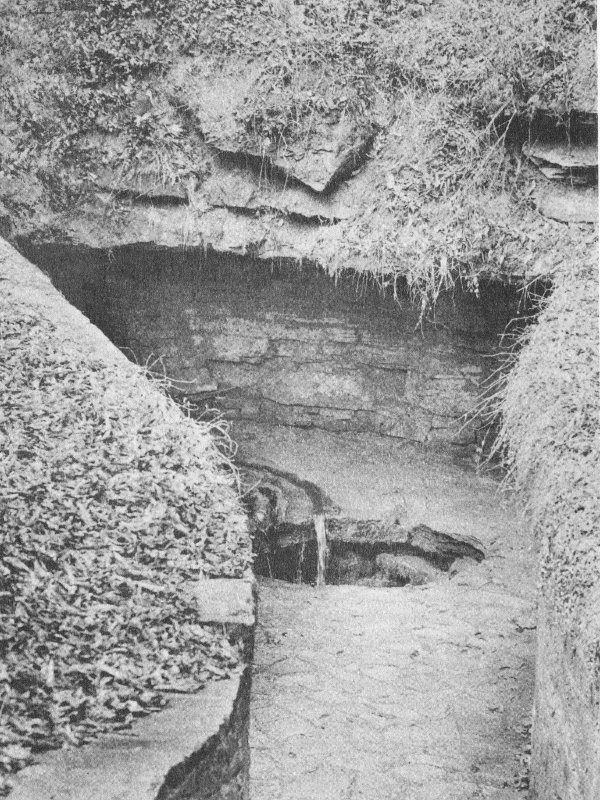
It was from the faithful Sinking Spring, near Hodgenville, Kentucky, that the farm of Lincoln’s nativity got its name.
9
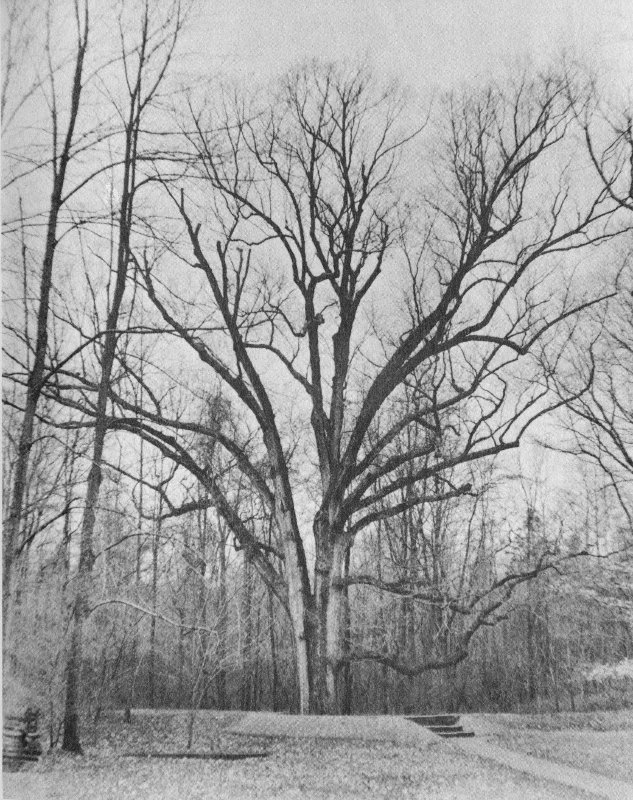
The branches of the Boundary Oak, a landmark for early frontiersmen, still shelter the hallowed birthplace of the man who went to school for perhaps a year, split rails in frontier clearings, traveled the Eighth Circuit as a lawyer, became President of the United States, freed the slaves, spoke the First and Second Inaugurals and the Gettysburg Address.
10
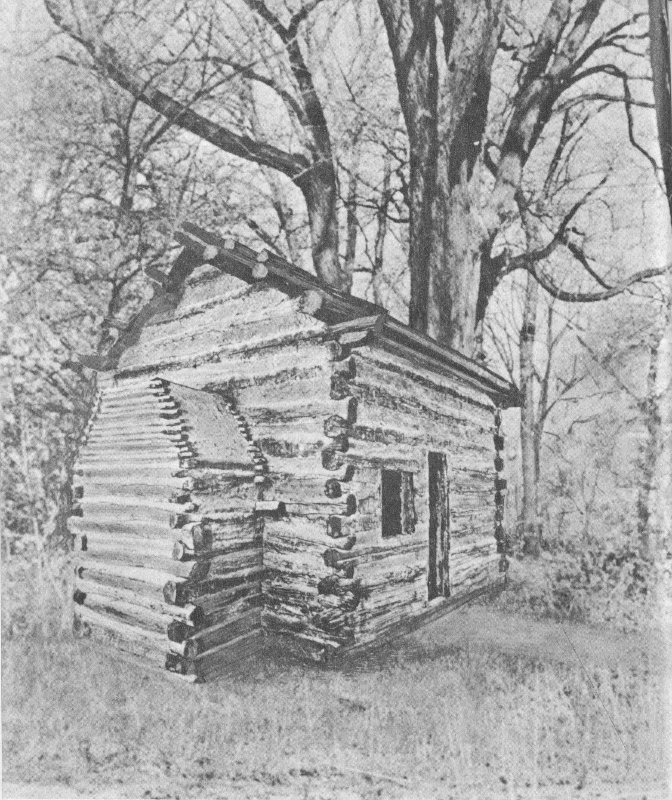
On February 12, 1809, a blizzard raged at Sinking Spring Farm, near Hodgenville, Kentucky. The wind howled down the chimney and through the cracks of the humble log cabin in which Abraham Lincoln was born to Thomas and Nancy Lincoln. The proud parents named the boy Abraham after his grandfather.
11
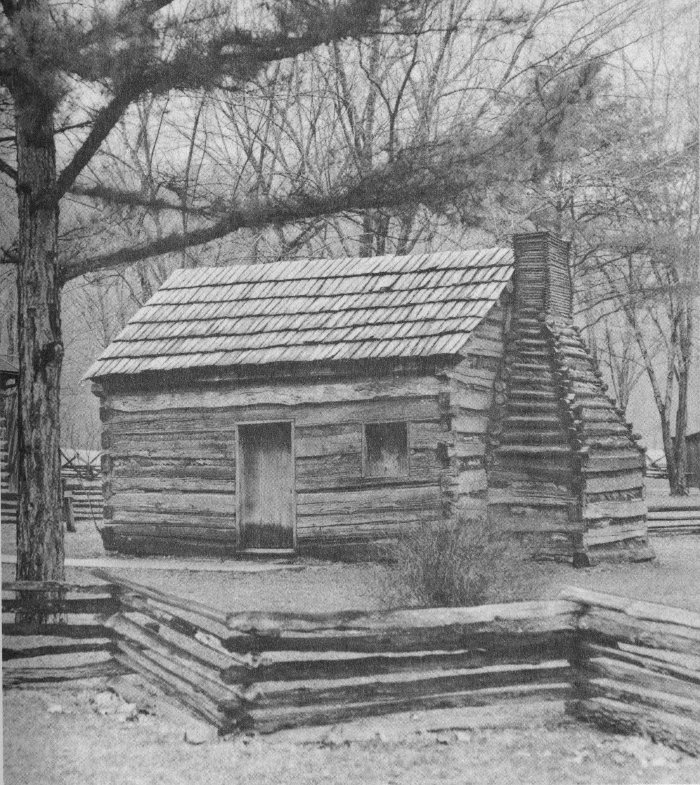
When Abe was two years old, his father moved the family to Knob Creek Farm where they lived until Abe was seven. The cabin lay nestled in a valley surrounded by rolling hills and deep gorges. Here Abe played with his friend, Austin Gollaher, gathered firewood from the forest, wild berries from the vales, and for a short time attended Mrs. Hodgen’s “blab” school. Thomas Lincoln decided to move his family across the Ohio River to live on Pigeon Creek in Indiana where the soil was richer and there were no slaves.
12
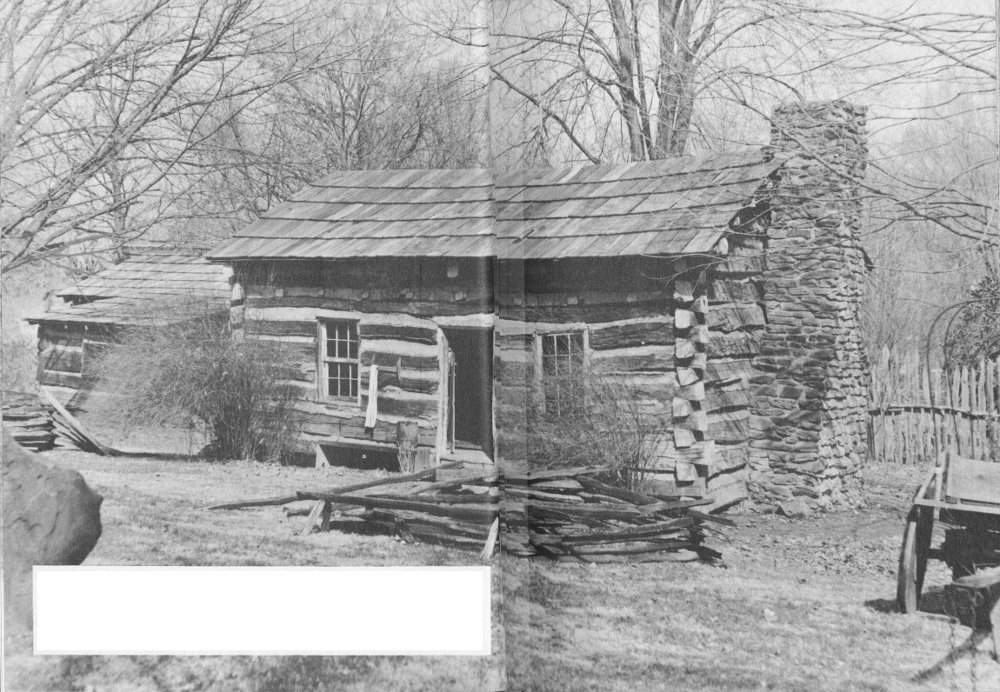
The Lincoln’s erected a new log cabin on Pigeon Creek in Indiana. For the next fourteen years they struggled with the almost impossible odds of a bitter and treacherous wilderness. It was here that Abe’s mother died, and he helped his father lay her to rest in the forest.
14
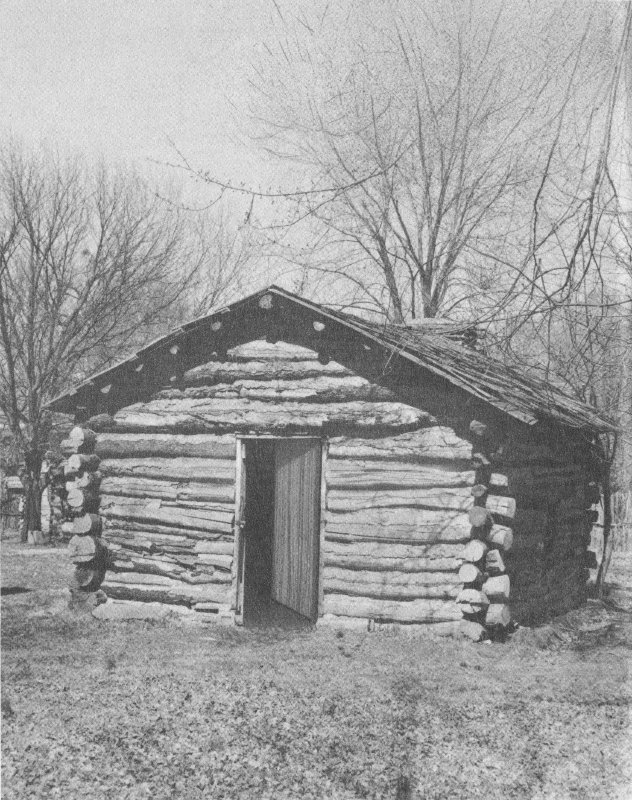
In the little Log Schoolhouse near Pigeon Creek, in Indiana, Abe managed to get a few scattered weeks of sporadic schooling in readin’ writin’ and cipherin’ to the rule of three.
15
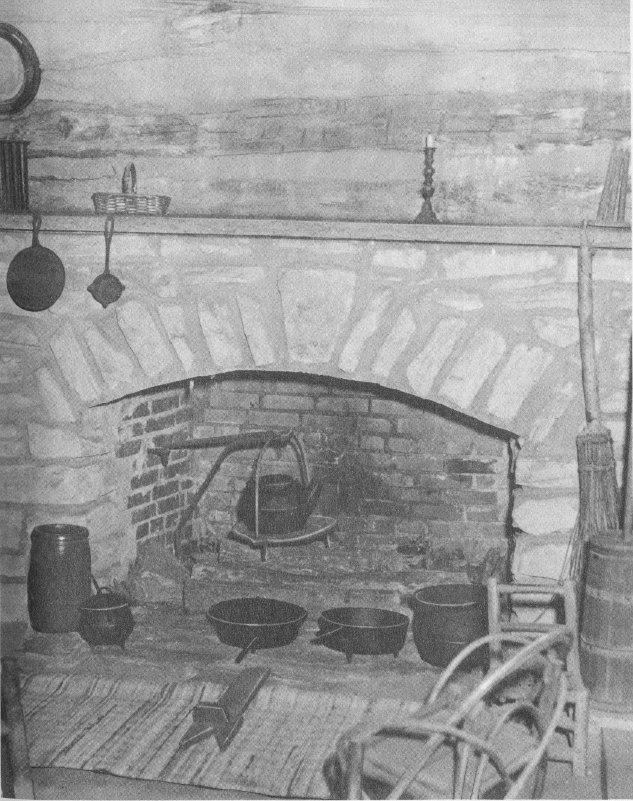
Abe did his homework by the light of the smouldering fireplace. He would scrape his charcoal cipherin’ from wooden boards so as to use them over and over again.
16
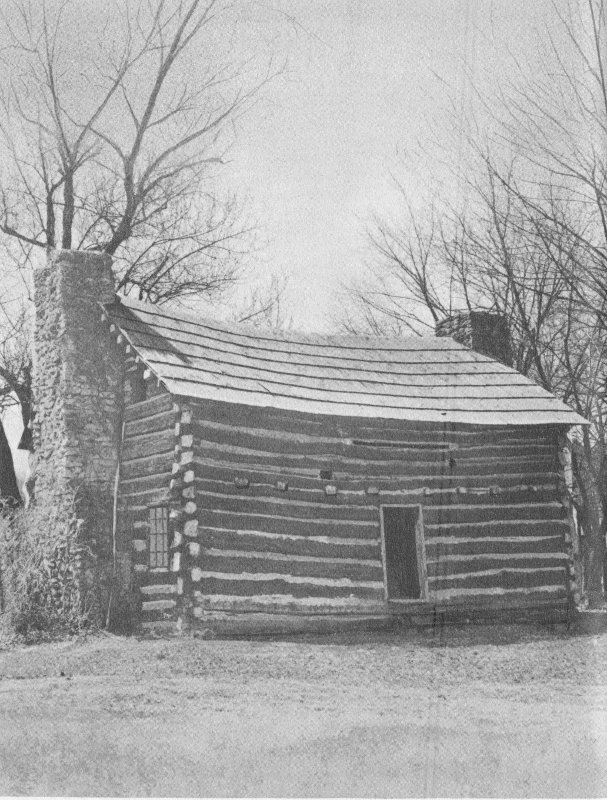
The Lincoln family often attended services in the little Baptist Church that Abe helped his father to build, near Pigeon Creek, in Indiana.
17
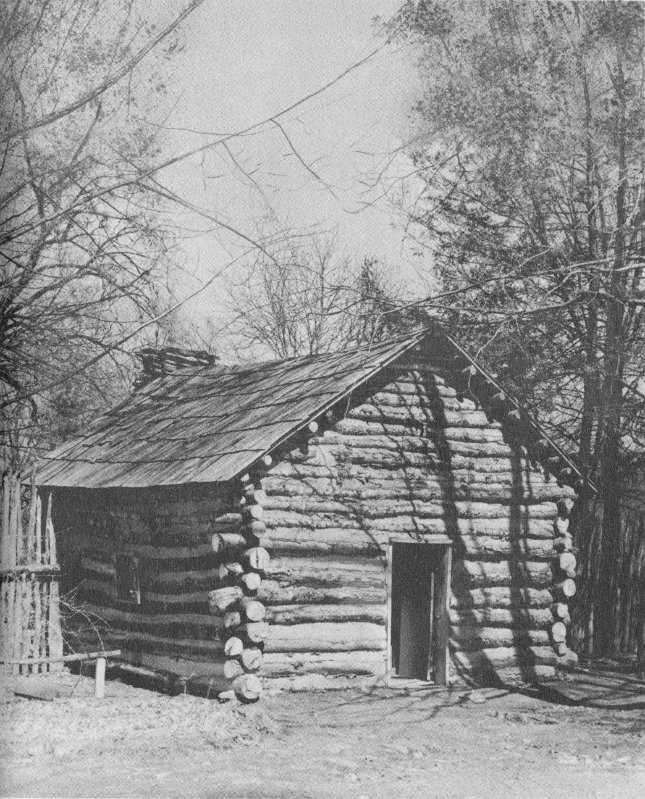
This was the home of Josiah Crawford, a neighboring farmer, where Abe alternated working and learning. Mr. Crawford had several books which he lent Abe. When plowing, Abe read at the end of each furrow while he stopped to allow his horse to “breathe.”
18
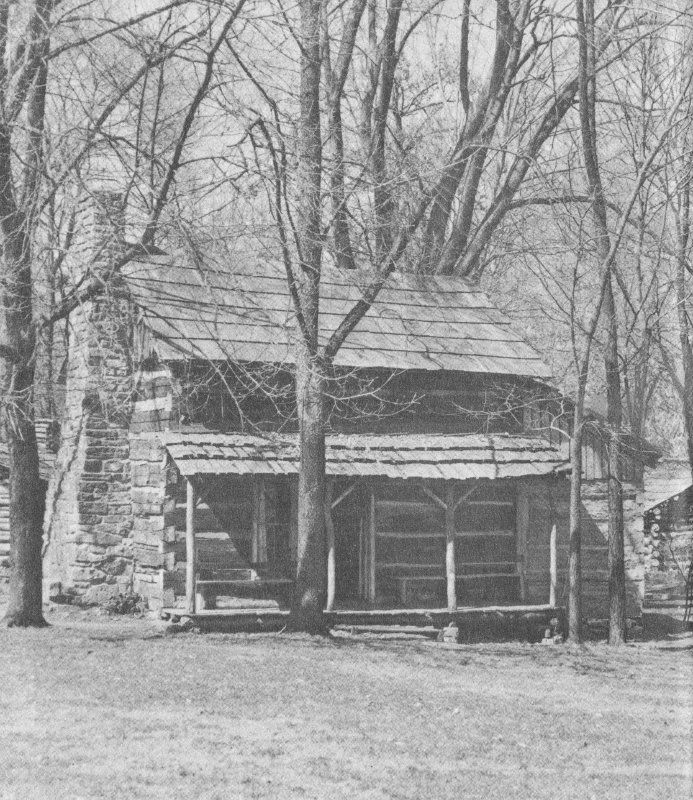
In Gentryville, not far from Pigeon Creek, Mr. Gentry, a farmer and storekeeper lived in this two-story log mansion. At times, when his father didn’t need his help, Abe worked in Mr. Gentry’s store and on the farm. He helped Allen, Mr. Gentry’s son, build a flatboat, load it with store produce and float it down the Ohio and Mississippi rivers to New Orleans.
19
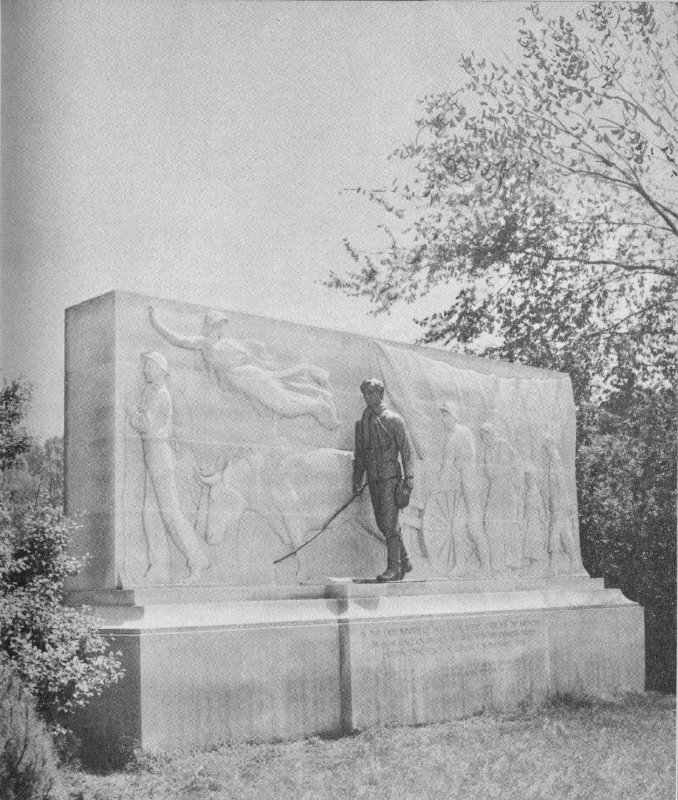
It was early spring of 1830 when the Lincoln’s made the long dismal journey from Indiana to the promising prairies of Illinois. Their stout wagons were piled high with rough-hewn furniture, feather beds, personal belongings, iron pots and pans. There were plows for breaking the “prairie’s sleeping sod” and tools for building a new log cabin.
20
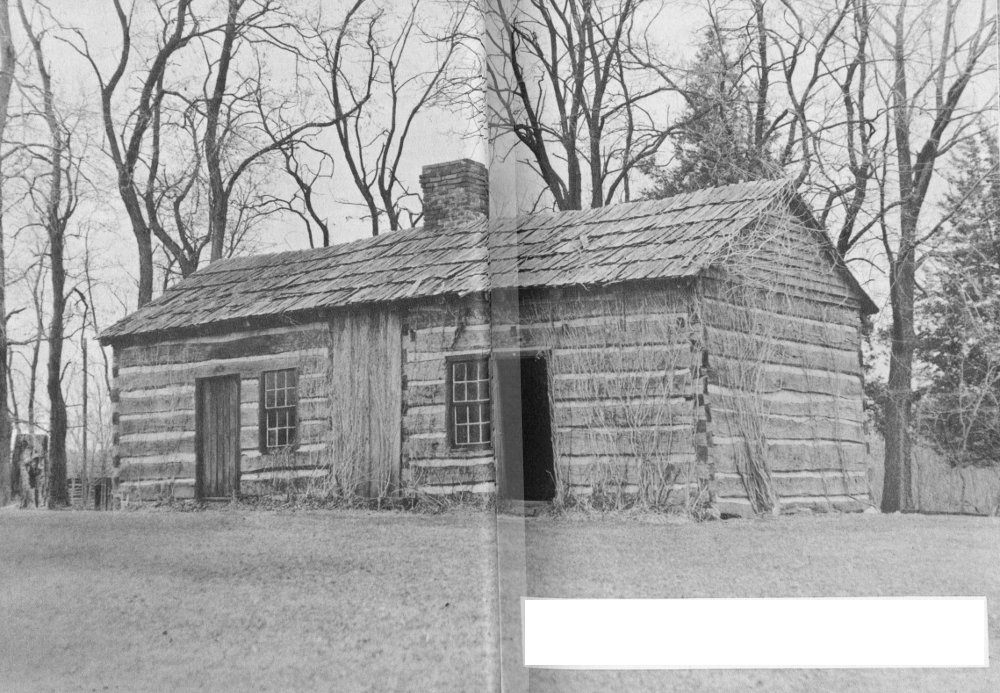
This rustic abode was the last home of Thomas and Sarah Lincoln. Abe, who was now past twenty-one, had left his parents to seek his fortune on the bustling Illinois frontier.
22
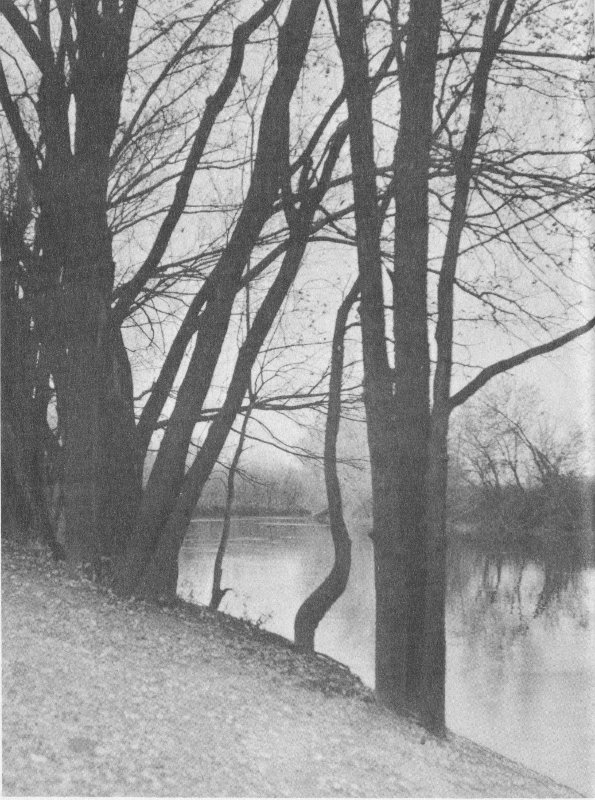
Timber lined the river’s banks and crowned the rolling hills.
23
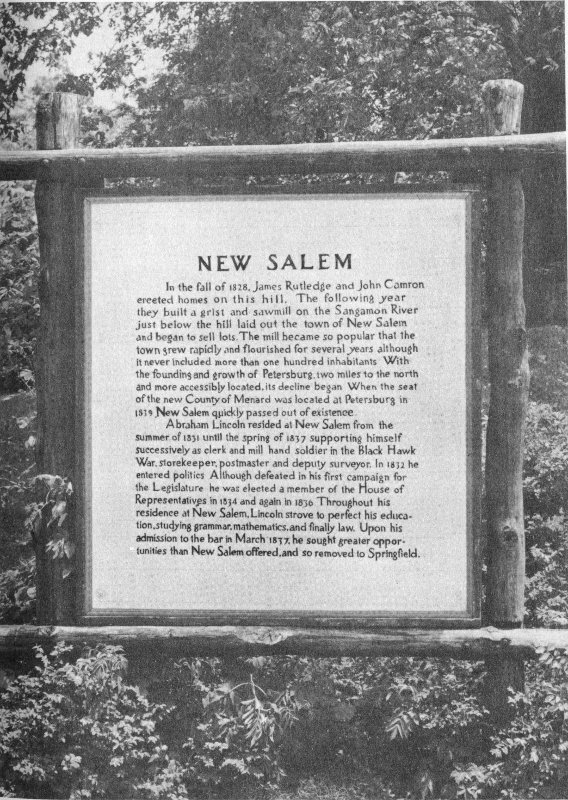
NEW SALEM
In the fall of 1828, James Rutledge and John Camron erected homes on this hill. The following year they built a grist and sawmill on the Sangamon River just below the hill, laid out the town of New Salem and began to sell lots. The mill became so popular that the town grew rapidly and flourished for several years although it never included more than one hundred inhabitants. With the founding and growth of Petersburg, two miles to the north and more accessibly located, its decline began. When the seat of the new County of Menard was located at Petersburg in 1839, New Salem quickly passed out of existence.
Abraham Lincoln resided at New Salem from the summer of 1831 until the spring of 1837, supporting himself successively as clerk and mill hand, soldier in the Black Hawk War, storekeeper, postmaster and deputy surveyor. In 1832 he entered politics. Although defeated in his first campaign for the Legislature, he was elected a member of the House of Representatives in 1834 and again in 1836. Throughout his residence at New Salem, Lincoln strove to perfect his education, studying grammar, mathematics, and finally law. Upon his admission to the bar in March 1837, he sought greater opportunities than New Salem offered, and so removed to Springfield.
24
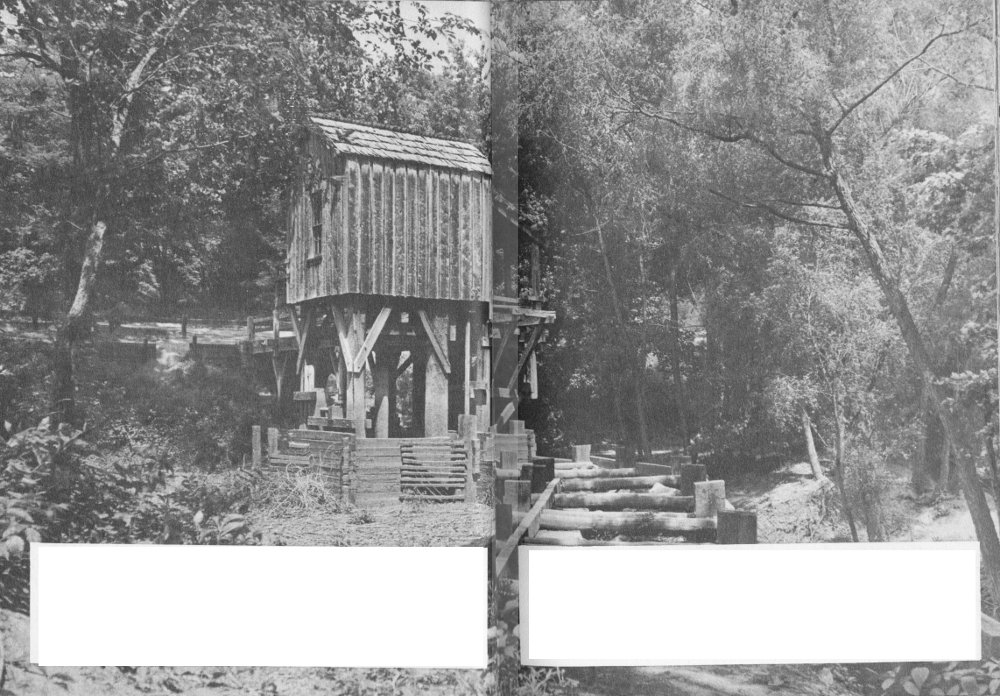
It was on a pleasant April day that the flat-bottomed boat, loaded with barrel pork, corn and live pigs, and piloted by young Abe Lincoln, rounded a bend in the Sangamon River and came to rest on top of the miller’s dam that stretched out across the river. The bow of the boat was raised high into the air. The squeals of the frightened pigs brought the citizens of New Salem hurrying down the bluff to the river bank.
This was Lincoln’s introduction to the people of New Salem. Denton Offut, a swaggering, boastful, hard-drinking frontiersman, was owner of the boat. He became so impressed with the thriving little village that he decided to return after the voyage to New Orleans, and open a store with Lincoln as his clerk. The new store was opened the following September.
26
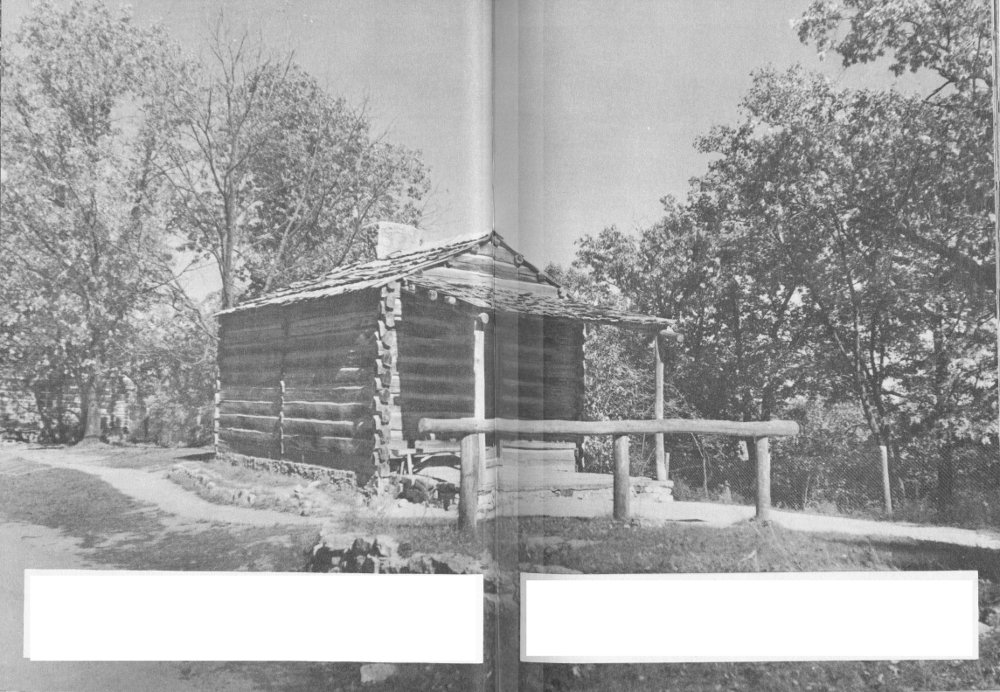
Lincoln helped fell the trees from which Offut’s one-room log store was erected. It stands on the bluff that leads down to the grist mill and the river bank. It was the usual type of frontier store, stocked with produce from the prairie farms or objects made at home.
It was while working for Offut that Lincoln decided to improve his education. In fair weather, when there were no customers about, Lincoln could be seen lounging on the porch studying or talking with friends about slavery, crops, politics, cockfighting, horse racing or just telling stories to listening loafers.
28
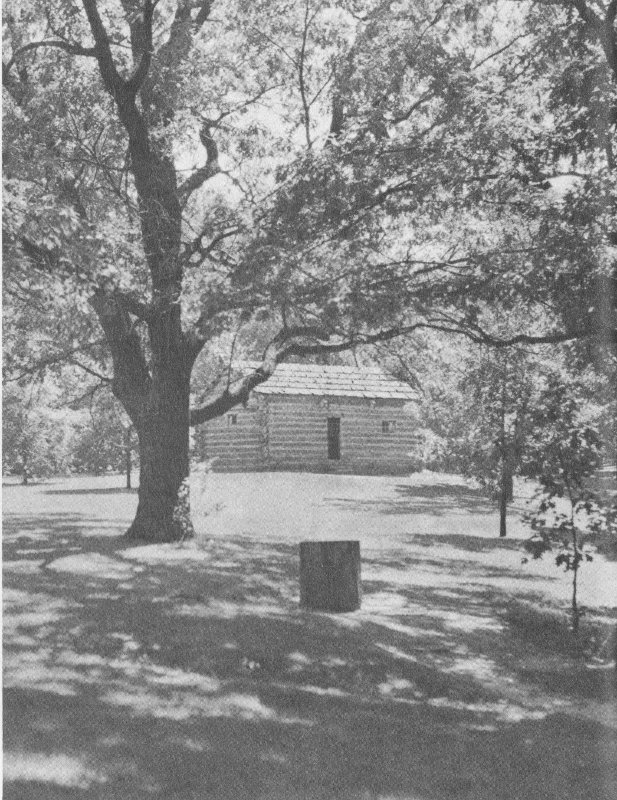
At the top of the bluff, among the tall oak trees, stood the cabin of Rowen Herndon. Lincoln boarded here because it was near the store.
29
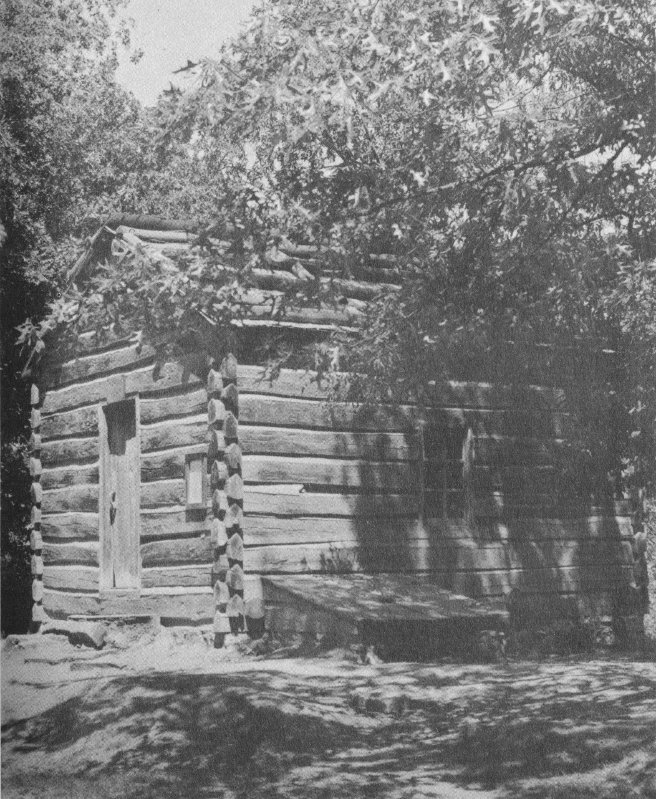
Bill Cleary’s saloon stood a short distance down the bluff from Offut’s store. It was the hangout for Jack Armstrong, who challenged Lincoln to a wrestling match. Even though the match ended in a draw, it gave Lincoln the reputation for courage and strength that convinced his associates that he “belonged.”
30
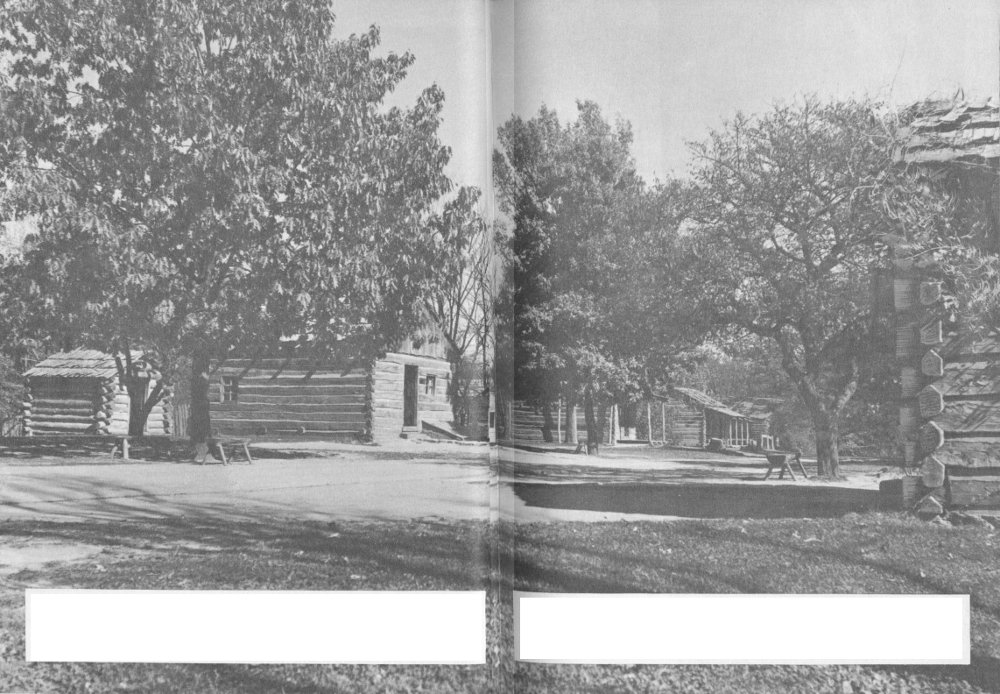
New Salem was a trading post for the farmers who cultivated farms on the surrounding prairies. On Main Street there was a cobbler, a hatter, a cooper, a blacksmith and wagon builder, a wheelwright and several merchants.
These tradesmen had come to New Salem to help fill the needs felt by everyone. At the height of its prosperity, New Salem had a population of a hundred citizens and some twenty-five or thirty buildings.
32
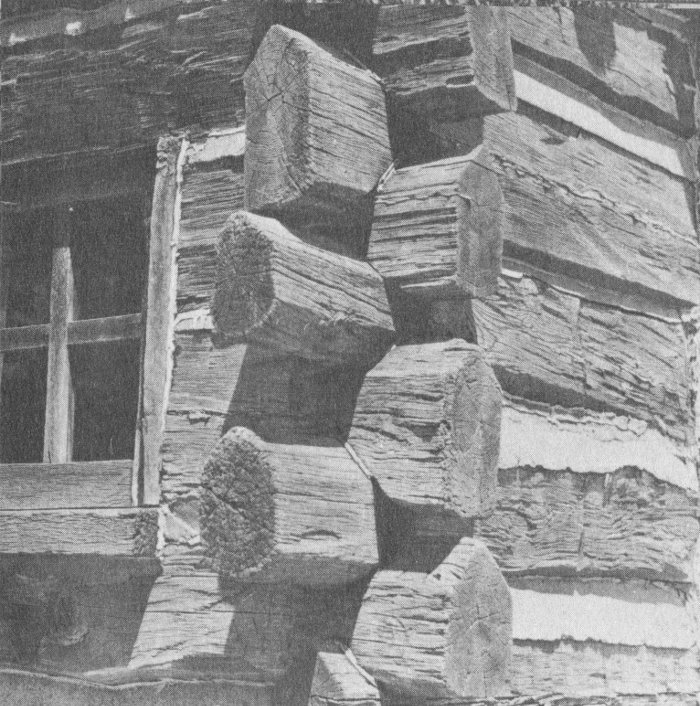
The buildings were made of logs, notched together at the corners and chinked with native clay.
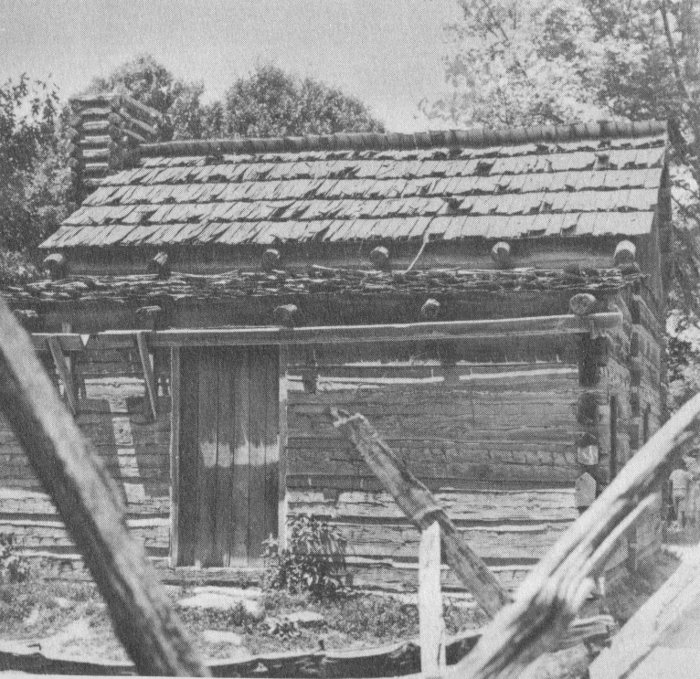
Roofs were pitched and covered with clapboard shingles called “shakes.”
33
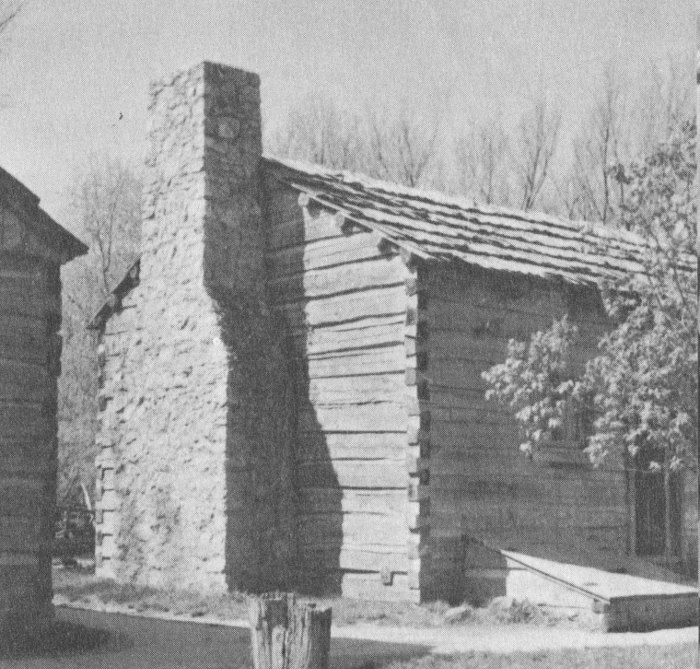
Better homes in New Salem had chimneys made of stone.
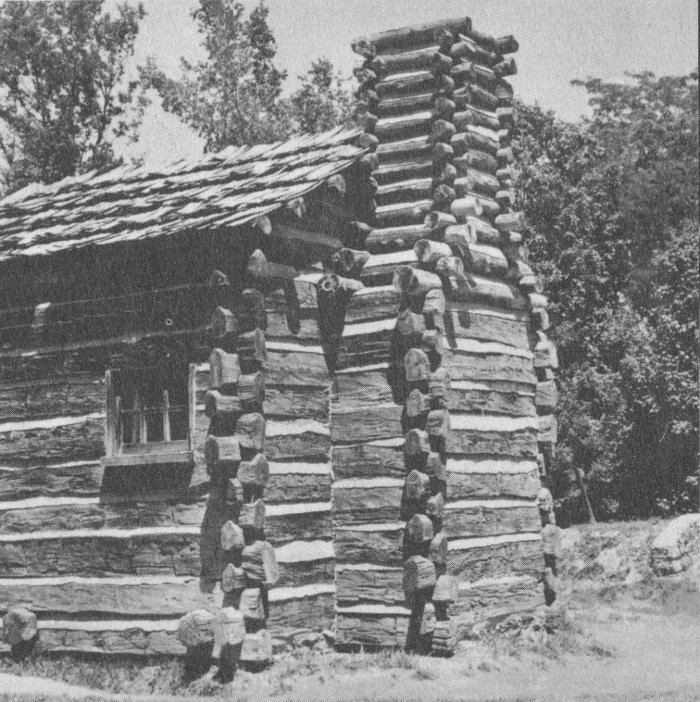
Most homes had “cat and clay” chimneys, made of logs and chinked with native clay. On cold windy days members of the household were kept busy running outside to see whether or not the chimney had caught fire.
34
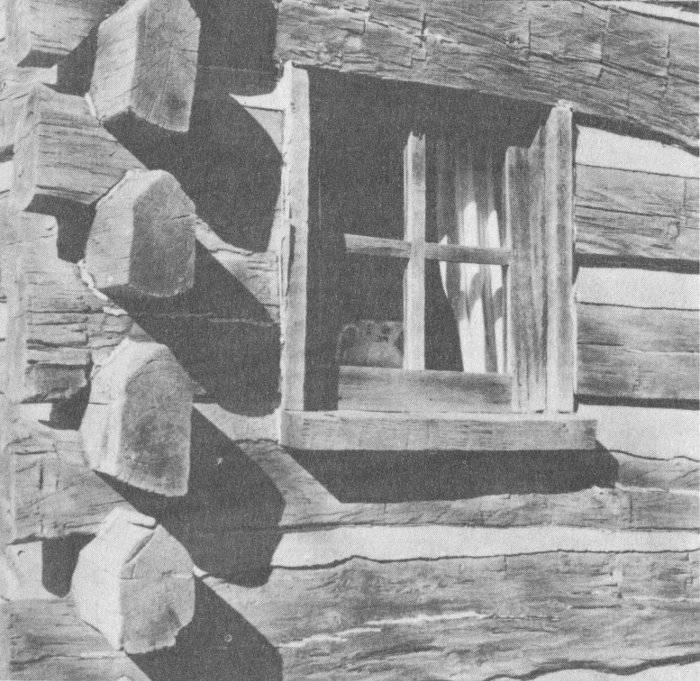
New Salem homes had window panes made of glass.
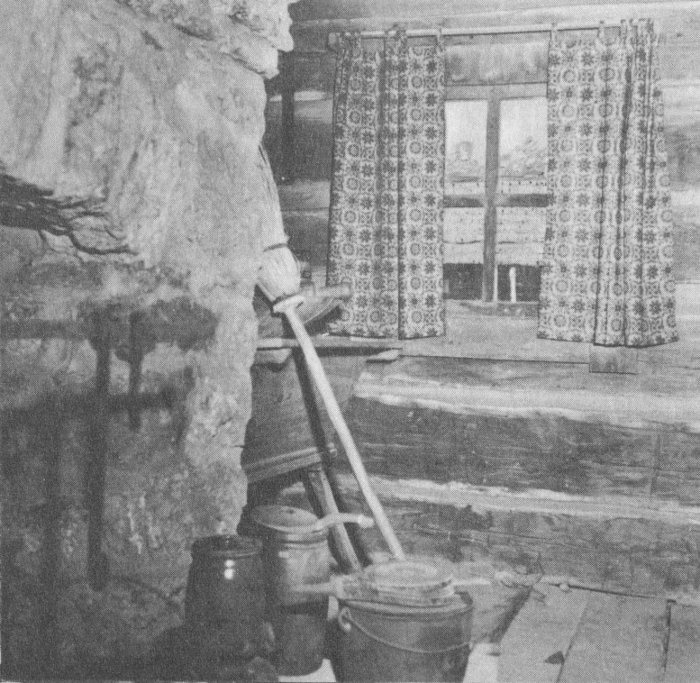
Windows were usually near the fireplace where family activity was carried on.
35
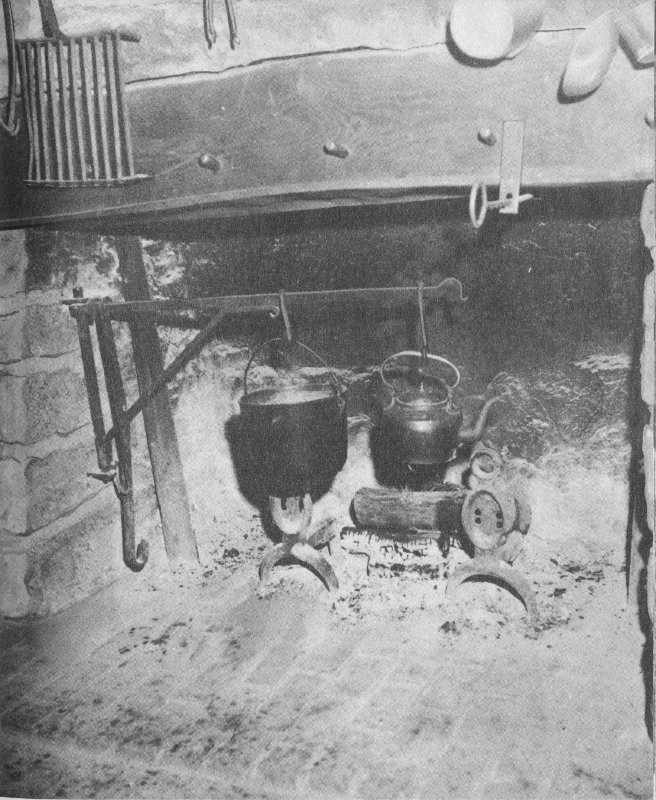
Over an open fire, in iron pots, frying pans and skillets, housewives cooked venison stew, roasted pork and wild game, fried mush, baked corn bread and corn dodgers to a golden brown and often hard enough “to split a board or fell a deer at forty feet.”
36
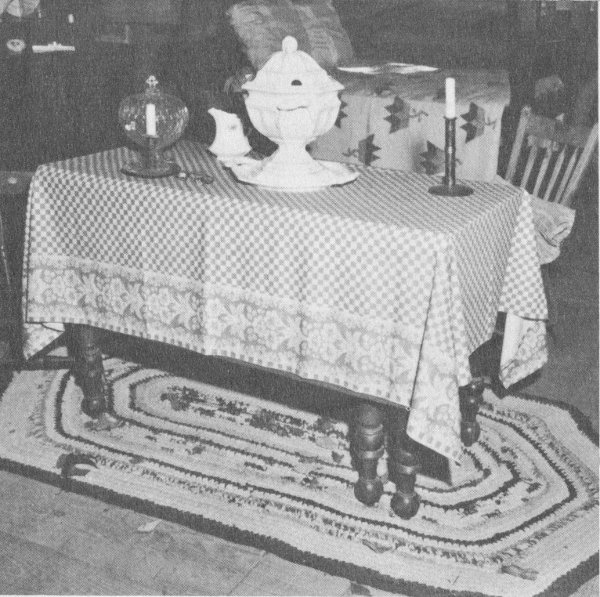
Sturdy trestle tables served the pioneer family well.
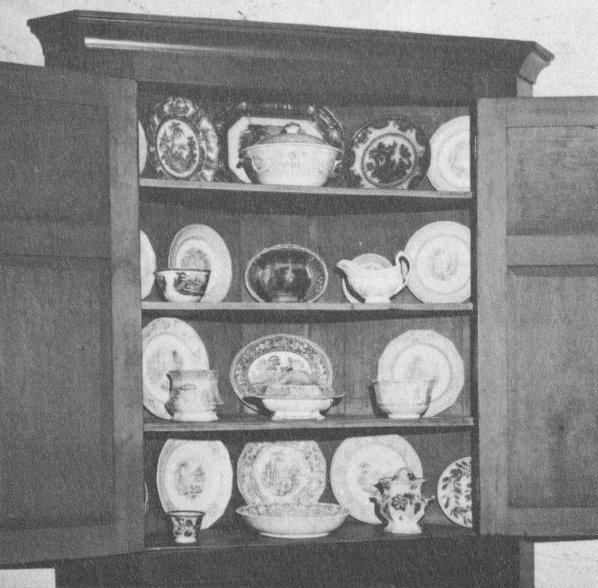
Pioneer women were especially proud of their chinaware.
37
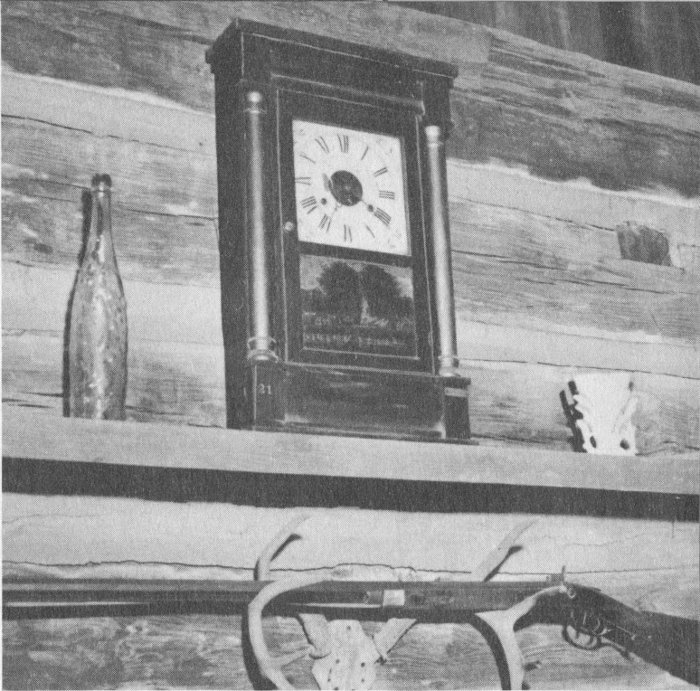
A Seth Thomas clock adorned the mantles of those who were able to afford a touch of elegance.
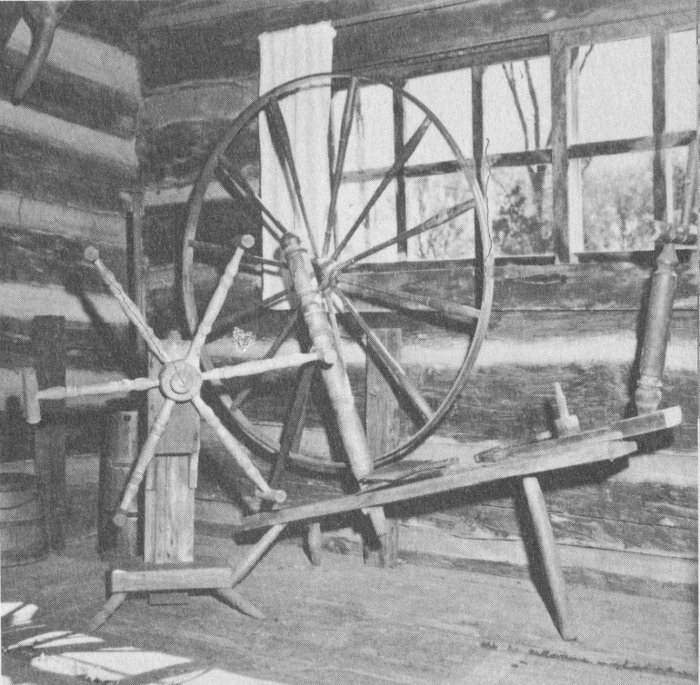
Housewives spun the wool from which they made garments often stiff and too large, but suitable as garments to protect the family from the elements.
38
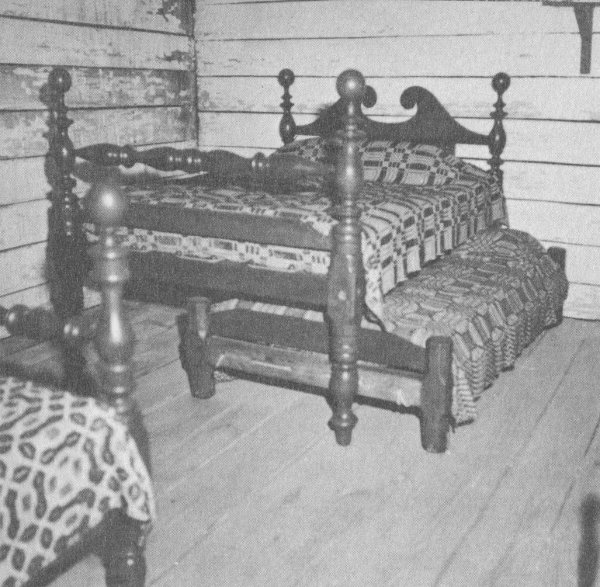
Beds were dressed with home-woven coverlets.
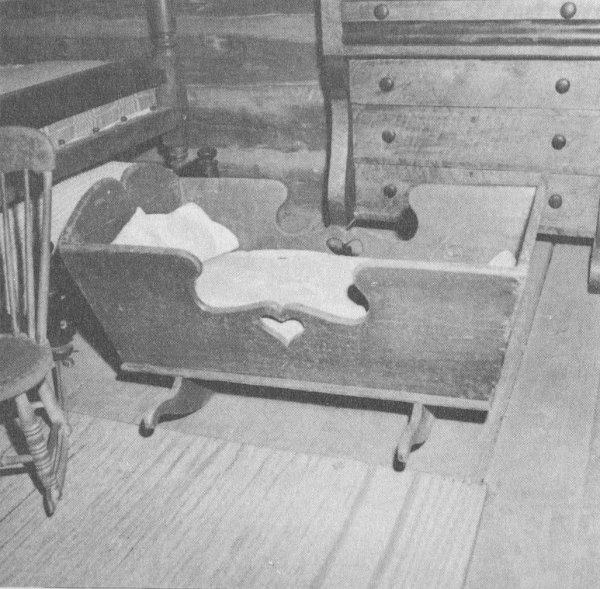
Babies came in annual crops.
39
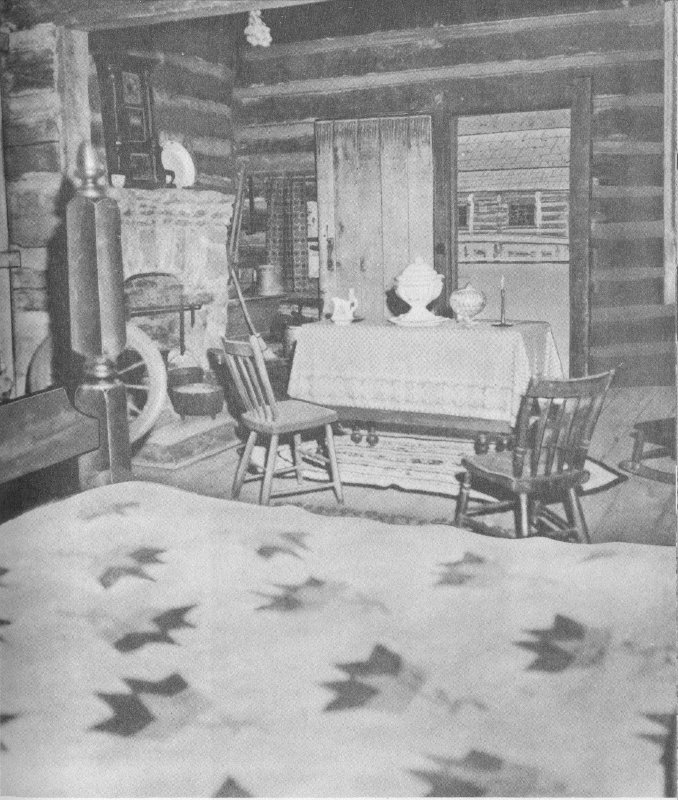
Of the humble one-room log house the cooper’s son wrote: “At meal time it was all kitchen. On rainy days, when neighbors came to relate their exploits, how many deer and wild turkey they had killed, it was all sitting room. On Sunday, when the young men all dressed up in their jeans, and the young ladies, in their best bow dresses, it was all parlor. At night it was all bedroom.”
40
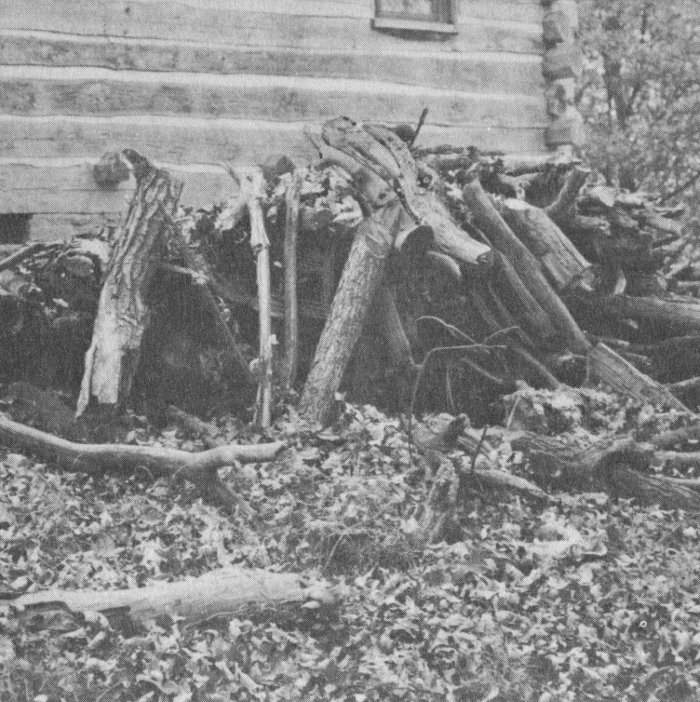
Outside, wood stacked high during the summer, dwindled rapidly as the winter passed.
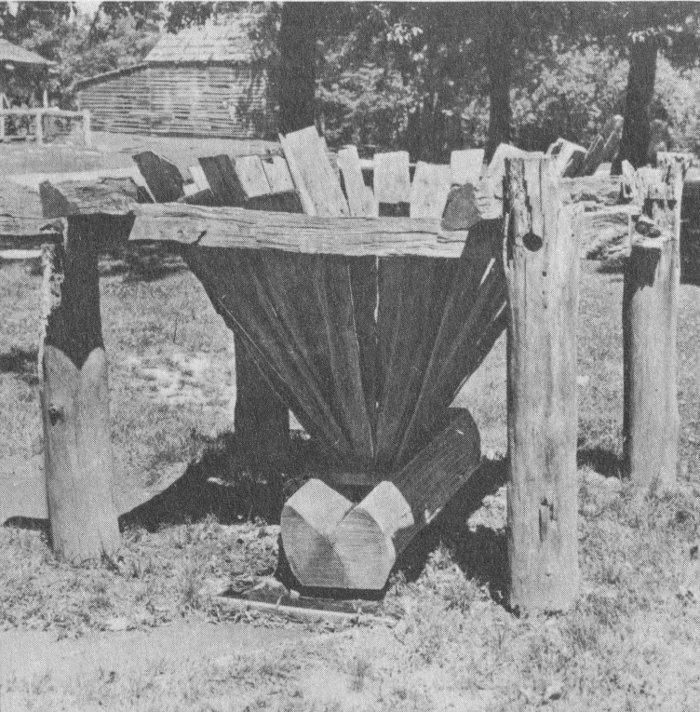
From the ash hoppers, found in every backyard, lye was leeched for use in making soap.
41
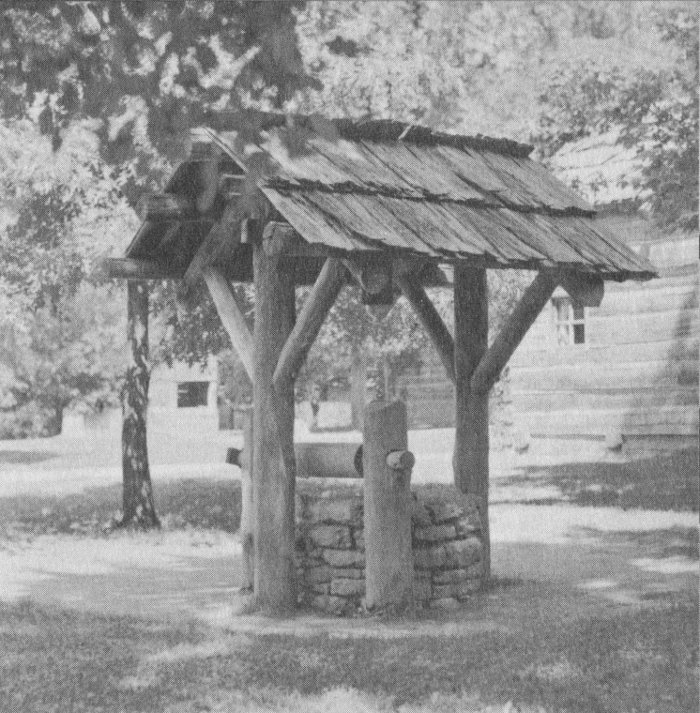
Wells with windlass ropes and wooden buckets supplied the household with needed water.
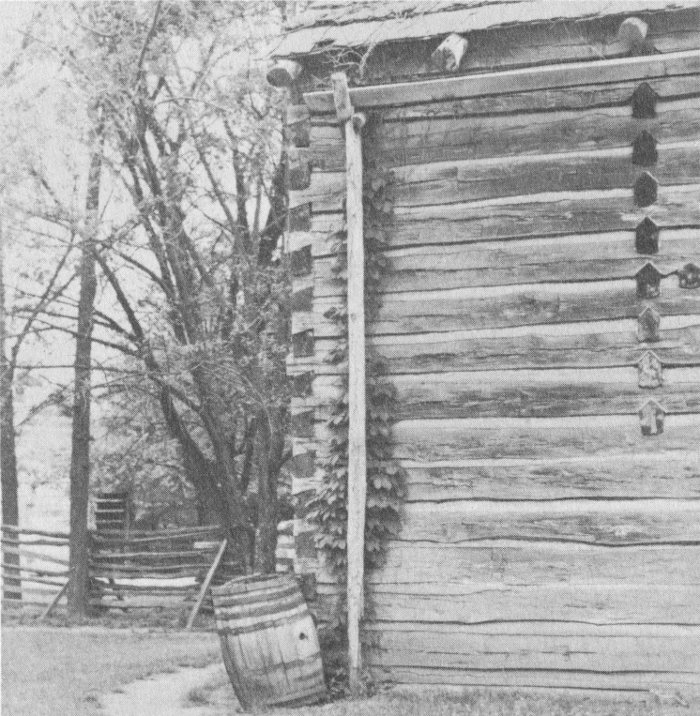
Rain barrels caught the “soft” water that dripped from the eaves. This water was used for the family washing.
42
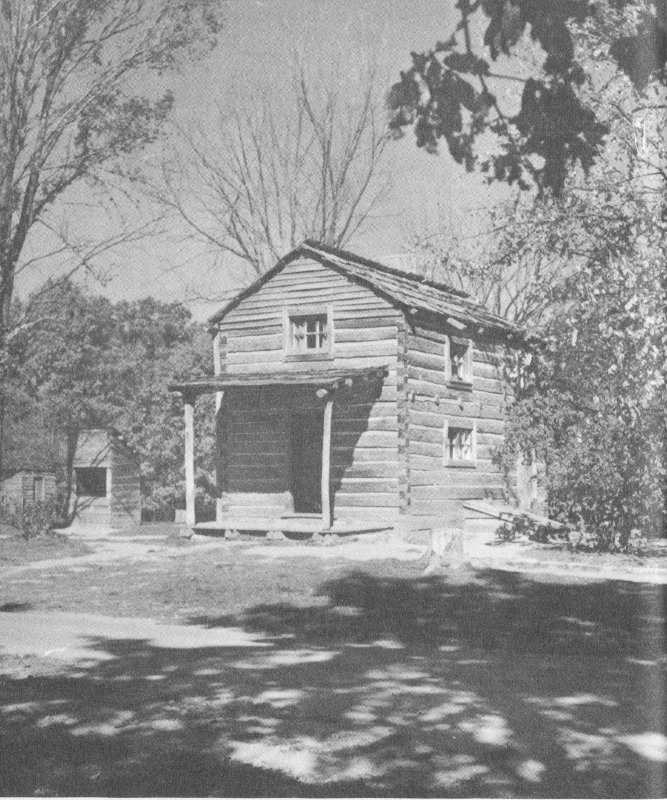
Samuel Hill, New Salem’s most prosperous businessman, owned the only four-room, two-story house in the village.
43
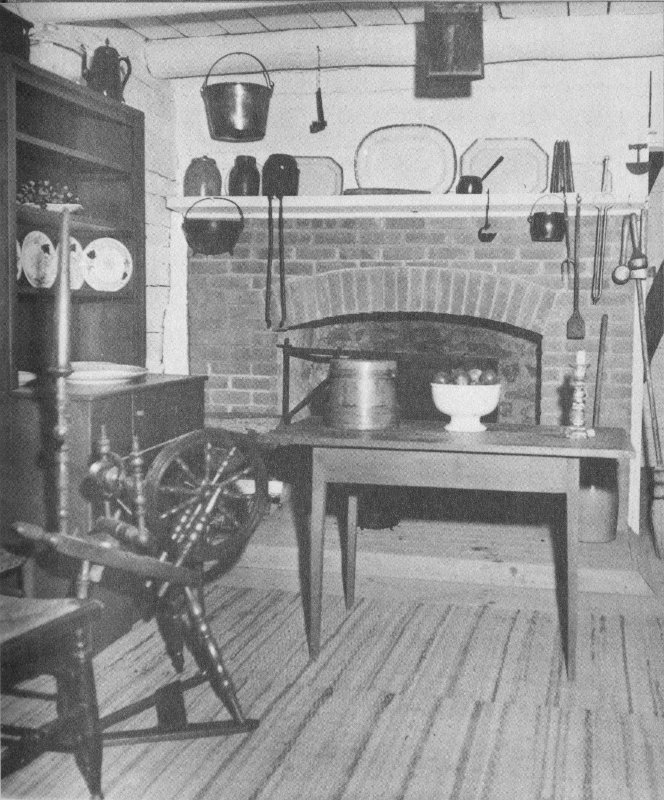
The opulence reflected in the Hill residence was not common to the homes of New Salem.
44
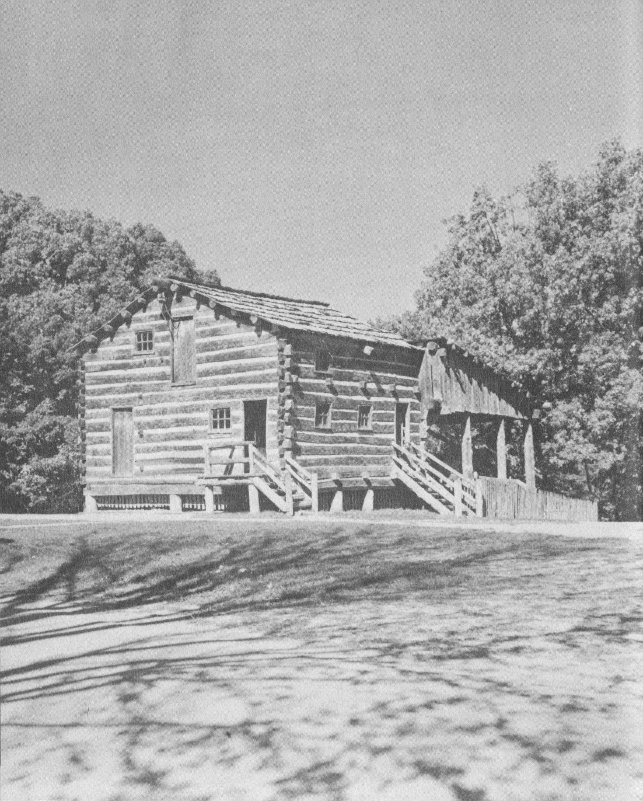
Samuel Hill was also owner of the woolhouse and carding machine. In spring, during wool shearing time, farmers brought their wool to the warehouse in sacks, old bed quilts and petticoats, pinned with thorns from the honey locust.
45
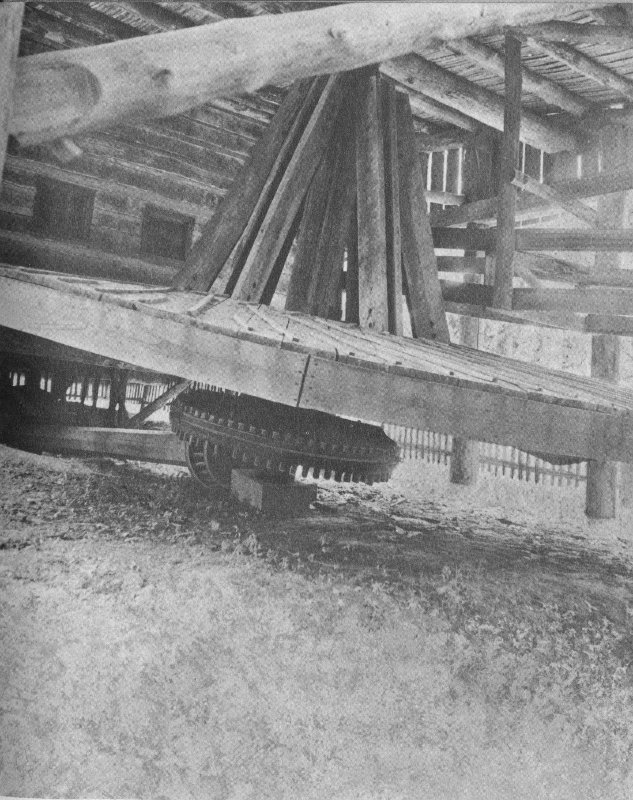
The carding machine in action was New Salem’s most dramatic attraction. From dawn until darkness the weary treading of oxen hoofs on the cleated treadmill powered the squeaking, moaning, wooden gears of the carding machine.
46
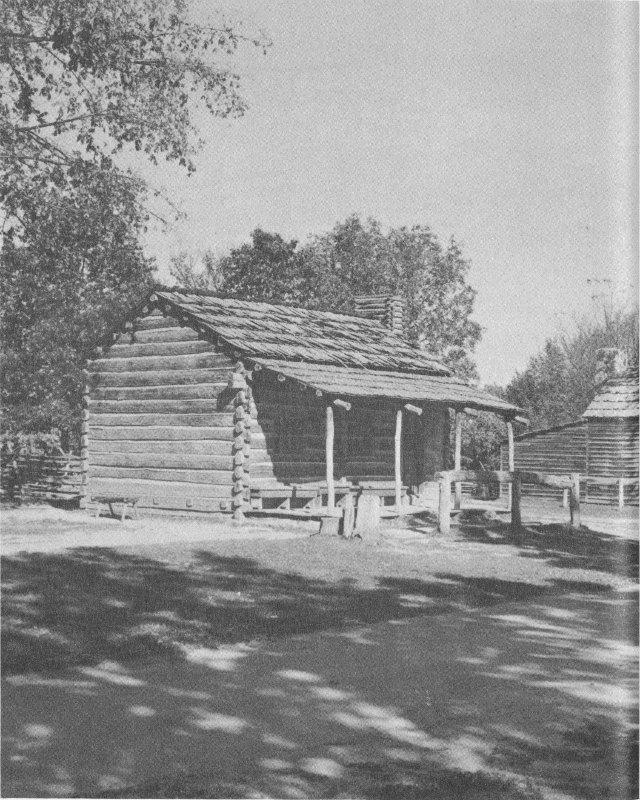
Samuel Hill and John McNeal owned the most successful store in New Salem. It was the center of village life. Under its protective porch people gathered to argue the questions of temperance, travel and human slavery.
47
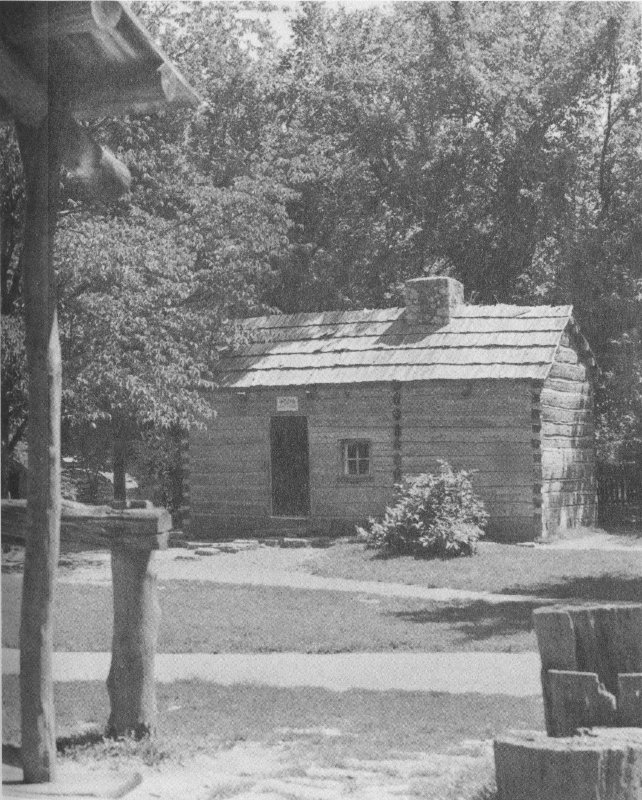
Doctor John Allen lived across the road from the Hill-McNeal store. Unconvinced of the virtue of quinine for treating malaria fever, the doctor kept to such old remedies as Peruvian bark, jalop, calomel and boneset tea.
48
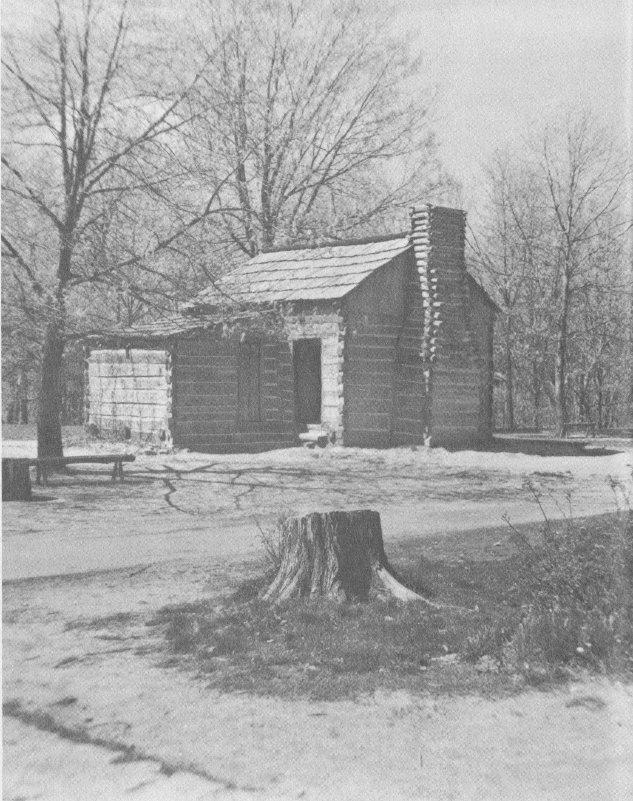
Peter Lukin, the cobbler, lived next door to Doctor Allen. The cobbler shop was in the small lean-to. As winter approached the cobbler converted piles of animal hides into shoes for the community.
49
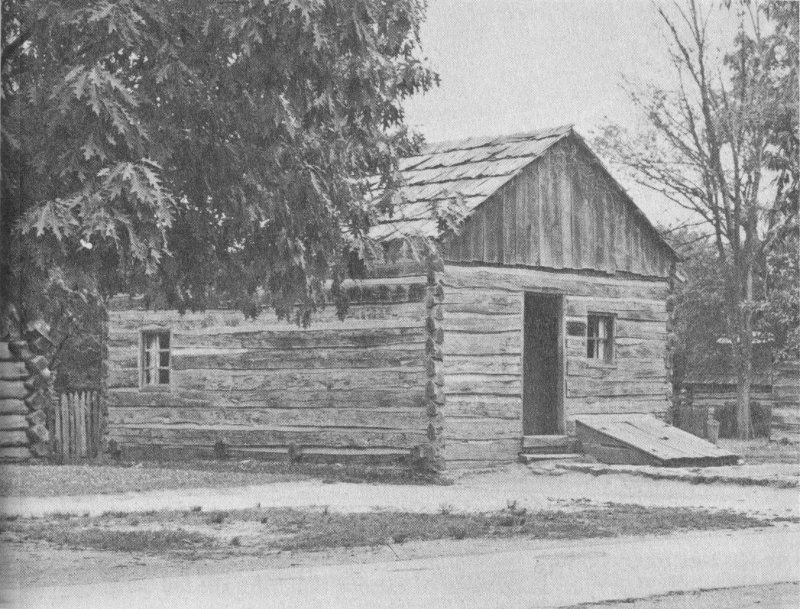
Residence and office of Doctor Francis Regnier, Allen’s capable colleague, who purged, bled, blistered, puked, and salivated his patients.
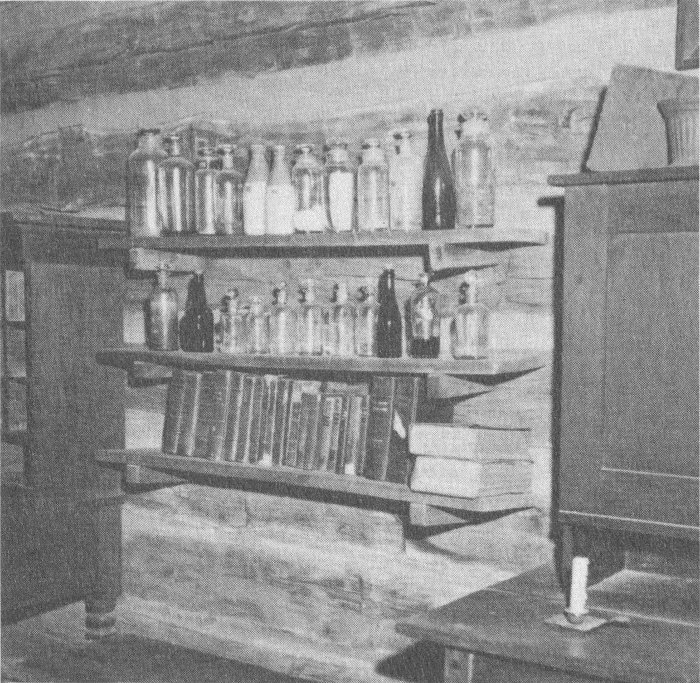
The Doctor’s medical laboratory and reference library.
50
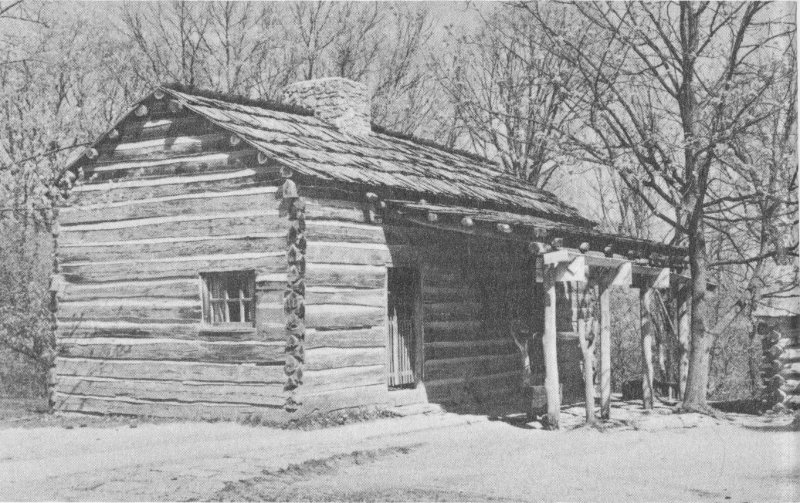
This was the home and workshop of Martin Waddell, the village hatter. He made hats from opossum, raccoon and rabbit skins. A rabbitskin hat cost fifty cents. A hat made from an opossum or raccoon skin, with the tail hanging down in the back, cost two dollars.
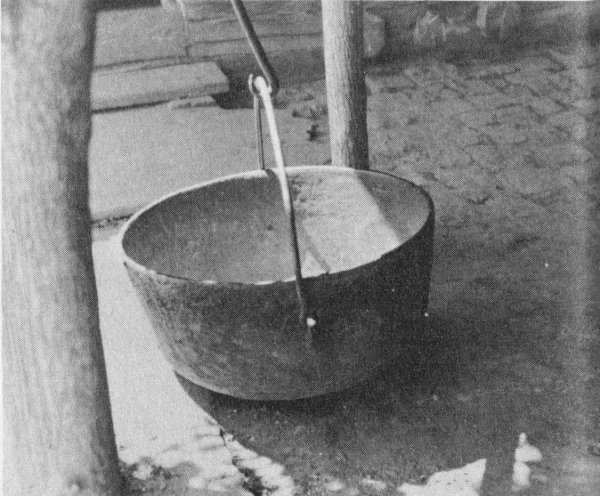
In this kettle Waddell prepared the skins from which he made the hats.
51
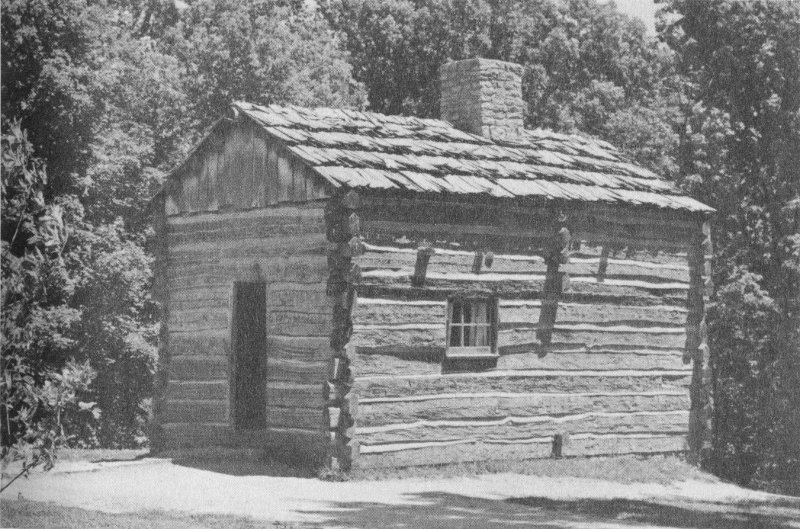
Residence of Isaac Burner. Very little is known about the Burner family.
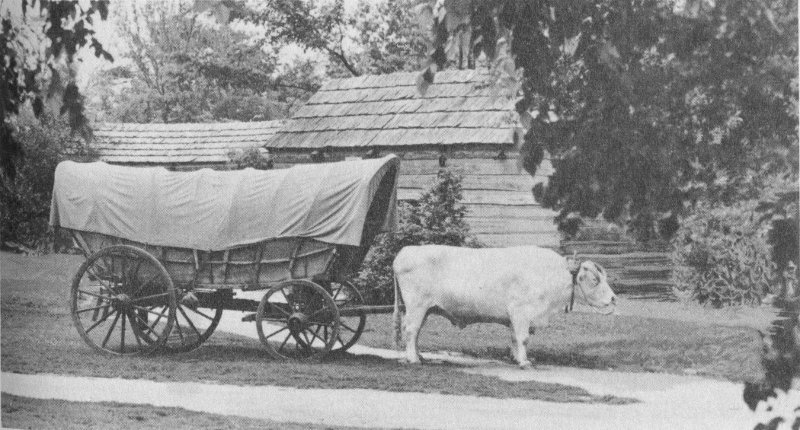
A familiar sight on Main Street, New Salem.
52
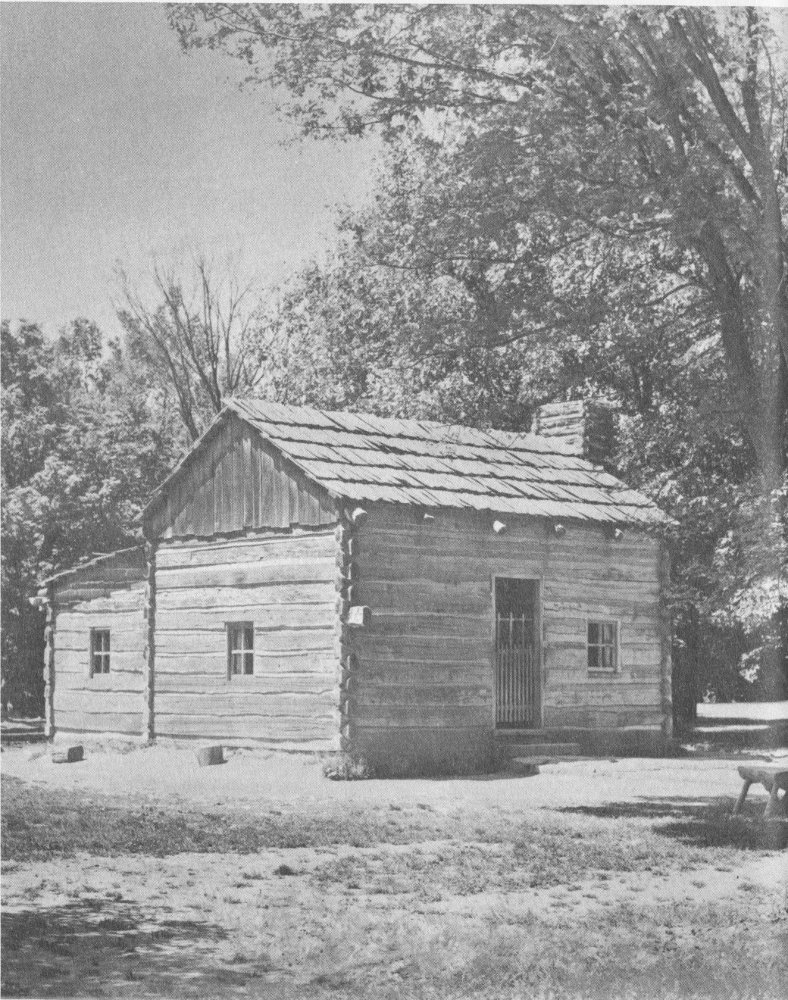
In the small lean-to in the rear of his cabin, Robert Johnson, the wheelwright and cabinetmaker, painstakingly made spinning wheels, wagon wheels, looms, and sturdy furniture for the community.
53
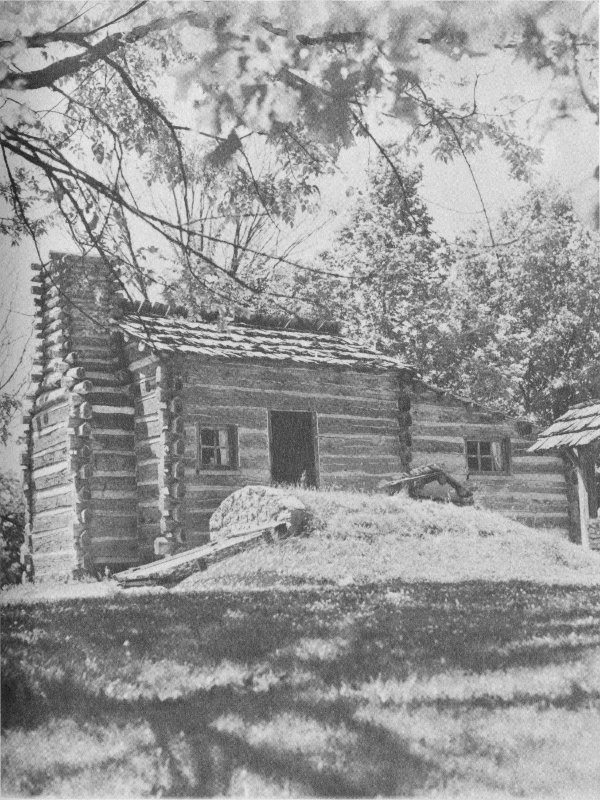
Residence of Isaac Golliher, who had the only root cellar in the village.
54
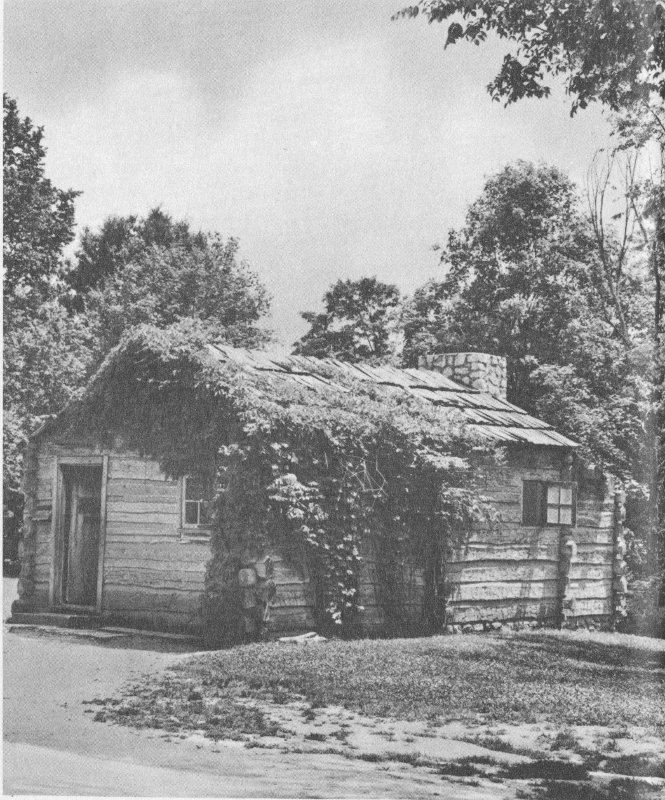
For three years Lincoln was postmaster at New Salem. In this position he became well-acquainted with people for miles around. It was here he began his lifelong habit of reading newspapers, through which, in part, he learned to interpret public opinion. To supplement his earnings as postmaster he did odd jobs, such as clerking in Hill’s store, helping out at the mill or splitting rails.
55
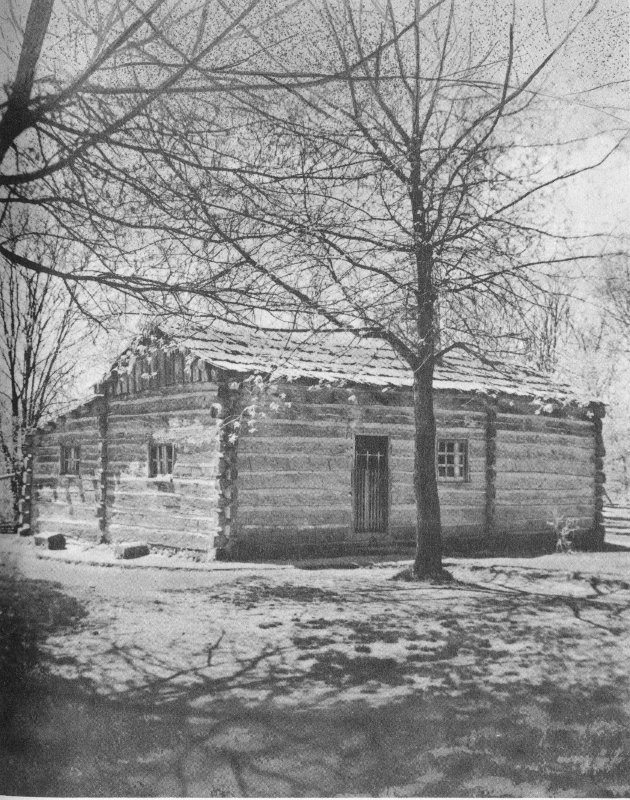
This was the home of Alexander Trent. When Lincoln became postmaster he was required to furnish bond of five hundred dollars. Alexander Trent was one of his bondsmen.
56
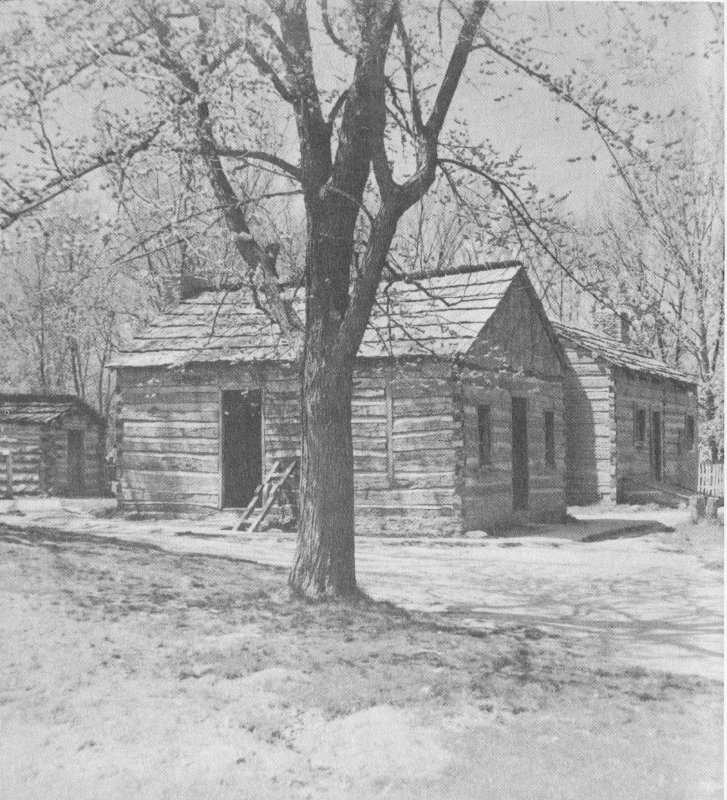
Henry Onstat’s cabin and the cooperage where he made barrels so much in demand by the community of New Salem.
57
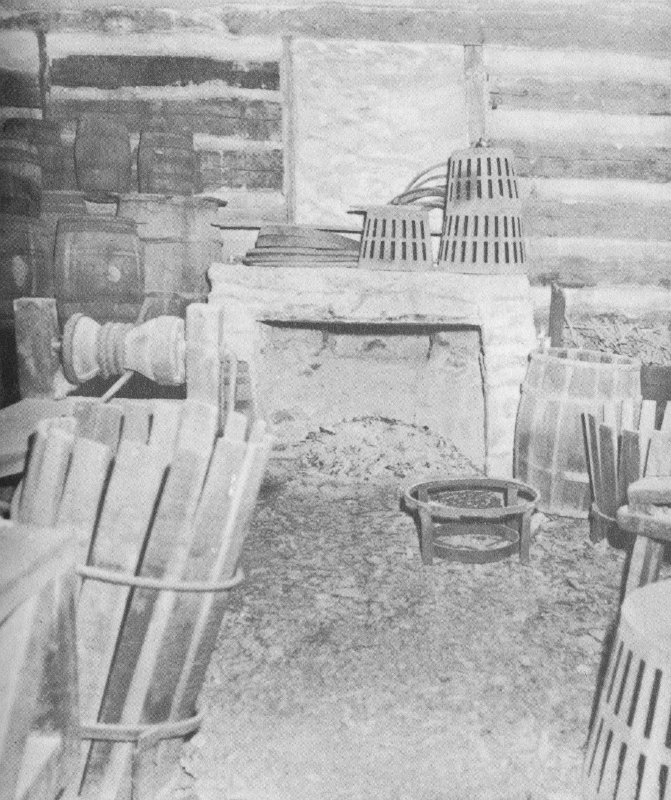
The cooperage was a busy place. There was always a great pile of shavings in the fireplace. Lincoln often came to the cooperage at night and by the glow of the burning shavings he studied mathematics, literature and law.
58
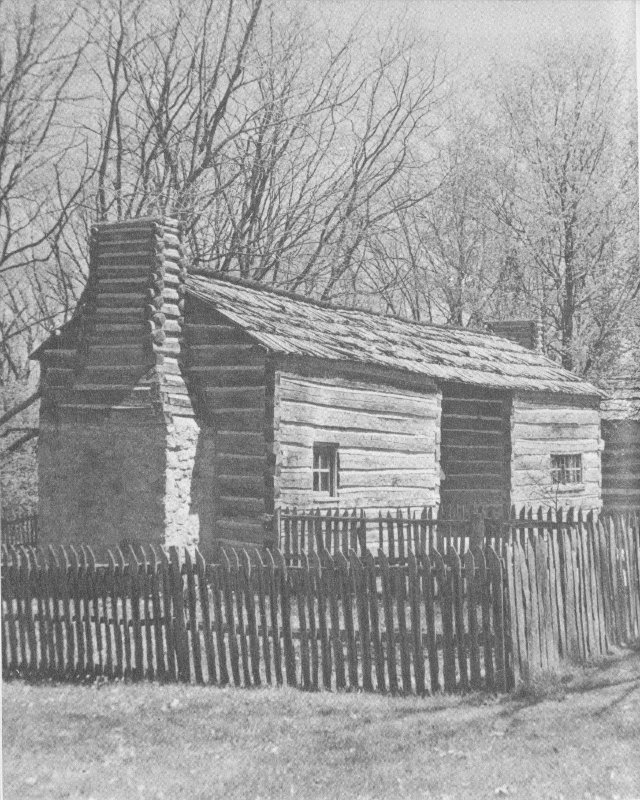
Across the road from the cooperage stood the double cabin of Jack Kelso, philosopher and fisherman, and his brother-in-law, Joshua Miller, the powerful village blacksmith.
59
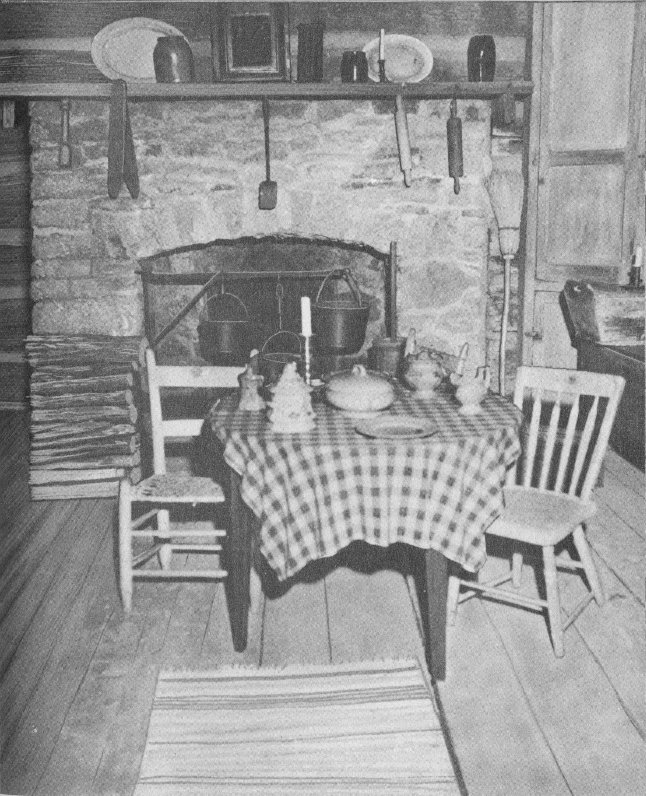
Lincoln was a frequent visitor to the Kelso cabin; he and Jack often sat around the table and by the cheerful glow of the fireplace, read and discussed Shakespeare, Blackstone and Burns. It was Jack Kelso who introduced Lincoln to the classics of literature.
60
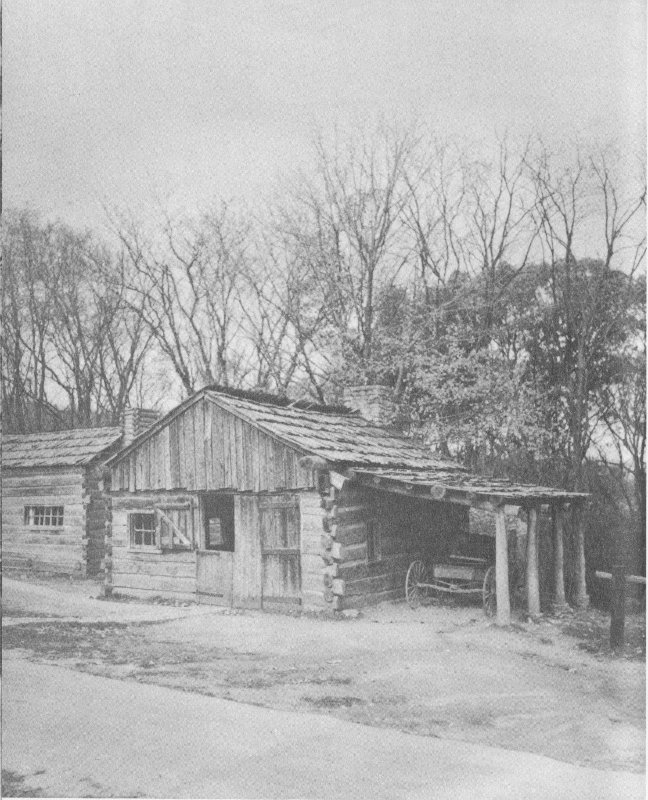
Joshua Miller’s blacksmith shop was the busiest place in town. The ring of his anvil was heard from morning until night throughout the village as he shaped metal into oxen shoes, horseshoes and farm implements.
61
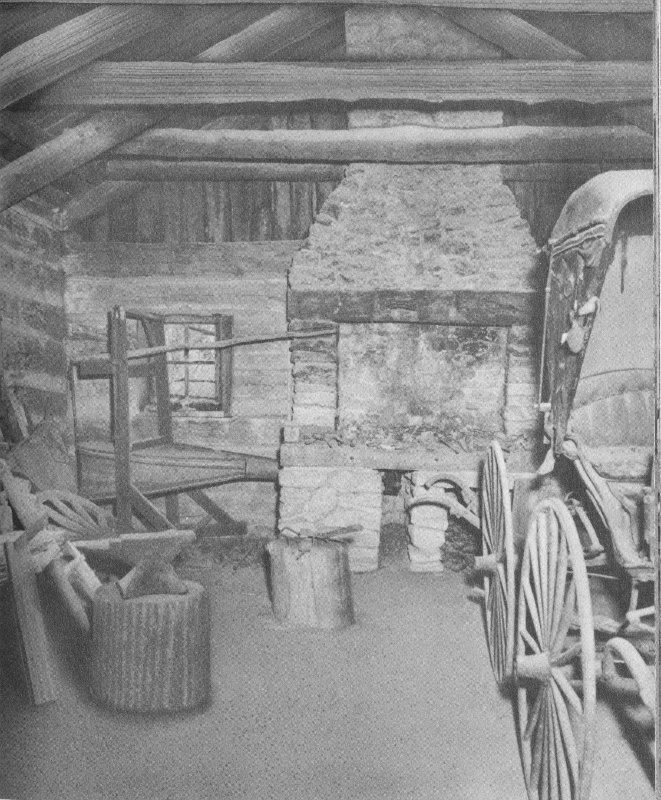
Lincoln, seeking an occupation that would afford him a better living than odd jobs, considered becoming a blacksmith. For a time his strong arms grappled with the chore, but he preferred lighter work which allowed him more time for studying. He also had thoughts of becoming a merchant.
62
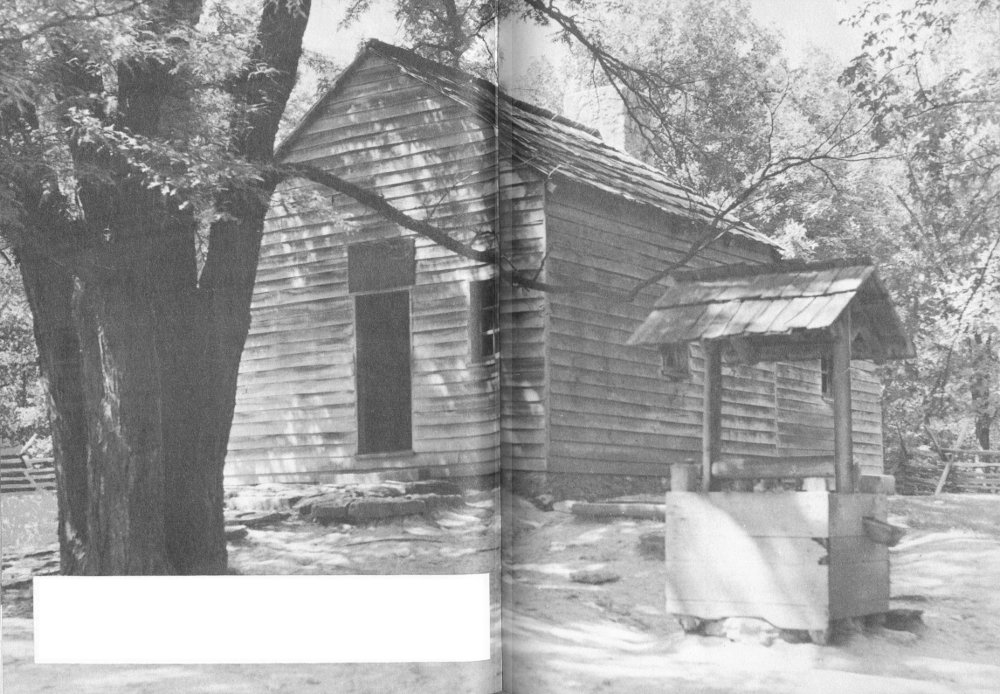
The limbs of the great oak tree still cast their shadows across the Lincoln-Berry store. In fair weather, when housewives were busy and sales were restricted to an occasional pound of sugar or a piece of beeswax, Lincoln, barefoot, lay stretched out under the oak tree, lost in a book.
64
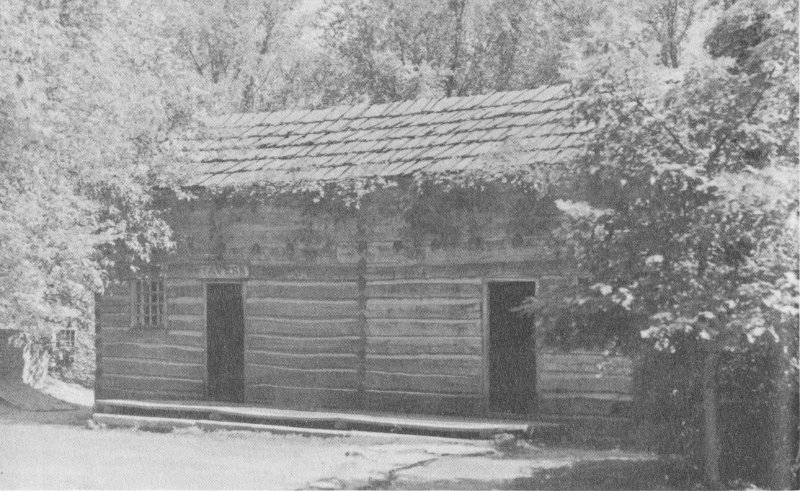
The Rutledge Tavern, where Lincoln courted Ann Rutledge, stood across the road from the Lincoln-Berry store. While waiting on a customer, or studying under the oak tree, he often paused to watch her as she moved about the yard of the tavern.
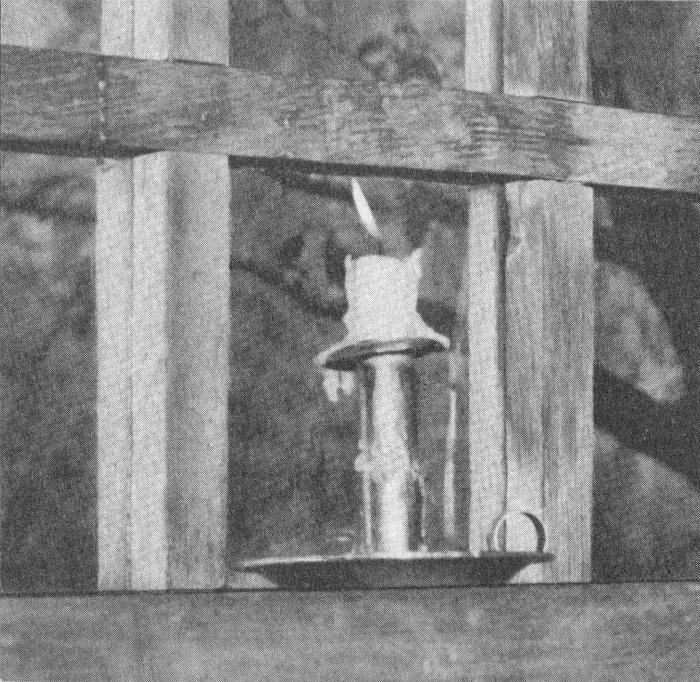
A burning candle in the tavern window welcomed whatever wayfarer might be seeking food and lodging.
65
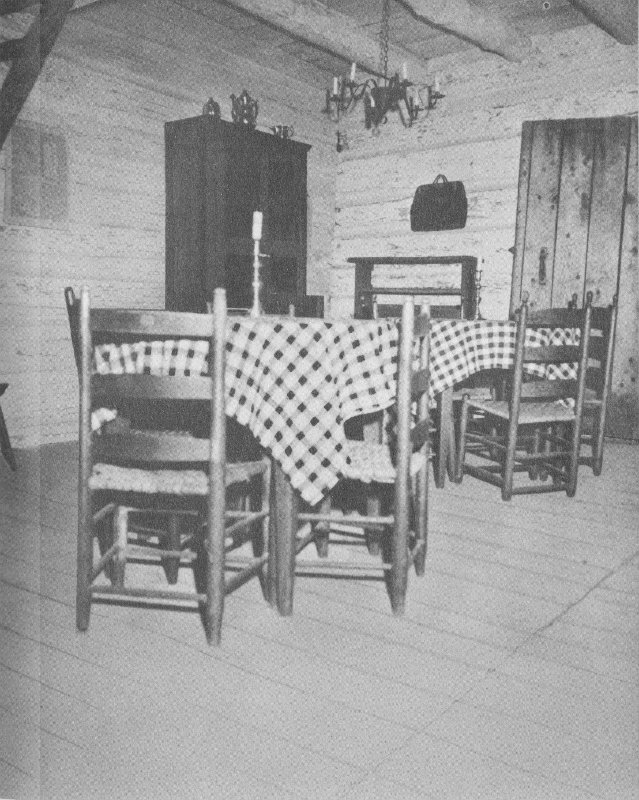
The tavern was a pleasant and comfortable place. Every day brought new guests to the dining room. For a time Lincoln lived at the tavern; his wit and tall tales often made him the center of interest.
66
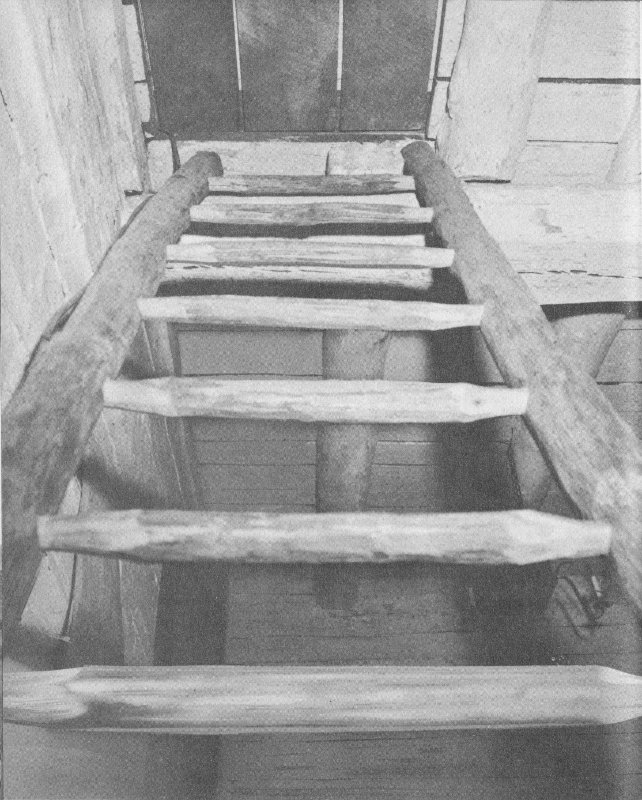
While residing at the tavern, Lincoln climbed the rungs of a well-worn ladder to the loft, where he shared a bed with E. Y. Ellis, who says that Lincoln’s wit and stories often kept the other male guests in an uproar until late at night.
67
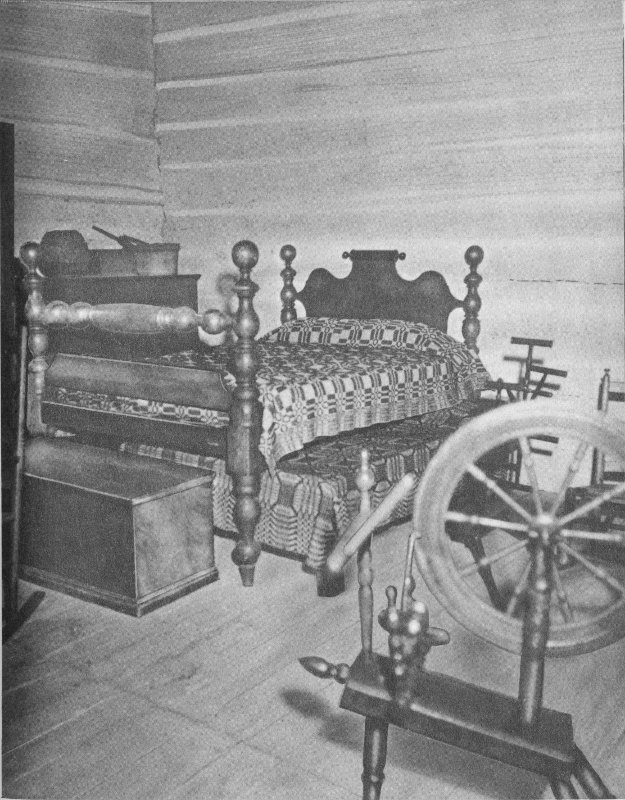
The west room of the tavern accommodated the Rutledge family and now and then an overnight lady guest.
68
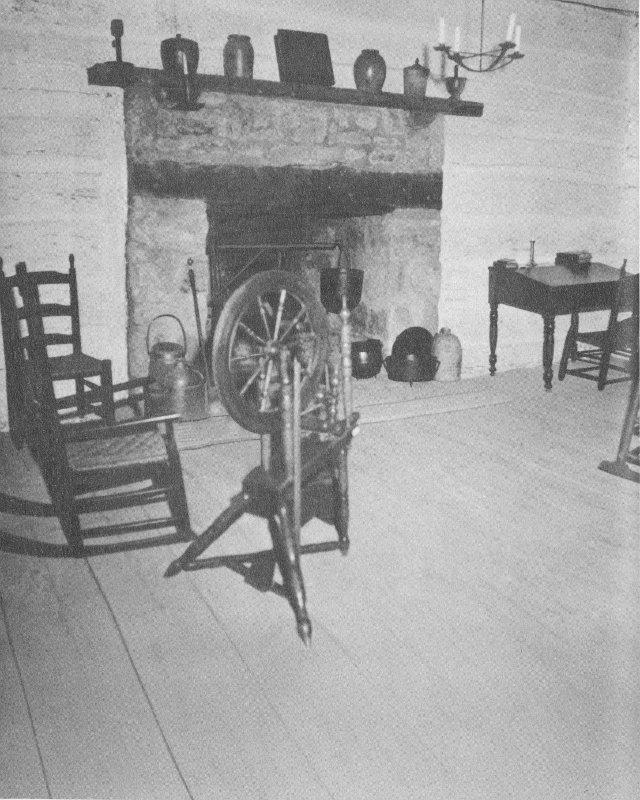
On Sunday evenings the Rutledge family and friends gathered before the fireplace to listen to a sermon and to sing hymns. Lincoln stood near Ann and turned the pages of her Missouri Harmony Song Book.
69
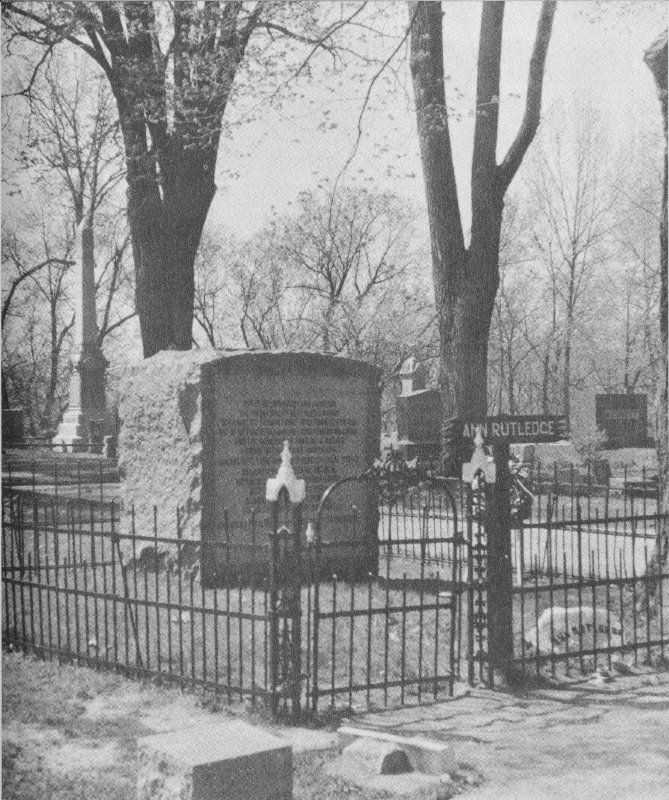
The betrothal of Ann Rutledge and Lincoln ended with her untimely death. Ann’s brother said: “The effect upon Mr. Lincoln’s mind was terrible. He became plunged in despair, and many of his friends feared reason would desert her throne. His extraordinary emotions were regarded as strong evidence of the existence of the tenderest relations between himself and the deceased.”
70
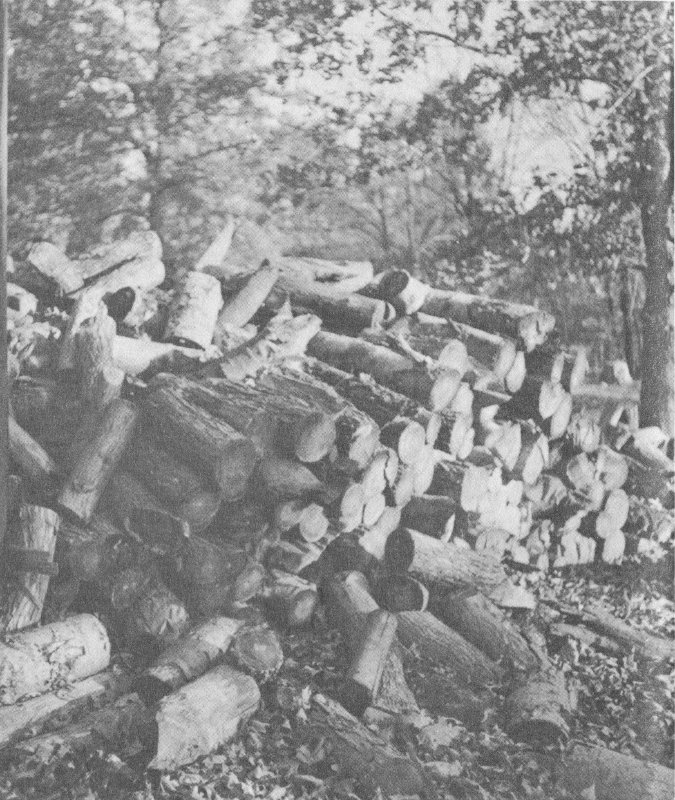
Lincoln, the ardent student, could be found pursuing his studies in the most unusual places. Squire Godbey, seeing him stretched out on a pile of wood, inquired: “What are you reading Abe?” Lincoln replied: “I am not reading. I am studying Law.” “Law? Good God A’mighty!” exclaimed the surprised squire as he walked away.
71
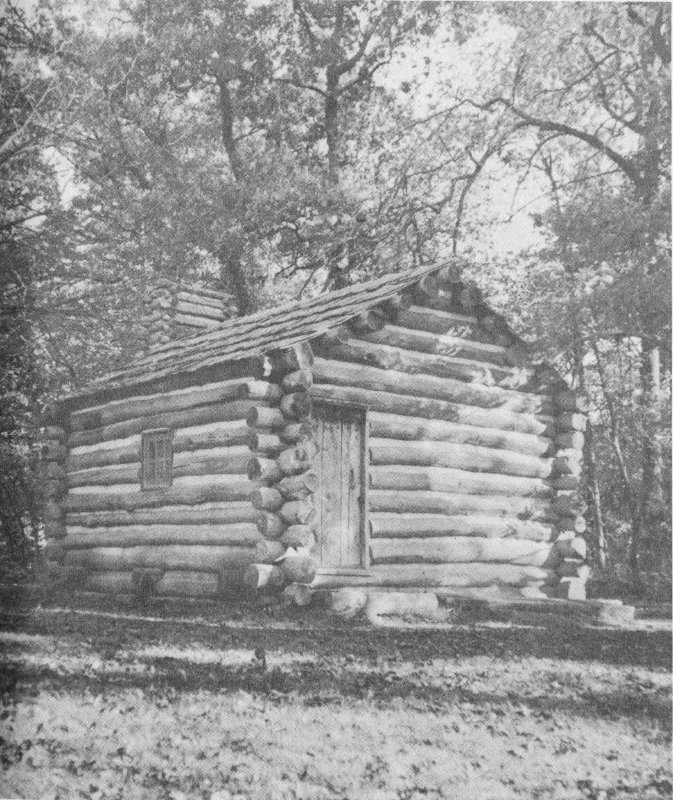
The little subscription schoolhouse stands a half mile south of the village near Purkapile “crick.” Schoolmaster Mentor Graham was a constant stimulus to Lincoln and always ready to help and encourage him. After the day’s routine had ended Lincoln often came to the school so that the master might evaluate his progress.
72
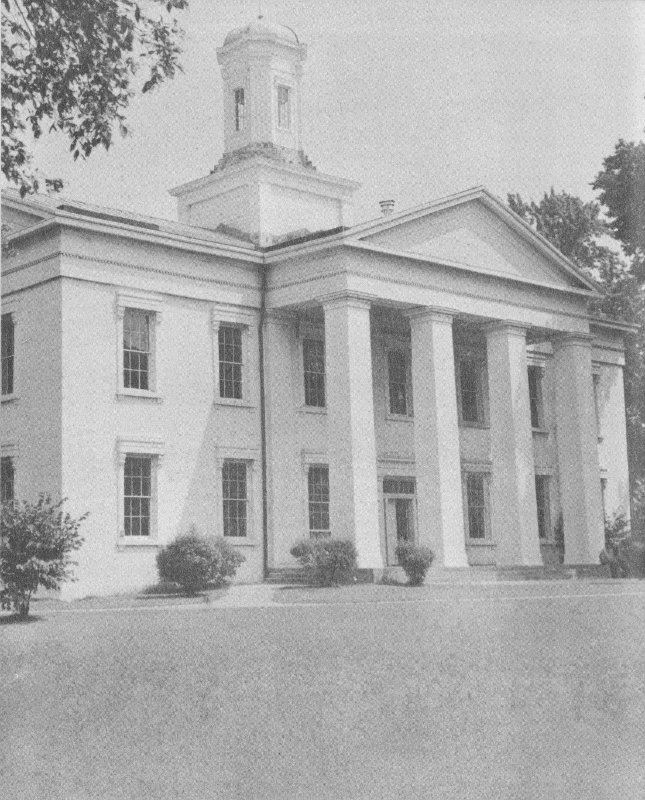
In 1834, Lincoln’s quest for knowledge and esteem was rewarded. The citizens of Sangamon County sent the novice lawmaker to the State Capitol at Vandalia, to take his seat in the Ninth General Assembly of the Legislature of Illinois.
73
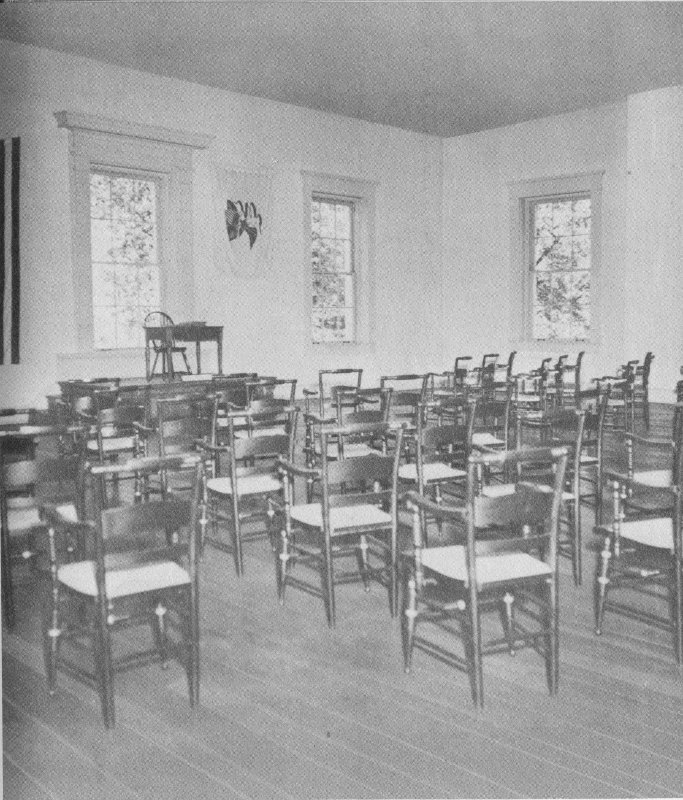
In the Assembly, Lincoln said little, but observed closely and learned much. He was among men of affairs, education and political experience. He became floor leader of the Whigs and an esteemed member of a political group known as the “Long Nine” who were successful in having the State Capitol moved from Vandalia to Springfield.
74
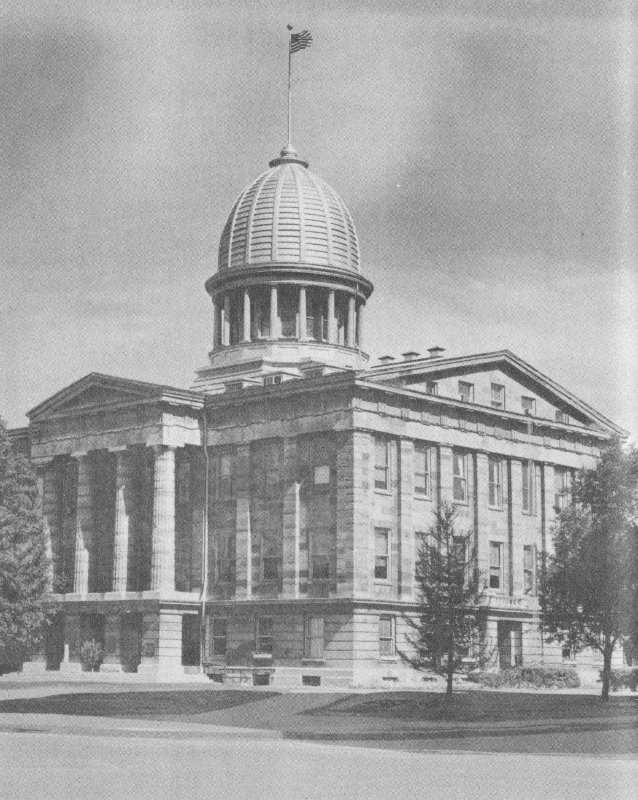
In March of 1837, after having been admitted to the bar in Illinois, Lincoln moved from New Salem to Springfield. For the next twenty-five years the first State Capitol Building in Springfield became the center of his many activities.
75
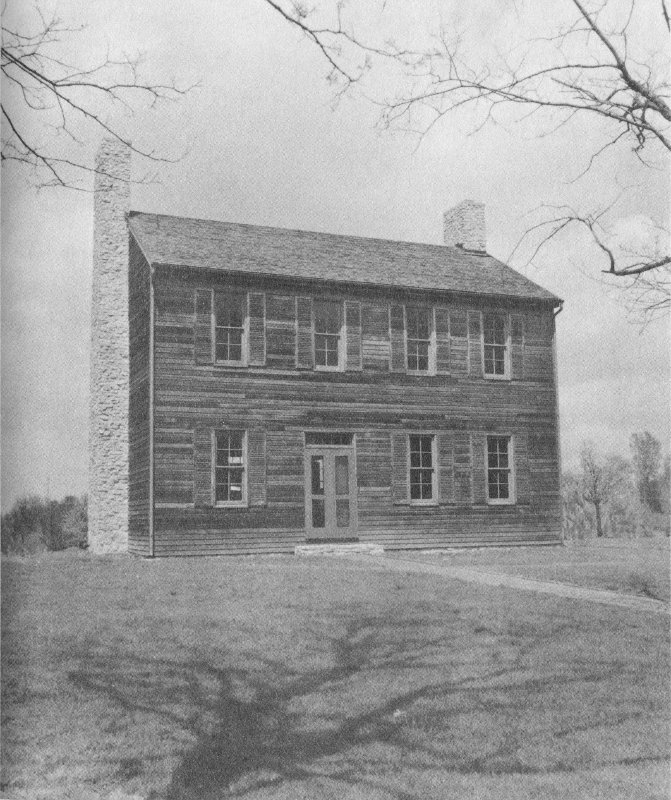
The Postville Courthouse was on the “Old Eighth Circuit.” In Lincoln’s day judges and lawyers rode horseback from one county courthouse to another, so as to make a living by representing the litigants in the suits to be heard. This was known as “riding the circuit.”
76
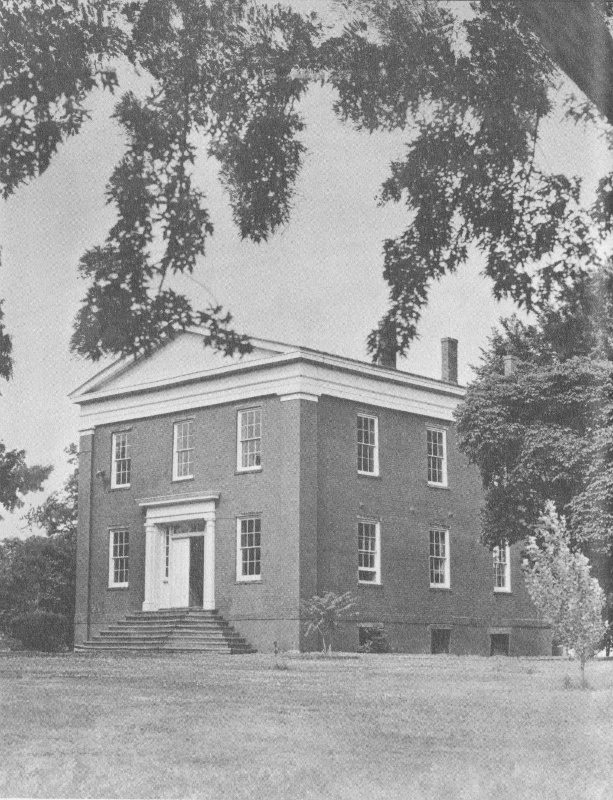
The Mount Pulaski Courthouse hasn’t changed much since Lincoln practiced law here more than a hundred years ago.
77
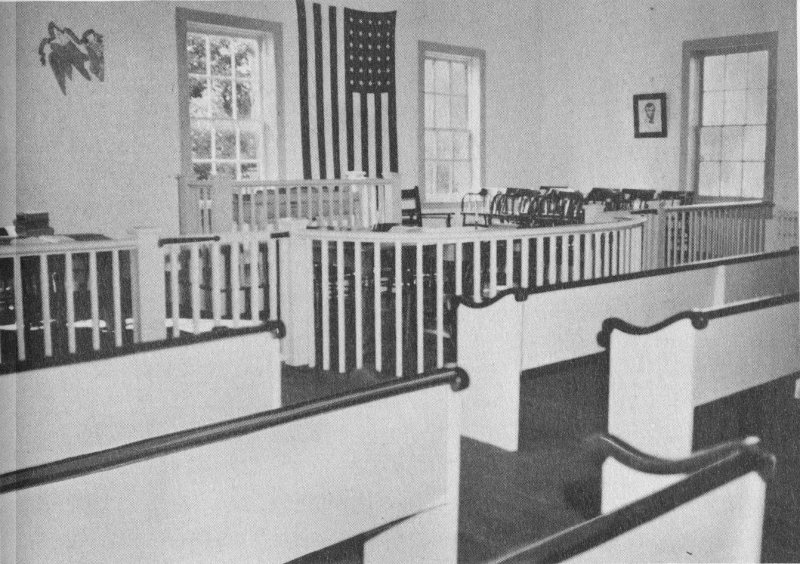
In the court and jury room Lincoln argued cases before such distinguished judges as David Davis, who became a Justice of the United States Supreme Court.
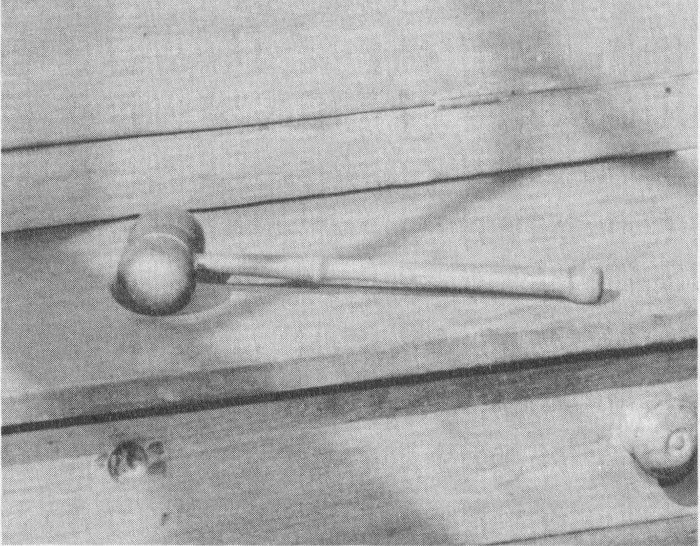
During those inevitable moments of disturbance when the courtroom became unruly, Judge Davis would sound this gavel calling for order in the court.
78
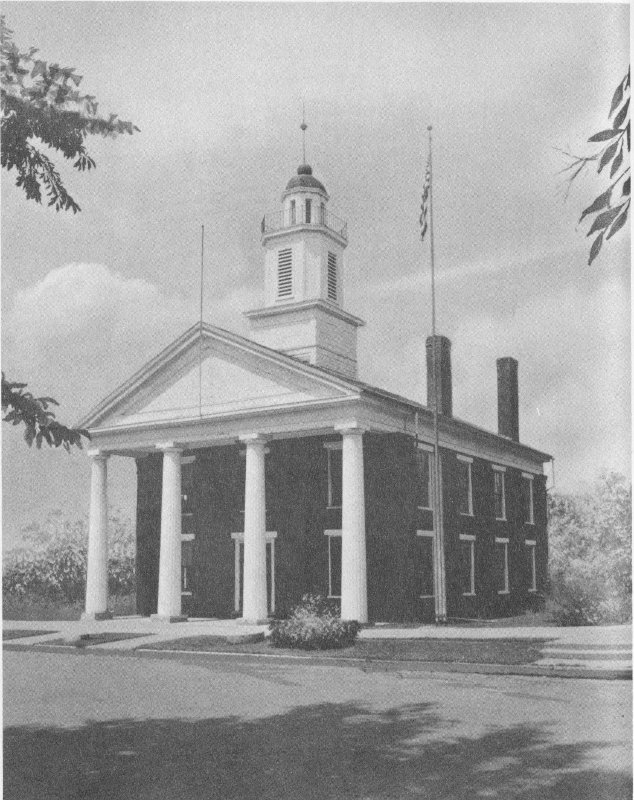
The Metamora Courthouse, dating from 1845, retains the atmosphere of those rugged days when Lincoln and his colleagues came here to plead for justice before the bar.
79
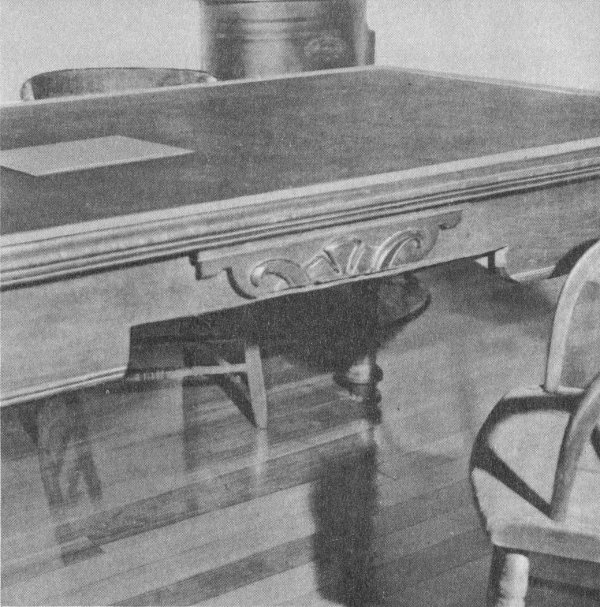
At Metamora, Lincoln sat at this table. The “skirt” was cut away to accommodate his long legs.
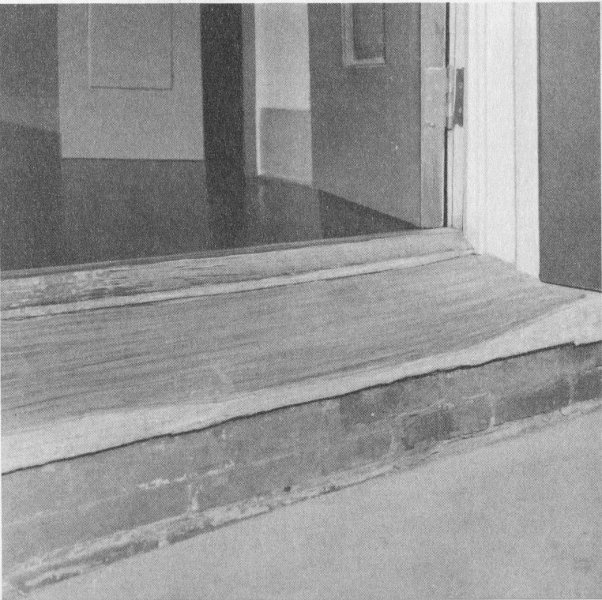
The well-worn courthouse doorstep is evidence of one court room visitor’s observations: “Court week is a general holiday. Not only suitors, jurors and witnesses, but all who can spare the time brush up their coats and brush down their horses to go to court.”
80
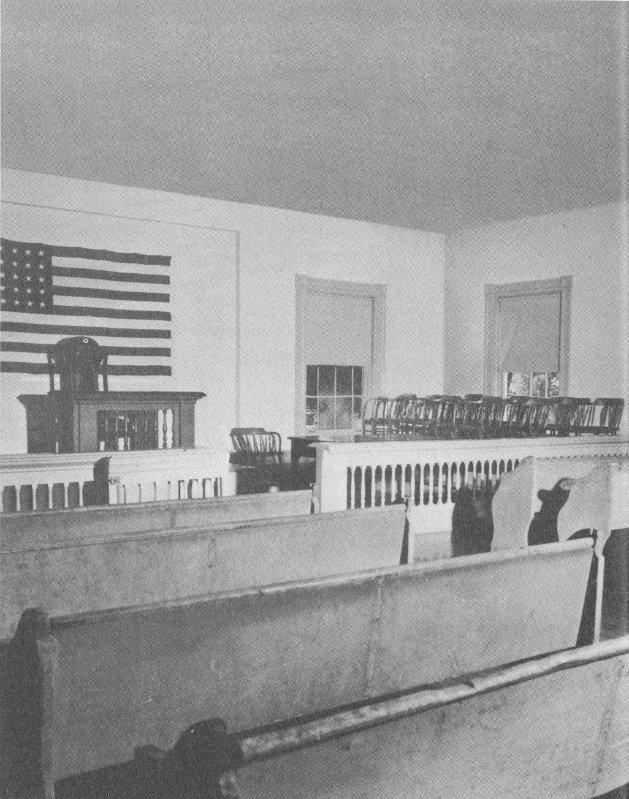
An atmosphere of exultation pervaded the Metamora courtroom when Lincoln was present. He was the most popular of all the barristers who traveled the Eighth Circuit.
81
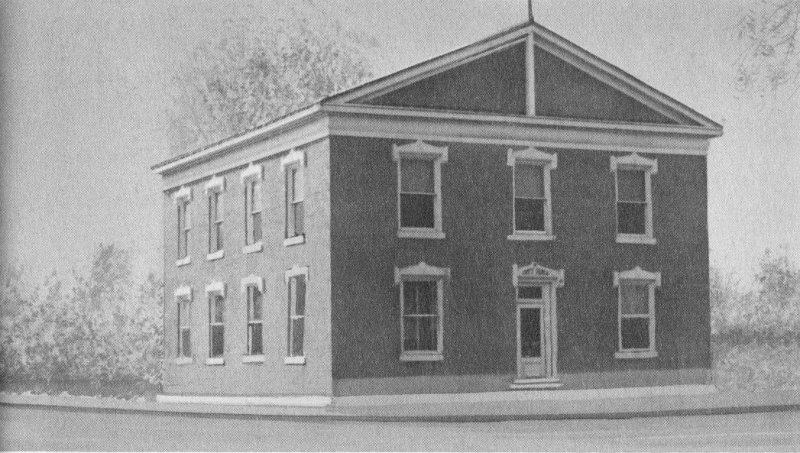
The Old Cass County Courthouse in Beadstown, Illinois, was the scene of the “Duff” Armstrong murder trial in which Lincoln defended the son of “Aunt Hanna” Armstrong, who had befriended him when he lived in New Salem. During the trial Lincoln proved, by referring to an almanac, that the moon was not shining brightly at the time of the murder. It is said that tears stood in Lincoln’s eyes as he pleaded for the boy’s life and that the hardened pioneer jurymen wept with him. Young Armstrong was acquitted.
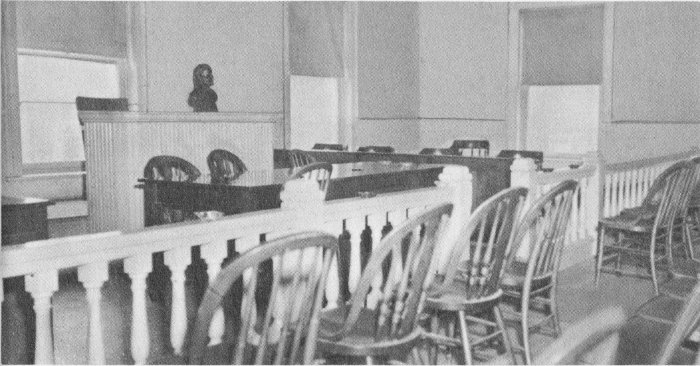
82
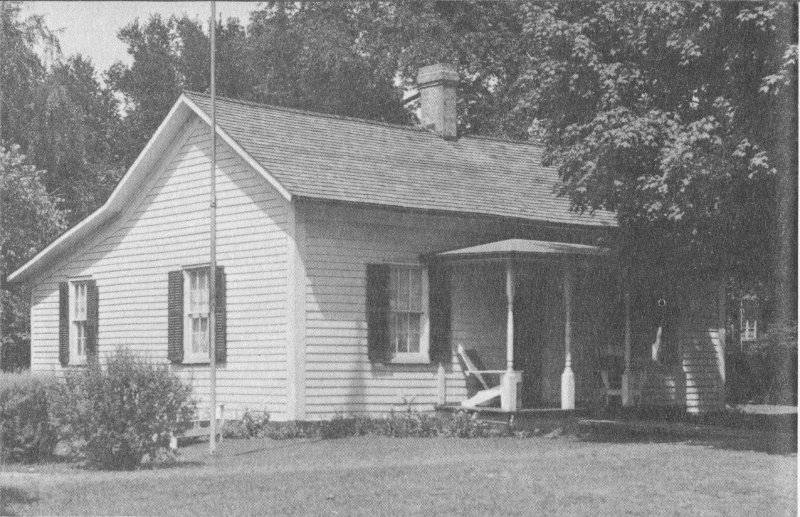
On the evening of July 29, 1858, Lincoln, Republican Candidate for the United States Senate and the incumbent Democratic Senator, Stephen A. Douglas, were guests at the Bryant Home. It was here that the two politicians agreed to their seven debates.
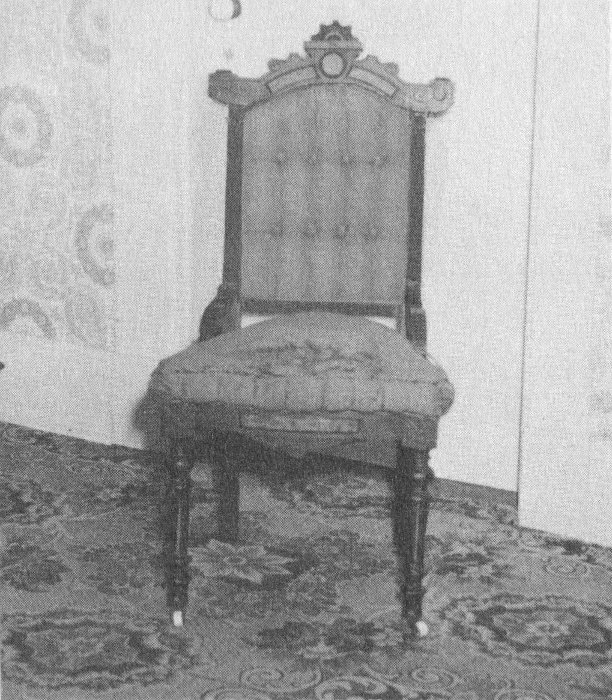
Lincoln occupied the chair below during the evening’s discussion.
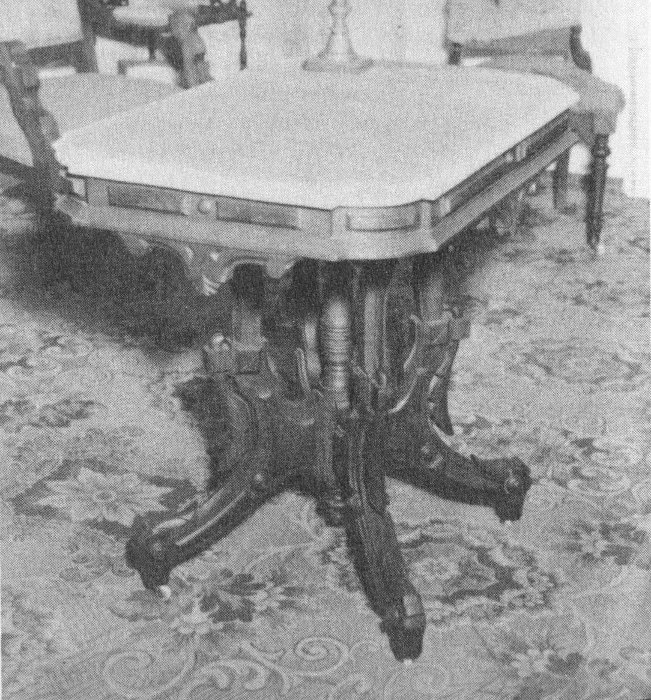
On this table Douglas wrote a letter to Lincoln confirming the schedule for seven debates.
83
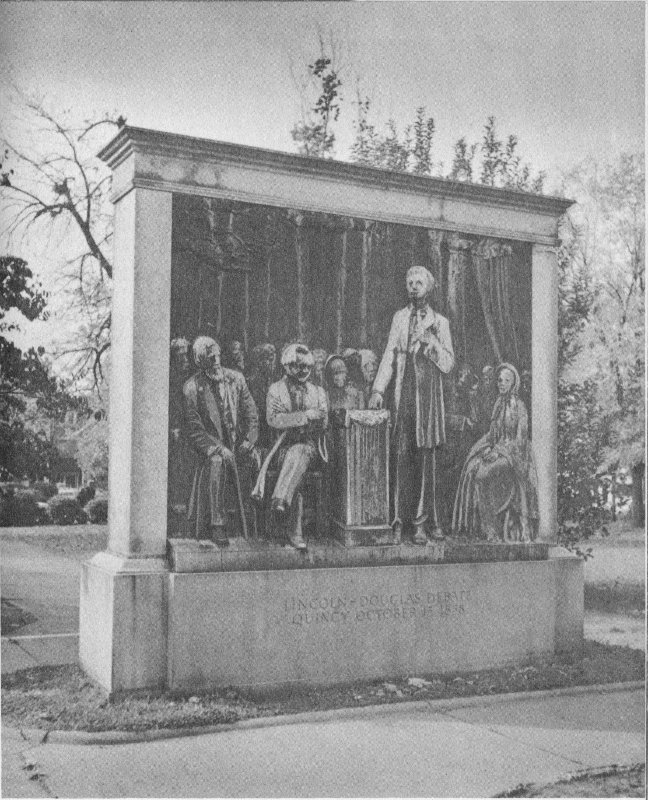
This memorial to the Lincoln-Douglas debates, at Quincy, Illinois, stands as a symbol of Lincoln’s moral and spiritual convictions. They enabled him to match wits with Stephen A. Douglas, who was blind to the evils of slavery and deaf and dumb to those who expressed a desire to abolish it.
84
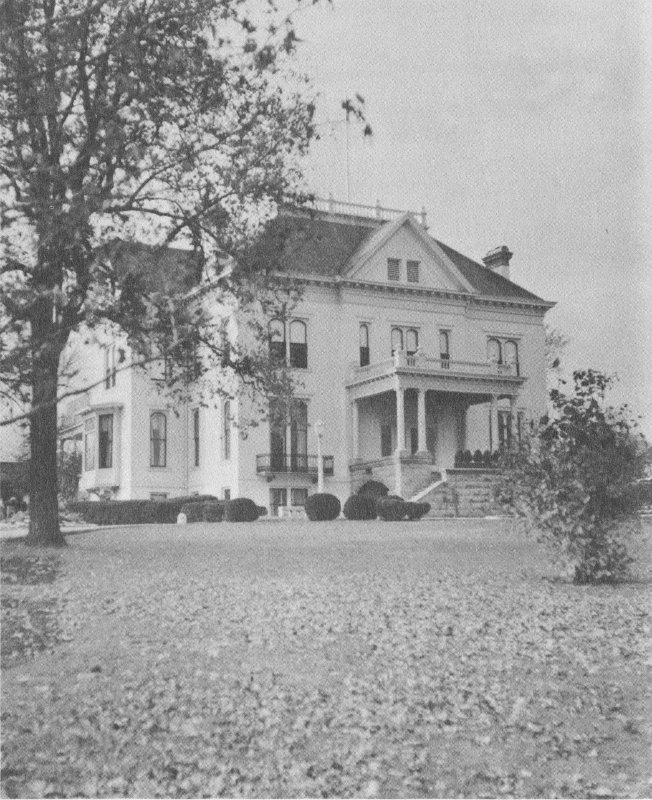
Lincoln had crossed the threshold of his greatest ambition when he and his family became frequent visitors to the Governor’s Mansion, where they mingled with the elite both politically and socially. Lincoln’s name had been mentioned in the press as a possible candidate for the Presidency.
85
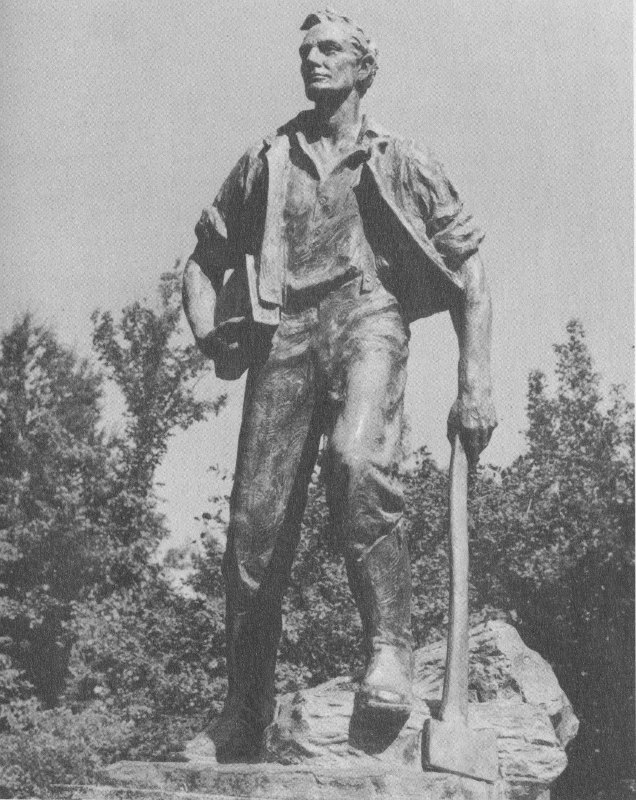
“The Rail Splitter.” Lincoln acquired this nickname during the 1860 convention in Chicago, where he became known as “The Rail Splitter” candidate for President of the United States.
86
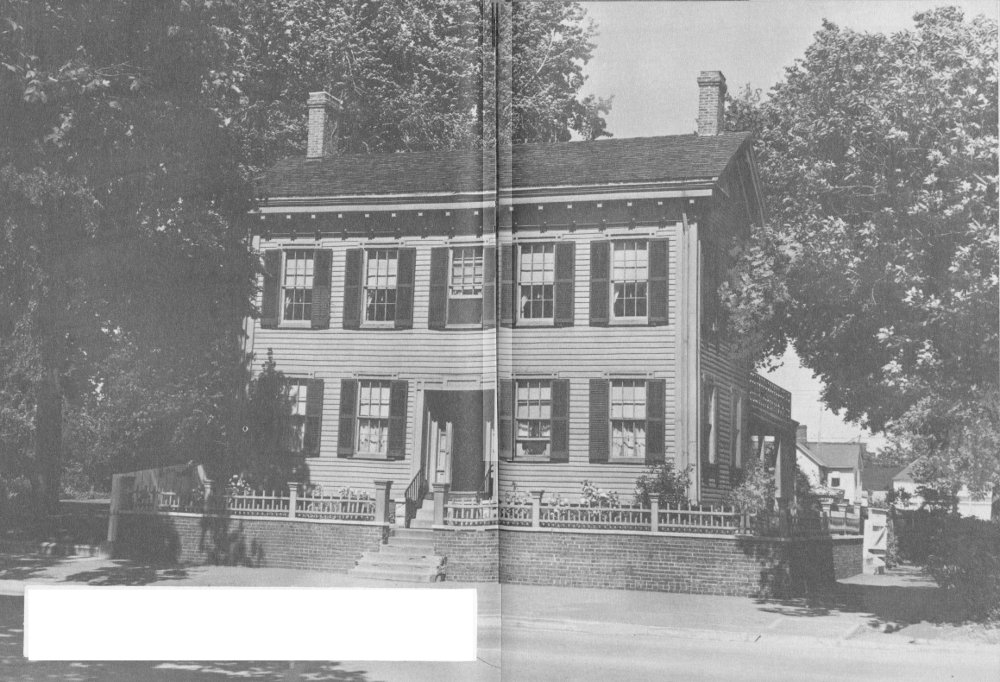
It was to this house, Lincoln’s Springfield residence, that the appointed committee came on May 19, 1860 to notify “The Rail Splitter” candidate of his nomination for the Presidency.
88
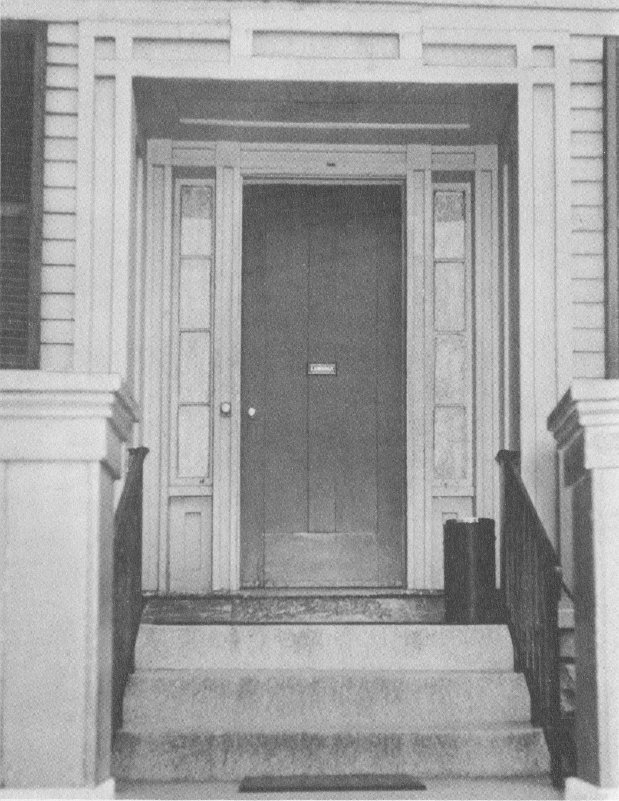
One of the committeemen rang the front doorbell, which has announced visitors to the Lincoln house for more than a hundred years.
89
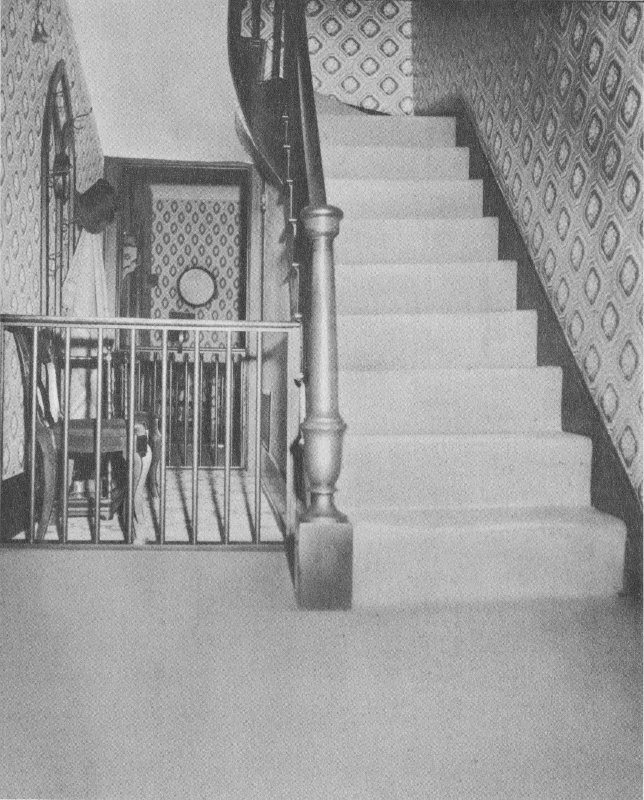
“The Rail Splitter” himself opened the front door and welcomed the committee into the entrance hall, where both the humble and the great had always been welcome visitors.
90
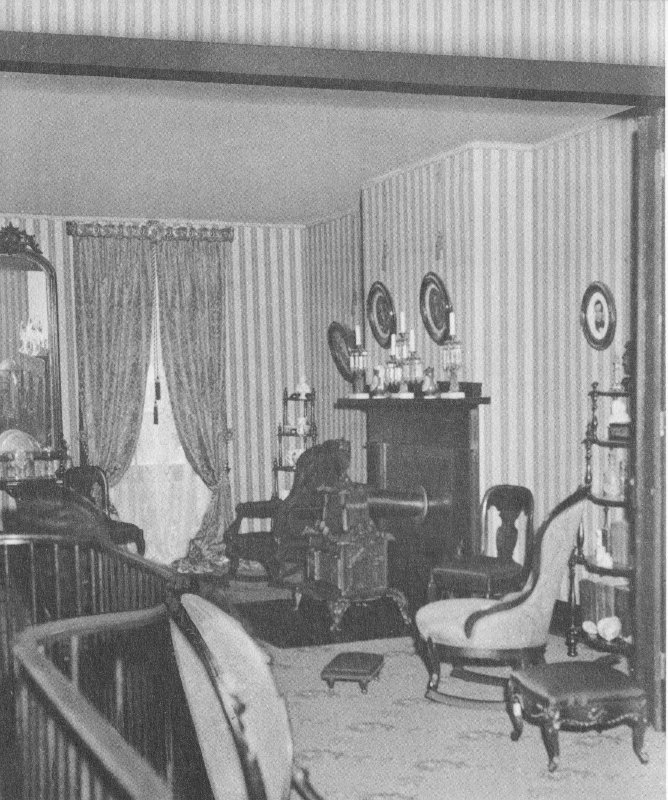
It was in the north parlor that the committee spokesman, George Ashmun, delivered to Lincoln the letter which confirmed his nomination, a copy of the Republican platform and a short congratulatory speech. “The Rail Splitter” candidate stood tall and dignified, a grave expression on his rugged countenance.
91
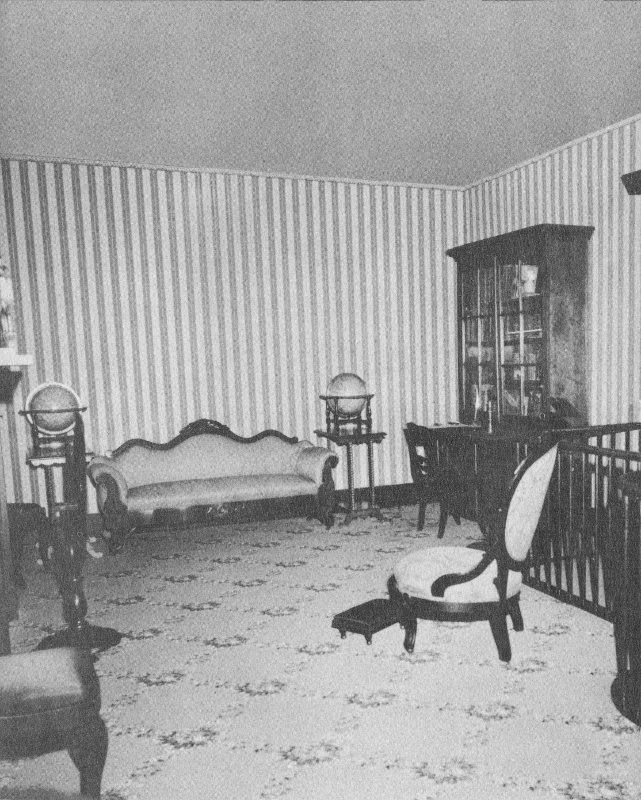
The committee was introduced to Mrs. Lincoln in the south parlor, where she served refreshments and water. Later “The Rail Splitter” opined that the water seemed a sufficient stimulant.
92
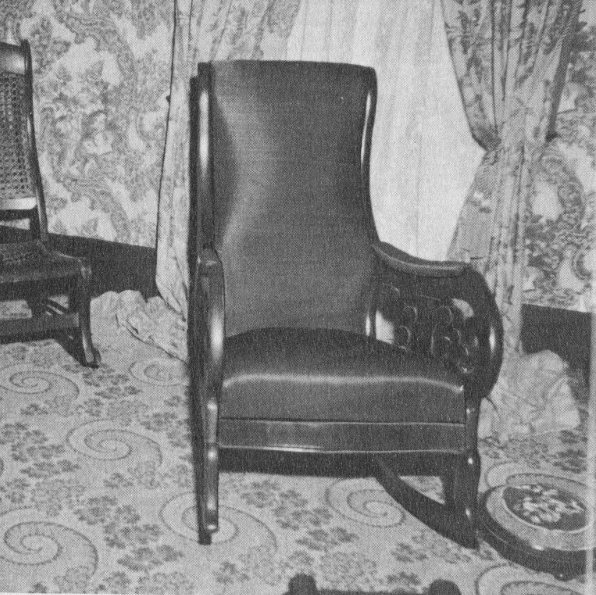
Mr. Lincoln’s favorite rocker.
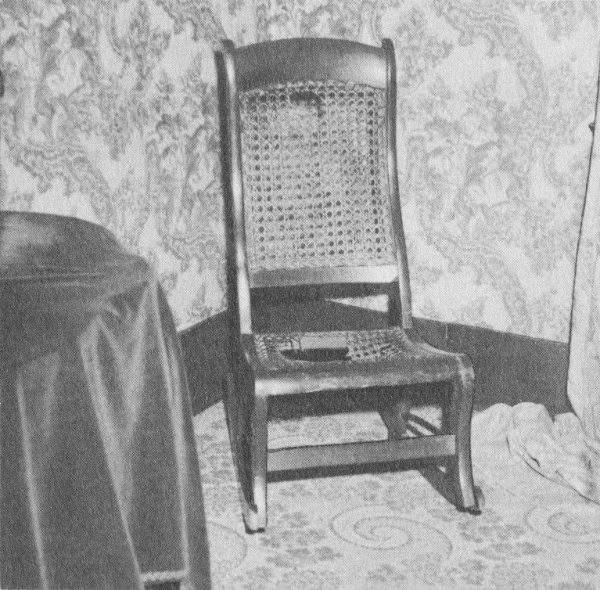
Mrs. Lincoln’s sewing rocker.
93
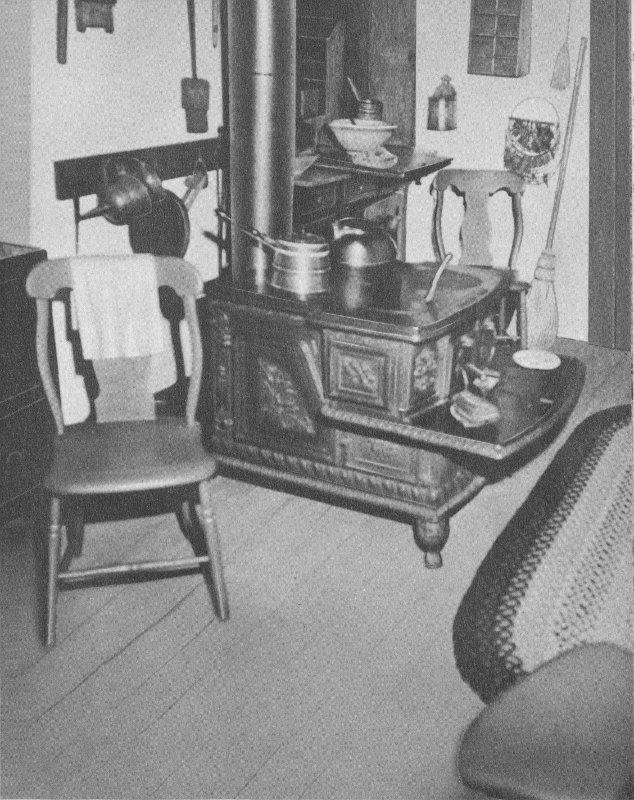
When Mrs. Lincoln was entertaining friends, “Honest Abe” often retired to the kitchen where he stretched out on the floor to read a book or newspaper.
94
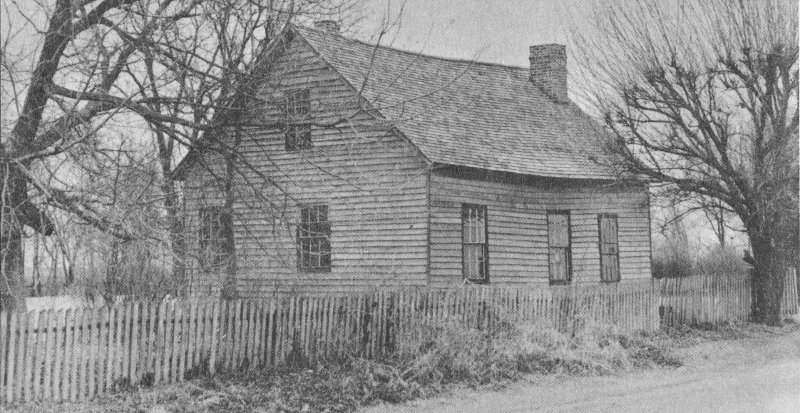
It was a cold January day when Lincoln journeyed from Springfield to this quaint little house near Charleston, Illinois, to visit for the last time with his beloved stepmother, before leaving for Washington and his inauguration.
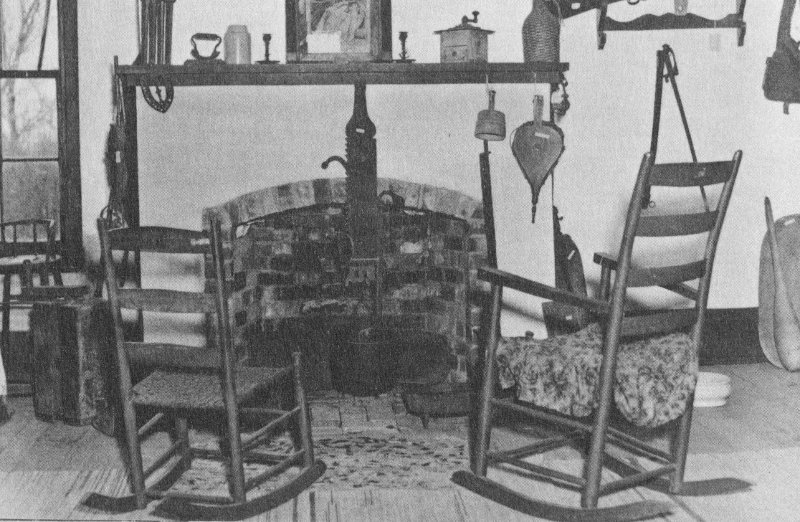
While sitting before the glowing fireplace, Lincoln and his stepmother must have reminisced about those formidable days in the forests of Indiana and the first few years on the prairies of Illinois.
95
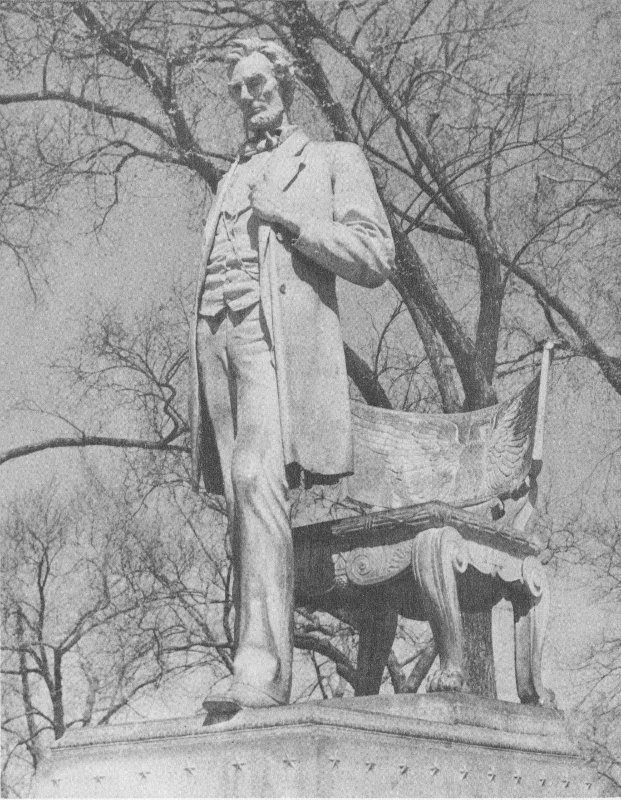
“How slowly, and yet by happily prepared steps, he came to his place,” said Emerson. This statue is in Chicago’s Lincoln Park.
96
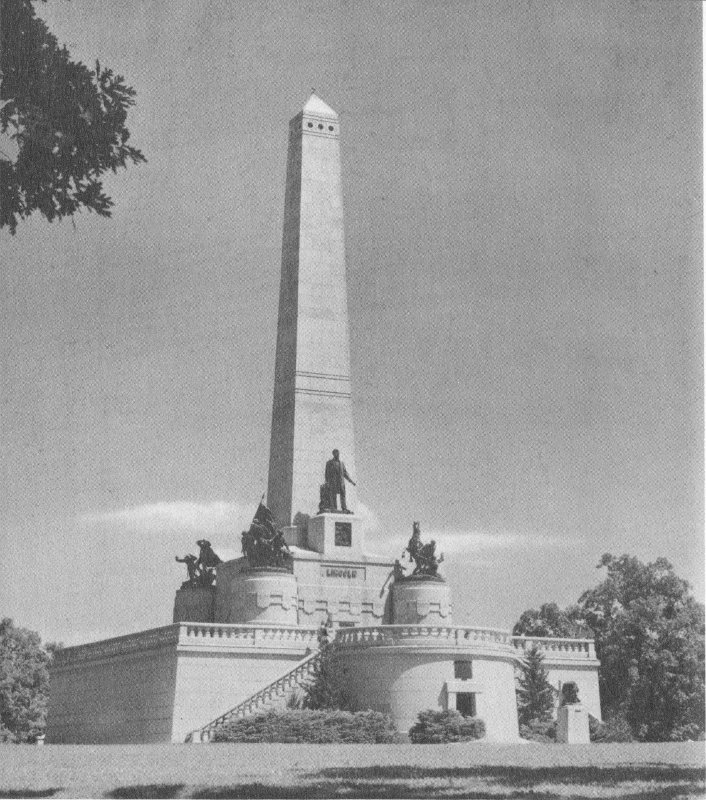
At the dedication of the memorial and tomb to the Great Emancipator in Oak Ridge Cemetery, Springfield, Illinois, Governor Richard Oglesby spoke these words: “And now under the gracious favor of Almighty God, I dedicate this monument to the memory of the obscure boy, the honest man, the illustrious statesman, the great liberator, and the martyr President Abraham Lincoln, and to the keeping of Time.”