PEOPLE I HAVE NOT MET
Reading edition
THE TURTLE
I never wasted any love On turtles, but the turtle-dove Is quite another thing; When I have nothing else to do, I love to hear them bill and coo While mating in the spring.
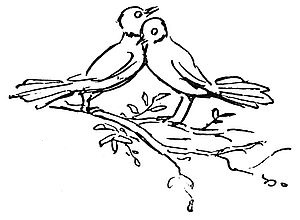
There’s something in their plaintive note That brings a lump into my throat And makes my pulses stir; Something between a smothered snore And the shrill creaking of a door, That soothes me, as it were.
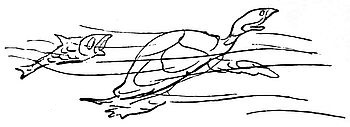
How strange is Nature’s alchemy, To think that living in the sea Should change a creature so! The turtle of the finny kind That swims the sea, is to my mind The lowest of the low.
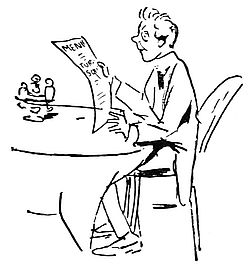
And yet, O inconsistency! Although the turtle is to me A most obnoxious beast, When on a menu card I spy “Green Turtle, Soup,” though it comes high, I take two plates at least!
MICHAEL O’LEARY
When forming one of a storming party which advanced against an enemy’s barricade, O’Leary rushed to the front and himself killed five Germans who were holding the first barricade, after which he attacked the second barricade, about sixty yards further on, which he captured after killing three of the enemy and making prisoners of two more.
You may talk of the Rebels of Ulster And the shindy we had to chuck; But we don’t give a rap for a family scrap Whin the Prooshuns is running amuck. Did you hear how Lance Corporal O’Leary, Mike O’Leary of the Guards, Wid his own two mits, tore a forthress to bits Like a blissed conthraption of cards. He’d a shmile, had Mike, that ’ud span a dyke, And a fist that ’ud fell a horse, And he ripped through the mire of blood and barbed wire, Like a bull through a bunch of gorse.
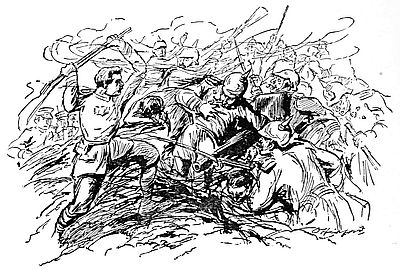
Whin he waded in, sure ’twas a sin, The way that he bashed and bruk ’em; He dropped on thim Huns like forty tons, And they niver knew what had struck ’em. “Poor dears,” says Mike, “I’m thinking belike All the news they’ve been told is lies, So it’s up to me, ’ere it’s kilt they be, To put the poor divils wise. “Thim Huns, I’m told, while outrageous bold Is over a trifle dull. Sure, if that’s a fact, ’tis a friendly act To hammer it through their skull. “So here’s for insulting old Erin, By thinking a thraitor she’d be! And here’s for your Imperor sneerin’! ‘Contemptible army,’ says he. “Here’s one for the mothers whose pleadin’ You stopped with a shot and a curse, And one for the girls dead and bleedin’ And the girls that you spared—for worse. “For the churches you shelled and the priests you felled Here’s one! And the women, too, You held for a shield on the battle field, And the innocent babes you slew.” Whin O’Leary had done, there was divil a one Left to tumble to what he said— Barrin’ only ten, which I’m wrong again, For eight av the ten was dead.
CLORINDA
A Fable for Heiresses
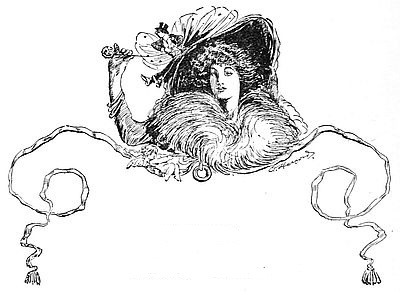
CLORINDA
A Fable for Heiresses
Above the plate-glass window-pane, Inviting every passing gaze, Hung an inscription, large and plain, “The Husband Shop.” This, in amaze, Clorinda seeing, stopped wide-eyed, And stared, then turned and stepped inside. A floor-walker whose faultlessness And condescending air proclaimed One of the table d’haute noblesse, Approached Clorinda and exclaimed, With graceful undulating palm: “Something in husbands? Oui, Madame.” “We have the latest thing of all In husbands; kindly step this way. We’re using them on hats this fall, In place of plume or floral spray, The creature being pinned or tied With chiffon bows on either side.” He leads the way, all wreathed in smiles, And wonderful in spotless spats That flitter like twin butterflies Along an avenue of hats, Each one displaying on its brim A husband—fashion’s latest whim. Clorinda tries them each in turn Before the glass; some are too small, And some too cold, and some too stern, And some are slightly soiled, and all, When punctured by the hat-pin’s steel, Betray by squirms how bored they feel. At last Clorinda came to one Marked “Dibbs,” that scarce seemed worth her while; But when she tried it on for fun, It met the hat-pin with a smile, As if to say, “Oh, beauteous miss, Even a stab from you is bliss!” “The very thing! but thrown away Upon a hat!” Clorinda cried. “’Twould make a sweet corsage bouquet.” The shoppers stared electrified, To see Clorinda Dibbs depart Wearing a husband next her heart.
ALCIBIADES J. SKINNER
Alcibiades J. Skinner Was a famous after-dinner Speaker. Great the way He secured, just by excelling In the art of Story Telling, One good meal a day. Chestnuts more than often passé He exchanged for Marrons Glacés, Canvasback and Quail. Flat the feast and dull the dinner Lacking that accomplished Spinner Of Postprandial Tale. Every mail brought invitations: Teas and luncheons and collations, Dinners without end. No one to a Formal Function Such impressiveness, such unction, Such éclat could lend. At that gruesomest of gruesome Rites, The Banquet tendered to some Literary Light, None could say with such conviction, “We have Snooks of Snappy Fiction In our midst To-night.” How he said it made no matter; Shaft of Wit or Broadway Patter Meets with like acclaim. Latest Mot or Jest Historic, To the dinner guest plethoric It is all the same. When he said, “This moment finds me Unprepared,” or, “That reminds me,” There would be a hum Of expectance, or a rippling As though Daniel (or Kipling) Had to Judgment come. Alas for Fame! As A. J. Skinner Put it at the Author’s Dinner, “Fame’s a fickle Jade!” Had he then an intimation That his own wide reputation Was ere long to fade? From that day his after-dinner Stories thinner grew and thinner. Sorry was his case. Rare the dinner invitation, Rarer still the lunch—Starvation Stared him in the face. One day as his eye was wandering O’er a map, he fell to pondering: “If I cross the Main, Somewhere ’twixt the Poles and Tropics I may find some brand new Topics For my food campaign!” So one Friday A. J. Skinner Bought a passage and an “Inner” On a sailing ship; Not for sport or relaxation, Not for rest or recreation— ’Twas a business trip. Fatal trip, had he but known it! Or a Fortune Teller shown it Written on his palm!— How one morning bright and sunny, With a breeze as soft as honey, And a sea as calm— Somewhere in the South Pacific There would spring up a terrific Tropical typhoon— Smite their helpless ship and bear it On a mountain wave and tear it Like a Toy Balloon. Luckily for Mr. Skinner, When she sank he was not in her. Clinging to a Spar, Being, too, an expert swimmer, Soon he saw the breakers’ glimmer On a sandy bar. Lucky, did I say? Appalling Choice of words! Would you when crawling Up a Sandbank gritty, On firm land a foothold winning, Call it luck to meet a grinning Cannibal Committee? Well, to make a long narration Shorter (by abbreviation), Soon as he was sighted Alcibiades J. Skinner To a most select Shore Dinner Was at once invited. Never had the South Pacific Witnessed such a beatific Banquet as was here. Never was such mirth unbounded As when that far beach resounded With unwonted cheer. Epicures on South Sea beaches Waste no time on Toasts and Speeches; Happy dreams had they. In their midst was A. J. Skinner, Most nutritious After-Dinner Speaker of his day.
EVE
Apropos de Rien
It is not fair to visit all The blame on Eve, for Adam’s fall; The most Eve did was to display Contributory negligé.
THE HIGHBROW HEN
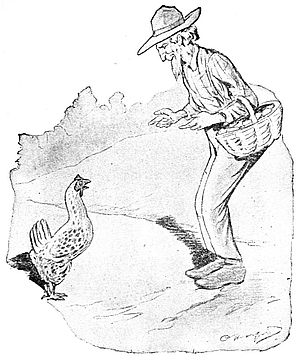
Said Farmer Dole to his speckled hen, “Why don’t you lay for me now and then?” Said the speckled hen to Farmer Dole, “Because I’ve taken up birth control.”
SIR IPPYKIN
Grim Giant Graft sate in his cavern dim; A king’s reward was offered for him dead. He scowled to think it could not come to him, That price upon his head. Of all his foes he dreaded only one, A knight of stalwart heart and spotless fame, Who feared no creature underneath the sun— Sir Ippykin his name. One night to Ippykin there came a thought— A mocking thought, that whispered in his ear: “Ah, ha, Sir Knight! men say thou fearest naught; They lie—thou fearest Fear! “Fear smites you when you read the king’s decree That whatsoever knight shall rid the land Of Giant Graft will gain a golden fee, Likewise his daughter’s hand. “You fear to win, for fear that you must wed The princess—for you love another maid; You dare not lose the fight because you dread Lest men call you afraid.” Cried Ippykin, “Lord, how shall I cut through This tangled coil?” Then of a sudden laughed A gleeful laugh, and rose and hied him to The cave of Giant Graft. No chronicler was present to reveal What passed between the knight and Giant Graft; Or what the bargain was the which to seal So many horns they quaffed. But this is sure—thereafter from the lands Of Ippykin once every week would stray Certain fat sheep into the Giant’s hands In some mysterious way; And once a week the giant and the knight Would chase each other round in seeming strife, Until the king grew weary of the sight, And pensioned both for life. Then Ippykin and his true love were wed And both lived happy till they passed away; But Giant Graft, fat, flagrant, and well fed, Is living to this day.
THE PSYCHOLOGY COP
The New York Police Force is to be instructed in psychology.—News Item.
One morn, as Robert Ristwatch Rice Sped Childsward for his midday meal, Upon his shoulder, like a vise, He felt a grip of steel. And in his ear a voice there hissed (With spirits fraught, and crime), And something snapped around his wrist That did not tell the time. “I’ve pinched yer now!” (devoid of tact Was Sergeant Fay). “For shame! Yer Hun! I caught yer in the act Insultin’ that there dame! “That skirt there in the showy lid, And muff of classy fur.” “My word!” cried Robert Rice, “I did Not even speak to her.” “What’s words to me, just froth and foam! I’m a psycholic guy— I lamp yer thoughts inside yer dome With my subconscious eye!” “Then you should know,” said Rice, “I’m a Misogynist!”—“By Gee! That settles you!” cried Sergeant Fay; “You come along with me.”
PHYLLIS LEE
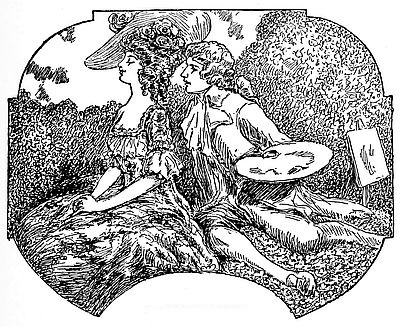
Beside a Primrose ’broider’d Rill Sat Phyllis Lee in Silken Dress Whilst Lucius limn’d with loving skill Her likeness, as a Shepherdess. Yet tho’ he strove with loving skill His Brush refused to work his Will. “Dear Maid, unless you close your Eyes I can not paint to-day,” he said; “Their Brightness shames the very Skies And turns their Turquoise into Lead.” Quoth Phyllis, then, “To save the Skies And speed your Brush, I’ll shut my Eyes.” Now when her Eyes were closed, the Dear, Not dreaming of such Treachery, Felt a Soft Whisper in her Ear, “Without the Light, how can one See?” “If you are sure that none can see I’ll keep them shut,” said Phyllis Lee.
MRS. SEYMOUR FENTOLIN
It was Mrs. Seymour Fentolin who stood there, a little dog under each arm; a large hat, gay with flowers, upon her head. She wore patent shoes with high heels, and white silk stockings. She had, indeed, the air of being dressed for luncheon at a fashionable restaurant. From a story in The Popular Magazine.
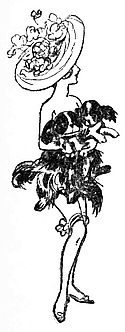
The lauded lilies of the field Who toil not—neither do they spin, The palm sartorial must yield To Mrs. Seymour Fentolin. A hat, French heels, white stockings, dogs! Not even Solomon could win The championship for showy togs From Mrs. Seymour Fentolin. The two extremes in décolleté, Of ballroom and of bathing beach, Here meet in a bewildering way And mingle all the charms of each. I am no social butter-in, I do not crave to meet her bunch, But where does Mrs. Fentolin, If one might venture—take her lunch? And might one ask that peerless dame, Without appearing impolite, Is Seymour really her first name, And has the printer spelt it right?
THE DEVIL AMONG THE LADIES
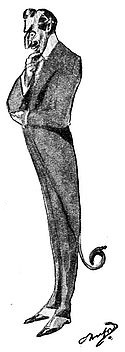
I The Devil seeking some new way To kill eternity, one day (So bored he was, in Hades) Flew to Manhattan Isle to start A Summer School to teach the art Of Smuggling to Ladies. II He opened in an uptown street A Modiste’s shop refined and neat (The number doesn’t matter), Displaying in his window all The Modes—Spring, Summer, Winter, Fall (Especially the latter). III The Ladies came in eager flocks, And as he showed his Paris frocks, With dext’rous verbal juggling, He lightly led the talk from Modes To Customs—and the law that goads An honest girl to smuggling. IV “If Uncle Sam for Revenue, Dear Ladies, picks your pockets, you The compliment should bandy. Pray let me teach you how to pick The spangled pockets of that slick Avuncular old Dandy.
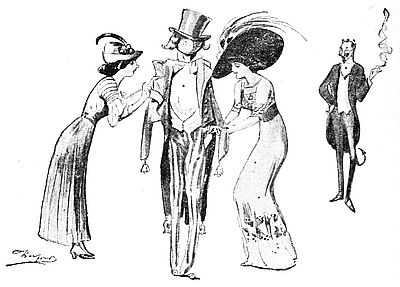
V “We can begin at once, if you Will step this way.” The giddy crew Flocked after him like chickens To where an effigy there hung Of Uncle Sam with bells be-strung Like Fagin’s doll in Dickens. VI The Devil then with money fills The dummy’s pockets—gold and bills And silver pieces mingling. “Now try your skill! all you can take Is yours, my dears, if you don’t shake The bells and set them jingling.”
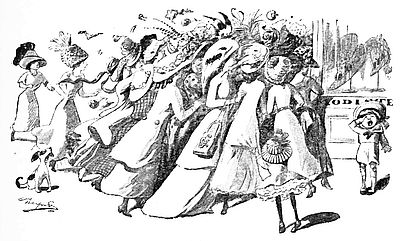
VII The news flew round, and soon the crush Was like a bargain-counter rush Of Frantic Ladies struggling; And soon the Devil was about A hundred thousand dollars out And closed his School of Smuggling. VIII Exclaiming, “I’m behind the age!” He kicked the dummy in his rage. “What’s this—the bells don’t jingle!” And sure enough the bells were dumb. Deftly inserted chewing gum Had stopped their tingle-tingle. IX “Ho! ho!” he laughed, “’tis plain to see New York is too advanced for me. I should have stayed in Hades; For who the devil, pray, am I In this enlightened age to try My wit against the Ladies!”
SPRING
By his cold hearth, sans Youth, sans Mirth, Sits poor old shivering Daddy Earth.
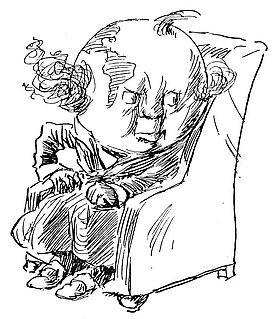
A knock, a footstep on the floor. “Come in!” he growls—“and shut that door!” Two soft hands on his eyelids press; A laughing voice: “Who am I?—guess!” “’Tis Mistress Spring! Alas, my dear, You find me sadly changed, I fear.”
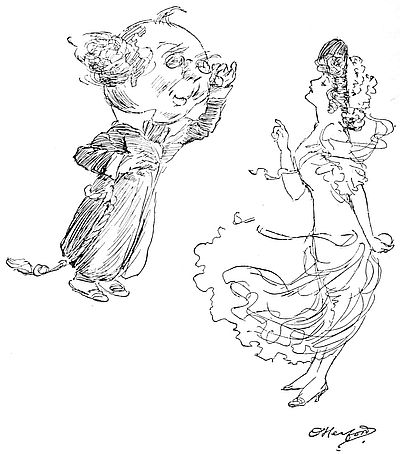
“Cheer up!” cried Spring, “I bring for you The Spell of Youth: Gold—Silver—Blue.” Sun gold, sky turquoise, silver rain, And Daddy Earth was young again! He danced, he sang: “Hail Spring divine! Ethereal Spring—h’m—wine?—pine—shine?” Too late the rhyme popped in his head; “Be mine!” he sang—but Spring had fled.
THE CATFISH
The saddest fish that swims the briny ocean, The Catfish I bewail. I can not even think without emotion Of his distressful tail. When with my pencil once I tried to draw one, (I dare not show it here) Mayhap it is because I never saw one, The picture looked so queer. I vision him half feline and half fishy, A paradox in twins, Unmixable as vitriol and vichy— A thing of fur and fins. A feline Tantalus, forever chasing His fishy self to rend; His finny self forever self-effacing In circles without end. This tale may have a Moral running through it As Æsop had in his; If so, dear reader, you are welcome to it, If you know what it is!
THE PRODIGAL CENTIPEDE
Once to a Centipede a Snail Remarked, “I wonder why you trail Along the ground with such a lot of feet—a hundred, is it not? A hundred feet! when two or three Are all you need. Just look at me!
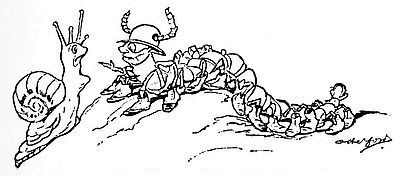
“The speed and ease with which I crawl, And yet I have no feet at all! In these days would it not be wise For you to—well, to Hooferize? You surely don’t need more than two To get along! If I were you, I’d use one pair and stand up straight, And save the other ninety-eight Against a rainy day.” “Indeed You’re right!” replied the Centipede. “I’ve often thought, to do my part, ’Twould be advisable to start A Feetless Day—but then, you see, If I stood upright I should be A hundred feet in height, and I Might bump my head against the sky!” “Well,” said the Snail, “I must admit That puts a different face on it! Your life depends on lying flat! Dear! Dear! I hadn’t thought of that!”
A BALLADE OF BLACK SOCKS
Plain Black socks can never be wrong. —The Gentleman of Letters in “Vanity Fair.”
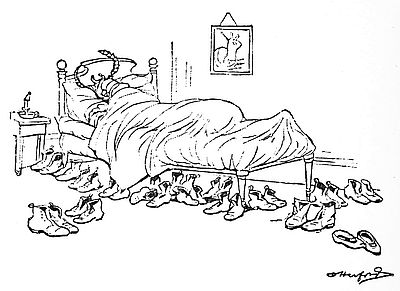
Lords of Fashion may disagree On the question of questions, what to wear At déjeuner, dinner, dance or tea, “Feed informal” or “Smart affair.” Let not the neophyte despair Dreading disdain of the gilded throng Hark to the dictum of Vanity Fair “Plain Black Socks can never be wrong.” Let scribes sartorial decree Whether the “skirt” shall be full or spare, Whether the crease be above the knee, Whether the seam shall be here or there. Of the openwork sock with the clock beware! On Fancy’s rein let your curb be strong! Hark to the dictum of Vanity Fair, “Plain Black Socks can never be wrong.” Doubting dolts may be all at sea Tossed on tempestuous waves of care. Are they wearing two studs?—or one?—or three? Will a satin tie cause a well bred stare? Leave dressy deeds to dudes that dare! Heed not the scented siren’s song Hark to the dictum of Vanity Fair, “Plain Black Socks can never be wrong.” L’envoi Princes of Fashion, wherever ye fare— London, Paris, New York, Hong Kong, Hark to the dictum of Vanity Fair: “Plain Black Socks can never be wrong.”
OTHER PEOPLE INCLUDING MARK TWAIN