Historical Papers.
Reading edition
110
THE IRISH SHARE IN THE HUDSON-FULTON CELEBRATION.
BY JOSEPH I. C. CLARKE, ESQ., VICE-PRESIDENT OF THE SOCIETY FOR NEW YORK.
INTRODUCTION.
New York, greatest of American cities and second of all cities of the world in point of population and perhaps of wealth, paused for a week in September, 1909, nominally to honor two great memories, really to celebrate itself.
It may be that Henry Hudson, when he sailed the Half-Moon up the great North River to the head of navigation and then returned to the ocean in 1609, never set foot on the Island of Manhattan; but the settlement by the Dutch that followed was certainly the result of his voyage of discovery. His was, therefore, a good epoch-making name to honor. More directly was it meet to honor the name of Robert Fulton, whose conquest of the waters with the power of steam in 1807 was made from New York shipyards, and upon the mighty stream that Hudson was the first white man to navigate. That in the person of Fulton, Ireland had a share in the memories of these celebrated men—for he was the son of Irish immigrants—appealed powerfully, as it should, to the race pride of the Irish-born and Irish-descended of the City of New York. It insured their hearty coöperation in the plans for the Hudson-Fulton celebration. But to many the event suggested the question, what share the Irish race has had in the upbuilding of New York, and what stake it holds in its life and its prosperity today. Others better fitted must work out the details of the answer, of which here is presented something of a summary. At any rate, it covers matters well worthy of the research which naturally drifts to a society like ours. Before attempting to record the Irish share in New York’s Hudson-Fulton celebration, let us examine briefly Ireland’s share in New York itself.
Here came the bulk of the great successive waves of emigration from Ireland. How large the total of the children of Ireland, who cast their lot with this Republic, history does not tell us with any 111accuracy. They were here from the very beginning of the white man’s settlement on Manhattan Island. Before 1820, no governmental roster of immigrants was kept, but in the eighty years from 1821 to 1900, the United States census bureau counts up a total of 3,871,253 Irish immigrants, nearly 3,000,000 coming hither between 1851 and 1900. That this enormous inflow came from a country that at its highest tide-mark of population never numbered more than 8,000,000 souls is a fact at once astounding and appalling. Ireland literally cuts itself in two to supply the emigration to America. Besides this outflow to America, another stream ran to England, Australia and New Zealand, but to each in much smaller volume than crossed the Atlantic. At its highest flow it brought over nearly a million Irish souls in ten years, namely, between 1851 and 1860. Since then it has fallen away, but what this immigration has meant in the upbuilding of the country at large may be imagined from the deduction made by the United State census of 1900. It is therein stated that “Ireland contributed more than two-fifths of the immigration between 1821 and 1850; more than one-third from 1851 to 1860; nearly one-fifth from 1861 to 1870.” In the following decade the stream held about the same level. Between 1881 and 1890 it rose again by nearly fifty per cent. Thenceforward the drain upon Ireland was to lessen, and with a total of 390,179 between 1891 and 1900 it represented barely more than one-tenth of the total immigration for the ten years. Since 1900 it has steadily declined, mainly for the reason that Ireland is nearly drained of its emigration material, but also in some degree that better conditions are obtaining there. A backward glance shows that of the nearly twenty millions of immigrants from all lands up to 1900 one in every five came from Ireland.
For the eighty years back of 1820 the proportion of Irish immigrants was even larger—probably one in four. And it was not, as many of the descendants of the early Irish immigration have imagined, entirely of the better off and entirely from the north of Ireland. Doubtless the Presbyterians of the northern Irish counties predominated, and counted in their ranks men of the learned professions as well as artificers and merchants, but of the tens of thousands of pure Celts from the central, southern and western counties deported to the West Indies in the seventeenth century many thousands found their way to the settlements of what are now the southern states of the Union. Original researches among colonial 112records by a member of our society show that during the century and a half before the Revolution several thousand immigrants of Celtic stock came direct to the colonies from Ireland.
Of the Irish emigration before the Revolution and up to 1820, the presence in New York of numbers of Irish high in standing as well as stalwart in activity is easily proven. One of the leading merchants in 1655 bore the historic name of Hugh O’Neale. New York City received its first charter from the hands of Sir Thomas Dougan, an Irishman, in 1684. Many old Irish names appear in the census of the City of New York for 1703. New York’s first mayor after the Revolution, James Duane, was the son of a Galway man. The first governor of the State of New York, and afterwards vice-president of the United States, George Clinton, was also an Irishman’s son. His kinsman, DeWitt Clinton, was a mayor of New York, United States senator and governor of the State, and is known to history as “the father of the Erie Canal.” Christopher Colles, from County Cork, Ireland, was the originator of our system of rail and waterways. His grave is in St. Paul’s. Thomas Addis Emmet, a resident of New York, was attorney general of the State. Daniel O’Brien established the first ferry to Perth Amboy. Dominick Lynch first introduced Italian opera to our city. He was also the founder of the Town of Rome, N. Y.
Resounding names of men of Irish blood are, indeed, plentiful, but they are only in this paper to be taken as symptomatic of the Irish-born and descended population, gradually growing in the city to a commanding influence. Peter McCartee was an alderman in 1815, and John McManus marshal of police in the same year. Irish names grew to prominence not only in the police and fire departments, but in the ranks of the teachers in the public schools. Of this eminence in three branches of the public service perhaps the greatest stress should be laid on the last. As school teachers, women and men, the Irish and Irish-descended have held the front place, in brains as well as numbers, for a hundred years in New York, holding it still, from William H. Maxwell, the great superintendent of the past twenty years, down to the latest teachers in the primary grades.
As early as 1833 it was computed that there were 44,000 of Irish birth or descent in New York City, which at that time meant Manhattan Island only. But the days were at hand when the combination of famine with brutal oppression was about to result in the casting forth from Ireland literally of millions of our people. That 113America should receive the greatest share was inevitable, and that New York should receive, if only for a temporary stay, the majority of these was natural. From 1846 to 1860 fully a million and a half of the famine-driven children of Ireland were poured upon the shores of America. And they came, for the very largest part, poorly clad, unlettered, uncouth, often weakened sorely in body by prolonged semi-starvation. Thousands—men, women and children—died of ship fever, of sea-sickness in debilitated frames, of inability to digest the wretched food supplied them on the long passage in the overcrowded sailing ships of the day. How many died of heartbreak alone, God only knows. But the survivors! In their bodies, at least, they soon vindicated the indestructibility of the Celt. Unskilled, except in a very small fraction, they took up the hardest kind of labor. They built the railroads, the canals; they “carried cities upon their backs.” It was a terrible story, working slowly to a happier consummation. They brought an instinctive loyalty to American institutions. Bitter were the prejudices they had to face, but they managed to outlive them all.
Naturally, in such case, they clung together. New York already had given the Irish exiles a home. Here their real qualities had had time to assert themselves, and here, accordingly, the newcomers of the later forties and early fifties settled freely. In politics they became Democrats, simply because Democracy never joined in their proscription as emigrants unfit to be Americans, while other parties did in lesser or greater degree. In religion they remained Catholic or Protestant as they came, and that meant largely Catholic.
This large substratum of newcomers from Ireland found here, as has been intimated, a large and fairly prospering Irish-born and Irish-descended population—furnishing men of eminence to all the higher callings—judges, lawyers, clergymen, physicians, merchants and manufacturers. With an assimilation more rapid than with any other race, the famine-exiles took up the order of American life. Their children filled the public schools and found Irish teachers there. They attended and supported churches whose hierarchy from archbishop to priest was almost wholly Irish. Thus the Celtic complexion of the city was enhanced, and it is no doubt true that at the outbreak of the Civil War, the population of New York (Manhattan) was nearer to one-third than one-fourth of Irish blood.
It is not the purpose to pursue here the history of the Irish in New York City from the outbreak of the Civil War through the 114half century to our day. To the battle for the Union, however, the New York Irish furnished magnificent quotas of fighting men, and capable officers, earning names for bravery and skill, as would be expected of their race. Indeed, it was the whole-souled devotion of the Irish all over the northern states and their brilliant services in the field and on the sea that threw down the last barriers of prejudice against their people in America. Such a name as Phil Sheridan’s was one to charm with, not to name another of the galaxy of great Irish captains of the war.
The Irish immigrant stream was, however, still flowing. From 1861 to 1900 they numbered over 2,000,000 souls, but this later flood came in somewhat better estate than their forerunners—fairly equalling in condition the concurrent German immigration and easily surpassing all others. It is for the most part, naturally, of these comers since 1860, that our Irish-born of today are composed, and through the entire country they can be found in substantial positions. But it is of their children and the children and grandchildren of the earlier immigration that the wonder-story of worldly uprise is to be told. New York, of course, has its share, and a large one, in this. If we can pick out from the later decades of the nineteenth century such names as James T. Brady and Charles O’Conor at the bar, A. T. Stewart among the merchants, Eugene Kelly among the bankers, William H. Grace, the great pioneer merchant of South America and twice our mayor; Archbishop Hughes, Cardinal McCloskey among the clerics, John W. Mackay among the great capitalists, Augustus St. Gaudens among the sculptors, O’Callaghan, Murphy and O’Reilly among the historians, how many names of eminence in every walk of art, science, law, religion, commerce, manufacture can be furnished from the Irish-born and Irish-descended of today! There are the great builders like John B. McDonald, who constructed the subway; James Coleman, who built the great Croton dam; but why enter on a list as long as that of the ships in Homer? Be it Thomas Fortune Ryan or John D. Crimmins in the world of finance, the representatives of Irish brain are there. It is of record that the second president of the New York Chamber of Commerce, which was founded in 1768, was Hugh Wallace, an Irishman. It is worthy of remark that Alexander E. Orr, also a native of Ireland, was president of the same body, until a year ago, and that his successor is J. Edward Simmons, also of Irish blood, who in his time has been lawyer, bank president, President of the 115Stock Exchange, President of the Board of Education and President of the New York Clearing House.
It is, however, to the collective work of the Irish of New York one had better turn. From the United States census of 1900 it is deduced that the natives of Ireland in Greater New York numbered 285,000, while the children of Irish parents numbered 308,000, and the descendants of Irish in the third and fourth generations numbered 200,000, or a total of 793,000 of Irish blood in a total for the city of 3,437,000—a proportion little less than one in four. With the increase of the city’s population since 1900 it is not quite likely that the Irish stock has kept pace, and a diminishing ratio in point of numbers may be expected. The inflow from southeastern Europe, from Poland, Russia and Italy has greatly (and happily) exceeded the stream from Ireland. Yet here in New York will be found, when the census of this year is taken, an Ireland of not far from a million, in its expected total approaching 5,000,000 souls.
Not all of that million remembers Old Ireland as Motherland, but it must be the task of societies like ours to awaken the sleeping memories.
There is no way of arriving directly at the proportion of the city’s wealth which is the possession of the Irish million. It would, doubtless, prove a mighty total, for Irish thrift and Irish talent for accumulation have been proven here to be as existent and constant as the carefully nurtured legend to the contrary. If there was some uproarious spending among the earlier arrivals on their first contact with earned American gold, and if they rose slowly, at first, from the poor estate in which they came, yet the families they raised in decency, the imposing array of churches and schools they paid for the building of, and still sustain, are first hand proofs that they are sound and normal in the greater civic virtues. The Catholic churches in Greater New York, from the great cathedral of St. Patrick and the splendid St. Francis Xavier of the Jesuits to the smallest suburban chapel, number 257 edifices, and it is safe to say that ninety-eight per cent. of the funds for rearing them and keeping them have come from the Irish immigrants and their children, not in great gifts, not often in large individual subscriptions, but dollar by dollar and dime by dime from the building of St. Peter’s in Vesey Street a hundred years ago down to the present day. The Catholic parochial schools—the creation, one may say, of the past 116quarter century—most of them imposingly housed, number 154, instructing 120,000 pupils and almost all at the cost of Irish Catholic contributions. It is not proper here to discuss the church policy, which puts this charge upon its faithful over and above the share they pay in common with other citizens to the public school fund but it may here be noted that the parochial schools are a significant monument to Irish generosity and the deeper devotion which puts the moral and religious above the mere utilitarian. The public school pupils number over 600,000, but the seating capacity of the schools has never filled the wonderfully growing demand. The alternative of half-day classes in the most congested neighborhoods has even failed to take in all the children seeking instruction. The public schools attract a large proportion of the Irish-descended children of the great city, and, as has been noted, the number of Irish-descended teachers is very high in comparison with those from other nationalities. Here, however, side by side with the great educational work of the municipality, is a school system instructing one-fifth as many children in the name of religious ideality and entirely supported by the resident members of the Catholic faith. In addition to these are thirty-seven colleges and academies of higher learning and two religious seminaries educating for the priesthood. The 450 edifices, thus scantily summarized, represent a total valuation, according to the best authorities, of not less than $40,000,000, and possibly, with work in progress, approach the great total of $50,000,000. This is a very noble portion of Ireland’s monument in New York.
Great as these sums may be, they give but a sorry measure of the value of the churches to the Irish themselves, furnishing as they have done a moral anchorage beyond the power of words to describe. Most necessary were they to a people taken rudely from their homes and sent naked and adrift in a new and strange world, where the battle was no longer the mere struggle for existence but a conflict for power and wealth, in which the sharpest wits, acting through the loosest morals, were often the victors. Well may the New York Irish view this array of churches, schools and colleges with some glow of pride—and gratitude.
It is not that the Protestant Irish of New York were wanting in their share of church building. They more rapidly merged in the American branches of their respective sects, but it is well to remember 117that an “Irish Presbyterian Church” existed on Orange Street in New York in 1811, as well as an “Erin Lodge of Freemasons,” and that Irish Protestant clerics like the late Dr. John Hall have in goodly numbers filled the most important pulpits in New York and Brooklyn for over a century and a half. The famous John Street Methodist Church was founded by Irishmen. It is probable that in the greater city there are 200,000 persons of Protestant faith, who are either native Irish or in whole or in part of Irish descent.
In such an establishment as St. Vincent’s hospital, in the New York Foundling Asylum, the Roman Catholic Orphan Asylum, the Catholic Protectory, the House of the Good Shepherd are other highly valuable proofs of organizing genius and generous sustaining power on the part of the Irish of New York.
Among the long-established and wisely administered savings banks of the city, none has a prouder record or a firmer base than the Emigrant Industrial Savings Bank, which has been distinctly, almost wholly, Irish in its administration and until lately in its depositors. In the last few years it has attracted great numbers of Italians, scared out of their first implicit faith in the many irresponsible “banks” set up by their countrymen. With its deposits over $98,000,000, an army of depositors numbering over 122,000, and an unbroken history of successful management of sixty years (it was incorporated in 1850) the Emigrant Bank is surely a magnificent exhibit of Irish trust and Irish efficiency. Its president, Thomas Mulry, was, up to the first of the year, Commissioner of Charity for New York. In that office he was succeeded by Michael J. Drummond, one of the Emigrant Bank’s trustees. Like Mr. Mulry, Mr. Drummond is Irish-born, and is a former president of the Friendly Sons of St. Patrick in the City of New York.
The individual thrift of the Irish has, indeed, been notable. Their favorite investments have been in real estate and these, in thousands of instances, have proved the foundation of the Irish fortunes of today.
The Catholic Club has taken a notable place among the best institutions of the kind in the city; its membership is largely Irish stock.
In the public offices, the police and fire departments, the number of Irish-descended is very large. An idea is abroad that this is wholly in consequence of the adherence of the Irish population to the fortunes 118of the political organization known as Tammany Hall, but it is only a half-truth. Tammany Hall, during a great part of its history, has been the “regular” Democracy, and that was enough for many who had grown up with it, but the forces of revolt from within the Democratic party have frequently overthrown Tammany, and it was generally Irish names that then came to the front. The late Mayor William H. Grace is an instance. In the recent election Tammany met a pretty general defeat, but its Irish-descended nominee for mayor, William H. Gaynor, was elected, and foremost among those of the victorious opposition, who will share the great city’s government with him, are William A. Prendergast, son of Irish parents, as Comptroller; George McAneny as president of the Borough of Manhattan, and John Purroy Mitchel, grandson of John Mitchel, the famous Irish patriot of 1848, as President of the aldermen. In the civil service examinations the Irish hold their own and more, so that whatever political party may be in power the racial ratio in New York’s public offices is not likely to change for many years to come, where merit and moral and physical fitness are at all the test of appointment.
It would be easy to point to great individual instances of successful Irishmen in the wholesale and the greater retail business of the city, but enough has been said here to show how strong is the hold of the Irish here and how great their stake in the fortune and wealth of the city. Nevertheless, one may well be surprised to note how little that is distinctly Irish, as apart from Catholic or Protestant, Democrat or Republican (to mention a couple of lines of emotional and rational cleavage), meets the eye in the city’s edifices or public monuments. In the churchyard of St. Paul’s Protestant Episcopal Church are three notable monuments—a monolith to the memory of Thomas Addis Emmet, another to the memory of Dr. William James MacNevin, and a monument in the wall of the church itself over General Montgomery of Revolutionary fame. In Trinity churchyard is the tomb of Robert Fulton. In Central Park there is a bust of Thomas Moore, the Irish poet. The list ends somewhere there—pretty meagrely.
There are and have been many Irish societies, patriotic, social, benevolent, literary and musical, but although the existence of one runs back over a century and a quarter and has always included in its ranks the most flourishing of Ireland’s sons, without any regard to 119politics or religion, it has never owned a home of its own. Like the others, it is housed from occasion to occasion wherever the choice of its officers may lead it, yet it has long owned a considerable building fund. Another body, large in numbers, is understood to own a building site, but there the matter rests. This, to the lover of Ireland, is not an encouraging condition. One would expect to see a number of splendid edifices devoted to Irish social, scientific and artistic objects. One would expect to see fine monuments in public places to the great men of Irish-American history—such even as those late-comers, the Italians, have erected to their countrymen, to wit: the fine Columbus pillar, the Garibaldi, the Verdi and the Verazzano monuments.
Should there not be a trumpet note of change sounded over these glaring deficiencies? Should not there be at least one great Celtic Institute founded with a large and imposing auditorium for Irish gatherings, and with suites of rooms and smaller assembly halls for such organizations as the American-Irish Historical Society’s New York Chapter, for the Gaelic, the literary, the artistic, musical, benevolent and social Irish organizations of the city not religious in character? It is easily within the reach of accomplishment. It but needs the effort of a few of the really rich and public-spirited men of Irish blood to give it the proper financial basis and provide thereafter for its economical management.
Among other things it would insure the much-neglected history of our race in New York a chance to be the object of real service, instead of as now, the hobby of comparatively few.
In another particular a deficiency is noted, which there is at present some effort making among the churches to supply, namely, a care for the social welfare, for the spread of uplifting, refining influences among the young men and women of the Irish race after they have finished their terms at school. Local Homes for the Irish young men and women informed in their directorates with intelligent, animating spirit, should flourish all over New York. The Y. M. C. A. has sufficiently blazed the way. It is a great and inviting work. Such life could be given to these Homes that their attraction would be irresistible. The good they would do, the results they would achieve for civic uplift and domestic and social refinement would well repay all they would cost in money and care.
To kindred objects the New York Irish have been continual givers 120rather than large donors in the American sense, but last year the gift of $4,500,000 by John M. Burke, of New York, for founding and endowing a Home for Convalescents indicates that the rich Celt is falling into the line of broad and bold American philanthropy. What more vital to the standing and the future of the race in New York can be thought of than a great Celtic Institute or the Neighborhood Homes as outlined above?
It is true that in the case of the Irish immigration of the past sixty years the material had to be taken as it came to these shores, and that not everything could be done with it, or for it, at once; but the situation is no longer the same. Looking over the external sources of future population for the whole United States, as well as for New York City, it becomes pretty evident that the Irish race will not furnish any but a diminishing quota; that the future of the Irish race in America depends almost entirely on the Irish already here. It is also true that the social condition of the Irish stock is bettering every day. Other European races, broadly speaking, are doing the laborers’ work of the country as well as the city. The Irish millionaire, the Irish captain of industry, the Irish leader in thought and education is largely represented here. We produce great laymen as well as great clerics, and it becomes daily more incumbent on the prosperous to turn with the open purse and the hand of uplift to the less favored by fortune, in order that they may make hereafter for the fame and condition of the race in America. That there is a tendency among the very well-to-do children and grandchildren of the Irish immigrants away from Irish association is largely true. It is so with German-descended in a degree, as to their racial fellows, but these latter did not have behind them the history of bitter, poverty-smitten struggles for a foothold here, which befel the bulk of the Irish immigration. The Germans came from a prosperous land, seeking greater prosperity. Even the poorest Italians, coming from a hungering country, bring with them the dower of a historic past, rich with the highest artistic embellishment and spiritual fulfilment. Back of the Irish immigration was an immediate past of hunger, oppression, intolerance and passionate, ineffectual revolt, and long vague memories of distant splendors that came to them, partly in legend and partly in the ruins of pillar-towers, castles, abbeys and half-obliterated carvings over graves. Out of these legends and these ruins and graves came to them the true whisperings of the 121race. The Celtic renaissance in Ireland itself grows because these whisperings are a little better heard. A like cultivation may follow here if the race is true to itself. It is within the memory of many like myself that to be Irish has taken on a substantial social consideration but grudgingly accorded thirty or forty years ago. So many have arrived at fortune, have done great public service, have attained social heights that it becomes a matter of social self-defense with them to see that no child of their race shall lack for the incentive and something of the opportunity to enter and carry on the battle of life under inspiring conditions.
In attempting to visualise the Irish share in New York itself, the preceding considerations appear to be as necessary as the mere record of mighty numbers and massed achievement, but enough has, perhaps, been said to show that, by and large, the Irish here have survived their greatest trials, have largely developed the civic virtues and reached a plane of prosperity inferior to no race on the continent. They are one-fourth of New York’s population, and probably hold almost an equally high fraction of its personal wealth, bating, of course, that enormous increment which comes to the metropolis from its commanding position as the continental centre of investment. May the Irish chapter of New York in the next fifty years be more inspiring still.
How the Celebration Took Shape.
It is worth while looking into the way the celebration shaped itself. Much was written about it as it occurred. In a general way its story is common property, and its great success is history. The centennial of Robert Fulton’s most notable achievement—the first voyage of his steamboat up the Hudson—fell in the year 1907. It did not pass without notice at the time, but the proposal to make it the central point of a municipal festival at once brought to mind that in another two years (namely, in 1909) would occur the ter-centenary of Henry Hudson’s discovery and navigation of the great river. Here then, was a chance for a dual display. The recent date and comparative failure of the St. Louis Exposition, combined with New York’s distaste for the prolonged inattention to its real business involved in an international exposition, decided against the exposition idea. A commission, to be called after the two men whose memory 122the celebration was to honor, was formed by Act of the Legislature. It was given a large fund by the State. New York City followed with another large sum, and private local patriotism and civic pride followed with large subscriptions. The commission was well-founded and amply funded. At its head was placed the veteran soldier, lawyer, Congressman, diplomatist and man of affairs, General Stewart L. Woodford, whose courtly presence, gentle bearing, handsome face, white hair and beard gave a pictorial dignity to the office hard to find elsewhere. But the active leadership, the real working headship of this affair great in scope and multifariousness, fell upon Hermann Ridder, a New-York-born German-American of great executive skill, whose resolute uprise in the world of journalism and whose wide acquaintance with the city, social, racial, religious, industrial and financial, bespoke his fitness. To aid him were appointed many men of standing in the city, but while they came and went at his call, and attended this meeting and that, one and all they agreed that since the work had fallen on such competent shoulders there they would carefully allow it to remain. Mr. Ridder took up the burden and carried it, carried it through. He shirked nothing, he directed everything, he organized his staff of helpers, artistic and clerical, and kept them busy. He looked after the formation of the working committees who would work out the enormous detail which the naval, military, police, social, artistic and publicity problems involved. Then he let the committees work, and wisely dealt with results. So, he kept an even keel, if one might put it that way, amid the occasional storms that will arise in such cases. The city surely owes him something for his whole-hearted devotion and unwearying service that did not cost the city a cent, and insured the memorable success of a great festival worthy of the greatest city on the continent, all the sooner for his work, perhaps, to be the greatest city in the world.
The celebration, then, was arranged on a scale more elaborate than anything theretofore undertaken by an American municipality, and in this the Commission was seconded by the wonderful natural setting of the city, fronting the expanse of the harbor and with broad rivers on either side of the long tongue of land—Manhattan—that gently uplifts its serried lines of stately homes and massive buildings, from South to North. One of these rivers, the Hudson, a stream noble in itself and the scene of the great suggestive 123feats of Henry Hudson and Robert Fulton, invited special attention. It was, therefore, early decided that New York’s tribute to these two great men and grand memories should share its functions between land and water. Accordingly while a section of the Commission planned land decorations, parades, assemblies, illuminations and banquets to fill an entire week, the officers busied themselves first with the Federal government at Washington to invite the naval powers of the world to send warships wreathed in flowers, as it were, and asking for a mighty squadron of our own ocean thunderers to greet the armored Tritons from oversea. Then Holland, in whose service Henry Hudson sailed the blue waters, offered a gift of unique kind, namely a duplicate of the little ship, Half Moon, in which Hudson traversed the Atlantic and ascended the river that has rightly come to bear his name. It was not strange, then, that the Commission should resolve to build a replica of that other historic craft, the Clermont, in which Fulton first went up the same river under steam.
From these starting points it was not so difficult to outline the rest of the water programme. There should be a ceremony of receiving the two historic craft down the bay and conducting them in a mighty parade consisting of all the steam craft plying the nearby waters, ranged in a fair flotilla up Hudson’s River passing the long range of seven miles of warships and, after a ceremony of reception, returning in like order to their berths and piers. There should be on land and water a grand illumination by night with fireworks of the most spectacular kind. There should again be a beautiful water pageant when the Half Moon and the Clermont were escorted up the river that the towns and cities along its banks might partake of the glory of the time. They would let the procession of ships from New York end their pilgrimage at Newburg and there let another flotilla conduct the memorial ships to Albany where the river narrows and shoals. So was the unique water side of the celebration outlined. For the land side the preparations were on an equally grand scale, but here they were dealing with more familiar material. We had had festival parades of like kind before; now we were to have more of them than ever and each one to be more marvellous of its kind than anything before conceived. No less than three great processions were arranged—a grand civic procession illustrating in floats three centuries of New York’s history, 124and made up of the men of the forty races and nationalities of which our population is compounded; a military parade to display every branch of our army service, state and national, and in which details of sailors and marines from the foreign warships as well as our own, should paradoxically testify to international brotherly love by marching peacefully together armed to the teeth. Lastly was designed a Carnival parade—a night march, devoted to artistic symbols on illuminated floats and conducted by costumed thousands from the German, Austrian and Swiss societies of the City.
It was natural to call on the city to drape and decorate its buildings lavishly, to arrange for general illumination: to design a finely pillared Court of Honor on Fifth Avenue just below 42d St. and hang it with mazes of electric lights, to erect a grand reviewing stand facing the Avenue and with its back to the great Library Building just emerged from its scaffolding.
In such cases, many minor suggestions follow on the heels of the great ones, and the week of wonders threatened to extend indefinitely. A notable loan collection of paintings of the Dutch school was assembled for exhibition at the Museum of Art, a rare collection of Colonial furniture was also secured. Then came a reception with oratory at the Metropolitan Opera House, an Irish concert at Carnegie Hall, an opera house music festival, aquatic sports, an exhibition of flying machines and a beautiful open air fête for 40,000 school children in the parks.
In a retrospect for our particular purpose, it is as well to grasp in some such general way the chief features of the event. For the year in which it had been actually incubating New York heard little and did not care much about it, and wakened very gradually to the great festal proportions it was to take. In fact people were returning to New York from mountain and seaside after the heats of Summer before they clearly understood how much was afoot in the way of civic entertainment. New York’s self-consciousness differs from that of every other American city. There is, for instance, no feeling that its greatness needs proclamation. It is not worried about its growth: it has been always growing. It is imaginatively undisturbed about its future: it is too busy to trouble about its past. Perhaps it has never taken to any civic phrase more kindly than describing itself as “little old New York,” while it 125knows it is not little, and if it has any municipal thrill it is over its modernity. Here was something coming which might be thought of as an attempt to awaken “the Chicago feeling” in Gotham—that is a somewhat delirious sensation of the bumptious and divinely ordained, the throbbing of the inflamed nerve of Destiny. In a way of its own New York gave way to it. The city began to hum, and when the time came in September’s days of warm colors and genial airs the people were ready to cheer, to march, to sail in line, to celebrate.
Organization of the Irish Participation.
It was during the months of the previous springtime that the Irish share in the celebration took shape, when Hermann Ridder met the representatives of the Irish societies, and stating briefly but clearly the general plan of the celebration, called for 10,000 Irishmen to take part in the Historical civic parade. And to this they agreed. In a compendious sketch he described the divisions of the procession and the historical floats that were to make part of each—the Indian period, the Dutch period, the Colonial period, the Revolutionary period, the Modern period. Over forty nationalities besides the native American were to be represented. To the Irish he conceded the right of the line. To them would be assigned certain historic floats. In the upbuilding of New York Mr. Ridder recognized that the immigrants from Europe had contributed the major share. In other words it had been fed with population mainly from oversea. Of the original Dutch stock but a trace remained: it had largely scattered or died out. The early English stock had similarly passed on. The influx from rural America or other American towns and cities had been constant and latterly was increasing. Still the immigrant and the children of the immigrant preponderated in the great city.
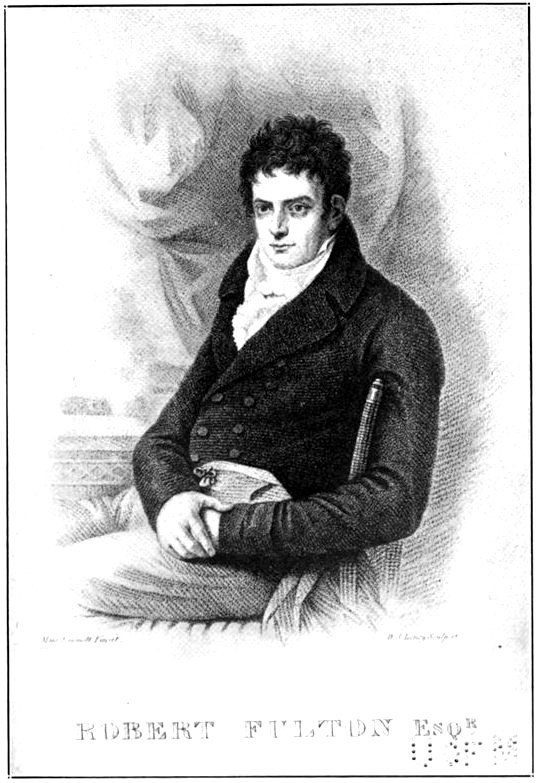
ROBERT FULTON Esqr From a Celebrated Picture through the Courtesy of Vice-President Joseph I. C. Clarke of New York.
126The American Irish Historical Society, through its New York chapter, took part in the earliest gatherings. The Friendly Sons of St. Patrick in the City of New York, the oldest Irish organization in the country with a history of 126 years behind it, was also early in the field. Its President, William Temple Emmet, was chosen chairman of the gathering of Irish societies and Alfred J. Talley of the American Irish Historical Society was elected Secretary. First and last some eighty Irish societies answered to the call. Broadly these were the Ancient Order of Hibernians, the Clan-na-Gael, the Irish American Athletic Club, the Irish Counties Athletic Clubs, the two societies named above and a number of Gaelic and Literary societies. There appeared at first to be no difficulty whatever about furnishing the quota called for: indeed there was some claim that less than 12,000 would be inadequate, judging from the muster rolls of all the societies desiring to participate. So there was some indignant protest when it was learned later that on account of the inordinate length of time it would take to get the procession past a given point on the basis first laid down, the Irish contingent would necessarily be cut down to 5,000 men. Eventually it was recognized that this was just as well. It developed curiously that the Irish in New York are not as numerously organized as they would seem. When they get the Society habit they are likely to belong to many societies, and this possibly multiplies by four their apparent number. Many of the delegates belonged to half a dozen of the societies represented. Naturally they could march with only one. The falling off from this cause was most noticeable with the Ancient Order of Hibernians—numerically the largest on its lodge rolls.
Committees of various kinds were appointed and to one—the Historical—fell the lot of securing the appropriate floats to escort in the procession. It was obvious that they should claim the Clermont float, for was not Robert Fulton the American-born son of an Irish father and Irish mother? It was equally obvious that they should claim the Erie Canal float with which the name of Governor De Witt Clinton, also of Irish descent and one-time Mayor of New York was inseparably connected. In some predacious way the Scotch societies had secured the Fulton Ferry float, claiming Fulton to be a Scottish name. It was seen by the Historical Committee that an omission of a grave kind had been made by the designers of the floats in not having one to celebrate the giving of the first charter to the City of New York by Governor Dongan—a charter always quoted with approval by the commentators on New York’s civic history. Now Dongan was a fine official of well-balanced mind, a learned man and an Irishman, and his appointment came from King James II, who did not object to him as Irish and gave him the place because he was a Catholic as well as otherwise qualified. 127The Commission agreed to rectify its omission and ordered a Dongan float. The Clermont, Erie Canal and Dongan floats were thereafter assigned to the Irish societies, to man and to escort.
Much amusing detail might be added to this but it can be indicated in the joyous way in which Martin Sheridan, the great athlete and champion hurler of the discus, was chosen to impersonate Robert Fulton and John Flanagan, the giant hammer-thrower of the Irish Athletic club, was named for the engineer. Thomas P. Tuite, whose admirable sketch of the life of Fulton is one of the memorable outcomes of the celebration, was enthusiastically impressed to act as steersman of the Erie Canal barge. With the Dongan float there was a difficulty. Major E. T. McCrystal, editor and soldier, was easily persuaded to stand for Governor Dongan, and it was not hard to get representatives for the New York councilmen who were to accept the charter, but when it came to getting impersonators for a file of British soldiers in red coats who were to stand as representatives of the British monarchy, there was indignation and revolt. Finally the British soldiers were cut out, and Dongan tendered his charter without any red-coated backing. The choosing of the ladies for the floats was wisely left to some ladies’ societies.
The best idea that came of the work of the Irish committees was that of a concert of Irish music. It was brought forward by Jeremiah Lawlor, of the Ancient Order of Hibernians, and ardently worked for by him. Once presented to the Hudson-Fulton Commission it was given a place on the official programme. Fortunately Victor Herbert, the distinguished operatic composer and orchestra leader, was at hand, and instantly accepted the concert committee’s invitation to take charge of the programme. It involved some sacrifice on his part but he gladly made it, and the success of the result must certainly have compensated him.
It was in the springtime, too, that another Irish feature of the celebration was arranged, the chartering of the splendid Sandy Hook steamer, Asbury Park, for the naval parade up the Hudson River. The American-Irish Historical Society and the Friendly Sons of St. Patrick coöperated in this—at a cost of $5,000 for the use of the steamer for that single day.
128
Reception of the Half Moon and Clermont.
The last week in September is apt to be blessed with fine, mild weather in New York, and this time it held good. No more beautiful day could be wished than Saturday, September 25, 1909, when the banks of the Hudson River for ten miles from its mouth became the vantage ground for many more than a million sightseers, with the great stream itself a Broadway of the water over which the floating procession was to pass. Toward the City shore the long line of the gathered warships stretched adrape with gay bunting. Behind the water-front packed with human beings from the Battery Park to Grant’s tomb and beyond, rose the great mass of the city, its lifted turrets and spires and its soaring buildings forming a majestic background. Power spoke in every line and mass that met the eye, and beauty of a kind seldom seen gave its impress of delight. Down the harbor, the fleet of steamers was gathering in its hundreds, every craft from great Hudson River and Sound steamers and private yachts to squadron upon squadron of tugs. All were flag-draped and all were laden with joy-bound participants. The Brooklyn shore down to Fort Hamilton at the Narrows, and the heights and shore of Staten Island from Fort Wadsworth curving around the harbor were black with human beings. Hard by the Kill von Kull lay the Half Moon and the Clermont, the one a quaint, picturesque ghost of the great days of adventure of the early seventeenth century, the other in its long square ugliness a reminder that adventure with steam power in a new element was concerned with fitness and not with beauty; that Fulton was thinking of the turning of his ridiculous paddle wheels rather than the looks of things. And on the Dutch craft stood a make-believe Henry Hudson with a Dutch crew clad in the sea-dogs’ garments of his time. What a dim, pathetic figure that real Hudson of whom here was the twentieth century shadow. He must have been a man of grim purpose and of strong flesh and blood, but never did a man so near our time fade out into the mist more completely than he who first sent the prow of a white man’s ship up past the Palisades and the Highlands. On the Clermont was also a goodly company rigged out in the habiliments of 1807 that still bore something of the lines of the dandies of Paris in the time of the Directory. But it was a man of Robert Fulton’s blood who impersonated the creator 129of the first steamship that could truly navigate, and that meant that there was Irish blood in him.
It was when the procession in the course of the afternoon began to move with our long slim darting torpedo boats escorting the Half-Moon and the Clermont and all the other steam craft following that the true glory of the day began, and as the vessels swung into line heading northward every piston-beat of the engines, every turn of the churning screws and splashing paddles seemed to make a chorus of Fulton! Fulton! Fulton! and in a precious undertone to many a thousand of the onlookers it murmured Ireland! Ireland! Ireland! whence came the brain that had put a heart of giant power into every floating fortress, every giant of the transatlantic trade that the great flotilla passed as it swept up the river. As the little ship of Hudson and the ungainly master-boat of Fulton passed, the fleets of the world saluted them. So they passed up, acclaimed from the banks and the stream, the Half-Moon and the Clermont halting at the picturesque water gate on the Riverside slope for the reception ceremonies where the dignitaries waited from the Governor of New York state down.
The Illuminations on Water and Land.
For the rest of those afloat it was a sail nearly to Yonkers before the last of the United States battleships was passed, and the turning point reached. By this time the evening was falling rapidly in a glory of crimson sunset that made the river glow as paven with red gold, the Palisades rising black as ebony against the west, and the lingering rays falling in warm ivory and pale pink on the white house-line of New York on its hills farther down the stream. But as the light paled, and the shadows filled with purple and presently when a misty greyness was coming over all on land and water, another glory began which was to gladden and grow until it made a great picture that perhaps the world had never seen and certainly the world of Columbus and Hudson and Fulton had never witnessed before—the festal lighting on water and on land.
Lucky were those in that day procession up the river whose craft could linger in the upper reaches until all the glory of night was ablaze. The warships outlined in strings of electric lamps, the lights 130on the moving craft, the monuments on shore brilliantly set off with skeleton tracing of light, building after building on both sides of the river glowing with electric lights in every fantasy of device and color, the houses one and all lit up at every window, the tower of Madison Square one mighty shaft of light. Farther South the sky-piercing tower of the Singer building like a glowing mural crown dominated the vast field of the twenty-story office buildings, all illuminated to their roofs. In the harbor the Liberty Statue shone in an island of light. Up the East River a special glory was seen with its three great bridges spanning the stream in glittering cobwebs of light that hung between the water and the sky. All the buildings on the New York and Brooklyn shores swam in a shimmering golden haze. The avenues were long lines of diamonds strung from pillar to pillar, and then to the north a wonderful aurora of fan-spread search-lights, and from a dozen points over the island and the rivers spouted, great fountains of fireworks storming the heavens with jets of colored fire. It was fascinating, intoxicating, and the millions watched it in a daze from nightfall until midnight when at last the city and the river were left to the stars.
The Irish Concert.
On Sunday, September 26, New York was fain to rest from its long outing of Saturday. When, however, night had fallen there was no fatigue visible in the smiling faces that gathered for the Irish Concert in Carnegie Hall. In securing the hearty coöperation of Victor Herbert, the famous composer and orchestra leader, the committee had armed itself for a triumph. Mr. Herbert is Irish-born, and of true Irish stock, a grandson of Samuel Lover, the Irish novelist and ballad writer whose “Low-backed Car” and “Rory O’Moore” threaten to outlive most of the lyrics of his generation. In Germany he received his musical education which was thorough. As a student of harmony and counterpoint none surpassed him in avidity to master all that the best could impart. Learning successively to play well nigh every instrument in the orchestra, he became proficient on the violoncello, acting as solo violoncellist in the Royal Court orchestra at Stuttgart, and taking a high rank as a virtuoso. When he came to this country in 1886 it was to take the important 131post of solo violoncellist under Anton Seidl, the great Wagnerian conductor at the Metropolitan opera house. His German was so good that musical people around Fortieth street wondered “how well the Dutchman spoke English,” a curious reversal of Lever’s humorous conceit: “I knew by your French you were English, and I knew by your English you were Irish.” Herbert, however, was not long in the land of the free before his Irish heart made itself known to his fellow-Gaels, and ever since it has beat in unison with them. In music he heard a higher call than being a prominent figure among the instrumentalists of even so famous a Wagnerian as Anton Seidl. When Patrick Sarsfield Gilmore, of loving musical memory, passed away, it was Victor Herbert who was called to succeed him as bandmaster of the 22d regiment, and thereafter waved the magical baton of Gilmore’s wonderful band. To this he added the duties of Kappellmeister to Anton Seidl’s orchestra and to the famous organization of Theodore Thomas. In 1898 he obeyed a call to Pittsburg to head a great orchestra, and remained there six years, his power and talent developing all the while. Returning to New York he recruited an orchestra of his own which soon won popular and critical esteem. But his forte lay in musical composition. The immediate road to success and fortune was, to his mind, by the way of comic opera, and work after work of this nature came sparkling from his brain to the joy of multitudes and to his own rapid enrichment. Still he led his now famous orchestra all over the land, working day and night, for he loved his work. The ambition to do greater things, however, never left him, and passing from mere facile outpouring of the riches of his inspiration he turned to the higher work in the realm of music. His oratorio, “The Captive,” a fine work, first heard at the Worcester (Mass.) musical festival was highly praised. Many of his serious fugitive pieces became popular with musicians and the world of music awaits with pleasant anticipation the grand opera into which he has for some time been putting his soul. He has for years been a member of the Friendly Sons of St. Patrick, always prompt to make the musical features of its gatherings notable, and always lending freely of his geniality to its symposiums of good fellowship.
Bear with me for this straying into the paths of biography, for Victor Herbert’s personality, his training, and his Irish birthright should be known to every son of Ireland in America, not merely as a matter of race pride but of race inspiration. We pride ourselves 132on our love of music. The echoes of the olden Celtic harps must be in our souls, but we have done little enough as a people to deserve the exquisite heritage. Our innate love of the art should be broadly cultivated and steadily developed, and in Victor Herbert I see a man who may yet do something great in this way for his race and ours, as he is sure to do in lofty composition for his own enduring fame. That is why I have dwelt on his striking career. In securing his hearty interest in the Irish Concert success was assured, for it brought with it the services of the magnificent orchestra trained for years under the sway of his relentless baton.
We do not lack for solo artists of merit and skill, but in choral music we have not done all we could. In Ireland a modern school of composers is doing work of which we know little here. The mending of this should be a first step in the Irish musical renaissance. If we find poets to write the books and lyrics, and musicians to compose the vibrant measures to fit them, we must have singers to interpret them and instrumentalists to give them the breadth and depth of the full artistic inspiration. Let the little band of sixty or seventy (little as choral renderings go in these days) who came together from the Catholic Oratorio Society for the Irish Concert be the melodious forerunners of Irish choral societies that may gather thousands at a time in one burst of song. At the Irish Concert the chorus sang admirably. May every member thereof be blessed for her or his participation, and their example give heart to a new musical impulse among our people.
The great house was filled to its capacity with a representative Irish gathering and presented a fine picture of comely women and handsome men. The Hudson-Fulton Celebration Commission had given the concert official place in its programme; the visiting guests of the Commission were invited. Governor Hughes of the State of New York, who boasts of Irish blood, and our one-time mayor and one-time president of Columbia College, Seth Low, as chairman of the Commission’s reception committee, occupied with the governor’s staff the central box on the grand tier. It was a “warm house,” then, that greeted the entry of the orchestra and the chorus on the broad stage, and listened raptly to what proved a fine concert of Irish music, deserving all the applause it received. And this was the programme:—
133
1. Overture—“Maritana,” W. V. Wallace
Orchestra.
2. Song—(a) “Ban-Chnoic Eireann, O” Mac Conmara
Lyric—(b) “The Penal Days” Davis
Mrs. Helen O’Donnell.
3. Chorus—(a) “The Minstrel Boy” Moore
(b) “Oft in the Stilly Night” Balfe
Catholic Oratorio Society.
4. Song (Irish)—“Thuit ar an m-bu-adharg” MacHale
Lyric (b)—“Sweet Harp of the Days That Are Gone,” words by Samuel Lover; music by his grandson, Victor Herbert.
Mr. William Ludwig.
5. Irish Symphony—(a) “Andante Con Moto” (two movements)
(b) “Allegretto Motto Vivace” V. Villiers Stanford
Orchestra.
6. Irish Rhapsody—“Erin, Oh, Erin” composed by Victor Herbert and dedicated to the Gaelic Society
Orchestra.
7. Song—“An Irish Noel” Augusta Holmes
Madame Selma Kronold.
8. Chorus—(a) “Hath Sorrow Thy Young Days” Balfe
(b) “The Fenian War Song” Sir. R. P. Stewart
Catholic Oratorio Society.
9. Song—(a) “Irish Reaper’s Harvest Hymn” Keegan
(b) “Old Ireland Shall Be Free” (words by J. J. Rooney, old air arranged by Victor Herbert)
Mr. William Ludwig.
10. American Fantasy Victor Herbert
Orchestra.
11. Anthem—“The Star Spangled Banner”
Orchestra and Chorus.
Singers and players performed delightfully. Mrs. O’Donnell, Madame Kronold and William Ludwig—that famous veteran of the German opera and great interpreter of Irish ballads—all won new laurels. Mr. Ludwig’s rendition of the spirited song by John 134J. Rooney, author of so many fine lyrics and ballads, was particularly impressive. But it was the work of Victor Herbert’s orchestra that lifted the occasion to its real height. The performance of Villiers Stanford’s Irish symphony and Herbert’s own Irish rhapsody was as true and fine as could be conceived, and in every way worthy of the brilliant compositions themselves. The chorus gave the Balfe lyric and “Oft in the Stilly Night” with fine shading and their singing of “The Fenian War Song” won an encore that would not be denied.
As a whole the concert gave an impression profoundly gratifying to all connected with it. I have said that it was conceived in the first place by Jeremiah Lawlor. It is right to add that Major E. T. McCrystal, chairman of the Concert committee, worked hard with Mr. Lawlor for the result achieved. To Mr. Lawlor, Seth Low wrote after the concert that he found it “most enjoyable,” and added:—
“The music itself was interesting, and it was rendered in a way worthy of all admiration. I think that those who have labored so hard for so many years to awaken interest in Gaelic culture have not only done a service for the members of the Irish race in this country, but, as illustrated by this really beautiful concert, they have rendered a valuable service to the whole country.”
It is a pleasure to bear out Mr. Low, and to formulate the hope that the Irish Concert of that Sunday evening may be parent of great effort among our people to justify to themselves and the world their boasted love of the art that made Ireland famous a thousand years ago.
The Historical Parade.
On Tuesday, September 28, the weather in the morning held little promise of procession weather. It had rained, and in some degree dampened ardor, but the meteoric luck of the celebration was to prevail and by noon the skies were opening, and just the right condition overhead and underfoot assured. The line of the three great processions, of which this was to be the first, had been well chosen. Assembling north of Central Park the parade was to pass down the broad avenue of Central Park West, a straight line of two miles and a half, turning east at 59th street for a short half mile to Fifth 135avenue, then down the avenue a straight line for another two miles and a half to the point of dispersal. For three miles the parade was to pass between a succession of stands for spectators, with stands at every available point on Fifth avenue and the grand stand in the Court of Honor at 42d street, as we have noted before.
It was a fine and suggestive parade. The fifty great floats provided with so much care did not, perhaps, come up in all things to expectations. Cold daylight plays havoc with such expressions of historic symbolism. It shows the gilding, the high colors, the make-believe material too unsparingly. It betrays the utter modernity of the costumed posturers standing for legendary and historic figures. Perhaps this was not the view of the cheering thousands as the floats passed by. Art-knowledge makes one hypercritical and art-smattering makes one expect too much. Let us take it as it seemed to the multitude—the heroism of history on wheels.
But the parade, on its really inspiring side, was its men. As phalanx after phalanx passed by at a marching step one felt the greatness of the land that had beckoned to the peoples of the world with such commanding gesture that they had sent hither the flower of their manhood to share the great heritage of democracy on a continent of unbounded opportunity. There they were, the Irish, the Italian, the Teuton, the Magyar, the French, the Scotch, the Dutch, the English, the Czech, the Pole, the Slav, the Greek, the Syrian, the Dane, the Swede; and the man of the great conglomerate, the man of the evolving type—the American.
After the line of splendid-looking mounted police, trim-built and firmly seated with many a Celtic face among them, marched on foot Hermann Ridder and the Mayor—two contrasting figures—Ridder, tall and erect, the Mayor short and dapper. Together they stepped the length of the way, both beaming with fair satisfaction, the populace cheering and the band playing.
Then came a line of green, Irish flags with crownless harps of gold.
The Irish had the right of the line—the Friendly Sons of St. Patrick (with whom the American-Irish Historical Society marched) were at the head of the parade, William Temple Emmet leading. Following came the Ancient Order of Hibernians with many Irish banners and led by Thomas Kelly. They wore wide-brimmed felt hats of military trim, and carried themselves admirably. Band after 136band and phalanx after phalanx of this nationality or that came on, some like the Hungarians in marvels of hussar costume, others in military coats, the breasts covered with multitudes of medals, won maybe at schutzenfest or turnverein, but probably not in war.
The Clan-na-Gael made a gallant showing, and the Irish Athletic societies, headed by the redoubtable P. J. Conway, turned out in force, marching with a free swing that caught the onlookers immensely. A feature was the Tammany column—a thousand or more tall-hatted and frock-coated stalwart, presentable men, with Charles F. Murphy at their head. They paraded, be it understood, as representing the charitable and benevolent and not the political side of the long-lived organization. They were popular with the crowds.
Notable was the passage of the Clermont float. It was well known to all that Martin Sheridan and John Flannagan were to be there, and where there was any doubt among the onlookers as to which was which, were not the policemen along the route ready to tell them? “That’s Martin Sheridan, the man in the bell-topper,” alluding to the remarkable headgear under which the great athlete stood for the great inventor. So the cheers billowed for the Clermont all the way, a cheer for Robert Fulton and “a tiger, boys, for Martin!”
The Police and Their Task.
And as to those great-bodied policemen who held the swarming, sometimes obstreperous, but generally patient crowds in check, how finely they did it all. I would hesitate to say whether their faces or their accents indicated sixty or seventy per cent. of live Celtic blood in them, but it was not less than the lower figure, and may have been more than the greater. They won golden opinions on every side and from all classes that day, and for the many long, arduous days until the celebration was over. It was not merely to hold the line—a task calling for firmness, tact, strength and continuous good nature, but handling with skill the enormous crowds that filled the avenues when the processions had gone by, and all were rushing for their homes, filling to overflowing every car-line, every elevated roadway, and particularly cramming to congestion in the subway. In addition they had at all times to be “guide, philosopher and friend” to the full million of visitors new to metropolitan ways and pavements. And that was a task in itself.
137
The Military Parade.
For Thursday, September 30, came another splendid day when the military parade made New York tingle with marching tunes and the rhythmic tramp of men. Here was something that always quickens the popular pulse. We had seen many like it in this big, thrilling town, but none that surpassed it. The primal impulse coming from the thought: “Here are our defenders; here our men who face death for Fatherland,” has to answer, no doubt, for the cheers that greet the men at arms as they swing marching by. When kingcraft added pomp, glitter and jingle to it and tamed the trumpet to sing a siren song, and patriotism fluttered flags above it rich in color and hung on gold-tipped spears, the magic was complete. Yet this pageant showed us more in one way and less in another. More, in the fact that it showed us thousands of soldiers and armed man o’ warsmen from many alien ships and lands—some time or other our possible enemies, our possible allies—but all keeping step with our own brave men in the name of a pictorial friendship and in the hope of an unbroken peace; above all paying this passing tribute to our city and our country. Less, in that it showed us the stripping off of the gauds and finery of war, bringing more directly home to us that war today will none of these, but must keep the human material of battle in ready fighting trim. Glory was marching in khaki and scorned all gold galloon. Over the same path as the civic procession of Tuesday came Military Glory in its ranked and regimented thousands, giving something of the thought that if called on to take to the trenches or march to the attack by the time it reached Washington’s arch, the men would be ready. Thus it gave two distinct sensations to the hundreds of thousands who watched it, outside the particular thrills that came when some well-remembered or much-admired division of the troopers came tramping grimly by.
Our Irish citizens enjoyed it immensely, for they knew when the “regulars” were passing that it was dotted all over with Irish faces; that it was the army that Andrew Jackson gloried in; that Phil Sheridan, Kearney, Meagher and a hundred other brilliant men of Irish blood and strain had led on fields of death. Was not their own 69th there swinging along as it had swung at any time in fifty years that the country called? It was, and gallantly held its own for drill and trim and soldier bearing. Did they not warm to the 138thought that the Irish volunteers were marching, men soldiering for the very love of it, and cherishing an olden hope that sometime, somewhere they might be allowed to charge a battery or storm a height for Ireland—Ireland far away, but Ireland ever near to their hearts. And this thought gave friendliness to their hail of the French marines and the French sailors, for the French had been Ireland’s friend as well as America’s in the old troubled times, and many a one lilted under his breath “Oh, the French are on the sea, says the Shan van Vocht” when the Gallic tri-color went dancing past. These thoughts made it seem tolerable that the English were in the line and went so far as to let them give the Germans a cheer or two, and extending various degrees of approval to Italians, Brazilians and Argentines. But the West Point cadets! There, the innate love of the fighting man by the fighting race found intimate appeal. Many the Irish captain, great in the battlefield, had learned the grim trade in that battalion, and now to see how fine and supple yet tense they seemed, how superbly they marched, how arrowlike their alignment, how wonderfully they wheeled or countermarched, and the bands playing through it all. It was a glorious day for all who took part and all who looked on.
The Naval Parade.
Another day on the water came with Friday, October 1, and the weather again was all that could be wished. Early the excursion steamers took on their loads, for the route was long of the Naval Parade. Shorn of the hundreds of tugboats and small craft that had swarmed the water on the Saturday before, it was a powerful and select squadron that turned its prows upstream to escort the Half Moon and the Clermont as far as Newburg, fifty-five miles above New York. The torpedo boats and a couple of the new sub-marines formed the governmental escorting party—the very old and the very new thus touching sides—and then came over one hundred powerful craft in line, decked in vari-colored bunting and with bands playing. It was a splendid sight, as passing the war ships they swept on beyond Manhattan island up the broad, deep stream. Commander Peary on his stout ship, Roosevelt, freshly arrived that morning from the North and his conquest of the Pole, received the tribute of the thousands 139in the procession. The dark rocky masses of the Palisades, now glowing here and there with autumn foliage, towered on the left, and on the right lay the river towns set amid fields and woods.
Many a flag of Ireland fluttered from the upper works of the great swift steamer “Asbury Park” on which had gathered some nine hundred of the Friendly Sons of St. Patrick and the American-Irish Historical Society with their families and friends. Every provision for their comfort had been made, and the occasion rapidly became one of delightful enjoyment under the stimulation of the grand and historic scenery of the noble river, and the glow of friendly courtesy wherever the Irish race foregathers. The pace could not be very fast, for the greatest of the steamers was bound by the speed of the slowest, and these latter were the Half-Moon and the Clermont. All the more could the time of observation of the many points of interest along the river be extended. Dobb’s Ferry, where Washington had headquarters for so long, while his little army watched the English forces then holding New York against the patriots. Sleepy Hollow, Washington Irving’s home and the scene of his romance of The Headless Horseman, were pointed out. Tarrytown, where Major André, the British spy, was arrested, and Tappan, where he was executed, were noted as the line of steamers ploughed through the Tappan Zee where the Hudson broadens almost to a lake, and is four miles wide and twelve miles long, then past the great prison of Sing Sing on the East bank. Presently, the line was passing Stony Point, the promontory of the Hudson near the entrance to the Highlands. And the gallant story was retold of how the Revolutionary soldiers posted in the rude fortress there had succumbed to an attack by the British; how the loss of the fort rankled in the patriots’ breasts, and how, at the dead of night, in mid-July of 1779, mad Anthony Wayne with a devoted band delivered so sudden and overwhelming an assault that the British garrison was slain or captured, and the stars and stripes were sent aloft never since to give way to an alien flag. On then through the Highlands of the Hudson where the mountains slope down to the river on either side. Old river men aboard pointed out Fishkill Mountain, Storm King, Crow’s Nest, Donderberg, Anthony’s Nose, names written in the history of the country and the literature of the river. At West Point was seen perched on the cliffs the quarters of the military academy of the United States, whence so many great soldiers had been graduated and rich in the memory of Ireland’s celebrated sons as well. Across the river was pointed out the road, still winding down to the stream, by which the traitor, Benedict Arnold, fled, taking boat to the English brig of war, when he surely knew that his treason had been discovered in the capture of Major André. Swinging carefully then around the West Point bend in the river, that scene of rare beauty—the straight stretch of ten miles up to Newburg bay—broke upon the view.
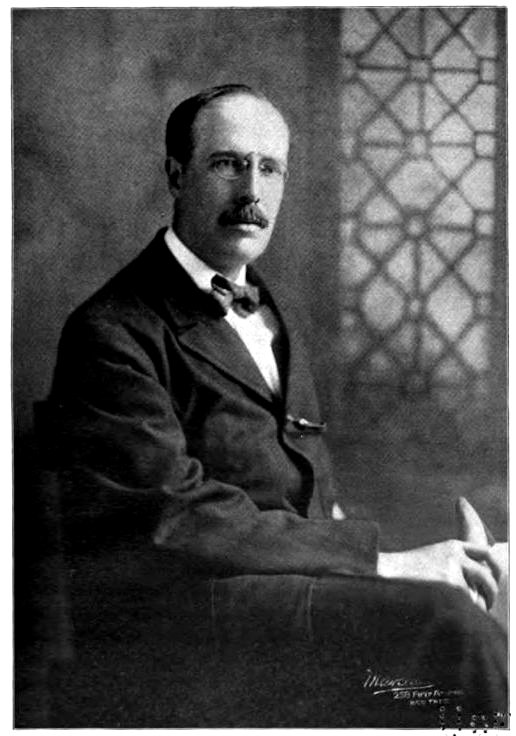
WILLIAM TEMPLE EMMET, ESQ., Member of the Society, and President of the Society of the Friendly Sons of St. Patrick in the City of New York.
140
Meeting of the American Irish Historical Society.
Under the inspiration of these stirring memories, the stimulus of the celebration and the desire of all concerned, a brief but memorable meeting of the American-Irish Historical Society was held on the forward covered deck of the “Asbury Park.” The Vice President of the New York Chapter discussed the events of the day and the week, and the Irish share therein, extending welcome to the members who had come from other states at the Chapter’s call to meet their brethren in this festal trip, and called on President-General, Dr. Francis J. Quinlan, to address the company. The members warmed to the President’s appeal, for he has the happy gifts of enthusiasm and Celtic eloquence. He spoke for the spread of the society and its usefulness in gathering for future generations the story of the Irish race in America, and laying a foundation for a greater communion among its men and women of today. He was followed by Thomas Zanslaur Lee, Secretary General of the Society, who succinctly told of the recent remarkable gains in membership, and gave practical hints for a still greater accession to the Society’s ranks. William Temple Emmet, President of the Friendly Sons of St. Patrick, made a short speech of sympathy with the aims of the Society, and the proceedings terminated in an interchange of salutations shared by all present.
In Newburg bay the steamers of the fleet were gathering now, hovering and slowly circling about the Half-Moon and the Clermont and their escorts. The ancient town rising on the west bank of the river showed a gala front of flags, while thousands crowded the heights to view the scene upon the bay. The steamer Providence, bearing the officials of the day, had drawn up to the landing, and 141while they took part in a procession and made speeches appropriate to the occasion, those on the rest of the fleet dined and made merry. Never before, perhaps, had the waters thereabout furnished such a scene as that of the flag-decked fleet going to and fro under the blue sky, framed in the red and gold of autumn on the hills and breaking with screw and paddle the silver of the wide and placid stream. Would that Washington, whose fearless eyes had often gazed in the weary days of the long-drawn war, out over the river there, had caught that vision of young and strong America afloat and rejoicing a century after his passing away! His, however, were the eyes that saw across the mountains, and in the darkest day beheld the sun upon the hills beyond, and it is not for us to say what he did not see.
From Albany far up the Hudson had come the officials to take charge of the Half-Moon and the Clermont, and the pleasant task of the fleet from New York was done. Down the river, then, the prows were turned, and the homeward journey was begun. Many were the visits made and returned on board the “Asbury Park” as she headed south. The evening was deepening as she came by the city now breaking into light, a beautiful spectacle. So ended a day long to live in memory. As the excursionists stepped ashore to each one was handed a souvenir copy of Mr. Tuite’s “Robert Fulton and His Achievement,” which is reproduced in the volume farther on.
By the indefatigable secretary of the New York Chapter, Alfred J. Talley, I am furnished with the following list of the members of the Society who with their families and friends were on board:—
Albeus T. Adams, M. E. Bannon, Michael Blake, John J. Boyle, Henry J. Breen, William J. Broderick, Francis X. Butler, Edward R. Carroll, F. J. Cavanaugh, J. I. C. Clarke, Andrew J. Connick, Patrick J. Conway, Hugh M. Cox, E. J. Curry, Robert E. Danvers, Thomas F. Donnelly, Richard J. Donovan, Willis B. Dowd, John F. Doyle, M. J. Drummond, John J. Falahee, Joseph P. Fallon, Edward D. Farrell, Frank S. Gannon, Charles V. Halley, John H. Halloran, John Hannon, David Healy, John J. Hickey, Michael J. Jennings, Alfred J. Johnson, James G. Johnson, Michael J. Joyce, Phillip J. Magrath, P. J. Kelly, T. P. Kelly, Daniel Kennedy, T. Zanslaur Lee, Charles Leslie, Warren Leslie, Thomas S. Lonergan, Richard J. Lyons, D. H. McBride, Robert E. McDonnell, D. J. McGinnis, James J. McGuire, Edward J. McGuire, 142John C. McGuire, James A. McKenna, Stephen McPartland, Stephen J. McPartland, J. D. Morton, John Morgan, Bartholomew Moynahan, Michael J. Mulqueen, John E. Murphy, Thomas F. Noonan, John E. O’Brien, John O’Connell, John G. O’Keefe, D. P. O’Neil, James O’Shea, John O’Sullivan, Sylvester J. O’Sullivan, James W. Power, Francis J. Quinlan, Clarence W. Ramsey, James F. Reilly, James Rorke, Joseph Rowan, James T. Ryan, John J. Ryan, William Ryan, Dennis A. Spellissy, Thomas N. Mulry, Alfred J. Talley, Edward M. Tierney, Frank L. Tooley, William Tully, Watson Vredenburgh, Jr., Henry Wright, A. J. MacGuire, Harry L. Joyce, Thomas A. Emmet, William M. Byrne, William E. Hill, James A. McKenna, William J. Farrell, James Martin, Daniel M. Brady, John Fitzgibbon, Timothy Murray, William T. Emmet.
The guarantors of the contract were:
On behalf of the American Irish Historical Society: J. I. C. Clarke, Edward J. McGuire, T. Vincent Butler, William Michael Byrne, P. J. Magrath, Harry L. Joyce, John O’Sullivan, Francis J. Quinlan, M. D., Alfred J. Talley.
On behalf of the Friendly Sons of St. Patrick: William Temple Emmet, Thomas T. Fitzsimons, Morgan J. O’Brien, Edward B. McCall, Warren Leslie, John D. Crimmins, John G. O’Keefe, Edward R. Carroll.
The Carnival Parade.
For finish to the week of celebration came on the evening of Saturday, October 2, the Carnival Parade, over the same route as those of Tuesday and Thursday. It was a brilliant spectacle of lighted floats and costumed paraders that passed down the avenues with their strings of electric lights on either side. One cannot describe it all except in general terms. It defies words, as a flight of rockets defies them, but the Germans, Austrians and Swiss, who mostly furnished the human side of the spectacle, did nobly.
It was a week to remember, and, as has been indicated, Ireland’s sons had a handsome share in it.
143