CELEBRATION OF THE LEXINGTON BATTLE ANNIVERSARY.
Reading edition
EXERCISES AT LEXINGTON AND BOSTON.
On April 19, 1900, the Society observed the 125th anniversary of the battle of Lexington, Mass. In connection with the celebration, two notices were issued to the members, viz.:
AMERICAN-IRISH HISTORICAL SOCIETY.
(Founded, 1897. First President-General, Rear Admiral R. W. Meade, U. S. N.)
OBSERVANCE OF THE ANNIVERSARY OF THE BATTLE OF LEXINGTON.
Brothers: You are hereby notified that the 125th anniversary of the battle of Lexington and “the Concord Fight” will be observed by our Society on Thursday, April 19, 1900.
Our programme for this patriotic occasion will comprise two leading features, namely: (1) A visit to Lexington, Mass., in the forenoon, and (2) a banquet in the evening at the Hotel Bellevue, Boston, Mass. Lady friends of the members will be welcome at both events.
The exercises prepared by the town of Lexington for the day include a national salute of 45 guns, morning and evening, a drum corps parade at dawn over the historic route of march, and a trades procession about midday. Headquarters for the society will be established in Lexington at the Russell House, where a reception committee will be in attendance.
The Society will pay its respects to the town officials of Lexington, 31will visit the several points of historic interest and will then place a laurel wreath to the memory of the heroes of 1775. Members and guests from Boston may take trains from the North Union station, that city, at such hour in the morning as may suit their convenience, all meeting at the Russell House, Lexington, about 11:30 a. m. Those desiring, may later take conveyances for Concord.
The banquet in the evening at the Hotel Bellevue, Boston, promises to be a brilliant event and should be attended by every member who can possibly be present. Preceding the banquet, from 6:30 to 8, there will be a reception and concert, and at 8 p. m. the company will proceed to the dining hall.
Tickets for the banquet will be three dollars each, and are now ready. Please notify the secretary as soon as possible if you intend to be present at the banquet, and whether you will be accompanied by guests.
Fraternally,
Thomas J. Gargan,
President-General.
Thomas Hamilton Murray,
Secretary-General,
77 Main street, Woonsocket, R. I.
April 2, 1900.
AMERICAN-IRISH HISTORICAL SOCIETY.
CIRCULAR NOTICE, NO. 2, RELATIVE TO THE LEXINGTON ANNIVERSARY.
Brothers: In connection with the celebration on the 19th inst., the town of Lexington, Mass., under its official seal, has extended our Society cordial recognition.
Mr. Christopher S. Ryan of Lexington has been officially designated by the citizens’ committee to meet our members on their arrival at the Russell House there and escort them to the Town Hall. Here they will be received by the town clerk and selectmen at 11:30 a. m.
Soon after, we will proceed to the monument on the historic green, and there place a memorial wreath, addresses being made by members of our Society and invited guests.
32
The Celebration at the Bellevue.
But the most interesting feature of the anniversary will be our celebration in the evening at the Hotel Bellevue, Boston, Mass. The reception and concert will be from 6:30 to 8 p. m., and the banquet at 8.
Among those who have accepted invitations to the banquet are President Elmer H. Capen of Tufts College and President G. Stanley Hall of Clark University. There will also be addresses by Gen. James R. O’Beirne of New York, Hon. William McAdoo of New York, Mayor Driscoll of New Haven, Conn., Mayor Boyle of Newport, R. I., and other prominent gentlemen.
If you intend to be present at the banquet and have not yet notified the secretary, kindly do so as soon as possible.
Fraternally,
Thomas J. Gargan,
President-General.
Thomas Hamilton Murray,
Secretary-General.
April 12, 1900.
Among the members and friends of the Society who visited Lexington in accordance with the foregoing notices were: President-General Gargan; Secretary-General Murray; Stephen J. Geoghegan, New York city; T. St. John Gaffney, New York city; Joseph Smith, Lowell, Mass.; Hon. James F. Brennan, Peterborough, N. H.; Thomas F. O’Malley and A. A. Elston, Somerville, Mass.; D. D. Donovan, Providence, R. I.; Mr. and Mrs. M. J. Harson, Providence, R. I.; Daniel Donovan and his daughter, Miss Donovan, Lynn, Mass.; Timothy Donovan, Lynn; James Jeffrey Roche and M. A. Toland, Boston, Mass.
The delegation was received at the town hall, the latter being made headquarters for the day instead of the Russell House.
The visitors paid their respects to the selectmen and town clerk and were shown objects of historical interest connected with the battle. Christopher S. Ryan, the special committee on the part of the town to receive the members of the Society, did so in a most gratifying manner.
Shortly before noon, the members and guests proceeded to 33the battle monument on the “Green” and attached thereto a large wreath, inscribed as follows:
THIS LAUREL WREATH
IS PLACED HERE BY THE
AMERICAN-IRISH HISTORICAL SOCIETY
AS A TRIBUTE TO THE PATRIOTS,
Who at this place on
APRIL 19, 1775,
Bravely Gave Battle to the English Foe.
May the Example of the Men of Lexington be an Inspiration to the Friends of Liberty, Now and Forevermore.
Several of the members, later in the day, visited historic Concord, Mass.
The Exercises in the Evening.
The evening exercises at the Bellevue, Beacon street, Boston, were fully as enjoyable as those of the morning had been. Music was furnished by a ladies’ orchestra. President-General Gargan presided at the banquet. Among the members and guests present were:
Elmer H. Capen, president of Tufts College, Mass.
G. Stanley Hall, president of Clark University, Worcester, Mass., and Mrs. Hall.
Mr. and Mrs. Thomas F. O’Malley, Somerville, Mass.
Mr. and Mrs. M. J. Harson, Providence, R. I.
Dr. Michael Kelly and Mrs. Kelly, Fall River, Mass.
Mr. and Mrs. A. A. Elston, Somerville, Mass.
Mr. and Mrs. Edmund Reardon, Cambridge, Mass.
Dr. John F. Couch, Somerville, Mass., and Mrs. Ellen M. Couch.
Hon. James F. Brennan, Peterborough, N. H.
Rev. P. J. Kavanagh, Lexington, Mass.
John E. Milholland, New York city.
Stephen J. Geoghegan, New York city.
James Jeffrey Roche, Boston.
34Thomas Hamilton Murray, Woonsocket, R. I.
Joseph Smith, Lowell, Mass.
T. St. John Gaffney, New York city.
M. A. Toland, Boston.
E. O’Meagher Condon, New York city.
Hon. Richard Sullivan, Boston.
Ex-Mayor John Breen, Lawrence, Mass.
Ex-Congressman Joseph H. O’Neil, Boston.
M. J. Jordan, Boston.
P. J. Flatley, Boston.
Timothy Donovan, Lynn, Mass.
William Doogue, City Forester, Boston.
Dr. T. J. Dillon, Boston.
Dr. P. F. Gavin, Boston.
Dr. W. H. Grainger, Boston.
Patrick Gilbride, Lowell, Mass.
Patrick M. Keating, Boston.
George F. McKellegett, Boston.
John J. Ahern, Cambridge, Mass.
Martin Fay, Boston.
James Mahoney, Boston.
M. E. Hennessy, Boston.
Herbert A. Kenny, Boston.
There were also present during the evening: Hon. John W. Corcoran, Boston, recently judge of the Superior court, and J. E. Burke, superintendent of public schools, Lawrence, Mass.
Upon the conclusion of the banquet the post-prandial exercises were opened by President-General Gargan, who said:
Remarks of President-General Gargan.
Members and guests of the American-Irish Historical Society:
To-day we commemorate the deeds of those heroic men who on April 19, 1775, on the green at Lexington, won a fame as imperishable as the men who fought at Marathon or Thermopylæ. Well might Sam Adams exclaim, “What a glorious morning for America is this.” As a distinguished foreigner has well said, “It is their sacrificed blood in which is written the preface of the nation’s history.”
At Lexington was the opening scene of a revolution destined to 35change the character of human governments and the condition of the human race. Yet I sometimes incline to the opinion, as I read the utterances of men who in our day are called statesmen, and some of the newspapers, that the age of patriotism has gone; that an age of selfish materialists, economists, and calculators has succeeded. Let us hope there is still a saving remnant in this republic which will rekindle the love and patriotism which actuated the men who established our government.
Do some of the people really understand the meaning of patriotism? Many seem to imagine it means blind obedience to any administration which may be insidiously laboring to destroy our institutions. But I have an abiding faith in the people of this country when they fully appreciate a threatened danger. I believe with Burke “that the people never give up their liberties but under some delusion.”
Are some of us laboring under the delusion that we are called upon to govern the world, that we are to set forth with a few small Bibles and a large supply of arms to force what we call our civilization on an unwilling people in another hemisphere, while thoughtful men are staggered at the problems of government confronting us on the North American continent?
Shall we not profit by the lessons of history and recall what this day means? It was the beginning of a movement against an empire which aspired to govern the world. Yet those men on Lexington common initiated a revolution which wrested from the diadem of Great Britain the fairest jewel in her crown. May we not indulge to-day somewhat in retrospection and examine the causes which led to our revolt?
The British parliament had passed the stamp act, the tea tax and the Boston port bill, yet those did not cause war; the real cause of the battle of Lexington was the reconstruction act of 1774. Prior to this act the councilors had been chosen by the people through their representatives. By the new law the king was to appoint them, to hold office during his pleasure. The superior judges were to hold at the will of the king and to be dependent on his will for the amount and payment of their salaries; the inferior judges were to be removable by the royal governor at his discretion, he himself holding at the king’s will.
The deepest reaching provision of the acts was aimed at the town-meetings. They were prohibited, except the annual meeting 36to elect officers, but no other meetings could be held without the written permission of the royal governor. These acts of parliament sought to change self-government into government by the king, and to substitute for home rule, absolute rule at Westminster and St. James’s palace.
Then came the military act, and in February, 1775, parliament declared Massachusetts in rebellion. The instructions of Lord Dartmouth, the secretary of state for the colonies, to General Gage, the royal governor, ran like this: “Sovereignty of the king over the colonies requires a full and absolute submission.” What a striking similarity that has to some recent dispatches we have heard since we acquired distant possessions.
General Gage’s call for 20,000 men, the assembling of 5,000 troops at Boston, and the authority given to General Gage to fire on the people, made war inevitable. We see again how history repeats itself.
The people in spite of royal mandates continued to hold their own town-meetings, organized county meetings, and made a provincial congress. The convention at Middlesex “Resolved, if in support of our rights we are called to encounter death we are yet undaunted, sensible that he can never die too soon who lays down his life in support of the laws and liberties of his country.” Lexington wrote to Boston, “We trust in God that should the state of affairs require it, we shall be ready to sacrifice our estates and everything dear in life, yea, and life itself, in support of the common cause.”
Nobly did the men of Lexington fulfil that pledge. Shall we in our day forget what these men did and dared? Are we so saturated with the spirit of commercialism, are we so wedded to the worship of the golden calf, that justice and humanity have no place in our modern code?
Let us remember we shall be tried at the bar of history as have been other nations; as our opportunities have been greater, so are our responsibilities. We cannot escape our liabilities; it is for us to so act in the present that this experiment of a free government, founded upon manhood suffrage, shall not fail.
Letters and Patriotic Sentiments.
Letters of regret at inability to be present were received from ex-Gov. John Lee Carroll of Maryland, president of the Sons of the Revolution; Governor Roosevelt of New York, President Eliot of Harvard, President Hadley of Yale, Senator Hoar of Massachusetts, 37Senators Hale and Frye of Maine, Senator Mason of Illinois, David Starr Jordon, president of Leland Stanford University; E. Benjamin Andrews, superintendent of public schools, Chicago; Congressman Sulzer of New York, Rector Conaty of the Catholic University, President Harper of the University of Chicago, Rev. James H. O’Donnell, Watertown, Conn.; Hon. Thomas J. Lynch, Augusta, Me.; Hon. James S. Coleman, New York city; Col. John P. Donahoe, Wilmington, Del.; Mayor Driscoll of New Haven, Conn.; Col. James Quinlan, New York city; John J. Davis, Greenville, Pa.; James Connolly, Coronado, Cal.; Col. James Moran, Providence, R. I., and from several others.
Ex-Gov. Carroll of Maryland wrote: “If we contrast the pitiful resources of those early days with the present happiness, wealth and prosperity of our united country, we can realize the courage of those daring men who openly proclaimed that our only purpose was to obtain our freedom ‘peaceably if we could, forcibly if we must.’”
E. Benj. Andrews of Chicago declared: “I assure you that nothing but my distance from you prevents my attendance. I should be pleased to attend, not only to hear the distinguished gentlemen who will be present, but also to testify anew the reverence which all true patriots must feel for the brave men who immortalized themselves by standing for liberty on Lexington green, 125 years ago.”
Senator Hoar wrote: “It will not be in my power to attend the celebration of the 19th of April in Boston by the American-Irish Historical Society. But I am sure that the celebration will be in the spirit which animated the men who fought and the men who died on the 19th of April, 1775. You will, I am sure, reinforce the lesson that no human power can turn wrong into right, injustice into justice, or lawfully crush out the love of liberty native in every human soul and the right to independence that belongs to every people.”
Gov. Roosevelt said in his letter: “I wish I could be present with you at the celebration of the battle of Lexington. It is peculiarly appropriate for men of Irish stock to take part in this celebration, for they have always done even more than their proper share of valiant fighting for the republic.”
Congressman Sulzer wrote: “I regret exceedingly my inability to accept owing to imperative official duties here which demand my presence in Washington. If ever there was a time in the history of the republic when we should celebrate the battle of Lexington it is 38this year, and I trust your celebration will be a great success in every way.”
From Congressman Capron of Rhode Island: “I am inclined to refer to the patriots who fought in the great struggle which initiated the war for independence and human liberty with the deepest devotion akin to reverence. The event itself should be held in grateful remembrance.... Let every American if he would find the spirit which animated the men of Lexington look down into his own being and analyze the feelings lying there, and if he be a true American he will find love of God, love of country, love of home, love of liberty, love of law and love of man, all and each of which are the essential components of that which we call patriotism. My colleague, Mr. Bull, who was also the recipient of your invitation, desires me to express his thanks therefor and to say that he heartily joins in the sentiments herein expressed.”
PRESIDENT HALL OF CLARK UNIVERSITY.
President G. Stanley Hall of Clark University, Worcester, Mass., upon being introduced, stated that among his ancestors was a Mary Hennessy of Limerick, Ireland. He then went on to say that:
The three characteristics of the Irish race, which are most to be commended when rightly directed, are, first, their heartiness, geniality, enjoyment of life, a nameless quality made of the best elements of the German gemuth and the French esprit. This is the temperament of genius, it is the conserved youth which makes the Irishman an adolescent at whatever age, and is strongly contrasted with the sternness and reserve of the Puritan. This temperament, too, is connected with the fecundity of the race, also in contrast with the Puritan New Englanders, who even in Boston may ere long have to hail the Irish race with morituri salutamus with a new meaning in it.
Second, the Irishman, like other men, is not always a man of peace. His blood is warmer on occasion and his interpretation of the strenuous life, which makes men loved for the enemies they make, is another quality which, when rightly trained and directed, is one of the greatest powers for good in the world. To be angry aright is almost one of the definitions of education.
Third, the Irishman has a veritable genius for politics, which had 39no scope in the earlier formative days of Irish history, but which finds its legitimate sphere in this republican land. He is also a patriot, a superb soldier. Politics culminates in statesmanship, and I cannot forbear here a word which I believe will appeal to every heart which keeps a warm corner for Burke, Emmet or O’Connell.
My conception of statesmanship is higher than that of politics. The first of all conditions of success in its purer realm is utter disinterestedness. Within the last few days, this country has witnessed the rare spectacle of a senator,[1] unusually devoted to the party at whose birth he assisted, and to a president whom he has long loved, placing his convictions, matured by long experience and ripe knowledge, above both. To no temperament could the personal sacrifices have been greater than for him to give us this modern version of Aristotle’s “Plato amicus sed major amicus veritas.”
Bound by family lineage, many and long friendships, historical and literary associations, with England, his devotion to our national muse of liberty which inspired the constitution and the declaration of independence impelled him to openly declare sympathy toward the struggling patriots in the Transvaal, as in his long life he has had occasion to do for Poland, Hungary, Greece, Cuba and Ireland.
Gentlemen, there is a higher plane than that of the traditions, current methods and policies of organizing colonial dependencies. It is to believe that every growing race and ethnic stock has higher possibilities in it; to hold that the diverse ways of civilization are not all exhausted yet, and that instead of forcing other races to take up the white man’s, or the Englishman’s burden, our policy should be to keep off, where practicable, alien interference, including our own, and to develop a new policy of protection and thus to foster new and independent centers of social and political development.
To my mind the tragedy of history is the perversion, repression or destruction of budding nationalities of species, and perhaps genera, different from our own, and the threatened uniformitization of the entire world by civilization as we define and understand it. This is the method of what, I think, we may call the higher anthropology. It would be, I think, the statesmanship of the superman, who may sometime exist, and who would be a citizen of all times and a spectator of all events. To steer the ship of state in this direction is to keep it true to the pole of human destiny. It is the work of the heavenborn pilot, who keeps his tiller true, and not of the star gazer.
40These moments are big with destiny. Statesmanship is approaching the time when it must take a cosmic view of human life as a whole, and I have heard no note that rings so clear and pure to my ear with such a true flavor of conviction as the plea for a larger ken by the political nestor of this state and nation, who has grown not rich but poor from a quarter century’s service for his state; who makes no bid for the support of other parties, while speaking as many of his colleagues in both parties privately declare they would do if they spoke for themselves rather than for their constituency; a man competent to-day to fill any one of three if not four professorships; whose years admonish us that any such utterance may be his last, and whom, as in the case of no other public man, his political enemies vie with his friends to honor.
President Hall was followed by President Capen of Tufts College who also delivered an entertaining address.
The historical paper of the evening was by Thomas F. O’Malley, of Somerville, Mass., whose subject was “Hugh Cargill,” a patriot who took part in the events of April 19, 1775. The paper displayed close research.
There were also addresses during the evening by John E. Milholland, Joseph Smith and E. O’Meagher Condon.
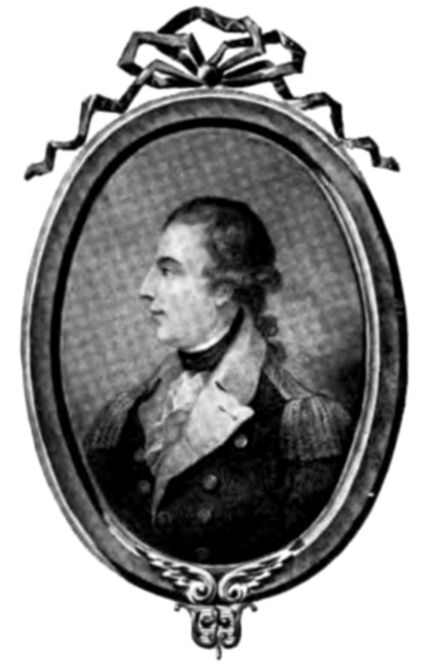
GEN. RICHARD MONTGOMERY. Born near Raphoe, Donegal County, Ireland, 1736; became a distinguished American soldier; was appointed a brigadier-general by the Continental Congress: acting commander-in-chief of the Northern Department; invaded Canada; captured St. John, took Montreal, and laid siege to Quebec; was promoted to the rank of major-general; killed, on Dec. 31, 1775, while attempting to carry Quebec by storm. Hon. John D. Crimmins, President-General of the American-Irish Historical Society, has the last letter that Montgomery is known to have written. It is a demand on the British commander of Quebec to surrender.
41