APPENDICES (continued 2)
Reading edition
This day was naturally a most trying one for the Signal personnel. Nearly all wire communication was lost in the first two hours, and all formations from Corps downwards had to fall back on despatch riders and runners. Very fine work was done by the Company’s despatch runners on the shell-swept roads, while the sections strove to patch up and keep going the vital command lines. Thanks to cool and quick repair work by the sappers, and to the use of a short piece of cable trench completed on the previous day, touch was kept with most of the Heavy Artillery Groups continually throughout the day. The observation lines could not, however, be kept going, and thus the batteries not put out of action were blinded, and could not effectively support the infantry across the river. Oost Dunkirk village suffered heavily, and after nightfall the H.A. Staff were forced to move into the sand dunes half a mile to the flank, when temporary cables were run back to the signal office at the Villa Rosarie, which enjoyed protection in a sandbagged shelter behind the house. As this shelter was the only place in the village enjoying any degree of protection, it became during that day and night a temporary aid post for wounded and a refuge for the few remaining villagers. Amid these conditions, and deafened by the crashing explosions of the shells among the houses, the telephonists managed to carry on with wonderful efficiency for twenty-four consecutive hours. Conditions at Coxyde Signal Office with B.G. section were very similar.
Much to the general surprise, the attack was not resumed on the following day, and while every nerve was strained to get the existing lines restored, work on the new communications began and was pressed forward night and day. The buried scheme originally planned provided for four forward trenches, one along the sea coast, one through the dunes, one partly French and already dug through the polder area, and one consisting of cable laid in the bed of the Nieuport Canal—all to be connected by a lateral trench running through H.A. Headquarters, which was to become the chief maintenance and test point. Lieutenant Collins with B.E. section and a rapidly increasing number of Imperial sections, loaned from Army Signals, was entrusted with this work, assisted by Lieutenant Dobson. In view of the experiences of the 10th, two additional trenches were added to the plan, one from a main open route junction point behind Coxyde, forward along the fringe of the dunes to H.A. Headquarters, and the other along the sea-beach above highwater mark from Corps Headquarters at Bray-Dunes to the same point.
This latter trench, which contained twenty-five pair dry core cable, was completed by Lieutenant Hill with skilled cable jointers from 51 Air Line. Labour was made freely available by the Corps Staff, and as material now came forward rapidly, up to two thousand men a day were employed on these works. The forward portion of the scheme presented great difficulty, as the area was now so sown with batteries that it was almost impossible to trace the trenches so as to avoid battery positions and the shelling which they attracted. The greater part of the work could only be done by night because of enemy observation; and, further, time did not admit of the usual detailed preparation for the working parties. Nevertheless, all works were completed for the attack; and taking into account the continuous heavy shelling, with light casualties.
The experiment made on the Somme of using a kite balloon to maintain communication with the front line, was now repeated; and as a separate balloon was now placed at the disposal of Second-Lieutenant Wilson and a visual signalling party, the result was satisfactory.
Though all other preparations were well advanced, including the seclusion of the 1st Division in a “hush” camp on the coast, where they were specially rehearsed in landing operations from the sea, the attack was postponed from date to date, until it finally became evident by the transfer of a large proportion of the heavy batteries to the Ypres front, that the slow progress made there owing to weather and “pill-boxes” was likely to postpone the Nieuport offensive indefinitely.
During the interval, the rival artilleries waged a furious and continuous duel. The forward buried system, unavoidably shallow from the nature of the ground, was continuously broken by shell fire. During September the cable trenches were blown up by direct hits on the average nearly twice a day. The repairs were most difficult and laborious owing both to the persistent shelling and the rise of the water level everywhere after the wet weather of August. Even with the sappers of three cable sections—B.F., B.E., and A.U. Imperial Cable Section,—and two area Signal Detachments from the Fourth Army, it became impossible to keep going satisfactorily the network of forty miles of trenches containing 1,200 miles of cable; and finally the assistance of the Corps Cyclist Battalion was obtained to dig diversion trenches in the worst shell areas, and a new trench in the Belgian area in substitution of the cable laid in the Nieuport Canal, the insulation of which began to fail soon after laying.
During this period the sappers stationed at the forward test points had a most trying experience. Owing to the frequent breakdowns, they were perpetually working on the cable trenches by day and by night, employed in testing and substituting lines. The frequent use of gas shell made it necessary that at their isolated points they should secure the gas blankets of their dug-out entrances at night, and this inevitably produced an atmosphere little inferior to the gas itself. Two concreted test points in the “polder” area, taken over from the French, were conspicuous after shelling had destroyed all arboreal cover. The Germans apparently decided that these were gun positions, and favoured them with special attention, managing finally to secure three direct hits—two innocuous, however unnerving to the inmates; but the third on P.C. 6 burst square on the roof, and though only slightly bending the steel rails embedded in the concrete, killed a sapper of B.F. section inside. One small dug-out on the canal bank, P.C. 18, disappeared altogether after an eleven-inch howitzer bombardment of a neighbouring battery, but fortunately there was no occupant at the time.
Corps Headquarters moved to La Panne at the beginning of September; but the location had evidently been given away by a spy, as it was heavily shelled by a long range gun a fortnight later, and consequently retransferred to Bray-Dunes. Though as the autumn drew on activity in the sector died down, all ranks had reason to welcome the relief of the Corps by the XXXVI. French Corps that commenced on the 19th November. On the 20th the Headquarters of the Company, under Captain Dingwall, who had been acting as A.W. Signals since September during Lieutenant-Colonel Harrison’s absence on sick leave, moved to Hinges near Béthune, and commenced to take over from the XI. Corps—then under orders for Italy—a sector between Béthune and Armentières.
THE LYS AREA.
After some readjustments of frontage in December, the XV. Corps settled down to hold the sector in front of the Lys, from Houplines to Laventie, with the Portuguese Corps on the right and the Anzac Corps on the left. In January 1918 Corps Headquarters were shifted from Hinges to La Motte-aux-Bois in front of the Forest of Nieppe, and Heavy Artillery, with the H.A. and B.E. sections, to Estaires, where 51 Air Line was already established. A further reorganization of the Company now took place. As cable sections rarely, if ever, performed the mobile work for which their horse transport was provided, the decision was reached to disband one cable section in each Corps, to reduce the strength of the Corps air line section to forty-two all ranks with one heavy and two light lorries, and with the surplus personnel so accruing form an additional air line for each Corps. B.G. section was, accordingly, converted into the nucleus of the new 91 Air Line Section, to which Lieutenant Dobson was appointed. At the same time, “Q” Wireless Section became an integral portion of the Signal Company, and was taken over by Lieutenant McArthur, with 2nd Lieutenant FitzGeorge as second officer, the Imperial personnel being rapidly replaced by South Africans. A second officer was also authorized for the Heavy Artillery Section, and Lieutenant M. Cohen, who had been attached to a brigade of the 8th Division since his arrival from England in November 1917, was appointed.
The communications here were such as would serve on a thinly held and lightly shelled front. Buries were few and becoming inefficient with age; the light open-wire routes which formed the bulk of the communication were run close up to the front line. The defection of Russia made it certain that the Allies would be thrown on the defensive in the spring; and as the Lys covered Hazebrouck and the direct route to Calais, it was probable that the sector would become a main front of attack. Ample and secure communications were, therefore, a first necessity, and a complete scheme was prepared on a scale of magnitude and thoroughness which surpassed any previous performance. All trenches were to be seven feet deep and carry no less than thirty pairs of wires.
Work could not be commenced before the 25th January, owing to the whole Lys Valley, which is very low lying, becoming water-logged by heavy rain. At first the labour available was very limited, owing to the urgent demands for defence works in the battle zone, and for the construction and wiring of a new emergency line of five trenches on the north bank of the river. Early in February the labour position improved, and frequently over one thousand five hundred men were employed simultaneously. The sappers had a strenuous time, and, but for the assistance of a party from the Corps Cyclists, who by long association with Signals had become relatively skilled, could not have kept up the pace. By unremitting effort the Corps Section of the trenches was completed by the beginning of March, and a portion of the work originally assigned to divisions taken over.
While the other sections were so engaged, B.F. was employed on another section of the scheme in and around Armentières itself. In this town a considerable underground sewer system existed, and though not comparable with the underways of Arras, yet these sewers proved extremely valuable as affording ready-made covered ways for cable. B.F. accordingly spent two months in laying securely many miles of cable. The new 91 Air Line Section meanwhile pushed on the necessary additions to the open-wire routes forward from Corps Headquarters. Hostile artillery activity began to increase considerably in March, and about the middle of the month became so marked that from this and other symptoms an immediate attack was expected. This cut off the supply of labour, but the sappers were busier than ever in bringing the cables already laid into use by temporary joints, without waiting for the construction of the test dug-outs.
This alarm proved for the time false, the offensive commencing instead on the Third and Fifth Army fronts on the 21st March. The immediate effect was the withdrawal of all the divisions in the Corps, and their replacement with exhausted divisions from the south—the 34th and 40th—who naturally could provide no labour. The greatest anxiety was now felt lest the communication should not be finished in time, and work was rushed day and night. With the assistance of the Corps Cyclists temporary sandbagged test points were erected where the concrete work was still lacking, and when the storm finally broke on the 9th April practically all cable laid had been joined up and was working, and three-quarters of the original scheme had been completed.
The attack began at 4.30 a.m. with an intense bombardment extending back to and beyond the river, followed by an infantry assault about 7 a.m., which immediately broke through the Portuguese on the Corps right. There were no reserves available to man effectively the new line dug on the northern bank, and during the afternoon the enemy crossed at Bac St. Maur, and by 7 p.m. had forced our firing line back behind the signal test point at Croix de Bac. Communications had held well so far; the 34th Division was still maintaining its ground on the left round Armentières, and there was hope of an immediate restoration of the situation by counter-attack. The lineman at this point—Corporal Shepherd of the H.A. section—was, therefore, instructed not to destroy the lines, but to leave them all through, and fall back on the next test point. He did so, but omitted to put through one of the lines. On ascertaining this when he reached H.A. headquarters, he voluntarily returned and managed to re-enter the dug-out, which was now in No Man’s Land, and put the line through. Though this dug-out passed into the enemy’s hands during the night, and after a temporary reversal of fortune again next morning, direct communication from Corps headquarters to troops in Armentières was maintained over the cables passing through it till afternoon on the following day, when the evacuation of the town began.
By next morning the Germans had forced the river to Estaires. This town had been intensely shelled all day, and B.E. Section billet was blown up early in the morning. Nevertheless, the Corps Exchange was kept going till a late hour that night by Lieutenant Hill with 51 Air Line and a party of operators from the Headquarters section.
During the following days, the 10th, 11th, and 12th, the Corps was steadily driven back by the heavy thrust made by the enemy for Hazebrouck. The 29th and 31st Divisions and the 4th Guards Brigade were successively thrown in, but their desperate fighting only succeeded in slowing the German advance, until the entry into line of the 1st Australian Division on the night of the 12th, when the enemy was finally brought to a stop on the edge of the Nieppe Forest. Thereafter the storm centre shifted gradually to the northward round Kemmel and Messines, while on the Corps front the battle died down to local combats.
The effort to keep up communications during these days tested every one to the limit. Units were changing location like figures in a kaleidoscope, and nearly the whole of the existing system of lines had passed into the enemy’s hands. However, by the most strenuous efforts, touch was maintained throughout the retreat, and the good work done was recognized by the Corps commander; for in a letter addressed to Colonel Harrison, he conveyed his appreciation of the work carried out by all ranks of the Company during the recent operations. He added that he realized that, owing to the untiring energy and devotion to duty shown by all ranks, a very high standard of communication was maintained, and thanked all for the efforts made and the results achieved. The general commanding the Heavy Artillery also made reference in a special order of the day to the particularly good work done by the H.A. Signal Section, under Lieutenant Collins, in the following words:—
“That the Heavy Artillery was able to cover the whole Corps front with its fire during each day, and to withdraw to fresh positions each night, testifies also to the excellence of the staff work—especially in connection with telephonic communication.”
On the 11th Corps Headquarters fell back to Wardrecques, between St. Omer and Hazebrouck, leaving an advanced Signal Office at La Motte until the evening of the 12th. During the next few days it became evident that the front was established again—at any rate temporarily—and the work of restoring the normal network of communication at once commenced, at first with great shortage of material, as all forward signal dumps had been captured.
Captain Dingwall, whose health had suffered under the continuous strain in France, now left the Company to join L Signal Battalion, and was replaced by Captain Ross, who was relieved of the Heavy Artillery Section by Lieutenant Collins. Lieutenant Hill took up duty at headquarters, and Lieutenant McArthur left the Wireless Section for 51 Air Line.
At this time also Lieutenant-General Sir J. P. Ducane was summoned to replace Sir Henry Rawlinson on the Versailles Council, and the XV. Corps was henceforward commanded by Lieutenant-General Sir B. de Lisle. The departure of General Ducane was much regretted by the Company, as he had always taken a close interest in communications, and showed keen appreciation of the work done, as is shown by the following extract from a letter written by him to Colonel Harrison after the termination of hostilities:—
“In the many bright spots of the XV. Corps, I have always maintained, and always will maintain, that the Signal Service was far away the best Signal Service of any other organization in France. Not only was there a very thorough grasp of the work, but always—what was so pleasant to find—there was a desire to go out of your way to help. It is with the greatest pleasure that I write to say how much I always appreciate having the South African Signal Company in the XV. Corps. They were not only highly efficient in all departments of this work, but I can honestly say they were the most energetic, hard-working, well-disciplined, and courteous body of men that I have come across in my experience of the Army.
“I always felt in dealing with you that nothing was ever too much trouble for you or your men, and that no matter how exacting the demands made upon you—and they were often very heavy indeed—no effort would be spared to carry them through successfully. Never were we let down during the most trying times—on the Somme, on the coast, or on the Lys. During the enemy’s attack on the Lys in April 1918, the truly remarkable way in which all our communications held out for three days, till we were compelled to abandon La Motte, greatly facilitated the exercise of the command of the Corps during those difficult days, and was an eloquent testimony of the thoroughness and skill with which the work of preparation had been carried out.”
The final holding up of the Germans at Kemmel on the 28th April made it possible to commence effective work on the defences at Hazebrouck, and during the next few months successive lines of trenches and belts of wire came into existence, and seamed the country as far back as St. Omer. The Company’s share in these preparations was work on a buried cable scheme which started early in May, and gradually developed as labour and material were obtainable, until, when the advance began, a network of trenches extended across the whole Corps area for 13,000 yards in depth and 7,000 in breadth, embodying thirty miles of seven-foot deep trench and nearly 1,200 miles of pair cable. This work, though never tested by another offensive, was of great value during the prolonged artillery duel which followed the Battle of the Lys. The open-wire routes were continuously shelled or bombed down, for in this sector, as on the coast, aeroplane bombing was a nightly event.
The series of successful minor operations carried out by the Corps in July and August, including the capture of Méteren, and the devastating effect of our superior and incessantly active artillery, no doubt quickened the German decision to evacuate the Lys salient. This evacuation commenced at the end of August, and thenceforward all ranks were occupied in the rapid restoration of communications through the devastated area, now as broad as the old Somme battlefield. An attempt was made to utilize the old buries laid down by the XV. and other Corps before the retreat; but these were too effectively destroyed by the enemy to admit of rapid restoration.
After the successful attack of the Belgian and Second British Armies at the end of September, in which the XV. Corps co-operated on the right flank, headquarters were moved to St. Jans-Cappel on the 4th October, and on the 21st, to Mouvaux, near Tourcoing, following the rapid retreat of the enemy to the Scheldt. On this occasion a fast piece of work was done by 91 Air Line and B.E. Cable Section, two lines being completed across the Lys to the new headquarters—a distance of nearly twenty miles—in one day.
The Signal portion of the preparations for forcing the passage of the Scheldt filled the period up to the 10th November; but as the enemy retired during the night, and the Armistice was proclaimed the following day, they proved unnecessary.
The Corps was not selected to accompany the advance to the Rhine, and so it fell to the lot of B.E. Section on the 12th to lay the last and farthest forward cable in France, from the Scheldt, crossing at Pecq to an observation point on the eastern side.
APPENDIX III. THE MEDICAL SERVICES.
When the South African Expeditionary Force was organized on the termination of the campaign in German South-West Africa, Colonel P. G. Stock was appointed S.M.O., and in addition to the South African Medical Corps personnel who volunteered for regimental duties, arranged for the mobilization of one Field Ambulance and one General Hospital. The former, under the command of Lieutenant-Colonel G. H. Usmar, S.A.M.C., assembled at Potchefstroom with the 1st South African Infantry Brigade; while the General Hospital was formed at Wynberg, the personnel being largely composed of volunteers from the staffs of No. 1 General Hospital, Wynberg, and No. 2 General Hospital, Maitland, and included representatives from each of the four provinces of the Union. It subsequently provided the personnel for the Depot in England, and the South African Military Hospital at Richmond, which was afterwards built and organized.
No hospital equipment was available in South Africa, but the official Advisory Committee on Voluntary Aid, of which Sir Thomas Smartt was chairman, met the difficulty by voting £15,000 to purchase it on arrival in England, and a further £1,500 to augment the equipment taken by the Field Ambulance.
Both units accompanied the Infantry Brigade to England, the General Hospital embarking on H.M.T. Balmoral Castle at Cape Town on 25th September, and the Field Ambulance on H.M.T. Kenilworth Castle on October 10, 1915. On arrival there, they proceeded to the R.A.M.C. Depot at Twezeldown, near Aldershot. At the depot the training of the Field Ambulance proceeded under its own officers, and, with the rest of the Brigade, it was present at Bordon when her Majesty the Queen reviewed the troops on December 2, 1915. On 29th December the unit proceeded by route march to Farnham, there entraining for Devonport, where it embarked on H.M.T. Corsican for Egypt, Alexandria being reached on January 13, 1916.
In the meantime, the personnel of No. 1 General Hospital—which had been particularly fortunate in securing the services of some of the leading surgeons and physicians and most experienced nurses in South Africa—was temporarily detailed to strengthen the staffs of various Imperial hospitals in England. On 20th December, however, the unit was reassembled at Bournemouth, where it took over and staffed the Mont Dore Military Hospital, which, under an Imperial officer as commandant, had just been equipped for 520 patients.
In February 1916 the control of the “Grata Quies” Auxiliary Hospital was transferred to the Mont Dore, which became a “Central Hospital,” and on April 1, 1916, seventeen additional auxiliary hospitals, situated in the districts of Poole, Wimbourne, Swanage, Sherbourne, and Yeovil, were affiliated, increasing the number of beds controlled to over 1,200.
The first patients from overseas were admitted on 8th January, the majority being medical cases, and although a number of severe cases of “trench feet” from Gallipoli were taken in, few wounded were received up to the time the unit left on July 3, 1916, when it proceeded to Aldershot preparatory to joining the British Expeditionary Force in France.
When the decision to send South African troops to England became known, a number of prominent South Africans in London formed a committee under the chairmanship of Lord Gladstone—until recently the Governor-General—to start a fund for the establishment of a hospital and for the general comfort of the troops. On the arrival of the contingent in England this movement received renewed attention, a proposal then being under consideration to erect huts to accommodate some three hundred patients, as a South African wing to the Royal Victoria Hospital at Netley. On further investigation, however, it was found that the site, although in many respects an ideal one in the summer, would not have been suitable for South African troops during the winter, and further search had to be made. Many places and buildings were inspected, and finally a site in Richmond Park, for which his Majesty the King was graciously pleased to grant the necessary permission, was selected, and no more beautiful, convenient, and healthy spot could possibly have been obtained.
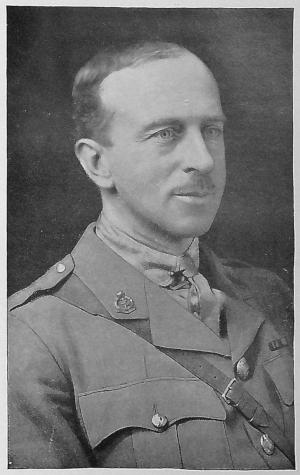
Colonel P. G. STOCK, C.B., C.B.E., D.D.M.S., South African Forces.
Much of the success of this hospital was due to the time and care spent over the plans, and Mr. Allison, the chief architect of the Office of Works, was always ready to adopt any recommendations made by Lieutenant-Colonel Stock and the expert sub-committee of officers of No. 1 General Hospital who were dealing with the project. The desire was to provide 500 beds, but for financial reasons it was decided to start with 300, on the basis of plans which provided for future necessary extensions.
The construction was begun early in March, and on June 16, 1916, the hospital was formally opened by its patroness, H.R.H. Princess Christian, being then taken over fully equipped as a gift from South Africans by the D.D.M.S., London District, on behalf of the Army Council.
On the opening of the hospital, the S.A.M.C. Depot in England was transferred to Richmond, and a redistribution of the personnel of No. 1 General Hospital carried out, which enabled a South African Staff to be placed in charge of Richmond without interfering with the efficiency of the former unit. Major Thornton, the adjutant and registrar of No. 1 South African General Hospital, succeeded Lieutenant-Colonel Stock in command at Richmond, and Captain Basil Brooke was appointed adjutant and registrar of No. 1 General Hospital. Before, however, proceeding further with the history of the South African Hospital at Richmond, it will be convenient to follow the fortunes of the units which left England.
On January 13, 1916, No. 1 South African Field Ambulance arrived at Alexandria on H.M.T. Corsican, and marched the following day to Mex Camp, where the rest of the Brigade was encamped. Its history is included in that of the South African Infantry Brigade, with which it was associated from this date until the cessation of hostilities.
On the arrival of No. 1 South African General Hospital at Aldershot, the final touches were given to the unit, and about 400 shipping tons of stores and equipment drawn, which, by a special arrangement with the Army Council, had been paid for out of the £15,000 voted by Sir Thomas Smartt’s Committee in Cape Town.
On 12th July the unit entrained for Southampton, there to embark on H.M.T. Huntcraft. The ship berthed at Havre about 10.30 a.m. on the 13th, and as she was urgently required elsewhere, the unloading at once commenced; and on the following day the unit—together with its stores and equipment—left for Abbeville, which was reached on 15th July.
Here it was found that the hospital would be established next to No. 2 Stationary Hospital, an Imperial unit which had been there for some time. The necessity for not interfering with the ripening harvest considerably curtailed the choice of a site, the ground allotted being a ploughed field on the slope of the hills overlooking the valley of the Somme. Abbeville itself lay about a mile away in the valley, but the railway station and “triage” were on the far side of the town and must have been nearly three miles from the hospital.
Some hospital marquees had already been erected, but the layout of the hospital was greatly handicapped by the cramped area of ground then available. As the corn was reaped more ground became vacant, and, later on, by frequent striking and repitching of tents, the hospital gradually took a more symmetrical and workable shape.
When the unit arrived in France the First Battle of the Somme had begun, and hospital accommodation was urgently required for the large number of casualties. So, in the absence of any kind of building, a store tent was converted into an operating tent; an improvised sterilizing shelter erected; and within forty-eight hours of arrival patients were admitted and every available surgeon hard at work.
In those early days the wide surgical experience and considered judgment of Lieutenant-Colonel Ritchie Thomson proved invaluable. He had accepted the post of chief surgeon when the hospital was mobilized in South Africa, and many a sorely wounded man owes his life and limb to his skill and judgment.
The initial difficulties were many: buildings and engineering services were almost impossible to obtain, and it was not until the end of November that the operating block—the first building to be erected—was completed. All, however, were willing workers, and it was not long before additional tentage was pitched and Major Merritt had organized the kitchens, stores, and a hundred and one odd things appertaining to the Quartermaster’s Department, all of which mean so much to the efficiency and comfort of any hospital.
Until early in August the hospital was without its own nursing Sisters—these services being performed by members of the Q.A.I.M.N.S., the Canadian Military Nursing Service, and English V.A.D.’s, who did all that hard work and devotion to duty could do to make up for the shortage in number. On 5th August, however, Matron Creagh and twenty-one members of the S.A.M.N.S. arrived from England, and the greatest difficulties in this respect were over. The nurses’ camp had to be pitched in the wooded ground of a château some little distance off; but when the storm clouds rolled up the valley, and the winter rains set in, they had perforce to be billeted in the town until the huts which were contemplated for them were completed.
Situated as it was at the advanced base in a convenient position for their reception, the hospital, during the autumn of 1916, received a large number of wounded direct from the Somme battlefield. Amongst the earliest admissions in July 1916 were South Africans wounded at Delville Wood, and towards the end of July General Lukin was one of the first officer patients.
The most severely wounded journeyed by specially-fitted hospital barges, which, from the casualty clearing stations around Corbie, floated down the Somme to Abbeville, where the patients were disembarked and taken by motor ambulances to the hospital. The use of barges was restricted to those cases who were unable to stand the strain of a journey by train. Usually they travelled in pairs, but on more than one occasion during the autumn of 1916 patients from six barges were admitted during the twenty-four hours. Towards the end of 1916 the barges ceased running, as the winter rains had rendered the passage down the Somme too dangerous, and they were not again employed, as the advance in the spring of 1917 carried the fighting away from the river.
Fortunately, during the first few weeks after the arrival of the unit in France, the weather was fine, but even then difficulties were experienced in regard to the main road leading to the hospital. For part of the way this was formed by “sleepers,” but as the supply of them gave out beech planking had to be substituted. This quickly “warped,” and becoming displaced with the constant traffic, was always a source of trouble, as the underlying chalk during the dry weather quickly powdered to a fine dust, and later, when the rains set in, turned into a particularly greasy form of mud.
As soon as materials and labour became available, the “sleeper track” was continued, and a large “triage” constructed on which the ambulance wagons could turn; but it was not until many months later that it became possible to build a macadamized road connecting the hospital with the Route d’Amiens. The old entrance was then utilized as an exit for empty wagons, and the original signboard of the hospital, on which Major Merritt had painted the Springbok badge, was removed to the new entrance.
Progress was gradually made in the erection of temporary buildings, and by the end of 1916 there was accommodation in huts for 120 patients. It was obvious, however, that for that winter at least the majority of beds would be under canvas, and a particularly successful form of sliding door with windows at the top was designed; and with the funds available a local contractor was engaged, who quickly fitted them at each end of the tented wards. At the same time the Royal Engineers undertook the installation of stoves and wood flooring, and with doors closed and the sides of the tents fastened down the tented wards were really most comfortable. “Duck” boarding also gradually became more plentiful.
During the period July 23, 1916, to December 31, 1916, the total admissions were 6,436, of whom 3,032 were “battle casualties” and 3,404 “sick.” During the same period 5,719 were “discharged hospital.” Of these 673 were returned to duty; 548 transferred to convalescent depôts; 3,306 evacuated to the United Kingdom; and 1,192 transferred to hospitals at other bases in France. Five hundred and eighty-eight major operations were performed; and there were in all, for the same period, 236 deaths, or—calculated on the number of admissions—a percentage of 3.68. This comparatively high mortality is explained by the fact that practically every case admitted to this hospital was seriously wounded—the barges, from which the large majority of cases were received, only carrying those cases which were unfit to travel by other means of transport. The mortality was further increased owing to the fact that this hospital was the nearest General Hospital to the Somme front, and many moribund patients were taken off ambulance trains on account of their being too ill to travel to more distant bases. By the end of the year, in addition to the operation block, hutted accommodation for 120 patients was erected, and in the early part of 1917 hutted quarters for the nursing staff and rooms for officers’, sergeants’, and men’s messes were added, as well as buildings for part of the quartermaster’s stores.
Early in the year instructions were received from General Headquarters that the hospital was to be enlarged from 520 beds to a normal capacity of 1,120 beds, with a “crisis expansion” to 1,500 beds. The hospital remained on this basis, and during the latter part of 1917, and not infrequently during 1916, as many as 1,600 to 1,700 patients were accommodated at one time.
The total admissions for the year 1917 were 19,109, of which 7,613 were battle casualties and 11,496 were sick. During the same period there were 18,277 discharges. Of this number 2,638 were returned to duty, 4,253 were transferred to convalescent depôts, 8,749 were evacuated to the United Kingdom, and 2,637 were transferred to hospitals at other bases in France. One thousand two hundred and ten major operations were performed during the year 1917. For the same period, including eleven cases brought in for burial, there were 181 deaths in the hospital. Of these 128 were due to wounds—a percentage of 1.68; and 53 were due to sickness—a percentage of .46. The death rate from all causes for this year worked out at .94 per cent.
Promises of hutted accommodation, both for patients and personnel, were current for at least twelve months. Nothing, however, happened in this direction, except that an administration block and a new kitchen for the hospital were built; and in October 1917, with keen remembrances of the previous winter, it was decided to erect such huts as was possible with labour supplied by the staff of the hospital. A start was made, with the idea of housing the men of the company who were over forty years of age, and a hut was built, using discarded telegraph poles as the principals, covered with corrugated iron and lined with wood—the lining being bought from funds provided by the South African Hospital and Comforts Fund at a cost of, approximately, £120.
Stimulated by the success of the first, the building of the second hut was then taken in hand; and eventually, with the assistance of the engineer services, comfortable quarters for all the personnel were erected. In January 1918 six hospital “Adrian” huts were erected, but were not completed until the end of March, chiefly owing to the lack of labour and uncertainty as to whether the hospital would have to be evacuated. Three double “Nissen” hospital huts were subsequently added—the last not being quite finished when the armistice was signed. The erection of a further eight, which would have completed the building programme of the hospital, was cancelled.
For the first few months all traffic to the hospital had to pass through a neighbouring hospital—No. 2 Stationary, R.A.M.C.—this being not only inconvenient, but leading to congestion. Later, a metalled road was made through the South African Hospital leading to the Amiens road and looping within the hospital. This meant that traffic was easily managed, and made the handling of convoys infinitely easier. In the summer of 1918 a tarred surface was put on to this road, which proved a great help in keeping down the dust.
The necessity for a special railway siding for the three large hospitals in this area to avoid the long, rough, and frequently interrupted journeys by ambulance from and to the main station was also met.
A church was erected within the precincts of the hospital, the cost of which was defrayed partly by subscriptions received from the patients and personnel, and partly by a donation of £75 from the South African Hospital and Comforts Fund, London. It was dedicated in the name of St. Winifred to the memory of the late staff nurse—Miss Winifred Munro, South African Military Nursing Service—and as a tribute to her devotion to duty.
In December 1917 the hospital was specially selected for the reception and treatment of cases of fracture of the femur. Beds for the accommodation of 200 such cases were provided—50 being reserved for officers, and 150 for other ranks. The special bed and technique devised at the hospital were afterwards adopted as the standard for the British Army.
During the German offensive of 1918 the hospital passed through what was its period of most intense activity. The medical staff was depleted to replace casualties in the South African Field Ambulance and other units in the forward areas, while reinforcements from the male personnel were sent to the Field Ambulance. Practically all the female nursing staffs from this district were withdrawn, on account of the enemy advance and the frequent bombing at night by hostile aeroplanes of the back areas. Thus the number of medical officers in charge of wards was reduced to 8 instead of the normal 22; the male personnel fell to 188—the normal establishment being 212; while the female nursing staff, with a normal establishment of 88, was reduced to 8.
With this depleted staff it would have appeared almost impossible to look after a normal number of patients, but many more than normal had to be dealt with during the last week of March, 1,820 being admitted and 2,365 discharged.
Many of these received at the hospital their first medical attention since leaving the battlefield, and a very large number had to be operated upon immediately.
This involved teams working in the operating theatre day and night, but all members of the unit rose to the occasion and worked with a splendid will and cheerfulness under these trying conditions.
The huts recently erected for accommodating the personnel had to be evacuated by them to make room for patients, of whom as many as ninety slightly wounded were packed into one hut on stretchers. The men were crowded into the remaining three huts, and the overflow slept on the football field.
Nor did the work end here, for, owing to the threat of hostile air attacks, it became urgently necessary to dig protective trenches for patients, sisters, officers, and other ranks, and also to erect sandbagged revetments around the wards which contained the helpless patients. Outside assistance at this time was unprocurable, as all labour was fully employed in the digging of a defensive system at Flixecourt to protect the town of Abbeville, and the task therefore fell on all ranks of the personnel. Soon after this air alarms became an almost nightly occurrence, and even when raids did not actually take place, sleep was broken. But the nursing staff and all inmates of the hospital passed through this prolonged period of physical and mental strain without failing to respond adequately to the demands made on them. Though no definite attack was made by hostile aircraft on the hospital, bombs on several occasions fell uncomfortably near, one actually falling inside the grounds. This fortunately buried itself before exploding, and, beyond tearing the roof of a tent used as a carpenter’s shop, did no damage.
The approach of the enemy and the frequency Of bombing raids made the retention of cases of fracture of the femur in this hospital inadvisable, and on that account as many as possible were evacuated to the United Kingdom, together with the greater portion of the special equipment used for these cases.
Not long after the last consignment was despatched the Allied offensive began, and the heavy influx of fractured femur cases—amounting to more than 150 in the hospital at one time—made it necessary to use improvised apparatus for dealing with a number increased to this extent, in spite of the fact that as many of these cases as possible were at once evacuated to the United Kingdom.
During the months of June and July 1918 the admissions of sick to the hospital were large, owing to an epidemic of influenza. Since then admissions steadily increased, both of sick and wounded, due to the offensive which began in the latter part of July and which continued up to the signing of the armistice.
During September the admissions reached the figure of 3,276, while in October they numbered 3,214, and the discharges 3,318. For the period of January 1 to November 30, 1918, the total admissions were 20,089. Of these 8,716 were battle casualties, and 11,373 were sick; discharges for the same period amounted to 19,921. Of these, 4,196 were returned to duty; 4,229 were transferred to convalescent depôts; 9,028 were evacuated to the United Kingdom; and 2,468 were transferred to other hospitals in France.
All the tented wards were equipped with sliding doors, the first of which were provided out of South African funds. These were made by a French contractor to our design, and the type was afterwards adopted for all hospitals in this area. The engineer services eventually supplied the remainder of the wards with similar doors.
A considerable amount of extra equipment was also provided out of South African funds, notably, an extra operating table, portable ray apparatus for use in the fractured femur wards, additional surgical instruments, and the apparatus necessary for Ionic medication.
The appearance of the hospital grounds improved from year to year, grass lawns and flower-beds being laid out, and vegetable gardening being carried on each year on a progressively larger scale.
From the early days of the unit in France a field adjoining the hospital was available for purposes of recreation, the rent being paid from hospital funds. During all seasons of the year it was made full use of by the unit for football, hockey, cricket, and other games. Badminton and tennis courts were constructed in the officers’ and sisters’ quarters, and a tennis court was made on ground adjoining the recreation field for the use of other ranks of the unit.
In June 1917 a surgical team for duty at a casualty clearing station was provided by the unit, and performed continuous duty in the forward areas until December of that year. Since then a surgical team performed duty in the front areas on eight occasions. In addition, nursing sisters from time to time were detailed for duty on ambulance trains and for nursing duties and as anæsthetists at casualty clearing stations.
On July 10, 1917, the hospital was honoured by a visit from her Majesty the Queen and his Royal Highness the Prince of Wales. Her Majesty inspected three of the wards in the Hospital and the operating theatre block, and before leaving was graciously pleased to express her entire satisfaction with the work of the Hospital.
To return to the South African Military Hospital at Richmond. In September 1916 the Army Council, on its own account, proposed to add to the accommodation; the Committee, however, considered that, in view of the fact that the provision of 500 beds had been originally contemplated, the additional accommodation proposed should be undertaken by the Committee. This necessitated a further appeal for funds; but, to avoid delay, Mr. Otto Beit generously gave a very substantial contribution. Eventually the total donations received from the issue of the second appeal assured the extension being carried through. The work was pressed forward, and the extension was opened for patients in February 1917. It was, however, hardly in use when a demand was made for further beds. This was met by the Committee converting into wards the quarters originally built for orderlies, and by renting a neighbouring house as an annex, so that in April 1917 the total accommodation for patients had increased to 620 beds.
Early in 1918 the War Office, seeing that the Richmond Military Hospital was almost entirely filled with South African patients, proposed to the Committee that the South African and the Richmond hospitals should be amalgamated, the combined hospitals to be known as the South African Military Hospital. The Committee readily agreed, and the two hospitals were completely amalgamated on July 1, 1918.
The enlarged hospital provided 1,098 beds; but even this was not sufficient, and 250 emergency beds were added by billeting patients in the neighbourhood. In addition, four auxiliary hospitals were attached, bringing the total number of beds to 1,321, or, including billets, 1,571.
The Park section of the combined hospitals stood on an enclosed site of about twelve acres, the actual area of the building being about two and one-third acres. The construction throughout was of timber with felt and weather-board linings on the outside, and asbestos board-sheeting on the inside of the walls and ceilings of all wards and principal rooms. A special feature of this section was the bath ward, with six fire-clay continuous baths for the treatment of patients suffering from severe wounds.
The Grove Road extension was a brick building, and consisted for the most part of modern infirmary wards supplemented by additional wards in old buildings.
The equipment of the Park section was entirely provided by the Committee, while that of the Grove Road section was found by the Board of Guardians and the War Office, and was only where necessary supplemented by the Committee.
Towards the end of 1916 the Committee offered the privilege of naming a bed in the hospital to any persons or institutions making a gift of £25, and of naming a ward for a donation of £600. The appeal resulted in 99 beds and 8 wards being thus named, approximately 265 of the beds being the gifts of schools in South Africa, the organization for these being initiated and carried out by Mr. Maskew Miller of Cape Town.
The principal corridors and rooms in the hospital were named after well-known streets or places in South Africa, all the principal towns in the Union being represented. The result of this, and of placing the tablets over the beds, was that familiar names greeted the South African visitor—a happy idea on the part of the Committee, and one which was much appreciated by the sick and wounded of the contingent.
The Committee expended approximately £45,000 on building the hospital and its extensions, and £19,000 on equipment. The former figure, however, includes a sum of approximately £2,000 expended in erecting a concert hall and certain workshops, while the latter figure includes considerable sums spent on replacements. That the money was well spent is shown by the fact that the hospital was always regarded as one of the model war hospitals in the United Kingdom.
The medical staff consisted of thirteen officers of the South African Medical Corps, and eleven civilian practitioners, who for various causes were not eligible for commissions in the S.A.M.C.
Various changes naturally occurred in the staff owing to interchanges being effected from time to time with the units in France. When Lieutenant-Colonel Thornton took over the command he was succeeded as registrar by Captain Coghlan, S.A.M.C., who in turn was succeeded by Major J. C. A. Rigby, S.A.M.C. The first quartermaster was Major G. Merritt, S.A.M.C., who left, however, with No. 1 South African General Hospital when that unit proceeded to France, his duties being taken over by Captain Lunney, S.A.M.C. In the autumn of 1917 Captain Lunney relieved Major Merritt in France, and Major Merritt then returned to Richmond, where shortly after he was promoted to the rank of Lieutenant-Colonel.
The nursing staff under the matron—Miss Jackson, R.R.C., Q.A.I.M.N.S.—consisted of 2 assistant matrons, 23 nursing sisters, 55 staff nurses, and 88 probationers, the larger proportion of whom were South Africans. The trained members of the staff mostly belonged to the Q.A.I.M.N.S. (Res.), or to the S.A.M.N.S. The subordinate personnel consisted, with a few exceptions, of N.C.O.’s and men who, having been invalided owing to wounds or sickness in the field, did duty at the hospital while regaining health and strength.
The hospital also served as the depot for the S.A.M.C. subordinate personnel; and 18 drafts, comprising 423 men, were sent to France as reinforcements for the First South African General Hospital and the First South African Field Ambulance.
The number of patients admitted up to October 31, 1918, was 274 officers and 9,412 other ranks—a total of 9,686. This does not include any patients admitted to the Richmond Military Hospital prior to the date of amalgamation. Of the 9,686 patients, 2,628 belonged to Imperial units, but included a good many South Africans, and 7,058 were members of the South African Contingent; 8,260 patients were discharged, including 6,230 members of the Contingent.
The total number of operations performed under a general anæsthetic was 2,125, and the number of medical boards held was 1,559.
Most of the swabs and bandages used in the hospital were manufactured in the South African workrooms, organized by a group of ladies attached to the South African Comforts Committee. The ladies responsible for these workrooms made most of the curtains and other similar articles required to equip the hospital, and undertook most of the mending. Under Mrs. Friedlander they rendered most valuable assistance to the hospital since its foundation, and their help was much appreciated by all concerned.
From the very first the Committee spared neither trouble nor money to provide for the comfort and welfare of the patients. At first the work of visitation and entertainment was organized under Lady (Lionel) Phillips, but later it was taken over by the Red Cross sub-committee of the Fund. For those sufficiently convalescent to enjoy them, every possible variety of amusement was provided. On four or five nights a week some form of entertainment was given in the large concert hall, while every week theatres or places of interest were visited, a special feature being the river trips arranged by the “African World” War Comforts Service, who also very generously provided gifts of fruit and other comforts. Further, in order that nothing should be left undone, Lady Phillips founded a riverside club in close proximity to the hospital, for the benefit of those patients sufficiently convalescent to enjoy the delights of its garden and picturesque river views.
Arrangements for bedside occupational work were, in the early days of the hospital, made by lady visitors. Material for fancy work and needlework was generously provided, and the making of regimental crests and other work of a like nature helped patients to pass in bed many a weary hour when they were still too weak to be doing the more serious vocational work.
Shortly after the hospital was opened the problem of dealing with the permanently disabled men of the Contingent had to be faced. After negotiations with the War Office, it was arranged that a Vocational Training School should be established in connection with the hospital. A commencement was made in November 1916, and the school was finally opened in February 1917. The scheme involved awakening the men while still in bed to interest in their future, so that when well enough they might go to the classrooms and undertake extensive courses of training. The South African Military Hospital was the first primary hospital in the United Kingdom in which permanently disabled men, while being restored to the best possible physical condition, were trained, with due regard to their disabilities, for a civil career to enable them on discharge from the army to become self-supporting members of the community. There was what was perhaps a natural reluctance on the part of the Home Government in giving sanction to this new venture, which was for many months looked upon as being at the best an interesting experiment. The New Zealand authorities, however, quickly saw the advantages of the methods, and in August 1917 a similar scheme for their hospitals was adopted.
The desirability of training permanently disabled soldiers while still undergoing hospital treatment was finally endorsed at the Inter-Allied Conference on Disablement Problems, held in London in May 1918, and committees were subsequently formed in each Command to organize similar work throughout the hospitals of the United Kingdom.
The South African Vocational Training Scheme was carried on side by side with the work of the hospital, and was successful both in improving the mental attitude—especially of limbless men—and in training many disabled men of the Contingent who would otherwise have been unproductive to the community.
The cost of the erection of the workshops—amounting to £2,335—was borne by the South African Hospital and Comforts Fund and the Governor-General’s Fund.
Much of the equipment was either given or lent, but about £1,200 had to be expended to obtain such tools and appliances as could not otherwise be obtained. The latter expenditure was defrayed by the Governor-General’s Fund. The scheme also necessitated the hiring of four houses in the vicinity of the hospital for housing students who had been discharged from hospital; the cost of the equipment of these, amounting approximately to £1,400, was also met by the two funds.
These hostels were managed by a small committee appointed by the General Committee. The expenditure on rents, rates, and taxes for the hostels was shared by the local fund and the Governor-General’s Fund, but all other expenditure was met by the sub-committee which received through the High Commissioner the sum of £1 per week for each inmate. This sum represented a ration allowance of 1s. 9d. per head per diem received from Defence Votes, the balance being made up by the Governor-General’s Fund. The Union Government also made itself responsible for the pay and allowances of the inmates, and entirely relieved the Imperial Government of all financial responsibility for the period during which the men were undergoing training after discharge from hospital. The number of crippled men who attended classes since their commencement was 393. Of these 167 remained on October 31, 1918, and 226 had left. Of those remaining, 112 were out-students—that is, men discharged from hospital—and 55 were patients still in hospital. The number of out-students dealt with was 215, of whom 103 have left.
The school was at first under the direction of Mr. Charles Bray, but on his resignation owing to ill-health, Staff-Sergeant Newell, B.Sc., of the S.A.M.C., and in civil life on the staff of the Natal Education Department, was appointed as educational organizer. He was subsequently granted honorary commissioned rank in the Union Defence Force. The propaganda work in the wards and the ward teaching were in the hands of Miss Edith Hill, also of the Natal Education Department.
The hostels for housing out-students were managed by a matron—Mrs. Lennox, of Lovedale—and a staff of ladies, whose efforts were attended with every success.
But the success of the school, in spite of many initial difficulties, was due to the keenness of the men themselves and to the excellent co-operative work of the whole staff of the hospital, with the result that in a number of cases of limbless men the earning capacity was undoubtedly increased as a result of the training they received at Richmond.
APPENDIX IV. THE RAILWAYS COMPANIES AND MISCELLANEOUS TRADES COMPANY.
In 1916 the railways, roads, canals, and docks in the British zone in France were brought under the control of “Transportation,” which was under the command of Sir Eric Geddes. The War Office appealed to the Dominions for Railway Operating Sections, or Companies, each consisting of three officers and 266 men. In South Africa the position was such that the railways could, at the time, only spare sufficient men to form one company, but it was arranged to form a second from those not actually in the railway service but who had railway experience, or were in other ways fitted for the particular work required of them.
The first company assembled at Potchefstroom in November 1916, under Captain H. L. Pybus, and the second at Robert’s Heights, Pretoria, under Captain W. McI. Robinson. Fifty locomotive drivers and a similar number of firemen and guards formed the backbone of each company, the balance being composed of traffic controllers, blockmen, signalmen, with the necessary mechanics and clerical staff to enable each company to operate as a separate and a complete unit.
Lieutenant-Colonel F. R. Collins—a mechanical superintendent in the South African Railways—was appointed in command, and left for England in December 1916, the companies following later under the command of Captain (Acting Major) Robinson, and arriving at Bordon, Hampshire, in March 1917, at which place the depot was formed.
Both companies arrived in France at the end of March 1917, and were detailed for light railway work, which was then in its initial stage. The first section was renumbered “No. 7, South African Light Railway Operating Company,” and the second, “No. 8, South African Light Railway Operating Company,” the former being sent to Romarin on the Belgian border, while the latter proceeded to Savy, in the Arras district. Twenty-five drivers and a like number of firemen from each company were transferred to the Broad Gauge, and remained on that work throughout the war. No. 7 Company stayed at Romarin until the operations in connection with the taking of Messines Village and Ridge were completed in June 1917, during which time the Ploegsteert Light Railway system was built, over which the company was responsible for all traffic, the bulk being ammunition with delivery points at the different batteries. The 8th Company took over the Light Railway work from Marœuil to the north and north-east of Arras, whence lines were extended after the Vimy Ridge operations. In June 1917 both companies proceeded to Audruicq preparatory to taking up Broad Gauge work, and were designated No. 92 and No. 93 Companies respectively.
During most of this period Lieutenant-Colonel Collins was attached to Transportation Headquarters, and in May 1917 was appointed Assistant-Director of Light Railways, Fifth Army, which was then operating in the Bapaume sector. On the transfer of this Army to Belgium to take part in the series of operations known as the Third Battle of Ypres, light railways, in addition to serving batteries and Royal Engineers, were now required to prepare to follow up any advance. For this purpose the services of the 92nd and 93rd South African Companies were loaned to Light Railways, and took their place with five Imperial Operating Companies in the Fifth Army area. They shared in the operations up to November 1917, when the offensive ceased.
During this time the 92nd Company was employed on the system north-east of Ypres, eleven of the members being awarded Military Medals for individual acts of gallantry and devotion to duty. The 93rd Company worked from Elverdinghe through Boesinghe to Langemarck, and among other duties was responsible for the placing of field gun ammunition in position in front of the field guns on the eastern slopes of the Pilckem Ridge and in the Steenbecque Valley prior to the attacks during September and October 1917, which led to the front being advanced to the edge of the Houthulst Forest. Seven members received the Military Medal during this time.
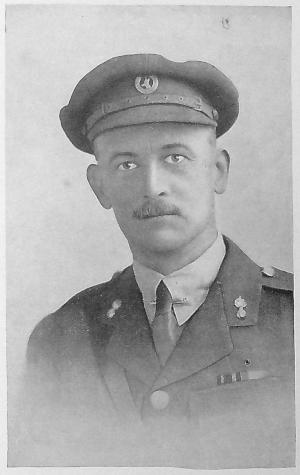
Lieutenant-Colonel F. R. COLLINS, D.S.O., Commanding South African Railway Companies.
In January 1918 the Fifth Army took over the sector of forty-five miles on the extreme south of the British front, and, in anticipation of an enemy offensive, light railway construction on a considerable scale was undertaken under Lieutenant-Colonel F. Newell. Later, on the division of this system, Lieutenant-Colonel Collins took over the northern area—the 92nd and 93rd Companies being ordered south from Belgium. The 93rd arrived early in March and was sent to Noyon, where it remained until the 23rd, when, retirement being forced by the enemy advance, the company proceeded by route march to Flexicourt, west of Amiens, and was employed on the construction of defence works in company with many other transportation units whose usual employment had been suspended for a like reason. Later, they were employed on railway construction necessitated by the altered conditions. In July 1918 the Company Headquarters were established at Ligny, east of St. Pol, and the operation of the main trunk lines to Arras was undertaken. The German retreat caused a forward move, and the company, since November, operated over the section Douai to Mons inclusive, with headquarters at Somain.
The 92nd Company, after concentrating in Belgium in March for its projected move south, subsequently cancelled owing to the enemy’s advance, went to Crombeke and from there assisted in railway construction and other duties, until in September, when, with Berguette as headquarters, the operation of the newly-constructed line towards Merville and later towards Armentières was undertaken. In November the Company moved forward to Lille, and with headquarters at Tourcoing worked the section from Tourcoing to Tournai.
In 1917 the South African Union Government consented to the formation of a Miscellaneous Trades Company for service in France. This company began to assemble at Potchefstroom in June, and, as recruiting was brisk, it was able to embark fully organized at Cape Town as early as 25th July, under the command of Captain C. E. Mason, S.A.E.
Arriving at Bordon on 28th August, the company was given a short course of training at the Royal Engineers’ Depot there, and sent to France on 14th October. Here the company was renumbered the 84th Miscellaneous Trades Company, R.E. (South African), and sent to the Director-General of Transportation, Chief Mechanical Engineer Department, Locomotive Workshops, situated at St. Etienne-du-Rouvray, near Rouen, where five companies of the Royal Engineers, under the command of Lieutenant-Colonel Cole, R.E., were already stationed.
These were the largest locomotive workshops attached to the British Armies in France, and, by reason of its large percentage of skilled personnel, the 84th Company was enabled to take a very considerable share in the activities of the shops, Captain Mason being appointed Erecting Works’ Manager, and the N.C.O.’s of the Company in many instances being entrusted with positions of responsibility. On the recall of Captain Mason to South Africa, Captain N. S. Weatherley, S.A.E., succeeded to the command of the Company. When the armistice was signed in November 1918, Lieutenant-Colonel Cole ordered a special parade of the Company, in order to express to all ranks his high appreciation of their services, which he characterized in the most complimentary terms.
A depot for the companies in France was originally established at Bordon, and was temporarily under the charge of Lieutenant Arthur, of the 1st section. Advantage was taken of the Instructional Establishment at Longmoor to train as many men as possible in the operation of petrol tractors, which were largely used in place of steam locomotives in the forward areas on light railways. In June 1917 the depot was taken over by Captain M. J. Byrne, who, on his transfer to France in July 1918 to command the 93rd Company, was succeeded by Captain H. E. Greaves, M.C., R.E., the depot about the same time being transferred from Bordon to Longmoor.
APPENDIX V. THE CAPE AUXILIARY HORSE TRANSPORT COMPANIES.
In February 1917 the Government of the Union of South Africa was asked by the War Office to raise eight companies of Cape coloured drivers for service with the Army Service Corps in France. The personnel originally required was:—
Officers 50
Warrant officers 6
Non-commissioned officers 60
Artificers 131
Drivers 2,316
but this was eventually increased to—
Officers 67
Warrant officers 23
Non-commissioned officers 92
Artificers and drivers 3,482
Towards the end of February Lieutenant-Colonel J. D. Anderson (an officer who had considerable experience in transport work) was asked to take command, and to arrange for the recruiting and organization of the eight companies. Kimberley was selected as the most convenient centre for mobilization, and De Beers Corporation gave the use of its Nos. 1 and 3 Compounds. These had hutting accommodation for approximately two thousand men. They were provided with a hospital, kitchens, washing-rooms—in fact everything required—and there is no doubt that the loan of these compounds not only facilitated mobilization and saved a great deal of expense, but probably accelerated the departure of the contingent by at least two months. Lieutenant-Colonel Wynne was appointed camp commandant, with Captain MacKeurton as paymaster, and Captain Cooper as officer in charge of the Records, and by the 12th March everything was in readiness for recruiting to begin.
The results were at first disappointing, as recruiting for the Cape coloured battalions for service in German East Africa was at this time being undertaken, and recruiting committees for this purpose were at work at all the principal centres in South Africa. In addition there were many questions, such as the appointment of coloured N.C.O.’s, increased rates of pay, the rejection of all coloured drivers other than Cape coloured drivers, recognition by the Governor-General’s Fund, and other details, all of which had to be settled before the Coloured Recruiting Committees would lend their assistance. There was also a lack of Cape Auxiliary Horse Transport officers to conduct a special recruiting campaign. However, these difficulties were soon overcome, and recruiting proceeded with great rapidity. Johannesburg, where Captain Barlow, Captain and Chaplain Rogers, and Lieutenant Graham Moore inaugurated a vigorous recruiting campaign; Cape Town, where Lieutenants Gillam and Sawyer, Second-Lieutenant Tracey, S.S.M. Simmons, and C.S.M. Creagh met with considerable success; and Knysna, with Second-Lieutenant Anderson and C.Q.M.S. Steytler as recruiting officers, each produced five hundred recruits in a short time.
At the beginning the amount of clerical work entailed was very heavy, the work being increased owing to the necessity of having to reject a large number of drivers who were attested but subsequently found unsuitable. Every officer, warrant officer, and N.C.O., however, assisted the Records’ officer to such an extent that by the middle of April 1,500 men were ready to leave for overseas. Unfortunately, shipping could only be found for 867, and these sailed in the Euripides on the 20th April. These were shortly followed by drafts under the command of Majors Jenner and Barnard, and a reinforcement draft under Lieutenant Smith.
On the arrival of the first detachment in France on 23rd May, the Director of Transport decided that the contingent should release for other service, and take the place of, the Army Service Corps personnel, forming the following companies:—
No. 22 Auxiliary Horse Transport Company, A.S.C., stationed at Dunkirk and Calais.
No. 5 Auxiliary Horse Transport Company, A.S.C., stationed at Boulogne.
No. 2 Auxiliary Horse Transport Company, A.S.C., stationed at Havre.
No. 8 Auxiliary Horse Transport Company, A.S.C., stationed at Rouen.
No. 10 Auxiliary Horse Transport Company, A.S.C., stationed at Rouen.
No. 11 Auxiliary Horse Transport Company, A.S.C., stationed at Rouen.
Arrangements were also made for a base depot to be established at Havre.
The reorganization was commenced at once, one company of the first draft going to Calais and the two others to Rouen. As other drafts arrived they were sent to the base depot for three weeks, where they were equipped, and went through a course of training before being distributed to the various A.S.C. companies. Thus by the 31st August the Cape Auxiliary Horse Transport detachments had released the whole of the white personnel of six companies of the Army Service Corps, with the exception of five officers and a certain number of warrant officers and N.C.O.’s, whose services it was proposed permanently to retain, while after a few months in France the reorganized companies were all commanded by officers of the detachment.
Though the men did very excellent work at the base posts, Colonel Anderson felt that there were strong arguments in favour of them being moved to divisional trains or Army Auxiliary Horse Transport companies actually working in the army areas. The arguments in favour of the move from a South African point of view were unanswerable. The environments at the base posts were not good, and the work of the men chiefly lay in the lower quarters of the towns where liquor-sellers and their customary associates resided. It is greatly to the credit of the men that their general conduct was exemplary in spite of the adverse conditions under which many of them worked.
The views of the military authorities in France did not, however, coincide with those of Colonel Anderson. All the commandants of the bases at which the companies were employed recommended that they should remain where they were, and wrote highly of the men’s behaviour, bearing, and discipline. It was a great disappointment to all that the companies were not at once employed in the army areas; but a promise was given that, if reinforcements proved sufficient, an experiment would be made in employing them nearer to the actual scene of fighting. This was eventually done, and the 1st, 3rd, and 5th Army Auxiliary Horse Companies were taken over, the experiment proving an unmitigated success. The work of these companies consisted in conveying ammunition and supplies to the firing lines, and transporting metal for the new roads which had to be constructed as the armies advanced.
Of the other companies which were employed on the lines of communication, Numbers 2, 5, 8, and 22 Companies were employed at the docks, the bulk of the work consisting in conveying munitions and supplies from the docks to the different distributing centres. The work was hard, the hours long, and the drivers much exposed to weather conditions.
Numbers 10 and 11 Companies were designated as “Forest Companies,” and were employed almost entirely in hauling logs from the place where they were felled to dumping centres. In a report on the work in the forests in France, Lord Lovat, the Director of Forests, wrote that, without prejudice to other units, he wished to remark on the work done by the Horse Transport Companies manned by South African (Cape coloured) personnel, who had shown throughout both practical knowledge of the work and patriotic devotion to duty.
During their stay in France the health of the officers, N.C.O.’s, and men was much better than could reasonably have been expected. Casualties were estimated at 1 per cent. per month, but this figure was reduced by half.
APPENDIX VI. VICTORIA CROSSES WON BY SOUTH AFRICANS DURING THE WAR.
Lieutenant (Acting Captain) Andrew Weatherby Beauchamp-Proctor, D.S.O., M.C., D.F.C., No. 84 Squadron, Royal Air Force.
Between August 8, 1918, and October 8, 1918, this officer proved himself victor in twenty-six decisive combats, destroying twelve enemy kite balloons, ten enemy aircraft, and driving down four other enemy aircraft completely out of control.
Between October 1, 1918, and October 5, 1918, he destroyed two enemy scouts, burned three enemy kite balloons, and drove down one enemy scout completely out of control.
On October 1, 1918, in a general engagement with about twenty-eight machines, he crashed one Fokker biplane near Fontaine and a second near Ramicourt; on 2nd October he burnt a hostile balloon near Selvigny; on 3rd October he drove down completely out of control an enemy scout near Mont d’Origny, and burned a hostile balloon; on 5th October, the third hostile balloon near Bohain.
On October 8, 1918, while flying home at a low altitude after destroying an enemy two-seater near Maretz, he was painfully wounded in the arm by machine-gun fire; but, continuing, he landed safely at his aerodrome, and after making his report was admitted to hospital.
In all, he has proved himself conqueror over fifty-four foes, destroying twenty-two enemy machines, sixteen enemy kite balloons, and driving down sixteen enemy aircraft completely out of control.
Captain Beauchamp-Proctor’s work in attacking enemy troops on the ground and in reconnaissance during the withdrawal following on the battle of St. Quentin, from March 21, 1918, and during the victorious advance of our armies commencing on 8th August, has been almost unsurpassed in its brilliancy, and as such has made an impression on those serving in his squadron and those around him that will not be easily forgotten.
Captain Beauchamp-Proctor was awarded the Military Cross on June 22, 1918; the Distinguished Flying Cross on July 2, 1918; a bar to the Military Cross on September 16, 1918; and the Distinguished Service Order on November 2, 1918.
Captain William Anderson Bloomfield, Scouts Corps, South African Mounted Brigade.
At Mlali, East Africa, on August 24, 1916. For most conspicuous bravery. Finding that, after being heavily attacked in an advanced and isolated position, the enemy were working round his flanks, Captain Bloomfield evacuated his wounded and subsequently withdrew his command to a new position, he himself being among the last to retire. On arrival at the new position he found that one of the wounded—No. 2475, Corporal D. M. P. Bowker—had been left behind. Owing to very heavy fire he experienced difficulties in having the wounded corporal brought in. Rescue meant passing over some four hundred yards of open ground, swept by heavy fire, in full view of the enemy. This task Captain Bloomfield determined to face himself, and unmindful of personal danger, he succeeded in reaching Corporal Bowker and carrying him back, subjected throughout the double journey to heavy machine-gun and rifle fire. This act showed the highest degree of valour and endurance.
No. 1630, Sergeant Frederick Charles Booth, South African Forces, attached Rhodesia Native Regiment.
At Johannesbruck, near Songea, East Africa, on February 12, 1917. For most conspicuous bravery during an attack, in thick bush, on the enemy position. Under very heavy rifle fire, Sergeant Booth went forward alone and brought in a man who was dangerously wounded. Later, he rallied native troops who were badly disorganized, and brought them to the firing line. This N.C.O. has, on many previous occasions, displayed the greatest bravery, coolness, and resource in action, and has set a splendid example of pluck, endurance, and determination.
No. 4073, Private William Frederick Faulds, 1st Regiment, South African Infantry.
At Delville Wood, France, on July 18, 1916. For most conspicuous bravery and devotion to duty. A bombing party under Lieutenant Craig attempted to rush across forty yards of ground which lay between the British and enemy trenches. Coming under very heavy rifle and machine-gun fire, the officer and the majority of the party were killed or wounded. Unable to move, Lieutenant Craig lay midway between the two lines of trenches, the ground being quite open. In full daylight Private Faulds, accompanied by two other men, climbed the parapet, ran out, picked up the officer and carried him back, one man being severely wounded in so doing.
Two days later Private Faulds again showed most conspicuous bravery in going out alone to bring in a wounded man and carrying him nearly half a mile to a dressing-station, subsequently rejoining his platoon. The artillery fire was at the time so intense that stretcher bearers and others considered that any attempt to bring in the wounded man meant certain death. This risk Private Faulds faced unflinchingly, and his bravery was crowned with success.
Lieutenant Robert Vaughan Gorle, “A” Battery, 50th Brigade, Royal Field Artillery.
For most conspicuous bravery, initiative, and devotion to duty during the attack at Ledeghem on October 1, 1918, when in command of an eighteen-pounder gun working in close conjunction with infantry. He brought his gun into action in the most exposed positions on four separate occasions, and disposed of enemy machine guns by firing over open sights under direct machine-gun fire at five hundred to six hundred yards range.
Later, seeing that the infantry were being driven back by intense hostile fire, he without hesitation galloped his gun in front of the leading infantry, and on two occasions knocked out enemy machine guns which were causing the trouble. His disregard of personal safety and dash were a magnificent example to the wavering line, which rallied and retook the northern end of the village.
Major (Acting Lieutenant-Colonel) Harry Greenwood, D.S.O., M.C., 9th Battalion, King’s Own Yorkshire Light Infantry.
For most conspicuous bravery, devotion to duty, and fine leadership on October 23-24, 1918. When the advance of his battalion on the 23rd October was checked, and many casualties caused by an enemy machine-gun post, Lieutenant-Colonel Greenwood, single-handed, rushed the post and killed the crew. At the entrance to the village of Ovillers, accompanied by two battalion runners, he again rushed a machine-gun post and killed the occupants.
On reaching the objective west of Duke’s Wood, his command was almost surrounded by hostile machine-gun posts, and the enemy at once attacked his isolated force. The attack was repulsed, and, led by Lieutenant-Colonel Greenwood, his troops swept forward and captured the last objective with one hundred and fifty prisoners, eight machine guns, and one field gun.
During the attack on the “Green Line,” south of Poix du Nord, on 24th October, he again displayed the greatest gallantry in rushing a machine-gun post, and he showed conspicuously good leadership in the handling of his command in the face of heavy fire. He inspired his men in the highest degree, with the result that the objective was captured, and in spite of heavy casualties the line was held.
During the advance on Grand Gay Farm Road, on the afternoon of 24th October, the skilful and bold handling of his battalion was productive of most important results, not only in securing the flank of his brigade but also in safeguarding the flank of the Division.
His valour and leading during two days of fighting were beyond all praise.
Captain Percy Howard Hansen, Adjutant, 6th (Service) Battalion, the Lincolnshire Regiment.
For most conspicuous bravery on August 9, 1915, at Yilghin Burnu, Gallipoli Peninsula. After the second capture of the “Green Knoll” his battalion was forced to retire, leaving some wounded behind, owing to the intense heat from the scrub which had been set on fire. When the retirement was effected, Captain Hansen, with three or four volunteers, on his own initiative, dashed forward several times some three hundred to four hundred yards over open ground into the scrub, under a terrific fire, and succeeded in rescuing from inevitable death by burning no less than six wounded men.
Lieutenant (Acting Captain) Reginald Frederick Johnson Hayward, M.C., Wiltshire Regiment.
Near Fremicourt, France, on March 21-22, 1918. For most conspicuous bravery in action. This officer, while in command of a company, displayed almost superhuman powers of endurance and consistent courage of the rarest nature. In spite of the fact that he was buried, wounded in the head, and rendered deaf on the first day of operations, and had his arm shattered two days later, he refused to leave his men (even though he received a third serious injury to his head), until he collapsed from sheer physical exhaustion.
Throughout the whole of this period the enemy were attacking his company front without cessation, but Captain Hayward continued to move across the open from one trench to another with absolute disregard of his own personal safety, concentrating entirely on reorganizing his defences and encouraging his men. It was almost entirely due to the magnificent example of ceaseless energy of this officer that many most determined attacks upon his portion of the trench system failed entirely.
No. 8162, Lance-Corporal William Henry Hewitt, 2nd Regiment, South African Infantry.
At east of Ypres on September 20, 1917. For most conspicuous bravery during operations. Lance-Corporal Hewitt attacked a “pill-box” with his section and tried to rush the doorway. The garrison, however, proved very stubborn, and in the attempt this non-commissioned officer received a severe wound. Nevertheless, he proceeded to the loophole of the “pill-box” where, in his attempts to put a bomb into it, he was again wounded in the arm. Undeterred, however, he eventually managed to get a bomb inside, which caused the occupants to dislodge, and they were successfully and speedily dealt with by the remainder of the section.
Second-Lieutenant (Acting Captain) Arthur Moore Lascelles, 3rd (attached 14th) Battalion, Durham Light Infantry.
At Masnières, France, on December 3, 1917. For most conspicuous bravery, initiative, and devotion to duty when in command of his company in a very exposed position. After a very heavy bombardment, during which Captain Lascelles was wounded, the enemy attacked in strong force but was driven off, success being due in a great degree to the fine example set by this officer, who, refusing to allow his wound to be dressed, continued to encourage his men and organize the defence.
Shortly afterwards the enemy again attacked and captured the trench, taking several of his men prisoners. Captain Lascelles at once jumped on the parapet, and followed by the remainder of his company, twelve men only, rushed across under very heavy machine-gun fire and drove over sixty of the enemy back, thereby saving a most critical situation.
He was untiring in reorganizing the position, but shortly afterwards the enemy again attacked and captured the trench and Captain Lascelles, who escaped later. The remarkable determination and gallantry of this officer in the course of operations, during which he received two further wounds, afforded an inspiring example to all.
Captain Oswald Austin Reid, 2nd Battalion, Liverpool Regiment, attached 6th Battalion, Loyal North Lancashire Regiment.
At Dialah River, Mesopotamia, on March 8-10, 1917. For most conspicuous bravery in the face of desperate circumstances. By his dauntless courage and gallant leadership he was able to consolidate a small post with the advanced troops, on the opposite side of a river to the main body, after his lines of communication had been cut by the sinking of the pontoons.
He maintained this position for thirty hours against constant attacks by bombs, machine-gun and shell fire, with the full knowledge that repeated attempts at relief had failed, and that his ammunition was all but exhausted. It was greatly due to his tenacity that the passage of the river was effected on the following night. During the operations he was wounded.
Major (Acting Lieutenant-Colonel) John Sherwood-Kelly, C.M.G., D.S.O., Norfolk Regiment, Commanding 1st Battalion, Royal Inniskilling Fusiliers.
At Marcoing, France, on November 20, 1917. For most conspicuous bravery and fearless leading, when a party of men of another unit detailed to cover the passage of the canal by his battalion were held up on the near side of the canal by heavy rifle fire directed on the bridge. Lieutenant-Colonel Sherwood-Kelly at once ordered covering fire, personally led the leading company of his battalion across the canal, and, after crossing, reconnoitred under heavy rifle and machine-gun fire the high ground held by the enemy.
The left flank of his battalion, advancing to the assault of this objective, was held up by a thick belt of wire, whereupon he crossed to that flank and with a Lewis-gun team forced his way under heavy fire through obstacles, got the gun into position on the far side, and covered the advance of his battalion through the wire, thereby enabling them to capture the position.
Later, he personally led a charge against some pits from which a heavy fire was being directed on his men, captured the pits, together with five machine guns and forty-six prisoners, and killed a large number of the enemy.
The great gallantry displayed by this officer throughout the day inspired the greatest confidence in his men, and it was mainly due to his example and devotion to duty that his battalion was enabled to capture and hold their objective.
Captain (Acting Lieutenant-Colonel) Richard Annesley West, D.S.O., M.C., late North Irish Horse (Cavalry Special Reserve) and Tank Corps.
At Courcelles and Vaulx-Vraucourt, France, on August 21, 1918, and September 2, 1918. For most conspicuous bravery, leadership, and self-sacrifice. During an attack, the infantry having lost their bearings in the dense fog, this officer at once collected and reorganized any men he could find and led them to their objective in face of heavy machine-gun fire. Throughout the whole action he displayed the most utter disregard of danger, and the capture of the objective was in a great part due to his initiative and gallantry.
On a subsequent occasion it was intended that a battalion of light Tanks, under the command of this officer, should exploit the initial infantry and heavy Tank attack. He therefore went forward in order to keep in touch with the progress of the battle, and arrived at the front line when the enemy were in process of delivering a local counter-attack. The infantry battalion had suffered heavy officer casualties and its flanks were exposed. Realizing that there was a danger of the battalion giving way, he at once rode out in front of them under extremely heavy machine-gun and rifle fire and rallied the men.
In spite of the fact that the enemy were close upon him, he took charge of the situation and detailed non-commissioned officers to replace officer casualties. He then rode up and down in front of them in face of certain death, encouraging the men and calling to them, “Stick it, men! Show them fight! and for God’s sake put up a good fight!” He fell riddled by machine-gun bullets.
The magnificent bravery of this very gallant officer at the critical moment inspired the infantry to redoubled efforts, and the hostile attack was defeated.
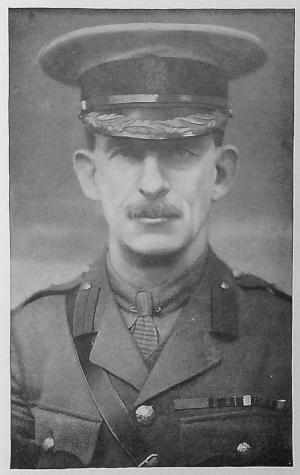
Lieutenant-Colonel G. HELBERT, C.B.E., Military Staff Officer, South African Expeditionary Force.
APPENDIX VII. LIST OF HONOURS WON BY THE SOUTH AFRICAN FORCES IN FRANCE.
The ranks shown were those held at the date of the bestowal of the different awards.
Each asterisk denotes an additional mention.
V.C.
Faulds, No. 4073, Private W. F. Infantry.
Hewitt, No. 8162, Lance-Corporal W. H. Infantry.
K.C.B.
Lukin, Major-General Sir H. T. Staff.
C.B.
Lukin, Brigadier-General H. T. Staff.
Tanner, Brigadier-General W. E. C. Staff.
C.M.G.
Dawson, Lieutenant-Colonel F. S. Infantry.
Jones, Lieutenant-Colonel F. A. Infantry.
Pritchard, Colonel S. A. M. S.A.N.L.C.
Tanner, Lieutenant-Colonel W. E. C. Infantry.
Thackeray, Lieutenant-Colonel E. F. Infantry.
Thomson, Lieutenant-Colonel G. R. S.A.M.C.
BAR TO D.S.O.
Dawson, Brigadier-General F. S. Staff.
D.S.O.
Baker, Major J. M. Staff.
Bennett, Major G. M. Heavy Artillery.
Blew, Lieutenant-Colonel T. H. Heavy Artillery.
Brydon, Major W. Heavy Artillery.
Bunce, Captain H. Infantry.
Christian, Lieutenant-Colonel E. Infantry.
Cochran, Major F. E. Infantry.
Collins, Lieutenant-Colonel F. R. S. A. Engineers.
Currie, Lieutenant J. Heavy Artillery.
Dawson, Brigadier-General F. S. Staff.
Edwards, Major S. B. Heavy Artillery.
Forbes, Lieutenant E. C. Infantry.
Greene, Captain L. Infantry.
Hands, Major P. A. M. Heavy Artillery.
Harrison, Major H. C. Heavy Artillery.
Harrison, Major N. Signal Coy.
Heal, Lieutenant-Colonel F. H. Infantry.
Heenan, Major C. R. Infantry.
Hemming, Major H. S. J. L. Infantry.
Jacobs, Captain L. M. Infantry.
Jenkins, Lieutenant-Colonel H. H. Infantry.
Maasdorp, Major L. H. Heavy Artillery.
MacLeod, Lieutenant-Colonel D. M. Infantry.
Mullins, Major A. G. Heavy Artillery.
Murray, Major C. M. S.A.M.C.
Ormiston, Major T. Infantry.
Power, Major M. S. S.A.M.C.
Pringle, Lieutenant-Colonel R. N. S.A.M.C.
Sprenger, Captain L. F. Infantry.
Tanner, Lieutenant-Colonel W. E. C. Infantry.
Thackeray, Lieutenant-Colonel E. F. Infantry.
Tomlinson, Captain L. W. Infantry.
Tripp, Major W. H. L. Heavy Artillery.
Ward, Lieutenant-Colonel A. B. S.A.M.C.
Ward, Major C. P. Heavy Artillery.
C.B.E. (Military Division).
Anderson, Lieutenant-Colonel J. D. Cape Aux. Horse Transport.
Baker, Lieutenant-Colonel J. M. Staff.
Duff, Colonel C. de V. General List.
Helbert, Lieutenant-Colonel G. G. Staff.
Stock, Colonel P. G. S.A.M.C.
Thornton, Lieutenant-Colonel E. N. S.A.M.C.
O.B.E. (Military Division).
Baker, Major H. C. S.A.M.C.
Balfour, Lieutenant-Colonel H. H. S.A.M.C.
Bamford, Lieutenant-Colonel H. W. M. Infantry.
Bowles, Captain E. General List.
Cameron, Captain and Quartermaster C. S. S.A.N.L.C.
Collins, Captain F. S. A. Engineers
Deane, Major R. Infantry.
Emmett, Lieutenant-Colonel J. J. C. S.A.N.L.C.
Fawcus, Lieutenant-Colonel A. S.A.N.L.C.
Geddes, Captain W. L. S.A.N.L.C.
Green, Major J. A. Staff.
Harris, Major J. J. F. Infantry.
Jacobsby, Lieutenant-Colonel J. S.A.N.L.C.
Jenner, Major L. W. Cape Aux. Horse Transport.
Knight, Acting Major R. C. General List.
Lennox, Captain and Chaplain J. S.A.N.L.C.
Long, Captain W. Cape Aux. Horse Transport.
Marshall, Captain H. E. C.C.L.C.
Mills, Major H. P. Infantry.
Pearson, Major M. G. S.A.M.C.
Pepper, Major A. L. Staff.
Rann, Major A. E. Heavy Artillery.
Rigby, Major J. C. A. S.A.M.C.
Ross, Captain F. M. Signal Coy.
Sandes, Major T. L. S.A.M.C.
Sproule, Major H. C.C.L.R.
Thornton, Lieutenant-Colonel E. N. S.A.M.C.
Usmar, Lieutenant-Colonel G. H. S.A.M.C.
Wakefield, Major H. S. General List.
M.B.E. (Military Division).
Balfour, Lieutenant-Colonel H. H. S.A.M.C.
Bowles, Captain E. S. A. Pay Corps.
Coghlan, Captain G. S. S.A.M.C.
Deane, Major R. Infantry.
Ellis, Lieutenant N. N. S. A. Pay Corps.
Jamieson, Captain E. C. K. S. A. Pay Corps.
Kimberley, No. 17409, Reg. Sergt.-Major H. S.A.M.C.
Knibbs, Lieutenant A. R. Staff.
Legge, Captain E. A. Infantry.
Rann, Major A. E. Heavy Artillery.
Sandes, Major T. L. S.A.M.C.
Tucker, Captain W. E. Infantry.
Walker, Captain E. B. Infantry.
Walker, No. X235, Staff Sergeant-Major J. H. Staff.
Whyte, Captain J. E. S.A.N.L.C.
BAR TO M.C.
Green, Lieutenant G. G. Infantry.
King, Captain W. L. Infantry.
Lawrie, Captain M. B. S.A.M.C.
Morrison, Lieutenant R. E. Infantry.
Neille, Lieutenant P. C. Infantry.
Phillips, Second-Lieutenant S. G. Infantry.
Ridley, Captain E. G. Heavy Artillery.
Roffe, Captain T. Infantry.
Smith, Captain W. S.A.M.C.
Ward, Captain A. E. Infantry.
M.C.
Allen, Second-Lieutenant V. W. Infantry.
Backeberg, Second-Lieutenant H. W. Infantry.
Bailey, Lieutenant H. Heavy Artillery.
Bamford, Captain H. W. M. Infantry.
Begbie, Major R. P. G. Heavy Artillery.
Begley, Lieutenant E. R. Infantry.
Beverley, Lieutenant R. Infantry.
Beyers, Captain G. A. S.A.M.C.
Boustead, Second-Lieutenant H. Infantry.
Bower, Second-Lieutenant E. W. Heavy Artillery.
Browne, Captain C. M. Infantry.
Burgess, Captain E. J. Infantry.
Burton, Second-Lieutenant F. W. S. Infantry.
Carding, Lieutenant W. H. Infantry.
Cawood, Second-Lieutenant R. C. Infantry.
Charlton, Captain W. D. Infantry.
Cohen, Lieutenant M. Signal Coy.
Collins, Second-Lieutenant F. Signal Coy.
Connock, Second-Lieutenant C. O. Infantry.
Covernton, Lieutenant R. H. Signal Coy.
Cragg, Second-Lieutenant J. C. Infantry.
Crooks, Lieutenant A. S. Infantry.
Culverwell, Second-Lieutenant D. Heavy Artillery.
Davies, Captain E. A. Infantry.
Dickson, Second-Lieutenant E. G. H. Infantry.
Dingwall, Captain J. A. Signal Coy.
Dobson, Lieutenant F. L. Signal Coy.
Duminy, Second-Lieutenant F. J. van H. Heavy Artillery.
Elias, Lieutenant D. H. Infantry.
Ellis, Captain P. H. Infantry.
English, Second-Lieutenant F. H. Infantry.
FitzGeorge, Lieutenant F. S. L. Signal Coy.
Forbes, Captain A. G. S.A.M.C.
Forbes, Lieutenant L. H. Infantry.
Goodwin, Lieutenant B. W. Infantry.
Gray, Lieutenant S. E. G. Infantry.
Green, Lieutenant A. P. Heavy Artillery.
Green, Second-Lieutenant G. G. Infantry.
Greene, Captain L. Infantry.
Hallack, Lieutenant M. H. Infantry.
Hands, Captain P. A. M. Heavy Artillery.
Harris, Captain and Chaplain H. S. A. Chap. Dept.
Harris, Second-Lieutenant W. E. Infantry.
Hatchard, Second-Lieutenant F. H. F. Infantry.
Heeley, Lieutenant H. N. Infantry.
Hennessy, Second-Lieutenant B. P. Infantry.
Hewat, Second-Lieutenant R. D. Infantry.
Hill, Captain and Chaplain E. St. C. S. A. Chap. Dept.
Hill, Lieutenant J. L. Signal Coy.
Humphrey, Captain J. T. Infantry.
Ingarfield, Lieutenant G. P. Infantry.
Jack, Lieutenant J. Signal Coy.
Keith, No. 2300, Reg. Sergt.-Major P. Infantry.
Kilpin, Second-Lieutenant T. Heavy Artillery.
King, Second-Lieutenant W. L. Infantry.
Kirby, Second-Lieutenant W. H. Infantry.
Kirkham, Captain G. H. Infantry.
Lawrence, Captain H. R. S.A.M.C.
Lawrie, Captain M. B. S.A.M.C.
Leighton, Second-Lieutenant G. A. Infantry.
Lewell, Second-Lieutenant E. Infantry.
Liebson, Captain S. S.A.M.C.
Lunn, Captain W. S. Heavy Artillery.
Maasdorp, Lieutenant A. Heavy Artillery.
Macfarlane, Lieutenant B. N. Infantry.
MacFie, Second-Lieutenant T. G. Infantry.
Mackie, Second-Lieutenant D. C. Infantry.
Maddison, Lieutenant E. A. J. Heavy Artillery.
Marshall, Captain R. B. Infantry.
Martin, Second-Lieutenant H. A. Infantry.
M’Donald, Captain A. W. H. Infantry.
M’Gregor, Major A. M. Heavy Artillery.
M’Intosh, Second-Lieutenant R. Infantry.
M’Lean, Lieutenant W. Infantry.
Mellish, Lieutenant F. W. Heavy Artillery.
Meredith, No. 5755, Reg. Sergt.-Major G. Infantry.
Methven, Second-Lieutenant N. W. Infantry.
Middleton, Lieutenant E. Infantry.
Miller, Second-Lieutenant R. S. Heavy Artillery.
Mitchell, Captain F. McE. Infantry.
Money, Lieutenant A. G. Infantry.
Morrison, Second-Lieutenant R. E. Infantry.
Murray, Second-Lieutenant A. S. Heavy Artillery.
Neille, Second-Lieutenant P. C. Infantry.
Nicholson, Lieutenant C. F. S. Infantry.
Page, Second-Lieutenant P. T. A. Heavy Artillery.
Pentz, Second-Lieutenant H. F. Infantry.
Pepper, Captain A. L. Staff.
Perrem, Second-Lieutenant C. H. Infantry.
Peters, Second-Lieutenant J. Infantry.
Phillips, Second-Lieutenant E. J. Infantry.
Phillips, Second-Lieutenant S. G. Infantry.
Poole, Lieutenant R. P. Signal Coy.
Pougnet, Second-Lieutenant V. N. Infantry.
Rann, Captain A. E. Heavy Artillery.
Reid, Captain E. L. S.A.M.C.
Ridley, Captain E. G. Heavy Artillery.
Roberts, Second-Lieutenant C. W. Infantry.
Roddy, Captain G. Infantry.
Roffe, Captain T. Infantry.
Roper, Captain A. W. F. Heavy Artillery.
Rose-Innes, Second-Lieutenant F. G. Heavy Artillery.
Ross, Captain F. H. Infantry.
Ross, Captain F. M. Signal Coy.
Rushforth, Lieutenant A. H. Heavy Artillery.
Sampson, Captain B. S.A.M.C.
Saphir, Second-Lieutenant M. Infantry.
Scheepers, Second-Lieutenant J. C. Infantry.
Shenton, Lieutenant J. L. Infantry.
Smith, Captain W. S.A.M.C.
Sprenger, Captain L. F. Infantry.
Solomon, Lieutenant A. C. Heavy Artillery.
Stapleton, Lieutenant P. R. Infantry.
Stewart, Lieutenant J. G. Heavy Artillery.
Style, Captain S. W. E. Infantry.
Sumner, Lieutenant H. L. Infantry.
Symons, Captain T. H. Infantry. Infantry.
Morrison, Second-Lieutenant R. E. Infantry.
Murray, Second-Lieutenant A. S. Heavy Artillery.
Neille, Second-Lieutenant P. C. Infantry.
Nicholson, Lieutenant C. F. S. Infantry.
Page, Second-Lieutenant P. T. A. Heavy Artillery.
Pentz, Second-Lieutenant H. F. Infantry.
Pepper, Captain A. L. Staff.
Perrem, Second-Lieutenant C. H. Infantry.
Peters, Second-Lieutenant J. Infantry.
Phillips, Second-Lieutenant E. J. Infantry.
Phillips, Second-Lieutenant S. G. Infantry.
Poole, Lieutenant R. P. Signal Coy.
Pougnet, Second-Lieutenant V. N. Infantry.
Rann, Captain A. E. Heavy Artillery.
Reid, Captain E. L. S.A.M.C.
Ridley, Captain E. G. Heavy Artillery.
Roberts, Second-Lieutenant C. W. Infantry.
Roddy, Captain G. Infantry.
Roffe, Captain T. Infantry.
Roper, Captain A. W. F. Heavy Artillery.
Rose-Innes, Second-Lieutenant F. G. Heavy Artillery.
Ross, Captain F. H. Infantry.
Ross, Captain F. M. Signal Coy.
Rushforth, Lieutenant A. H. Heavy Artillery.
Sampson, Captain B. S.A.M.C.
Saphir, Second-Lieutenant M. Infantry.
Scheepers, Second-Lieutenant J. C. Infantry.
Shenton, Lieutenant J. L. Infantry.
Smith, Captain W. S.A.M.C.
Sprenger, Captain L. F. Infantry.
Solomon, Lieutenant A. C. Heavy Artillery.
Stapleton, Lieutenant P. R. Infantry.
Stewart, Lieutenant J. G. Heavy Artillery.
Style, Captain S. W. E. Infantry.
Sumner, Lieutenant H. L. Infantry.
Symons, Captain T. H. Infantry.
Thomas, Second-Lieutenant W. F. G. Infantry.
Thorburn, Lieutenant W. Infantry.
Unwin, Captain H. W. Heavy Artillery.
Van Ryneveld, Second-Lieutenant T. V. Infantry.