TRANSYLVANIA UNIVERSITY (continued 2)
Reading edition
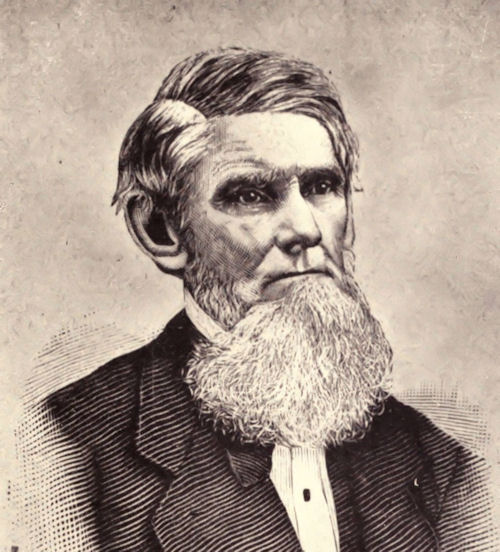
DOCTOR LUNSFORD P. YANDELL, SENIOR.
After the death of Professor Eaton, August 16, 1832, the present writer, then residing in Pittsburg, Pennsylvania, who had also been a student in the Rensselaer Institute and consequently known to Professor Eaton, was persuaded by the late Reverend Benjamin Orr Peers to visit Lexington, Kentucky, to deliver a course of chemical lectures in the Eclectic Institute, of which Mr. Peers was principal and of which young Professor Eaton had been a professor. During this course, in 1832, the writer was induced by Professor Yandell, by private arrangement, to assist him in his next course of lectures to the medical students of Transylvania and to commence the regular study of medicine with a view to graduation.
Under this arrangement, which continued until the disruption of the Medical Faculty in 1837, Doctor Yandell, in his usual able and brilliant manner, delivered the chemical lectures to the students, while to the writer was committed the preparation and performance of the demonstrative experimental part.
On his removal to Louisville in 1837, to join in the establishment of the rival school, the Louisville Medical Institute, Doctor Yandell taught in the combined chairs of Chemistry and Materia Medica, never failing ably and impressively to perform this arduous duty. Not having any particular taste for so severe a study as practical chemistry, although no one was more impressed with the philosophical beauty and wide practical value of the science, he naturally sought a transfer to a chair more congenial with his tastes and the character of his mind than that of chemistry. This, circumstances prevented until, in 1849, the Trustees of the school—having come to the conclusion that Professor Caldwell had become superannuated—placed Doctor Yandell in the chair of Physiology, for which subject he had a decided taste. This change procured him the animosity of his whilom friend, Doctor Caldwell, who, in his rather unfortunate Autobiography written in his last declining years, indulged in much bitter denunciation of his late colleague. It is much to the credit of Doctor Yandell that, although when this angry publication was fresh from the press he retaliated by showing in ample quotations from the Autobiography some of the weak points in Doctor Caldwell's character, he was disposed in following years, as the writer knows, to extend over these weaknesses the mantle of kindness.
Doctor Yandell occupied this chair of Physiology with great credit until he resigned, in 1859, to accept a chair in the Medical School of Memphis, Tennessee. During the Civil War he devoted himself to hospital service. In 1862, he was licensed to preach by the Presbytery of Memphis, and in 1864 was ordained pastor of the Dancyville Presbyterian church. He resigned his pastorship in 1867, and returned to Louisville to resume the practice of medicine, which he had never entirely abandoned during the whole of his professional life.
While resident in Lexington he was for some years sole editor of the Transylvania Journal of Medicine, to which he contributed several able papers. In Louisville he was editor for some time of the Western Journal of Medicine and Surgery, in both cases filling the editorial chair with characteristic activity and ability. He was always a contributor to the medical literature of his day in numerous papers, especially in biographical sketches and obituary memoirs of medical men of Kentucky and Tennessee, a more complete collection of which he was said to be preparing at the time of his last illness. He held a facile pen; few writers of our times have produced more classical and graceful essays. As a public speaker and lecturer he was ever impressive, graceful, and chaste. His social qualities made him always welcome and prominent in all public assemblies of his medical brethren. In 1872, he was elected President of the College of Physicians and Surgeons of Louisville, and at the time of his death he was President of the Medical Society of Kentucky. His decease occurred February 4, 1878, in the seventy-third year of his age.
Doctor Robert Peter,
Though of foreign birth, came of that same class of British ancestry which has given the United States her representative Americans, Virginia her great men, our own State her typical Kentuckians. Born at Launceston, Cornwall, January 21, 1805, he was a member of the Peter family of Devon and Essex, which produced in former times the remarkable Sir William Peter or Petre, to which has been ascribed the noted Hugh Peter or Peters, and from which collaterally are descended the present Lords Bathurst and Petre. Robert Peter came to America with his parents, Robert and Johanna Dawe Peter, and their six other children, when twelve years old, landing at Baltimore and later settling at Pittsburg, Pennsylvania. The father, it seems, succeeded in none of his money-making enterprises in the new country, and Robert had early to support himself and to contribute something to the maintenance of the family. He was placed in Charles Avery's wholesale drug store at Pittsburg and there received a first-rate business education, while diligently cultivating his decided taste for chemistry. In 1828, he became a naturalized citizen of the United States. The same year, after attending one session (by especial request) at the Rensselaer Institute Scientific School at Troy, New York, he acquired the title of "Lecturer on the Natural Sciences,"[63] and delivered a course of chemical lectures to a small class in Pittsburg, was a member of the Hesperian Society and contributed to its organ, The Hesperus, numerous papers, scientific, literary, and poetical. In 1829, as member of the Pittsburg Philosophical Society, he gave a course of lectures on the Natural Sciences before that Society. In 1830–31, he lectured on Chemistry in the Western University of Pennsylvania. In 1832, he came to Lexington, Kentucky, somewhat reluctantly, at the urgent insistence of Reverend Benjamin O. Peers, to be associated with him in the proprietorship of his "Eclectic Institute," at that place, and to deliver a course of lectures in the Institute.[64]
While thus engaged, Professor Peter was induced by Doctor Yandell, Professor of Chemistry, to accept the duties of adjunct to the chair of Chemistry, a position made vacant by the death of Professor H. H. Eaton, August 16, 1832.
On March 16, 1833, he was unanimously elected to the chair of Chemistry in Morrison College, Transylvania University, being installed on the occasion of the dedication of that college, November 4, 1833, when the oath of office was administered to Mr. Peers as Proctor of Morrison College and President pro tem. of the University. Professor Peter then studied medicine in Transylvania, receiving his diploma March 18, 1834. He was present during the terrible epidemic of cholera in Lexington in 1833, and with Doctor Yandell attended the first case—that of a Mr. Henry. Though a successful practitioner, Doctor Peter, like Doctor Short, had a distaste for the life of a physician, and soon retired to more congenial scientific labors. On October 6, 1835, he married Frances Paca, eldest daughter of Major William S. Dallam. In 1838,[65] he was elected to the chair of Chemistry and Pharmacy in Transylvania Medical Department, and, until the close of the school in 1857, was honorably connected with it. From 1847 to the end, in 1857, he was chosen Dean of the Faculty, being Librarian as well. In 1839, with Doctor James M. Bush, Doctor Peter spent most of the summer in London and Paris purchasing books, apparatus, and other means of instruction for the Medical Department.[66] After hearing numerous lectures by famous doctors, and after visiting the model hospitals, etc., of the day, he writes to his wife (Paris, June 27, 1839): "We can have as great men [in Lexington] as either of those cities [London and Paris], and neither of them contains a man as eminent in surgery as Doctor Dudley"; and from London, August 11, 1839: "We have bought a great many fine books and a great deal of excellent apparatus and anatomical and other models. Transylvania will shine. No other institution in our part of the world will be able to compare with her in the means of instruction. In fact, I have seen none in Europe that is more completely prepared to teach modern medicine."[67]
Daguerre, in 1839, had just published the process of his wonderful art, and it constituted perhaps the greatest novelty in Paris at the time of the sojourn there of Doctor Bush and Doctor Peter; so along with the apparatus for Transylvania was brought to Lexington a daguerreotype outfit which surely must have been the first ever seen in that city, if not the first ever used in the West. This primitive camera and its accompaniments, which Doctor Peter showed to his classes many years after, can still be found, it is supposed, among the old Transylvania possessions preserved at the Kentucky University.
On his return from Europe Doctor Peter engaged in much valuable chemical research for the benefit of medical science, notably his examinations of calculi, published in 1846.[68] He also, in 1846, experimented with the then newly discovered explosive, gun-cotton, and with pyroxyline made from paper and other materials. His chemical research and teachings all were now and invariably along practical lines. Leaving theory to others, his own endeavors were in anticipation of useful results in practice. Quick to adopt new views when properly sustained by facts, he was highly appreciative of improved methods, a trait strikingly displayed when, in his old age, the most radical changes revolutionized the methods of chemical work. Laying aside the long-familiar doctrines, practiced since his far-distant youth, he took up the new with an ease—even alacrity—hardly excelled by contemporary chemists of a younger generation. In his early days he experimented much with electricity—then little understood. He gave much attention to geology, mineralogy, zoology, and botany. Associated with Doctor Charles W. Short and Professor Henry A. Griswold, he made important botanical explorations.[69] His fine herbarium, including specimens exchanged for with leading European botanists, he gave in after years to the Kentucky State Agricultural and Mechanical College. Doctor Lewis Rogers, in his address as President to the Kentucky State Medical Society, 1878, says: "In the interesting departments of Botany and Chemistry, Doctor Charles Wilkins Short and Doctor Peter are known throughout the scientific world. As teachers, the modest, almost shrinking manner, the seemingly acerb dignity, and Addisonian style of the one and the lucid expositions and brilliant illustrations of the other, must be remembered by all who ever listened to them." In 1850–53, Doctor Peter filled with distinction the chair of Chemistry in the newly founded Kentucky School of Medicine at Louisville, since so successful. On October 19, 1853, at the third meeting of the Kentucky Medical Society at Lexington, he proposed to memorialize the legislature in regard to the establishment of a Geological Survey of Kentucky. Accordingly, he prepared such a memorial (in connection with his "Report on the Relation of Forms of Disease to the Geological Formation of a Region"), accompanied by a geological map, colored by himself.[70] In consequence of this memorial, which was unanimously sanctioned by the several agricultural societies of the State, the first Geological Survey of Kentucky—which was also the first large State enterprise of the kind undertaken in the West—was begun in 1854, under the able and experienced direction of Doctor David Dale Owen. While chemist to this survey, Doctor Peter demonstrated what previously he had sturdily maintained and ably argued—that by soil analysis could be determined the elements necessary to increase and preserve the fertility of soils.[71] He was probably the first in America to apply quantitative and qualitative analysis in this manner—certainly the first to apply it to any great extent. He proved by numerous analyses that chemical analysis as practiced by him was capable of showing the deterioration of soils by long cultivation. He did this by comparing the composition of the virgin soil with that of soil taken from a near-by old field.[72] The amount of chemical work accomplished by Doctor Peter in the Kentucky Survey seems wellnigh impossible when it is considered that at the same time he lectured daily six times a week in two colleges—never omitting to prepare experiments in illustration of his subject. Some Eastern chemists were actually disposed to dispute the facts. One of these asserted that "no chemist could make more than one soil analysis in less than a month." Doctor Owen says in this regard: "Without a knowledge of the peculiar circumstances under which the work was performed, the amount of Doctor Peter's chemical labor during the last six years, as chemical assistant to the Survey of Kentucky, might appear incredible, for he has, in fact, performed a greater number of reliable, detailed, practically useful analyses of soils than any living chemist"[73]—which comes with authority, for Doctor Owen, a man not given to exaggeration, was in position to view the whole field, and as Director fully and faithfully informed himself as to what was going on all over the world in matters relating to his department. Doctor Owen said no chemists in this country had thought proper to turn their special attention to soil analysis, but that Doctor Peter, with the help of only one assistant to do the more mechanical part of the work, had in six years of the survey made one thousand, one hundred and twenty-six quantitative analyses, three hundred and seventy-five of which were of soils in which, on an average, twelve different substances were determined. In addition to this and the preparation of his own chemical report, Doctor Peter personally supervised the publication of the four royal 8vo volumes of this Survey, reading and correcting all proof and adding an obituary biographical sketch of his friend Doctor Owen, whose death, November 13, 1860, had terminated the survey. Before arrangements could be made to continue this important public work the Civil War intervened, putting a stop to all such beneficent pursuits. Doctor Peter unhesitatingly and warmly upheld his adopted country against secession. Unable to take the field with his friend, Ethelbert Dudley, he promptly fell into the ranks of Dudley's Home Guards, shoulder to shoulder with Benjamin Gratz, Madison C. Johnson, David A. Sayre, and other such fellow-citizens.[74] He was appointed Acting Assistant Surgeon in charge of Military Hospitals at Lexington, Kentucky, being most of the time senior surgeon in charge, quickly bringing his hospitals to a high state of order and efficiency. It was this gift of reducing to system, combined with untiring energy and diligence, which in his long life tended to make all his work both rapid and successful. Thus he carried on simultaneously numbers of analyses with immense saving of time, while other chemists went through each operation separately—making his results almost beyond belief. When, after the war, the survey was resumed under Professor N. S. Shaler, Doctor Peter prepared three chemical reports of his analytical work, 1873–78. A total of four hundred and seventy-seven pages, containing eight hundred and seventy-one analyses.
In the survey continued under the late John R. Procter, he prepared six reports, five of which were published, covering five hundred and eighty-eight pages, describing nine hundred and seventy-seven analyses—a total of one thousand, eight hundred and forty-eight published analyses. The sixth report—the ninth of the new survey—made to Procter, was not published for the lack of funds, and the manuscript seems to have been lost. The analyses, of which there are about four hundred, will be published, however, by the present able director of the newly resumed Geological Survey, Professor C. J. Norwood, in as nearly the original form as can be restored from the records. Thus, with the one assistant, Doctor Peter made for the new survey about two thousand, two hundred and fifty analyses. Besides which, during his active life in Lexington, he had at all times considerable practice as consulting and analytical chemist, making for individuals many analyses not included in the above. As a toxicologist he had a high reputation, and his expert testimony usually carried the day in cases wherein he was called. At the time of the First Kentucky Survey, under Doctor Owen, Doctor Peter had also contributed to the second report of a Geological Reconnoissance of the Southern and Middle Counties of Arkansas, made during the years 1859 and 1860, an octavo volume of four hundred and thirty-three pages, in which he gives the history of two hundred and seventy-one chemical analyses made by himself of soils, subsoils, under-clays, nitre-earths, etc., of Arkansas, with remarks in one hundred and twenty-five pages of report. At the same time he made chemical analyses of thirty-three soils, subsoils, etc., of the State of Indiana for the survey of that State begun by Doctor D. D. Owen and continued, on Doctor Owen's death, by his brother, Colonel Richard Owen. It will be seen by reference to the Kentucky Geological Reports that Doctor Peter was the first, or among the first, to point out the fact that the lower Silurian limestones always contain a notable quantity of phosphates, and that this circumstance in part accounts for the richness of our bluegrass soils[75]—facts which he brought to the attention of the agricultural public as early as April, 1849, in the Albany Cultivator, of New York.
He was apparently the first to show that some of the upper layers of the Trenton limestone are remarkably rich in phosphates, as shown by his analyses published in the reports cited.
In 1865, when in accordance with Honorable John B. Bowman's lofty educational plans Kentucky University was removed to Lexington, was united with Transylvania, and included the State Agricultural and Mechanical College, Doctor Peter occupied the chair of Chemistry and Experimental Philosophy in the new University, lecturing daily in two colleges, having declined the Presidency of the Agricultural and Mechanical College, which was offered him by Regent Bowman. At this period he devoted his every energy of mind and body to assist in the upbuilding of what he fondly hoped would be the great educational institution of the West and South; for the training especially of Kentucky's youth of every rank and creed, and for the benefit of all men of all nations who sought knowledge.[76] He accepted and accomplished, it was said at the time, the work of three average men. On the separation of the State College from the Kentucky University, after a bitter sectarian controversy in which he manfully defended the Transylvania trusts—little understood by some of the controversialists—he remained with the State College at the head of the Chemical Department.[77]
In 1887, Doctor Peter was made Emeritus Professor of Chemistry in the State College. It would be of interest to give a detailed account of Doctor Peter's writings, but this must of necessity be reserved for a more extended biography. He was an easy, practical, and prolific writer on a large range of subjects. Deeply interested in agriculture and horticulture, he prepared many able treatises for journals of these branches. He experimented for himself in the culture of fruits and flowers—notably in grape-culture and wine-making. In 1867–68, he assisted in editing the Farmer's Home Journal, a weekly published at Lexington, Kentucky, and until its discontinuance—well in the seventies—he contributed many articles. He was sole editor of the tenth volume of the Transylvania Journal of Medicine, and in the preceding and following volumes published a number of contributions on medical and scientific themes. He took an active part with his pen in the controversy which arose on the attempted removal to Louisville of the Transylvania Medical School by some of the Transylvania professors and the establishment at Louisville of the "Medical Institute" as a rival school.[78] Like Doctor B. W. Dudley, Doctor Peter, under a misapprehension of the facts, was at first inclined to sanction the removal of the medical school to Louisville, for he says in a "Narrative" of the controversy published in the Lexington Intelligencer, July 7, 1837: "I was in favor of the removal of the Transylvania Medical School when I believed it was to be done with the consent of its legal guardians, and with the certainty of very liberal endowments, which would increase its means of instruction; but when the bubble burst—when it was found that the name of Transylvania, the oath of office—principle, in fact, were all to be sacrificed to the splendid scheme—I drew back." And from listening to Doctor Caldwell's flattering offers of emoluments in Louisville—even to the promise that Doctor Peter should have the superintendence of the erection of the chemical laboratory—he joined Dudley in maintaining the Transylvania School at Lexington, vigorously defending Dudley, and himself also, against the attacks of the Caldwell faction. In the midst of the general hostility, Doctor Peter became antagonistic to his former friend, Doctor Yandell—indeed, bitter was the strife on all hands. But in after years, when the better part of half a century had rolled between, Doctor Peter, on the friendly advance of Doctor Yandell, forgot the vindictive feeling of the past and a correspondence both pleasant and profitable sprung up between the two old men, which was maintained until the death of Doctor Yandell. Doctor Yandell confessed that in the heat of contention he had said much which afterward he fain would recall. And it is readily to be credited that others felt the same when time was given for calm and dispassionate reflection.
Doctor Peter at all times wrote much on education, much on politics and the questions of the day. Beside lectures to his classes, he gave by request many public lectures on various topics. Possessing no especial gift of voice or enunciation, he was not an orator, though as a lecturer uniformly popular; never dry, though full of information; sometimes humorous, but ever dignified. He never neglected, where appropriate, to illustrate his subject with experiments, frequently new and always skillfully performed. His rapidity and sureness of manipulation were nearly that of the prestidigitator, and were the boast and admiration of his pupils. But with this complete mastery of science there was no corresponding lack of business ability. More than once he was offered civic honors—vainly, however. Once he agreed to act as City Councilman, but summarily resigned because the Council unjustly denied to respectable colored citizens the right to establish a public school for negroes in Lexington—a refusal we can not understand to-day. He was ever ready to give time, labor, and money to public education and improvement; ready instantly to take up his pen on all questions affecting the welfare of the community in which he lived, regardless of applause, yet valuing the approval of the wise and good. His modesty was inherent. He utterly abhorred ostentation. Yet no citizen was better known, or could more surely rely upon the love and respect of his fellows—respect secured by thorough truthfulness and honesty of purpose—the "courage of his convictions" which never left him. He retained his activity of mind and body, his youthful appearance, his cheerfulness of spirit, up to a very short time before his death, which took place at "Winton," eight miles from Lexington, in the eighty-ninth year of his age, April 26, 1894. He had, as he had often wished, "worn out rather than rusted out."
Perhaps the words of his colleague of more than twenty years make the best summary of his life and character: "Intense devotion to physical science and work of the laboratory, purity of speech and modesty of manner, fidelity to all duties, domestic, professional, and civic, fidelity to settled convictions and principles; above all, his long and illustrious career in educating so many thousands of the young, and in setting before them a model so worthy of their imitation and remembrance; these were the traits, this was the service that crowned his busy life of nearly ninety years with honor, admiration, and renown."
Professor James Conquest Cross, M. D.
Born in the vicinity of Lexington, Kentucky, was early distinguished for superior natural energy and mental ability. He was a graduate of Transylvania and most ambitious to take place as member of its Faculty. Appointed to the chair of Institutes of Medicine in 1837, having been called from the Medical College of Ohio, at Cincinnati, where he held a professorship, he occupied the position in Lexington until 1843–44, and died a few years thereafter. He was Dean of the Medical Faculty in 1838.
Doctor Cross contributed several papers to the medical journals, but wrote no large work. He was distinguished for readiness and brilliancy rather than for solidity. His strong ambition and self-confidence, with his considerable abilities and extensive reading, gave promise of a most distinguished career, which unhappily a certain want of mental ballast measurably prevented.[79]
Doctor John Eberle[80]
Was a native of Lancaster County, Pennsylvania, and was a little over fifty years of age at the time of his decease. Born and educated among the Germans of Lancaster, he retained the peculiar accent and idiom of that people to the day of his death, as also their habits of industry and perseverance in favorite pursuits. At an early period of his history, Doctor Eberle was deeply involved in politics and for some time conducted a German political paper. Prior to his removal to Philadelphia, which occurred about the year 1818, he published several interesting papers in the New York Medical Repository and other journals. Shortly after his settlement in Philadelphia, he became the editor of the American Medical Recorder, known throughout the country as one of our ablest periodicals. In 1822, his work on Therapeutics and Materia Medica first appeared, after having encountered many obstacles that for a time seemed to preclude its publication. The author assured the writer of this notice that he failed in all his attempts to procure a publisher, who would give him anything for the copyright, until the person who finally became its proprietor offered two hundred and fifty dollars for the work. Being the first book of the author, he accepted the offer in the hope of being more successful in his subsequent undertakings.
In 1824, on the establishment of Jefferson Medical College, Doctor Eberle constituted one of its Faculty, and continued in the school until his removal to Cincinnati in 1831. While in Jefferson he taught the Theory and Practice, Materia Medica, and Obstetrics at different periods, and was also engaged as editor of the American Medical Review, a journal devoted especially to the interests of that school. While in the Jefferson Faculty he published the first edition of his work on Practice, which, it is well known, has passed through several editions, and unlike its predecessor yielded a handsome compensation to its author.
In 1831, Doctor Eberle was invited (in connection with Doctors Thomas D. Mitchell and George McClellan) by Doctor Drake, to unite in the formation of a new medical school at Cincinnati. In the winter of 1831–32, the deceased gave his first course of lectures in the West as Professor of Materia Medica and Medical Botany in the Medical College of Ohio, in which school he remained until the fall of 1837, when he became connected with the Medical Department of Transylvania. While in Cincinnati, he prepared his work on the Diseases of Children, for which the publishers gave him a fair compensation, and it is understood that he was engaged a year ago in getting ready for the press A System of Midwifery. That he was importuned by his publishers in Ohio to prepare such a work is known to the writer of this notice.
In addition to the publications of Doctor Eberle above named, there were others of less magnitude. Among these we name a small work of a botanical character, for young students; and it may be noticed here that botany was a favorite study with the deceased.
Doctor Eberle was not fond of the practice of his profession, or he might have become rich in its pursuit. He was devoted especially to books, and as a journalist he has not perhaps been equaled in the United States of America. In his deportment he was plain, unassuming, unostentatious; and his whole aspect was indicative of one who had long been a companion of the midnight lamp. Few there are in our profession whose labors have given them such extensive celebrity as fell to the lot of Professor Eberle. His Practice of Physic is in almost every medical library in the West, and has been noticed with high commendation by foreign journalists. His death has left a chasm in the profession, and especially in the school of the West, that is greatly lamented.
Doctor Eberle died at Lexington, Kentucky, February 2, 1838, while filling the chair of the Theory and Practice of Medicine.
Professor Thomas Duche Mitchell, M. D.,
Was appointed from the Medical College of Ohio to the chair of Chemistry and Pharmacy in the Medical Department of Transylvania in 1837. He was transferred to that of Materia Medica and Medical Botany in the following year, Doctor Peter having been called to the chair of Chemistry, etc.
In consequence of the death of Professor John Eberle early in the session of 1837–38, Doctor Mitchell was required to fill both this and his own chair during the session, an arduous duty which he performed faithfully and to the satisfaction of all parties.[81]
With equal ability and success he performed a similar double duty to the full satisfaction of his classes in the winter of 1844–45, when, in consequence of the death of Professor William H. Richardson, the chair of Obstetrics and Diseases of Women and Children became vacant. He was appointed to that chair. He was also Dean of the Faculty in the Transylvania School from 1839 to 1846.
Doctor Mitchell was born in Philadelphia in 1791, in which city for three generations his ancestors resided. He died in the same city May 13, 1865, in his seventy-fourth year, having heroically performed his duties as Professor almost up to the time of his death, although he was a constant sufferer from painful neuralgic disease of the stomach, at times almost unendurable. His early education was in Quaker schools, the best in those times in that city, and in the University of Pennsylvania. After a year spent in a drug store and chemical laboratory he became office pupil of the late Doctor Parrish, and, after attendance on three full courses of medical lectures in the Medical Department of the University, he graduated in medicine. His thesis "On Acidification and Combustion" was published in the Memoirs of the Columbian Medical Society. His mind and pen always in active operation, he published papers in Coxe's Medical Museum, New York Medical Repository, Duane's Portfolio, and other periodicals.
Early in 1812, he was appointed Professor of Vegetable and Animal Physiology in Saint John's Lutheran College, and, in the following year, as Lazaretto Physician, which office he held for three years. In 1819, he published a duodecimo volume on Medical Chemistry. From 1822 to 1831, he was actively engaged in medical practice at Frankford, near Philadelphia. In 1826, he founded a Total Abstinence Temperance Society, to the tenets of which he rigidly adhered during the whole of his life, deprecating the use of alcohol, even in the preparation of the tinctures of the apothecary. He was also a strict Presbyterian. In 1826, the honorary degree of A. M. was conferred on him by the Trustees of Princeton College, New Jersey.
In the winter of 1830–31, he was called to the chair of Chemistry in the Miami University, and in the following summer to the same chair in the Medical College of Ohio, at Cincinnati, which was soon thereafter amalgamated with the Miami School, where he remained until called to the same chair in the Medical Department of Transylvania University in 1837. He was transferred, as before mentioned, in the following year to the chair of Materia Medica, Doctor Peter having been called to that of Chemistry, etc. Here Doctor Mitchell continued until the end of the session of 1848–49.
In the summer of 1847, the Philadelphia College of Medicine held its first session, and Doctor Mitchell filled in it the chair of Theory and Practice, Obstetrics, and Medical Jurisprudence. In March, 1849, resigning his chair in the Transylvania School, he joined himself with the Philadelphia College with a view to a permanent connection.
Declining tempting offers from medical schools in Missouri and Tennessee, he, in 1852, resigned his chair in Philadelphia and accepted that of Theory and Practice of Medicine in the Kentucky School of Medicine at Louisville. He performed the duties of that professorship to the satisfaction of all parties until 1854, when he resigned on account of ill health and returned to his native city. Recovering, in a measure, his health, he was chosen, without any movement on his part, to fill the chair of Materia Medica and General Therapeutics in Jefferson Medical School of Philadelphia. This chair he occupied up to the year of his death.
Doctor Mitchell was an able and indefatigable writer and author. Without recurring to his earlier writings, he published in 1832 an octavo volume of five hundred and fifty-three pages, On Chemical Philosophy, on the basis of The Elements of Chemistry, by Doctor Reid, of Edinburgh. In the same year he produced his Hints to Students, and acted as co-editor of the Western Medical Gazette with Professors Eberle and Staughton; contributed papers to the New York Repository, Philadelphia Museum, Western Journal of Medicine and Surgery, Western Medical Recorder, Western Lancet, American Medical Recorder, American Review, North American Medical and Surgical Journal, Transylvania Medical Journal,[82] New Orleans Medical and Surgical Journal, Esculapian Register, etc.
In 1850, he published an octavo volume of seven hundred and fifty pages On Materia Medica, also an edition of Eberle on the Diseases of Children, to which he added notes and a sequel of some two hundred pages. He also wrote a volume of six hundred pages On the Fevers of the United States, which he did not publish.
Doctor Mitchell was a clear and impressive lecturer, a most industrious student even in his latter days, a learned, classical, and scientific scholar and a most rigidly upright and conscientious gentleman.[83]
James Mills Bush, M. D.,
A native of Kentucky,[84] born in Frankfort May, 1808, graduated as A. B. in Centre College, Danville, Kentucky, and began the study of medicine and surgery in the office of the celebrated Doctor Alban Goldsmith, Louisville, Kentucky. He removed to Lexington in 1830–31, to attend the medical lectures in Transylvania University, and to become a private pupil of its renowned surgeon, Professor Benjamin W. Dudley. To Doctor Dudley he became personally attached by sentiments of affection and esteem, which were warmly returned by his eminent preceptor; so that, when young Bush received the honor of the degree of Doctor of Medicine in 1833, Doctor Dudley immediately appointed him his demonstrator and prosector in Anatomy and Surgery, to which branches of medical science and art Doctor Bush was ardently devoted.
This responsible office he filled with eminent ability and success until 1837, when he was officially made Adjunct Professor of Anatomy and Surgery to his distinguished colleague and friend, Doctor Dudley. He occupied this honorable position to the great satisfaction of all concerned until the year 1844, when he became the Professor of Anatomy, Doctor Dudley retaining the chair of Surgery. In the chair of Anatomy he continued until the dissolution of the Transylvania Medical School in 1857.
In the meanwhile this school, in 1850, had been changed from a winter to a summer school; Doctor Bush, with some of his colleagues and some physicians of Louisville, having thought proper to establish the Kentucky School of Medicine[85] in Louisville as a winter school. In this latter college Doctor Bush remained for three sessions—giving thus two full courses of lectures per annum—when he and his Lexington colleagues, resigning from the Louisville school, returned to that of Lexington, re-establishing a winter session.[86]
Doctor Bush was ever a most conscientious and ardent laborer in his profession, and, during the lifetime of his preceptor, Doctor Dudley, was his constant associate and assistant as well in the medical school as in his medical and surgical practice. On the retirement of that distinguished surgeon and professor, his mantle fell upon Doctor Bush. In the language of his friend, the late Doctor Lewis Rogers, in 1873: "When Doctor Dudley retired from teaching, Doctor Bush was appointed to the vacant chair. When Doctor Dudley retired from the field of his brilliant achievements as a surgeon Doctor Bush had the rare courage to take possession of it. No higher tribute can be paid to him than to say that he has since held possession without a successful rival."
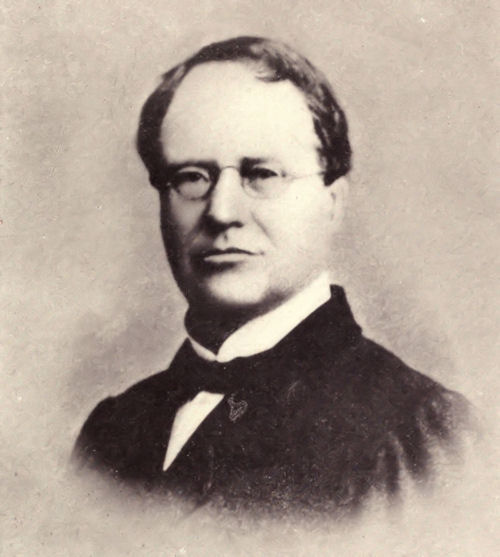
DOCTOR JAMES M. BUSH. From a Photograph by Mullen.
Most ably and successfully did he thus maintain himself as one fit to follow in the footsteps of our great surgeon. His sterling qualities as a man, his most kind and endearing manners as a physician, his great skill and experience in anatomy and surgery, which had been as well the pleasure as the devoted labor of his life; his remarkable accuracy of eye, the more acute because of congenital myopia, his delicacy of hand and unswerving nerve in the use of instruments in the most difficult operations, endeared him to his patients and won the respect and admiration of his medical brethren.
Doctor Bush was a lucid and impressive teacher of his peculiar branch of medical art and science, and always attached his pupils strongly to him as an honored preceptor and friend.
During his active lifetime, spent chiefly in acquiring and putting in practice the rare professional skill which distinguished him, he gave but little time to the use of his pen. Hence he left no large book as the record of his experience. His principal writings were published, in 1837, in the tenth volume of the Transylvania Journal of Medicine, and these were written for that journal on the solicitation of the present writer, who edited that volume. They consist of:
1. A short report of a case of epilepsy, produced in a negro girl by blows of the windlass of a well on the parietal bone, which was entirely and speedily cured under the preliminary treatment by Doctor Dudley of mercurial purgatives and low diet, preparatory to the use of the trephine, which, as is well known, had been used with great success by Doctor Dudley in such cases.
2. Report of a case of insidious inflammation of the pia mater, complicated with pleuritis—with the autopsy.
3. A more extended paper, entitled "Remarks on Mechanical Pressure Applied by Means of the Bandage; Illustrated by a Variety of Cases." In which the mode of application and modus operandi are most clearly given, and illustrated by many interesting cases, mostly from the surgical practice of Doctor Dudley.
4. "Dissection of an Idiot's Brain." The subject—a female twenty-five years of age—had been born idiotic, blind, deaf, and dumb; the head was very small, and the brain on dissection was found to weigh only twenty ounces, and to have large serous cavities in the coronal portions of the cerebral hemispheres. The anatomy of the eyes was perfect, but there was no nervous connection between the optic nerve and the thalami nervorum opticorum.
5. A short notice of three operations of lithotomy, performed on May 31, 1837, by Doctor Dudley, with his assistance.
6. "Interesting Autopsy." On the body of a negro man who had been the subject of sudden falling fits, and was under treatment for disease of the chest. The autopsy disclosed hypertrophy of the right side of the heart, and a most remarkable course and lengthening of the colon.
7. "Observations on the Operation of Lithotomy, Illustrated by Cases from the Practice of Professor B. W. Dudley." An extensive and lucid description of the method of operation and the remarkably successful experience of Doctor Dudley in this part of his practice, giving report of one hundred and fifty-two successful cases up to that time.
In addition, the Doctor contributed an occasional bibliographical review or notice. And these seem to be the whole of his published professional writings.
Doctor Bush was married, in 1835, to Miss Charlotte James, of Chillicothe. Of their three children the eldest, Benjamin Dudley, was a young man of remarkable promise as a surgeon and physician when he was cut off, an event which cast a gloom over the remaining days of the life of his father. Few young men of his age had ever attained such proficiency or developed such sterling qualities.[87]
The death of Doctor Bush, which took place on February 14, 1875, was followed by general and unusual manifestations of respect and regret, not only on the part of the members of the profession, but by the people of the city at large. Few citizens were more extensively known, loved, and honored in life or followed to the grave by a greater concourse of mourning friends.
Nathan Ryno Smith, M. D.,
Was called from his residence in Baltimore, Maryland, to the chair of Theory and Practice of Medicine in Transylvania in the year 1838. He resigned the chair and returned to that city in 1840, having delivered three annual courses of lectures here. He was succeeded in this chair by Doctor Elisha Bartlett.
Doctor Smith was born May 21, 1797, in the town of Cornish, New Hampshire, where his father, Nathan Smith—afterward Professor of Physic and Surgery in Yale College—had been for ten years in the practice of his profession. In a brief sketch of his father, Doctor Smith unconsciously drew the outlines of his own character. "In the practice of surgery," he said, "Professor Smith displayed an original and inventive mind. His friends claim for him the establishment of scientific principles and the invention of resources in practice which will stand as lasting monuments of a mind fertile in expedients and unshackled by the dogmas of the schools." The father, at the age of twenty-four, after an early life of industry and adventure in the then new country, had been so impressed and attracted by witnessing a surgical operation that he at once devoted himself to surgery and medicine, and with such ardor and success that for forty years succeeding he was a distinguished member and teacher in his profession. The son, with much the same natural bent of mind, after receiving his early education at Dartmouth and graduating at Yale in 1817—spending a year and a half in Virginia as a classical tutor—began the study of medicine in Yale, where his father was Professor of Physic and Surgery. He there received the degree of Doctor of Medicine, in 1823. He began practice in Burlington, Vermont, in 1824. In 1825, he was appointed Professor of Surgery and Anatomy in the University of Vermont, the Medical Department of which was organized principally by his exertions, aided by his father.
In the winter of 1825–26, he attended the medical lectures in the University of Pennsylvania, with a view to improvement in his profession and in the art of teaching in it. While there he was invited by the late celebrated surgeon, George McClellan—to whom he had become favorably known—to take the chair of Anatomy in the new Jefferson Medical College, which McClellan and other members of the profession were engaged in organizing. This situation he occupied with success for two years, leaving it then to accept the chair of Anatomy in the School of Medicine of the University of Maryland in Baltimore, which had been vacated by Professor Granville Sharpe Pattison, in 1827. In Baltimore he soon acquired an extensive medical and surgical practice. On the death of Professor John B. Davidge he was transferred to the chair of Surgery. In the language of his biographer and colleague, Samuel C. Chew, M. D.: "In Baltimore he found a congenial home and when, at the age of fourscore, he was laid to rest among us, his name had been for a whole lifetime a household word throughout our State."
When, in 1838, he accepted the inducement offered him by the Medical Faculty of Transylvania University to occupy the chair of the Theory and Practice of Medicine in their college at Lexington, Kentucky,[88] during the four months of the winter course of lectures, he did not abandon his residence in Baltimore, but at the close of each session returned to his professional work in that city. It was there especially, as a professor and practitioner of surgery, that his life-work was done.
Doctor Smith was a man of remarkable mental activity, "acuteness of perception and extraordinary power of adaptation to circumstances as they might arise, promptness of action and untiring industry.... And yet with his great gifts there was about him a remarkable simplicity of character and a transparent ingenuousness which was as incapable of affectation as of falsehood."
His forte was Surgery, yet his lectures here on the Theory and Practice of Medicine were exceedingly clear and instructive. One little peculiarity of his may be noticed. He never lectured without a small whalebone rod or pointer. Without this in his hand he seemed to fear the loss of continuity of his ideas. As remarked by his biographer, "his wand must always be at hand, for, like the magician's divining-rod, it seemed to have some mystic connection with the exercise of his powers."
Early in his professional life he published his work on the Anatomy of the Arteries, and, in his later days, his work on Fractures of the Lower Extremities. He was engaged in the preparation of a work on surgery at the time of his death. His inventive genius, which was remarkable, was exhibited in several improvements of the instruments and apparatus of surgery, especially in his lithotome. In the practice of his son—Professor Alan P. Smith—in a series of fifty-two consecutive cases, without a single death, he used his father's lithotome in all but six cases. This great success he attributed mainly to the instrument. Another valuable improvement was his "anterior splint."
Doctor Smith died on the third of July, 1877, a few weeks after the completion of his eightieth year, full of honors. "He has left behind him a record of a great surgeon, a brave and true citizen and magnanimous gentleman."
Elisha Bartlett, M. D., Etc.
Born in Smithfield, Rhode Island, October 6, 1804. His parents, Otis and Waite Bartlett, were highly respectable members of the "Society of Friends." Their son, whose early education was under the auspices of this Society, possessed all the unostentatious virtues which characterized that sect. At the "Friends' Institution" in New York, under the celebrated teacher, Jacob Willett, he obtained a highly finished classical education. He subsequently attended medical lectures in Boston and Providence and graduated as M. D. at Brown University, Providence, in 1826. Soon after graduation he spent a year pursuing medical studies under distinguished professors in Paris, France, and in classical Italy.
In 1836, he was elected as the first mayor of the town of Lowell; was re-elected at the end of his first term, and afterward, in 1840, was honored by election to the Legislature of Massachusetts. A statesman and not a politician, he soon abandoned political life for the more congenial one of a medical teacher.
[89]"In 1828, he was offered the chair of Anatomy in the Medical School at Woodstock, Vermont, which honor he declined.
"In 1832, he was appointed to a Professorship in the Medical School at Pittsfield, Massachusetts, which he held for several years. He also held a chair one year in the Medical Department of Dartmouth College, and for one year in Baltimore.
"In 1841, he was called to the chair of Theory and Practice of Medicine in the Medical Department of Transylvania University, which he occupied for three years with ability and success."[90]
After a visit to Europe he again returned, in 1846,[91] to the Transylvania Medical College, teaching in the same chair for another three years.
"He subsequently delivered a course of medical lectures in the Medical School at Louisville, giving also summer lectures at Woodstock, Vermont, and other places—his instruction being highly appreciated by his colleagues and most acceptable to his students.
"At length he was called to an important professorship in the College of Physicians and Surgeons of New York. Here he continued for three years, when, compelled by failing health, he abandoned the position to retire to his paternal acres in Smithfield—to die, after a long and lingering illness, on July 19, 1855."
His disease—partial paralysis of the lower extremities, with torturing neuralgia and finally softening of the brain, the result of lead poisoning, caused—as he believed, and as he informed the writer—by the use of water which had passed for a considerable distance through leaden pipes.
The beautiful and sterling traits of the character of Doctor Bartlett are most happily portrayed by the distinguished medical professor and poet, Oliver Wendell Holmes, in the Boston Medical and Surgical Journal, August 16, 1855, from which we make a few extracts, viz:
"Hardly any American physician was more widely known to his countrymen, or more favorably considered abroad, where his writings had carried his name. His personal graces were known to a less extensive circle of admiring friends.... To them it is easy to recall his ever-welcome and gracious presence. On his expanded forehead no one could fail to trace the impress of a large and calm intelligence.... A man so full of life will rarely be found so gentle and quiet in all his ways.... The same qualities which fitted him for a public speaker naturally gave him signal success as a teacher. Had he possessed nothing but his clearness and eloquence of language and elocution, he could hardly have failed to find a popular welcome.... He had a manner at once impressive and pleasing, a lucid order which kept the attention and intelligence of the slowest hearer, and attractions of a personal character always esteemed and beloved by students.... Yet few suspected him of giving utterance in rhythmical shape to his thoughts or feelings. It was only when his failing limbs could bear him no longer, as conscious existence slowly retreated from the palsied nerves, that he revealed himself freely in truest and tenderest form of expression. We knew he was dying by slow degrees, and we heard from him from time to time, or saw him always serene and always hopeful while hope could have a place in his earthly future ... when to the friends he loved there came, as a farewell gift, ... a little book with a few songs in it—songs with his whole warm heart in them—they knew that his hour was come, and their tears fell fast as they read the loving thoughts that he had clothed in words of beauty and melody.
"Among the memorials of departed friendships we treasure the little book of 'songs,' entitled Simple Settings in Verse for Six Portraits from Mr. Dickens' Gallery, Boston, 1855—his last present, as it was his last production."
Doctor Lotan G. Watson,
Of North Carolina, filled the chair of Theory and Practice in Transylvania in the sessions of 1844 and 1845 only. He came highly recommended as a physician of extensive practice of not less than twenty years. "A gentleman of undoubted talents. He has the reputation of bringing to his cases a great affluence of resource and fertility of expedient, regulated by a judgment discriminative and safe. He writes with facility and elegance, and converses with fluency, animation, and impressiveness. He thinks clearly and communicates his ideas with facility and a corresponding clearness." Extract from letter of Senator W. P. Mangum, of North Carolina.
Leonidas M. Lawson, M. D.,
Who filled the chair of General and Pathological Anatomy and Physiology in the Medical Department of Transylvania University from 1843 to 1846, inclusive, was born in Nicholas County, Kentucky, September 10, 1812. He had received his medical degree from this same department of Transylvania in 1837.
He was engaged in Cincinnati in private practice, giving clinical instruction in the hospital and editing his recently established medical periodical, The Western Lancet—of which he was sole originator and proprietor—when he was called to the newly established chair of General and Pathological Anatomy and Physiology in the Transylvania Medical Department, in which he had graduated.
Here he taught with great success until called to the chair of Materia Medica and General Pathology in the Ohio Medical College at Cincinnati in 1847. During the vacation months of 1845, he spent seven months in a visit to Europe, and especially in clinical studies in Guy's Hospital, London, with great advantage to himself.
Doctor Lawson continued to teach from this chair until the death of Professor J. P. Harrison, whom he succeeded in that of the Principles and Practice of Medicine and Clinical Medicine, in the same college in 1852. He was appointed Professor of the Theory and Practice of Medicine in the Kentucky School of Medicine in Louisville in 1854, but accepted a call to the same chair in the Medical College of Ohio, Cincinnati, in 1857. He filled the chair of Clinical Medicine in the University of Louisiana, New Orleans, in 1860, but returned in consequence of the Civil War to the Medical College of Ohio the following year, in which college he remained until his death, January 21, 1864.
He founded the Western Lancet, and was its sole editor and proprietor from 1842 up to the time of his decease. He also edited Hope's Morbid Anatomy, 1844, and published a treatise on the Practical Treatment of Phthisis Pulmonalis in 1861.
Doctor Lawson was a lover of his profession and a most indefatigable worker and student. Remarkably lucid and impressive in his oral teachings, and methodical in his laborious professional and editorial occupations, he was a modest but self-possessed, undemonstrative gentleman of high probity and personal merit. The world at large did not fully appreciate his value, or that of his labors.
His daughter, Miss Louisa Lawson, studied sculpture as a profession, and as an artist is well known.
Ethelbert Ludlow Dudley, M. D.,
Nephew of the late distinguished surgeon, Benjamin W. Dudley, was his private pupil for many years. He graduated in the Medical Department of Transylvania University with distinguished honor in 1842, after having attended three full courses of instruction in that department. His first course of medical lectures was in the winter of 1838–39. It was the first session in which the present writer occupied the chair of Chemistry and Pharmacy, and well he remembers the assiduous attention of his pupil; his avidity in the acquisition of knowledge and his unusual ability to retain it. Distrusting yet his own attainments and desirous of more thorough training before taking upon himself the responsible and arduous offices of a practitioner, he, under the immediate charge of his uncle, then in active practice, attended two other full courses of medical lectures (sessions 1842–43 and 1843–44) as resident graduate. During this period he sometimes officiated as prosector to his distinguished kinsman.[92]
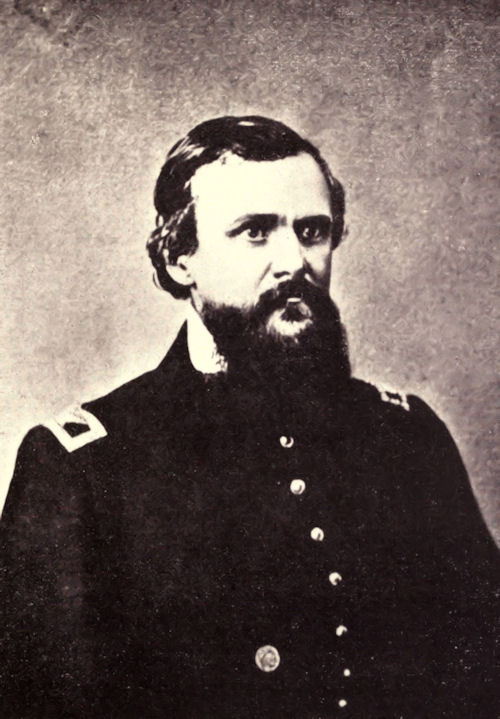
DOCTOR ETHELBERT L. DUDLEY. From a Photograph.
Before the next following session, Doctor Ethelbert L. Dudley was appointed Demonstrator of Anatomy in the place of Doctor James M. Bush, who had been promoted to the chair of Anatomy. This responsible office he filled until called to the chair of General and Pathological Anatomy in 1847–48.
From the origin of this medical school Professor Benjamin W. Dudley had taught in the combined chair of Anatomy and Surgery, blending the two in a manner most instructive and practical.[93] In 1837, he accepted Doctor James M. Bush as adjunct to the combined professorship, and in 1844, Doctor Bush having been appointed Professor of Anatomy, the elder Dudley restricted himself to the chair of the Principles of Surgery.
In the summer of 1846, Doctor Ethelbert L. Dudley was appointed to deliver a course of lectures on Comparative Anatomy. This duty he performed to the highest satisfaction of all concerned; and when, almost at the beginning of the next regular session (1847–48), he was called to the chair of Anatomy and Physiology, he successfully encountered the great labor of preparing and delivering a new course of lectures on these subjects. At the same time he also discharged the arduous duties of Demonstrator of Anatomy—duties more onerous in this school, in our small inland city, than in most other medical colleges. No one in the whole school accomplished half the work which he mastered. No task seemed too great for his young and ardent energies.
In 1849, he originated and took upon himself the sole charge as editor of the Transylvania Medical Journal, a new series of the old Transylvania Journal of Medicine. He published three volumes in three successive years, aided only occasionally by some of his colleagues. In the spring of 1850, he visited Europe for professional improvement, making many friends; amongst the distinguished medical men of England particularly. Immediately on his return from Europe, in the autumn of that year, the present writer announced to him, in the city of New York, his appointment to the chair of Descriptive Anatomy and Histology in the Kentucky School of Medicine. This was a new school which some of the physicians of Louisville and professors of the Lexington school were about to establish in the former city, to which place students of medicine from the South and West were beginning to flock, to the neglect somewhat of the time-honored Transylvania school, in which it was proposed to continue medical instruction in summer sessions.
This appointment he accepted, joining in the preliminary October course of lectures and aiding greatly by his talents and energy in building up that institution. Transferred in the following year to the chair of Surgery in the Transylvania summer school, on the retirement of his uncle from active professional life, he continued to teach with distinguished ability in the position made illustrious by his predecessor, until the close of the school shortly before the outbreak of our Civil War.
In the second year of the Kentucky School of Medicine, he was transferred to the chair of Surgical Anatomy and Operative Surgery, and accordingly gave the surgical-clinical instruction in the Marine Hospital of Louisville to the combined classes of the two medical schools of that city during the session of 1851–52. A course which was a decided success for the young professor and surgeon, and which helped to place him at once on the elevated position as a professional man and a gentleman which he maintained to the day of his death and to which few men, of his age especially, ever are fortunate enough to attain.[94]
After another successful session in this school he, with the other Transylvania professors, resigned and returned permanently to Lexington, resuming his practice there and his duties in the renewed winter sessions of the Transylvania Medical Department.
As a practitioner, especially of surgery, Doctor E. L. Dudley always commanded the highest respect and admiration of his colleagues as well as the confidence and affections of his patients. Singularly unselfish and always willing to devote himself fully to his profession, his patients and his friends, few men had the power so quickly and so firmly to bind others to him with the ties of affection.
With nerves as of steel, clear eye, quick judgment and answering hand, combined with the kind feelings of a woman and a fullness of professional knowledge rarely surpassed, his short career as a surgeon—all too brief!—was yet a brilliant one. Had his life been spared to him the name of Dudley had achieved a yet higher distinction in the annals of surgery.
At the outbreak of our Civil War, Doctor Dudley's loyal attachment to the nation and his love of country caused him to take an active part against the rebellion. While the fate of Kentucky hung yet in the balance of a professed neutrality, he was actively instrumental in organizing a battalion of "Home Guards," of which he was at once appointed Commandant—an organization which greatly helped to prevent the precipitation of our State into the war for secession.[95]
Obtaining authority to organize a regiment of volunteers for active service, of which he was Colonel, preferring this active position to the less belligerent one of Medical Director which was proffered him, he left Lexington with his command for the southern part of the State. There, exhausted by the continued labors and exposures of his combined offices of colonel, surgeon and physician to his men (which he would not commit to another), he fell a victim to typhoid fever on February 20, 1862, at the age of forty-four. His remains, brought to Lexington, were received with public honors and were followed to the cemetery by a long procession of sorrowing friends.
Samuel Annan, M. D.,
Was born at Philadelphia, Pa., in the year 1800—a descendant of Scotch ancestors. He graduated as M. D. at the Edinburgh University in 1820. His thesis, entitled De Appoplexia Sanguinia, is in the library of the Medical and Surgical Faculty of Maryland. He was licentiate of the Medical and Chirurgical Faculty of Maryland in 1822, being then ex-President of the Royal Physical Society of Edinburgh.
From 1827 to 1834, he ably occupied the chair of Anatomy and Physiology in the Medical Department of Washington University at Baltimore, Maryland. From 1838 to 1845, he was physician to the Baltimore Alms-house. In 1846, he was called to the chair of Obstetrics and Diseases of Women and Children in the Medical Department of Transylvania University, a position which he occupied with great ability until, in 1849, he was transferred to the chair of Theory and Practice of Medicine in the same institution, in which he gave general satisfaction until 1854, when he resigned that position.
During the years 1853–57, he was Superintendent to the Insane Asylum at Hopkinsville, Kentucky. He became surgeon to the Confederate States Army at the outbreak of our Civil War in 1861, maintaining that position until 1864. In 1866, he was surgeon to the steamship "Carroll" of the Liverpool line, from April to November. He died at Baltimore, January 19, 1868.
Doctor Annan was a person of great activity of mind and body, of high intelligence and probity of character. In the course of his active life and practice in his profession he found time to contribute many valuable articles to the medical journals, of which we quote the following, viz:
"Cases of Bronchotomy." Maryland Medical Recorder, Vol. VII, p. 42. 1823.
"On the Surgical Anatomy of Hernia." Ibid., Vol. III, p. 529. 1829.
"On Polypus Nasi." Ibid., No. 3, p. 655. 1830.
"On the Use of Wine in Fevers." Ibid., p. 279. 1831.
"Address to the Graduates of Washington University." 1834.
"New Views of Certain Dislocations." American Journal of Medical Science, Vol. XVIII, p. 376. 1836.
"On the Treatment of Prolapsus Ani." Ibid., p. 334. 1836.
"On Spinal Irritation and Inflammation." Ibid., Vol. XX, p. 85. 1837.
"On Cases in the Baltimore Alms-house." Ibid., Vol. XXII, p. 378. 1838.
"On Wind Contusions." American Medical Journal, Vol. II, pp. 3, 133, and 213. 1838.
"On Cases in the Baltimore Alms-house." Journal of Medical Science, Vol. XXIV, p. 316; and Journal of Medical Science, Vol. XXV, p. 32. 1839.
"On Cases in the Baltimore Alms-house." Medical and Surgical Journal, pp. 322 and 338. 1840.
"Lecture at Opening of Kentucky School of Medicine." 1850.
"On Fracture of the Skull." American Medical Record, No. 3, Vol. II, p. 449.
"Case of Laceration of the Ileum from External Injury." American Journal of Medical Science, p. 287. 1838.
For most of the facts contained in this brief sketch of the active life of Doctor Annan we are indebted to the kindness of Doctor Oscar J. Coskery, of Baltimore.
Note.—In 1850, Doctor Annan accepted the chair of Pathology and Practice of Medicine in the new Kentucky School of Medicine in Louisville, which position he occupied for two years with great ability, when he resigned to return to his native city.
In 1849, when Doctor Annan was transferred to the chair of Theory and Practice, the chair of Obstetrics was filled by Doctor William M. Boling, of Montgomery, Alabama, for one session. Doctor Boling had taught in the Memphis Medical School of Tennessee, and was "favorably known in the South as a good practitioner, an able medical writer, and an excellent teacher."
Professor Henry M. Bullitt
Occupied the chair of Materia Medica and Medical Botany with ability during the session of 1849–50, after which, with the aid of some of his Transylvania associates, he established the "Kentucky School of Medicine," which still maintains a prosperous condition.
"Doctor Bullitt commenced the study of medicine at seventeen years of age, in the office of Doctor Coleman Rogers, senior, of Louisville, entering the Medical Department of the University of Pennsylvania as a pupil, and graduating with high honor in 1838. Returning to Louisville, he began the practice of medicine in partnership with Doctor Joshua B. Flint, thus continuing for many years, their office being the headquarters of the prominent physicians of this city.
"Doctor Bullitt passed the year 1845 in Europe, where he took advantage of every opportunity of advancing in medical knowledge. He returned liberally equipped with the good fruits of his sojourn abroad. In 1846, he was elected a professor in the St. Louis Medical College and lectured there in 1846–47 and 1847–48. In 1849, he was elected to the chair of Materia Medica, etc., in Transylvania University.... In 1850, he was mainly instrumental in the establishment of the Kentucky School of Medicine in Louisville, aided by 'prominent members of the Faculty of Transylvania.'
"In 1866, he was elected to the chair of Theory and Practice in the University of Louisville, and, in 1867, was transferred to that of Physiology. In 1868, he established the Louisville Medical College, with which he remained during the several years of his professional life, his increasing deafness greatly marring his social and professional enjoyments.
"Doctor Bullitt was an able writer on professional subjects.... He held, successively, chairs in five medical schools," in all with great ability.
"In 1866, he was elected Health Officer of the city of Louisville," which office he most ably filled.... "Doctor Bullitt was one of the ablest Health Officers the city ever possessed," and was author of many papers of "great merit in numerous medical journals. His great affliction, deafness, was all that prevented him from taking the foremost position among medical practitioners, teachers, and writers. But he bore the misfortune with singular equanimity and fortitude."
Doctor Bullitt died on the seventh of January, 1880, after a number of weeks' confinement to his bed with Bright's disease.
The greater part of this brief sketch of the life of Doctor Bullitt is copied from an able obituary notice published in the Louisville Journal at the time of his death.
Henry Martyn Skillman, M. D.,
Youngest child of Thomas T. and Elizabeth Farrar Skillman, born September 4, 1824, at Lexington, Kentucky, was educated in Transylvania University. He spent two or three years in the drug and apothecary business in Lexington, and commenced the study of medicine and surgery in 1844, graduating as Doctor of Medicine, etc., in 1847. He was appointed Demonstrator of Anatomy in the Medical Department of Transylvania University in 1848. In 1851, he was appointed Professor of General and Pathological Anatomy and Physiology, which position he occupied with skill and success until the close of the Medical College in 1857. Since that time he has devoted himself to the duties of his profession in medicine and surgery, being "one of the most skillful, successful, and accomplished physicians in Kentucky," and "having inherited the admirable qualities of his parents, is one of the most honorable and useful citizens of Lexington."[96]
Since the above was written, the gentle and busy life of this last surviving member of the Transylvania Medical Faculty came suddenly to a close at his home in Lexington, March 21, 1902, at a quarter past four o'clock in the afternoon, apparently without warning. Only two hours previously, handsome and smiling and dignified as usual, he had visited a patient, and he expected in a few hours to resume his professional rounds when the last summons came.
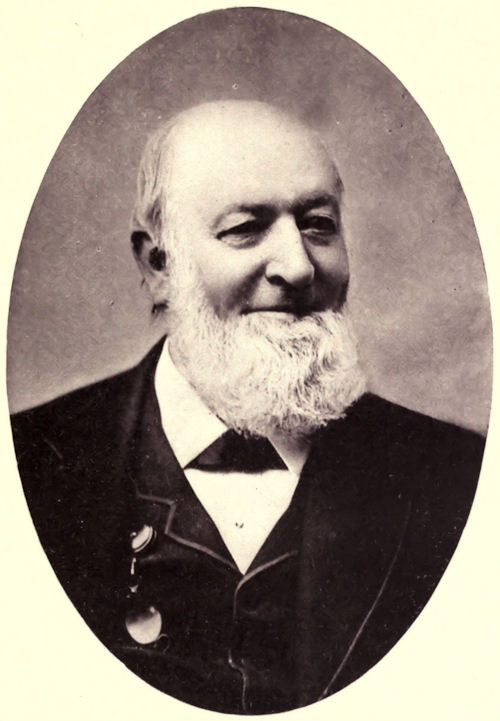
DOCTOR HENRY MARTYN SKILLMAN. From a Photograph by Mullen.
It is hardly possible for a man to depart this life without leaving an enemy, but if Doctor Skillman, in his fifty-four years of active professional life, had made even a few enemies they hesitated to declare themselves. His own nature was to see good in others; their defects were not made prominent by him. As he spoke no evil, so nothing but good was said of him. But with his amiable, benevolent, compromising disposition there was no trace of weakness. Strict in professional etiquette, immovable in principle, he repelled with gentle but irresistible firmness every effort to shake his integrity. The loveliness of his character and personality is best portrayed in "Luke, the Beloved Physician," a tribute paid, on his death, editorially in the Lexington Herald by Kentucky's favorite orator and statesman, every word of which is as true as it is well-chosen and beautiful. Doctor Skillman held numerous offices of trust; was elected, in 1869, President of Kentucky State Medical Society and, in 1889, the first President of Lexington and Fayette County Medical Society, and was at the time of his death the oldest practicing physician in Lexington, having seen that city grow from eight thousand to thirty thousand inhabitants. It is claimed that he was the first physician to administer chloroform there. For two years during the Civil War he was contract surgeon for the Government.
Doctor Skillman's father, Thomas T. Skillman, a native of New Jersey, came to Lexington in 1809, and soon founded there the largest publishing house in the Mississippi Valley, the name of T. T. Skillman on the title page of a work being a guarantee of its excellence and fitness for the family circle. In 1823, an edition of several thousand copies of the entire Bible was published by Mr. Skillman from stereotype plates sent from New York by the American Bible Society. He founded the Evangelical Recorder and Western Review, afterward edited by Reverend John Breckinridge, the young and talented pastor of "the McChord Church"; also the Western Luminary, in 1824, the first religious paper issued in the West.
Doctor Skillman married, October 30, 1851, Margaret, daughter of Matthew T. Scott, President of the Northern Bank of Kentucky. Of their children only one is living, Henry Martyn Skillman, of the Lexington Security Trust and Safety Vault Company.
Samuel M. Letcher, M. D.,
Of a prominent Kentucky family, also a graduate of the Medical Department of Transylvania University who had won distinction in his profession in Lexington, was called to the chair of Professor of Obstetrics and Diseases of Women and Children in that school in 1851, and performed the duties of that chair with ability and success until the close of the Medical College in Lexington in 1857. During the Civil War he was placed in charge of a United States General Hospital in Lexington, a position which he held for some time, giving great satisfaction. He died February 1, 1863, in Lexington, Kentucky.
John Rowan Allen, M. D.,
Who was Superintendent of the Eastern Lunatic Asylum at Lexington,[97] Kentucky, and who first introduced there the moral treatment of the insane instead of forcible means, was appointed Professor of Materia Medica and Botany in 1851, and performed the duties of this chair with great ability until the end of the session of 1855, when he resigned that position.
Doctor William Stout Chipley
Was born in Lexington, Kentucky, October 18, 1810, the only son of Reverend Stephen and Amelia Stout Chipley, the forefathers of both of whom were pioneers of Lexington. Doctor Chipley was graduated at Transylvania in 1832, with marked honor. Not a great while after his graduation he took issue with Doctor Benjamin Dudley, the oldest and most renowned practitioner of the State—or indeed of the whole country. Doctor Dudley had published a treatise upon the treatment of a special disease. Doctor Chipley took an opposite view, expressing himself most boldly and brilliantly. His article was published in an advanced medical journal and copied widely. Chipley received widespread encomiums. Indeed, he came off with raised banner, and his colors have never since been furled. His success was progressive this article exemplifying his determination when convinced he was right. Later he went to Columbus, Georgia, feeling assured it was a fine opening for a young practitioner, and so it proved. He was soon launched into an almost phenomenal practice, extending across the Chattahoochee River into Alabama to the Indian nation, where his wonderful magnetism was felt to such a degree that he won the confidence—even friendship—of these savages. He would be detained days at a time ministering to them—a tribe, too, by no means regarded as friendly to the whites. In April, 1837, he married in Columbus, Georgia, Elizabeth Fanning, niece and adopted daughter of Colonel James Fanning, of Alamo fame. Doctor Chipley was at one time Mayor of Columbus, and made a brilliant reputation as an executive officer. At the entreaties of his mother and father, who were quite advanced in age, he turned a deaf ear to the opposition of his legion of friends in Columbus and returned to Lexington, Kentucky, where it seemed a flourishing practice did but await him. He was a very successful Professor of Transylvania in the chair of Theory and Practice of Medicine, from 1854 to 1857, inclusive. As a lecturer he had a wonderful flow of language. The possessor of a perfect voice and delivery, he chained the attention of all listeners. Often have I heard his patients say his sunshiny presence, his gentle, sympathetic touch in the sick-room, dulled pain and was better than drugs. He was a brilliant and forceful writer, the author of many medical works and the writer of numerous articles published in medical journals of the highest note. One small book of his gave him much notoriety. Chief Justice George Robertson, of Lexington, regarded it of such high worth that he gave fifteen hundred dollars to have it published and placed as a healthful guide in certain schools for boys. It was in 1855 that he took charge of the Eastern Kentucky Lunatic Asylum at Lexington. This proved a wide field for the development of the most astonishing tact and management of individuals. The attendants greatly admired him and yielded without question to his dictation. Gentle as a woman, adamantine after a decision, never acting hastily, maturing a subject before deciding—these characteristics were shown on all occasions where it pertained to the comfort of the poor creatures under his care. During his fifteen or sixteen years of most successful management of this institution, he made many radical changes for the amelioration of the condition of these unfortunates. Winter after winter he haunted the legislative halls in behalf of the Asylum, spending his own personal means most lavishly to meet this end—presenting one bill after another, which sooner or later were always honored. His enthusiasm and faithfulness carried conviction with them. When he took charge of the Asylum he found it a conglomerate mass—many from other States there—incurables, epileptics, idiots—all huddled together. He went carefully over the records and proceeded to institute a thorough weeding. First he notified the governors of the respective States to send for their own insane, giving them a stated time of grace, and telling them that if the call was not honored he would send the patients to their doors by one of his own attendants, which he did in several instances. This systematizing was a great step forward. The next thing he did was to induce the State to erect an institution for idiots, believing there were few born who were not capable of receiving some degree of cultivation. In time a home was built at Frankfort, the result proving his great wisdom. It was a matter of wonderment to see these poor creatures developing from a driveling state of nonentity into some capacity for the enjoyment of life, and even to a degree of usefulness. There were but few incapable of being taught some employment which rendered their life more than a mere existence, akin alone to the lower animals. To have succeeded in this was enough to mark any man's life. His philanthropy never slept. Then, through his direct intervention, the Asylum at Anchorage for incurables was erected; all these changes making room for those who stood a chance of being cured instead of their being turned, for the lack of room, from the sheltering care which might restore them. I think his influence was brought to bear upon the advisability of an institution for the deaf and dumb, which culminated in the home made for them in Danville. I think it was in or about the year 1857 he went to Europe, absolutely for the purpose of gaining an insight into better ways and means of the treatment of the insane and the construction of the buildings which were their homes. Though there was such an emptying of the old Eastern Kentucky Lunatic Asylum building, it soon became altogether insufficient to meet the demands. Applications poured in, and soon, after a hard-fought battle, the legislature made an appropriation to add to the old building, and promptly there was under construction a building which, when finished, for comfort and in a sanitary way was unequaled. This, years after his death, was destroyed by fire, and when rebuilt, I understand, was modeled after the old plan. He was his own architect, his whole heart and being merged in a desire to have all as nearly perfect as possible, developing thus a new talent. He always had in view a private asylum of his own. This purpose was crystallized when it became apparent that politics would govern the State institutions, though in opposition to all that was humane. He resigned December, 1869. He purchased "Duncannon," the beautiful Duncan home near Lexington. The site selected, lumber on the place, all plans formulated, having gained such advanced ideas from his long and successful experience he hoped to have an ideal shelter for those who preferred private treatment. On December 9, 1871, at eleven o'clock at night, snow on the ground, standing with his family and several whom even then he had under his charge around him, after barely escaping with their lives, he saw the "Duncannon" mansion reduced to ashes. This disaster crippled his efforts to the degree that he was forced to forego that which if carried through would have proven a monument to his memory of no small magnitude. He then rented a house in Lexington, where he had some patients under his charge, with a private attendant who had won many laurels in this capacity. Doctor Chipley was frequently called upon, even in other States, to decide in the courts as a specialist in insanity. He had a great number under his private treatment in their own homes, of whom the world never knew. He had innumerable offers of positions, but none seemed to appeal to him so much as one at College Hill, near Cincinnati, Ohio. He accepted this offer. His success here proved a very decided one, redeeming the institution from great financial stress and opening up astonishing possibilities. He had four sons—only one now living (1903)—and one daughter (the present writer). He left many friends in Lexington who were ever beckoning him back, and to the last he hoped to return where his heart was. But after only a few years of service at College Hill he contracted a cold from which he never recovered. He died February 11, 1880. Invitations had been issued for a reunion in honor of his aged mother, who was ninety-seven the day he died. A train was to be chartered and Lexington friends were to come. He has left a memory of his gathered laurels and honored name more precious than the gems of the universe.
Emily Chipley Jones.
Doctor James Morrison Bruce
Was a son[98] of John Bruce, a Scottish gentleman associated with Colonel James Morrison and Benjamin Gratz in the manufacture of hemp at Lexington, Kentucky, and was born at that place in 1822. After completing a collegiate education, he studied medicine with Doctor Benjamin W. Dudley, taking the degree of M. D. in Transylvania in 1843. He then spent three years in France, studying in the principal hospitals at Paris under the most eminent instructors. In 1846, he returned to Lexington to begin the practice of his profession. He was elected to the chair of Demonstrator of Anatomy in Transylvania Medical Department in 1850, continuing therein until the cessation of the school in 1857. Doctor Bruce's intrinsic merit was fully appreciated by his colleagues, who had great affection for him, but his excessively shrinking nature withheld him from taking the prominent position with the public to which his ability and learning entitled him. In truth, his chief characteristic was his modest, amiable, and retiring disposition. His specialty in medicine was eruptive disease. In the treatment of smallpox his professional brethren conceded him the highest place. For many years he was continuously elected City Physician, and holding this office he died, January 31, 1881, the sudden ending of his useful and kindly life being largely due to the exposure he so constantly and bravely encountered in his visits to the suffering poor during an unusually severe and trying winter. Says a fellow-physician,[99] "It was then that the great and good qualities of our friend and co-laborer, Doctor Bruce, shone pre-eminently. It was at a time when poverty and distress appealed to him that his great-heartedness, his forgetfulness of self, and his proficient medical skill forced itself before that public attention from which at all other times it timidly shrunk." Doctor Bruce married, in 1847, Miss Elizabeth Norton. Of his children Miss Elizabeth Bruce and Mrs. Charlotte B. Davis, of Lexington, survive him.
Doctor Alexander Keith Marshall,
Born February 11, 1808, performed the duties of the chair of Materia Medica in 1856. He had received a classical education from his father, the celebrated Doctor Louis Marshall, of "Buck Pond"; studied medicine with Doctor Ephraim McDowell, and completed his medical course at Transylvania. He was a handsome man, a forcible speaker, a prominent politician and Odd Fellow, and a member of Congress in 1855. He died at the home of his son, Louis, near Lexington, April, 28, 1884.[100]
Benjamin P. Drake, M. D.,
A graduate of Transylvania Medical Department in 1830, occupied the chair of Materia Medica in the last year of the school in 1857.
During the last two years of the Medical Department of Transylvania University the Faculty were:
Ethelbert L. Dudley, Surgery.
James M. Bush, Anatomy.
William S. Chipley, Theory and Practice.
Samuel M. Letcher, Obstetrics, etc.
Henry M. Skillman, Physiology and Institutes of Medicine.
Alexander K. Marshall, Materia Medica and Botany, 1856.
Benjamin P. Drake, Materia Medica and Botany, 1857.
Robert Peter, Chemistry and Pharmacy; Dean.
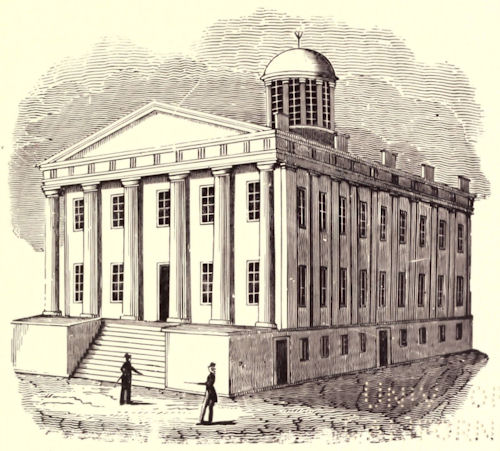
TRANSYLVANIA UNIVERSITY—MEDICAL HALL. Built in 1839—Burned in 1863.
From 1850 until the end in 1857, the existence of the school seems to have been an heroic struggle against fate. In spite of the fine Medical Hall, alluded to on the day of its dedication (November 2, 1840) by President Robert Davidson,[101] as "colossal in size and surpassing in architectural beauty," in spite of liberal endowments and "costly and complete apparatus, superior to any in the valley of the Mississippi, and not surpassed, if equaled, by any on the continent,"[102] the school languished. Notwithstanding the efforts of zealous Trustees and generous citizens, notwithstanding the diligence of an able Faculty, the classes steadily decreased from year to year until, in 1857, with only nine graduates, the Faculty in despair disbanded, and the time-honored Medical Department of Transylvania University was no more.
Two factors more than all else (except as before mentioned, the impossibility of securing sufficient material for clinical instruction) had contributed to its demise—the retirement of Doctor Dudley in 1850, and the difficulty that existed in establishing the needed railroads throughout the State. The latter cause had been operating unfavorably and with increasing effect almost ever since the introduction of steam transportation.
Enlightened thinkers had early recognized and urged the vital importance of railroads for Kentucky, and especially for Lexington and Transylvania, and had bravely advanced to conquer the difficulties of the situation, but with only discouragement and pecuniary loss for many years. The peculiar topography of the State, the constant alternation of hill and valley, the numerous streams, the hardness of the rock to be penetrated, made the building of railways very expensive, and capital was wanting. The wealth of Central Kentucky was in the soil, not in the purse, and without communication with the markets of the world this wealth was unavailable. In this manner enterprise was checked and Lexington sank into an apathetic state. It is true she had secured the distinction of having the first railroad in the West and the second in the United States,[103] but for years it only led to Frankfort, an interior town but twenty-eight miles distant. It was not until 1851 that it connected with Louisville.
Of Doctor Dudley's influence upon the medical school Doctor David W. Yandell truly says:[104] "The history of the Medical Department of Transylvania University—its rise, its success, its decline, its disappearance from the list of medical colleges—would practically cover Doctor Dudley's career, and would form a most interesting chapter in the development of medical teaching in the Southwest. But it must suffice me here to say that Doctor Dudley created the medical department of the institution and directed its policy. Its students regarded him from the beginning as the foremost man in the Faculty. That he had colleagues whose mental endowments were superior to his he himself at all times freely admitted. He is said to have laid no claim to either oratorical power or professional erudition. He was not a logician, he was not brilliant, and his deliverances were spiced with neither humor nor wit. And yet, says one of his biographers, in ability to enchain the students' attention, to impress them with the value of his instructions and his greatness as a teacher, he bore off the palm from all the gifted men who at various periods taught at his side."
But although these two would appear to be the more obvious reasons for the decline of the Medical Department of Transylvania, we can by no means ignore the injurious effect of rival medical colleges growing up at points more accessible and more progressive than Lexington could possibly be without rapid transit of some sort to make her own peculiar advantages available. Nor can we overlook the evil consequences of the opposition systematically shown to the Transylvania Medical School by the faction originating in the attempt to disorganize the institution in 1837.
However, in reviewing all these influences, the prosperity of Lexington to-day (1904), her rapid growth, her increasing enterprise, her vigorous trade, the flourishing condition of her colleges and seminaries—all of which has come to her since the completion of the railroads centering in her—abundantly prove that this communication, above everything else, was her indispensable requirement.
While the medical school was closed in 1857, the Academical Department of Transylvania University continued to be conducted at the Morrison College as a State Normal School,[105] under the Presidency of the distinguished Doctor Lewis W. Green, D. D., but was soon to be disorganized, after only two years of usefulness, on account of a supposed unconstitutionality. Thus Transylvania was again humbled to a low estate in educational distinction. Lexington herself was suffering an era of banishment, as we may say, for without proper railroad connections she was excluded from progress and rendered inaccessible to both labor and capital. The financial prosperity of her citizens was not such as to warrant the lavish hospitality formerly shown to strangers within her gates, and especially to the students in Transylvania. The enterprising individuals who remained to her were not sufficient in numbers to dispel by their most strenuous exertions the lethargy which had fallen upon the place.
Such was the state of affairs immediately preceding the Civil War. The immense Medical Hall had reverted to the city and was deserted, save the laboratory in which was still being busily conducted the chemical work of the first Geological Survey of Kentucky; and save perhaps one of the smaller rooms, rented to a lodger. The survey had just received a sudden check in the death of the lamented Doctor Owen when the war still further darkened the prospect, during which, as a matter of course, the resumption of the survey was out of the question. The Morrison College was almost immediately appropriated by the United States Government for a general hospital, and, some time after, the Medical Hall, which as before mentioned was utterly destroyed by fire[106] during its occupation by the sick soldiers. The conflagration originated, it appeared, from a defective flue of a temporary frame kitchen, built adjoining.[107]
The corner-stone of this Medical Hall had been laid July 4, 1839; Robert Wickliffe, junior, the well-beloved, making the address. It was dedicated November 2, 1840. Of Grecian architecture, massive and without ornamentation, it contained three great lecture rooms, with ample provision for light and ventilation. The amphitheatre was immediately below the cupola, being by this means lighted from above. There were three other large apartments—for the library, the anatomical museum, and for other medical teaching. Smaller rooms accommodated the laboratory, Faculty room, janitor's room, etc. Besides which were long halls or galleries utilized for natural history collections, museums of zoology, ornithology, geology, etc., as also for apparatus of divers sorts. The costly and complete chemical apparatus was well displayed and conveniently arranged in the immense lecture room for that department.
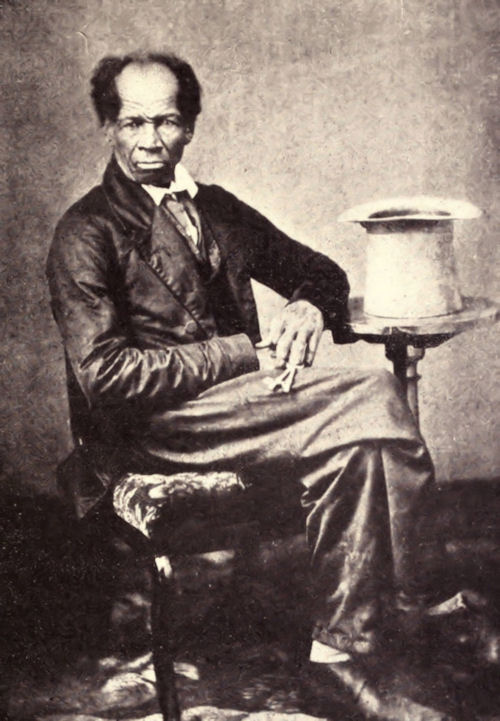
ABSOLOM DRIVER. For many years Janitor at the Medical Hall of Transylvania University.
In the spacious lecture-room in the front of the building many fashionable and distinguished audiences had assembled on various occasions, not only to hear the gifted incumbent professors in due discourse of introductory or valedictory, but to be charmed with concerts by Ole Bull, Strakosch, Adelina Patti—who sang there on her first tour in this country—and other celebrities of the period. There the learned Guyot had instructed in geology; there unique "Tom Marshall" had uniquely delivered a unique course of lectures on History. Over the rostrum hung the portrait of Doctor Samuel Brown—the first medical professor. This lecture hall was lighted for evening assemblages, from the sides mostly, by "scounches," as they were called by the "ole Virginny" negro janitor. This factotum, "Absolom Driver," is unforgotten by any whose path some time ran parallel with his. For many years the keeper of the Medical Hall, his zeal and vigilance were unimpeachable, his dignified solemnity on state occasions unsurpassed. Contemptuous of letters—except for doctors—and with unshakable prejudice against "book learnin' for niggers," he was faithful in trusts with the matchless fidelity of the dog. "Bad boys"—the problem of philosophers and ordinary folk in all ages—was one of easy solution by "Uncle Absolom" with a bent nail at the end of a long pole. Charged upon with elan with this unprecedented weapon, accompanied by an ominous war-cry, no truant could withstand, even though the artfully strewn broken bottles on the high back fence had been successfully outflanked. "Robbers" had their everlasting antidote at hand in the peculiarly uncanny, long, "one-barreled shotgun" with curious lock, which stood in the corner of the Faculty room. Nobody ever heard it "go off," but the mystery of it was what appalled one. Happily "Uncle Absolom's" death was nearly coeval with the closing of the medical school. To have witnessed the burning of his sacred temple, the Medical Hall, after all his "keer," would have broken his heart indeed.
And now, bidding adieu to the shades of the grand old Transylvania Medical Department, conjured from the past by one now numbered with them, may the earnest wish be permitted with hope of realization, that some other hand with cunning in such craft will unveil to us the portraits of that bygone throng of brilliant men which constituted and which were the exponents of the honored Transylvania Law School.