Part 2 — CHAPTER XXXII.
Reading edition
THE BENCH AND BAR.
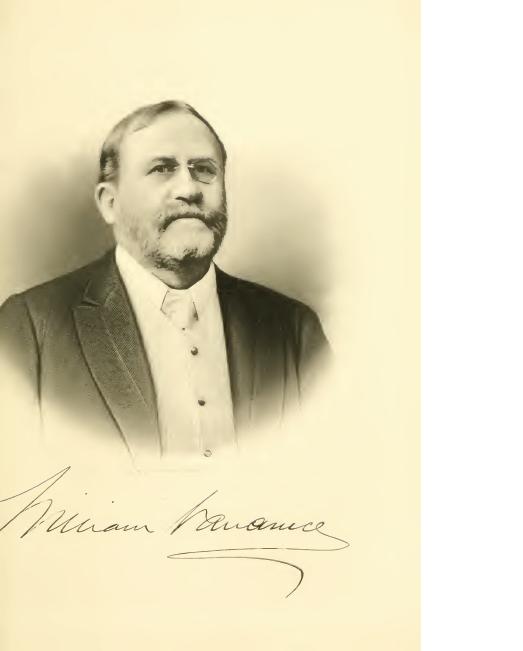
By William Vanamee.
At the unveiling in Goshen, September 5th, 1907, of the monument in memory of the gallant soldiers of the 124th Regiment, erected by that modern exemplar of medieval knighthood, that truest of men, of gentlemen and of heroes, Thomas W. Bradley, it was mentioned by one of the speakers that just forty-five years before, upon that very spot, as the regiment was about to start for the front, the stand of colors destined to be carried by it through many a battle, was presented to it in behalf of the Daughters of Orange by Charles H. Winfield.
His noble, inspiring speech upon that occasion was fitly responded to in behalf of the regiment by David F. Gedney, then Mr. Winfield's only rival at the Goshen bar and his acknowledged equal. The highest praise that can be bestowed upon either is that each feared for the success of his cause when opposed by the other. Indeed they were nearly always opposed, for what timid, anxious client, learning that his adversary had engaged the services of one, ever failed to suggest to his local attorney the importance of averting prospective defeat by the employment of the other. This remark of course applies chiefly to litigations arising in the Western end of the county, in which the trials were usually held at Goshen, for in Newburgh, Stephen W. Fullerton, who was admitted to the bar in 1844, just one year before Mr. Gedney was admitted and two years before Mr. Winfield, had from the first successfully challenged their supremacy in the county at large. Well might he do so, for while he was not the equal of Winfield in magnetism and force or of Gedney in scholarship and style, yet he excelled them both in acuteness, in industry and in mastery of the rules of evidence. This, then, was the great triumvirate that forty years ago reigned supreme throughout the county of Orange in the affection of their associates, in the admiration of juries and in the plaudits of the multitude—Winfield, Gedney, Fullerton. All three possessed genius of an uncommon order and no court, however insensible to the graces of oratory, could wholly restrain its flights or direct its course. When the vexatious details of the testimony were over—for in those days the testimony was regarded by the public as a tedious formality preparatory to the great event of the trial, the summing up—and when it was understood that the addresses to the jury were to begin, the courtroom was quickly filled by people from all parts of the county, eager for the intellectual treat that was sure to follow. Winfield was wont to begin his closing argument somewhat slowly and even laboriously. This was due partly to the habit of his mind, which required the stimulus of exercise to quicken it to its highest exertions, but partly also to rhetorical design, by which he sought to make his subsequent outbursts of impassioned eloquence seem wholly unstudied, spontaneous and irrepressible. Indeed, they usually were. As the thought of his client's wrongs surged in upon him, as he dwelt upon his client's right to protection or relief, or contemplated the disaster involved in defeat, his words could scarcely keep pace with the torrent of impetuous, sincere and deep emotion on which they were upborne. He always struck the human note which the case presented. To him a trial did not involve a mere application of legal principles to an ascertained state of facts, but to him every case, however dry, barren or abstract, was a human drama. He saw, with the eye of imagination and the insight of genius, those forces of hate and revenge, of greed and falsehood, of cunning and cruelty, of devotion and affection, of honor and truth, which in one form or another, surcharge every trial, and project their palpitating figures upon the most intensely vital, vibrant stage for which the scenes were ever set—the conscious court-room, the austere judge, the impassioned advocates, the enthralled spectators; human life or liberty, human happiness or despair, human rights or relations, hanging in the balance upon a jury's nod. All this Winfield saw. In every trial the panorama of human life unfolded itself to his inspired vision. He took the broken, confused fragments of human testimony and subjecting them to the kaleidoscope of his own fervent, symmetrizing, mirroring imagination, they were transformed into pictures of beauty or shapes of evil, as he willed.
It can easily be imagined that his power over juries was well nigh irresistible. If David F. Gedney, who was so often pitted against him, had sought to counteract his influence by the exercise of similar gifts, he might well have despaired of success. But happily for himself and for the delight of juries and the bar, no advocates were ever more unlike each other in method of argument, in point of attack, in form of expression, in appeal to the sentiments, than Winfield and Gedney. Winfield filled the eye; Gedney charmed the ear. Winfield visited upon wrong or duplicity the bludgeon blows of invective. Gedney pierced it with the envenomed shaft of sarcasm. Winfield sought to break the armor of his adversary with the broad axe of denunciation. Gedney penetrated it with the slender arrow of wit and the fatal spear of ridicule. To Winfield language was a necessary vehicle of thought, a familiar medium of expression. To Gedney language was a divine instrument, over the responsive chords of which his master touch swept with unerring taste and classic grace, evoking notes of exquisite harmony and images of surpassing beauty. The words that flowed unbidden from his enchrismed lips were music indeed. His sentences, chaste and polished as though chiseled in the very laboratory of thought, were but the unconscious reflection of a mind steeped in the literature of every age and tongue. Even Winfield often found to his dismay that those weapons of solid argument which would have defied all the onslaughts of the gladiator, were powerless before the arts of the magician. Not indeed that Gedney elevated style above matter or sacrificed strength to beauty. But in him style and matter were so delicately balanced, beauty and strength so discreetly blended, that each borrowed from the other and none was poorer for the exchange.
The personal characteristics of the two men were also different. Winfield loved the approbation and applause of his fellows and aspired to political honors. Gedney looked out upon the world with philosophic calm, undisturbed by its clamors and un-tempted by its baubles. The only offices which he held were strictly in the line of his profession—district attorney and county judge—while Winfield acquired a conspicuous position in Congress at a time of intense public interest and excitement. Winfield bore defeat with impatience, Gedney with equanimity. Winfield, who especially could not endure the thought of defeat by a younger adversary, often treated him with unnecessary severity; always, however, taking care to express his regret afterwards that the heat and zeal of conflict had carried him too far. Gedney, on the other hand, never suffered to arise the occasion for apology or regret. He disdained to use his unrivaled powers of sarcasm and ridicule at the expense of a weaker adversary, and throughout the entire course of a trial, he was scrupulous not to say one word which might in any degree wound the sensibilities of a younger member of the bar. Moreover, he always look pains to speak a word of encouragement and praise to the younger lawyers whenever their maiden efforts justified interest or respect.
Gedney's happiest hours were passed at his own fireside, while Winfield loved to mingle freely with his fellow men. But Winfield's children had died, one by one, in childhood, and it is pathetic to recall that he sank to his long sleep while addressing little children on a peaceful Sunday afternoon in June, just sixty-six years after his eyes had opened not far away on a world in which he was destined to reap many cruel sorrows, some substantial rewards, and all the mocking, delusive delights of a transient fame.
His friend, Judge Gedney, followed him only a month later as he sat upon the porch of his home in Goshen. As together they had journeyed through life, sharing its burdens and its conflicts, so in death they were not long separated, and in the manner of their summons they were alike blessed, for to neither did it come upon a bed of lingering illness.
Their lifelong friend, Judge Stephen W. Fullerton, was not so fortunate. Surviving his old associates fourteen years, he lived to see the world march past him and to realize the bitter truth that it takes but little interest in a lawyer, however prominent, popular or useful he may have been, after his activities and usefulness have ceased. And yet Judge Fullerton possessed some traits of character which should have ensured him, above all his fellows, from the sharp tooth of either ingratitude or neglect. He actually gave away three fortunes. His generosity knew no bounds. An appeal to his sympathies was never made in vain. A claim put forward in the name of friendship was to him sacred and admitted of no hesitation. Every consideration of selfishness or even of prudence went down before the spectacle of a friend in need. It was inevitable that a nature so generous and so confiding should often be imposed upon by unworthy claims, but to these he never referred with bitterness or even regret. A few dear friends, including especially Judge Hirschberg and Walter C. Anthony, were true and faithful to the last, and it must be a satisfaction to them to know that their loyal, undeviating attachment cheered and consoled the last hours of a lawyer who once shared with Winfield and Gedney undisputed preeminence at the bar of Orange County.
For never were tender, affectionate and generous traits of character—often assumed to be inconsistent with the coldness and sternness of the law—joined to a more severe, patient, thorough, comprehensive training in the law than in the case of Judge Fullerton. To him the law was a science and the practice of it an art demanding the sleepless pursuit and worship of its votaries. To the principles of such a science and the rules of such an art, having for their object the most exalted end of all organized society, the establishment of truth and the maintenance of justice, he was willing to consecrate the noblest energies of his mind and heart. To him no labor was too hard, no sacrifice too great to deter him from mastering the minutest details of a complicated case or from ascertaining and applying the principles by which it should be governed. When he came to court to present it every form in which difficulty might be apprehended or obstacles interposed had been anticipated and provided for. He always tried the case on both sides before he went to court, and his opponents never raised many of the points which he, in his anxious survey, had most dreaded. His thorough knowledge of the rules of evidence enabled him to introduce testimony upon some minor issue in the case which was afterwards used with telling effect upon the main issue. In his addresses to the jury he discarded every appeal to mere sentiment and sought to impress only their reason and their judgment. His analysis of the evidence was so close and perfect, his presentation of it so clear and convincing that the jury were led to think that his was the view they had taken of it all the time it was being given. Gathering up the different threads of narrative in the case he wove them together in a strand of pitiless, impervious, cohesive logic that not all the frantic efforts of his adversary could avail to unwind. Such was the man who, like Gedney, had also been county judge and district attorney of the county, to whom Mr. Marsh, as the spokesman of the Orange County bar, paid fitting tribute at the Newburgh court house in June, 1902—Luther R. Marsh who at the time of his own death in 1903, constituted the last lingering tie between the present and the past.
No history of Orange County is complete that fails to chronicle the twelve years' residence of Luther R. Marsh, who imparted luster to every scene in which he mingled, dignity to every spot in which he lingered. He spent in Middletown the closing years of a life which had been marked by the most intense ardor and activity in his profession, and, though he had retired from active practice when he settled in Orange County, he was drawn into court after that upon two occasions in litigations arising in the county. The intimate friend all his life of Orange County's ablest sons, from the Hoffmans to the Fullertons, he became the friend, the companion, the idol of a new generation of its lawyers when he came to Middletown in 1889, being then nearly eighty years of age. For though he lived to be ninety, he never became old, worn or feeble in spirit. In a public speech delivered a few months before his death, he declared that to be the happiest period of his life. In his daily walk and conversation he exemplified the philosophy of Rabbi Ben Ezra, as expressed by Browning:
"Grow old along with me! The best is yet to be, The last of life, for which the first was made; Our times are in His hand Who saith 'A whole I planned, Youth shows but half;' trust God; see all, Nor be afraid!"
Nor was he afraid. His daring vision sought to pierce the secrets of the hereafter. For a long time before his death he was deeply interested in spiritual phenomena and in the investigation of those manifestations of persistent personal energy after death, the authenticity of which constitutes the only proof we can ever obtain of the doctrine of immortality. Trained to estimate the weight and value of evidence, engaged during his entire professional career in convincing arguments as to its proper construction and effect, he accepted as sufficient and satisfactory the evidence adduced to him of communications and impressions still conveyed, as the church even now maintains they were of old, from those who have passed on to the spirit world.
But, though during his later years he clearly saw how trivial were the ordinary ambitions and pursuits of men; though his thoughts became more and more centered upon things spiritual and eternal, yet he never lost his interest in the sterling values and, above all, in the beautiful friendships of life. Childhood, youth and manhood held each its claim upon his tender regard, his ready understanding, his never-failing sympathy. To him more than to any man I ever knew do Goldsmith's immortal lines apply:
"E'en children followed, with endearing wile, And plucked his gown, to share the good man's smile. His ready smile a parent's warmth exprest; Their welfare pleased him, and their cares distrest; To them his heart, his love, his griefs, were given, But all his serious thoughts had rest in Heaven: As some tall cliff that lifts its awful form, Swells from the vale, and midway leaves the storm. Though round its breast the rolling clouds are spread, Eternal sunshine settles on its head."
Luther R. Marsh was unquestionably the most original, brilliant, fascinating, prolific, versatile genius that ever dwelt in Orange County during the years in which in him it "entertained an angel unawares." He mingled on equal terms with the greatest men of his generation. He was a partner of Daniel Webster. Among my most cherished possessions is the tin sign which Mr. Marsh had framed and hanging for many years in his study, bearing in his own handwriting the inscription:
"Luther R. Marsh.
"In 1845, on Mr. Webster's retirement from business to return to the Senate of the United States, I took this sign off from our office door, 44 Wall Street, New York, where it had been during our partnership."
When Webster was dying in 1852, Henry J. Raymond, the gifted editor of the New York Times, wrote:
"My Dear Marsh:—We hear from Marshfield that Mr. Webster cannot live through the day. I want from you, if it is possible, for to-morrow morning, an article—of what kind you know a good deal better than I can tell you. . . . No man in this city certainly can do it so well. Nine o'clock this evening, or even ten, will be early enough to have it here.
"Yours as ever,
"H. J. Raymond."
The article, occupying over four columns, was there on time. Mr. Marsh, that afternoon, upon a moment's notice, at a single stroke, threw off an estimate of Webster's genius and achievements that never was excelled later, even in the glowing, studied periods of Everett, Winthrop, and Curtis.
When in 1869, Henry J. Raymond died, Mr. Marsh was invited to become his successor, but he declined the honor fearing that the position, though congenial to his tastes, would be too exacting in its demands. When we consider that at this time Mr. Marsh was besieged by clients and immersed in cases; when we consider, too, that a busy lawyer is the last one to whom a publisher would naturally turn (for there is no class of men in whom the truly literary instinct combined with the gift of literary expression is so rare as among successful lawyers), this recognition of the unique literary distinction which Mr. Marsh had attained, even while engaged in the fiercest legal contests with such hard-headed lawyers as David Dudley Field, John Van Buren, Charles O'Conor, James T. Brady, John K. Porter and Judge Comstock is most impressive and conclusive. But in his forensic contests the lawyer dominated the litterateur. Any opponent who thought that because of Mr. Marsh's finished, faultless, elegant literary style he would escape hard blows and sturdy onslaughts soon learned his mistake. He was, at about the time he received this offer from the Times, in the very zenith of his powers and his fame. Mr. Hunt, then the superintendent of public schools in Massachusetts, thus wrote in 1873, of a trial he had just attended, in which Mr. Marsh was opposed to Joseph H. Choate:
"I shall never forget the spectacle of that trial; from the opening to the close, it was the most perfect thing I ever saw. Having entered upon the study of law in the late William Pitt Fessenden's office; having seen many able lawyers conduct cases in court—Fessenden and Evans in Maine, Rufus Choate and other great lawyers in Boston, and, in the South, Yancey and others—allow me to say that I never saw anything to be compared with the ease, dignity and power with which Mr. Marsh managed everything."
But his splendid gifts and varied powers could not be restricted in their exercise to the energies of the law and the graces of literature. Equally fitted to shine in society or among scholars, in pulpit or press, on the rostrum or in the forum; always facile princeps as poet or preacher, essayist or journalist, publicist or philanthropist, advocate or orator, his un-approached range and versatility mark him indisputably as the Admirable Crichton of his land and age.
During the period covered by Mr. Marsh's impressive eulogy upon the character and attainments of his friend Stephen W. Fullerton, the Orange County bar was enriched by the weight, the influence and the learning of a group of lawyers whose temperament disinclined them to the fierce excitements, the rude conflicts, the temporary triumphs of the forum. Foremost among them was Eugene A. Brewster, who, though he personally argued his cases with great ability and success before the appellate courts, where reason and reserve count for more than fervor and fluency, was unskilled in the art of swaying a jury against its will or snatching a verdict against the evidence. Mr. Brewster's warm admiration for his great preceptor, Judge John W. Brown, may have unconsciously influenced his bearing, but his moral and intellectual equipment was entirely his own. This embraced a deep sense of the responsibility resting upon every lawyer to sustain the honor and dignity of an ancient and honorable profession. He scrupulously maintained throughout a busy and active career the high ideals with which he started out. His aim was to ascertain the truth, not to circumvent it; to apply the law, not to evade it; to draw from the fountains of justice, not to pollute them. He enjoyed the respect of the courts, of his brethren and of the public because of his character as well as his ability, his virtues as well as his talents. His whole life was a steady influence working for honesty in the moral fibre of the community; a persistent power making for righteousness; a never-failing light guiding to the path of safety and of honor. In him were incarnated those conserving principles, those formative influences, those stimulating ideals, those ennobling traditions which impart dignity to human life, strength to human character, stability to human society.
David A. Scott was another eminent member of the same group. As surrogate of the county for two terms his administration was distinguished by an unusual display of those qualities of breadth, wisdom, patience, knowledge of human nature and capacity for affairs so peculiarly requisite in a probate judge exercising jurisdiction over the saddest controversies, disclosures and scenes ever presented for adjudication—contested wills, disputed claims, angry accountings, recrimination between brother and sister, calumniation of the dead, sordid passions and petty avarice disrupting old friendships and family ties. In calming these dissensions whenever possible and in deciding them whenever necessary Judge Scott manifested that happy blending of tact, temper, common sense, sound judgment, practical sagacity and professional learning so essential in the office of surrogate. I say judge because the title surrogate is a most unfortunate one. The office is known in other commonwealths as that of probate judge. People are so influenced by mere names that if such were the title here the claims of an able surrogate to public respect would be more fully understood. When it is considered that once in every generation the entire wealth of the county, including vast fortunes amassed elsewhere by those who die residing in it, is administered upon in this court and that nearly all the intricate and perplexing questions involved in its distribution are passed upon by the surrogate, it will readily be seen that the duties and responsibilities of this office are among the most important, extensive and onerous that can devolve upon judicial officers.
It is now nearly fifty years since David A. Scott entered upon the duties of this office. There are those who still remember the dignity and grace with which he discharged them. It is forty years since he laid them down. One year after the close of his second official term and one year after Judge Michael H. Hirschberg had been admitted to the bar, they entered into a partnership under the name of Scott & Hirschberg, which continued until Mr. Scott's death. What this long, close association meant to the younger member of the firm he alone fully knows. Surely he would be the last to repel the suggestion that it doubtless profoundly influenced a character still sensitive and impressionable when the intimacy began. Indeed he himself bore affectionate testimony to this impress when, in the court proceedings, held to honor his dead friend's memory, he said: "For more than twenty-one years we have labored together side by side in the perfect intimacy and union of the partnership relation, and realizing how very much I am indebted to his precepts, his example and his support; with only sweet and grateful memories of that connection now remaining, wholly unalloyed by even the momentary shadow of doubt or distrust, and un-vexed by even an occasional suggestion of discord or dissension—indeed one long and unbroken period of harmonious intercourse, of joint and cheerful endeavor, and of undisturbed confidence and esteem, I deem it a duty no less than a privilege to add my humble meed of praise to the chorus of eulogy which I am sure will greet his memory to-day."
In closing his tribute Judge Hirschberg said, with the heartfelt concurrence of the entire bar:
"And so passed away forever an honorable lawyer, a faithful friend, a loving father, an estimable citizen, a good man. We will all miss his familiar form, his friendly greeting, and his kindly presence. Let his virtues be commemorated in the records of the court. Let the sweet and wholesome fragrance of his memory remain, to inspire lawyers, living and to come, to emulate his upright deeds, and to con the lasting lessons of his pure and simple life."
And now as we pause in the contemplation of this fine and beautiful character there rises before the mind another figure associated with the days of Winfield and Gedney in Goshen; of Fullerton, Brewster and Scott in Newburgh—the figure of James G. Graham. It is difficult to classify him in either group to which reference has been made. A constitution naturally delicate led him to shrink from the strife and turmoil of sharply contested trials and to prefer the seclusion of his office and his library. Yet no lawyer of the period under consideration approached him in the kind of oratory adapted to public and ceremonious occasions. Indeed James G. Graham stands in a group or class alone. None but himself could be his counterpart, for he was compacted of every creature's best. In serenity he was equal to Scott, in strength to Winfield. In counsel he was as wise as Brewster, in speech as gifted as Gedney. While in vigor of expression he may be compared to Winfield and in felicity of style to Gedney, yet he excelled them both in a certain tender grace, a poetic touch, a romantic spell, an iridescent play of fancy and sentiment which were the spontaneous reflection of an ardent, imaginative, spiritual temperament, united to and controlled by exquisite literary taste.
He never received, either in life or in death, the public recognition due to his splendid gifts and exalted character. He was ever generous in his own praise of substantial worth. His tributes to his departed brethren were marked by peculiar elevation of thought and tenderness of sentiment. A work professing to be history, seeking to readjust the balances in which the superficial judgment of contemporaries is corrected by the tardy recognition of posterity, should not fail to register the star of James G. Graham in that brilliant constellation from which Marsh and Winfield, Gedney and Fullerton, Brewster and Scott shed undying refulgence upon the traditions and memories of the Orange County bar. Let a garland of affectionate, reverent homage entwine the memory of one who never failed himself to lay a chaplet of rosemary upon the grave of friendship.
To this period also belongs Abram S. Cassedy. Admitted to practice just fifty years ago, his rise from the time that he settled in Newburgh was so rapid that he came into professional relations with the members of both groups which have been considered, though they were all admitted to the bar several years before. Indeed he belonged to both groups. He was emphatically what is meant by the expression "an all-'round lawyer." He could work patiently and assiduously in his office drawing contracts and giving counsel and then proceed to the courtroom to try his cases. His knowledge of the law commanded the respect of the courts, while his earnestness and sincerity produced a favorable impression upon juries. He was essentially a man of affairs, equally at home in the bank directors' meeting, the common council, the mayor's office and the board of education. He was corporation counsel of his city and district attorney of the county. He was the executor of large estates and the trustee of great interests, one of the most important of his transactions being his sale of the West Shore Railroad for the sum of $22,000,000, and his distribution of the fund. In all the positions that he occupied and all the capacities that he filled he was animated by the very highest ideals of professional honor and personal probity. In many ways the influence of his life and the force of his example have been more persistent and abiding in Newburgh than in the case of lawyers whose fame has been exclusively in the courts. His interesting and stainless career affords a striking illustration of the results which may be accomplished by an acute and active mind concentrated upon one leading object and directed in its energies by a simple, sincere, straightforward, undeviating devotion to the noblest standards of public duty and private honor.
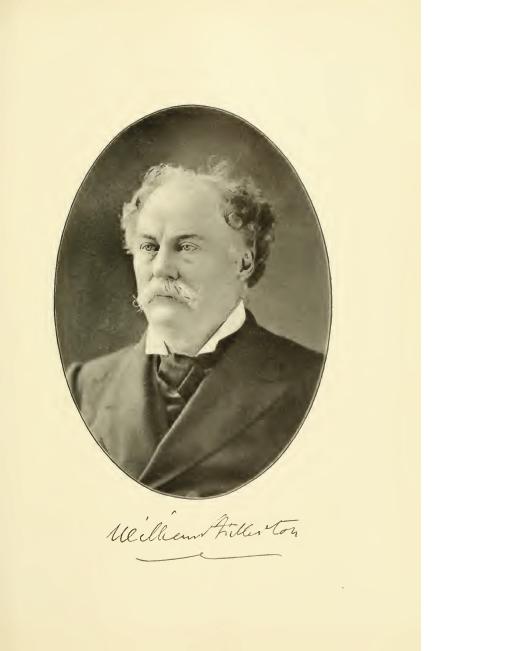
Looming large and masterful in the second group of lawyers, the friend and associate of Winfield, Gedney and Fullerton, who always valued highly his legal opinions and who frequently were influenced by them, though he distrusted his own ability to cope with them in court, comes the figure of John G. Wilkin. Twice elected county judge, the first time in 1851 and the second time in 1883, the interval between these elections was marked by the presence and the power of his persistent, aggressive, dominating, yet at the same time winning, gracious, picturesque personality. Born to command, the exciting times in which he lived, covering the most painful period of our national history, tended to develop his natural powers of leadership. He had a talent for friendship. His absolute devotion to his friends in times of adversity and defeat confirmed a leadership which, however, was constantly challenged by those who, because they could not control him, sought to crush him. He tasted many a time the bitter truth of Joubert's epigram that a man who by the same act creates a friend and an enemy plays a losing game, because revenge is a stronger principle than gratitude. But Judge Wilkin never knew that he had lost. He never accepted defeat. Like his old friend Halstead Sweet, who always began the day after election to prepare for the next election, the hour of Judge Wilkin's defeat was the most dangerous one for his enemies. In the case of such a character, deeply implanted with the love of power for its own sake as well as for its rewards, it was inevitable that it should pass through many periods of storm and trial. But if Judge Wilkin perforce bent to the storm he never quailed before it. The deepest trial of his life was one that he never foresaw. This was the failure in 1884 of the Middletown National Bank of which he was the attorney and nominally the vice-president. This failure, which was precipitated by the unsuspected acts of the president in giving up to a grain shipper who had acquired a hypnotic control over his mind, two hundred thousand dollars' worth of bills of lading without the payment of the drafts to which the bills of lading were attached, came to Judge Wilkin with all the force of a cruel and crushing accident. The spirit which no opposition could daunt recoiled for a moment under the stab of treachery. But only for a moment. Quickly recovering himself—though deeply pained and humiliated that such a disaster should come to an institution with which he was connected and especially to friends who might have been influenced by his name—the strength, the courage, the manliness of his royal character were never more strikingly exemplified, were never shown to greater advantage than at this very time. He never flinched from any obligation which this or any other relation, business, political, social or professional entailed upon him. His devotion to his clients, his determination to relieve them from the consequences of their own folly or imprudence was absolute and fearless, never taking any note of whether they could have avoided the plight they were in. If they were in trouble through no fault of their own, of course anybody would be glad to help them. But if they were in trouble through their own fault the very addition to their troubles which this reflection caused them only created a double claim upon Judge Wilkin's sympathies and energy. This is the spirit of the true lawyer, who, when appealed to in distress, has no more right to arrogate to himself the functions of court and jury and decree that his client must take his punishment than a physician has to refuse to cure a disease which his patient has incurred through a violation of the laws of health or morality.
Judge Wilkin's interest in the young men who grew up about him never deserted him. He welcomed their advances, he reciprocated their esteem, he enjoyed their companionship. His reminiscences of the older bar were lively and entertaining, his sense of humor keen, his exultation in life and all its activities throbbing and intense. He was not ready to go when the summons came and he made no hypocritical pretense of resignation to it. His was a life so full of promise and performance, passion and power, persuasiveness and preeminence that well may we exclaim with the poet:
"But what rich life—what energy and glow! Cordial to friend and chivalrous to foe! Concede all foibles harshness would reprove, And what choice attributes remain to love."
If James N. Pronk had given the thought and attention to his own interests that he gave to the interests of the public and to the development of his city he would have died wealthy and famous. In his early manhood when, as the only lawyer in Middletown, except Judge Wilkin, he acquired a large practice, he quickly accumulated a fortune sufficient to enable him to build and wholly pay for what still remains the finest store and office block in Middletown. He had nothing to do then, in order to a successful life, but to take his ease and accept such work as he might enjoy. But this was not his nature. He simply could not take his ease. He was possessed by the desire to originate and carry forward every public enterprise that might benefit the town. He lived plainly and simply, had no personal indulgences, spent nothing upon himself, denied himself every pleasure in order that he might give himself wholly to the service of the public. Every pleasure indeed except that of friends and books. He loved the society of congenial spirits and he dwelt much among books. But he was not selfish even in this. Instead of putting the books he bought into his own library he put them into a public library. He established the Lyceum, the fine circulating library of which gave to Middletown its first literary impetus. In connection with this he organized debates in which the ablest men of the community discussed every moral, social and political question of the day. These debates brought out the native talent and debating powers of many men who otherwise might have been silent, notable among them Israel O. Beattie, whose wide information, keen reasoning and sparkling wit are well remembered by those who know how naturally his distinguished son, Judge John J. Beattie, comes by these qualities.
Moreover, Mr. Pronk brought to the platform of the Lyceum the foremost intellects of his time—Henry Ward Beecher, Wendell Phillips, Horace Greeley, Edward H. Chapin, Theodore L. Cuyler and many others. I well remember when, a few years ago at Mohonk, Judge Beattie and I introduced ourselves to Dr. Cuyler and mentioned Middletown, he at once exclaimed: "How's my old friend Pronk?" though they had not met for forty years and he had not heard of his death.
The great mistake of Mr. Pronk's life was when he mortgaged his fine building, on the income of which he might easily have lived, in order to establish what became the passion and the idol of his life, Hillside Cemetery. But was it a mistake? Is it not success, after all, to live in lasting institutions? This cemetery is to-day the most beautiful resting place of the dead in Orange County. Over this sacred spot where he himself was laid, broods ever the sentiment inscribed over the tomb in St. Paul's Cathedral of Sir Christopher Wren, its architect—"If you would behold his monument look about you." (Si monumentum quaeris circumspice.)
Younger than any of the lawyers thus far considered, but entering upon his professional life while theirs was still active, and dying prematurely before the close of those careers with which his own was strictly contemporaneous, was William F. O'Neill. Perhaps no career was ever more of a surprise to the public and to the profession than that of Mr. O'Neill. From Winfield, Gedney and Fullerton with their distinguished lineage, family influence, county connections, social position, superior education, wide culture, courtly address and imposing presence much was expected and expectation was always satisfied. But here was a young man, who coming from Monticello to study law in Middletown with Judge Groo and entering upon his career without any of these advantages, boldly flung himself into the courts to try conclusions with the ablest of Orange County's advocates and began at once to captivate juries and to win his cases. Small in stature, unimpressive in appearance, deficient in culture, unformed in style, averse to application, trying his cases with very inadequate preparation, the lawyers were puzzled at first to know the secret of his immediate and enormous success at the bar. It lay, as they soon learned, in his faculty of making the jury think that he always happened to be on the right side. It was like the case of the juror who was descanting enthusiastically upon the magnificent, unrivaled powers of Brougham as an advocate. "But," said a bystander, "I see that you always give the verdict to Scarlett." "Scarlett, O yes," said the juror. "Well, you see Scarlett is always on the right side."
Mr. O'Neill was a natural verdict getter. He never went over the heads of the jury. He talked with them on their own plane of thought, sentiment and experience. Juries liked him personally. They felt interested in his success. I remember a trial in which he obtained a verdict of $2,000 against the village of Port Jervis for a woman who had fallen upon a defective sidewalk, but who did not appear to have been much injured. After the verdict, one of the jurors, Coe Goble, of Greenville, asked me what I thought of the verdict, to which I replied that they probably gave as much as the evidence justified, since she did not seem to be hurt much. "Well," said Goble, "it was this way—we thought the woman ought to have $1,000 and we thought Billy ought to have $1,000."
This familiar, affectionate reference to him as "Billy" indicates his place as a popular idol. Indeed the boyishness of his appearance and stature seemed to help him. People who saw him for the first time and who had not expected much from him, went out of the courtroom saying, "Did you see how little Billy O'Neill laid him out?"
Mr. O'Neill made negligence cases a specialty, and he became known far and wide as a negligence lawyer. Those who deprecate the rise of the negligence lawyer and the increase in negligence cases during the last forty years fail to make sufficient allowance for those changed conditions in the business of the world under which its various currents of capital and industry converge in one swollen stream of corporate enterprise and control. This tends, on the one hand, to encourage professional alertness in protecting the individual from corporate greed or neglect and, on the other hand, to create extreme devotion to corporate interests seeking the aid of professional skill and judgment. While the zeal of attorneys in behalf of corporations is rarely condemned it is somewhat the fashion to deprecate the negligence lawyer who takes the case of a client against a corporation upon a contingent fee. As the client is usually destitute it is difficult to see how his case is to be presented at all unless the attorney takes his chances upon success. As courts and juries must determine that the claim is a worthy one before it can succeed, the whole criterion seems to resolve itself into the position that worthy causes and clients should be deprived of a hearing. This feeling can be well understood on the part of corporations constantly compelled to pay damages on account of their carelessness, but the expression of it comes with poor grace from lawyers who receive large retainers and liberal fees from wealthy clients. It is at least as fair to a client to wait for compensation until the work is done as it is to insist on a retainer before any work at all is done. It is noticeable that the criticism upon the contingent fee at the conclusion of the case comes usually from the lawyer who expects a large fee at the beginning of the case.
It is simple truth and justice to say that human life and limb are safer to-day in Orange County because that sturdy fighter and dangerous opponent, William F. O'Neill, caring not whether his client was poor or rich, never allowed a case of negligence, once brought to his attention, to pass unchallenged and un-presented to a court of justice. And if his example and his influence have encouraged others, as indeed they have, in the same path of professional honor and public duty, then he, too, has not lived in vain.
The advent of Mr. O'Neill was coincident with the rise of a new generation of advocates who were confronted at first with a supremacy in the older bar which never could have been ousted by superior talent. It yielded at last to the only rivals it could not resist, decay and death, even as now the lawyers I am about to name will soon surrender to a still later generation their coveted place and prominence in the courts. I say about to name because, notwithstanding the considerations which suggest the omission of any reference to the living, it seems to be inartistic and it ought to be unnecessary to break off a narrative in the middle because some of its characters are still living. Caution and delicacy may indeed discourage, if not wholly forbid such un-stinted praise as may be properly bestowed upon a finished, rounded career, far removed from possible marring by some late and regrettable error. But, on the other hand, the opinion of his contemporaries by one who has freely mingled with them and frequently been pitted against them ought to be accurate, and, if accurate, then interesting and valuable. How we would all enjoy now Winfield's own characterization of Samuel J. Wilkin and William F. Sharpe, his partner; of Benjamin F. Duryea and Joseph W. Gott, the senior; of David F. Gedney and Stephen W. Fullerton. There are histories of our own times and this is one of them. Let me proceed then, diffidently, indeed, but still unflinchingly, to perform the task assigned to me before the subjects and the generation chiefly interested in them have all alike passed away; appealing to the judgment of those still able to decide, upon the candor, fairness and impartiality of the estimates. Indeed, if we wait until all contemporaries have passed away, who is left to determine whether the estimates are just?
William J. Groo is older than the lawyers who came to the bar in the late sixties, but he falls naturally in this group, because he came to Orange County in 1866, when he at once took a foremost place among its trial lawyers, his reputation having preceded him. He had already become leader of the bar of Sullivan County, where in 1856 he was elected its district attorney. This leadership was, in itself, evidence of great ability, for he had to win his spurs against such intellectual giants as General Niven, Judge Bush, Senator Low and James L. Stewart. It is not strange, then, that in him Winfield, Gedney and Fullerton found a match for all their powers and an equal in all the arts and accomplishment of the advocate. His perfect self-possession, his readiness in retort, his firm grasp of the points in controversy, his unfailing memory enabling him to marshal the testimony with crushing effect, his severe logic, his scathing enunciation, his intrepid spirit, and, above all, his moral earnestness combined to make him a dreaded and formidable adversary.
Judge Groo (for he acquired the title through his election as special county judge of Orange County in the year 1868) has carried this quality of moral earnestness, which so largely contributed to his success at the bar, into all the interests and relations of life. He early espoused the cause of temperance and has long been one of the most prominent members of the prohibition party, which at different times has bestowed upon him its complimentary but unsubstantial nomination for governor and judge of the Court of Appeals. He has always insisted that the absolute prohibition of the sale of liquors in the State of New York is not only a righteous and necessary reform, but an entirely feasible one. The remarkable strength of this movement in the South, followed as it has been by recent prohibitory legislation in several of the States, is one of the cheering rewards for unselfish, life-long devotion to principle which he is permitted to enjoy in his declining years. There is no doubt whatever that his sacrifices in behalf of this cause seriously interfered with his later eminence at the bar, for such eminence, even when once achieved, can be maintained only by sedulous, un-relaxed devotion; by steady, unqualified, undivided allegiance to that most exacting of all masters—the law.
This consecration to higher duties and nobler aims than those involved in mere professional success does not, however, constitute the sole reason why Judge Groo ceased to be a familiar and prominent figure in the courts of Orange County. This was due primarily to the removal of his office to New York, where he continued to win many notable legal triumphs until failing health compelled him to retire from active practice. His dignified and honorable repose is divided between his home in Middletown and his summer retreat in his native county of Sullivan at Grooville, so named in honor of one of his Revolutionary ancestors.
Though Lewis E. Carr has transferred his professional activities to a wider field, yet he acquired and developed in Orange County those transcendent qualities as a trial lawyer which have since, in nearly every county of the State, excited the astonishment of the bar and the admiration of the courts. From the very first he produced a profound impression upon Winfield, Gedney and Fullerton, with whom he engaged in vigorous, courageous contest at a time when it was difficult, indeed, to stand up against their powerful and almost irresistible influence. But it was when he came to be associated with them in some most important trials that they were even more impressed with his knowledge of fundamental principles, his wisdom in consultation, his mature and unerring judgment. Judge Gedney once remarked in a public tribute to Mr. Carr in his early life that it was possible to gain a far more accurate measurement of a lawyer's real ability through association with him than in opposition to him. He added that it was after enjoying such opportunities to become acquainted with Mr. Carr that he was the better able to express admiration of his surpassing talents as well as confidence in his brilliant future. Mr. Carr has since then enjoyed many honors and some supreme triumphs, but it is doubtful that any encomium has ever given him deeper pleasure than this now amply verified prediction by so competent an authority.
Nothing more surely attests the eminence which Mr. Carr has attained in the State than the recognition of it by the Assembly of the State of New York in inviting him to pronounce in its chamber the eulogy upon its beloved speaker, S. Frederick Nixon, upon the memorial occasion dignified by the attendance of the Governor, the Senate and the judges of the Court of Appeals. In that august presence Mr. Carr, defending the prerogatives of the State, said:
"However much we take pride in the nation's greatness and power we cannot shut our eyes to the fact that in some way, not easy to understand, the Federal Government of which we constitute no mean part, has been steadily encroaching upon the province of the State, and year by year the waves of its rising power are biting away some part of the shore on which our feet should rest. . . . Preservation of the rights of the State, as the framers of the Constitution intended and provided, is as essential to the safety, security and perpetuity of the sisterhood of States as the armies that carry and defend the flag and the navies that patrol the sea and protect our harbors against the dangers of attack. Our State is an empire in and of itself. Dominion over it and control of its priceless interests are all our own, save to the narrow extent they were expressly yielded to give needed strength and requisite power for the protection of the whole."
This extract gives some idea of the force and clearness which characterize all Mr. Carr's public utterances, but no extract can give any conception of his extraordinary powers as an advocate. The assembly indeed had already enjoyed an unusual opportunity to witness their display, for Mr. Carr was easily the most conspicuous and imposing figure in a public trial of great importance conducted before it, in which he made the principal and prevailing argument. But it is perhaps in the appellate courts that Mr. Carr's abilities find their most congenial field of exercise. There his ready command of all the resources of a trained, vigorous and richly stored intellect enables him to discuss every proposition propounded by the court, or advanced by his opponent, with a breadth of reasoning, a fertility of illustration, an array of authority which never fail to arouse admiration and delight. Indeed in every argument or trial in which he engages he organizes from the outset an intellectual duel. One who is not prepared to cope with him on equal terms, or with a cause so strong that it overcomes the intellectual handicap, will find it prudent not to enter the lists with him.
When Mr. Carr resided in Port Jervis before going to Albany, where he is the general counsel for the Delaware and Hudson Company and where he is called as senior counsel into many important cases not at all connected with railroad litigation, such was his devotion to his profession that it was only in exciting political campaigns that he could yield himself to the demands of the platform. But in Albany so insistent and repeated have been the demands upon him that he has been compelled to yield more frequently, until now his reputation is firmly established as a platform speaker of rare attractiveness. A fair example of his after-dinner oratory may be found, in fit company and enduring form, in the book entitled "Modern Eloquence," edited by Speaker Thomas B. Reed; it being a response, at the banquet of the State Bar Association, in which, with a fine blending of humor and seriousness, he commends that recent revival of an ancient custom which has done so much already to revive and promote the dignity of the bench—the wearing by judges of the robe of office.
The Orange County Bar has contributed to the bar of the State many gifted sons of whom it has been, indeed, proud—Ogden Hoffman, William H. Seward, William Fullerton and others—but it has never contributed one of whose character, ability and fame it is more justly and universally proud than it is of the character, ability and fame of Lewis E. Carr.
Henry Bacon is now, indisputably, the leader of the Orange County Bar. His career has been marked by a singleness of devotion to his profession rarely equaled. It was interrupted at one time by his service for five years in the House of Representatives, in the debates of which he bore an honorable part, impressing himself most favorably upon the leaders of his own party and those of the opposition. But his heart was all the time in the law, which he keenly enjoys as a science and reveres as a master. Returning to Goshen at the expiration of his congressional service he threw himself with renewed ardor into the practice of his profession to which he has since applied himself with undeviating purpose, persistence and power. The position of leadership now held by him is the natural, inevitable and only consistent result of high endeavor and unfaltering purpose united to intellectual gifts and legal qualifications of a superior order. Mr. Bacon has the legal instinct. He is not content until he has penetrated to the heart of the mystery. He revels in a perplexing and complicated case. He loves to unravel its intricacies and explore its mazes.
Mr. Bacon has in the past twenty years tried more cases than any lawyer in the county. He is retained in nearly every important trial. His manifest knowledge of every principle of the law involved in the case always commands the respect of the court and of the bar. In presenting his views to the jury he relies upon logic rather than eloquence, upon consecutive force of argument rather than the arts of persuasion. In the celebrated case of Magar vs. Hammond his opening address to the jury upon the second trial was a masterpiece of clear, coherent, cumulative and convincing statement.
Mr. Bacon is never more interested than when he is confronted with some grave question of constitutional construction. His attack upon the constitutionality of the drainage law, which was declared invalid by the Court of Appeals upon the arguments advanced by him, and in which he was opposed by the eminent advocate John G. Milburn, will be long remembered.
All lawyers are true to their clients, but Mr. Bacon's inflexibility in the assertion or defense of his client's rights is uncompromising to the last degree. It has even been said that, in his zeal and ardor, he is willing to trample upon all the ties of private friendship and all the claims of personal courtesy. But no client was ever heard to complain of this and, after all, the fact remains that no lawyer can serve his clients with absolute fidelity without, at times, wounding his neighbors and his friends. An honest lawyer can know no one but his client and him crucified. His standard of morality and manners, of duty and decorum is expressed in the sentiment, "Stop pursuing my client and I have no further quarrel with you." Mr. Bacon typifies this spirit and embodies this principle in his professional life more strikingly than any lawyer who has ever practiced at the bar of Orange County.
On the other hand Mr. Bacon's social gifts and graces are in the highest degree winning and attractive. One would never suspect, in the velvet palm that greets him at his threshold, the iron hand that crushed him but the day before in court. One would never recognize in the beaming, graceful host the hard-headed lawyer who, with stern, unflinching purpose, will destroy him to-morrow. United in marriage to the brilliant and accomplished daughter of one of America's purest and noblest statesmen, Samuel J. Randall, his home is a center of charming, courtly and gracious hospitality dispensed with lavish, refined and unaffected generosity. Mr. Bacon is the only lawyer in Orange County who has ever both recognized and fulfilled his social duty to his brethren of the bar by throwing open his home to them in receptions intended to bring the judges and the lawyers together in social relations. In olden days and in other counties this custom once prevailed. Possibly it is because Orange County labors under the misfortune of being a half-shire county—a calamity to any bar for the reason, besides many others, that it effectually destroys the possibility of having a suitable court house—that a spirit of comradeship among its lawyers has never grown up. It is noticeable that in counties where the legal interests converge in one central county seat the brotherly spirit is more active. But, however that may be, Mr. Bacon is entitled to the grateful acknowledgment of his efforts to suspend the asperities of professional conflict in the solvent of social converse. In this, as in every other respect, his leadership of the bar is supreme.
Walter C. Anthony preceded Mr. Bacon a few months in their student life with Judge Gedney at Goshen. No one has painted so perfect and beautiful a picture as he of those halcyon days in that country law office. In his memorial tribute he said:
"But of all the delightful hours spent with Judge Gedney I recall, with most pleasure, our afternoon talks at the office. As the day was wearing late and he began to make preparations to leave, he usually seemed to want to draw me into conversation. Frequently it took the form of an examination as to those branches of the law which I was then reading upon. Occasionally he would draw me into the discussion of some legal question, in which he would maintain an opinion opposed to that which I expressed, and in which after combating me, with all his ingenuity and acuteness and frequently discomfiting me, he would in the end explain the whole question and point out the errors of either side of the argument. At times some event of the day's work would be used as a foundation for an explanation of the legal questions involved. In whatever way the conversation was begun his evident purpose was that it should be profitable to me in connection with the studies I was pursuing; and when that end had been accomplished our conversation would wander on 'at its own sweet will,' touching on many and varied themes which all developed new beauties and suggestiveness beneath the light of his varied learning and fertile fancy. Is it to be wondered at that I recall them with a chastened delight? Judge Gedney was then in the very prime of his remarkable powers. His mind was a storehouse of varied and interesting knowledge, and his conversational and descriptive skill were not only very great, but quite unique.
"I shall always regard it as one of the most fortunate circumstances of my life that 1 was brought into such intimate association with David F. Gedney. And as my life passes on into the 'sere and yellow leaf and I sit among the lengthening shadows of its afternoon looking back upon the friends and friendships of my youth, I shall very, very often recall Judge Gedney—the slender, erect figure; the strongly marked face; the scant but expressive gesture; the wonderfully melodious and well modulated voice; the words so deftly chosen from a vocabulary surpassingly rich and full, that they always reminded me of the sentence in holy writ: 'words fitly spoken are like apples of gold in pictures of silver;' and above all I shall recall his kind and generous deeds, the fit exponents of a loving, loyal heart; and, thus recalling him, I shall often in the future exclaim—as I have already in the past—in no empty phrase and with no exaggeration of speech:
"'Oh for the touch of a vanished hand And the sound of a voice that is still!'"
This extract is made not solely to embellish the portrait of Judge Gedney, the man—though I indeed left it unfinished intending thus to invoke Mr. Anthony's aid in completing it—but also to illustrate Mr. Anthony's own cast of mind, character and literary style. Mr. Anthony is by nature and inclination, a scholar and a recluse. If he were rich he would shut up his office and browse in his library; but not selfishly, for no one has been more generous than he in responding to demands for public and literary addresses. I heard him once, before the Chautauqua Assembly, give a purely extemporaneous lecture upon wit and humor which for range of reading, wealth of information, critical analysis and brilliant characterization has never been surpassed by our most famous lecturers; and yet it was delivered with a modesty, sweetness and simplicity which seemed to deprecate the suggestion that it was anything out of the ordinary.
His memory of Judge Gedney unconsciously reveals how deep was the impression made in youth upon a mind singularly susceptible to the charms and graces of literature and upon a nature no less susceptible to the beauties and joys of friendship. As in the case of all such natures, the books must be choice and the friends fit but few. Not, indeed, that Mr. Anthony is deficient in the elements of personal popularity. His election twice to the office of district attorney of the county, the duties of which he most ably discharged, attests his popular strength. But it is undeniable that his predilection for the society of the great and wise of every age, to be found in his well-filled library, has tended more and more to withdraw him from the society of the shallow, the superficial, the frivolous. He stands to-day a lonely but alluring figure, on whose heights those who choose to follow may find in him the charming companion, the accomplished scholar, the earnest inquirer, the inspiring instructor.
Let no captious reader take cynical exception to the note of honest praise sounded in these memoirs. Let it be remembered that, out of hundreds of lawyers, only a few of those entitled to admiration and praise have been selected for extended mention. While personal memoirs should be accurate they need not be exhaustive. In those rare instances in which conspicuous talent has yielded to temptation and, in weakness or dishonor, forfeited public respect, it has seemed to be the truest kindness to pass over it in silence. Indeed, as one surveys the procession down half a century of those who have become notable in the law he is profoundly impressed that not by infirm, invertebrate character have they gained their prominence but only by firm resolution, high endeavor, moral purpose and intellectual power. One is led to wonder not that there should be so few entitled to praise, but that there should be so many. Impartial criticism will demand of the contemporary chronicler not that his praise be stinted, but only that it be discriminating.
Indeed only the most un-stinted, unqualified praise would be either just or appropriate in summoning from that stately procession of great and honored lawyers the lofty, imposing figure of Judge John J. Beattie, who for eighteen years—1889 to 1907—presided over the County Court of Orange County, having been elected for three successive terms. His dignity of presence, weight of character and wealth of learning amply sustained the traditions of a bench once occupied by Gedney and Fullerton. Many of Judge Beattie's decisions have been in cases of far-reaching public importance—notably the case involving the construction of the eight-hour law in which Judge Beattie decided that the provision prohibiting a contractor from allowing his men to work over eight hours a day on a public improvement was unconstitutional and void. The Appellate Division reversed but the Court of Appeals affirmed Judge Beattie in an opinion sustaining every position which Judge Beattie had taken in his opinion.
Judge Beattie is grounded in the principles of the law. In all that he does he is thorough, going to the very bottom of the case whether as to the law or the facts. This quality was strikingly brought out in the case tried by him for eight days before Judge Maddox involving the liability of a railroad company for the damage resulting from the explosion of a locomotive boiler. There was absolutely nothing about a boiler that Judge Beattie did not understand. One would have supposed that he had been brought up in boiler works and had then run an engine on the road. He succeeded in dividing the jury and Judge Maddox said after the trial that he had never seen a finer display of sheer intellectuality than Judge Beattie's management of the defense.
He is an omnivorous reader and his marvelous memory retains all that he ever read. His conversation is an intellectual feast, for he pours out a never-failing stream of literary anecdote, historic incident and choice passages from the classics of every age, all ready to gush forth from his well-stored memory as the conversation glances from one subject to another.
Judge Beattie carries into his retirement from the County Court the gratitude and respect of the bar and of the public for the fine example of judicial dignity and learning which he has given for eighteen years—an example which may well be followed not only by all who succeed him in the County Court, but by all who administer in the same court houses and from the same bench the wider jurisdiction of the Supreme Court.
Having considered several leaders of the bar who came into practice in the late sixties, but who, like their predecessors, Winfield, Gedney and Fullerton, were never invited to the bench of the Supreme Court, we come now naturally to that group of their early associates who have achieved judicial honors, those honors which have always held a glittering fascination for the bar whether in the wearing or the recounting of them. There never have been enough judgeships to go around and the long tenure now established wholly excludes rotation among the leaders of the bar in respect to judicial position. Hence the prospect that any member of the bar, however able, will ever attain judicial honors is so remote and dependent upon so many unforeseen conditions that when they do descend and repose upon the modest brow of some highly favored but always unenvied brother, the circumstances combining to produce such a fortuitous selection possess all the charm of romance and all the fascination of a fairy tale. While it is true that many unforeseen conditions must always unite in determining the destination of this coveted prize, there still seems to be one inexorable condition to which all Orange County aspirants must conform. They must not reside in the interior of the county. They must practice in the old, historic city of Newburgh—a city which has always taken a deep, honorable, patriotic pride in its Revolutionary associations and in the land they represent, but which has no more pride in, no more sense of connection with, Orange County as a whole than West Point has. Its bar has always been distinguished for great ability and high character.
The Supreme Court of the State of New York, the wide jurisdiction of which extends from Long Island to the St. Lawrence and the Lakes, was never more fortunate than in the acquisition to its bench from the Newburgh bar of the two Browns, father and son—John W. Brown and Charles F. Brown—the elder having ascended the bench in 1850 and the younger in 1883.
It is Charles F. Brown who belongs to the period we are now considering. Graduated from Yale College in 1866, admitted to practice in 1868, elected district attorney in 1874 and county judge in 1877, he resigned in 1882 the position of county judge to assume the duties of supreme court judge.
Mr. Winfield had always ardently desired a position upon the bench of the Supreme Court. It was one of the bitterest disappointments of his life that he so narrowly missed this object of his ambition in 1875, when Judge Dykman was elected. In that year the widespread revolt among the bar and public against the re-election of that most unpopular official, Judge Tappen, who had received the regular democratic nomination, made it evident that any independent democratic candidate who should receive the endorsement of the republican convention would be elected. Mr. Winfield's hopes of receiving this endorsement rose high and were on the point of being realized when an unexpected influence intervened to dash them. General Benjamin F. Tracy, who had a longstanding personal feud with William Fullerton, the brother of Stephen W. Fullerton, suddenly came to the conclusion that he did not want upon the bench an intimate friend of the Fullertons. He therefore threw his influence in favor of Jackson O. Dykman, then a prominent democratic lawyer of Westchester County, who thus received the nomination. His election by a large democratic and republican vote confirmed the prediction that such a coalition would easily accomplish the defeat of Judge Tappen. Orange County, notwithstanding that it shared Mr. Winfield's disappointment, followed his generous lead in supporting Judge Dykman and gave him a majority of 10,000. No one labored for Mr. Winfield's nomination at this time more earnestly than Charles F. Brown himself.
In 1882 Mr. Winfield's hopes of obtaining a nomination revived, but Charles F. Brown, who cherished the natural and honorable ambition to emulate his father's noble example and distinguished career as a jurist, felt that he ought not to stand aside again. He of course secured the delegate from his own assembly district without opposition. Overcoming the opposition offered by Mr. Winfield's friends in the second assembly district, he secured its delegate also. By thus presenting a united front Orange County was able to successfully assert its claims in the judicial convention and to secure for Judge Brown the nomination that was followed by his election.
No one was more gratified by Judge Brown's election than Mr. Winfield himself, especially as it involved the defeat of General Tracy, the very man who, seven years before, had snatched from him the same prize when almost within his grasp. When General Tracy, of Kings County, was nominated by the republican convention against Judge Brown, of Orange County, he confidently expected to defeat Judge Brown, whose greatness was then unknown to the district at large, through the promised support of many large Brooklyn interests. But all his calculations were confounded by a wholly unexpected event. This was the cataclysm in which Grover Cleveland, with whom Judge Brown was running, carried the State by the enormous, unprecedented majority of 200,000.
Thus was Orange County enabled to contribute to the bench of the Supreme Court a jurist who, in the fourteen years of his incumbency, made a profound, a lasting impression upon the jurisprudence not only of his State but of his country.
After serving for six years with great acceptance in the trial and special terms, he was, upon the formation of the second division of the Court of Appeals, promoted to its bench. His services during the four years' existence of that court were of the highest value, his luminous opinions being still quoted and followed in every State in the Union. Some of the litigations which came before him were in the highest degree difficult and complicated; one of the most important being the case involving the construction of the Tilden will, in which the opinion of Judge Brown, declaring the trusts invalid, was adopted by the court. His opinions rendered in this court constitute an imperishable monument to his learning and ability.
Judge Brown's manner upon the bench, at trial and special term, was a happy mingling of simplicity and dignity. His most noticeable personal trait was his entire lack of self-consciousness. He never thought about himself or about the impression which he might be making upon the bar or the public. His mind was wholly upon the case and upon the principles involved in it. He was considerate of the feelings of counsel and rarely rebuked them for imperfect presentation of their views. When they wandered from the point he thought about the case and when they came back to the case he followed them again. It is simply the truth of history to say that the members of the bar, not only of Orange County but of the entire State, do not expect to see in this generation a nearer approach to the ideal judge than they were permitted to behold during the fourteen years of Judge Brown's incumbency.
There was one marked characteristic of Judge Brown while upon the bench which deserves more than a passing mention. After a case was submitted to him and while it was still under consideration he was never afraid to enter upon a discussion of the principles involved in it, with either of the counsel he might happen to meet, if he felt that such a discussion might prove profitable. In this respect he differed from some of his colleagues who were perfectly aghast at the thought of counsel conversing with them upon any phase of a pending case in the absence of opposing counsel. This of course was due to their high sense of the importance of preserving not only real impartiality but the strictest appearance of impartiality. But there was something in Judge Brown's character which did not need the protection of such a rule; something in the very atmosphere which he threw out; something in the impression which he gave of being simply a thinking, working, impersonal, intellectual machine, which left no room for misunderstanding on the part of any lawyer thus admitted to a share in his deliberations and which left his judicial independence and impartiality absolutely untouched. This capacity at once constitutes the highest test and the consummate type of the strictly judicial temperament. To this test Judge Brown easily responded and of this type he was the perfect embodiment.
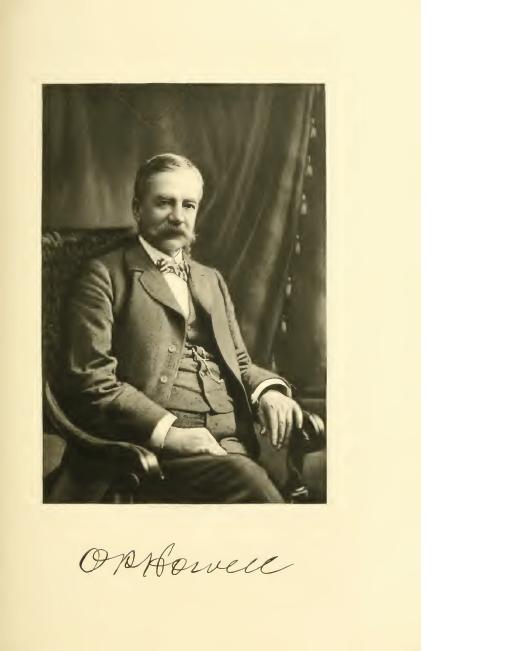
No one can be accused of sycophancy in awarding to a judge long since retired from the bench his merited meed of praise and gratitude for distinguished public services. Nor even in the case of judges still occupying the bench can such a charge fairly lie when the faithful historian surveying and reviewing, from the serene heights of retirement and rejection, the stirring scenes in which once he bore an active part, is now as indifferent to, as independent of, the opinions of judges as they are of his. It would indeed be far more entertaining if there could be contributed to this volume the opinions which the judges hold of each other, thrown into literary form instead of merely being promulgated from the bench or disseminated by the press. When, upon the occasion of Queen Victoria's jubilee, the judges met in London to prepare an address to Her Majesty, the proposed draught submitted to them began with the words, "Conscious as we are of our shortcomings," whereupon Lord Bowen gravely suggested, as an amendment, "Conscious as we are of each other's shortcomings." Human nature is very much the same here and in England; very much the same, in its manifestations, among judges and among lawyers.
Judge William D. Dickey ascended the bench in 1896, one year before Judge Brown's retirement from it. The second judicial district, of which Orange County then formed a part, was for many years democratic and it was not unusual for the republican conventions to endorse the democratic nominations. But in 1895 there seemed to be such a fair prospect for success that the republicans put forward a full ticket of judicial nominees, including Judge Dickey, who was elected, though one of his associates upon the ticket, Hugo Hirsch, of Brooklyn, was defeated by Judge Martin J. Keogh, whose court ought to be attended every year by visiting delegations of judges from all parts of the State as a training school and object lesson, illustrating how a busy judge may at all times, in all circumstances and under all provocations still be the model, faultless, consummate gentleman.
Although Judge Dickey removed from Newburgh to Brooklyn soon after his election and is counted as a judge of the second judicial district, while Orange County is now a part of the ninth judicial district, still Orange County is where he was born; where his professional life was passed; where he rose to prominence and power, and where he lived when he was elevated to the bench. He exhibited even in boyhood the qualities which have marked his public career, his patriotic ardor inspiring him to enlist in the Union Army when only seventeen years of age; his promotion being so rapid that before he was twenty years old he had been brevetted colonel in recognition of conspicuous gallantry.
Admitted to practice soon after the close of the Civil War he threw himself with characteristic energy not merely into the legal contests which arose in his city, but into all the public and political controversies of the day. Ardent in his affections and implacable in his hatreds, loyal to his friends and relentless to his enemies, he soon acquired an extensive influence and attracted to himself a devoted following, both personal and political.
The public spirit and civic pride shown by Judge Dickey in promoting every enterprise tending to beautify or benefit his native city was generally recognized and his election to the constitutional convention of 1893 was a distinct turning point in his career. His ability, vigilance, authority, force of character and readiness in debate, soon gave him a dominant influence in the deliberations of that highly intellectual body—an influence aided by his commanding presence and resonant voice, advantages not without value in that most difficult of all auditoriums, the assembly chamber in the Capitol at Albany. Among the many far-reaching reforms which he proposed or advocated in the convention he undoubtedly looks back with special satisfaction upon the provision incorporated, with his active support, in the new constitution prohibiting any legislative limitation upon the amount of recovery for death occasioned by negligence, since he has had abundant occasion in his experience upon the bench to verify his convictions of the justice, necessity and public policy of this amendment.
Judge Dickey displays upon the bench the same sterling qualities which marked his active professional career. Among them none is more pronounced than his remembrance of and kindness to old and valued friends. The exercise by a judge of the patronage necessarily pertaining to his office has always been a trying question for him. But since one lawyer has no natural, superior claim over any other lawyer upon the fruits of patronage, there seems to be no reason why a judge should not be permitted to gratify his feelings of friendship and esteem in the appointment of referees whom he knows to be not only estimable but entirely capable. No one questioned this sentiment or principle of conduct when Judge Brown appointed his old friend and partner, Mr. Cassedy referee to sell the West Shore railroad, or when he appointed his old friend, William Harvey Clark, of Minisink, receiver of the Port Jervis and Monticello railroad; Mr. Clark, by the way, proving to be so capable a receiver that he not only paid its debts but surprised the stockholders by handing over to them a large amount of money.
But in the distribution of patronage Judge Dickey has not only been loyal to the claims of private friendship; he has nobly used it in the recognition of the debt which the public owes to distinguished public services and sacrifices. I know one able lawyer whose physical infirmities disqualify him from active practice at the bar, but whose eye is still as clear, whose judgment as alert as when, from the heights of Gettysburg, he directed the Federal forces on the first day of the battle and saved the fortunes of the day till they could be turned and redeemed upon the morrow. In appointing this old hero to important service in various public condemnation proceedings, in which his sound judgment and wide experience have been utilized to the public benefit. Judge Dickey has entitled himself to the gratitude of all who believe that conspicuous worth and patriotic service should not be forgotten and neglected by judges any more than by governors or presidents. And personal gratitude is no less due to Judge Dickey from all those whose appointment by him to positions of trust and responsibility has enabled them to justify his own unerring judgment as to their fitness and capacity.
It was in the autumn of 1902 that Judge Dickey was called upon to pass through the first deep sorrow of his life in the loss of his only son, Frank R. Dickey, cut off in his young manhood at the very beginning of his promising career at the bar. Born and educated in Newburgh he had followed his father to Brooklyn, where he established himself in practice and where he soon won a large and growing clientage. His solid abilities; his pure, lofty character; his open, sincere nature; his refined, engaging manners; his gentle, amiable disposition united to create a personality of singular charm and interest. Troops of new friends, attracted to him by the graces of a sweet and beautiful character, joined with those who had always known and loved him in heartfelt sorrow over the untimely grave of Frank R. Dickey.
Judge Dickey's wide experience in affairs, with his knowledge of human nature, its secret springs and devious ways, enables him to arrive at decisions always prompt and usually just. His influence upon the bench has always been powerfully exerted in support of the domestic virtues and social purity. Gambling, which is fast becoming one of the most threatening of our national dangers, as it is already one of the most degrading and corrupting of our social vices, whether practiced by men in policy shops, or by women at bridge parties, finds in him, whenever it comes within his judicial purview, neither countenance nor toleration.
There is one trait of Judge Dickey upon the bench which calls for special mention. When, in an action which has been tried and decided by him, without a jury, the attorneys come before him for settlement of the case upon appeal, he does not seek to emasculate the appeal, as some judges in their weakness and vanity do, by striking out the exceptions designed to bring up sharply for review the points of difference between him and the defeated counsel. He always gives the unsuccessful and dissatisfied litigant a fair opportunity to review every issuable ruling and to get a reversal if he can. He is not hyper-sensitive upon the subject of being sustained by the appellate courts. Indeed, his mental attitude toward them is doubtless reflected in the remark once made by the famous judge, Lord Young, when he was told that one of his decisions had been affirmed upon appeal by the House of Lords, "Well, I may have been right, notwithstanding," said Lord Young.
As Judge Dickey has never been assigned to the Appellate Division and much prefers the close contact with the bar and with vital human interests which is enjoyed by judges constantly engaged in trial term and special term, he has never felt called upon to accompany his decisions with opinions of any length. When he does write, his opinions are clear, terse and sententious. Indeed there is very little satisfaction for a judge at special term in writing elaborate opinions, only to find them arrested and archived in that mere vestibule of fame, that hall of unmerited but predestined and pathetic oblivion known as the Miscellaneous Reports.
But the waters of a cruel, though often kindly, oblivion can never wholly submerge the fine superstructure of judicial fame reared by Judge Michael H. Hirschberg upon a foundation of singularly exclusive, concentrated, severe, professional, intellectual and literary training. Born and reared in Newburgh, but coming to practice at the bar without those intermediate college advantages enjoyed by his life-long friend and associate, Judge Brown, whom he succeeded upon the bench, he has, nevertheless, strikingly verified the saying of Carlyle that, after all, books are the best university. During all the years of his professional activity in Orange County he sedulously, patiently wrought out, cultivated and perfected a crisp, nervous, virile, epigrammatic, yet withal, polished, mellifluous, ornate and opulent English style which constituted an admirable discipline and equipment for the very field of juristic service in which he was later destined to engage.
Elected in 1890 to a seat upon the bench, he was, after a brief period of service at trial and special terms, assigned to the Appellate Division, and later, upon the retirement of Judge Goodrich, he was appointed the presiding justice of the court. This was the opportunity for which his slumbering, but not unready, accomplishments long had waited. Then ensued the disclosure to his judicial associates and to the bar of the State of those attainments as a writer and as a jurist, which had long been known to the bench and bar of his county and his district. While comparisons are often more dangerous than odious his career almost inevitably reminds one of that literary lawyer, known then chiefly for his writing of "The Blue and the Grey," who was summoned by his friend, Governor Cornell, from his scholarly seclusion at Ithaca to take a seat upon the bench of the Court of Appeals; and who thereupon enriched the literature of the law with a body of opinions, unrivaled for English style and judicial learning, which have entranced and instructed two generations of lawyers. Equally true is it of Judge Hirschberg that already has he permanently enriched the Reports of the Appellate Division with a series of opinions which, for lucidity of statement, force of reasoning, felicity of style, and perfect command of the literary implements adapted to the expression of exact distinctions or delicate discriminations, stand unrivaled in the pages of these imposing volumes, which will long perpetuate his fame as a judicial writer.
One characteristic of Judge Hirschberg during his brief service in holding trial terms should be mentioned, because no ponderous tomes can reveal character. Contemporary history must transfix for posterity the personal traits and manners of a judge. When Judge Hirschberg was elected even his intimate friends supposed, from long familiarity with his extraordinary quickness of mental action, his scintillations of repartee in social life and his swift rejoinder at the bar, that he would show some impatience with the slowness, dullness and density due to imperfect preparation or inherent ineptitude, which every judge is called upon, more or less frequently, to endure; that he would find it difficult to restrain the bubbling of wit and sarcasm at the expense of ignorance or incapacity. But on the contrary, he proved to be the most gentle, indulgent and long-suffering of judges. The wearisome lawyers might drone on, he made no effort to take the trial of the case out of their hands and try it himself, he could try it better than they, but he felt it his duty to let them try it in their own way. No one could tell what he was thinking of them or their methods. He might be a maelstrom of seething disgust or amusement within; but he wore the impassive, inscrutable, uncommunicative exterior of a sphinx. Under the responsibility of his great office he unconsciously developed and en-grafted that quality which Judge Jenks in his impressive eulogy upon Judge Wilmot M. Smith declared to be almost the greatest attribute of a judge—infinite patience.
And since the entire bar of Orange County regarded with peculiar affection the character of Judge Smith and now holds in deepest veneration his sacred memory, it is not amiss to incorporate in this record that expression of its feelings by Judge Hirschberg himself, which sheds a reflected light upon his own standards of duty and with which this attempt to limn his portrait for succeeding generations may fitly close:
"Judge Smith was truly an ideal jurist, profound as a lawyer, estimable as a citizen, lovable as a man. The mortal part of each life ends necessarily in nothing but an insignificant contribution to an immense volume of pathetic dust, but the spiritual sense is satisfied when, as in this instance, the ashes are sanctified with the memory of a noble life devoted to duty and glorified with the love of God, of justice and of humanity."
And now, having sought to project upon the canvas a faithful portraiture of the judges who were drawn into the public service from the Orange County bar, within the period embraced in these personal recollections, it is convenient and fitting at this time to briefly outline the conditions of practice which prevailed in Orange County at the time they came to the bar—Judge Dickey in 1866 and Judges Brown and Hirschberg in 1868—when Winfield, Gedney and Fullerton were at the zenith of their powers and their reputation. It is a great mistake to assume that the older members of the bar were satisfied with these conditions. On the contrary, they bitterly chafed under them. The number of judges was wholly inadequate to the needs of the district, as will readily be seen when it is considered that twenty-five judges are now required to serve the same territory then covered by only four judges upon whom devolved all the motions, trials and appeals arising and heard within it. The ever-increasing volume of business created by the rapid growth of Brooklyn made it impossible for the judges to hold a trial term—then called the "circuit term"—longer than five days. The judges were indeed upon a circuit, for they were always under assignment to open court in some other county on the following Monday. Every Thursday afternoon or Friday morning the judge marked off the calendar every case which could not be tried in time to enable him to leave on Friday afternoon in order to hold his Saturday special term. This arbitrary, inexorable limitation of time, which was equivalent to shutting out many cases that had been carefully prepared, was most cruel to the younger members of the bar whose sole chance of either emolument or distinction lay in getting their cases tried; while to say that these conditions were satisfactory to the older members of the bar of that period would violate the truth of history. They always unduly and often indecently accelerated the trial of important cases in which advocates like Winfield and Gedney were spurred to an undignified celerity which was not merely distasteful but detestable to them. Both Winfield and Gedney were tenacious of dignity, deliberation and decorum in the administration of justice. They disliked extremely to be told. "Go on with the case, gentlemen," or to be asked, "What are you waiting for?" They could not share the glee manifested by the judge when he succeeded in having three juries "out" at one time, and boasted to the justices of Sessions at his side how he was "expediting the business." They, too, wanted the business advanced, but they wanted it done with due regard to the traditions and the usages of the bar. Winfield was especially the distinct representative in this county of the old Websterian school of advocates. He believed earnestly in the maintenance of all that form and dignity, of all those ancient usages and proprieties which once uniformly marked the relations to each other of the bench and bar. When in 1874 I met him in Albany to argue my first case in the Court of Appeals, then presided over by that most urbane jurist, Judge Sanford E. Church, Mr. Winfield carefully attired himself on the morning of the argument in a full-dress black suit with its broad expanse of shirt front, now used only for evening wear, but regarded at that time as a suitable uniform for appearance before the highest court in the State; just as, at a slightly earlier period, Webster and Pinckney appeared before the Supreme Court at Washington in blue coat and brass buttons, with buff waistcoat. How different from the present when able lawyers in short sack coats of gray, looking like commercial travelers, hasten from the Albany station to the two o'clock sessions of the court without stopping to even remove the dust of travel before launching into their keen and brilliant arguments.
When Judge Joseph F. Barnard, of Poughkeepsie, upon the transfer of judge Lott to the Court of Appeals in 1869, became the presiding judge of the old general term, he became also the presiding genius, the dominating, all-pervading spirit of the second judicial district. He was opposed to any increase in the number of judges. With his insatiable voracity for work and his preternatural velocity of thought, enabling him to accomplish as much alone as the other three judges combined, he thought that four judges ought to be fully able to keep up with all the business of the district; as indeed they were if the administration of justice, involving the most profound issues of human life and society, had been merely a matter of getting the business out of the way, as on a wharf, to make room for the next cargo.
The judges, fresh from their several circuit terms, met in the general term and proceeded to hear appeals from the decisions made by themselves at special and trial term. It was, indeed, an impressive, inspiring and solemn spectacle to see Judge Tappen and Judge Gilbert gravely considering whether they would reverse Judge Barnard; and in the next case Judge Tappen and Judge Barnard sitting upon Judge Gilbert. Of course the tacit challenge, "You reverse me, I'll reverse you," pervaded all the proceedings. Nothing else could be expected of human nature. It has never been pretended that the State supplies lawyers with any superior, exclusive brand of human nature when it gives them their diploma, and judges are simply lawyers upon the bench. That an appellate system should ever have been devised so exquisitely adapted to defeat its object and destroy respect for its operations was not, of course, the fault of the judges of the second district.
When the general term sat in Poughkeepsie, as it did every May, to accommodate Judge Barnard, the business was disposed of even more rapidly than in Brooklyn, Judge Barnard greeting with delight any lawyers who would appear at eight o'clock in the morning, both ready to argue their appeal in advance of the regular session. The judges constantly interrupted the attorneys to assure them that they could not possibly remember what they said but that they would read their briefs. It was of course true that no human mind could retain or even grasp the arguments discharged at the court as from a catapult by attorneys gasping for breath in the mad race against time.
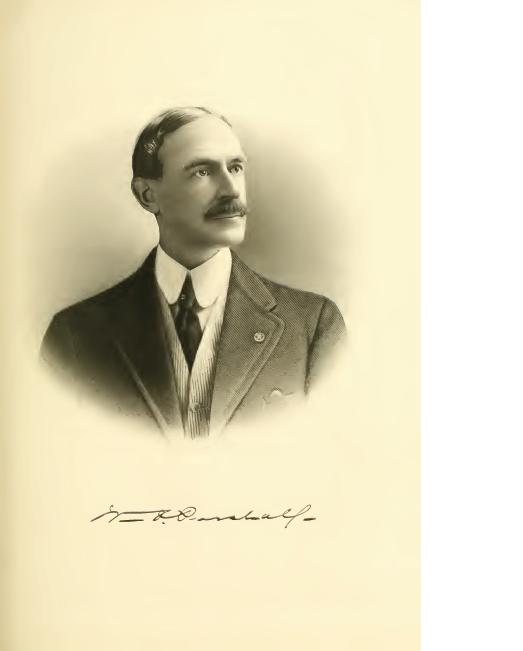
Some amelioration of the intolerable conditions under which circuit terms were held in Newburgh and Goshen was effected through the election in 1870 of Judge Calvin E. Pratt, whose conservatism, affability and dignity won for him universal respect. This improvement was extended by the election in 1880 of Judge Edgar M. Cullen, whose high sense of absolute fairness to all suitors alike led him to devote as much time and thought to a case involving a trifling amount as to one involving large interests; though even he was merciless in his infliction of night sessions upon the attorneys during the hot June term at Goshen, a course to which he felt impelled because of his inability to remain longer than one week and his desire to crowd as much work as possible into that wholly inadequate time.