Volume 1 / Part 500 — CHAPTER XXXIX. ELIZABETH.
Reading edition
1562.
After the commencement of the religious wars in France, which rendered that flourishing kingdom, during the course of near forty years, a scene of horror and devastation, the great rival powers in Europe were Spain and England; and it was not long before an animosity, first political, then personal, broke out between the sovereigns of these countries.
Philip II. of Spain, though he reached not any enlarged views of policy, was endowed with great industry and sagacity, a remarkable caution in his enterprises, an unusual foresight in all his measures; and as he was ever cool, and seemingly unmoved by passion, and possessed neither talents nor inclination for war, both his subjects and his neighbors had reason to expect justice, happiness, and tranquillity from his administration. But prejudices had on him as pernicious effects as ever passion had on any other monarch; and the spirit of bigotry and tyranny by which he was actuated, with the fraudulent maxims which governed his counsels, excited the most violent agitation among his own people, engaged him in acts of the most enormous cruelty, and threw all Europe into combustion.
After Philip had concluded peace at Chateau-Cambresis and had remained some time in the Netherlands, in order to settle the affairs of that country, he embarked for Spain; and as the gravity of that nation, with their respectful obedience to their prince, had appeared more agreeable to his humor than the homely, familiar manners and the pertinacious liberty of the Flemings, it was expected that he would for the future reside altogether at Madrid, and would govern all his extensive dominions by Spanish ministers and Spanish counsels. Having met with a violent tempest on his voyage, he no sooner arrived in harbor than he fell on his knees; and after giving thanks for his deliverance, he vowed that his life, which was thus providentially saved, should thenceforth be entirely devoted to the extirpation of heresy.[*] His subsequent conduct corresponded to these professions. Finding that the new doctrines had penetrated into Spain, he let loose the rage of persecution against all who professed them, or were suspected of adhering to them; and by his violence he gave new edge even to the usual cruelty of priests and inquisitors. He threw into prison Constantine Ponce, who had been confessor to his father, the emperor Charles; who had attended him during his retreat; and in whose arms that great monarch had terminated his life: and after this ecclesiastic died in confinement, he still ordered him to be tried and condemned for heresy, and his statue to be committed to the flames. He even deliberated whether he should not exercise like severity against the memory of his father, who was suspected, during his later years, to have indulged a propensity towards the Lutheran principles: in his unrelenting zeal for orthodoxy, he spared neither age, sex, nor condition: he was present, with an inflexible countenance, at the most barbarous executions: he issued rigorous orders for the prosecution of heretics in Spain, Italy, the Indies, and the Low Countries: and having founded his determined tyranny on maxims of civil policy, as well as on principles of religion, he made it apparent to all his subjects, that there was no method, except the most entire compliance or most obstinate resistance, to escape or elude the severity of his vengeance.
* Thuanns, lib. xxiii. cap. 14.
During that extreme animosity which prevailed between the adherents of the opposite religions, the civil magistrate, who found it difficult, if not impossible, for the same laws to govern such enraged adversaries, was naturally led, by specious rules of prudence, in embracing one party, to declare war against the other, and to exterminate by fire and sword those bigots who, from abhorrence of his religion, had proceeded to an opposition of his power and to a hatred of his person. If any prince possessed such enlarged views as to foresee, that a mutual toleration would in time abate the fury of religious prejudices, he yet met with difficulties in reducing this principle to practice; and might deem the malady too violent to await a remedy, which, though certain, must necessarily be slow in its operation. But Philip, though a profound hypocrite, and extremely governed by self-interest seems also to have been himself actuated by an imperious bigotry; and as he employed great reflection in all his conduct, he could easily palliate the gratification of his natural temper under the color of wisdom, and find in this system no less advantage to his foreign than his domestic politics. By placing himself at the head of the Catholic party, he converted the zealots of the ancient faith into partisans of Spanish greatness; and by employing the powerful allurement of religion, he seduced every where the subjects from that allegiance which they owed to their native sovereign.
The course of events, guiding and concurring with choice, had placed Elizabeth in a situation diametrically opposite; and had raised her to be the glory, the bulwark, and the support of the numerous, though still persecuted Protestants, throughout Europe. More moderate in her temper than Philip, she found, with pleasure, that the principles of her sect required not such extreme severity in her domestic government as was exercised by that monarch; and having no object but self-preservation, she united her interests in all foreign negotiations with those who were every where struggling under oppression, and guarding themselves against ruin and extermination. The more virtuous sovereign was thus happily thrown into the more favorable cause; and fortune, in this instance, concurred with policy and nature.
During the lifetime of Henry II. of France, and of his successor, the force of these principles was somewhat restrained, though not altogether overcome, by motives of a superior interest; and the dread of uniting England with the French monarchy engaged Philip to maintain a good correspondence with Elizabeth. Yet even during this period he rejected the garter which she sent him; he refused to ratify the ancient league between the house of Burgundy and England;[*] he furnished ships to transport French forces into Scotland; he endeavored to intercept the earl of Arran, who was hastening to join the malecontents in that country; and the queen’s wisest ministers still regarded his friendship as hollow and precarious.[**]
* Digges’s Complete Ambassador, p. 369. Haynes, p. 585. Strype vol. iv. No. 246. ** Haynes, vol. i. p. 280, 281, 283, 284.
But no sooner did the death of Francis II. put an end to Philip’s apprehensions with regard to Mary’s succession, than his animosity against Elizabeth began more openly to appear; and the interests of Spain and those of England were found opposite in every negotiation and transaction.
The two great monarchies of the continent, France and Spain, being possessed of nearly equal force, were naturally antagonists; and England, from its power and situation, was entitled to support its own dignity, as well as tranquillity, by holding the balance between them. Whatever incident, therefore, tended too much to depress one of these rival powers, as it left the other without control, might be deemed contrary to the interests of England; yet so much were these great maxims of policy overruled, during that age, by the disputes of theology, that Philip found an advantage in supporting the established government and religion of France, and Elizabeth in protecting faction and innovation.
The queen regent of France, when reinstated in authority by the death of her son Francis, had formed a plan of administration more subtle than judicious; and balancing the Catholics with the Hugonots, the duke of Guise with the prince of Condé, she endeavored to render herself necessary to both, and to establish her own dominion on their constrained obedience.[*] But the equal counterpoise of power, which, among foreign nations, is the source of tranquillity, proves always the ground of quarrel between domestic factions; and if the animosity of religion concur with the frequent occasions which present themselves of mutual injury, it is impossible during any time, to preserve a firm concord in so delicate a situation. The constable Montmorency, moved by zeal for the ancient faith, joined himself to the duke of Guise: the king of Navarre, from his inconstant temper, and his jealousy of the superior genius of his brother, embraced the same party: and Catharine, finding herself depressed by this combination, had recourse to Condé and the Hugonots, who gladly embraced the opportunity of fortifying themselves by her countenance and protection.[**]
* Davila, lib. ii. ** Davila, lib. iii
An edict had been published, granting a toleration to the Protestants; but the interested violence of the duke of Guise, covered with the pretence of religious zeal, broke through this agreement; and the two parties, after the fallacious tranquillity of a moment, renewed their mutual insults and injuries. Condé, Coligny, Andelot assembled their friends and flew to arms: Guise and Montmorency got possession of the king’s person, and constrained the queen regent to embrace their party: fourteen armies were levied and put in motion in different parts of France;[*] each province, each city, each family, was agitated with intestine rage and animosity. The father was divided against the son; brother against brother; and women themselves, sacrificing their humanity as well as their timidity to the religious fury, distinguished themselves by acts of ferocity and valor.[**] Wherever the Hugonots prevailed, the images were broken, the altars pillaged, the churches demolished, the monasteries consumed with fire: where success attended the Catholics, they burned the Bibles, rebaptized the infants, constrained married persons to pass anew through the nuptial ceremony: and plunder, desolation, and bloodshed attended equally the triumph of both parties. The parliament of Paris itself, the seat of law and justice, instead of employing its authority to compose these fatal quarrels, published an edict by which it put the sword into the hands of the enraged multitude, and empowered the Catholics every where to massacre the Hugonots:[***] and it was during this period, when men began to be somewhat enlightened, and in this nation, renowned for polished manners, that the theological rage, which had long been boiling in men’s veins, seems to have attained its last stage of virulence and ferocity.
* Father Paul, lib. vii. ** Father Paul, lib. vii. *** Father Paul, lib. vii. Haynes, p. 391.
Philip, jealous of the progress which the Hugonots made in France, and dreading that the contagion would spread into the Low Country provinces, had formed a secret alliance with the princes of Guise, and had entered into a mutual concert for the protection of the ancient faith and the suppression of heresy. He now sent six thousand men, with some supply of money, to reënforce the Catholic party; and the prince of Condé, finding himself unequal to so great a combination, countenanced by the royal authority, was obliged to despatch the Vidame of Chartres and Briguemaut to London, in order to crave the assistance and protection of Elizabeth. Most of the province of Normandy was possessed by the Hugonots: and Condé offered to put Havre de Grace into the hands of the English; on condition that, together with three thousand man for the garrison of that place, the queen should likewise send over three thousand to defend Dieppe and Rouen, and should furnish the prince with a supply of a hundred thousand crowns.[*]
Elizabeth, besides the general and essential interest of supporting the Protestants, and opposing the rapid progress of her enemy the duke of Guise, had other motives which engaged her to accept of this proposal. When she concluded the peace at Chateau-Cambresis, she had good reason to foresee that France never would voluntarily fulfil the article which regarded the restitution of Calais; and many subsequent incidents had tended to confirm this suspicion. Considerable sums of money had been expended on the fortifications; long leases had been granted of the lands; and many inhabitants had been encouraged to build and settle there, by assurances that Calais should never be restored to the English.[**] The queen therefore wisely concluded, that, could she get possession of Havre, a place which commanded the mouth of the Seine, and was of greater importance than Calais, she should easily constrain the French to execute the treaty, and should have the glory of restoring to the crown that ancient possession, so much the favorite of the nation.
No measure could be more generally odious in France than the conclusion of this treaty with Elizabeth. Men were naturally led to compare the conduct of Guise, who had finally expelled the English, and had debarred these dangerous and destructive enemies from all access into France, with the treasonable politics of Condé, who had again granted them an entrance into the heart of the kingdom. The prince had the more reason to repent of this measure, as he reaped not from it all the advantage which he expected. Three thousand English immediately took possession of Havre and Dieppe, under the command of Sir Edward Poinings; but the latter place was found so little capable of defence, that it was immediately abandoned.[***] The siege of Rouen was already formed by the Catholics, under the command of the king of Navarre and Montmorency; and it was with difficulty that Poinings could throw a small reënforcement into the place. Though these English troops behaved with gallantry,[****] and though the king of Navarre was mortally wounded during the siege, the Catholics still continued the attack of the place, and carrying it at last by assault, put the whole garrison to the sword.
* Forbes, vol. ii. p. 48. ** Forbes, vol. ii. p. 54, 257. *** Forbes, vol. ii. p. 199. **** Forbes, vol. ii. p. 161.
The earl of Warwick, eldest son of the late duke of Northumberland, arrived soon after at Havre with another body of three thousand English, and took on him the command of the place.
It was expected that the French Catholics, flushed with their success at Rouen, would immediately have formed the siege of Havre, which was not as yet in any condition of defence; but the intestine disorders of the kingdom soon diverted their attention to another enterprise. Andelot, seconded by the negotiations of Elizabeth, had levied a considerable body of Protestants in Germany; and having arrived at Orleans, the seat of the Hugonots’ power, he enabled the prince of Condé and the admiral to take the field, and oppose the progress of their enemies. After threatening Paris during some time, they took their march towards Normandy, with a view of engaging the English to act in conjunction with them, and of fortifying themselves by the further assistance which they expected from the zeal and vigor of Elizabeth.[*] The Catholics, commanded by the constable, and under him by the duke of Guise, followed on their rear; and overtaking them at Dreux, obliged them to give battle. The field was fought with great obstinacy on both sides; and the action was distinguished by this singular event, that Condé and Montmorency, the commanders of the opposite armies, fell both of them prisoners into the hands of their enemies. The appearances of victory remained with Guise, but the admiral, whose fate it ever was to be defeated, and still to rise more terrible after his misfortunes, collected the remains of the army; and inspiring his own unconquerable courage and constancy into every breast, kept them in a body, and subdued some considerable places in Normandy. Elizabeth, the better to support his cause, sent him a new supply of a hundred thousand crowns; and offered, if he could find merchants to lend him the money, to give her bond for another sum of equal amount.[**]
* Forbes, vol. ii. p. 320. Davila, lib. iii. ** Forbes, vol. ii. p. 322, 347.
1563.
The expenses incurred by assisting the French Hugonots had emptied the queen’s exchequer; and in order to obtain supply, she found herself under a necessity of summoning a parliament: an expedient to which she never willingly had recourse. A little before the meeting of this assembly, she had fallen into a dangerous illness, the small-pox; and as her life, during some time, was despaired of, the people became the more sensible of their perilous situation, derived from the uncertainty, which, in case of her demise, attended the succession of the crown. The partisans of the queen of Scots, and those of the house of Suffolk, already divided the nation into factions; and every one foresaw, that, though it might be possible at present to determine the controversy by law, yet, if the throne were vacant, nothing but the sword would be able to fix a successor. The commons, therefore, on the opening of the session, voted an address to the queen; in which, after enumerating the dangers attending a broken and doubtful succession, and mentioning the evils which their fathers had experienced from the contending titles of York and Lancaster, they entreated the queen to put an end to their apprehensions, by choosing some husband, whom they promised, whoever he were, gratefully to receive, and faithfully to serve, honor, and obey: or if she had entertained any reluctance to the married state, they desired that the lawful successor might be named, at least appointed by act of parliament. They remarked, that, during all the reigns which had passed since the conquest, the nation had never before been so unhappy as not to know the person who, in case of the sovereign’s death, was legally entitled to fill the vacant throne. And they observed, that the fixed order which took place in inheriting the French monarchy, was one chief source of the usual tranquillity, as well as of the happiness, of that kingdom.[*]
* Sir Simon d’Ewes’s Journ. p. 81.
This subject, though extremely interesting to the nation, was very little agreeable to the queen; and she was sensible that great difficulties would attend every decision. A declaration in favor of the queen of Scots would form a settlement perfectly legal; because that princess was commonly allowed to possess the right of blood; and the exclusion given by Henry’s will, deriving its weight chiefly from an act of parliament, would lose all authority whenever the queen and parliament had made a new settlement, and restored the Scottish line to its place in the succession. But she dreaded giving encouragement to the Catholics, her secret enemies, by this declaration. She was sensible that every heir was, in some degree, a rival; much more one who enjoyed a claim for the present possession of the crown, and who had already advanced, in a very open manner, these dangerous pretensions. The great power of Mary, both from the favor of the Catholic princes, and her connections with the house of Guise, not to mention the force and situation of Scotland, was well known to her; and she saw no security, that this princess, if fortified by a sure prospect of succession, would not revive claims which she could never yet be prevailed on formally to relinquish. On the other hand, the title of the house of Suffolk was supported by the more zealous Protestants only; and it was very doubtful whether even a parliamentary declaration in its favor would bestow on it such validity as to give satisfaction to the people. The republican part of the constitution had not yet acquired such an ascendant as to control, in any degree, the ideas of hereditary right, and as the legality of Henry’s will was still disputed, though founded on the utmost authority which a parliament could confer, who could be assured that a more recent act would be acknowledged to have greater validity? In the frequent revolutions which had of late taken place, the right of blood had still prevailed over religious prejudices; and the nation had ever shown itself disposed rather to change its faith than the order of succession. Even many Protestants declared themselves in favor of Mary’s claim of inheritance;[*] and nothing would occasion more general disgust, than to see the queen, openly and without reserve, take part against it.
* Keith, p. 322.
The Scottish princess also, finding herself injured in so sensible a point, would thenceforth act as a declared enemy; and uniting together her foreign and domestic friends, the partisans of her present title and of her eventual succession, would soon bring matters to extremities against the present establishment. The queen, weighing all these inconveniences, which were great and urgent, was determined to keep both parties in awe, by maintaining still an ambiguous conduct; and she rather chose that the people should run the hazard of contingent events, than that she herself should visibly endanger her throne, by employing expedients, which, at best, would not bestow entire security on the nation. She gave, therefore, an evasive answer to the applications of the commons; and when the house, at the end of the session, desired, by the mouth of their speaker, further satisfaction on that head, she could not be prevailed on to make her reply more explicit. She only told them, contrary to her declarations in the beginning of her reign, that she had fixed no absolute resolution against marriage; and she added, that the difficulties attending the question of the succession were so great that she would be contented, for the sake of her people, to remain some time longer in this vale of misery; and never should depart life with satisfaction, till she had laid some solid foundation for their future security.[*]
The most remarkable law passed this session, was that which bore the title of “Assurance of the queen’s royal power over all states and subjects within her dominions.”[**] By this act, the asserting twice, by writing, word, or deed, the pope’s authority, was subjected to the penalties of treason. All persons in holy orders were bound to take the oath of supremacy; as also all who were advanced to any degree, either in the universities or in common law; all schoolmasters, officers in court, or members of parliament: and the penalty of their second refusal was treason. The first offence, in both cases, was punished by banishment and forfeiture. This rigorous statute was not extended to any of the degree of a baron; because it was not supposed that the queen could entertain any doubt with regard to the fidelity of persons possessed of such high dignity. Lord Montacute made opposition to the bill; and asserted, in favor of the Catholics, that they disputed not, they preached not, they disobeyed not the queen, they caused no trouble, no tumults among the people.[***] It is, however, probable, that some suspicions of their secret conspiracies had made the queen and parliament increase their rigor against them; though it is also more than probable, that they were mistaken in the remedy.
There was likewise another point, in which the parliament, this session, showed more the goodness of their intention than the soundness of their judgment. They passed a law against fond and fantastical prophecies, which had been observed to seduce the people into rebellion and disorder:[****] but at the same time they enacted a statute, which was most likely to increase these and such like superstitions: it was levelled against conjurations, enchantments, and witchcraft.[v]
* Sir Simon D’Ewes’s Journal, p. 75. ** 5 Eliz. c. 1. *** Strype, vol. i. p 260. **** 5 Eliz. c. I v 5 Eliz. c. 16.
Witchcraft and heresy are two crimes which commonly increase by punishment, and never are so effectually suppressed as by being totally neglected. After the parliament had granted the queen a supply of one subsidy and two fifteenths, the session was finished by a prorogation. The convocation likewise voted the queen a subsidy of six shillings in the pound, payable in three years.
While the English parties exerted these calm efforts against each other in parliamentary votes and debates, the French factions, inflamed to the highest degree of animosity, continued that cruel war which their intemperate zeal, actuated by the ambition of their leaders, had kindled in the kingdom. The admiral was successful in reducing the towns of Normandy which held for the king; but he frequently complained that the numerous garrison of Havre remained totally inactive, and was not employed in any military operation against the common enemy. The queen, in taking possession of that place, had published a manifesto,[*] in which she pretended that her concern for the interests of the French king had engaged her in that measure, and that her sole intention was to oppose her enemies of the house of Guise, who held their prince in captivity, and employed his power to the destruction of his best and most faithful subjects. It was chiefly her desire to preserve appearances, joined to the great frugality of her temper, which made her at this critical juncture keep her soldiers in garrison, and restrain them from committing further hostilities upon the enemy.[**]
* Forbes, vol. ii. ** Forbes, vol. ii. p. 276, 277.
The duke of Guise, meanwhile, was aiming a mortal blow at the power of the Hugonots; and had commenced the siege of Orleans, of which Andelot was governor, and where the constable was detained prisoner. He had the prospect of speedy success in this undertaking; when he was assassinated by Poltrot, a young gentleman whose zeal, instigated (as is pretended, though without any certain foundation) by the admiral, and Beza, a famous preacher, led him to attempt that criminal enterprise. The death of this gallant prince was a sensible loss to the Catholic party; and though the cardinal of Lorraine, his brother, still supported the interests of the family, the danger of their progress appeared not so imminent either to Elizabeth or to the French Protestants. The union, therefore, between these allies, which had been cemented by their common fears, began thenceforth to be less intimate; and the leaders of the Hugonots were persuaded to hearken to terms of a separate accommodation. Condé and Montmorency held conferences for settling the peace; and as they were both of them impatient to relieve themselves from captivity, they soon came to an agreement with regard to the conditions. The character of the queen regent, whose ends were always violent, but who endeavored by subtlety and policy, rather than force, to attain them, led her to embrace any plausible terms; and in spite of the protestations of the admiral, whose sagacity could easily discover the treachery of the court, the articles of agreement were finally settled between the parties. A toleration under some restrictions was anew granted to the Protestants; a general amnesty was published; Condé was reinstated in his offices and governments; and after money was advanced for the payment of arrears due to the German troops, they were dismissed the kingdom.
By the agreement between Elizabeth and the prince of Condé, it had been stipulated,[*] that neither party should conclude peace without the consent of the other; but this article was at present but little regarded by the leaders of the French Protestants. They only comprehended her so far in the treaty, as to obtain a promise that, on her relinquishing Havre, her charges, and the money which she had advanced them, should be repaid her by the king of France, and that Calais, on the expiration of the term, should be restored to her. But she disdained to accept of these conditions; and thinking the possession of Havre a much better pledge for effecting her purpose, she sent Warwick orders to prepare himself against an attack from the now united power of the French monarchy.
The earl of Warwick, who commanded a garrison of six thousand men, besides seven hundred pioneers, had no sooner got possession of Havre, than he employed every means for putting it in a posture of defence;[**] and after expelling the French from the town, he encouraged his soldiers to make the most desperate defence against the enemy. The constable commanded the French army; the queen regent herself and the king were present in the camp; even the prince of Condé joined the king’s forces, and gave countenance to this enterprise; the admiral and Andelot alone, anxious still to preserve the friendship of Elizabeth, kept at a distance, and prudently refused to join their ancient enemies in an attack upon their allies.
* Forbes, vol. ii. p. 79. ** Forbes, vol. ii. p. 158.
From the force, and dispositions, and situation of both sides it was expected that the siege would be attended with some memorable event; yet did France make a much easier acquisition of this important place than was at first apprehended. The plague crept in among the English soldiers; and being increased by their fatigue and bad diet, (for they were but ill supplied with provisions,[*]) it made such ravages, that sometimes a hundred men a day died of it; and there remained not, at last, fifteen hundred in a condition to do duty.[**] The French, meeting with such feeble resistance, carried on their attacks successfully; and having made two breaches, each of them sixty feet wide, they prepared for a general assault, which must have terminated in the slaughter of the whole garrison.[***] Warwick, who had frequently warned the English council of the danger, and who had loudly demanded a supply of men and provisions, found himself obliged to capitulate, and to content himself with the liberty of withdrawing his garrison. The articles were no sooner signed, than Lord Clinton, the admiral, who had been detained by contrary winds, appeared off the harbor with a reënforcement of three thousand men; and found the place surrendered to the enemy. To increase the misfortune, the infected army brought the plague with them into England, where it swept off great multitudes, particularly in the city of London. Above twenty thousand persons there died of it in one year.[****] 6
* Forbes, vol. ii. p. 377, 498. ** Forbes, vol. ii. p. 450, 458. *** Forbes, vol. ii. p. 498. **** See note F, at the end of the volume.
Elizabeth, whose usual vigor and foresight had not appeared in this transaction, was now glad to compound matters; and as the queen regent desired to obtain leisure, in order to prepare measures for the extermination of the Hugonots, she readily hearkened to any reasonable terms of accommodation with England.[*]
* Davila, lib. iii.
1564.
It was agreed, that the hostages which the French had given for the restitution of Calais, should be restored for two hundred and twenty thousand crowns; and that both sides should retain all their claims and pretensions.
The peace still continued with Scotland and even a cordial friendship seemed to have been cemented between Elizabeth and Mary. These princesses made profession of the most entire affection; wrote amicable letters every week to each other; and had adopted, in all appearance, the sentiments as well as style of sisters. Elizabeth punished one Hales, who had published a book against Mary’s title;[*] and as the lord keeper Bacon was thought to have encouraged Hales in this undertaking, he fell under her displeasure, and it was with some difficulty he was able to give her satisfaction, and recover her favor.[**] The two queens had agreed in the foregoing summer to an interview at York,[***] in order to remove all difficulties with regard to Mary’s ratification of the treaty of Edinburgh, and to consider of the proper method for settling the succession of England; but as Elizabeth carefully avoided touching on this delicate subject, she employed a pretence of the wars in France, which, she said, would detain her in London; and she delayed till next year the intended interview. It is also probable, that being well acquainted with the beauty, and address, and accomplishments of Mary, she did not choose to stand the comparison with regard to those exterior qualities, in which she was eclipsed by her rival; and was unwilling that a princess, who had already made great progress in the esteem and affections of the English, should have a further opportunity of increasing the number of her partisans.
* Keith, p. 252. ** Keith, p. 253. *** Haynes, p. 388.
Mary’s close connections with the house of Guise, and her devoted attachment to her uncles, by whom she had been early educated and constantly protected, was the ground of just and insurmountable jealousy to Elizabeth, who regarded them as her mortal and declared enemies, and was well acquainted with their dangerous character and ambitious projects. They had made offer of their niece to Don Carlos, Philip’s son; to the king of Sweden, the king of Navarre, the archduke Charles, the duke of Ferrara, the cardinal of Bourbon, who had only taken deacon’s orders, from which he might easily be freed by a dispensation; and they were ready to marry her to any one who could strengthen their interests, or give inquietude and disturbance to Elizabeth.[*]
* Forbes, vol. ii. p. 287. Strype, vol. i. p. 400.
Elizabeth, on her part, was equally vigilant to prevent the execution of their schemes, and was particularly anxious lest Mary should form any powerful foreign alliance, which might tempt her to revive her pretensions to the crown, and to invade the kingdom on the side where it was weakest and lay most exposed.[*] As she believed that the marriage with the archduke Charles was the one most likely to have place, she used every expedient to prevent it; and besides remonstrating against it to Mary herself, she endeavored to draw off the archduke from that pursuit, by giving him some hopes of success in his pretensions to herself, and by inviting him to a renewal of the former treaty of marriage.[**] She always told the queen of Scots, that nothing would satisfy her but her espousing some English nobleman, who would remove all grounds of jealousy, and cement the union between the kingdoms; and she offered on this condition to have her title examined, and to declare her successor to the crown.[***] After keeping the matter in these general terms during a twelvemonth, she at last named Lord Robert Dudley, now created earl of Leicester, as the person on whom she desired that Mary’s choice should fall.
ENLARGE
The earl of Leicester, the great and powerful favorite of Elizabeth, possessed all those exterior qualities which are naturally alluring to the fair sex; a handsome person, a polite address, an insinuating behavior; and by means of these accomplishments he had been able to blind even the penetration of Elizabeth, and conceal from her the great defects, or rather odious vices, which attended his character. He was proud, insolent, interested, ambitious; without honor, without generosity, without humanity; and atoned not for these bad qualities by such abilities or courage as could fit him for that high trust and confidence with which she always honored him. Her constant and declared attachment to him had naturally emboldened him to aspire to her bed; and in order to make way for these nuptials, he was universally believed to have murdered, in a barbarous manner, his wife, the heiress of one Robesart. The proposal of espousing Mary was by no means agreeable to him; and he always ascribed it to the contrivance of Cecil, his enemy; who, he thought, intended by that artifice to make him lose the friendship of Mary from the temerity of his pretensions, and that of Elizabeth from jealousy of his attachments to another woman.[****]
* Keith, p 247, 284. ** Melvil, p. 41. *** Keith, p. 213, 249, 259. 265. **** Camden, p. 396
The queen herself had not any serious intention of effecting this marriage, but as she was desirous that the queen of Scots should never have any husband, she named a man who, she believed, was not likely to be accepted of; and she hoped by that means to gain time, and elude the project of any other alliance. The earl of Leicester was too great a favorite to be parted with; and when Mary, allured by the prospect of being declared successor to the crown, seemed at last to hearken to Elizabeth’s proposal, this princess receded from her offers, and withdrew the bait which she had thrown out to her rival.[*] This duplicity of conduct, joined to some appearance of an imperious superiority assumed by her, had drawn a peevish letter from Mary; and the seemingly amicable correspondence between the two queens was, during some time, interrupted. In order to make up the breach, the queen of Scots despatched Sir James Melvil to London; who has given us in his memoirs a particular account of his negotiation.
Melvil was an agreeable courtier, a man of address and conversation; and it was recommended to him by his mistress, that, besides grave reasonings concerning politics and state affairs, he should introduce more entertaining topics of conversation, suitable to the sprightly character of Elizabeth, and should endeavor by that means to insinuate himself into her confidence. He succeeded so well, that he threw that artful princess entirely off her guard,[**] and made her discover the bottom of her heart, full of all those levities, and follies, and ideas of rivalship which possess the youngest and most frivolous of her sex.
* Keith, p. 269, 270. Appendix, p, 158. Strype, vol. i. p. 414. ** Haynes, p. 447.
He talked to her of his travels, and forgot not to mention the different dresses of the ladies in different countries, and the particular advantages of each in setting off the beauties of the shape and person. The queen said, that she had dresses of all countries; and she took care thenceforth to meet the ambassador every day apparelled in a different habit: sometimes she was dressed in the English garb, sometimes in the French, sometimes in the Italian; and she asked him which of them became her most. He answered, the Italian; a reply that he knew would be agreeable to her, because that mode showed to advantage her flowing locks, which, he remarked, though they were more red than yellow, she fancied to be the finest in the world. She desired to know of him what was reputed the best color of hair: she asked whether his queen or she had the finest hair: she even inquired which of them he esteemed the fairest person; a very delicate question, and which he prudently eluded, by saying that her majesty was the fairest person in England and his mistress in Scotland. She next demanded which of them was tallest: he replied, his queen. “Then is she too tall,” said Elizabeth; “for I myself am of a just stature.” Having learned from him that his mistress sometimes recreated herself by playing on the harpsichord, an instrument on which she herself excelled, she gave orders to Lord Hunsdon, that he should lead the ambassador, as it were casually, into an apartment where he might hear her perform; and when Melvil, as if ravished with the harmony, broke into the queen’s apartment, she pretended to be displeased with his intrusion; but still took care to ask him whether he thought Mary or her the best performer on that instrument.[*] From the whole of her behavior, Melvil thought he might, on his return, assure his mistress, that she had no reason ever to expect any cordial friendship from Elizabeth, and that all her professions of amity were full of falsehood and dissimulation.
* Melvil, p, 49, 50., Keith, p 264.
After two years had been spent in evasions and artifices, Mary’s subjects and counsellors, and probably herself, began to think it full time that some marriage were concluded; and Lord Darnley, son of the earl of Lenox, was the person in whom most men’s opinions and wishes centred. He was Mary’s cousin-german, by the lady Margaret Douglas, niece to Henry VIII., and daughter of the earl of Angus, by Margaret, queen of Scotland. He had been born and educated in England, where the earl of Lenox had constantly resided, since he had been banished by the prevailing power of the house of Hamilton; and as Darnley was now in his twentieth year, and was a very comely person, tall and delicately shaped, it was hoped that he might soon render himself agreeable to the queen of Scots. He was also by his father a branch of the same family with herself; and would, in espousing her, preserve the royal dignity in the house of Stuart: he was, after her, next heir to the crown of England; and those who pretended to exclude her on account of her being a foreigner, had endeavored to recommend his title, and give it the preference. It seemed no inconsiderable advantage, that she could, by marrying him, unite both their claims; and as he was by birth an Englishman, and could not by his power or alliances give any ground of suspicion to Elizabeth, it was hoped that the proposal of this marriage would not be unacceptable to that jealous princess.
Elizabeth was well informed of these intentions;[*] and was secretly not displeased with the projected marriage between Darnley and the queen of Scots.[**] She would rather have wished that Mary had continued forever in a single life; but finding little probability of rendering this scheme effectual, she was satisfied with a choice which freed her at once from the dread of a foreign alliance, and from the necessity of parting with Leicester, her favorite. In order to pave the way to Darnley’s marriage, she secretly desired Mary to invite Lenox into Scotland, to reverse his attainder, and to restore him to his honors and fortune.[***] And when her request was complied with, she took care, in order to preserve the friendship of the Hamiltons and her other partisans in Scotland, to blame openly this conduct of Mary.[****]
* Keith, p. 261. ** Keith, p. 280, 282. Jebb, vol. ii. p. 46. *** Keith, p. 255, 259, 272. **** Melvil, p. 42.
1565.
Hearing that the negotiation for Darnley’s marriage advanced apace, she gave that nobleman permission, on his first application, to follow his father into Scotland: but no sooner did she learn that the queen of Scots was taken with his figure and person, and that all measures were fixed for espousing him, than she exclaimed against the marriage; sent Throgmorton to order Darnley immediately, upon his allegiance, to return to England; threw the countess of Lenox and her second son into the Tower, where they suffered a rigorous confinement; seized all Lenox’s English estate; and, though it was impossible for her to assign one single reason for her displeasure,[*] she menaced, and, protested, and complained, as if she had suffered the most grievous injury in the world.
* Keith, p. 274, 275.
The politics of Elizabeth, though judicious, were usually full of duplicity and artifice; but never more so than in her transactions with the queen of Scots, where there entered so many little passions and narrow jealousies, that she durst not avow to the world the reasons of her conduct, scarcely to her ministers, and scarcely even to herself. But besides a womanish rivalship and envy against the marriage of this princess, she had some motives of interest for feigning a displeasure on the present occasion. It served her as a pretence for refusing to acknowledge Mary’s title to the succession of England; a point to which, for good reasons, she was determined never to consent. And it was useful to her for a purpose still more unfriendly and dangerous, for encouraging the discontents and rebellion of the Scottish nobility and ecclesiastics.[*]
Nothing can be more unhappy for a people than to be governed by a sovereign attached to a religion different from the established; and it is scarcely possible that mutual confidence can ever, in such a situation, have place between the prince and his subjects. Mary’s conduct had been hitherto in every respect unexceptionable, and even laudable; yet had she not made such progress in acquiring popularity, as might have been expected from her gracious deportment and agreeable accomplishments. Suspicions every moment prevailed on account of her attachment to the Catholic faith, and especially to her uncles, the open and avowed promoters of the scheme for exterminating the professors of the reformed religion throughout all Europe. She still refused to ratify the acts of parliament which had established the reformation; she made attempts for restoring to the Catholic bishops some part of their civil jurisdiction;[**] and she wrote a letter to the council of Trent, in which, besides professing her attachment to the Catholic faith, she took notice of her title to succeed to the crown of England, and expressed her hopes of being able, in some period, to bring back all her dominions to the bosom of the church.[***] The zealots among the Protestants were not wanting, in their turn, to exercise their insolence against her, which tended still more to alienate her from their faith. A law was enacted, making it capital, on the very first offence, to say mass any where, except in the queen’s chapel;[****] and it was with difficulty that even this small indulgence was granted her: the general assembly importuned her anew to change her religion; to renounce the blasphemous idolatry of the mass, with the tyranny of the Roman Antichrist; and to embrace the true religion of Christ Jesus.[v]
* Keith, p. 290. ** Spotswood, p. 198. *** Father Paul, lib. vii. **** Keith, p. 268. v Keith, p, 545. Knox. p. 374.
As she answered in temper, that she was not yet convinced of the falsity of her religion or the impiety of the mass, and that her apostasy would lose her the friendship of her allies on the continent, they replied by assuring her, that their religion was undoubtedly the same which had been revealed by Jesus Christ, which had been preached by the apostles, and which had been embraced by the faithful in the primitive ages; that neither the religion of Turks, Jews, nor Papists was built on so solid a foundation as theirs; that they alone, of all the various species of religionists spread over the face of the earth, were so happy as to be possessed of the truth; that those who hear, or rather who gaze on the mass, allow sacrilege, pronounce blasphemy, and commit most abominable idolatry; and that the friendship of the King of kings was preferable to all the alliances in the world.[*]
The marriage of the queen of Scots had kindled afresh the zeal of the reformers, because the family of Lenox was believed to adhere to the Catholic faith; and though Darnley, who now bore the name of King Henry, went often to the established church, he could not, by this exterior compliance, gain the confidence and regard of the ecclesiastics. They rather laid hold of the opportunity to insult him to his face; and Knox scrupled not to tell him from the pulpit, that God, for punishment of the offences and ingratitude of the people, was wont to commit the rule over them to boys and women.[**] The populace of Edinburgh, instigated by such doctrines, began to meet and to associate themselves against the government.[***] But what threatened more immediate danger to Mary’s authority, were the discontents which prevailed among some of the principal nobility.
* Keith, p. 550, 551. ** Keith, p. 546. Knox, p. 381. *** Knox, p. 377.
The duke of Chatelrault was displeased with the restoration, and still more with the aggrandizement of the family of Lenox, his hereditary enemies; and entertained fears lest his own eventual succession to the crown of Scotland should be excluded by his rival, who had formerly advanced some pretensions to it. The earl of Murray found his credit at court much diminished by the interest of Lenox and his son; and began to apprehend the revocation of some considerable grants which he had obtained from Mary’s bounty. The earls of Argyle, Rothes, and Glencairne, the lords Boyde and Ochiltry, Kirkaldy of Grange, Pittarow, were instigated by like motives; and as these were the persons who had most zealously promoted the reformation, they were disgusted to find that the queen’s favor was entirely engrossed by a new cabal, the earls of Bothwell, Athole, Sutherland, and Huntley; men who were esteemed either lukewarm in religious controversy, or inclined to the Catholic party. The same ground of discontent which in other courts is the source of intrigue, faction, and opposition, commonly produced in Scotland either projects of assassination or of rebellion; and besides mutual accusations of the former kind, which it is difficult to clear up,[*] 7 the malecontent lords, as soon as they saw the queen’s marriage entirely resolved on, entered into a confederacy for taking arms against their sovereign. They met at Stirling; pretended an anxious concern for the security of religion; framed engagements for mutual defence; and made applications to Elizabeth for assistance and protection.[**] That princess, after publishing the expressions of her displeasure against the marriage, had secretly ordered her ambassadors, Randolf and Throgmorton, to give in her name some promises of support to the malecontents; and had even sent them a supply of ten thousand pounds, to enable them to begin an insurrection.[***]
Mary was no sooner informed of the meeting at Stirling, and the movements of the lords, than she summoned them to appear at court, in order to answer for their conduct; and having levied some forces to execute the laws, she obliged the rebels to leave the low countries, and take shelter in Argyleshire. That she might more effectually cut off their resources, she proceeded with the king to Glasgow, and forced them from their retreat. They appeared at Paisley, in the neighborhood, with about a thousand horse, and passing the queen’s army, proceeded to Hamilton, thence to Edinburgh, which they entered without resistance. They expected great reënforcements in this place, from the efforts of Knox and the seditious preachers; and they beat their drums, desiring all men to enlist, and receive wages for the defence of God’s glory.[****]
* See note G, at the end of the volume. ** Keith, p. 293, 294, 300, 301. *** Knox, p. 380. Keith, Append, p. 164. Anderson, vol. iii. p. 194. **** Knox, p. 381.
But the nation was in no disposition for rebellion: Mary was esteemed and beloved: her marriage was not generally disagreeable to the people: and the interested views of the malecontent lords were so well known, that their pretence of zeal for religion had little influence even on the ignorant populace.[*] The king and queen advanced to Edinburgh at the head of their army: the rebels were obliged to retire into the south; and being pursued by a force which now amounted to eighteen thousand men,[**] they found themselves under a necessity of abandoning their country, and of taking shelter in England.
Elizabeth, when she found the event so much to disappoint her expectations, thought proper to disavow all connections with the Scottish malecontents, and to declare every where, that she had never given them any encouragement, nor any promise of countenance or assistance. She even carried further her dissimulation and hypocrisy. Murray had come to London, with the abbot of Kilwinning, agent for Chatelrault; and she seduced them, by secret assurances of protection, to declare before the ambassadors of France and Spain that she had nowise contributed to their insurrection. No sooner had she extorted this confession from them, than she chased them from her presence, called them unworthy traitors, declared that their detestable rebellion was of bad example to all princes; and assured them, that as she had hitherto given them no encouragement, so should they never thenceforth receive from her any assistance or protection.[***] Throgmorton alone, whose honor was equal to his abilities, could not be prevailed on to conceal the part which he had acted in the enterprise of the Scottish rebels; and being well apprised of the usual character and conduct of Elizabeth, he had had the precaution to obtain an order of council to authorize the engagements which he had been obliged to make with them.[****]
* Knox, p. 380, 385. ** Knox, p. 388. *** Melvil, p. 57. Knox, p. 388. Keith, p. 319. Crawford, p, 62, 63. **** Melvil, p. 60.
The banished lords, finding themselves so harshly treated by Elizabeth, had recourse to the clemency of their own sovereign; and after some solicitation and some professions of sincere repentance, the duke of Chatelrault obtained his pardon, on condition that he should retire into France. Mary was more implacable against the ungrateful earl of Murray and the other confederates, on whom she threw the chief blame of the enterprise; but as she was continually plied with applications from their friends, and as some of her most judicious partisans in England thought, that nothing would more promote her interests in that kingdom, than the gentle treatment of men so celebrated for their zeal against the Catholic religion, she agreed to give way to her natural temper, which inclined not to severity, and she seemed determined to restore them to favor.[*] In this interval, Rambouillet arrived as ambassador from France, and brought her advice from her uncle, the cardinal of Lorraine, to whose opinion she always paid an extreme deference, by no means to pardon these Protestant leaders, who had been engaged in a rebellion against her.[**]
The two religions, in France, as well as in other parts of Europe, were rather irritated than tired with their acts of mutual violence; and the peace granted to the Hugonots, as had been foreseen by Coligny, was intended only to lull them asleep and prepare the way for their final and absolute destruction. The queen regent made a pretence of travelling through the kingdom, in order to visit the provinces, and correct all the abuses arising from the late civil war; and after having held some conferences on the frontiers with the duke of Lorraine and the duke of Savoy, she came to Bayonne, where she was met by her daughter, the queen of Spain, and the duke of Alva. Nothing appeared in the congress of these two splendid courts, but gayety, festivity, love, and joy; but amidst these smiling appearances were secretly fabricated schemes the most bloody, and the most destructive to the repose of mankind, that had ever been thought of in any age or nation. No less than a total and universal extermination of the Protestants by fire and sword was concerted by Philip and Catharine of Medicis; and Alva, agreeably to his fierce and sanguinary disposition, advised the queen regent to commence the execution of this project, by the immediate massacre of all the leaders of the Hugonots.[***]
* Melvil, p. 59, 60, 61, 62, 63. Keith, p. 322. ** Keith p. 325. Melvil, p. 63. *** Davila, lib iii.
But that princess, though equally hardened against every humane sentiment, would not forego this opportunity of displaying her wit and refined politics; and she purposed rather by treachery and dissimulation, which she called address, to lead the Protestants into the snare, and never to draw the sword till they were totally disabled from resistance. The cardinal of Lorraine, whose character bore a greater affinity to that of Alva, was a chief author of this barbarous association against the reformers; and having connected his hopes of success with the aggrandizement of his niece, the queen of Scots, he took care that her measures should correspond to those violent counsels which were embraced by the other Catholic princes. In consequence of this scheme, he turned her from the road of clemency, which she intended to have followed, and made her resolve on the total ruin of the banished lords.[*]
1565.
A parliament was summoned at Edinburgh for attainting them; and as their guilt was palpable and avowed, no doubt was entertained but sentence would be pronounced against them. It was by a sudden and violent incident, which, in the issue, brought on the ruin of Mary herself, that they were saved from the rigor of the law.
The marriage of the queen of Scots with Lord Darnley was so natural, and so inviting in all its circumstances, that it had been precipitately agreed to by that princess and her council; and while she was allured by his youth, and beauty, and exterior accomplishments, she had at first overlooked the qualities of his mind, which nowise corresponded to the excellence of his outward figure. Violent, yet variable in his resolutions; insolent, yet credulous and easily governed by flatterers; he was destitute of all gratitude, because he thought no favors equal to his merit; and being addicted to low pleasures, he was equally incapable of all true sentiments of love and tenderness.[*] The queen of Scots, in the first effusions of her fondness, had taken a pleasure in exalting him beyond measure; she had granted him the title of king; she had joined his name with her own in all public acts; she intended to have procured him from the parliament a matrimonial crown; but having leisure afterwards to remark his weakness and vices, she began to see the danger of her profuse liberality, and was resolved thenceforth to proceed with more reserve in the trust which she should confer upon him. His resentment against this prudent conduct served but the more to increase her disgust: and the young prince, enraged at her imagined neglects, pointed his vengeance against every one whom he deemed the cause of this change in her measures and behavior.
* Melvil, p. 63. Keith’s Append. p. 176.
There was in the court one David Rizzio, who had of late obtained a very extraordinary degree of confidence and favor with the queen of Scots. He was a Piedmontese, of mean birth, son of a teacher of music, himself a musician; and finding it difficult to subsist by his art in his own country, he had followed into Scotland an ambassador, whom the duke of Savoy sent thither to pay his compliments to Mary, some time after her first arrival. He possessed a good ear, and a tolerable voice; and as that princess found him useful to complete her band of music, she retained him in her service after the departure of his master. Her secretary for French despatches having some time after incurred her displeasure, she promoted Rizzio to that office, which gave him frequent opportunities of approaching her person, and insinuating himself into her favor. He was shrewd and sensible, as well as aspiring, much beyond his rank and education; and he made so good use of the access which fortune had procured him, that he was soon regarded as the chief confidant, and even minister of the queen. He was consulted on all occasions; no favors could be obtained but by his intercession; all suitors were obliged to gain him by presents and flattery; and the man, insolent from his new exaltation, as well as rapacious in his acquisitions, soon drew on himself the hatred of the nobility and of the whole kingdom.[*] He had at first employed his credit to promote Darnley’s marriage; and a firm friendship seemed to be established between them; but on the subsequent change of the queen’s sentiments, it was easy for Henry’s friends to persuade him that Rizzio was the real author of her indifference, and even to rouse in his mind jealousies of a more dangerous nature. The favorite was of a disagreeable figure, but was not past his youth;[**] 8 and though the opinion of his criminal correspondence with Mary might seem of itself unreasonable, if not absurd, a suspicious husband could find no other means of accounting for that lavish and imprudent kindness with which she honored him.
* Keith, p. 282, 302, Crawford’s Memoirs, p. 5. Spotswood, p. 193. ** See note H, at the end of the volume.
The rigid austerity of the ecclesiastics, who could admit of no freedoms, contributed to spread this opinion among the people; and as Rizzio was universally believed to be a pensionary of the pope’s, and to be deeply engaged in all schemes against the Protestants, any story to his and Mary’s disadvantage received an easy credit among the zealots of that communion. Rizzio, who had connected his interests with the Roman Catholics, was the declared enemy of the banished lords; and by promoting the violent prosecutions against them, he had exposed himself to the animosity of their numerous friends and retainers. A scheme was also thought to be formed for revoking some exorbitant grants made during the queen’s minority, and even the nobility, who had seized the ecclesiastical benefices, began to think themselves less secure in the possession of them.[*] The earl of Morton, chancellor, was affected by all these considerations, and still more by a rumor spread abroad, that Mary intended to appoint Rizzio chancellor in his place, and to bestow that dignity on a mean and upstart foreigner, ignorant of the laws and language of the country.[**] So indiscreet had this princess been in her kindness to Rizzio, that even that strange report met with credit, and proved a great means of accelerating the ruin of the favorite. Morton, insinuating himself into Henry’s confidence, employed all his art to inflame the discontent and jealousy of that prince; and he persuaded him, that the only means of freeing himself from the indignities under which he labored, was to bring the base stranger to the fate which he had so well merited, and which was so passionately desired by the whole nation. George Douglas, natural brother to the countess of Lenox, concurred in the same advice; and the Lords Ruthven and Lindesey, being consulted, offered their assistance in the enterprise; nor was even the earl of Lenox, the king’s father, averse to the design.[***] But as these conspirators were well acquainted with Henry’s levity, they engaged him to sign a paper, in which he avowed the undertaking, as tending to the glory of God and advancement of religion, and promised to protect them against every consequence which might ensue upon the assassination of Rizzio.[****] All these measures being concerted, a messenger was despatched to the banished lords, who were hovering near the borders; and they were invited by the king to return to their native country.
* Keith, p. 326. Melvil, p. 64. ** Buchanan, lib. xvii. c. 60. Crawford, p. 6. Spotswood, p. 194. Knox, p. 393. Jebb, vol. i. p. 456. *** Crawford, p. 7. **** Goodall, vol. i. p. 266. Crawford, p. 7.
This design, so atrocious in itself, was rendered still more so by the circumstances which attended its execution. Mary, who was in the sixth month of her pregnancy, was supping in private, and had at table the countess of Argyle, her natural sister, with Rizzio, and others of her servants. The king entered the room by a private passage, and stood at the back of Mary’s chair: Lord Ruthven, George Douglas, and other conspirators, being all armed, rushed in after him; and the queen of Scots, terrified with the appearance, demanded of them the reason of this rude intrusion. They told her, that they intended no violence against her person; but meant only to bring that villain, pointing to Rizzio, to his deserved punishment. Rizzio, aware of the danger, ran behind his mistress, and seizing her by the waist, called aloud to her for protection; while she interposed in his behalf, with cries, and menaces, and entreaties. The impatient assassins, regardless of her efforts, rushed upon their prey, and by overturning every thing which stood in their way, increased the horror and confusion of the scene. Douglas, seizing Henry’s dagger, stuck it in the body of Rizzio, who, screaming with fear and agony, was torn from Mary by the other conspirators, and pushed into the ante-chamber, where he was despatched with fifty-six wounds.[*]
* Melvil, p. 64. Keith, p. 330, 331. Crawford, p. 9.
The unhappy princess, informed of his fate, immediately dried her tears, and said, she would weep no more; she would now think of revenge. The insult, indeed, upon her person; the stain attempted to be fixed on her honor; the danger to which her life was exposed, on account of her pregnancy; were injuries so atrocious and so complicated, that they scarcely left room for pardon, even from the greatest lenity and mercy.
The assassins, apprehensive of Mary’s resentment, detained her prisoner in the palace; and the king dismissed all who seemed willing to attempt her rescue, by telling them, that nothing was done without his orders, and that he would be careful of the queen’s safety. Murray and the banished lords appeared two days after; and Mary, whose anger was now engrossed by injuries more recent and violent, was willingly reconciled to them; and she even received her brother with tenderness and affection. They obtained an acquittal from parliament, and were reinstated in their honors and fortunes. The accomplices also in Rizzio’s murder applied to her for a pardon; but she artfully delayed compliance, and persuaded them, that so long as she was detained in custody, and was surrounded by guards, any deed which she should sign would have no validity. Meanwhile she had gained the confidence of her husband by her persuasion and caresses and no sooner were the guards withdrawn, than she engaged him to escape with her in the night-time, and take shelter in Dunbar. Many of her subjects here offered her their services; and Mary, having collected an army, which the conspirators had no power to resist, advanced to Edinburgh, and obliged them to fly into England, where they lived in great poverty and distress. They made applications, however, to the earl of Bothwell, a new favorite of Mary’s; and that nobleman, desirous of strengthening his party by the accession of their interest, was able to pacify her resentment; and he soon after procured them liberty to return into their own country.[*]
The vengeance of the queen of Scots was implacable against her husband alone, whose person was before disagreeable to her, and who, by his violation of every tie of gratitude and duty, had now drawn on him her highest resentment. She engaged him to disown all connections with the assassins, to deny any concurrence in their crime, even to publish a proclamation containing a falsehood so notorious to the whole world;[**] and having thus made him expose himself to universal contempt, and rendered it impracticable for him ever to acquire the confidence of any party, she threw him off with disdain and indignation.[***]
* Melvil, p. 75, 76. Keith, p. 334. Knox, p, 398. ** Goodall, vol. i. p. 280. Keith, Append. p. 167. *** Melvil, p. 66, 67.
As if she had been making an escape from him, she suddenly withdrew to Allca, a seat of the earl of Marre’s; and when Henry followed her thither, she suddenly returned to Edinburgh and give him every where the strongest proofs of displeasure, and even of antipathy. She encouraged her courtiers in their neglect of him; and she was pleased that his mean equipage and small train of attendants should draw on him the contempt of the very populace. He was permitted, however, to have apartments in the Castle of Edinburgh, which Mary had chosen for the place of her delivery. She there brought forth a son; and as this was very important news to England, as well as to Scotland, she immediately despatched Sir James Melvil to carry intelligence of the happy event to Elizabeth. Melvil tells us, that this princess, the evening of his arrival in London, had given a ball to her court at Greenwich, and was displaying all that spirit and alacrity which usually attended her on these occasions: but when news arrived of the prince of Scotland’s birth, all her joy was damped: she sunk into melancholy; she reclined her head upon her arm; and complained to some of her attendants, that the queen of Scots was mother of a fair son, while she herself was but a barren stock. Next day, however, at the reception of the ambassador, she resumed her former dissimulation, put on a joyful countenance, gave Melvil thanks for the haste he had made in conveying to her the agreeable intelligence, and expressed the utmost cordiality and friendship to her sister.[*] Some time after, she despatched the earl of Bedford, with her kinsman George Gary, son of Lord Hunsdon, in order to officiate at the baptism of the young prince; and she sent by them some magnificent presents to the queen of Scots.
The birth of a son gave additional zeal to Mary’s partisans in England;[**] and even men of the most opposite parties began to cry aloud for some settlement of the succession. These humors broke out with great vehemence in a new session of parliament, held after six prorogations. The house of peers, which had hitherto forborne to touch on this delicate point, here took the lead; and the house of commons soon after imitated the zeal of the lords. Molineux opened the matter in the lower house, and proposed, that the question of the succession and that of supply should go hand in hand; as if it were intended to constrain the queen to a compliance with the request of her parliament.[***] The courtiers endeavored to elude the debate: Sir Ralph Sadler told the house, that he had heard the queen positively affirm, that for the good of her people she was determined to marry. Secretary Cecil and Sir Francis Knollys gave their testimony to the same purpose; as did also Sir Ambrose Cave, chancellor of the duchy, and Sir Edward Rogers, comptroller of the household.[****]
* Melvil, p. 69, 70. ** Camden, p. 397. *** D’Ewes, p. 129. **** D’Ewes, p. 124.
Elizabeth’s ambitious and masculine character was so well known, that few members gave any credit to this intelligence; and it was considered merely as an artifice, by which she endeavored to retract that positive declaration which she had made in the beginning of her reign, that she meant to live and die a virgin. The ministers, therefore, gained nothing further by this piece of policy, than only to engage the house, for the sake of decency, to join the question of the queen’s marriage with that of a settlement of the crown; and the commons were proceeding with great earnestness in the debate, and had even appointed a committee to confer with the lords, when express orders were brought them from Elizabeth not to proceed further in the matter. Cecil told them, that she pledged to the house the word of a queen for her sincerity in her intentions to marry; that the appointment of a successor would be attended with great danger to her person; that she herself had had experience, during the reign of her sister, how much court was usually paid to the next heir, and what dangerous sacrifices men were commonly disposed to make of their present duty to their future prospects; and that she was therefore determined to delay, till a more proper opportunity, the decision of that important question.[*] The house was not satisfied with these reasons, and still less with the command prohibiting them all debate on the subject. Paul Wentworth, a spirited member, went so far as to question whether such a prohibition were not an infringement of the liberties and privileges of the house.[**] Some even ventured to violate that profound respect which had hitherto been preserved to the queen; and they affirmed, that she was bound in duty, not only to provide for the happiness of her subjects during her own life, but also to pay regard to their future security, by fixing a successor; that by an opposite conduct she showed herself the step-mother, not the natural parent of her people, and would seem desirous that England should no longer subsist than she should enjoy the glory and satisfaction of governing it; that none but timorous princes, or tyrants, or faint-hearted women, ever stood in fear of their successors; and that the affections of the people were a firm and impregnable rampart to every sovereign, who, laying aside all artifice or by-ends, had courage and magnanimity to put his sole trust in that honorable and sure defence.[***] The queen, hearing of these debates, sent for the speaker; and after reiterating her former prohibition, she bade him inform the house, that if any member remained still unsatisfied, he might appear before the privy council, and there give his reasons.[****]
* D’Ewes, p. 127, 128. ** D’Ewes, p. 128. *** Camden, p. 400. **** D’Ewes, p. 128.
As the members showed a disposition, notwithstanding these peremptory orders, still to proceed upon the question, Elizabeth thought proper, by a message, to revoke them, and to allow the house liberty of debate.[*] They were so mollified by this gracious condescension, that they thenceforth conducted the matter with more calmness and temper, and they even voted her a supply, to be levied at three payments, of a subsidy and a fifteenth, without annexing any condition to it.
1567.
The queen soon after dissolved the parliament, and told them, with some sharpness in the conclusion, that their proceedings had contained much dissimulation and artifice; that, under the plausible pretences of marriage and succession, many of them covered very malevolent intentions towards her; but that, however, she reaped this advantage from the attempts of these men, that she could now distinguish her friends from her enemies. “But do you think,” added she, “that I am unmindful of your future security, or will be negligent in settling the succession? That is the chief object of my concern; as I know myself to be liable to mortality. Or do you apprehend that I meant to encroach on your liberties? No: it was never my meaning; I only intended to stop you before you approached the precipice. All things have their time; and though you maybe blessed with a sovereign more wise or more learned than I, yet I assure you that no one will ever rule over you who shall be more careful of your safety. And therefore, henceforward, whether I live to see the like assembly or no, or whoever holds the reins of government, let me warn you to beware of provoking your sovereign’s patience, so far as you have done mine. But I shall now conclude, that, notwithstanding the disgusts I have received, (for I mean not to part with you in anger), the greater part of you may assure themselves that they go home in their prince’s good graces.”[**]
Elizabeth carried further her dignity on this occasion. She had received the subsidy without any condition; but as it was believed that the commons had given her that gratuity with a view of engaging her to yield to their requests, she thought proper, on her refusal, voluntarily to remit the third payment; and she said, that money in her subjects’ purses was as good to her as in her own exchequer.[***]
* D’Ewes, p. 130. ** D’Ewes, p. 116, 117. *** J Camden, p. 400.
But though the queen was able to elude, for the present, the applications of parliament, the friends of the queen of Scots multiplied every day in England; and besides the Catholics, many of whom kept a treasonable correspondence with her, and were ready to rise at her command,[*] the court itself of Elizabeth was full of her avowed partisans. The duke of Norfolk, the earls of Leicester, Pembroke, Bedford, Northumberland, Sir Nicholas Throgmorton, and most of the considerable men in England, except Cecil, seemed convinced of the necessity of declaring her the successor. None but the more zealous Protestants adhered either to the countess of Hertford, or to her aunt, Eleanor, countess of Cumberland; and as the marriage of the former seemed liable to some objections, and had been declared invalid, men were alarmed, even on that side, with the prospect of new disputes concerning the succession. Mary’s behavior, also, so moderate towards the Protestants, and so gracious towards all men, had procured her universal respect;[**] and the public was willing to ascribe any imprudences into which she had fallen to her youth and inexperience. But all these flattering prospects were blasted by the subsequent incidents; where her egregious indiscretions, shall I say, or atrocious crimes, threw her from the height of her prosperity and involved her in infamy and in ruin.
The earl of Bothwell was of a considerable family and power in Scotland; and though not distinguished by any talents either of a civil or military nature, he had made a figure in that party which opposed the greatness of the earl of Murray and the more rigid reformers. He was a man of profligate manners; had involved his opulent fortune in great debts, and even reduced himself to beggary by his profuse expenses;[***] and seemed to have no resource but in desperate counsels and enterprises.
* Haynes, p. 446, 448. ** Melvil, p. 53, 61, 74. *** Keith, p. 240.
He had been accused more than once of an attempt to assassinate Murray; and though the frequency of these accusations on all sides diminish somewhat the credit due to any particular imputation, they prove sufficiently the prevalence of that detestable practice in Scotland, and may in that view serve to render such rumors the more credible. This man had of late acquired the favor and entire confidence of Mary; and all her measures were directed by his advice and authority. Reports were spread of more particular intimacies between them; and these reports gained ground from the continuance, or rather increase, of her hatred towards her husband.[*] That young prince was reduced to such a state of desperation by the neglects which he underwent from his queen and the courtiers, that he had once resolved to fly secretly into France or Spain, and had even provided a vessel for that purpose.[**] Some of the most considerable nobility, on the other hand, observing her rooted aversion to him, had proposed some expedients for a divorce, and though Mary is said to have spoken honorably on the occasion, and to have embraced the proposal no further than it should be found consistent with her own honor and her son’s legitimacy,[***] men were inclined to believe, that the difficulty of finding proper means for effecting that purpose, was the real cause of laying aside all further thoughts of it. So far were the suspicions against her carried, that when Henry, discouraged with the continual proofs of her hatred, left the court and retired to Glasgow, an illness of an extraordinary nature, with which he was seized immediately on his arrival in that place, was universally ascribed by her enemies to a dose of poison, which, it was pretended, she had administered to him.
* Melvil, p. 66, 77. ** Keith, p. 345-348. *** Camden, p. 404. Goodall’s Queen Mary, vol. ii. p. 317.
While affairs were in this situation, all those who wished well to her character, or to public tranquillity, were extremely pleased, and somewhat surprised, to hear that a friendship was again conciliated between them, that she had taken a journey to Glasgow on purpose to visit him during his sickness, that she behaved towards him with great tenderness, that she had brought him along with her, and that she appeared thenceforth determined to live with him on a footing more suitable to the connections between them. Henry, naturally uxorious, and not distrusting this sudden reconciliation, put himself implicitly into her hands, and attended her to Edinburgh. She lived in the palace of Holyrood House; but as the situation of the palace was low, and the concourse of people about the court was necessarily attended with noise, which might disturb him in his present infirm state of health, these reasons were assigned for fitting up an apartment for him in a solitary house at some distance, called the Kirk of Field. Mary here gave him marks of kindness and attachment; she conversed cordially with him; and she lay some nights in a room below his; but on the ninth of February, she told him that she would pass that night in the palace, because the marriage of one of her servants was there to be celebrated in her presence. About two o’clock in the morning, the whole town was much alarmed at hearing a great noise; and was still more astonished, when it was discovered that the noise came from the king’s house, which was blown up by gunpowder; that his dead body was found at some distance in a neighboring field; and that no marks, either of fire, contusion, or violence appeared upon it.[*]
No doubt could be entertained but Henry was murdered; and general conjecture soon pointed towards the earl of Bothwell as the author of the crime.[**] But as his favor with Mary was visible, and his power great, no one ventured to declare openly his sentiments; and all men remained in silence and mute astonishment. Voices, however, were heard in the streets, during the darkness of the night, proclaiming Bothwell, and even Mary herself, to be murderers of the king; bills were secretly affixed on the walls to the same purpose; offers were made, that, upon giving proper securities, his guilt should be openly proved; but after one proclamation from the court, offering a reward and indemnity to any one that would discover the author of that villany, greater vigilance was employed in searching out the spreaders of the libels and reports against Bothwell and the queen, than in tracing the contrivers of the king’s assassination, or detecting the regicides.[***]
The earl of Lenox, who lived at a distance from court in poverty and contempt, was roused by the report of his son’s murder, and wrote to the queen, imploring speedy justice against the assassins; among whom he named the earl of Bothwell, Sir James Balfour, and Gilbert Balfour his brother, David Chalmers, and four others of the queen’s household; all of them persons who had been mentioned in the bills affixed to the walls at Edinburgh.[****]
* It was imagined that Henry had been strangled before the house was blown up. But this supposition is contradicted by the confession of the criminals; and there is no necessity to admit it in order to account for the condition of his body. There are many instances that men’s lives have been saved who had been blown up in ships. Had Henry fallen on water, he had not probably been killed. ** Melvil, p. 78. Cabbala, p. 136. *** Anderson’s Collections, vol. ii. p. 38; vol. iv. p. 167, 168. Spotswood, p. 200. Keith, p. 374. **** Keith, p. 372. Anderson, vol. ii. p. 3.
ENLARGE
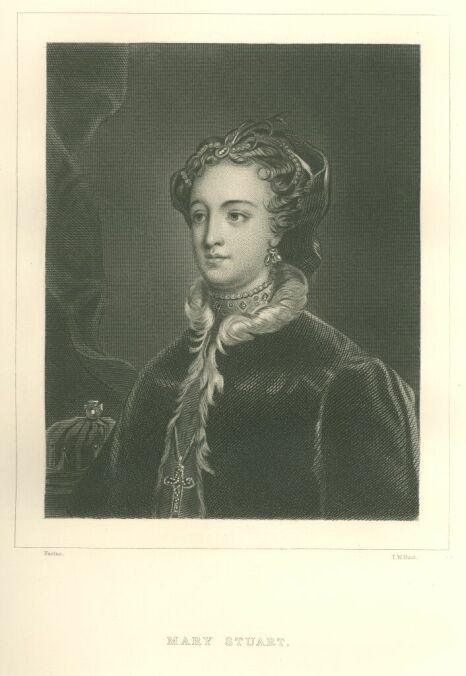
Mary took his demand of speedy justice in a very literal sense, and allowing only fifteen days for the examination of this important affair, she sent a citation to Lenox, requiring him to appear in court, and prove his charge against Bothwell.[*] This nobleman, meanwhile, and all the other persons accused by Lenox, enjoyed their full liberty;[**] Bothwell himself was continually surrounded with armed men; [***] took his place in council;[****] lived during some time in the house with Mary;[v] and seemed to possess all his wonted confidence and familiarity with her. Even the Castle of Edinburgh, a place of great consequence in this critical time, was intrusted to him, and under him, to his creature, Sir James Balfour, who had himself been publicly charged as an accomplice in the king’s murder.[v*] Lenox, who had come as far as Stirling with a view of appearing at the trial, was informed of all these circumstances; and reflecting on the small train which attended him, he began to entertain very just apprehensions from the power, insolence, and temerity of his enemy. He wrote to Mary, desiring that the day of trial might be prorogued; and conjured her, by all the regard which she bore to her own honor, to employ more leisure and deliberation in determining a question of such extreme moment.[v**] No regard was paid to his application: the jury was enclosed, of which the earl of Caithness was chancellor; and though Lenox, foreseeing this precipitation, had ordered Cunningham, one of his retinue, to appear in court, and protest in his name against the acquittal of the criminal, the jury proceeded to a verdict.[v***] The verdict was such as it behoved them to give, where neither accuser nor witness appeared; and Bothwell was absolved from the king’s murder. The jury, however, apprehensive that their verdict would give great scandal, and perhaps expose them afterwards to some danger, entered a protest, in which they represented the necessity of their proceedings.[v****]
* Keith, p. 373. ** Keith, p. 374, 375. *** Keith, p. 405. **** Anderson, vol. i. p. 38, 40, 50, 52. v Anderson, vol. ii. p. 274. v* Spotswood, p. 201. v** Keith, p. 375. Anderson, vol. i. p. 52. v*** Keith, p. 376. Anderson, vol. ii. p. 106. Spotswood, p. 201. v**** Spotswood, p. 201. Anderson, vol. i p. 113.
It is remarkable, that the indictment was laid against Bothwell for committing the crime on the ninth of February, not the tenth, the real day on which Henry was assassinated.[*] The interpretation generally put upon this error, too gross, it was thought, to have proceeded from mistake, was, that the secret council by whom Mary was governed, not trusting entirely to precipitation, violence, and authority, had provided this plea, by which they insured, at all adventures, a plausible pretence for acquitting Bothwell.
Two days after this extraordinary transaction, a parliament was held; and though the verdict in favor of Bothwell was attended with such circumstances as strongly confirmed, rather than diminished, the general opinion of his guilt, he was the person chosen to carry the royal sceptre on the first meeting of that national assembly.[**] In this parliament a rigorous act was made against those who set up defamatory bills; but no notice was taken of the king’s murder.[***] The favor which Mary openly bore to Bothwell kept every one in awe; and the effects of this terror appeared more plainly in another transaction, which ensued immediately upon the dissolution of the parliament. A bond or association was framed; in which the subscribers, after relating the acquittal of Bothwell by a legal trial, and mentioning a further offer which he had made, to prove his innocence by single combat, oblige themselves, in case any person should afterwards impute to him the king’s murder, to defend him with their whole power against such calumniators. After this promise, which implied no great assurance in Bothwell of his own innocence, the subscribers mentioned the necessity of their queen’s marriage, in order to support the government; and they recommended Bothwell to her as a husband.[****] This paper was subscribed by all the considerable nobility there present. In a country divided by violent factions, such a concurrence in favor of one nobleman, nowise distinguished above the rest, except by his flagitious conduct, could never have been obtained, had not every one been certain, at least firmly persuaded, that Mary was fully determined on this measure.[v] 9 Nor would such a motive have sufficed to influence men, commonly so stubborn and untractable, had they not been taken by surprise, been ignorant of each other’s sentiments, and overawed by the present power of the court, and by the apprehensions of further violence from persons so little governed by any principles of honor and humanity. Even with all these circumstances, the subscription to this paper may justly be regarded as a reproach to the nation.
* Keith, p. 375. Anderson, vol. ii. p. 93. Spotswood, p. 201. ** Keith, p. 78. Crawford, p. 14. *** Keith, p. 389. **** Keith, p. 381. v See note I, at the end of the volume.
The subsequent measures of Bothwell were equally precipitate and audacious. Mary having gone to Stirling to pay a visit to her son, he assembled a body of eight hundred horse, on pretence of pursuing some robbers on the borders; and having waylaid her on her return, he seized her person near Edinburgh, and carried her to Dunbar, with an avowed design of forcing her to yield to his purpose. Sir James Melvil, one of her retinue, was carried along with her, and says not that he saw any signs of reluctance or constraint; he was even informed, as he tells us, by Bothwell’s officers, that the whole transaction was managed in concert with her.[*] A woman, indeed, of that spirit and resolution which is acknowledged to belong to Mary, does not usually, on these occasions, give such marks of opposition to real violence as can appear any wise doubtful or ambiguous. Some of the nobility, however, in order to put matters to further trial, sent her a private message, in which they told her, that if in reality she lay under force, they would use all their efforts to rescue her. Her answer was, that she had indeed been carried to Dunbar by violence, but ever since her arrival had been so well treated that she willingly remained with Bothwell.[**] No one gave himself thenceforth any concern to relieve her from a captivity which was believed to proceed entirely from her own approbation and connivance.
This unusual conduct was at first ascribed to Mary’s sense of the infamy attending her purposed marriage, and her desire of finding some color to gloss over the irregularity of her conduct. But a pardon, given to Bothwell a few days after, made the public carry their conjectures somewhat further. In this deed, Bothwell received a pardon for the violence committed on the queen’s person, and for “all other crimes;” a clause by which the murder of the king was indirectly forgiven. The rape was then conjectured to have been only a contrivance, in order to afford a pretence for indirectly remitting a crime, of which it would have appeared scandalous to make openly any mention.[***]
* Melvil, p. 80. ** Spotswood, p. 202. *** Anderson, vol. iv. part ii. p. 61.
These events passed with such rapidity, that men had no leisure to admire sufficiently one incident, when they were surprised with a new one equally rare and uncommon. There still, however, remained one difficulty which it was not easy to foresee how the queen and Bothwell, determined as they were to execute their shameful purpose, could find expedients to overcome. The man who had procured the subscription of the nobility, recommending him as a husband to the queen, and who had acted this seeming violence on her person, in order to force her consent, had been married two years before to another woman; to a woman of merit, of a noble family, sister to the earl of Huntley. But persons blinded by passion, and infatuated with crime, soon shake off all appearance of decency. A suit was commenced for a divorce between Bothwell and his wife; and this suit was opened at the same instant in two different, or rather opposite courts; in the court of the archbishop of St. Andrew’s, which was Popish, and governed itself by the canon law; and in the new consistorial or commissariot court, which was Protestant, and was regulated by the principles of the reformed teachers. The plea advanced in each court was so calculated as to suit the principles which there prevailed; in the archbishop’s court, the pretence of consanguinity was employed, because Bothwell was related to his wife in the fourth degree; in the commissariot court, the accusation of adultery was made use of against him. The parties, too, who applied for the divorce, were different in the different courts: Bothwell was the person who sued in the former; his wife in the latter. And the suit in both courts was opened, pleaded, examined, and decided, with the utmost precipitation; and a sentence of divorce was pronounced in four days.[*]
* Anderson, vol. ii. p. 280.
The divorce being thus obtained, it was thought proper that Mary should be conducted to Edinburgh, and should there appear before the courts of judicature, and should acknowledge herself restored to entire freedom. This was understood to be contrived in a view of obviating all doubts with regard to the validity of her marriage. Orders were then given to publish in the church the banns between the queen and the duke of Orkney; for that was the title which he now bore; and Craig, a minister of Edinburgh, was applied to for that purpose. This clergyman, not content with having refused compliance, publicly in his sermons condemned the marriage, and exhorted all who had access to the queen, to give her their advice against so scandalous an alliance. Being called before the council to answer for this liberty, he showed a courage which might cover all the nobles with shame, on account of their tameness and servility. He said that, by the rules of the church, the earl of Bothwell, being convicted of adultery, could not be permitted to marry; that the divorce between him and his former wife was plainly procured by collusion, as appeared by the precipitation of the sentence, and the sudden conclusion of his marriage with the queen; and that all the suspicions which prevailed with regard to the king’s murder, and the queen’s concurrence in the former rape, would thence receive undoubted confirmation. He therefore exhorted Bothwell, who was present, no longer to persevere in his present criminal enterprises; and turning his discourse to the other counsellors, he charged them to employ all their influence with the queen, in order to divert her from a measure which would load her with eternal infamy and dishonor. Not satisfied even with this admonition, he took the first opportunity of informing the public, from the pulpit, of the whole transaction; and expressed to them his fears that, notwithstanding all remonstrances, their sovereign was still obstinately bent on her fatal purpose. “For himself,” he said, “he had already discharged his conscience; and yet again would take heaven and earth to witness that he abhorred and detested that marriage as scandalous and hateful in the sight of mankind; but since the great, as he perceived, either by their flattery or silence, gave countenance to the measure, he besought the faithful to pray fervently to the Almighty that a resolution, taken contrary to all law, reason, and good conscience, might, by the divine blessing, be turned to the comfort and benefit of the church and kingdom.” These speeches offended the court extremely; and Craig was anew summoned before the council, to answer for his temerity in thus passing the bounds of his commission. But he told them, that the bounds of his commission were the word of God, good laws, and natural reason; and were the Queen’s marriage tried by any of these standards, it would appear infamous and dishonorable, and would so be esteemed by the whole world. The council were so overawed by this heroic behavior in a private clergyman, that they dismissed him without further censure or punishment.[*]
* Spotswood, p. 203. Anderson, vol. ii. p. 280.
But though this transaction might have recalled Bothwell and the queen of Scots from their infatuation, and might have instructed them in the dispositions of the people, as well as in their own inability to oppose them, they were still resolute to rush forward to their own manifest destruction. The marriage was solemnized by the bishop of Orkney, a Protestant, who was afterwards deposed by the church for this scandalous compliance. Few of the nobility appeared at the ceremony: they had most of them, either from shame or fear, retired to their own houses. The French ambassador, Le Croc, an aged gentleman of honor and character, could not be prevailed on, though a dependent of the house of Guise, to countenance the marriage by his presence.[*] Elizabeth remonstrated, by friendly letters and messages, against the marriage.[**] The court of France made like opposition; but Mary, though on all other occasions she was extremely obsequious to the advice of her relations in that country, was here determined to pay no regard to their opinion.