Front matter
Reading edition
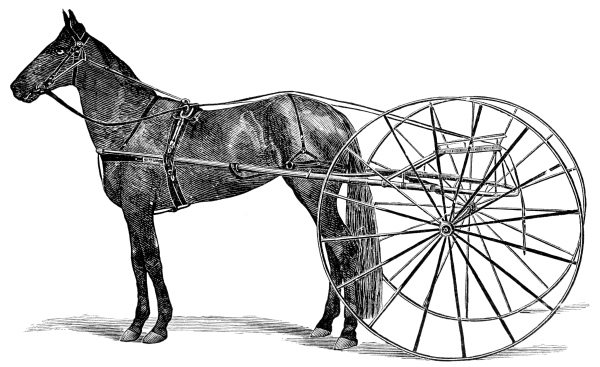
GOLDSMITH MAID, WITH TRACK HARNESS.
THE HARNESS MAKERS’ ILLUSTRATED MANUAL.
SECOND EDITION.
A PRACTICAL GUIDE BOOK FOR MANUFACTURERS AND MAKERS OF HARNESS, PADS, GIG SADDLES, ETC.,
CONTAINING
DIRECTIONS FOR SELECTING, CUTTING, AND PREPARING LEATHER; TABLES OF LENGTHS AND WIDTHS FOR CUTTING TRACK, SINGLE AND DOUBLE ROAD, COUPÉ, COACH, EXPRESS, TEAM AND FARM HARNESS, HALTERS, HORSE BOOTS, ETC.;
RECIPES FOR PREPARING BLACKINGS, STAINS, OILS, AND LEATHER VARNISHES;
HINTS ON RENOVATING AND REPAIRING HARNESS;
NOTES ON HARNESS MOUNTINGS, WITH DESCRIPTIONS AND ILLUSTRATIONS OF THE MOST POPULAR STYLES AND KINDS.
ADAPTED TO THE OFFICE AND THE WORKSHOP.
BY
W. N. FITZ-GERALD,
New York. 1880.
Entered, according to Act of Congress, in the year 1880, By Wm. N. Fitz-Gerald, in the Office of the Librarian of Congress, at Washington, D. C.
CONTENTS.
CHAPTER I.
HARNESS LEATHER.
PAGE
The peculiar Characteristics of Leather—Test by which
the Quality may be determined—Effect of strong Acids in
Coloring—Impure Oils—Kinds of Harness Leather—Oak,
Hemlock, and Union Tanned; the Nature of each—Hides
suitable for making Harness Leather—Causes of “Gum,
Spew, or Fry”—The Effect of Dampness—Weights to be
selected for all Kinds of Harness—Grain Leather for Folds 21
CHAPTER II.
RUSSET LEATHER.
Selecting Rein Leather—Stains—Comparative Value of
good and poor Stock—Hand Part Leather—Graining in
the Workshop—Buff Leather—Loop Leather—The Necessity
of a Mellow Grain; uniform Thickness unimportant—Buying
Leather—Weight Stock—Unreliability of the rough
Brand—Backs—Cropping—Trimmed Stock 33
CHAPTER III.
PATENT LEATHER.
Glazed Leather—The Uses to which it is put—Quality of
Hides—Splits, how designated—The Effect of Splitting
upon the Grain—Varnishing, Drying, and Finishing—Enamel
Leather—Texture, Color, and Finish—Stretching Leather
injurious to the Fibre—Care of Patent Leather—When the
best Leather is made—July and August unfavorable months 40
CHAPTER IV.
CUTTING HARNESS.
How to cut to avoid Waste—Value of Scraps—The
Responsibility of the Cutter—Illustration of a Side of
Weight Stock—Directions for Cutting—Dividing the Side to
the best Advantage—Objections to the Splitting Machine—
Cutting a Harness from one Side—Illustration of a trimmed
Side—Weight—Details for Cutting the different Straps 45
CHAPTER V.
PREPARING THE LEATHER FOR THE FITTER.
Wetting the Stock—Drying—How long to soak—Testing
Strap—Trimming the Flesh Side—Applying Tallow—Straps
not to be disturbed until the Water has dried out—Cleaning
and Slicking—The Effect of recurrying—Blacking Leather
for a Single-Strap Harness—Wetting common Stock 53
CHAPTER VI.
MEASURING FOR HARNESS.
Lack of System—Result of improper Lengths—Length of Hame
Tugs—Lengths adopted by prominent Manufacturers—Harness
for Horses of different Sizes—Lengths governed by Localities 58
CHAPTER VII.
TABLES OF LENGTHS.
No. 1. Single-Strap Track Harness—No. 2. Single Road
Harness—No. 3. Single Harness (Breast Collar)—No. 4.
Single Harness (Hame Collar)—No. 5. Heavy Coupé Harness
—No. 6. Double Road Harness—No. 7. Short Tug Coach Harness
—No. 8. Long Tug Coach Harness—No. 9. English Four-in-Hand
—No. 10. Tandem—No. 11. Single Express—No. 12. Heavy Express
—No. 13. Long Tug Team Harness—No. 14. Long Tug Farm
Harness—No. 15. Wagon Harness with adjustable Trees—No. 16.
Adjustable Pad Double Harness—No. 17. Pennsylvania Wagon
Harness—No. 18. Stage Harness—No. 19. Bitting Harness—No.
20. Cart Harness—No. 21. Mule Harness—No. 22. Short Tug
Butt Chain Harness—Trimmings for Carriage Harness 64
CHAPTER VIII.
DIRECTIONS FOR MAKING UP A BREAST COLLAR SINGLE HARNESS.
Result of Neglect in learning the Trade—Want of System—
Importance of the Fitter and Stitcher working in Unison—
Wetting the Stock—Skiving and slicking the Straps—Fitting
up the Shaft Tugs, Docks, and Winker Brace—Finishing the
Edges—Prepared Tallow—Gum Tragacanth—Cutting and preparing
the Patent Leather—Finishing up Rounds—Making Docks—
Importance of good Patterns—How to prepare the Patterns 112
CHAPTER IX.
MAKING SINGLE-STRAP TRACK HARNESS.
Its Origin—Skill required in making up—How to attain the
best Results—Steer Hides the best—Weight of Side required
—Sectional Drawings—Safety Strap—Half Kemble Jackson check 122
CHAPTER X.
DIRECTIONS FOR MAKING TEAM HARNESS.
Mistaken Ideas regarding Team Harness—Selecting Stock—
Weights to be used—General Directions for cutting and fitting
—Pads—Filling Folds—Bridles, the Importance of proper
Proportions—Lines, Lengths—Mountings, the Importance
of Strength—Stitching to be done with white Thread—Coarse
stitching the strongest—Fitting and stitching Traces—Final
Finish—Heavy ornamental Truck Harness—Bridles, Coach
Style—Wheel Harness without Pads—Traces and Safes, how
cut—Lead Harness—Loin Straps—Mountings—Collars 128
CHAPTER XI.
MAKING GIG SADDLES.
Cleaning and treeing up the Tree—Preparing the Seat
Leather—Preparing the Frame—Making Jockeys—Flopping
off—Making Loops—Cutting and fitting Points—Back
Bands—Quality of Leather—Making the Pads—Stuffing—
Materials used—Changing Shape of Patterns 139
CHAPTER XII.
PADS FOR COACH AND TEAM HARNESS.
Improvements—Patent Pads—Directions for making Coach
Pads—Socket Piece, how to cut—Fitting up—Cutting
Felt for the Pad—Stitching, etc—Hair-stuffed Pads—
Directions for making—Soft Pad illustrated—Cutting Tops
and Sides—Hard Pad, Directions for making—Illustrated—
Plain Pads, Directions for making 149
CHAPTER XIII.
MAKING HARNESS LOOPS.
Kinds of Loops in use—Patent Loops, how made—Advantages
of hand made Loops—Selecting Stock—Wetting the Leather
—Fullness necessary—Creasing—Back Clamp Iron—Working
up Sides before creasing—Coloring and finishing—Pressed Loops,
stitching on—How they are made—Time needed to press—Variety
of Patterns—How cheap Harness are improved by their use 161
CHAPTER XIV.
STITCHING HARNESS.
The End to be attained—Thread, Size and Number of Strands
—White Thread the strongest—Making up the Thread—Waxing
before twisting—The Kind of Wax for specific Purposes—
Importance of Care in Stitching—How the Stitches are laid
—Irregularity produced by not drawing the Threads evenly
—To cause both Sides to appear alike—Points to be observed 168
CHAPTER XV.
MAKING ROUND REINS.
Good Stock a Necessity—Directions for Cutting—Dampening
the Leather—Making the Stop—Marking off for the Billet—
Filling up and rounding—Board Iron, how made—Rounding and
trimming—Stain, how made—Advantage of using Shellac—
Rein Ends, illustrated 175
CHAPTER XVI.
COACH AND WAGON BRIDLES.
The most ornate Part of the Harness—Winkers, Style and
Finish—“Hinging”—English Coach Bridle Cuttings—
Illustrations of various Styles of Bridles—Crown Pieces 182
CHAPTER XVII.
RIDING BRIDLES.
Uniformity of Style—How they are named—Cuttings for various
Kinds—Illustration—Leather used—English Russet—Buff
Leather—Stitching not used for ornamenting 196
CHAPTER XVIII.
HALTERS.
The Varieties—United States Government Halter—Spanish
Halter—French Halter—Training Halter—Bitting Halter
—Stable Halter—Yankee Halter—Double Cheek Halter—
Slip Halter—Team Halter—Cuttings and Illustrations 205
CHAPTER XIX.
HORSE BOOTS.
Success in making Knee, Shin, Ankle, and Combination Boots
—Directions for making—Illustrations for Weights—How made
—Illustrations 224
CHAPTER XX.
HARNESS MOUNTINGS.
Classes and Styles—Plated, close and electro—Grades of Silver
for Close Plate—How to determine the Quality—Electro Plate
less durable, but cheaper—Tarnishing not an Evidence of Impurity
—Gold Plate—Nickel—Its Color and Advantages—Brass not popular
—Oroide, its Color—Not desirable except as a Base for Gilding
—Aluminum the most expensive Metal—German Silver, its
superiority as a white Metal—Covered Mountings—Leather and
Composition—Leather used—Liability to rip—Improvements made
—Rubber-covered—When patented—Description of Process of
Manufacture—Celluloid-covered—Description of Manufacture—
Tinned—XC Plate—Japanned—Patented Styles—Illustrations of
Terrets, Hooks, etc. 249
CHAPTER XXI.
BUCKLES.
Patent Trace—Harness—Trace—Collar—Center Bar—Popular
Styles—Illustrations 271
CHAPTER XXII.
BITS AND BITTING HARNESS.
Brutal Devices—Popular Styles—Snaffle—Dexter—Hanoverian—
Half Cheek Trotting Snaffle—Metals used—Steel not desirable
—Unreliability of Malleable Iron—System of numbering—How
designated—Illustrations—Bitting Harness—Wooden Jockey,
illustrated—Patent Jockey, illustrated 281
CHAPTER XXIII.
REPAIRING HARNESS.
As important as making new Stock—False Directions—Cleaning
the Leather an important Consideration—When to repair—
Cleaning the Surface before oiling—How to soften old Leather
—Pure Neat’s-foot Oil the best—Castor Oil, its qualities—
Tallow the only reliable Grease—How to apply Grease—Gum,
how to remove it—Patent Leather—Varnish only will restore
the Lustre—How to clean 290
CHAPTER XXIV.
CARE OF HARNESS IN THE FACTORY AND STABLE.
Durability dependent upon Treatment—Consumers not acquainted
with the Peculiarities of Stock—The great Destroyer—Care of
Harness in Stock—White Mold—Importance of removing it
immediately—Cleaning Mountings—Pegs for hanging Harness—
Daub, how made—How to keep Russet Strapping—The Manufacturer’s
duty to his Customers—Directions for the Care of Harness in
the Stable—Mountings not to be scoured—How to clean 296
CHAPTER XXV.
LEATHER BLACKING.
Stains, Varnishes, and Polishes 302
CHAPTER XXVI.
RECIPES.
Miscellaneous Recipes for the Workshop and Harness Room 317
INDEX OF PLATES.
Goldsmith Maid, Track Harness Frontispiece.
PAGE
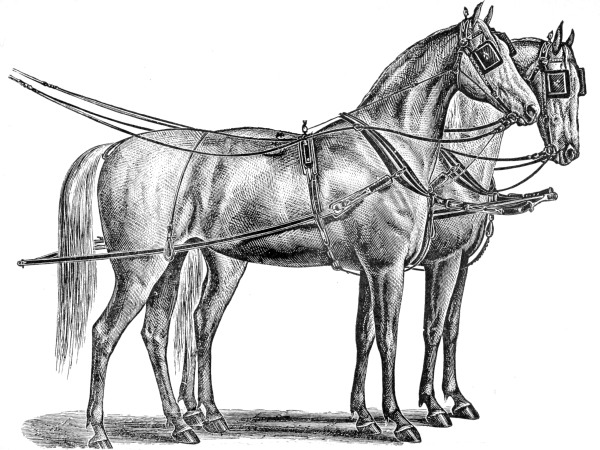
Double Road Harness 20
Coupé Harness 33
Phaeton Harness 53
Coach Harness 61
Breast Collar, Single Harness 113
Hame Collar, Single Harness 122
Team Harness 129
Heavy Draft Harness 137
Georgia Wagon Harness 161
PREFACE.
This book originated from a desire to furnish harness makers with a condensed practical guide suited to the workshop, office, salesroom, and stable. It treats of leather as furnished to the harness maker by the currier, its texture, strength, adaptability for specific uses; how to cut, fit, and finish; measuring for harness; complete tables for lengths and widths for cutting the various classes in use, whether for the carriage, farm, or road; bridles, halters, horse boots, mountings, bits, etc.
The illustrations represent standard styles and kinds of articles used by the trade, and guides for making up.
In the hints on repairing and caring for harness, a large amount of information is furnished the manufacturer and consumer, in a condensed form. The recipes for blacks, stains, varnishes, polishes, etc., have been tested and found reliable; the whole making a methodical manual indispensable to the progressive harness maker, and useful to every horse owner or other person interested in harness or saddlery. It is the only book of the kind published in the English language, and supplies a much-needed want. Every care has been taken to present the subjects treated on in the plainest manner, and to avoid errors. The author confidently believes that benefit will result from following the instructions given, and the standard of harness making be elevated. Should this anticipation be realized, the time spent in its preparation will be compensated for.
INTRODUCTION.
The manufacture of saddlery and harness, exclusive of all collateral branches, stands thirty-fourth in magnitude out of the two hundred and fifty-eight specified industries tabulated in the census report of 1870. At that time there were in the United States 7,607 saddlery and harness establishments, giving employment to 23,557 workmen; all but 841 were males above 16 years of age; employing a capital of $13,935,961; paying in wages $7,046,207; for materials, $16,068,310; and producing goods to the value of $32,709,981. Missouri stands first in the list in value of products, but fifth in the number of workmen employed, and second in the wages paid. New-York stands second in value of products, first in every other particular. Pennsylvania, Ohio, Illinois, and New-Jersey are next in order.
By the total figures it will be seen that the average wages of the workmen is about $299 a year, being $78 below the average for the whole country in 1870, and $10 above the average of 1860.
There are but eleven branches of industry in which the number of establishments exceeds those of saddlery and harness, and in view of this fact, the average rate of wages is remarkably good. The harness maker is called upon to supply harness, saddlery, etc., for 7,145,370 horses, 1,125,415 mules and asses, a total of 8,270,785 animals; yet the total value of products of a year show but $4 a head for each animal—a figure disproportionately small, and one which explains, in part at least, why the trade is less prosperous than it should be. Were it a business which required the investment of a large capital, the case would be different; but as it is, the investment of a few hundred dollars enables a man to engage in a small business which returns him a moderate living, but one that might be lucrative if conducted in a proper manner. The harness maker supplies an article of absolute necessity, and there is no excuse for his placing his prices below fair business rates. If each man in the business would properly estimate the cost of every article, and add thereto a fair percentage of profit, there would be less complaints as to the unprofitableness of the harness trade. In preparing this manual the author has aimed to give information of a practical character to the trade, which will enable those engaged in it to conduct the workshop in a systematic manner. If this end is accomplished, it will be one important step toward making the business a profitable and pleasant one.
DOUBLE ROAD HARNESS.
THE HARNESS MAKERS’ ILLUSTRATED MANUAL.