IN APPRECIATION OF RAY T. MILLER
Reading edition
By M. Walter Pesman
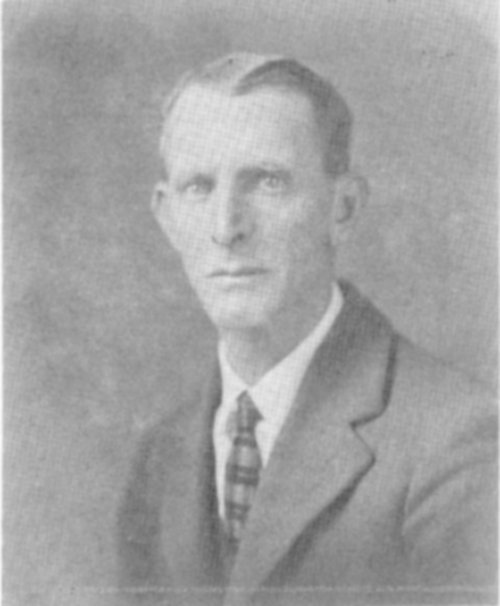
You could always depend on Ray Miller! We hear a great deal these days of “featherbedding”, and we have seen some of it ourselves. I could only wish that those who are suspicious,—and the guilty ones as well, could have known Ray in his work, and in his attitude. He would always do his job well and conscientiously. Many of his horticultural accomplishments bear witness to his thorough way of doing things.
I first knew him as superintendent of Berkeley Park, at that time one of the outlying parks. He carried out many of the improvements planned by the newly appointed Parks landscape architect, S. R. DeBoer. Both worked together for at least thirty years on the Denver Park System. Ray became superintendent of City Park, later he was in charge of the western division of all city parks. Whatever job was given him to do, everybody knew it was going to be done promptly and properly, and with full knowledge of our unusual conditions of Rocky Mountain horticulture.
He became an expert on transplanting and on collecting native plant material. He’d always do just a little more than might be reasonably expected of him.
Born in Springfield, Kansas, he moved to Denver in 1905 at the age of twenty-six. His was a happy family. The two sons soon made a place for themselves, even if they did not remain with horticulture. His wife was active in many civic affairs.
When the Roadside Development program was initiated in Colorado, both Mr. Vail, the Highway engineer, and I, as landscape engineer, wanted Ray to take an active part as foreman and supervisor on the new jobs; a man was needed here who was familiar with nursery stock, including native plants, who could read blueprints with full understanding of what was planned, and who could deal with the public in many ways. Highway engineers are not always familiar with plants and their requirements. People adjoining roadside projects could not always see why they should cooperate in giving easements. Nursery contractors needed to be shown that the State Highways wanted to be fair and live up to specifications.
The new landscape supervisor soon showed that he could make friends with all, and gain their respect and understanding.
At times he had to carry out certain plans and specifications with his own crew. I remember one particular job in which he superintended the collecting, balling and burlapping of over a hundred rather large ponderosa pines in the midst of winter. They were planted just north of the Blakeland 352 underpass: only one or two failed to survive the difficult ordeal. To this day they bear witness to his skill and know-how.
After the roadside program was discontinued, due to the war, Mr. Miller was wanted at various jobs where his skills, horticultural knowledge, and his enormous capacity for work were needed.
Not until recently was he willing to concede that a man approaching eighty ought not to attempt the physical labors of a younger man. Even then, he went on an arduous fishing trip after being an octogenarian!
To many of us, interested in horticulture, Ray Miller represents a symbol. If only we could train a hundred men in his attitude and pass on to them his knowledge of practical plant methods, we’d feel safer about the future of horticulture in the Rocky Mountain region. He has made a place in Denver and Colorado for himself, that will survive, and that will serve as an inspiration for all of us who strive for the best in horticulture.