Front matter (continued 2)
Reading edition
So then as far as the time and the hour are concerned, there is nothing in Though sorrow must come, where is the advantage of rushing to meet it? It will be time enough to grieve when it comes; meanwhile, hope for better things.—Seneca. our surroundings to make us morose or gloomy or dispirited or indifferent regarding the influence we are exerting upon those around us. There is no obvious reason why we should not be joyous and happy at the prospect before us. We should have not only grace enough for our own personal needs, but plenty of it to spare for those not so gladly born as ourselves.
And rich beyond computation is the one who has joyousness to spare. Better All my old opinions were only stages on the way to the one I now hold, as itself is only a stage on the way to something else.—R. L. Stevenson. than gold, better than food and raiment and all material things, betimes, is a ray of sunshine from the heart, an uplift of saving humor from a merry tongue. "I have often felt, myself," says Benson, "that the time has come to raise another figure to the hierarchy of Christian graces. Faith, Hope and Charity were sufficient in a more elementary and barbarous age, but, now that the world has Hasten slowly, and, without losing heart, put your work twenty times upon the anvil.—Boileau. broadened somewhat, I think an addition to the trio is demanded. A man may be faithful, hopeful, and charitable, and yet leave much to be desired. He may be useful, no doubt, with that equipment, but he may also be both tiresome and even absurd. The fourth quality that I should like to see raised to the highest rank among the Christian graces is the Grace of Humor."
Self-reverence, self-knowledge, self-control—these three alone lead life to sovereign power.—Tennyson. Splendidly blest is that household that is so fortunate as to possess at least one member gifted with the grace of good humor. One such person in a home is enough if there cannot be more. Just when all the others are seriously It is curious to what an extent our happiness or unhappiness depends upon the manner in which we view things.—E. C. Burke. confronting what seems to be a most sad and serious condition of affairs how just one word of illuminating good humor can change the whole point of view and send the foreboding proposition glimmering into nothingness. "Do you know, my dear," says Mrs. Holden, "that there is absolutely nothing that will help you to bear the ills of life so well as a good laugh? Laugh all you can and the small Those who never retract their opinions love themselves more than they love truth.—Joubert. imps in blue who love to preempt their quarters in a human heart will scatter away like owls before the music of flutes.
There are few of the minor difficulties and annoyances that will not dissipate at the charge of the nonsense brigade. If the clothes line breaks, if the cat tips over the milk and the dog elopes with the roast, if the children fall into the mud simultaneously with the advent of clean aprons, if the new Truth is tough; it will not break, like a bubble, at a touch; nay, you may kick it about all day like a football, and it will be round and full at evening.—Oliver Wendell Holmes. girl quits in the middle of housecleaning, and though you search the earth with candles you find none to take her place, if the neighbor you have trusted goes back on you and decides to keep chickens, if the chariot wheels of the uninvited guest draw near when you are out of provender, and the gaping of your empty purse is like the unfilled mouth of a young robin, take courage if you have Good manners are made up of petty sacrifices.—Emerson. enough sunshine in your heart, to keep the laugh on your lips. Before good nature, half the cares of daily living will fly away like midges before the wind. Try it."
What a world of inspiration and cheerfulness in the motto written by Edward Everett Hale for the Lend-A-Hand Society: "Look up, and not down; look forward, and not back; look out, and not in; and lend a hand." It is the lifting of the The aids to noble life are all within.—Matthew Arnold. burden from another’s tired shoulder that does most to lighten the load resting on our own.
No one who truly is conscious of the value of sunshine upon his own nature Nothing is difficult; it is only we who are indolent.—B. R. Haydon. and upon the spirits of those with whom he comes into contact will ever, for one minute, permit himself to be taken possession of by
THE "BLUES"
"Blues" are the sorry calms that come To make our spirits mope, And steal the breeze of promise from The shining sails of hope.
It is a serious thing that we should see the full beauty of our lives only when they are passed or in visions of a possible future. What we most need is to see and feel the beauty and joy of to-day.—Maurice D. Conway. Margaret E. Sangster, who is the kind and gracious foster mother to all the girls of her time and generation, says that "being in bondage to the blues is precisely like being lost in a London fog. The latter is thick and black and obliterates familiar landmarks. A man may be within a few doors of his home, yet grope hopelessly through the murk to find the well-worn threshold. A person Let us enjoy the scenery of the present moment. The landscape around the bend will still be there when our life-train arrives.—Horatio W. Dresser. under the tyranny of the blues is temporarily unable to adjust life to its usual limitations. He or she cannot see an inch beyond the dreadful present. Everything looks dark and forbidding, and despair with an iron
clutch pins its victim down. People think, loosely, that trials that may be weighed and measured and felt and handled are the worst trials to which flesh is If we cannot get what we like let us try to like what we can get.—Spanish Proverb. heir. But they are mistaken. Hearts are elastic, and real sorrows seldom crush them. Souls have in them a wonderful capacity for recovering after knockdown blows. It is the intangible, the thing that one dreads vaguely, that catches one in the dark, that suggests and intimates a peril that is spiritual rather than mortal; it is the burden that carries dismay and terror to the imagination."
Men continually forget that happiness is a condition of the mind and not a disposition of circumstances.— Lecky. A single member of a household who is given to having "the blues" often darkens a home that would otherwise be bright and sunny. Such an unfortunate person should bear in mind that when a servant is employed the whole household Delicacy in woman is strength.— Lichtenberg. expects her to be kind, tidy, industrious, moral, gentle, and, above all, good natured in her attitude toward all. Surely the daughter of a household cannot wish to feel that she holds her position by accident of birth, and that if her family were not compelled to keep her they would not. If you would know the political and moral condition of a people, ask as to the condition of its women.—Aime Martin.
Charles Dickens says: "It is not possible to know how far the influence of any amiable, honest-hearted, duty-doing man flows out into the world." A bright, cheerful, sunshiny daughter in a home can never know how great is her influence for making the little household world holier and happier for all whose life Who has not experienced how, on nearer acquaintance, plainness becomes beautified, and beauty loses its charm, according to the quality of the heart and mind.—Fredrika Bremer. interests are centered therein. Hamilton Wright Mabie says: "The day is dark only when the mind is dark; all weathers are pleasant when the heart is at rest." Bliss Carman observes that "happiness, perhaps, comes by the grace of Heaven, but the wearing of a happy countenance, the preserving of a happy mien, is a duty, not a blessing." This thought that it is one’s duty to be happy Her voice was ever soft, gentle and low,—an excellent thing in woman.—Shakespeare. is set forth still more forcibly by Lilian Whiting: "No one has any more right to go about unhappy than he has to go about ill-bred."
The girl with sunshine in her thoughts and sunshine in her eyes will find Gentleness, cheerfulness, and urbanity are the Three Graces of manners.—Marguerite de Valois. sunshine everywhere. Wherever she may go her gracious presence will light the way and make her every path more smooth and beautiful. In the home, in the school, amid whatever conditions surround her, she will shine with the glow of a rose in bloom. She will see the good and the beautiful in the persons whom she meets; while all the charms of nature, as portrayed in field and forest, will be to her a never-ending source of interest and enjoyment. Above all, she will warmly cherish life and look upon To have what we want is riches, but to be able to do without is power.—George MacDonald. it as being crowded with priceless opportunities for obtaining happiness for herself and for others. She will be filled with the same exhuberant spirit of joy in the mere fact of her being that Mrs. Holden so happily sets forth: "I love this world. I never walk out in the morning when all its radiant colors are newly washed with dew, or at splendid noon, when, like an untired racer, the sun has flashed around his mid-day course, or at evening, when a fringe of a shadow, A man is rich in proportion to the number of things which he can afford to let alone.—Thoreau. like the lash of a weary eye, droops over mountain and valley and sea, or in the majestic pomp of night when stars swarm together like bees, and the moon clears its way through the golden fields as a sickle through the ripened wheat, that I do not hug myself for very joy that I am yet alive. What matter if I am poor and unsheltered and costumeless?
In truth, how could I feel this gladness now had I not known the bitterness of woe.—Alicia K. Van Buren. Thank God, I am yet alive! People who tire of this world before they are seventy and pretend that they are ready to leave it, are either crazy or stuck as full of bodily ailments as a cushion is of pins. The happy, the warm-blooded, the sunny-natured and the loving cling to life as petals cling to the calyx of a Of all the joys we can bring into our own lives there is none so joyous as that which comes to us as the result of caring for others and brightening sad lives.—E. C. Burke. budding rose. By and by, when the rose is over-ripe, or when the frosts come and the November winds are trumpeting through all the leafless spaces of the woods, will be time to die. It is no time now, while there is a dark space left on earth that love can brighten, while there is a human lot to be alleviated by a smile, or a burden to be lifted with a sympathizing tear."
We all understand that it is not so difficult for us to be bright and smiling and gracious toward everyone when there is naught to disturb the serenity of our Human improvement is from within outward.—Froude. thoughts, and when nothing happens to interfere with the fulfillment of our wishes. But when things go "at sixes and sevens," when our dearest purposes are thwarted, when some one is about to gain the place or prize which we covet, when we are forced to stay within doors when we very much prefer to go in the fields; then it requires more of character, more of strength, more of the true spirit of sacrifice to wear a smiling face and to maintain a cheerful heart. But instead of fleeing from the Cheerfulness and content are great beautifiers, and are famous preservers of good looks.—Dickens. petty trials that cross our paths we should welcome them as opportunities for testing and strengthening our good purposes. Newcomb tells us: "Disappointment should always be taken as a stimulant, and never viewed as a discouragement." To the sunshiny, philosophical person, trials and difficulties but serve to help him to develop into
THE PRIZE WINNER
Oh, the man who wins the prize Is the one who bravely tries, As he works his way amid the toil and stress, Through the college of Hard Knocks, So to hew his stumbling-blocks, They will serve as stepping-stones toward success.
The law of true living is toil.—J. R. Miller. Sunshine has ever been deemed by the close students of life as a most essential element in the achievement We may make the best of life, or we may make the worst of it, and it depends very much upon ourselves whether we extract joy or misery from it.—Smiles. of the highest and fullest success. The optimist sees open paths leading to pleasant and prosperous fields of endeavor where the pessimist can see no way out of the hopeless surroundings amid which he has been thrust by an unkind fate. The disposition to seize upon the opportunities Every optimist moves along with progress and hastens it, while every pessimist would keep the world at a standstill.—Helen Keller. lying close at hand and to believe that the here and now is full of sunshine and golden possibilities has carried many a one to success, where others, lacking the illumination born of good cheer and a hope well grounded in a broad and beautiful faith, have sat complainingly by the He that riseth late, must trot all day, and shall scarce overtake his business at night.—Benjamin Franklin. way and permitted the golden chances to go by unobserved.
"Born of only ordinary capacity, but of extraordinary persistency," said Professor Maria Mitchell, the distinguished astronomer, in the later years of It is great folly not to part with your own faults, which is possible, but to try instead to escape from other people’s faults, which is impossible.—Marcus Aurelius. her life in looking back upon her career. But she added, with a simplicity as rare as it is pleasing: "I did not quite take this in, myself, until I came to mingle with the best girls of our college, and to become aware how rich their mines are and how little they have been worked." At sixteen she left school, and at eighteen accepted the position of librarian of the Nantucket public library. Her duties were light and she had ample opportunity, surrounded as she was by books, Labor is discovered to be the grand conquerer, enriching and building up nations more surely than the proudest battles.—William Ellery Channing. to read and study, while leisure was also left her to pursue by practical observation the science in which she afterward became known. Those who dwell upon the smaller islands, among which must be classed Nantucket, her island It is easier to leave the wrong thing unsaid than to unsay it.—George Horace Lorimer. home, learn almost of necessity to study the sea and the sky. The Mitchell family possessed an excellent telescope. From childhood Maria had been accustomed to the use of this instrument, searching out with its aid, the distant sails upon the horizon by day, and viewing the stars by night. Her father possessed a marked taste for astronomy, and carried on an independent series of observations. He taught his daughter all he knew, and what was more to her advancement, she applied herself to the study and made as much independent Work is the inevitable condition of human life, the true source of human welfare.—Tolstoi. advancement as was possible for her to do. It was this cheerful willingness to make the most of her immediate surroundings that proved to be the secret of her world-wide fame in after years when her name was included with those of the other prominent astronomers of the world. At half past ten of the evening of October First, 1847, If you want knowledge, you must toil for it; and if pleasure, you must toil for it. Toil is the law. Pleasure comes through toil, and not by self-indulgence and indolence. When one gets to love work, his life is a happy one.—Ruskin. she made the discovery which first brought her name before the public. She was gazing through her glass with her usual quiet intentness when she was suddenly startled to perceive "an unknown comet, nearly vertical above Polaris, about five degrees." At first she could not believe her eyes; then hoping and doubting, scarcely daring to think that she had really made a discovery, she obtained its right ascension and declination. She then told her father, who gave One of the grandest things in having rights is that, being your rights, you may give them up.—George MacDonald. the news to the other astronomers and to the world, and her claim to the discovery was duly accepted and ever after stood to her lasting credit. But had she not been interested in her work and competent to seize upon and to make the most of the opportunity that presented itself, she would not have been able to make herself the first of all the beings of our earth to observe and record this strange visitant to our starry realms above us.
Every individual has a place to fill in the world, and is important in some respects, whether he chooses to be or not.—Hawthorne. It is the faith which the sunshiny spirit has in the "worth whileness" of life and its possibilities that makes him or her who possesses it prepare for the best that is to come. It is because of the "preparedness" achieved by labor that men and women are able to seize upon and make the most of the "lucky chance" that may bring them happiness and success.
Expediency is man’s wisdom. Doing right is God’s.—George Meredith. While Thomas A. Edison was yet a youth, the desire to make himself of worth to the world and to be able to do something that would make him a living while he was still fitting himself for better things, he spent the leisure which most Diamonds are found only in the dark places of the earth; truths are found only in the depths of thought.—Victor Hugo. boys would spend in idleness or purposeless pastime in learning the telegrapher’s code. Later on this knowledge gave him work which enabled him to gain experience as a telegraph operator, which in turn led to his invention of the quadruplex telegraph. But the invention was temporarily a I simply declare my determination not to feed on the broth of literature when I can get strong soup.—George Eliot. failure, although later on a great success. Sorely reduced in circumstances, he was one day tramping the streets of New York without a cent.
"I happened one day," he says, "into the office of a ’gold ticker’ company which had about five hundred subscribers. A thousand words leave not the same deep print as does a single deed.—Ibsen. I was standing beside the apparatus when it gave a terrific rip-roar and suddenly stopped. In a few minutes hundreds of messenger boys blocked up the doorway and yelled for some one to fix the tickers in the office. The man in charge of the place was completely upset; so I stepped up to him and said: ’I think I know what’s the matter.’ I removed a loose contact spring that had fallen between the wheels; the machine went on. The result? I was appointed to take charge of the Woman—the crown of creation.—Herder. service at three hundred dollars a month. When I heard what the salary was I almost fainted." It had been his hopeful, cheerful, expectant attitude toward the future that had ever prompted him to fit himself so well that when the opportunity offered itself he was able to show that he possessed the grasp of things that made him
THE CONQUEROR
There’s a day, there’s an hour, a moment of timeHarmony is the essence of power as well as beauty.—A. E. Winship. When Fate shall be willing to try us; This one test of our worth and our purpose sublime, It will not, it cannot deny us. ’Tis our right to demand one true crisis, else how Shall we prove by our valor undaunted That we merit the wreath Fortune lays on the brow Of the man who is there when he’s wanted?
And whene’er Opportunity knocks at his doorBe faithful to thyself, and fear no other witness but thy fear.—Shelley. The wise one’s glad greeting is, "Ready!" He has garnered, of knowledge, an adequate store, His purpose is seasoned and steady. With soul and with spirit, with hand and with heart, And with strength that he never has vaunted, He is fashioned and fitted to compass his part, Is the man who is there when he’s wanted.
The world is a stage and our lives are a playTo give heartfelt praise to noble actions is, in some measure, making them our own.—La Rochefoucauld. And the role that is given us in it May be grand or obscure, yet there comes the great day When we speak its best lines for a minute. And the dream that through all of life’s trials and tears, The soul, like soft music, has haunted, Comes true, and the world gives its smiles and its cheers To the man who is there when he’s wanted.
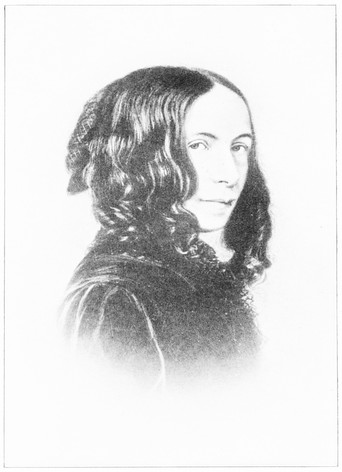
ELIZABETH BARRETT BROWNING
CHAPTER VI A MERRY HEART
Mirth is God’s medicine; everybody ought to bathe in it.—Holmes. Who among us can presume to estimate the value of a merry heart? What a perpetual blessing it is to its possessor and to all who must come into close relationship with the owner of it!
The blue of heaven is larger than the cloud—Elizabeth Barrett Browning. There is nothing more pleasantly "catching" than happiness. The happy person serves to make all about him or her the more happy. What the bright, inspiring sunshine adds to the beauty of the fields, a happy disposition adds to the charm of all the incidents and experiences of one’s daily life.
A gay, serene spirit is the source of all that is noble and good.—Schiller. Do not you, whose eyes are perusing these lines, love to associate with a friend possessing a cheerful disposition? And do you not intuitively refrain from meeting with the unfortunate one whose looks and words are heavy with complainings or whose eyes fail to see the beauty of the world lying all about? And Your manners will depend very much on what you frequently think on; for the soul is as it were tinged with the color and complexion of thought.—Marcus Aurelius Antoninus. if we are given to wise thinking we must reach the conclusion that as we regard these attributes in others, so others must regard them in us.
Nothing is more eloquent than a beautiful face. It is the open sesame to all our hearts. A sunshiny face melts away all opposition and finds the word "Welcome" written over the doorways where the face wearing a hard, unfriendly look sees only the warning, "No Admittance."
Dost thou love life? Then do not squander time, for that is the stuff life is made of.—Benjamin Franklin. But a smile that is only skin deep is not a true smile, but only a superficial grin. A true smile comes all the way from the heart. It bears its message of good will and friendliness. It is a mute salutation of "good luck and happy days to you!" and it makes whoever receives it better and stronger for the hour.
Be yourself, but make yourself in everything as delightful as you can.—Margaret E. Sangster. The genuine smile is closely related to, and is a part of, that laughter which beams and sparkles in the eye and makes the little, cheerful, smiling lines in the face that are so quickly and easily distinguished from the lines that are the outward sign of an unhappy spirit within.
Many centuries ago that wise and The tissue of the life to be we weave with colors all our own, and in the field of destiny we reap as we have sown.—Whittier. admirable philosopher, Epictetus, discovered that "happiness is not in strength, or wealth, or power; or all three. It lies in ourselves, in true freedom, in the conquest of every ignoble fear, in perfect self-government, in a power of contentment and peace, and the even flow of life, even in poverty, exile, disease and the very valley of the shadow."
What must of necessity be done you can always find out beyond question how to do.—Ruskin. One of the happiest observers of life and its higher purposes—Anne Gilchrist—says: "I used to think it was great to disregard happiness, to press to a high goal, careless, disdainful of it. But now I see there is nothing so great as to be capable of happiness,—to pluck it out of each moment, The doctrine of love, purity, and right living has, step by step, won its way into the hearts of mankind, and has filled the future with hope and promise.—William McKinley. and, whatever happens, to find that one can ride as gay and buoyant on the angry, menacing, tumultuous waves of life as on those that glide and glitter under a clear sky; that it is not defeat and wretchedness which comes out of the storms of adversity, but strength and calmness."
The strongest incentive for the cultivation of a merry heart is that it is a duty as well as a delight. Sydney Smith has very wisely observed that "mankind is always happier for having been Since time is not a person we can overtake when he is past, let us honor him with mirth and cheerfulness of heart while he is passing.—Goethe. happy; so that if you make them happy now, you may make them happy twenty years hence by the memory of it."
True happiness has about it no suggestion of selfishness. The genuinely happy person is the one who would have all the world to be happy. "Is there any happiness in the world like the happiness of a disposition made happy by the happiness of others?" asks Faber. "There is no joy to be compared with it. The Every wish is a prayer with God.— Elizabeth Barrett Browning. luxuries which wealth can buy, the rewards which ambition can obtain, the pleasures of art and scenery, the abounding sense of health and the exquisite enjoyment of mental creations are nothing to this pure and heavenly happiness, where self is drowned in the blessings of others."
Say not always what you know, but always know what you say.—Claudius. One of the most heavenly attributes of happiness is that it begets more happiness not only in ourselves but in others about us. It has in it an uplift and a strength that enables us to build the stronger to-day against the distress that would beset us to-morrow.
"Health and happiness" are terms that are so often closely linked in our speech and in our literature. One is Evil is wrought by want of thought, as well as want of heart.—Hood. almost a synonym for the other. Perhaps the true significance existing between the two would be more correctly stated were we to reverse the form in which they are usually set forth and say "happiness and health" instead. All observers of human nature and its many complex attributes are convinced that happiness is the Our greatest glory consists not in never falling, but in rising every time we fall.—Goldsmith. fountain spring of health.
One of our keenest students of life tells us that "small annoyances are the seeds of disease. We cannot afford to entertain them. They are the So use present pleasures that thou spoilest not future ones.—Seneca. bacteria,—the germs that make serious disturbance in the system, and prepare the way for all derangements. They furnish the mental conditions which are manifested later in the blood, the tissues, and the organs, under various pathological names. Good thoughts are the only germicide. We must kill our resentment and regret, impatience and anxiety. Health will inevitably follow. Every thought that holds us in even the slightest degree to either anticipation A good manner springs from a good heart, and fine manners are the outcome of unselfish kindness.—Margaret E. Sangster. or regret hinders, to some extent, the realization of our present good. It limits freedom. Life is in the present tense. Its significant name is Being."
Whether we are happy or not depends much on our point of view. The disposition to look at everything through kind and beautiful eyes makes all the world more kind and beautiful. If we are gloomy within the whole world appears likewise. Perhaps the two ways of looking at things could not be better set forth than in these clever lines by E. J. Hardy:
"How dismal you look!" said a bucket to his companion, as they were Reading and study are in no sense education, unless they may contribute to this end of making us feel kindly towards all creatures.—Ruskin. going to the well.
"Ah!" replied the other, "I was reflecting on the uselessness of our being filled, for, let us go away never so full, we always come back empty."
"Dear me! how strange to look on it that way!" said the other bucket; "now I enjoy the thought that however empty we come, we always go away full. Only look An hour in every day withdrawn from frivolous pursuits would, if properly employed, enable a person of ordinary capacity, to go far toward mastering a science.—Samuel Smiles. at it in that light and you will always be as cheerful as I am."
The difference between the pessimist and the optimist is in their
POINT OF VIEW
Because each rose must have its thorn, The pessimist Fate’s plan opposes; The optimist, more gladly born, Rejoices that the thorns have roses.
To live with a high ideal is a successful life. It is not what one does, but what one tries to do, that makes the soul strong and fit for noble career.—E. P. Tenney. Since our happiness is merely the reflex influence of the happiness we make for others it would seem as though the joy of our lives dwells within our own keeping. "The universe," says Zimmerman, "pays every man in his own coin; if you smile, it smiles upon you in return; if you frown, you will be frowned at; if He who loses money loses much; he who loses a friend loses more, but he who loses spirit loses all.—S. A. Nelson. you sing, you will be invited into gay company; if you think, you will be entertained by thinkers; if you love the world, and earnestly seek for the good therein, you will be surrounded by loving friends, and nature will pour into your lap the treasures of the earth."
If you tell the truth, you have infinite power supporting you; but if not, you have infinite power against you.— Charles G. Gordon. All of this being true we must early learn to seize upon opportunities for making others happy if we, ourselves, would get the most and highest enjoyment from life. "There are gates that swing within your life and mine," writes "Amber," that good woman of sainted memory, "letting in rare opportunities from day to day, that tarry but a moment and are gone, like travelers bound for points remote. There is the opportunity to resist the temptation to do a mean thing! Improve it, for it is in a hurry, like the man whose ticket is Great hearts alone understand how much glory there is in being good. To be and keep so is not the gift of a happy nature alone, but it is strength and heroism.—Jules Michelet. bought and whose time is up. It won’t be back this way, either, for opportunities for good are not like tourists who travel on return tickets. There is the opportunity to say a pleasant word to the ones within the sound of your voice. All of the priceless opportunities travel by lightning express and have no time to idle around the waiting-room. If we improve them at all it must be We live in deeds, not years; in thoughts, not breaths.—Bailey. when the gate swings to let them through."
It is in living not for ourselves alone but for others that we are to find the larger and truer happiness of life. Says Jenkin Lloyd Jones, "I would rather Remember that everybody’s business in the social system is to be agreeable.—Dickens. live in an alley, stayed all round with human loves, associations and ambitions, than dwell in a palace with drawbridge, moat, and portcullis, apart from the community about me, alienated from my neighbors, unable to share the woes and the joys of those with whom I divide nature’s bounty of land and landscape, of air and sky." And along this same line of thinking, Charles Hargrove says: "Brother, sister, your mistake is to live alone in a crowded world, to think of yourself and your own belongings, and what is the matter with you, instead of In the lexicon of youth there is no such word as fail.—Bulwer Lytton. trying to realize, what is the fact—that you are a member of a great human society, and that your true interests are one with those of the world which will go on much the same however it fare with you. Live the larger life, and you will find it the happier."
Be noble! and the nobleness that lies in other men, sleeping, but never dead, will rise in majesty to meet thine own.—Lowell. So one of the chief aims of your life and of mine should be to find happiness and to see to it that others find it as well. And let us not wait to find happiness in one great offering, but let us discover it whenever and wherever we can. Let us carefully study our surroundings to see if it is not hiding all about us. "Very few things," says Lecky, "contribute so much to the happiness of The cheerful live longest in years, and afterward in our regards.—Bovee. life as a constant realization of the blessings we enjoy. The difference between a naturally contented nature and a naturally discontented one is one of the marked differences of innate temperament, but we can do much to cultivate that habit of dwelling on the benefits of our lot which converts acquiescence into a more positive enjoyment."
Nothing can do more to add to our happiness of mind than to cultivate the gracious habit of being grateful for joys How sweet and gracious, even in common speech, is that fine sense which men call Courtesy!—James T. Fields. that come to us and to seek to appreciate the worth of the beneficent gifts that are ever being showered upon us. We are so apt to fall into the habit of accepting blessings as a matter of course and of failing to discover their wonderful value. How many of us, for example, have ever thoughtfully dwelt upon Make each goal when reached, a starting point for further quest.—Browning. the priceless attributes of the air that is ever and always floating about us. In order that we may have a truer appreciation of its fine qualities and purposes let us read these words by Lord Avebury:
"Fresh air, how wonderful it is! It permeates all our body, it bathes the skin in a medium so delicate that we are not conscious of its presence, and yet The world is so full of a number of things, I’m sure we should all be as happy as kings.—Robert Louis Stevenson. so strong that it wafts the odors of flowers and fruit into our rooms, carries our ships over the seas, the purity of sea and mountain into the heart of our cities. It is the vehicle of sound, it brings to us the voices of those we love and the sweet music of nature; it is the great reservoir of the rain which waters the earth, it softens the heat of day and the cold of night, covers us overhead with a glorious arch of blue, and lights up the morning and evening skies with fire. It is so God bless the good-natured, for they bless everybody else.—Beecher. exquisitely soft and pure, so gentle and yet so useful, that no wonder Ariel is the most delicate, lovable and fascinating of all Nature Spirits."
It is only when we open our eyes to the beauty of the wonders about us that we see how much there is to contribute to our happiness if we will but open our hearts and let it come in. What a perpetual exaltation nature will afford us If you are acquainted with Happiness, introduce him to your neighbor.—Phillips Brooks. when we have cultivated the fine habit of looking upon it with the welcoming eyes through which Richard Jefferies beholds it: "The whole time in the open air," he tells us, "resting at mid-day under the elms with the ripple of heat flowing through the shadow; at midnight between the ripe corn and the hawthorne hedge or the white camomile and the poppy pale in the duskiness, with face Nor love thy life, nor hate; but what thou liv’st, live well; how long or short, permit to heaven.—Milton. upturned to the thoughtful heaven. Consider the glory of it, the life above this life to be obtained from constant presence with the sunlight and the stars."
So let us cultivate the fine habit of finding joy and of shouting it to our friends and neighbors. Life seems bright to us when we are really glad of The most wasted of all days is that on which one has not laughed.—Chamfort. anything and we let gladness have voice to express itself. George MacDonald says "a poet is a man who is glad of something and tries to make other people glad of it, too." In the possession of this kindly spirit, at least, we must all strive to be poets.
It is impossible to be just if one is not generous.—Joseph Roux. Emerson tells us that "there is one topic positively forbidden to all well-bred, to all rational mortals, namely, their distempers. If you have not slept, or if you have headache, or sciatica, or leprosy, or thunder stroke, I beseech you, by all the angels, to hold your peace, and not pollute the morning, to which all the housemates bring serene and pleasant thoughts, by corruption and groans."
The fine tonic effect of a bright, happy face smiling across the breakfast table is known to all the world. Better a feast of corn bread and a cheerful countenance than fruit cake and a sour temperament. People glorify all sorts of bravery, except the bravery they might show on behalf of their nearest neighbors.— George Eliot.
So I feel very sure that you, my dear young lady, for whom these lines are written, are never going to appear at the breakfast table with aught other than a bright cheery face and a pleasant word How active springs the mind that leaves the load of yesterday behind.—Pope. for all about you. Some one has said that the first hour of the day is the critical one. Happy is the person who can wake with a song, or who can at least hold back the fears and the grumbles until a thought of gladness has established One of the most charming things in girlhood is serenity.—Margaret E. Sangster. itself as the keynote of the day.
"Assume a virtue, if you have it not," says Shakespeare. While as a rule it is deemed wrong to assume to possess any virtue that we do not possess, we may and no doubt should, at times, appear to be happy even though we may feel more like indulging in lamentations. To come to the breakfast table enumerating a Every generous nature desires to make the earning of an honest living but a means to the higher end of adding to the sum total of human goodness and human happiness.—Frances E. Willard. list of real or imaginary ailments is a most ill-advised thing to do. We should endeavor to forget our troubles and above all we should be slow to give voice to them so that thereby they will be multiplied in the minds of others. It has been truly said that most people who are unhappy are really miserable and bring their misery to others because they allow the failures and discomforts to speak the first word in their souls. For misery is voluble and the little discomforts will turn us into their continual mouthpieces if we will give them a Attempt the end, and never stand in doubt; nothing’s so hard but search will find it out.— Richard Lovelace. chance. But the truly thoughtful and considerate person will have none of them. Instead of displaying the flag of distress and surrender, the wiser method is to pull our courage and determination together and don
THE BETTER ARMOR
If through thick and through thinThere is only one way to get ready for immortality, and that is to love this life and live it as bravely and cheerfully and faithfully as we can.—Henry Van Dyke. You are eager to win, Don’t go shrouded in Fear and in Doubt, But with Hope and with Truth And the blue sky of Youth Go through life with the sunny side out.
So let us determine that we will cultivate the happy habit; for indeed even happiness is largely a habit. "As he thinketh in his heart, so is he." If he thinks trouble, he is very likely to find it. If he thinks sickness, he is He that composes himself is wiser than he that composes books.—Benjamin Franklin. likely to be ill. If he thinks unkind things, he is quite sure to put them into the deeds of his daily life. The thought is the architect’s plans which the hands are likely to set about to build. To the one who thinks the weather is Anxiety never yet successfully bridged over any chasm.—Ruffini. bad, it is sure to be disagreeable. To the one who seeks to find something pleasant about it, it is certain to offer some happy phases.
How poor are they that have not patience! What wound did ever heal but by degrees?—Shakespeare. We must all answer "yes" to this question asked by one of our fine writers on our social amenities: "Don’t you get awfully tired of people who are always croaking? A frog in a big, damp, malarial pond is expected to make all the fuss he can in protest of his surroundings. But a man! Destined for a crown, and born that he may be educated for the court of a king! Placed in an emerald world with a hither side of opaline shadow, and a fine dust of diamonds to set Duty determines destiny. Destiny which results from duty performed, may bring anxiety and perils, but never failure and dishonor.—William McKinley. it sparkling when winter days are flying; with ten million singing birds to make it musical, and twice ten million flowers to make it sweet; with countless stars to light it up with fiery splendor, and white, new moons to wrap it round with mystery; with other souls within it to love and make happy, and the hand of God to uphold it on its rushing way among the countless worlds that crowd its path; If I can stop one heart from breaking, I shall not live in vain.—Emily Dickinson. what right has man to find fault with such a world? When the woodtick shall gain a hearing, as he complains that the grand old century oak is unfit to shelter him, or the bluebird be harkened to when he murmurs that the horizon is off color, and does not match his wings, then, I think, it will be time for man to find fault with the appointments of the magnificent sphere in which he lives."
No book is worth anything which is not worth much; nor is it serviceable, until it has been read, and reread, and loved, and loved again.—Ruskin. Therefore let it be determined between us, right here and now, that come what may, we shall each of us endeavor to keep a merry heart and a pleasant face. As we love to see a happy expression on the faces of our parents, brothers, sisters and friends, so must they enjoy seeing a pleasant look overspreading our Wise, cultivated, genial conversation is the best flower of civilization.—Emerson. features. And with this good and kindly resolve in our minds it will never be difficult for us to decide whether we shall give to the good world about us the gladness or the gloom that is embodied in
SONG OR SIGH
If you were a bird and shut in a cage, Now what would you better do,— Would you grieve your throat with a sorry note And mourn the whole day through; Or would you swing and chirp and sing, Though the world were warped with wrong, Till you filled one place with the perfect grace And gladness of your song?
It is so easy to perceive other people’s little absurdities, and so difficult to discover our own.— Ellen Thornycroft Fowler. If you were a man and shut in a world, Now what would you better do,— On a gloomy day, when skies were gray, Would you be gloomy, too? When crossed with care would you let despair Life’s happy hope destroy, Or with a smile work on the while You found the path to joy?
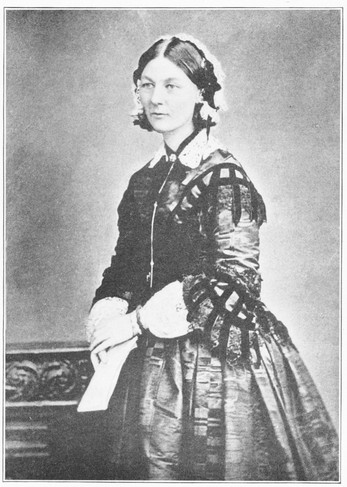
FLORENCE NIGHTINGALE
CHAPTER VII GOLDEN HABITS
We often hear I think that there is success in all honest endeavor, and that there is some victory gained in every gallant struggle that is made.—Dickens. persons speaking of "the force of habit" as though it were something to be regretted. "Habit is second nature," is a saying that is included among the classic epigrams of men. That habits do become very strong, all the world has learned, sometimes to its sorrow and sometimes to its advantage and delight.
For be it known that good habits are just as strong as bad habits and in that Every noble work is at first impossible.—Carlyle. we should all feel a common joy and a sense of deliverance from wrong doing.
The fact that a fixed habit is only a matter of long and gradual growth ought Truth is a strong thing, let man’s life be true.—Browning. to be very much to our advantage. This very fundamental principle of their construction should result in giving us very many more good habits than bad habits. This happy conclusion is based on the supposition that while many of Efforts to be permanently useful must be uniformly joyous—a spirit all sunshine, graceful from very gladness, beautiful because bright.—Carlyle. us are so constituted that it is possible we might, in some unguarded moment, do a wrong act, it is unlikely we could repeat the error so often and so long as to make the questionable action become a fixed habit.
The doing of a wrong thing should result in convincing us, on sober second Pass no day idly; youth does not return.—Chinese Proverb. thought, that it was a mistake on our part to have permitted ourselves to have been led into uncertain, unhappy paths and we would then and there reinforce our moral strength and our determination that the wrong should not occur again.
In doing right things, the conditions are quite reversed. Every good deed inspires us to still greater determination to do more of the same kind. Wrong If, instead of a gem, or even a flower, we could cast the gift of a lovely thought into the heart of a friend, that would be giving as the angels must give.—George MacDonald. deeds are, in most cases, committed in a moment of thoughtlessness when one’s conscience, one’s higher and better self, is momentarily off guard. Our good acts are performed with a full and proud realization of what we are doing and are followed by a grateful sense of retrospective pleasure, after they have been done.
"Could the young," says Henry Nothing can constitute good breeding that has not good manners for its foundation.—Bulwer Lytton. James, "but realize how soon they will become mere walking bundles of habits, they would give more heed to their conduct while in the plastic state. Nothing we ever do is, in strict scientific literateness, wiped out." One of our latter day philosophers tells us that "happiness is a matter of habit; and you had better gather it fresh every day or you will never get it at all."
In speaking of the success he had achieved in life, Charles Dickens said: "I have been very fortunate in worldly matters; many men have worked much harder The common earth is common only to those who are deaf to the voices and blind to the visions which wait on it and make its flight a music and its path a light.—H. W. Mabie. and not succeeded half so well; but I never could have done what I have done, without the habits of punctuality, order, and diligence, without the determination to concentrate myself on one object at a time, no matter how quickly its successor should come upon its heels."
When we come to study carefully the full meaning of the word "habit" we find it to be a very comprehensive term. In the sense in which it is here employed The truest lives are those that are cut rose-diamond-fashion, with many facets answering to the many-planed aspects of the world about them.—Oliver Wendell Holmes. the dictionary defines it as being "a tendency or inclination toward an action or condition, which by repetition has become easy, spontaneous or even unconscious." From this definition it is easy to deduce the conclusion that one’s habits are in fact one’s manners, one’s principles, one’s mode of conduct; and a careful consideration of the theme finally brings one to a clear realization of the secret of
TRUE GENTILITY
One cannot from the world conceal The current of his thought; It seems to me there is no maxim for a noble life like this: Count always your highest moments your truest moments.—Phillips Brooks. A word or action will reveal The thing his brain hath wrought.
True goodness from within must come And deeds, to be refined, Their outer grace must borrow from Politeness of the mind.
Our manners are ourselves. They constitute our personality and it is by our We only begin to realize the value of our possessions when we commence to do good to others with them.— Joseph Cook. personality that we are judged. If that is frank and pleasant and agreeable we shall not lack for friends.
A person may be deficient in the charm of form or face but if the manners are Believe me, girls, on the road of life you and I will find few things more worth while than comradeship.—Margaret E. Sangster. perfect they will call forth admiration as nothing else could do.
Our thoughts are the essential and impressive part of ourselves. "It is the spirit that maketh alive. The flesh profiteth nothing." We are told by Swedenborg that "every volition and thought of man is inscribed on his brain, Do noble things, not dream them, all day long, and so make life, death, and the vast forever, one grand, sweet song.—Charles Kingsley. for volition and thoughts have their beginnings in the brain, whence they are conveyed to the bodily members, wherein they terminate. Whatever, therefore, is in the mind is in the brain, and from the brain in the body, according to the order of its parts. Thus a man writes his life in his physique, and thus the angels discover his autobiography in his structure."
And to get peace, if you do want it, make for yourself nests of pleasant thoughts.—Ruskin. Since good habits and pleasing manners are such important aids in the making of character and personality we should leave nothing undone to strengthen the better side of our lives. And since we all are constantly being acted upon by When one is so dedicated to his mission, so full of a great purpose that he has no thought for self, his life is one of unalloyed joy—the joy of self-sacrifice.—Lyman Abbott. suggestion we should invite to our assistance anything that will tend to keep us in the most exemplary frame of mind.
In addition to the spoken word of admonition from parents, teachers, and others honestly interested in our welfare we should reinforce our good resolves by reading good books and in framing Morality is conformity to the highest standard of right and virtuous action, with the best intention founded on principle.—A. E. Winship. for our own benefit a code of rules for our better conduct.
It is considered to be a good plan to select a number of suitable quotations and display them in some manner where the eye must see them with frequency. A calendar with a daily quotation admirably serves this purpose. Oftentimes when a good thought is put into the mind in the early morning it tends to direct the To have a friend is to have one of the sweetest gifts that life can bring; to be a friend is to have a solemn and tender education of soul from day to day.—Anna Robertson Brown. course of our thinking throughout the day. The following quotations are offered only as suggestions. They can be added to indefinitely:
A man’s own good breeding is the best security against other people’s ill manners.—Chesterfield.
Good breeding shows itself most when to an ordinary eye it appears the When it comes to doing a thing in this world, I don’t ask myself whether I like it or not, but, what’s the best way to get it done.—Ellen Glasgow. least.—Addison.
Good manners is the art of making those people easy with whom we converse. Whoever makes the fewest people uneasy is the best bred in the company.—Swift.
Hail! ye small, sweet courtesies of life, for smooth do you make the road of it.—Sterne.
Civility costs nothing and buys everything.—Lady Montague.Do you ask to be the companion of nobles? Make yourself noble, and you shall be. Do you long for the conversation of the wise? Learn to understand it, and you shall hear it.—Ruskin.
Evil communications corrupt good manners.—Bible.
No pleasure is comparable to standing on the vantage ground of truth.—Lord Bacon.
They are never alone that are accompanied with noble thoughts.—Sidney.
Let your speech be always with grace, seasoned with salt.—New Testament.
Sweet mercy is nobility’s true badge.—Shakespeare.There is no cosmetic for homely folks like character. Even the plainest face becomes beautiful in noble and radiant moods.—Newell Dwight Hillis.
Honest labor bears a lovely face.—Dekker.
The gods give nothing really beautiful without labor and diligence.—Xenophon.
The key to pleasure is honest work. All dishes taste good with that sauce.—H. R. Haweis.
Work is as necessary for peace of mind as for health of body.—Lord Avebury.
A single gentle rain makes the grass many shades greener. So our prospects brighten on the influx of better thoughts.—Thoreau. Sir John Lubbock has said: "I cannot, however, but think that the world would be better and brighter if our teachers would dwell on the duty of Happiness, as well as the happiness of Duty, for we ought to be as cheerful as we can, if only because to be happy ourselves is the most effectual contribution to the happiness of A good book is the precious life-blood of a master spirit embalmed and treasured up on purpose to a life beyond life.—Milton.others."
Surely we cannot include among good habits the habit of making those about us unhappy. Hence it is that they who are careless of the state of mind into which Happiness is the natural flower of duty.—Phillips Brooks. they throw those about them are not good mannered. While it is but simple kindness to allow our friends to sympathize in the great griefs that may overtake us, it is not kindness for us to be forever stirring them with all the real or fancied ills with which we can regale them. Either extreme is more or By wisdom wealth is won; but riches purchased wisdom yet for none.—Bayard Taylor. less absurd and unwarranted. Perhaps, as a rule, we thrust our troubles quite too willingly upon others. On the other hand, some of the peoples of the Orient we deem to be so ludicrously polite in matters of this nature as to almost arouse our mirth.
It is surely better to pardon too much than to condemn too much.—George Eliot. An English writer in speaking of the Japanese says: "There must really have been a double portion of politeness bestowed upon these people who in the deepest domestic grief would smile and smile, so that a guest in the home might not be burdened with their sorrow. The habit is in striking contrast with the weeping and wailing, the mourning streamers, the hatbands, plumes, palls, black To be a strong hand in the dark to another in the time of need, to be a cup of strength to a human soul in a crisis of weakness, is to know the glory of life.—Hugh Black. chargers, and funeral hearses with which we struggle to stir the envy, if not the hearts of all beholders!"
In Japan, so we are told, manners are included in the public teaching of morality. Among our western peoples our public school boys would deem it strange It is not the result of our acts that makes them brave and noble, but the acts themselves and the unselfish love that moved us to do them.—R. L. Stevenson. if a master gave them an hour’s instruction in the correct manner of behaving toward their father and mother or sisters. Yet such knowledge might be urgently needed and do good here as it does in Japan where it is counted the most vital instruction of all. Step by step the Japanese child is led along the course of behavior, learning how to stand up, sit down, bow, hang up its hat, and how to think of its parents, brothers and sisters, and of its country. Later on these lessons are repeated with illustrations from short stories, and still later by incidents from actual history and the lives of great men of all Use thy youth so that thou mayest have comfort to remember it when it hath forsaken thee.—Walter Raleigh. countries. Before the end of the course of instruction is reached all manner of virtues and points of behavior have been introduced, such as patriotism, cleanliness, and (especially in the case of girls) the proper way of advancing and retiring, offering and accepting things, sleeping and eating, visiting, congratulating and condoling, mourning and holding public meetings. So the school course continues It is easy to condemn; it is better to pity.—Abbott. from year to year, the elementary school course lasting four years and the secondary course four years more, and leading the boys and girls up to the study of benevolence, their duty to ancestors, to other people’s property, other people’s honor, other people’s freedom, and, finally, to self-discipline, modesty, dignity, dress, labor, the treatment of animals, and the due relations of men and women, both of whom are to be regarded equally as "lords" of creation. From end to end of the long course of training, behavior rather than knowledge is insisted upon, even down to the tiniest detail of what our good great-grandmothers valued as deportment.
To such scrupulous deportment and close attention to minuteness of habit, If you don’t scale the mountain, you can’t view the plain.—Chinese Proverb. some objection can be raised, perhaps. "Some men’s behavior," said Bacon, "is like a verse wherein every syllable is measured," and he warned us that manners must be like apparel, "not too strait or point-device, but free for exercise or For him who aspires, and for him who loves his fellow-beings, life may lead through the thorns, but it never stops in the desert.—Anonymous. motion." However, it is better to err on the side of too much attention to our manners rather than to be thought careless of our persons and our behavior.
Civilized peoples cannot help but be concerned with manners, refinement, good Be cheerful; wipe thine eyes; some falls are means the happier to arise.—William Shakespeare. breeding, and in a more minute sense, with the forms of etiquette. It is these things that distinguish civilization from savagery, and so unmistakably lift the cultured person above the one who does not see fit to cultivate the grace of gentility.
It has been truly said that we judge our neighbors severely by the breach of Be resolutely and faithfully what you are, be humbly what you aspire to be.—Thoreau. written or traditional laws, and choose our society, and even our friends, by the touchstone of courtesy. It is not an uncommon occurrence for a girl or a boy to win an advantageous position in life, not by superior mental or physical endowments but by a graciousness of manners that have smoothed for them the ways that lead to success.
For some quite unwarranted reason If people only knew their own brothers and sisters, the Kingdom of Heaven would not be far off.—George MacDonald. society seems to have taken the position that we have a right to expect more from our girls than from our boys in the matter of good manners. This, however, is not the view held by those who know the true meaning of good breeding. The The shadows of our own desires stand between us and our better angel.—Dickens. demand that every boy shall be a gentleman is as firm and binding as is that which says that every girl must be a gentle woman and a thorough lady.
Every girl knows what is expected of her. Her parents, brothers, sisters, If every day we can feel, if only for a moment, the realization of being our best selves, you may be sure that we are succeeding.—Bliss Carman. teachers, society and the world intend that she shall be good and gentle and gracious. They will be satisfied with nothing short of all that and it will be well for every girl to learn early in life to pursue only the paths that will lead into ways wherein these qualities of person and character may be found. So here and now it is timely to ask of the readers of these lines—
WHAT ARE YOU GOING TO DO?
What are you going to do, girls, With the years that are hurrying on? Do you mean to begin life’s purpose to win In the freshness and strength of the dawn?
The builders who build in the morning,If you know how to spend less than you get, you have the philosopher’s stone.—Benjamin Franklin. At even may joyfully rest, Their victories won, as they watch the glad sun Sink down in the beautiful west.
What are you going to do, girls, With time as it ceaselessly flows? Are you molding a heart that will pleasures impart As perfume exhales from the rose?
Let all that is purest and grandest In duty’s fair wreath be entwined; There is no other grace can illumine the face Like the charm of a beautiful mind.
He only is advancing in life, whose heart is getting softer, whose blood warmer, whose brain quicker, whose spirit is entering into living peace.—Ruskin. A student of the subject of ethics must understand that the true spirit of good manners is very closely allied to that of good morals. It has been pointed out that no stronger proof of this assertion is required than the fact that the Messiah himself, in his great moral teachings, so frequently touches upon the The fine art of living, indeed, is to draw from each person his best.—Lilian Whiting. subject of manners. He teaches that modesty is the true spirit of good behavior, and openly rebukes the forward manner of His followers in taking the upper seats at the banquet and the highest seats in the synagogues.
The philosophers whose names are recorded in history, although they were, Reflect upon your present blessings—of which every man has many—not on your past misfortunes, of which all men have some.—Dickens. themselves, seldom distinguished for fine manners, did not fail to teach the importance of them to others. Socrates and Aristotle have left behind them a code of ethics that might easily be turned into a "Guide to the Complete Gentleman;" and Lord Bacon has written an essay on manners in which he reminds If the day and the night are such that you greet them with joy, and life emits a fragrance like flowers and sweet-scented herbs—is more elastic, more starry, more immortal—that is your success.—Thoreau. us that a stone must be of very high value to do without a setting.
The motive in cultivating good manners should not be shallow and superficial. Lord Chesterfield says that the motive that makes one wish to be polite is a desire to shine among his fellows and to raise one’s self into a society supposed to be better than his own. It is unnecessary to state that Lord Chesterfield’s good manners, fine as they appear, do not bear the true Blessings ever wait on virtuous deeds.—Congreve. stamp of genuineness. There is not the living person back of them possessing heart and character. They seem to him, in a measure, what a fine gown does to the wax figure in the dressmaker’s window. True manners mean more than The microscope gives us a world, a universe, a single drop of dew. So also there is a world in a single profound, earnest meditation.—Madame Swetchine. mannerisms. They cannot be taught entirely from a book in which there are sets of rules to be observed on any and every occasion. They are rather a cultivated method of thinking and feeling and the forming of a character that knows, intuitively, the nice and kind and appropriate thing to do without reference to what a printed rule of conduct may set forth.
Better is it to have a small portion of good sense, with humility and a slender understanding, than great treasures of science, with vain self-complacency.—Thomas à Kempis. It is generally agreed that our best and only right motive in the cultivation of good manners should be to make ourselves better than we otherwise would be, to render ourselves agreeable to every one whom we may meet, and to improve, it may be, the society in which we are placed. With these objects in view, it is plainly as much a moral duty to cultivate one’s manners as it is to cultivate one’s mind, and no one can deny that we are better citizens when we observe the nicer amenities of society than we are when we pay no heed to them.
Lord Bacon says: "Many examples may be put of the force of custom, both upon There is one road to peace and that is truth.—Shelley. mind and body. Therefore, since custom is the principle magistrate of man’s life, let men by all means endeavor to obtain good customs. Certainly custom is most perfect when it beginneth in young years; this we call education, which is, in effect, but an early custom."
He hath from his childhood conversed with books and bookmen; and always being where the frankincense of the temple was offered, there must be some perfume remaining about him.—Thomas Fuller. So we see that our true characters are but the expression of our habits and of our manners. And we see that only those habits that are formed in the early years of life seem to fit us perfectly and naturally throughout all the years.
It is an old saying and a homely one, but none the less true, that "it is hard to teach an old dog new tricks." So it is hard to acquire in later life the manners and graces that escape us in youth.
Fortunate is the young girl who finds her lot is cast among the good Everything great is not always good, but all good things are great.—Demosthenes. influences of a cultured home. She has at hand the material from which to select all that she may need to build the fine character the world shall observe and admire. Such felicitous surroundings should teach her, first of all, to be very charitable and lenient toward others whose early years are lived among less The turmoil of the world will always die, if we set our faces to climb heavenward.—Hawthorne. advantageous surroundings. For if her culture does not in some ways influence and soften and modify her heart as well as her mind, its true purpose has been lost.
Those whose earlier years are spent amid surroundings not so favorable for the forming of golden habits, must strive all the harder for the prize of gentility If I can put one touch of a rosy sunset into the life of any man or woman, I shall feel that I have worked with God.—George MacDonald. which they would obtain. And in this very struggle against adverse circumstances will be engendered a strength and a spirit of self-reliance that will be likely to prove a worthy equivalent for the loss of a more kindly and propitious environment.
It is experience that develops character, and character is the one thing that distinguishes a life and makes it a definite and individual thing of supreme beauty. Our business in life is not to get ahead of other people but to get ahead of ourselves.—Maltbie D. Babcock.
The character that is the most laboriously built is the most enduring. Golden habits that have been hammered out of our life experiences are to be implicitly relied upon. They have been tested at every point. They have been shaped out of the very necessity of one’s surroundings. They are worth every effort that The narrow kingdom of to-day is better worth ruling over than the widest past or future.—Edith Wharton. they have cost. The world will never know how much of its integrity, how much of its stability, how much of its beauty it owes to that which we are all so prone to call
DRUDGERY
Dull drudgery, "gray angel of success;"There’s always a bloom on the world if one looks.—Abby M. Roach. Enduring purpose, waiting long and long,
Headache or heartache, blent with sigh or song, Forever delving mid the strife and stress: Within the bleak confines of your duress Are laid the firm foundations, deep and strong, Whereon men build the right against the wrong,— The toil-wrought monuments that lift and bless.
The coral reefs; the bee’s o’erflowing cells;The reward of one duty is the power to fulfill another.—George Eliot. The Pyramids; all things that shall endure; The books on books wherein all wisdom dwells, Are wrought with plodding patience, slow and sure. Yours the time-tempered fashioning that spells Of chaos, order, perfect and secure.
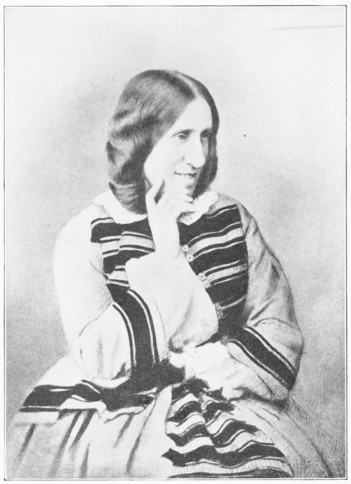
GEORGE ELIOT
CHAPTER VIII THE PURPOSE OF LIFE
He who works for sweetness and light works to make reason and the will of God prevail.—Matthew Arnold. "Nothing succeeds like success."
Perhaps the true meaning of this old French proverb is that once we have a measure of success we are the more likely to achieve still more victories. The discovery that our strength, perseverance and determination have been capable of bending circumstances to our will and bringing to fulfillment the end for which Let us ever glory in something, and strive to retain our admiration for all that would ennoble, and our interest in all that would enrich and beautify our life.—Phillips Brooks. we have wished and worked, gives us renewed courage and inspiration for the undertaking of new and larger duties.
We learn to do by doing. Achievement leads to still greater achievement. Orison Swett Marden, one of the world’s wisest of observers and deepest of philosophers, says, "The world makes way for the determined man." And so it does Nothing of worth or weight can be achieved with half a mind, with a faint heart, and with a lame endeavor.—Barrow. for the determined woman, or the determined girl or boy.
Regarding this thing called "Success," too many of us are apt to think that it means some one, isolated, remarkable achievement, that comes at the end of a Good manners are part of good morals.—Whately. long period of striving in some particular field of endeavor. This is not entirely true. Every great success is made of very many lesser successes that have preceded it. Just as the cap-stone at the top of the tallest building is held in its lofty position by every stone beneath it even down to the ones deep in the earth at the very foundation of the structure, which are indeed perhaps After all, the kind of world one carries about within one’s self is the important thing, and the world outside takes all its grace, color and value from that.—Lowell. the most important of all.
So the thing which the world is pleased to call "Success" is built up by a thousand little successes on which it must finally rest. The building of a life success begins with the earliest dawn of being and must be carried on with as much care as a mason would give to the laying of the walls of a structure designed to stand for years. The mason knows that if he does not lay his In character, in manner, in style, in all things the supreme excellence is simplicity.—Longfellow. foundations deep and firm, that if the walls are not kept straight and plumb, that if he puts faulty bricks or stones in the walls, the building will not be a success. The work at every stage must be a success or the completed structure must be a failure.
So it is in life. If our moments are not successful, the hours can never be so, and the days and years can but enlarge upon and emphasize their failure. "Every day is a fresh beginning, every morn is a world made new," says Susan Coolidge. There is a chance for attaining success every hour and day of our lives.
Success is not alone for the great men of the world who find new continents, The small courtesies sweeten life; the greater ennoble it.—Bovee. explore the poles, navigate the air, write great poems, paint great pictures, or who amass fortunes of millions of dollars. No, success is for any and all of us, here and now, any and all the time.
Were you prepared in your studies at school to-day? If you were, that was Never mind if you cannot do all things just as well as you would like to. It is only necessary to do things just as well as you can.—Patrick Flynn. success.
Have you your music lesson well in hand for this afternoon? If so, that means success.
Have you been kind to everybody to-day, and with a pleasant word and a willing hand, done all you could to make life pleasanter and happier for those about you? If so, that is a fine moral success. And if you will multiply the Not so much beautiful features as a beautiful soul can make a beautiful face.—Margaret E. Sangster. achievements of to-day by the days that are in the years before you, you can see the result that you have a reason to expect, as your life’s work.
Success means doing all that we can do as well as we can do it. It may be There is a marvelous power in a well-defined individuality.—Joe Mitchell Chapple. work or it may be play. It may be something of seemingly little account or it may be something of importance, but unless we do it well, and to the best of our ability it will not be a success.
"Every day," says Bunsen, "ought to be begun as a serious work, standing alone in itself, and yet connected with the past and the future." And Ruskin still further emphasizes this thought in the words: "Let every dawn of morning be to you as the beginning of life, and every setting sun be to you as its close; then let every one of these short lives leave its sure record of some Resolution always gives us courage.— A. E. Winship. kindly thing done for others."
We begin to achieve success when we do the things that are necessary for such achievement. Huxley expressed the Of all fruitless errands, sending a tear to look after a day that has gone is the most fruitless.—Dickens. whole secret of the matter when he said: "Perhaps the most valuable result of all education is the ability to make yourself do the thing you have to do, when it ought to be done, as it ought to be done, whether you like to do it or not."
A good life, which is but another name for success, does not come You can never be wise unless you love reading.—Johnson. by accident. Fortune may seem to favor it but it is the disposition to seize upon the opportunities that present themselves that make some lives seem more blest with "good chances" than others.
Self cultivation is the secret of most all attainments in the realm of human endeavor. As a matter of fact, all that others can do for us is as nothing to The perfecting of one’s self is the fundamental base of all progress and all moral development.—Confucius. that which we may do for ourselves. Persons who do things usually have to work for results, or they have at some time had to work to acquire the habits that later on make it seem so easy for them to do fine things. "We think," says J. C. Van Dyke, "because the completed work looks easy or reads easy, that it must have been done easily. But the geniuses of the world have all put upon record their conviction that there is more virtue in perspiration than in inspiration. The Nothing can be beautiful which is not true.—Ruskin. great poets, whether in print or in paint, have spent their weeks and months—yes, years—composing, adjusting, putting in and taking out. They have known what it is to ’lick things into shape,’ to labor and be baffled, to despair and to hope anew."
With the dawning of every morning, life comes bringing to us a new and It is not a lucky word, this same impossible; no good comes to those who have it so often in their mouth.—Carlyle. wonderful day to employ it as we will. Shall it be a fine, gratifying success, or shall it be a failure? Shall it be part success and part failure? There can be no doubt about it being a matter that is very largely in our own keeping.
MORNING GATES
Each golden dawn presents two gates That open to the day; Through one a path of joy awaits, I wasted time, and now time doth waste me.—Shakespeare. Through one a weary way. Choose well, for by that choice is willed If ye shall be distressed At eventide, or richly filled With strength and peace and rest.
"Every true life," says J. R. Miller, "should be a perpetual climbing upward. We should put our faults under our feet, and make them steps on which to lift ourselves daily a little higher.... We never Youth, all possibilities are in its hands.—Longfellow. in this world get to a point where we may regard ourselves as having reached life’s goal, as having attained the loftiest height within our reach; Thought is deeper than all speech.— Cranch. there are always other rounds of the ladder to climb."
So we know that the purpose of life is not to make a failure of it. And we know that we cannot make it a success unless we work toward that end. "The first People influence us who have no business to do it, simply because we have neglected to train ourselves to attend to our own affairs.—A. E. Winship. great rule is, we must do something—that life must have a purpose and an aim—that work should be not merely occasional and spasmodic, but steady and continuous," says Lecky. "Pleasure is a jewel which will retain its luster only when it is in a setting of work, and a vacant life is one of the worst of pains, though the islands of leisure that stud a crowded, well-occupied life may be among the things to which we look back with the greatest delight."
There can be no interest where there is no purpose. How tiresome it would As the heart, so is the life. The within is ceaselessly becoming the without.—James Allen. very soon become if we were compelled to make idle, useless marks upon paper, without any design whatsoever. But to be able to draw pictures is a delight that no one can forego. "The most pitiable life is the aimless life," says Jenkin Lloyd Jones. "Heaven help the man or woman, the boy or girl, who is not interested in anything outside of his or her own immediate comfort and that related thereto, who eats bread to make strength I have faith in the people.—Abraham Lincoln. for no special cause, who pursues science, reads poetry, studies books, for no earthly or heavenly purpose than mere enjoyment or acquisition; who goes on accumulating wealth, piling up money, with no definite or absorbing purpose to apply it to anything in particular."
Perhaps we expect to-day, more than men have at any other time in the Of all the propensities which teach mankind to torment themselves, that of causeless fear is the most irritating, busy, painful and pitiable.—Walter Scott. world’s history, that girls as well as boys, must look forward to doing something definite in life. It is not deemed sufficient for anyone simply "to be." The whole world is now living the verb "to do." The grace, strength, beauty and worth of womanhood is being enhanced with the constantly enlarging sphere of women’s work. The primitive, almost heathen, notion that the feminine sex constituted a handicap in the achieving of great success in a great majority of the fields of human endeavor is He who cannot smile ought not to keep a shop.—Chinese Proverb. rapidly fading away. It can no longer stand in the light of the brilliant achievements women are making everywhere. Indeed, men are becoming well convinced that their presumed supremacy in many of the world’s spheres of Common sense bows to the inevitable and makes use of it.—Wendell Phillips. work is being successfully challenged at every point. So general is this experience becoming that the present status of things might well be set forth somewhat after the following style:
MAN, POOR MAN!
The question used to be, ’t is true, "What tasks are there for girls to do?" But now we’ve reached an epoch when We ask: "What is there left for men?"
They’ll keep enlarging "woman’s sphere" Till man, poor, shrinking man, we fear, Must If you wish success in life, make perseverance your bosom friend, experience your wise counselor, caution your elder brother, and hope your guardian genius.—Addison. grow quite useless, after while, And go completely out of style.
This piece of frivolity can well be pardoned on account of its absurdity. The great work of the world is so broad, so deep, so high, that it calls for the best endeavors of all girls and boys, women and men. That the door of opportunity is henceforth to be open to all is an assurance that the work is to be more grandly Self-distrust is the cause of most of our failures.—Bovee. and beautifully done than ever before. What women may do in the years to come is wonderfully set forth by what women have done in the past. All history is filled with the splendid achievements of the women of the world. A girl of to-day will find It is generally the idle who complain they cannot find time to do that which they fancy they wish.—Lubbock.no reading more helpful and inspiring than the lives of such noble women as Martha Washington, Queen Victoria, Sally Bush—Abraham Lincoln’s good step-mother—Elizabeth Barrett Browning, Mrs. Harriet Beecher Stowe, Miss Louisa Alcott, Laura Bridgman, Charlotte Cushman, Maria Mitchell, Lady Franklin, What ardently we wish we soon believe.—Young. Mrs. Julia Ward Howe, and Florence Nightingale.
If the girls of to-day are to have larger rewards in the world’s work, they must fit themselves for the larger responsibilities. Every prudent girl will, of course, talk over the prospect of her future years with her parents, her brothers and sisters, her teachers, or with mature and responsible friends. So very, very much depends on laying the right foundations. But there are many qualities that must constitute parts of every enduring foundation.
Attention, application, accuracy, method, punctuality, good behavior, Nature never stands still, nor souls neither; they ever go up or go down.—Julia C. R. Dorr. modesty, gentility, enlightenment, all of these and more are essential to success and for the highest achievement of the true purpose of living.
It has been well said that it is the repetition of little acts which constitutes not only the sum of human character, but which determines the character of nations; and where men or nations have broken down, it will almost invariably be found that neglect of little things was the rock on which they were wrecked.
Every human being has duties to be performed, and, therefore, has need of Thought alone is eternal.—Owen Meredith. cultivating the capacity for doing them—whether the sphere of action be the management of a household, the conduct of a trade or a profession, or the government of a nation.
Only those live who do good.— Tolstoi. The one fixed truth in the matter of character-building is the fact that steady attention to the little matters of detail lies at the very foundation of human progress.
The splendid trees that lift their branches heavenward depend for their sustenance on the tiny thread-like roots The greatest truths are the simplest.—Hare. that come into very close relations with the soil and can thus take in the nourishment needed for the making of growth. This, the larger roots have not the capacity for doing. So in the growth of the human intellect and human character, it is the little actions, day by day, that really do the permanent building. With patient purpose to do successfully the many little tasks that confront us we can later on achieve the larger success awaiting us.
Many people owe the grandeur of their lives to their tremendous difficulties.—Spurgeon. The world’s history is full of the triumphs of those who have had to struggle from beginning to end for recognition. Carey, the great missionary, began life as a shoemaker; the chemist Vanquelin was the son of a peasant; the poet Burns was a farmer boy and a day laborer; Ben Jonson was a bricklayer; Livingstone, the traveler and explorer, was a weaver; Abraham Lincoln was a "rail-splitter" and a farmer boy.
Thought by thought piled, till some great truth is loosened.—Shelley. At the plow, on the bench, at the loom, these men dreamed of the future greatness, and step by step, day by day, they persevered until they won the full measure of success.
The great and good women of the The child’s reasoning powers are, as it were, the wings with which he will eventually have to fly.—Landon. world have won their distinction in the same manner. They cultivated the sterling qualities that made for success. They acquired the manners that attracted toward them help and strength of others interested in good causes and those struggling to advance them.
Choose always the way that seems the best, however rough it may be. Custom will render it easy and agreeable.— Pythagoras. And the girl who is reading these lines, can, if she will, make her life a happy success. She may be praised by the world or it may be by the small circle of friends with whom she comes in contact. Her name may never be written in history but it may be fondly spoken by parents, sisters, brothers, schoolmates, Recollection is the only paradise from which we cannot be turned out.—Richter. friends. In a thousand gracious ways she can make the hours, days and years good and golden for her own precious self and for all who know her. She must be thoughtful and intelligently alert to the opportunities lying all about her ready to be fashioned into shining deeds. She must know that she is a precious craft on the sea of life and that she must not be permitted to drift from the harbor of youth and of home without a life pilot. And this pilot should be her Memory is the treasure-house of the mind.—Fuller. own conscience, hedged about with the learning, the good breeding, the fine character that she herself, under proper guidance, must cultivate through the impressionable years of childhood and maidenhood. If she so wills it, beauty and grace and true worth are all hers. And let her greet and go forth in the freshness of each golden day, as indeed, she must greet life, itself, with a glad, hopeful, helpful
MORNING PRAYER
Habit is an internal principle which leads us to do easily, naturally, and with growing certainty, what we do often.—Webster.Oh, may I be strong and brave, to-day, And may I be kind and true, And greet all men in a gracious way, With frank good cheer in the things I say, And love in the deeds I do.
May the simple heart of a child be mine, And the grace of a rose in bloom; Let me fill the day with a hope divine And turn my face to the sky’s glad shine, With never a cloud of gloom.
With the golden levers of love and light The vision that you glorify in your mind, the Ideal that you enthrone in your heart—this you will build your life by, this you will become.—James Allen. I would lift the world, and when, Through a path with kindly deeds made bright, I come to the calm of the starlit night, Let me rest in peace. Amen.
By MARGARET E. SANGSTER
HAPPY SCHOOL DAYS
A Book for Girls
In this book, Mrs. Sangster, the popular friend of all girls, writes to them charmingly and sympathetically of the things nearest to their hearts. The book will delight every girl.
It ought to reach the hands of every girl.—St. Paul Pioneer Press.
The book is as fascinating as a story.—Des Moines Register and Leader.
Every girl’s mother ought to make her a present of this book.—St. Louis Times.
Youthful and adult readers alike will enjoy and commend this book.—Chicago Record-Herald.
Chatty and with many a merry anecdote the book is as beguiling as a romance.—San Francisco Chronicle.
A charming book pervaded with the spirit of sweet friendliness, complete comprehension and joyous helpfulness.—Chicago News.
An interesting, suggestive, sensible book, in which Mrs. Sangster is at her best. It is a book of great worth, and whoever extends its usefulness by increasing its readers is a public benefactor.—Journal of Education, Boston.
Handsome cover. Cloth, 12mo. $1.00
FORBES & COMPANY PUBLISHERS CHICAGO
By NIXON WATERMAN
"BOY WANTED"
A book of jolly, sparkling, invigorating counsel, in prose and verse, that any girl or boy will read with interest. It will also please their parents and teachers.
Should be read by all boys, and girls, too.—Detroit News.
"Boy Wanted" is an unusual achievement.—San Francisco Call.
It is clever, cheery and full of sound ideas.—Chicago Record-Herald.
Its message is earnest and thrilling. Full of inspiration and encouragement.—Pittsburg Gazette.
A very bright and stimulating book on making the most of opportunities.—Montreal Daily Witness.
Strongly written. A good book to place in the hands of any boy of any age up to eighty.—Denver Republican.
It is the talk of a big brother to a younger one on a tramp off together. A mine of condensed inspiration.—Boston Advertiser.
The book is beautifully made. It is handsomely bound and illustrated and has some novel typographical features.—Boston Globe.
Illustrated. Attractive Cover. Cloth, 8vo. $1.00
FORBES & COMPANY PUBLISHERS CHICAGO