Chapter XXX · Twelfth Day of the Trial. (continued 2)
Reading edition
Now remember how that occurred. When Dr. Bowen came he wanted a sheet to cover up the body of Mr. Borden and he called upon Bridget and Mrs. Churchill to get one. They went into the sitting room and took the key off the mantel and went up the back stairs (where you went) unlocked the door to Mrs. Borden’s room, got the sheets and came down the back. So Bridget had been up the back stairs to that room, but she had not been up the front stairs. Therefore when they got down stairs with the sheets Bridget and Mrs. Churchill knew that Mrs. Borden was not in her own room, because they had been up there. Therefore they knew that she was not in the back of the house, and Lizzie knew that she was not in the back part of the house, because they went up to get the sheets into Mrs. Borden’s room. See how plain that is when you look at the testimony, and it is brought out plainly in the testimony in the questions that are asked by the commonwealth. So you see that when Lizzie spoke about going upstairs to see if Mrs. Borden was in, Lizzie meant the front stairs, because they all knew, the three of them, that Mrs. Borden was not in her own room, and that if she was anywhere in the house she must be in the front part of the house. So Lizzie knew that Mrs. Borden had had a note and had gone out, and Bridget knew that she had a note and had gone out, as they both believed; that Lizzie had seen her up in the room making the beds and finishing up before 9 o’clock, and she had not seen her since, believing that she had gone out, and she recalled that she might have heard her come in before her father came back, before Mr. Borden did, and she said at once, “Go up at once and see if Mrs. Borden is not up in her room. Mrs. Borden is not here. I heard a noise as though she came in, and she must be upstairs in the front room somewhere. Go and see.” Now, that is natural. They thought she was in the upper and back part of the house, and there can be no doubt about that, because Miss Russell testifies to the same thing Mrs. Churchill does, Bridget Sullivan does, and then, after they came down, there it was that conversation about going to Mrs. Whitehead’s occurred. “What happened then?” “Oh,” I says, “Lizzie, if I knew where Mrs. Whitehead’s was, I would go and see if Mrs. Borden was there.” These two women acting in perfect good faith about it, relying upon the truth of that note story, which Mrs. Borden had told them. Then Bridget would not go up the front stairs, because in order to go up the front stairs they must necessarily pass through the room where Mr. Borden’s dead body was lying, or else they must pass through the dining room way and go by the corner of the room. They went that way, and found Mrs. Borden killed. Mrs. Churchill and Miss Russell tell precisely the same thing in substance about going up and finding Mrs. Borden. Now the suggestion on the part of the commonwealth would be, if this evidence was not so clear, that Lizzie knew that she was up there, and if you assume Lizzie had killed her, then, of course, it would be quite plain that she knew where she was, but if you do not presume the defendant guilty to begin with, it shows nothing until she is proved guilty. Then we have no difficulty with the statement of these three women. They define and make it very plain. Mr. Borden, you will remember, came in, as I have said, about 10:45 o’clock. Now the inference that Mrs. Borden had come in was the most natural thing in the world; hearing some noise in the house, perhaps the shutting of a door. By and by we will say something about who might have shut it—perhaps the movement of somebody else in that house that she heard—she had no occasion to go to look and see, she was not called to, and her father came in, and as Mrs. Borden had not appeared in the sitting room, you understand, and as the two women going upstairs found she was not in the back room upstairs, they would undoubtedly think if she had come in she was in the front part of the house, and then she recalled as she thought she did the fact that she had heard a noise which indicated to her Mrs. Borden had come in. Now, I submit to you, gentlemen, that, taking the testimony as it is here, and there is no other that I know of, it exactly and clearly gives the situation as it was, and just as they acted. Then they said that she showed no feeling when her stepmother was lying dead on the guest-room floor; that she laughed on the stairs.
Well, Bridget said something about opening the door. She said she said, “O, pshaw,” and she said it in such a way that Lizzie laughed, standing somewhere at her room door, a room where she could not see into the guest chamber, and the door of which, so far as we know, was closed. Nobody knows anything about it. What was there then why she shouldn’t laugh? O, they say, she had murdered her step-mother. Oh, hold on. That is not proved yet. You might think that everything was all right in your house, and somebody track a joke on you and you laugh, but if the evidence should turn out that your son had fallen dead on the floor above, that does not warrant the conclusion that you were laughing when his dead body was lying on the floor, because you did not know it. They say she knew it. Well, then, I should agree if she knew it and was laughing and joking about what Bridget said that she should be blamed, and we would criticize her and condemn her, but they have not any evidence of it. They assume it, and the district attorney opened it, that while the dead body of Mrs. Borden was lying in the guest chamber Lizzie laughed. Well, the inference was that she had murdered her and then laughed. But that is assuming what they have not proved. They say she did not look at her dead father. Well, she had looked at him with horror. She had come in from the outside into the back hallway and come into the kitchen, and the door stood ajar, and she started to go into the sitting room when this horrible sight met her gaze. She had seen her father. Did they ask her to go and wring her heart over the remains that were mutilated beyond recognition? and because she did not rush into the sitting room and stand over against that mutilated body they say she is guilty. Why, Mrs. Churchill and Bridget Sullivan and Miss Russell could not pass through there unless they touched the corner after the body was covered. Let us ask of other innocent people the same thing that you would ask of Lizzie. They say that Miss Lizzie did not show any signs of fear, but that Dr. Bowen and Mrs. Sawyer were afraid. They told you about it. Well, how do they know she did not show any signs of fear? Why do they make any such statement as that? Because she said to Bridget, “You must go get somebody, for I can’t stay in this house alone.” Look at things in a natural and easy way, in a common sense way, assuming her innocence and not assuming her guilt. That is the way you will meet these things and all of the facts. Then they start off on another track, and they say she killed her stepmother and her father because that was a house without any comforts in it. Well, gentlemen, I hope you all live in a better way than the Borden family lived, so far as having good furniture and conveniences. Are your houses all warmed with steam? Do you have carpets on every one of your floors, stairs and all? Do you have pictures and pianos and a library and all conveniences and luxury? Do you? Well, I congratulate you, if you do.
This is not a down-trodden people. There is lots of comfort in our country homes. I know something of them, but I remember back in my boyhood we did not have gas and running water in every room. We were not brought up that way. We did not have such things as you saw in the Borden house. It wasn’t in poverty-stricken, desolate quarters like a shanty, where the folks simply live and breathe and do not eat anything. They paraded here the bill of fare for breakfast. I do not know what they are going to talk about, what sort of breakfast the ordinary country people have in the houses. They do not live as well as we do in hotels, perhaps they live better. I do not wish to say a word against the hotel, but perhaps a coarser fare is as good as the fixed-up notions that we get on the hotel table, but at any rate it is the way people live in our towns and cities, and no considerable number of people have come to harm.
Andrew Borden was a simple man, an old-fashioned man. He did not dress himself up with jewelry. He carried a silver watch. He was a plain man of the every day sort of fifty years ago. He was living along in that way. His daughters were brought up with him. They had become connected with prominent things in Fall River, for they lived at home. They had the things which you saw upon them. You will know well enough they were not poorly supplied, and were not pinched and were not starved into doing this thing. Do you think it looked as if they were starved into the crime and pinched into wrong? Here was a young woman with property of her own. Starved to death, they say; pinched so that she could not live, wrought up to frenzy and madness, so that she would murder her own father for the want of things, and yet, as has been shown here worth in her own right of money and personal property from $4000 to $5000, owning also real estate in common with her sister there in Fall River. What is the use of talking about that? Did she want any more to live on in comfort? Do they say she wanted to get her father’s property or a half of it? Do they reason that she went and killed the stepmother first so that when the property came by inheritance it would pass to herself and sister. They must say something. They say she killed her stepmother because of trouble. That is one of the arguments about which I will speak by and by, but then there is no trouble with her father, as they see, and then she had a change of purpose, or she had a double purpose, to kill Mrs. Borden because she did not like her, and to kill her father because she liked him, but she wanted his money. What sort of a compound! Two motives are running through that argument inconsistent with each other, each directed independently to a specific end: Carried out as to one in the early part of the murder, and then she not only changed her dress and cleaned herself and became another woman, but found herself inhabited with a distinct motive and then slaughtered her father. Sometimes when a young man goes on a rig and becomes dissolute and a spendthrift he will do almost anything to retrieve what he calls the misfortune which he has brought upon himself, and many an old father has found the gray hairs in his head multiplied because of the waywardness of his boy. Sometimes these great crimes are committed in that way, but if you expect to find in this case that a young woman like her was slaughtering her father when she herself was moral and upright and christian and charitable and devoted to good things in this world, you will find something that the books have never recorded, and which will be a greater mystery than the murder itself. They tell us about the ill-feelings. Well, gentlemen, I am going to consider that in a very few words, because I say to you that the government has made a lamentable failure on that question. They say that is the motive that so qualifies the different acts that are testified to here that it puts this defendant in close connection with the murder of Mrs. Borden, and then they say that Mrs. Borden being murdered, Lizzie murdered Mr. Borden for his property, or possibly they may say, murdered him to conceal her crime—for that or some other reason, but it does not rest at all on this foundation of family relations. Let us see what there was in it. What have they proved? They have proved that from five or six years ago Lizzie did not call Mrs. Borden mother. Lizzie is now a woman of thirty-one or thirty-three years old, thirty-two when these crimes were committed. Mrs. Borden was her stepmother, and she was not her own mother. It is true that Mrs. Borden came there when Lizzie was a little child of two or three years, and sometimes we see that where a stepmother has come into a large family and has brought up a family the children know no difference and always call her mother just the same. That is true in a very large degree, happily so, too: but sometimes when the children get grown up, and when they are told about their mother that died long ago, somehow or other there springs up in the mind of the children a yearning or a longing to know of the parent that they really had; and how many a man says, in speaking of the family from which he came, “She is not my mother.”
He calls her mother, perhaps. He introduces her as “my mother,” but the first words after you engage him in conversation are, “She is not my mother, she is my stepmother. My mother died long ago. She lies buried twenty-five years, but still she was my mother.” I suspect that man never lets into the inner chambers of his heart the feeling that anybody else in the world can stand where his mother did. You may gloss it over, you may talk about it as much as you will, but happy is the man that remembers his mother, that pure mother that lived to see him grow up, and kind as anybody else may be, there never goes out of his heart the feeling for that dead one that is gone, that stood first and foremost to him, and nursed him in his babyhood. It does not require passion or ill will to hold that feeling, begotten in the heart. Show me the man that does not stand for the reputation and character of his mother, for nobody forgets that his own mother was the one he first was interested in, although he from a prattling child has never known her to remember her. Now, says Mr. Fleet, in his emphatic police manner, Miss Lizzie said to him, “She is not my mother; she is my stepmother.” Perhaps she did. We will assume she said it, but there is nothing criminal about it, or nothing that indicated it, or nothing savoring of a murderous purpose, is there? Why, Martha Chagnon, a very good looking little girl that was here a day or two ago, stepped on the stand and began to talk about Mrs. Chagnon as her stepmother. Well, I advise the city marshal to put a cordon around that house so that there will not be another murder there. Right here in your presence she spoke of her stepmother. And a good-looking woman came on the stand afterward, and I believe the blood of neither of them has been spilled since. Why, Lizzie, who undoubtedly speaks in just that positive way, when the police asked her about where she was and what she was doing, spoke positively. There are a good many people living in New England who would do the same. They know when they are insulted, and are free in expressing their minds, and sometimes do so too freely and talk too much, but we never think they are going to murder any one. Now you have got the whole thing right there in that statement, as they call it. Now, they say that Mrs. Gifford told us this. It was told on the stand. Let us have it for all it is worth. She is the cloakmaker, you remember. I do not discredit her. “Don’t say mother to me. She is a mean, good-for-nothing thing.” “I said, ‘O.’ She said, ‘I don’t have much to do with her. I stay in my room most of the time.’ And I said, ‘You come down to your meals, don’t you?’ and she said ‘Yes, but we don’t eat with them if we can help it.’” That is the whole of it. That was a year ago last March. Now, my learned friend who opened the case said that Mrs. Gifford would say that she hated her. My friend, the district attorney, who makes the argument, will take out that, will admit she did not say any such thing. You heard her story on the stand, and that was not so. Now I agree with you that Lizzie A. Borden is not a saint, and, saving your presence, I have some doubts whether all of you are saints; that is to say, whether you really never speak hurriedly or impatiently. I hope that is so for the peace of our families, but I do know good-looking men, just as good-looking as you, if you will allow me to say it, that speak sometimes in their households a little hastily and quickly, and sometimes the daughters, too, and sometimes their fathers and mothers do. It is to be regretted that they do, but they will. Yet you don’t read of murders in those houses. There is nothing to indicate any deep-seated feeling. You will hear people speak to each other on the street in such a way that if you thought it really amounted to anything it would shock you. Now, is there anything bad about this case, where a woman like this defendant speaks openly and frankly, and says right out, “She is not my mother: she is my stepmother.” She spoke so about the man who was called a Portuguese. What did she say? “He is not a Portuguese. He is a Swede,” in just the same tone of voice. That is her way of speaking, you will find on this testimony, and she speaks right out. Now these people are not the ones who do the harm in this world. The ones who do harm are like the dog that does not make any noises about it. The dog that comes round your heels and barks is not the one that bites. It is the one that stays inside and looks serious, you will find. So it is with individuals. It is not the outspoken, blunt and hearty that do the injury. But now I do not want to trouble myself about that.
Bridget Sullivan, who lived in the family two years and nine months, who was nearer to all of them than anybody else, tells you the condition of the household. She says, though brought in constant contact with them, she never heard anything out of the way. There was no quarreling. Everything seemed cordial among them. The girls did not always go to the table. They were often out late, and I suppose they did not get down to breakfast as early as the old folks. The longer ago you were born the earlier you will probably rise now. If you were born seventy years ago, you will probably be up in the morning at 4 o’clock, and be disposed to find fault with the Creator that it cannot be summer all the time with more light and longer days. But the girls did not come until they wanted to. They had a right to do that. Bridget says she never heard a word of complaint. And mark you, that Thursday morning on which they tell you that Lizzie was entertaining that purpose or plan to murder both those people—that is, their theory is what they will undertake to satisfy you of—that Lizzie was talking to Mrs. Borden. Bridget Sullivan says: “I heard them talking together calmly, without the least trouble, everything all right.” Mr. Borden talks about the meal, and the conversation goes on in the usual way without the slightest indication of any ill-feeling. That is the way my people do at home. That is the way your family greets you in ordinary conversation. They are waiting for you to come back just now, and they will meet you in the same way I know, and there will be no suspicion about it. O, they say, just look at her, wretch and fiend and villain that she was, she could put all this on when she had terrors unimaginable in her heart and purposes that no language could describe. Well, gentlemen, you have to judge of people according to the ordinary things. There being no proof of such purposes on her part, you will not justify yourselves in ascribing them to her. You will remember that Mrs. Raymond, the dressmaker, a lady to all appearances, came and testified of their being together a few months before, four of them being dressmaking, sitting in the guest chamber sewing, a regular dressmaking party. Philip Harrington ought to have been there and had the whole style developed to him, to learn more than he knows, if it is possible to put anything into his head on the subject. There they are. Was that an angry family? Was that a murderous group? You take another thing. You have them there, as Bridget says, and there is no evidence to the contrary; they have told you the whole thing; when Emma Borden comes on the stand to tell the inside condition of the family they will say to you that Miss Emma Borden, the sister who was away from home on a visit at this time, against whom they have not the slightest suspicion, but they will say that her sisterly affection carries her along to swing her from the truth. You’ll judge of her. I will not apologize for her. She has a right to be where her sister is. It is creditable that she does stand by her and it will take a long time for a man in his heart to say she is untruthful for telling what she does here.
She went on to say that they had trouble five or six years ago in regard to property and there was no resentment so far as Lizzie was concerned; it was all adjusted. When we get the open and unrestrained testimony of Miss Emma we are told there was trouble. The father had put in Mrs. Borden’s hands a piece of property, and she says: “we did not feel satisfied, and we told him so, and then came the word to us through another person, ‘your father is all ready to give you a property for yourselves to make it even if you will only ask for it.’” They asked for it and got it. And Emma says she never felt right about it afterward. She says up to the day of the death of Mrs. Borden she had not overlooked it, but she says as to Lizzie there never was any trouble about it—never was after that time. There is a difference between the two girls. One blurts out exactly as she feels, the other bears what she is called upon to endure in silence. You will find the same separate and distinct dispositions often in the same family. From that time, five years, more than half of it covered by the residence of Bridget Sullivan, there is no word of any trouble or indication of anything except this remark made by Mrs. Gifford. If you take it all, what is there in it that signifies anything, enough to find the motive for these dastardly crimes?
But there is another thing: Here was an old man with two daughters, an elderly one and a younger one. They had gone on together. He was a man that wore nothing in the way of ornament or jewelry but one ring, and that ring was Lizzie’s. It had been put on many years ago when Lizzie was a little girl, and the old man wore it and it lies buried with him in the cemetery. He liked Lizzie, did he not? He loved her as his child. And the ring that stands as the pledge of plighted faith and love, that typifies the dearest relationship that is ever created in life, that ring was the bond of union between the father and the daughter. No man should be heard to say that she murdered the man that so loved her. The old-fashioned man lived in a simple way, did not care anything about the frivolities of life, was not attractive, perhaps, to some of the younger and go-ahead people, but was one who lived in his own way, had worked himself up to what would be called a fortune, had taken care of it, was then superintending its use and the income, and for all that on his little finger was that ring which belonged to his little girl. You may tell me, if you want, that the relation between that parent and child was such that alienation was complete, and wrong was the purpose of her heart, but you will not ask me to believe it. Mind you that on this question of the relations of these people there is not a word that comes from Mr. Morse of any ill-feeling, or from Miss Russell or any other living person, and so I think you will agree with me that there is not anything whatever in this assumption that the feelings were such that the defendant could have had guilty intent and worked out this guilty act. I pass. The learned district attorney, in his opening, said that there was an impassable wall built up through that house. But the moment we got at the wall, down it went, doors flew open and instead of showing a line in the house shut in and hedged in by locks, we find that Mr. Borden’s room was doubly and trebly locked, Bridget’s room was locked and Mrs. Borden’s door was locked, and you find Miss Lizzie’s room locked, as well as Emma’s, the guest chamber is locked, the parlor and sitting room—I don’t know but what everything, and that was all because there had been a burglary in the house and barn, and Mr. Borden, old-fashioned, in that he was, thought they wanted to lock the house pretty securely. He kept a safe in that back room which kept valuables. This was locked day and night, and not a little care was given to the fastening of the doors and all parts of the house. But you see the impassable wall was not as against the two girls, but was simply a matter of protection to keep people out. If it was an impassable wall, and not to keep people out, why did they have a lock on the door to the back stairs, and why did they lock up the attics? They say she rushed in from the outside and discovered the homicide. There is no proof of that. In another place they say she did not go out of the house. They claim in one breath that she did not go to the barn and then say that she ran in and discovered the homicide. Rushed in from where, if she did not go out? But if after she discovered it, she passed in and saw the horrid sight, the testimony shows that she retreated to the side room, and got as far from it as she could. She undoubtedly dreaded an attack from the murderer who had killed her father, and she stood at the closed screen door with the open wood door behind it and shouted to Bridget. Bridget was the quickest to respond. She could not go to the front part of the house without passing the horrible sight, her dead father. Where could she go? Where would you go under the circumstances? She called for Bridget to run and get some one as quickly as she could. If she had murdered those two people do you think she would have called for Bridget as quick as that? Wouldn’t she have gone down the street or done something of that kind where she would not have been in such close proximity to the scene of this tragedy? But she went and shouted for Bridget and asked her to come down, all in the trepidation and alarm, to find Mr. Borden killed. You cannot faint away, you cannot look pale when you try to, and so when Bridget had gone this woman stood pale and trembling by that open door on that August morning. Looking over she saw Mrs. Churchill; Mrs. Churchill, too, saw her, and noticed the distress she was in, and as she stood by the closed window where she could not speak to her she hurried at once to the open window and called out, “O, Lizzie, what is the matter?”
Have you any patience with any man who will tell you that Lizzie stood at that door that morning like a marble statue, without any feeling? I have told you about Mrs. Borden. All those three people were sick in the house on Tuesday, including Lizzie. It was in August weather, and whether they had eaten something or the weather had caused it, we do not know, but the government seems to be floundering around with the idea that because Bridget was not sick, they had been poisoned. There was talk about poison, and poison was feared in the family, because all had been made sick. Then they say for some reason, I do not know what, that Miss Lizzie went downstairs in the cellar that Thursday night. There had been people there examining the rooms and looking over the bodies, and there was water in the pitcher up in her room, and people had been washing there during the day, that Mrs. Holmes said, “If I should stay there all night I should want the slop-pail emptied.”
But that house was surrounded by policemen, and Officer Hyde was there, and Miss Lizzie had a full-grown kerosene lamp in her hand and the windows were all open with ample opportunity for observers outside to see in and those within the house knew that policemen were all around so that there was nothing concealed. Now, a person who is going to do anything to cover up crime will not carry an electric light with him. The criminal goes into the dark to do his dark deed. Miss Lizzie did not see anybody, though they say Officer Ferguson was in front, but he is not brought forward, and if he were he could not see through two high board partitions. That would tax the energy and perspicacity of even a Fall River policeman. Then they say she burned a dress. Well, the general thought in the mind of everybody is that if a person burns up anything in connection with some important transaction, he does it to get it out of the way for the purpose of avoiding observation. That is natural. The government stakes its case on that dress.
The government says: “You gave us up the blue dress that lies before me. That is not the dress. You practically commit a falsehood by giving us that.” The defendant says that this is the dress. The government says we want that bedford cord, and if we had that bedford cord we should know all about it, and you burned the bedford cord. Now, let us look at it. There is a dispute here, a disagreement, not intentional, but unavoidable, among the persons who saw what Lizzie had on that morning, some of them saying that she had on this very dress, or a dark blue dress and another, and Mrs. Churchill speaking of it as a light blue coming almost up to a bay blue, or something a good deal lighter than this.
Now between the two there is a difference of recollection; just as good people on one side say it was a dark blue as those on the other who say it was a light blue. But you will remember that at that time there were several ladies and Bridget was there with a lighter-colored dress, and that those who speak of a lighter-colored dress may have had in mind what Bridget had on. It was not a time for examining colors, and afterward they recollected as well as they could. They are good, honest people, but some of them are mistaken, and of course are not wilfully stating what they do not believe to be the fact. So that there is a conflict of testimony about that. That dark blue dress lying here is given as the one that Lizzie had on. They say, “You had a light blue dress on.” We say it is not so, but we say to you when we produced the dark blue dress you took it and put into the hands of Dr. Dolan, the medical examiner, and you went away with it and used it in framing your indictment, and now you find through Prof. Wood, a man who knows something, instructing Dr. Dolan, that there is not and never was any blood on it.
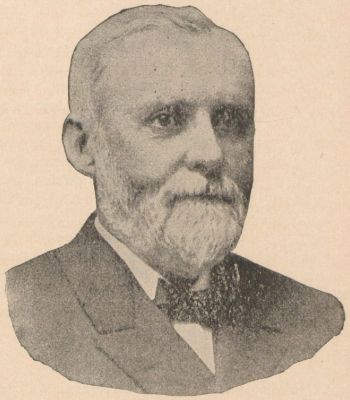
CHIEF JUSTICE MASON.
Then the government does not want that dress, but another. They want the bedford cord. We will talk about it, then. Let us look at it. Suppose they had this bedford cord. Lizzie had it on this morning, you say. This is the present theory. The government said she had it on up to 12 o’clock, so that she did not change to the pink wrapper until that time. The witnesses all say and every single person who has testified that while she was there and about with them, including Mrs. Churchill, Bridget and Dr. Bowen, Mrs. Bowen and others, there was not a particular spot of blood on it. They say there was no blood on her hands, her face or hair. I am talking now of the dress principally. Now recollect that she had that on. Policemen were coming in all about there. She was lying on the lounge. They tell you that that dress was covered or had blood spots on it and not a living person saw or suggested it. Suppose she did burn it up—the time that had elapsed for observation would be long enough. They had all had it to look at at that time. They had all seen her and every one says there was not a spot of blood on it. So you see you start with a dress that every one of the witnesses they produced says did not have blood upon it. Now, you have removed from that all idea that that dress was burned with a wrongful intent, because all the witnesses say it was perfectly clear of blood. Now, what more? That dress was in that closet. You, gentlemen, saw it over the front door, and there it remained. In that closet were eighteen or twenty dresses, and the government witnesses claimed that they did not see any such dress, notwithstanding that Miss Lizzie had eight blue dresses of different shades in that hall closet. They examined and did not see any that had a particle of blood upon them, and so the pretense of the government is that the dress was not in there, but Miss Emma says that when she came home on Thursday night she went to the closet room to put away her clothes and that on Saturday night she was there again and that dress was hanging on the second row of the nails that were driven into the edge of the shelf. She says she discovered that old dress hanging there that had been covered with paint ever since May, and by covered with paint I mean stained and daubed with it. She spoke to Lizzie about it, saying, “Why don’t you get rid of that thing. I can’t find a place to hang my dress on?” It had been in there, and on Saturday night they ransacked this place and found the dress which they supposed had blood upon it. They carried it to Dr. Dolan, who made the discovery, certain to their mind, that would convict this woman, and so they did not want anything else. They went through the form of looking over everything else, but had got the damning evidence here; but when Dr. Dolan conversed with a man who knew something, they were told it was not blood at all, and then they said: “Get another dress.”
Now, is it true? Was there grease or paint on it? We have brought you the painter here that painted that house a week earlier in May, and we have brought a dressmaker who made the dress, and the painter has told us that Lizzie did the superintending of the painting, and got up at 6 o’clock in the morning to see that the paint was of the proper color, and says that she tried it upon the side of the house. You have heard Mr. Grouard, who testified that that dress had got soiled, and said that it was not fit to wear. And then it was not worn of any account except on the days when she had dirty work to do, and Emma knew about it, Mrs. Raymond knew about it, and it is the indisputable fact that it was besmeared with paint and it was not fit for anything else. Why, we are talking about a dress that did not cost but twelve-and-a-half or fifteen cents a yard and took eight or nine yards to make it, and did not cost altogether when it was commenced probably over two dollars, and was not good for anything after they got it done, because the material was so poor, wearing out and fading out. And then it got dirty, got paint on it, and what more did they want of it? As Emma said, “Put it out of the way. Why do you keep the old thing?” This morning, you remember, was after the police had searched everything in the house so completely that there was nothing more to be found unless they took the paper off the walls and the carpets off floors, and we will take their word for it. Unless that, there was nothing more to be seen and nothing more to be found, and they had all they wanted, and had got her clothes and her stockings, and even an unmade dress pattern, and wanted to see if that had not been made up into some sort of a mantle to wrap her up in. They had got the whole thing, and had looked over everything, and had taken all they could find and all they wanted, and notified them they had all got through. Then, in obedience to Emma’s injunction, Lizzie walks down into the kitchen with it that Sunday morning, the windows all open, no blinds shut, policemen in the yard looking right in at everything, that was going on, and deliberately and in the presence of Emma—Emma saying to her “Well, I think you had better do it”—put it into the fire and burned it up. Had not she time enough Thursday morning down to that time to burn it up without anybody knowing it, if it was covered with blood? Had not she time enough to get it out of the way, and if she had that purpose to cover up this crime, if she had committed it, would she have burned it in the presence of her sister and Miss Russell and said she was going to do it? That is not humanly probable. Now, you have got the whole thing about the dress. There is no concealment about it. And when Miss Russell, in her trepidation, and having been advised by somebody about it, came to her and said: “I think you have done the worst thing you could in burning that dress,” Lizzie spoke up in her prompt and honest way, saying, “O, why did you let me do it, then?” reproaching them for not advising her against it. And, truthful as they are, when they knew Miss Russell had been questioned about the matter, they said tell all you know about it. And Miss Russell walks to the man Hanscom and says she has come to tell him because they said go and tell about it. Lizzie said: “Go and tell all about it.” It does not hurt people, sometimes, to tell the truth, to tell all about it. But, gentlemen, hang upon that one blue dress. They have it in the testimony now; they know all about it. Their own witnesses that they bring do not help them at all in this theory. But I ask them this: If Lizzie Borden killed her mother at 9:45 o’clock that morning and then was ready to come down stairs and greet her father and meet him, having on the blue dress, do you think that is probable, besmeared and bedaubed as she would have been with the blood of the first victim, standing astride and chopping her head into pieces by these numerous blows, blood flying all over the walls and furniture, on the bed and everywhere, and she wasn’t touched at all with blood? Then, of course, they are going to say: “O, but she changed her dress, and then, when she killed her father she either had that back again or put on another.” Did she have it back again? Then she had to put that on over her clothes again, and over her person, exposing herself to have her underclothing soiled in that way, a thing not probable in any way. And then, if she put on another dress, then there were two dresses to burn instead of one. The government only wants one; they have all the rest. Think of it. She walked right into that sea of blood, and stood there, slashing it over herself in the first murder; then went and took off that dress and laid it away until her father came in, and then dressed herself for the second slaughter. Then they say that she murdered these two people because Mrs. Reagan, I forbear almost to mention her name, came up here and told you that those sisters had a quarrel, and that Lizzie said to Emma, “You have given me away.” Gentlemen, if there is anybody given away in this case, it is Mrs. Hannah Reagan.
We have got right over among the reporters for the solid truth, now, and we have got John R. Caldwell and Thomas F. Hickey, and John J. Manning. They came from different papers and different cities, and these gentlemen tell you they went to Mrs. Reagan and she said there was not a word of truth in it, and while Mr. Caldwell was trying to find out the facts from Marshal Hilliard, that official, in the abundance of his politeness, told him to get out. My learned friend asked Hickey if it was not a “scoop” between the Boston Globe and the Boston Herald.
And they say that possibly she contradicted herself on some little things, and you noticed the humor there was about it when Philip Harrington said, “I advised her not to submit to another interview that day.” I thank him. But in walked the rest of the score, and they proceeded to interview, not asking Harrington’s leave, and Harrington himself went there that night again to try his search over with her. That is the way they dealt with her. Now, gentlemen, there is not one of them that, interpreted in the light of the common every-day transactions in the household, is entitled to your credit. And if not, then you cannot group them so as to make them strong or of any influence. She did not try to get Bridget out of the house. If she had undertaken to do these deeds, think you not that she would not have sent Bridget down street to buy something, to go for the marketing, to go to the store, one thing and another? Or send her on some errand, and then have had time undisturbed. You know that she would. But instead of that, everything goes on as usual, and Bridget was about the work. Lizzie happens to walk out to the door, and Bridget says to her, “You need not lock the door, I will be around here.” Bridget knew what the habit of that house was, and so she said, “You need not lock that door, I will be around here.” So Lizzie did not lock it. Lizzie called her attention later after she got the work done, and that they say, after Mrs. Borden was killed, she called her attention to locking the doors if she went out, because she herself might go out. And she spoke to her about the cheap sale at Sargent’s, and there is no doubt about that being true, because they could readily find out in Fall River whether there was any cheap sale at Sargent’s at that time. Now, these are the grounds on which the government will claim or has claimed, and I don’t know what other theories they have claimed, the guilt of the prisoner.
Who did it, and what did it? You see last year they had the theory about these other things, and if they could have tried the case at that time they would have sought to convict this woman on those first four. They now do not dare to say that they would ask to convict her even upon these. They say it may have been. Is the government, trying a case of may-have-beens? Will the judges tell you, as they charge you, that you can convict this defendant upon a theory that it may have been. I think not. Never. And, if they cannot tell you that that is the implement that committed the crimes, where is it. Fall River seems to be prolific of hatchets. Perhaps if we wait awhile there will be another one born. Possibly the district attorney, or the officers over there—not the district attorney, for I don’t think he has anything to do with it, to do justice to him, or possibly some officer, will find some other hatchet and want to bring it in. Well, we are thankful, gentlemen, that this woman was not tried last August or September, because then, if she had gone to trial on the things that are now declared to be innocent, and they had convicted her with the cow’s hair and the appearances of blood, she possibly would now have been beyond their recall, although they had actually put her to death wrongfully. So much for the theory of experts. And now we are asked at this time to take up another one that they do not vouch for and that they did not dare to stand on, and we are asked to submit this defendant to that incriminating evidence which they say they are not sure about or may have been, and they want to convict her now on things they do not know anything about and do not claim to know anything about, and put it out of their power, six months hence, to tell them if she knows anything about somebody else committing these murders. They have had her for ten months in close control. It has been irksome and wearisome and wearing. Bad as the government would represent her home to be, and falsely so; bad as they would picture it, it is a paradise compared with a jail, and they have transferred her, such is the process of the law, from her home into the custody of the State. And they thought that Tuesday’s sickness and Wednesday morning’s sickness was caused by some irritant poison. But Mr. Wood said: “No, everything is all right; no blood, no poison, nothing whatever.” He has practically said to these men: “Hold on, you are going too far; you cannot go this way.” Now failing in that, as I argue to you, they have unmistakably, they proceed upon the theory, who did it? Now we are not obliged to resort to that, as I told you at the outset. The question is, is this defendant a guilty person, and that is all. But they say, and they said they would prove to you, that there is exclusive opportunity. Well, gentlemen, I meet it right squarely. I say that if they can lock into that house Bridget and Lizzie alone and without having any other way for any other person to get in, and no other person does get in, and two persons are found dead, I am ready to say that Mr. Borden did not kill his wife in that way and then afterward kill himself. I am sure about that. But the exclusive opportunity is nothing but an anticipation that was not realized, as I think we have shown you.
They said nobody else could have done it. Emma was gone. Morse was gone. There is no doubt about that. Bridget was out doors, they said, and later in her room. They said that the defendant was really shut up in the house with the two victims and that everybody else was actually and absolutely shut out. Now I think you and I will agree about the evidence. The cellar door was undoubtedly locked; I mean the one outside. I have no doubt of that. The front door in the usual course, so says the evidence, was bolted up by Lizzie Wednesday night and unbolted by her Thursday morning. Now they assume she bolted it Wednesday night, but they are not going to assume, I suppose, that in the usual course she unbolted it Thursday morning, but I do, because that is the evidence, leaving only the spring lock on when she unbolted it. They say you do not know that. Well, I say, you do not know it, and you have got the burden of proof, not I. It was fastened by the bolt when Bridget let Mr. Borden in, that is true—the bolt and the key.
The side screen door, gentlemen, was unfastened from about 9 o’clock to 10:45 or 11. That is when Bridget was washing windows and about the house and around the premises in the way she said she was. Now, if that door wasn’t locked, gentlemen, Lizzie wasn’t locked in and everybody else wasn’t locked out. Was it so, the screen door unfastened? You know Bridget said to Lizzie, “You needn’t lock the door, I am going to be around here.” There is no doubt about it. Bridget says she didn’t lock it. Then there was a perfect entrance to that house by that rear screen door, wasn’t there? And when the person got in all he had to do was to avoid meeting Bridget and Lizzie. Bridget was outdoors, she wasn’t in the way, and therefore there was but one person in the house so far as appears, one person below, against whom the intruder could run. Now, look at it. Bridget was outside talking with the Kelly girl, over there on the south side, away off at the corner. She said plainly and decidedly there was nothing to hinder anybody going right in. Mr. Borden had gone down street and there was nobody there on the outside but Bridget, and she was everywhere on the outside. She washed the parlor windows. You know how those are. She couldn’t see the side door when she was there. She went to the barn seven or eight times for water, she says: it may have been more. She was at the dining room windows on the north side of the house; and she said that when she was there she couldn’t even see into the dining room, because the windows are so high that unless a person stood up close to the window they couldn’t see in.
Now, see the significance of that. The government will be going to claim that she stood there and she could have seen way across into the sitting room. But she could not. She was washing the windows with a pole and brush, she wasn’t up on the steps on the outside. And then Lizzie was about the house as usual. She was in the house and about the house. Doing just the same as any decent woman does, attending to her work. Ironing handkerchiefs, going up and down stairs, going down to the cellar, to the closet. You say these things are not all proved? No, but I am taking you into the house just as I would go into the house, for instance, and say, what are your wives doing now? Well, doing the ordinary work around the house, getting dinner. Well, where do they go? Undoubtedly they are going down stairs for potatoes, going out into the kitchen, to the sink room, here and there. You can see the whole thing. It is photographed in your mind. It is just the same there. She was ironing, she was in the dining room. Bridget says she don’t know but she had the dining room door shut to keep the heat out, and she would have occasion to go down cellar for reasons stated. Might she have gone into the parlor for anything? There was a clock there. There are various things you might think about. Now, suppose the assassin came there, and I have shown you he could without question, the house was all open on the north side, and suppose he came there and passed through. Suppose Lizzie was upstairs, suppose she were downstairs in the cellar. He passed through. Where could he go? Plenty of places. He could go upstairs into the spare room, right up the front stairs, and go in there; he could go into that hall closet where you opened it and looked in, and where two men can go in and stand; he could go into the sitting room closet; he could go into the pantry there in the kitchen; you saw that. He could go into various places. He could go into just such places in that house as all these thieves run into if they can find a door open. So it was easy enough for a man to do that. It was easy enough for him to go up into that bed chamber and secrete himself. Now, what is going to be done? He is there for the murder; not to murder Mrs. Borden, but to murder Mr. Borden. And he is confronted and surprised by the former. And he knows—possibly he is somebody that she knew—you do not know, she cannot tell us—somebody that would be recognized and identified, and he must strike her down; and his purpose to kill Mr. Borden would not stop at the intervention of another person, and Lizzie and Bridget and Mrs. Borden, any or all of them, would be slaughtered if they came in that fellow’s way.
Now, at that time in the morning, with the opportunity to go in there and go up into all the house, and when he went in there and had murdered Mrs. Borden in that front chamber, Lizzie could pass up and down stairs, and could go to her room, and know nothing about it, see nothing about it, because of course he did not have the door open and disclose himself. She could pass up and down stairs. There is no trouble about that, closed door or open door. And when he had done his work, and Mr. Borden had come in, as he could hear him, he made ready then to come down at the first opportunity, and when he came down he would very naturally leave the door open, and so they found it afterward, the door, I mean, to the spare chamber. He could come down, and he was right at the scene ready. Bridget was outdoors, Lizzie outdoors, on all the evidence, which you certainly believe. And then he could do his work quickly and securely, and pass out the same door, if you please, that he came in at, the side door. Now, that is not all. It is well enough to see that a person could come in at the front door. The bolt slid back in the morning, the latch locked, a man can open that door, they all say, by giving it a pressure and trying to come in. And when he gets in what does he do? He doesn’t want to be surprised. He locks the door himself, he takes care of himself, and then when Mr. Borden comes it is slid back by Bridget and left in that way. It is easy to see all these things. You can see then how everything in this idea of exclusive opportunity falls to the ground, because there was no exclusive opportunity.
Now, it is not for us to maintain a theory. It is for the government to prove theirs. You may adopt a theory just as well as I. You may find other theories, as I have no doubt you will as you look at this evidence. You will see other ways in which persons could enter that house by which the exclusive opportunity theory is overturned. It is not a matter for you to sit down in the jury room and criticise the theory that I have advanced to you, because you are going to sit down in the jury room and criticise the theory that the government advances, and you will see that it is vulnerable, and when you see that a person can take one of those theories as well as another, you will hear from the court that you cannot convict upon such evidence, because all the essential facts must be in harmony with this charge against the prisoner, and must not be in harmony with any other theory or any other reasonable explanation. Now, there are two or three things which in the hurry of speaking this morning—perhaps you thought I had not hurried, but speaking rapidly, they were inadvertently passed by—little things, but I want to speak of them before I pass on. Miss Lizzie was ironing downstairs, and there cannot be any question about that. Bridget says so and you recollect the testimony of Miss Russell and Mrs. Holmes, that that morning when they were clearing up they found the handkerchiefs that she had ironed in part, and the sprinkled ones were carried upstairs and put away separately by themselves, a dozen or more. You see that it is genuine; it is not a fiction. It is really one of those little things that help to establish the truth. I must also in this connection speak of Mr. Medley’s testimony, because the commonwealth relied upon Mr. Medley to make the examination, as he said, of the dust in the barn, to show you that Miss Lizzie could not have walked on the upper floor. Now, if you could be sure of that there would be some test in it. If you did not see a track through freshly fallen snow you would say no person had passed there. It would be a little more doubtful about walking on a floor, but when you find a detective looking after this thing, you begin to suspect that he may be in error, and when you find as you do by the testimony, a half a dozen or more people up there in that barn walking around before Mr. Medley got there at all, as it was proved upon the testimony there had been when he got there, and when he met Mr. Fleet and where he met him, between the gateway and the back steps, and then went directly into the house, Sawyer being at the door, you see how unreliable his testimony is. Well, then, you have the testimony of Mr. Clarkson and you have that of Mr. Manning and Mr. Stevens and the two boys that called themselves “Me and Brown,” Barlowe and Brown. Now, those boys, like all boys, just the same as you and I when we were boys, wanted to go upstairs, to look at things about there and stay as long as they could, and it appears they went there and were out in that barn before Mr. Medley came there. He went into the house and talked with Miss Lizzie and was some minutes in the house before he went to the barn. So when he got there there had been people all about there, and those people give their testimony in such a way as to carry the conviction of truth in their statement, so that you find them up there and walking around in the very place where Mr. Medley went to look, and it shows you that Mr. Medley must have been in error. His detection was not so sure as he thought. He was mistaken about it, consequently while he may have honestly meant what he said, I do not call that in question for the time being, but I want to say that that is not anything which you can depend upon under these circumstances, and when you find him confronted with three or four other witnesses, John Donnelly and the boys and Clarkson, there can be no question that Mr. Medley is mistaken, so that we have in addition to the positive proof that Miss Lizzie went to the barn, to which I called your attention this morning, the affirmation of these other witnesses that they were there, and Mr. Medley finds nobody to support him.
Why, do you not all think with me of what a blessed Providence it was that interfered with that girl, so that as she walked about that house, passing from the sitting room into the dining room and hall, she did not step on some of the blood and have it on her shoes? Anybody else, according to the theory of the government, could have stepped on that blood and have bloody shoes, but if Lizzie had walked there just the same as any other person innocently, and there had been so much as a pin head stain upon one of her shoes, it would have led her to the severest penalty on their theory. See within what close limitation we walk in commonest things and see how close we come to precipitate of danger when we find any part in the wrong. Why, upon the theory of the government—no, it isn’t the theory of the government, for I really do not know what it is, but the handleless hatchet down there in the box, the theory being for the time, if it is a theory and is indulged, that she ran down and put that through a course of washing, scraping with ashes, etc., and threw it up in the box after breaking the handle off, as claimed, and then got rid of the handle; they say that they found it there, and put it right up into the box to which she directed Bridget to go with the officers and find the hatchets and axes. Why gentlemen, she is not a lunatic or an idiot. She is a great colossal contriver of wrong and murder, shrewd, discriminating, far-seeing, with premeditated malice aforethought, and planned all this thing. Well, she did not plan so foolishly as that. She would not send officers to find the very thing and in the very place where she had put it. She burned no clothing that day. She put none away. They tell us nothing about that with all the vigilance of their searches, and you know that the officers say that when they went there first, and looked in that box down cellar, they took out the two smaller hatchets that were on top. Now, whatever the theory, or any theory of the government in regard to that hatchet, you have got to assume she was down there and washed it up and got it all clean beyond what science can do, and got the blood out of it, and then broke off the handle, and went herself and took out the other two hatchets so as to get this old one underneath, and then she had it all covered with ashes, too. And when they found it that Thursday afternoon it was all dry and covered with dust like the other. They undertake to tell you it was coarser dust. Just see into what a labyrinth of impossibilities and improbabilities they try to lead this woman. Then she had to run upstairs, run up to her own room and make a change, run down cellar and take care of herself, and take care of the hatchets, upon their theory, run back again and get up there and call Bridget—all in that short space of time. I said it was morally and physically impossible. You may find her not guilty, if that be your judgment, for two reasons. One because you know that it has not been proven. And the court will tell you that if, when you reach that point in your decision, you are not satisfied and convinced as reasonable men, beyond a reasonable doubt, no matter what your suspicions may be and what you may think about it otherwise, you have but one duty to perform and one that is safe to you to render in this case.
You may have heretofore thought things looked dark for her. You may have said, “If they can come into the court and show all the things I have seen in the newspapers, gossip and rumor and report, I might feel that I ought to, but now that I find the government’s case only the thing that it is, insufficient, weak, contradictory, critical, lame, why, I have nothing else to do in my conscience but to say to Massachusetts, we have this woman in charge, you have not proved it against her, we still keep charge of her, and we say to you, you have not proven this against her and she is not guilty.” But there is another ground. If, when you see through this evidence, you are satisfied again, convinced—which is more—you are convinced affirmatively that the woman is innocent, that you are entitled to say, “Not guilty,” and you are bound so to speak. It is rare that the defendant goes so far as to prove her innocence. It is not a task that is set before her. But I dare to speak to you upon that branch in this case with full confidence. Look at it for a period. Take the facts as they are, and I would not misrepresent or belittle any of them. I have not knowingly omitted any of them, for a purpose of benefit to the defendant. Take them as they are. What is there to prove to you absolutely, as sensible men, the innocence of this defendant? You go and search some other man’s house and let me alone. Search somebody else, I think he had some trouble with my father: that would be the policy of such a defendant. What was her conduct? Uniformly, openly frank every time, shutting all the doors against any person that might be put under this foul suspicion. Why, you say, shutting them against herself. Yes, it was the impulse, the outcome of an honest woman. Were she a villain and a rascal, she would have done as villains and rascals do. There was her uncle, John Morse, suspected as you heard, followed up, inquired about, and she is asked and she said, no, he did not do it. He went away from the house this morning at nine o’clock. Some one said Bridget did it. Now there were but two persons around that house as we now find out, so far as we can locate anybody, and the busy finger was pointed at Bridget Sullivan—Bridget Sullivan, only an Irish girl, working in the family, working for her weekly pay, been faithful to them, been there two years and nine months, lived happily and peacefully with them and they have had no trouble, and Lizzie spoke out right determinedly, as you know, and promptly: Why, Bridget did not do it. Then somebody said: Why, the Portuguese on the farm. No, says Lizzie, he is not a Portuguese; he is a Swede, and my father has not any men that ever worked for him that would do that to him. Not Alfred Johnson that worked for them, not Mr. Eddy, another farmer that worked for them, no assistant—I cannot believe it of any of them.
How do you account for that except in one way? She was virtually, if she was a criminal, virtually putting everybody away from suspicion and leaving herself to stand as the only one to whom all would turn their eyes. Suppose she had been wicked and designing and Bridget as innocent as Bridget is to-day. Suppose Lizzie had undertaken to tell something that would involve Bridget, would it not have been easy? And it might have been. Then if she had led the way in treachery and repeated crime Lizzie might have led Bridget right into the toils in which she herself became involved to the relief of Bridget by her statement that Bridget is not to be suspected. It is not every human being who can stand that strain. It is not every man that has strength of purpose and purity of mind.
Did she ever stand in the way, or her sister likewise? Go, search everything, we will come and help you open everything. We will join you; find out all you can. Do all you want to here. Never a sign of reluctance. Never an intimation of objection is the unanimous testimony of everybody that went there. They say she was cool. Thank the Lord there was enough left of her so that she could be cool under the visitations of gentlemen who flocked there by the score. Her clothes, her dress, her unmade dress, her shoes, her stockings, everything, her absolute freedom from the marks of the crime, her readiness to do anything that was wanted, and then that scene of Saturday night which transcends all in exhibition of innocence. There has been that woman shut up in that house, the premises crowded by the police. She was virtually under arrest. She could almost feel the pressure of a hand upon her arm, and in that house on that Saturday night were the mayor and city marshal of Fall River, and in the parlor they called her, her sister and uncle together, and then they began that advising them—now notice how it was done, for this is an essential part of their case, they advised them that the family had better remain in the house.
Miss Lizzie says, why? Well, the mayor says, Mr. Morse, perhaps, can tell you. It was something that occurred down street last night, and then comes the question that from there Morse went down street and had some trouble. Now, that seemed to indicate that Mr. Morse was probably under suspicion, and Lizzie spoke at once as they spoke of putting officers around the house and said, “Why, is there anybody in this house suspected?” and the mayor says, “I regret to say, Miss Borden, that you are suspected.” Then she says, “I am ready to go now, or at any time.”
Gentlemen, murderers do not talk that way. Criminals are not so situated as to have committed this great and monstrous wrong and then have had that superb quietness of spirit and that confident feeling that wrong had been done her in the charge that is made, and the assurance within herself that, God knowing it, she is free and pure. Gentlemen, as you look upon her you will pass your judgment that she is not insane. To find her guilty you must believe she is a fiend. Does she look it? As she sat here these long, weary days and moved in and out before you have you seen anything that shows the lack of human feeling and womanly bearing. A word more. There must be no mistake, gentlemen. That would be irreparable. There can be but one mistake which nobody can ever right, and for which there can never be any atonement to her. If you make a mistake as against the commonwealth that is something which the future may correct, but if you go wrong as to this woman now, and go to the length of saying that she is guilty, and you have done it upon insufficient grounds and the improper findings, the case and the woman have gone beyond your control, and, so far as you can know, beyond the power of man. To condemn her as guilty of the diabolical crimes that have been described to you, when there remains any reasonable doubt in the minds of any one of you of the true verdict, would be so deplorable an evil that the tongue can never speak its wickedness. We say, the crier utters it, God save the commonwealth of Massachusetts, and the prayer is heard in the prosperity of the old bay state, but little it amounts to if we hear some one pray to God for his guidance of the old commonwealth that when we have a prisoner in charge we forget that we can do a good deal toward saving the commonwealth and all her people. It will be little worth preserving if the innocent are to be executed and one calamity and wrong step fast upon the heels of another, and that, too, under the forms of law made as well to shield the innocent as to punish the guilty.
Do I plead for her sister? No. Do I plead for Lizzie Andrew Borden herself? Yes. I ask you to consider her, to put her into the scale as a woman among us all, to say as you have her in charge to the commonwealth which you represent, it is not just to hold her a minute longer, and pleading for her I plead for you and myself and all of us that the verdict you shall register in this most important case shall not only command your approval now, unqualified and beyond reasonable doubt, but shall stand sanctioned and commended by the people everywhere in the world, who are listening by the telegraphic wire to know what is the outcome as to her.
She is not without sympathy in this world. She is not having people by day and by night thinking it is not to be found out in Massachusetts that so great a wrong against her can be committed as to condemn her upon the evidence that has been offered. Gentlemen, with great weariness on your part, but with abundant patience and intelligence and care, you have listened to what I have had to offer. So far as you are concerned, it is the last word of the defendant to you. Take it: take care of her as you have, and give us promptly your verdict not guilty, that she may go home and be Lizzie Andrew Borden of Fall River in that blood-stained and wrecked home where she has passed her life so many years.