Chapter V
Reading edition
THE REVOLUTION SETTLEMENT
After the failure of the treaty of 1670, eighteen years, eventful in the history of both kingdoms, passed; and at the Revolution the question of the Union was again discussed.
In the letter which William addressed to the Scottish Estates in March 1689, he said that he was glad to find that many peers and gentlemen of Scotland, whom he had consulted in London, were “so much inclined to a union of both kingdoms, that they did look upon it as one of the best means for procuring the happiness of these nations, and settling of a lasting peace among them.” He himself was of the same opinion, and was resolved to do everything in his power to bring it about.
Among the members of the Estates there was a strong party in favour of delaying the settlement of the Crown until the Union had been accomplished, on the ground that terms favourable to Scotland would be more easily obtained when the affairs of England were in a critical and unsettled condition. Among those who took this view was Sir John Dalrymple, who afterwards, as first Earl of Stair, was to play a prominent part in the final settlement of the question. The fact, however, that this view was supported by some astute members of the Jacobite party, who saw in it a means of causing delay, induced a majority of the Estates to resolve that the settlement of the Crown should come first.
William had instructed Melville, and his other representatives in Scotland, that nothing was to interfere with the settlement of the Government. That was to be their first concern. If the Estates were in earnest for the Union, care was to be taken that it was not made an excuse for delay. If the Union was insisted on, then an attempt must be made to obtain from the Estates an offer of terms such as the English Parliament was likely to accept at once, without entering upon a treaty. He indicated his own view to be that the laws and customs of Scotland should be preserved intact, while questions relating to the public safety, and also the proportion of Scottish members in the united Parliament, should be referred to himself.[103]
Although William thus anticipated a discussion on the Union, he was determined that nothing should prevent or delay the immediate settlement of the Government. The resolution of the Estates was, therefore, in accordance with his wishes. But as soon as the memorable declaration that James had forfeited his right to the Crown had been adopted, along with the offer of the vacant throne to William and Mary, the Estates lost no time in taking up the question of Union; and an Act was passed appointing commissioners “to meet with such persons as shall be nominate commissioners by the Parliament of England, and to treat concerning the Union of the two kingdoms.” This Act became law on the 23rd of April, and on the following day a letter to the king was approved, in which the Estates informed his Majesty that certain of their number would wait upon him with the offer of the Crown, and would present to him a Claim of Rights, and a list of grievances for which they asked redress. At the same time they expressed the hope that the Union would be speedily accomplished, “that as both kingdoms are united in one head and sovereign, so they may become one body politic, one nation, to be represented in one Parliament.”
The Scottish Estates had proposed the Union. But at Westminster nothing could be done to further their wishes. William alluded to the question in his speech from the throne in March 1690. “I must,” he said, “recommend, also, to your consideration a Union with Scotland. I do not mean that it should now be entered upon; but they having proposed this to me, some time since, and the Parliament there having nominated commissioners for that purpose, I should be glad that commissioners might also be nominated here, to treat with them, and so see if such terms could be agreed on, as might be for the benefit of both nations, so as to be presented to you in some future session.”[104] Nothing more, however, was heard of the Union at that time. It was evident that the affairs of both kingdoms were in such a state that it was hopeless to press forward so delicate a piece of business. In England, important questions which could not be delayed awaited decision; and in Parliament party feeling was running high, not only between the Tories and the Whigs, but also between the Lords and the Commons. In Scotland, the factions which contended for the mastery would only have found in the Union another question about which to wrangle. The keen eyes of William had perceived the necessity of the Union, but the time had not yet come.
Although the project of an Union was abandoned, the statutes relating to the Church passed by the Scottish Parliament at this time, constituting what is known as the Revolution Settlement, had a most important bearing on the final accomplishment of the Union. Prelacy was abolished, and Presbytery was re-established. Most of the ministers who had been ejected at the Restoration were now dead, but sixty veterans still survived, and they were restored to their livings. The Act which asserted the royal supremacy in ecclesiastical causes was repealed. The Westminster Confession of Faith was declared to be the national creed. The Law of Patronage was reformed by an Act which gave the Protestant landowners in counties, and the town councils in burghs, power to buy the patronage of livings, for a small sum; and the right of choosing the minister was handed over to the landowners and the elders, against whose choice the congregation might appeal to the Presbytery.[105]
The statutes which introduced these reforms were accepted by an overwhelming majority of the Scottish people. In 1707 they were embodied in the Act of Union; and it is certain that if, while the terms of the great international contract were being arranged, any serious attempt had been made to alter them, the Union would never have been accomplished.
It is, indeed, hardly possible to overestimate the importance of the Church question during the Union controversy. It is certain that if the Church of the majority had not been established in Scotland at the Revolution, another civil war would have been the result. The Presbyterian clergy were Whigs, almost to a man, and their influence in the country was enormous. The views held by the extreme branch of the Church did not affect, to any great extent, the course of events in Scotland. These were the men who, under their various designations of Cameronians, or Hill men, or Society men, still clung tenaciously to the old Covenanting ideas in their most uncompromising form. They could hardly bring themselves to submit to the existing Government. The old formula of a “Covenanted King” of the Stuart dynasty was still full of meaning to them; and long afterwards, during the reign of Anne, the Jacobites tried to make use of them for the purpose of defeating the Union. They were, however, Whigs, and would never, under any circumstances, have acquiesced in the overthrow of the Presbyterian system. The great danger to the cause of the Union and the Hanoverian succession lay in the sentiments of the Episcopalians. Every Episcopal clergyman in Scotland, with scarcely an exception, was a Tory and a Jacobite. On the eve of the Revolution, when the bishops of England were opposing, with dignified firmness, the arbitrary pretensions of the king, the Scottish bishops had addressed him in terms of the most servile eulogy. They assured him that they regarded a steadfast allegiance to the throne as an essential part of their religion. They declared that the line of Stuart was the greatest glory of Scotland. They spoke of James himself as the darling of heaven, and described the amazement and horror with which they had heard the rumours of an invasion from Holland.[106] It is not wonderful that the Presbyterians, when they obtained the ascendency, should have excluded from power the authors of this address. Nor is it wonderful that, in those parts of the country where the persecutors had been at work, the peasantry should have subjected the obnoxious clergymen to every species of indignity. For more than a quarter of a century their oppressors had appealed to the law to justify their misdeeds, and it was natural that, when the hour of deliverance came, the oppressed should take the law into their own hands. Locked out of their churches and expelled from their houses, with their gowns torn from their backs, the Episcopal clergy in Scotland learned how precarious is the situation of a priesthood which is protected by the law, but has no place in the affections of the people.
The Church affairs of Scotland were not settled in accordance with the desires of William. It was no secret that he wished to secure complete toleration for all dissenters. He was anxious to avoid all measures which could interfere with the projected Union of the Kingdoms; and it is probable that his hope was that some plan might be devised for establishing the same system of Church government throughout the whole island. When he received from the Government in Scotland the draft of the Act which it was proposed to pass for the establishment of Presbytery, he made a number of amendments which had a double purpose; to remove expressions which might raise doubts in England with regard to the Union, and to conciliate the Episcopalians in Scotland. For instance, it was stated in the draft that the Reformation in Scotland had been the work of Presbyters “without Prelacy.” This statement he deleted. In the draft, Presbytery was described as “the only government of Christ’s Church in this kingdom.” William was of opinion that a better expression would be “the government of the Church in this kingdom established by law.” The rest of his suggestions were of a similar character. Everything in the shape of an assertion that Presbytery was a better system than Episcopacy was carefully avoided, and the only reason given for establishing the former was, that it was more in accordance with the wishes of the Scottish people. At the same time he explained that it was his desire “that those who do not own and yield submission to the present Church government in Scotland shall have the like indulgence that the Presbyterians have in England.”
The Act was submitted to the Estates, and became law on the 7th of June 1690. It declared Presbytery to be “the only government of Christ’s Church within this kingdom”; it condoned the action of the peasantry in expelling the Episcopal clergy by force; and it placed the government of the Church in the hands of the sixty ministers who had been replaced in the livings from which they had been ejected at the Restoration. Yet the Government acted on tolerant principles. All Episcopal clergymen who took the oaths were left in peaceable possession of their churches, without being called on to submit to the Presbyterian Church courts; and some even of those who refused to take the oaths, and who prayed publicly for the late king and his family, continued to enjoy their livings without molestation.[107] After a few years, when it was seen that the Jacobites were quite irreconcilable, an Act was passed which provided that no one could hold a benefice without taking the oath of allegiance, signing the assurance, which was a declaration that William and Mary were the only lawful sovereigns of the realm, signing the Westminster Confession of Faith, and submitting to the Presbyterian system of Church government. Yet so lenient was the spirit of the Whigs that, instead of vigorously enforcing this law, they superseded it, to a great extent, by another and milder Act, under which taking the oaths to Government became the only qualification required from any Episcopal preacher in Scotland.
At the Revolution, and in consequence of the position in which the Episcopal clergy found themselves, it became the fixed policy of the Jacobites to call the attention of Englishmen to what was going on in the North; and during the reign of William there issued from the press a series of pamphlets, the purpose of which was to create a feeling against the Presbyterians so strong that, if a favourable opportunity should occur, the Scottish Establishment might be attacked and overthrown. The first to take the field were “two persons of quality.” Sir George Mackenzie, the late Lord Advocate, and Lord Tarbat, afterwards the first Earl of Cromartie, went to London at the crisis of the Revolution, and published a pamphlet, the purpose of which was to persuade the Prince of Orange that the principles of the Presbyterians were not only inconsistent with monarchy, but even destructive of all human society.[108] This production did not attract much notice; but a great effect was produced by a more elaborate piece of work, to which Mackenzie devoted the last months of his life. This was a vindication of the system of government pursued in Scotland during the reign of Charles the Second.[109] It was, in a measure, a vindication of his own life, for few of the rulers of Scotland had taken a more important part in the questionable transactions of that reign. When his public career was ended by the Revolution, he had retired to Oxford, where Whigs and Tories alike were amused and instructed by his conversation, in which he did not fail to present the worst features of Presbytery.[110] The Vindication, the greater part of which was probably written at Oxford, was a serious attempt to show that the Executive Government in Scotland had not been guilty of oppression and cruelty, that no one had suffered on account of his religion, that the Presbyterians were merely rebels, and that the laws which had been made against them were not only necessary, but had never been harshly administered. He did not live to publish this pamphlet himself, but after his death it was printed by Dr. Alexander Monro, who had lately been deprived of the place of Principal of the University of Edinburgh. Coming from the pen of a well-known member of the late Government, who had, for a number of years, been the first law officer of the Crown in the country about which he was writing, the Vindication had great weight in England.
Monro also published a tract of his own, defending himself against charges made by the commissioners who had been appointed to visit the Scottish universities, and “purge” them of all professors who would not swear allegiance to William and Mary.[111] The effect of this work, and others upon the same subject, was to raise a feeling of contempt for the state of learning in Scotland, and to cause Englishmen to believe that, under the Presbyterian system, literature and science were doomed. Other pamphlets were published giving an account of the proceedings in the General Assembly and in the Parliament connected with the establishment of the Church.[112] These, certainly, contain materials of great historical value; but they do not even pretend to be impartial, and were written to excite sympathy with the ejected Episcopal ministers and dislike to their successors.
The author of one of these pamphlets, the Rev. John Sage, wrote also an elaborate treatise on the history and nature of Presbytery, in which he maintained that the article in the Claim of Rights which declared that Prelacy was a grievance, and contrary to the inclinations of the Scottish people, was utterly without foundation.[113] The Presbyterians, he asserted, had, in pursuance of a carefully-arranged plan, encouraged the rabble to eject the Episcopal ministers, and had managed, during the confusion of the times, to secure a majority in the Estates, which did not represent the wishes of the country. It was obvious that if this could be proved to the satisfaction of the Whigs of England, they would, in any treaty of Union, consider seriously whether the religious Establishment of Scotland should not be brought into conformity with that of England. If a majority of the people desired Presbytery, the Whigs, on principle, were bound to support Presbytery. But if neither the mob nor the Parliament represented the wishes of the people; if the real desire of the nation could only be discovered by private consultations with the Tory and Jacobite laity, or gathered from the writings of the Episcopal clergy; if the majority of the Parliament represented the minority of the nation, then it was the duty of the Whigs to support Episcopacy.
But the pamphlets which were most widely read in England were those which held up the Presbyterians to execration as persecutors, and to ridicule as fanatics. Monro and his friends took great pains to collect accounts of the hardships which the Episcopal clergy had suffered at the hands of the mob, and published them for the purpose of influencing public opinion in England.[114] The clergy were described as “a company of resolute Christians that dare lay down their lives for the truth of those doctrines which they have formerly taught.” In point of fact, none of them were called upon to lay down their lives. One of the worst cases of “rabbling,” which the Episcopalians described as a “tragedy,” took place at Kirkpatrick in Annandale. On Easter day a party of men and women went to the clergyman’s house in the morning, knocked him down, and then threw him into “a nasty puddle.” His wife, who ran out of the house, was also thrown down. “Then their noble Captain at this honourable expedition gave the word of command to his female janizaries, which was Strip the Curate (for they think this a most disgraceful appellation, and therefore they apply it to all Episcopal ministers). The order was no sooner given, than these Amazons prepared to put it in execution, for throwing away their plaids (i.e. loose upper garments) each of them drew from her girdle a great sharp-pointed dagger, prepared, it seems, for a thorough reformation. The good minister lying panting and prostrate on the ground, had first his night-gown torn and cut off him, his close coat, waistcoat, and britches ript open with their knives, nay, their modesty could not so far prevail against their zeal, as to spare his shirt and drawers, but all were cut in pieces and sacrificed to a broken Covenant. The forementioned Captain gave the finishing stroke himself with a great Reforming Club, the blow was designed for the minister’s head or breast, but he naturally throwing up his hands to save those vital parts, occasioned it to fall upon his shin-bones, which he had drawn up to cover his Nakedness; the blow was such as greatly bruised his legs, and made them swell extraordinarily after; however the Captain thinking they were broke, and finding it uneasie for himself and his companions to stand longer in a great storm of wind and snow which happened to fall out that morning, he drew off his company, and left the Semi-Martyr, who afterwards, by the assistance of his servants, crawled home to his bed, and but a little after, the whole herd of his persecutors broke in again upon him, and told him: they had treated him so because he prayed for the Tyrant York (so these people ordinarily called King James, tho’ he was too kind to them), and because he had presumed to preach and visit the parishioners as if he had been their minister, which they had formerly forbidden him to do; they required him also to be gone from their Covenanted Lands, under pain of death, before that day Sevennight, and never again to meddle with the ministry.”[115]
Such stories—and this is only one of many which were printed and circulated—could not fail to produce anger and alarm in England; and the conduct of the Presbyterian ministers was, at the same time, represented in the most unfavourable light. Not one of them, it was said, had ever been heard to condemn these outrages from the pulpit. On the contrary, sermons had been preached in which the mob had been applauded for their zeal. In the cathedral church of Saint Giles at Edinburgh the congregation had been told that “such shakings as these were the shakings of God, and without such shakings his Church was not in use to be settled.”
But the sayings and the character of the ministers of the Church of Scotland were assailed in the most effective way by those writers who relied upon ridicule rather than serious invective. Londoners who remembered laughing over Hudibras in the heyday of the Restoration must have found the Scotch Presbyterian Eloquence very poor reading. But it was admirably suited for the purpose of persuading Englishmen that the sermons and prayers of the Scottish ministers were nonsensical rhapsodies, and that, in many cases, both the preachers and their hearers were hypocrites who led the most immoral lives. That part of the work which attacked the private characters of the Presbyterian ministers was met by a series of accusations of the same kind against the Episcopalians; and it is difficult to say whether the attack or the defence is more discreditable. Both are probably, on the whole, equally mendacious.[116] But the most telling part of the work consisted of selections from grotesque sermons and prayers. “Sirs,” one minister is reported to have said in his first sermon, “I am coming home to be your shepherd, and you must be my sheep, and the Bible will be my tar-bottle, for I will mark you with it; (and laying his hand on the clerk or precentor’s head) he saith, ‘Andrew, you shall be my dog.’ ‘The sorrow a bit of your dog will I be,’ said Andrew. ‘O Andrew, I speak mystically,’ said the preacher. ‘Yea, but you speak mischievously,’ said Andrew.” Another minister, preaching on the first chapter of the Book of Job, is represented as saying, “Sirs, I will tell you this story very plainly. The Devil comes to God one day. God said, ‘What now, Deel, thou foul thief, whither are you going?’ ‘I am going up and down now, Lord, you have put me away from you now, I must even do for myself now.’ ‘Well, well, Deel (says God) all the world kens that it is your fault; but do not you know that I have an honest servant they call Job? Is not he an honest man, Deel?’ ‘Sorrow to his thank,’ says the Deel; ‘you make his cup stand full even, you make his pot play well, but give him a cuff, I’ll hazard he’ll be as ill as I am called.’ ‘Go, Deel,’ says God, ‘I’ll yoke his honesty with you. Fell his cows, worry his sheep, do all the mischief ye can, but for the very soul of you, touch not a hair of his tail.’”
The specimens of prayers are equally absurd. “O Lord,” one divine says, “thou’rt like a mousie peeping out at the hole of a wall, for thou sees us, but we see not thee.” Another prayed as follows: “Good Lord, what have ye been doing all this time? What good have ye done to your poor Kirk in Scotland?... O, how often have we put our shoulders to Christ’s cause, when his own back was at the wall; to be free with you, Lord, we have done many things for thee that never entered in thy noddle, and yet we are content that thou take all the glory; is not that fair and kind?”
The small quarto from which these extracts are taken was only one, though it was the most popular, of a series of similar lampoons. The most offensive of these, a comedy written without the wit, but with all the licentiousness of Wycherley, was not printed for many years; but it may now be read by anyone who wishes fully to understand into what depths of malice and profanity some men were driven by the party spirit of those days.[117]
The public opinion of England on the ecclesiastical affairs of Scotland was, to a great extent, formed by these publications. They increased the hostility with which the High Church party regarded the establishment of Presbytery. The accounts of the outrages committed on the ejected clergy caused a widespread feeling of sympathy with them among all classes of Englishmen; and the effect which they produced was not only evident during the discussions on the Union, but afterwards led Parliament to pass measures which were most unpopular in Scotland, which endangered the stability of the Union before it had lasted more than a few years, and which have been the occasion of endless troubles, misunderstandings, and secessions among the Presbyterians.
The Church question, however, was settled for a time; and the people of Scotland, whose whole energies had for so long been absorbed in the struggle against religious tyranny, were now ready to advance on the path of secular progress. But the commercial policy of England remained unaltered. The least hint that the Navigation Act ought to be repealed raised an outcry among the merchants of London. The proposals for an Union, made by the Estates, had not been listened to. Therefore Scotland, it appeared, must submit to remain poor, while England became wealthier and wealthier.
But now the self-reliant spirit of the Scottish people rose. If they could not share in the trade of England, they would establish a trade of their own. If they were not to be the partners of England, they would be her rivals. There can be no doubt that the schemes of the Scottish Company Trading to Africa and the Indies, on which the hopes of the country were placed, were rash and visionary. Scotland, it is true, was an independent country, with a Parliament of its own, with its own church, laws, coinage, and taxation, united to England by nothing except the Crown; and the powers which the Scottish Parliament gave to the Company brought this fact prominently into view, for the Company was to have the right of arming ships of war, building cities, making harbours and fortresses, waging war, and concluding alliances. But these very powers, which impressed on Scotsmen the fact that their country was independent, could not fail to rouse the alarm of Englishmen, and particularly of English traders. The royal assent had, indeed, been given to the statute by which the Company was created.[118] But the merchants of England were so alarmed, so jealous, so persuaded that their own trade was endangered, that we cannot be surprised that William, whose position depended entirely on the goodwill of England, acted as he did; especially when, at a time when he was deeply involved in continental politics, the Company, by sending the expedition to Darien, so seriously imperilled his relations with Spain.
The sum of money which was actually lost by Scotland seems small in our day. The amount appears to have been about two hundred and twenty thousand pounds; but the Scotland of the seventeenth century was far less able to bear the loss of this sum, than the France of the nineteenth century was to bear the loss of all the millions which she, like her ancient ally, threw away upon the shores of the Gulf of Darien. And rich as England was, in comparison with Scotland, her condition at this time was not so prosperous as to make her liberal in dealing with other nations. War had brought increased taxation; and our enormous national debt, then beginning to accumulate, was a source of constant alarm. In the country districts farmers were suffering from a long period of agricultural depression, and rents were seldom paid in full. In the towns work was scarce, and the price of bread was rising. The carrying trade languished in spite of the monopoly which English shipping enjoyed under the Navigation Act, and the resistance to granting Scotland what she chiefly demanded, a share in the colonial trade, was increased by complaints which reached this country from across the seas. The Scottish shipowners, it was said, were landing goods in America, and underselling the English merchants; and to such an extent was this done, that Government was called upon to send out men-of-war to stop this illegal traffic.
And so once more England and Scotland were at variance. The Lords and the Commons forgot their quarrels, and combined to address the king against the Scottish Company. William’s reply was that he would endeavour to find some means of escape from the difficulty which had arisen. That no such difficulty could have arisen if there had not been two Parliaments was perfectly clear. The statute under which the Scottish colonists sailed to Darien had received the royal assent, in the Parliament House at Edinburgh, at a time when the king was on the Continent. It was possible that other measures of equal importance to England might become law in the same way; and the subject of the Union again begins to appear in the correspondence of the day.
“You may remember,” Marchmont writes, “your Lordship was speaking a little to me about an Union of the two Kingdoms. I have thought much upon it, and I am of opinion that the generations to come of Scotsmen will bless them and their posterity, who can have a good hand in it.”[119] Two months later he addresses another correspondent on the same subject. “I am confident,” he says, giving his view of Scottish opinion at this time, “if such a thing came to be treated in terms any ways tolerable, it would find a ready concurrence of the far greater part of people of all ranks of this nation.”[120] In January 1700, Vernon, writing to Lord Shrewsbury, says: “My Lord Privy Seal[121] can no sooner hear the word Union named, but he runs blindfold into it, and said all he could think of, for pressing it. My Lord Halifax opposed it; and said they should run any risk rather than be bullied by the Scots’ menaces.”[122]
The contempt for Scotland which Halifax had expressed was common. In another letter Vernon describes how Sir Edward Seymour, in his place in Parliament, said that the Union reminded him of the story about a countryman who was asked to marry a poor wife, and gave as a reason for refusing, “that if he married a beggar, he should have a louse for a portion.” Vernon adds, “this the Scotch have heard, and are very angry at it.”[123]
The king lost no time in declaring his own opinion. In a speech to the Lords he reminded them of the Union, which he had recommended soon after his accession, and again pressed it upon the consideration of Parliament, as the only means by which a constant succession of quarrels between the two countries could be avoided.[124] The Lords at once took his advice, and passed a Bill for appointing commissioners to treat upon the subject of the Union, which they sent to the Commons with the statement that it was a Bill of great consequence.
At this time there was a great feeling of jealousy between the two Houses of Parliament, and the Commons, resenting the action of the Upper House in calling special attention to this Bill, seized the opportunity of picking a quarrel, and appointed a Committee to report whether there were any precedents for specially recommending Bills. The Committee reported that there were several precedents. Bills had been sent with such recommendations, both from the Lords to the Commons, and from the Commons to the Lords. Nevertheless the Commons rejected the Union Bill upon the second reading.[125]
During the summer of 1700 Scotland was in a state of dangerous excitement. “The Scotch look,” Vernon writes, “as if they were ready for any mischief, and that nothing will please them but setting up for themselves.” For the last five years the crops had failed. Thousands had perished from famine. Thousands more had been driven to emigrate. The treasury was exhausted. On the balance of trade there was an annual loss. The Bank of Scotland, established in 1695, found that the whole business of the country could be conducted on a capital of thirty thousand pounds; and so limited was the trade, that neither Glasgow, Dundee, nor Aberdeen could support a branch of the bank.[126] So frightful was the state of things that Fletcher of Saltoun, whose whole mind and soul were given up to an intense love for Scotland, thought that no foundation could be laid for better times except by reducing a great part of the population to slavery.
The Estates had not met for two years. An address calling upon the king to assemble a new Parliament was sent up to London; and it was openly said, that if he refused, a national convention would meet, and meet moreover at Perth, where the members would have “Athol and a part of the Highlands at their backs.” The staunch Whigs of the Lowlands laughed in public at the idea of a rebellion; but they were well aware that society in Scotland was deeply tainted with that Jacobite feeling which afterwards gave so much trouble. It appears, from a letter written by Melville to Carstares, that attempts had been made to tamper even with persons who were known and avowed Whigs. The Duke of Hamilton, “upon his lady’s birthday,” was entertaining a party of his friends, among whom were Queensberry, Argyll, and Leven. After dinner he began to speak in a very confidential manner to Leven, telling him “that he loved him,” that he would do all he could to save him, and that he “would obtain a pardon for him.” Leven asked him what he meant, saying that he had done nothing to require a pardon from King William, and as for King James, he would not accept one from him. Hamilton saw he had gone too far, and explained away what he had said. “It is true,” says Melville, “the duke was very drunk; but post vinum veritas.”[127]
It was plain that the Estates must meet; for not only was the national outcry too loud to be ignored, but, the treasury being empty, supplies must be voted, or the Government could no longer be carried on. But the misery and discontent was so universal, that William could not face a general election. The majority of the old Revolution Parliament, however, were still sound Whigs; and it was resolved to summon it once more. The Government did not rely solely on the help of their own supporters, but made a carefully-planned assault on the votes of the Opposition members. The officers of State themselves undertook the business. Each agreed to canvass a certain number of members. Sometimes they set the parish ministers to work; and in other cases the good offices of a member’s wife were secured. And there is no doubt that besides mere solicitation and appeals to interested motives, there was direct bribery. The result of these transactions was that when the Parliament met, in October 1700, the Government had a majority.[128]
James Douglas, 4th Duke of Hamilton.
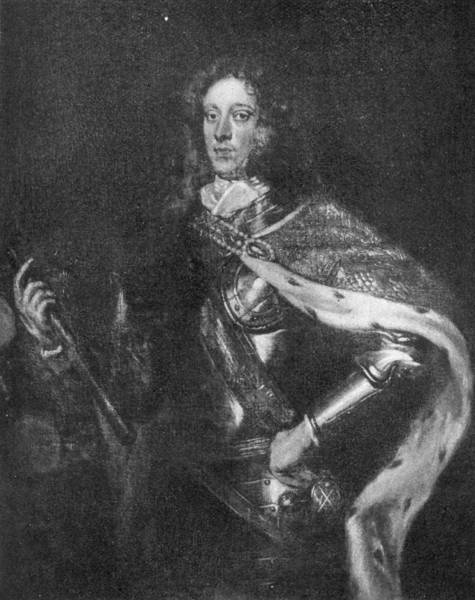
Queensberry, who was Lord High Commissioner, had been instructed to ask for supplies for eight months, but to take less if they were refused. If the supplies were voted, he was authorised to give the royal assent to a subsidy in aid of any branch of Scottish trade which was consistent with the treaty obligations of the Crown; but if the Parliament wished to vote money for the African and Indian Company, it must be applied only to making good the losses which had been sustained at Darien. If an Act was passed confirming the privileges of the Darien colony, the royal assent was to be at once refused.[129]
The Opposition, led by Hamilton, desired to pass an Act asserting the right of Scotland to the settlement at Darien, which was the favourite scheme of the country, and which the Estates had lately been told from the pulpit was “that great, laudable, and glorious design and undertaking of the nation, for the advancement of foreign trade, which if it be altogether crushed, Scotland is never like to enjoy such a fair opportunity again, for promoting her outward wealth and welfare.”[130] The Government, on the other hand, moved an address to the king praying him to vindicate the honour of Scotland, and to extend his protection to the Company.
There was a long and fierce debate. Some of those on whom the ministers had relied followed Hamilton, and others declined to vote. But the Government had a majority of twenty-four; and the session ended quietly on the 1st of February 1701.
In Scotland the losses at Darien had brought to a climax the long-standing feud on the subject of commerce. The discontent and annoyance which had been growing ever since the Navigation Act was passed, had now developed into a most violent exasperation against England and every thing that was English. Yet the temperament of the Scottish people was such that these feelings did not lead them into plots against the English Government. They seem to have felt at once that the greater the obstacles which the jealousy of their neighbour might put in their way, the greater was the need for energy and self-help on their own part. Instead of sinking into apathy and indolence, or allowing their hatred of England to drive them into violence, they became more active than ever in forming plans for bringing solid material prosperity to their country. The air was full of projects; and soon these projects took a definite shape. All Scotland was to became one great trading company. The subscribers to the African Company were to be repaid in full. A sum of money greater than that which had been lost was to be raised within two years. In spite of English opposition, colonies were to be founded by Scotsmen. At home manufactories were to be established all over the country. The fisheries of Scotland were to be pursued “to greater profit in all the markets of Europe than any other fishing company in Christendom can do.” Employment was to be found for the poor, “so that in two years time there shall not be one beggar seen in all the kingdom.”
It was in the midst of this patriotic ferment that Hamilton, Tweeddale, Rothes, Roxburghe, and Andrew Fletcher of Saltoun formed that independent or national party which, calling itself the Country Party, was destined, during the next few years, to pursue a course which ultimately forced England into uniting with Scotland. This party had its origin in the assertion of the right of Scotland to free trade at home and abroad; and the keynote of its policy was that Scotland should refuse to settle the succession to the Scottish Crown until her grievances were redressed. But with the death of William and the accession of Anne, Scottish politics entered upon a new phase; and here the early history of the Union question naturally ends.
Andrew Fletcher of Saltoun.
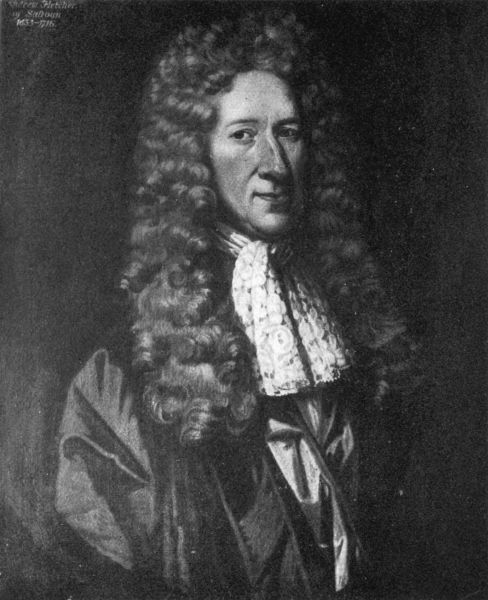
In the first year of Queen Anne, commissioners were appointed to treat for an Union. They met at Westminster in October 1702, and agreed that the two countries should become one monarchy, with one Parliament, and a system of internal free trade. The English consented, though reluctantly, to allow the Scots to trade with the colonies; but on the subject of the Company of Scotland Trading to Africa and the Indies no agreement was found to be possible. The English commissioners maintained that the privileges of the Scottish Company interfered with the interests of the East India Company: “Two companies existing together in the same kingdom, and carrying on the same traffic, are destructive to trade.” To this the Scottish commissioners replied by a claim for compensation, if the Scottish Company, whose losses in the Darien expedition had been so disastrous, was abolished. “If,” they said, “the existing of companies for carrying on the same traffic, do appear to your Lordships destructive of trade; it is not expected that your Lordships will insist, that, therefore, the privileges of the Scots Company should be abandoned, without offering at the same time to purchase their right at the public expense.” This brought matters to a deadlock; the commissioners separated; and the negotiations were ultimately abandoned.
Defoe describes these proceedings as a “Sham Treaty,” and, in his opinion, religion was the real, though secret, difficulty. “The jealousies,” he says, “on both sides about Church affairs, in respect to the Union, were ground of such difficulties as no Body could surmount, and lay as a Secret Mine, with which that Party who designed to keep the nation divided, were sure to blow it up at last, and therefore knew that all they did till that Point was discust signified nothing, and that whenever they pleased to put an end to it, they had an immediate opportunity.”
But even if the commissioners had come to terms on the questions of the Scottish Trading Company and of the Church, there can be no doubt that the Scottish Estates would not have ratified the treaty; for, as the proceedings of the first Parliament of Queen Anne proved, Scotland was now so exasperated against England that nearly five years of turmoil and danger were to pass away before the statesmen of the two countries, brought face to face with something more than the possibility of civil war, at last succeeded in carrying the Union of 1707, in the terms of which, apart from the loss of the right of complete self-government through their own Parliament, the advantages lay, upon the whole, with the Scottish people.
THE END.