Introductory (continued 2)
Reading edition
"The Clan in Canada."
Mr. R. Lovat Fraser, Vice-chairman, in proposing the toast of "The Clan in Canada," said: The Clan in Canada is not, of course, as important as the Clan at large, but it has an importance altogether its own, and has a record not unworthy the parent stem. It is a branch of a goodly tree, and bears fruit of the finest quality. No clan has done more, if as much, for Canada as the Clan Fraser. Coming with the famous Seventy-Eighth regiment they did their duty at Louisburg and Quebec, and stamped the Clan name indelibly on the history of Canada, from ocean to ocean. Not only did they render services in the east, but in pioneer work helped to open up the west by travel, trade and commerce. A distinguished clansman and a relation of my friend on the right (Fraserfield) was the discoverer of the Fraser River. To those of us who highly prize the integrity of the British Empire it must be a source of pride to know that the part taken by the Seventy-Eighth in Lower Canada helped very much to keep the American continent for the British Crown. The history of that time clearly proves that had the fortunes of war been adverse in Canada to the British arms, the French would have been in a position to overrun and seize the whole of North America. This is a fact which is sometimes lost sight of, but is one of much satisfaction to us as clansmen. To those whose names have been coupled with this interesting toast, I must leave the duty of dealing at length with it, and I rejoice that both of them are gentlemen thoroughly familiar with the subject and of recognized ability as speakers. I refer to Mr. E. A. Fraser, barrister of Detroit, and our worthy friend, Mr. G. B. Fraser, of Toronto.
Mr. E. A. Fraser said: Mr. Vice-chairman, Chairman and Clansmen, although hailing from the other side of the line, I am a Canadian-born clansman, my native place being Bowmanville, near this beautiful Queen City. I passed my younger days in this province, attended the schools here, and am as familiar with the affairs of the country and with our clansmen in the country as those who have not left it to reside under another flag. I can therefore speak with confidence to this toast, but you will excuse me if I speak briefly, as the honor was unexpected, and I do not wish to make it appear that any words of mine that may come on the spur of the moment would be sufficient to lay before you, in proper form, what our Clan has done for Canada and the position which it occupies to-day in the affairs of the country. It is easy to speak of Louisburg and Quebec; it is easy to dilate on the names of distinguished clansmen familiar to us all for the prominent positions they have taken among their fellows, but the work performed by the Clan in Canada would not then be half told. We must go back to the hoary forests, to the backwoods, where the early settlers bent their energies to the opening up of the country. That noble pioneer work in which our clansmen shared, and shared in large numbers, it seems to me, has an importance that is not as often recognized as it ought to be. It is difficult for the imagination even to grasp the peculiar task that lay before the early settlers of this vast, heavily-timbered, unbroken, unopened, untravelled country. Now that we can take a seat in the railway car at Halifax and leave it at Vancouver, we can form but the very faintest conception of what this country was one hundred years ago, when those hardy mountaineers ranged themselves alongside the Lowland Scot, the Englishman, the Irishman, the German and the Frenchman, to hew down the lords of the forest, to turn the wilderness into well cultivated fields, to turn the log cabins into the mansions that now adorn the plains, and to form, as they do, a sturdy peasantry second to none in the world. When the pen of a genius has dealt with those times, a chapter will be written for the civilized world more interesting, probably, than any yet penned. We have to leave the high places of military fame and statesmanship and enter the factory and the counting-house to trace there the career of the pioneers of industry and commerce, and among them we find our clansmen performing those duties which the necessities of the country demanded. If we turn to the professions, our Clan is found to hold its own. To the church, to law, to medicine, to art, to politics, we have given men of whom we are proud. The walk of life in Canada that has not been trodden by a clansman would be only an undesirable one for any man to tread. If I may be permitted to say it—coming as I do from the great State of Michigan—I would say that in that State, where our clansmen are very numerous, they not only hold their own, but have attained to eminence in business and in the professions. We have men of distinguished ability at the head of the legal fraternity of our State; we have men whose genius in business has secured them wealth and position; we have men who in humbler spheres have rendered patriotic services to the State, and who, one and all, show that they have not lost the characteristics of the Clan in new associations and callings. Before sitting down I should like to express the great pleasure I have experienced at this gathering of clansmen. I would have come twice as far to be present, and trust that the organization, the formation of which will undoubtedly be sanctioned here to-night, will be the means of bringing us together frequently to enjoy ourselves as we are now doing.
Mr. G. B. Fraser, of Toronto, followed, in response to the same toast. He said: Mr. Vice-chairman, Chairman and Clansmen, I frequently have to regret my lack of ability to discharge a duty of this nature to my own satisfaction. The subject allotted to me is one with which I cannot claim to be unfamiliar. It is a subject of great interest, and on such an occasion as the present, a subject which ought to be treated with some detail in order to perpetuate the names and deeds of clansmen who have done their duty nobly and well by this the land of our adoption. I find myself, however, not lacking in material, but in that ability—which seems to be born in some men—to place my information lucidly and briefly before you. Some speakers have already referred, and others will, later on, refer to the origin of the Clan Fraser in Canada. I shall not trespass on that part of the subject, but coming down to this century we find a clansman whose name will ever live in Canada. I refer to Simon Fraser, the discoverer of the Fraser River, whose life, when it comes to be written, will certainly shed lustre on the Clan name. He was descended from a cadet family of the Lovats, came with his parents to Canada from the Eastern States, and settled at Glengarry. His worthy relative, Fraser of Fraserfield, sits here on my right, and proud I am to welcome him to this feast. John Fraser de Berry, the founder of the New Clan Fraser, was a man of extraordinary personality, whose acquaintance I first made at the time of the Trent affair. I happened to be in Montreal at that time, and received a telegram from De Berry that he wished to see me. He came from Quebec city, and we met in the St. Lawrence Hall. I was very much impressed with the singular interview which took place between us. Of course he was full of the project of his Clan Fraser, full of the history and genealogy of the Clan. He was an enthusiast, and in common with many enthusiasts could look but with impatience on the practical, prosaic side of things. With due formality, acting by what he believed to be his authority as a chieftain of the Clan, he invested me with power to raise a company of Frasers, in an allotted district in Western Ontario, which was delineated on a military plan in his possession. I could not do otherwise than accept the commission, which was that of captain, from this venerable-looking and earnest chief. Had I been able to withdraw from business, I have no doubt that I should have been, in a very short time, at the head of a company numbering at least one hundred stalwart clansmen, who would have given a good account of themselves in the field. But, as you are aware, the occasion for defence quickly passed away, and no more was heard of the proposed regiment of Frasers, of which my company was to have formed a part. The most remarkable fact which impressed itself upon me then, and one that I yet consider remarkable, was the manner in which De Berry had the Province divided into military districts on his maps, the exact information which he had regarding the locations in which the clansmen resided, and the mass of details with which he seemed to be perfectly familiar. I could not understand how he acquired all this information, but have been informed since, by some who were associated with him, that he spared no means to trace out every Fraser in the country, through the voters' lists, the township registration books and the village directories. The amount of work involved in such research must have been enormous, and I can well believe that for many years De Berry devoted his time, as a man of leisure, to this project. He also appointed me as one of the one hundred and eleven chieftains of the New Clan, the chief of which was a descendant of a cadet of the Lovat family, residing in Nova Scotia, but the organization was too unwieldy, and its objects were rather vague for practical purposes. For a number of years meetings were held in Montreal of a very interesting character, but with De Berry's death and that of a number of those more prominently associated with him interest died out, and now we hear of the New Clan no more. We can profit by their experience in our own undertaking, and doubtless we shall be able to form an organization which will live, and which will perpetuate the name and traditions associated with the name and with this new country. I have practically confined myself to De Berry's name, not because there is a lack of clansmen on my list, whose memories deserve to be perpetuated, such as, for instance, the founder of the Fraser Institute, in Montreal; John Fraser, the author; John A. Fraser, the artist; Judge Fraser and Colonel Fraser, of Glengarry; but because some of these will doubtless be alluded to by other speakers, and, because having devoted so much time to a man whose name and personality I cannot but regard as of peculiar interest to us, I have left myself but little time to refer to those clansmen whom I held, and still hold, in high esteem, and in whose name I thank you for the toast proposed and honored in such a fitting manner.
"Distinguished Clansmen."
Mr. R. L. Fraser, the Vice-chairman, then proposed the toast of "Distinguished Clansmen in Art, Science, Literature, Theology, Arms and Politics." He said: I had almost concluded that all Frasers are distinguished clansmen, and distinguished in the highest sense of the word, though it were better, perhaps, to be more modest, and hence the division into which this toast has been divided. While we rightly draw much of our inspiration from the seat of the Clan across the sea, it is well that we should remember, and remember generously, those of our Clan in this country who have secured high positions in life. Among our artists the name "Fraser" takes high rank. Some of the Fraser artists I have known personally, and can bear testimony not only to their fame, but to their personal qualities. Canadian art owes much to Mr. J. A. Fraser and Mr. W. Lewis Fraser, now sojourning in Europe. Literature claims the names of James Lovat Fraser, the distinguished classical scholar, of John Fraser, of Donald Fraser, and others well known in Canada. Science also has its devotees and distinguished students, especially medical science and theology. Frasers both in Canada and in the old land have taken front rank in the profession of arms, and have distinguished themselves from the time of Sir Simon Fraser, the compeer and companion of Wallace and the savior of Scotland, down to the present day. In politics the Clan has certainly won its share of such honors as the public delight to bestow. The reply to this toast has been entrusted to a splendid array of able clansmen. For clansmen distinguished in arts, Ex-Mayor Fraser, of Petrolea, will reply; for those in science, Dr. J. B. Fraser; for those in theology, Dr. Mungo Fraser; for those in literature, Professor W. H. Fraser; for Frasers in war, Mr. Alexander Fraser (Fraserfield); and for those in politics, Mr. W. P. Fraser.
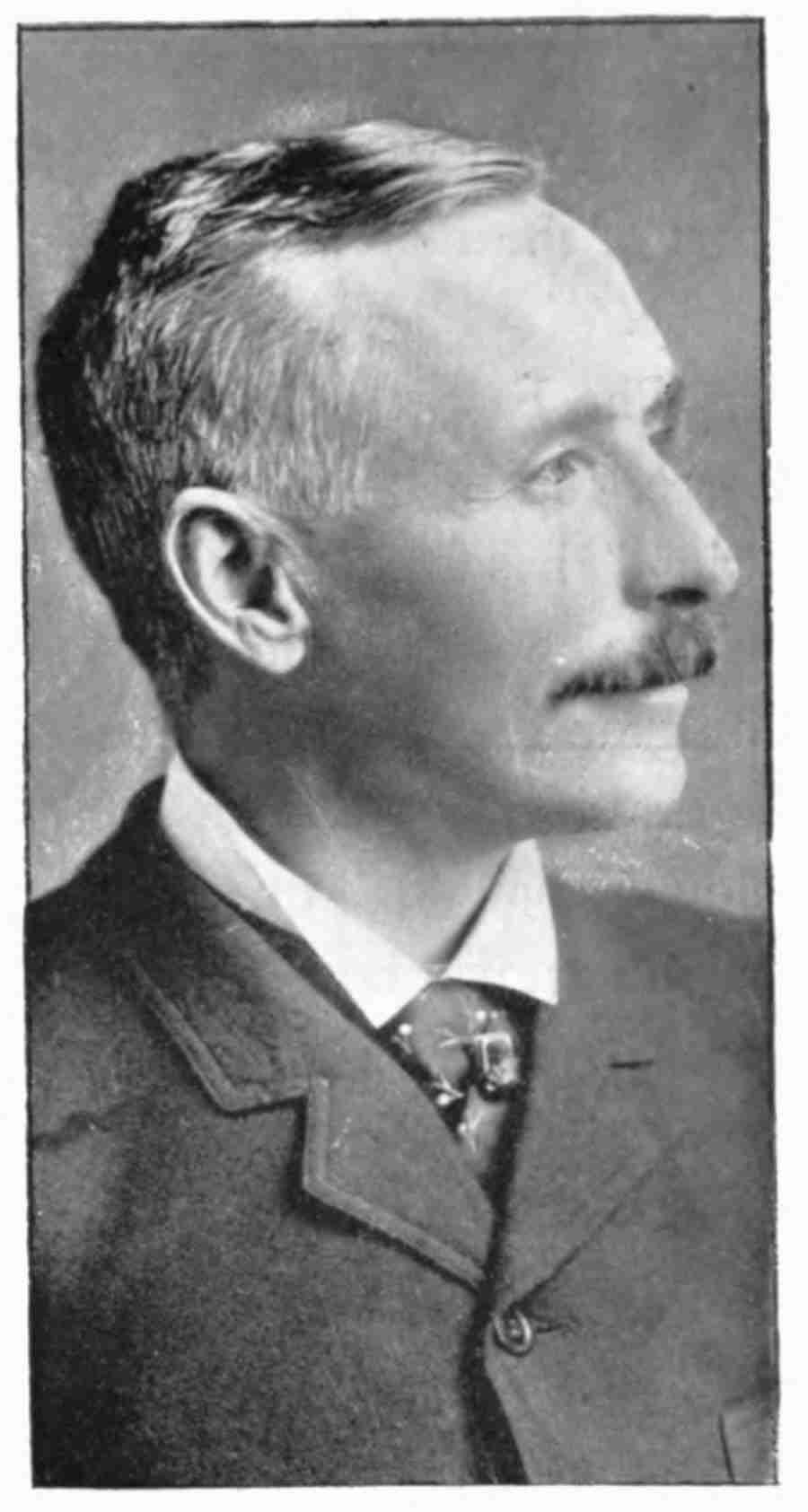
Ex-MAYOR JOHN FRASER, 2nd Vice-Chairman.
Ex-Mayor Fraser, replying for the "Frasers in Art," said: Mr. Chairman and Gentlemen,—Your committee, in selecting me to speak for our clansmen in Art, acted of course on the assumption that I possessed the necessary qualifications for the task. At the outset, however, I must, in justice to all concerned, but more especially to the Frasers who have won distinction in art, confess that my attainments in that department are hardly such as to entitle me to a hearing in response to this important toast. But I am to some extent emboldened and sustained by the reflection that, as this is in a sense a family gathering, the shortcomings of a Fraser will pass, if not unobserved, at least without provoking unfriendly comment. Permit me then, on behalf of the artists of our Clan, to thank you for the cordial and enthusiastic manner in which you have received this toast. Among the many distinguished clansmen who have, in almost every sphere of human endeavor and usefulness, shed unfading lustre, not only upon our Clan, but upon humanity in general, our artists have secured an honored place. Of necessity, those of our Clan who have excelled in art are few in number; indeed, the artists of the world and of the ages might almost find standing room in this banquet hall. But our Clan has perhaps produced its quota, and some of them have taken high rank. It is not my purpose to mention the names of all; in fact, I am unable to name more than two, viz., Charles Fraser and John A. Fraser. The former was a distinguished portrait painter of South Carolina who died in 1860 at the age of 78 years. He left a large number of portraits, all of which are said to have much artistic merit, and some of which have acquired considerable historic value. Of Mr. John A. Fraser it is hardly necessary to speak here. By his works we know him. A collection of Canadian paintings without one or more of his masterly representations of Canadian scenery would assuredly be incomplete. Let that suffice for our modern artists. It occurs to me, as it must have done to us all at one time or another, that our Clan must have produced great artists in the bygone ages. Assuredly Greece and Italy did not produce all the old masters. The Fraser Clan nourished then and was of course represented in art; but, just as in the newspaper—the product of the "art preservative"—there is to be found an occasional artist who, impelled by modesty or an exaggerated regard for his personal safety, uses a nom de plume—for instance, "Junius," Vox Populi or "A Disgusted Subscriber"—so there were, I fancy, in the days of long ago, Frasers in art who unmindful of posterity or perchance distrustful of their own powers, as genius so frequently is, worked under cover of such names as Raphael, Leonardo da Vinci, Michael Angelo, Canova, etc. A slight effort of the imagination will enable a Fraser to accept this theory.
The Fraser has ever been great on the "tented field." There, indeed, he has won renown, for his "fierce, native daring" has never been surpassed. But there are still victories to be won, infinitely greater than any achieved in battle. The grandest painting is yet to be painted, and we who are the first in Canada to assemble in honor of our ancient and beloved Clan shall ever fondly cherish the hope that the first place in art will be occupied by a Fraser. But from whatever clan or country the master shall come, the Frasers will be among the first to do him honor.
I thank you, Mr. Chairman and gentlemen, for the patient hearing you have given me.
The reply to the part of this toast referring to "Science" was made by Dr. J. B. Fraser, M. D., C. M., R. C. P. and S. K., Toronto. He said: Mr. Chairman, Vice-chairman, and Brother Clansmen, it gives me a great deal of pleasure to meet such a representative gathering of the old and distinguished "Clan Fraser" as we have here to-night. It arouses one's enthusiasm to think of the leading position our forefathers took in the history of Scotland, and the many deeds of valor performed on the battle field; and although they were pre-eminently noted as warriors, still we have many instances in which they shone in the realms of science. In replying to the toast of "The Frasers in Science," allow me to give you a few brief biographical sketches of a few of our ancestors.
Sir Alexander Fraser, of Philorth, was born in 1537, and died in 1623. He succeeded his grandfather to the estates in 1569, and at once began to improve the estate and advance the welfare of his clansmen. At this time Philorth was the baronial burgh, and boasted of a commodious harbor; but after the improvements referred to he changed the name to Fraserburgh. Having conceived the idea of founding a university, in spite of the strenuous opposition of the town of Aberdeen, he obtained powers to build a university at Fraserburgh, with all the privileges of the older universities. The remains of this building still existed in 1888. On account of his interest in education and high scholastic attainments he was knighted in 1594. His motto was "The glory of the honorable is to fear God."
John Fraser, F. L. S., was born in 1750, and died in 1811. He was a noted botanist, and visited North America five times in search of new and unknown specimens. He collected a great many plants in Newfoundland and later on at Charleston, Virginia. In 1796 he visited St. Petersburg, where he was introduced to the notice of the Empress Catherine, who purchased his entire collection of plants. In 1798 he was appointed botanical collector to the Czar Paul, and by him sent to America for a fresh collection. As a tribute to his ability he was elected a Fellow of Linnean Society (F.L.S.)
Sir Alexander Fraser, M. D., belonged to the Durris branch of the family. He was educated at Aberdeen University, and having risen by his skill high in the ranks of physicians and surgeons he was appointed physician to Charles II., whom he accompanied in his travels through Scotland. Spotswood, in his history of Scotland, speaks highly of his learning and skill. He died in 1681.
Robt. Fraser, F. R. S., son of Rev. Geo. Fraser, was born in 1760, and educated in Glasgow University, where he obtained the degree of M. A., when he was but 15 years of age. He studied for the Church of Scotland, and was appointed in an official capacity to the Prince of Wales, afterward George IV. In 1791 the Earl of Breadalbane asked him to accompany him on a tour through the Western Isles and the Highlands of Scotland, undertaken with the view of improving the state of the people. The Prince of Wales gave him leave, and at the same time stated his faith in his ability to plan some means by which the people would be benefited, and wished him success. He succeeded so well that he was chosen to conduct a statistical survey of Ireland, and was the means of originating several important works, among others the harbor of Kingstown, sometimes called Queenstown. He published several works on agriculture, mines, mineralogy, fish, etc. He died in 1831.
Simon Fraser was an explorer of some note, and was sent by the Hudson's Bay Company to establish new trading posts, and prospect for minerals, etc. He wrote many papers from 1806 to 1808. The Fraser river was named after him.[4]
Lewis Fraser was a zoologist of some note, and was appointed as curator of the Zoological Society of London. He travelled through South America, studying the character and habits of different animals and birds, and as the result of his travels published a work called "Zoologia Typica," or figures of rare and new animals. In 1888 his son was curator of the Zoological and General Sections of the Indian Museum of Calcutta.
William Fraser, LL. D., was born in 1817 in Banffshire, and was ordained pastor of the Free Middle congregation of Paisley in 1849. In 1872 the University of Glasgow conferred on him the degree of LL. D., on account of his scientific attainments. In 1873, in recognition of his long services as President of the Philosophical Society, he was presented with a microscope and purse of sovereigns. He died in 1879.
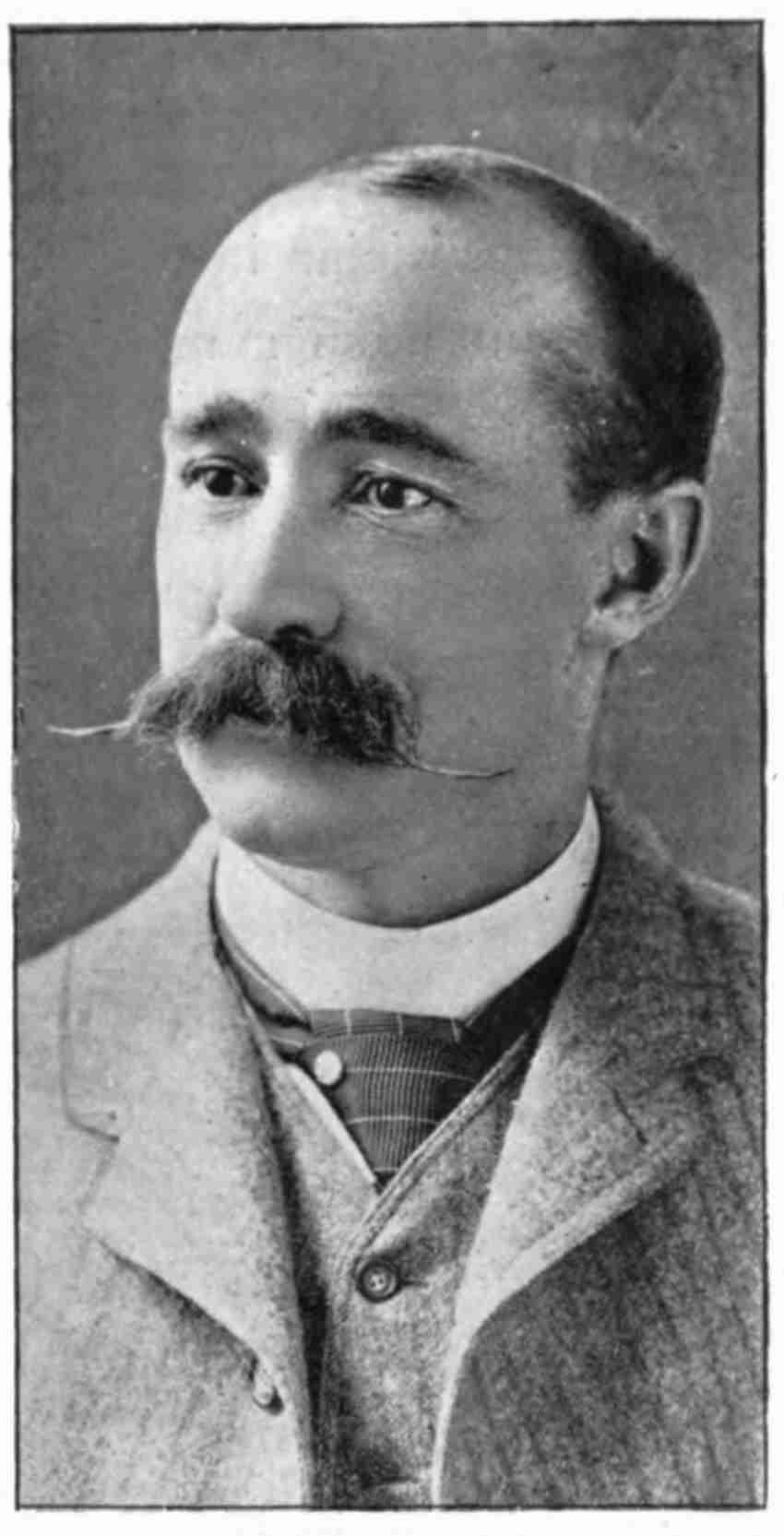
MR. WILLIAM A. FRASER, Secretary-Treasurer.
Alexander Campbell Fraser, D. C. L., LL. D., was born in 1819. His father was a minister and his mother a sister of Sir Duncan Campbell. He was educated in the Universities of Edinburgh and Glasgow, and in 1842 won a prize for his essay on "Toleration." In 1859 he was Dean of the Faculty in Arts, University of Edinburgh, and in 1871 was appointed Examiner in Moral Science; the same year he received the degree of LL. D. from the University of Glasgow. Later he was appointed Examiner in Moral Science and Logic at the India Civil Service Examinations. He was elected a member of the Athenian Club—without a ballot—for eminence in literature and philosophy. He afterward received the Degree of D. C. L., Oxford University.
Professor Thos. Richard Fraser, M. D., F. R. S., was born in Calcutta, India, in 1841, and graduated in medicine in Edinburgh in 1862. In 1863 he acted as Assistant Professor of Materia Medica, and in 1869 was appointed as Assistant Physician in the Royal Infirmary. He was afterward appointed Examiner in Materia Medica in London University, and was elected Medical Health Officer for Mid-Cheshire; he was also appointed Examiner in Public Health by London University. He was Dean of the Faculty in 1880. He is a F. R. S., F. R. C. P., Edinburgh; member of the Pharmaceutical Society, Britain; corresponding member of the Therapeutical Society of Paris, and of the Academy of Natural Sciences of Philadelphia. When the International Medical Congress met in London in 1881 he was appointed president of one section, and again president of one section in 1885. His work has been chiefly in the direction of determining the physiological effects of medicinal substances, with the view of establishing an accurate and rational basis for the treatment of disease.
I have now mentioned some of the names recorded in history of Frasers that were distinguished in Science, and as I have occupied more than my share of time, I will take my seat, conscious that I have been able to mention but a few of the many clansmen distinguished for their scientific attainments. As I said at the outset I have enjoyed a great deal of pleasure in this gathering of clansmen. In looking over the record of a few of our brethren distinguished in science, so as to glean a few facts for this occasion, I recognized more than ever before the substantial services rendered to mankind by men bearing our name, and now that we have foregathered a small company, it may be, but a select one, I feel that you share with me the pride with which we regard our Clan and name.
Professor W. H. Fraser, in replying to the sentiment, "Distinguished Clansmen in Literature," said: Gentlemen,—I thank you heartily for the way in which you have received this toast, and for the honor you confer on me in asking me to answer for our distinguished literary clansmen living and dead.
Literature is the mirror of life. Life is action: literature is contemplation and words. My knowledge of the history of the Clan leads me to the conclusion that most of its distinguished members were men of deeds rather than words, and that they lived at times and under circumstances when deeds rather than words had value—men like Sir Alexander, who fought by Robert Bruce's side at Bannockburn, or that other Sir Alexander Mackenzie Fraser of the last century, described by contemporaries as "mild as a lamb and strong as a lion," who had said to him in public by his General, "Colonel Fraser, you and your regiment have this day saved the British army," or the Fraser who fought with Wolfe before Quebec, and a host of others. These men did not write literature, but perhaps they were better employed. I think they were, but at any rate they are the men who furnish the basis for literature—heroism, fidelity and devotion.
The Clan has, however, not been wanting in scholars and writers, nor in those who patronized and furthered learning. What think you of a Fraser—Sir Alexander of Philorth—who in the 16th century built a grand University? It is getting to be the fashion now for rich men to build and endow seats of learning, but a man with such foresight and generosity in those early times in Scotland is surely deserving of all praise.
Although not a few of the early Frasers won fame by the sword, some wielded to good purpose that mightier weapon, the pen. Such was James Fraser of Brea, in Ross-shire, who wrote copiously on theology, and who went to prison, by orders of Archbishop Sharp, as a preacher at conventicles. Another divine and scholar was James Fraser, of Pitcalzian, in Ross-shire, a son of the manse; a famous controversialist he was, and wrote a book against the Arminianism of Grotius that has kept its ground in Scotland till the present day, although he died as long ago as 1769.
These are some of our older literary celebrities. Time will not permit me to mention all those who belong to the present century, or whose lives extended into it. There was Archibald Campbell Fraser of Lovat, 38th McShimi, who died in 1815. As a school-boy he saw the fight at Culloden, and was afterwards Foreign Consul in Barbary, and was author of the "Annals of the patriots of the family of Fraser, Frizell, Simson or Fitzsimson." It must in truth have been a mighty book if it recorded them all. A curious piece of literature from his pen was the very long and very laudatory epitaph for his own tomb erected by himself.
Robert Fraser, of Pathhead, Fifeshire, lived up till 1839. He was an ironmonger, but of such remarkable literary and linguistic tastes that in leisure moments he acquired Latin, Greek, French, German, Italian and Spanish. His poetry, which I regret is not accessible to me, was, it is said, characterized by fine feeling and nicety of touch. Truly a remarkable man. His ruling passion was strong in death, for he passed out of life dictating some translations of Norwegian and Danish poems.
There are other ways of making literature besides writing it yourself. James Fraser, an Inverness man, was one of those who have made literature by proxy. Who does not know Fraser's Magazine? that pioneer publication in this field of literature, dating from 1830, with its famous contributors like Thackeray, Carlyle, J. A. Froude and Father Prout. This Fraser was also a famous publisher, a man of taste and judgment, and did more to advance literature than almost any man of his time, notwithstanding Carlyle's reference to him as "that infatuated Fraser with his dog's-meat tart of a magazine."
Contemporary with Fraser of the magazine was James Baillie Fraser, also an Inverness man and a famous traveller who explored the Himalaya Mountains, and who was the first European to reach the sources of the Jumna and Ganges. He came home, and wrote an account of his travels. A little later he donned Persian costume, explored the larger part of Persia, and wrote a two-volume account of his journey. Turning to romance, he wrote "Kuggilbas," a tale of Khorasain; and this was the first of a long list of Eastern tales, histories and travels, the mere enumeration of which would take us on pretty far towards to-morrow morning.
A beautiful and sympathetic literary figure is that of Lydia Falconer Fraser, the wife of Hugh Miller. Here are some lines from a poem of hers on the death of their first-born child:
"Thou'rt awa, awa, from thy mother's side, And awa, awa, from thy father's knee; Thou'rt awa from our blessing, our care, our caressing, But awa from our hearts thou'lt never be. * * * * * Thou'rt awa, awa, from the bursting spring time, Tho' o'er thy head its green boughs wave; The lambs are leaving their little foot-prints On the turf of thy new-made grave."
What gentleness and sweetness in these lines! One of her prose works, "Cats and Dogs," still holds its own as one of the minor classics of natural history.
Rev. Robert William Fraser, a Perthshire man, succeeded Rev. Dr. Guthrie in St. John's Church, Edinburgh, in 1847, and was a learned and eloquent divine and a diligent pastor. He found time to write all but one of a dozen of important works on divinity, history, physical and natural science. He was a solid man.
I must not omit William Fraser, the educational reformer who helped David Stow to carry out his training system for teachers in Scotland, and who later investigated Scottish education, and wrote an important book on the subject of which the results were afterwards embodied in legislation. He died in 1879.
Along with him may well be mentioned the late James Fraser, Bishop of Manchester, a very famous man from Forfarshire, one of the Frasers of Durris, of whom it has been said that there has not been in this generation a more simple or noble soul. He interests us especially for his work in education, and forms a connecting link between our school system and English educational reform, for he visited Canada and the United States in 1865, and drew up a report which his biographer, Thomas Hughes, calls "a superb, an almost unique piece of work." It was the basis of the Foster Act of 1870, by which enormous changes were introduced in the direction of the American system.
Worthy of being put by his side was Rev. Donald Fraser, D.D., who died two years ago, of whom we should hear more under the head of theology. He received part of his education in old Knox College, Toronto, and was pastor of the Cote Street Church, Montreal, from which he was called to Inverness, thence to London, England.
In my mass of material, I had almost forgotten Patrick Lord Fraser, who died only five years ago. He was a very great man of the law, one of Scotland's greatest, and wrote extensively on legal subjects.
The Frasers, however, were not all heavy writers. Many of us remember John Fraser, who met his death by accident in Ottawa in 1872. He was best known as "Cousin Sandy." He had been a chartist before coming to Canada. He was a tailor by trade, and laid aside the needle for that other sharp pointed instrument, the pen. Most of his work was controversial and sarcastic. Here is a sample of his rollicking verse, reminding one strongly of the Ingoldsby legends:
"William Blyth was a scape-grace—as many boys are— Who with prudence and forethought was always at war; His genius was active; I've heard, or have read, That his grandma was nervous; his father was dead; And his mother, released from connubial vows, Brought home to her dwelling a second hand spouse, Who gave her a heart, somewhat hard and obtuse, In exchange for her furniture ready for use. Now William like others, without leave would roam, And be absent when lather the second came home; So he of the step, which step-father should be, Said 'To save the lad's morals we'll send him to sea.'"
The boy was confined in a water-cask for bad conduct.
"And the wave cleared the deck of the vessel, and she Like one half 'seas over' rolled about in the sea. Then a shriek was heard, and the boatswain roar'd 'There's Bill and the tub gone overboard!'"
He floated to shore after an interview with a shark, a cow switched her tail against the tub, and Bill caught it while the cow fled, and wrecked the tub, but saved Bill's life, although he remained unconscious.
"But was roused from his swoon by a beautiful Yankee Who brought dough-nuts and tea, it was genuine Twankay. An angel of light in the garb of humanity, And that garb of the Saxony's best superfine, What her countrymen term the 'real genuine.' Bill was charmed and concluded, with some show of reason, That to her annexation could never be treason."
And he was annexed in due time.
We have some poets still living, Gordon Fraser, John W. Fraser, and others; on them I must touch lightly. Gordon is a writer on "Lowland Lore," and writes good ballads of his own, like the one beginning:
"'Twas an eerie nicht, an' the storm-cluds lower'd, An the lichtnin's glent was keen, An' the thunner roll'd, but nane were cower'd I' the clachan till-hous bien."
It is a fearsome ghost story well told.
John W. is a very charming writer. His ballad of the courtship of "Bell" is first-rate, and it begins:
"Sin' Bell cam' to bide in our toun, The warl' has a' gaen ajee; She has turned a' the heads o' the men, And the women wi' envy will dea. O, but Bell's bonnie! Dink as a daisy is she; Her e'en are as bricht as the starnies That shine in the lift sae hie."
Such are some of our literary men, and they are very creditable specimens. I know that I have left out more than I have given. I have not said a word about all the Frasers in Gaelic literature, whose name must be legion, because I cannot follow them in that language.
Our Clan has a good proportion of the literary in it, and I believe we are all literary critics. I never knew a Fraser yet who had not excellent literary taste and judgment. The reasons why more literature has not been produced is very clear to my mind, and depends on a prominent characteristic of the Clan—great modesty. This must be thrown aside if you are going to rush into literature. Many a Fraser has had it in him to produce the highest sort of literature, who from this cause has never written a line for the public. When the Clan succeeds in throwing off this defect, we may expect the production of literary works on a par with the best that has been written.
The reply to the toast of "Frasers in Theology" was entrusted to the Rev. Mungo Fraser, D.D., of Hamilton, who had to leave by train for home before this toast was reached. His reply summarised is as follows: "There are many clansmen who stand high in theology, if we be allowed to understand by that term the wider and more comprehensive sphere of work in the Church of Christ. In the memory of those who admire subjective writings of an extremely searching character, the name of the Rev. James Fraser, of Brea, will occupy an undying place. To those who give the highest rank among ministers to pulpit ability, the Frasers of Kirkhill, for three generations, will afford examples of eloquence and those gifts of oratorical power that appeal so irresistibly to the popular ear. By those who regard the administrative functions of the pastor as of importance, the name of Bishop Fraser, of Manchester, is justly esteemed, and in a less prominent, but not less important degree, the name of Dr. William Fraser, for a long period the senior clerk of the Presbyterian Church in Canada; and theological literature finds a writer of ability and copiousness in Dr. Donald Fraser, at one time of Montreal and afterwards of London, England. The Clan contributed a great many names to the roll of distinguished clergymen, men who, in their different spheres, rendered noble service to the cause of Christ. And among them are men, some of whose names have been mentioned by the Vice-chairman, of ability, of high character, whose personal influence over the people was strongly felt. In Canada the name of Fraser has an honored place among the ministers of the churches. They are doing their duty nobly and well, and if the names of some of them be not widely known outside of their own country, it must not be forgotten that a clergyman's best fame and best reward is his good name among those for whom he directly labors, and for whose welfare he gives his best endeavors. Did time permit, it would be comparatively easy to speak at length of those who have held their own in the theological sphere, but sufficient has probably been said to indicate that the Clan has done its duty in one of the most interesting and important fields of human effort open for the welfare of man.
The part of the toast dealing with "the Frasers in War," was replied to by Mr. Alexander Fraser (of Fraserfield, Glengarry). He said: After what we have heard of the Clan this evening we must come to the conclusion that it has always been distinguished for its military spirit, and I regret on that account, all the more, that the duty has fallen upon me to reply to the "Frasers in War." Not that I do not appreciate to the fullest extent that spirit which distinguished them and probably in no small degree share it, but I am not a man of words, and I feel I shall not be able, even in a small way, to do justice to this theme. Undoubtedly the military character of the Clan goes back to its very origin, for if the Frasers did come from Normandy, they must have been selected on account of their military ability, for those were the days when length and strength of arm and good generalship were the most valuable qualifications a man could possess. But, coming down to the earlier times in Scotland, we find our clansmen heading the warlike and chivalrous nobles of that country, in their devotion to the Crown, and in their exploits in the field in defence of country and patrimony. I need not enter into a detailed description of the times when the Lowland Frasers served their country and their king with an unswerving devotion whose lustre time will not dim, nor the researches of modern historians tarnish. Down through history in the Highlands they have ever shown themselves to be a brave and warlike race, furnishing individuals of conspicuous ability and distinction in arms. No treatment of this toast would be complete that should omit a reference to Fraser's Highlanders that embarked under the command of the Chief of the Clan in 1757, and took part with Wolfe's army in all the engagements, from Louisburg to the close of the war. At Quebec the Frasers distinguished themselves in an especial manner. In the struggles which took place early in the century, between the Canadians and Americans, the Frasers did their duty, proving that down to our own times they maintained their old reputation. In the British army, from the formation of the Highland regiments, in 1739, to the present day, the Clan has given many distinguished officers and many brave men to its country's service, and I know I can speak with truth when I say that the old spirit still prevails, whether you look at home or abroad. So true is this that I may conclude these remarks in the stereotyped words of the after-dinner speaker by saying that should the occasion ever demand it, the Frasers will be ever ready to draw their claymores and shed their blood in the country's service as of yore.
Mr. W. P. Fraser spoke for "The Frasers in Politics." He said: Mr. Chairman, Vice-chairman and Brother Clansmen, it would seem that the toast of distinguished clansmen is quite an inexhaustible one. Much has been said of our clansmen in the various ranks of life, but I believe no more than is deserved. As a matter of course the Frasers have ranked high in politics. We have not had a Prime Minister of the name in the Dominion of Canada, but we have given to the Legislatures of Ontario, Quebec, and the Lower Provinces, many of their most useful members, their most eloquent speakers, and their most responsible statesmen. We have borne our share of public duty in this country, both in the rank and file of political workers, and as leaders. I do not need to go far afield to find some of the more striking examples. There is one name so long and honorably associated with the fortunes of this Province that it merits premier recognition. I refer to that of the Hon. Christopher Finlay Fraser, who would have responded to this toast himself to-night, were it not that he has been suffering from severe illness for some time, and has not sufficiently recovered to take his place among us. Reference has been made to his letter of regret, and I feel sure that every word in it is true—that it is the outcome of his sincere feeling; for Mr. Fraser is as much a clansman as he is a politician, and has ever manifested the same deep interest in matters connected with his Clan, as he has displayed in the public duties which he is called upon to perform. The position which he occupies, the services which he has rendered, his wide sphere of influence, his sterling honesty and unblemished record—these lie as an open book before you. For me to expatiate upon them would be quite superfluous. His name will go down in the annals of our statesmen as one of the most competent Ministers of the Crown who ever held office in this Province, as one of subtle intellect who served his country and his party in great crises, as one who gave his talents generously and disinterestedly to the welfare of his fellow-beings, and in a peculiar manner helped to lay the foundations of a great nationality in this country. Another of our clansmen, whose telegram of regret shows that he has been intercepted on the way from the far east to our gathering, has made the name famous in the politics of Canada, and is likely to attain to still greater eminence in the future. At his home in Nova Scotia he has long been known as a man of probity, ability, and capacity for public duty. It is not so long ago that he was first heard of in these western parts, but already he has sprung into notice, and his services are in request at many public gatherings. I am sure we all regret the absence of Mr. D. C. Fraser, M.P. for Guysboro', to-night. He is not only a politician but a patron of learning and celtic literature. To his generous heart and open hand many a struggling Highlander owes much, and through his encouragement not a few scholarly productions have seen the light of day. Were I to venture beyond Canada I should find Frasers playing a prominent part in the field of politics in South Africa, in the Australias, in the East Indies, and even in South America. It was only the other day we heard of a clansman born in Nova Scotia, but of good Inverness stock, who had been appointed delegate to the Inter-colonial Conference to be held in Ottawa this summer. I refer to the Hon. Simon Fraser, of Victoria. I have no doubt his clansmen here will be glad to welcome him, and to wish the utmost success to his mission. I must refrain at this hour from any reference to what Frasers have done in political life in the old land. The chiefs of the Clan numbered among them many men of eminence in politics. Of these we have heard something already to-night, and when the call of public duty comes, I feel sure a Fraser will be ready to step forward to perform his part in a worthy manner.
ORGANIZATION.
A resolution was carried in favor of the formation of an organization of clansmen in Canada, having for its main objects the promotion of social intercourse among the members, the collection of facts from which to prepare a biographical album of the members and other clansmen, and the promotion of objects which may be of interest to the Clan; and that those present form a general committee to act in the matter, the Committee of this gathering to act as an Executive Committee, for the purpose of drafting a constitution for the Clan to be submitted to the next gathering of the Clan.
The Clan song, composed by request, for this gathering, by Mrs. Georgina Fraser Newhall, and set to music composed by Mr. J. Lewis Browne, will be found, with a biographical sketch and portrait of the authoress, on pages 93 to 97.

GEORGINA FRASER NEWHALL.
AUTHORESS OF "FRASER'S DRINKING SONG."
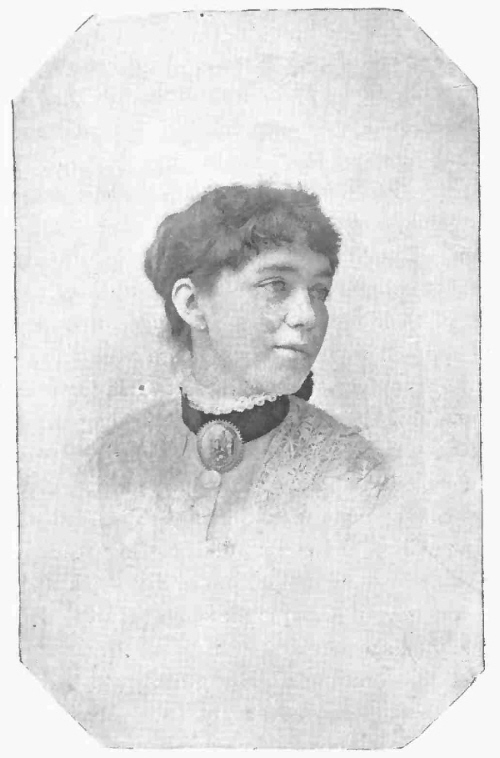
MRS. GEORGINA FRASER NEWHALL
"The Frasers of Stratherrick, where are they?" To this pensive question by Charles Fraser Mackintosh comes an oft echoed and lusty answer from many distant lands. Indeed the question is, "Where are they not?" for it is safe to say that there is no country where the English language to-day prevails, in which Stratherrick may not claim a son. Their new homes have not the historical charm of the old, but wherever the Frasers have gone, away from the home of their fathers, they have acquitted themselves well. A scion of a Stratherrick house was James George Fraser, who many years ago settled at Galt, Ontario. Like his brother Capt. Charles Fraser, now residing in Glasgow, Scotland, he was attached to a Highland regiment in his younger days, but withdrawing from the service, he came to Canada with his young wife, Christina MacLeod. At Galt was born a family of three sons, William, Charles and Andrew, and four daughters, Christina, Jessie, Elizabeth and Georgina, the youngest of whom is the subject of this brief sketch. On the maternal side her descent is traced from the families of Lochend and Braemore. Her great-grand parents were George Mackenzie, second son of John Mackenzie I. of Lochend (of the Gairloch family), and Christina, daughter of Captain Hector Munro of Braemore. George Mackenzie was a distinguished officer, and attained to the rank of Lieut.-Colonel of the famous Rosshire Buffs, the 78th Highlanders. His daughter Christina married Angus MacLeod of Banff with issue, two sons, Donald and George, and several daughters, of whom Christina, as already stated, married James G. Fraser of Galt, Ontario.
Georgina Fraser was born about the beginning of the sixties, and was educated in the public and high schools of her native town. After the death of her parents she removed to Toronto, and taking up the study of shorthand entered upon the life of an amanuensis and teacher of stenography. She taught large classes in the towns surrounding Toronto, and in Victoria University, when that institution was located at Cobourg. She was the first woman in Canada to adopt this profession as a means of self-support, and to her belongs the honor of adding a new vocation to those upon which Canadian women may enter. In addition to these duties Miss Fraser undertook journalistic work, and was the first lady writer in Toronto to conduct the department devoted to woman's interests, now so important a weekly feature in the great dailies in Canada.
In 1884, while occupying the important position of Assistant Secretary to General Manager Oakes of the Northern Pacific Railway at St. Paul, Minn., she became the wife of Mr. E. P. Newhall, of the Pacific Express Co. in Omaha.
Notwithstanding household cares and ill-health Mrs. Newhall still finds time to indulge in her old taste for literature, wielding an earnest pen in advocacy of those reforms which most interest women of advanced thought. She has achieved considerable fame as a writer of short stories, and her compositions of verse bear the mark of the true poet's touch.
As a clanswoman Mrs. Newhall is fond of claiming the right to call herself a "black" Fraser, nature having endowed her with that darkness of hair and eyebrow which is supposed to stamp all the possessors thereof as "true Frasers."
FRASER'S DRINKING SONG.
(The Fraser Motto is "Je Suis Prest"—"I am Ready.")
Words by Georgina Fraser Newhall. Music by J. Lewis Browne.
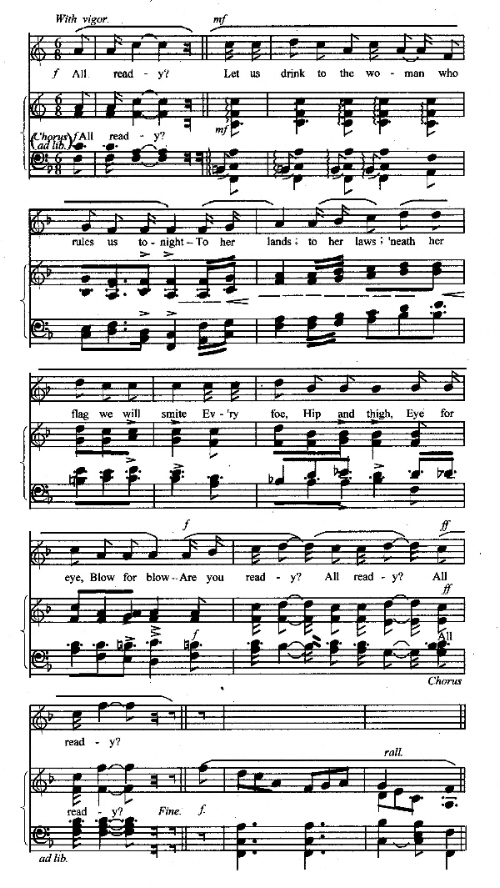
FRASER'S DRINKING SONG.
1
All ready? Let us drink to the woman who rules us to-night— To her lands; to her laws; 'neath her flag we will smite Ev'ry foe, Hip and thigh, Eye for eye, Blow for blow— Are you ready? 2 All ready? Then here's to the mothers who bore us, my men; To the shieling that sleeps in the breast of the glen Where the stag Drinks it fill From the rill By the crag— Are you ready? 3 All ready? Fill your glass to the maid you adore, my boys; Wish her health, wish her wealth, long life, and all joys; Full measure (May it swim To the brim) Of pleasure— Are you ready? 4 All ready? And here's to the country we live in, my lads; It is here we have struggled and thriven, my lads? God bless it, May Beauty And Duty Possess it— Are you ready? 5 All ready? A Fraser! A Fraser forever, my friends; While he lives how he hates, how he loves till life ends; He is first, Here's my hand, Into grand Hurrah burst— Are you ready?
SIMON FRASER.
DISCOVERER OF THE FRASER RIVER.
The life-work of the discoverer of the Fraser River illustrates the pioneer spirit which animated the early settlers of Canada. There was the pluck, the love of adventure, the endurance, the prompt response to the call of duty, the expansive idea which kept abreast of ever opening possibilities, and the rare tact displayed in new, embarrassing and important transactions. Simon Fraser was in many respects a great man and one of whom his clansmen may well feel proud. His grandfather was William Fraser, of Culbokie, whose wife Margaret Macdonell, of Glengarry, was the possessor of the famous Balg Solair in which was stowed away a manuscript of Ossianic poetry, which figures in the dissertations on the authenticity of MacPherson's Ossian, and regarding which the following interesting passage occurs in the correspondence of the late Bishop Alexander Macdonell: "I myself saw a large MS. of Ossian's poems in the possession of Mrs. Fraser of Culbokie, in Strathglass, which she called "am Balg Solair" (a bag of fortuitous goods). This lady's residence being between my father's house and the school where I used to attend with her grandchildren, at her son's, Culbokie House, by way of coaxing me to remain on cold nights at her own house, she being cousin to my father, she used to take up the Balg Solair, and read pieces of it to me. Although a very young boy at the time, I became so much enraptured with the rehearsal of the achievements of the heroes of the poem, and so familiar with the characters, especially of Oscar, Cathmor, and Cuthchullin, that when MacPherson's translation was put into my hands in the Scotch college of Valladolid in Spain, many years afterwards, it was like meeting old friends with whom I had been intimately acquainted. Mrs. Fraser's son, Simon, who had a classical education, and was an excellent Gaelic scholar, on emigrating to America in the year 1774, took the Balg Solair with him as an invaluable treasure. On the breaking out of the Revolutionary war, Mr. Fraser joined the Royal Standard, was taken prisoner by the Americans and thrown into jail, where he died."
William, of Culbokie, and his wife Margaret Macdonell had nine sons. Of these, Archibald and John fought under Wolfe at Quebec. John settled at Montreal, and became Chief Justice of the Montreal district. In 1774, or more probably in 1773, Simon left home, and settled near Bennington, Vermont. Here his son, the subject of this sketch, was born in 1776. His mother and her family came to Canada after the death of his father (as stated above), and settled in Glengarry. Simon was the youngest of the family. He was placed in school in Montreal, where he resided with his uncle, the Chief Justice. In 1792, at the age of sixteen, he became an articled clerk with McTavish, Frobisher & Co., to the North-West Fur Trading Co., which had its headquarters in Montreal. In 1802 he became a partner, and subsequently went out to the far North. In 1805 he came down from Fort Athabasca to Fort William, and was then nominated to cross the Rocky Mountains, to extend out-posts and form trading connections with the Indians. He responded at once to the call. He said he would undertake the expedition provided they gave him a sufficient outfit. This the Company were only too glad to do. It was a very hazardous undertaking. He crossed the mountains with thirty men—clerks, axemen, guides and interpreters. He soon found himself in a wild and desolate region. As he went on he built block-houses, and took possession of the country in the name of the King. In 1806 he discovered the river which takes its name from him. He discovered many rivers and lakes which he named after different members of the Company. He traced the Fraser river to its source, and met many different tribes of Indians, some friendly, others hostile. At one time they met different tribes who were very friendly and made a great feast for them; they killed their fattest dog for him, which of course he feigned to eat; but at the same feast the chiefs held a council and decided to put him to death, which the interpreter, who understood their language, told him, and they stole quietly away. He first named the river now known as the Fraser river, the "Great River," and called the place "New Caledonia." Here he left some of the party, and crossed westerly into the open country, and built another house near a lake, which he called Fraser's Lake. He was now with four men in the midst of Indians who had never before either seen or heard of the "pale face." On the border of this lake he witnessed an Indian ceremony. He was brought by the Indians to where they had a large burying-ground, where one of the Chiefs of their tribe was being buried. An immense number of warriors were assembled, and after a most solemn and impressive ceremony, Mr. Fraser was invited by signs to approach the grave. He did so, and gave immense satisfaction by engraving his name on a post which had been planted over the remains of the departed warrior. In July, 1807, he received fresh supplies from the North-West Co., who at the same time urged him to trace with all possible speed the "Great River" to the Sea, they being apprehensive that the Americans would get ahead of the British in that quarter, as in the previous year 1806, Captains Lewis and Clarke had gone down the "Columbia," and were extending American authority along the western coast of America, and Astor, on the part of the Americans, was also looking anxiously towards the northern section.
The North-West Co. therefore urged Mr. Fraser to spare no expense in achieving the object of their desires.
Mr. Fraser built another trading-house on the "Great River" in 1807, and reached the Ocean in July, 1808. He remained but a short time there on account of the hostility of the Indians.
Returning he again met numerous and large bodies of Indians speaking several different languages. They assembled to see the wonderful pale faces who had come among them. An idea of how they regarded white men may be formed from the fact that when hundreds of them were congregated together, at the discharge of a single rifle they would fall prostrate on the ground, so great was their astonishment. Had it not been for Mr. Fraser's wonderful energy and enterprise, there would not be a railroad to-day from ocean to ocean over British territory.

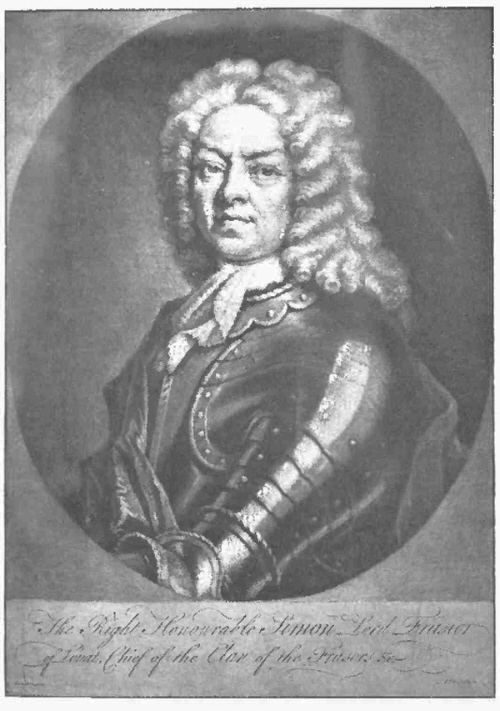
SIMON, LORD LOVAT.
BEHEADED ON TOWER HILL.
No Fraser chief has achieved more notoriety than Simon, the fourteenth Lord Lovat. His enemies avenged themselves for the failure of their nefarious plots against him by supplying, at a cheap rate, the charcoal with which prejudiced historians have blackened his memory. But while his fate is still held up as a warning to evil doers, it has been proved, beyond peradventure, that his character has been much maligned, and that he appears rather as a man of inexhaustible resources, availing himself of whatever means lay nearest to his hand to extricate himself from enormous difficulties and to attain objects which, though of personal advantage to himself and Clan, were as honorable as they were just, and wholly in keeping with the customs of his day. His efforts to secure the chiefship and the honors of his house, and to extend the power of the Clan, were genuinely patriotic. His Lordship certainly was a man of learning and ability. He was an admirable letter writer, and passages in his correspondence show that he had wonderful facility in writing and a capital style.
The picture here given is from a mezzo-tint in possession of Mr. B. Homer Dixon, from a painting of Lord Lovat, by David Le Clerc, a Swiss who was in England in 1715 and 1716. The picture which is supposed to have been taken in 1715, when Lord Lovat was about forty-eight years old, is marked: "Le Clare, pinxt. J. Simon, fecit." Although armour had been disused before Lord Lovat's time, it was the fashion at that period for gentlemen to be painted in armour. The mezzo-tint is very rare.
BRIGADIER SIMON FRASER.
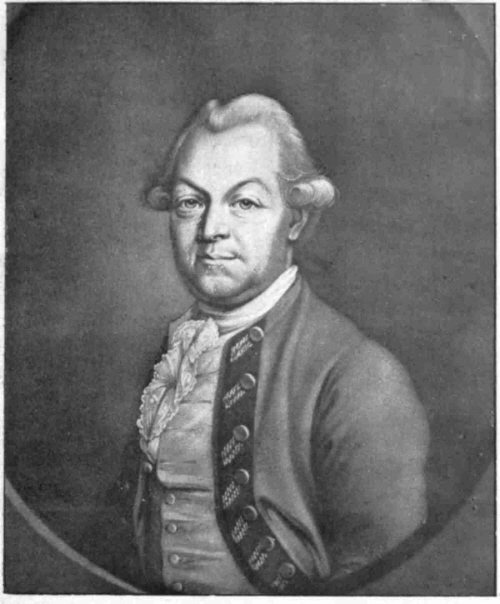
BRIGADIER-GENERAL FRASER, Younger of Balnain.
Among the officers of Fraser's Highlanders were several clansmen destined to rise high in military distinction. Of them few are better known in the Clan than Captain Simon Fraser of Balnain, afterwards Quarter-Master General in Ireland, a post which he quitted to serve as Brigadier-General in Burgoyne's Army in America. He had served in the Scotch regiment in the Dutch service, and was wounded at Bergen-op-Zoom. He spoke French perfectly and to this accomplishment and his coolness was due his signal service at Quebec, where he saved the transports from discovery at a critical moment before the precipice was scaled.
Smollet relates the incident as follows:—"The French had posted sentries along shore to challenge boats and vessels and give the alarm occasionally. The first boat that contained the English troops being questioned accordingly, a captain of Fraser's regiment, who had served in Holland, and who was perfectly well acquainted with the French language and customs, answered without hesitation to qui vive?—which is their challenging word—La France; nor was he at a loss to answer the second question, which was much more particular and difficult. When the sentinel demanded, a quel regiment? the captain replied, de la reine, which he knew by accident to be one of those that composed the body commanded by Bougainville. The soldier took it for granted this was the expected convoy (a convoy of provisions expected that night for the garrison of Quebec), and, saying passe, allowed all the boats to proceed without further question. In the same manner the other sentries were deceived; though one, more wary than the rest, came running down tothe water's edge and called, pour quoi est ce que vous ne parlez pas haut? 'Why don't you speak with an audible voice?' To this interrogation, which implied doubt, the captain answered with admirable presence of mind, in a soft tone of voice, tai toi nous serens entendues! 'Hush! we shall be overheard and discovered.' Thus cautioned the sentry retired without further altercation."
At the time of the Revolutionary War, Brigadier-General Simon Fraser was second in command of the British army, under Burgoyne. He fell at Saratoga under circumstances which prove his great ability as an officer. The American historians say that General Burgoyne had lost his head, and the American General Morgan perceiving it, called two of his best riflemen and said: "You see that fine fellow on the white horse? It goes against my heart to do it, but you must pick him off, or we lose the battle." They watched their opportunity, shot General Fraser, and the Americans won the day.
The picture here given is said to be a good likeness. It has been produced from a mezzo-tint in the possession of Mr. B. Homer Dixon, Toronto.
SECOND ANNUAL GATHERING.
"Three triumphs in a day; three hosts subdued in one: Three armies scattered like the spray, beneath one common sun."

HE second Annual Gathering and Dinner of the Clan Fraser in Canada was held on the 25th day of February, 1895, that date having been selected in honor of the Scots' victory at Roslin on February 25th, 1303, when the army was commanded by Sir Simon Fraser, the patriot (p. 48). The place of meeting was the Rossin House, Toronto. The gentlemen were accompanied by lady friends, a departure from the custom generally observed on similar festive occasions, that contributed greatly to the pleasure of the evening. The committee in charge of the arrangements was composed of Dr. J. B. Fraser (Chairman of Programme Committee), Professor W. H. Fraser, Messrs. G. B. Fraser, R. L. Fraser, Alexander Fraser (Fraserfield), Alexander R. Fraser, W. P. Fraser, Andrew Fraser, Alexander Fraser (MacFhionnlaidh), Chairman; and W. A. Fraser, Secretary. Those present were Rev. Dr. Mungo Fraser, Hamilton; Mr. W. Lewis Fraser, New York; Mr. Donald Fraser, Kingston; Mr. R. I. Fraser, Barrie; Mr. Andrew Fraser, Barrie; Messrs. Robert Lovat Fraser, George B. Fraser, and Miss Fraser; Professor W. H. Fraser and Mrs. Fraser; Dr. J. B. Fraser and Mrs. Fraser; Alexander Fraser (Fraserfield), Mrs. Fraser and Miss Kate Fraser; Alexander R. Fraser and Mrs. Fraser; Alexander Fraser (MacFhionnlaidh), Mrs. Fraser, Miss Fraser, Mrs. Georgina Fraser-Newhall, and Mrs. Ramsay; Mr. W. A. Fraser and Mrs. Fraser; Dr. Pyne and Mrs. Pyne; Alexander Fraser (Parkdale), and Miss Fraser; W. P. Fraser, Donald Fraser, Charles Fraser, Mrs. C. G. Fraser and Master Norman Fraser, James Fraser, Henry Sandham Fraser.
Letters of regret at their inability to attend were read from Messrs. E. A. Fraser, Detroit; D. Fraser, Montreal; Ex-Mayor Fraser, Petrolea; O. K. Fraser, Brockville; A. Fraser, Hamilton; P. M. Fraser, St. Thomas; Rev. R. D. Fraser, Bowmanville; and Rev. Dr. J. B. Fraser, Annan.
Mr. Alexander Fraser (MacFhionnlaidh) presided, and the vice-chairs were occupied by Messrs. George B. Fraser and R. L. Fraser, and Mr. W. A. Fraser acted as Secretary.
The after-dinner programme was interesting and varied. Besides the usual toasts it included the "Fraser's Drinking Song," composed by Mrs. Georgina Fraser-Newhall, and sung by Mrs. Alexander Fraser; readings by Prof. W. H. Fraser, bagpipe selections by Pipe-Major MacSwayed, and Highland dancing by Master Norman Fraser.
The speeches contained a great deal of information regarding the Clan, and were very interesting. Most eloquent was the speech delivered by Mr. W. Lewis Fraser, of New York, who entered into the history of the Clan at considerable length; and that by Mrs. Georgina Fraser-Newhall, in response to the toast of her health.
A group photograph was successfully taken of the company by the aid of a flash-light, which will remain a memento of a very pleasant gathering.
Before dispersing the report of the Committee on the Organization of the Clan was read. It set forth that meetings had been held at which the Clan had been organized, and the annexed Constitution and By-laws prepared:
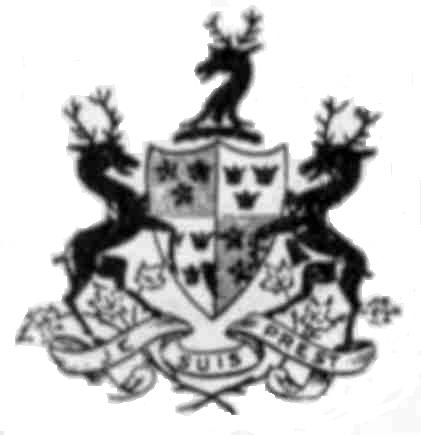
THE CLAN FRASER IN CANADA. ———————— (Instituted May 5th, 1894.) ———————— CONSTITUTION AND BY-LAWS.
ARTICLE I.—Name.—The name of this organization shall be: "The Clan Fraser in Canada."
ARTICLE II.—Objects.—The objects of the Clan shall be:
The cultivation of friendly intercourse and social relations among those bearing the surname "Fraser," and the promotion among its members of love for the Clan, and increased interest in its history and traditions:
The collection of Clan records, traditions and anecdotes; of documents bearing upon the Clan history; of information relating to notable clansmen, especially with reference to the early history of the Clan in Canada; and the compilation of an album of portraits and biographical sketches of Clansmen in Canada:
The furtherance of the interests of clansmen, whether in Scotland or in Canada, and the giving of such assistance to clansmen in need as may be within the power of the Clan.
ARTICLE III.—Membership.—Persons bearing the surname "Fraser," by birth or by marriage, shall be eligible for membership in the Clan. Honorary membership may be conferred on distinguished clansmen, or on persons, not clansmen, who have rendered conspicuous service to the Clan.
ARTICLE IV.—Arms, Motto and Badge.—The arms of the Clan Fraser in Canada shall be the same as those of the Clan proper, with the difference of a wreath of Canadian maple leaves intertwined (a fac-simile of which is impressed on this Constitution); the "Motto" and "Badge" shall be that of the Clan Fraser—motto, "Je Suis Prest"; badge, a sprig of yew—Taxus Baccata.
ARTICLE V.—(a) Executive Officers.—The Executive Officers shall consist of a Chief, Chieftains (as hereinunder provided for), Secretary-Treasurer, Historians, Curator, and a Bard.
(b)—Trustees and Councillors.—There shall be three Trustees, six Councillors, a Pipe-Major and Pipers.
(c)—Honorary Chief and Chieftains.—The Chief of the Clan Fraser, "Mac-Shimi," shall be the Honorary Chief, and Honorary Chieftainship may be bestowed on clansmen who merit very high clan honor.
ARTICLE VI.—Gatherings.—The Clan shall gather once a year, on a day to be decided upon by the Executive Committee, for the transaction of business. That gathering shall be known as the Annual Business Meeting of the Clan. On the evening of the same day a Clan Dinner, or other form of Entertainment, shall take place.
ARTICLE VII.—At the Annual Business Meeting of the Clan the Executive Officers, Trustees, Councillors and Pipers, Honorary Chief (when vacant), and Honorary Chieftains (when Honorary Chieftainship is conferred), shall be elected; and the roll of members, prepared by the Executive Committee, shall be revised.
ARTICLE VIII.—The principle upon which Chieftains and Councillors shall be elected shall be as follows: The Province of Ontario shall be divided into five Districts, viz.: Ottawa, Kingston, Toronto, Hamilton and London, from each of which and from each of the other Provinces of Canada, a Chieftain shall be elected. A Chieftain may be also elected from each of the States of the American Union, as an interest in the Clan may be manifested. The Ontario Districts shall comprise the following counties:
Ottawa.—Glengarry, Prescott, Stormont, Dundas, Grenville, Carleton, Russell, Renfrew.
Kingston.—Addington, Lennox, Frontenac, Hastings, Prince Edward, Leeds, Lanark.
Toronto.—Northumberland, Peterborough, Haliburton, Victoria, Durham, Ontario, Muskoka, Parry Sound, Nipissing, York, Peel, Toronto.
Hamilton.—Wentworth, Lincoln, Welland, Brant, Waterloo, Simcoe, Dufferin, Grey, Wellington, Halton.
London.—Middlesex, Elgin, Oxford, Norfolk, Haldimand, Kent, Lambton, Essex, Bruce, Huron, Perth.
There shall be at least one Councillor elected to represent each District in Ontario.
ARTICLE IX.—The Executive Officers, Trustees and Councillors shall form a General Committee, which shall prepare the business for the Annual Meeting. The Executive Officers shall form the Executive Committee of the General Committee. The General Committee and the Executive Committee may appoint Sub-Committees with power to transact business on behalf of the Clan.
ARTICLE X.—Duties of Officers.—The Chief shall preside at all the meetings of Committees, at the Annual Business Meeting, and at the Annual Entertainment of the Clan; in his absence the duties of the Chief shall devolve upon the Chieftains in order of seniority, and in the absence of all of them the clansmen present shall elect a Chairman pro tem. The Secretary-Treasurer shall keep a correct minute of the business transacted at the meetings of Committees and at the Annual Meeting of the Clan; he shall keep a roll of the membership of the Clan; with the Chief he shall convene the meetings, and shall conduct the correspondence and general business of the Clan; he shall submit his accounts to an audit annually or on the demand of the Executive Committee. The Historians shall compile the Clan Album, and shall edit any papers containing information regarding the Clan or clansmen which may be secured for the Clan. The Curator shall have the custody of all property belonging to the Clan, including papers and books not in use by the proper officers, and shall account for the same to the Trustees in whom the property shall be vested on behalf of the Clan, and who shall submit a report of their stewardship to the Annual Meeting of the Clan.
ARTICLE XI.—The roll of membership shall be compiled by the Executive Committee, and shall be subject to revision at the Annual Business Meeting.
ARTICLE XII.—The officers shall wear insignia of office; and an officer holding the same office for three terms (not necessarily consecutively) shall become the possessor of the insignia as his own property.
ARTICLE XIII.—The Constitution and By-laws may be altered or amended at the Annual Business Meeting of the Clan, by a two-thirds vote of the membership, personally or by mandate; but notice of any such alteration of amendment in specific terms must be lodged with the Secretary-Treasurer at least two months before the date of the Annual Business Meeting so that members may be notified when the announcement of the Annual Business Meeting shall be made.
BY-LAWS.
1. The fee of membership shall be one dollar annually for gentlemen, and the sum of fifty cents for ladies and minors.
2. The Annual Meeting of the Clan shall be held on a date to be decided upon by the Executive Committee; in deciding upon the date, however, the convenience of the greatest number of the membership shall be the chief consideration.
3. Twelve members shall constitute a quorum for the transaction of business at the Annual Meeting.
4. A member may be expelled from the Clan for a transgression of any of its rules, or any other sufficient cause. Notice of intended expulsion must be given to the Secretary-Treasurer, who shall lay it before the Executive Committee for report at the Annual Business Meeting, and to the member whom it is proposed to expel. Voting shall be by ballot, and a majority must vote "yea" before a member can be expelled. The annual revision of the roll of membership referred to in the Constitution, Article XI., shall in no way be understood to imply expulsion from membership.
5. The following shall be the order of business: 1st. Reading of minutes of previous meeting; 2nd. Reading of communications and action thereon; 3rd. Unfinished business of previous meeting; 4th. New business; 5th. Election of officers; 6th. Adjournment.
Signed on behalf of the Committee.
ALEXANDER FRASER, Chairman. W. A. FRASER, Secretary.
The above Constitution and By-laws were duly adopted and ordered to be printed.
THE OFFICERS.
The following Officers were elected for the term 1895-'96:
Honorary Chief,
Lord Lovat.
Honorary Chieftain,
Mr. Charles Fraser MacKintosh, Inverness
Chief,
Mr. Alex. Fraser (MacFhionnlaidh), Toronto.
Chieftains,
District of Ottawa: Mr. Alex. Fraser, Westmeath. Kingston: Mr. Donald Fraser, Kingston. Toronto: Mr. G. B. Fraser, Toronto. Hamilton: Rev. Dr. Mungo Fraser, Hamilton. London: Ex-Mayor Fraser, Petrolea.
Provinces—Maritime Provinces: D. C. Fraser, M. P., New Glasgow, N.S. Quebec: Mr. Donald Fraser, Montreal. Northwest Territories: Mr. J. G. Fraser, Regina, N.W.T. British Columbia: Mr. W. Fraser, Vancouver, B.C.
State of Michigan: Mr. E. A. Fraser, Detroit, U.S.A. New York: Mr. W. Lewis Fraser, New York.
Councillors,
Ottawa: Mr. A. W. Fraser, Ottawa.
Kingston: Mr. O. K. Fraser, Brockville.
Toronto: { Mr. Alex. Fraser (Fraserfield), Toronto. Dr. J. B. Fraser, Toronto.
Hamilton: Mr. R. I. Fraser, Barrie.
London: Mr. Wm. Fraser, of Port Stanley.
Secretary-Treasurer,
Mr. W. A. Fraser, Toronto.
Chaplain,
Rev. Dr. Mungo Fraser, Hamilton.
Historians,
Prof. W. H. Fraser and Mr. Alex. Fraser, Toronto.
Curator,
Mr. Alexander Fraser, Toronto.
Trustees,
Messrs. R. L. Fraser, Toronto; Abner Fraser, Hamilton; A. G. Fraser, London.
Bard,
Georgina Fraser-Newhall, Omaha.
FOOTNOTES
Transcriber's Notes
Page 7 Page reference for "Constitution and By-laws of the Clan" corrected from "110" to "109".
Page 20 "the Emperor Charlemange" changed to "the Emperor Charlemagne"
Page 30 "the childdren of the chief," changed to "the children of the chief,"
Page 39 "whose sister Margaret was Malcom's Queen," changed to "whose sister Margaret was Malcolm's Queen,"
Page 41 "the Highlands of Scotlands," changed to "the Highlands of Scotland,"
Page 100 "and built another house near a ake," changed to "and built another house near a lake,"
Page 109 "motto, "Ju Suis Prest";" changed to "motto, "Je Suis Prest";"
Inconsistencies in capitalization and spelling retained.