Act 3 — HIDDEN TREASURE
Reading edition
I
Once upon a time there was an old farmer named John Jacobs. He had heard that treasures were found in odd places. He thought and thought about such treasures until he could think of nothing else; and he spent all his time hunting for them. How he wished he could find a pot of gold!
One morning he arose with a bright face and said to his wife, "At last, Mary, I've found the treasure."
"No, I cannot believe it," she said.
"Yes," he answered; "at least it is as good as found. I am only waiting until I have my breakfast. Then I will go out and bring it in."
"Oh, how did you find it?" asked the wife.
"I was told about it in a dream," said he.
"Where is it?"
"Under a tree in our orchard," said John.
"Oh, John, let us hurry and get it."
So they went out together into the orchard.
"Which tree is it under?" asked the wife.
John scratched his head and looked silly.
"I really do not know," he said.
"Oh, you foolish man," said the wife. "Why didn't you take the trouble to notice?"
"I did notice," said he. "I saw the exact tree in my dream, but there are so many trees, here that I am confused. There is only one thing to do now. I must begin with the first tree and keep on digging until I come to the one with the treasure under it."
This made the wife lose all hope. There were eighty apple trees and a score of peach trees.
She sighed and said, "I suppose if you must, you must, but be careful not to cut any of the roots."
By this time John was in a very bad humor. He went to work saying, "What difference does it make if I cut all the roots? The whole orchard will not bear one bushel of good apples or peaches. I don't know why, for in father's time it bore wagonloads of choice fruit."
"Well, John," said his wife, "you know father used to give the trees a great deal of attention."
But John grumbled to himself as he went on with his digging. He dug three feet deep around the first tree, but no treasure was there. He went to the next tree, but found nothing; then to the next and the next, until he had dug around every tree in the orchard. He dug and dug, but no pot of gold did he find.
II
The neighbors thought that John was acting queerly. They told other people, who came to see what he was doing.
They would sit on the fence and make sly jokes about digging for hidden treasure. They called the orchard "Jacobs' folly."
Soon John did not like to be seen in the orchard. He did not like to meet his neighbors. They would laugh and say, "Well, John, how much money did you get from the holes?"
This made John angry. At last he said, "I will sell the place and move away."
"Oh, no," said the wife, "this has always been our home, and I cannot think of leaving it. Go and fill the holes; then the neighbors will stop laughing. Perhaps we shall have a little fruit this year, too. The heaps of earth have stood in wind and frost for months, and that will help the trees."
John did as his wife told him. He filled the holes with earth and smoothed it over as level as before. By and by everybody forgot "Jacobs' folly."
Soon the spring came. April was warm, and the trees burst into bloom.
"Mary," said John one bright spring day, "don't you think the blossoms are finer than usual this year?"
"Yes, they look as they did when your father was alive," said his wife.
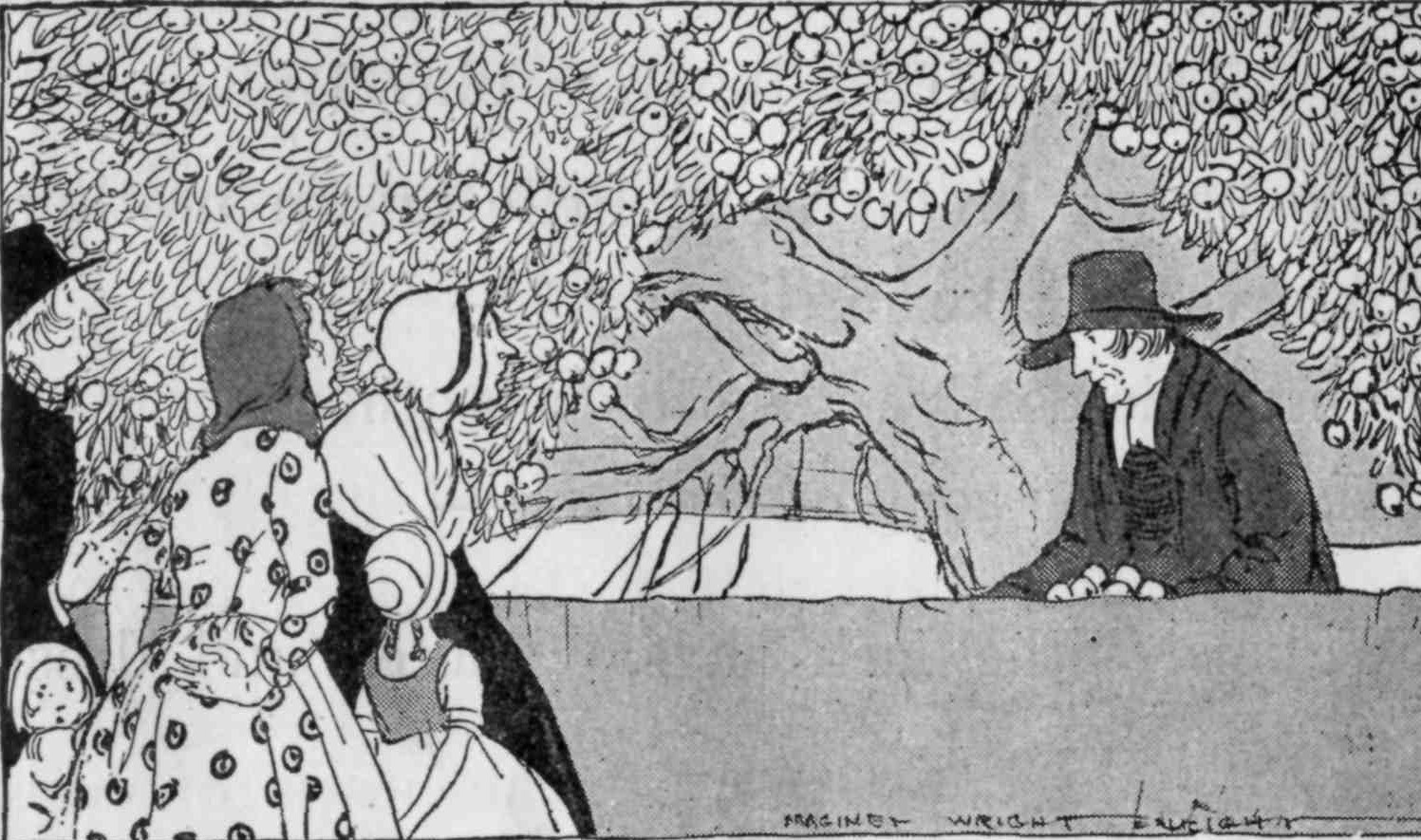
By and by, the blooms fell, leaving a million little green apples and peaches. Summer passed and autumn followed. The branches of the old trees could hardly hold up all the fine fruit on them.
Now the neighbors came, not to make fun, but to praise. "How did you do it?" they asked.
"The trees were old and needed attention," said John. "By turning the soil and letting in the air, I gave them strength to bear fruit. I have found the treasure after all, and I have learned a lesson. Tilling the soil well is the way to get treasure from it."
—GRIMM.