WAKEFIELD CATHEDRAL
Reading edition
The See of Wakefield was created in 1888. The enormous increase of the population of England and the growth of the Church's work have necessitated the multiplication of bishoprics and the division of many of the ancient enormous dioceses. This is one of the sees which it was found necessary to form. The old Parish Church of All Saints was converted into the Cathedral, but it possesses few of the associations and architectural beauties of our ancient minsters. It is, however, a fine parish church. It was consecrated by Archbishop William de Melton of York in 1329, but almost wholly rebuilt in the fifteenth century. Its main features are, therefore, Perpendicular. It consists of a chancel and large nave, with aisles. There is a clerestory, but no triforium. At the west end there is a tower, surmounted by a fine spire, rebuilt in 1860, the total height being 247 feet. A heavy screen separated the nave from the chancel of Jacobean style, and the organ and font belong to the seventeenth century. The whole building was restored by Sir G. Scott at a cost of £30,000.
On the bridge across the Calder there is a beautiful little chapel or chantry, dedicated to St. Mary (30 feet by 24 feet). This was built and endowed by Edward IV. in memory of his father, Richard, Duke of York, killed at the battle of Wakefield in 1460. It was restored in 1847. Near here was fought the famous battle between Queen Margaret, wife of Henry VI., and the Duke of York, whom this chantry commemorates. Wakefield was an ancient seat of manufacture, foreign weavers being established here by Henry VII.
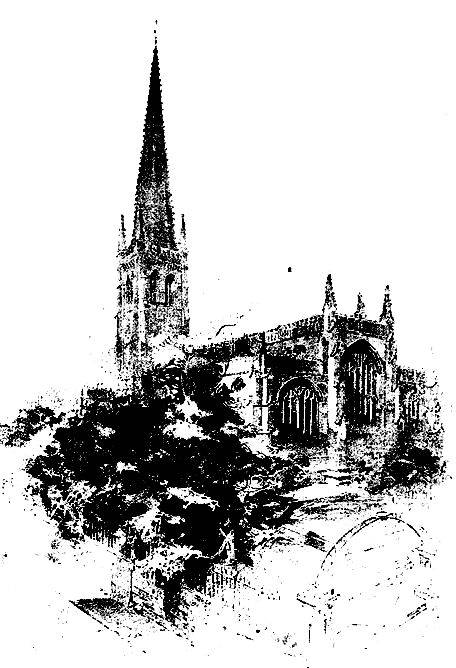
Wakefield Cathedral Herbert Railton
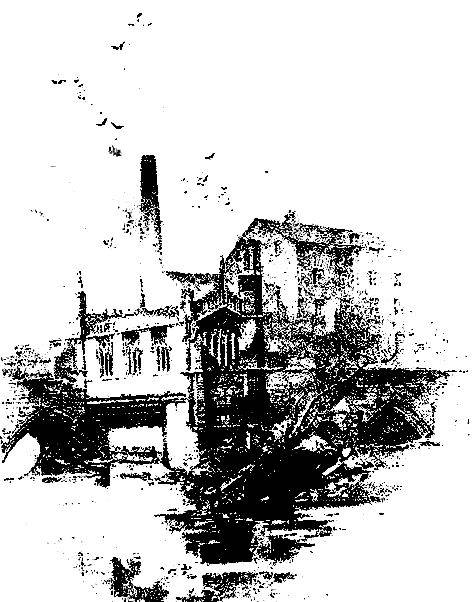
Chantry Chapel on Wakefield Bridge Herbert Railton