ILLUSTRATIONS (continued 2)
Reading edition
After a long pause: "No."
"But Manuel, dear Manuel, can't you remember as children how you did so many things for me? You were willing to go across the town on some little errand. When I was ill you made the cook let you bring me my soup?" Another woman would have said: "Do you remember how much I did for you?"
"Yes."
"I, too, Manuel have lost. I too ... once. We know that God has taken them into His hands...." But this did not do at all. Esteban turned vaguely and walked away from her. When he had gone about twenty paces he stopped and stared down a side-street, like a dog who wants to go away, but is reluctant to offend the master who calls him back.
That was all they could get out of him. When the fearful procession passed through the city, with its black hoods and masks, its candles in broad daylight, its display of heaped-up skulls, its terrifying psalms, Esteban followed it in the parallel streets, catching glimpses of it from a distance, like a savage.
All Lima was interested in this separation of the brothers. Housewives whispered together sympathetically about it as they unfurled their carpets from the balconies. The men in the wineshops, alluding to it, shook their heads and smoked in silence for a while. Travellers from the interior told of seeing Esteban as he strayed with eyes like coals along the dried-up beds of rivers or through the great ruins of the old race. A herder of llamas had come upon him standing upon a hilltop, asleep or dazed, wet with dew under the stars. Some fishermen surprised him swimming far out from shore. From time to time he would find work to do, he would become a shepherd or a carter, but after a few months he would disappear and stride from province to province. But he always returned to Lima. One day he appeared at the door of the Perichole's dressing-room; he made as though to speak, gazed earnestly at her and vanished. One day a sister came running into the office of Madre María del Pilar with the news that Esteban (whom the world called Manuel) was lingering about the door of the convent. The Abbess hurried out into the street. For months she had been asking herself what strategy could reconcile this half-demented boy to living among them again. She assembled as grave and calm a manner as she was able and appearing at the street door murmured "My friend" and looked at him. He gazed back at her with the same glance of longing and distrust that he had shown her before, and stood trembling. Again she whispered "My friend" and moved a step forward. Suddenly Esteban turned and breaking into a run disappeared. Madre María del Pilar rushed stumbling back to her desk and fell upon her knees, exclaiming angrily: "I have prayed for wisdom and You have given me none. You have not chosen to give me the least grace. I am a mere scrubber of floors...." But during the penance she set herself for this impudence the thought came to her to send for Captain Alvarado. Three weeks later she had a ten-minute conversation with him. And the next day he started for Cuzco where, it was said, Esteban was doing some copying for the University.
There was this strange and noble figure in Peru during these years, the Captain Alvarado, the traveller. He was blackened and cured by all weathers. He stood in the Square with feet apart as though they were planted on a shifting deck. His eyes were strange, unaccustomed to the shorter range, too used to seizing the appearances of a constellation between a cloud and a cloud, and the outline of a cape in rain. His reticence was sufficiently explained for most of us by his voyages, but the Marquesa de Montemayor had other light on the matter. "Captain Alvarado is bringing you this letter in person," she wrote to her daughter. "Introduce him to some of your geographers, my treasure, though it may make them a little uncomfortable, for he is the diamond of sincerity. They will never see anyone who has travelled so far. Last night he described to me some of his voyages. Imagine him pushing his prow through a sea of weeds, stirring up a cloud of fish like grasshoppers in June; or sailing between islands of ice. Oh, he has been to China and up the rivers of Africa. But he is not merely an adventurer and he seems to take no pride in discovering new places; nor is he a mere merchant. One day I asked him narrowly why he lived so, and he avoided my question. I found out from my laundress what I think is the reason of his wandering: My child, he had a child; my daughter, he had a daughter. She was just old enough to cook a holiday meal, and do a little sewing for him. In those days he merely sailed between Mexico and Peru and hundreds of times she waved him farewell or welcome. We have no way of knowing whether she was more beautiful or intelligent than the thousands of other girls that lived about him, but she was his. I suppose it seems ignoble to you that a great oak of a man should go about the world like a blind man about an empty house merely because a chit of a girl has been withdrawn from it. No, no, you cannot understand this, my adored one, but I understand and grow pale. Last night he sat with me and talked of her. He laid his cheek against his hand and looking into the fire, he said: 'It sometimes seems to me that she is away upon a voyage and that I shall see her again. It seems to me that she is in England.' You will laugh at me, but I think he goes about the hemispheres to pass the time between now and his old age."
The brothers had always entertained a great respect for Captain Alvarado. They had worked for him a short time and the silence of the three of them had made a little kernel of sense in a world of boasting, self-excuse and rhetoric. So now when the great traveller came into the dark kitchen where Esteban was eating the boy drew his chair farther into the shadow, but at a distance, he was glad. The Captain gave no sign of recognizing or even of seeing him until he had finished his meal. Esteban had finished long before, but not wishing to be spoken to, waited until the Captain should have left the cave. At last the Captain walked over to him and said:
"You are Esteban or Manuel. You helped me once with some unloading. I am Captain Alvarado."
"Yes," said Esteban.
"How are you?"
Esteban muttered something.
"I am looking for some strong fellows to go on my next trip with me." Pause. "Would you like to come?" Longer pause. "England. And Russia.... Hard work. Good wages.... A long way from Peru.—Well?"
Apparently Esteban had not been listening. He sat with his eyes on the table. At last the Captain raised his voice, as to a deaf person:
"I said: Do you want to go on my next trip with me...."
"Yes, I'll go," answered Esteban suddenly.
"Fine. That's fine. I want your brother, too, of course."
"No."
"What's the matter? Wouldn't he want to come?"
Esteban mumbled something, looking away. Then half rising, he said: "I got to go now. I've got to see somebody about something."
"Let me see your brother myself. Where is he?"
"... 'dead," said Esteban.
"Oh, I didn't know. I didn't know. I'm sorry." "Yes," said Esteban. "I got to go."
"Hmm.—Which are you? What's your name?"
"Esteban."
"When did Manuel die?"
"Oh, just a ... just a few weeks. He hit his knee against something and ... just a few weeks ago."
They both kept their eyes on the floor.
"How old are you, Esteban?"
"Twenty-two."
"Well, that's settled then, you're coming with me?"
"Yes."
"You may not be used to the cold."
"Yes, I'm used to it.—I've got to go now. I got to go in the city and see somebody about something."
"Well, Esteban. Come back here for supper and we'll talk about the trip. Come back and have some wine with me, see. Will you?"
"Yes, I will."
"Go with God."
"Go with God."
They had supper together and it was arranged that they were to start for Lima the next morning. The Captain got him very drunk. At first they poured and drank and poured and drank in silence. Then the Captain began to talk about ships and their courses. He asked Esteban questions about tackle and about the guide-stars. Then Esteban began to talk about other things, and to talk very loudly:
"On the ship you must give me something to do all the time. I'll do anything, anything. I'll climb up high and fix ropes; and I'll watch all night,—because, you know, I don't sleep well anyway. And, Captain Alvarado, on the ship you must pretend that you don't know me. Pretend that you hate me the most. So that you'll always give me things to do. I can't sit still and write at a table any more.—And don't tell the other men about me ... that is, about ..."
"I hear you went into a burning house, Esteban, and pulled someone out."
"Yes. I didn't get burned or anything. You know," cried Esteban, leaning across the table, "you're not allowed to kill yourself; you know you're not allowed. Everybody knows that. But if you jump into a burning house to save somebody, that wouldn't be killing yourself. And if you became a matador and the bull caught you that wouldn't be killing yourself. Only you mustn't put yourself in the bull's way on purpose. Did you ever notice that animals never kill themselves, even when they're sure to lose? They never jump into a river or anything, even when they're sure to lose. Some people say that horses run into bonfires. Is that true?"
"No, I don't think that's true."
"I don't think it's true. We had a dog once. Well, I mustn't think of that.—Captain Alvarado, do you know Madre María del Pilar?"
"Yes."
"I want to give her a present before I go away. Captain Alvarado, I want you to give me all my wages before I start—I won't need any money anywhere—and I want to buy her a present now. The present isn't from me only. She was ... was ..." Here Esteban wished to say his brother's name, but was unable to. Instead he continued in a lower voice: "She had a kind of a ... she had a serious loss, once. She said so. I don't know who it was, and I want to give her a present. Women can't bear that kind of a thing like we can."
The Captain promised him that they would choose something in the morning. Esteban talked about it at great length. At last the Captain saw him slip under the table, and himself, rising up, went out into the square before the inn. He looked at the line of the Andes and at the streams of stars crowding forever across the sky. And there was that wraith hanging in mid-air and smiling at him, the wraith with the silvery voice that said for the thousandth time: "Don't be gone long. But I'll be a big girl when you get back." Then he went within and carried Esteban to his room and sat looking at him for a long while.
The next morning he was waiting at the bottom of the stairs when Esteban appeared:
"We're starting when you're ready," said the Captain.
The strange glitter had returned to the boy's eyes. He blurted out: "No, I'm not coming. I'm not coming after all."
"Aïe! Esteban! But you have promised me that you would come."
"It's impossible. I can't come with you," and he turned back up the stairs.
"Come here a moment, Esteban, just a moment."
"I can't come with you. I can't leave Peru."
"I want to tell you something."
Esteban came down to the foot of the stairs.
"How about that present for Madre María del Pilar?" asked the Captain in a low voice. Esteban was silent, looking over the mountains. "You aren't going to take that present away from her? It might mean a lot to her ... you know."
"All right," murmured Esteban, as though much impressed.
"Yes. Besides the ocean's better than Peru. You know Lima and Cuzco and the road. You have nothing more to know about them. You see it's the ocean you want. Besides on the boat you'll have something to do every minute. I'll see to that. Go and get your things and we'll start."
Esteban was trying to make a decision. It had always been Manuel who had made the decisions and even Manuel had never been forced to make as great a one as this. Esteban went slowly upstairs. The Captain waited for him and waited so long that presently he ventured half the way up the stairs and listened. At first there was silence; then a series of noises that his imagination was able to identify at once. Esteban had scraped away the plaster about a beam and was adjusting a rope about it. The Captain stood on the stairs trembling: "Perhaps it's best," he said to himself. "Perhaps I should leave him alone. Perhaps it's the only thing possible for him." Then on hearing another sound he flung himself against the door, fell into the room and caught the boy. "Go away," cried Esteban. "Let me be. Don't come in now."
Esteban fell face downward upon the floor. "I am alone, alone, alone" he cried. The Captain stood above him, his great plain face ridged gray with pain; it was his own old hours he was reliving. He was the awkwardest speaker in the world apart from the lore of the sea, but there are times when it requires a high courage to speak the banal. He could not be sure the figure on the floor was listening, but he said "We do what we can. We push on, Esteban, as best we can. It isn't for long, you know. Time keeps going by. You'll be surprised at the way time passes."
They started for Lima. When they reached the bridge of San Luis Rey, the Captain descended to the stream below in order to supervise the passage of some merchandise, but Esteban crossed by the bridge and fell with it.
PART FOUR: UNCLE PIO
IN one of her letters (the XXIXth) the Marquesa de Montemayor tries to describe the impression that Uncle Pio "our aged Harlequin" made upon her: "I have been sitting all morning on the green balcony making you a pair of slippers, my soul," she tells her daughter. "As the golden wire did not take up my whole attention I was able to follow the activity of a coterie of ants in the wall beside me. Somewhere behind the partition they were patiently destroying my house. Every three minutes a little workman would appear between two boards and drop a grain of wood upon the floor below. Then he would wave his antennae at me and back busily into his mysterious corridor. In the meantime various brothers and sisters of his were trotting back and forth on a certain highway, stopping to massage one another's heads, or if the messages they bore were of first importance, refusing angrily to massage or to be massaged. And at once I thought of Uncle Pio. Why? Where else but with him had I seen that very gesture with which he arrests a passing abbé or a courtier's valet, and whispers, his lips laid against his victim's ear? And surely enough, before noon I saw him hurry by on one of those mysterious errands of his. As I am the idlest and silliest of women I sent Pepita to get me a piece of nougat which I placed on the ant's highway. Similarly I sent word to the Café Pizarro asking them to send Uncle Pio to see me if he dropped in before sunset. I shall give him that old bent salad fork with the turquoise in it, and he will bring me a copy of the new ballad that everyone is singing about the d—q—a of Ol—v—s. My child, you shall have the best of everything, and you shall have it first."
And in the next letter: "My dear, Uncle Pio is the most delightful man in the world, your husband excepted. He is the second most delightful man in the world. His conversation is enchanting. If he weren't so disreputable I should make him my secretary. He could write all my letters for me and generations would rise up and call me witty. Alas, however, he is so moth-eaten by disease and bad company, that I shall have to leave him to his underworld. He is not only like an ant, he is like a soiled pack of cards. And I doubt whether the whole Pacific could wash him sweet and fragrant again. But what divine Spanish he speaks and what exquisite things he says in it! That's what one gets by hanging around a theatre and hearing nothing but the conversation of Calderón. Alas, what is the matter with this world, my soul, that it should treat such a being so ill! His eyes are as sad as those of a cow that has been separated from its tenth calf."
You should know first that this Uncle Pio was Camila Perichole's maid. He was also her singing-master, her coiffeur, her masseur, her reader, her errand-boy, her banker; rumor added: her father. For example, he taught her her parts. There was a whisper around town that Camila could read and write. The compliment was unfounded; Uncle Pio did her reading and writing for her. At the height of the season the company put on two or three new plays a week, and as each one contained a long and flowery part for the Perichole the mere task of memorization was not a trifle.
Peru had passed within fifty years from a frontier state to a state in renaissance. Its interest in music and the theatre was intense. Lima celebrated its feast days by hearing a Mass of Tomás Luis da Victoria in the morning and the glittering poetry of Calderón in the evening. It is true that the Limeans were given to interpolating trivial songs into the most exquisite comedies and some lachrymose effects into the austerest music; but at least they never submitted to the boredom of a misplaced veneration. If they had disliked heroic comedy the Limeans would not have hesitated to remain at home; and if they had been deaf to polyphony nothing would have prevented their going to an earlier service. When the Archbishop returned from a short trip to Spain, all Lima kept asking: "What has he brought?" The news finally spread abroad that he had returned with tomes of masses and motets by Palestrina, Morales I and Vittoria, as well as thirty-five plays by Tirso de Molina and Ruiz de Alarçon and Moreto. There was a civic fête in his honor. The choirboys' school and the green room of the Comedia were swamped with the gifts of vegetables and wheat. All the world was eager to nourish the interpreters of so much beauty.
This was the theatre in which Camila Perichole gradually made her reputation. So rich was the repertory and so dependable the prompter's box that few plays were given more than four times a season. The manager had the whole flowering of the 17th Century Spanish drama to draw upon, including many that are now lost to us. The Perichole had appeared in a hundred plays of Lope de Vega alone. There were many admirable actresses in Lima during these years, but none better. The citizens were too far away from the theatres of Spain to realize that she was the best in the Spanish world. They kept sighing for a glimpse of the stars of Madrid whom they had never seen and to whom they assigned vague new excellences. Only one person knew for certain that the Perichole was a great performer and that was her tutor Uncle Pio.
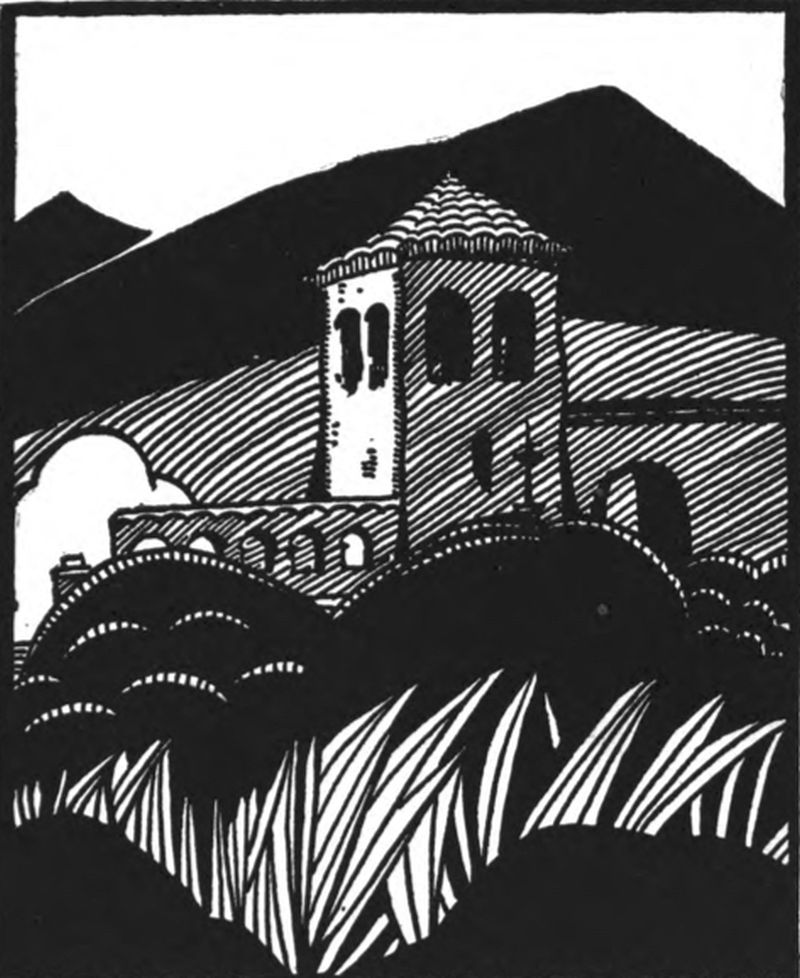
Uncle Pio came of a good Castilian house, illegitimately. At the age of ten he ran away to Madrid from his father's hacienda and was pursued without diligence. He lived ever after by his wits. He possessed the six attributes of the adventurer—a memory for names and faces, with the aptitude for altering his own; the gift of tongues; inexhaustible invention; secrecy; the talent for falling into conversation with strangers; and that freedom from conscience that springs from a contempt for the dozing rich he preyed upon. From ten to fifteen he distributed handbills for merchants, held horses, and ran confidential errands. From fifteen to twenty he trained bears and snakes for travelling circuses; he cooked, and mixed punches; he hung about the entries of the more expensive taverns and whispered informations into the travellers' ears—sometimes nothing more dubious than that a certain noble house was reduced to selling its plate and could thus dispense with the commission of a silversmith. He was attached to all the theatres in town and could applaud like ten. He spread slanders at so much a slander. He sold rumors about crops and about the value of land. From twenty to thirty his services came to be recognized in very high circles—he was sent out by the government to inspirit some half-hearted rebellions in the mountains, so that the government could presently arrive and whole-heartedly crush them. His discretion was so profound that the French party used him even when they knew that the Austrian party used him also. He had long interviews with the Princesse des Ursins, but he came and went by the back stairs. During this phase he was no longer obliged to arrange gentlemen's pleasures, nor to plant little harvests of calumny.
He never did one thing for more than two weeks at a time even when enormous gains seemed likely to follow upon it. He could have become a circus manager, a theatrical director, a dealer in antiquities, an importer of Italian silks, a secretary in the Palace or the Cathedral, a dealer in provisions for the army, a speculator in houses and farms, a merchant in dissipations and pleasures. But there seemed to have been written into his personality, through some accident or early admiration of his childhood, a reluctance to own anything, to be tied down, to be held to a long engagement. It was this that prevented his thieving, for example. He had stolen several times, but the gains had not been sufficient to offset his dread of being locked up; he had sufficient ingenuity to escape on the field itself all the police in the world, but nothing could protect him against the talebearing of his enemies. Similarly he had been reduced for a time to making investigations for the Inquisition, but when he had seen several of his victims led off in hoods he felt that he might be involving himself in an institution whose movements were not evenly predictable.
As he approached twenty, Uncle Pio came to see quite clearly that his life had three aims. There was first this need of independence, cast into a curious pattern, namely: the desire to be varied, secret and omniscient. He was willing to renounce the dignities of public life, if in secret he might feel that he looked down upon men from a great distance, knowing more about them than they knew themselves; and with a knowledge which occasionally passed into action and rendered him an agent in the affairs of states and persons. In the second place he wanted to be always near beautiful women, of whom he was always in the best and worst sense the worshipper. To be near them was as necessary to him as breathing. His reverence for beauty and charm was there for anyone to see and to laugh at, and the ladies of the theatre and the court and the houses of pleasure loved his connoisseurship. They tormented him and insulted him and asked his advice and were singularly comforted by his absurd devotion. He suffered greatly their rages and their meannesses and their confiding tears; all he asked was to be accepted casually, to be trusted, to be allowed like a friendly and slightly foolish dog to come and go in their rooms and to write their letters for them. He was insatiably curious about their minds and their hearts. He never expected to be loved by them (borrowing for a moment another sense of that word); for that, he carried his money to the obscurer parts of the city; he was always desperately unprepossessing, with his whisp of a moustache and his whisp of a beard and his big ridiculous sad eyes. They constituted his parish; it was from them that he acquired the name of Uncle Pio and it was when they were in trouble that he most revealed himself; when they fell from favour he lent them money, when they were ill he outlasted the flagging devotion of their lovers and the exasperation of their maids; when time or disease robbed them of their beauty, he served them still for their beauty's memory; and when they died his was the honest grief that saw them as far as possible on their journey.
In the third place he wanted to be near those that loved Spanish literature and its masterpieces, especially in the theatre. He had discovered all that treasure for himself, borrowing or stealing from the libraries of his patrons, feeding himself upon it in secrecy,—behind the scenes, as it were, of his mad life. He was contemptuous of the great persons who for all their education and usage, exhibited no care nor astonishment before the miracles of word order in Calderón and Cervantes. He longed himself to make verses. He never realized that many of the satirical songs he had written for the vaudevilles passed into folk-music and have been borne everywhere along the highroads.
As the result of one of those quarrels that arise so naturally in brothels his life became too complicated and he removed to Peru. Uncle Pio in Peru was even more versatile than Uncle Pio in Europe. Here too he touched upon real-estate, circuses, pleasures, insurrections and antiques. A Chinese junk had been blown from Canton to America; he dragged up the beach the bales of deep-red porcelain and sold the bowls to the collectors of virtú. He traced down the sovereign remedies of the Incas and started a smart trade in pills. Within four months he knew practically everyone in Lima. He presently added to this acquaintance the inhabitants of scores of seacoast towns, mining camps and settlements in the interior. His pretensions to omniscience became more and more plausible. The Viceroy discovered Uncle Pio and all this richness of reference; he engaged his services in many affairs. In the decay of his judgment Don Andrés had retained one talent, he was a master of the technique of handling confidential servants. He treated Uncle Pio with great tact and some deference; he understood which errands the other should not be asked to undertake and he understood his need for variety and intermission. Uncle Pio in turn was perpetually astonished that a prince should make so little use of his position, for power, or for fantasy, or for sheer delight in the manipulation of other men's destinies; but the servant loved the master because he could quote from any of Cervantes' prefaces and because his tongue had a little Castilian salt about it still. Many a morning Uncle Pio entered the Palace through corridors where there was no one to cross but a confessor or a confidential bully and sat with the Viceroy over his morning chocolate.
But for all his activity nothing made Uncle Pio rich. One would have said that he abandoned a venture when it threatened to prosper. Although no one knew it, he owned a house. It was full of dogs that could add and multiply and the top floor was reserved for birds. But even in this kingdom he was lonely, and proud in his loneliness, as though there resided a certain superiority in such a solitude. Finally he stumbled upon an adventure that came like some strange gift from the skies and that combined the three great aims of his life: his passion for overseeing the lives of others, his worship of beautiful women, and his admiration for the treasures of Spanish literature. He discovered Camila Perichole. Her real name was Micaela Villegas. She was singing in cafés at the age of twelve and Uncle Pio had always been the very soul of cafés. Now as he sat among the guitarists and watched this awkward girl singing ballads, imitating every inflection of the more experienced singers who had preceded her, the determination entered his mind to play Pygmalion. He bought her. Instead of sleeping locked up in the wine bin, she inherited a cot in his house. He wrote songs for her, he taught her how to listen to the quality of her tone, and bought her a new dress. At first all she noticed was that it was wonderful not to be whipped, to be offered hot soups, and to betaught something. But it was Uncle Pio who was really dazzled. His rash experiment flourished beyond all prophecy. The little twelve-year-old, silent and always a little sullen, devoured work. He set her endless exercises in acting and mimicry; he set her problems in conveying the atmosphere of a song; he took her to the theatres and made her notice all the details of a performance. But it was from Camila as a woman that he was to receive his greatest shock. The long arms and legs were finally harmonized into a body of perfect grace. The almost grotesque and hungry face became beautiful. Her whole nature became gentle and mysterious and oddly wise; and it all turned to him. She could find no fault in him and she was sturdily loyal. They loved one another deeply but without passion. He resected the slight nervous shadow that crossed her face when he came too near her. But there arose out of this denial itself the perfume of a tenderness, that ghost of passion which, in the most unexpected relationship, can make even a whole lifetime devoted to irksome duty pass like a gracious dream.
They travelled a great deal, seeking new taverns, for the highest attribute of a café singer will always be her novelty. They went to Mexico, their odd clothes wrapped up in the self-same shawl. They slept on beaches, they were whipped at Panama and shipwrecked on some tiny Pacific islands plastered with the droppings of birds. They tramped through jungles delicately picking their way among snakes and beetles. They sold themselves out as harvesters in a hard season. Nothing in the world was very surprising to them.
Then began an even harder course of training for the girl, a regimen that resembled more the preparation for an acrobat. The instruction was a little complicated by the fact that her rise to favor was very rapid; and there was some danger that the applause she received would make her content with her work too soon. Uncle Pio never exactly beat her, but he resorted to a sarcasm that had terrors of its own.
At the close of a performance Camila would return to her dressing room to find Uncle Pio whistling nonchalantly in one corner. She would divine his attitude at once and cry angrily:
"Now what is it? Mother of God, Mother of God, what is it now?"
"Nothing, little pearl. My little Camila of Camilas, nothing."
"There was something you didn't like. Ugly fault-finding thing that you are. Come on now, what was it? Look, I'm ready."
"No, little fish. Adorable morning star, I suppose you did as well as you could."
The suggestion that she was a limited artist and that certain felicities would be forever closed to her never failed to make Camila frantic. She would burst into tears: "I wish I had never known you. You poison my whole life. You just think I did badly. It pleases you to pretend that I was bad. All right then, be quiet."
Uncle Pio went on whistling.
"The fact is I know I was weak to-night, and don't need you to tell me so. So there. Now go away. I don't want to see you around. It's hard enough to play that part without coming back and finding you this way."
Suddenly Uncle Pio would lean forward and ask with angry intensity: "Why did you take that speech to the prisoner so fast?"
More tears from the Perichole: "Oh God, let me die in peace! One day you tell me to go faster and another to go slower. Anyway I shall be crazy in a year or two and then it won't matter."
More whistling.
"Besides the audience applauded as never before. Do you hear me? As never before. There! Too fast or too slow is nothing to them. They wept. I was divine. That's all I care for. Now be silent. Be silent."
He was absolutely silent.
"You may comb my hair, but if you say another word I shall never play again. You can find some other girl, that's all."
Thereupon he would comb her hair soothingly for ten minutes, pretending not to notice the sobs that were shaking her exhausted body. At last she would turn quickly and catching one of his hands would kiss it frantically: "Uncle Pio, was I so bad? Was I a disgrace to you? Was it so awful that you left the theatre?"
After a long pause Uncle Pio would admit judiciously: "You were good in the scene on the ship."
"But I've been better, Uncle Pio. You remember the night you came back from Cuzco——?"
"You were pretty good at the close."
"Was I?"
"But my flower, my pearl, was the matter in the speech to the prisoner?"
Here the Perichole would fling her face and arms upon the table amid the pomades, caught up into a tremendous fit of weeping. Only perfection would do, only perfection. And that had never come.
Then beginning in a low voice Uncle Pio would talk for an hour, analyzing the play, entering into a world of finesse in matters of voice and gesture and tempo, and often until dawn they would remain there declaiming to one another the lordly conversation of Calderón.
Whom were these two seeking to please? Not the audiences of Lima. They had long since been satisfied. We come from a world where we have known incredible standards of excellence, and we dimly remember beauties which we have not seized again; and we go back to that world. Uncle Pio and Camila Perichole were tormenting themselves in an effort to establish in Peru the standards of the theatres in some Heaven whither Calderón had preceded them. The public for which masterpieces are intended is not on this earth.
With the passing of time Camila lost some of this absorption in her art. A certain intermittent contempt for acting made her negligent. It was due to the poverty of interest in women's rôles throughout Spanish classical drama. At a time when the playwrights grouped about the courts of England and France (a little later, of Venice) were enriching the parts of women with studies in wit, charm, passion and hysteria, the dramatists of Spain kept their eyes on their heroes, on gentlemen torn between the conflicting claims of honour, or, as sinners, returning at the last moment to the cross. For a number of years Uncle Pio spent himself in discovering ways to interest the Perichole in the rôles that fell to her. Upon one occasion he was able to announce to Camila that a granddaughter of Vico de Barrera had arrived in Peru. Uncle Pio had long since communicated to Camila his veneration for great poets and Camila never questioned the view that they were a little above the kings and not below the saints. So it was in great excitement that the two of them chose one of the master's plays to perform before his granddaughter. They rehearsed the poem a hundred times, now in the great joy of invention, now in dejection. On the night of the performance Camila peering out between the folds of the curtain had Uncle Pio point out to her the little middle-aged woman worn with the cares of penury and a large family; but it seemed to Camila that she was looking at all the beauty and dignity in the world. As she waited for the lines that preceded her entrance she clung to Uncle Pio in reverent silence, her heart beating loudly. Between the acts she retired to the dusty corner of the warehouse where no one would find her and sat staring into the corners. At the close of the performance Uncle Pio brought the granddaughter of Vico de Barrera into Camila's room. Camila stood among the clothes that hung upon the wall, weeping with happiness and shame. Finally she flung herself on her knees and kissed the older woman's hands, and the older woman kissed hers, and while the audience went home and went to bed the Visitor remained telling Camila the little stories that had remained in the family, of Vico's work and of his habits.
Uncle Pio was at his happiest when a new actress entered the company, for the discovery of a new talent at her side never failed to bestir the Perichole. To Uncle Pio (standing at the back of the auditorium, bent double with joy and malice) it seemed that the body of the Perichole had become an alabaster lamp in which a strong light had been placed. Without any resort to tricks or to false emphasis, she set herself to efface the newcomer. If the play were a comedy she became the very abstraction of wit, and (as was more likely) it was a drama of wronged ladies and implacable hates, the stage fairly smouldered with her emotion. Her personality became so electric that if she so much as laid her hand upon that of a fellow actor a sympathetic shudder ran through the audience. But such occasions of excellence became less and less frequent. As her technique became sounder, Camila's sincerity became less necessary. Even when she was absentminded the audience did not notice the difference and only Uncle Pio grieved.
Camila had a very beautiful face, or rather a face beautiful save in repose. In repose one was startled to discover that the nose was long and thin, the mouth tired and a little childish, the eyes unsatisfied—a rather pinched peasant girl, dragged from the cafés-chantants and quite incapable of establishing any harmony between the claims of her art, of her appetites, of her dreams, and of her crowded daily routine. Each of these was a world in itself, and the warfare between them would soon have reduced to idiocy (or triviality) a less tenacious physique. We have seen that in spite of her discontent with her parts, the Perichole knew very well the joy that might reside in acting and warmed herself from time to time at that flame. But that of love attracted her more often, though with no greater assurance of happiness, until Jupiter himself sent her some pearls.
Don Andrés de Ribera, the Viceroy of Peru, was the remnant of a delightful man, broken by the table, the alcove, a grandeeship and ten years of exile. As a youth he had accompanied embassies to Versailles and Rome; he had fought in the wars in Austria; he had been in Jerusalem. He was a widower and childless of an enormous and wealthy woman; he had collected coins a little, wines, actresses, orders and maps. From the table he had received the gout; from the alcove a tendency to convulsions; from the grandeeship a pride so vast and puerile that he seldom heard anything that was said to him and talked to the ceiling in a perpetual monologue; from the exile, oceans of boredom, a boredom so persuasive that it was like pain,—he woke up with it and spent the day with it, and it sat by his bed all night watching his sleep. Camila was passing the years in the hard-working routine of the theatre, savoured by a few untidy love-affairs, when this Olympian personage (for he had a face and port fit to play gods and heroes on the scene) suddenly transported her to the most delicious midnight suppers at the Palace. Contrary to all the traditions of the stage and state she adored her elderly admirer; she thought she was going to be happy forever. Don Andrés taught the Perichole a great many things and to her bright eager mind that was one of the sweetest ingredients of love. He taught her a little French; to be neat and clean; the modes of address. Uncle Pio had taught her how great ladies carry themselves on great occasions; he taught her how they relax. Uncle Pio and Calderón had trained her in beautiful Spanish; Don Andrés furnished her with the smart slang of El Buen Retiro.
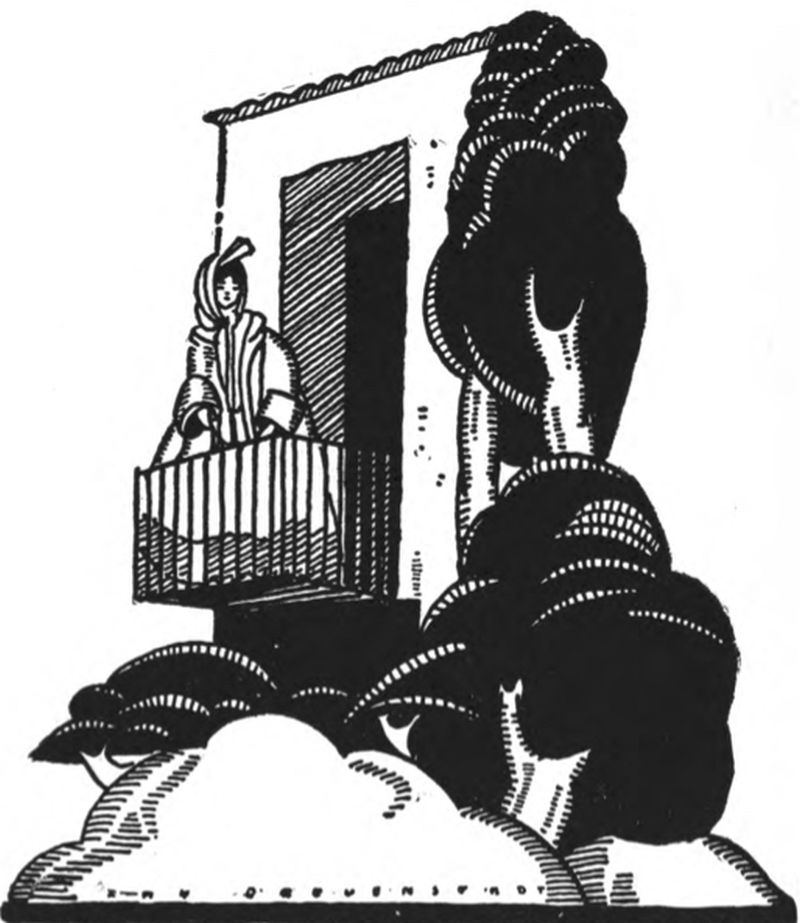
Uncle Pio was made anxious by Camila's invitation from the Palace. He would have much preferred that she continue with her little vulgarian love-affairs in the theatrical ware-house. But when he saw that her art was gaining a new finish he was well content. He would sit in the back of the theatre, rolling about in his seat for sheer joy and amusement, watching the Perichole intimate to the audience that she frequented the great world about whom the dramatists wrote. She had a new way of fingering a wine-glass, of exchanging an adieu, a new way of entering a door that told everything. To Uncle Pio nothing else mattered. What was there in the world more lovely than a beautiful woman doing justice to a Spanish masterpiece?—a performance (he asks you), packed with observation, in which the very spacing of the words revealed a comment on life and on the text—delivered by a beautiful voice—illustrated by a faultless carriage, considerable personal beauty and irresistible charm. "We are almost ready to take this marvel to Spain," he would murmur to himself. After the performance he would go around to her dressing-room and say "Very good!" But before taking his leave he would manage to ask her where, in the name of the eleven thousand virgins of Cologne, she had acquired that affected way of saying Excelencia.
After a time the Viceroy asked the Perichole whether it would amuse her to invite a few discreet guests to their midnight suppers, and he asked her whether she would like to meet the Archbishop. Camila was delighted. The Archbishop was delighted. On the eve of their first meeting he sent the actress an emerald pendant as big as a playing-card.
There was something in Lima that was wrapped up in yards of violet satin from which protruded a great dropsical head and two fat pearly hands; and that was its archbishop. Between the rolls of flesh that surrounded them looked out two black eyes speaking discomfort, kindliness and wit. A curious and eager soul was imprisoned in all this lard, but by dint of never refusing himself a pheasant or a goose or his daily procession of Roman wines, he was his own bitter jailer. He loved his cathedral; he loved his duties; he was very devout. Some days he regarded his bulk ruefully; but the distress of remorse was less poignant than the distress of fasting and he was presently found deliberating over the secret messages that a certain roast sends to the certain salad that will follow it. And to punish himself he led an exemplary life in every other respect.
He had read all the literature of antiquity and forgotten all about it except a general aroma of charm and disillusion. He had been learned in the Fathers and the Councils and forgotten all about them save a floating impression of dissensions that had no application to Peru. He had read all the libertine masterpieces of Italy and France and reread them annually; even in the torments of the stone (happily dissolved by drinking the water from the springs of Santa María de Cluxambuqua), he could find nothing more nourishing than the anecdotes of Brantôme and the divine Aretino.
The Archbishop knew that most of the priests of Peru were scoundrels. It required all his delicate Epicurean education to prevent his doing something about it; he had to repeat over to himself his favourite notions: that the injustice and unhappiness in the world is a constant; that the theory of progress is a delusion; that the poor, never having known happiness, are insensible to misfortune. Like all the rich he could not bring himself to believe that the poor (look at their houses, look at their clothes) could really suffer. Like all the cultivated he believed that only the widely-read could be said to know that they were unhappy. On one occasion, the iniquities in his see having been called to his notice, he almost did something about it. He had just heard that it was becoming a rule in Peru for priests to exact two measures of meal for a fairly good absolution, and five measures, for a really effective one. He trembled with indignation; he roared to his secretary and bidding him bring up his writing materials, announced that he was going to dictate an overwhelming message to his shepherds. But there was no ink left in the inkwell; there was no ink left in the next room; there was no ink to be found in the whole palace. This state of things in his household so upset the good man that he fell ill of the combined rages and learned to guard himself against indignations.
The addition of the Archbishop to the suppers was so successful that Don Andrés began to think of new names. He had grown increasingly dependent upon Uncle Pio, but waited until Camila should propose his inclusion of her own accord. And in due time Uncle Pio brought with him that courser of the seas, the Captain Alvarado. Generally the reunion had been several hours under way before Camila was able to join them after her performance at the theatre. She would arrive towards one o'clock, radiant and bejewelled and very tired. The four men received her as they would a great queen. For an hour or so she would carry the conversation, but gradually reclining more and more against Don Andrés' shoulder she would follow the talk as it flitted from one humorous lined face to the other. All night they talked, secretly comforting their hearts that longed always for Spain and telling themselves that such a symposium was after the manner of the high Spanish soul. They talked about ghosts and second-sight, and about the earth before man appeared upon it and about the possibility of the planets striking against one another; about whether the soul can be seen, like a dove, fluttering away at the moment of death; they wondered whether at the second coming of Christ to Jerusalem, Peru would be long in receiving the news. They talked until the sun rose, about wars and kings, about poets and scholars, and about strange countries. Each one poured into the conversation his store of wise sad anecdotes and his dry regret about the race of men. The flood of golden light struck across the Andes and entering the great window fell upon the piles of fruit, the stained brocade upon the table, and the sweet thoughtful forehead of the Perichole as she lay sleeping against the sleeve of her protector. There would ensue a long pause, no one wishing to make the first move to go, and the glances of them all would rest upon this strange beautiful bird who lived among them. But Uncle Pio's glance had been upon her all night, a quick glance from his black eyes, full of tenderness and anxiety, resting on the great secret and reason of his life.
But Uncle Pio never ceased watching Camila. He divided the inhabitants of this world into two groups, into those who had loved and those who had not. It was a horrible aristocracy, apparently, for those who had no capacity for love (or rather for suffering in love) could not be said to be alive and certainly would not live again after their death. They were a kind of straw population, filling the world with their meaningless laughter and tears and chatter and disappearing still lovable and vain into thin air. For this distinction he cultivated his own definition of love that was like no other and that had gathered all its bitterness and pride from his odd life. He regarded love as a sort of cruel malady through which the elect are required to pass in their late youth and from which they emerge, pale and wrung, but ready for the business of living. There was (he believed) a great repertory of errors mercifully impossible to human beings who had recovered from this illness. Unfortunately there remained to them a host of failings, but at least (from among many illustrations) they never mistook a protracted amiability for the whole conduct of life, they never again regarded any human being, from a prince to a servant, as a mechanical object. Uncle Pio never ceased watching Camila because it seemed to him that she had never undergone this initiation. In the months that followed her introduction to the Viceroy he held his breath and waited. He held his breath for years. Camila bore the Viceroy three children, yet remained the same. He knew that the first sign of her entrance into the true possession of the world would be the mastery of certain effects in her acting. There were certain passages in the plays that she would compass some day, simply, easily, and with secret joy, because they alluded to the new rich wisdom of her heart; but her treatment of such passages became more and more cursory, not to say embarrassed. He presently saw that she had tired of Don Andrés and had returned to a series of furtive love-affairs with the actors and matadors and merchants of the town.
She became more and more impatient of acting and another parasite found its way into her mind. She wanted to be a lady. She slowly contracted a greed for respectability and began to refer to her acting as a pastime. She acquired a duenna and some footmen and went to church at the fashionable hours. She attended the prize days at the University and appeared among the donors of the great charities. She even learned to read and write a little. Any faint discrimination against, her as a bohemian she challenged with fury. She led the Viceroy a horrible life with her passion for concessions and her gradual usurpation of privileges. The new vice displaced the old and she became noisily virtuous. She invented some parents and produced some cousins. She obtained an undocumented legitimatization of her children. In society she cultivated a delicate and languid magdelinism, as a great lady might, and she carried a candle in the penitential parades, side by side with ladies who had nothing to regret but an outburst of temper and a furtive glance into Descartes. Her sin had been acting and everyone knows that there were even saints who had been actors,—there was Saint Gelasius and Saint Genesius and Saint Margaret of Antioch and Saint Pelagia.
There was a fashionable watering place in the hills not far from Santa María de Cluxambuqua. Don Andrés had travelled in France and had thought to build himself a little mock Vichy; there was a pagoda, some drawing-rooms, a theatre, a little arena for bull-fights and some French gardens. Camila's health had never known a shadow, but she built herself a villa in the vicinity and sipped the hateful waters at eleven o'clock. The Marquesa de Montemayor has left a brilliant picture of this opéra bouffe paradise with the reigning divinity parading her fierce sensitiveness along the avenues of powdered shell and receiving the homage of all those who could not afford to offend the Viceroy. Doña María draws a portrait of this ruler, stately and weary, gambling all through the night in sums that would have raised another Escurial. And beside him she sets the portrait of his son, Camila's little Don Jaime. Don Jaime, at seven years, was a rachitic little body who seemed to have inherited not only his mother's forehead and eyes, but his father's liability to convulsions. He bore his pain with the silent bewilderment of an animal, and like an animal he was mortally ashamed when any evidences of it occurred in public. He was so beautiful that the more trivial forms of pity were hushed in his presence and his long thoughts about his difficulties had given his face a patient and startling dignity. His mother dressed him in garnet velvet, and when he was able he followed her about at a distance of several yards, extricating himself gravely from the ladies who tried to detain him in conversation. Camila was never cross to Don Jaime and she was never demonstrative. When the sun was shining the two could be seen walking along those artificial terraces in silence, Camila wondering when the felicity would begin that she had always associated with social position, Don Jaime rejoicing merely in the sunlight and anxiously estimating the approach of a cloud. They looked like figures that had strayed there from some remote country, or out of an old ballad, that had not yet learned the new language and had not yet found any friends.
Camila was about thirty when she left the stage and it required five years for her to achieve her place in society. She gradually became almost stout, though her head seemed to grow more beautiful every year. She took to overdressing and the floors of the drawing-rooms reflected a veritable tower of jewels and scarves and plumes. Her face and hands were covered with a bluish powder against which she drew an irritable mouth in scarlet and orange. The almost distraught fury of her temper was varied by the unnatural sweetness of her address in the company of the dowagers. In the earliest stages of her progress upward she had intimated to Uncle Pio that he was not to be seen with her in public, but finally she became impatient even of his discreeter visits. She conducted the interviews with formality and evasion. Her eyes never crossed his and she angled for pretexts to quarrel with him. Still he ventured out once a month to try her patience and when the call had become impossible he would climb the stairs and finish the hour among her children.
One day he arrived at her villa in the hills and, through her maid, begged for an opportunity to talk with her. He was told that she would see him in the French gardens a little before sunset. He had come up from Lima on a strange sentimental impulse. Like all solitary persons he had invested friendship with a divine glamour: he imagined that the people he passed on the street, laughing together and embracing when they parted, the people who dined together with so many smiles,—you will scarcely believe me, but he imagined that they were extracting from all that congeniality great store of satisfaction. So that suddenly he was filled with the excitement of seeing her again, of being called "Uncle Pio," and of reviving for a moment the trust and humour of their long vagabondage.
The French Gardens were at the southern end of the town. Behind them rose the higher Andes and before them there was a parapet overlooking a deep valley and overlooking wave after wave of hills that stretched toward the Pacific. It was the hour when bats fly low and the smaller animals play recklessly underfoot. A few solitaries lingered about the gardens, gazing dreamily into the sky that was being gradually emptied of its colour, or leaned upon the balustrade and looked down into the valley, noting in which village a dog was barking. It was the hour when the father returns home from the fields and plays for a moment in the yard with the dog that jumps upon him, holding his muzzle closed or throwing him upon his back. The young girls look about for the first star to fix a wish upon it, and the boys grow restless for supper. Even the busiest mother stands for a moment idle-handed, smiling at her dear and exasperating family.
Uncle Pio stood against one of the chipped marble benches and watched Camila coming towards him:
"I am late," she said. "I am sorry. What is it you wish to say to me?"
"Camila,—" he began.
"My name is Doña Micaela."
"I do not wish to offend you, Doña Micaela, but when you let me call you Camila for twenty years, I should think——"
"Oh, do as you like. Do as you like."
"Camila, promise me that you will listen to me. Promise me that you will not run away at my first sentence."
At once she burst out with unexpected passion: "Uncle Pio, listen to me. You are mad if you think you can make me return to the theatre. I look back at the theatre with horror. Understand that. The theatre! The theatre, indeed! The daily payment of insults in that filthy place. Understand that you are wasting your time."
He answered gently: "I would not have you come back if you are happy with these new friends."
"You don't like my new friends, then?" she answered quickly. "Whom do you offer me in their stead?"
"Camila, I only remember ..."
"I will not be criticized. I don't want any advice. It will be cold in a moment, I must go back to my house. Just give me up, that's all. Just put me out of your mind."
"Dear Camila, don't be angry. Let me talk to you. Just suffer me for ten minutes."
He did not understand why she was weeping. He did not know what to say. He talked at random: "You never even come to see the theatre, and they all notice it. The audiences are falling away now, too. They only put on the Old Comedy twice a week; all the other nights there are these new farces in prose. All is dull and childish and indecent. No one can speak Spanish any more. No one can even walk correctly any more. On Corpus Christi Day they gave Belshazzar's Feast where you were so wonderful. Now it was shameful."
There was a pause. A beautiful procession of clouds, like a flock of sheep, was straying up from the sea, slipping up the valleys between the hills. Camila suddenly touched his knee, and her face was like her face twenty years before: "Forgive me, Uncle Pio, for being so bad. Jaime was ill this afternoon. There's nothing one can do. He lies there, so white and ... so surprised. One must just think of other things. Uncle Pio, it would be no good if I went back to the theatre. The audiences come for the prose farces. We were foolish to try and keep alive the Old Comedy. Let people read the old plays in books if they choose to. It is not worth while fighting with the crowd."
"Wonderful Camila, I was not just to you when you were on the stage. It was some foolish pride in me. I grudged you the praise that you deserved. Forgive me. You have always been a very great artist. If you come to see that you are not happy among these people you might think about going to Madrid. You would have a great triumph there. You are still young and beautiful. There will be time later to be called Doña Micaela. We shall be old soon. We shall be dead soon."
"No, I shall never see Spain. All the world is alike, Madrid or Lima."
"Oh, if we could go away to some island where the people would know you for yourself. And love you."
"You are fifty years old and you are still dreaming of such islands, Uncle Pio."
He bent his head and mumbled: "Of course I love you, Camila, as I always must and more than I can say. To have known you is enough for my whole life. You are a great lady now. And you are rich. There is no longer any way that I can help you. But I am always ready."
"How absurd you are," she said smiling. "You said that as boys say it. You don't seem to learn as you grow older, Uncle Pio. There is no such thing as that kind of love and that kind of island. It's in the theatre you find such things."
He look shamefaced, but unconvinced.
At last she rose and said sadly: "What are we talking about! It is growing cold. I must be going in. You must be resigned. I have no heart for the theatre." There was a pause. "And for the rest?... Oh, I do not understand. It is just circumstance. I must be what I must. Do not try to understand either. Don't think about me, Uncle Pio. Just forgive, that's all. Just try to forgive."
She stood still a moment, searching for something deeply felt to say to him. The first cloud reached the terrace; it was dark; the last stragglers were leaving the gardens. She was thinking of Don Jaime, and of Don Andrés and of himself. She could not find the words. Suddenly she bent down and kissed his fingers and went quickly away. But he sat for a long time in the gathering clouds trembling with happiness and trying to penetrate into the meaning of these things.
Suddenly the news was all over Lima. Doña Micaela Villegas, the lady that used to be Camila the Perichole, had the small-pox. Several hundred other persons had the small-pox also, but popular interest and malignity were concentrated upon the actress. A wild hope ran about the town that the beauty would be impaired that had enabled her to despise the class from which she sprang. The news escaped from the sick-room that Camila had become ludicrous in homeliness and the cup of the envious overflowed. As soon as she was able she had herself carried from the city to her villa in the hills; she ordered the sale of her elegant little palace. She returned her jewels to their givers and she sold her fine clothes. The Viceroy, the Archbishop, and the few men at court who had been her sincerest admirers besieged her door still with messages and gifts; the messages were ignored and the gifts were returned without comment. No one but her nurse and maids had been permitted to see her since the commencement of her illness. As an answer to his repeated attempts Don Andrés received a large sum of money from her with a letter compounded of all that is possible in bitterness and pride.
Like all beautiful women who have been brought up amid continual tributes to her beauty she assumed without cynicism that it must necessarily be the basis of anyone's attachment to herself; henceforth any attention paid to her must spring from a pity full of condescension and faintly perfumed with satisfaction at so complete a reversal. This assumption that she need look for no more devotion now that her beauty had passed proceeded from the fact that she had never realized any love save love as passion. Such love, though it expends itself in generosity and thoughtfulness, though it give birth to visions and to great poetry, remains among the sharpest expressions of self-interest. Not until it has passed through a long servitude, through its own self-hatred, through mockery, through great doubts, can it take its place among the loyalties. Many who have spent a lifetime in it can tell us less of love than the child that lost a dog yesterday. As her friends continued in their efforts to draw her again into society she grew more and more angry and dispatched insulting messages to the city. It was said for a time that she was retiring into religion. But new rumours that all was fury and despair on the little farm, contradicted the old. For those near to her the despair was fearful to behold. She was convinced that her life was over, her life and children's. In her hysterical pride she had given back more than she owed and the approach of poverty was added to the loneliness and the gloom of her future. There was nothing left for her to do but to draw out her days in jealous solitude in the center of the little farm that was falling into decay. She brooded for hours upon the joy of her enemies and could be heard striding about her room with strange cries.
Uncle Pio did not allow himself to be discouraged. By dint of making himself useful to the children, by taking a hand in the management of the farm and by discreetly lending her some money he obtained his entrance into the house and even into the presence of its veiled mistress. But even then Camila, convinced in her pride that he pitied her, lashed him with the blade of her tongue and derived some strange comfort from heaping him with sneers. He loved her the more, understanding better than she did herself all the stages in the convalescence of her humiliated spirit. But one day an accident befell that lost him his share in her progress. He pushed open a door.
She thought she had locked it. For just one hour a foolish secret hope had come to her; she wondered whether she could make a paste of chalk and cream to spread upon her face. She who had sneered so often at the befloured grandmothers of the court wondered for a few moments whether she had learned anything on the stage that would aid her now. She thought she had locked the door and with hurried hands and beating heart she laid on the coat, the grotesque pallor, and as she gazed into the mirror and recognized the futility of her attempt she caught the image of Uncle Pio standing in the door amazed. She rose from the chair with a cry and covered her face with her hands.
"Go away. Go away out of my house forever," she screamed. "I never want to see you again." In her shame she drove him out with blasphemy and hatred, she pursued him down the corridor and hurled objects down the stairs. She gave her farmer orders that Uncle Pio was forbidden to come into the grounds. But he continued for a week trying to see her again. At last he went back to Lima; he filled in the time as best he could, but he longed to be by her as a boy of eighteen would long. At last he devised a stratagem and returned up into the hills to put it into effect.
One morning before dawn he arose and lay on the ground below her window. He imitated in the darkness the sound of weeping, and, as nearly as he could, of a young girl's weeping. He continued in this for the whole quarter of an hour. He did not let his voice rise above that degree of loudness which Italian musicians would represent by the direction piano, but he frequently intermitted the sound trusting that if she were asleep it would insinuate itself into her mind as well by duration as by degree. The air was cool and agreeable. The first faint streak of sapphire was appearing behind the peaks and in the east the star of morning was pulsating every moment with a more tender intention. A profound silence wrapped all the farm buildings, only an occasional breeze set all the grasses sighing. Suddenly a lamp was lit in her room and a moment later the shutter was thrown back and a head wrapped in veils leaned far out.
"Who is there?" asked the beautiful voice.
Uncle Pio remained silent.
Camila said again in a tone edged with impatience:
"Who is there? Who is there weeping?"
"Doña Micaela, my lady, I beg of you to come here to me."
"Who are you and what do you want?"
"I am a poor girl. I am Estrella. I beg of you to come and help me. Do not call your maid. I pray you, Doña Micaela, to come yourself."
Camila was silent a moment, then said abruptly: "Very well," and closed the shutter. Presently she appeared around the corner of the house. She wore a thick cloak that dragged in the dew. She stood at a distance and said: "Come over here to where I am standing,—Who are you?"
Uncle Pio rose up. "Camila, it is I,—Uncle Pio. Forgive me, but I must speak to you."
"Mother of God, when shall I be free of this dreadful person! Understand: I want to see no one. I don't want to speak to a soul. My life is over. That is all."
"Camila, by our long life together, I beg of you to grant me one thing. I shall go away and never trouble you again."
"I grant you nothing, nothing. Stay away from me."
"I promise you I shall never trouble you again if you listen to me this once." She was hurrying around to the door on the other side of the house and Uncle Pio was obliged to run beside her to make sure that she heard what he was saying. She stopped:
"What is it then? Hurry. It is cold. I am not well. I must go back to my room."
"Camila, let me take Don Jaime for a year to live with me in Lima. Let me be his teacher. Let me teach him the Castilian. Here he is left among the servants. He is learning nothing."
"No."
"Camila, what will become of him? He has a good mind and he wants to learn."
"He is sick. He is delicate. Your house is a sty. Only the country is good for him."
"But he has been much better these last few months. I promise you I shall clean out my house. I shall apply to Madre María del Pilar for a housekeeper. Here he is in your stables all day. I shall teach him all that a gentleman should know,—fencing and Latin and music. We shall read all...."
"A mother cannot be separated from her child like that. It is impossible. You are crazy to have thought of it. Give up thinking of me and of everything about me. I no longer exist. I and my children will get on as best we can. Do not try to disturb me again. I do not want to see any human being."
Now it was that Uncle Pio felt obliged to use a hard measure. "Then pay me the money that you owe me," he said.
Camila stood still, confounded. To herself she said: "Life is too fearful to bear. When may I die?" After a moment she answered him, in a hoarse voice: "I have very little money. I will pay you what I can. I will pay you now. I have a few jewels here. Then we need never see one another again." She was ashamed of her poverty. She took a few steps, then turned and said: "Now I see that you are a very hard man. But it is right that I pay you what I owe you."
"No, Camila, I only said that to enforce my request. I shall take no money from you. But lend me Don Jaime for one year. I shall love him and take every care of him. Did I harm you? Was I a bad teacher to you in those other years?"
"It is cruel of you to keep urging gratitude, gratitude, gratitude. I was grateful,—good, good! but now that I am no longer the same woman there remains nothing to be grateful for." There was a silence. Her eyes were resting on the star that seemed to be leading forth the whole sky in its wonder. A great pain lay at her heart, the pain of a world that was meaningless. Then she said: "If Jaime wishes to go with you, very well. I shall talk to, him in the morning. If he wishes to go with you, you will find him at the Inn about noon. Good night. Go with God."
"Go with God."
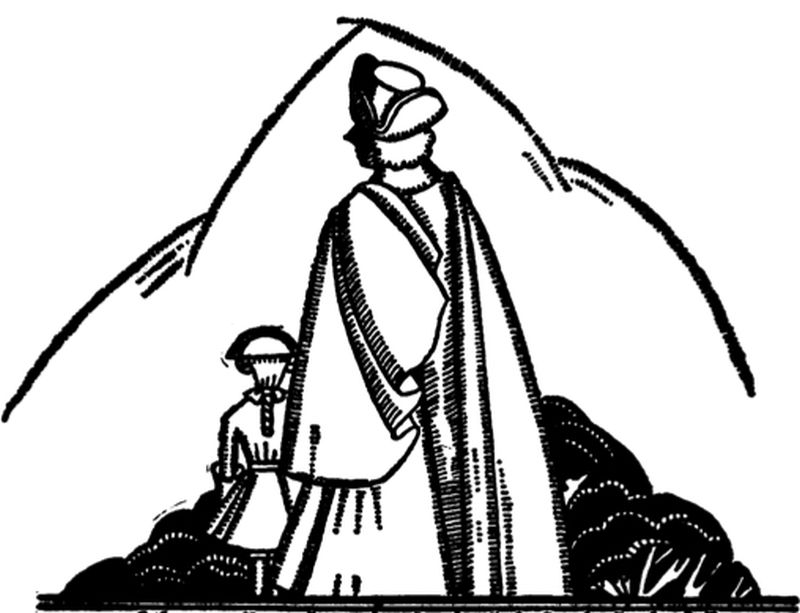
She returned to the house. The next day the grave little boy appeared at the Inn. His fine clothes were torn and stained now and he carried a small bundle for change. His mother had given him a gold piece for spending-money and a little stone that shown in the dark to look at in his sleepless nights. They set off together in a cart, but soon Uncle Pio became aware that the jolting was not good for the boy. He carried him on his shoulder. As they drew near to the bridge of San Luis Rey, Jaime tried to conceal his shame for he knew that one of those moments was coming that separated him from other people. He was especially ashamed because Uncle Pio had just overtaken a friend of his, a sea-captain. And just as they got to the bridge he spoke to an old lady who was travelling with a little girl. Uncle Pio said that when they had crossed the bridge they would sit down and rest, but it turned out not to be necessary.
PART FIVE: PERHAPS AN INTENTION
A NEW bridge of stone has been built in the place of the old, but the event has not been forgotten. It has passed into proverbial expressions. "I may see you Tuesday," says a Limean, "unless the bridge falls." "My cousin lives by the bridge of San Luis Rey," says another, and a smile goes around the company, for that also means: under the sword of Damocles. There are some poems about the accident, classics to be found in every Peruvian anthology, but the real literary monument is Brother Juniper's book.
There are a hundred ways of wondering at circumstance. Brother Juniper would never have arrived at his method had it not been for his friendship with a certain master in the University of San Martín. This student's wife had stolen away one morning on a boat for Spain, following a soldier, and had left him the care of two daughters in their cradle. He was possessed of all the bitterness that Brother Juniper lacked and derived a sort of joy from the conviction that all was wrong in the world. He whispered into the Franciscan's ear such thoughts and anecdotes as belied the notion of a guided world. For a moment a look of distress, almost of defeat, would come into the Brother's eyes; then he would begin patiently explaining why such stories held no difficulty for a believer. "There was a queen of Naples and Sicily," the student would say, "who discovered that she was carrying an angry tumor in her side. In great dismay she commanded her subjects to fall to their prayers and ordered that all the garments in Sicily and Naples be sewn with votive crosses. She was well loved by her people and all their prayers and embroideries were sincere, but ineffectual. Now she lies in the splendor of Monreale, and a few inches above her heart may be read the words: I shall fear no evil."
It was by dint of hearing a great many such sneers at faith that Brother Juniper became convinced that the world's time had come for proof, tabulated proof, of the conviction that was so bright and exciting within him. When the pestilence visited his dear village of Puerto and carried off a large number of peasants, he secretly drew up a diagram of the characteristics of fifteen victims and fifteen survivors, the statistics of their value sub specie aeternitatis. Each soul was rated upon a basis of ten as regards its goodness, its diligence in religious observance, and its importance to its family group. Here is a fragment of this ambitious chart:
Goodness Piety Usefulness
Alfonso G. 4 4 10
Nina 2 5 10
Manuel B. 10 10 0
Alfonso V. -8 -10 10
Vera N. 0 10 10
The thing was more difficult than he had foreseen. Almost every soul in a difficult frontier community turned out to be indispensable economically, and the third column was all but useless. The examiner was driven to the use of minus terms when he confronted the personal character of Alfonso V., who was not, like Vera N., merely bad: he was a propagandist for badness and not merely avoided church but led others to avoid it. Vera N. was indeed bad, but she was a model worshipper and the mainstay of a full hut. From all this saddening data Brother Juniper contrived an index for each peasant. He added up the total for victims and compared it with the total for survivors, to discover that the dead were five times more worth saving. It almost looked as though the pestilence had been directed against the really valuable people in the village of Puerto. And on that afternoon Brother Juniper took a walk along the edge of the Pacific. He tore up his findings and cast them into the waves; he gazed for an hour upon the great clouds of pearl that hang forever upon the horizon of that sea, and extracted from their beauty a resignation that he did not permit his reason to examine. The discrepancy between faith and the facts is greater than is generally assumed.
But there was another story of the master of San Martín (not so subversive, this one) that probably gave to Brother Juniper the hint for his procedure after the fall of the bridge of San Luis Rey.
This master was one day walking through the Cathedral of Lima and stopped to read the epitaph of a lady. He read with an increasingly prominent lower lip that she had been for twenty years the centre and joy of her home, that she had been the delight of her friends, that all who met her went away in astonishment at her goodness and beauty, and that there she lay awaiting the return of her Lord. Now on the day that he read these words, the master of San Martín had had much to fret him, and raising his eyes from the tablet he spoke aloud in his rage: "The shame of it, the persecution of it! Everyone knows that in the world we do nothing but feed our wills. Why perpetuate this legend of selflessness? Why keep this thing alive, this rumour of disinterestedness?"
And so saying he resolved to expose this conspiracy of the stone-cutters. The lady had been dead only twelve years. He sought out her servants, her children and her friends. And everywhere he went, like a perfume, her dear traits had survived her and wherever she was mentioned there arose a suffering smile and the protest that words could not describe the gracious ways of her. Even the eager youth of her grandchildren, who had never seen her, was made more difficult by the news that it was possible to be as good as that. And the man stood amazed; only at last he muttered: "Nevertheless, what I said was true. This woman was an exception, perhaps an exception."
In compiling his book about these people Brother Juniper seemed to be pursued by the fear that in omitting the slightest detail he might lose some guiding hint. The longer he worked the more he felt that he was stumbling about among great dim intimations. He was forever being cheated by details that looked as though they were significant if only he could find their setting. So he put everything down on the notion perhaps that if he (or a keener head) reread the book twenty times, the countless facts would suddenly start to move, to assemble, and to betray their secret. The Marquesa de Montemayor's cook told him that she lived almost entirely on rice, fish and a little fruit and Brother Juniper put it down on the chance that it would some day reveal a spiritual trait. Don Rubío said of her that she used to appear at his receptions without invitation in order to steal the spoons. A midwife on the edge of the town declared that Doña María called upon her with morbid questions until she had been obliged to order her away from the door like a beggar. The bookseller of the town reported that she was one of the three most cultivated persons in Lima. Her farmer's wife declared that she was absent-minded, but compact of goodness. The art of biography is more difficult than is generally supposed.
Brother Juniper found that there was least to be learned from those who had been most closely associated with the subjects of his inquiry. Madre María del Pilar talked to him at length about Pepita, but she did not tell him of her own ambitions for her. The Perichole was at first difficult of approach, but presently even liked the Franciscan. Her characterization of Uncle Pio flatly contradicted the stores of unsavory testimonies that he had acquired elsewhere. Her allusions to her son were few and conceded with pain. They closed the interview abruptly. The Captain Alvarado told what he could of Esteban and of Uncle Pio. Those who know most in this realm, venture least.
I shall spare you Brother Juniper's generalizations. They are always with us. He thought he saw in the same accident, the wicked visited by destruction and the good called early to Heaven. He thought he saw pride and wealth confounded as an object lesson to the world, and he thought he saw humility crowned and rewarded for the edification of the city. But Brother Juniper was not satisfied with his reasons. It was just possible that the Marquesa de Montemayor was not a monster of avarice, and Uncle Pio of self-indulgence.
The book being done fell under the eyes of some judges and was suddenly pronounced heretical. It was ordered to be burned in the Square with its author. Brother Juniper submitted to the decision that the devil had made use of him to effect a brilliant campaign in Peru. He sat in his cell that last night trying to seek in his own life the pattern that had escaped him in five others. He was not rebellious. He was willing to lay down his life for the purity of the church, but he longed for one voice somewhere to testify for him that his intention, at least, had been for faith; he thought there was no one in the world who believed him. But the next morning in all that crowd and sunlight there were many who believed, for he was much loved.
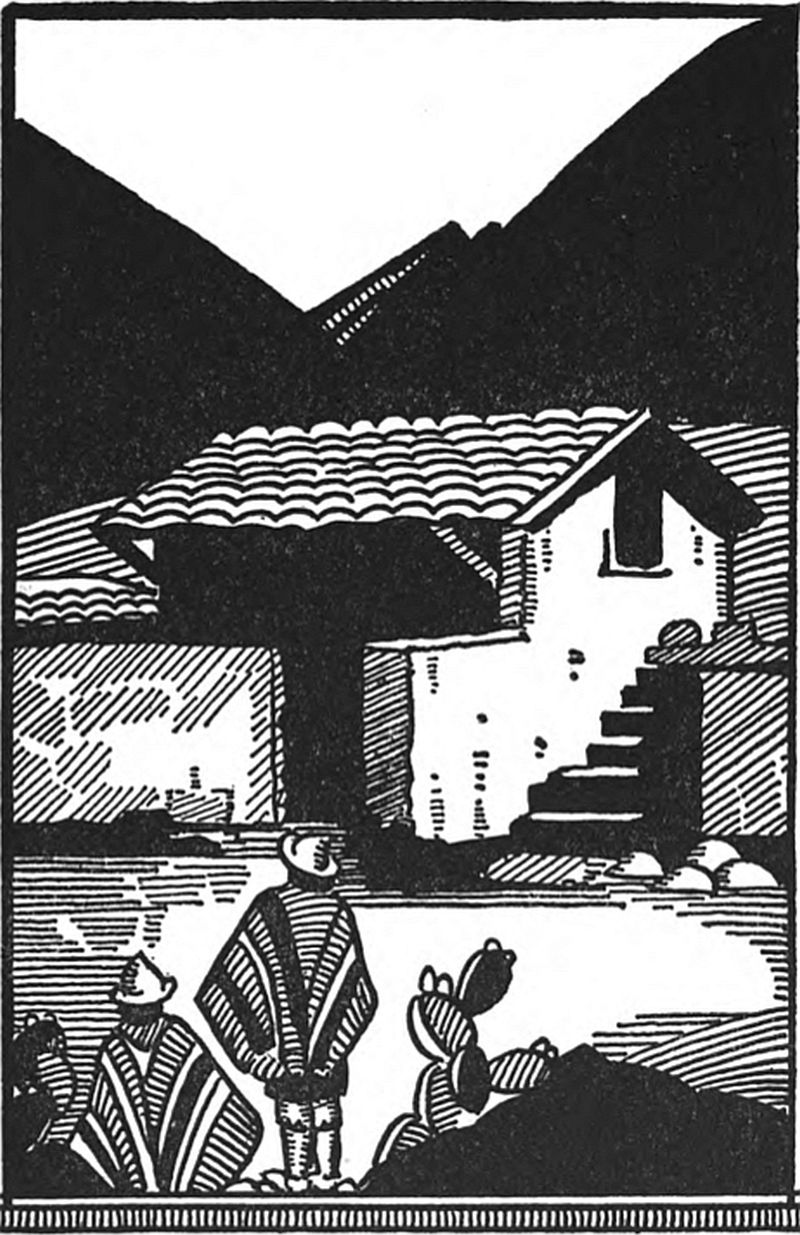
There was a little delegation from the village of Puerto, and Nina (Goodness 2, Piety 5, Usefulness 10) and others stood with drawn puzzled faces while their little friar was given to the congenial flames. Even then, even then, there remained in his heart an obstinate nerve insisting that at least St. Francis would not utterly have condemned him, and (not daring to call upon a greater name, since he seemed so open to error in these matters) he called twice upon St. Francis I and leaning upon a flame he smiled and died.
* * * * * * *
The day of the service was clear and warm. The Limeans, their black eyes wide with awe, poured through the streets into their Cathedral and stood gazing at the mound of black velvet and silver. The Archbishop enclosed in his wonderful and almost wooden vestments perspired upon his throne, lending from time to time a connoisseur's ear to the felicities of Vittoria's counterpoint. The choir had restudied the pages that, as his farewell to music, Tomás Luis had composed for his friend and patron, the Empress of Austria, and all that grief and sweetness, all that Spanish realism filtering through an Italian mode, rose and fell above the sea of mantillas. Don. Andrés, under the colours and feathered hangings of his office, knelt, ill and troubled. He knew that the crowd was furtively glancing at him, expecting him to play the father who has lost his only son. He wondered whether the Perichole was present. He had never been obliged to go so long without smoking. The Captain Alvarado pushed in from the sunny square for a moment. He looked across the fields of black hair and lace at the trooping of the candles and the ropes of incense. "How false, how unreal," he said and pushed his way out. He descended to the sea and sat on the edge of his boat, gazing down into the clear water. "Happy are the drowned, Esteban," he said.
Behind the screen the Abbess sat among her girls. The night before she had torn an idol from her heart and the experience had left her pale but firm. She had accepted the fact that it was of no importance whether her work went on or not; it was enough to work. She was the nurse who tends the sick who never recover; she was the priest who perpetually renews the office before an altar to which no worshippers come. There would be no Pepita to enlarge her work; it would relapse into the indolence and the indifference of her colleagues. It seemed to be sufficient for Heaven that for a while in Peru a disinterested love had flowered and faded. She leaned her forehead upon her hand, following the long tender curve that the soprano lifts in the Kyrie. "My affection should have had more of that colour, Pepita. My whole life should have had more of that quality. I have been too busy," she added ruefully and her mind drifted into prayer.
Camila had started from the farm to attend the service. Her heart was filled with consternation and amazement. Here was another comment from the skies; that was the third time she had been spoken to. Her small-pox, Jaime's illness, and now the fall of the bridge,—oh, these were not accidents. She was as ashamed as though letters had appeared on her forehead. An order from the Palace announced that the Viceroy was sending her two daughters to a convent-school in Spain. That was right. She was alone. She gathered a few things together mechanically and started to the city for the Service. But she fell to thinking of the crowds gaping over her Uncle Pio and over her son; she thought of the vast ritual of the church, like a chasm into which the beloved falls, and of the storm of the dies irae where the individual is lost among the millions of the dead, features grow dim and traits fade. At a little more than half the journey, at the mud church of San Luis Rey she slipped in and knelt against a pillar to rest. She wandered through her memory, searching for the faces of her two. She waited for some emotion to appear. "But I feel nothing," she whispered to herself. "I have no heart. I am a poor meaningless woman, that's all. I am shut out. I have no heart. Look, I won't try and think of anything; let me just rest here." And scarcely had she paused when again that terrible incommunicable pain swept through her, the pain that could not speak once to Uncle Pio and tell him of her love and just once offer her courage to Jaime in his sufferings. She started up wildly: "I fail everybody," she cried. "They love me and I fail them." She returned to the farm and carried for a year the mood of her self-despair. One day she heard by accident that the wonderful Abbess had lost two persons whom she loved in the same accident. Her sewing fell from her hand: then she would know, she would explain. "But no, what would she say to me! She would not even believe that such a person as I could love or could lose." Camila decided to go to Lima and look at the Abbess from a distance. "If her face tells me that she would not despise me, I will speak to her," she said.
Camila lurked about the convent church and fell humbly in love with the homely old face, though it frightened her a little. At last she called upon her.
"Mother," she said, "I ... I ..."
"Do I know you, my daughter?"
"I was the actress, I was the Perichole."
"Oh, yes. Oh, I have wished to know you for a long while, but they told me you did not wish to be seen. You too, I know, lost in the fall of the bridge of San...."
Camila rose and swayed. There! again that access of pain, the hands of the dead she could not reach. Her lips were white. Her head brushed the Abbess's knee: "Mother, what shall I do? I am all alone. I have nothing in the world. I love them. What shall I do?"
The Abbess looked at her closely. "My daughter, it is warm here. Let us go into the garden. You can rest there." She made a sign to a girl in the cloister to bring some water. She continued talking mechanically to Camila. "I have wished to know you for a long while, señora. Even before the accident I had wished much to know you. They told me that in the autos sacrementales you were a very great and beautiful actress, in Belshazzar's Feast."
"Oh, Mother, you must not say that. I am a sinner. You must not say that."
"Here, drink this, my child. We have a beautiful garden, do you not think so? You will come and see us often and some day you will meet Sister Juana who is our gardener-in-chief. Before she entered religion she had almost never seen a garden, for she worked in the mines high up in the mountains. Now everything grows under her hand.—A year has gone by, señora, since our accident. I lost two who had been children in my orphanage, but you lost a real child of your own?"
"Yes, Mother."
"And a great friend?"
"Yes, Mother."
"Tell me...."
And then the whole tide of Camila's long despair, her lonely obstinate despair since her girlhood, found its rest on that dusty friendly lap among Sister Juana's fountains and roses.
* * * * * * *
But where are sufficient books to contain the events that would not have been the same without the fall of the bridge? From such a number I choose one more.
"The Condesa d'Abuirre wishes to see you," said a lay-sister at the door of the Abbess's office.
"Well," said the Abbess, laying down her pen, "who is she?"
"She has just come from Spain. I don't know."
"Oh, it is some money, Inez, some money for my house for the blind. Quick, bid her come in."
The tall, rather languorous beauty entered the room. Doña Clara, who was generally so adequate, seemed constrained for once. "Are you busy, dear Mother, may I talk to you for a while?"
"I am quite free, my daughter. You will excuse an old woman's memory; have I known you before?"
"My mother was the Marquesa de Montemayor...." Doña Clara suspected that the Abbess had not admired her mother and would not let the older woman speak until she herself had made a long passionate defense of Doña María. The languor fell away in her self-reproach. At last the Abbess told her of Pepita and Esteban, and of Camila's visit. "All, all of us have failed. One wishes to be punished. One is willing to assume all kinds of penance, but do you know, my daughter, that in love—I scarcely dare say it—but in love our very mistakes don't seem to be able to last long?"
The Condesa showed the Abbess Doña María's last letter. Madre María dared not say aloud how great her astonishment was that such words (words that since then the whole world has murmured over with joy) could spring in the heart of Pepita's mistress. "Now learn," she commanded herself, "learn at last that anywhere you may expect grace." And she was filled with happiness like a girl at this new proof that the traits she lived for were everywhere, that the world was ready. "Will you do me a kindness, my daughter? Will you let me show you my work?"
The sun had gone down, but the Abbess led the way with a lantern down corridor after corridor. Doña Clara saw the old and the young, the sick and the blind, but most of all she saw the tired, bright old woman who was leading her. The Abbess would stop in a passageway and say suddenly: "I can't help thinking that something could be done for the deaf-and-dumb. It seems to me that some patient person could, ... could study out a language for them. You know there are hundreds and hundreds in Peru. Do you remember whether anyone in Spain has found a way for them? Well, some day they will." Or a little later: "Do you know, I keep thinking that something can be done for the insane. I am old, you know, and I cannot go where these things are talked about, but I watch them sometimes and it seems to me ... In Spain, now, they are gentle with them? It seems to me that there is a secret about it, just hidden from us, just around the corner. Some day back in Spain, if you hear of anything that would help us, you will write me a letter ... if you are not too busy?"
At last after Doña Clara had seen even the kitchens, the Abbess said: "Now will you excuse me, for I must go into the room of the very sick and say a few words for them to think about when they cannot sleep. I will not ask you to come with me there, for you are not accustomed to such ... such sounds and things. And besides I only talk to them as one talks to children." She looked up at her with her modest rueful smile. Suddenly she disappeared a moment to return with one of her helpers, one who had likewise been involved in the affair of the bridge and who had formerly been an actress. "She is leaving me," said the Abbess, "for some work across the city and when I have spoken here I must leave you both, for the flour-broker will not wait for me any longer, and our argument will take a long time."