Chapter IX · Mr. S. M. Edwardes, C.S.I., C.V.O. 1909-1916
Reading edition
Mr. S. M. Edwardes, who succeeded Mr. Gell as head of the Bombay City Police Force, was the first member of the Indian Civil Service to hold that appointment. He had previously held various appointments in Bombay ranging from Assistant to the Collector and Chief Inspector of Factories to acting Municipal Commissioner, and had acquired considerable knowledge of the population and past history of Bombay by his work as Census Officer in 1901 and later as Compiler of the Gazetteer. Shortly after the Tilak riots in 1908, he was nominated a member of the Morison Committee which, as previously stated, was appointed by the Bombay Government to consider the working of the urban police administration and make proposals for its future organization.
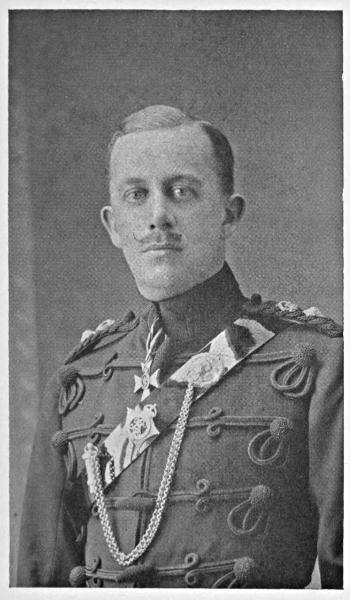
Mr. S. M. EDWARDES
This Committee, which met in the Secretariat, directed particular attention to the provision of properly equipped police stations, to the reconstitution and enlargement of the detective branch, hereafter to be known as the C. I. D., to the creation of a trained Indian staff for the investigation of crime in the Divisions, and to the numbers and personnel of the European and Indian branches of the force. The Committee came to the conclusion from the facts and evidence before them that in dealing with political crime and seditious movements, planned, promoted and carried out by an Indian intelligentsia, the police were handicapped by the absence of educated Indians in the subordinate ranks of the force, and that the investigation of ordinary crime by the divisional police suffered from being in the hands of an old-fashioned agency, which conducted its inquiries in a multiplicity of small and sometimes obscure chaukis and kept no proper record of its cases. Concentration of the staff in a definite number of properly-equipped stations in each division, and the inclusion in the force of a new cadre of Indian officers for the divisional investigation of crime were two obvious desiderata, upon which the Committee laid particular stress. They decided also that the time had arrived to place the C. I. D. under the immediate control of a gazetted officer of the Imperial Police, who would occupy the position of a Deputy Commissioner, leaving the existing Deputy Commissioner to deal with the divisional police and with the large amount of miscellaneous work requiring the attention of the headquarters staff. Proposals, of a more or less tentative character, were also made regarding the numbers, grading and duties of the European police, the recruitment of Indian constables, and the numbers and work of the Harbour, Docks and Mounted Police.
After drafting the report of the Committee and arranging for its submission to Government in October, 1908, Mr. Edwardes took leave to England. While there, he received an intimation from the Bombay Government of their intention to appoint him Commissioner of Police vice Mr. Gell, who proposed to take leave in 1909. He was at the same time instructed to visit Scotland Yard and study at first hand the organization of the Metropolitan Police. Armed with a letter from the Home Office to the Chief Commissioner, Sir Edward Henry, Mr. Edwardes accordingly spent some time in the early part of 1909 in acquainting himself with the distribution of work and the machinery for the prevention and detection of crime in a typical London police division, with the details of the Metropolitan beat-system, with the work of the constables’ training-school in Westminster, with the organization of the Finger Print Bureau, and with the staffing, equipment, structural features and general management of one of the latest and most up-to-date London police-stations. The knowledge thus acquired was of the greatest value, when his own proposals for the reorganization of the Bombay City Police were under preparation.
Mr. Edwardes assumed charge of the Commissioner’s office on May 7th, 1909, with Mr. R. M. Phillips as his Deputy Commissioner and Superintendent Sloane as head of the Criminal Investigation Department. The former was succeeded in July by Mr. Hayter, who made way in September for Mr. Gadney. The latter served as Deputy Commissioner until November, 1913, when his place was taken by Mr. O. Allen Harker, who held the appointment until after the expiry of Mr. Edwardes’ term of office. In pursuance of the recommendations of the Morison Committee, an additional appointment of Deputy Commissioner in charge of the C. I. D. was sanctioned by G. R. J. D. 3253 of June 8th, 1909; and, Superintendent Sloane having been promoted to the cadre of the Imperial Police and transferred to a district, the new post was given to Mr. F. A. M. H. Vincent, son of the former Commissioner of Police, who held it until the beginning of 1913, when he was appointed Deputy Director of Criminal Intelligence at Simla. He was succeeded in Bombay by Mr. F. C. Griffith, who remained in charge of the C. I. D. during the remainder of Mr. Edwardes’ term of office. Both Mr. Vincent and Mr. Griffith subsequently succeeded in turn to the Commissioner’s appointment. In 1914 a third appointment of Deputy Commissioner was sanctioned by G. R. J. D. 9249 of December 19th, 1914, under the style and title of Deputy Commissioner of Police for the Port of Bombay. Mr. G. S. Wilson was chosen for this post and became responsible, under the general authority of the Commissioner, for all work connected with the Harbour and Dock Police and the Pilgrim Traffic. This period thus witnessed the permanent appointment of three Deputy Commissioners in place of a single officer of that rank, and the consequent delegation to them by the Commissioner of much of the work which he had hitherto been expected to perform without adequate assistance.
Mr. Edwardes’ appointment was not received favourably at first by the members of the Imperial Police Service, who naturally felt some resentment at such a post being given to one who was not a professional police-officer. This feeling led to the submission of memorials on the subject to the Bombay Government, who were able without difficulty to justify their departure from the usual practice. The discontent also communicated itself to the rank and file of the City police, who during the first few months of Mr. Edwardes’ régime displayed a spirit of captious criticism, which was fanned at last by a few malcontents into overt disobedience. The movement culminated on January 7th, 1910, in the refusal of a certain number of Indian constables to receive their pay. The Commissioner, who had kept himself informed of the course of the movement, had arranged with the European officers of the Divisions what action should be taken in the event of open insubordination. The men who declined to accept their pay were therefore marched immediately to the Head Police Office and, after inquiry into their conduct, were dismissed from the force. This action completely quashed the movement, which was based upon no real grievance and was designed merely to cause trouble to a Commissioner, whose policy and plans they had been taught to regard with suspicion.
The strength and cost of the City Police Force underwent much alteration during this period of seven years, in consequence of the reorganization scheme prepared by the Commissioner. His proposals for the future constitution and character of the force, which were submitted in July, 1910, were sanctioned by the Government of India in September, 1911; but owing to very heavy work connected with the visit of Their Majesties the King and Queen in November of that year, the scheme was not actually introduced until the beginning of 1912. As early as 1909, however, certain changes were made in consonance with the proposals of the Morison Committee, and to meet emergent requirements, which resulted in an increase of the total number to 2,408. This total included additions to the Dockyard police, temporary sanitary police for service under the Port Health Officer, temporary constables for traffic-duty at various railway level crossings, and finally the revised strength of the C. I. D., which was fixed by G. R. J. D. 2708 of May 10th, 1909, at 1 Superintendent, 6 Inspectors, 7 Sub-Inspectors, 23 Head Constables and 41 Constables. In 1910 an additional Inspector was sanctioned for the Motor Vehicles department; and 9 Indian sub-inspectors, 3 head constables and 9 constables were added to the force, to enable the Commissioner to introduce tentatively in three areas the new divisional organization which formed the salient feature of his administrative proposals. Thus by 1911 the force numbered 2,505, which was equivalent to a proportion of one policeman to every 394 of population, and cost annually, inclusive of temporary police and contingent charges, Rs. 10,93,351. In 1913, when the reorganization was well in hand, the total strength of the force stood at 2,844 and cost Rs. 12,73,834; while at the end of 1915, a few months before Mr. Edwardes relinquished office, the total number, inclusive of a small temporary staff for watching transfrontier Pathans in the City, was 3,011, and the annual cost amounted to Rs. 13,37,208. The proportion of police to population at this date was 1 to 327, which compared unfavourably with the proportions in Calcutta and London. Had the Commissioner’s first proposals been sanctioned without alteration, the proportion of police to population in Bombay would have been far more favourable; for he had worked out a complete beat-system on the London model for the whole of the City. The number of men, however, required for this purpose was naturally large, and as the Bombay Government were compelled by the Government of India to restrict the additional annual cost of the force to 2½ lakhs of rupees, the Commissioner was obliged to jettison the beat-system and utilize the available funds in other directions, such as perfecting the divisional machinery for the investigation of crime, increasing the number of fixed traffic posts, and augmenting the inadequate pay of the European police.
This force of just over 3,000 men was distributed among the following divisions at the close of 1916:—
Division Sub-divisions or Sections
A Colaba, Fort South, Fort North, Esplanade
B Mandvi, Chakla, Umarkhadi, Dongri
C Market and Dhobi Talao, Bhuleshwar and Khara Talao
D Khetwadi, Girgaum, Chaupati, Walkeshwar
E Mazagon, Tarwadi, Kamathipura, New Nagpada, Mahalakshmi, Jacob’s Circle
F Parel, Dadar, Matunga, Sion
G Mahim, Worli
H and I Harbour and Docks
L Head Quarters Armed and Unarmed Police
M Mounted Police
N The Government Dockyard
and The Criminal Investigation Department (formerly the K division).
With the appointment of Mr. F. A. M. H. Vincent as Deputy Commissioner, C. I. D., and the increase in its personnel, the Criminal Investigation Department entered upon a period of remarkable activity. The staff was divided into four branches—Political, Foreign, Crime, and Miscellaneous—each in control of one or more Inspectors; work-books were introduced, which fixed responsibility upon individual officers for cases entrusted to them for inquiry and served as a check upon delay in the submission of final reports of investigations; a confidential strong-room was provided, and the card index system and upright filing of records were substituted for the old methods in vogue at this date in most official departments. In addition to the investigation of cases, some of the more remarkable of which will be mentioned hereafter, the department made confidential inquiries, often of a delicate character, into political, religious and social movements; it scrutinized plays for performance licenses, amending or rejecting those that were objectionable; it took vigorous action under the Press Act, confiscating on occasions as many as twenty-one thousand copies of proscribed books; it maintained a constant watch upon the arrivals and departures of steamers, assisted the Excise authorities, collaborated with the police of other districts and provinces, supervised and, if necessary, prohibited the songs sung by the melas at the annual Ganpati celebration, and performed an immense amount of confidential work in connexion with the Muharram. It also assisted or secured the repatriation of all manner of destitute persons stranded in Bombay, including English theatrical artistes, Arabs belonging to French territories, ladies from Mauritius, Bengali seamen, Pathan labourers expelled from Ceylon, and deportees from the Transvaal.
The establishment at the beginning of 1911 of a “Police Gazette”, appearing thrice in the twenty-four hours and containing full details of all reported crimes, persons wanted, property stolen or lost, etc., was a further step in the direction of increased efficiency. Prior to this date, when a case of theft occurred, the first duty of the Inspector, in whose jurisdiction it took place, was to prepare with his own hand thirty or forty notices for dispatch to other police-stations in the City. Much valuable time was thus wasted; and when the notices were ready, several constables had to be released from their proper duties to act as messengers. Under the system introduced in 1911 the duty of the sectional officer consisted simply in telephoning full details to the Deputy Commissioner C. I. D., who arranged for their insertion in the next issue of the “Gazette”, copies of which were delivered at every police station within a few hours of the occurrence. The arrangements were adapted from the system followed in London and effected a great saving of time and trouble in the divisions. In 1915 the Police Notice Office, composed of a European Inspector and an Indian head constable, circulated in this way nearly 10,000 paragraphs and 67 supplements dealing with murders, thefts, deserters and persons wanted, and also published and circulated to the divisions forty pages of special orders concerned with daily routine.
Another salient feature of the reorganization, as mentioned above, was the creation of a special agency for the divisional investigation of crime. This was dependent upon the provision of properly-equipped police stations of a definite type, recommended by Mr. Edwardes, comprising the necessary offices, charge-room, cells, quarters for the European and Indian staff, and barracks for the constabulary. The scheme, as sanctioned, contemplated the provision of 17 stations of this character. At the date when Mr. Edwardes was appointed Commissioner, none of the existing police-stations fulfilled these requirements, and in some divisions paucity of accommodation directly hampered the daily work of the police. In 1911, for example, the station of the Khetwadi section of the D division was described as practically non-existent. The lease of a building having expired, and no alternative accommodation being available, the Inspector was holding his office in the dressing-room of an Indian theatre in Grant road, the station-stores and constables’ kit-boxes were temporarily placed in a tea-shop in Falkland road, and the two European officers of the section were forced to reside in very poor quarters in an adjoining section. Most of the older stations were very inconvenient and insanitary. The only office consisted of one of the sectional Inspector’s dwelling-rooms or of a portion of a verandah screened off; prisoners and witnesses were herded together on the stairs or in the street; the residence was surrounded by old-fashioned and odoriferous latrines; and every odd corner was choked with kit-boxes and with the recumbent forms of constables taking a rest before going on duty.
By the end of 1910, however, a complete programme for new stations had been prepared, and sanctioned by Government, and a commencement had been made in Colaba, Nagpada and Agripada, where the newer police-stations erected by the Improvement Trust were subjected to structural alterations and additions, in order to make them conform with the plan adapted from the London model. Each of these stations was equipped with a staff composed of one Inspector, one Deputy Inspector, three Indian Sub-Inspectors for criminal investigation, plain-clothes constables and a clerical staff; the first information sheet, case-diary and other records used by the District Police were so adapted to urban requirements as to secure a complete record of every case taken up by the police; and the time-table of duties was arranged so that at any moment during the twenty-four hours an English-knowing officer, with power to record complaints and commence inquiries, would be found in the general charge-room of the station. At the outset most of the Indian Sub-Inspectors were chosen from among the few English-knowing Jemadars and Havildars, already in the force; but from 1910 onwards a regular supply of such officers was secured by choosing young Indians of good middle-class standing and deputing them to the Provincial Police Training School at Nasik for an eighteen months’ course of tuition in law and police-work.
At the beginning of 1913 the Commissioner opened two more stations on the new model at Princess Street—a building erected by the Improvement Trust in 1910, and at Maharbaudi: and two more in 1914 in the new buildings of the Harbour and Dock police at Mody Bay and Frere road respectively, which were completed and occupied in January. At the beginning of January, 1916, three more stations were established under the reorganization scheme at Khetwadi, Hughes road, and the Esplanade, while at the close of the same year similar stations were organized in the new buildings erected at Gamdevi, Lamington road and Palton road. Thus, by the end of 1916 thirteen out of the seventeen model police-stations, originally proposed by the Commissioner, had been opened with a full complement of officers and men, while plans had been approved for similar accommodation in Mahim, Parel and other places in the northern portion of the Island of Bombay. Where it was found impossible to build full residential accommodation for both officers and men on the site allotted for these new stations, ancillary accommodation schemes were prepared, which, when completed, would ensure the proper housing of the majority of the force as it existed at the date of Mr. Edwardes’ departure.
A sustained effort was made during these years to teach English to the Indian constabulary, with the object of giving the men themselves a better chance of promotion and enabling them to hold their own more confidently with the large English-speaking population. In 1910 the number of officers, exclusive of Europeans, able to read and write was 127, of whom only 36 were literate in English, while literate constables, of whom only one or two knew English, numbered 584. In July 1911 the Commissioner commenced sending a chosen number of Muhammadan and Hindu constables to two free night-schools for instruction in English and one vernacular language. The success attending this experiment led the Bombay Government to sanction a proposal to open an English school for constables at the Head Police Office, under a qualified teacher from one of the official training-schools maintained by the Educational Department. This school was attended by 150 constables from the various branches of the force, who were given a three years’ course of tuition in English, and on Saturdays attended lectures on their duty to the public, their powers under the Police Act, and matters of simple hygiene. In 1913 the number of men attending the school had risen to 200, and the master had been forced to obtain gratuitous assistance in teaching the various classes. The question of accommodation also became urgent, and during 1915 and 1916 the classes had to be assembled in the Elphinstone Middle School, which the educational authorities allowed the police to use during the early morning and evening hours. The men, who were encouraged to study by the grant of small rewards and occasionally of promotion, if they were successful in the periodical examinations, derived distinct advantage from the school-course, and the number of constables literate in the English language showed a steady increase between 1911 and 1916. In the latter year 846 constables were reported to be able to read and write, and 72 of them were literate in English. Connected with the subject of education was the foundation of a fund in the name of the Commissioner—the S. M. E. Memorial Fund—subscribed by Hindu and Muhammadan residents, with the object of assisting Indian constables of the force to educate their sons. The proposal was made in the first instance by Mr. Kazi Kabiruddin, a barrister and Justice of the Peace, and at his instance sufficient funds were subsequently provided to admit of the grant of monthly scholarships and stipends to the sons of constables attending primary schools maintained by the Municipal Corporation.
A large amount of routine work devolved upon the police under the Arms, Explosives, Petroleum and Poisons Acts. Under the Arms Act licenses of various kinds were granted or cancelled, the shops and store-rooms of licensed dealers were regularly inspected and their stocks checked, and constant inquiries, numbering several thousand annually, were made to verify purchases from local dealers and trace the whereabouts of fire-arms. In 1911, just before the arrival of Their Majesties the King and Queen, five revolvers were stolen from a licensed dealer’s shop. The C. I. D. were successful in recovering the arms and in obtaining the conviction of the thieves: but in consideration of the approach of the Royal Visit, the Commissioner decided to take charge of the entire stock of arms and ammunition held by five Indian dealers, and kept it in deposit in the Head Police Office until after the departure of Their Majesties. Under the Explosives Act licenses were issued for manufacture, possession and sale; and magazines for the storage of explosives were regularly inspected by the special branch maintained for this purpose at headquarters. Similar duties were carried out under the Petroleum Act; while from April 1st, 1909, the Police became responsible for licensing the sale of poisons and checking stocks,—duties which up to that date had been performed by the Municipality. The task of licensing theatres and granting performance licenses, which was transferred to the Arms department at the close of 1909, imposed a heavy additional burden on the special staff. Most of the theatres at this date were devoid of proper exits and of means of protection against fire, and these seven years witnessed a continuous struggle to secure the erection of fire-proof staircases etc. and the provision of fire-proof drop-curtains. Fortunately the Police were able to obtain the help of the Chief of the Fire-brigade and of the Government engineering and electrical experts, in deciding what improvements were essential in each case, and it was chiefly due to this collaboration that a better fire-service had been installed by 1913 in each of the thirteen theatres of the City, and that many important structural alterations in both theatres and cinematographs had been introduced by the close of 1916. Perhaps the most notable achievement of the headquarters staff under Chief Inspector M. J. Giles was the preparation of a set of theatre rules, applicable to all structures used for public performances, which were brought into force in August 1914, and gave the police power to insist upon the provision of fire-appliances, water supply, exits, and fire-proof materials. As mentioned in a previous paragraph, the C. I. D. was made responsible for the scrutiny of plays, for which a performance license was required, and licenses were granted only to such plays as were declared by that department to be unobjectionable on political, moral or general grounds.
The growth in the number of motor-vehicles continued unchecked and ultimately necessitated the promulgation of new rules under the Motor Vehicles Act in 1915. In 1909, the total number of motor-vehicles registered since 1905 was 1,295, while in 1915 this figure had increased to 4,947. But a good many of these gradually disappeared in the course of ten years, and the actual number estimated to be on the roads in 1915 was 2,482 as compared with only 814 in 1909. Heavy motor-vehicles of the lorry type also appeared during this period and numbered 70 in 1915. This increase of motor-traffic synchronized with, and was partly responsible for, a steady increase in the number of street accidents. While reckless driving was unquestionably the cause of many accidents, despite energetic action in several directions to prevent it, the large majority of the casualties reported from year to year were the outcome of that carelessness and lack of alertness on the part of the average Indian pedestrian, with which all who have driven cars or carriages in Bombay are only too well acquainted. Accustomed as they are to the peace of a sequestered country life, many of the foot-passengers in the streets of the city seem totally unable to exercise any caution or to acquire the habit of keeping to the side of the road, while in the case of the mill-workers, whom one meets in Parel and elsewhere, the sense of hearing seems to have been permanently dulled by the constant rattle and clatter of the machinery at which they labour during the greater part of the day.
The Haj traffic continued to expand between 1909 and 1911, the total number of pilgrims who left Bombay for Jeddah in those years being 19,748 and 21,965 respectively. From 1912 the numbers commenced to decline until the year after the outbreak of the War, when the traffic virtually ceased altogether. The period witnessed a struggle on the part of a British shipping-firm to secure the monopoly of the Red Sea trade, including the pilgrim traffic, by ousting the few Muhammadan-owned vessels which had hitherto catered for the pilgrims. The firm in question was unquestionably in a position to offer better vessels and a better organization for the return journey than the Indian ship-owners: but one or two of the latter resented the effort to drive them out of the traffic, with the result that the Commissioner of Police and the Pilgrim department, who endeavoured to act in a strictly neutral manner, ran the risk of blame from both parties for showing undue preference to their rivals. At the moment of the Declaration of War all the vessels engaged in the traffic were owned by the British firm, except one or at most two which belonged to a well-known Muhammadan resident. It might have been supposed that, considering the wholly Islamic character of the pilgrimage, a British firm would have acquiesced in the continued presence of a Muhammadan-owned vessel, and have trusted to time and the ordinary economic law for its ultimate disappearance from the Jeddah route. Such, however, was not the case; and at the instance of the local manager of the firm, a pushing Scot from Aberdeen, the Bombay Government was asked practically to insist upon the Commissioner and the Pilgrim department refusing all facilities to the Muhammadan ship-owner to sell his tickets and dispatch his vessel. The outbreak of War in 1914, and the consequent cessation of the traffic to and from Jeddah, solved a dispute which for some time imposed additional work upon the Police and Pilgrim authorities.
The Finger Print Bureau steadily maintained its efficiency and had compiled a record of more than 45,000 slips by the end of 1915. At the request of the municipal authorities, it commenced about 1912 to take the finger-impressions of hundreds of candidates for employment as sweepers in the Health department, and was able to prove annually from its records that a certain proportion of these people had previous convictions under the Penal Code. In another direction—revolver-practice by the European police—a considerable improvement was effected. Up to 1914 it was customary to arrange for the practice in a field at the back of the China Mill at Sewri, which was sufficiently remote and secluded to obviate danger to the public. But the distance of the site from the centre of the City rendered the regular attendance of all officers practically impossible, and in consequence, on the rare occasions when the European police were called upon to use their revolvers at disturbances, their shooting was inclined to be a trifle erratic. In the Muharram riots of 1908, for example, when Mr. Gell ordered the European officers to fire on the mob in Bhendy Bazar, a Parsi who was watching the rioting from the window of a third upper-storey was unfortunately killed by a revolver-shot, directed at the crowd in the street. To ensure more regular practice by all officers, therefore, the Commissioner obtained the approval of Government to the erection of a safety revolver range in the compound of the Head Police Office, which was opened in September, 1914.
Before dealing with the record of crime, a brief reference is desirable to the extraordinary volume of miscellaneous work performed under the orders of the Commissioner. Derelict children were constantly being picked up in the streets by the divisional police and forwarded to the Head Office, when the Commissioner had to make the best arrangements he could for their maintenance and welfare; penniless women and children were repatriated to various parts of India, to Persia, Mauritius, Egypt, South Africa and Singapore, with funds collected by the Police Office for each individual case from charitable townspeople; penurious women were assisted to get their daughters married, and on one occasion a Muhammadan and his wife, who desired a divorce and applied for police assistance, were granted facilities for the ceremony at police headquarters. On another occasion the Commissioner was asked to assist in the rebuilding of a mosque belonging to the Sidis or African Musalmans of Tandel Street, and was able to obtain the necessary funds from several well-to-do Muhammadans in the city. The Police dealt also with a large number of lunatics; they traced deserters from the Army and Navy; they made inquiries into the condition of second-class hotels and drinking bars in the European quarter and took action, when necessary, in consultation with the Excise authorities; they dealt with a very large number of prostitutes under the Police Act. The number of summonses which they were called upon to serve annually on behalf of magisterial courts in Bombay and other Provinces was enormous, and their work in connexion with the grant of certificates of identity to persons proceeding to Europe, with the grant of passes for processions and for playing music in the streets, and of permits to enter the Ballard Pier on the arrival and departure of the English mail-steamer, was heavy and continuous. Appeals for unofficial assistance from private individuals and from societies like the League of Mercy, engaged in rescue-work among women, were also never refused. Miscellaneous activities of this varied type formed no small portion of the annual task of the force and were rendered effective by the close collaboration of the staff at headquarters, the C. I. D., and the divisional police.
The difficulty of providing suitable shelter and guardianship for the many derelict girls of tender age found wandering in the streets by the police led directly to the foundation by the Commissioner of the Abdulla Haji Daud Bavla Muhammadan Girls’ Orphanage. With the possible exception of one or two Christian missionary institutions, to which it would have been impolitic on political and religious grounds to send children, no organization or society existed in 1909, which was prepared to take charge of homeless girls. Consequently, many little waifs gravitated into the brothels of the city or were gradually absorbed in the floating criminal population. Moreover, when a child was found in the streets, homeless and friendless, the police had no shelter to offer her except the cells at the sectional police-station; and these, being regularly filled with the dregs of the criminal population, were a most undesirable environment for girls of tender years. As caste-prejudices offered peculiar obstacles to any scheme for the benefit of Hindu girls belonging to the Shudra class, the Commissioner determined to concentrate his attention upon a home for Muhammadan girls, and accordingly drew up a scheme and issued an appeal, which was widely circulated among the Muhammadan community. The appeal was favourably received, and about 2 lakhs of rupees were collected within a few weeks. To this sum were added more than 3 lakhs from the estate of the late Abdulla Haji Daud Bavla, whose executors offered the amount on condition that the orphanage should bear his name, that his trustees should be represented on the managing committee of the orphanage, and that the objects, constitution and maintenance etc. of the orphanage should be embodied in a legal deed of trust. At the request of the Commissioner, the Bombay Government agreed to become a party to the deed and bound themselves to appoint the Commissioner of Police, or any other of their officers resident for the time being in Bombay, as chairman of the board of trustees of the orphanage. The legal preliminaries having been completed and the funds duly invested in gilt-edged securities, a suitable building was taken on a lease, and furnished at the expense of a philanthropic Muhammadan merchant, and in December, 1910, the orphanage was formally opened by Sir George Clarke (now Lord Sydenham) and Lady Clarke. The institution soon justified its existence; the number of girl-inmates steadily increased, their physical health and welfare being under the general supervision of a trustworthy Englishwoman, and their religious exercises and elementary lessons being given by a Mullani and her assistants. The problem of the girls’ future was solved in the only feasible way by arranging for their marriage with Muhammadans of their own class, as soon as they reached the age of maturity. These hymeneal arrangements were made by a chosen officer of the C. I. D., Khan Saheb M. F. Taki, in consultation with the jamats and leaders of the various Musalman sections. Experience has proved that the establishment of institutions like this Muhammadan Girls’ Orphanage is an essential preliminary to any serious effort to combat the deplorable traffic in children, which still flourishes in India and constitutes the chief means of recruitment for the brothels of the larger towns and cities.
This period witnessed a steady increase in crime up to 1915, when the stringent measures taken during the pendency of the War to clear the City of undesirables imposed a notable check upon the normal increase in reported crime. Previous to that date the rapid increase in recorded crime was the natural result of the changes which took place in the force after 1909, and particularly of the improvement in registration which followed the introduction of the new divisional police-stations. Not only did these stations offer increased facilities for the reporting and detection of crime, but it was also impossible under the new system for cases to escape registration and final inclusion in the returns. The improvement in the registration of cases was manifested also in a marked diminution of the number of complaints classed as made under a misapprehension of law or fact. By 1916 the sanctioned strength of the police force had been augmented by one-third since 1906, and this fact by itself would have sufficed to account for a large increase in the amount of crime brought to light. When coupled with the reorganization of the various police-stations, each of which was furnished with a strong registering and investigating staff, the increase in recorded crime became inevitable. It was likewise due to more accurate estimates of the value of property stolen that the percentage of recovery declined from 56 in 1908 to about 40 in succeeding years.
Murder and attempts at murder were still deplorably frequent, including cases of infanticide which are extremely difficult to detect in an Oriental city. The number of murder cases varied from 16 in 1909 to 31 in 1910, 25 in 1911, 31 in 1912, and 24 in both 1913 and 1915. The largest number, 35, occurred in 1914. The most notable murder was that of a young and wealthy Bhattia widow, residing in her own house on Malabar Hill. Her husband, Lakhmidas Khimji, who had died some time previously in circumstances which gave rise to ill-founded rumour, had been a well-known figure in Indian commercial circles. His widow Jamnabai, was brutally strangled by a gang of six men from northern India, two of whom belonged to well-known criminal tribes in the United Provinces and a third was a night-watchman in the employ of a Jain resident on Malabar Hill. At first there appeared to be no clue whatever to the crime; but a few days after its occurrence the commissioner received an anonymous letter in Hindi, which was translated for him by the Subehdar of the Armed Police, who happened to be a north-Indian Brahman conversant with that language. The letter, which was written by one of the criminals in revenge for not receiving what he regarded as a fair share of the ornaments stolen from the widow’s house, gave sufficient details to enable the Police to arrest five of the gang the same evening. The sixth accused was subsequently arrested at Bassein. All of them were placed on trial for murder and convicted.
By the year 1909, the vice of cocaine-eating had attained an extraordinary hold upon the lower classes of the population. Women and even children had fallen victims to a habit which plainly exercised a deplorable effect upon their health and morals. The supplies of the drug came in the first instance from Germany in packets bearing the name of Merk, and were frequently smuggled into India in ways that defied detection. Moreover the traffic in the drug, which was international in character, was so cleverly organized that it was practically impossible to trace and prosecute the importers and distributors. Action was therefore confined to prosecuting the smaller fry for the offences of illicit sale and possession, and the majority of such cases occurred in the notorious Nal Bazar area of the C division, which for the last thirty or forty years has sheltered a large population of disreputables. The Police were not held primarily responsible for the control of the cocaine-traffic. This duty devolved upon the Collector of Bombay, who maintained a large and well-paid excise staff for the purpose.[115] But the obligation which rested on the police to assist the excise authorities as far as possible, and the direct stimulus to crime provided by the cocaine-habit, rendered the question of combating the traffic of more than ordinary importance. With this in view, the Commissioner in 1909 put a special police-cordon on the area devoted to the traffic for about six weeks. This produced satisfactory results for the time being, but had to be abandoned, to allow of the men reverting to their regular duties which suffered by their absence. In 1911 a second attempt was made to restrict the evil by placing a European Inspector and a staff of constables on special duty in the C division for a period of about two months, during which nearly 600 individuals were caught and convicted by the courts. These incursions into the area of the retail-traffic were not the only successes achieved by the police. In 1911 the Dock Police arrested an Austrian steward of the S. S. Africa with 300 grains of cocaine concealed in the soles of his boots; in 1912 the Superintendent of the Harbour Police secured the arrest of a fireman from a German merchant-ship with 40 lbs. of the drug, valued at Rs. 45,500, in his possession; another large consignment, valued at Rs. 17,000 was traced by Khan Saheb M. H. Taki and Khan Saheb F. M. Taki of the C. I. D. to a house in Doctor Street in 1913; and on two occasions Indian constables on duty in the Docks arrested on suspicion persons belonging to vessels in the harbour, with large quantities of the drug concealed on their person. It cannot be asserted, however, that these arrests and prosecutions secured any real diminution of the traffic from abroad. They did upset the local market for the drug, and interfered temporarily with the supply of the tiny paper packets sold in the darker corners of the C division. The traffickers were not thereby daunted, for when the real article was difficult to procure, they palmed off powdered magnesia and Epsom salts on their unfortunate victims, who were naturally unable to complain of the deception. The first real check to the traffic was provided by the drastic restrictions on imports and exports imposed after the declaration of War in 1914, and by the sudden cessation of the continental steamship companies’ traffic between Europe and the East. At a comparatively recent date the question of the traffic in cocaine has been discussed at Geneva under the auspices of the League of Nations, and the view seems to be generally accepted that the evil can only be adequately countered by stringent supervision of the primary sources of supply and joint action on the part of all the States concerned.
Of the many important criminal cases successfully investigated by the Police during these seven years, a few deserve special mention. In 1910 and 1911 some very seditious books were brought to the notice of the Bombay Government by certain persons to whom they had been sent anonymously. In the course of their inquiries the Police discovered a large store of these books at Navsari in the Baroda State, and also secured proof that the books were printed at Mehsana in the same territory. A prominent Indian pleader of Kaira, who was concerned in their distribution, was prosecuted and duly convicted. H. H. the Gaekwar of Baroda was in England at the time of the inquiry; but on his return he deported the author of the books, who was one of his own subjects, for a period of five years. In 1912 the police successfully dealt with a swindler named Amratlal, who had victimised a firm of jewellers in Germany to the extent of nearly 2 lakhs of rupees, and they also detected the perpetrator of a series of thefts on board the P. and O. Company’s ships, including a case of tampering with the mails. In the following year the premises of the well-known firm of Messrs Ewart, Latham and Company were destroyed by fire. Immediately after the fire, a stolen cheque filled in for Rs. 10,826 and bearing a forged signature, was presented at a bank for payment and cashed. One of the firm’s employés was eventually arrested and charged with the offences of theft, cheating and forgery, the police investigation establishing also the moral certainty that the accused had set fire to the office in the hope of obliterating all trace of his crime. The accused was committed to the Sessions, where a peculiarly stupid jury, failing to appreciate the evidence, brought in a verdict of “not guilty.” The presiding Judge discharged the accused and passed severe comments on the perversity displayed by the jury. A case, which contained elements of both tragedy and comedy, concerned the marriage of a Koli girl, about 9 years old, to a sexagenarian Bania. Three Hindus, acting on the principle that love is blind, falsely represented that the girl was a Bania, and thereby induced the elderly Lothario to pay Rs. 1,500 for the privilege of wedding the girl. After the marriage the old gentleman discovered the deception practised upon him, and made a formal complaint to the police, who traced the three culprits and secured the conviction of two of them.
In 1914 the embezzlement of Rs. 1,000, representing the fees paid by students at the Government Law School, led to the arrest and conviction of a clerk on the school staff, who was proved in the course of the police-inquiry to have embezzled no less than Rs. 12,000 between the years 1902 and 1912. At the request of the police of the United Provinces, two charges of filing false civil suits, with the object of avoiding payment of sums due by them, were successfully proved against natives of upper India; and these were followed by an equally long and intricate inquiry into a case of cheating, in which three Hindus, one of whom had a local reputation as a palmist and astrologer, persuaded two Bhandaris of Bombay to pay them Rs. 4,000, on condition that they would use their supposed influence with the excise authorities to obtain two liquor-licenses for their dupes. In 1915 the Bohra thief and house-breaker, Tyebali, whose conviction during Mr. Gell’s régime has already been mentioned, completed his term of imprisonment and recommenced his thieving exploits. After committing several thefts from houses in Nepean Sea road he was caught, convicted and sentenced to a fresh term of six years’ imprisonment. All the stolen property was recovered from a Bohra receiver, who worked with Tyebali. In September of the same year information was received from the Director of Criminal Intelligence, Delhi, that three valuable Persian manuscripts had been stolen from the library of Nawab Sir Salar Jung Bahadur at Hyderabad. After a lengthy inquiry the Bombay police traced one of the manuscripts, a Shahnama, with illuminated headings and illustrations in colours and gold, which was declared by experts to be an artistic treasure of immense value. A chance remark furnished a clue to the whereabouts of the manuscript, which was in due course returned to its owner in Hyderabad.
Anonymous communications are exceedingly common in India, and as a rule it is practically impossible to trace their authorship. A case of this type, which presented unusual features, was successfully investigated by the police in 1915. For more than two years a series of objectionable and defamatory postcards and letters had been received by high officials, prominent Indians, and clubs. Any event of public interest during that period resulted in a shower of these typed communications, which were always very scurrilous and occasionally flagrantly indecent. They were addressed not only to residents of Bombay, but to officials in other parts of India also, to the Governor, the Viceroy and even to members of the Royal Family in England. The C.I.D. had been able to establish the fact that all the cards and letters were typed on a single machine of a particular and well-known make; and having done that, they proceeded, with the approval of the postal authorities, to subject all the postcards received in the General Post Office to close scrutiny throughout a period of several weeks. At length their patience was rewarded. A card was found, which on careful scrutiny was seen to have been typed on the missing machine, and as it was an ordinary and bona fide business communication it was not difficult to locate the machine. It proved to be the property of a well-known Indian merchant, and further inquiry rendered it certain that he was the author of the anonymous cards. He was therefore arrested and released on bail. While the Police were collecting further evidence to support the charge against him, the accused, who had many influential friends, confessed his guilt to one of them and asked his advice. The friend advised him to make a clean breast of the whole matter to the Commissioner of Police and throw himself on his mercy. This he agreed at the moment, but in the end failed, to do and a few days later, while ostensibly endeavouring to light a gas-stove with a bottle of methylated spirit, he was so severely burned about the body that he died in a few hours. The case caused some commotion in the community, to which the accused belonged, and the Commissioner was urged to refrain at the inquest on the deceased from any allusion to the criminal inquiry into the authorship of the postcards. But this the Commissioner refused to do, in view of the wild rumours about the case which were being spread about the City, some of which placed the police in a false and undesirable position. It was doubtless satisfactory to the friends of the deceased that the Coroner’s jury found themselves able to pronounce a verdict of accidental death. It only remains to add that after the arrest of the accused the plague of anonymous postcards entirely ceased.
The criminal record of these years would be incomplete without a reference to the collapse in 1913 of a number of Indian banks. The most notable of all, the Indian Specie Bank, was never made the subject of a criminal investigation, though the apathy of its Directors was unquestionable, and its manager, who had set out to “corner” silver against the Indian Government with the monies of the bank’s depositors, found it desirable, when the crash came, to die suddenly at Bandora. Orders were issued by the Bombay Government to the Police to investigate the transactions of several lesser banks and bring the guilty to trial; and accordingly a protracted and intricate inquiry was commenced by Inspector Morris of the C. I. D. into the accounts and balance-sheets of the Credit Bank, the Bombay Banking Company and the Cosmopolitan Bank. In the case of the first-named bank, charges of criminal breach of trust and falsification of accounts were proved against the manager, who was sentenced in 1914 to ten years’ rigorous imprisonment, while the manager of the Bombay Banking Company and his nephew were likewise convicted of criminal breach of trust and cheating and sentenced to varying terms of imprisonment with hard labour. In the third case the police proved clearly that the bank was not a bank at all, and had neither funds, business nor influence; but the manager and the “bank’s” broker, who were charged by the police with cheating, were eventually discharged by the trying magistrate. These bank-failures were not confined to Bombay, but took place in other Provinces also, notably in the Punjab. When the collapse commenced, an attempt was made to draw some of the European-managed banks into the vortex, with the object of showing that the failures were due rather to general economic conditions than to bad management. The attempt failed; for the Scotchmen, who form ninety per cent of the European banking community in India, were too cautious and too solidly entrenched to succumb to any artificial panic, and despite the assertion of some Indian politicians that the European-managed banks, by withholding assistance from these mushroom Indian concerns, had deliberately precipitated the crisis, the general conclusion was that the failures were primarily due to careless or fraudulent management. This view found confirmation in the verdicts delivered in the Courts.
The collapse of at least one bank was due to the uncontrolled habit of speculation which has always distinguished the City of Bombay. Few persons now remain who can remember the famous Share Mania of the early ’sixties: but the spirit of gambling which underlay that colossal financial fiasco is still alive and manifests itself from time to time in wild speculation in the cotton and share markets. The abnormal readiness of the average Indian to follow the lead of any man of outstanding personality, and the ease with which credit is obtained and renewed in Indian circles only serve to aggravate the evil. The suicide of Mr. Dwarkadas Dharamsey, a leading Bhattia mill-agent and merchant, in September, 1909, provided an example of the latitude allowed to one whose financial position had for several years been very unsound. Dwarkadas Dharamsey was a man of great mental capacity, but devoid of scruple. He occupied a leading position in the mercantile and social world, was well-known on the race-course as an owner of horses, was a member of the Municipal Corporation and of the Board of the Improvement Trust, and had been appointed Sheriff of Bombay two or three years before his death. Yet in the very heyday of his prosperity he was spending more than he possessed, staving off importunate demands by all manner of temporary expedients, and juggling with the funds of the mills of which he was director and agent. Faced at last with almost complete insolvency and unable to raise further funds, he shot himself with a revolver at his house in the Fort. He left a kind of confession behind him in which he explained the reason for his action and referred in ambiguous language to some greater crime that he had committed. Though various conjectures were made as to the nature of this act, no definite solution was ever forthcoming. His secret died with him. Immediately after his death, the police discovered that the operatives of his four mills had not been paid their wages for two months, and owing to the closing of the mills they were left stranded and unemployed. With the assistance of Mr. R. D. Sethna, the Official Receiver, the Commissioner was able to get the mill-hands’ wages treated as a first charge on the estate of the deceased, and within a short time the wages due to the men were liquidated under Mr. Sethna’s orders.
On several occasions Indian constables distinguished themselves by acts of bravery and examples of professional acumen. The detection of a burglary in the showroom of an English firm was due entirely to the action of a Hindu constable, who noticed on a piece of furniture the mark of a foot possessing certain peculiarities, which he remembered having seen before in the foot of an ex-convict. Another Hindu constable grappled with a European who had stabbed a townsman, and though severely wounded in the stomach and bleeding profusely, managed to pursue the offender and hold him down till help came. On three other occasions Indian constables sustained severe wounds, when grappling single-handed with armed Pathans and others, and on each occasion they clung to the prisoner until his arrest was secured. Several instances occurred of women and children being saved from drowning, and in two cases the men were rewarded with the bronze medal of the Royal Humane Society. The action of a young Hindu constable, who had been only three months in the force, deserves more detailed description. About 3 a.m. one morning in August, 1912, a Punjab Muhammadan murdered his comrade in a room in Bapty road. The murder was not discovered till some time afterwards. At 4 a.m. the constable on duty at the junction of Falkland and Foras roads saw a man hurrying in a suspicious manner through the shadows towards Gilder street. He stopped and questioned him; and, his suspicions being aroused, decided to search the man. The fugitive offered the constable a bribe of Rs. 5, Rs. 10 and finally Rs. 30 to let him go; but the constable arrested him and marched him to the Nagpada police station, where a report of the murder had by that time been received. It was then found that the arrested fugitive was the murderer, and that the money with which he had tried to bribe the constable was stained with blood and formed part of the sum which he had stolen from his victim. Further investigation proved beyond doubt that the murdered man had himself stolen the money from an Englishman in Mussoorie. A unique case, in which an accused asked permission of the Magistrate to pay a reward to the constable who arrested him, occurred in 1914. The prisoner, on being questioned, explained that, owing to his timely arrest, he had managed to retain possession of a sum of money, of which he would certainly have been robbed by the disorderly persons with whom he was consorting at the time the constable locked him up.
Among the special events of these years which imposed extra work for the time being on the Police were the Nasik murder and conspiracy trials in the High Court in 1910, the visit of Lord Minto in 1909, the arrival of Lord Hardinge and the visit of the ex-German Crown Prince in 1910, and the arrival of Lord Chelmsford in 1916. For the first time on record, the Mounted Police under their European officers were permitted to form part of the escort both of Lord Minto and the German Crown Prince, and, riding grey Arabs in their handsome full-dress uniform, they provided not the least showy part of the spectacle. These Viceregal progresses from the railway terminus or the Apollo Bandar to Malabar Hill had changed in character since the beginning of the twentieth century. Formerly the route chosen for the arrival of a new Viceroy or the departure of his predecessor lay as a matter of course through Kalbadevi road and Bhendy Bazaar, and thence by way of Grant road, or later Sandhurst road, to Chaupati and Walkeshwar. No particular precautions were taken, for none were deemed necessary; the people were well-disposed and always ready to welcome the King’s representative as he was driven through the heart of the Indian quarters. But as the anarchical and revolutionary movement spread and attempts were made upon the lives even of Viceroys, the old route through the city was, except for very special reasons, gradually abandoned, and the incoming and departing potentates were escorted along the safer route of Queen’s road. The distance of this thoroughfare from the heart of the City, and the growing nonchalance of the majority of the inhabitants in regard to Viceregal appearances in public, were naturally responsible for an absence of sight-seers on the processional route, and at times there were few persons to be seen except the foot-police lining the sides of the road. On the occasion of Lord Chelmsford’s arrival in April, 1916, one of the Superintendents, through whose division a portion of the route passed, determined to keep up appearances of loyal welcome, by collecting the necessary crowd at Sandhurst Bridge and instructing them beforehand in the art of hand-clapping and other manifestations of popular satisfaction. As it was obviously impossible to impress respectable householders and others for this duty, the sectional officers were instructed to shepherd their bad characters of both sexes to the fixed point, after arranging that they all donned clean clothes and were paid 2 annas apiece for their trouble. The plan worked well. As the new Viceroy’s carriage swept out of Queen’s road on to the bridge, the signal was given and a hearty burst of hand-clapping, punctured with cries of shabash, rose from the little crowd of disreputables at the corner. No one knew who they were, except the police who had hunted them out of their haunts a few hours previously: and the Viceroy was doubtless gratified at this signal expression of welcome. When the last of the escort had passed, the unfortunates were taken back to their quarter and there set free to resume their ordinary and less harmless avocations.
There was no need of artificial welcomes of this character when Their Majesties visited Bombay in 1911, or at their final departure in 1912. They drove through the heart of the City; and both in the wide thoroughfares of the European business-quarter and in the narrower streets of the Indian city they were affectionately greeted and welcomed by thousands of their subjects of all castes and creeds. Their progress was, indeed, a triumph. The choice of the route had not been settled without some doubt and misgiving. The authorities in England declared that the royal procession must not pass along any road of less than a certain width: the Commissioner of Police pointed out that this restriction would entirely debar Their Majesties from entering the City north of Carnac road. The restriction was therefore waived, on condition that the Police adopted all possible measures to render the route completely secure. This by no means easy task was achieved by the C. I. D. and the divisional police, of whom the former spent the three months preceding the Royal Visit in mapping out the houses on the route, making themselves acquainted with all the inmates, posting plain-clothes men and agents in the upper-storeys, and keeping a daily register of arrivals and departures. In one or two cases the divisional police, whose duties lay in holding the route and directing traffic, imposed even stricter conditions than the C. I. D., as the following incident proves. Three or four days before Their Majesties’ arrival, an elderly Muhammadan woman of the lower class visited the Head Police Office and asked for an interview with the Commissioner. Her request was granted; and on being shown in, she informed the Commissioner that she occupied a room in the upper-storey of a house near the junction of Sandhurst and Parel roads, and that she desired permission to look out of her window at the royal procession. “But,” said the Commissioner, “you need no permission for that.” “Yes, Huzur, I do”, she answered; “the section-wala (i.e. the officer in charge of a police-station) says that unless I obtain a permit I must keep my window shut on the day”. It was clearly useless to argue with the old lady, who was honestly bent upon obtaining darshan of the Padshah. The Commissioner, therefore, wrote out the following pass in his own hand, signed it, and sent her away satisfied:—
“To all Police Officers and those whom it may concern.
This is to certify that Aminabai, living in House No. —— ———— street, second floor, is hereby granted permission to look out of her own window at His Majesty the King-Emperor, on the occasion of the Royal Progress through Bombay on December 2nd. 1911.
S. M. Edwardes, Commissioner of Police.”
As an additional precaution the Commissioner of Police asked the Bombay Government to invest him with special magisterial powers, which would enable him to deal summarily with persons of bad character, whose liberty it might be necessary to curtail during the period of the Royal Visit. The request having been granted, the Commissioner proceeded to remand to jail the majority of the well-known hooligans and bad characters, to the number of 400. Fully another three hundred persons with guilty consciences decided to leave Bombay for a holiday up-country, in the belief that they would be sent to jail if they stayed in the City. In this way the City was cleared of seven or eight hundred of its worst characters, and the daily crime returns subsequently proved that the action thus taken produced a very marked diminution of crime during the period of the Royal Visit. Moreover, respectable townspeople, learning of the incarceration of the criminal classes, were able to leave their houses freely at night to visit the illuminations, without fear of burglaries occurring in their absence or of having their pockets picked in the crowd. Political offenders, who usually belonged to a higher stratum of society, were treated differently. In one or two cases they were remanded to jail for treatment as first-class misdemeanants: but the majority were given the option of spending a fortnight in some place chosen by themselves, the police of that place being warned of their arrival and of the need of keeping them under surveillance. In one instance a détenu asked to be allowed to visit Ceylon, which he had never seen, and he was accordingly sent there in company with a plain-clothes officer of the C. I. D., who duly escorted him back again at the end of fifteen days. The entire absence of any protest on the part of the public or the Indian press against the Commissioner’s action shows that the powers were wielded cautiously and that special measures of this kind were generally accepted as appropriate to the occasion. The wholesale disappearance for the time being of the criminal and hooligan element certainly contributed to the peaceful and orderly progress of the Visit, and produced an immediate and marked decline of crime, which enabled the police to concentrate all their attention on the special arrangements for the functions held during Their Majesties’ stay.
Both before and during the Royal Visit, the Police received much help from the public. There was scarcely a householder who did not willingly undertake to carry out the suggestions of the police, and a large number of people, drawn from various classes and communities, volunteered to serve as special constables during the Visit. As to the manner in which the police force itself performed its heavy work, it will suffice to quote the words of the Governor-in-Council, who was “commanded to express to the Police of the City of Bombay His Imperial Majesty’s ‘entire satisfaction with the admirable police arrangements made during His Imperial Majesty’s recent visit to Bombay and with the manner in which they were carried out’”. In recognition of the exemplary performance of heavy additional duties, all ranks of the force, from inspectors downwards, received a special bonus, equivalent to ten days’ pay. Four Superintendents and three Inspectors received the medal of the Royal Victorian Order from the King-Emperor himself.
The subject of cotton-fires at the Colaba Green was revived by the disastrous epidemic of fires in the cold weather of 1913-14. As previously mentioned, a special committee was appointed by Government, with the Commissioner of Police as chairman, to enquire into the origin of the fires and suggest precautions for the future. The report of this committee, which found that the weight of evidence pointed to wholesale incendiarism, was submitted only a few weeks before the outbreak of War in 1914, and consequently received early burial in the records of the Secretariat. The deductions of the Committee were strengthened to some extent by the inquiries carried out by the C. I. D. during 1914. A thorough examination of the books of various companies established beyond a shadow of doubt that large fortunes had been made over the fires by persons in the cotton trade, as a result of fraudulent dealing, mixing and classification of cotton. This system of dishonesty had been facilitated by slack methods of insurance, which in turn were rendered profitable by clever underwriting. It is doubtful whether these little ‘idiosyncrasies’ of the Bombay cotton market will ever be wholly eradicated.
It is possible that long after the details of the reorganization of the police force have passed into oblivion, Mr. Edwardes’ tenure of office will be remembered for the abolition of the dangerous and rowdy side of the annual Muharram celebration. At the time he was appointed Commissioner, the Muharram, which had been a cause of excitement and anxiety from the days of Forjett, had degenerated into an annual scandal and become a menace to the peace of the city. No respectable Musalman took part in the annual procession of tabuts, nor would permit his family to visit the tazias and tabuts during the ten days of the festival, for fear of insult and annoyance from the badmashes and hooligans, who chose the sites of the tabuts in the various mohollas as their gathering-ground. The cost of building and decorating each tazia and tabut was defrayed by a public subscription, which had degenerated into pure and simple blackmail, levied by the less respectable denizens of each moholla upon the general public. The Marwadi and other Hindu merchants suffered particularly from this practice; at times they were threatened with physical injury if they did not subscribe; on other occasions the collecting-party, composed of four or five Muhammadan roughs, would visit the shops of the Jain merchants, carrying a dead rat, and threaten to drop it into the heaps of grain and sugar if the shop-owner did not forthwith hand out a fair sum. By the exercise of pressure and threats, some mohollas contrived to raise comparatively large sums, aggregating several hundred rupees, and as only a fractional portion of this money was required to defray the cost of the tabut and the paraphernalia of the final procession, the balance was devoted to the support of the hooligans of the mohollas during the following few months. Attached to each tabut, and accompanying it whenever it was carried out in procession, was a toli or band of attendants, usually varying in numbers from 50 to 200 and composed of the riff-raff of the lower quarters. In some cases these tolis had been gradually allowed to assume a gigantic size, as for example that of the Julhai weavers of Ripon road (Madanpura), which comprised from two to three thousand men, all armed with lathis tipped with brass or lead. Similarly the notorious Rangari moholla (Abdul Rehman street), Halai Memon moholla, Kolsa moholla and Chuna Batti moholla, could count upon turning out several thousand followers, armed with sticks and staves, who could be trusted to render a good account of themselves if there was a breach of the public peace.
The time-honoured sectarian enmity between Sunni and Shia usually showed itself by the second day of the festival, in the form of insults hurled at the Bohras (Shias) by the Sunni rag-tag and bobtail in the various streets occupied by the former. The most notorious of these centres of disturbance was Doctor Street, which debouched into Grant road opposite Sulliman chauki; but none of the Bohra quarters were safe from disturbance; and year after year Bohra merchants had to leave Bombay during the festival, or had to secure special protection, and even had to disguise their women in male attire, in the hope of thereby minimising the chance of insult by the lower-class Sunnis. Muharram rioting, which had become much too frequent during the first decade of this century, usually commenced with a fracas of some sort between Sunnis and Bohras, in which the former were generally the aggressors; and when the Police intervened to restore order, the mob on one pretext or another declared war against them with the inevitable result. The Sunni hooligans would never have reached the pitch of insolence which marked their behaviour in 1910, had they not felt assured that they had the support of the leading Sunnis residing in the mohollas, many of whom, though comparatively wealthy, were almost illiterate and totally uncultured; and the latter in turn were prompted to foster the more rowdy and disreputable aspects of the festival by the belief that the Moslem community thereby acquired more importance, even though of a sinister character, in the eyes of Government, and that the possibility of disturbance could be occasionally used as a lever to secure consideration or concessions in other directions.
This belief was partly confirmed by the attitude of the authorities, who persisted in attaching undue weight to the religious character of the festival,—a character which had practically ceased to have any influence on the celebrants, and in accordance with the time-honoured principle of strict religious neutrality showed great reluctance to impose any restrictions upon the celebration. The Police, who in times of disturbance often reaped a fair harvest of tips and presents from timorous townspeople who desired protection from mob-violence, and who also discovered in the aftermath of rioting an easy means of paying off old scores, had never troubled to explain to Government the precise character and danger of the annual Muharram. The old doctrine of “the safety-valve” was still in favour, with the result that during the concluding days of the festival Bombay used to witness the spectacle of police officers of the upper ranks urging the most uncompromising rascals to lift the tabuts and form the processions, regardless of the fact that at any other season of the year they would not have hesitated to lock up most of these disreputables at sight. In short, under the cloak of religion, the worst elements in the bazaar were permitted to burst their bounds for ten days and flow over the central portion of the City in a current of excessive turbulence, to terrorize the peaceful householder and to play intolerable mischief in the streets. If the leaders and wire-pullers decided that there should be a disturbance, culminating in a conflict with the police, all they had to do was to pass the order to the various mohollas not to “lift” their tabuts on the tenth day and to the Bara Imam shrine in Khoja street not to send out the sandal-procession on the ninth night. This latter procession was, so to speak, the barometer of the Muharram, and its non-appearance in the streets invariably indicated storm. Once it had been decided not to “lift” the tabuts, the huge tolis, which should have accompanied them to their final immersion in the sea, were let loose in the streets with nothing to do, and a breach of the peace was rendered practically inevitable. When this point was reached on the last day, it was customary for the Afghans and Pathans, residing in the B division, to collect in groups in the lanes behind Parel road (Bhendy Bazar), and at the right moment to commence looting and setting fire to shops. In the Muharram riots of 1908 it was these people who set fire to a shop on Parel road and threw a Hindu constable into the middle of the flames. The only unobjectionable feature of the old Muharram was the Waaz or religious discourse, which was delivered nightly in each of the leading mohollas by a chosen Maulvi or Mulla. Unfortunately these were very little patronized by the hooligans and damaged characters, who composed the tolis and monopolized the celebration of the festival in the streets.
Mr. Edwardes’ first Muharram in 1910 ended without an actual breach of the peace: but the behaviour of the mohollas was so insolent, and the license and obscenity displayed by the mob were so intolerable, particularly in the Bohra quarter of the C division, that he determined to impose restrictions at the Muharram of January, 1911. Accordingly in December, 1910, he issued a notification closing Doctor Street and the neighbouring lanes running parallel with it to all processionists throughout the period of the festival, and from the first night he placed a strong cordon of police round the prohibited area, to prevent any attempt by the mob to break the order. Practically the whole police force was on continuous duty for ten days and nights in the streets, and commissariat arrangements for both European and Indian police had to be made on the spot. Though no serious trouble occurred during the first few days of the festival, there were several indications of trouble brewing, and the Commissioner therefore arranged with Brigadier-General John Swann to hold garrison troops in readiness. On the tenth night or Katal-ki-rat a serious disturbance broke out in Bhendy Bazar about 3 a.m., in connexion with the procession of the Rangari moholla tabut. Free fighting between the processionists and the mob from other mohollas took place all the way from Grant road to Pydhoni, and it was due solely to the efforts of Mr. Vincent, the Deputy Commissioner, and a handful of police who were escorting the procession, that the tabut was eventually brought back to its resting-place. The mob by this time had tasted blood and displayed so truculent an attitude that the Commissioner decided to telephone for the troops and picket them throughout the danger zone. By 4 a.m. on January 12th the troops had taken their places, and the mob, for the moment deeming discretion the better part of valour, melted away in the darkness. About 5 p.m., however, in the afternoon of the same day, the mob, which declined to carry out the tabuts in procession, collected on Parel road and Memonwada road and commenced stoning the troops and police. They also stopped all traffic, stoned tram-cars and private carriages, and roughly handled several harmless pedestrians. The police made several charges upon them from Pydhoni, but were unable permanently to disperse the rioters. At length the Commissioner, seeing that the two mobs refused to disperse and were practically out of hand, and that the Pathans were on the point of breaking loose, called Rao Bahadur Chunilal H. Setalwad, one of the Presidency Magistrates, who was on duty at Sulliman Chauki, and asked him to give the order to the troops (the Warwickshire Regiment) picketed at Pydhoni to fire on the mob. The order was given at once and the rioting ceased.[116]
Like Napoleon’s famous “whiff of grapeshot”, the firing of the Warwicks may be said to have blown the old Muharram into the limbo of oblivion. From that date, January 1911, the processional part of the Muharram, with its tolis, its blackmail, its terrorism and its obscenities, ceased to exist and has not up to the present 1922 been revived. Before the succeeding Muharram drew near, the Commissioner had framed new rules for the celebration, of which the deposit by tabut-license holders of ample security for good behaviour and a complete revision of the processional route for each tabut were two of the main features. He had also contrived to persuade the leaders of the various Muhammadan sections and mohollas that the orgiastic method of celebrating the festival was an anachronism, not countenanced by Islamic teaching and gravely injurious to the City. In thus securing the obliteration of the customs and practices, which for more than fifty years had been responsible for periodical outbreaks of disorder, the Commissioner was greatly assisted by some of the leading men of the Sunni jamats, of whom the most conspicuous and most helpful was Sirdar Saheb Sulliman Cassum Haji Mitha, C. I. E., of Kolsa Moholla. He led the way at succeeding Muharrams in popularizing the waaz or nightly religious discourses and in spending upon them, and upon illuminations and charitable distribution of food to the poorer classes, the money which was formerly wasted on irreverent and turbulent processions. For this fundamental change in the character of the festival none perhaps were more grateful than the Maulvis and Mullas who presided over the waaz; for with the disappearance of the tolis and their paraphernalia their audiences were enormously increased. But respectable Moslems and the general public also breathed a sigh of relief, on realizing that the longstanding annual menace to law and order had been exorcised. In December, 1914, on the conclusion of the fourth Muharram celebrated in the new manner, the Bombay Government wrote to Mr. Edwardes, expressing their thanks for his unremitting efforts and skilful management of the festival. “The result”, they remarked, “is in large measure due to the excellent relations which you established between the Muhammadan leaders and yourself, thus rendering it possible to relegate to the past the disreputable ceremonies which used to disfigure the Muharram. It is now possible to regard the new regulations as having become permanently established”.
Such, very briefly, is the history of the purification of the Bombay Muharram. The old days, when the police were on continuous duty for ten days and nights, when the Bohras were subjected to volleys of the vilest and most obscene abuse and to open assault, when the lowest and most turbulent portion of the population was permitted to take charge of the central portion of the city, and when rioting with its complement of drastic repression was liable to recur in any year—those days have passed, and one hopes that a weak administration will never permit them to recur. The present puritanical and more reverent method of celebration was firmly established during Mr. Edwardes’ Commissionership with the help and approval of leading Muhammadans, who realized at length that the annual orgy in the streets was a disgrace to Islam.
It remains only to notice the effect upon the police of the outbreak of the Great War in August, 1914. The day after War was declared, local shopkeepers, particularly the dealers in foodstuffs, commenced to raise their prices to famine level, and large numbers of the poorer classes appealed to the police for assistance. Government having decided to appoint a food-price committee, the Commissioner ordered a battaki to be beaten throughout the City for three days; several shopkeepers who were disposed to be recalcitrant were called up to the Head Police Office and warned; and in several cases constables were posted at shops to see that prices were not unduly raised. Excess amounts received by shopkeepers from mill-hands and others were in many cases recovered and paid back to the purchasers, and a series of judiciously-fabricated reports were spread by chosen agents, describing the imaginary fate which had overtaken certain shopkeepers, who had extorted fancy prices from the public. Somewhat similar action was taken with excellent effect in the case of retail-dealers, who refused to accept currency-notes of small denominations from the poorer classes. Within a few days these measures produced the required effect, and trade again became normal. The police were on constant duty day and night at the Government Dockyard, at the various military camps erected for the Indian Expeditionary Force, and during the economic disturbance in the early days of the War at the banks and Currency Office. They assisted the military authorities to find Dhobis, Bhistis and other camp-followers for enrolment, they traced absentee followers and native seamen, and during the heavy rain-storms of October, 1914, they found accommodation in permanent buildings for the troops under canvas. They took charge of coal-stacks for the Director, R. I. M., and did much extra duty at the Wadi Bandar railway goods-sheds. They displayed great tact in their management of the crowds which used to collect in the streets to hear the special editions of the vernacular newspapers read out during the early months of the War; and during the aeroplane scare, they were equally successful in dealing with the mobs which used to scan the skies for airships. While the Emden was seizing vessels in the Bay of Bengal and bombarding Madras, there was again a scare in the City and some of the more timorous merchants, taking their cash and jewellery with them, fled to their homes in Native States, where in several cases the local police kindly relieved them of most of their valuables. Others, equally timorous but more reasonable, applied to the Police Commissioner for advice, and were satisfied with his assurance that if it should become necessary to vacate Bombay, he would give them ample warning beforehand. Trusting to this promise, many Hindu merchants remained in the City, who would otherwise have fled.
During the movement of the Expeditionary Forces, the scenes in certain quarters of the bazar, which were heavily patronized by soldiers and sailors, both European and Indian, beggared description. The Japanese quarter appeared to offer special attractions to fighting-men of Mongolian type, and the divisional police had a hard task to settle disputes and maintain order in these areas. In the mill-district there was unrest for some little time; but this was at length discounted by the labours of three Hindu gentlemen, Messrs. H. A. Talcherkar, S. K. Bole, and K. R. Koregaonkar, who volunteered their services as intermediaries between the Police Commissioner and the industrial population, and by means of lectures on the war, social gatherings and so forth, helped to keep the police in touch with popular feeling and to minimise panic. Very arduous work fell upon the Harbour police in connexion with the patrol of the various bandars and wharves, the boarding of all vessels entering the harbour, and the many miscellaneous and emergent requisitions entailed by war conditions. The old police launch which at its best was never very seaworthy, broke down under the strain and had to be docked for repairs to her machinery; but the Harbour police continued to carry on their duties by borrowing launches from other departments. The desertion of lascar crews at the beginning of the submarine scare caused much trouble to the Shipping Master and to the steamship-companies, and on several occasions serangs and other Indian seamen were brought to the Head Police Office to have their apprehensions allayed. When Turkey entered the war, the Divisional police took a census and compiled a register of all Turkish subjects in the City, excluding certain wealthy Arabs of the upper class, who were visited by Muhammadan police officers specially deputed for this duty by the Commissioner.
The bulk of the confidential war work fell naturally upon the Criminal Investigation Department. Before the organization of the Postal Censor’s office, and in some cases also afterwards, the department scrutinized letters addressed to enemy subjects; it studied closely the daily and weekly newspapers in all languages, and prepared a daily report for the military authorities on the publication of war-news; it carried out requests for information and assistance from the Brigade Office, the Customs Department, and the Controller of Hostile Trading Concerns. It prepared lists for Government of hostile, allied and neutral foreigners resident in Bombay; it mustered all German and Austrian males, numbering respectively 189 and 37, at the Head Police Office, confiscated their fire-arms, and eventually dispatched them under arrest to the Ahmadnagar Detention Camp, whither were also sent many enemy foreigners subsequently removed from enemy ships in the harbour. It also kept under surveillance a certain number of persons who were permitted to remain on parole in Bombay; it kept under observation and deported a large number of transfrontier Pathans and tribesmen, under special powers granted for this purpose to the Commissioner; it arrested the officers and crew of a captured Turkish vessel and placed them in detention, and deported many Turkish subjects to Jeddah. The department also housed and fed for two months two hundred and sixty Chinese, who were removed from German prize vessels. One of the more amusing features of their arrival was the disgust shown by the Muhammadan police-officer, told off to arrange for their supply of food, when they begged him in a body to buy up all the pork he could find in the bazaar. Military prisoners from Mesopotamia were taken over and placed in charge of the proper authorities; constant inquiries were made about firms suspected of trading with the enemy; and from the end of 1915 the department had to organize a system of passes for all persons desiring to land at Basra or Mohammerah.
The process of clearing Bombay of hostile aliens of both sexes was finally completed in 1915. Among them were six ladies, a few children, one or two Jesuit priests, and eighteen prostitutes, who were sent to Calcutta for repatriation to Holland by the S. S. Golconda. This party left Bombay by special train, the respectable women and children being placed in the front carriages, the priests and the police-escort in the centre, and the unfortunate denizens of the brothels in the rear-compartments. The moment of departure was enlivened by a gentleman, belonging to the priestly class of a well-known community, who had been keeping one of the Austrian harlots. He came to see the lady off and burst into floods of tears and loud groans, as the train steamed out of the station. One of the most ticklish duties entrusted to the police occurred during the Muharram of 1915. A regiment composed of north-country Muhammadans was on the point of embarking for Mesopotamia, when one of the men murdered their English major. He was court-martialled without delay and sentenced to be hanged; and the military authorities, who handed him over to the police pending his execution, were very anxious that his punishment should be witnessed by the rest of the regiment. There was a general undercurrent of unrest at the time in the Muhammadan quarter, owing to sympathy with Turkey, and the Muharram festival was in progress. Any undue publicity given to the execution, and the overt movement of troops through the City, might have brought about an outbreak. Arrangements were therefore made by the Police to hang the culprit at the Byculla jail before daybreak and to march the regiment to the spot by a circuitous route, with a British regiment in attendance to prevent any attempt at mutiny. The execution was carried out without a hitch, and the regiment was back at its temporary quarters in the docks before the City was properly awake.
In conclusion it may be added that the whole police force, and the clerical staff of the Commissioner, subscribed one day’s pay apiece to the Bombay Presidency Branch of the Imperial War Relief Fund. This sum was augmented to a total of Rs. 15,000 by subscriptions received by the Commissioner from a motley assortment of local characters, among whom may be mentioned the leading Hindu dancing-girls, the Sadhus and Bairagis in Bai Jankibai’s dharamshala, the local Pathans working in the Docks, the Sidis or African Muhammadans, the Persian Zoroastrians or Iranis, who are mostly tea-shop keepers, and a Parsi amateur theatrical company. It says something for the good relations subsisting between the police and the general public that classes such as these voluntarily offered their contributions as soon as the general appeal for funds was issued under the auspices of Lord Willingdon, the Governor.
In two respects the Commissioner’s régime was fortunate. He had an excellent and very hardworking clerical staff; and the relations between the Magistracy and the Police were uniformly cordial. Shortly after Mr. Edwardes joined the appointment in 1909, the old head-clerk, Mr. Ramchandra Dharadhar, retired, and his place was taken by Mr. Vinayakrao Dinanath, whose early service dated back to the days of Sir Frank Souter. Under him and the second clerk, Mr. Chhaganlal M. Tijoriwala, I.S.O., who has since succeeded to the head-clerk’s post with the title of “Superintendent of the Commissioner’s office,” an immense volume of correspondence was dealt with, which was often of so urgent a character that the staff was obliged to work on Sundays and to give up the public and sectional holidays allowed to all departments of Government.
Throughout this period the appointment of Chief Presidency Magistrate was held by Mr. A.H.S. Aston, whose transparent honesty of thought and purpose would have been an asset to any Bench; and he was ably seconded by Rao Bahadur Chunilal H. Setalwad, C.I.E., Mr. Oliveira, and Mr. Gulamhussein R. Khairaz. Mr. Setalwad combined with wide legal experience a valuable knowledge of the customs and idiosyncrasies of the many classes resident in Bombay, and in seasons of unrest and disturbance he was among the first to offer his services to the Police Commissioner towards the restoration of order. While he and his colleagues gave the police every support from the Bench, they never hesitated to inform the Commissioner personally of cases in which, in their opinion, the subordinate police had acted in error or exceeded their powers—a course of action which was most helpful to the head of the police force.
By the end of 1915 the strain of nearly seven years’ work and the additional burden imposed by war conditions had told so heavily upon Mr. Edwardes’ health that he asked the Bombay Government to transfer him to another appointment. He was offered and accepted the post of Municipal Commissioner, and bade a final adieu to the Police force on April 15th, 1916. But he was not destined to serve long in the Municipality. An old pulmonary complaint, which was seriously aggravated by the constant strain of police duty, developed so rapidly that he was obliged to take furlough to England in the following October and eventually to retire from the service on medical certificate in April, 1918. A few months after his final retirement, the Governor of Bombay, Lord Willingdon, unveiled at the Head Police Office a marble bust of the ex-Commissioner, which, in the words engraved on the pedestal, was “erected by subscriptions from all ranks of the Bombay City Police in appreciation of many and valued services rendered to the Force”.