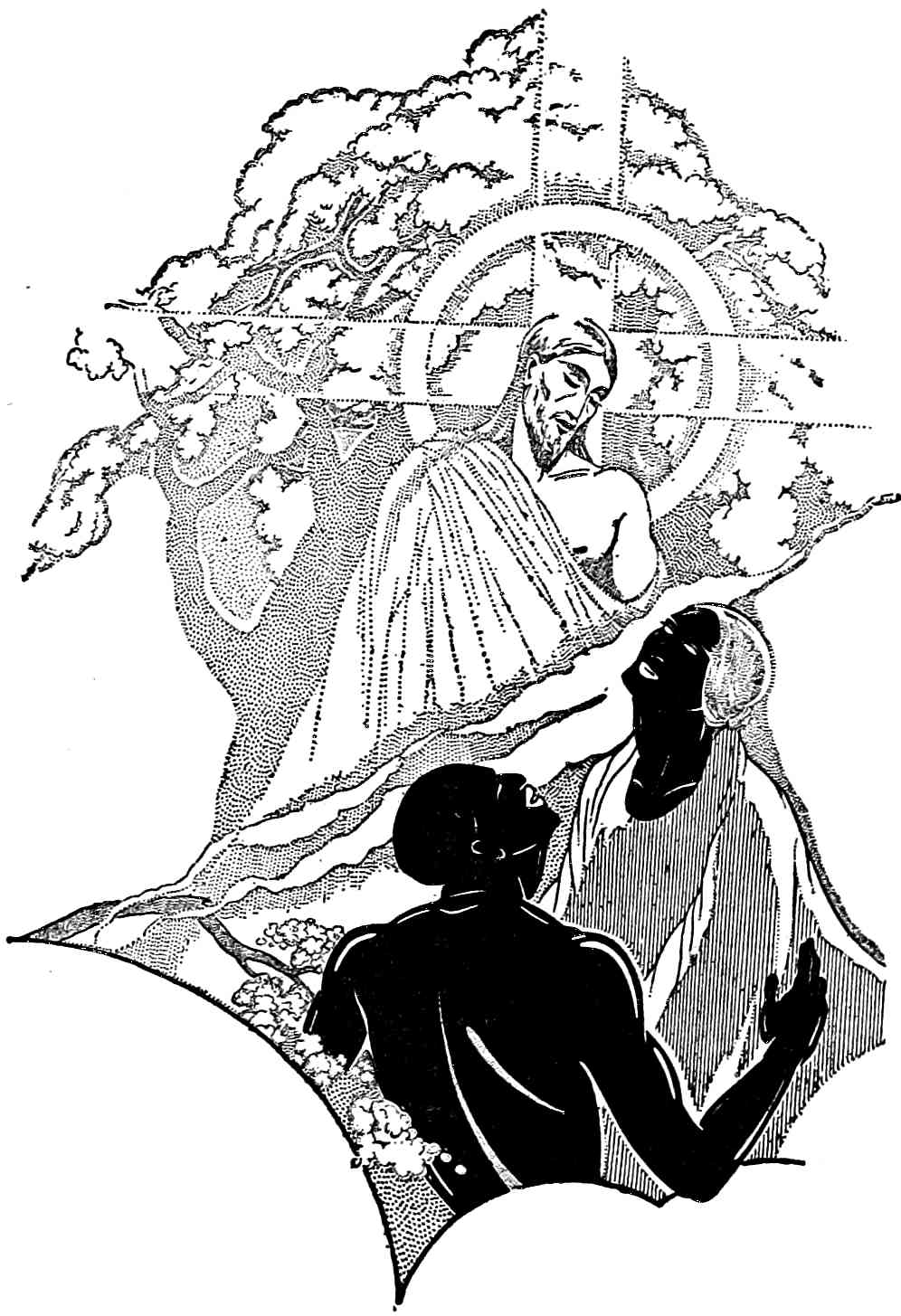
The Black Christ
Reading edition
(Hopefully dedicated to White America)
The Black Christ
1
God’s glory and my country’s shame, And how one man who cursed Christ’s name May never fully expiate That crime till at the Blessed Gate Of Heaven He meet and pardon me Out of His love and charity; How God, who needs no man’s applause, For love of my stark soul, of flaws Composed, seeing it slip, did stoop Down to the mire and pick me up, And in the hollow of His hand Enact again at my command The world’s supremest tragedy, Until I die my burthen be; How Calvary in Palestine, Extending down to me and mine, Was but the first leaf in a line Of trees on which a Man should swing World without end, in suffering For all men’s healing, let me sing. O world grown indolent and crass, I stand upon your bleak morass Of incredulity and cry Your lack of faith is but a lie. If you but brushed the scales apart That cloud your eyes and clinch your heart There is no telling what grace might Be leveled to your clearer sight; Nor what stupendous choir break Upon your soul till you should ache (If you but let your fingers veer, And raised to heaven a listening ear) In utter pain in every limb To know and sing as they that hymn. If men would set their lips to prayer With that delight with which they swear, Heaven and earth as bow and string, Would meet, would be attuned and sing. We are diseased, trunk, branch, and shoot; A sickness gathers at the root Of us. We flaunt a gaudy fruit But maggots wrangle at the core. We cry for angels; yet wherefore, Who raise no Jacobs any more?... No men with eyes quick to perceive The Shining Thing, clutch at its sleeve, Against the strength of Heaven try The valiant force of men who die;— With heaving heart where courage sings Strive with a mist of Light and Wings, And wrestle all night long, though pressed Be rib to rib and back to breast, Till in the end the lofty guest Pant, “Conquering human, be thou blest.” As once they stood white-plumed and still, All unobserved on Dothan’s hill, Now, too, the angels, stride for stride, Would march with us, but are denied. Did we but let our credence sprout As we do mockery and doubt, Lord Christ Himself would stand revealed In every barren, frosty field That we misname the heart. Belief In something more than pain and grief, In only earth’s most commonplace, Might yet illumine every face Of wretchedness, every blinded eye, If from the hermitage where nigh These thousand years the world of men Has hemmed her in, might come again With gracious eyes and gentle breath The still unconquered Lady, Faith. Two brothers have I had on earth, One of spirit, one of sod; My mother suckled one at birth, One was the Son of God. Since that befell which came to me, Since I was singled out to be, Upon a wheel of mockery, The pattern of a new faith spun; I never doubt that once the sun For respite stopped in Gibeon, Or that a Man I could not know Two thousand ageless years ago, To shape my profit by His loss, Bought my redemption on a cross. 2 “Now spring that heals the wounds of earth Is being born; and in her birth The wounds of men may find a cure. By such a thought I may endure, And of some things be no less sure. This is a cruel land, this South, And bitter words to twist my mouth, Burning my tongue down to its root, Were easily found; but I am mute Before the wonder of this thing: That God should send so pure a spring, Such grass to grow, such birds to sing, And such small trees bravely to sprout With timid leaves first coming out. A land spring yearly levies on Is gifted with God’s benison. The very odor of the loam Fetters me here to this, my home. The whitest lady in the town Yonder trailing a silken gown Is less kin to this dirt than I. Rich mistresses with proud heads high This dirt and I are one to them; They flick us both from the bordered hem Of lovely garments we supply; But I and the dirt see just as high As any lady cantering by. Why should I cut this bond, my son, This tie too taut to be undone? This ground and I are we not one? Has it not birthed and grown and fed me: Yea, if you will, and also bled me? That little patch of wizened corn Aching and straining to be born, May render back at some small rate The blood and bone of me it ate. The weevil there that rends apart My cotton also tears my heart. Here too, your father, lean and black, Paid court to me with all the knack Of any dandy in the town, And here were born, and here have grown, His sons and mine, as lean and black. What ghosts there are in this old shack Of births and deaths, soft times and hard! I count it little being barred From those who undervalue me. I have my own soul’s ecstasy. Men may not bind the summer sea, Nor set a limit to the stars; The sun seeps through all iron bars; The moon is ever manifest. These things my heart always possessed. And more than this (and here’s the crown) No man, my son, can batter down The star-flung ramparts of the mind. So much for flesh; I am resigned, Whom God has made shall He not guide?”
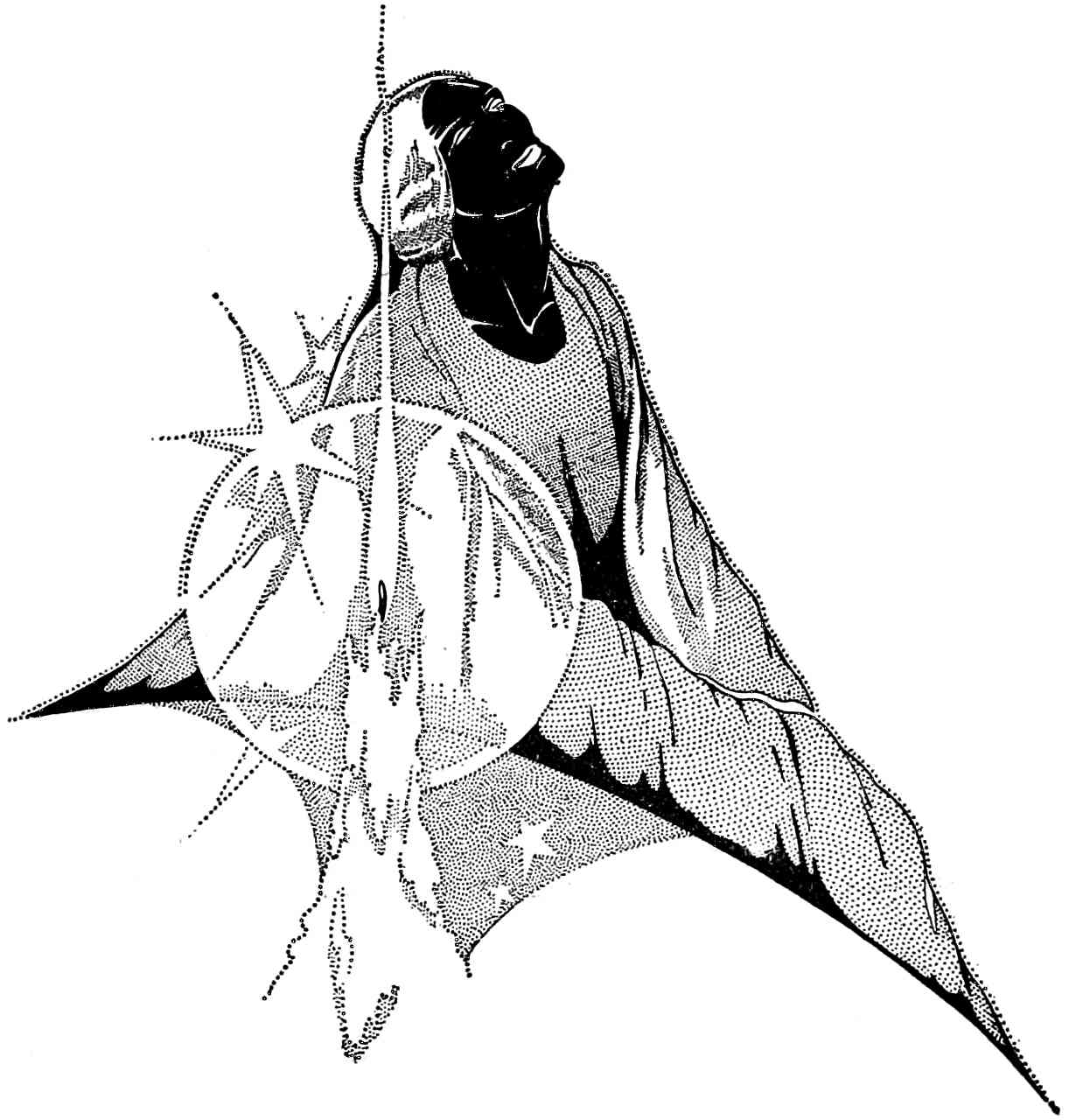
So spake my mother, and her pride For one small minute in its tide Bore all my bitterness away. I saw the thin bent form, the gray Hair shadowed in the candlelight, The eyes fast parting with their sight, The rough, brown fingers, lean with toil, Marking her kinship to the soil. Year crowding year, after the death Of that one man whose last drawn breath Had been the gasping of her name, She had wrought on, lit with some flame Her children sensed, but could not see, And with a patient wizardry Wheedled her stubborn bit of land To yield beneath her coaxing hand, And sometimes in a lavish hour To blossom even with a flower. Time after time her eyes grew dim Watching a life pay for the whim Some master of the land must feed To keep her people down. The seed They planted in her children’s breasts Of hatred toward these men like beasts She weeded out with legends how Once there had been somewhere as now A people harried, low in the dust; But such had been their utter trust In Heaven and its field of stars That they had broken down their bars, And walked across a parted sea Praising His name who set them free. I think more than the tales she told, The music in her voice, the gold And mellow notes she wrought, Made us forbear to voice the thought Low-buried underneath our love, That we saw things she knew not of. We had no scales upon our eyes; God, if He was, kept to His skies, And left us to our enemies. Often at night fresh from our knees And sorely doubted litanies We grappled for the mysteries: “We never seem to reach nowhere,” Jim with a puzzled, questioning air, Would kick the covers back and stare For me the elder to explain. As like as not, my sole refrain Would be, “A man was lynched last night.” “Why?” Jim would ask, his eyes star-bright. “A white man struck him; he showed fight. Maybe God thinks such things are right.” “Maybe God never thinks at all— Of us,” and Jim would clench his small, Hard fingers tight into a ball. “Likely there ain’t no God at all,” Jim was the first to clothe a doubt With words, that long had tried to sprout Against our wills and love of one Whose faith was like a blazing sun Set in a dark, rebellious sky. Now then the roots were fast, and I Must nurture them in her despite. God could not be, if He deemed right, The grief that ever met our sight. Jim grew; a brooder, silent, sheathed; But pride was in the air he breathed; Inside you knew an Ætna seethed. Often when some new holocaust Had come to undermine and blast The life of some poor wretch we knew, His bones would show like white scars through His fists in anger’s futile way. “I have a fear,” he used to say, “This thing may come to me some day. Some man contemptuous of my race And its lost rights in this hard place, Will strike me down for being black. But when I answer I’ll pay back The late revenge long overdue A thousand of my kind and hue. A thousand black men, long since gone Will guide my hand, stiffen the brawn, And speed one life-divesting blow Into some granite face of snow. And I may swing, but not before I send some pale ambassador Hot footing it to hell to say A proud black man is on his way.” When such hot venom curled his lips And anger snapped like sudden whips Of lightning in his eyes, her words,— Slow, gentle as the fall of birds That having strained to win aloft Spread out their wings and slowly waft Regretfully back to the earth,— Would challenge him to name the worth Contained in any seed of hate. Ever the same soft words would mate Upon her lips: love, trust, and wait. But he, young, quick, and passionate, Could not so readily conceal, Deeper than acid-burns, or steel Inflicted wounds, his vital hurt; So still the bitter phrase would spurt: “The things I’ve seen, the things I see, Show what my neighbor thinks of me. The world is large enough for two Men any time, of any hue. I give pale men a wide berth ever; Best not to meet them, for I never Could bend my spirit, never truckle To them; my blood’s too hot to knuckle.” And true; the neighbors spoke of him As that proud nigger, handsome Jim. It was a grudging compliment, Half paid in jest, half fair intent, By those whose partial, jaundiced eye Saw each of us as one more fly, Or one more bug the summer brings, All shaped alike; antennæ, wings, And noxious all; if caught, to die. But Jim was not just one more fly, For he was handsome in a way Night is after a long, hot day. If blood flows on from heart to heart, And strong men leave their counterpart In vice and virtue in their seed, Jim’s bearing spoke his imperial breed. I was an offshoot, crude, inclined More to the earth; he was the kind Whose every graceful movement said, As blood must say, by turn of head, By twist of wrist, and glance of eye, “Good blood flows here, and it runs high.” He had an ease of limb, a raw, Clean, hilly stride that women saw With quickened throbbings of the breast. There was a show of wings; the nest Was too confined; Jim needed space To loop and dip and interlace; For he had passed the stripling stage, And stood a man, ripe for the wage A man extorts of life; his gage Was down. The beauty of the year Was on him now, and somewhere near By in the woods, as like as not, His cares were laid away, forgot In hearty wonderment and praise Of one of spring’s all perfect days.
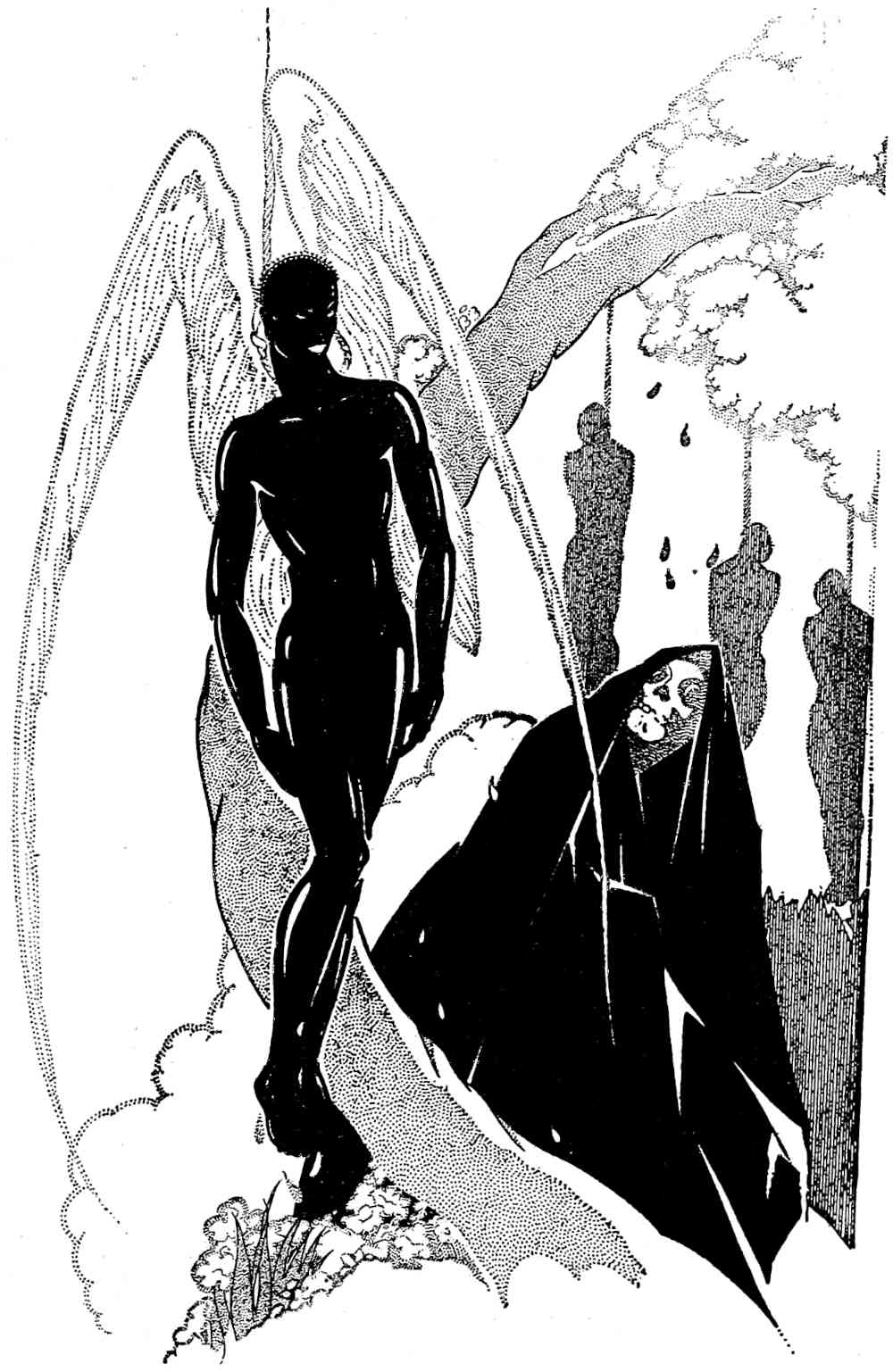
But in my heart a shadow walked At beauty’s side; a terror stalked For prey this loveliness of time. A curse lay on this land and clime. For all my mother’s love of it, Prosperity could not be writ In any book of destiny For this most red epitome Of man’s consistent cruelty To man. Corruption, blight, and rust Were its reward, and canker must Set in. There were too many ghosts Upon its lanes, too many hosts Of dangling bodies in the wind, Too many voices, choked and thinned, Beseeching mercy on its air. And like the sea set in my ear Ever there surged the steady fear Lest this same end and brutal fate March toward my proud, importunate Young brother. Often he’d say, “’Twere best, I think, we moved away.” But custom and an unseen hand Compelled allegiance to this land In her, and she by staying nailed Us there, by love securely jailed. But love and fear must end their bout, And one or both be counted out. Rebellion barked now like a gun; Like a split dam, this faith in one Who in my sight had never done One extraordinary thing That I should praise his name, or sing His bounty and his grace, let loose The pent-up torrent of abuse That clamored in me for release: “Nay, I have done with deities Who keep me ever on my knees, My mouth forever in a tune Of praise, yet never grant the boon Of what I pray for night and day. God is a toy; put Him away. Or make you one of wood or stone That you can call your very own, A thing to feel and touch and stroke, Who does not break you with a yoke Of iron that he whispers soft; Nor promise you fine things aloft While back and belly here go bare, While His own image walks so spare And finds this life so hard to live You doubt that He has aught to give. Better an idol shaped of clay Near you, than one so far away. Although it may not heed your labors, At least it will not mind your neighbors’. ‘In His own time, He will unfold You milk and honey, streets of gold, High walls of jasper ...’ phrases rolled Upon the tongues of idiots. What profit then, if hunger gluts Us now? Better my God should be This moving, breathing frame of me, Strong hands and feet, live heart and eyes; And when these cease, say then God dies. Your God is somewhere worlds away Hunting a star He shot astray; Oh, He has weightier things to do Than lavish time on me and you. What thought has He of us, three motes Of breath, three scattered notes In His grand symphony, the world? Once we were blown, once we were hurled In place, we were as soon forgot. He might not linger on one dot When there were bars and staves to fling About, for waiting stars to sing. When Rome was a suckling, when Greece was young, Then there were Gods fit to be sung, Who paid the loyal devotee For service rendered zealously, In coin a man might feel and spend, Not marked ‘Deferred to Journey’s End.’ The servant then was worth his hire; He went unscathed through flood and fire; Gods were a thing then to admire. ‘Bow down and worship us,’ they said. ‘You shall be clothed, be housed and fed, While yet you live, not when you’re dead. Strong are our arms where yours are weak. On them that harm you will we wreak The vengeance of a God though they Were Gods like us in every way. Not merely is an honor laid On those we touch with our accolade; We strike for you with that same blade!’” My mother shook a weary head— “Visions are not for all,” she said, “There were no risings from the dead, No frightened quiverings of earth To mark my spirit’s latter birth. The light that on Damascus’ road Blinded a scoffer never glowed For me. I had no need to view His side, or pass my fingers through Christ’s wounds. It breaks like that on some, And yet it can as surely come Without the lightning and the rain. Some who must have their hurricane Go stumbling through it for a light They never find. Only the night Of doubt is opened to their sight. They weigh and measure, search, define,— But he who seeks a thing divine Must humbly lay his lore aside, And like a child believe; confide In Him whose ways are deep and dark, And in the end perhaps the spark He sought will be revealed. Perchance Some things are hard to countenance, And others difficult to probe; But shall the mind that grew this globe, And out of chaos thought a world, To us be totally unfurled? And all we fail to comprehend, Shall such a mind be asked to bend Down to, unravel, and untwine? If those who highest hold His sign, Who praise Him most with loudest tongue Are granted no high place among The crowd, shall we be bitter then? The puzzle shall grow simple when The soul discards the ways of dust. There is no gain in doubt; but trust Is our one magic wand. Through it We and eternity are knit, Death made a myth, and darkness lit. The slave can meet the monarch’s gaze With equal pride, dreaming to days When slave and monarch both shall be, Transmuted everlastingly, A single reed blown on to sing The glory of the only King.” We had not, in the stealthy gloom Of deepening night, that shot our room With queerly capering shadows through, Noticed the form that wavered to And fro on weak, unsteady feet Within the door; I turned to greet Spring’s gayest cavalier, but Jim Who stood there balanced in the dim Half-light waved me away from him. And then I saw how terror streaked His eyes, and how a red flow leaked And slid from cheek to chin. His hand Still grasped a knotted branch, and spanned It fiercely, fondling it. At last He moved into the light, and cast His eyes about, as if to wrap In one soft glance, before the trap Was sprung, all he saw mirrored there: All love and bounty; grace; all fair, All discontented days; sweet weather; Rain-slant, snow-fall; all things together Which any man about to die Might ask to have filmed on his eye, And then he bowed his haughty head, “The thing we feared has come,” he said; “But put your ear down to the ground, And you may hear the deadly sound Of two-limbed dogs that bay for me. If any ask in time to be Why I was parted from my breath, Here is your tale: I went to death Because a man murdered the spring. Tell them though they dispute this thing, This is the song that dead men sing: One spark of spirit God head gave To all alike, to sire and slave, From earth’s red core to each white pole, This one identity of soul; That when the pipes of beauty play, The feet must dance, the limbs must sway, And even the heart with grief turned lead, Beauty shall lift like a leaf wind-sped, Shall swoop upon in gentle might, Shall toss and tease and leave so light That never again shall grief or care Find long or willing lodgement there. Tell them each law and rule they make Mankind shall disregard and break (If this must be) for beauty’s sake. Tell them what pranks the spring can play; The young colt leaps, the cat that lay In a sullen ball all winter long Breaks like a kettle into song; Waving it high like a limber flail, The kitten worries his own brief tail; While man and dog sniff the wind alike, For the new smell hurts them like a spike Of steel thrust quickly through the breast; Earth heaves and groans with a sharp unrest.
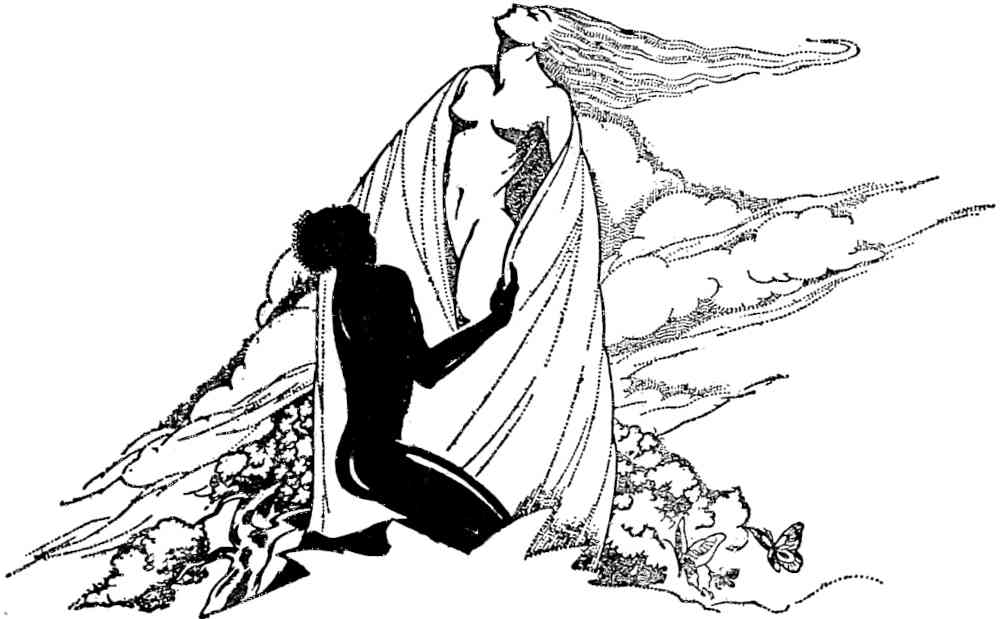
The poet, though he sang of death, Finds tunes for music in simple breath; Even the old, the sleepy-eyed, Are stirred to movement by the tide. But oh, the young, the aging young, Spring is a sweetmeat to our tongue; Spring is the pean; we the choir; Spring is the fuel; we the fire. Tell them spring’s feathery weight will jar, Though it were iron, any bar Upreared by men to keep apart Two who when probed down to the heart Speak each a common tongue. Tell them Two met, each stooping to the hem Of beauty passing by. Such awe Grew on them hate began to thaw And fear and dread to melt and run Like ice laid siege to by the sun. Say for a moment’s misty space These had forgotten hue and race; Spring blew too loud and green a blast For them to think on rank and caste. The homage they both understood, (Taught on a bloody Christless rood) Due from his dark to her brighter blood, In such an hour, at such a time, When all their world was one clear rhyme, He could not give, nor she exact. This only was a glowing fact: Spring in a green and golden gown, And feathered feet, had come to town; Spring in a rich habiliment That shook the breath and woke the spent And sleepy pulse to a dervish beat, Spring had the world again at her feet. Spring was a lady fair and rich, And they were fired with the season’s itch To hold her train or stroke her hair And tell her shyly they found her fair. Spring was a voice so high and clear It broke their hearts as they leaned to hear In stream and grass and soft bird’s-wing; Spring was in them and they were spring. Then say, a smudge across the day, A bit of crass and filthy clay, A blot of ink upon a white Page in a book of gold; a tight Curled worm hid in the festive rose, A mind so foul it hurt your nose, Came one of earth’s serene elect, His righteous being warped and flecked With what his thoughts were: stench and smut.... I had gone on unheeding but He struck me down, he called her slut, And black man’s mistress, bawdy whore, And such like names, and many more,— (Christ, what has spring to answer for!) I had gone on, I had been wise, Knowing my value in those eyes That seared me through and out and in, Finding a thing to taunt and grin At in my hair and hue. My right I knew could not outweigh his might Who had the law for satellite— Only I turned to look at her, The early spring’s first worshiper, (Spring, what have you to answer for?) The blood had fled from either cheek And from her lips; she could not speak, But she could only stand and stare And let her pain stab through the air. I think a blow to heart or head Had hurt her less than what he said. A blow can be so quick and kind, But words will feast upon the mind And gnaw the heart down to a shred, And leave you living, yet leave you dead. If he had only tortured me, I could have borne it valiantly. The things he said in littleness Were cheap, the blow he dealt me less, Only they totalled more; he gagged And bound a spirit there; he dragged A sunlit gown of gold and green,— (The season’s first, first to be seen) And feathered feet, and a plumèd hat,— (First of the year to be wondered at) Through muck and mire, and by the hair He caught a lady rich and fair. His vile and puny fingers churned Our world about that sang and burned A while as never world before. He had unlatched an icy door, And let the winter in once more. To kill a man is a woeful thing, But he who lays a hand on spring, Clutches the first bird by its throat And throttles it in the midst of a note; Whose breath upon the leaf-proud tree Turns all that wealth to penury; Whose touch upon the first shy flower Gives it a blight before its hour; Whose craven face above a pool That otherwise were clear and cool, Transforms that running silver dream Into a hot and sluggish stream Thus better fit to countenance His own corrupt unhealthy glance, Of all men is most infamous; His deed is rank and blasphemous. The erstwhile warm, the short time sweet, Spring now lay frozen at our feet. Say then, why say nothing more Except I had to close the door; And this man’s leer loomed in the way. The air began to sting; then say There was this branch; I struck; he fell; There’s holiday, I think, in hell.”
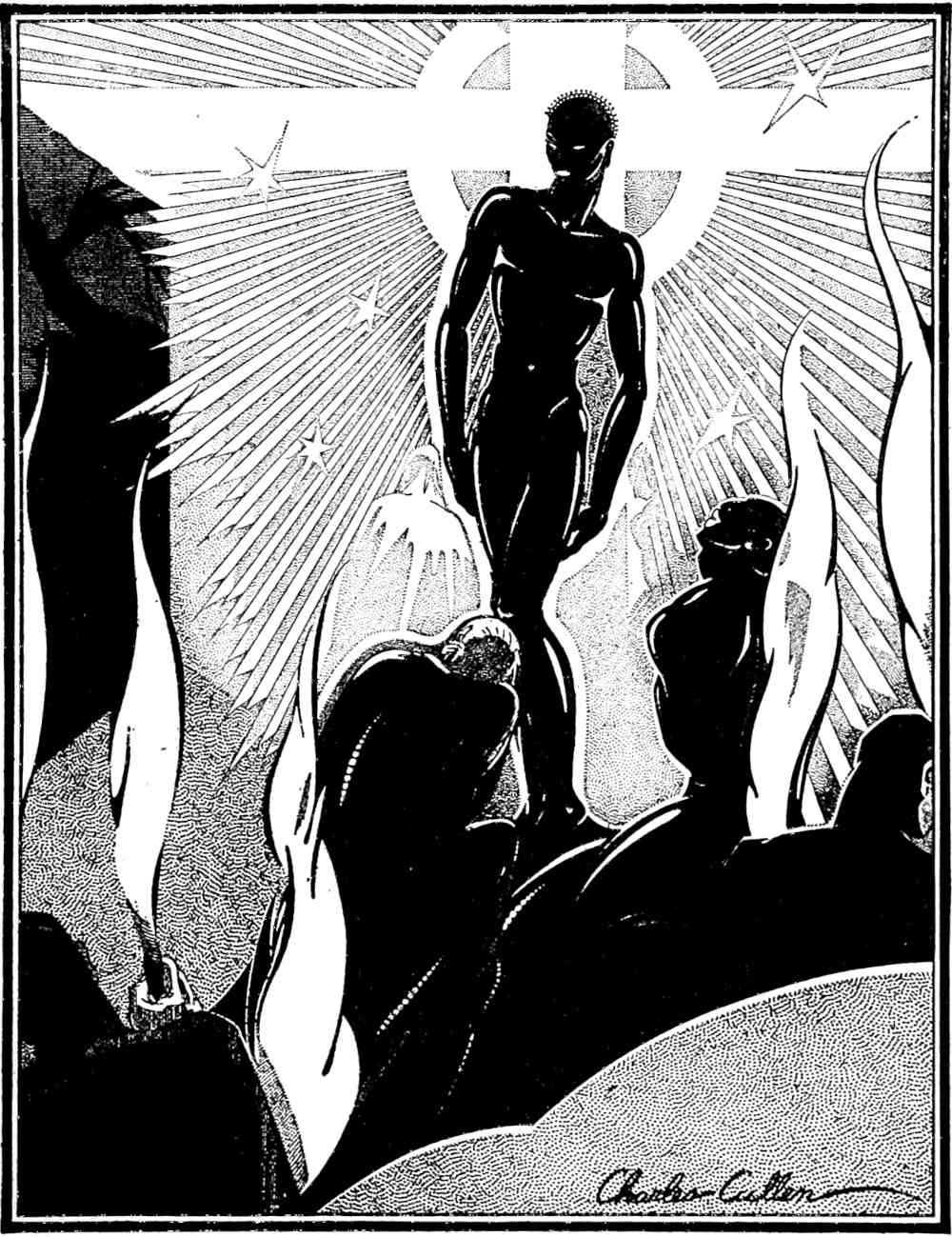
Outside the night began to groan As heavy feet crushed twig and stone Beating a pathway to our door; A thin noise first, and then a roar More animal than human grew Upon the air until we knew No mercy could be in the sound. “Quick, hide,” I said. I glanced around; But no abyss gaped in the ground. But in the eyes of fear a twig Will seem a tree, a straw as big To him who drowns as any raft. So being mad, being quite daft, I shoved him in a closet set Against the wall. This would but let Him breathe two minutes more, or three, Before they dragged him out to be Queer fruit upon some outraged tree. Our room was in a moment lit With flaring brands; men crowded it— Old men whose eyes were better sealed In sleep; strong men with muscles steeled Like rods, whose place was in the field; Striplings like Jim with just a touch Of down upon the chin; for such More fitting a secluded hedge To lie beneath with one to pledge In youth’s hot words, immortal love. These things they were not thinking of; “Lynch him! Lynch him!” O savage cry, Why should you echo, “Crucify!” One sought, sleek-tongued, to pacify Them with slow talk of trial, law, Established court; the dripping maw Would not be wheedled from its prey. Out of the past I heard him say, “So be it then; have then your way; But not by me shall blood be spilt; I wash my hands clean of this guilt.” This was an echo of a phrase Uttered how many million days Gone by? Water may cleanse the hands But what shall scour the soul that stands Accused in heaven’s sight? “The Kid.” One cried, “Where is the bastard hid?” “He is not here.” It was a faint And futile lie. “The hell he ain’t; We tracked him here. Show us the place, Or else....” He made an ugly face, Raising a heavy club to smite. I had been felled, had not the sight Of all been otherwise arraigned. Each with bewilderment unfeigned Stared hard to see against the wall The hunted boy stand slim and tall; Dream-born, it seemed, with just a trace Of weariness upon his face, He stood as if evolved from air; As if always he had stood there.... What blew the torches’ feeble flare To such a soaring fury now? Each hand went up to fend each brow, Save his; he and the light were one, A man by night clad with the sun. By form and feature, bearing, name, I knew this man. He was the same Whom I had thrust, a minute past, Behind a door,—and made it fast. Knit flesh and bone, had like a thong, Bound us as one our whole life long, But in the presence of this throng, He seemed one I had never known. Never such tragic beauty shone As this on any face before. It pared the heart straight to the core. It is the lustre dying lends, I thought, to make some brief amends To life so wantonly cut down. The air about him shaped a crown Of light, or so it seemed to me, And sweeter than the melody Of leaves in rain, and far more sad, His voice descended on the mad, Blood-sniffing crowd that sought his life, A voice where grief cut like a knife: “I am he whom you seek, he whom You will not spare his daily doom. My march is ever to the tomb, But let the innocent go free; This man and woman, let them be, Who loving much have succored me.” And then he turned about to speak To me whose heart was fit to break, “My brother, when this wound has healed, And you reap in some other field Roses, and all a spring can yield; Brother (to call me so!) then prove Out of your charity and love That I was not unduly slain, That this my death was not in vain. For no life should go to the tomb Unless from it a new life bloom, A greater faith, a clearer sight, A wiser groping for the light.” He moved to where our mother stood, Dry-eyed, though grief was at its flood, “Mother, not poorer losing one, Look now upon your dying son.” Her own life trembling on the brim, She raised woe-ravaged eyes to him, And in their glances something grew And spread, till healing fluttered through Her pain, a vision so complete It sent her humbly to his feet With what I deemed a curious cry, “And must this be for such as I?” Even his captors seemed to feel Disquietude, an unrest steal Upon their ardor, dampening it, Till one less fearful varlet hit Him across the mouth a heavy blow, Drawing a thin, yet steady flow Of red to drip a dirge of slow Finality upon my heart. The end came fast. Given the start One hound must always give the pack That fears the meekest prey whose back Is desperate against a wall, They charged. I saw him stagger, fall Beneath a mill of hands, feet, staves. And I like one who sees huge waves In hunger rise above the skiff At sea, yet watching from a cliff Far off can lend no feeblest aid, No more than can a fragile blade Of grass in some far distant land, That has no heart to wrench, nor hand To stretch in vain, could only stand With streaming eyes and watch the play. There grew a tree a little way Off from the hut, a virgin tree Awaiting its fecundity. O Tree was ever worthier Groom Led to a bride of such rare bloom? Did ever fiercer hands enlace Love and Beloved in an embrace As heaven-smiled-upon as this? Was ever more celestial kiss? But once, did ever anywhere So full a choir chant such an air As feathered splendors bugled there? And was there ever blinder eye Or deafer ear than mine? A cry So soft, and yet so brimming filled With agony, my heart strings thrilled An ineffectual reply,— Then gaunt against the southern sky The silent handiwork of hate. Greet, Virgin Tree, your holy mate!
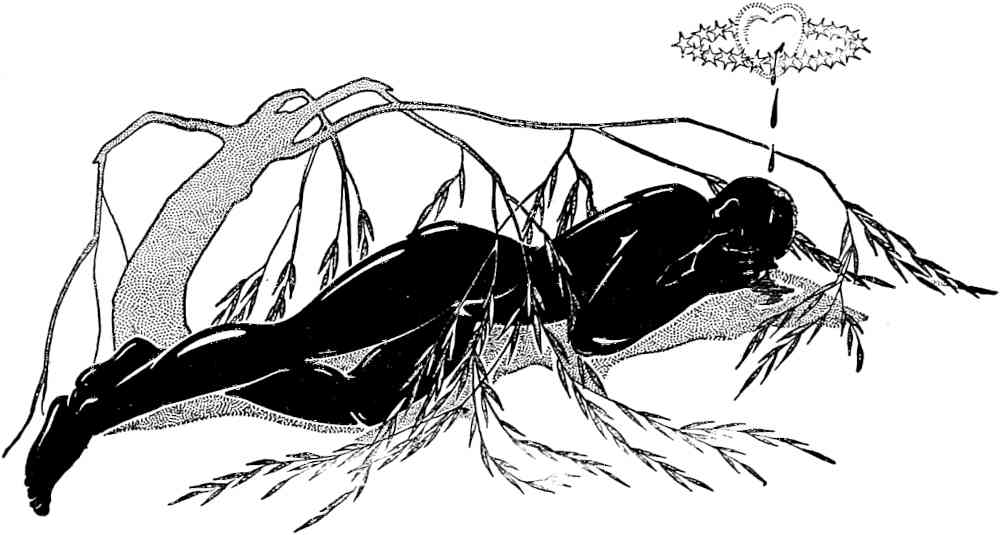
No sound then in the little room Was filtered through my sieve of gloom, Except the steady fall of tears, The hot, insistent rain that sears The burning ruts down which it goes, The futile flow, for all one knows How vain it is, that ever flows. I could not bear to look at her There in the dark; I could not stir From where I sat, so weighted down. The king of grief, I held my crown So dear, I wore my tattered gown With such affection and such love That though I strove I could not move. But I could hear (and this unchained The raging beast in me) her pained And sorrow-riven voice ring out Above the spirit’s awful rout, Above the howling winds of doubt, How she knew Whom she traveled to Was judge of all that men might do To such as she who trusted Him. Faith was a tower for her, grim And insurmountable; and death She said was only changing breath Into an essence fine and rare. Anger smote me and most despair Seeing her still bow down in prayer. “Call on Him now,” I mocked, “and try Your faith against His deed, while I With intent equally as sane, Searching a motive for this pain, Will hold a little stone on high And seek of it the reason why. Which, stone or God, will first reply? Why? Hear me ask it. He was young And beautiful. Why was he flung Like common dirt to death? Why, stone, Must he of all the earth atone For what? The dirt God used was homely But the man He made was comely. What child creating out of sand, With puckered brow and intent hand, Would see the lovely thing he planned Struck with a lewd and wanton blade, Nor stretch a hand to what he made, Nor shed a childish, futile tear, Because he loved it, held it dear? Would not a child’s weak heart rebel? But Christ who conquered Death and Hell What has He done for you who spent A bleeding life for His content? Or is the white Christ, too, distraught By these dark sins His Father wrought?”
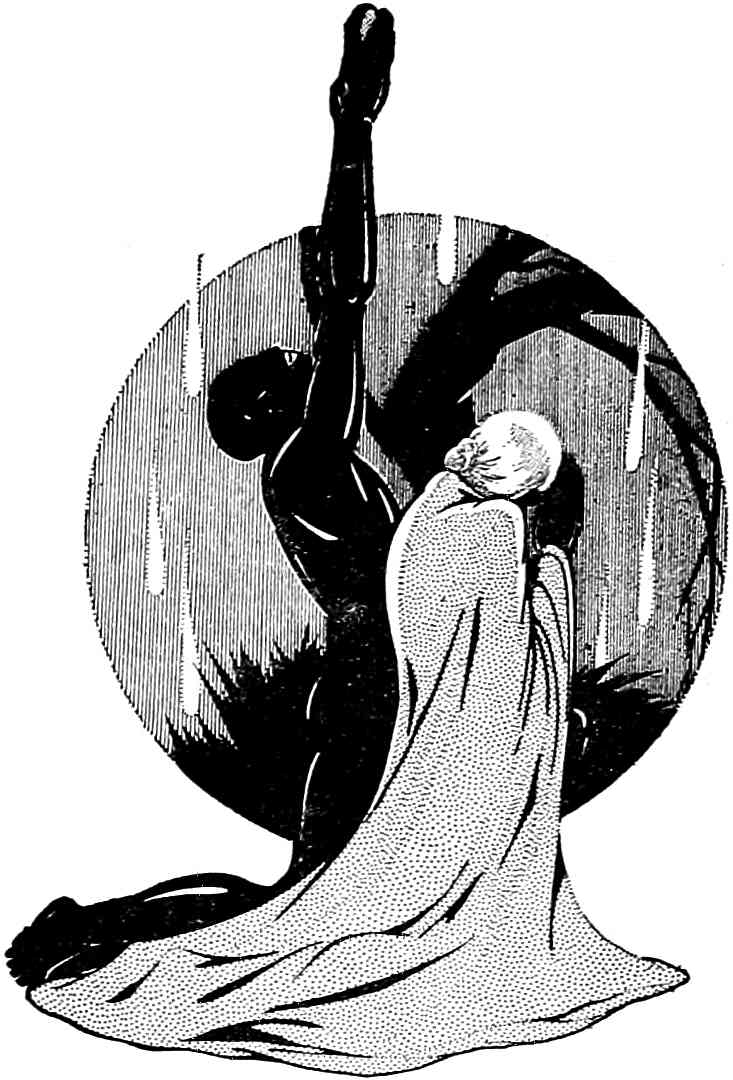
I mocked her so until I broke Beneath my passion’s heavy yoke. My world went black with grief and pain: My very bitterness was slain, And I had need of only sleep, Or some dim place where I might weep My life away, some misty haunt Where never man might come to taunt Me with the thought of how men scar Their brothers here, or what we are Upon this most accursèd star. Not that sweet sleep from which some wake All fetterless, without an ache Of heart or limb, but such a sleep As had raped him, eternal, deep;— Deep as my woe, vast as my pain, Sleep of the young and early-slain. My Lycidas was dead. There swung In all his glory, lusty, young, My Jonathan, my Patrocles, (For with his death there perished these) And I had neither sword nor song, Only an acid-bitten tongue, Fit neither in its poverty For vengeance nor for threnody, Only for tears and blasphemy. Now God be praised that a door should creak, And that a rusty hinge should shriek. Of all sweet sounds that I may hear Of lute or lyre or dulcimer, None ever shall assail my ear Sweet as the sound of a grating door I had thought closed forevermore. Out of my deep-ploughed agony, I turned to see a door swing free; The very door he once came through To death, now framed for us anew His vital self, his and no other’s Live body of the dead, my brother’s. Like one who dreams within a dream, Hand at my throat, lest I should scream, I moved with hopeful, doubting pace To meet the dead man face to face. “Bear witness now unto His grace”; I heard my mother’s mounting word, “Behold the glory of the Lord, His unimpeachable high seal. Cry mercy now before Him; kneel, And let your heart’s conversion swell The wonder of His miracle.” I saw; I touched; yet doubted him; My fingers faltered down his slim Sides, down his breathing length of limb. Incredulous of sight and touch, “No more,” I cried, “this is too much For one mad brain to stagger through.” For there he stood in utmost view Whose death I had been witness to; But now he breathed; he lived; he walked; His tongue could speak my name; he talked. He questioned me to know what art Had made his enemies depart. Either I leaped or crawled to where I last had seen stiff on the air The form than life more dear to me; But where had swayed that misery Now only was a flowering tree That soon would travail into fruit. Slowly my mind released its mute Bewilderment, while truth took root In me and blossomed into light: “Down, down,” I cried, in joy and fright, As all He said came back to me With what its true import must be, “Upon our knees and let the worst, Let me the sinfullest kneel first; O lovely Head to dust brought low More times than we can ever know Whose small regard, dust-ridden eye, Behold Your doom, yet doubt You die; O Form immaculately born, Betrayed a thousand times each morn, As many times each night denied, Surrendered, tortured, crucified! Now have we seen beyond degree That love which has no boundary; Our eyes have looked on Calvary.” No sound then in the sacred gloom That blessed the shrine that was our room Except the steady rise of praise To Him who shapes all nights and days Into one final burst of sun; Though with the praise some tears must run In pity of the King’s dear breath That ransomed one of us from death. The days are mellow for us now; We reap full fields; the heavy bough Bends to us in another land; The ripe fruit falls into our hand. My mother, Job’s dark sister, sits Now in a corner, prays, and knits. Often across her face there flits Remembered pain, to mar her joy, At Whose death gave her back her boy. While I who mouthed my blasphemies, Recalling now His agonies, Am found forever on my knees, Ever to praise her Christ with her, Knowing He can at will confer Magic on miracle to prove And try me when I doubt His love. If I am blind He does not see; If I am lame He halts with me; There is no hood of pain I wear That has not rested on His hair Making Him first initiate Beneath its harsh and hairy weight. He grew with me within the womb; He will receive me at the tomb. He will make plain the misty path He makes me tread in love and wrath, And bending down in peace and grace May wear again my brother’s face. Somewhere the Southland rears a tree, (And many others there may be Like unto it, that are unknown, Whereon as costly fruit has grown). It stands before a hut of wood In which the Christ Himself once stood— And those who pass it by may see Nought growing there except a tree, But there are two to testify Who hung on it ... we saw Him die. Its roots were fed with priceless blood. It is the Cross; it is the Rood. Paris, January 31, 1929.