FOREWORD THE ST. MIHIEL VICTORY, SEPTEMBER, 1918
Reading edition
The world already knows of the undying glory achieved in the Great War by the American Soldiers, but perhaps less is known about the historic ground over which they fought.
The purpose of the present volume is more to describe, for the benefit of the tourist, that section of France where the battle of Saint-Mihiel raged, than to dwell on the splendid achievements of the brave troops from across the seas, who took that ancient stronghold, and thus opened the way to Metz.
At the same time it is fitting to remind the reader that at Saint-Mihiel the Americans liberated over 150 square miles of French territory; took over 15,000 German prisoners, and captured upwards of 200 guns.
President Poincaré, in a message to President Wilson, expressed in the following words, the feelings of France regarding the glorious achievements of the American troops: “I congratulate you, Mr. President, on a victory which has been completed so brilliantly. General Pershing’s magnificent divisions have just liberated with admirable dash, cities and villages of Lorraine which have been groaning for years under the yoke of the enemy. I express the warmest thanks of France to the people of the United States.”
Marshal Foch, also, expressed the greatest possible admiration for the way the American troops fought their way to the great victory at Saint-Mihiel. In describing the battle Marshal Foch said: “This was where the Americans for the first time showed their worth. This is where we were able to judge of these admirable soldiers, strong in body and valiant in soul. In one swoop they reduced the famous salient, which during so long we did not know how to approach.”
In closing this brief introduction the publisher wishes to say that it would have been an easy matter to fill the pages following with many high-sounding phrases and verbose descriptions, but it has been thought better to adhere to the facts (they speak for themselves), and to furnish the tourist as briefly as possible with an historically correct account of the great victory of Saint-Mihiel.
AMERICAN FORCES ENGAGED
FIRST ARMY CORPS Major-General Hunter Liggett
comprising the
82nd Division Major-GeneralW. P. Burnham
90th „„„Henry T. Allen.
5th „„„John McMahon.
2nd„„ „John A. Le Jeune.

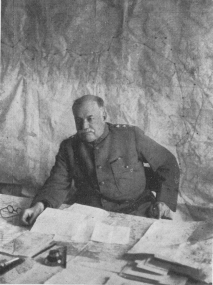
MAJOR-GENERAL HUNTER LIGGETT
Commanding the 1st Army Corps.
FOURTH ARMY CORPS Major-General Joseph T. Dickman
comprising the
89th Division Brig.-GeneralFrank L. Winn.
42nd „Major-GeneralC. A. Flagler.
1st „„„E. F. McGlachlin.
3rd„(Res.)„„B. B. Buck.
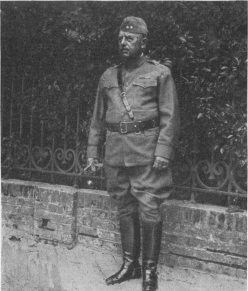
MAJOR-GENERAL JOSEPH T. DICKMAN
Commanding the 4th Army Corps.
FIFTH ARMY CORPS Major-General George H. Cameron
comprising the
26th Division Major-GeneralHarry C. Hale.
4th„„ „Mark L. Hersey.
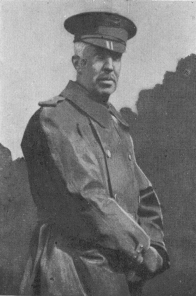
MAJOR-GENERAL GEORGE H. CAMERON
Commanding the 5th Army Corps.
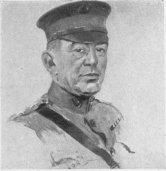
MAJ.-GEN. J. A. LE JEUNE, 2nd Inf. Divn.
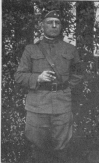
MAJ.-GEN. E. F. McGLACHLIN, JR. 1st Inf. Divn.
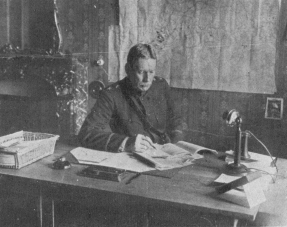
MAJOR-GENERAL HENRY T. ALLEN
90th Inf. Divn.
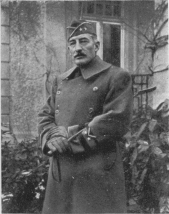
MAJ.-GEN. C. A. F. FLAGLER
42nd Inf. Divn.
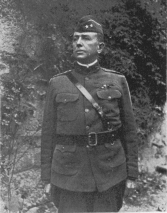
MAJ.-GEN. M. L. HERSEY
4th Inf. Divn.
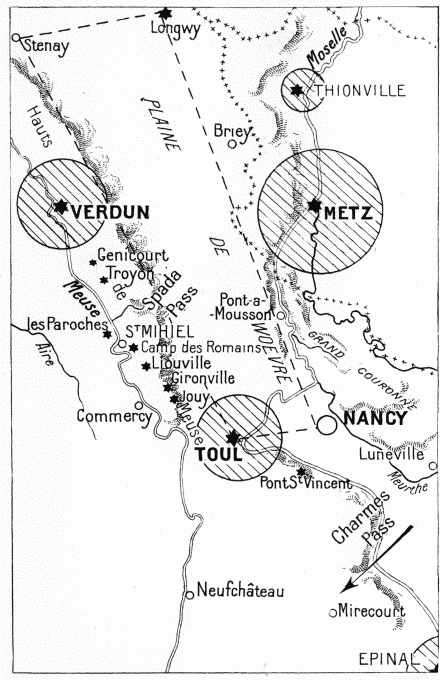
THE FRONTIER IN 1914 AND DEFENCES OF THE MEUSE
In constructing these defences, Gen. Séré de Rivières’ plans provided for the concentration of the French Armies to the west of the Meuse, the bridges being within range of the guns of the forts on the Meuse Heights. The quadrilateral formed by Woëvre Plain was open to the enemy.