Chapter XXXVI
Reading edition
Here we were mustered out of the service and paid off on the 30th day of June, 1865, this we learn from our old discharge, and we also read on that piece of imitation parchment (no objection to his being re-enlisted is known to exist), but may the good God, who has guided us through this struggle, who inspired our leaders, and finally gave us this victory, grant that there may never be any more need of our services as soldiers, unless it may be to defend the land which gave us birth, from some foreign invader. Comrades of companies A, B, C, D, E, F, G, H, I and K, fare you well, and may God bless you. We have together trod the weary road which, with so many other boys like ourselves, has led us back at last to home and peace. The way at times was dark and dreary, the clouds hung low and black. We missed ever and anon from our sides the forms of those we loved, and with whom we had held daily converse, but they are gone, and the stately pines of the southern part of our land sing a refrain over their graves. Some of their resting places we are ignorant of; they died amid the fury and the smoke of battle, but thank God their souls still live, and he who lays down his life 137for his friend is only imitating the example set by the Great Master. If I have written anything in these recollections of our army life that is in the least hurtful to any one's feelings, if I have in any way at all harmed you, forgive me, for such has not been my intention, and knowing me as many of you do, I trust you will believe what I tell you about this part of it. And now with a heartfelt desire that when your camp-fires burn low, as God grant they never may, and your three days rations run out long before the time, as they used sometimes to do while we were on the march together, come over to my fire and thrust your hands into my haversack, and if by chance it should prove to be empty, I will order out my detail, for I have got them now, comrades, and forage for you till your wants are all supplied. Good-by and may God bless you.
Non nobis! Domine non nobis! sed nomine tuo da Gloriam.
ROME.
Leaving the main army at Resaca our brigade moved off in the direction of Rome, Ga., which lays on the south bank of the Coosa river. The work on which we were ostensibly to be engaged, was the repairing of certain railroad bridges. But whether this work was absolutely to be done, or whether our march was but a "blind," we do not know, at any rate we took up our line of march for that purpose, but had not begun work on the bridges, before orders came to move with all possible speed. We reached the city of Rome late one afternoon. The rebel army was found drawn up in line of battle, but our fellows with cheer and shout charged their lines, driving them across the river and out of the town. Here we went into camp for a few days. Rome is a pretty town, and had been the center of a good deal of business before the war, but now all was changed. Provost guards were immediately detailed to preserve order, but in spite of all this the boys, with the instinctive love of 138foraging that animates a soldier while in the enemy's country, managed to obtain many luxuries in the shape of tobacco, etc. We got possession of the theater, a minstrel company was formed and several entertainments given, the admission fee being twenty-five cents. The theater was crowded nightly, and the entertainment was much better than we have witnessed at other places with better facilities. The bank was also occupied, but nothing of course was found excepting sheets of confederate money just printed, apparently, but not signed. Some of the boys went to work filling them out, putting down the names of "Timothy Fitzpoodelle," as president, and "Johnny Cometalety" for cashier, or any name which would come into their heads. These confederate bills were passed by many of our boys on the citizens afterwards for such things as they wanted, the citizens taking them for genuine, and indeed they were as good as any of the balance of the confederate money. Some fellows got into the printing office, and, being printers by trade when at home, issued a newspaper filled with spread eagle editorials, and exhorting the editor and owner of the property to come back to the union and give up the cause of secession. These papers were intensely loyal, as might be supposed, and were in all probability, as they were intended they should be, very disgusting to the chivalry. Here also we were shown the hotel, a square, two-story brick building, from the upper verandah of which the rebels exhibited Mrs. Dr. Mary Walker to the shouting and yelling crowd in the street below, whom they had captured a short time previously. But Atlanta was the cry, and so one bright morning we left Rome with its pleasant memories behind us.
A CONFEDERATE CHRISTMAS.
The following is an account of a Christmas dinner held under the rule of the confederate government in 1861. The individual who 139helped to celebrate the day, herewith gives the testimony which enables us to set before you, what Christmas meant in those days, and what it cost:
"The dinner of 1861," he says, "did not differ materially from its predecessors in the 'piping times of peace,' and though in 1862 the feast was home-made, it was enjoyable. Turkeys were only eleven dollars a piece, and salt had fallen to thirty-three cents a pound. The yule log was attainable at fifteen dollars per cord; wines were to be had by the very rich, and sorghum rum, or apple, peach, or black-berry brandy, cost thirty dollars a gallon. A few toys were left in the stores in the cities, and fire-crackers, essential to the southern festival, were five dollars a pack. By 1863, the closest search of Santa Claus revealed no play-things, and fire-crackers indicated great wealth, or reckless extravagance. The few turkeys in the market were forty and fifty dollars a piece; whisky, or sorghum rum, for egg-nog, cost seventy-five or eighty dollars per gallon; sugar was five and ten dollars a pound, and flour one hundred and twenty five dollars per barrel. With gold at 2,800, a plain Christmas dinner for a large family, cost two or three hundred dollars. In 1864, when Christmas fell on Sunday, gold was at 5,000: flour was six hundred dollars per barrel; sugar, two dollars an ounce; salt, one dollar a pound; butter, forty dollars; beef, thirty-five to forty dollars; wood, was one hundred dollars a cord. A Christmas dinner at a country house, near Richmond, is described thus: The four gentleman were in uniform, the three ladies in home spun. They had for dinner a three hundred dollar ham and the last turkey on the plantation, valued at one hundred and seventy-five dollars, with one hundred dollars worth of cabbage, potatoes and hominy. Corn bread was served, made of meal at eighty dollars a bushel, and salt at one dollar a pound. The desert was black molasses at sixty dollars a gallon, and after a cup of tea, real tea, worth one hundred dollars a pound, treasured up for the occasion, as a surprise, and not sassafras; there was coffee at discretion made from sweet potatoes cut into little squares, toasted and ground down."
140
BAD MEAT.
While in camp at Nashville, at one time, the meat issued to us was not up to the standard, but was, on the contrary, far below it. One day there was issued to us bacon, which was actually alive with maggots. All of a sudden in the quarters of company I, there arose a terrible hub-bub, men shouting and yelling, cries of "Hi, hi!" "Get out of here!" "Go on, go on," etc., etc. We all ran down there, the colonel and all, to see what in the world was the matter, when we found Capt. Vinson, with his company, surrounding the pile of meat which had been issued to them, and with their bayonets fixed were going through the motions of driving the bacon out of camp. It was almost lively enough to march. The colonel could not at first understand what was the matter, but soon saw the point when he examined the meat. It was ordered to be destroyed and better bacon was obtained.
At another time company I was called on to go with the quartermaster's team to chop wood for camp use. Capt. Vinson refused to honor the detail from his company, alledging that we did not come down there to chop wood, and that there was no necessity for it any way, as there were cords of wood, already chopped and corded up, standing outside of the line. Quartermaster Ayers got a little riled at this, and off he went to Colonel Harmon to report that the captain of company I refused to furnish him a detail to chop wood. It was not long until an order came requesting the captain's presence at regimental headquarters. Away went the captain and reported to the colonel what he knew in regard to the wood, for he had seen it with his own eyes. He returned to his command, and directly the colonel, mounted on his horse, with the quartermaster by his side, was seen riding off in the direction of the picket line. They soon returned, and the consequence was that the teams went after the wood without the detail. But quartermaster Ayers did not like the refusal of the captain to go with him, and the consequence 141was company I received a supply of wood that was very lasting, but of not much use for cooking purposes, as it would not burn. Whether the quartermaster intended it, or not, was not known, but the wood furnished company I, at that issue, was mostly green buck eye and cottonwood.
PUBLIC EXECUTION AT NASHVILLE.
While we were staying at Nashville, desertions became frequent, the boys would go off in squads. It was not the intention on the part of most of them to remain away for good, but they longed to see home once more, and after being absent from the command a week or two, would return. This was contrary to all military discipline and must be stopped. Orders were issued threatening the extreme penalty of army law, if such behavior was continued, which was death. But still desertions were frequent; and so one day an order was read at dress parade to the regiments of the garrison, notifying them to be present at the execution of a soldier belonging to the 10th Michigan, who had been tried by court martial for desertion, found guilty, and ordered to be shot. The execution was to take place the next day at 12 m., and all the troops in the city were to be present. Accordingly at the appointed hour we arrived at the place where we were drawn up into line, the flanks covered by the artillery and cavalry. An ambulance escorted by a mounted guard, soon arrived at the place, on the inside of which was the prisoner, and his coffin. Disembarking, his coffin was carried before him to the spot for it to rest. The prisoner was taken to view his grave, which had been dug at the foot of a small bush not far off, and returning, he seated himself on his coffin. The shooting detail marched out and took position ten paces in front of him. The sergeant of the squad approached the prisoner and proceeded to bandage his eyes with a handkerchief, in doing which he was assisted by the prisoner 142 himself. He then returned to the head of his squad. At the word "attention, take aim," here the prisoner motioned with his hand, pointing to his heart, "fire." The twelve rifles cracked as one gun, the prisoner fell back across his coffin, dead. There was not, so it seemed to us who were the unwilling spectators of the scene, a movement of the body. Death was instantaneous, and the soul of the soldier passed to God who gave it. It was a solemn scene, and impressed us all deeply. But the execution was over, the regiments were marched off to their quarters, and the affair was ended, to be talked over many times, afterwards. We thought it horrible, but could not fail to see the justice of it, as we all knew the penalty of desertion was death. It is needless to add that the lesson was a salutary one, and desertions became less frequent. Still the question arose how can the crossing of the river be effected by any one, unless assisted by some friend outside of our own camps. So the detective branch of the service was called upon, and finally they unearthed the man who was causing all the trouble. He was a doctor in the city, a rebel of the deepest dye. It seems this fellow would make out false paroles for all who applied to him for them, and would direct them to a certain spot on the river's bank, where they would find a man with a boat who would ferry them across the stream. Once over, their paroles would insure them safe conduct, and they would proceed home at their leisure. This doctor was arrested and confined in the penitentiary in the city, but what further was ever done about it we never learned.
DRAWING RATIONS.
One evening after we had arrived in camp, while we were in Kentucky, orders were given us to go for rations. Each company had its commissary sergeant, whose duty it was to attend to this branch of the business. He would call on boys enough for his purpose, 143and proceed to the brigade commissary with their pots and pans, anything in fact that would hold the supplies, and receive from him the amount of food coming to the company, when on carrying it to the company quarters, each man would receive the amount due him. On the evening to which we have reference, we were called on by the sergeant to go with him for rations. Of course we complied. Arriving at the brigade commissary's headquarters, we found a crowd waiting there, who had come on the same errand as ourselves. Standing close by was a large barrel filled with shoulders. It attracted our eye immediately, for the shoulders and hams were kept for the officers use, as it was not supposed, perhaps, that a private soldier could eat such food. That barrel of shoulders had a mighty attraction for us. We approached nearer to it, and finally were reclining against it. In some way our arm and hand got inside of it, and our fingers, those wicked fingers, quickly closed around the shank of a shoulder with a vice-like grip, simultaneously it was drawn out, and then with a conviction that we had better go to our quarters, we "lit out." We got there with our shoulder safely, and crawling into our tent, were proceeding to hide our treasure under a blanket, when a hand was laid upon us, and a voice said, "Go halves, Bob." We nearly jumped through the tent with surprise. We thought that we had done a very clever piece of foraging, but our departure with the shoulder from the commissary's had been noticed by our commissary sergeant, John Lockhart, and as John had a tooth for such food, he had followed us up to get a share. We divided and then returned for our rations. The next day, as we marched along, we had a good dinner with what was left, and hoped that an opportunity would soon offer to replenish our haversack in the same way.
BLUE RIDGE.
The event which we are about to relate, happened when for the first time we were placed on picket guard, at Covington, Ky., we were stationed three on a post, with strict orders for one at least to remain awake at all times. The countersign that night, was "Blue Ridge," and about nightfall we received it. One of our boys, very anxious to do his duty properly, was on post when the "grand 144rounds," as it is termed, was made; at midnight, hearing the approaching footsteps, and, perhaps, feeling the fate of the country resting on his individual shoulders, he halted them when they came near. "Halt," he cried, "you can't pass here unless you say 'Blue Ridge,'" Poor Jake, that word was dinned in his ears for many a long day after, and in fact he went by the name of "Blue Ridge" for the balance of the time we were in the service. At daylight we roused up, and looking off in the direction of our front, saw in the distance a farm house; this brought to our minds visions of breakfast, so after a short conference together, we picked up our guns and marched off, leaving the picket post to take care of itself. We went to the farm house and called for breakfast, which we got and paid for, and then returned to our post. Whether our absence was ever found out or not, we never ascertained, and in fact did not care, but it was not long before we learned that this was not the way in which picket duty should be performed.
RAIDS ON THE SUTLER.
It often happened that we ran out of money, for we would not be paid off, perhaps, for six months at a time, and at such times we would get in terrible straights for tobacco, and such things, and the sutler's goods would be a terrible temptation to us. There they were, arranged in good style back of his counter, caddies of tobacco, piles of canned goods, candy, cheese, crackers and lots of good things. But we could not get them, unless a particular friend of the sutler, without paying cash. The temptation some times was too strong, and if the sutler proved to be of a niggardly disposition, we would conspire to make a raid on his institution. On a night agreed upon, the conspirators would assemble, and going to the sutler's tent, each fellow would take his place at one of the ropes by which the tent was staked to the ground, and at a given signal, each rope that 145held the tent, would be cut, letting the tent down upon its occupant, and as he was endeavoring, the best he knew how, to get out, the boys would be making off with his goods, and then what a feast we would have. Such affairs did not often happen, and if we did succeed in cleaning him out, he would soon stock up again, and, perhaps, not be so penurious with the boys in the future. But these sutlers made enormous profits. We distinctly remember paying four dollars per plug for navy tobacco, eight dollars for a shirt, worth perhaps, a dollar and a half, and other things in proportion.
JOHN KIRSCH AND TOM MAKEMSON'S RICE TRIP.
While we were lying in front of Savannah, Ga., two members of company I, John G. Kirsch and Tom Makemson, came to the conclusion one day, as food was scarce in camp, to go out into the country and see what success they could have in obtaining something to eat. They procured a mule apiece and away they went. They had not travelled far until they came to a rice plantation, and riding up to where they saw a squad of darkies, they opened up negotiations with them for the purchase of some rice at ten cents per quart. The darkies were willing to sell and our warriors were willing to buy, provided, however, that they could not obtain it by other means. They each had a sack apiece, and soon the darkies had filled John's sack, and he had placed it on his mule, remarking to the colored gentleman, who had measured the rice out to him, that he would go the picket reserve yonder, which was in plain sight, and get the money to pay for it, and bring it back to him. Off John started. By this time Tom had got his sack filled, and getting it on his mule, climbed up saying: "He wondered what in the world was the reason that fellow didn't come with that money; he was a long time sure, and he guessed he had better go and hurry him up, when they would both return and settle." The darkies let him go, 146but he had not gone far until it dawned upon their minds "dat dem yanks aint goin' for to pay us for dat rice at all," and immediately they started in pursuit, big, little, old and young, and their dogs after "dem ar yanks," shouting and yelling for them to come back and pay for "dat ar rice." They thought they could head the boys off, but it was no use. Tom had a mule which was inclined to be balky, but John got behind him with a stick, and by dint of beating and shouting managed to make him go. They were making good time, with the darkies in full pursuit, when they came to a little branch that crossed their line of retreat. It was but a very short distance in width, and into it they plunged, thinking it was not deep, but in this they were badly mistaken. John's mule went under ears and all, and he gracefully slid off and got to shore the best way he could, wet through and his bag of rice at the bottom of the branch or bayou. Tom managed to get out all safe and together they made their way to camp. But not a word was said. John was shivering with the cold, his rice gone never to be recovered, and Tom not daring to laugh for fear of his life. The darkies gave up the chase and left the boys to make the best of their way to camp. But the story leaked out, and they were twitted unmercifully afterwards about their rice expedition. John was captured shortly afterwards and taken to Andersonville, where he remained three months, but was finally released and arrived home safe. Tom is now in Kansas.
MRS. DR. MARY WALKER.
While we were in camp at Lee and Gordon's mills, our camp was surprised one day by the appearance of a person, whom, if dress was to be the index of the sex, it would have been hard to determine whether, whoever it might be, was male or female. But it proved to be the notorious Mrs. Dr. Mary Walker. She had appeared at Gen. Thomas' headquarters, at Chattanooga, desiring to be placed on duty 147in the front, as surgeon or assistant surgeon. She had come from the hospitals at Washington, where she had done good service, and where her services were acceptable. But the doctor was ambitious; she had more of Mars than Venus in her composition, and desired a commission with the rank of surgeon, and duty in the field. She had been sent by General Thomas to report to Col. Dan. McCook, our brigade commander, for duty, and here she was. Her appearance was indeed curious, and excited not only the surprise, but the the merriment of our boys, who, although they had seen many curious things in their army life, had never seen the like of this before. Her dress consisted of a low crowned fur hat, with a garment something similar to a cloak, bound with a girdle at the waist, and reaching down a little below the knees, from beneath which a pair of black cloth pantaloons appeared; a small foot, covered with a neatly fitting boot, finished up the picture. When on horseback she bestrode the animal like a man, and unless a person knew who she was would have readily passed for one. Her face was boyish, and so far as our judgement went, was neither good looking or very bad. She was a lady in her deportment, but how it ever happened that a woman should desire to occupy the position she craved, was beyond our comprehension. To be in the midst of such scenes as were transpiring daily, camp life, camp customs, and camp conversation, would, we should think, have been quite contrary to the female longings. She was very punctilious in regard to military etiquette, however, and carried it so far that the boys got disgusted with her. She would demand from a guard the same military treatment as if she had been a general officer. This the boys most generally accorded to her, more out of a spirit of politeness, than anything else. But one day she ran across a fellow who had no polite notions in his head about such matters, who believed only in saluting those to whom he was compelled, by military law, to yield such homage. She had gone out to the picket line, and had started around it, perhaps on a tour of inspection, or, perhaps, merely for a ride. Going along the line, she came to a man on post, who, to all indications, neither saw or heard her, but kept on diligently walking his beat. The doctor came up and rode by. Stopping her horse after she had passed, and riding back to the guard, she said: "Soldier, why don't you salute 148 me?" The guard, looking at the doctor from head to foot, replied: "Who in h—ll are you?" and immediately resumed his walk. The doctor was beaten, and so badly beaten, both by astonishment, and, perhaps, rage, that she rode back hastily to headquarters, as mad as a woman can ever get, to report to Col. Dan, what she considered an outrageous insult. But Col. McCook upheld the soldier in his military behavior, as the doctor amounted to nothing more, in a military point of view, than any other citizen, although deprecating his action as ungentlemanly. If there was any balm in this for her wounded feelings, she was welcome to it; at any rate, it was all she got. Not long after this the doctor went outside of our lines to visit a sick woman, and while there she was captured by the rebels. We never saw her more, and were glad to get rid of her.
THE "MONKLY FOX."
When in camp, or on the march, there was always some one who could extract a laugh for the boys out of the veriest nothing, and such a fellow was very often a regular blessing. Such a chap was Ike C——., a quiet, unassuming fellow, broad shouldered and big fisted, and an excellent soldier. But he had the gift of making more fun than commonly falls to the lot of mortals. One time there had been a detail made from the regiment, while at Nashville, to escort to Louisville a lot of rebel prisoners. Ezra R——. was furnished from company B, and after he returned, had marvelous tales to tell of what sights he had seen on the road and while in Louisville. One evening he was in a tent surrounded by a lot of boys relating to them his adventures. Ike C——. was there with the rest. Ezra had just finished telling of some monstrosity he had seen in Louisville, and according to his description the like had never been heard of before. It stood up when it sat down, and had feelers like a cat-fish on its nose. It was a marvelous creature 149whatever it was. Ike listened patiently until he had got enough and went out. Just outside the door of the tent he encountered a fellow, and the following conversation ensued: "Say," says Ike, "you ought to go in there and just hear Ezra R——. tell of what he saw in Louisville. It beats anything you ever heard tell of; he says he saw something up there that sat down when it stood up, and every time it blowed its nose it blowed cat-fish out of it." This was all said in such a loud voice that every one inside the tent could hear it, as it was intended they should. Out came Ezra with the rest at his heels. "Where's that Ike?" he cried, "he just told an awful lie about me, he said I told the boys that when I was at Louisville, that I saw something that sat down when it stood up, and every time it blowed its nose it blowed cat-fish out of it; I never said it at all—." Ezra was going on to explain, but the boys could not wait to hear, they fairly yelled and shouted with laughter. The idea of there being such a creature, and to see Ezra get so awful mad was fun enough for them, and it was a long time before Ezra heard the last of his trip to Louisville. At another time, while on the march, one day Philip L——. was relating to a comrade, as we marched along, about a great chase that he and his brother once had at home after a fox. Phil said it was a terrible fox, the biggest ever seen in those parts, etc., etc. Ike C——. happened to be Phil's file leader, and a little while after Phil had finished his story, and we were marching quietly along, nothing much being said by any one, Ike broke out:
"Say," addressing the fellow next to him, "did you ever hear of a monkly fox?"
"Never did," was the reply.
"Did you hear that story Phil L——. told about his brother and him chasing a monkly fox, that had a dash-board under his tail, what a heavy fox it was?"
The bait was grabbed by Phil.
"I never said anything about a monkly fox with a dash-board under his tail, Ike C——., and you know it."
"Well now," says Ike, with assumed innocence, "if that don't beat all; didn't I hear you tell about it, how you and your brother chased a monkly fox with a dash-board under his tail, once?"
"No, you never did"
150The fun for those who were listening as they marched along, was growing fast. Still Ike held to his version of the story, with an appearance of the greatest candor, still Philip denied, getting madder and madder, and at last Ike capped the climax, by saying that Phil knew he did tell it, and when they got into camp he could prove it by Lieutenant Wilson, who was then in command of the company. All right, they would wait until they got to camp. Accordingly that night as quick as the orders were given to break ranks, away went Phil after the lieutenant. Says he: "Lieutenant, did you ever hear me tell about the time that my brother and I chased a monkly fox with a dash-board under his tail, when we were at home?" This was too much for the lieutenant, who broke into a hearty laugh at the absurdity of the question, and told Phil to go back to his quarters and not come bothering him about such matters. Phil was ready to fight almost anything but Ike C——. Ike's fists were larger than suited Phil's requirements, but he breathed out all kinds of vengeance against him, and the monkly fox with a dash-board under his tail was a standing joke for a long, long time.
ROAST GOOSE.
One morning when in camp in Kentucky, as we were walking up the color line, on which the guns were stacked, we saw under a stack of guns in front of company G's quarters, a dead gander. As we passed along we reached down and grabbing the gander round the neck, kept on. We got to our company with our prize in safety, and hunted up the captain's darkey, and promised him a dime and a piece of the gander, if he would cook it for us. He accepted the proposition and took charge of the bird. In a short time we were ordered to fall into line for company inspection. The right of the company rested on a big pile of logs that were making a splendid fire. As the order to "right dress" was given, we cast our eyes to 151the right, and lo! and behold! there stood the captain's darkey with our gander. Elevating him by one leg, he would hold him over the fire until the heat would compel him to change, when he would hold him by the other, every once in a while jerking him up, and pinching pieces of the flesh out with his fingers, and eating it to see if it was cooked. He had not half picked it, and the gander looked very much as if it had received a coat of tar and feathers. At times the darkey would get tired holding, and then he would rest himself by placing the fearfully mistreated bird on top of his wooly pate. I kept watching him, taking a peep at him as often as I could. At last I nudged the fellow next to me, he looked and saw, and nudged the fellow next to him. Then the captain, seeing that something was going wrong, happened to turn his eyes in the same direction, also. There stood the darkey, as black an one as ever we saw, looking reflectively into the fire, with the mutilated gander perched on his wooly head. It was too much for the captain, even; he smiled, and then for a moment we all laughed, but the darkey was driven away and order restored. I never knew what became of my gander, nor did I care, after having seen him treated in such a manner, but if our memory serves us right, some of the boys made a raid on the darkey after inspection was over, and captured what was left of it.
THE RESCUED NEGROES.
On our march through Georgia and South Carolina, the negroes swarmed to our lines. Here they came in all styles and conditions, some of them presenting a pitiful sight, while the appearance of others was comical in the extreme. Here would be a mother, bare headed, and bare footed, her clothing in rags and tatters, carrying a babe in her arms, while two others were clinging to her dress, doing all they could to keep up with her. Here would be two, a man and a woman, probably his wife, in "ole massa's" carriage, dressed up 152in "ole massa's and misses'" clothes that had been left behind when "massa and misses" fled before the approach of our army. Hitched to this buggy or carriage would be an animal, either a horse or a mule, such an one as would be described as an architectural animal, with fluted sides, and a hand rail down its back. But what cared Pomp and Dinah for the appearance of the stud as long as he would bear them on to liberty? There they would sit, laughing and chatting together, dressed in finer clothes than they had ever before worn, as happy as happy could be, keeping up with us while on the march, and going into camp when we camped at night. Many of these negroes were put to serviceable uses as pioneers, others as cooks, etc., but employment could not be furnished for the half of them, and they were getting to be an incubus to the army. On our line of march we often had to cross bayous of great depth and considerable width. When we arrived at such places, the pontoon train would be ordered up and a bridge thrown across, over which the army marched. Gen. J. C. Davis, our corps commander, thought that by stopping the negroes as they came to the banks of the bayou, and holding them there until the army had crossed, and the pontoons had been taken up, they could be kept back.
So orders to that effect were issued. A guard under command of Major Lee, the provost general of the corps, was stationed on the bank of a bayou and every negro, unless an officer's servant, or in charge of a pack mule, was halted and held there until the rear guard of the corps had crossed, then the pontoons were taken up, and the darkies left behind. It seemed to be a cruel order, but it was necessary, for our rear was very generally followed at a safe distance, however, by roaming bands of guerillas and bushwhackers, and it is to be feared that their usage of these unfortunate creatures, whenever they fell into their hands, was cruel in the extreme, and they themselves dreaded falling into the hands of their old oppressors. The consequence was that the next day the darkies again made their appearance, seemingly stronger than before as to numbers. How they managed to cross the bayou, infested as these bayous were with alligators, we do not know, but cross they did, and again took up their line of march with us as before. They had outwitted the general and were bothered no more in their endeavors to obtain freedom from persecution and oppression.
153
PERSONAL MENTION.
In giving the reader some instances of special acts of heroism, the writer has not the slightest wish or disposition, far from it, to unjustly discriminate against the same meritorious qualities displayed by others. On the contrary, he would be only too glad to make particular mention of all such, even at the risk of swelling this book beyond its intended proportions, but unfortunately for him, the writer is not informed of all such acts, nor the peculiar circumstances under which they were made manifest. All who did their duty, were necessarily brave and true. Those who did grandly under extraordinary circumstances, were possibly no better soldiers, but were in condition to more brilliantly display these qualities; and as their connection with the regiment gave them their opportunity, so should their deeds become the property of the regiment, and their memory our common heritage.

154
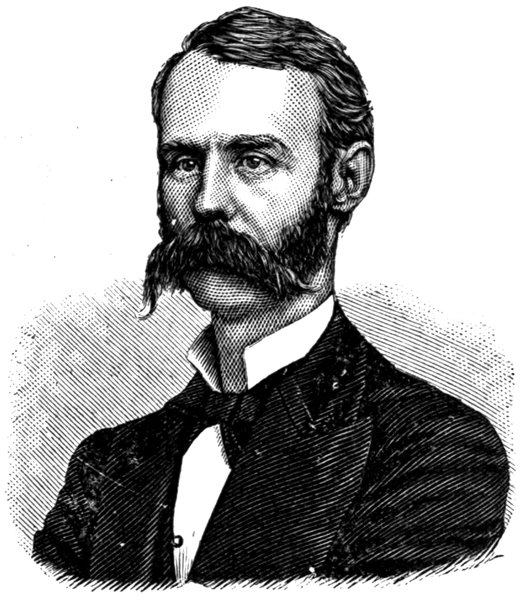
LIEUTENANT GEORGE SCROGGS.
Lieutenant George Scroggs was a young officer of more than ordinary intelligence; quick to apprehend duty, and bold in the execution of commands. We first remember him as our sergeant major, and how he used to rattle the boys out of their blankets, long before daylight, during the cold season when we occupied the suburbs of Nashville. Afterwards he was commissioned as lieutenant of company E, then detailed on the division staff, first as ordnance officer, and then commissary of musters. Time, experience, and natural aptitude, served to teach him what the duties of a staff officer should be, until, perhaps, no officer on the staff of the division general, understood them better. All who were engaged in it, will remember the battle of Bentonville, N. C., on March 19th, 1865. How the third brigade was sent from its intrenchments by General Morgan, and thrown out towards the Goldsboro road, to intercept 155the rebel column then in hot pursuit of Gen. Carlin's retreating forces. How the right wing of the brigade was struck, and doubled back on the center and left, and finally retreated to the batteries beyond the open field. How, too, we soon rallied and reoccupied the lost ground, each man carrying a rail, and began the work of intrenching. How communication with General Morgan, and the first and second brigades was cut off, leaving Lieut. Scroggs and Captain Stinson, of Gen. Morgan's staff, with our brigade, unable to reach their command. In this dilemma, instead of seeking a safe retreat as they might, and too many would have done, until communication was opened with their own general, they at once reported to Col. Langley for duty as volunteer aids. You will also remember the fact that constant firing, threatened every minute, our stock of ammunition, and the equally constant firing of the enemy, made a passage to our supplies across the open field to our rear, exceedingly hazardous. The colonel had already ordered two or three staff officers, and as many orderlies, beyond the hill for ammunition, but with no good result, though reports came back to him that it had been ordered, and the wagons were on the way. Shortly an orderly reported that two wagons were just over the crest of the ridge, but were afraid to go further, and had refused to do so. The colonel immediately dispatched Lieut. Scroggs to proceed and bring these two wagons at all hazards. The moment he received the order, he sank his spurs into his horse, and dashed across the field towards where the insubordinate drivers were supposed to be, through a perfect storm of bullets and exploding shells, until he disappeared from view beyond. Every heart at the front beat with intense anxiety. We had already been ordered to economize our supply. Some were entirely out of cartridges and were borrowing from others. A few rounds to the man had been obtained from a brigade of the 20th army corps, and these were nearly all gone. Our position became critical, but in a few moments, looking again to the rear, we saw the brave lieutenant returning at the same speed with which he had left us and with him were the wagons and ammunition so much desired, and looked for by all, moving to the threatening motion of George's sword. They were just in time, for our firing could have continued but little longer, and they were welcome in proportion to our danger. 156George had found the wagons as he expected, and immediately ordered the teamsters to mount and follow him, but their fear still deterred them, and they refused, and only obeyed the commands when he drew his sword, and in language more forcible than elegant, threatened them with vengeance more terrible than rebel bullets had power to inflict. Towards sundown the lieutenant was severely wounded in a further attempt to reach his commanding officer. This afflicted him more or less during the remainder of his days. Precisely how far he was instrumental in saving the honor of the brigade, and the lives of many of the members by his timely execution of so important an order on that bloody 19th of March, may never be known, but the memory of a brave act, voluntarily performed in the face of grave danger, merits our highest commendation, and we cheerfully place this tribute of respect upon the recently made grave of Lieutenant George Scroggs.
SERGEANT S. C. ABBOTT.
Numbers of our readers will remember Sergeant S. C. Abbott, of company H. Always in earnest about everything he undertook, impatient of delay, anxious to end the job and go home about his business, which greatly needed his attention. He was perhaps older than the average of the regiment, a very intelligent man, and had preached to some extent before entering the service. Some time in the fall of 1863, he applied for a furlough, urging business considerations, but after a good deal of delay, his application was returned—"denied." He received the information just as the regiment was on the march to a new camp, the route to which, took us nearly by General Thomas' headquarters at Chattanooga. The sergeant, vexed at the delay, and mortified at the refusal of his request, concluded to cut all red tape, and go in person to General Thomas with his application. He accordingly broke ranks, went alone to the 157house the general was occupying, passed by every sentinel, and burst into the august presence of the great army chief. Holding his returned application for a furlough in his hand, his whole manner evincing the desperation of his purpose, he thrust the offending endorsement under the very nose of the commander of the armies, and demanded, as one having authority, to know what the language meant, and why his application was refused. He was referred to the proper officer for explanation, but he would accept no reference, and in an impassioned appeal to grant the favor he asked, he struck the tender side of the good old general's nature, who at once, with his own hand, we believe, erased the offensive word, "denied," and wrote thereon, "granted;" and the over rejoiced sergeant was soon homeward bound, filled with thoughts of love for good old "Pap" Thomas. This was not our purpose, however, in introducing Sergeant Abbott to your notice. The above may be called an act of boldness, "cheek," "strategy," or what you will, but surely there were few men who would have taken the risk. We remember this daring soldier on other occasions. At the close of the battle of Missionary Ridge, and while we were pursuing General Manny's brigade of rebels across a small, boggy stream, just about dark, to our front and left were standing some ammunition wagons, abandoned by the enemy. They were necessarily in the line of our march, but as we approached them, one of the wagons was discovered to be on fire, and nearly full of fixed ammunition, not yet removed from the boxes. The regiment immediately swung to the right, to avoid so dangerous an enemy. Some one had the presence of mind to call for volunteers to help extinguish the fire before it should communicate to the powder, and produce the explosion that would have been inevitable, and possibly disastrous to human life. All shrunk involuntarily from the task, but the sergeant, well toward the right of the regiment, and in comparative security, at once ran down to the left, and promptly answering, "I will go," suited his action to the word, and in a moment was fighting down and conquering the fire with no more concern, or trepidation, than if he was adjusting it for cooking his rations. His act was justly applauded by all who witnessed it. It is a pity so brave a man should go through life maimed as he is, but he met the common fate of the 158soldier, and was severely wounded July 20th, 1864, at Peach Tree creek, and will probably carry the missile intended for his death, in his body so long as he lives. On the morning after that battle, the sergeant had gone a little to the front, to spy out where some rebel sharp-shooters lay concealed, and were firing upon our men. He succeeded in locating them, and was in the act of pointing out their position to Colonel Langley, when he was wounded. This was the last service he did with the regiment, as the severity of his wound necessitated his discharge, and he left us regretted by all his comrades who had learned his sterling qualities.
LIEUTENANT JOHN J. WHITE.
We want to give a slight tribute to the memory of a very brave young officer of company F, Lieut. John J. White.
This young man had enlisted in his company as a private. He was young, intelligent, a stranger to the company at its organization, but his soldierly bearing, intelligent comprehension of duty, and its prompt performance, soon attracted attention to him as comprising the material suited for a leader, and he was promoted to a lieutenancy. At the crossing of the Sand Town road in front of Atlanta, August 7, 1864, the lieutenant was in command of company G, under temporary detail for that purpose. The short advance made by our line at that place, was accomplished in the face of a galling fire of musketry and artillery, not less than half a dozen batteries of the enemy, centering their fire upon our exposed ranks. Men were falling in every direction and the scene was for a time simply terrific. Our position once reached, the men were ordered to lie down. The confusion of getting into position doubled the line in some parts and left gaps in others. Lieutenant White was actively endeavoring to get the left to give way so as to let all of company G into line, and in meeting with opposition he stepped a few paces to the 159right to inform the colonel of the situation, and was just in the act of saluting him with his sword, when a shell from the enemy crashed through his right shoulder, tearing the arm from his body, from which wound he died in a few hours. Amid the storm of battle, when brave men expose themselves only from necessity, that coolness and mental collection that enables an officer to remember all the refinements of discipline, even to the salutation of his superior, is a quality to be admired, as it evinces a talent so essential to command under the most trying circumstances. Lieutenant White was of a modest and retiring disposition, ordinarily, but in action was the impersonation of true courage. He was beloved by all who shared his more intimate fellowship, and his death cast a gloom over the regiment. May peace forever brood over the land that holds the remains of the brave soldier.
OUR COLOR BEARERS.
Who but brave men would solicit the honor of carrying the colors, or who of any other quality would not murmur if ordered to that post of great responsibility and danger? Yet who ever heard a word of complaint from James H. Simpson or James M. White? Whether in the bright sunshine or under the storm cloud, in camp or on the weary march, on the defence, or in the deadly assault, on through to victory or defeat, they never swerved or faltered, but always stood true to their great trust, until the last hostile gun was fired, and these brave boys returned their battle and storm scarred emblems to the government they had so nobly served. How in the desolation of the conflict, the right and left flanks, when the burden of the fight seemed to be almost an individual one, would cast their eyes towards the center, and learning that "our flag was still there," caught a new inspiration and redoubled their energies for the victory. And now as we reflect that our nation's banner waves triumphantly 160over all this broad land, the emblem of peace and law, and as our hearts swell with gratitude and just pride over this grand consummation, let us not forget the honor due the men whose heroism during the perils of war kept our flag from the pollution of traitor hands.
ASBURY D. FINLEY.
It would not do to forget in this connection the name of Asbury D. Finley, private of company A. No truer heroism was ever displayed than by this young man on the Peach Tree creek battle-field. The 85th Illinois, commanded by Major Rider, was sent forward across a narrow corn-field and into position, as ordered by Col. Dilworth, then commanding the brigade. Our regiment was ordered to advance to near the edge of the corn-field and support the 85th, and although only a short distance apart, we could not see the 85th for the standing corn. We had remained in this position for some time, when it became apparent that the rebels were on the ground formerly occupied by the 85th, though we had received no notice of the removal of the latter regiment. In this state of doubt, and to make sure of the situation, Col. Langley called for a volunteer to go forward, learn and report the condition of things to the front. It was a task that even brave men would not covet, but at once Finley rose and offered to go. Receiving his instructions he started through the corn-field. But the result and the colonel's appreciation of the act, and his impressions after the lapse of more than sixteen years, we will give in his own words taken from a personal letter to Mr. Finley of date February 14th, 1881:
Champaign, Illinois, February 14, 1881.
A. D. Finley, Esq., Catlin, Illinois.
My dear sir and comrade: * * * * I well remember and can not forget how on the 19th day of July, 1864, at Peach Tree creek, when I was anxious to know whether the 85th Illinois 161was still in our front beyond, and I called for a volunteer to go forward, ascertain and report, that you very promptly offered to go, and did go, until you were captured almost in my sight. I remember that you were detained for a long time a prisoner and that when you returned to the regiment you were very much emaciated. That I believed then and still believe you had suffered during your incarceration, all the torments of Andersonville. I also remember how grateful I was for the services you so bravely rendered to the whole regiment, and possibly the brigade, for your capture showed me that the rebels were occupying the very ground I had reason to suppose was covered by the 85th Illinois, and enabled me to adjust my line for greater security until ordered to retire by the brigade commander. I could say very much more, if necessary, as reasons satisfactory to me, why your case should be regarded with great favor by the government you aided so much to defend and save.
Very truly,
J. W. LANGLEY.
The above letter was written in support of an application for a pension, because of disability incurred while Finley was a prisoner at Andersonville.
HARVEY S. TRYON.
Another instance of true courage and manhood was exemplified in the military life and character of Harvey S. Tryon, for a long time a private of company H, but when mustered out, a sergeant. We do not remember this man as specially brilliant in feats of arms, or in the performance of some peculiarly delicate or dangerous military duty, but still a hero in the highest sense, and his memory will be respected as such by all christian men and women who knew him, or shall read this estimate of his christian character. It may be said of him, as probably of very few, if any, others, that during his 162entire three years service, performing at all times every military duty required of him, amid the levity, and too often vulgar profanity of the camp, he never omitted his higher duty to the God of his salvation, whom he had vowed to serve. His faith was simple, pure, and firmly grounded. His religious convictions were never compromised or suffered to lie in abeyance, but without ostentation, or self-righteous display, he moved in the midst of his comrades their best friend and safe counsellor, and a daily example of a true life. He had the respect of all who knew him, and his pious influence was reflected upon all who came in contact with him. Since the war he has been continuously preaching the gospel truths he so happily illustrated in his life and character while a soldier. Heroism in this line being so rare in army life, we cannot refrain from saying this much of one who so fully exemplified it in our regiment.
SERGEANT WM. L. THRALLS.
Another brave boy was Sergeant William L. Thralls, of company B. We say boy, for he was only that in years, yet he was endowed with all the qualities of a grand manhood. In camp, and at all times, a gentleman in his deportment; in action, brave, cool, and intelligent. He had attracted the attention of his superior officers, and was to have been recommended for a lieutenancy. In the first onset at the battle of Jonesboro, he was wounded in the leg, and in endeavoring to leave the field, was offered assistance by his comrades, but this he refused, telling them to stick to their guns, as he would not let them leave the field on his account. This circumstance happened under the eye of Colonel Langley, who there and then commended him for his bravery, and offered to send one of the musicians with him, but no he would not accept, refusing with the inborn politeness of a natural gentleman. The colonel pointed him where our hospital was, and the brave young sergeant dragged himself 163 off the field. When nearly at the hospital he received a mortal wound through the body, of which he shortly died. We will give, in the colonel's own language, his last sad interview with our brave young comrade. He says:
"After night, and when I had reported my position to General Morgan, I went to look up Thralls, for his coolness impressed me all through the fight. On finding him I learned that after nearly reaching the hospital, he had received another wound through the body, of which he must shortly die. I was shocked to hear it for I greatly wanted that boy to recover, so that I could give him the promotion I intended for him, and he so well deserved. I bent over his dying form, gently touching him, and spoke his name. Upon recognizing me he roused a little and expressed much delight that I had come to see him. He first asked me how the battle had gone, and upon being told, he seemed greatly gratified. He begged to be assured that I was entirely satisfied with his conduct, and upon being told that he was the first man that I had ever seen who refused help from the field, and that such denial evinced a discipline so unusual, and a spirit so unselfish, as to make his conduct specially commendable, and that as a true soldier he had done his whole duty. He seemed content, was willing to die for his country, and be at rest, for he was suffering most intense pain. With a sad heart I bade that boy farewell."
Yes, poor fellow, he was loved by us all, and we deeply mourned his death. It is such men as these whose company is an honor to the living, and over whose memory we meditate with saddened thoughts. But to that galaxy of bright names on high, to which so many names were added during our terrible war, we feel assured that the name of William L. Thralls, is also there, shining with the effulgence of glory. Brave soldier, true comrade, faithful friend, farewell. The pines of Georgia wail a mournful requiem over your last resting place, but your better part has gone to God who gave it; this is the assurance that the bible gives, and we believe it. Suffice it to say, that no braver name appears on the muster roll of company B, than Sergeant William L. Thralls, and what more glorious epitaph than that which comes after: "Died of wounds received at Jonesboro, Ga., September 2, 1864."
164
THE EMANCIPATION PROCLAMATION.
As we have before stated, we were garrisoning the city of Nashville when we received the Emancipation Proclamation, and during the one hundred days that ensued between its publication and enforcement, there was considerable stir in army circles as to the propriety and legality of such a measure. In our own regiment the officers held a meeting for the purpose, as it were, of ratifying the Proclamation, at which the following resolutions, by Colonel Langley, were spread before the meeting for its approval and adoption:
Resolved, That we are as ready and willing to aid the Commander in Chief of the Army and Navy of the United States, in carrying out his proclamation to emancipate the slaves in certain territory therein mentioned, as a necessary war measure, as we are to aid in the execution of any order from the War Department.
Resolved, That he who fails to see written in unmistakable characters, the doom of slavery as a consequence of the war, must be totally blind to the great panorama of events which daily pass before him, and he who would avoid confusion and anarchy, must also see the necessity of organizing and disciplining slaves, made free by military authority; and further, if organized and disciplined, the great error we commit as a nation, by not employing such persons, so made free, to the most advantageous purposes in crushing out the present rebellion, even if it be to arm and fight them against the rebellious hosts that oppose us.
But these resolutions seemed too radical, and many opposed them strongly. However before three months rolled around, the very men who were the bitterest and loudest in their denunciation of them, at the time, were seeking for commissions in colored regiments. The resolutions pointed out, with true prophetic utterance, the course which the government pursued in regard to the slaves, but at the time they looked to some as being altogether wrong. Tempora et mores mutantur.
165
RESOLUTION PASSED BY SENATE AND HOUSE OF REPRESENTATIVES OF THE STATE OF LOUISIANA.
Headquarters Military Division of the Miss.
Goldsboro, N. C., April 7, 1865.
Special Field Order. }
No. 49. } EXTRACT.
The general in chief announces for the information of this army the following resolutions received:
Whereas, The official announcement of the fall of Charleston, the "cradle of secession," has been received, therefore, be it
Resolved by the senate and house of representatives of the state of Louisiana in general assembly convened, that we tender our most hearty thanks to the gallant officers and men of the army of the illustrious Sherman, who under God have been the instruments of the accomplishment of so glorious an achievement. Be it further
Resolved, That in the late glorious victory of Gen. Sherman, we recognize the hand of God, as directing the affairs of our country, and as an evidence of the speedy return of peace.
[SIGNED.] SIMON BELDON,
Speaker of the House of Representatives.
[SIGNED.] J. MADISON WELLS,
Lt. Gov. and Prest. of the Senate.
Approved March 3rd, 1865.
By order of Major General W. T. Sherman.
[SIGNED.] L. M. DAYTON, A. A. G.
ORDER RETURNING THE THANKS OF THE PRESIDENT TO GEN. SHERMAN AND THE ARMY.
Headquarters 14th Army Corps, Department of the Cumberland,
Near Jonesboro, Ga., Sept. 6th, 1864.
Orders.—The general commanding directs that the following order 166be published to all the troops composing the army of the Cumberland.
Headquarters Military Division of the Miss.
In the field near Jonesboro, Ga., Sept. 6th, 1864.
Special Field Order. }
No. 66. }
I. The general in chief communicates with a feeling of just pride and satisfaction the following orders of the president of the United States, and telegram of Lieut. Gen. U. S. Grant, on the hearing of the capture of Atlanta.
1st. Executive Mansion, Washington, D. C., Sept. 3rd, 1864.
The national thanks are rendered by the president to Major General W. T. Sherman and the gallant officers and soldiers of his command before Atlanta, for the distinguished ability, courage and perseverance displayed in the campaign in Georgia, which, under the divine favor, has resulted in the capture of the city of Atlanta. The marches, battles, sieges and other military operations that have signalized the campaign must render it famous in the annals of war, and have entitled those who have participated therein to the applause and thanks of the nation.
[SIGNED.] ABRAHAM LINCOLN,
President U. S.
2nd. Executive Mansion, Washington City, Sept. 3rd, 1864.
Ordered: First. That on Monday the 5th day of September, commencing at the hour of twelve o'clock m., there shall be given a salute of one hundred (100) guns at the arsenals and navy yards at Washington, and on Tuesday the 6th day of September, the day after the receipt of this order at each arsenal and navy yard in the United States for the recent brilliant achievements of the fleet and land forces of the United States in the harbor of Mobile, and in the reduction of Fort Powell, Fort Gaines and Fort Morgan. The secretary of war and secretary of navy will issue the necessary orders in their respective departments for the execution of this order.
Second. That on Wednesday, the seventh day of September, commencing at the hour of twelve o'clock m., there shall be a final salute of one hundred (100) guns at the arsenal at Washington and at New York, Boston, Philadelphia, Baltimore, Pittsburg, Newport, Ky.; St. Louis, New Orleans, Mobile, Pensacola, Hilton Head and Newbern, or on the day after the receipt of this order, for the brilliant achievements of the army under command of Major General Sherman in the state of Georgia and the capture of Atlanta. The Secretary of war will issue directions for the execution of this order.
[SIGNED.] ABRAHAM LINCOLN,
President U. S.
167
3rd. City Point, Va., Sept. 4th, 9 p. m., 1864.
Major General Sherman: I have just received your dispatch announcing the capture of Atlanta. In honor of your great victory I have ordered a salute to be fired with shotted guns from every battery bearing upon the enemy. The salute will be fired within an hour amid great rejoicing.
[SIGNED.] U. S. GRANT,
Lieutenant General.
II. All the corps, regiments and batteries composing this army may, without further orders, inscribe "Atlanta" on their colors.
By order of Major General W. T. Sherman.
[SIGNED.] L. M. DAYTON,
Aid-de-camp.
ORDER ANNOUNCING SUSPENSION OF HOSTILITIES.
Headquarters Military Division of the Mississippi,
Army of Georgia, Raleigh, N. C, April 27, 1865.
Special Field Order. }
No. 65. }
The General commanding announces a further suspension of hostilities, and a final agreement with General Johnston which terminates the war as to the armies under his command, and the country east of the Chattahoochie. Copies of the terms of the convention will be furnished Maj. Gens. Schofield, Gilmore and Wilson, who are especially charged with the execution of its details in the Department of N. C., Department of the South, and at Macon and Western Georgia. Captain Jasper Mayres, Ordnance Department, U. S. A., is hereby designated to receive the arms, etc., at Greensboro, and any commanding officer of any post may receive the arms of any detachment, and see that they are properly stored and accounted for. General Schofield will procure the necessary blanks and supply the other army commanders, that uniformity may prevail, and great care must be taken that all the terms and stipulations on our part be fulfilled with the most scrupulous fidelity; while those imposed on our hitherto enemies, be received in a spirit becoming a brave and generous army. Army commanders may at once leave to the inhabitants such of the captured mules, horses, wagons and vehicles as can be spared from immediate use, and the commanding general of armies may issue provisions, animals, or any public property that can be spared to relieve present wants, and 168to encourage the inhabitants to resume their peaceful pursuits, and to restore the relation of friendship among our fellow citizens and countrymen.
Foraging will forthwith cease, and when necessity for long marches compels the taking of forage, provisions, or any kind of public property, compensation will be made on the spot, or when the disbursing officers are not provided with funds, vouchers will be given in proper form, payable at the nearest military depot.
By order of
Maj. Gen. W. T. Sherman.
(Signed) L. M. Dayton,
Asst. Adjt. Gen.
ORDER FOR THE GRAND REVIEW AT RICHMOND, VA.
Headquarters 14th Army Corps, Army of Georgia,
Manchester, Va., May 8, 1865.
Special Field Orders. }
No. 41. }
Division commanders will, if possible, obtain all necessary supplies, and move their supply trains through Richmond to-morrow, and park them in the vicinity of Hanover Court House, to-morrow night.
On the following day, May 10th, the Army of Georgia will march through the streets of Richmond in review before Maj. Gen. H. W. Halleck, commanding the military division of the James, the 14th army corps in advance. The column entirely unincumbered with wagons, will be formed as follows: 3rd division, Brevet Maj. Gen. Baird commanding. 2nd division, Brevet Maj. Gen. Morgan. 1st division, Brigadier Gen. Walcott. The head of the column will be at the pontoon bridge and ready to move at 7:30 a. m. The column will cross the upper pontoon bridge, move up 17th street to Cary street, down Cary to 21st street, up 21st to Main street, up Main to 13th street, up 13th to Capitol street, through Capitol to Grace st., up Grace street to Adams street, and thence to Brooks avenue.
The troops will be reviewed with knapsacks, and will carry at least one day's rations in their haversacks. The troops, marching at right shoulder shift, will come to a shoulder arms before passing the Statue of Washington, near the capitol, and will continue the shoulder until passing the reviewing officer, who will be near the same point. Upon passing all troops under arms, or general officers, the usual 169compliment of coming to a shoulder will be paid. When the width of the street will permit, the troops will march in column of companies. Neither band nor field musicians will turn out before the reviewing officer.
After passing through the city, the troops will encamp the same night in the vicinity of Hanover Court House. All pack mules, wagons and ambulances, not sent through the city before the 10th instant, will be massed near the bridge, and will, under the supervision of the chief quarter master of the corps, cross the lower pontoon bridge at the same time the troops are passing on the upper bridge, move down Water street, to 22nd street, up 22nd to Franklin street, up Franklin street to 19th street, up 19th to Mechanicsville turnpike, from which road they will join their commands without interfering with the march of the troops.
By order of
Brevet Maj. Gen. J. C. Davis.
(Signed) A. C. McClurg,
Lieut. Col. and Chief of Staff.
GENERAL SHERMAN'S FAREWELL ORDER TO HIS ARMY.
Headquarters Military Division of the Mississippi.
In the field, Washington, D. C, May 30th, 1865.
Special Field Order. }
No. 76. }
The general commanding announces to the armies of the Tennessee and Georgia, that the time has come for us to part. Our work is done and armed enemies no longer defy us. Some of you will be retained in service until further orders. And now that we are about to separate to mingle with the civil world, it becomes a pleasing duty to recall to mind the situation of national affairs, when but little more than a year ago we were gathered about the towering cliffs of Lookout mountain, and all the future was wrapped in doubt and uncertainty. Three armies had come together from distant fields, with separate histories, yet bound by one common cause, the union of our country, and the perpetuation of the government of our inheritance. There is no need to recall to your memories Tunnel Hill, with Rocky Face mountain, and Buzzard Roost Gap, with the ugly forts of Dalton behind. We were in earnest and paused not for danger and difficulty, but dashed through 170Snake Creek Gap and fell on Resaca, then on to the Etowah, to Dallas, Kenesaw, and the heats of summer found us on the banks of the Chattahoochie, far from home and dependent on a single road for supplies. Again we were not to be held back by any obstacle, and crossed over and fought four heavy battles for the possession of the citadel of Atlanta. That was the crisis of our history. A doubt still clouded our future, but we solved the problem, and destroyed Atlanta, struck boldly across the state of Georgia, severed all the main arteries of life to our enemy, and Christmas found us at Savannah. Waiting there only long enough to fill our wagons, we again began a march which for peril, labor and results, will compare with any ever made by an organized army. The floods of the Savannah, the swamps of the Combahee and Edisto, the high hills and rocks of the Santee, the flat quagmires of the Pedee and Cape Fear rivers were all passed in midwinter, with its floods and rains in the face of an accumulating enemy, and after the battles of Averysboro and Bentonville, we once more came out of the wilderness to meet our friends at Goldsboro. Even there we paused only long enough to get our clothing, to reload our wagons, and again pushed on to Raleigh and beyond, until we met our enemy suing for peace instead of war, and offering to submit to the enjoined laws of his and our country. As long as that enemy was defiant, nor mountains, nor rivers, nor swamps, nor hunger, nor cold had checked us, but when he who had fought us hard and persistently offered submission, your general thought it wrong to pursue him farther, and negotiations followed which resulted as you all know in his surrender. How the operations of this army have contributed to the final overthrow of the confederacy and the peace which now dawns on us, must be judged by others, not by us, but that you have done all that men could do, has been admitted by those in authority, and we have a right to join in the universal joy that fills our land because the war is over, and our government stands vindicated before the world by the just action of the "volunteer armies of the United States."
To such as remain in the military service, your general need only remind you that success in the past was due to hard work and discipline, and that the same work and discipline are equally important in the future. To such as go home, he will only say that our favored country is so grand, so extensive, so diversified in climate, soil and productions, that every man may find a home and occupation suited to his taste, and none should yield to the natural impatience sure to result from our past life of excitement and adventure. You will be invited to seek new adventures abroad, but do not yield to the temptation, for it will lead only to death and disappointment. Your general now bids you all farewell with the full belief that as in war 171you have been good soldiers, so in peace you will make good citizens, and if, unfortunately, new war should arise in our country, "Sherman's army" will be the first to buckle on its old armor and come forth to defend and maintain the government of our inheritance and choice.
By order of
Maj. Gen. W. T. Sherman.
(Signed.) L. M. Dayton,
Asst. Adjt. Gen'l.
REGIMENTAL REPORT OF ATLANTA CAMPAIGN.
Headquarters 125th Regt. Ills. Vols.,
Atlanta, Ga., Sept. 7th, 1864.
Sir: In compliance with orders I have the honor to submit the following report of the part taken by this command in the recent campaign, from its commencement in May, until its arrival at Atlanta on the 4th instant.
In order for me to make this report nearly accurate, I must depend mainly upon the notes of Col. O. F. Harmon and Lieut. Col. James W. Langley, respectively, commanders of the regiment from the commencement of the campaign until the first day of the present month, when the command fell to me.
Forming a part of the 3rd brigade, 2nd division, 14th army corps, this regiment, commanded by Col. O. F. Harmon, numbering four hundred and forty-nine effective men, left Lee and Gordon's mills, Ga., on the 3rd day of May last, where it had being doing, in connection with the brigade commanded by Col. Danl. McCook, out-post duty, and marched to Ringgold, where it joined the division commanded by Brig. Gen. Jeff. C. Davis. After a day or two of rest at the last named place, the forward march was resumed and continued until we faced the enemy before Buzzard Roost Gap, on the road to this point, skirmishing with the retreating foe at different points, and at Buzzard Roost we were most of the time, during several days, actively engaged with the enemy's skirmishers, but lost no men. The regiment participated in the flank movement through Snake Creek Gap, which move gained Buzzard Roost. This march was long and tedious, but was borne by all cheerfully and without complaint. At Resaca we met the enemy and were engaged actively with him. The regiment occupied a temporary line of works immediately in front of, and but a few hundred yards from, the works 172of the opposing forces. Here, as in previous instances, every man did his duty, until the flight of the enemy from Resaca, on the night of the 14th of May, opened the following morning a new field of labor. An expedition to Rome, Ga., was fitted out for our division, and on the morning of the 15th, the regiment was detailed with one section of battery I, 2nd Ills. Arty., to command and guard the division supply and ordnance train in rear of the marching column of the division to that city. The regiment took no part in the fight at Rome on the 17th; arrived with its important charge on the following day; remained at Rome doing various duty until the 24th day of May, when the entire division took up its line of march towards Dallas. Joined the army of the Tennessee, to which the division was temporarily attached, near the last named place, on the 26th day of May. The next encounter with the enemy, was at Dallas, on the night of the 27th of May, when we were attacked by a superior force while engaged in relieving the 22nd Ind., who were doing picket duty. The enemy succeeded in capturing, owing to the unavoidable condition of the lines at that moment, fourteen enlisted men, and one commissioned officer, and wounding three others, enlisted men. But this temporary disaster was quickly, though but partially, compensated, by the capture of one captain, one lieutenant and twenty-five enlisted men from the enemy. On the following morning the pickets drove the enemy back with a loss of twenty killed and wounded, but two men wounded on our side. Until we reached Kenesaw Mountain on the 27th of June, nothing worthy of note occurred, although we daily faced the foe. At Kenesaw Mountain, on the morning of the 27th of June, the regiment, in connection with the brigade, formed part of the attacking column that was on that day hurled against the enemy's works. The 125th regiment was the foremost in the brigade. The conflict was short and bloody, and it is painful to record that a repulse to our forces along the entire line, was the result. Never fought troops better than on that day, and attention is called to the casualties in this command alone, which were one hundred and twenty in the short space of twenty minutes, nearly one half of which were in the list of killed, and also that the brigade rallied within sixty yards of the enemy's works, threw up intrenchments under a heavy fire, and held them until the night of July 3rd, when the enemy evacuated their lines and retreated towards Atlanta. In the above mentioned engagement we lost several brave officers and men, chief among whom was the colonel of the regiment, of whom it may not be inappropriate here to remark that a braver or more efficient officer in line of his peculiar duties, the army of the Union does not contain. The command at this point devolved upon Lt. Col. James W. Langley, who commanded the regiment through the engagement at the Chattahoochie 173 river, July 5th, and at Peach Tree creek, on the 19th of July, in both of which it was actively engaged, and subsequently until, in the midst of the battle of Jonesboro, Sept. 1st, when Col. Dilworth, brigade commander, was wounded and carried off the field, the command of the brigade devolved upon him (Lt. Colonel Langley), and that of the regiment upon myself. During the whole of the engagement at Jonesboro, the officers and men exhibited courage worthy of the cause for which they fought. The regiment while yet under command of Col. Langley, reached the crest of the hill just in front of the rebel battery engaging the enemy in the open field, contributed greatly in aiding the 2nd brigade on our left to scale the enemies' works. Here they fought with the desperation of men determined to win, and they did win, though not until my regiment had lost an officer and three men killed, thirty enlisted men wounded, some six or eight of them mortally. At dark the regiment was formed in line with the 85th, 86th and 110th Ills., when we built a strong line of works. The troops were marched to Jonesboro and put in temporary camp. The regiment and brigade were ordered to Atlanta, Sept. 4th, in charge of nearly two thousand prisoners captured in the Jonesboro fight, and went into camp at this place, where it now remains, and it is sincerely hoped, that if the campaign is over, it will remain until, in the opinion of the powers that be, it is needed in the field for active operations.
I respectfully submit and herewith transmit, a list of casualties in the command since May 3rd, up to the close of this campaign. In conclusion I would say in behalf of the officers and enlisted men of this regiment, that they, with few exceptions, most manfully and soldierly in every engagement in which the regiment has participated, stood up and faced the foe, while many fell dead on the field. It would be difficult to make special mention of names, and do ample justice to all and injustice to none. A grateful country will reward them all for their noble services. The survivors of Kenesaw and subsequent battles, can never forget our patriotic dead, Colonel Harmon, Captains Fellows and Lee, and Lt. McClane, fell at the former place where duty called them. At Peach Tree Creek, Lieut. Jones, of company D, commanding company B, died as he had lived, a true christian soldier. Lieut. White, who so nobly fell at the crossing of the Sand Town road, was loved and respected by all whose good fortune it was to have his acquaintance. Again at Jonesboro, the daring and faithful Captain Charles fell in the discharge of his immediate duty. So, too, Sergeant Thralls, who for more than two months, had commanded company B, wounded in the leg during the hottest of the engagement, received his fatal wound from a stray bullet while his wound was being dressed. My confidence 174 in him as a company commander, was always firm, because I knew him to be a brave man.
Very Respectfully,
Your obdt. servant.
(Signed.) G. W. Cook.
Captain commanding regiment.
List of casualties in the 125th regiment Illinois volunteer infantry from May 3rd to September 6th, 1864:
May 11th, Buzzard Roost, Ga., 1 enlisted man wounded.
May 15th, Resaca, Ga., 1 enlisted man wounded.
May 31st, Dallas, Ga., 1 commissioned officer missing, 5 enlisted men wounded, 14 missing.
June 27th, Kenesaw Mountain, Ga., 4 commissioned officers killed, 1 missing; 50 enlisted men killed, 63 wounded, 6 missing.
July 5th, Chattahoochie River, Ga., 1 commissioned officer wounded.
July 19th, Peach Tree Creek, 1 commissioned officer killed, 1 enlisted man killed, 3 wounded, 1 missing.
August 5th to 12, before Atlanta, Ga., 1 commissioned officer killed, 3 wounded; 13 enlisted men wounded.
Sept. 1st, Jonesboro, Ga., 1 commissioned officer killed, 6 enlisted men killed, 29 wounded.
RECAPITULATION.
Commissioned officers killed 7
Commissioned officers wounded 4
Commissioned officers missing 2
Enlisted men killed 57
Enlisted men wounded 115
Enlisted men missing 21
——
Total 206
Respectfully submitted,
(Signed.) Geo. W. Cook,
Captain Commanding.
175
REPORT OF SAVANNAH CAMPAIGN.
Headquarters 125th Regiment Illinois Volunteers,
Near Savannah, Ga., December 29th, 1864.
Sir: In pursuance of orders, I have the honor to respectfully submit the following report of the operations of my command from the fall of Atlanta to the fall of Savannah:
Reached Atlanta on the 4th day of September last, at which point it remained in a state of inactivity, resting from the fatigues incurred on the previous campaign, until the 29th of same month when, in connection with the brigade, it started for Florence, Alabama, by rail, via Chattanooga, Huntsville and Athens, to check the advance of Gen. Forrest, who was marching through that district. It did not proceed as far as Florence, owing to its having been ordered back to Huntsville on train guard duty, and upon returning was prevented from rejoining the balance of the troops composing the expedition, by the rapid rise of Elk river.
Remained at Athens until the return of the brigade from Florence, performing while there daily picket duty. Left the former place on the 13th day of October and reached Chattanooga on the 14th. Remained at the last named point four days, when we started for and rejoined the corps at Galeville, Ala., on the 22nd. Remained at this place several days, when the column was headed toward Atlanta, Ga., which we reached Nov. 15th, having made short halts at Rome, Kingston and Cartersville. Between the last named place and Atlanta, the command was engaged in "demoralizing" the railroad, the extent of which will be found in subjoined recapitulation.
On the 16th of November, having obtained a thorough outfit and forming a part of the left wing of the grand army, it started for the "new base." Reached Savannah 21st inst., upon the previous evacuation of the city, and went into camp about two miles from the place, where it now remains ready at any moment to "strike tents," hoping that its next field of operations will be South Carolina. With the exception of a slight skirmish with the enemy in front of Louisville, Ga., nothing occurred to disturb the equilibrium of the march between Atlanta and Savannah. During the entire march the command subsisted upon supplies found in the country, (which were abundant) with the exception of five days issue from the regular supplies, thus destroying vast quantities of material belonging 176 to the enemy, and contributing much to the bone and muscle of the army.
Forage was obtained to subsist all animals including those captured.
This command destroyed no cotton or gins owing to the fact that such duty was not assigned it. Deeming negroes an encumbrance they were prohibited from attaching themselves to the command.
I am Sir
Very Respectfully
Your Obedient Servant,
(Signed.) Geo. W. Cook,
Captain Commanding Regiment.
Number of miles railroad destroyed 2
Cotton none.
Gins none.
Number of horses captured 6
Number of mules captured 25
Supplies obtained and brought to Savannah none.
Enlisted men killed 1
Enlisted men wounded 1
CAMPAIGN REPORT FROM SAVANNAH TO BENTONVILLE.
Headquarters 125th Illinois Volunteer Infantry,
Goldsboro. N. C, March 28th, 1865.
Captain: I have the honor to submit herewith a report of the operations of my command from the day on which it left Savannah, Georgia, until I assumed command of the brigade on 19th day of the present month:
January 20th, 1865. My command left camp at 7 o'clock a. m. and marched 8 miles on the Louisville road, and went into camp where we remained four days. On the 24th of January regiment was ordered on fatigue duty, cut poles and built 350 yards corduroy road.
January 25. Left camp at 7 a. m. and marched 18 miles.
January 26. Left camp at 7 a. m. and marched over very bad roads for 8 miles. Encamped for the night one mile north of Springfield, Ga.
January 27. Left camp at 7 a. m. This and the 22nd regiment 177Indiana volunteers were detailed as train guards, both under my command. Guards and trains were delayed nearly all day at the confluence of several small streams called the "Runs." The command reached camp at 10 p. m., having marched but five miles.
January 28. Left camp at 8 a. m. and marched to within one mile of Sister's Ferry on the Savannah river, where we went into camp and remained until February 5th at 6 p. m., when the command crossed the river and encamped on the South Carolina side, where it remained until February 8th, when we marched at 7 a. m. and camped at night at Brighton, having travelled only 7 miles, but over very bad roads.
February 9. Left camp at 7 a. m. and marched rapidly all day over good roads. Made 20 miles and went into camp at 5 p. m.
February 10. Left camp at 6:30 a. m., marched 20 miles over good roads and went into camp.
February 11. Left camp at 6:30 a. m. This and 22nd regiment Indiana volunteers were detailed as train guards under my command. Marched through Barnwell and reached camp late, having made about 12 miles.
February 12. Left camp at 6:30 a. m.; passed through Williston, on the Augusta and Charleston railroad, about noon. Marched 18 miles and encamped at night on the Edisto river.
February 13. Crossed the Edisto at 6:30 a. m, and worked on the north side three hours building corduroy roads. Went into camp two miles beyond the river at 10 a. m., and marched again at 1 p. m., moved five miles and went into camp for night.
February 14. Left camp at 6:30 a. m. and marched 20 miles, crossing north Edisto in the route.
February 15. Left camp at 7:30 a. m., marched 20 miles and encamped at night two miles from Lexington.
February 16. Left camp at 6 a. m.; marched to near Columbia, S. C. On the afternoon of this day the command made a retrograde movement five miles and encamped at night on the south side of Saluda river.
February 17. Left camp at 6 a. m., crossed the Saluda, marched 20 miles and encamped for the night on Broad river.
February 18. The command crossed Broad river at 9 a. m. and went into position on the north side to the left and front of the 2nd brigade At 3 p. m. I was ordered with my regiment to make a reconnoisance towards the Winnsboro road. Went about four miles, crossed Little river, and with one company pushed skirmishers as far as directed. I then withdrew, recrossed Little river and returned to camp.
February 19. The command tore up and effectually destroyed 475 yards of railroad track and ties and marched four miles.
178February 20. Marched at 6 a. m. and encamped on Little river.
February 21st. Left camp at 2 p. m. This and the 52nd Ohio regiment, were detailed as rear guard for the corps train. Reached camp at 11 p. m., having marched 15 miles.
February 22nd. Marched 6 miles and went into camp.
February 23rd. Marched 10 miles and went into camp.
February 24th. Crossed Catawba river. Regiment worked all day assisting wagons out of the mud and corduroying roads.
February 25th. Worked all day on roads.
February 26th. Worked five companies all day on roads.
February 27th. No move. Worked five companies one half day on roads.
February 28th. Left camp at 1 p. m. Assisted part of corps train up the hill on north side of Catawba river, after which the command marched five miles as train guard, and reached camp at 10 p. m.
March 1st. Left camp at 6 a. m., and marched 21 miles.
March 2nd. Left camp at 6 a. m., and marched 13 miles.
March 3rd. Left camp at 6 a. m. This regiment with the 52nd O. V. I., under my command, were detailed as train guards; passed over some very bad roads, and reached camp at 10 p. m., after a march of 23 miles.
March 4th. Left camp at 6 a. m., and encamped on the Great Pedee river at 4 p. m. The regiment worked at corduroying roads until after dark. The command remained in camp until March 7th, at 2 p. m., when it moved down to the pontoon bridge, which it crossed at 4 p. m., after which it marched one and one half miles and went into camp for the night.
March 8th. Left camp at 6 a. m. Marched 25 miles and went into camp at 6 p. m.
March 9th. Left camp at 8 a. m. This regiment, and the 52nd O. V. I., and one section of the 19th Ind. battery, all under my command, marched as rear guard for the corps train. Crossed Downing creek at 3 p. m., and destroyed the bridges. The vanguard of the enemy came up before the destruction was complete, but upon observing us, it retired. My command did not reach camp that night We assisted wagons out of the mud until 3 o'clock of the morning of March 10th when the jaded and exhausted animals gave out, and the guards rested by the road side until day light, when we resumed the labor of assisting wagons over the bad roads. We reached the division camp at 8 a. m., where we rested one hour and then resumed the march in column. Marched 15 miles and went into camp at 4 p. m.
March 11th. Left camp at 9 a. m. Marched to within two miles of Fayetteville, N. C, and went into camp at 2 p. m.
March 12th. Left camp at 6 p. m. Crossed the Cape Fear river 179at 9 p. m., and went into camp behind rebel fortifications on the north side.
March 13th. Moved two miles for change of camp.
March 14th. Remained in camp all day.
March 15th. Left camp at 9 a. m. Marched 12 miles as rear guard for trains.
March 16th. Left camp at 6 a. m. Marched about 8 miles and met the enemy strongly entrenched near Black river, ready to dispute our further advance. My regiment went into position about 2 p. m. on the right of the second line. At 4 p. m. I moved in reserve of the brigade and at sundown took position on the left of the front line for the purpose of filling a gap then existing between the 1st and 3rd brigades. I established my line within 74 yards of the enemies' line of fortifications, and constructed works. My loss was one man wounded severely. The enemy retreated during the night.
March 17th. Left camp at 8 a. m. Forded Black river and Black Mingo creek, and after a march of 10 miles, went into camp for the night.
March 18th. Left camp at 5:30. Marched 11 miles and encamped at 1 p. m. for the afternoon and night.
March 19th. Left camp at 9 a. m., and marched about four miles down the Goldsboro road, at which point we left the road and turned to the right. Moved about one half mile in this direction and went into position on the right of the second line, in which position we remained about two hours, when we, with the brigade, were ordered out, and directed to push across to the road to our left. In this movement the brigade was in single line with my regiment on the left. After wandering through numerous swamps, over brush, vines and briars, we reached a position and formed line parallel with the road. This advance was disputed all the way by rebel skirmishers, to meet which I ordered out as skirmishers, two companies commanded by Capt. Halloway. Our new formation on the road was scarcely completed, when heavy firing on the right of the brigade, denoted that the contest was to be a severe one. Stepping into the road and casting my eye in the direction of the firing, I observed a strong column of the enemy, four lines deep, moving against the point where I supposed the right of the brigade rested. My suppositions soon proved correct, and after a brief contest, I observed that the right was giving away before the advance of the rebel column. At this instant a line of rebels struck my front and that of the left wing of the 22nd Ind. on my right. This line was met by our troops without yielding an inch, and after a severe fight of five minutes, the rebels fell back and were easily kept at bay, by a strong line of skirmishers. But not so on my right, for by this time the main column of the enemy had advanced to within one hundred 180yards of the right of my regiment, and the left wing of the 22nd Ind. on my right was beginning to give way. My position was fast becoming untenable, besides I was apprehensive that the confusion incident to a repulse on the right of the brigade, might result to the enemy's advantage, in making many captures, and I determined at once to defeat, as far as possible, this object, and at the same time better my own situation, to do which I immediately executed a change of front to the rear, on left company, and then presented a front direct to that of the enemy. This movement was not executed by the entire regiment at once, nor after the approved system of battalion drill, but by detaching two companies at a time from the right and placing them on the new alignment. In this way I kept most of my line continually firing upon the advancing column. This change, which gave me the advantage of a direct fire, induced the enemy to move by its left flank and deploy his four depth column to a double line formation, which movement again threatened my right. On noticing this I again changed front to the rear as before. Finding myself nearly surrounded and with no prospect of support, I directed my regiment to retire firing, which was bravely done as it had maintained every position in which it had been placed. My left, which had not up to this time moved ten feet from its original position on the Goldsboro road, was the last to withdraw, nor was this done until the first line of the enemy was within fifty yards of my two left companies, when they deployed as skirmishers and fell back firing. I have no wish to make a bright picture for my regiment beyond what the facts will justify. I have commanded it under very critical circumstances on former occasions. I have witnessed the conduct of many regiments in perilous situations, but I never saw a body of troops act with greater coolness, or more heroic daring, than the 125th Ills, manifested on the eventful 19th instant. When the enemy's firing was hottest, my men were most earnest. Not one man left the ground until ordered to do so. Every man seemed to appreciate that the efforts of the regiment were being bent towards the safety of the brigade, and every man was determined to do all in his power for that object. Far be it from me to claim a higher quality of bravery for my men than belongs to other troops of the brigade. If I were even disposed to be jealous of the prowess of my own command, I could say nothing to disparage the claims of other regiments to equal bravery with my own. They were suddenly attacked without warning, and in a position where their flank was too boldly exposed, not to tempt the utmost efforts of the enemy to fall vigorously upon it. Once started they were easily pressed back. Being made aware of the situation on the right, I prepared my command for any emergency. While all the officers and men of my command did nobly, yet I cannot forbear to call special attention to 181the conspicuous bravery of Captain Geo. W. Cook, acting field officer, and adjutant Wm. Mann, for their eminent services in preserving at all times a good alignment and directing the fire of different parts of the line. I also commend to your notice, W. Blackeney, sergeant major; George W. B. Sadorus, of company E; Barton Snyder, sergeant of company I, and Louis Taft, corporal of company E, whose cool bravery and noble daring, won for them the admiration of all who saw them. When my regiment withdrew as far as the open field to the rear, I observed that Captain Snodgrass, commanding the 22nd Ind., had formed the basis of a new alignment, about three hundred yards to the rear and left of the first position. I determined at once to form my regiment on his left, and directed the colors to be placed on that prolongation, and formed line accordingly. While this was being done, you reported to me that General Fearing was wounded and disabled for further command. I immediately turned the command of my regiment over to Captain Cook, and by virtue of seniority in rank, assumed command of the brigade.