Part 3 — pg_xiINTRODUCTION.
Reading edition
TO LEARNERS.
[N.B. Some remarks, addressed to Teachers, will be found in the Appendix, at p. 165.]
The Learner, who wishes to try the question fairly, whether this little book does, or does not, supply the materials for a most interesting mental recreation, is earnestly advised to adopt the following Rules:—
(1) Begin at the beginning, and do not allow yourself to gratify a mere idle curiosity by dipping into the book, here and there. This would very likely lead to your throwing it aside, with the remark “This is much too hard for me!”, and thus losing the chance of adding a very large item to your stock of mental delights. This Rule (of not dipping) is very desirable with other kinds of books——such as novels, for instance, where you may easily spoil much of the enjoyment you would otherwise get from the story, by dipping into it further on, so that what the author meant to be a pleasant surprise comes to you as a matter of course. Some people, I know, make a practice of looking into Vol. III first, just to see how the story ends: and perhaps it is as well just to know that all ends happily——that the much-persecuted lovers do marry after all, that he is proved to be quite innocent of the murder, that the wicked cousin is completely foiled in his plot and gets the punishment he deserves, and that the rich uncle in India (Qu. Why in India? Ans. Because, somehow, uncles never can get rich anywhere else) dies at exactly the right moment——before taking the trouble to read Vol. I. pg_xiiThis, I say, is just permissible with a novel, where Vol. III has a meaning, even for those who have not read the earlier part of the story; but, with a scientific book, it is sheer insanity: you will find the latter part hopelessly unintelligible, if you read it before reaching it in regular course.
(2) Don’t begin any fresh Chapter, or Section, until you are certain that you thoroughly understand the whole book up to that point, and that you have worked, correctly, most if not all of the examples which have been set. So long as you are conscious that all the land you have passed through is absolutely conquered, and that you are leaving no unsolved difficulties behind you, which will be sure to turn up again later on, your triumphal progress will be easy and delightful. Otherwise, you will find your state of puzzlement get worse and worse as you proceed, till you give up the whole thing in utter disgust.
(3) When you come to any passage you don’t understand, read it again: if you still don’t understand it, read it again: if you fail, even after three readings, very likely your brain is getting a little tired. In that case, put the book away, and take to other occupations, and next day, when you come to it fresh, you will very likely find that it is quite easy.
(4) If possible, find some genial friend, who will read the book along with you, and will talk over the difficulties with you. Talking is a wonderful smoother-over of difficulties. When I come upon anything——in Logic or in any other hard subject——that entirely puzzles me, I find it a capital plan to talk it over, aloud, even when I am all alone. One can explain things so clearly to one’s self! And then, you know, one is so patient with one’s self: one never gets irritated at one’s own stupidity!
If, dear Reader, you will faithfully observe these Rules, and so give my little book a really fair trial, I promise you, most confidently, that you will find Symbolic Logic to be one of the most, if not the most, fascinating of mental recreations! In this First Part, I have carefully avoided all difficulties which seemed to me to be beyond the grasp of an intelligent child of (say) twelve or fourteen years of age. I have myself taught most of its contents, vivâ voce, to many children, and have pg_xiiifound them take a real intelligent interest in the subject. For those, who succeed in mastering Part I, and who begin, like Oliver, “asking for more,” I hope to provide, in Part II, some tolerably hard nuts to crack——nuts that will require all the nut-crackers they happen to possess!
Mental recreation is a thing that we all of us need for our mental health; and you may get much healthy enjoyment, no doubt, from Games, such as Back-gammon, Chess, and the new Game “Halma”. But, after all, when you have made yourself a first-rate player at any one of these Games, you have nothing real to show for it, as a result! You enjoyed the Game, and the victory, no doubt, at the time: but you have no result that you can treasure up and get real good out of. And, all the while, you have been leaving unexplored a perfect mine of wealth. Once master the machinery of Symbolic Logic, and you have a mental occupation always at hand, of absorbing interest, and one that will be of real use to you in any subject you may take up. It will give you clearness of thought——the ability to see your way through a puzzle——the habit of arranging your ideas in an orderly and get-at-able form——and, more valuable than all, the power to detect fallacies, and to tear to pieces the flimsy illogical arguments, which you will so continually encounter in books, in newspapers, in speeches, and even in sermons, and which so easily delude those who have never taken the trouble to master this fascinating Art. Try it. That is all I ask of you!
L. C.
29, Bedford Street, Strand. February 21, 1896.
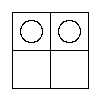
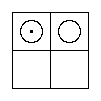
pg_xiv pg_xvCONTENTS BOOK I. THINGS AND THEIR ATTRIBUTES. CHAPTER I. INTRODUCTORY. page ‘Things’1 ‘Attributes’〃 ‘Adjuncts’〃 CHAPTER II. CLASSIFICATION. ‘Classification’1½ ‘Class’〃 ‘Peculiar’ Attributes〃 ‘Genus’〃 ‘Species’〃 ‘Differentia’〃 ‘Real’ and ‘Unreal’, or ‘Imaginary’, Classes2 ‘Individual’〃 A Class regarded as a single Thing2½ pg_xviCHAPTER III. DIVISION. § 1. Introductory. ‘Division’3 ‘Codivisional’ Classes〃 § 2. Dichotomy. ‘Dichotomy’3½ Arbitrary limits of Classes〃 Subdivision of Classes4 CHAPTER IV. NAMES. ‘Name’4½ ‘Real’ and ‘Unreal’ Names〃 Three ways of expressing a Name〃 Two senses in which a plural Name may be used5 CHAPTER V. DEFINITIONS. ‘Definition’6 Examples worked as models〃 pg_xviiBOOK II. PROPOSITIONS. CHAPTER I. PROPOSITIONS GENERALLY. § 1. Introductory. Technical meaning of “some”8 ‘Proposition’〃 ‘Normal form’ of a Proposition〃 ‘Subject’, ‘Predicate’, and ‘Terms’9 § 2. Normal form of a Proposition. Its four parts:— (1) ‘Sign of Quantity’〃 (2) Name of Subject〃 (3) ‘Copula’〃 (4) Name of Predicate〃 § 3. Various kinds of Propositions. Three kinds of Propositions:— (1) Begins with “Some”. Called a ‘Particular’ Proposition: also a Proposition ‘in I’10 (2) Begins with “No”. Called a ‘Universal Negative’ Proposition: also a Proposition ‘in E’〃 (3) Begins with “All”. Called a ‘Universal Affirmative’ Proposition: also a Proposition ‘in A’〃 pg_xviiiA Proposition, whose Subject is an Individual, is to be regarded as Universal〃 Two kinds of Propositions, ‘Propositions of Existence’, and ‘Propositions of Relation’〃 CHAPTER II. PROPOSITIONS OF EXISTENCE. ‘Proposition of Existence ’11 CHAPTER III. PROPOSITIONS OF RELATION. § 1. Introductory. ‘Proposition of Relation’12 ‘Universe of Discourse,’ or ‘Univ.’〃 § 2. Reduction of a Proposition of Relation to Normal form. Rules13 Examples worked〃 § 3. A Proposition of Relation, beginning with “All”, is a Double Proposition. Its equivalence to two Propositions17 pg_xix§ 4. What is implied, in a Proposition of Relation, as to the Reality of its Terms? Propositions beginning with “Some”19 Propositions beginning with “No”〃 Propositions beginning with “All”〃 § 5. Translation of a Proposition of Relation into one or more Propositions of Existence. Rules20 Examples worked〃 BOOK III. THE BILITERAL DIAGRAM. CHAPTER I. SYMBOLS AND CELLS. The Diagram assigned to a certain Set of Things, viz. our Univ.22 Univ. divided into ‘the x-Class’ and ‘the x′-Class’23 The North and South Halves assigned to these two Classes〃 The x-Class subdivided into ‘the xy-Class’ and ‘the xy′-Class’〃 The North-West and North-East Cells assigned to these two Classes〃 The x′-Class similarly divided〃 The South-West and South-East Cells similarly assigned〃 The West and East Halves have thus been assigned to ‘the y-Class’ and ‘the y′-Class’〃 Table I. Attributes of Classes, and Compartments, or Cells, assigned to them25 pg_xxCHAPTER II. COUNTERS. Meaning of a Red Counter placed in a Cell26 Meaning of a Red Counter placed on a Partition〃 American phrase “sitting on the fence”〃 Meaning of a Grey Counter placed in a Cell〃 CHAPTER III. REPRESENTATION OF PROPOSITIONS. § 1. Introductory. The word “Things” to be henceforwards omitted27 ‘Uniliteral’ Proposition〃 ‘Biliteral’ do.〃 Proposition ‘in terms of’ certain Letters〃 § 2. Representation of Propositions of Existence. The Proposition “Some x exist”28 Three other similar Propositions〃 The Proposition “No x exist”〃 Three other similar Propositions29 The Proposition “Some xy exist”〃 Three other similar Propositions〃 The Proposition “No xy exist”〃 Three other similar Propositions〃 The Proposition “No x exist” is Double, and is equivalent to the two Propositions “No xy exist” and “No xy′ exist”30 pg_xxi§ 3. Representation of Propositions of Relations. The Proposition “Some x are y”〃 Three other similar Propositions〃 The Proposition “Some y are x”31 Three other similar Propositions〃 Trio of equivalent Propositions, viz. “Some xy exist” = “Some x are y” = “Some y are x”〃 ‘Converse’ Propositions, and ‘Conversion’〃 Three other similar Trios32 The Proposition “No x are y”〃 Three other similar Propositions〃 The Proposition “No y are x”〃 Three other similar Propositions〃 Trio of equivalent Propositions, viz. “No xy exist” = “No x are y” = “No y are x”33 Three other similar Trios〃 The Proposition “All x are y” is Double, and is equivalent to the two Propositions “Some x are y” and “No x are y′”〃 Seven other similar Propositions34 Table II. Representation of Propositions of Existence34 Table III. Representation of Propositions of Relation35 CHAPTER IV. INTERPRETATION OF BILITERAL DIAGRAM, WHEN MARKED WITH COUNTERS. Interpretation of36 And of three other similar arrangements〃 pg_xxiiInterpretation of〃 And of three other similar arrangements〃 Interpretation of37 And of three other similar arrangements〃 Interpretation of〃 And of three other similar arrangements〃 Interpretation of〃 And of three other similar arrangements〃 Interpretation of〃 And of seven other similar arrangements38 BOOK IV. THE TRILITERAL DIAGRAM. CHAPTER I. SYMBOLS AND CELLS. Change of Biliteral into Triliteral Diagram39 The xy-Class subdivided into ‘the xym-Class’ and ‘the xym′-Class’40 pg_xxiiiThe Inner and Outer Cells of the North-West Quarter assigned to these Classes〃 The xy′-Class, the x′y-Class, and the x′y′-Class similarly subdivided〃 The Inner and Outer Cells of the North-East, the South-West, and the South-East Quarter similarly assigned〃 The Inner Square and the Outer Border have thus been assigned to ‘the m-Class’ and ‘the m′-Class’〃 Rules for finding readily the Compartment, or Cell, assigned to any given Attribute or Attributes〃 Table IV. Attributes of Classes, and Compartments, or Cells, assigned to them42 CHAPTER II. REPRESENTATION OF PROPOSITIONS IN TERMS OF x AND m, OR OF y AND m. § 1. Representation of Propositions of Existence in terms of x and m, or of y and m. The Proposition “Some xm exist”43 Seven other similar Propositions〃 The Proposition “No xm exist”44 Seven other similar Propositions〃 § 2. Representation of Propositions of Relation in terms of x and m, or of y and m. The Pair of Converse Propositions “Some x are m” = “Some m are x”〃 Seven other similar Pairs〃 The Pair of Converse Propositions “No x are m” = “No m are x”〃 Seven other similar Pairs〃 The Proposition “All x are m”45 Fifteen other similar Propositions〃 Table V. Representations of Propositions in terms of x and m46 Table VI. Representations of Propositions in terms of y and m47 Table VII. Representations of Propositions in terms of x and m48 Table VIII. Representations of Propositions in terms of y and m49 pg_xxivCHAPTER III. REPRESENTATION OF TWO PROPOSITIONS OF RELATION, ONE IN TERMS OF x AND m, AND THE OTHER IN TERMS OF y AND m, ON THE SAME DIAGRAM. The Digits “I” and “O” to be used instead of Red and Grey Counters50 Rules〃 Examples worked〃 CHAPTER IV. INTERPRETATION, IN TERMS OF x AND y, OF TRILITERAL DIAGRAM, WHEN MARKED WITH COUNTERS OR DIGITS. Rules53 Examples worked54 BOOK V. SYLLOGISMS. CHAPTER I. INTRODUCTORY. ‘Syllogism’56 ‘Premisses’〃 ‘Conclusion’〃 ‘Eliminands’〃 ‘Retinends’〃 ‘Consequent’〃 The Symbol “∴”〃 Specimen-Syllogisms57 pg_xxvCHAPTER II. PROBLEMS IN SYLLOGISMS. § 1. Introductory. ‘Concrete’ and ‘Abstract’ Propositions59 Method of translating a Proposition from concrete into abstract form〃 Two forms of Problems〃 § 2. Given a Pair of Propositions of Relation, which contain between them a Pair of codivisional Classes, and which are proposed as Premisses: to ascertain what Conclusion, if any, is consequent from them. Rules60 Examples worked fully〃 The same worked briefly, as models64 § 3. Given a Trio of Propositions of Relation, of which every two contain a Pair of codivisional Classes, and which are proposed as a Syllogism: to ascertain whether the proposed Conclusion is consequent from the proposed Premisses, and, if so, whether it is complete. Rules66 Examples worked briefly, as models〃 pg_xxviBOOK VI. THE METHOD OF SUBSCRIPTS. CHAPTER I. INTRODUCTORY. Meaning of x1, xy1, &c.70 ‘Entity’〃 Meaning of x0, xy0, &c.〃 ‘Nullity’〃 The Symbols “†” and “¶”〃 ‘Like’ and ‘unlike’ Signs〃 CHAPTER II. REPRESENTATION OF PROPOSITIONS OF RELATION. The Pair of Converse Propositions “Some x are y” = “Some y are x”71 Three other similar Pairs〃 The Pair of Converse Propositions “No x are y” = “No y are x”〃 Three other similar Pairs〃 The Proposition “All x are y”72 The Proposition “All x are y” is Double, and is equivalent to the two Propositions “Some x exist” and “No x and y′”〃 Seven other similar Propositions〃 Rule for translating “All x are y” from abstract into subscript form, and vice versâ〃 pg_xxviiCHAPTER III. SYLLOGISMS. § 1. Representation of Syllogisms. Rules73 § 2. Formulæ for Syllogisms. Three Formulæ worked out:— Fig. I. xm0 † ym′0 ¶ xy075 its two Variants (α) and (β)〃 Fig. II. xm0 † ym1 ¶ x′y176 Fig. III. xm0 † ym0 † m1 ¶ x′y′177 Table IX. Formulæ and Rules78 Examples worked briefly, as models〃 § 3. Fallacies. ‘Fallacy’81 Method of finding Forms of Fallacies82 Forms best stated in words〃 Three Forms of Fallacies:— (1) Fallacy of Like Eliminands not asserted to exist〃 (2) Fallacy of Unlike Eliminands with an Entity-Premiss83 (3) Fallacy of two Entity-Premisses〃 § 4. Method of proceeding with a given Pair of Propositions. Rules84 pg_xxviiiBOOK VII. SORITESES. CHAPTER I. INTRODUCTORY. ‘Sorites’85 ‘Premisses’〃 ‘Partial Conclusion’〃 ‘Complete Conclusion’ (or ‘Conclusion’)〃 ‘Eliminands’〃 ‘Retinends’〃 ‘consequent’〃 The Symbol “∴”〃 Specimen-Soriteses86 CHAPTER II. PROBLEMS IN SORITESES. § 1. Introductory. Form of Problem87 Two Methods of Solution〃 § 2. Solution by Method of Separate Syllogisms. Rules88 Example worked〃 pg_xxix§ 3. Solution by Method of Underscoring. ‘Underscoring’91 Subscripts to be omitted〃 Example worked fully92 Example worked briefly, as model93 Seventeen Examination-Papers94 BOOK VIII. EXAMPLES, WITH ANSWERS AND SOLUTIONS. CHAPTER I. EXAMPLES. § 1. Propositions of Relation, to be reduced to normal form97 § 2. Pairs of Abstract Propositions, one in terms of x and m, and the other in terms of y and m, to be represented on the same Triliteral Diagram98 § 3. Marked Triliteral Diagrams, to be interpreted in terms of x and y99 § 4. Pairs of Abstract Propositions, proposed as Premisses: Conclusions to be found100 pg_xxx§ 5. Pairs of Concrete Propositions, proposed as Premisses: Conclusions to be found101 § 6. Trios of Abstract Propositions, proposed as Syllogisms: to be examined106 § 7. Trios of Concrete Propositions, proposed as Syllogisms: to be examined107 § 8. Sets of Abstract Propositions, proposed as Premisses for Soriteses: Conclusions to be found110 § 9. Sets of Concrete Propositions, proposed as Premisses for Soriteses: Conclusions to be found112 CHAPTER II. ANSWERS. Answers to § 1125 § 2126 § 3127 § 4〃 § 5128 § 6130 § 7131 § 8132 § 9〃 pg_xxxiCHAPTER III. SOLUTIONS. § 1. Propositions of Relation reduced to normal form. Solutions for § 1134 § 2. Method of Diagrams. Solutions for § 4 Nos. 1 to 12136 § 5 〃 1 to 12138 § 6 〃 1 to 10141 § 7 〃 1 to 6144 § 3. Method of Subscripts. Solutions for § 4146 § 5 Nos. 13 to 24147 § 6148 § 7150 § 8155 § 9157 NOTES164 APPENDIX, ADDRESSED TO TEACHERS165 NOTES TO APPENDIX195 INDEX. § 1. Tables197 § 2. Words &c. explained〃