Mrs Molesworth (continued 2)
Reading edition
Just before it was time to go, Lady Honor called us all in to sing a hymn. It was to please Mr Bickersteth, who was too feeble to go to church again. It was a long time since he had heard his young friends’ voices, he said, looking at Yvonne and her brother, and their hymn should be his vespers to-day. And when I heard them I was not surprised at his wanting them to sing. Their voices were so nice, and, to my surprise, Evey played the accompaniment on Mr Bickersteth’s chamber organ quite beautifully.
I was very fond of music, so I really enjoyed it, and for once forgot that I was not the centre of it all.
“How nice!” I exclaimed heartily, when it was over. And Lady Honor smiled at me when I said this, in her very kindest way; for no one who does not know Lady Honor pretty well can fancy how kind her smiles sometimes are. “How have you learnt to play the organ so beautifully? It takes a lot of time, doesn’t it?” I said to Evey.
“Yes,” said Lady Honor, replying for her. “But I have always found in my life, my dear Connie, that it is the people who have the most to do who do the most. Think that over—you’ll find it’s not an Irish bull, though it sounds like one.”
I was not so pleased at this speech.
“She is thinking that I don’t do much, I can see,” I began fancying. But Evey broke in upon my disagreeable thoughts.
“I don’t think it’s any credit to me that I can play the organ a little, truly,” she said. “I’ve had such good lessons every year in London, where we never really have anything to do except things like that. And at Southsea I was always allowed to practise on the church organ. We have a harmonium of our own,” she went on to me. “It’s very nice, but of course not as nice as this dear organ,” and she touched the keys lovingly. Mr Bickersteth’s organ was a very nice one indeed.
And, a few minutes after that, we went home. The Whytes, all six of them, escorted me all the way, as Lady Honor’s is not far from our house, and I showed them the short cut across the fields to the Yew Trees through a turnstile close to us. It was very kind of them all the same, for they had to hurry a good deal after that to get home in time to send the servants to church.
I found mamma by herself in the study. We don’t use the drawing-room on Sunday.
“Well, darling?” she said. I knew that meant a tender inquiry as to how I had enjoyed myself, but a rather contradictory mood had come over me.
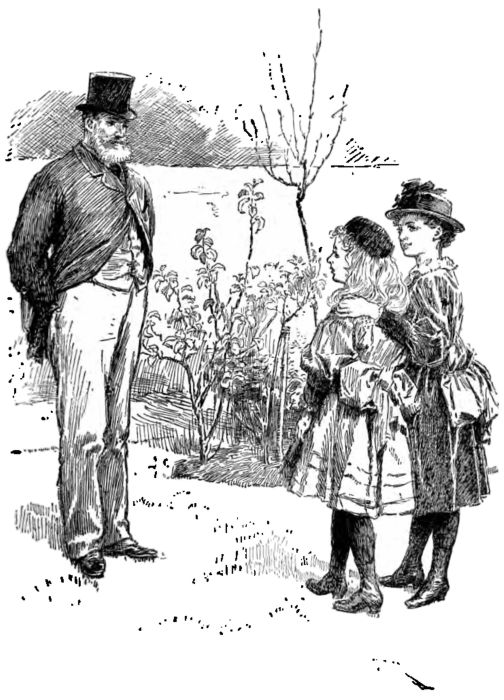
“It was very nice,” I said. “But, they’re not a bit like what I thought they would be, mamma. You know—when we heard they were so poor—”
“But they are poor,” she replied, “and I’m sure they are not—they would not set themselves up in any disagreeable way. They seem so well-bred.”
“Ye-es,” I said. “They’re—oh I think they are just everything they should be, whether they’re poor or not. They’re much cleverer than me, mamma. They’ve learnt so many things I haven’t, and seen so much more—they go to London every year—and—”
My depressed, discontented tone must have hurt and troubled mamma, for she answered indignantly:
“It is very wrong and unkind of them—of that girl,” she said, “to boast and show off to you, darling. You are too sensitive. I am quite sure they are not cleverer than my Connie, and as for looks— You shall not see any more of them, dear. It would be quite new indeed for my Sweet Content to be made discontented. I am disappointed in Evey Whyte. I was sure she was so nice.”
There was a hot, red spot on each of poor mamma’s cheeks; this state of things was not at all what I had bargained for. I had only wanted to work off my own dissatisfaction, which was partly jealousy, but partly too, I hope, a less unworthy feeling, by grumbling and by trying to put blame on those who had had the care of me. I was punished.
“Oh no, no, mamma dear,” I said eagerly. “Evey’s not like that. She’s not the least atom boasting; it was more—things I noticed and asked about, myself. It’s not only that she’s clever—you should hear how she can play the organ; but I daresay you’d let me learn it too, if I liked—it’s—it’s partly, mamma, that I can feel she’s so much more useful, and—and unselfish than I am. I can see it quite well; she does such a lot to help her mother and them all.”
And, greatly to mamma’s surprise and distress, I leaned my head down on her lap and burst into tears.
How she consoled and petted me! How she assured me I was everything to her; the very light of her eyes; her comfort, her blessing—that she could not wish me any different from what I was, and ever so much more in the same strain. It was very sweet, and to a certain extent soothing, but in the end it only deepened the impression. For it made me feel how utterly unselfish and self-forgetting mamma was, above all wherever I was concerned, and it made me feel, too, how little I deserved such devotion. Then the thought of her cruel trials came over me as it had never done before—how often I had grudged my sympathy to her? Even if she were almost weakly and foolishly indulgent to me, she was scarcely to be blamed. Instead of taking advantage of it and treating her fondness with something very like contempt, as I had often done, would not the right way be to try my best to be more worthy of it? I don’t know what put the thought into my head just then. I had a queer feeling that if I had been talking it all over with Yvonne, it was what she would have said, for it had struck me once or twice that in her way of speaking to and of mamma there had been a special sort of tenderness, almost reverence, as if she had heard her sad story, and I remembered the anxious, half-reproachful way she had glanced at me when I seemed so indifferent about mamma’s walking home alone. Yes; I felt and knew that the sudden thought was one Evey would have approved of, and I grew calmer. I wiped my eyes and kissed mamma as I had seldom done before: a new kind of strength seemed to come into me, and I resolved that from that moment I would care for her in quite a new way.
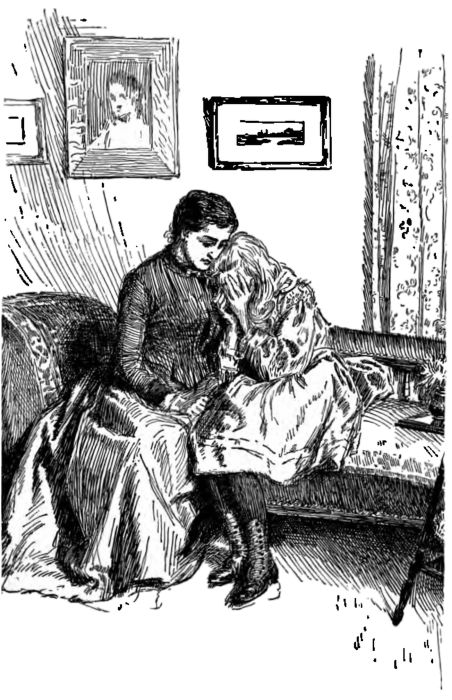
“Mamma dear,” I whispered, “you are too good to me. But I will try to be better. Only will you please let me be more useful to you? I am sure,” I added, and if this was a very little cunning, I don’t think it was in a naughty way—“I am sure I should be far happier if I felt I were of use.”
And of course mamma promised. What would she not have promised me! I think she told over this conversation to papa, and if any lingering feeling of indignation against Evey had still been in her mind, I am sure what he said must have removed it. For the next morning they were both full of plans for my being a great deal with the Whytes, and of little kindnesses we might do to them, without, as papa said, seeming officious or—he hesitated for a word.
“Patronising,” mamma suggested. He smiled at this.
“My dear,” he said, “that we could not possibly be accused of towards the Whytes. You scarcely realise—”
But there he stopped. I felt a little ashamed when I recalled one or two of my speeches to Evey.
“Papa has always such perfectly nice feelings,” I thought; and as I glanced at his kind, quiet face I said to myself that I might indeed be proud of him. And when he kissed me that morning before he went out, I felt something in his kiss that seemed to say he understood me and my new resolutions, better even than mamma did.
Chapter Seven.
A Trio of Friends.
One of the hardest things about trying to be good, particularly about trying to be better, for that means getting out of bad ways as well as getting into good ones, is the dreadful persistence of bad habits. Even when your heart is quite, quite in earnest, and your mind too, and often at the very time you’re planning beautifully about keeping your new resolutions, and quite bubbling over with eagerness about them, you get a sudden shock, just as if you had walked straight into a bath of cold water that you didn’t know was there—and oh, dear, you stop to find you have done the exact wrong or foolish thing you had been fixing so to avoid.
How many times this happened to me about the new resolutions I wrote of in the last chapter I should be afraid to say. Sometimes it was almost laughable. One morning I remember I was busy writing down one or two rules I had thought might help me, when I heard mamma’s voice calling me.
“Bother,” I said to myself in my old way, “I shall never remember about the third rule, if I leave it just now.”
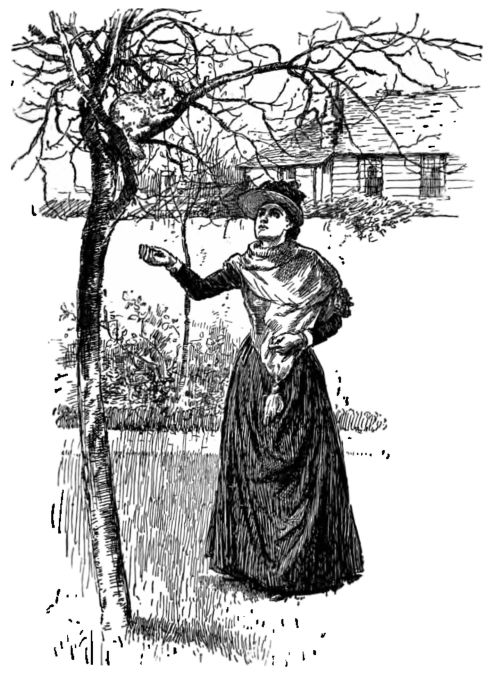
And I went on calmly writing, just calling to mamma, “Yes, yes, I’ll come directly;” and so absorbed was I, that when, a full quarter of an hour afterwards, I happened to glance out of the window, and saw mamma hot and out of breath from a chase after my new Persian kitten, who had escaped through the conservatory and might very easily have got lost or stolen, or even killed, it never struck me that I might have saved her this trouble. Trouble on my account, too!
“What is the matter, mamma?” I exclaimed as I ran out, half crossly, for I could not bear to see her so tired and breathless. “How you do fuss—why didn’t you make the servants fetch Persica in?”
“My dear,” said mamma, as gently as if I had any right to find fault with her, “you know she won’t come to any one but you or me; and I did call you.”
How ashamed I felt! I tore up the rules, and called them nasty things in my own mind, which was exceedingly silly. Afterwards, when I had had more talk with Yvonne, and Mary, I made some others. Not half such grand ones. Only very, very simple ones, which I almost despised on that account; but they were useful to me, by showing me that, simple as they were, it was no easy matter to keep them, even for a few hours at a time.
You see I had been selfish all my life. I had never even thought of its being wrong. Once I did begin to think about it, I was perfectly startled and horrified to find how wide-spreading and deep-rooted my selfishness was. I should often have lost heart altogether had it not been for my new friends. Not that they ever “preached” to me or to anybody, it was just the seeing and feeling how different they were, from what a different point of view they looked at everything, that made me understand better where I was wrong, and take courage to go on trying. And now and then nice things happened to make me feel I was getting on a little; some of these I will tell you about, though I have also to tell you of some rather dreadful things that showed how very naughty and horrid—oh! I get hot still when I think of one of these—I still was.
It was not only selfishness I had to fight against I was exceedingly, absurdly, really vulgarly self-conceited and stuck-up. I don’t think Evey and Mary really ever knew the worst of me; for one thing, I began to try almost from the first of knowing them; for another, just as an honest person cannot believe, and never suspects another of dishonesty till he is actually forced to do so, the dear Whytes were too sincere and simple and single-minded to understand or take in my ridiculous vanity and affectations.
But I must tell about my first visit to the Yew Trees—I mean my first visit to its new inhabitants. It was two or three days after the Sunday at Lady Honor’s. I was fidgeting dreadfully to see Evey again, and I think one of my first real “tries” at not being selfish was doing my best not to tease mamma about when we should go, and worrying her all day long to fix the exact day and hour.
It was not a very hard “try” certainly, for it was only on Wednesday morning that papa told us at breakfast that he had met Captain Whyte the evening before, and had been told by him that Mrs Whyte and the other children had arrived that morning.
“He said,” papa went on, “that Mrs Whyte would be very pleased to see you, Rose; and when you go to call on her, you are to be sure to take Connie.”
“When should we go, do you think?” asked mamma.
“Not to-day—they will hardly be settled enough to see us.”
“I don’t know that,” papa replied. “Captain Whyte said any time; the sooner the better. Mrs Whyte may have little things to ask you about; and I fancy they are very methodical, sensible people, who will soon get into order.”
“They all help so; they’re so useful,” I could not help saying with a little sigh.
“Well, dear,” said mamma, with an encouraging glance, “other little daughters are useful, too. You should have seen how beautifully Connie dusted and rearranged the bookshelves for me yesterday, Tom,” she went on to papa, for which he gave me one of his nicest smiles.
And it was settled that mamma and I should go that very afternoon.
I felt a very little nervous about seeing Mrs Whyte. Somehow the mother of such very well brought up children, and a person, too, whom Lady Honor evidently approved of so thoroughly, must, it seemed to me, be rather alarming; and I am not sure but that dear mamma was a very little nervous too.
“We won’t stay long, Connie,” she said, as we drew near the Yew Trees. “Very likely they are still busy, though they don’t mind us. I have been thinking we might ask Evey and her sister to spend an afternoon with you—to-morrow perhaps, or the day after.”
“Yes,” I said. “I should like that. If their mother can spare them, and if all their time isn’t settled out for lessons, and sewing, and taking care of the little ones, like dreadfully good girls in story-books. I’m afraid they’re a little that way, mamma—very, very regular and punctual, and their mother rather severe and particular. I’ll tell you what I’m sure she’s like, mamma. Very tall, much taller than you,”—and mamma is not little—“and black hair, quite straightly done, and rather small eyes, and a prim way of speaking.”
Mamma began to laugh.
“Hush, Connie,” she said, “you mustn’t upset my gravity. Once I begin laughing,”—poor mamma, it wasn’t very often she was really merry, though she tried to seem so for other people’s sake—“I can’t leave off.”
We were close to the house by this time, though the thick-growing shrubs hid the lower part of it from view, and as mamma spoke, sounds of ringing laughter—the most ringing, happy, pretty laughter I ever heard—reached our ears; and then voices.
“Joss, Evey, come to my rescue; catch him, the great, silly boy. No, no, Lancey—” and then as we came right in front, we saw what it was. A lady, a rather little lady, with dark hair—nice, wavy dark-brown hair, like what Evey’s would have been if it hadn’t been so short—and the brightest, sweetest, dark-eyed, rather gipsy-looking face, was running at full speed across the little lawn before the door, with Lancey, the biggest boy of all, you know, after her. She was waving something white, a roll of paper, above her head, which Lancey was evidently determined to get possession of, and behind him, in every direction it seemed at the first glance, were all the rest of the young Whytes—the three sailor-suits, two girls, Evey and a fair-haired one, and two or three more boys. Such a lot they looked! All rushing about, shouting and laughing at the top of their voices. Suddenly somebody—Evey, I think—caught sight of us. There came an instant hush.
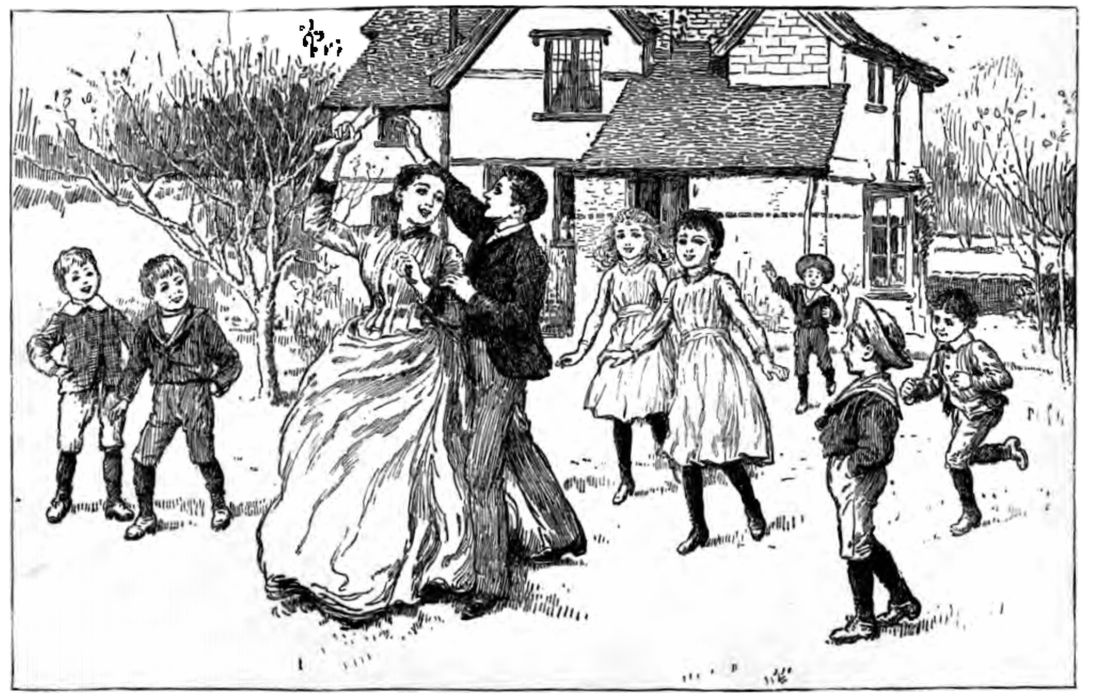
“Oh dear,” were the first words the lady uttered, as she hastened up to us. “I am so ashamed. You must think me out of my mind, Mrs Percy—it is Mrs Percy?” with a quick bright glance of questioning. “How good of you to come! We have been hoping you would. And this is Connie? I am so pleased to see you, dear.”
How charming she was. Not exactly pretty, but so bright and sweet and irresistible—prettier than Evey and not as grave, but yet quite like enough to be her mother.
“You must think me a terrible tomboy,” she said, laughing again, and blushing a very little. “But we are in such spirits. It’s so long since we’ve been all together like this, for the big boys only came from school last week, and—”
“Mother is rather a tomboy,” said Lancelot, coolly. “I think Mrs Percy had best understand the truth from the first, and then she will never be shocked at our goings on.”
“You impertinent boy,” said his mother, laughing up at him. He was a great deal taller than she. “You shouldn’t waste your time in writing verses, instead of doing your lessons, should he, Mrs Percy?”
This hint silenced Lancey effectually. And soon all the children dispersed, and Mrs Whyte took mamma away into the house. Only Yvonne and the fair-haired girl, who, I knew, must of course be Mary, stayed with me. I had not yet spoken—I had felt so completely bewildered by the contrast between the real Mrs Whyte and the fancy picture I had been drawing of her just the moment before, that no words came to my lips.
Yvonne thought that I was feeling shy, I suppose, and to put me at my ease she drew forward her sister.
“This is ‘plain Mary,’ Connie,” she said. “I see I must introduce you formally. Doesn’t she suit her name?” she added, and I could hear in her tone how proud she was of Mary.
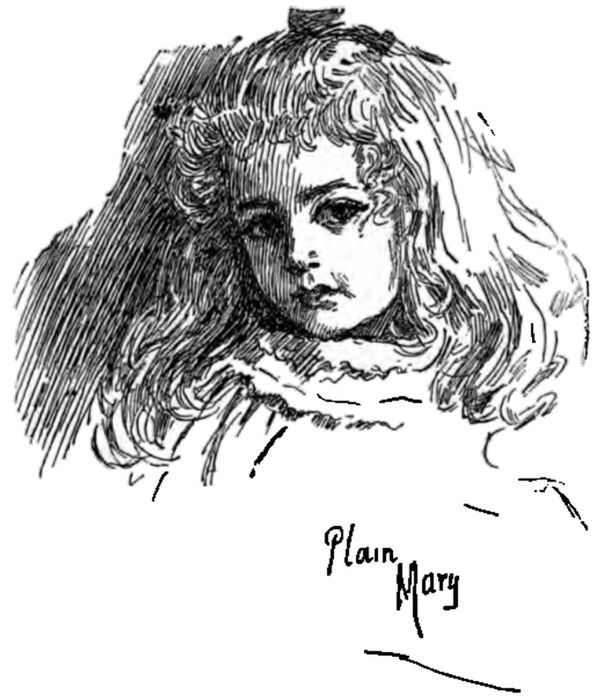
No wonder. Mary was so pretty. She was very, very fair—and she seemed even fairer beside her rather gipsy-like mother and sister. But she had dark eyes, much darker than mine; I am not speaking of myself out of conceit, truly, but because I know that fair hair and dark eyes are thought pretty, as mamma has often praised mine, and Mary’s hair is fairer and her eyes darker than mine, and she has a very sweet expression, what is called an “appealing” expression, I think. She stood there glancing up at Evey in a little timid way, as if accustomed to be protected and directed by her, that I did think so sweet. I had not one atom of jealousy—I am so glad I hadn’t—in my thoughts as I looked at her, even though there was a sort of likeness between her and me that might have made me feel jealous of her being so much prettier. But then, this particular kind of envy has not been my temptation; so it wasn’t any goodness in me not to feel it. I just stood looking at Mary with a real nice pleasure in her sweetness. And she looked at me with a shy smile in her eyes, and Yvonne looked at us both for a moment in silence. Then she gave a sort of jump and clapped her hands.
“Connie,” she said, “I knew there was something that made me feel sure I’d love you at once. Do you know you and Mary are really rather like each other? I wonder if the others have seen it?”
I felt myself get rosy with pleasure.
“Are we really?” I said. “I am so glad.”
And sweet Mary grew red too, when I said that. “I’m very glad you’re glad,” she said, shyly. “Of course I would like to be like you.”
And I think that afternoon sealed our friendship. How happy we were! We explored all the garden together, making plans for all sorts of nice things, out-of-door teas, games of hide-and-seek, gardening and flower-shows (I will tell you about our flower-shows some other time—they were such fun), when the summer came; then we went into the house and explored it too, spending most of our time in the girls’ room, the room with the rose paper, where the two little white beds were standing side by side and everything as neat as could be, though to my eyes, accustomed to much more luxury, it looked rather bare. But Evey was full of her plans for dressing up the toilet-table and adorning the windows with blinds and ribbons to match.
“I’ve been waiting for you to come to talk about it with us,” she said. “Connie has such good taste,” she went on to Mary; “you know she chose this paper.”
And though I had always fancied and had even, I fear, been rather proud of saying that I hated needlework, I found myself undertaking a share in it all, quite cheerfully.
“You’ll join our poor work, won’t you, Connie?” said Evey; “unless, of course, you’ve got a club of your own already.”
And when I stared, she went on to explain that, busy as they were, busier still as their mother was, they all gave a certain amount of time regularly every week to sewing for the poor.
“You wouldn’t believe how much one can do if one keeps to it,” said Evey. “And you know things that are neatly made are so much more good to poor people than what one can buy. Once we had quite a proper club, and twice a year we had a shop—it was such fun. Mother says it is best to let them buy the things when they can, though we always gave away some. I wonder if we can have a club here.”
“There is a sort of one I think,” I said. “Anna Gale and her aunt manage it. But I’m sure it is stupidly done. They are so dull and stupid about everything.”
Evey glanced up quickly.
“Mother is so clever about things like that,” she said. “Perhaps something might be done about it. I daresay she would talk about it to Miss Gale. There are a good many new ideas about such things now, and perhaps—perhaps it is a little old-fashioned here, and mother might improve it. I think Anna Gale must be a very good girl.”
“Oh, yes,” I said contemptuously; “she’s good enough.” Again Evey’s quick little glance. I didn’t quite like it.
“Evey,” I said, “you needn’t look at me that way. I know it’s wrong to say unkind things of people, but when any one is very dull and stupid, you can’t say they’re interesting and clever.”
“I don’t think you needed to say anything. I wasn’t asking you about what the Gales were,” said Evey, in her rather blunt way. “I don’t mean to be rude or laying down the law, Connie, only—”
“Mother says,” Mary interrupted in her shy way—“mother says it is always so very easy to find fault and to see the worst of people. It takes much more cleverness trying to see the best of them.”
I had begun to feel rather angry, but Mary’s words made me think a little.
“Well,” I said, “I daresay that’s true. But, I don’t like Anna Gale, I suppose, and I daresay I’ve never tried to. Do you think that’s wrong? You can’t like everybody the same.”
“No,” said Evey, “not the same. That’s just the difference. But there’s something to like in nearly everybody. And I think we should try to see that part of them most. But, of course, you don’t need to like everybody the same; that would do away with friends and friendship. One thing I do like you for, Connie, is that you’re frank and honest.”
I smiled.
“Well, then, try to think most of that part of me,” I said, repeating her own words. “No, I’d like you to see the bad parts of me too, and help me to be better.”
Evey opened wide her bright brown eyes, and for once she got a little red.
“My dear Connie,” she said, “I’m far too full of bad things myself to be able to make any one else better,” and I saw she quite meant it.
A nice little thing happened that afternoon as we were leaving, which was great encouragement to me. It had grown rather chilly, and at the door I was helping mamma on with some extra wraps we had brought.
“You mustn’t catch cold, mamma dear,” I said.
We thought we were alone, but just then Evey ran out again with some forgotten message to mamma, and as they two were speaking I heard voices just behind the inner door.
“I like to see how gentle and tender Connie Percy is to her mother,” one said—it was Mrs Whyte’s. “I might have been sure any girl Lady Honor liked would be that.”
Where were all my unworthy fears that Lady Honor had spoken “against me” to the Whytes?
Chapter Eight.
Found Wanting.
That winter and spring and summer, and the winter that followed them too, were, happy as my life had been in many ways, the happiest I had ever known. I was not, of course, constantly with the Whytes, for we had our lessons separately, and they had a great many other things to do beside lessons, things which it had never entered my head that a little girl could help in, though, once I made a start, I found that this had been quite a mistake.
I have marked down a few special days to write about—for looking back upon your life after a few years you can see what were the really important things that happened, the events which were the first links in a chain that led to lasting effects—little and trifling as these events may have seemed at the time.
Yvonne’s birthday was in November. Not a very nice month for a birthday, one might think. But, as I have said before, November in our part of the world is often very nice. Some days in it are sure to be so, and of course we made up our minds that the day could not but be one of the nicest.
“I have always been sorry my birthday was in November,” said Evey one afternoon, a week or two before the important date, “but Connie has almost made me change my mind.”
“I think it rather suits you,” I said. “You wouldn’t seem in your place on a very hot, lazy, full-summer day, when one can’t be active and energetic and useful: the sort of day when you feel you may be idle and of no use for once,” and I gave a little sigh. They all laughed.
“Poor Connie,” said Mary, “Evey has bullied you out of your nice comfortable lazy ways rather too much, hasn’t she? Well, I’ll tell you what, when your birthday comes you shall stay in bed and we’ll all come and pay you a visit.”
They were paying me a visit that day. We were at tea in my schoolroom: I was making the tea—pouring it out I mean—and mamma, who had come in to see how we were getting on, was sitting knitting in the window, where Evey had just carried her a cup. Two of the boys were with us; Addie, whom they always tried to get any treat for, as he was kept out of so many boys’ pleasures; and Charley, the next in age to him. Lancelot and Jocelyn did not often honour us with their society; they were working very hard now, at their particular studies.
Mamma looked up at this speech of Mary’s, and said quickly:
“I am sure that way of spending her birthday would not be at all to Connie’s taste. She has never been lazy, though of course in a large family there are a great many things to do that it would be absurd to spend time over where there is only one child and plenty of servants.”
I felt a little vexed. Mamma need not have started up in my defence, and I knew that even if I had never been actually lazy, I had, before I began to think about such things, been often very, very idle. I could tell by mamma’s tone that she was annoyed, though she spoke as usual quite gently. I could see, too, that Yvonne and Mary felt it, but then they were so simple and downright that they never took things in a hurt, self sort of way. Mary’s face shadowed over a little—she was just sorry to have vexed mamma, and ready to blame herself.
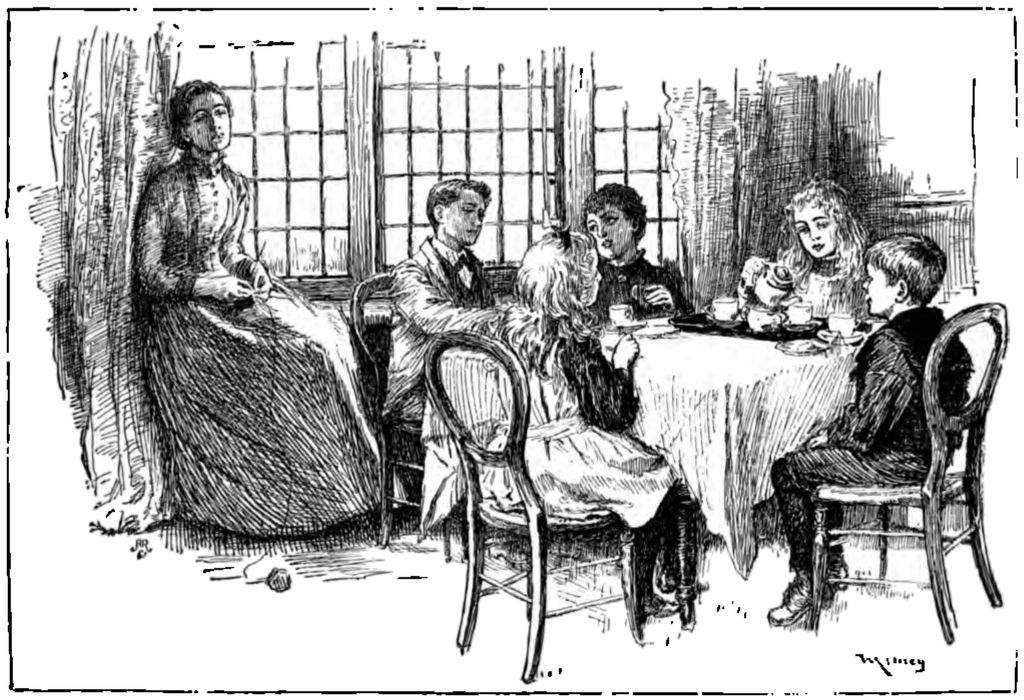
“Oh, dear Mrs Percy,” she exclaimed, “please don’t think I was in earnest. It would have been very unkind and—impertinent. Do you know we often say Connie is the most active of us all, and it’s all the more credit to her, for she doesn’t need to be, like us. You couldn’t fancy one of us ever able to sit with our hands before us doing nothing—up at the Yew Trees. Now could you?”
And she broke into a merry sweet little laugh, for, indeed, the idea of any one at the Yew Trees indulging in much dolce far niente, was rather comical. They had only two servants, and the odd man, for all there was to do, and yet everything was nice and comfortably done, and there was never any “fussing,” which is so disagreeable.
The laugh made Mary’s peace.
“It is all right, my dear,” said mamma, kindly. “I daresay I take up things mistakenly sometimes,” she added. “You must forgive me; I fear I lost some of my capacity for fun long ago.”
She spoke in the rather touching way she sometimes, but rarely, did, when one could see she was thinking of that sad long ago time. Yvonne and Mary glanced at each other, and then at her half wistfully. They knew the story, of course, and even if mamma had been cross and disagreeable, I don’t believe they would ever have found it in their hearts to blame her. Still, there was no doubt mamma had never taken to Mary in the same way as to Evey. It was partly, I think, because of the name, “Evey” I mean, which mamma loved so; and partly—now I hope it is not wrong or disrespectful of me to say this—that Mary was like me, only much prettier, and I am afraid poor little darling mamma was a tiny atom jealous for me.
However, it was all smoothed down now about Mary’s little speech, and the boys’ talk soon took away any feeling of constraint.
“The worst of a birthday so near Christmas,” said Charley, thoughtfully, “is that it muddles the presents. Either you feel as if you’d got too much, or else people give you less than if Christmas wasn’t coming, and that isn’t fair.”
“It doesn’t matter so much now we’ve made a new rule,” said Addie. “We all give birthday presents to each other, but at Christmas we only give them to father and mother, and they give to us. It’s a good plan.”
“Yes,” said Mary, “there are so many of us, you see, that the lots of Christmas presents were really dreadful.”
You might think from this that the Whytes were very rich—but if you had seen the simple presents they gave each other! Yet they weren’t silly or rubbishing, though as often as not home-made, and if not home-made, useful and practical—like gloves or neckties—the kind of presents I, I am afraid, would rather have despised. I once heard a rather spoilt little girl call such things “at any rate presents,” meaning that she would have got them any way. But new gloves and so on were too rare among my nine friends for them to be looked on in this way.
“Mother made another rule,” said Charley, who was rather a chatterbox, “at least it wasn’t a settled rule—it was one we might keep or not and nobody need know—it was about birthdays, for everybody on their birthday to promise themselves that they’d do something kind to somebody—I mean something extra, you know, like Addie writing a long letter to old nurse, which is rather a bore. But he did it.”
Addie grew red.
“And,” pursued the irrepressible Charley. “I think I know what Evey’s fixed for her private birthday treat, that’s what we call it. I couldn’t help hearing, Evey—your door was wide open when you were telling Mary. She’s going to ask An—”
“Charley, hush,” cried Evey, for once almost cross. “If you couldn’t help hearing, you could help telling it over. And I hadn’t settled—I haven’t yet.”
“If it’s anything about Anna Gale, I just hope you haven’t settled,” I said, very crossly. “At least I hope you won’t go and do anything that will spoil your birthday for other people.”
Yvonne did not answer, but Mary began talking rather eagerly about a new game we were going to try, and for the time I forgot about Anna Gale.
I was very anxious and important about my present to Evey. I had plenty of pocket-money, and I would have loved to give Evey something very nice. But mamma—I rather think it was papa who put it into her head to say so to me—told me that she did not think it would do to give Yvonne anything very expensive. It might rather annoy the Whytes instead of pleasing them. I felt very disappointed at first, till mamma reminded me that if my real wish was to give pleasure to Evey, I should not risk mingling anything uncomfortable with it.
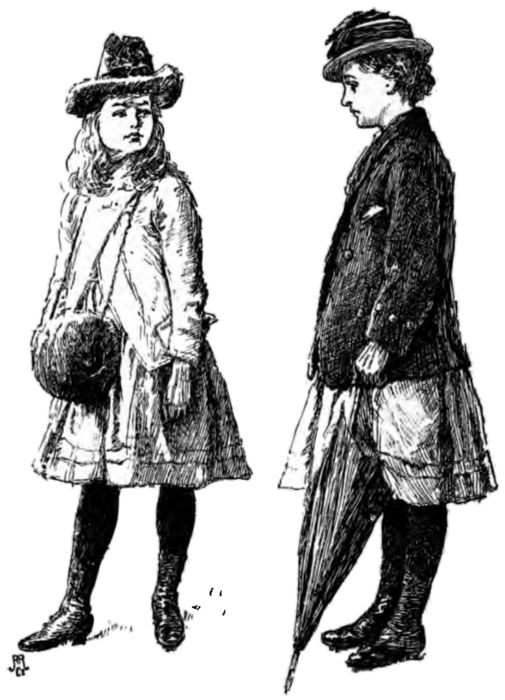
“That would be selfish,” she said, “pleasing yourself instead of her,” and I saw that that was true.
Indeed, everything in this world that is worth anything seems mixed up with self-denial! The longer one lives the more one sees this—I suppose it is meant to be so.
There did seem rather more self-denial than need have been about Evey’s birthday. I don’t think so now; it was my own fault that things went wrong. If I had been different about it, lots of going wrong would have been avoided, but I must tell it all straight on as well as I can, and as nearly as it happened.
Two or three days before the birthday, Evey came to me looking rather grave.
“Connie,” she said, “I’ve something to tell you which I’m afraid will vex you rather. It’s about my birthday. You remember what Charley said the other day?”
“About doing something nice for other people on your birthday,” I said. “Oh, you needn’t tell me anything more, Evey. I know what it is—you’re going to ask that horrid Anna Gale; well, I must say, I don’t see that you’ve any right to spoil other people’s pleasure, whatever you choose to do about your own. That is a queer sort of self-sacrifice.”
Yvonne looked very distressed, I had never seen her bright face so troubled before.
“Connie,” she said, “you do make me feel so unhappy, and rather puzzled. I wonder if really I have been selfish when I was so wanting to be unselfish. But it can’t be helped now. I’m not going to ask Anna, because I have asked her.”
Poor Evey; she got red and blurted it out. I think she was a little afraid of me. I was very angry, and I fear something mean in me made me get still more so when I saw that she was frightened.
“Upon my word,” I said, “you’re a queer sort of friend. If it had to be done, you might at least have told me about it, and given me the chance of being self-denying too—it wouldn’t have seemed quite so bad then. But to be forced into joining in a horrid thing and not to get any credit for it, I don’t think that’s fair. I won’t come to your birthday, Evey, that’ll be the best way out of it; and if you do care for me as you make out, that’ll be a little more self-denial, as you’re so fond of it.”
Evey looked on the point of crying, and she very seldom cried.
“Oh, Connie,” she said, “you can’t be in earnest.”
But that was all.
I only saw her once again before the birthday, and that was after church on Sunday, when Mary came running after mamma and me—we were walking home rather quickly—to say that Evey had sent her to remind me not on any account to be later than three o’clock on Tuesday afternoon. Tuesday was the day.
“Certainly, dear,” mamma replied, as I hesitated a little, “Connie will be in good time. If it is a wet day she must have a fly, for our pony—the one we drive—has got a cold, unluckily.”
“But it’s not going to be a rainy day,” said Mary, brightly. “It’s going to be lovely. So if it’s fine, Connie, do walk, and we’ll meet you. I hope the field path won’t be too muddy with the rain last week.”
And off she flew again, before I had time to say anything. But mamma looked at me inquiringly.
“Is there anything the matter, darling?” she said, anxiously. I had not told her about Anna—I was ashamed of myself in my heart.
“Everything’s the matter,” I said, shaking myself, crossly. And then I told her. Mamma was sorry for me, and sorry about the thing itself.
“I do think Evey might have—” she began, but then she stopped. Her conscience would not let her say more. It was so very clear a case of right and wrong, of selfishness and unselfishness. For she knew, and I knew, that it was not often the Whytes could afford, any sort of “treat”—they lived very simply and plainly, and the cakes for the birthday were thought of a long time before. They were glad to ask Anna to an entertainment which would really please her and her friends, much more than being invited to tea with them quite in an every-day way.
“Dear Connie,” mamma went on, “you must try to be self-denying too. After all, I daresay Anna won’t interfere much with your amusement.”
“Yes she will,” I said, kicking the pebbles on the road; “she’ll quite spoil it. And then she’ll go telling everybody—all Miss Parker’s girls that she’s such friends with—about having been at the Yew Trees for Evey’s birthday. It’ll make it seem so common.”
“You can any way go early,” said mamma, “and be there with your friends before she comes. Then you can give your present by yourself. I don’t suppose Anna will have a present, so it is better on all accounts for you to give yours alone.”
This smoothed me down a little. Then the interest of the present itself was very great—it was a very pretty little silver brooch, made of the letters “C” and “Y” twisted together, and in those days monogram brooches were not yet common. It had been made to order of course, and though it looked simple, it had really cost a good deal. Still there was nothing about it to make the Whytes feel as if it were too handsome. By Tuesday morning, especially when the day proved clear and fine—one of our very sweetest November days—I had pretty well recovered my good temper, and was prepared to make myself agreeable. But I had not really struggled against my selfishness—I had just got tired of being cross, and let my ill-humour drop off—so I was not at all in a firm state of mind for resisting any new trial.
And the trial came.
It came that very morning about twelve o’clock, and it was brought by the “boy” from the Vicarage, in the shape of a note to mamma, from Miss Gale, senior—that is Anna’s aunt—asking if her niece might call for me on her way to the Yew Trees that afternoon, and walk there with me, as it was not convenient to send a maid with her. There was no question of its being much of a favour on my side. Old Miss Gale, as I called her, seemed quite comfortably assured that it would be a pleasant arrangement for all parties. I was with mamma when the note came; I saw there was something wrong, and I insisted upon her telling me what it was. I listened in silence. Then I broke out: “I won’t go with her; I say I won’t” I exclaimed loudly. “You may just write and say so, mamma.”
But at that moment papa put his head in at the door. I had not known that he was in the house.
“What is all this?” he said, and his face and his voice were as I had never seen them before. Mamma explained, as gently as she could, of course, and so as to throw the least possible blame on me.
“It is rather trying for Connie, you see, Tom,” she finished up.
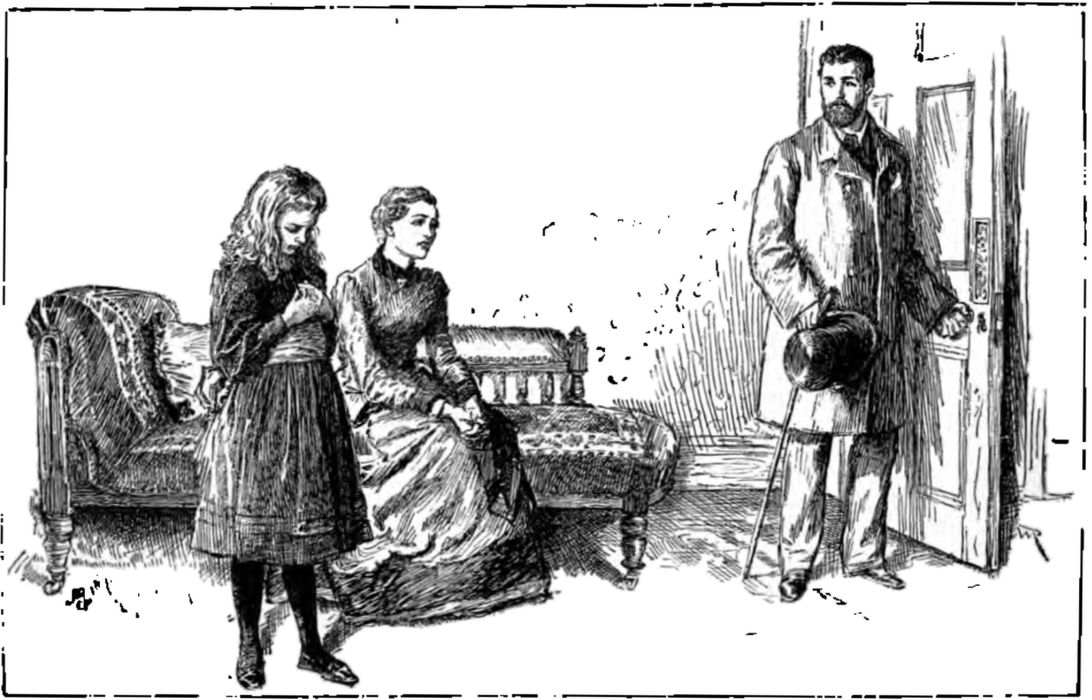
“And does Connie expect never to be tried?” he answered, sternly. “Why are you to be exempt from the common lot?” he went on, turning to me. “Where is your principle, your boasted superiority—yes, child, you may not exactly say so in words, but you do think yourself superior to others,” he went on, seeing that I was about to interrupt him—“if at the very first little contradiction you are to lose your temper, and forget yourself so shamefully? You have no right to feel it a contradiction even—it is only proper and natural that Anna should sometimes share your pleasures.”
“Then I won’t go,” I said sulkily; “I will stay at home Anna may have the Whytes all to herself.”
Papa looked at me. It was like the waiting for the thunderclap one knows must come.
“If you do not go, and, what is more, behave like a lady, I shall tell the reason in plain words to Captain and Mrs Whyte, and leave them to judge if you are a fitting associate for their children.”
I said nothing more. I knew I must give in. I had met with my master! Mamma was nearly crying by this time, but I was not the least sorry for her, I was only angry. I turned and left the room, saying as I did so, in a cool, hard voice, that I hardly recognised as my own:
“Very well. I will be ready in time.”
Chapter Nine.
The Strange Old Woman.
It was a good thing for Anna’s own comfort that afternoon that she was not of a very observant nature, otherwise she would certainly not have found me either a pleasant or courteous companion. I was obliged to obey papa, and I dared not be positively rude to her, but beyond this I was determined not to go; the very feeling of having been forced to give in made me the more bitter and the more inclined to resent my grievances on her, the innocent cause of them. But Anna had never been accustomed to overmuch civility from me; even as quite little children I had treated her as if it did not matter how she was treated. And she only smiled placidly at my vagaries, and doubtless said to herself that “poor little Connie was very spoilt.”
We had seen each other very rarely of late, and then generally with the Whytes, so I don’t think it struck Anna as at all strange that I walked on beside her in grim silence, scarcely even condescending to notice her few amiable commonplace remarks. Poor child! her head was always full of home cares; I think it must have been a treat to her even to walk along quietly without a lot of “little ones” tugging at her skirt.
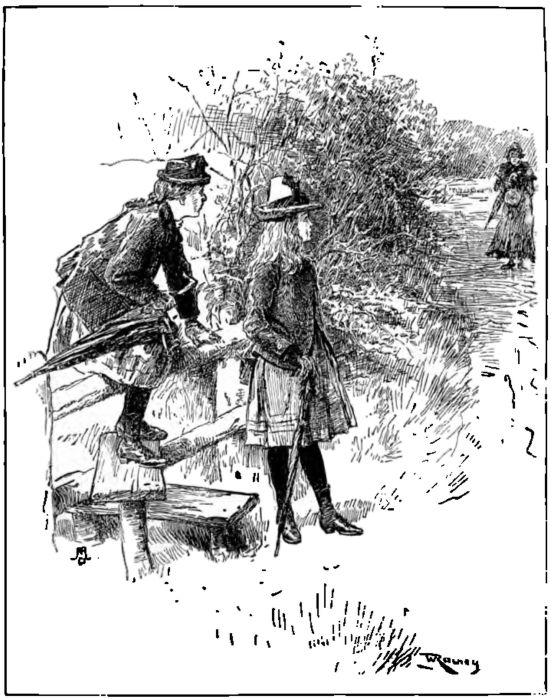
“It is a nice day,” she observed for about the fifth time. “The boys have gone to Belton Woods. I hope aunt won’t let Prissy go with them, however; she is sure to catch cold if they stay late. November evenings are so chilly.”
“I should think you’d be rather glad for some of them to catch cold sometimes,” I said. “It must be a blessing to have a few quiet in bed.”
Anna stared at me, then a smile broke over her rather dull face.
“How funny you are, Connie!” she said. “No, I think they’re quite as noisy in bed as anywhere else, except when they’re really very ill, and that, of course, is no laughing matter. But they’re all well just now, and really to-day is like September: it is a nice day.”
“Yes,” I agreed. “It’s one of our nicest autumn days. If—if only some things were different,” I added to myself.
We were by this time in the lane, which, after crossing the fields, was the nearest way to the Yew Trees. This lane ran into the high road too, so any one coming to the Whytes’ had to go some way along it. Just as I spoke—we had climbed over a stile into the lane—I saw coming towards us, as if going to the Yew Trees from the road, a very curious figure. It was that of a small old woman. She seemed a little lame, yet she walked pretty fast. But I did not like her look at all; indeed, as she came nearer and I saw that her face was almost hidden by a lace veil of a very heavy pattern, and that she had a wig of very black and shiny curls, falling on each side of her cheeks, I felt almost frightened, I scarcely knew why. She had a long cloak of rusty black silk, and a queer brown fur “pelerine”—I think that is the old-fashioned name for such things. And she seemed to have sprung up so suddenly, that I almost felt as if I was fancying her. For the first time that afternoon I turned to Anna with a sort of friendliness.
“Anna,” I said, “do look. Who can that queer woman be?”
“A tramp,” Anna began to say. We were used to tramps of all kinds, but still this description hardly suited the person now closely approaching us. A thought crossed my mind—could it be one of the Whyte boys dressed up to frighten us? But no; they never played such tricks.
“It must be one of those tiresome old things from the Marley almshouses,” I said. Marley was a village about five miles off. “I know how they pester papa. He is far too good to them. Very likely she thinks the Whytes are new-comers, and that she’ll get something out of them.”
And no longer frightened, but rather disgusted, I prepared to walk on, when suddenly a sharp, almost imperious, voice bade me stop.
“Please to tell me if this is the way to the Yew Trees,” it said. “The Yew Trees—a cottage where Captain Whyte has come to live. Don’t you hear me, child—can’t you speak?” For I had been at first too startled to answer; and then, as I took in the meaning of the old woman’s words, I grew angry. What right had she to call the Yew Trees—mamma’s own old house, which would be my house some day—“a cottage”? And what business had she to speak to me so sharply—“child,” indeed—a dirty old tramp, or, worse, a cheat, a begging-letter impostor, or something of that kind, to speak to me so? For she was addressing me and not Anna, who was a little behind me.
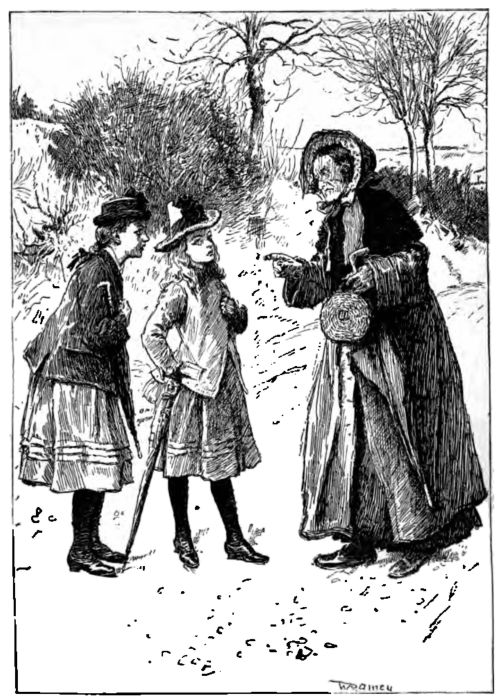
“I don’t see that I am obliged to answer every beggar in the road who may happen to speak to me,” I said, very rudely, I must confess. For queer as she was, the old woman was plainly not a common beggar.
She came closer.
“Beggar,” she repeated, “beggar indeed!” Then she gave a horrid mocking little laugh. But suddenly she controlled herself again. “Be so good as to tell me where Captain Whyte’s cottage is.”
“It isn’t a cottage. It’s a large house,” I said. “I should know, considering it’s mine, or as good as mine.”
She started a little, then eyed me curiously.
“Oh!” she exclaimed. “I might have guessed it. Then you are one of the Whyte children; let me see—not the eldest?”
“No; I’m not the eldest. But I don’t see what business it is of yours who I am. Let me go,”—for she had laid her hand—it was covered with an old black kid glove much too large for her—on my sleeve; “let me go,” I said, as I felt her holding me more firmly. “You may save yourself the trouble of going on to the Yew Trees. Captain Whyte and Mrs Whyte wouldn’t speak to you.”
“Indeed,” she said with a sneer, “I can quite believe it, to judge by their daughter’s pretty manners to a poor tired old woman. I could not have believed it of— He was proud, but you are insolent, I can tell you. It’s as well, perhaps, but I wish I hadn’t met you, with your fair hair and pretty eyes, just like— Have they never taught you to show respect to age, young lady? I suppose you think yourself a lady?”
“You are insolent,” I said, stamping my foot in fury.
“How dare you—get away you dirty old tramp, or I’ll send for the police.”
But at that moment, while the old woman positively glared at me through her veil, Anna, who had not yet spoken, came close and whispered something in my ear, “I daresay she’s insane,” Anna said; “you know there’s an asylum at Wichthorpe. She may have escaped. You should never provoke mad people, Connie.”
And she turned to the stranger, and spoke to her gently. “I think you would get any information you want in Elmwood better than here,” she said. “Captain and Mrs Whyte have not been here so very long. And—and I think they’re rather busy to-day.”
The old woman turned to her. She looked at Anna for a moment or two without speaking.
“Thank you,” she said. “I have changed my mind; I have no wish to pay the Whyte family a visit. I—I think I’ve had enough of them. And who are you, pray?” she went on. “You have a civil tongue in your head at least.”
“I’m—my father’s the Vicar of Elmwood,” said Anna, very frightened, but not daring not to reply. “He’s Mr Gale—if you want anything, I daresay he could help you. You could ask for the Vicarage.”
“No, thank you; but I’m obliged. Yes, I’m obliged to you,” said the queer creature. Then she turned and walked rapidly back the way she had come. We lost sight of her, of course, when she turned into the road; but a moment or two afterwards we heard wheels, and looking right on to the end of the lane, we saw a fly drive rapidly past. We looked at each other.
“Dear me,” said Anna, “it’s just as if the fly had been waiting for her.”
“Nonsense,” I said roughly; “an old beggar like that.”
“I don’t think she was exactly a beggar,” said Anna. Nor did I, at the bottom of my heart.
“Then she was mad, as you said yourself,” I rejoined. “But listen, Anna; don’t tell them about her at the Yew Trees. I don’t want Yvonne’s birthday spoilt any more. Do you hear, Anna?—you’re not to tell.”
Anna hesitated. “I don’t see that it would spoil the birthday,” she said; “and perhaps—”
“It would spoil it to me,” I said, “if you care about that. Of course you’d tell them I was rude to the old woman, and they’d be all down upon me. I don’t deny I was rude; I’ve been too vexed by other things to be in a good temper.”
“I’m so sorry,” said Anna, her kind heart at once touched. “No, I won’t say anything about it then. The only thing was—are you sure it isn’t anything that matters? Suppose she really had some message for Captain or Mrs Whyte?”
“We didn’t stop her going on if she had. At least I only told her they wouldn’t be bothered with her, and you said they were busy to-day. That wouldn’t have stopped her if it was anything real.”
“N-no, I suppose not,” said Anna. She was very slow at seeing things, and I could generally overrule her, in the first place, any way. So, though she was plainly not quite satisfied, she gave in.
I felt a little conscience-stricken myself, to own the truth. I knew I had behaved inexcusably to the strange old woman, and the consciousness of this made me gentler and more conciliatory, so to speak, than I might otherwise have been. So the birthday party went off peacefully, and on the whole, pleasantly, though somehow not as merrily and cheerily as was usual with the Whytes’ simple festivities. Evey was very pleased with the monogram brooch, so pleased that I could afford not to feel jealous when she warmly thanked Anna for her present of a neat and well-made, but extraordinarily ugly, toilet-pincushion. And I was able heartily to admire the other presents, all from her own family, and mostly of home manufacture.
“Evey’s best present hasn’t come yet,” said Mary. “It’s a post late somehow.”
“It’s sure to come this evening,” said Evey, hopefully.
“Papa’s going to walk in to the post-office to see; you know we don’t get afternoon letters unless we send for them. And there’s sure to be a letter too; indeed, that’s almost what we care most for.”
“But what is the present?” I asked curiously. “Whom is it from? And is it always the same thing? And why do you care so for a stupid letter?”
Yvonne hesitated. She and Mary looked at each other.
“I am sure you may tell Connie,” said innocent Mary.
“Well,” said Evey, “I can tell part any way. The present, that we call my best present,” she went on, “comes from my godmother, papa’s aunt. It isn’t always the same, but it’s always something very nice and useful. Last year it was two muffs and four pairs of gloves, for me to do what I liked with; so of course I gave one muff and two pairs of gloves—we take the same size, you know—to Mary. And this year we were half hoping it might be jackets.”
“What stupid presents,” I said. “I don’t care a bit for clothes presents.”
“But then you’re different; things are quite different for you, Connie,” said Evey.
“I know,” I replied, with self-satisfaction. “But if it was jackets, Evey, they couldn’t come by post.”
It was before the days of parcel-post.
“No, but the letter telling of them would be coming. And it mightn’t be jackets.”
“Why do you care so for the letter?” I asked.
“Oh, because it pleases papa and mamma so. Papa hasn’t seen her for ever so long, though she almost brought him up—but—there were things—I don’t think I can tell you any more,” she broke off, and of course I could not ask any more questions after that. But I had a vaguely uneasy and anxious feeling, especially a little later in the evening, when Captain Whyte returned, dispirited and tired.
“It’s beginning to rain,” he said. “Evey dear, your birthday is not ending as brightly as it began; however—”
“There was no letter?” said Mrs Whyte.
He shook his head.
“It may come to-morrow morning still,” he replied. But I saw that they all seemed disappointed.
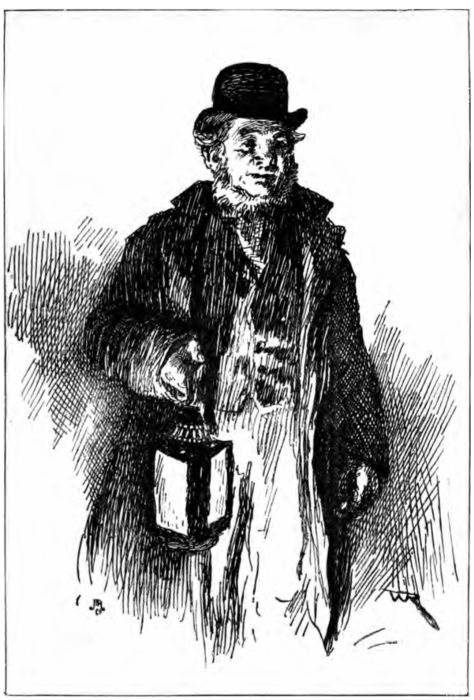
Anna Gale and I went home as we had come, with the addition of Peters, our old gardener, as escort. It had left off raining again, and there was some faint moonlight struggling through the clouds. Mamma had meant to send the brougham, but papa had been suddenly summoned to a distance, and as the evening was fine after all, she thought we might walk, by the road of course. As we got to the end of the lane, the scene of that afternoon came back to our minds. I did not want to think of it, but Anna would speak about it.
“I wonder,” she said—fancy Anna “wondering” about anything—“I really wonder who she was.”
“Oh, rubbish,” I said. “Who could she be but some old lunatic?”
“Well,” said Anna, “if she were, it isn’t very nice to think of.”
I faced round upon her.
“Now, Anna, you’re not to go talking about it, for I know it would sound as if I had been horrid to her, and perhaps I was; I don’t pretend to be an angel. But I don’t want any fuss—do you hear, Anna?”
“Yes,” she said, “of course I hear you, Connie.”
“Well, then, will you promise?”
“I’ll promise not to speak about it if I can help it,” she said; and with that I had to be content.
I don’t quite know why I was so anxious that no one should hear of our adventure. I was not, after all, so very ashamed of my behaviour to the old woman; not as ashamed as I should have been. But I had an uncomfortable, uneasy feeling—I just wanted to forget all about it.
I did not see Yvonne and Mary for some days after that; the next morning was showery, though it cleared up between times. But after that, the rain set in, and we had a week or two of almost constant downpour, which interfered very much with our usual ways. They came to spend an afternoon with me at last. Mamma arranged that the carriage should both fetch them and take them back, for the roads were really sopping, though the rain overhead was less incessant. We were very glad to be together again. Evey wore my little brooch; it reminded me of her birthday.
“Oh, by-the-by,” I said to her, “did your jackets, or whatever it was, come the next day?”
A cloud came over their bright faces.
“No,” said Evey, “nothing came—and no letter. We were very disappointed.”
“Perhaps something will come at Christmas instead,” said Mary, hopefully.
“You greedy little thing,” I said, thoughtlessly. “I wonder you care, especially if it was something to wear.”
“You—you don’t quite understand, Connie,” said Mary, her eyes filling with tears; “there was no letter, and father and mother mind that.”
“Letters are often lost in the post. Why don’t you write to the old lady,”—what was it that gave me a queer thrill as I said the words?—“and ask if there is anything the matter?” I said, meaning in a clumsy way to suggest some comfort.
“We can’t,” said Yvonne, in a low voice.
But they explained no more, and I was not sorry. I did not want to spoil our afternoon by disagreeable subjects.
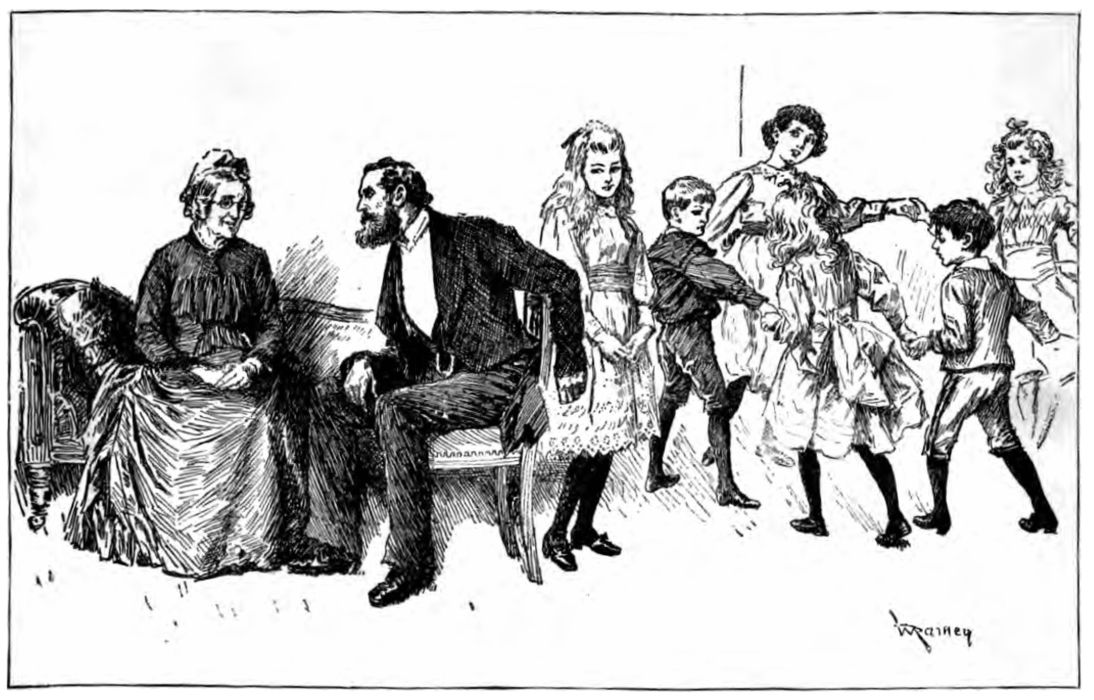
Christmas came. The day after, there was a large gathering at Lady Honor’s, as there had been the year before. Captain and Mrs Whyte would not leave their own home on Christmas-day itself, as they did not like to separate from any of the little ones; but Mr Bickersteth was not satisfied without a Christmas party, so it was arranged to have it on the 26th. A good many Whytes came; all, down to the three youngest, I think. Papa and mamma and I were of the party too. Mr and Miss Gale, Anna and her two brothers from school, and two or three people staying with Lady Honor. It was a very nice party, and everything was done to make it so; but somehow it was not quite so merry as it should have been. Mrs Whyte, who was generally the life of everything, looked tired, and owned to a headache for once; Captain Whyte was very silent, and the boys and girls were rather subdued.
In the course of the evening, during some of the games, I happened to be standing near Lady Honor and Captain Whyte, and I could not avoid hearing what they said.
“Did you know, Frank,” asked Lady Honor, “that Hugo is expected back next week?”
He started.
“No, indeed,” he said. “I had no idea of it.”
“I only heard it this morning,” she went on, “in a letter from—” I did not catch the name. “He is not well—coming on sick leave, straight to—your aunt’s.”
Captain Whyte looked grave. Still there was a touch of something not altogether regret in his voice as he answered:
“I am very sorry, very—but, oh, I should be glad to see him again; and, selfishly speaking, just now—” he hesitated and glanced round. At that moment I was called for in the game, and I ran off and heard no more.
“I wonder who ‘Hugo’ is,” I thought, “and if his aunt is the Whytes’ jacket-aunt too.”
Chapter Ten.
The Look on Papa’s Face.
A week or two after, papa came in one day just as mamma and I were finishing luncheon, looking rather grave.
“I am very sorry for the Yew Trees people,” he said; “I’ve been there this morning to see Addie. I’m afraid he’s in for bronchitis, poor little chap, and troubles never come singly. Captain Whyte has heard that a favourite cousin of his—a Major Hugo Whyte, who has just come home from India—is very ill. He says he is like a brother to him, and he’s very cut up.”
“Is he going to see his cousin?” mamma asked.
“N-no; there seem other difficulties, family complications. He was going to tell me more, but we were interrupted. Lady Honor sent for Captain Whyte in a hurry. I hope there’s nothing wrong there. I don’t know what’s coming to everybody.” Papa, usually so cheerful, looked rather depressed. “The Whytes have some money bothers, too, I fear.”
“Evey and Mary haven’t got any new winter jackets,” I said. “They’re still wearing their tweed ones, with knitted vests underneath. The old lady can’t have sent them any Christmas present.”
Papa glanced at me in surprise.
“What old lady? You seem to know a great deal about our neighbours’ affairs, Miss Connie.”
“No,” I said. “I don’t know much. Only it’s an old lady who’s Evey’s godmother, and she generally sends her birthday presents, and she didn’t this year.”
Papa looked grave.
“I wonder,” he said, consideringly, “if that is what’s wrong. Whyte has an aunt, I know, who almost brought him up. I have heard Lady Honor speak of her as very eccentric. Perhaps—but I mustn’t gossip about my friends’ concerns,” he added more lightly, “though truly, in this case, it is real interest in them that makes me do so.”
“I am sure no one could ever accuse you of gossiping, Tom,” said mamma, in the funny little way she had of bristling up in papa’s or my defence.
“No one has done so, my dear, except my own self. Qui s’excuse, s’accuse, you know.”
And whistling in a boyish way, as he sometimes did, papa started off on his hard day’s work again, stopping to give me a kiss on my forehead as he passed me.
I have always remembered that morning, because of what came afterwards: it was so miserable.
It was about three o’clock only; I was still at my lessons with my governess in the schoolroom. I had no idea of seeing papa again till perhaps late in the evening, for he was very busy just then; there was so much illness about. Still I was not exactly startled when I heard his voice in the hall, calling me. He did sometimes look in for a moment as he was passing, now and then, to give some directions at the surgery, or to fetch a book for himself, if he were going to drive far.
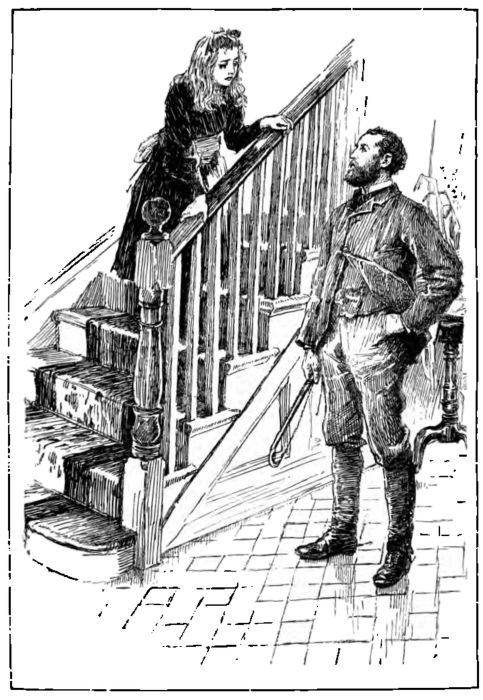
“Connie,” I heard, “Connie, I want you at once.”
“Run, Connie,” said Miss Wade, my governess, for I was delaying a moment to finish a line; a bad habit of mine was want of prompt obedience; “run at once, Dr Percy has no time to spare.”
She spoke rather sharply, and I got up.
“Yes, papa,” I said as I opened the door, rather affecting deliberateness till out of Miss Wade’s sight (I have told you that I had been “going back” lately in several ways.) “Yes, papa, I am here.”
I moved quickly once I got into the hall. Papa was standing there, booted and spurred—how nice and big and manly he looked!—for he had been riding. But his face had a strange expression; he looked stern and yet upset. Under his rather sunburnt bronzed complexion, I could see an unusual flush of excitement.
“Is anything the matter?” I asked, startled, I scarcely knew why. “Addie Whyte isn’t worse?”
“No, no, nothing like that. But I want you at once, Connie,”—he had begun to speak rather impatiently, but his tone softened as he saw that I looked frightened. “You needn’t look so terrified, my dear. It is nothing—only—only a little misapprehension which you will be able to set right at once. I want you to come with me to Lady Honor’s. I have ordered the carriage; it will be round in an instant. Run and put your things on, something warm; it is very cold.”
“But papa,” I began, “won’t you tell—”
“No, my dear, I can’t explain. You will see for yourself that it is better not I will tell Miss Wade that you cannot have any more lessons this afternoon, and I have already told mamma that I want you. Be quick, dear.”
In five minutes I was seated beside papa in the brougham. He drew the soft, warm fur rug over me tenderly, and put his arm round me.
“Why are you trembling so, Connie?” he said. “You have done nothing wrong—what are you so frightened about?”
“I—I don’t know, papa,” I said, which was true. “It seems so strange.”
But this was not the whole truth. I had a queer, vague misgiving that the mystery had to do with the Whytes and their family affairs, though my mind was not collected enough to go into it properly.
“You will understand it directly,” said papa. “Ridiculous—”—he gave a strange little laugh—“as if my Connie—so open too—”
But somehow this did not reassure me.
When we got to Lady Honor’s, we were shown into the library. There was no one there, but in a moment or two old Mr Bickersteth hobbled in. He nodded to papa; afterwards I found, that he and papa had met already that afternoon. Papa had looked in to speak to Lady Honor about some poor protégé of hers, and she had taken the opportunity of telling him of the Whytes’ troubles. Old Mr Bickersteth spoke kindly to me—even more kindly than usual—almost as though he were a little sorry for me.
I fancy I did look rather white and startled.
“Connie is a little frightened,” said papa. “I told you I should say nothing to her, so that Lady Honor or Captain Whyte can question her themselves straight away. I should like to lose no time, if you please, Mr Bickersteth; I am extremely busy.”
“Of course, of course, very sorry to detain you,” said the old gentleman. “Just a little mistake, no doubt. You have taken it up too seriously, my dear Percy.”
But papa shook his head, though he smiled a little, too.
“Shall we go to the drawing-room?” he said; on which Mr Bickersteth opened the door and led the way, talking, as we crossed the hall, in a cheery, ordinary manner; no doubt to make it seem as if nothing were the matter.
A servant was standing close by. He threw open the drawing-room door, and papa, half slipping his arm through mine, led me in. There were several people in the room, and I shook hands all round, though scarcely knowing with whom. Then by degrees I disentangled them; there were not so many after all, and all well known to me. Captain and Mrs Whyte and Mary—not Yvonne Lady Honor, of course, and Anna Gale and her father. Anna was very pale, and I could see she had been crying. Mary came up close to me and stood beside me. I think she took hold of my hand.
“Now, Connie,” said my father, “I want to ask you something. It has been stated—it is believed by some of our friends here—but of course the moment you deny it, it will be all right—that some little time ago you met in the lane that leads to the Yew Trees an old lady, a stranger, who asked you the way. And that you, instead of replying courteously and civilly as one should always do to a stranger, above all to an old person, answered her rudely, and went on to speak to her with something very like absolute insult. That you called her an old beggar, a tramp—I know not what;” here Anna Gale began sobbing audibly. Papa took no notice, but went on coolly. “Furthermore, that you bound down your companion not to tell of this, and that though it was at least a rather curious incident—strangers are not so common at Elmwood as all that—you have all these weeks concealed it and kept silence about it from some motive. Your companion supposes you knew you had done wrong, and that your conscience made you silent. Now, I shall be pleased if you will look up and say that the accusation is entirely unfounded; either that it is some strange mistake—or—or—no, I can’t accuse other people’s daughters of anything worse than making a mistake.”
He glanced round the room, a proud, half-defiant smile on his face. I seemed obliged by some fascination to keep my eyes on him till his gaze fell on me. And I think I was very pale, but while he spoke I don’t think my expression had changed or faltered. Now, however, when he looked at me again, I felt as if his eyes were stabbing me; still I looked up.
“Yes, papa,” I said; “it is all quite true. I spoke even worse than that. I made Anna promise not to tell, and I have never told myself, because I knew I had behaved disgracefully. But—but—I thought she was some kind of a tramp—there are plenty of tramps about here.” I stopped for a second. “No,” I went on, something seemed pushing at me to tell the whole truth, “no, I didn’t think she was a tramp when she came close. I thought she was from the almshouses. But she called me ‘child,’ and—and I was cross already, and I didn’t think she was a lady, and—yes, I said it all, worse than you know even. And I didn’t want any one ever to know.”
Papa stood looking at me, but he did not speak. He seemed turned to stone. I could not bear it.
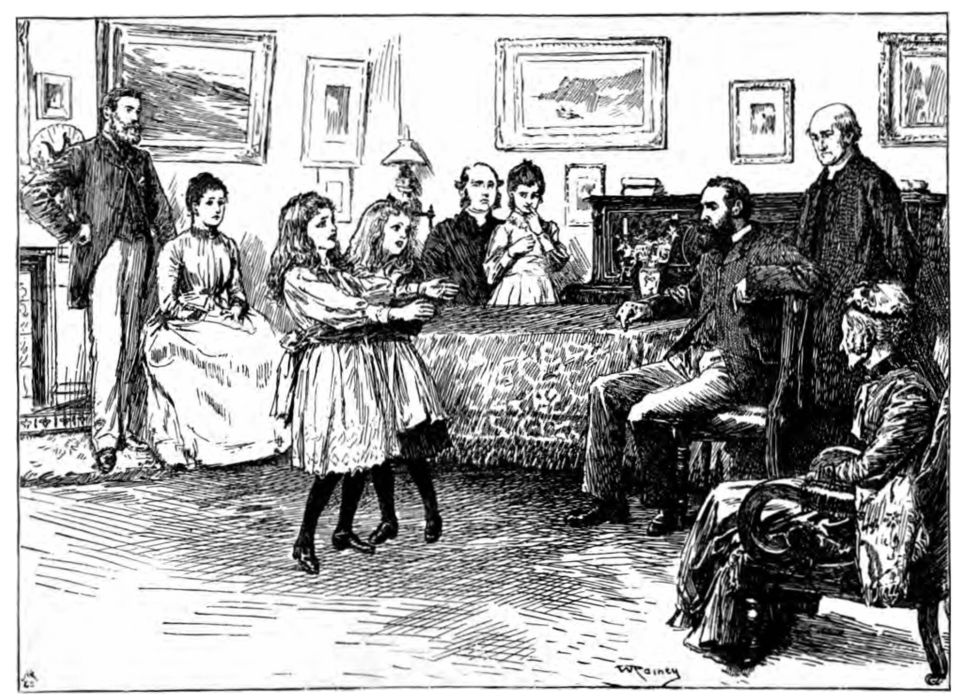
“Oh, papa!” I cried, stretching out my hands to him, “don’t—don’t look—”
But he did not move. Only two arms were thrown round me and clasped me tight. It was Mary.
“You should forgive her,” she called out in a voice that was almost fierce. “You should—everybody. She has told it all now bravely, and she didn’t mean it. She didn’t know it was our aunt.”
“Your aunt?” I gasped.
“Yes,” said Captain Whyte, coming forward and speaking very gently. “My aunt, Connie. You did not know it, but I fear you have injured us irreparably, my poor child. She took you for Mary; she was coming to see us, as a surprise on Evey’s birthday—and now nothing will make her believe it was not Mary. You allowed her to think so.”
“Yes; I suppose I did. I couldn’t explain,” I replied; “but she would believe—she must—if you told her.”
He shook his head.
“You cannot understand,” he said, quietly.
I don’t clearly remember what happened after this. I think Lady Honor spoke to me, not unkindly, but with a very troubled look. I remember Anna going on sobbing till I turned to her.
“What are you crying for?” I said. “Nobody is vexed with you.”
“I should have told sooner,” she wept.
“Yes, I suppose you should. But it was my fault, not yours. Why can’t you be satisfied that it’s I—only I—to blame? Everybody thinks me as bad as I can be, but you needn’t go on. Did your father ever look at you as papa did at me?”
I was growing desperate. Papa had walked out of the room without speaking to me. I did not know any one heard what I said to Anna till I felt some one’s arm passed round me. It was Mrs Whyte. Her pretty, merry face was quite changed, the bright, gipsy look quite gone, but the kind, true brown eyes—Evey’s eyes—were kind and true still.
“Don’t speak like that, Connie dear,” she said. “I am far more sorry for you than for ourselves. I will come and see you to-morrow. I wish I could go home with you now but poor Addie is so ill;” and I saw the tears glistening.
Then I found myself in the hall, and in another moment in the carriage again—alone! I heard Captain Whyte speak to the coachman.
“Take Miss Percy home, and then drive back to Todholes as fast as you can,” he said. “Dr Percy will be there.”
I would have liked to say I could walk, and that the carriage might go after papa at once, but I was too stupified. I think if all the village children had turned out and hooted after me as I drove along I should not have been surprised. I had only one thought—however wicked and horrid other people thought me, mamma would still love me. But for all that I hardly felt as if I could have kept my senses.
Perhaps I had better explain here how it had all happened and why, naughty as I had been, what was after all in itself but a trifling matter was considered so very seriously.
The old lady I had insulted was Mrs Fetherston, Captain Whyte’s own aunt. She had been many years a childless widow, was very rich and very peculiar. She was rich partly through her husband, partly because the Whytes’ family place was hers, left her by her father, for the property was not entailed. She had another nephew, Major Hugo Whyte, who as well as Captain Whyte had been partly brought up by her. But Captain Whyte had always been her favourite, and though he himself was younger than Major Whyte, his father had been older than Hugo Whyte’s father, so Mrs Fetherston made him her heir. There was no jealousy between the two cousins; they loved each other dearly. Major Whyte went into the army while Captain Whyte was still at school, and he was out in India when a quarrel occurred between the old lady and her favourite nephew. She wanted him to give up his profession, the navy, and live at home with her, doing nothing; she also, I think, wanted him to marry some girl he did not care for. He would not consent to either, and he would marry Mrs Whyte! So Mrs Fetherston disinherited him and put his cousin in his place. At first, he did not much care; he was very happy in his own home, and his aunt still continued his allowance. It was not a very large one, and as time went on and so many children came, it began to seem a very small one. At last he was forced to retire on half-pay. He had a little money of his very own, and Mrs Whyte had a little, and Major Whyte helped them as much as he could, though he was not, at present, rich himself. He also was always trying to soften his aunt to them; she had no real cause for disliking Mrs Whyte, who was very well-born indeed, only not rich. It was in consequence of one of Hugo Whyte’s letters that the queer old lady at last determined to see her nephew’s family for herself, and to pay them a surprise visit. Then—you know what happened.
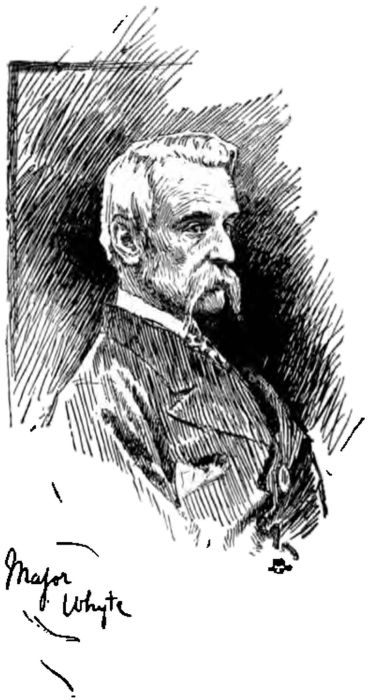
Soon after Yvonne’s unfortunate birthday, Major Whyte, who had not been well for long—he was a delicate man, and had had much active service—got worse, and in consequence of this, as you may remember my overhearing at Lady Honor’s party, he came home. He had seen by his aunt’s letters that she was more bitter than ever against “Frank” and his family, but he did not know why till he saw her, and she told him the whole. He was dreadfully sorry; he did not think himself likely to live long, and his one wish was to see his cousin reinstated. For Mrs Fetherston was quite capable, if he died, of leaving everything, even the Whytes’ own old place, to some charity, away from Captain Whyte altogether. Hugo Whyte wrote to his cousin explaining what had happened, never doubting, of course, but that the rude little girl was Mary! Poor Mary at once denied it, and it became evident there was some strange mistake. Captain Whyte went off to consult Lady Honor, whose quick wits set to work to disentangle the riddle.
“There were two little girls,” she said. And that very day she saw Mr Gale and had a long talk with him. Mr Gale, in turn, had a long talk with Anna. Anna, it must be remembered, had only promised “not to tell” of our adventure conditionally; and she had often felt uneasy about it. In one sense it was a relief to her to have to tell; but she got more than her share of punishment, poor girl, I shall always think. Lady Honor was unwilling to tell papa about it. She knew how sensitive he was, and how he would take it to heart. So a letter was sent to Major Whyte, explaining the mistake, and asking her to allow Captain Whyte to take his two girls to see her. But the old lady had got an obstinate fit. She would not believe that the culprit was not Mary.
Then at last Lady Honor told papa. He took it up very seriously, just as she had feared, too seriously in one sense, though I well deserved all the blame I got.
And another long letter was despatched to poor Major Whyte, who ill as he was, was determinedly trying to put things right.
The answer to this letter did not come for some days. But I have forgotten one part of the sad business. Not only was no birthday present or Christmas present sent to Yvonne by her godmother, but for the first time no cheque was received by Captain Whyte’s bankers from Mrs Fetherston. Her rancour had gone the length of stopping his allowance! No wonder the poor Yew Trees people were anxious. And this was my doing.
Chapter Eleven.
Nothing Venture, Nothing Win.
The short winters day was already closing in when the carriage stopped at our own door. I was crouched up in one corner, perfectly miserable, the fur rug was in a heap at my feet—when I glanced at it, and thought of how papa had tucked it round me that very afternoon, I felt as if I could not bear it. As I got out and entered the hall, where the light was dim, I saw some one standing at the drawing-room door. It was mamma waiting for me; she had heard the carriage stopping.
“Connie, is that you?” she said. “Is papa there?”
“No, mamma,” I managed to get out. “I’m alone.” Then she drew me into the drawing-room—it looked so warm and bright, the red firelight dancing on the old furniture—and I was so shivering and cold! Somehow the look of it all—the look, above all, in mamma’s eyes—was too much for me.
“Mamma, mamma,” I sobbed, and once I had begun my tears came like a thunderstorm, “do you know? Do you know about how naughty I’ve been?”
She had not really known of course; till I owned to it no one could have really known, except Anna. But mamma had guessed it was true—in some ways she knew me and my faults and follies even better than papa did, gentle as she was. She had been afraid it was true when he told her that afternoon what I had been accused of—and he had been rather vexed with her!
“Yes, darling,” she said, “I know about it, mostly at least.”
She drew my head on to her knee, as I crept close to her where she sat on a low couch, and let me sob out all my misery. Oh, mamma, dear little, sweet, unselfish mother—was there, could there ever be any one so kind as you? And I, who had sometimes almost dared to look down on her for her very goodness! That afternoon brought me the end of the lesson I had begun to learn. It was quite dark, and growing late, before mamma rang for lights. I had cried my eyes into a dreadful state, and I was still shivering every now and then from a sort of nervousness. Mamma took me upstairs and made me go to bed.
“You will feel better in the morning,” she said. “And I will talk more to you. We must not exaggerate things, you know, dear. Good-night, my Connie, my own little Sweet Content.”
Was it not nice of her to call me that! I did not go to sleep for a good while. When I did I slept heavily. It was quite daylight when I woke. Mamma was standing beside me, and Prudence was setting down a tray with my breakfast.
“I will come back when you have finished, dear,” mamma said. She did not mention papa, and when I asked Prue she only said he was already out.
So he was. Not only out, but away. When mamma came up again she told me that he had got a letter the night before, which had decided him on going to London for two or three days—I think it was to attend some scientific meeting.
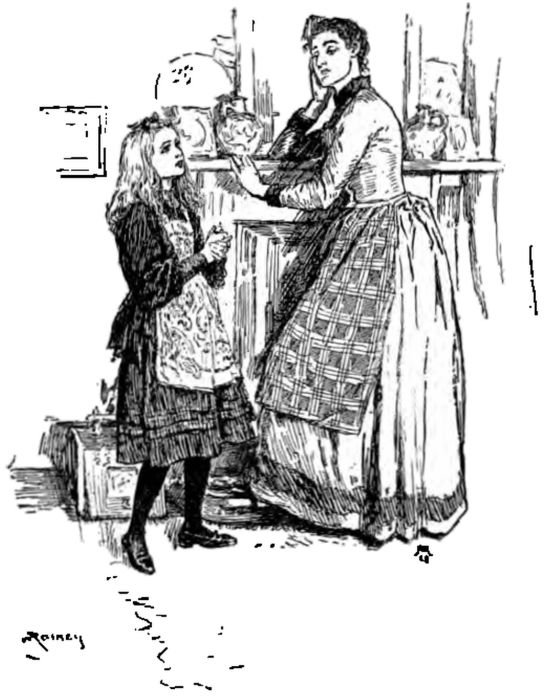
“He came up to look at you last night,” mamma went on, “but you did not wake.”
I did not speak for a minute or two. Then I said timidly:
“Mamma, do you think he will ever forgive me? Mamma, do you know that he could scarcely have seemed more terribly angry if—if—I had done it on purpose to hurt the Whytes, and you know it wasn’t that I love them too much; and even if I didn’t, I couldn’t be as bad as that?”
“I know, dear,” said mamma. “But papa has very strong feelings about courtesy to strangers; above all to the old and poor—and that strange old Mrs Fetherston seemed poor. And then, too, the consequences are so very serious to the Whytes. Papa said to me he was afraid of judging your fault too much by the consequences; that was partly why he sent you home alone, and he is not sorry to be away for a day or two to think things over. I may tell you Connie,” she went on, “that bright and sweet-tempered, almost perfect as he seems to us, papa has naturally a very hot and violent temper. You have never seen it; he has learnt to control it so perfectly; but yesterday he was afraid of saying too much to you; that was partly why he went away.”
“I understand,” I said, “though after all I think I deserved everything any one could have said—mamma,” I added, “perhaps it’s from papa I get my temper: it’s certainly not from you. And people generally think I’m good-tempered, just as they do him. But he is good-tempered, because he has mastered himself, and I’m only not often bad-tempered, because I generally manage to get my own way, and am very seldom crossed!”
Mamma smiled. She was glad to see me really thinking seriously.
“Mamma,” I said, “even if that—that horrid old woman does leave everything to the other one—to Major Whyte,”—mamma had explained it all to me the evening before—“it couldn’t matter so very much, would it? For he’s so fond of them all—could he not make it up to them?”
“They fear he would be bound down by her will to do nothing for his cousins,” said mamma. “The old lady, once she has taken a thing in her head, seems very vindictive. Besides, Captain Whyte is a proud man, he has always hoped his aunt would leave him something—it would be hard for him to take it as a gift, almost like a charity, from his cousin. And what can they do for the present? They had little enough before; but now they must be terribly poor. And the old lady may live many years. The worst of all would be if Major Whyte died before her, without her being reconciled to his cousins.” This made it all clear enough to me—only too clear. I could think of nothing else. I got up and dressed, for I was not ill. I was only feeling very miserable and rather shaky with crying so. Mamma had very kindly sent to Miss Wade to tell her not to come, which was a comfort. I was very glad to see no one but mamma, even though I longed for papa. I wanted so to consult him, and see if nothing could be done.
It was a very rainy day; it went on steadily till late in the afternoon. It was one of those days which seem as if the sun had not risen.
I could not settle to anything. I tried to work and read, but it was no use. Then I began a letter to Evey; I did so want to let them know how miserably sorry I was, but the words would not come, and I gave it up.
“It would only seem a mockery,” I said to myself; “I don’t suppose they want to be reminded of me at all,” and I got up and stood drearily by the window watching the plash of the rain as it fell into the puddles of the gravel walk. Suddenly a feeble ray of light caught my eyes—where was it coming from? I looked up. Yes, there, over where the sun would soon be setting there was a little break in the clouds; some thin, cold, watery yellow was peeping out, and even as I gazed it reddened and warmed a little.
And at that moment an idea struck me, which, the more I reflected on it, the more my judgment approved of. I stood there some minutes thinking intently. Then I flew into the library where mamma was, I knew, tidying some of papa’s books that afternoon.
She had finished and was standing by the fire.
“Mamma dear,” I said, “I have thought of something;” and I went on rapidly to tell her what had come into my mind. She listened eagerly, but her face flushed and she looked half-frightened.
“We must wait till papa comes home and see what he says,” she replied.
I clasped my hands in entreaty.
“No, mamma,” I said. “I have a feeling that we mustn’t wait. There can’t be any harm in it. It is my duty to apologise. I could write her a letter, but that would not be the same good. I will not go to her to say ‘I’m not Mary’; I will just say I am the little girl that was so rude to her.”
Mamma considered.
“But if she refuses to see us,” she said. I saw she was yielding.
“Oh well, then—I don’t know. But any way I will have tried. Do you know her address, mamma?”
“I know the square she lives in, and the name is not common. We can easily find the number in any address-book when we get there. But, Connie—”
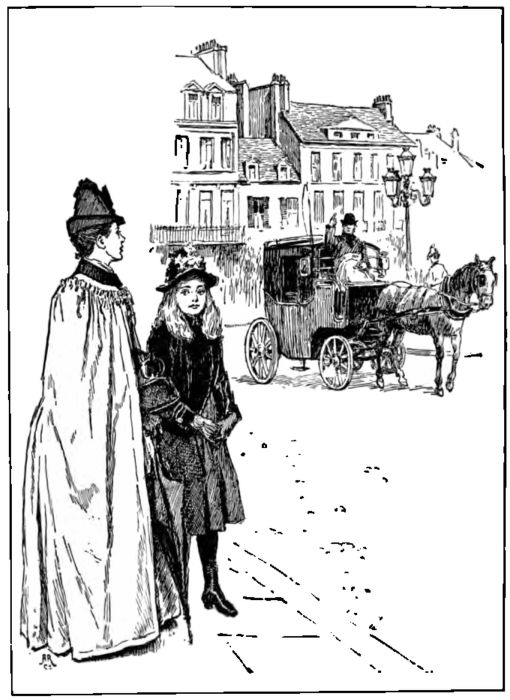
I stopped any further misgivings by kissing her. And seeing me look so much happier, mamma had not the heart to say anything more against it.
I need not explain what it was I wanted to do, more particularly, for I think any one who reads this will understand. I will just go on to tell exactly what happened.
The next morning—it was a fine day; how glad I was of that!—saw mamma and me comfortably installed in a first-class railway-carriage, en route for London. We had no luggage, for we were only going up for the day—Elmwood is only two hours from Victoria. When we got there mamma hailed a four-wheeler—I would rather have had a hansom, but mamma is rather nervous about hansoms, and after all I was scarcely in the humour to care much—and told the man to drive first to one of the big shops she knew well. There she got an address-book and found out old Mrs Fetherston’s number, and off we set again. We scarcely spoke—I was growing so nervous—not out of fear for myself, but lest possibly it should all fail!
At last the cab drew up in front of a large, regular London house. We got out. The door was opened by a footman, and further back in the hall were one or two other men-servants. It was a stately, rather old-fashioned house. How strange to think that it belonged to the queer old woman I had so mistaken!
“Is Mrs Fetherston at home?” mamma inquired. It was now about half-past two; we had chosen the time well. The footman hesitated.
“I think my mistress is at home,” he said, “but she don’t see many visitors.” Mamma smiled so sweetly that he could not help adding: “I can inquire if—”
“Perhaps you had better take my card to her, as it is really on business. And pray say I will not detain her many minutes.”
At the word “business” the man hesitated again; but he saw that we had kept the cab; that did not look much like ladylike impostors. “Will you step in?” he began again.
In her turn mamma hesitated.
“We could wait in the cab,” she said to me doubtfully. But it was a very cold day.
At that moment a tall, thin, dark-complexioned man—a gentleman, I mean—crossed the hall.
“Shut the door, David,” he said hastily. But then seeing us there he came forward a little way, courteously, “I beg your pardon, won’t you come in?”
We did so, sufficiently at least for David to shut the door; then the man turned to the gentleman to explain the state of the case.
“Do come in,” the gentleman repeated, throwing open the door of a library which looked warm and comfortable.
“I am half afraid Mrs Fetherston—”
Mamma and I glanced at each other. She was going to speak, I think, but I forestalled her.
“Major Whyte,” I said, “please may we tell you about it? Mamma—mamma is Mrs Percy,” I added.
He was very quick-witted. He seemed to know in an instant. Indeed, though we did not hear that till afterwards, he had that morning got a letter from his cousin, explaining the mystery of “Mary’s” strange behaviour! And in another moment we were in the library with him, the door closed, and David told to wait till he was rung for, while mamma told our story. Major White listened most attentively while mamma, clearly and without hesitation—except just once, and that was at the part about my naughty rudeness, when she stopped and glanced at me; “I need not say how deeply Constantia has grieved over this,” she said—related everything. The only sound besides her voice was Major Whyte’s cough, the sort of cough one cannot bear to hear. And when she stopped, for a minute or two he could not speak for coughing; his thin brown face grew so painfully red, and he seemed to shake all over. How sorry I felt for him!
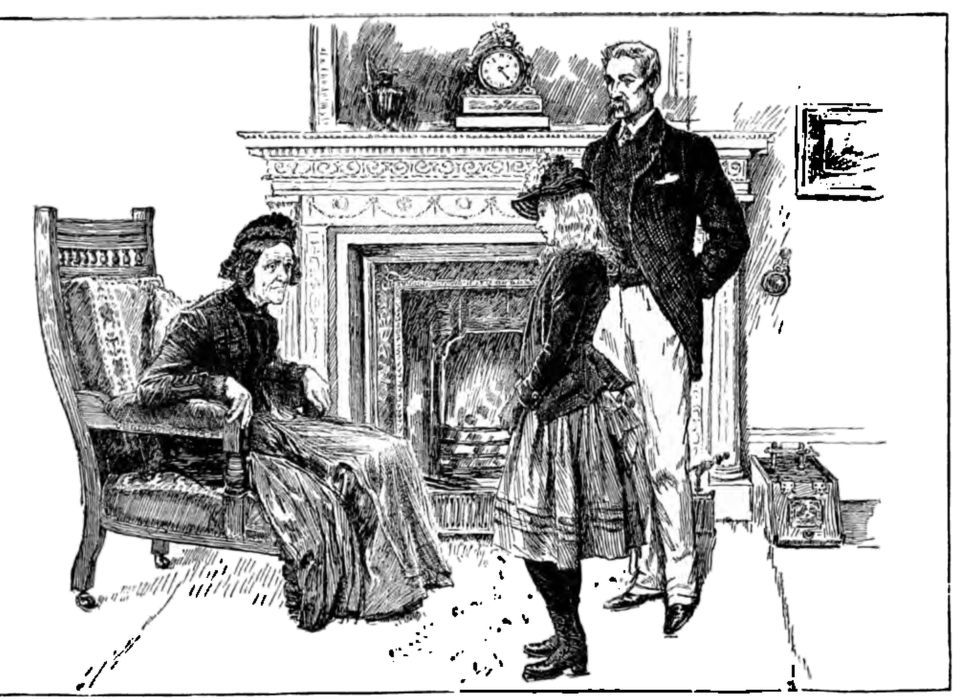
Mamma waited quietly. Then glancing round she caught sight of a carafe of water and a glass on the side-table. She poured some out and brought it to him.
“Thank you—so much,” he said, and in a little he was able to speak again.
“I see it all, of course,” he said. “It is brave of your daughter to have come herself, Mrs Percy, and it seems to me it was the best thing to do. There is certainly a very strong likeness between her and Mary, though I have not seen Mary for four years. If I had been told you were Mary,” he went on, turning to me with a smile, “I think I should have believed it. Now, have you the courage to beard the—to come with me to Mrs Fetherston alone? I think, perhaps, that is the best chance.”
Mamma and I looked at each other, and Major Whyte looked at us both.
“Yes,” I said, “I’ll come alone, if it’s best.”
“Bravo,” said our new friend—I felt he was a friend at once—and he held out his hand to me in a way I could not resist or resent, though generally I stood on my dignity a good deal. “We had been thinking of trying a rather desperate experiment to bring my poor aunt to her senses,” he said. “But I believe your effort will be more successful.”
We left the room together, he and I. I followed him upstairs to the first floor, and through two big drawing-rooms into a third and smaller one at the back. In he stalked, coughing a little now and then; in I crept after him. A big fire was blazing, an armchair was drawn close to it, and on, or rather in, the armchair, which almost seemed to swallow her up, was seated a small dark figure. She was reading the newspaper.
“What is it, Hugo?” she said, at the sound of my conductor’s footsteps. “There you are again, in and out as usual, exposing yourself to every draught, of course.”
The sharp tones, the queer, black, unnatural-looking curls were all too familiar to me. I could not help shivering a little.
“Aunt Angela,” he said—only fancy that being her name!—“I have brought a young lady to see you,” and he drew me forward a little. “You have seen her before,”—piercing eyes were upon me by this time—“but perhaps I can best introduce her and best explain her visit by telling you she is not your great-niece, Mary Whyte.”