Part 2 — DESCRIPTION OF PLATES
Reading edition
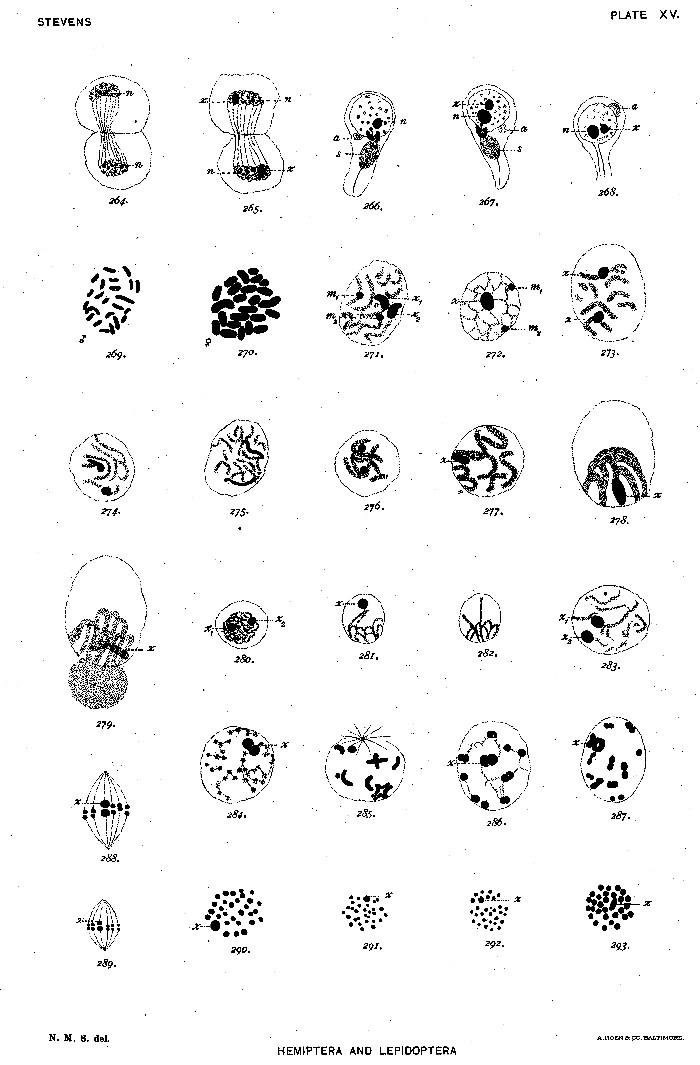
[The figures were all drawn with Zeiss oil-immersion 2 mm., oc. 12, and have been reduced one-third, giving a magnification of 1,000 diameters.]
Plate VIII.
Trirhabda virgata (Family Chrysomelidæ).
Fig. 1. Equatorial plate from somatic tissues of a male pupa, 27 large chromosomes, 1 small one.
2. Equatorial plate from an egg follicle, 28 large chromosomes.
3. Equatorial plate of spermatogonium, 27 large chromosomes, 1 small one.
4. First spermatocyte, synizesis stage.
5. First spermatocyte, early spireme stage, showing unequal pair of chromosomes.
6-7. First spermatocyte, later growth stages.
8. First spermatocyte, prophase.
9-12. First spermatocyte, metaphase.
13. First spermatocyte, equatorial plate.
14-15. First spermatocyte, anaphase, showing separation of the elements of the unequal pair (l and s).
16. First spermatocyte, daughter plates.
17. Second spermatocytes, equatorial plates.
18. Second spermatocytes, equatorial plates showing V-shaped chromosomes.
19. Second spermatocyte, early anaphase, the small chromosome in metakinesis.
Trirhabda canadense.
20. Equatorial plate from egg follicle, 30 large chromosomes.
21. Equatorial plate of spermatogonium, 29 large chromosomes, 1 small one.
22. First spermatocyte, growth stage showing the heterochromosome group.
23. Heterochromosome group. p = plasmosome, l = large heterochromosome, s = small heterochromosome.
24-27. First spermatocyte, metaphase.
28. First spermatocyte, equatorial plate.
29. First spermatocyte, equatorial plate, small member of the unequal pair only present.
30. First spermatocyte, daughter plates.
31. Second spermatocytes, equatorial plates.
32-33. Second spermatocytes, prophase.
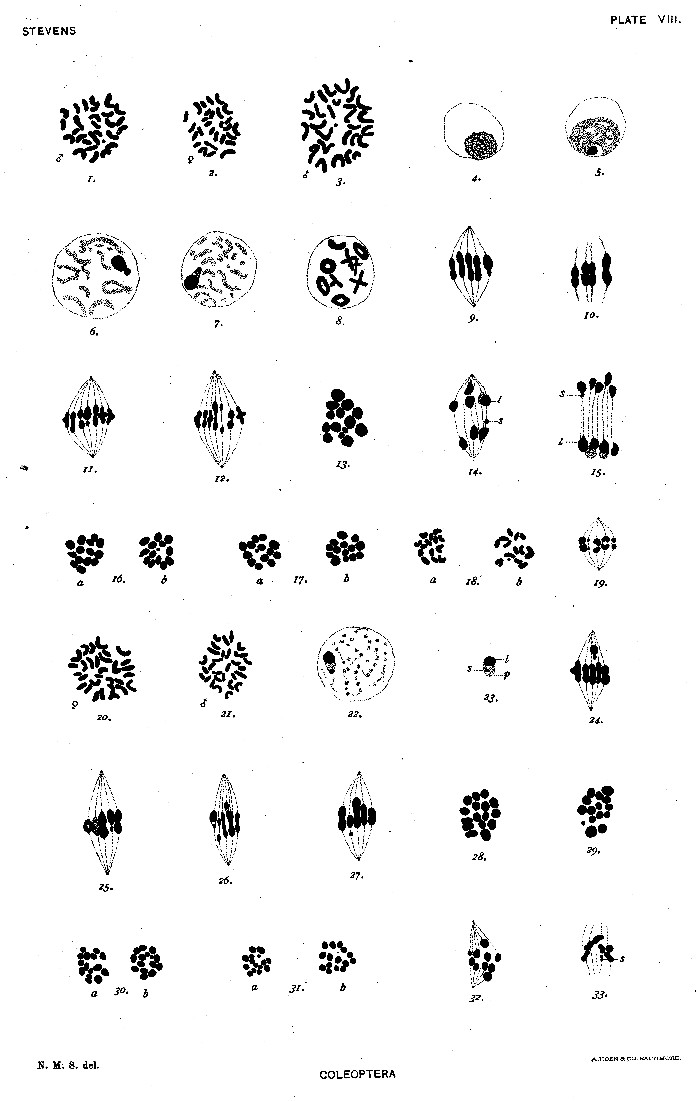
Plate IX.
Chelymortha argus (Family Chrysomelidæ).
Figs. 34-35. Equatorial plates from egg follicles, 11 equal pairs, no small chromosome.
36. Equatorial plate of spermatogonium, 21 large chromosomes, 1 small one.
37. First spermatocyte, synizesis stage.
38-40. First spermatocyte, synapsis stage.
41-43. First spermatocyte, bouquet stage after synapsis.
44-45. First spermatocyte, spireme stage showing the unequal pair of heterochromosomes.
46. First spermatocyte, prophase.
47-49. First spermatocyte, metaphase.
50-51. First spermatocyte, equatorial plates, x the heterochromosome pair.
52. First spermatocyte, showing metakinesis of the unequal pair.
53. First spermatocyte, anaphase.
54-55. Second spermatocyte, equatorial plates.
56. Second spermatocyte, anaphase.
Odontota dorsalis (Family Chrysomelidæ).
57. Equatorial plate of male somatic cell from walls of the testis, 15 large chromosomes, 1 small one.
58-59. Equatorial plates of spermatogonia, 15 large chromosomes, 1 small one.
60. Resting nucleus of spermatogonium, showing plasmosome (p).
61. First spermatocyte, synizesis stage.
62. First spermatocyte, synapsis stage.
63-64. First spermatocyte, spireme stage, showing the larger and smaller heterochromosome associated with a plasmosome.
65-68. First spermatocyte, prophases.
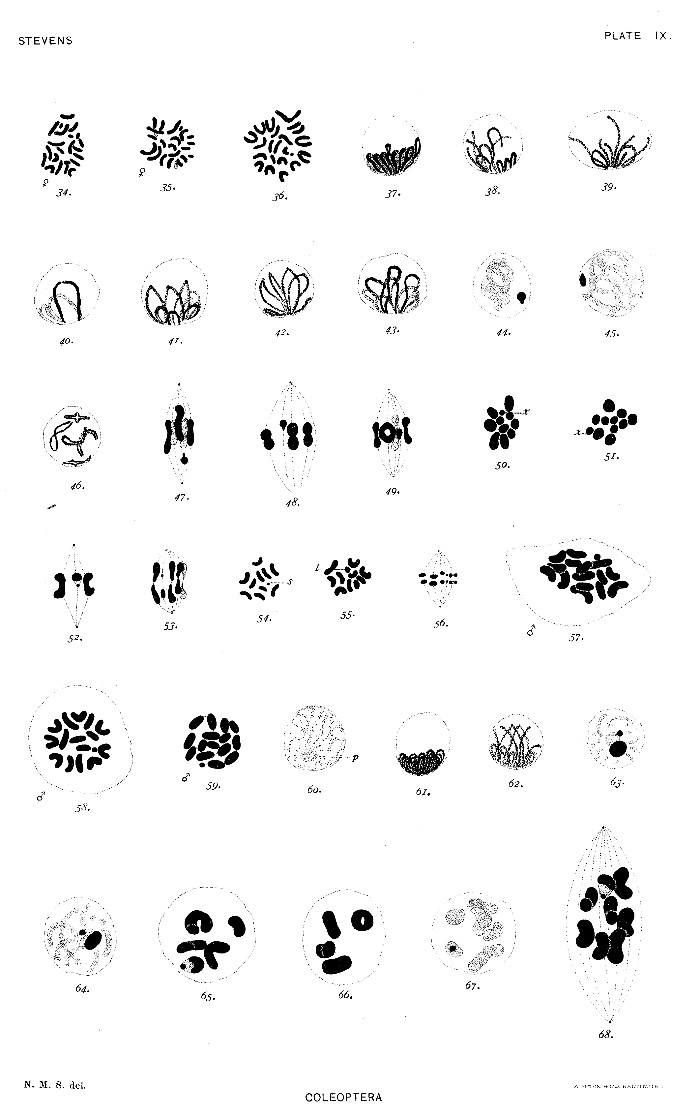
Plate X.
Odontota dorsalis.
Figs. 69-70. First spermatocyte, metaphase.
71. First spermatocyte, equatorial plate.
72. First spermatocyte, metaphase, showing metakinesis of the heterochromosomes.
73-74. First spermatocyte, anaphase.
75-76. Second spermatocyte, equatorial plates.
77. Second spermatocyte, showing metakinesis of the small chromosome (s).
78. Second spermatocyte, prophase, showing chromosomes longitudinally split.
79-80. Young spermatids, n the chromatin nucleolus.
81-87. A series of stages in the development of the sperm head, showing the various phases in the history of the chromatin nucleolus (n).
88. Cross-sections of nearly mature sperm heads.
89-90. Equatorial plates of spermatogonia of abnormal individual, 15 large chromosomes, 2 small ones.
91. First spermatocyte from same testis, spireme stage, showing 2 small chromosomes associated with 1 large one and a plasmosome.
92. First spermatocyte from the same testis, metaphase showing a similar heterochromosome group.
93. Second spermatocyte from same testis, equatorial plate, showing 2 small chromosomes.
Epilachna borealis (Family Coccinellidæ).
94. Equatorial plate of spermatogonium, 17 large chromosomes and 1 small one.
95. First spermatocyte, spireme stage, showing the unequal pair.
96-97. First spermatocyte, late prophases.
98. First spermatocyte, metaphase, showing chromosomes of different forms.
99-100. First spermatocyte, equatorial plate.
101. Unequal heterochromosome pair from a metaphase.
102. First spermatocyte, anaphase; ordinary chromosomes stippled to show more clearly the metakinesis of the unequal pair.
103. Second spermatocyte, equatorial plates.
104. Second spermatocyte, prophase.
105-106. Abnormal giant spermatids, probably in process of degeneration.
Euphoria inda (Family Scarabæidæ).
107. Equatorial plate of spermatogonium, 20 chromosomes. The 2 smallest are the unequal pair of heterochromosomes (l and s).
108. Resting spermatogonium, showing plasmosome (p).
109. First spermatocyte, spireme stage.
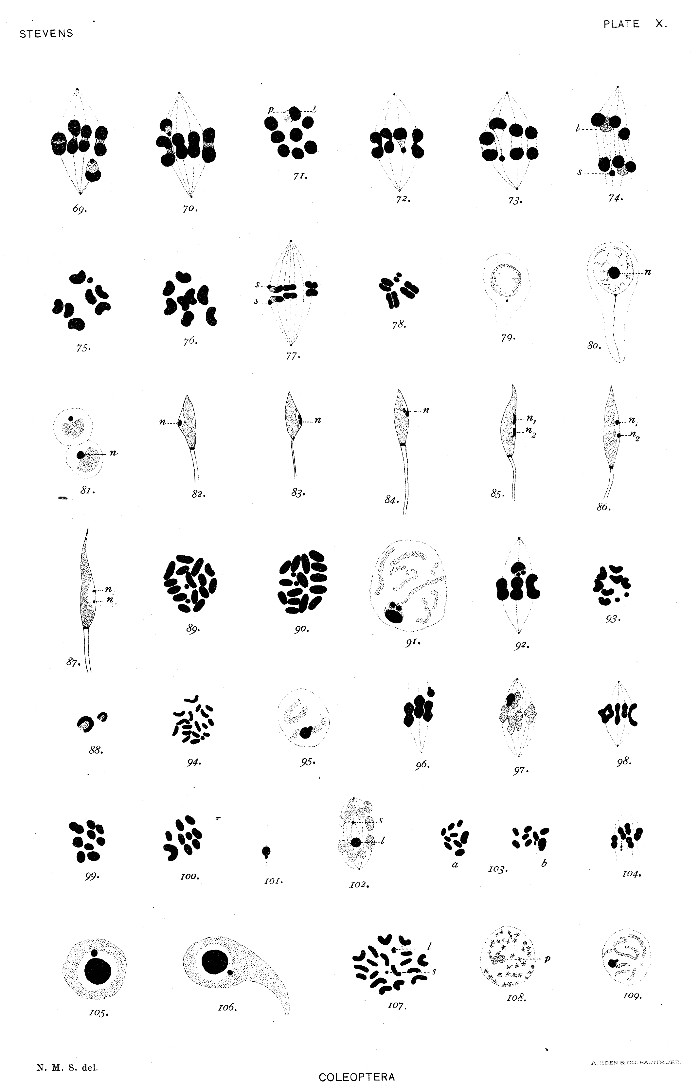
Plate XI.
Euphoria inda.
Figs. 110-111. First spermatocyte, prophases.
112-113. First spermatocyte, late prophase.
114-116. First spermatocyte, metaphase.
117. First spermatocyte, equatorial plate, x the unequal pair.
118-120. First spermatocyte, anaphase.
121. First spermatocyte, daughter plates.
122. Second spermatocyte, prophase.
123. Second spermatocyte, equatorial plates.
124-125. Second spermatocyte, daughter plates of the two classes.
126-127. Second spermatocyte, anaphase.
128-130. Spermatids, n the chromatin nucleolus.
Blepharida rhois (Family Chrysomelidæ).
131-132. First spermatocyte, spireme stages, showing the heterochromosome group.
133-135. First spermatocyte, beginning of metakinesis.
136. First spermatocyte, equatorial plate, x the unequal pair.
137. First spermatocyte, late anaphase, showing the heterochromosomes l and s.
138. Second spermatocyte, equatorial plates.
139-140. Second spermatocyte, daughter plates of the two classes.
Silpha americana (Family Silphidæ).
141. Equatorial plate of spermatogonium, 40 chromosomes—39 large, 1 small.
142. Resting nucleus of spermatogonium, showing 2 plasmosomes (p).
143-144. First spermatocyte, spireme stage.
145. First spermatocyte, prophase.
146-147. First spermatocyte, metaphase.
148. First spermatocyte, equatorial plate.
149. Second spermatocyte, equatorial plates.
150. Second spermatocyte, showing metakinesis of the small chromosome.
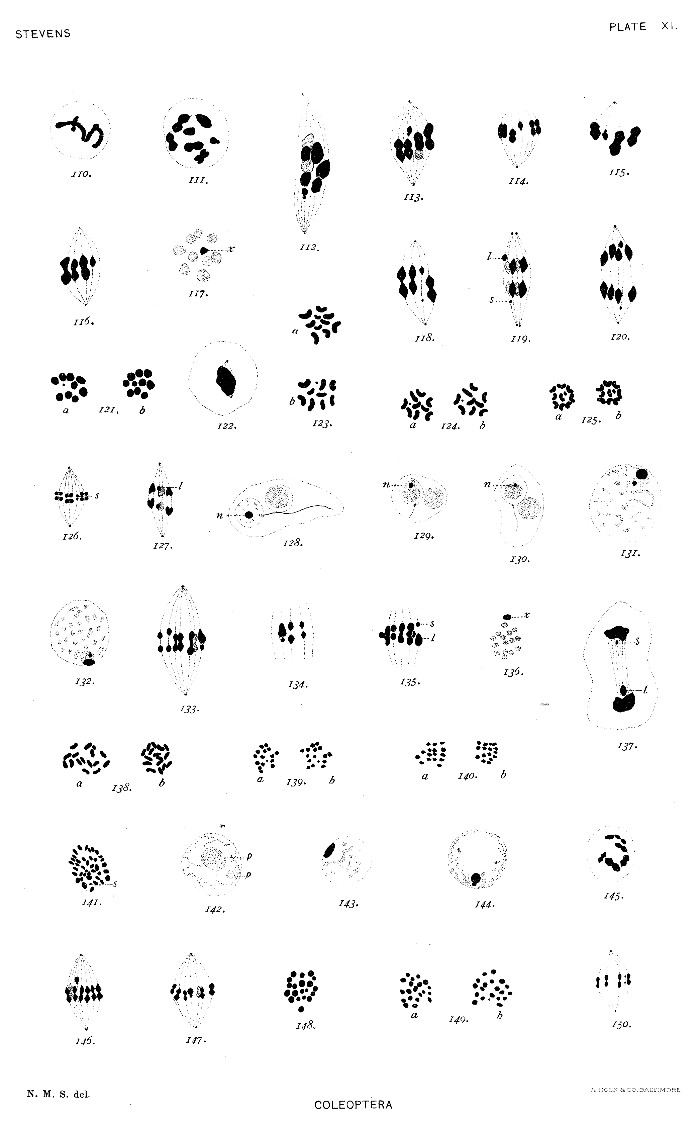
Plate XII.
Doryphora decemlineata (Family Chrysomelidæ).
Figs. 151-152. Equatorial plates of spermatogonia, 36 chromosomes—35 large, 1 small.
153. First spermatocyte, synizesis stage.
154. First spermatocyte, synapsis stage.
155-158. First spermatocyte, spireme stages.
159. First spermatocyte, spireme segmented and split.
160-163. First spermatocyte, prophases.
164-171. First spermatocyte, metaphase.
172. First spermatocyte, anaphase.
173-174. First spermatocyte, equatorial plates.
175-176. First spermatocyte, late anaphase.
177. Second spermatocyte, equatorial plates.
178-179. Second spermatocyte, telophase, a1, archoplasmic material.
180-186. Spermatids in different stages; a1, archoplasmic material from first spermatocyte spindle, a2 archoplasmic material from second maturation spindle.
Spruce-borers (Family Buprestidæ).
187. First spermatocyte, metaphase.
188-189. First spermatocyte, equatorial plates of two species, 10 and 11 chromosomes.
190. First spermatocyte, anaphase.
191. Second spermatocyte, equatorial plates containing 9 large chromosomes and 1 small one.
192. Chromosomes from prophase of the first spermatocyte, all from the same cyst.
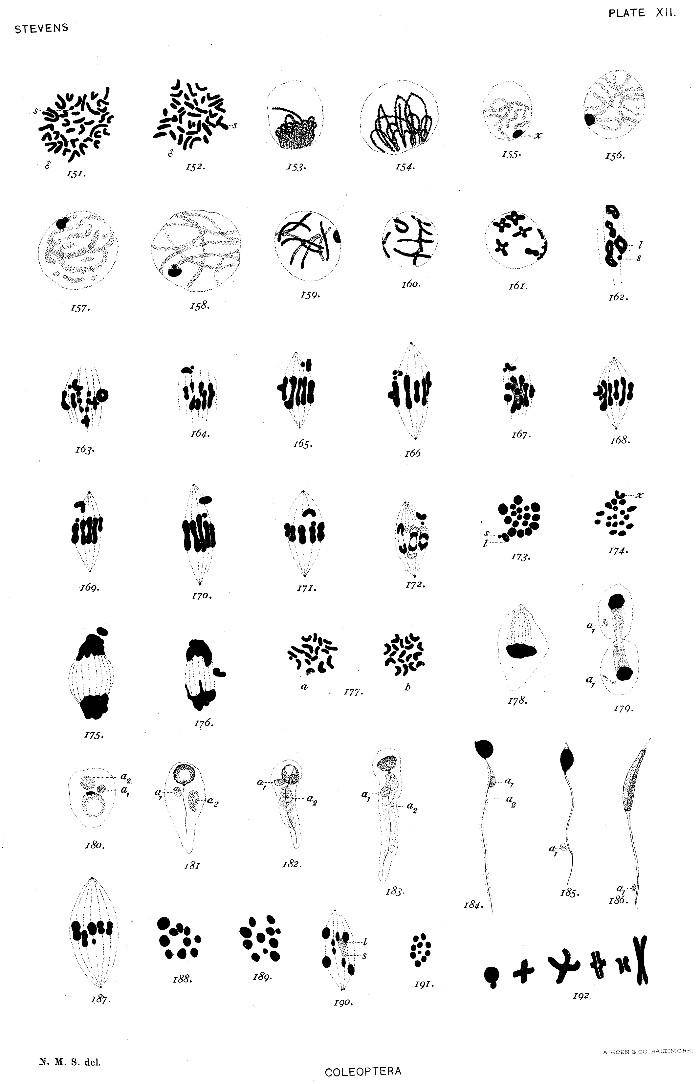
Plate XIII.
Adalia bipunctata (Family Coccinellidæ).
Fig. 193. Equatorial plate of spermatogonium, 20 chromosomes—19 large, 1 small.
194. First spermatocyte, spireme stage, x the heterochromosome group.
195. First spermatocyte, metaphase.
196. First spermatocyte, equatorial plate.
197. Second spermatocyte, equatorial plates.
Cicindela primeriana (Family Cicindelidæ).
198. Equatorial plate of spermatogonium, 20 chromosomes—19 large, 1 small.
199. First spermatocyte, spireme stage, x the heterochromosome group.
200. First spermatocyte, prophase.
201. First spermatocyte, metaphase, x the unequal pair in tripartite form.
202. First spermatocyte, showing metakinesis of the heterochromosomes (l and s).
203. First spermatocyte, equatorial plate.
204. Second spermatocyte, equatorial plates.
205. Giant spermatocyte, spireme stage, heterochromosome group double the usual size.
206. Giant spermatocyte, prophase.
Chlænius æstivus (Family Carabidæ).
207. First spermatocyte, spireme stage, showing the unequal pair associated with a large plasmosome.
208. First spermatocyte, metaphase.
209-210. First spermatocyte, beginning of metakinesis.
211. First spermatocyte, equatorial plate, 17 chromosomes.
212. First spermatocyte, anaphase, showing elongated centrosome and diverging univalent chromosomes.
Chlænius pennsylvanicus.
213. First spermatocyte, spireme stage.
214. First spermatocyte, equatorial plate, x the unequal bivalent.
215. First spermatocyte, late prophase.
Galerita bicolor (Family Carabidæ).
216. Equatorial plate of spermatogonium, 30 chromosomes—29 large, 1 small.
Anomoglossus emarginatus (Family Carabidæ).
217. First spermatocyte, growth stage, x the odd chromosome.
218. First spermatocyte, prophase.
219-220. First spermatocytes, metaphase, x the odd chromosome.
221. First spermatocyte, equatorial plate.
222. First spermatocyte, daughter plates containing 18 and 19 chromosomes, respectively.
223. Second spermatocytes, equatorial plates.
Elater I (Family Elateridæ, species not determined).
224. Equatorial plate of spermatogonium, 19 chromosomes, x the odd one.
225. First spermatocyte, spireme stage, x the odd chromosome.
226. First spermatocyte, metaphase.
227. First spermatocyte, prophase.
228. First spermatocyte, equatorial plate.
229. Equatorial plate from egg follicle, 20 chromosomes, x1 and x2 the pair corresponding to x in the spermatogonium.
Elater II (Species not determined).
230. Equatorial plate of spermatogonium, 19 chromosomes, x the odd one.
231. First spermatocyte, spireme stage.
232. First spermatocyte, prophase.
233. First spermatocyte, beginning of metakinesis.
234. First spermatocyte, equatorial plate, x the odd chromosome.
235. A pair of second spermatocytes in metaphase, two chromosomes connected, x the odd chromosome.
Ellychnia corrusca (Family Lampyridæ).
236. Equatorial plate of spermatogonium, 19 chromosomes.
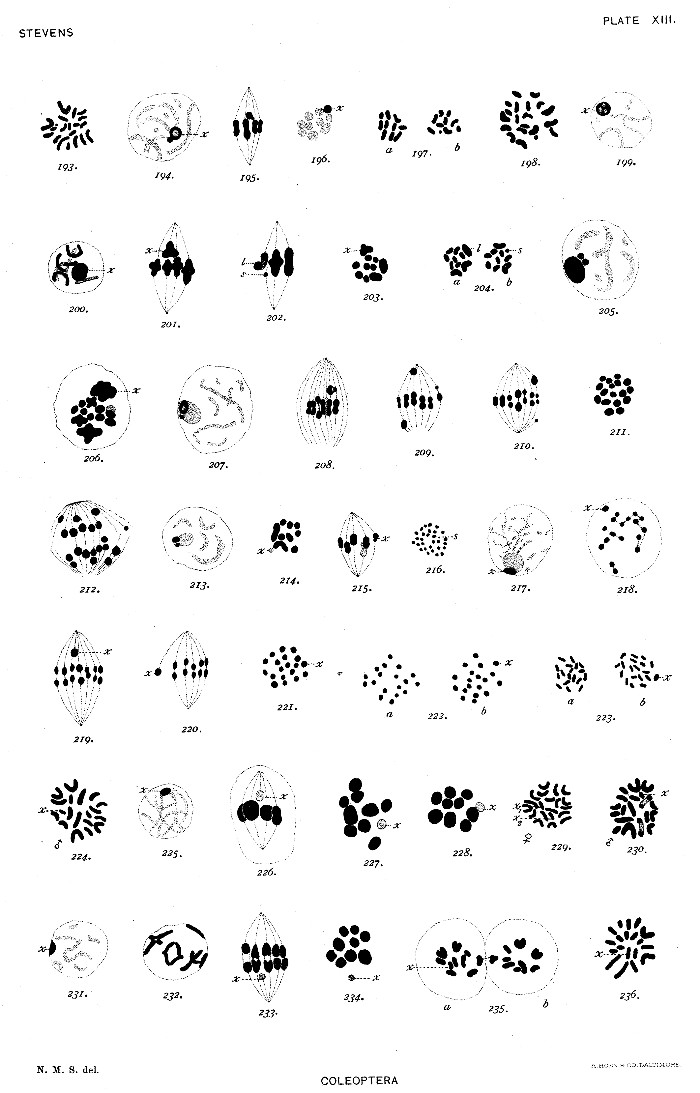
Plate XIV.
Aphrophora quadrangularis (Hemiptera homoptera).
Fig. 237. Resting primary spermatogonium with lobed nucleus.
238. Resting secondary spermatogonium, with nucleus staining much more deeply.
239. Equatorial plate of secondary spermatogonium, 23 chromosomes.
240. First spermatocytes, very early growth stage, x the odd chromosome.
241-243. First spermatocyte, later spireme stages, showing the odd chromosome (x) and a pair of m-chromosomes (m).
244. Similar stage from a safranin-gentian preparation.
245. First spermatocyte, split-spireme stage, x the odd chromosome, m the m-chromosome tetrad.
246. Similar stage from a safranin-gentian preparation.
247-248. First spermatocyte, condensation of chromatin granules to form tetrads in the linin spireme.
249. Later tetrad stage.
250-251. First spermatocytes, metaphase from mercuro-nitric material.
252-254. Similar stages from Hermann material, showing longitudinal split in both the bivalents, and the odd chromosome (x).
255. First spermatocyte, anaphase.
256. First spermatocyte, telophase.
257. First spermatocyte, daughter plates containing 11 and 12 chromosomes, respectively.
258. First spermatocyte, a and c daughter plates, each containing 11 chromosomes, x the odd chromosome at a different level (b).
259. Second spermatocyte, equatorial plates of the two classes.
260. Second spermatocyte, metaphase.
261. Second spermatocyte, anaphase.
262-263. Second spermatocyte, daughter plates of the two classes.
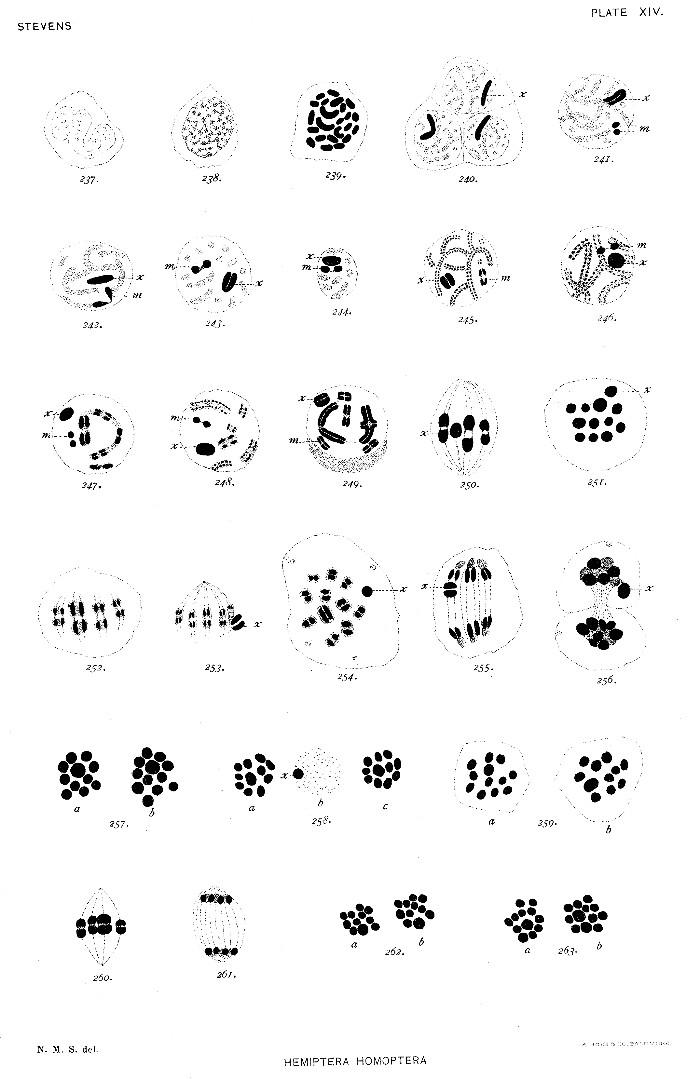
Plate XV.
Aphrophora quadrangularis.
Figs. 264-265. Second spermatocyte, telophase, showing chromatin nucleolus (n) and the products of division of the odd chromosome (x).
266. A spermatid containing the chromatin nucleolus (n).
267-268. Spermatids containing both the chromatin nucleolus (n) and the odd chromosome (x), a the acrosome.
269. Equatorial plate from a somatic cell of a male larva, 23 chromosomes.
270. Equatorial plate of an oögonium, 24 chromosomes.
271. Resting nucleus of a young oöcyte before synapsis, showing two pairs of condensed chromosomes, corresponding in size to the m-chromosomes and the odd chromosome of the spermatocytes.
272-277. Sections of nuclei of oöcytes, showing one or more of these heterochromosomes, from safranin-gentian preparations.
278-279. Bouquet stage from iron-hæmatoxylin preparations, showing the heterochromosome bivalent (x).
Cacœcia cerasivorana (Lepidoptera).
280. First spermatocyte, synizesis stage, showing 2 condensed chromosomes (x1 and x2).
281-282. First spermatocyte, synapsis stage.
283-284. First spermatocyte, growth stages.
285. First spermatocyte, prophase.
286-287. First spermatocyte, later prophases, showing the heterochromosome pair (x).
288. First spermatocyte, metaphase.
289. Second spermatocyte, metaphase.
290. First spermatocyte, equatorial plate.
291-292. Second spermatocyte, equatorial plates.
Euvanessa antiopa (Lepidoptera).
293. First spermatocyte, equatorial plate.