Songs and Lyrics (continued 2)
Reading edition
POOR MAILIE’S ELEGY
Lament in rhyme, lament in prose, Wi’ saut tears tricklin’ down your nose; Our bardie’s fate is at a close, Past a’ remead; The last sad cape-stane of his woes— Poor Mailie’s dead! It’s no the loss o’ warl’s gear That could sae bitter draw the tear, Or mak our bardie, dowie, wear The mourning weed: He’s lost a friend and neibor dear In Mailie dead. Thro’ a’ the toun she trotted by him; A lang half-mile she could descry him; Wi’ kindly bleat, when she did spy him, She ran wi’ speed: A friend mair faithfu’ ne’er cam nigh him Than Mailie dead. I wat she was a sheep o’ sense, An’ could behave hersel wi’ mense; I’ll say’t, she never brak a fence Thro’ thievish greed. Our bardie, lanely, keeps the spence Sin’ Mailie’s dead. Or, if he wanders up the howe, Her living image in her yowe Comes bleating to him, owre the knowe, For bits o’ bread, An’ down the briny pearls rowe For Mailie dead. She was nae get o’ moorland tups, Wi’ tawted ket, an’ hairy hips; For her forbears were brought in ships Frae yont the Tweed: A bonnier fleesh ne’er cross’d the clips Than Mailie’s, dead. Wae worth the man wha first did shape That vile wanchancie thing—a rape! It maks guid fellows girn an’ gape, Wi’ chokin’ dread; An’ Robin’s bonnet wave wi’ crape For Mailie dead. O a’ ye bards on bonnie Doon! An’ wha on Ayr your chanters tune! Come, join the melancholious croon O’ Robin’s reed; His heart will never get aboon His Mailie dead!
THE BARDS OF AYR
To W. Simpson, 1785
I gat your letter, winsome Willie; Wi’ gratefu’ heart I thank you brawlie; Tho’ I maun say’t, I wad be silly, An’ unco vain, Should I believe, my coaxin’ billie, Your flatterin’ strain. My senses wad be in a creel, Should I but dare a hope to speel, Wi’ Allan, or wi’ Gilbertfield, The braes o’ fame; Or Fergusson, the writer-chiel, A deathless name. Yet when a tale comes i’ my head, Or lasses gie my heart a screed, As whiles they’re like to be my dead, (O sad disease!) I kittle up my rustic reed; It gies me ease. Auld Coila, now, may fidge fu’ fain, She’s gotten poets o’ her ain, Chiels wha their chanters winna hain, But tune their lays, Till echoes a’ resound again Her weel-sung praise. Nae poet thought her worth his while, To set her name in measur’d style; She lay like some unkenn’d-of isle, Beside New Holland, Or where wild-meeting oceans boil Besouth Magellan. Ramsay an’ famous Fergusson Gied Forth an’ Tay a lift aboon; Yarrow an’ Tweed, to mony a tune, Owre Scotland rings, While Irwin, Lugar, Ayr, an’ Doon, Naebody sings. Th’ Illissus, Tiber, Thames, an’ Seine, Glide sweet in mony a tunefu’ line; But, Willie, set your fit to mine, An’ cock your crest, We’ll gar our streams an’ burnies shine Up wi’ the best. We’ll sing auld Coila’s plains an’ fells, Her moors red-brown wi’ heather bells, Her banks an’ braes, her dens an’ dells, Where glorious Wallace Aft bure the gree, as story tells, Frae Southron billies. At Wallace’ name, what Scottish blood But boils up in a spring-tide flood! Oft have our fearless fathers strode By Wallace’ side, Still pressing onward, red-wat-shod, Or glorious died. O, sweet are Coila’s haughs an’ woods, When lintwhites chant amang the buds, And jinkin’ hares, in amorous whids, Their loves enjoy, While thro’ the braes the cushat croods Wi’ wailfu’ cry! Ev’n winter bleak has charms to me When winds rave thro’ the naked tree; Or frost on hills of Ochiltree Are hoary gray; Or blinding drifts wild-furious flee, Dark’ning the day! O Nature! a’ thy shews an’ forms To feeling, pensive hearts hae charms! Whether the summer kindly warms, Wi’ life an’ light, Or winter howls, in gusty storms, The lang, dark night! The Muse, nae poet ever fand her, Till by himsel he learn’d to wander Adown some trottin’ burn’s meander, An’ no think lang; O sweet, to stray an’ pensive ponder A heart-felt sang! The warly race may drudge an’ drive, Hog-shouther, jundie, stretch, an’ strive; Let me fair Nature’s face descrive, And I, wi’ pleasure, Shall let the busy, grumbling hive Bum owre their treasure. Fareweel, ‘my rhyme-composing brither!’ We’ve been owre lang unkenn’d to ither: Now let us lay our heads thegither, In love fraternal; May Envy wallop in a tether, Black fiend infernal! While Highlandmen hate tolls an’ taxes; While moorlan’ herds like guid fat braxies; While Terra Firma, on her axis, Diurnal turns, Count on a friend, in faith an’ practice, In Robert Burns.
LAST MAY A BRAW WOOER
Last May a braw wooer cam down the lang glen, And sair wi’ his love he did deave me: I said there was naething I hated like men— The deuce gae wi’m to believe me, believe me, The deuce gae wi’m to believe me. He spak o’ the darts in my bonnie black een, And vow’d for my love he was dying; I said he might die when he liked for Jean: The Lord forgie me for lying, for lying, The Lord forgie me for lying! A weel-stockèd mailen, himsel’ for the laird, And marriage aff-hand were his proffers: I never loot on that I kend it, or car’d; But thought I might hae waur offers, waur offers, But thought I might hae waur offers. But what wad ye think? in a fortnight or less, The deil tak his taste to gae near her! He up the lang loan to my black cousin Bess, Guess ye how, the jad! I could bear her, could bear her, Guess ye how, the jad! I could bear her. But a’ the niest week as I fretted wi’ care, I gaed to the tryst o’ Dalgarnock; And wha but my fine fickle lover was there? I glowr’d as I’d seen a warlock, a warlock. I glowr’d as I’d seen a warlock. But owre my left shouther I gae him a blink, Lest neebors might say I was saucy; My wooer he caper’d as he’d been in drink, And vow’d I was his dear lassie, dear lassie, And vow’d I was his dear lassie. I spier’d for my cousin fu’ couthy and sweet, Gin she had recover’d her hearin’, And how her new shoon fit her auld shachl’t feet— But, heavens! how he fell a swearin’, a swearin’, But, heavens! how he fell a swearin’. He beggèd for Gudesake I wad be his wife, Or else I wad kill him wi’ sorrow: So e’en to preserve the poor body in life, I think I maun wed him to-morrow, to-morrow, I think I maun wed him to-morrow.
I’M OWRE YOUNG TO MARRY YET
I am my mammie’s ae bairn, Wi’ unco folk I weary, Sir; And lying in a man’s bed, I’m fley’d wad mak me eerie, Sir. I’m owre young, I’m owre young, I’m owre young to marry yet; I’m owre young, ’twad be a sin To tak me frae my mammie yet. My mammie coft me a new gown, The kirk maun hae the gracing o’t; Were I to lie wi’ you, kind Sir, I’m fear’d ye’d spoil the lacing o’t. Hallowmas is come and gane, The nights are lang in winter, Sir; And you an’ I in ae bed, In troth I dare na venture, Sir. Fu’ loud and shrill the frosty wind Blaws thro’ the leafless timmer, Sir; But if ye come this gate again, I’ll aulder be gin simmer, Sir. I’m owre young, I’m owre young, I’m owre young to marry yet; I’m owre young, ’twad be a sin To tak me frae my mammie yet.
WHAT CAN A YOUNG LASSIE DO WI’ AN AULD MAN?
What can a young lassie, what shall a young lassie, What can a young lassie do wi’ an auld man? Bad luck on the penny that tempted my minnie To sell her poor Jenny for siller an’ lan’! He’s always compleenin’ frae mornin’ to e’enin’, He hosts and he hirples the weary day lang: He’s doylt and he’s dozin, his bluid it is frozen, O, dreary’s the night wi’ a crazy auld man! He hums and he hankers, he frets and he cankers, I never can please him do a’ that I can; He’s peevish, and jealous of a’ the young fellows: O, dool on the day I met wi’ an auld man! My auld auntie Katie upon me takes pity, I’ll do my endeavour to follow her plan; I’ll cross him and rack him, until I heart-break him, And then his auld brass will buy me a new pan.
TO THE WEAVERS GIN YE GO
My heart was ance as blythe and free As simmer days were lang, But a bonnie westlin weaver lad Has gart me change my sang. To the weavers gin ye go, fair maids, To the weavers gin ye go; I rede you right gang ne’er at night, To the weavers gin ye go. My mither sent me to the town, To warp a plaiden wab; But the weary, weary warpin o’t Has gart me sigh and sab. A bonnie westlin weaver lad Sat working at his loom; He took my heart as wi’ a net, In every knot and thrum. I sat beside my warpin-wheel, And aye I ca’d it roun’; But every shot and every knock, My heart it gae a stoun. The moon was sinking in the west Wi’ visage pale and wan As my bonnie westlin weaver lad Convoy’d me through the glen. But what was said, or what was done, Shame fa’ me gin I tell; But oh! I fear the kintra soon Will ken as weel’s mysel. To the weavers gin ye go, fair maids, To the weavers gin ye go; I rede you right gang ne’er at night, To the weavers gin ye go.
ADDRESS TO THE UNCO GUID, OR THE RIGIDLY RIGHTEOUS
My son, these maxims make a rule, And lump them aye thegither: The rigid righteous is a fool, The rigid wise anither: The cleanest corn that e’er was dight, May hae some pyles o’ caff in; So ne’er a fellow-creature slight For random fits o’ daffin. Solomon (Eccles. vii. 16). O ye wha are sae guid yoursel, Sae pious and sae holy, Ye’ve nought to do but mark and tell Your neibour’s fauts and folly! Whase life is like a weel-gaun mill, Supplied wi’ store o’ water: The heaped happer’s ebbing still, And still the clap plays clatter: Hear me, ye venerable core, As counsel for poor mortals, That frequent pass douce Wisdom’s door, For glaikit Folly’s portals; I, for their thoughtless careless sakes, Would here propone defences,— Their donsie tricks, their black mistakes, Their failings and mischances. Ye see your state wi’ theirs compar’d, And shudder at the niffer; But cast a moment’s fair regard— What maks the mighty differ? Discount what scant occasion gave That purity ye pride in, And (what’s aft mair than a’ the lave) Your better art o’ hidin’. Think, when your castigated pulse Gies now and then a wallop, What ragings must his veins convulse, That still eternal gallop! Wi’ wind and tide fair i’ your tail, Right on ye scud your sea-way; But in the teeth o’ baith to sail, It maks an unco leeway. See Social life and Glee sit down, All joyous and unthinking, Till, quite transmogrified, they’re grown Debauchery and Drinking: O would they stay to calculate Th’ eternal consequences; Or your more dreaded hell to state, Damnation of expenses! Ye high, exalted, virtuous Dames, Tied up in godly laces, Before ye gie poor Frailty names, Suppose a change o’ cases; A dear lov’d lad, convenience snug, A treacherous inclination— But, let me whisper i’ your lug, Ye’re aiblins nae temptation. Then gently scan your brother man, Still gentler sister woman; Tho’ they may gang a kennin wrang, To step aside is human. One point must still be greatly dark, The moving why they do it; And just as lamely can ye mark How far perhaps they rue it. Who made the heart, ’tis He alone Decidedly can try us; He knows each chord, its various tone, Each spring, its various bias. Then at the balance let’s be mute, We never can adjust it; What’s done we partly may compute, But know not what’s resisted.
CA’ THE YOWES TO THE KNOWES
Hark! the mavis’ e’ening sang, Sounding Clouden’s woods amang; Then a-faulding let us gang, My bonnie dearie. Ca’ the yowes to the knowes, Ca’ them where the heather grows, Ca’ them where the burnie rowes, My bonnie dearie. We’ll gae down by Clouden side, Thro’ the hazels, spreading wide, O’er the waves that sweetly glide, To the moon sae clearly. Ca’ the yowes, etc. Yonder’s Clouden’s silent towers, Where at moonshine midnight hours, O’er the dewy bending flowers, Fairies dance sae cheery. Ca’ the yowes, etc. Ghaist nor bogle shalt thou fear; Thou’rt to love and Heav’n sae dear, Nocht of ill may come thee near, My bonnie dearie. Ca’ the yowes, etc. Fair and lovely as thou art, Thou hast stown my very heart; I can die—but canna part, My bonnie dearie. Ca’ the yowes to the knowes, Ca’ them where the heather grows, Ca’ them where the burnie rowes, My bonnie dearie.
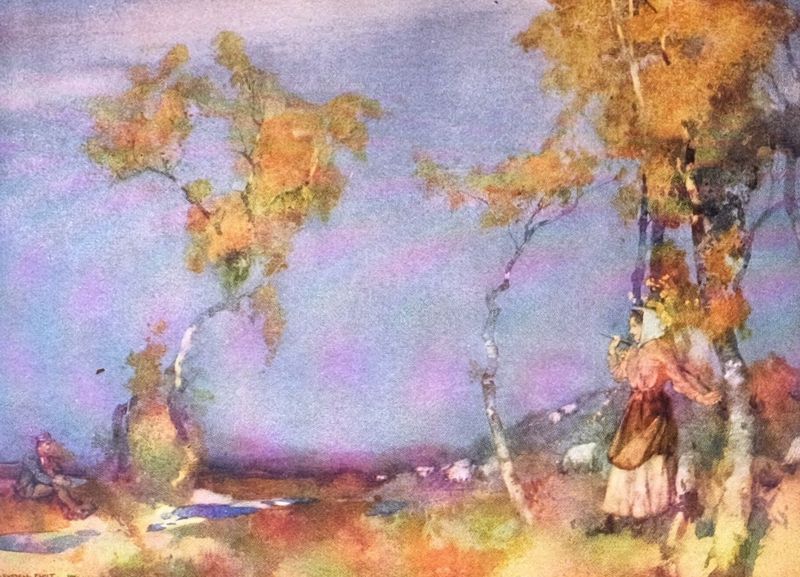
Hark! the mavis’ e’ening sang, Sounding Clouden’s woods amang.
AYE SHE WROUGHT HER MAMMIE’S WARK
There was a lass, and she was fair, At kirk and market to be seen; When a’ the fairest maids were met, The fairest maid was bonnie Jean. And aye she wrought her mammie’s wark, And aye she sang sae merrily: The blythest bird upon the bush Had ne’er a lighter heart than she. But hawks will rob the tender joys That bless the little lintwhite’s nest; And frost will blight the fairest flowers, And love will break the soundest rest. Young Robie was the brawest lad. The flower and pride of a’ the glen; And he had owsen, sheep and kye, And wanton naigies nine or ten. He gaed wi’ Jeanie to the tryst, He danc’d wi’ Jeanie on the down; And lang ere witless Jeanie wist, Her heart was tint, her peace was stown. As in the bosom o’ the stream The moon-beam dwells at dewy e’en; So trembling, pure, was tender love Within the breast o’ bonnie Jean. And now she works her mammie’s wark, And aye she sighs wi’ care and pain; Yet wistna what her ail might be, Or what wad mak her weel again. But didna Jeanie’s heart loup light, And didna joy blink in her e’e, As Robie tauld a tale o’ love, Ae e’enin’ on the lily lea? The sun was sinking in the west, The birds sang sweet in ilka grove; His cheek to hers he fondly prest, And whisper’d thus his tale o’ love: ‘O Jeanie fair, I lo’e thee dear; O canst thou think to fancy me? Or wilt thou leave thy mammie’s cot, And learn to tent the farms wi’ me? ‘At barn or byre thou shaltna drudge, Or naething else to trouble thee; But stray amang the heather-bells, And tent the waving corn wi’ me.’ Now what could artless Jeanie do? She had nae will to say him na: At length she blush’d a sweet consent, And love was aye between them twa.
OPEN THE DOOR TO ME, OH!
‘Oh, open the door, some pity to shew, Oh, open the door to me, oh! Tho’ thou hast been false, I’ll ever prove true, Oh, open the door to me, oh! ‘Cauld is the blast upon my pale cheek, But caulder thy love for me, oh! The frost that freezes the life at my heart, Is nought to my pains frae thee, oh! ‘The wan moon is setting ayont the white wave, And time is setting with me, oh! False friends, false love, farewell! for mair I’ll ne’er trouble them, nor thee, oh!’ She has open’d the door, she has open’d it wide; She sees his pale corse on the plain, oh! ‘My true love!’ she cried, and sank down by his side, Never to rise again, oh!
WANDERING WILLIE
Here awa, there awa, wandering Willie, Here awa, there awa, haud awa hame; Come to my bosom, my ain only dearie, Tell me thou bring’st me my Willie the same. Winter winds blew loud and cauld at our parting, Fears for my Willie brought tears to my e’e; Welcome now, Simmer, and welcome, my Willie, The Simmer to nature, my Willie to me! Rest, ye wild storms, in the cave of your slumbers; How your dread howling a lover alarms! Wauken, ye breezes, row gently, ye billows, And waft my dear laddie ance mair to my arms. But oh, if he’s faithless, and minds na his Nannie, Flow still between us, thou wide roaring main; May I never see it, may I never trow it, But, dying, believe that my Willie’s my ain!
OUT OVER THE FORTH
Out over the Forth I look to the north, But what is the north and its Highlands to me? The south nor the east gie ease to my breast, The far foreign land, or the wild rolling sea. But I look to the west, when I gae to rest, That happy my dreams and my slumbers may be; For far in the west lives he I lo’e best, The lad that is dear to my babie and me.
THOU HAST LEFT ME EVER, JAMIE
Thou hast left me ever, Jamie, Thou hast left me ever; Thou hast left me ever, Jamie, Thou hast left me ever. Aften hast thou vow’d that death Only should us sever; Now thou’st left thy lass for aye— I maun see thee never, Jamie, I’ll see thee never! Thou hast me forsaken, Jamie, Thou hast me forsaken; Thou hast me forsaken, Jamie, Thou hast me forsaken. Thou canst love anither jo, While my heart is breaking; Soon my weary e’en I’ll close— Never mair to waken, Jamie, Ne’er mair to waken!
ROWTH O’ RHYMES THE POET’S RICHES
(Epistle to James Smith, 1786)
Dear Smith, the sleeest pawkie thief That e’er attempted stealth or rief, Ye surely hae some warlock-breef Owre human hearts; For ne’er a bosom yet was prief Against your arts. For me, I swear by sun an’ moon, And ev’ry star that blinks aboon, Ye’ve cost me twenty pair o’ shoon Just gaun to see you; And ev’ry ither pair that’s done, Mair taen I’m wi’ you. That auld capricious carlin’, Nature, To mak amends for scrimpit stature, She’s turn’d you aff, a human creature On her first plan, And in her freaks, on ev’ry feature, She’s wrote ‘The Man.’ Some rhyme a neebor’s name to lash; Some rhyme (vain thought!) for needfu’ cash; Some rhyme to court the country clash, An’ raise a din; For me, an aim I never fash; I rhyme for fun. The star that rules my luckless lot, Has fated me the russet coat, An’ damn’d my fortune to the groat; But, in requit, Has blest me with a random shot O’ country wit. This while my notion’s taen a sklent, To try my fate in guid, black prent; But still the mair I’m that way bent, Something cries ‘Hoolie! I red you, honest man, tak tent! Ye’ll shaw your folly. ‘There’s ither poets, much your betters, Far seen in Greek, deep men o’ letters, Hae thought they had ensured their debtors A’ future ages; Now moths deform in shapeless tatters Their unknown pages.’ Then fareweel hopes o’ laurel-boughs, To garland my poetic brows! Henceforth I’ll rove where busy ploughs Are whistling thrang, An’ teach the lanely heights an’ howes My rustic sang. I’ll wander on, wi’ tentless heed How never-halting moments speed, Till fate shall snap the brittle thread; Then, all unknown, I’ll lay me with th’ inglorious dead, Forgot and gone! But why o’ death begin a tale? Just now we’re living sound and hale; Then top and maintop crowd the sail, Heave Care o’er side! And large, before Enjoyment’s gale, Let’s tak the tide. This life, sae far’s I understand, Is a’ enchanted fairy-land, Where pleasure is the magic wand, That, wielded right, Maks hours like minutes, hand in hand, Dance by fu’ light. The magic wand then let us wield: For, ance that five-an’-forty’s speel’d, See, crazy, weary, joyless Eild, Wi’ wrinkled face, Comes hoastin’, hirplin’ owre the field, Wi’ creepin’ pace. When ance life’s day draws near the gloamin’ Then fareweel vacant careless roamin’; An’ fareweel cheerfu’ tankards foamin’, An’ social noise; An’ fareweel dear deluding woman, The joy of joys! O life, how pleasant is thy morning, Young Fancy’s rays the hills adorning! Cold-pausing Caution’s lesson scorning, We frisk away, Like schoolboys, at th’ expected warning, To joy and play. We wander there, we wander here, We eye the rose upon the brier, Unmindful that the thorn is near, Among the leaves: And tho’ the puny wound appear, Short while it grieves. Some, lucky, find a flow’ry spot, For which they never toil’d nor swat; They drink the sweet and eat the fat, But care or pain; And, haply, eye the barren hut With high disdain. With steady aim, some Fortune chase; Keen hope does ev’ry sinew brace; Thro’ fair, thro’ foul, they urge the race, And seize the prey; Then cannie, in some cozie place, They close the day. And others, like your humble servan’, Poor wights! nae rules nor roads observin’, To right or left, eternal swervin’, They zig-zag on; Till curst with age, obscure an’ starvin’, They often groan. Alas! what bitter toil an’ straining— But truce wi’ peevish, poor complaining! Is Fortune’s fickle Luna waning? E’en let her gang! Beneath what light she has remaining, Let’s sing our sang. My pen I here fling to the door, And kneel ‘Ye Pow’rs!’ and warm implore, ‘Tho’ I should wander Terra o’er, In all her climes, Grant me but this, I ask no more, Aye rowth o’ rhymes. ‘Gie dreeping roasts to country lairds, Till icicles hing frae their beards; Gie fine braw claes to fine life-guards, And maids of honour; And yill an’ whisky gie to cairds, Until they sconner. ‘A title, Dempster merits it; A garter gie to Willie Pitt; Gie wealth to some be-ledger’d cit, In cent per cent; But gie me real, sterling wit, And I’m content. ‘While ye are pleased to keep me hale, I’ll sit down o’er my scanty meal, Be’t water-brose, or muslin-kail, Wi’ cheerfu’ face, As lang’s the Muses dinna fail To say the grace.’ An anxious e’e I never throws Behint my lug, or by my nose; I jouk beneath misfortune’s blows As weel’s I may; Sworn foe to sorrow, care, and prose, I rhyme away. O ye douce folk, that live by rule, Grave, tideless-blooded, calm, and cool, Compar’d wi’ you—O fool! fool! fool! How much unlike! Your hearts are just a standing pool, Your lives a dyke! Nae hare-brain’d sentimental traces, In your unletter’d, nameless faces! In arioso trills and graces Ye never stray, But gravissimo, solemn basses, Ye hum away. Ye are sae grave, nae doubt ye’re wise; Nae ferly tho’ ye do despise The hairum-scairum, ram-stam boys, The rattlin’ squad: I see you upward cast your eyes— Ye ken the road. Whilst I—but I shall haud me there— Wi’ you I’ll scarce gang ony where— Then, Jamie, I shall say nae mair, But quat my sang, Content with You to mak a pair, Where’er I gang.
THE KIRK OF LAMINGTON
As cauld a wind as ever blew, A cauld kirk, and in’t but few; As cauld a minister’s ever spak— Ye’se a’ be het or I come back!
YE BANKS AND BRAES
Ye banks and braes o’ bonnie Doon, How can ye bloom sae fresh and fair? How can ye chant, ye little birds, And I sae weary fu’ o’ care? Thou’lt break my heart, thou warbling bird, That wantons thro’ the flowering thorn: Thou minds me o’ departed joys, Departed never to return. Aft hae I rov’d by bonnie Doon, To see the rose and woodbine twine; And ilka bird sang o’ its love, And fondly sae did I o’ mine. Wi’ lightsome heart I pu’d a rose, Fu’ sweet upon its thorny tree; And my fause lover stole my rose, But ah! he left the thorn wi’ me.
NOW WESTLIN WINDS
Now westlin winds and slaughtering guns Bring autumn’s pleasant weather; The moorcock springs, on whirring wings, Amang the blooming heather: Now waving grain, wide o’er the plain, Delights the weary farmer; And the moon shines bright, when I rove at night To muse upon my charmer. The partridge loves the fruitful fells; The plover loves the mountains; The woodcock haunts the lonely dells; The soaring hern the fountains: Thro’ lofty groves the cushat roves, The path of man to shun it; The hazel bush o’erhangs the thrush, The spreading thorn the linnet. Thus ev’ry kind their pleasure find, The savage and the tender; Some social join, and leagues combine; Some solitary wander; Avaunt, away! the cruel sway, Tyrannic man’s dominion; The sportsman’s joy, the murdering cry, The fluttering, gory pinion! But, Peggy dear, the ev’ning’s clear, Thick flies the skimming swallow; The sky is blue, the fields in view, All fading-green and yellow: Come let us stray our gladsome way, And view the charms of nature; The rustling corn, the fruited thorn, And every happy creature. We’ll gently walk, and sweetly talk, Till the silent moon shine clearly; I’ll grasp thy waist, and, fondly prest, Swear how I love thee dearly: Not vernal show’rs to budding flow’rs, Not autumn to the farmer, So dear can be as thou to me, My fair, my lovely charmer!
AULD ROB MORRIS
There’s auld Rob Morris that wons in yon glen, He’s the king o’ gude fellows and wale of auld men; He has gowd in his coffers, he has owsen and kine, And ae bonnie lassie, his darling and mine. She’s fresh as the morning, the fairest in May; She’s sweet as the ev’ning amang the new hay; As blythe and as artless as the lamb on the lea, And dear to my heart as the light to my e’e. But oh! she’s an heiress, auld Robin’s a laird, And my daddie has nought but a cot-house and yard; A wooer like me maunna hope to come speed, The wounds I must hide that will soon be my dead. The day comes to me, but delight brings me nane; The night comes to me, but my rest it is gane: I wander my lane, like a night-troubled ghaist, And I sigh as my heart it wad burst in my breast. O had she but been of a lower degree, I then might hae hoped she wad smiled upon me; O how past descriving had then been my bliss, As now my distraction no words can express!
POORTITH CAULD
O poortith cauld, and restless love, Ye wreck my peace between ye; Yet poortith a’ I could forgive, An’ ’twerena for my Jeanie. O why should fate sic pleasure have Life’s dearest bands untwining? Or why sae sweet a flower as love Depend on Fortune’s shining? This warld’s wealth when I think on, Its pride, and a’ the lave o’t,— O fie on silly coward man, That he should be the slave o’t. Her een sae bonnie blue betray How she repays my passion; But prudence is her o’erword aye, She talks of rank and fashion. O wha can prudence think upon, And sic a lassie by him? O wha can prudence think upon, And sae in love as I am? How blest the simple cotter’s fate! He woos his artless dearie; The silly bogles, wealth and state, Can never make him eerie. O why should fate, etc.
TIBBIE, I HAE SEEN THE DAY
O Tibbie, I hae seen the day Ye would na been sae shy; For laik o’ gear ye lightly me, But, trowth, I care na by. Yestreen I met you on the moor, Ye spak na, but gaed by like stoure: Ye geck at me because I’m poor, But fient a hair care I. I doubt na, lass, but ye may think, Because ye hae the name o’ clink, That ye can please me at a wink, Whene’er ye like to try. But sorrow tak him that’s sae mean, Altho’ his pouch o’ coin were clean, Wha follows ony saucy quean That looks sae proud and high. Altho’ a lad were e’er sae smart, If that he want the yellow dirt, Ye’ll cast your head anither airt, And answer him fu’ dry. But if he hae the name o’ gear, Ye’ll fasten to him like a brier, Tho’ hardly he, for sense or lear, Be better than the kye. But, Tibbie, lass, tak my advice, Your daddy’s gear maks you sae nice; The deil a ane wad spier your price, Were ye as poor as I. There lives a lass in yonder park, I would na gie her in her sark, For you wi’ a’ your thousand mark; Ye need na look sae high.
ADDRESS TO THE DEIL
O thou! whatever title suit thee, Auld Hornie, Satan, Nick, or Clootie, Wha in yon cavern grim an’ sootie, Clos’d under hatches, Spairges about the brunstane cootie, To scaud poor wretches! Hear me, auld Hangie, for a wee, An’ let poor damnèd bodies be; I’m sure sma’ pleasure it can gie, Ev’n to a deil, To skelp an’ scaud poor dogs like me, An’ hear us squeal! Great is thy pow’r, an’ great thy fame; Far kenn’d an’ noted is thy name; An’, tho’ yon lowin heugh’s thy hame, Thou travels far; An’ faith! thou’s neither lag nor lame, Nor blate nor scaur. Whyles rangin’ like a roarin’ lion For prey, a’ holes an’ corners tryin’; Whyles on the strong-wing’d tempest flyin’, Tirlin’ the kirks; Whyles, in the human bosom pryin’, Unseen thou lurks. I’ve heard my reverend grannie say, In lanely glens ye like to stray; Or, where auld ruin’d castles gray Nod to the moon, Ye fright the nightly wand’rer’s way, Wi’ eldritch croon. When twilight did my grannie summon To say her pray’rs, douce, honest woman! Aft yont the dyke she’s heard you bummin’, Wi’ eerie drone; Or, rustlin’, thro’ the boortrees comin’, Wi’ heavy groan. Ae dreary windy winter night The stars shot down wi’ sklentin’ light, Wi’ you mysel I gat a fright Ayont the lough; Ye like a rash-buss stood in sight Wi’ waving sough. The cudgel in my nieve did shake, Each bristled hair stood like a stake, When wi’ an eldritch stoor ‘quaick, quaick,’ Amang the springs, Awa ye squatter’d like a drake On whistlin’ wings. Let warlocks grim an’ wither’d hags Tell how wi’ you on ragweed nags They skim the muirs, an’ dizzy crags Wi’ wicked speed; And in kirk-yards renew their leagues Owre howkit dead. Thence country wives, wi’ toil an’ pain, May plunge an’ plunge the kirn in vain; For oh! the yellow treasure’s taen By witchin’ skill; An’ dawtit twal-pint Hawkie’s gane As yell’s the bill. Thence mystic knots mak great abuse On young guidmen, fond, keen, an’ crouse; When the best wark-lume i’ the house, By cantrip wit, Is instant made no worth a louse, Just at the bit. When thowes dissolve the snawy hoord, An’ float the jinglin’ icy-boord, Then water-kelpies haunt the foord, By your direction, An’ ’nighted travelers are allur’d To their destruction. An’ aft your moss-traversing spunkies Decoy the wight that late an’ drunk is: The bleezin, curst, mischievous monkies Delude his eyes, Till in some miry slough he sunk is, Ne’er mair to rise. When masons’ mystic word an’ grip In storms an’ tempests raise you up, Some cock or cat your rage maun stop, Or, strange to tell! The youngest brither ye wad whip Aff straught to hell. Lang syne, in Eden’s bonnie yard, When youthfu’ lovers first were pair’d, And all the soul of love they shar’d, The raptur’d hour, Sweet on the fragrant flow’ry swaird, In shady bow’r; Then you, ye auld snick-drawing dog! Ye cam to Paradise incog. An’ play’d on man a cursed brogue, (Black be you fa!) An’ gied the infant warld a shog, ’Maist ruin’d a’. D’ye mind that day, when in a bizz, Wi’ reekit duds, an’ reestit gizz, Ye did present your smoutie phiz ’Mang better folk, An’ sklented on the man of Uz Your spitefu’ joke? An’ how ye gat him i’ your thrall, An’ brak him out o’ house an’ hal’, While scabs an’ blotches did him gall Wi’ bitter claw, An’ lows’d his ill-tongu’d wicked scawl, Was warst ava? But a’ your doings to rehearse, Your wily snares an’ fechtin’ fierce, Sin’ that day Michael did you pierce, Down to this time, Wad ding a’ Lallan tongue, or Erse, In prose or rhyme. An’ now, auld Cloots, I ken ye’re thinkin’, A certain Bardie’s rantin’, drinkin’, Some luckless hour will send him linkin’, To your black pit; But faith! he’ll turn a corner jinkin’, An’ cheat you yet. But fare you weel, auld Nickie-ben! O wad ye tak a thought an’ men’! Ye aiblins might—I dinna ken— Still hae a stake: I’m wae to think upo’ yon den, Ev’n for your sake!
O MAY, THY MORN
O May, thy morn was ne’er sae sweet, As the mirk night o’ December; For sparkling was the rosy wine, And private was the chamber; And dear was she I dare na name, But I will aye remember. And here’s to them, that, like oursel, Can push about the jorum! And here’s to them that wish us weel, May a’ that’s guid watch o’er them! And here’s to them we dare na tell, The dearest o’ the quorum!
PEG-A-RAMSEY
Cauld is the e’enin’ blast O’ Boreas o’er the pool, And dawin’ it is dreary When birks are bare at Yule. O bitter blaws the e’enin’ blast When bitter bites the frost, And in the mirk and dreary drift The hills and glens are lost. Ne’er sae murky blew the night That drifted o’er the hill, But bonnie Peg-a-Ramsey Gat grist to her mill.
WHISTLE OWRE THE LAVE O’T
First when Maggy was my care, Heaven, I thought, was in her air; Now we’re married—spier nae mair— Whistle owre the lave o’t. Meg was meek, and Meg was mild, Bonnie Meg was nature’s child— Wiser men than me’s beguil’d; Whistle owre the lave o’t. How we live, my Meg and me, How we love and how we ’gree, I care na by how few may see— Whistle owre the lave o’t. Wha I wish were maggots’ meat, Dish’d up in her winding sheet, I could write—but Meg may see’t; Whistle owre the lave o’t.
HUSBAND, HUSBAND, CEASE YOUR STRIFE
Husband, husband, cease your strife, Nor longer idly rave, sir; Tho’ I am your wedded wife, Yet I am not your slave, sir. ‘One of two must still obey, Nancy, Nancy; Is it man or woman, say, My spouse Nancy?’ If ’tis still the lordly word, Service and obedience; I’ll desert my sov’reign lord, And so good-bye allegiance! ‘Sad shall I be, so bereft, Nancy, Nancy! Yet I’ll try to make a shift, My spouse Nancy.’ My poor heart then break it must, My last hour I’m near it: When you lay me in the dust, Think how you will bear it. ‘I will hope and trust in Heaven, Nancy, Nancy; Strength to bear it will be given, My spouse Nancy.’ Well, sir, from the silent dead Still I’ll try to daunt you; Ever round your midnight bed Horrid sprites shall haunt you. ‘I’ll wed another, like my dear Nancy, Nancy; Then all hell will fly for fear, My spouse Nancy.’
HEY FOR A LASS WI’ A TOCHER
Awa wi’ your witchcraft o’ beauty’s alarms, The slender bit beauty you grasp in your arms: O, gie me the lass that has acres o’ charms, O, gie me the lass wi’ the weel-stockit farms. Then hey, for a lass wi’ a tocher, then hey, for a lass wi’ a tocher, Then hey, for a lass wi’ a tocher—the nice yellow guineas for me! Your beauty’s a flower in the morning that blows, And withers the faster, the faster it grows; But the rapturous charm o’ the bonnie green knowes! Ilk spring they’re new deckit wi’ bonnie white yowes. And e’en when this beauty your bosom has blest, The brightest o’ beauty may cloy, when possest; But the sweet yellow darlings wi’ Geordie imprest— The langer ye hae them, the mair they’re carest.
SIC A WIFE AS WILLIE HAD
Willie Wastle dwalt on Tweed, The spot they ca’d it Linkumdoddie; Willie was a wabster guid, Could stown a clue wi’ ony body: He had a wife was dour and din, O Tinkler Maidgie was her mither; Sic a wife as Willie had, I wad na gie a button for her! She has an e’e, she has but ane, The cat has twa the very colour; Five rusty teeth, forbye a stump, A clapper tongue wad deave a miller; A whiskin beard about her mou’, Her nose and chin they threaten ither; Sic a wife as Willie had, I wad na gie a button for her! She’s bow-hough’d, she’s hein-shinn’d, Ae limpin leg a hand-breed shorter; She’s twisted right, she’s twisted left, To balance fair in ilka quarter: She has a hump upon her breast, The twin o’ that upon her shouther; Sic a wife as Willie had, I wad na gie a button for her! Auld baudrons by the ingle sits, An’ wi’ her loof her face a-washin; But Willie’s wife is nae sae trig, She dights her grunzie wi’ a hushion: Her walie nieves like midden-creels, Her face wad fyle the Logan Water; Sic a wife as Willie had, I wad na gie a button for her!
O LASSIE, ART THOU SLEEPING YET?
O lassie, art thou sleeping yet? Or art thou wakin’, I would wit? For love has bound me hand and foot, And I would fain be in, jo. O let me in this ae night, This ae, ae, ae night; For pity’s sake this ae night, O rise and let me in, jo. Thou hear’st the winter wind and weet, Nae star blinks thro’ the driving sleet; Tak pity on my weary feet, And shield me frae the rain, jo. The bitter blast that round me blaws, Unheeded howls, unheeded fa’s; The cauldness o’ thy heart’s the cause Of a’ my grief and pain, jo.
HER ANSWER
O tell na me o’ wind and rain, Upbraid na me wi’ cauld disdain! Gae back the gait ye cam again, I winna let you in, jo. I tell you now this ae night, This ae, ae, ae night; And ance for a’ this ae night, I winna let you in, jo. The snellest blast, at mirkest hours, That round the pathless wand’rer pours, Is nocht to what poor she endures, That’s trusted faithless man, jo. The sweetest flower that deck’d the mead, Now trodden like the vilest weed; Let simple maid the lesson read, The weird may be her ain, jo. The bird that charm’d his summer-day Is now the cruel fowler’s prey; Let witless, trusting woman say How aft her fate’s the same, jo.
THE HUMBLE PETITION OF BRUAR WATER TO THE NOBLE DUKE OF ATHOLE
My Lord, I know your noble ear Woe ne’er assails in vain; Embolden’d thus, I beg you’ll hear Your humble slave complain, How saucy Phœbus’ scorching beams, In flaming summer-pride, Dry-withering, waste my foamy streams, And drink my crystal tide. The lightly-jumping glowrin’ trouts, That thro’ my waters play, If, in their random wanton spouts, They near the margin stray; If, hapless chance! they linger lang, I’m scorching up so shallow, They’re left the whitening stanes amang, In gasping death to wallow. Last day I grat wi’ spite and teen, As poet Burns came by, That to a bard I should be seen Wi’ half my channel dry: A panegyric rhyme, I ween, Even as I was, he shor’d me; But had I in my glory been, He, kneeling, wad ador’d me. Here, foaming down the shelvy rocks, In twisting strength I rin; There high my boiling torrent smokes, Wild-roaring o’er a linn: Enjoying large each spring and well As Nature gave them me, I am, altho’ I say’t mysel, Worth gaun a mile to see. Would then my noble master please To grant my highest wishes, He’ll shade my banks wi’ tow’ring trees, And bonnie spreading bushes. Delighted doubly then, my Lord, You’ll wander on my banks, And listen mony a grateful bird Return you tuneful thanks. The sober laverock, warbling wild, Shall to the skies aspire; The gowdspink, Music’s gayest child, Shall sweetly join the choir: The blackbird strong, the lintwhite clear, The mavis mild and mellow; The robin pensive Autumn cheer, In all her locks of yellow. This, too, a covert shall ensure, To shield them from the storm; And coward maukin sleep secure, Low in her grassy form: Here shall the shepherd make his seat, To weave his crown of flow’rs; Or find a sheltering safe retreat From prone-descending show’rs. And here, by sweet endearing stealth, Shall meet the loving pair, Despising worlds with all their wealth As empty idle care: The flow’rs shall vie in all their charms The hour of heav’n to grace, And birks extend their fragrant arms, To screen the dear embrace. Here haply too, at vernal dawn, Some musing bard may stray, And eye the smoking dewy lawn, And misty mountain gray; Or, by the reaper’s nightly beam, Mild-chequering thro’ the trees, Rave to my darkly dashing stream, Hoarse-swelling on the breeze. Let lofty firs, and ashes cool, My lowly banks o’erspread, And view, deep-bending in the pool, Their shadows’ wat’ry bed! Let fragrant birks in woodbines drest My craggy cliffs adorn; And, for the little songster’s nest, The close embow’ring thorn. So may Old Scotia’s darling hope, Your little angel band, Spring, like their fathers, up to prop Their honour’d native land! So may thro’ Albion’s farthest ken, To social-flowing glasses The grace be—‘Athole’s honest men, And Athole’s bonnie lasses!’
YOUNG HIGHLAND ROVER
Loud blaw the frosty breezes, The snaws the mountains cover; Like winter on me seizes, Since my young Highland Rover Far wanders nations over. Where’er he go, where’er he stray, May Heaven be his warden, Return him safe to fair Strathspey, And bonnie Castle-Gordon! The trees, now naked groaning, Shall soon wi’ leaves be hinging, The birdies, dowie moaning, Shall a’ be blythely singing, And every flower be springing: Sae I’ll rejoice the lee-lang day, When, by his mighty warden, My youth’s return’d to fair Strathspey And bonnie Castle-Gordon.
MY HEART’S IN THE HIGHLANDS
My heart’s in the Highlands, my heart is not here; My heart’s in the Highlands a-chasing the deer; Chasing the wild deer, and following the roe, My heart’s in the Highlands, wherever I go! Farewell to the Highlands, farewell to the North, The birth-place of valour, the country of worth! Wherever I wander, wherever I rove, The hills of the Highlands for ever I love. Farewell to the mountains, high cover’d with snow; Farewell to the straths and green valleys below; Farewell to the forests and wild-hanging woods; Farewell to the torrents and loud-pouring floods! My heart’s in the Highlands, my heart is not here; My heart’s in the Highlands a-chasing the deer; Chasing the wild deer, and following the roe, My heart’s in the Highlands, wherever I go!
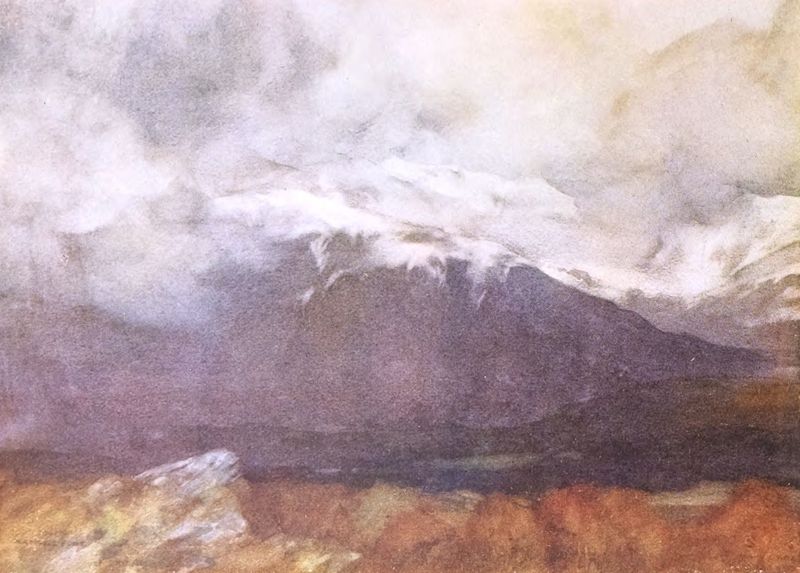
Wherever I wander, wherever I rove, The hills of the Highlands for ever I love.
THE LOVELY LASS OF INVERNESS
The lovely lass o’ Inverness, Nae joy nor pleasure can she see; For e’en and morn she cries, ‘alas!’ And aye the saut tear blins her ee: ‘Drumossie moor, Drumossie day, A waefu’ day it was to me; For there I lost my father dear, My father dear, and brethren three. ‘Their winding-sheet the bluidy clay, Their graves are growing green to see; And by them lies the dearest lad That ever blest a woman’s ee! Now wae to thee, thou cruel lord, A bluidy man I trow thou be; For mony a heart thou hast made sair, That ne’er did wrang to thine or thee.’
O, WERT THOU IN THE CAULD BLAST
O, wert thou in the cauld blast, On yonder lea, on yonder lea, My plaidie to the angry airt, I’d shelter thee, I’d shelter thee. Or did misfortune’s bitter storms Around thee blaw, around thee blaw, Thy bield should be my bosom, To share it a’, to share it a’. Or were I in the wildest waste, Sae black and bare, sae black and bare, The desert were a paradise, If thou wert there, if thou wert there. Or were I monarch o’ the globe, Wi’ thee to reign, wi’ thee to reign, The brightest jewel in my crown Wad be my queen, wad be my queen.
THE LASS O’ BALLOCHMYLE
’Twas even—the dewy fields were green, On every blade the pearls hang; The Zephyrs wanton’d round the bean, And bore its fragrant sweets alang: In every glen the Mavis sang, All nature listening seem’d the while: Except where green-wood echoes rang, Amang the braes o’ Ballochmyle. With careless step I onward stray’d, My heart rejoiced in nature’s joy, When musing in a lonely glade, A maiden fair I chanced to spy; Her look was like the morning’s eye, Her hair like nature’s vernal smile; Perfection whisper’d, passing by, Behold the lass o’ Ballochmyle! Fair is the morn in flowery May, And sweet is night in Autumn mild, When roving thro’ the garden gay, Or wandering in the lonely wild: But Woman, Nature’s darling child! There all her charms she does compile; Ev’n there her other works are foil’d By the bonnie lass o’ Ballochmyle. O had she been a country maid, And I the happy country swain, Tho’ shelter’d in the lowest shed That ever rose on Scotland’s plain! Thro’ weary winter’s wind and rain, With joy, with rapture, I would toil; And nightly to my bosom strain The bonnie lass o’ Ballochmyle. Then pride might climb the slippery steep, Where fame and honours lofty shine; And thirst of gold might tempt the deep, Or downward seek the Indian mine: Give me the cot below the pine, To tend the flocks or till the soil, And every day have joys divine, With the bonnie lass o’ Ballochmyle.
ELEGY ON CAPT. MATTHEW HENDERSON
A GENTLEMAN WHO HELD THE PATENT FOR HIS HONOURS IMMEDIATELY FROM ALMIGHTY GOD
He’s gane, he’s gane! he’s frae us torn, The ae best fellow e’er was born! Thee, Matthew, Nature’s sel’ shall mourn By wood and wild, Where, haply, Pity strays forlorn, Frae man exil’d. Ye hills, near neibors o’ the starns, That proudly cock your cresting cairns! Ye cliffs, the haunts of sailing earns, Where echo slumbers! Come join, ye Nature’s sturdiest bairns, My wailing numbers! Mourn, ilka grove the cushat kens! Ye haz’lly shaws and briery dens! Ye burnies, wimplin’ down your glens, Wi’ toddlin din, Or foaming strang wi’ hasty stens Frae lin to lin. Mourn, little harebells o’er the lea; Ye stately foxgloves fair to see; Ye woodbines hanging bonnilie, In scented bow’rs; Ye roses on your thorny tree, The first o’ flow’rs. At dawn when ev’ry grassy blade Droops with a diamond at his head, At ev’n when beans their fragrance shed I’ th’ rustling gale, Ye maukins, whiddin’ thro’ the glade, Come join my wail. Mourn, ye wee songsters o’ the wood; Ye grouse that crap the heather bud; Ye curlews calling thro’ a clud; Ye whistling plover; And mourn, ye whirring paitrick brood— He’s gane for ever! Mourn, sooty coots, and speckled teals; Ye fisher herons, watching eels; Ye duck and drake, wi’ airy wheels Circling the lake; Ye bitterns, till the quagmire reels, Rair for his sake. Mourn, clamouring craiks at close o’ day, ’Mang fields o’ flowering clover gay; And, when ye wing your annual way Frae our cauld shore, Tell thae far warlds wha lies in clay, Wham we deplore. Ye houlets, frae your ivy bow’r In some auld tree, or eldritch tow’r, What time the moon wi’ silent glowr Sets up her horn, Wail thro’ the dreary midnight hour Till waukrife morn! O rivers, forests, hills, and plains! Oft have ye heard my canty strains; But now, what else for me remains But tales of woe? And frae my een the drapping rains Maun ever flow. Mourn, Spring, thou darling of the year! Ilk cowslip cup shall kep a tear: Thou, Simmer, while each corny spear Shoots up its head, Thy gay green flow’ry tresses shear For him that’s dead! Thou, Autumn, wi’ thy yellow hair, In grief thy sallow mantle tear! Thou, Winter, hurling thro’ the air The roaring blast, Wide o’er the naked world declare The worth we’ve lost! Mourn him, thou sun, great source of light! Mourn, empress of the silent night! And you, ye twinkling starnies bright, My Matthew mourn! For through your orbs he’s ta’en his flight, Ne’er to return. O Henderson! the man! the brother! And art thou gone, and gone for ever? And hast thou crost that unknown river, Life’s dreary bound? Like thee, where shall I find another, The world around? Go to your sculptur’d tombs, ye great, In a’ the tinsel trash o’ state! But by thy honest turf I’ll wait, Thou man of worth! And weep the ae best fellow’s fate Eer lay in earth.
MY AIN KIND DEARIE O
When o’er the hill the eastern star Tells bughtin-time is near, my jo; And owsen frae the furrow’d field Return sae dowf and wearie O; Down by the burn, where scented birks Wi’ dew are hanging clear, my jo, I’ll meet thee on the lea-rig, My ain kind dearie O. In mirkest glen, at midnight hour, I’d rove, and ne’er be eerie O, If thro’ that glen I gaed to thee, My ain kind dearie O. Altho’ the night were ne’er sae wild, And I were ne’er sae wearie O, I’d meet thee on the lea-rig, My ain kind dearie O. The hunter lo’es the morning sun, To rouse the mountain deer, my jo; At noon the fisher seeks the glen, Along the burn to steer, my jo; Gie me the hour o’ gloamin grey, It maks my heart sae cheery O, To meet thee on the lea-rig, My ain kind dearie O.
BESSY AND HER SPINNIN’ WHEEL
O leeze me on my spinnin’ wheel, O leeze me on my rock and reel; Frae tap to tae that cleeds me bien, And haps me fiel and warm at e’en! I’ll set me down and sing and spin, While laigh descends the simmer sun, Blest wi’ content, and milk and meal— O leeze me on my spinnin’ wheel. On ilka hand the burnies trot, And meet below my theekit cot; The scented birk and hawthorn white Across the pool their arms unite, Alike to screen the birdie’s nest, And little fishes’ caller rest: The sun blinks kindly in the biel’, Where blythe I turn my spinnin’ wheel. On lofty aiks the cushats wail, And echo cons the doolfu’ tale; The lintwhites in the hazel braes, Delighted, rival ither’s lays; The craik amang the claver hay, The paitrick whirrin’ o’er the ley, The swallow jinkin’ round my shiel, Amuse me at my spinnin’ wheel. Wi’ sma’ to sell, and less to buy, Aboon distress, below envy, O wha wad leave this humble state, For a’ the pride of a’ the great? Amid their flaring, idle toys, Amid their cumbrous, dinsome joys, Can they the peace and pleasure feel Of Bessy at her spinnin’ wheel?
THE GALLANT WEAVER
Where Cart rins rowin’ to the sea, By mony a flower and spreading tree, There lives a lad, the lad for me, He is a gallant weaver. Oh I had wooers aught or nine, They gied me rings and ribbons fine; And I was fear’d my heart would tine, And I gied it to the weaver. My daddie sign’d my tocher-band, To gie the lad that has the land; But to my heart I’ll add my hand, And gie it to the weaver. While birds rejoice in leafy bowers; While bees rejoice in opening flowers; While corn grows green in simmer showers, I’ll love my gallant weaver.
EPPIE ADAIR
An’ O! my Eppie, My jewel, my Eppie! Wha wadna be happy Wi’ Eppie Adair? By love, and by beauty, By law, and by duty, I swear to be true to My Eppie Adair! An’ O! my Eppie, My jewel, my Eppie! Wha wadna be happy Wi’ Eppie Adair? A’ pleasure exile me, Dishonour defile me, If e’er I beguile thee, My Eppie Adair!
FOR WEANS AND WIFE
(TO DR. BLACKLOCK)
Wow, but your letter made me vauntie! And are ye hale, and weel, and cantie? I kenn’d it still, your wee bit jauntie Wad bring ye to; Lord send you aye as weel’s I want ye, And then ye’ll do.... But what d’ye think, my trusty fier, I’m turn’d a gauger—Peace be here! Parnassian queans, I fear, I fear, Ye’ll now disdain me! And then my fifty pounds a year Will little gain me. Ye glaiket, gleesome, dainty damies, Wha by Castalia’s wimplin’ streamies, Lowp, sing, and lave your pretty limbies, Ye ken, ye ken, That strang necessity supreme is ’Mang sons o’ men. I hae a wife and twa wee laddies, They maun hae brose and brats o’ duddies; Ye ken yoursels my heart right proud is— I need na vaunt, But I’ll sned besoms—thraw saugh woodies, Before they want. Lord help me thro’ this warld o’ care! I’m weary sick o’t late and air! Not but I hae a richer share Than mony ithers; But why should ae man better fare, And a’ men brithers? Come, Firm Resolve, take thou the van, Thou stalk o’ carl-hemp in man! And let us mind, faint heart ne’er wan A lady fair; Wha does the utmost that he can, Will whyles do mair. But to conclude my silly rhyme (I’m scant o’ verse, and scant o’ time)— To make a happy fire-side clime To weans and wife, That’s the true pathos and sublime Of human life.
CROWDIE EVER MAIR
O that I had ne’er been married, I wad never had nae care; Now I’ve gotten wife and bairns, An’ they cry “crowdie!” ever mair. Ance crowdie, twice crowdie, Three times crowdie in a day; Gin ye crowdie ony mair, Ye’ll crowdie a’ my meal away. Waefu want and hunger fley me, Glowrin’ by the hallen en’; Sair I fecht them at the door, But aye I’m eerie they come ben.
‘BRAW SOBER LESSONS’
(EPISTLE TO A YOUNG FRIEND)
I lang hae thought, my youthfu’ friend, A something to have sent you, Tho’ it should serve nae ither end Than just a kind memento; But how the subject theme may gang, Let time and chance determine; Perhaps it may turn out a sang, Perhaps turn out a sermon. Ye’ll try the world soon, my lad, And, Andrew dear, believe me, Ye’ll find mankind an unco squad, And muckle they may grieve ye: For care and trouble set your thought, Ev’n when your end’s attained; And a’ your views may come to nought, Where ev’ry nerve is strained. I’ll no say men are villains a’; The real harden’d wicked, Wha hae nae check but human law, Are to a few restricked: But oh! mankind are unco weak, An’ little to be trusted; If self the wavering balance shake, It’s rarely right adjusted! Yet they wha fa’ in fortune’s strife, Their fate we shouldna censure; For still th’ important end of life They equally may answer. A man may hae an honest heart, Tho’ poortith hourly stare him; A man may tak a neibor’s part, Yet hae nae cash to spare him. Aye free, aff han’, your story tell, When wi’ a bosom crony; But still keep something to yoursel Ye scarcely tell to ony. Conceal yoursel as weel’s ye can Frae critical dissection; But keek thro’ ev’ry other man Wi’ sharpen’d sly inspection. The sacred lowe o’ weel-plac’d love, Luxuriantly indulge it; But never tempt th’ illicit rove, Tho’ naething should divulge it: I wave the quantum o’ the sin, The hazard of concealing; But oh! it hardens a’ within, And petrifies the feeling! To catch dame Fortune’s golden smile, Assiduous wait upon her; And gather gear by ev’ry wile That’s justified by honour; Not for to hide it in a hedge, Nor for a train attendant; But for the glorious privilege Of being independent. The fear o’ hell’s a hangman’s whip To haud the wretch in order; But where ye feel your honour grip, Let that aye be your border: Its slightest touches, instant pause— Debar a’ side pretences; And resolutely keep its laws, Uncaring consequences. The great Creator to revere Must sure become the creature; But still the preaching cant forbear, And ev’n the rigid feature: Yet ne’er with wits profane to range Be complaisance extended; An atheist laugh’s a poor exchange For Deity offended. When ranting round in pleasure’s ring, Religion may be blinded; Or, if she gie a random sting, It may be little minded; But when on life we’re tempest-driv’n, A conscience but a canker— A correspondence fix’d wi’ Heav’n Is sure a noble anchor. Adieu, dear amiable youth! Your heart can ne’er be wanting! May prudence, fortitude, and truth Erect your brow undaunting. In ploughman phrase, God send you speed Still daily to grow wiser; And may ye better reck the rede Than ever did th’ adviser!
TO A HAGGIS
Fair fa’ your honest sonsie face, Great chieftain o’ the puddin’-race! Aboon them a’ ye tak your place, Painch, tripe, or thairm: Weel are ye wordy o’ a grace As lang’s my arm. The groaning trencher there ye fill, Your hurdies like a distant hill; Your pin wad help to mend a mill In time o’ need; While thro’ your pores the dews distil Like amber bead. His knife see rustic Labour dight, An’ cut you up wi’ ready sleight, Trenching your gushing entrails bright Like ony ditch; And then, O what a glorious sight, Warm-reekin’, rich! Then, horn for horn they stretch an’ strive, Deil tak the hindmost! on they drive, Till a’ their weel-swall’d kytes belyve Are bent like drums; Then auld guidman, maist like to rive, Bethankit hums. Is there that o’er his French ragout, Or olio that wad staw a sow, Or fricassee wad mak her spew Wi’ perfect sconner, Looks down wi’ sneering scornfu’ view On sic a dinner? Poor devil! see him owre his trash, As feckless as a wither’d rash, His spindle shank a guid whip-lash, His nieve a nit: Thro’ bloody flood or field to dash, O how unfit! But mark the Rustic, haggis-fed— The trembling earth resounds his tread! Clap in his walie nieve a blade, He’ll mak it whissle; An’ legs, an’ arms, an’ heads will sned, Like taps o’ thrissle. Ye Pow’rs, wha mak mankind your care, And dish them out their bill o’ fare, Auld Scotland wants nae skinking ware That jaups in luggies; But, if ye wish her gratefu’ prayer, Gie her a Haggis!
BANNOCKS O’ BARLEY
Bannocks o’ bear meal, Bannocks o’ barley; Here’s to the Highlandman’s Bannocks o’ barley. Wha in a brulzie Will first cry a parley? Never the lads wi’ The bannocks o’ barley. Bannocks o’ bear meal, Bannocks o’ barley; Here’s to the lads wi’ The bannocks o’ barley; Wha in his wae-days Were loyal to Charlie? Wha but the lads wi’ The bannocks o’ barley.
COMING THROUGH THE RYE
Jenny’s a’ wat, poor body; Jenny’s seldom dry; She draiglet a’ her petticoatie, Coming through the rye. Coming through the rye, poor body, Coming through the rye, She draiglet a’ her petticoatie, Coming through the rye. Gin a body meet a body Coming through the rye; Gin a body kiss a body, Need a body cry? Gin a body meet a body Coming through the glen; Gin a body kiss a body, Need the world ken?
LAMENT FOR JAMES, EARL OF GLENCAIRN
The wind blew hollow frae the hills; By fits the sun’s departing beam Look’d on the fading yellow woods That waved o’er Lugar’s winding stream. Beneath a craigy steep, a bard, Laden with years and meikle pain, In loud lament bewail’d his lord, Whom death had all untimely taen. He lean’d him to an ancient aik, Whose trunk was mould’ring down with years; His locks were bleachèd white wi’ time, His hoary cheek was wet wi’ tears; And as he touch’d his trembling harp, And as he tun’d his doleful sang, The winds, lamenting thro’ their caves, To echo bore the notes alang. ‘Ye scatter’d birds that faintly sing, The reliques of the vernal quire! Ye woods that shed on a’ the winds The honours of the agèd year! A few short months, and glad and gay, Again ye’ll charm the ear and e’e; But nocht in all revolving time Can gladness bring again to me. ‘I am a bending agèd tree, That long has stood the wind and rain; But now has come a cruel blast, And my last hold of earth is gane: Nae leaf o’ mine shall greet the spring, Nae simmer sun exalt my bloom; But I maun lie before the storm, And others plant them in my room. ‘I’ve seen so many changefu’ years, On earth I am a stranger grown; I wander in the ways of men, Alike unknowing and unknown: Unheard, unpitied, unreliev’d, I bear alane my lade o’ care, For silent, low, on beds of dust, Lie a’ that would my sorrows share. ‘And last (the sum of a’ my griefs!) My noble master lies in clay; The flow’r amang our barons bold, His country’s pride, his country’s stay: In weary being now I pine For a’ the life of life is dead, And hope has left my agèd ken, On forward wing for ever fled. ‘Awake thy last sad voice, my harp! The voice of woe and wild despair; Awake, resound thy latest lay, Then sleep in silence evermair! And thou, my last, best, only friend, That fillest an untimely tomb, Accept this tribute from the bard Thou brought from fortune’s mirkest gloom. ‘In poverty’s low barren vale, Thick mists obscure involv’d me round; Though oft I turn’d the wistful eye, No ray of fame was to be found: Thou found’st me, like the morning sun That melts the fogs in limpid air; The friendless bard and rustic song Became alike thy fostering care. ‘O why has worth so short a date While villains ripen grey with time? Must thou, the noble, gen’rous, great, Fall in bold manhood’s hardy prime? Why did I live to see that day, A day to me so full of woe? O had I met the mortal shaft Which laid my benefactor low! ‘The bridegroom may forget the bride Was made his wedded wife yestreen; The monarch may forget the crown That on his head an hour has been; The mother may forget the child That smiles sae sweetly on her knee; But I’ll remember thee, Glencairn, And a’ that thou hast done for me!’
A PRAYER IN THE PROSPECT OF DEATH
O Thou unknown Almighty Cause Of all my hope and fear! In whose dread presence, ere an hour, Perhaps I must appear! If I have wander’d in those paths Of life I ought to shun; As something, loudly in my breast, Remonstrates I have done; Thou know’st that Thou hast formèd me With passions wild and strong; And list’ning to their witching voice Has often led me wrong. Where human weakness has come short, Or frailty stept aside, Do thou, All-Good! for such Thou art, In shades of darkness hide. Where with intention I have err’d, No other plea I have, But Thou art good; and Goodness still Delighteth to forgive.
STANZAS ON THE SAME OCCASION
Why am I loath to leave this earthly scene? Have I so found it full of pleasing charms? Some drops of joy with draughts of ill between; Some gleams of sunshine ’mid renewing storms! Is it departing pangs my soul alarms? Or Death’s unlovely, dreary, dark abode? For guilt, for guilt, my terrors are in arms; I tremble to approach an angry God, And justly smart beneath his sin-avenging rod. Fain would I say, ‘Forgive my foul offence!’ Fain promise never more to disobey; But, should my Author health again dispense, Again I might desert fair virtue’s way; Again in folly’s path might go astray; Again exalt the brute, and sink the man; Then how should I for Heavenly mercy pray, Who act so counter Heavenly mercy’s plan? Who sin so oft have mourn’d, yet to temptation ran? O Thou, great Governor of all below! If I may dare a lifted eye to Thee, Thy nod can make the tempest cease to blow, And still the tumult of the raging sea: With that controlling pow’r assist ev’n me Those headlong furious passions to confine, For all unfit I feel my powers to be, To rule their torrent in th’ allowèd line; O, aid me with Thy help, Omnipotence Divine!
A BARD’S EPITAPH
Is there a whim-inspirèd fool, Owre fast for thought, owre hot for rule, Owre blate to seek, owre proud to snool, Let him draw near; And owre this grassy heap sing dool, And drap a tear. Is there a bard of rustic song, Who, noteless, steals the crowds among, That weekly this area throng, O, pass not by! But, with a frater-feeling strong, Here heave a sigh. Is there a man whose judgment clear, Can others teach the course to steer, Yet runs, himself, life’s mad career, Wild as the wave; Here pause—and, thro’ the starting tear, Survey this grave. The poor inhabitant below Was quick to learn and wise to know, And keenly felt the friendly glow, And softer flame; But thoughtless follies laid him low, And stain’d his name! Reader, attend! whether thy soul Soars fancy’s flights beyond the pole, Or darkling grubs this earthly hole, In low pursuit; Know prudent cautious self-control Is wisdom’s root.
THE BRAES O’ BALLOCHMYLE
The Catrine woods were yellow seen, The flowers decayed on Catrine lee, Nae lav’rock sang on hillock green, But nature sickened on the e’e. Thro’ faded groves Maria sang, Hersel in beauty’s bloom the whyle, And aye the wild-wood echoes rang, ‘Fareweel the braes o’ Ballochmyle! ‘Low in your wintry beds, ye flowers, Again ye’ll flourish fresh and fair; Ye birdies dumb, in withering bowers, Again ye’ll charm the vocal air. But here, alas! for me nae mair Shall birdie charm, or floweret smile; Fareweel, the bonnie banks of Ayr, Fareweel, fareweel, sweet Ballochmyle!’
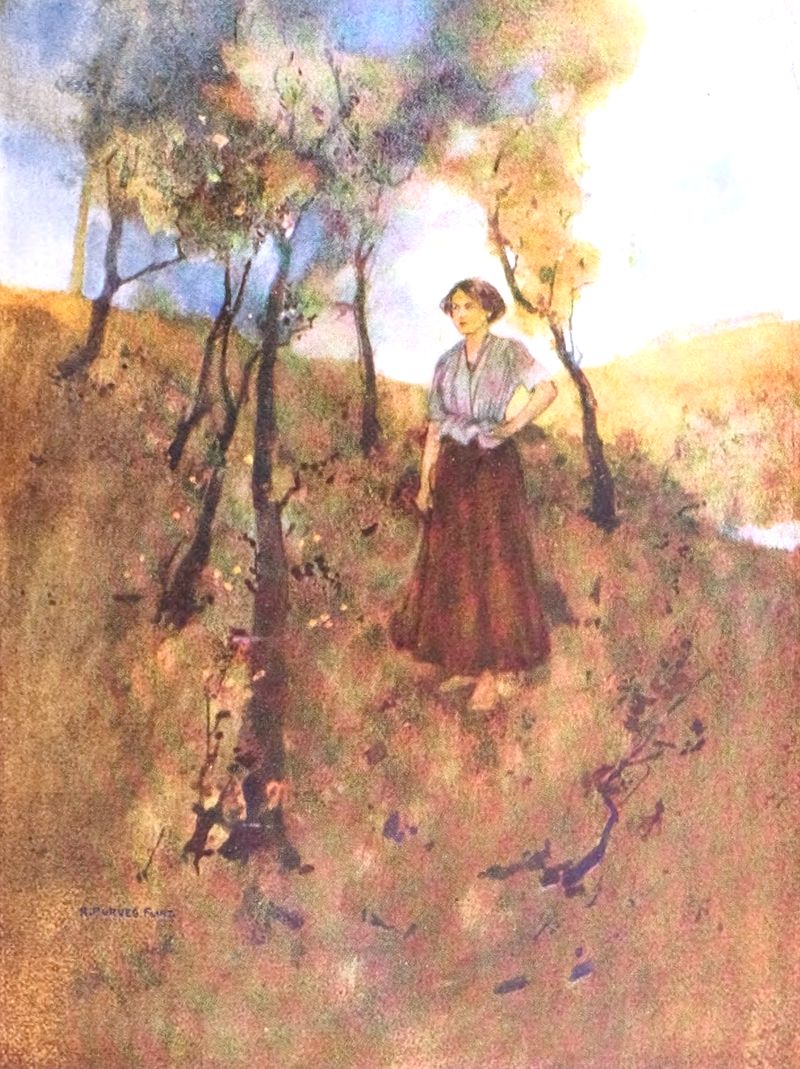
Thro’ faded groves Maria sang, . . . . . . . . Fareweel the braes o’ Ballochmyle.
AY WAUKIN, O
Simmer’s a pleasant time, Flow’rs of ev’ry colour; The water rins o’er the heugh, And I long for my true lover. Ay waukin, O, Waukin still and wearie: Sleep I can get nane For thinking on my dearie. When I sleep I dream, When I wauk I’m eerie; Sleep I can get nane For thinking on my dearie. Lanely night comes on, A’ the lave are sleepin’, I think on my bonnie lad, And I bleer my een wi’ greetin’. Ay waukin, O, Waukin still and wearie: Sleep I can get nane For thinking on my dearie.
IN EVIL DAYS
(FROM A LETTER TO GRAHAM OF FINTRY, 1791)
I dread thee, Fate, relentless and severe, With all a poet’s, husband’s, father’s fear! Already one strong-hold of hope is lost, Glencairn, the truly noble, lies in dust— Fled, like the sun eclips’d as noon appears, And left us darkling in a world of tears. Oh! hear my ardent, grateful, selfish pray’r! Fintry, my other stay, long bless and spare! Thro’ a long life his hopes and wishes crown, And bright in cloudless skies his sun go down!
THE POETIC DAYSPRING
(FRAGMENT FROM A LETTER)
I mind it weel, in early date, When I was beardless, young and blate, An’ first could thresh the barn, Or haud a yokin’ at the pleugh, An’ tho’ forfoughten sair eneugh, Yet unco proud to learn,— When first amang the yellow corn A man I reckon’d was, And wi’ the lave ilk merry morn Could rank my rig and lass, Still shearing, and clearing The tither stooked raw, Wi’ claivers, an’ haivers, Wearing the day awa,— Ev’n then a wish (I mind its power!) A wish that to my latest hour Shall strongly heave my breast; That I for poor auld Scotland’s sake, Some usefu’ plan or beuk could make, Or sing a sang at least. The rough bur-thistle, spreading wide Amang the bearded bear, I turn’d the weeder-clips aside, An’ spar’d the symbol dear: No nation, no station, My envy e’er could raise; A Scot still, but blot still, I knew nae higher praise. But still the elements o’ sang In formless jumble, right an’ wrang, Wild floated in my brain; Till on that hairst I said before, My partner in the merry core, She rous’d the forming strain: I see her yet, the sonsie quean, That lighted up my jingle, Her witching smile, her pauky een, That gart my heart-strings tingle; I firèd, inspirèd, At ev’ry kindling keek, But bashing, and dashing, I fearèd aye to speak....
SCOTS WHA HAE
ROBERT BRUCE’S ADDRESS TO HIS ARMY, BEFORE THE BATTLE OF BANNOCKBURN
Scots, wha hae wi’ Wallace bled, Scots, wham Bruce has aften led, Welcome to your gory bed, Or to victorie. Now’s the day, and now’s the hour; See the front o’ battle lour! See approach proud Edward’s power— Chains and slaverie! Wha will be a traitor knave? Wha can fill a coward’s grave? Wha sae base as be a slave? Let him turn and flee! Wha for Scotland’s King and law Freedom’s sword will strongly draw, Freeman stand, or freeman fa’? Let him follow me! By oppression’s woes and pains! By your sons in servile chains! We will drain our dearest veins, But they shall be free! Lay the proud usurpers low! Tyrants fall in every foe! Liberty’s in every blow! Let us do or die!
FOR A’ THAT AND A’ THAT
Is there, for honest poverty, That hangs his head, and a that? The coward-slave, we pass him by, We dare be poor for a’ that! For a’ that, and a’ that, Our toils obscure, and a’ that; The rank is but the guinea stamp; The man’s the gowd for a’ that. What tho’ on hamely fare we dine, Wear hodden-gray, and a’ that; Gie fools their silks, and knaves their wine, A man’s a man for a’ that. For a’ that, and a’ that, Their tinsel show, and a’ that; The honest man, tho’ e’er sae poor, Is King o’ men for a’ that. Ye see yon birkie, ca’d a lord, Wha struts, and stares, and a’ that; Tho’ hundreds worship at his word, He’s but a coof for a’ that: For a’ that, and a’ that, His riband, star, and a’ that, The man of independent mind, He looks and laughs at a’ that. A prince can mak a belted knight, A marquis, duke, and a’ that; But an honest man’s aboon his might, Guid faith he mauna fa’ that! For a’ that, and a’ that, Their dignities, and a’ that, The pith o’ sense, and pride o’ worth, Are higher rank than a’ that. Then let us pray that come it may, As come it will for a’ that; That sense and worth, o’er a’ the earth, May bear the gree, and a’ that. For a’ that and a’ that, It’s coming yet, for a’ that, That man to man the warld o’er, Shall brothers be for a’ that.
HERE’S A HEALTH TO THEM THAT’S AWA
Here’s a health to them that’s awa, Here’s a health to them that’s awa; And wha winna wish guid luck to our cause, May never guid luck be their fa’! It’s guid to be merry and wise, It’s guid to be honest and true, It’s guid to support Caledonia’s cause, And bide by the buff and the blue. May liberty meet wi’ success! May prudence protect her frae evil! May tyrants and tyranny tine in the mist, And wander their way to the devil! Here’s a health to them that’s awa, Here’s a health to them that’s awa; Here’s a health to Tammie, the Norland laddie, That lives at the lug o’ the law! Here’s freedom to him that wad read, Here’s freedom to him that wad write! There’s nane ever fear’d that the truth should be heard, But they wham the truth wad indite. Here’s a health to them that’s awa, Here’s a health to them that’s awa, Here’s Chieftain M’Leod, a Chieftain worth gowd, Tho’ bred among mountains o’ snaw!
DOES HAUGHTY GAUL
Does haughty Gaul invasion threat? Then let the loons beware, Sir, There’s wooden walls upon our seas, And volunteers on shore, Sir. The Nith shall run to Corsincon, And Criffel sink in Solway, Ere we permit a foreign foe On British ground to rally! O let us not like snarling tykes In wrangling be divided, Till, slap! come in an unco loon And wi’ a rung decide it. Be Britain still to Britain true, Amang oursels united; For never but by British hands Maun British wrangs be righted! The kettle o’ the kirk and state, Perhaps a clout may fail in’t; But deil a foreign tinkler loon Shall ever ca’ a nail in’t. Our father’s blude the kettle bought, An’ wha wad dare to spoil it? By heavens! the sacrilegious dog Shall fuel be to boil it! The wretch that would a tyrant own, And the wretch, his true-sworn brother, Who’d set the mob aboon the throne,— May they be damned together! Who will not sing God save the King! Shall hang as high’s the steeple; But while we sing God save the King! We’ll not forget the people!
AULD LANG SYNE
Should auld acquaintance be forgot, And never brought to min’? Should auld acquaintance be forgot, And auld lang syne? For auld lang syne, my dear. For auld lang syne, We’ll tak a cup o’ kindness yet, For auld lang syne. We twa hae run about the braes, And pu’d the gowans fine; But we’ve wander’d mony a weary foot Sin’ auld lang syne. We twa hae paidled i’ the burn, From morning sun till dine; But seas between us braid hae roar’d Sin’ auld lang syne. And there’s a hand, my trusty fiere, And gie’s a hand o’ thine; And we’ll tak a right guid-willie waught, For auld lang syne. And surely ye’ll be your pint-stowp, And surely I’ll be mine; And we’ll tak a cup o’ kindness yet For auld lang syne. For auld lang syne, my dear. For auld lang syne, We’ll tak a cup o’ kindness yet, For auld lang syne.