Volume 11 / Part 1 — ILLUSTRATIONS (continued 4)
Reading edition
I was 'bout wais' high when de sojers mustered. I went wid Mis' Polly down to de musterin' fiel' whare dey was marchin'. I can see dey feets now when dey flung dem up an' down, sayin', hep, hep. When dey was all ready to go an' fight, de women folks fixed a big dinner. Aunt Charity an' Pete cooked two or three days for Mis' Polly. De table was piled wid chicken, ham, shoat, barbecue, young lam', an'all sorts of pies, cakes an' things, but nobody eat nothin much. Mis' Polly an' de ladies got to cryin.' De vittles got cold. I was so sad dat I got over in de corner an' cried too. De men folks all had on dey new sojer clothes, an' dey didn' eat nothin neither. Young Marse Jim went up an' put his arm 'roun' Mis' Polly, his mammy, but dat made her cry harder. Marse Jim was a cavalry. He rode a big hoss, an' my Uncle Dave went wid him to de fiel' as his body guard. He had a hoss too so if Marse Jim's hoss got shot dare would be another one for him to ride. Mis' Polly had another son but he was too drunk to hold a gun. He stayed drunk.
De first cannon I heard skeered me near 'bout to death. We could hear dem goin' boom, boom. I thought it was thunder, den Mis Polly say, 'Lissen, Sarah, hear dem cannons? Dey's killin' our mens.' Den she 'gun to cry.
I run in de kitchen whare Aunt Charity was cookin an' tole her Mis' Polly was cryin. She said: 'She ain't cryin' kaze de Yankees killin' de mens; she's doin' all dat cryin' kaze she skeered we's goin' to be sot free.' Den I got mad an' tole her Mis' Polly wuzn' like dat.
I 'members when Wheelers Cavalry come through. Dey was 'Federates but dey was mean as de Yankees. Dey stold everything dey could find an' killed a pile of niggers. Dey come 'roun' checkin'. Dey ax de niggahs if dey wanted to be free. If dey say yes, den dey shot dem down, but if dey say no, dey let dem alone. Dey took three of my uncles out in de woods an' shot dey faces off.
I 'members de first time de Yankees come. Dey come gallupin' down de road, jumpin' over de palin's, tromplin' down de rose bushes an' messin' up de flower beds. Dey stomped all over de house, in de kitchen, pantries, smoke house, an' everywhare, but dey didn' find much, kaze near 'bout everything done been hid. I was settin' on de steps when a big Yankee come up. He had on a cap an' his eyes was mean.
'Whare did dey hide do gol' an silver, Nigger?' he yelled at me.
I was skeered an my hands was ashy, but I tole him I didn' nothin' 'bout nothin; dat if anybody done hid things dey hid it while I was sleep.
'Go ax dat ole white headed devil,' he said to me.
I got mad den kaze he was tawkin' 'bout Mis' Polly, so I didn' say nothin'. I jus' set. Den he pushed me off de step an' say if I didn' dance he gwine shoot my toes off. Skeered as I was, I sho done some shufflin'. Den he give me five dollers an' tole me to go buy jim cracks, but dat piece of paper won't no good. 'Twuzn nothin' but a shin plaster like all dat war money, you couldn' spend it.
Dat Yankee kept callin' Mis' Polly a white headed devil an' said she done ramshacked 'til dey wuzn' nothin' left, but he made his mens tote off meat, flour, pigs, an' chickens. After dat Mis' Polly got mighty stingy wid de vittles an' de didn' have no more ham.
When de war was over de Yankees was all 'roun' de place tellin' de niggers what to do. Dey tole dem dey was free, dat dey didn' have to slave for de white folks no more. My folks all left Marse Cain an' went to live in houses dat de Yankees built. Dey wuz like poor white folks houses, little shacks made out of sticks an' mud wid stick an' mud chimneys. Dey wuzn' like Marse Cain's cabins, planked up an' warm, dey was full of cracks, an' dey wuzn' no lamps an' oil. All de light come from de lightwood knots burnin' in de fireplace.
One day my mammy come to de big house after me. I didn' want to go, I wanted to stay wid Mis' Polly. I 'gun to cry an' Mammy caught hold of me. I grabbed Mis' Polly an' held so tight dat I tore her skirt bindin' loose an' her skirt fell down 'bout her feets.
'Let her stay wid me,' Mis' Polly said to Mammy.
But Mammy shook her head. 'You took her away from me an' didn' pay no mind to my cryin', so now I'se takin' her back home. We's free now, Mis' Polly, we ain't gwine be slaves no more to nobody.' She dragged me away. I can see how Mis' Polly looked now. She didn' say nothin' but she looked hard at Mammy an' her face was white.
Mammy took me to de stick an' mud house de Yankees done give her. It was smoky an' dark kaze dey wuzn' no windows. We didn' have no sheets an' no towels, so when I cried an' said I didn' want to live on no Yankee house, Mammy beat me an' made me go to bed. I laid on de straw tick lookin' up through de cracks in de roof. I could see de stars, an' de sky shinin' through de cracks looked like long blue splinters stretched 'cross de rafters. I lay dare an' cried kaze I wanted to go back to Mis' Polly.
I was never hungry til we waz free an' de Yankees fed us. We didn' have nothin to eat 'cept hard tack an' middlin' meat. I never saw such meat. It was thin an' tough wid a thick skin. You could boil it allday an' all night an' it wouldn' cook dome, I wouldn' eat it. I thought 'twuz mule meat; mules dat done been shot on de battle field den dried. I still believe 'twuz mule meat.
One day me an' my brother was lookin' for acorns in de woods. We foun' sumpin' like a grave in de woods. I tole Dave dey wuz sumpin' buried in dat moun'. We got de grubbin hoe an' dug. Dey wuz a box wid eleven hams in dat grave. Somebody done hid it from de Yankees an' forgot whare dey buried it. We covered it back up kaze if we took it home in de day time de Yankees an' niggers would take it away from us. So when night come we slipped out an' toted dem hams to de house an' hid dem in de loft.
Dem was bad days. I'd rather been a slave den to been hired out like I was, kaze I wuzn' no fiel' hand, I was a hand maid, trained to wait on de ladies. Den too, I was hungry most of de time an' had to keep fightin' off dem Yankee mens. Dem Yankees was mean folks.
We's come a long way since dem times. I'se lived near 'bout ninety years an' I'se seen an' heard much. My folks don't want me to talk 'bout slavery, day's shame niggers ever was slaves. But, while for most colored folks freedom is de bes, dey's still some niggers dat out to be slaves now. Dese niggers dat's done clean forgot de Lawd; dose dat's always cuttin' an' fightin' an' gwine in white folks houses at night, dey ought to be slaves. Dey ought to have an' Ole Marse wid a whip to make dem come when he say come, an' go when he say go, 'til dey learn to live right.
I looks back now an' thinks. I ain't never forgot dem slavery days, an' I ain't never forgot Mis' Polly an' my white starched aprons.
Top
[320147]
26
N.C. District:No. 2
Worker:T. Pat Matthews
No. Words:805
Subject:CHARLES W. DICKENS
Story Teller:Charles W. Dickens
Editor:Daisy Bailey Waitt
Date Stamp:"JUN 11 1937"
[To List]
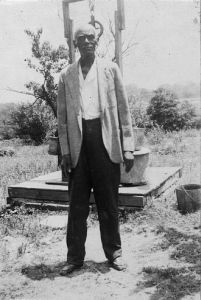
CHARLES W. DICKENS
1115 East Lenoir Street
My name is Charles W. Dickens. I lives at 1115 East Lenoir Street, Raleigh, North Carolina, Wake County. I wuz born August 16, 1861, de year de war started. My mother wuz named Ferebee Dickens. My father wuz named John Dickens. I had nine sisters and brothers. My brothers were named Allen, Douglas, my name, Jake, Johnnie and Jonas. The girls Katie, Matilda Francis, and Emily Dickens.
My grandmother wuz named Charity Dickens. My grandfather wuz Dudley T. Dickens. I do not know where dey came from. No, I don't think I do. My mother belonged to Washington Scarborough, and so did we chilluns. My father he belonged to Obediah Dickens and missus wuz named Silvia Dickens. Dey lowed mother to go by the name of my father after dey wuz married.
We lived in log houses and we had bunks in 'em. Master died, but I 'member missus wuz mighty good to us. We had tolerable fair food, and as fur as I know she wuz good to us in every way. We had good clothing made in a loom, that is de cloth wuz made in de loom. My father lived in Franklin County. My mother lived in Wake County. I 'member hearin' father talk about walkin' so fur to see us. There wuz about one dozen slaves on de plantation. Dere were no hired overseers. Missus done her own bossing. I have heard my father speak about de patterollers, but I never seed none. I heard him say he could not leave the plantation without a strip o' something.
No, sir, the white folks did not teach us to read and write. My mother and father, no sir, they didn't have any books of any kind. We went to white folk's church. My father split slats and made baskets to sell. He said his master let him have all de money he made sellin' de things he made. He learned a trade. He wuz a carpenter. One of the young masters got after father, so he told me, and he went under de house to keep him from whuppin' him. When missus come home she wouldn't let young master whup him. She jist wouldn't 'low it.
I 'members de Yankees comin' through. When mother heard they were comin', she took us chillun and carried us down into an ole field, and after that she carried us back to the house. Missus lived in a two-story house. We lived in a little log house in front of missus' house. My mother had a shoulder of meat and she hid it under a mattress in the house. When the Yankees lef, she looked for it; they had stole the meat and gone. Yes, they stole from us slaves. The road the Yankees wuz travellin' wuz as thick wid' em as your fingers. I 'member their blue clothes, their blue caps. De chickens they were carrying on their horses wuz crowing. Dey wuz driving cows, hogs, and things. Yes sir, ahead of 'em they come first. The barns and lots were on one side de road dey were trabellin' on and de houses on de other. Atter many Yankees had passed dey put a bodyguard at de door of de great house, and didn't 'low no one to go in dere. I looked down at de Yankees and spit at 'em. Mother snatched me back, and said, 'Come back here chile, dey will kill you.'
Dey carried de horses off de plantation and de meat from missus' smokehouse and buried it. My uncle, Louis Scarborough, stayed wid de horses. He is livin' yet, he is over a hundred years old. He lives down at Moores Mill, Wake County, near Youngsville. Before de surrender one of de boys and my uncle got to fightin', one of de Scarborough boys and him. My uncle threw him down. The young Master Scarborough jumped up, and got his knife and cut uncle's entrails out so uncle had to carry 'em to de house in his hands. About a year after de war my father carried us to Franklin County. He carried us on a steer cart. Dat's about all I 'member about de war.
Abraham Lincoln wuz de man who set us free. I think he wuz a mighty good man. He done so much for de colored race, but what he done was intended through de higher power. I don't think slavery wuz right.
I think Mr. Roosevelt is a fine man, one of the best presidents in the world. I voted for him, and I would vote for him ag'in. He has done a lot for de people, and is still doin'. He got a lot of sympathy for 'em. Yas sir, a lot of sympathy for de people.
MM
Top
[320184]
N.C. District:No. 2
Worker:T. Pat Matthews
No. Words:655
Subject:MARGARET E. DICKENS
Person Interviewed:Margaret E. Dickens
Editor:Daisy Bailey Waitt
[To List]
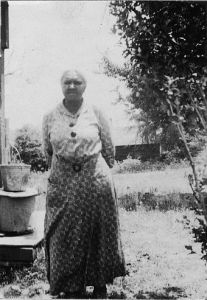
MARGARET E. DICKENS
1115 E. Lenoir St.
My name is Margaret E. Dickens and I was born on the 5th of June 1861. My mother wuz free born; her name wuz Mary Ann Hews, but my mother wuz colored. I don't remember anything about Marster and Missus. My father was named Henry Byrd. Here is some of father's writing. My mother's father was dark. He had no protection. If he did any work for a white man and the white man didn't like it, he could take him up and whup him. My father was like a stray dog.
My name was Margaret E. Byrd before I got married. Here is some of father's writing—"Margaret Elvira Byrd the daughter of Henry and Mary Ann Byrd was born on the 5th June 1861." My grandfather, my mother's father was a cabinet maker. He made coffins and tables and furniture. If he made one, and it didn't suit the man he would beat him and kick him around and let him go. Dis was told to me. My father was a carpenter. He built houses.
I can read and write. My father could read and write. My mother could read, but couldn't write very much.
I have heerd my mother say when she heerd the Yankees were commin' she had a brand new counterpane, my father owned a place before he married my mother, the counterpane was a woolen woven counterpane. She took it off and hid it. The Yankees took anything they wanted, but failed to find it. We were living in Raleigh, at the time, on the very premises we are living on now. The old house has been torn down, but some of the wood is in this very house. I kin show you part of the old house now. My mother used to pass this place when she wuz a girl and she told me she never expected to live here. She was twenty years younger than my father. My mother, she lived here most of the time except twenty-four years she lived in the North. She died in 1916. My father bought the lan' in 1848 from a man named Henry Morgan. Here is the deed.[6]
When we left Raleigh, and went North we first stopped in Cambridge, Mass. This was with my first husband. His name was Samuel E. Reynolds. He was a preacher. He had a church and preached there. The East winds were so strong and cold we couldn't stan' it. It was too cold for us. We then went to Providence, R. I. From there to Elmira, N. Y. From there we went to Brooklyn, N. Y. He preached in the State of New York; we finally came back South, and he died right here in this house. I like the North very well, but there is nothing like home, the South. Another thing I don't have so many white kin folks up North. I don't like to be called Auntie by anyone, unless they admit bein' kin to me. I was not a fool when I went to the North, and it made no change in me. I was raised to respect everybody and I tries to keep it up. Some things in the North are all right, I like them, but I like the South better. Yes, I guess I like the South better. I was married to Charles W. Dickens in 1920. He is my second husband.
I inherited this place from my father Henry Byrd. I like well water. There is my well, right out here in the yard. This well was dug here when they were building the first house here. I believe in havin' your own home, so I have held on to my home, and I am goin' to try to keep holdin' on to it.
Top
[320156]
N.C. District:No. 2
Worker:T. Pat Matthews
No. Words:1369
Subject:REV. SQUIRE DOWD
Story Teller:Rev. Squire Dowd
Editor:Daisy Bailey Waitt
Date Stamp:"JUN 1 1937"
HW: Minister—Interesting HW: language not negro, very senternous & interesting. [TR: The above comment is crossed out.]
[To List]
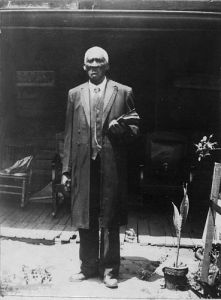
[To List]
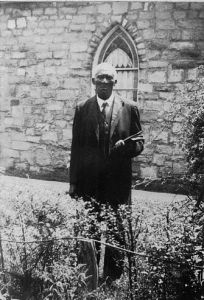
REVEREND SQUIRE DOWD
202 Battle Street Raleigh, N.C.
My name is Squire Dowd, and I was born April 3, 1855. My mother's name was Jennie Dowd. My father's name was Elias Kennedy. My mother died in Georgia at the age of 70, and my father died in Moore County at the age of 82. I attended his funeral. My sister and her husband had carried my mother to Georgia, when my sister's husband went there to work in turpentine. My mother's husband was dead. She had married a man named Stewart. You could hardly keep up with your father during slavery time. It was a hard thing to do. There were few legal marriages. When a young man from one plantation courted a young girl on the plantation, the master married them, sometimes hardly knowing what he was saying.
My master was General W. D. Dowd. He lived three miles from Carthage, in Moore County, North Carolina. He owned fifty slaves. The conditions were good. I had only ten years' experience, but it was a good experience. No man is fool enough to buy slaves to kill. I have never known a real slave owner to abuse his slaves. The abuse was done by patterollers and overseers.
I have a conservative view of slavery. I taught school for four years and I have been in the ministry fifty years. I was ordained a Christian minister in 1885. I lived in Moore County until 1889, then I moved to Raleigh. I have feeling. I don't like for people to have a feeling that slaves are no more than dogs; I don't like that. It causes people to have the wrong idea of slavery. Here is John Bectom, a well, healthy friend of mine, 75 years of age. If we had been treated as some folks say, these big, healthy niggers would not be walking about in the South now. The great Negro leaders we have now would never have come out of it.
The places we lived in were called cabins. The Negroes who were thrifty had nice well-kept homes; and it is thus now. The thrifty of the colored race live well; the others who are indolent live in hovels which smell foul and are filthy.
Prayer meetings were held at night in the cabins of the slaves. On Sunday we went to the white folk's church. We sat in a barred-off place, in the back of the church or in a gallery.
We had a big time at cornshuckings. We had plenty of good things to eat, and plenty of whiskey and brandy to drink. These shuckings were held at night. We had a good time, and I never saw a fight at a cornshucking in life. If we could catch the master after the shucking was over, we put him in a chair, we darkies, and toted him around and hollered, carried him into the parlor, set him down, and combed his hair. We only called the old master "master". We called his wife "missus." When the white children grew up we called them Mars. John, Miss Mary, etc.
We had some money. We made baskets. On moonlight nights and holidays we cleared land; the master gave us what we made on the land. We had money.
The darkies also stole for deserters during the war. They paid us for it. I ate what I stole, such as sugar. I was not big enough to steal for the deserters. I was a house boy. I stole honey. I did not know I was free until five years after the war. I could not realize I was free. Many of us stayed right on. If we had not been ruined right after the war by carpetbaggers our race would have been, well,—better up by this time, because they turned us against our masters, when our masters had everything and we had nothing. The Freedmen's Bureau helped us some, but we finally had to go back to the plantation in order to live.
We got election days, Christmas, New Year, etc., as holidays. When we were slaves we had a week or more Christmas. The holidays lasted from Christmas Eve to after New Years. Sometimes we got passes. If our master would not give them to us, the white boys we played with would give us one. We played cat, jumping, wrestling and marbles. We played for fun; we did not play for money. There were 500 acres on the plantation. We hunted a lot, and the fur of the animals we caught we sold and had the money. We were allowed to raise a few chickens and pigs, which we sold if we wanted to.
The white folks rode to church and the darkies walked, as many of the poor white folks did. We looked upon the poor white folks as our equals. They mixed with us and helped us to envy our masters. They looked upon our masters as we did.
Negro women having children by the masters was common. My relatives on my mother's side, who were Kellys are mixed blooded. They are partly white. We, the darkies and many of the whites hate that a situation like this exists. It is enough to say that seeing is believing. There were many and are now mixed blooded people among the race.
I was well clothed. Our clothes were made in looms. Shoes were made on the plantation. Distilleries were also located on the plantation. When they told me I was free, I did not notice it. I did not realize it till many years after when a man made a speech at Carthage, telling us we were free.
I did not like the Yankees. We were afraid of them. We had to be educated to love the Yankees, and to know that they freed us and were our friends. I feel that Abraham Lincoln was a father to us. We consider him thus because he freed us. The Freedmen's Bureau and carpet baggers caused us to envy our masters and the white folks. The Ku Klux Klan, when we pushed our rights, came in between us, and we did not know what to do. The Ku Klux were after the carpet baggers and the Negroes who followed them.
It was understood that white people were not to teach Negroes during slavery, but many of the whites taught the Negroes. The children of the white folks made us study. I could read and write when the war was up. They made me study books, generally a blue-back spelling book as punishment for mean things I done. My Missus, a young lady about 16 years old taught a Sunday School class of colored boys and girls. This Sunday School was held at a different time of day from the white folks. Sometimes old men and old women were in these classes. I remember once they asked Uncle Ben Pearson who was meekest man, 'Moses' he replied. 'Who was the wisest man?' 'Soloman', 'Who was the strongest man?' was then asked him. To this he said 'They say Bill Medlin is the strongest, but Tom Shaw give him his hands full.' They were men of the community. Medlin was white, Shaw was colored.
I do not like the way they have messed up our songs with classical music. I like the songs, 'Roll Jordan Roll', 'Old Ship of Zion', 'Swing Low Sweet Chariot'. Classical singers ruin them, though.
There was no use of our going to town of Saturday afternoon to buy our rations, so we worked Saturday afternoons. When we got sick the doctors treated us. Dr. J. D. Shaw, Dr. Bruce, and Dr. Turner. They were the first doctors I ever heard any tell of. They treated both whites and darkies on my master's plantation.
I married a Matthews, Anna Matthews, August 1881. We have one daughter. Her name is Ella. She married George Cheatam of Henderson, N.C. A magistrate married us, Mr. Pitt Cameron. It was just a quiet wedding on Saturday night with about one-half dozen of my friends present.
My idea of life is to forget the bad and live for the good there is in it. This is my motto.
B. N.
Top
[320079]
N.C. District:No. 2
Worker:T. Pat Matthews
No. Words:862
Subject:FANNIE DUNN
Story Teller:Fannie Dunn
Editor:G. L. Andrews
Date Stamp:"AUG 17 1937"
FANNIE DUNN
222 Heck Street, Raleigh, N.C.
I don't 'zakly know my age, but I knows and 'members when de Yankees come through Wake County. I wus a little girl an' wus so skeered I run an hid under de bed. De Yankees stopped at de plantation an' along de road fur a rest. I 'members I had diphtheria an' a Yankee doctor come an' mopped my throat. Dey had to pull me outen under de bed so he could doctor me.
One Yankee would come along an' give us sumptin' an another would come on behind him an' take it. Dats de way dey done. One give mother a mule an' when dey done gone she sold it. A Yankee give mother a ham of meat, another come right on behind him an' took it away from her. Dere shore wus a long line of dem Yankees. I can 'member seeing 'em march by same as it wus yisterday. I wus not old enough to work, but I 'members 'em. I don't know 'zackly but I wus 'bout five years old when de surrender wus.
My name before I wus married wus Fannie Sessoms an' mother wus named Della Sessoms. We belonged to Dr. Isaac Sessoms an' our missus wus named Hanna. My father wus named Perry Vick, after his marster who wus named Perry Vick. My missus died durin' de war an' marster never married anymore.
I don't 'member much 'bout missus but mother tole me she wus some good woman an' she loved her. Marster wus mighty good to us an' didn't allow patterollers to whip us none. De slave houses wus warm and really dey wus good houses, an' didn't leak neither.
I don't 'member much 'bout my grandparents, just a little mother tole me 'bout 'em. Grandma 'longed to de Sessoms an' Dr. Isaac Sessoms brother wus mother's father. Mother tole me dat. Look at dat picture, mister, you see you can't tell her from a white woman. Dats my mother's picture. She wus as white as you wid long hair an' a face like a white woman. She been dead 'bout twenty years. My mother said dat we all fared good, but course we wore homemade clothes an' wooden bottomed shoes.
We went to the white folks church at Red Oak an' Rocky Mount Missionary Baptist Churches. We were allowed to have prayer meetings at de slave houses, two an' three times a week. I 'members goin' to church 'bout last year of de war wid mother. I had a apple wid me an' I got hungry an' wanted to eat it in meetin' but mother jest looked at me an' touched my arm, dat wus enough. I didn't eat de apple. I can 'member how bad I wanted to eat it. Don't 'member much 'bout dat sermon, guess I put my mind on de apple too much.
Marster had about twenty slaves an' mother said dey had always been allowed to go to church an' have prayer meetings 'fore I wus born. Marster had both white an' colored overseers but he would not allow any of his overseers to bulldoze over his slaves too much. He would call a overseer down for bein' rough at de wrong time. Charles Sessoms wus one of marster's colored overseers. He 'longed to marster, an' mother said marster always listened to what Charles said. Dey said marster had always favored him even 'fore he made him overseer. Charles Sessoms fell dead one day an' mother found him. She called Marster Sessoms an' he come an' jest cried. Mother said when Marster come he wus dead shore enough, dat marster jest boohooed an' went to de house, an' wouldn't look at him no more till dey started to take him to de grave. Everybody on de plantation went to his buryin' an' funeral an' some from de udder plantation dat joined ourn.
I 'members but little 'bout my missus, but 'members one time she run me when I wus goin' home from de great house, an' she said, 'I am goin' to catch you, now I catch you'. She pickin' at me made me love her. When she died mother tole me 'bout her bein' dead an' took me to her buryin'. Next day I wanted to go an' get her up. I tole mother I wanted her to come home an' eat. Mother cried an' took me up in her arms, an' said, 'Honey missus will never eat here again.' I wus so young I didn't understand.
Dr. Sessoms an' also Dr. Drake, who married his daughter, doctored us when we wus sick. Dr. Joe Drake married marster's only daughter Harriet an' his only son David died in Mississippi. He had a plantation dere.
I been married only once. I wus married forty years ago to Sidney Dunn. I had one chile, she's dead.
From what I knows of slavery an' what my mother tole me I can't say it wus a bad thing. Mister, I wants to tell de truth an' I can't say its bad 'cause my mother said she had a big time as a slave an' I knows I had a good time an' wus treated right.
LE
Top
[320187]
N.C. District:No. 2
Worker:Mary A. Hicks
No. Words:382
Subject:JENNYLIN DUNN
Person Interviewed:Jennylin Dunn
Editor:Daisy Bailey Waitt
[To List]
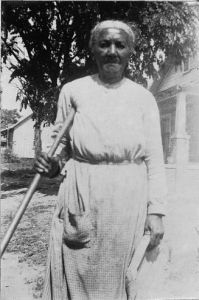
JENNYLIN DUNN
Ex-Slave Story An interview with Jennylin Dunn 87, of 315 Bledsoe Avenue, Raleigh, N.C.
I wuz borned hyar in Wake County eighty-seben years ago. Me an' my folks an' bout six others belonged ter Mis' Betsy Lassiter who wuz right good ter us, do' she sho' did know dat chilluns needs a little brushin' now an' den.
My papa wuz named Isaac, my mammy wuz named Liza, an' my sisters wuz named Lucy, Candice an' Harriet. Dar wuz one boy what died 'fore I can 'member an' I doan know his name.
We ain't played no games ner sung no songs, but we had fruit ter eat an' a heap of watermillions ter eat in de season.
I seed seberal slabe sales on de block, front of de Raleigh Cou't house, an' yo' can't think how dese things stuck in my mind. A whole heap o' times I seed mammies sold from dere little babies, an' dar wuz no'min' den, as yo' knows.
De patterollers wuz sumpin dat I wuz skeerd of. I know jist two o' 'em, Mr. Billy Allen Dunn an' Mr. Jim Ray, an' I'se hyard of some scandelous things dat dey done. Dey do say dat dey whupped some of de niggers scandelous.
When dey hyard dat de Yankees wuz on dere way ter hyar dey says ter us dat dem Yankees eats little nigger youngins, an' we shore stays hid.
I jist seed squeamishin' parties lookin' fer sumpin' ter eat, an' I'se hyard dat dey tuck ever'thing dey comes 'crost. A whole heap of it dey flunged away, an' atterwards dey got hongry too.
One of 'em tried ter tell us dat our white folks stold us from our country an' brung us hyar, but since den I foun' out dat de Yankees stole us dereselves, an' den dey sold us ter our white folkses.
Atter de war my pappy an' mammy brung us ter Raleigh whar I'se been libin' since dat time. We got along putty good, an' de Yankees sont us some teachers, but most o' us wuz so busy scramblin' roun' makin' a livin' dat we ain't got no time fer no schools.
I reckon dat hit wuz better dat de slaves wuz freed, but I still loves my white folkses, an' dey loves me.
Top
[320125]
N.C. District:No. 2
Worker:Mary A. Hicks
No. Words:1119
Subject:AUNT LUCY'S LOVE STORY
Person Interviewed:Lucy Ann Dunn
Editor:G. L. Andrews
Date Stamp:"AUG 1 1937"
AUNT LUCY'S LOVE STORY
An interview with Lucy Ann Dunn, 90 years old, 220 Cannon Street, Raleigh, N.C.
My pappy, Dempsey, my mammy, Rachel an' my brothers an' sisters an' me all belonged ter Marse Peterson Dunn of Neuse, here in Wake County. Dar wus five of us chilluns, Allen, Charles, Corina, Madora an' me, all borned before de war.
My mammy wus de cook, an' fur back as I 'members almost, I wus a house girl. I fanned flies offen de table an' done a heap of little things fer Mis' Betsy, Marse Peterson's wife. My pappy worked on de farm, which wus boun' ter have been a big plantation wid two hundert an' more niggers ter work hit.
I 'members when word come dat war wus declared, how Mis' Betsy cried an' prayed an' how Marse Peter quarreled an' walked de floor cussin' de Yankees.
De war comes on jist de same an' some of de men slaves wus sent ter Roanoke ter hep buil' de fort. Yes mam, de war comes ter de great house an' ter de slave cabins jist alike.
De great house wus large an' white washed, wid green blinds an' de slave cabins wus made of slabs wid plank floors. We had plenty ter eat an' enough ter wear an' we wus happy. We had our fun an' we had our troubles, lak little whuppin's, when we warn't good, but dat warn't often.
Atter so long a time de rich folkses tried ter hire, er make de po' white trash go in dere places, but some of dem won't go. Dey am treated so bad dat some of dem cides ter be Ku Kluxes an' dey goes ter de woods ter live. When we starts ter take up de aigs er starts from de spring house wid de butter an' milk dey grabs us an' takes de food fer dereselbes.
Dis goes on fer a long time an' finally one day in de spring I sets on de porch an' I hear a roar. I wus 'sponsible fer de goslins dem days so I sez ter de missus, 'I reckin dat I better git in de goslins case I hear hit a-thunderin'.
'Dat ain't no thunder, nigger, dat am de canon', she sez.
'What canon', I axes?
'Why de canon what dey am fightin' wid', she sez.
Well dat ebenin' I is out gittin' up de goslins when I hears music, I looks up de road an' I sees flags, an' 'bout dat time de Yankees am dar a-killin' as dey goes. Dey kills de geese, de ducks, de chickens, pigs an' ever'thing. Dey goes ter de house an' dey takes all of de meat, de meal, an' ever'thing dey can git dere paws on.
When dey goes ter de kitchen whar mammy am cookin' she cuss dem out an' run dem outen her kitchen. Dey shore am a rough lot.
I aint never fergot how Mis' Betsy cried when de news of de surrender come. She aint said nothin' but Marse Peter he makes a speech sayin' dat he aint had ter sell none of us, dat he aint whupped none of us bad, dat nobody has ever run away from him yet. Den he tells us dat all who wants to can stay right on fer wages.
Well we stayed two years, even do my pappy died de year atter de surrender, den we moves ter Marse Peter's other place at Wake Forest. Atter dat we moves back ter Neuse.
Hit wus in de little Baptist church at Neuse whar I fust seed big black Jim Dunn an' I fell in love wid him den, I reckons. He said dat he loved me den too, but hit wus three Sundays 'fore he axed ter see me home.
We walked dat mile home in front of my mammy an' I wus so happy dat I aint thought hit a half a mile home. We et cornbread an' turnips fer dinner an' hit wus night 'fore he went home. Mammy wouldn't let me walk wid him ter de gate. I knowed, so I jist sot dar on de porch an' sez good night.
He come ever' Sunday fer a year an' finally he proposed. I had told mammy dat I thought dat I ort ter be allowed ter walk ter de gate wid Jim an' she said all right iffen she wus settin' dar on de porch lookin'.
Dat Sunday night I did walk wid Jim ter de gate an' stood under de honeysuckles dat wus a-smellin' so sweet. I heard de big ole bullfrogs a-croakin' by de riber an' de whipper-wills a-hollerin' in de woods. Dar wus a big yaller moon, an' I reckon Jim did love me. Anyhow he said so an' axed me ter marry him an' he squeezed my han'.
I tol' him I'd think hit ober an' I did an' de nex' Sunday I tol' him dat I'd have him.
He aint kissed me yet but de nex' Sunday he axes my mammy fer me. She sez dat she'll have ter have a talk wid me an' let him know.
Well all dat week she talks ter me, tellin' me how serious gittin' married is an' dat hit lasts a powerful long time.
I tells her dat I knows hit but dat I am ready ter try hit an' dat I intends ter make a go of hit, anyhow.
On Sunday night mammy tells Jim dat he can have me an' yo' orter seed dat black boy grin. He comes ter me widout a word an' he picks me up outen dat cheer an' dar in de moonlight he kisses me right 'fore my mammy who am a-cryin'.
De nex' Sunday we wus married in de Baptist church at Neuse. I had a new white dress, do times wus hard.
We lived tergether fifty-five years an' we always loved each other. He aint never whup ner cuss me an' do we had our fusses an' our troubles we trusted in de Lawd an' we got through. I loved him durin' life an' I love him now, do he's been daid now fer twelve years.
The old lady with her long white hair bowed her head and sobbed for a moment then she began again unsteadily.
We had eight chilluns, but only four of dem are livin' now. De livin' are James, Sidney, Helen an' Florence who wus named fer Florence Nightingale.
I can't be here so much longer now case I'se gittin' too old an' feeble an' I wants ter go ter Jim anyhow. The old woman wiped her eyes, 'I thinks of him all de time, but seems lak we're young agin when I smell honeysuckles er see a yaller moon.
LE
Top
[320271]
N.C. District:No. 3
Worker:Travis Jordan
Subject:Tempie Herdon Durham
Ex-Slave 103 Years Old
1312 Pine St., Durham, N.C.
Date Stamp:"AUG 23 1937"
[To List]
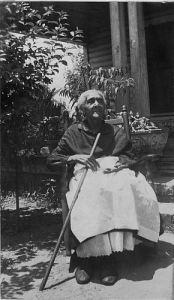
TEMPIE HERNDON DURHAM
EX-SLAVE 103 YEARS OLD 1312 PINE ST., DURHAM, N.C.
I was thirty-one years ole when de surrender come. Dat makes me sho nuff ole. Near 'bout a hundred an' three years done passed over dis here white head of mine. I'se been here, I mean I'se been here. 'Spects I'se de olest nigger in Durham. I'se been here so long dat I done forgot near 'bout as much as dese here new generation niggers knows or ever gwine know.
My white fo'ks lived in Chatham County. Dey was Marse George an' Mis' Betsy Herndon. Mis Betsy was a Snipes befo' she married Marse George. Dey had a big plantation an' raised cawn, wheat, cotton an' 'bacca. I don't know how many field niggers Marse George had, but he had a mess of dem, an' he had hosses too, an' cows, hogs an' sheeps. He raised sheeps an' sold de wool, an' dey used de wool at de big house too. Dey was a big weavin' room whare de blankets was wove, an' dey wove de cloth for de winter clothes too. Linda Hernton an' Milla Edwards was de head weavers, dey looked after de weavin' of de fancy blankets. Mis' Betsy was a good weaver too. She weave de same as de niggers. She say she love de clackin' soun' of de loom, an' de way de shuttles run in an' out carryin' a long tail of bright colored thread. Some days she set at de loom all de mawnin' peddlin' wid her feets an' her white han's flittin' over de bobbins.
De cardin' an' spinnin' room was full of niggers. I can hear dem spinnin' wheels now turnin' roun' an' sayin' hum-m-m-m, hum-m-m-m, an' hear de slaves singin' while dey spin. Mammy Rachel stayed in de dyein' room. Dey wuzn' nothin' she didn' know' bout dyein'. She knew every kind of root, bark, leaf an' berry dat made red, blue, green, or whatever color she wanted. Dey had a big shelter whare de dye pots set over de coals. Mammy Rachel would fill de pots wid water, den she put in de roots, bark an' stuff an' boil de juice out, den she strain it an'put in de salt an' vinegar to set de color. After de wool an' cotton done been carded an' spun to thread, Mammy take de hanks an' drap dem in de pot of bollin' dye. She stir dem' roun' an' lif' dem up an' down wid a stick, an' when she hang dem up on de line in de sun, dey was every color of de rainbow. When dey dripped dry dey was sent to de weavin' room whare dey was wove in blankets an' things.
When I growed up I married Exter Durham. He belonged to Marse Snipes Durham who had de plantation 'cross de county line in Orange County. We had a big weddin'. We was married on de front po'ch of de big house. Marse George killed a shoat an' Mis' Betsy had Georgianna, de cook, to bake a big weddin' cake all iced up white as snow wid a bride an' groom standin' in de middle holdin' han's. De table was set out in de yard under de trees, an' you ain't never seed de like of eats. All de niggers come to de feas' an' Marse George had a dram for everybody. Dat was some weddin'. I had on a white dress, white shoes an' long white gloves dat come to my elbow, an' Mis' Betsy done made me a weddin' veil out of a white net window curtain. When she played de weddin ma'ch on de piano, me an' Exter ma'ched down de walk an' up on de po'ch to de altar Mis' Betsy done fixed. Dat de pretties' altar I ever seed. Back 'gainst de rose vine dat was full or red roses, Mis' Betsy done put tables filled wid flowers an' white candles. She done spread down a bed sheet, a sho nuff linen sheet, for us to stan' on, an' dey was a white pillow to kneel down on. Exter done made me a weddin' ring. He made it out of a big red button wid his pocket knife. He done cut it so roun' an' polished it so smooth dat it looked like a red satin ribbon tide 'roun' my finger. Dat sho was a pretty ring. I wore it 'bout fifty years, den it got so thin dat I lost it one day in de wash tub when I was washin' clothes.
Uncle Edmond Kirby married us. He was de nigger preacher dat preached at de plantation church. After Uncle Edmond said de las' words over me an' Exter, Marse George got to have his little fun: He say, 'Come on, Exter, you an' Tempie got to jump over de broom stick backwards; you got to do dat to see which one gwine be boss of your househol'.' Everybody come stan' 'roun to watch. Marse George hold de broom 'bout a foot high off de floor. De one dat jump over it backwards an' never touch de handle, gwine boss de house, an' if bof of dem jump over widout touchin' it, dey won't gwine be no bossin', dey jus' gwine be 'genial. I jumped fus', an' you ought to seed me. I sailed right over dat broom stick same as a cricket, but when Exter jump he done had a big dram an' his feets was so big an' clumsy dat dey got all tangled up in dat broom an' he fell head long. Marse George he laugh an' laugh, an' tole Exter he gwine be bossed 'twell he skeered to speak less'n I tole him to speak. After de weddin' we went down to de cabin Mis' Betsy done all dressed up, but Exter couldn' stay no longer den dat night kaze he belonged to Marse Snipes Durham an' he had to back home. He lef' de nex day for his plantation, but he come back every Saturday night an' stay 'twell Sunday night. We had eleven chillun. Nine was bawn befo' surrender an' two after we was set free. So I had two chillun dat wuzn' bawn in bondage. I was worth a heap to Marse George kaze I had so manny chillun. De more chillun a slave had de more dey was worth. Lucy Carter was de only nigger on de plantation dat had more chillun den I had. She had twelve, but her chillun was sickly an' mine was muley strong an' healthy. Dey never was sick.
When de war come Marse George was too ole to go, but young Marse Bill went. He went an' took my brother Sim wid him. Marse Bill took Sim along to look after his hoss an' everything. Dey didn' neither one get shot, but Mis' Betsy was skeered near 'bout to death all de time, skeered dey was gwine be brung home shot all to pieces like some of de sojers was.
De Yankees wuzn' so bad. De mos' dey wanted was sumpin' to eat. Dey was all de time hungry, de fus' thing dey ax for when dey came was sumpin' to put in dey stomach. An' chicken! I ain' never seed even a preacher eat chicken like dem Yankees. I believes to my soul dey ain' never seed no chicken 'twell dey come down here. An' hot biscuit too. I seed a passel of dem eat up a whole sack of flour one night for supper. Georgianna sif' flour 'twell she look white an' dusty as a miller. Dem sojers didn' turn down no ham neither. Dat de onlies' thing dey took from Marse George. Dey went in de smoke house an' toted off de hams an' shoulders. Marse George say he come off mighty light if dat all dey want, 'sides he got plenty of shoats anyhow.
We had all de eats we wanted while de war was shootin' dem guns, kaze Marse George was home an' he kep' de niggers workin'. We had chickens, gooses, meat, peas, flour, meal, potatoes an' things like dat all de time, an' milk an' butter too, but we didn' have no sugar an' coffee. We used groun' pa'ched cawn for coffee an' cane 'lasses for sweetnin'. Dat wuzn' so bad wid a heap of thick cream. Anyhow, we had enough to eat to 'vide wid de neighbors dat didn' have none when surrender come.
I was glad when de war stopped kaze den me an' Exter could be together all de time 'stead of Saturday an' Sunday. After we was free we lived right on at Marse George's plantation a long time. We rented de lan' for a fo'th of what we made, den after while be bought a farm. We paid three hundred dollars we done saved. We had a hoss, a steer, a cow an' two pigs, 'sides some chickens an' fo' geese. Mis' Betsy went up in de attic an' give us a bed an' bed tick; she give us enough goose feathers to make two pillows, den she give us a table an' some chairs. She give us some dishes too. Marse George give Exter a bushel of seed cawn an some seed wheat, den he tole him to go down to de barn an' get a bag of cotton seed. We got all dis den we hitched up de wagon an' th'owed in de passel of chillun an' moved to our new farm, an' de chillun was put to work in de fiel'; dey growed up in de fiel' kaze dey was put to work time dey could walk good.
Freedom is all right, but de niggers was better off befo' surrender, kaze den dey was looked after an' dey didn' get in no trouble fightin' an' killin' like dey do dese days. If a nigger cut up an' got sassy in slavery times, his Ole Marse give him a good whippin' an' he went way back an' set down an' 'haved hese'f. If he was sick, Marse an' Mistis looked after him, an' if he needed store medicine, it was bought an' give to him; he didn' have to pay nothin'. Dey didn' even have to think' bout clothes nor nothin' like dat, dey was wove an' made an' give to dem. Maybe everybody's Marse an' Mistis wuzn' good as Marse George an' Mis' Betsy, but dey was de same as a mammy an' pappy to us niggers.
Top
[320160]
N.C. District:No. 2
Worker:Mary A. Hicks
No. Words:466
Subject:EX-SLAVE STORY
Story Teller:George Eatman
Editor:Daisy Bailey Waitt
Date Stamp:"JUN 1 1937"
[To List]
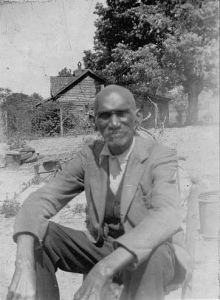
EX-SLAVE STORY
An Interview on May 18, 1937 with George Eatman, 93, of Cary, R. #1.
I belonged ter Mr. Gus Eatman who lived at de ole Templeton place on de Durham highway back as fer as I can 'member. I doan r'member my mammy an' pappy case dey wuz sold 'fore I knowed anything. I raised myself an' I reckon dat I done a fair job uv it. De marster an' missus wuz good to dere twenty-five slaves an' we ain't neber got no bad whuppin's.
I doan 'member much playin' an' such like, but I de 'members dat I wuz de handy boy 'round de house.
De Confederate soldiers camp at Ephesus Church one night, an' de nex' day de marster sent me ter de mill on Crabtree. Yo' 'members where ole Company mill is, I reckon? Well, as I rode de mule down de hill, out comes Wheeler's Calvalry, which am as mean as de Yankees, an' dey ax me lots uv questions. Atter awhile dey rides on an' leaves me 'lone.
While I am at de mill one uv Wheeler's men takes my mule an' my co'n, an' I takes de ole saddle an' starts ter walkin' back home. All de way, most, I walks in de woods, case Wheeler's men am still passin'.
When I gits ter de Morgan place I hyars de cannons a-boomin', ahh—h I ain't neber hyar sich a noise, an' when I gits so dat I can see dar dey goes, as thick as de hairs on a man's haid. I circles round an' gits behin' dem an' goes inter de back uv de-house. Well, dar stan's a Yankee, an' he axes Missus Mary fer de smokehouse key. She gibes it ter him an' dey gits all uv de meat.
One big can uv grease am all dat wuz saved, an' dat wuz burried in de broom straw down in de fiel'.
Dey camps roun' dar dat night an' dey shoots ever chicken, pig, an' calf dey sees. De nex' day de marster goes ter Raleigh, an' gits a gyard, but dey has done stole all our stuff an' we am liven' mostly on parched co'n.
De only patterollers I knowed wuz Kenyan Jones an' Billy Pump an' dey wuz called po' white trash. Dey owned blood houn's, an' chased de niggers an' whupped dem shamful, I hyars. I neber seed but one Ku Klux an' he wuz sceered o' dem.
Atter de war we stayed on five or six years case we ain't had no place else ter go.
We ain't liked Abraham Lincoln, case he wuz a fool ter think dat we could live widout de white folkses, an' Jeff Davis wuz tryin' ter keep us, case he wuz greedy an' he wanted ter be de boss dog in politics.
Top
[320121]
N.C. District:No. 32
Worker:Daisy Whaley
Subject:Ex-slave Story.
Interviewed:Doc Edwards
Ex-slave. 84 Yrs
Staggville, N.C.
Date Stamp:"AUG 6 1937"
HW: Capital A—circled
DOC EDWARDS
EX-SLAVE, 84 Yrs.
I was bawn at Staggville, N.C., in 1853. I belonged to Marse Paul Cameron. My pappy was Murphy McCullers. Mammy's name was Judy. Dat would make me a McCullers, but I was always knowed as Doc Edwards an' dat is what I am called to dis day.
I growed up to be de houseman an' I cooked for Marse Benehan,—Marse Paul's son. Marse Benehan was good to me. My health failed from doing so much work in de house an' so I would go for a couple of hours each day an' work in de fiel' to be out doors an' get well again.
Marse Paul had so many niggers dat he never counted dem. When we opened de gate for him or met him in de road he would say, "Who is you? Whare you belong?" We would say, "We belong to Marse Paul." "Alright, run along" he'd say den, an' he would trow us a nickel or so.
We had big work shops whare we made all de tools, an' even de shovels was made at home. Dey was made out of wood, so was de rakes, pitchforks an' some of de hoes. Our nails was made in de blacksmith shop by han' an' de picks an' grubbin' hoes, too.
We had a han' thrashing machine. It was roun' like a stove pipe, only bigger. We fed de wheat to it an' shook it' til de wheat was loose from de straw an' when it come out at de other end it fell on a big cloth, bigger den de sheets. We had big curtains all roun' de cloth on de floor, like a tent, so de wheat wouldn' get scattered. Den we took de pitchfork an' lifted de straw up an' down so de wheat would go on de cloth. Den we moved de straw when de wheat was all loose Den we fanned de wheat wid big pieces of cloth to get de dust an' dirt outen it, so it could be taken to de mill an' groun' when it was wanted.
When de fall come we had a regular place to do different work. We had han' looms an' wove our cotton an' yarn an' made de cloth what was to make de clothes for us to wear.
We had a shop whare our shoes was made. De cobbler would make our shoes wid wooden soles. After de soles was cut out dey would be taken down to de blacksmiyh an' he would put a thin rim of iron aroun' de soles to keep dem from splitting. Dese soles was made from maple an' ash wood.
We didn' have any horses to haul wid. We used oxen an' ox-carts. De horse and mules was used to do de plowin'.
When de Yankees come dey didn' do so much harm, only dey tole us we was free niggers. But I always feel like I belong to Marse Paul, an' i still live at Staggville on de ole plantation. I has a little garden an' does what I can to earn a little somethin'. De law done fixed it so now dat I will get a little pension, an' I'll stay right on in dat little house 'til de good Lawd calls me home, den I will see Marse Paul once more.
Top
[320001]
N.C. District:No. 11
Worker:Mrs. W. N. Harriss
No. Words:658
Subject:John Evans
Born in Slavery
Editor:Mrs. W. N. Harriss
Date Stamp:"SEP—1937"
[To List]
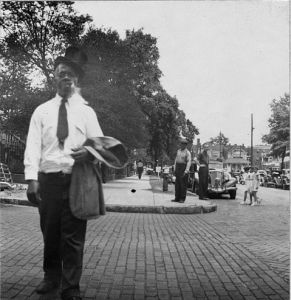
Interviewed John Evans on the street and in this Office. Residence changes frequently.
Story of John Evans Born in Slavery.
I was born August 15th, 1859. I am 78 years old. Dat comes out right, don't it? My mother's name was Hattie Newbury. I don't never remember seein' my Pa. We lived on Middle Sound an' dat's where I was born. I knows de room, 'twas upstairs, an' when I knowed it, underneath, downstairs dat is, was bags of seed an' horse feed, harness an' things, but it was slave quarters when I come heah.
Me an' my mother stayed right on with Mis' Newberry after freedom, an' never knowed no diffunce. They was jus' like sisters an' I never knowed nothin' but takin' keer of Mistus Newberry. She taught me my letters an' the Bible, an' was mighty perticler 'bout my manners. An' I'm tellin' you my manners is brought me a heap more money than my readin'—or de Bible. I'm gwine tell you how dat is, but fust I want to say the most I learned on Middle Sound was' bout fishin' an' huntin'. An' dawgs.
My! But there sho' was birds an' possums on de Sound in dem days. Pa'tridges all over de place. Why, even me an' my Mammy et pa'tridges fer bre'kfust. Think of dat now! But when I growed up my job was fishin'. I made enough sellin' fish to the summer folks all along Wrightsville and Greenville Sounds to keep me all winter.
My Mammy cooked fer Mis' Newberry. After a while they both died. I never did'nt git married.
I don't know nothin' 'bout all the mean things I hear tell about slaves an' sich. We was just one fam'ly an' had all we needed. We never paid no 'tention to freedom or not freedom. I remember eve'ybody had work to do in slavery an' dey gone right on doin' it sence. An' nobody don't git nowheres settin' down holdin' their han's. It do'n make so much diffunce anyhow what you does jes so's you does it.
One time when I was carryin' in my fish to "Airlie" Mr. Pem Jones heard me laff, an' after I opened dis here mouf of mine an' laffed fer him I didn't have to bother 'bout fish no mo'. Lordy, dose rich folks he used to bring down fum New Yo'k is paid me as much as sixty dollars a week to laff fer 'em. One of 'em was named Mr. Fish. Now you know dat tickled me. I could jes laff an' laff 'bout dat. Mr. Pem give me fine clo'es an' a tall silk hat. I'd eat a big dinner in de kitchen an' den go in' mongst de quality an' laff fer' em an' make my noise like a wood saw in my th'oat. Dey was crazy 'bout dat. An' then's when I began to be thankful 'bout my manners. I's noticed if you has nice manners wid eve'ybody people gwine to be nice to you.
Well, (with a long sigh) I don't pick up no sich money nowadays; but my manners gives me many a chance to laff, an' I never don't go hungry.
John has been a well known character for fifty years among the summer residents along the sounds and on Wrightsville Beach. He was a fisherman and huckster in his palmy days, but now John's vigor is on the wane, and he has little left with which to gain a livelihood except his unusually contagious laugh, and a truly remarkable flow of words. "Old John" could give Walter Winchel a handicap of twenty words a minute and then beat him at his own game. His mouth is enormous and his voice deep and resonant. He can make a noise like a wood saw which he maintains for 2 or 3 minutes without apparent effort, the sound buzzing on and on from some mysterious depths of his being with amazing perfection of imitation.
Any day during the baseball season John may be seen sandwiched between his announcement boards, a large bell in one hand, crying the ball game of the day. "Old John" to the youngsters; but finding many a quarter dropped in his hand by the older men with memories of gay hours and hearty laughter.
Top
[320198]
N.C. District:No. 3
Worker:Daisy Whaley
Subject:EX-SLAVE
Story Teller:Lindsay Faucette
Ex-Slave
Church Street,
Durham, N.C.
Date Stamp:"JUL 2 1937"
LINDSEY FAUCETTE, 86 Yrs.
Ex-slave.
Yes, Mis', I wuz bawn in 1851, de 16th of November, on de Occoneechee Plantation, owned by Marse John Norwood an' his good wife, Mis' Annie. An' when I say 'good' I mean jus dat, for no better people ever lived den my Marse John an' Mis' Annie.
One thing dat made our Marse an' Mistis so good wuz de way dey brought up us niggers. We wuz called to de big house an' taught de Bible an' dey wuz Bible readin's every day. We wuz taught to be good men an' women an' to be hones'. Marse never sold any of us niggers. But when his boys and girls got married he would give dem some of us to take with dem.
Marse never allowed us to be whipped. One time we had a white overseer an' he whipped a fiel' han' called Sam Norwood, til de blood come. He beat him so bad dat de other niggers had to take him down to de river an' wash de blood off. When Marse come an' foun' dat out he sent dat white man off an' wouldn' let him stay on de plantation over night. He jus' wouldn' have him roun' de place no longer. He made Uncle Whitted de overseer kase he wuz one of de oldest slaves he had an' a good nigger.
When any of us niggers got sick Mis' Annie would come down to de cabin to see us. She brung de best wine, good chicken an' chicken soup an' everything else she had at de big house dat she thought we would like, an' she done everything she could to get us well again.
Marse John never worked us after dark. We worked in de day an' had de nights to play games an' have singin's. We never cooked on a Sunday. Everything we ett on dat day was cooked on Saturday. Dey wuzn' lighted in de cook stoves or fire places in de big house or cabins neither. Everybody rested on Sunday. De tables wuz set an' de food put on to eat, but nobody cut any wood an' dey wuzn' no other work don' on dat day. Mammy Beckie wuz my gran'mammy an' she toted de keys to de pantry an' smoke house, an' her word went wid Marse John an' Mis' Annie.
Marse John wuz a great lawyer an' when he went to Pittsboro an' other places to practice, if he wuz to stay all night, Mis' Annie had my mammy sleep right in bed wid her, so she wouldn' be 'fraid.
Marse an Mistis had three sons an' three daughters,—De oldest son wuz not able to go to war. He had studied so hard dat it had 'fected his mind, so he stayed at home. De secon' son, named Albert, went to war an' wuz brought back dead with a bullet hole through his head. Dat liked to have killed Marse John an' Mis' Annie. Dey wuz three girls, named, Mis' Maggie, Mis' Ella Bella and Mis' Rebena.
I wuz de cow-tender. I took care of de cows an' de calves. I would have to hold de calf up to de mother cow 'til de milk would come down an' den I would have to hold it away 'til somebody done de milkin'. I tended de horses, too, an' anything else dat I wuz told to do.
When de war started an' de Yankees come, dey didn' do much harm to our place. Marse had all de silver an' money an' other things of value hid under a big rock be de river an' de Yankees never did fine anything dat we hid.
Our own sojers did more harm on our plantation den de Yankees. Dey camped in de woods an' never did have nuff to eat an' took what dey wanted. An' lice! I ain't never seed de like. It took fifteen years for us to get shed of de lice dat de sojers lef' behind. You jus' couldn' get dem out of your clothes les' you burned dem up. Dey wuz hard to get shed of.
After de war wuz over Marse John let Pappy have eighteen acres of land for de use of two of his boys for a year. My pappy made a good crop of corn, wheat an' other food on dis land. Dey wuz a time when you couldn' find a crust of bread or piece of meat in my mammy's pantry for us to eat, an' when she did get a little meat or bread she would divide it between us chillun, so each would have a share an' go without herself an' never conplained.
When pappy wuz makin' his crop some of de others would ask him why he didn' take up some of his crop and get somethin' to eat. He would answer an' say dat when he left dat place he intended to take his crop with him an' he did. He took plenty of corn, wheat, potatoes an' other food, a cow, her calf, mule an' hogs an' he moved to a farm dat he bought.
Later on in years my pappy an mammy come here in Durham an' bought a home. I worked for dem' til I wuz thirty-two years old an' give dem what money I earned. I worked for as little as twenty-five cents a day. Den I got a dray an' hauled for fifteen cents a load from de Durham depo' to West Durham for fifteen years. Little did I think at dat time dat I would ever have big trucks an' a payroll of $6,000.00 a year. De good Lawd has blest me all de way, an' all I have is His'n, even to my own breath.
Den one day I went back home to see my old Marse an' I foun' him sittin' in a big chair on de po'ch an' his health wuzn' so good. He sed, "Lindsey, why don' you stop runnin' roun' wid de girls an' stop you cou't 'n? You never will get nowhere makin' all de girls love you an' den you walk away an' make up with some other girl. Go get yourself a good girl an' get married an' raise a family an' be somebody." An' I did. I quit all de girls an' I foun' a fine girl and we wuz married. I sho got a good wife; I got one of de best women dat could be foun' an' we lived together for over forty-five years. Den she died six years ago now, an' I sho miss her for she wuz a real help-mate all through dese years. We raised five chillun an' educated dem to be school teachers an' other trades.
I have tried to live de way I wuz raised to. My wife never worked a day away from home all de years we wuz married. It wuz my raisin an' my strong faith in my Lawd an' Marster dat helped me to get along as well as I have, an' I bless Him every day for de strength He has given me to bring up my family as well as I have. Der is only one way to live an' dat is de right way. Educate your chillun, if you can, but be sho you give dem de proper moral training at home. De right way to raise your chillun is to larn dem to have manners and proper respect for their parents, be good citizens an' God fearin' men an' women. When you have done dat you will not be ashamed of dem in your old age. I bless my Maker dat I have lived so clos' to Him as I have all dese years an' when de time comes to go to Him I will have no regrets an' no fears.
Top
[320223]
N.C. District:No. 2
Worker:T. Pat Matthews
No. Words:567
Subject:A SLAVE STORY
Story Teller:Ora M. Flagg
Editor:Daisy Bailey Waitt
ORA M. FLAGG
811 Oberlin Road
My name is Ora M. Flagg. I wus born in Raleigh near the Professional Building, in the year 1860, October 16. My mother wus named Jane Busbee. Her marster wus Quent Busbee, a lawyer. Her missus wus Julia Busbee. She wus a Taylor before she married Mr. Busbee. Now I tell you, I can't tell you exactly, but the old heads died. The old heads were the Scurlocks who lived in Chatham County. I heard their names but I don't remember them. Their children when they died drawed for the slaves and my mother wus brought to Raleigh when she wus eight years old. She came from the Scurlocks to the Busbees. The Taylors were relatives of the Scurlocks, and were allowed to draw, and Julia Taylor drawed my mother. It wus fixed so the slaves on this estate could not be sold, but could be drawed for by the family and relatives. She got along just middlin' after her missus died. When her missus died, mother said she had to look after herself. Mr. Busbee would not allow anyone to whip mother. He married Miss Lizzie Bledsoe the second time.
I wus only a child and, of course, I thought as I could get a little something to eat everything wus all right, but we had few comforts. We had prayer meeting and we went to the white people's church. I heard mother say that they had to be very careful what they said in their worship. Lots of time dey put us children to bed and went off.
About the time of the surrender, I heard a lot about the patterollers, but I did not know what they were. Children wus not as wise then as they are now. They didn't know as much about things.
Yes sir, I remember the Yankees coming to Raleigh, we had been taken out to Moses Bledsoe's place on Holleman's Road to protect Mr. Bledsoe's things. They said if they put the things out there, and put a family of Negroes there the Yankees would not bother the things. So they stored a lot of stuff there, and put my mother an' a slave man by the name o' Tom Gillmore there. Two Negro families were there. We children watched the Yankees march by.
The Yankees went through everything, and when mother wouldn't tell them where the silver wus hid they threw her things in the well. Mother cried, an' when the Yankee officers heard of it they sent a guard there to protect us. The colored man, Tom Gillmore, wus so scared, he and his family moved out at night leaving my mother alone with her family. The Yankees ate the preserves and all the meat and other things. They destroyed a lot they could not eat.
Mother and me stayed on with marster after the surrender, and stayed on his place till he died. After that we moved to Peck's Place, called Peck's Place because the property wus sold by Louis Peck. It wus also called the 'Save-rent' section, then in later years Oberlin Road.
I think slavery wus a bad thing, while it had its good points in building good strong men. In some cases where marsters were bad it wus a bad thing.
Abraham Lincoln wus our friend, he set us free. I don't know much about Booker T. Washington. Mr Roosevelt is all right. Jim Young seemed to be all right. Jeff Davis didn't bother me. I guess he wus all right.
EH
Top
[320214]
N.C. District:No. 2
Worker:Mary Hicks
No. Words:361
Subject:Ex-Slave Story
Story Teller:Analiza Foster.
Editor:Daisy Bailey Waitt
EX-SLAVE STORY
An interview with Analiza Foster, 68 of 1120 South Blount Street, Raleigh, North Carolina.
I wuz borned in Person County ter Tom Line an' Harriet Cash. My mammy belonged ter a Mr. Cash an' pappy belonged ter Miss Betsy Woods. Both of dese owners wuz mean ter dere slaves an' dey ain't carin' much if'en dey kills one, case dey's got plenty. Dar wuz one woman dat I hyard mammy tell of bein' beat clean ter death.
De 'oman wuz pregnant an' she fainted in de fiel' at de plow. De driver said dat she wuz puttin' on, an' dat she ort ter be beat. De master said dat she can be beat but don't ter hurt de baby. De driver says dat he won't, den he digs a hole in de sand an' he puts de 'oman in de hole, which am nigh 'bout ter her arm pits, den he kivers her up an' straps her han's over her haid.
He takes de long bull whup an' he cuts long gashes all over her shoulders an' raised arms, den he walks off an' leabes her dar fer a hour in de hot sun. De flies an' de gnats dey worry her, an' de sun hurts too an' she cries a little, den de driver comes out wid a pan full of vinegar, salt an' red pepper an' he washes de gashes. De 'oman faints an' he digs her up, but in a few minutes she am stone dead.
Dat's de wust case dat I'se eber hyard of but I reckon dar wuz plenty more of dem.
Ter show yo' de value of slaves I'll tell yo' 'bout my gran'ma. She wuz sold on de block four times, an' eber time she brung a thousand dollars. She wuz valuable case she wuz strong an' could plow day by day, den too she could have twenty chilluns an' wuck right on.
De Yankees come through our country an' dey makes de slaves draw water fer de horses all night. Course dey stold eber'thing dey got dere han's on but dat wuz what ole Abraham Lincoln tol' dem ter do.
MH:EH
Top
[320088]
N.C. District:No. 2
Worker:T. Pat Matthews
No. Words:570
Subject:A SLAVE STORY
Story Teller:Georginna Foster
Editor:George L. Andrews
Date Stamp:"AUG 23 1937"
GEORGIANNA FOSTER
1308 Poole Road, Route # 2. Raleigh, North Carolina.
I wus born in 1861. I jes' can 'member de Yankees comin' through, but I 'members dere wus a lot of 'em wearin' blue clothes. I wus born at Kerney Upchurch's plantation twelve miles from Raleigh. He wus my marster an' Missus Enny wus his wife. My father wus named Axiom Wilder and my mother wus Mancy Wilder. De most I know 'bout slavery dey tole it to me. I 'members I run when de Yankees come close to me. I wus 'fraid of 'em.
We lived in a little log houses at marsters. De food wus short an' things in general wus bad, so mother tole me. She said dey wus a whole lot meaner den dey had any business bein'. Dey allowed de patterollers to snoop around an' whup de slaves, mother said dey stripped some of de slaves naked an' whupped 'em. She said women had to work all day in de fields an' come home an' do de house work at night while de white folks hardly done a han's turn of work.
Marse Kerney had a sluice of chilluns. I can't think of 'em all, but I 'members Calvin, James, Allen, Emily, Helen, an' I jest can't think of de rest of de chilluns names.
Mother said dey gathered slaves together like dey did horses an' sold 'em on de block. Mother said dey carried some to Rolesville in Wake County an' sold 'em. Dey sold Henry Temples an' Lucinda Upchurch from marster's plantation, but dey carried 'em to Raleigh to sell 'em.
We wore homemade clothes an' shoes wid wooden bottoms. Dey would not allow us to sing an' pray but dey turned pots down at de door an' sung an' prayed enyhow an' de Lord heard dere prayers. Dat dey did sing an' pray.
Mother said dey whupped a slave if dey caught him wid a book in his hand. You wus not 'lowed no books. Larnin' among de slaves wus a forbidden thing. Dey wus not allowed to cook anything for demselves at de cabins no time 'cept night. Dere wus a cook who cooked fur all durin' de day. Sometimes de field han's had to work 'round de place at night after comin' in from de fields. Mother said livin' at marster's wus hard an' when dey set us free we left as quick as we could an' went to Mr. Bob Perry's plantation an' stayed there many years. He wus a good man an' give us all a chance. Mother wus free born at Upchurch's but when de war ended, she had been bound to Wilder by her mother, an' had married my father who wus a slave belongin' to Bob Wilder. Dey did not like de fare at Marster Upchurch's or Marster Wilder's, so when dey wus set free dey lef' an' went to Mrs. Perry's place.
Dey had overseers on both plantations in slavery time but some of de niggers would run away before dey would take a whuppin'. Fred Perry run away to keep from bein' sold. He come back do' an' tole his marster to do what he wanted to wid him. His marster told him to go to work an' he stayed dere till he wus set free. God heard his prayer 'cause he said he axed God not to let him be sold.
Mother an' father said Abraham Lincoln come through there on his way to Jeff Davis. Jeff Davis wus de Southern President. Lincoln say, 'Turn dem slaves loose, Jeff Davis,' an' Jeff Davis said nuthin'. Den he come de second time an' say, 'Is you gwine to turn dem slaves loose?' an' Jeff Davis wouldn't do it. Den Lincoln come a third time an' had a cannon shootin' man wid him an' he axed, 'Is you gwine to set dem slaves free Jeff Davis?' An' Jeff Davis he say, 'Abraham Lincoln, you knows I is not goin' to give up my property, an' den Lincoln said, 'I jest as well go back an' git up my crowd den.' Dey talked down in South Carolina an' when Jeff Davis 'fused to set us free, Lincoln went home to the North and got up his crowd, one hundred an' forty thousand men, dey said, an' de war begun. Dey fighted an' fighted an' de Yankees whupped. Dey set us free an' dey say dat dey hung Jeff Davis on a ole apple tree.
EH HW
Top
[320247]
N.C. District:No. 2
Worker:T. Pat Matthews
No. Words:815
Subject:FRANK FREEMAN
Story Teller:Frank Freeman
Editor:Daisy Bailey Waitt
FRANK FREEMAN
216 Tappers Lane
I was born near Rolesville in Wake County Christmas Eve, 24 of December 1857. I am 76 years old. My name is Frank Freeman and my wife's name is Mary Freeman. She is 78 years old. We live at 216 Tuppers Lane, Raleigh, Wake County, North Carolina. I belonged to ole man Jim Wiggins jus' this side o' Roseville, fourteen miles from Raleigh. The great house is standin' there now, and a family by the name o' Gill, a colored man's family, lives there. The place is owned by ole man Jim Wiggins's grandson, whose name is O. B. Wiggins. My wife belonged to the Terrells before the surrender. I married after the war. I was forty years ole when I was married.
Old man Jim Wiggins was good to his niggers, and when the slave children were taken off by his children they treated us good. Missus dressed mother up in her clothes and let her go to church. We had good, well cooked food, good clothes, and good places to sleep. Some of the chimneys which were once attached to the slave houses are standing on the plantation. The home plantation in Wake County was 3000 acres.
Marster also owned three and a quarter plantations in Franklin County. He kept about ten men at home and would not let his slave boys work until they were 18 years old, except tend to horses and do light jobs around the house. He had slaves on all his plantations but they were under colored overseers who were slaves themselves. Marster had three boys and five girls, eight children of his own.
One of the girls was Siddie Wiggins. When she married Alfred Holland, and they went to Smithfield to live she took me with her, when I was two years old. She thought so much o' me mother was willing to let me go. Mother loved Miss Siddie, and it was agreeable in the family. I stayed right on with her after the surrender three years until 1868. My father decided to take me home then and went after me.
They never taught us books of any kind. I was about 8 years old when I began to study books. When I was 21 Christmas Eve 1880, father told me I was my own man and that was all he had to give me.
I had decided many years before to save all my nickles. I kept them in a bag. I did not drink, chew, smoke or use tobacco in any way during this time. When he told me I was free I counted up my money and found I had $47.75. I had never up to this tasted liquor or tobacco. I don't know anything about it yet. I have never used it. With that money I entered Shaw University. I worked eight hours a week in order to help pay my way.
Later I went into public service, teaching four months a year in the public schools. My salary was $25.00 per month. I kept going to school at Shaw until I could get a first grade teacher's certificate. I never graduated. I taught in the public schools for 43 years. I would be teaching now, but I have high blood pressure.
I was at Master Hollands at Smithfield when the Yankees came through. They went into my Marster's store and began breaking up things and taking what they wanted. They were dressed in blue and I did not know who they were. I asked and someone told me they were the Yankees.
My father was named Burton, and my mother was named Queen Anne. Father was a Freeman and mother was a Wiggins.
There were no churches on the plantation. My father told me a story about his young master, Joe Freeman and my father's brother Soloman. Marster got Soloman to help whip him. My father went in to see young Missus and told her about it, and let her know he was going away. He had got the cradle blade and said he would kill either of them if they bothered him. Father had so much Indian blood in him that he would fight. He ran away and stayed four years and passed for a free nigger. He stayed in the Bancomb Settlement in Johnson County. When he came home before the war ended, Old Marster said, 'Soloman why didn't you stay?' father said, 'I have been off long enough'. Marster said 'Go to work', and there was no more to it. Father helped build the breastworks in the Eastern part of the State down at Ft. Fisher. He worked on the forts at New Bern too.
I think Abraham Lincoln worked hard for our freedom. He was a great man. I think Mr. Roosevelt is a good man and is doing all he can for the good of all.
LE
Top
[320010]
N.C. District:No. 2
Worker:T. Pat Matthews
No. Words:976
Subject:ADDY GILL
Story Teller:Addy Gill
Editor:G. L. Andrews
Date Stamp:"SEP 10 1937"
ADDY GILL
1614 "B" St. Lincoln Park Raleigh, North Carolina.
I am seventy four years of age. I wus born a slave Jan. 6, 1863 on a plantation near Millburnie, Wake County, owned by Major Wilder, who hired my father's time. His wife wus named Sarah Wilder. I don't know anything 'bout slavery 'cept what wus tole me by father and mother but I do know that if it had not been for what de southern white folks done for us niggers we'd have perished to death. De north turned us out wid out anything to make a livin' wid.
My father wus David Gill and, my mother wus Emily Gill. My father wus a blacksmith an he moved from place to place where dey hired his time. Dats why I wus born on Major Wilders place. Marster Gill who owned us hired father to Major Wilder and mother moved wid him. For a longtime atter de war, nine years, we stayed on wid Major Wilder, de place we wus at when dey set us free.
Mr. Wilder had a large plantation and owned a large number of slaves before de surrender. I only 'members fourteen of de ones I know belonged to him. Mr. Wilder wus a mighty good man. We had plenty to eat an plenty work to do. Dere wus seven in the Major's family. Three boys, two girls, he an his wife. His boys wus named Sam, Will and Crockett. De girls wus named Florence and Flora. Dey are all dead, every one of 'em. De whole set. I don't know nary one of 'em dats livin. If dey wus livin I could go to 'em an' git a meal any time. Yes Sir! any time, day or night.
I farmed for a long time for myself atter I wus free from my father at 21 years of age. Den 'bout twelve years ago I come to Raleigh and got a job as butler at St. Augustine Episcopal College for Colored. I worked dere eight years, wus taken sick while workin dere an has been unable to work much since. Dat wus four years ago. Since den sometimes I ain't able to git up outen my cheer when I is settin down. I tells you, mister, when a nigger leaves de farm an comes to town to live he sho is takin a mighty big chance wid de wolf. He is just a riskin parishin, dats what he is a doin.
I married forty five years ago this past November. I wus married on de second Thursday night in November to Millie Ruffin of Wake County, North Carolina. We had leben chilluns, six boys an five gals. Four of the boys an one of de gals is livin now. Some of my chilluns went north but dey didn't stay dere but two months. De one dat went north wus Sam, dat wus de oldest one. He took a notion to marry so he went up to Pennsylvania and worked. Just as soon as he got enough money to marry on he come back an got married. He never went back north no more.
Mother belonged to Sam Krenshaw before she wus bought by Marster Gill. Her missus when she was a girl growin up wus Mrs. Louise Krenshaw. De missus done de whuppin on Mr. Krenshaw's plantation an she wus mighty rough at times. She whupped mother an cut her back to pieces so bad dat de scars wus on her when she died. Father died in Raleigh an mother died out on Miss Annie Ball's farm 'bout seven miles from Raleigh. Mother an father wus livin there when mother died. Father den come to Raleigh an died here.
I caint read an write but all my chilluns can read and write. Mother and father could not read or write. I haint had no chance. I had no larnin. I had to depend on white folks I farmed wid to look atter my business. Some of em cheated me out of what I made. I am tellin you de truth 'bout some of de landlords, dey got mighty nigh all I made. Mr. Richard Taylor who owned a farm near Raleigh whur I stayed two years wus one of em. He charged de same thing three times an I had it to pay. I stayed two years an made nothin'. Dis is de truth from my heart, from here to glory. I members payin' fur a middlin of meat twice. Some of de white folks looked out fur me an prospered. Mr. Dave Faulk wus one of 'em. I stayed wid him six years and I prospered. Mr. John Bushnell wus a man who took up no time wid niggers. I rented from him a long time.
He furnished a nigger cash to run his crap on. De nigger made de crap sold it an carried him his part. He figgered 'bout what he should have an de nigger paid in cash. He wus a mighty good man to his nigger tenants. I never owned a farm, I never owned horses or mules to farm with. I worked de landlords stock and farmed his land on shares. Farmin' has been my happiest life and I wushes I wus able to farm agin cause I am happiest when on de farm.
I had a quiet home weddin' an I wus married by a white magistrate. I got up one night an' wus married at 1 o'clock.
Atter de weddin she went back home wid me. We have had our ups and downs in life. Sometimes de livin' has been mighty hard, but dere has never been a time since I been free when I could not git a handout from de white folks back yard.
LE
Top
[320020]
N.C. District:No. 2
Worker:T. Pat Matthews
No. Words:2,118
Subject:A SLAVE STORY
Story Teller:Robert Glenn
Editor:George L. Andrews
Date Stamp:"SEP 10 1937"
ROBERT GLENN
207 Idlewild Avenue Raleigh, North Carolina.
I was a slave before and during the Civil War. I am 87 years old. I was born Sept. 16, 1850. I was born in Orange County, North Carolina near Hillsboro. At that time Durham was just a platform at the station and no house there whatever. The platform was lighted with a contraption shaped like a basket and burning coal that gave off a blaze. There were holes in this metal basket for the cinders to fall through.
I belonged to a man named Bob Hall, he was a widower. He had three sons, Thomas, Nelson, and Lambert. He died when I was eight years old and I was put on the block and sold in Nelson Hall's yard by the son of Bob Hall. I saw my brother and sister sold on this same plantation. My mother belonged to the Halls, and father belonged to the Glenns. They sold me away from my father and mother and I was carried to the state of Kentucky. I was bought by a Negro speculator by the name of Henry long who lived not far from Hurdles Mill in Person County. I was not allowed to tell my mother and father goodbye. I was bought and sold three times in one day.
My father's time was hired out and as he knew a trade he had by working overtime saved up a considerable amount of money. After the speculator, Henry Long, bought me, mother went to father and pled with him to buy me from him and let the white folks hire me out. No slave could own a slave. Father got the consent and help of his owners to buy me and they asked Long to put me on the block again. Long did so and named his price but when he learned who had bid me off he backed down. Later in the day he put me on the block and named another price much higher than the price formerly set. He was asked by the white folks to name his price for his bargain and he did so. I was again put on the auction block and father bought me in, putting up the cash. Long then flew into a rage and cursed my father saying, 'you damn black son of a bitch, you think you are white do you? Now just to show you are black, I will not let you have your son at any price.' Father knew it was all off, mother was frantic but there was nothing they could do about it. They had to stand and see the speculator put me on his horse behind him and ride away without allowing either of them to tell me goodbye. I figure I was sold three times in one day, as the price asked was offered in each instance. Mother was told under threat of a whupping not to make any outcry when I was carried away. He took me to his home, but on the way he stopped for refreshments, at a plantation, and while he was eating and drinking, he put me into a room where two white women were spinning flax. I was given a seat across the room from where they were working. After I had sat there awhile wondering where I was going and thinking about mother and home, I went to one of the women and asked, 'Missus when will I see my mother again?' She replied, I don't know child, go and sit down. I went back to my seat and as I did so both the women stopped spinning for a moment, looked at each other, and one of them remarked. "Almighty God, this slavery business is a horrible thing. Chances are this boy will never see his mother again." This remark nearly killed me, as I began to fully realize my situation. Long, the Negro trader, soon came back, put me on his horse and finished the trip to his home. He kept me at his home awhile and then traded me to a man named William Moore who lived in Person County. Moore at this time was planning to move to Kentucky which he soon did, taking me with him. My mother found out by the "Grapevine telegraph" that I was going to be carried to Kentucky. She got permission and came to see me before they carried me off. When she started home I was allowed to go part of the way with her but they sent two Negro girls with us to insure my return. We were allowed to talk privately, but while we were doing so, the two girls stood a short distance away and watched as the marster told them when they left that if I escaped they would be whipped every day until I was caught. When the time of parting came and I had to turn back, I burst out crying loud. I was so weak from sorrow I could not walk, and the two girls who were with me took me by each arm and led me along half carrying me.