Volume 4 / Part 2 — PART II
Reading edition
Mrs. Emmaline Heard, who resides at 239 Cain St., N.E. has proved to be a regular storehouse for conjure and ghost stories. Not only this but she is a firm believer in the practice of conjure. To back up her belief in conjure is her appearance. She is a dark browned skinned woman of medium height and always wears a dirty towel on her head. The towel which was at one time white gives her the weird look of an old time fortune teller. Tuesday December 8, 1936 a visit was made to her home and the following information was secured.
"There wuz onst a house in McDonough and it wuz owned by the Smiths that wuz slave owners way back yonder. Now this is the trufe 'cause it wuz told ter me by old Uncle Joe Turner and he 'spirense it. Nobody could live in this how I don't care how they tried. Dey say this house wuz hanted and any body that tried to stay there wuz pulled out of bed by a hant. Well sir they offered the house and $1000.00 to any one who could stay there over night. Uncle Joe sed he decided to try it so sho nuff he got ready one night and went ter this house to stay. After while says he something came in the room and started over ter the bed; but fore it got there he sed "What in the name of the Lord you wont with me." It sed "follow me there is a pot of gold buried near the chimney; go find it and you want be worried with me no more." Der nect morning Uncle Joe went out then and begin ter dig and sho nuff he found the gold; and sides that he got the house. Dis here is the trufe Uncle Joes' house is right there in McDonough now and any body round there will tell you the same thing cause he wuz well known. Uncle Joe is dead now."
Anudder story that happened during slavery time and wuz told ter me by father wuz this: The master had a old man on his plantation named Jimson. Well Jimson's wife wuz sick and had been fer nearly a year. One day there she wanted some peas—black eyed peas; but old man Harper didn't have none on his plantation so Jimson planned ter steal off that night and go ter old marse Daniels farm, which wuz 4 miles from Moore Harpers farm, and steal a few peas fer his wife. Well between mid-night and day he got a sack and started off down the road. Long after while a owl started hootin who o o o are e-e-e, who are o-o-o- and it sounded jest lak some one saying "who are you". Jimson got scared pulled off his cap and ran all the way to old man Daniels farm. As he run he wuz saying "Sir dis is me. Old Jimson" over and over again. Now when he got near the farm old Daniel heard him and got up in the loft ter watch him. Finally old Jimson got dar and started creeping up in the loft. When he got up there chile Marse Daniel grabbed his whip and almost beat Jimson ter death.
This here story happened in Mississippi years ago but der folks that tell it ter me sed it wuz the trufe. "There wuz a woman that wuz sick, her name wuz Mary Jones. Well she lingered and lingered till she finally died. In them days folks all around would come ter the settin up of somebody wuz dead. They done sent some men after the casket since they had ter go 30 miles they wuz a good while getting back so the folkses decided ter sing. After while they heared the men come up on the porch or somebody got up ter let em in. Chile jest as they opened the door that 'oman set straight up on that bed, and sich another runnin and gittin out of that house you never heard; but some folks realized she wuzn't dead so they got the casket out der way so the wouldn't see it cause they wuz fraid she would pass out sho nuff; just the same they wuz fraid of her too. The men went off and come back with pistols guns, sticks and every thing and when this 'oman saw em she sed don't run I wont bother you' but child they left there in a big hurry too. Well this here Mary went to her sister's house and knocked on the door and said "Let me in this is Mary I want to talk to you and tell you where I've been. The sisters' husband opened the door and let her in. This 'oman told 'em that God had brought her to and that she had been in a trance with the Lord. After that everyone wuz always afraid of that 'oman and they wouldn't even sit next 'ter her in church. They say she is still living.
This happened right yonder in McDonough years ago. A gal went to a party with her sweet'art and her ma told her not ter go well she went on any how in a buggy. When they got ter the railroad crossing a train hit the buggy, and killed the gal; but the boy didn't get hurted at all. Well while they wuz sittin up with this dead gal, the boy comes long there in his buggy with anudder gal in the buggy; and do you know that horse stopped right in front 'uv that house and wouldn't bulge one inch. No matter how hard he whipped that horse it wouldn't move instid he rared and kicked and jumped about and almost turned the buggy over. The gal in the buggy fainted. Finally a old slavery time man come along and told em to git a quart of whiskey and pour it around the buggy and the hant would go away so they did that and the spirit let 'em pass. If a han't laked whiskey in they lifetime and you pour it round when theys at they will go away.
The following are true conjure stories supposedly witnessed by Mrs. Heard.
There wuz a Rev. Dennis that lived below the Federal Prison now he wuz the preacher of the hard shell baptist church in this community; This man stayed sick about a year and kept gittin different doctors and none 'uv them did him any good well his wife kept on at him till he decided ter go ter see Dr. Geech. His complaint wuz that he felt something run up his legs ter his thighs. Old Dr. Geech told him that he had snakes in his body and they wuz put there by the lady he had been going wid. Dr. Geech give him some medicine ter take and told him that on the 7th day from then that 'oman would come and take the medicine off the shelf and throw it away. Course Rev. Dennis didn't believe a thing he sed so sho nuff she come jest lak Dr. Geech sed and took the medicine away. Dr. Geech told him that he would die when the snakes got up in his arm. But if he would do lak he told him he would get alright. Dis 'oman had put this stuff in some whiskey and he drunk it so the snakes breed in his body. After he quit taking the medicine he got bad off and had ter stay in the bed; sho nuff the morning he died. You could see the snake in his arm, the print uv it wuz there. When he died the snake stretched out in his arm and died too.
I got a son named Jack Heard, well somebody fixed him. I wuz in Chicago when that happened and my daughter kept writing ter me ter come home cause Jack wuz acting funny and she thought maybe he wuz losing his mind. They wuz living in Thomasville then and every day he would go sit round the store and laugh and talk but jest as soon as night would come and he would eat his supper them fits would come on him. He would squeal jest lak a pig and he would get down on his knees and bark jest lak a dog. Well I come home and went ter see a old conjure doctors. He says ter me, "that boy is hurt and when you go home you look in the corner of the mattress and you will find it." Sho nuff I went home and looked in the corner uv the mattress and there the package. It wuz a mixture of hair his hair and blue stone wrapped up in red flannel with new needles running all through it. When I went back he says ter me, Emmaline have you got 8 dimes no I sed but I got a dollar. Well get that dollar changed inter 10 dimes and take 8 'uv em and give 'em ter me. Then he took Jack in a room took off his clothes and started ter rubbing him down with medicine all the same time, he wuz a saying a ceremony over him, then he took them 8 dimes put 'em in a bag and tied them around Jacks chest some where so that they would hang over his heart. Now wear them always says he ter Jack. Jack wore them dimes a long time but he finally drunk 'em up. Any way that doctor cured him 'cause he sho woulda died.
The following is a few facts, as related by Mrs. Heard, concerning an old conjure doctor known as Aunt Darkas.
"Aunt Darkas lived in McDonough, Georgia until a few years ago. She died when she wuz 128 years old; but chile lemme tell you that 'oman knowed jest what ter do fer you. She wuz blind but she could go ter the woods and pick out any kind of root or herb she wanted. She always sed the Lord told her what roots to get and always fore sun up you would see her in the woods with a short handled pick. She sed she had ter pick 'em fore sun up, I don't know why. If you wuz sick all you had ter do wuz go to see Aunt Darkas and tell her. She had a well and after listening to your complaint she would go out there and draw a bucket of water and set it on the floor and then she would wave her hand over it and say something. She called this healing the water. After this she would give you a drink of water as she handed it ter you she would say, now drink, take this and drink. Honey, I had some uv that water myself and believe me it goes all over you and makes you feel so good. Old Aunt Darkas would give you a supply of water and tell you ter come back fer more when that wuz gone. Old Aunt Darkas sed the Lord gave her power and vision and she used ter fast fer a week at a time. When she died there wuz a piece in the paper 'bout her."
This here is sho the trufe and if you don't go out ter Southview Cemetary and see Sid Heard my oldest son he been out there over 20 years as sexton and book keeper. Yessir he tole it ter me and I believe it. This happen long ago 10 or 15 years. There wuz a couple that lived in Macon, Ga., but their home wuz in Atlanta and they had a lot out ter South View. Well they had a young baby that tuck sick and died so they had the babies funeral there in Macon then they put the coffin in the box placed the lable on the box then brought it ter Atlanta. Folkses are always buried so that they head faces the east. They say when judgement day come and Gabriel blow that trumpet every body will rise up facing the east. Well as I wuz saying they come here Sid Heard met im out yonder and instructed his men fer arrangements fer the grave and everything. A few weeks later the 'oman called Sid Heard up long distance. She said, "Mr. Heard." "Yesmam," he said. "I call you ter tell you me and my husband can't rest at all." "Why?" he asked. "Because we can hear our baby crying every night and it is worrying us ter death our neighbors next door says our baby must be buried wrong." Sid Heard sed, "Well I buried the baby according ter the way you got the box labled." "I'm not blaming you Mr. Heard but if I pay you will you take my baby up?" Sed she "Yes Mam I will if you want me to jest let me know the day you will be here and I'll have everything ready". "Alright," sed she. "Well," sed Sid Heard, "the day she wuz ter come she wuz sick and instead sent a carload of her friends. The men got busy and started digging till they got ter the box, when they took it up sho nuff after they opened it they found the baby had been buried wrong the head was facing the west instead of the east. They turned the box around and covered it up. The folks then went on back ter Macon. A week later the 'oman called up again. "Mr. Heard," she says. "Yes maam" says he. "Well I haven't heard my baby cry at all in the past week I wuzn't there but I know the exact date you took my baby up, cause I never heard it cry no more".
On December 3 and 4, 1936, Mrs. Emmaline Heard was interviewed at her home, 239 Cain Street. The writer had visited Mrs. Heard previously, and it was at her own request that another visit was made. This visit was supposed to be one to obtain information and stories on the practice of conjure. On two previous occasions Mrs. Heard's stories had proved very interesting, and I knew as I sat there waiting for her to begin that she had something very good to tell me. She began:
"Chile, this story wuz told ter me by my father and I know he sho wouldn't lie. Every word of it is the trufe; fact, everything I ebber told you wuz the trufe. Now, my pa had a brother, old Uncle Martin, and his wife wuz name Julianne. Aunt Julianne used ter have spells and fight and kick all the time. They had doctor after doctor but none did her any good. Somebody told Uncle Martin to go ter a old conjurer and let the doctors go cause they wan't doing nothing for her anyway. Sho nuff he got one ter come see her and give her some medicine. This old man said she had bugs in her head, and after giving her the medicine he started rubbing her head. While he rubbed her head he said: "Dar's a bug in her head; it looks jest like a big black roach. Now, he's coming out of her head through her ear; whatever you do, don't let him get away cause I want him. Whatever you do, catch him; he's going ter run, but when he hits the pillow, grab 'em. I'm go take him and turn it back on the one who is trying ter send you ter the grave." Sho nuff that bug drop out her ear and flew; she hollered, and old Uncle Martin ran in the room, snatched the bed clothes off but they never did find him. Aunt Julianne never did get better and soon she died. The conjurer said if they had a caught the bug she would a lived."
The next story is a true story. The facts as told by Mrs. Heard were also witnessed by her; as it deals with the conjuring of one of her sons. It is related in her exact words as nearly as possible.
"I got a son named Albert Heard. He is living and well; but chile, there wuz a time when he wuz almost ter his grave. I wuz living in town then, and Albert and his wife was living in the country with their two chillun. Well, Albert got down sick and he would go ter doctors, and go ter doctors, but they didn't do him any good. I wuz worried ter death cause I had ter run backards and for'ards and it wuz a strain on me. He was suffering with a knot on his right side and he couldn't even fasten his shoes cause it pained him so, and it was so bad he couldn't even button up his pants. A 'oman teached school out there by the name of Mrs. Yaney; she's dead now but she lived right here on Randolph Street years ago. Well, one day when I wuz leaving Albert's house I met her on the way to her school. 'Good evening, Mrs. Heard', she says. 'How is Mr. Albert?' I don't hardly know, I says, cause he don't get no better. She looked at me kinda funny and said, don't you believe he's hurt?' Yes mam, I said, I sho do. 'Well,' says she, 'I been waiting to say something to you concerning this but I didn't know how you would take it. If I tell you somewhere to go will you go, and tell them I sent you?' Yes mam, I will do anything if Albert can get better. 'All right then', she says, 'Catch the Federal prison car and get off at Butler St.' In them days that car came down Forrest Ave. 'When you get to Butler St.', she says, 'walk up to Clifton St. and go to such and such a number. Knock on the door and a 'oman by the name of Mrs. Hirshpath will come ter the door. Fore she let you in she go ask who sent you there; when you tell 'er she'll let you in. Now lemme tell you she keeps two quarts of whisky all the time and you have ter drink a little with her; sides that she cusses nearly every word she speaks; but don't let that scare you; she will sho get your son up if it kin be done.' Sho nuff that old 'oman did jest lak Mrs. Yaney said she would do. She had a harsh voice and she spoke right snappy. When she let me in she said, 'sit down. You lak whisky?' I said, well, I take a little dram sometimes. 'Well, here take some of this', she said. I poured a little bit and drank it kinda lak I wuz afraid. She cussed and said 'I ain't go conjure you. Drink it.' She got the cards and told me to cut 'em, so I did. Looking at the cards, she said: 'You like ter wait too long; they got him marching to the cemetery. The poor thing! I'll fix those devils. (A profane word was used instead of devils). He got a knot on his side, ain't he?' Yes, Mam, I said. That 'oman told me everything that was wrong with Albert and zackly how he acted. All at once she said: 'If them d——d things had hatched in him it would a been too late. If you do zackly lak I tell you I'll get him up from there.' I sho will, I told her. 'Well, there's a stable south east of his house. His house got three rooms and a path go straight to the stable. I see it there where he hangs his harness. Yes, I see it all, the devils! Have you got any money?' Yes, mam, a little, I said. 'All right then,' she said. 'Go to the drug store and get 5¢ worth of blue stone; 5¢ wheat bran; and go ter a fish market and ask 'em ter give you a little fish brine; then go in the woods and get some poke-root berries. Now, there's two kinds of poke-root berries, the red skin and the white skin berry. Put all this in a pot, mix with it the guts from a green gourd and 9 parts of red pepper. Make a poultice and put to his side on that knot. Now, listen, your son will be afraid and think you are trying ter do something ter him but be gentle and persuade him that its fer his good.' Child, he sho did act funny when I told him I wanted to treat his side. I had ter tell him I was carrying out doctors orders so he could get well. He reared and fussed and said he didn't want that mess on him. I told him the doctor says you do very well till you go ter the horse lot then you go blind and you can't see. He looked at me. 'Sho nuff, Ma,' he said, 'that sho is the trufe. I have ter always call one of the chillun when I go there cause I can't see how ter get back ter the house.' Well, that convinced him and he let me fix the medicine for him. I put him ter bed and made the poultice, then I put it ter his side. Now this 'oman said no one was ter take it off the next morning but me. I was suppose ter fix three, one each night, and after taking each one off ter bury it lak dead folks is buried, east and west, and ter make a real grave out of each one. Well, when I told him not ter move it the next morning, but let me move it, he got funny again and wanted to know why. Do you know I had ter play lak I could move it without messing up my bed clothes and if he moved it he might waste it all. Finally he said he could call me the next morning. Sho nuff, the next morning he called me, ma! ma! come take it off. I went in the room and he wuz smiling. I slept all night long he said, and I feel so much better. I'm so glad, I said, and do you know he could reach down and fasten up his shoe and it had been a long time since he could do that. Later that day I slipped out and made my first grave under the fig bush in the garden. I even put up head boards, too. That night Albert said, 'Mama, fix another one. I feel so much better.' I sho will, I said. Thank God you're better; so for three nights I fixed poultices and put ter his side and each morning he would tell me how much better he felt. Then the last morning I was fixing breakfast and he sat in the next room. After while Albert jumped up and hollered, 'Ma! Ma!' What is it, I said. 'Mama, that knot is gone. It dropped down in my pants.' What! I cried. Where is it? Chile, we looked but we didn't find anything, but the knot had sho gone. Der 'oman had told me ter come back when the knot moved and she would tell me what else ter do. That same day I went ter see her and when I told her she just shouted, 'I fixed 'em the devils!' Now, says she, do you where you can get a few leaves off a yellow peachtree. It must be a yellow peach tree, though. Yes, mam, I says to her. I have a yellow peachtree right there in my yard. Well, she says, get a handful of leaves, then take a knife and scrape the bark up, then make a tea and give him so it will heal up the poison from that knot in his side, also mix a few jimson weeds with it. I came home and told him I wanted ter give him a tea. He got scared and said, what fer, Ma? I had ter tell him I wuz still carrying out the doctor's orders. Well, he let me give him the tea and that boy got well. I went back to Mrs. Hirshpath and told her my son wuz well and I wanted to pay her. Go on, she said, keep the dollar and send your chillun ter school. This sho happened ter me and I know people kin fix you. Yes sir."
The next story was told to Mrs. Heard by Mrs. Hirshpath, the woman who cured her son.
I used to go see that 'oman quite a bit and even sent some of my friends ter her. One day while I wuz there she told me about this piece of work she did.
"There was a young man and his wife and they worked for some white folks. They had just married and wuz trying ter save some money ter buy a home with. All at onct the young man went blind and it almost run him and his wife crazy cause they didn't know what in the world ter do. Well somebody told him and her about Mrs. Hirshpath, so they went ter see her. One day, said Mrs. Hirshpath, a big fine carriage drew up in front of her door and the coachman helped him to her door. She asked him who sent him and he told her. She only charged 50¢ for giving advice and after you wuz cured it wuz up to you to give her what you wanted to. Well, this man gave her 50¢ and she talked ter him. She says, boy, you go home and don't you put that cap on no more. That cap? he says. That cap you wears ter clean up the stables with, cause somebody done dressed that cap for you, and every time you perspire and it runs down ter your eyes it makes you blind. You jest get that cap and bring it ter me. I'll fix 'em; they's trying ter make you blind, but I go let you see. The boy was overjoyed, and sho nuff he went back and brought her that cap, and it wasn't long fore he could see good as you and me. He brought that 'oman $50, but she wouldn't take but $25 and give the other $25 back ter him.
"What I done told you is the trufe, every word of it; I know some other things that happened but you come back anudder day fer that."
EX-SLAVE MILDRED HEARD.
The following interviews were obtained from Mildred Heard, a young woman who has lived in the country most of her life and might easily be described as a child of nature. Although a full grown woman and the mother of two children she seems much older than her years, this is true I believe because she has always lived among much older people. She is fairly intelligent and expresses her thoughts clearly and without hesitation. Quite a few of the stories related here were handed down to her from the older residents of the settlement. These stories are related in her own words.
Animal Behavior—Cows "I have always lived around animals and used to spend whole days in the woods; but first I want to tell you about a story concerning cows; and this is the trufe too. Every New Years night when the whistles begin to blow, cows get down on their knees lift up their front legs and make a mumbling noise. This is true cause one night I made it my business to be around some cows when the whistles begin to blow and sho nuff they got down on their hind legs and started making that noise. I was so fraid I ran all the way home.
"I also remember we had a cow that would eat clothes. My grandmother took in a lot of washings and one day after she had hung out Mrs. Richardson's clothes she (the cow) ate up most all of the clothes. Grandma whipped her and had to pay the white lady for the clothes but that cow kept on eating clothes. A lady told us to sprinkle red pepper on the clothes and that would break her up. Sho nuff we did it and she kicked her heels over her head; but we never had any more trouble with that cow.
"Maybe, you don't know it but cows are funny about the water they drink especially cows raised at a dairy. If water is placed in a tub for a cow and you stick your hand in the water they will not drink it. I have done it and I know it to be true. The cow don't have to see you but the scent from your hand is in the water".
Birds
"If a bird leaves her nest and flies away and you take her eggs out of the nest and put them back the bird can tell it the minute she returns to her nest; and she will not have the nest on the eggs again. I tried this once to see if it was true. I moved the eggs from a birds' nest and placed them back and then I hid behind a tree to watch sho nuff the bird came back to her nest she looked at the nest and the eggs a long time and flew away. Every day I would watch; but she never returned to that nest."
"Once a little red bird got hurt and I caught it and nursed it back to health and this bird began to act just like a pet. When I saw the bird was well enough to leave I tied a red string around it's leg so that I would know it if I saw it again. After that for three years my little bird used to fly back and sit on the steps until I would feed him and then he would fly away. My bird came back until it was caught by a cat. I was so sorry when my bird died I cried and buried it in the back yard."
Snakes
"I have walked through the woods and almost stepped on different kinds of snakes. I wouldn't be afraid cause I would know that unless the snake is in a quirl, that is, in a pose to bite you, he wouldn't bite you. If you smell a water mellon scent in the woods you know right then that a black snake is around. If the scent is like a honey suckle a highland moccasin is around somewhere. A rattlesnake smells like a billy goat. Always remember a snake can't bite until it gets posed neither can a snake bite you in the water. Some snakes lay eggs and hatch their young. A mother snake always protects her baby snakes by swallowing them if danger comes around." Grandma told me once that they were cleaning out a large hole for a baptizing pool; and saw a mother snake swallow about ten baby snakes. After they killed the mother snake they pulled out the 10 babies.
Fowls
We had a rooster that was raised from a biddie and for 5 years this rooster practically lived in the house and would not sleep any place but on the foot of the bed.
"Chickens get used to certain people feeding them and you can't get them used to others, that is, it was true concerning my cousin. He had a lot of chickens and he used to feed them every day. My cousin took sick and died and after that his chickens would not eat anything given them by any one else. One by one the chickens died. My Aunt said his spirit came back for the chickens".
Bees.
"This is a true story concerning bees that belonged to my aunt Caroline Hooper. Aunt Caroline died and left 10 hives of bees. We noticed they kept going away and would not return. One day a lady named Mrs. Jordan asked if anyone had told the bees that Caroline was dead; and we told her no, "Well" she said, "go out to the hive and say to the bees Caroline is dead and that they will have a new owner." My uncle told the bees that they belonged to him now that Caroline was dead. After that none others left the hive."
Mildred Heard continued giving short facts concerning different animals.—"If you run a rabbit out of his bed and shoot at him I don't care if you run him five or more miles he will come right back to the same place." "Buzzards are born as white as snow but turn darker as they grow older. Another fact concerning buzzards is that they will eat any carcass except that of a mad dog, he will walk around the body of a dead mad dog and then fly away."
"I remember once we had a cat that was the pet of every one in our house so when she gave birth to kittens she went in the chifforobe and when we let her out we didn't know she had left kittens in there. Naturally they died and we buried them in the back yard. Everyday this mother cat would go to their grave and whine, finally she left home."
The following stories relate to
Birthmarks
As previously mentioned Mildred Heard has two small daughters and the story of birthmarks begins with her own experience concerning them. "My oldest Child Tina is marked by crying. I don't care how much you whip or beg her to stop crying she will not stop until she gets ready. During the time I was pregnant my aunt died and I went to the funeral and before I knew it I found myself crying and unable to stop.
"My youngest child Georgia is marked by a monkey. This mark is the result of a visit to Grants Park during the time I was pregnant. As I stood with the white baby I was nursing at the time a monkey fell and when he got up he started scratching his back. It all looked so funny I began to laugh. When Gloria was born her bead resembled a monkeys in shape and on the lower part of her back she had red marks and was very hairy. I was afraid she would never change but as she grew older the marks and the hair disappeared." note—I glanced at the child and it is quite true that the shape of her head slightly resembles that of a monkey.
The next stories were related by Mrs. Heard. Mildred's grandmother. "I know a white 'oman that lives in Thomasville now that marked her child by a horse. This 'oman got tickled at a horse with his tongue hanging out. When her baby was born he had feet and hands jest lak a horse and she nebber would let any one see this child's feet.
"Another 'oman, Alberta Turner, got scared of a turtle while she wuz fishing and right now her child got feet that spreads out just like a turtles and he walks with his feet straight out that way.
"Aunt Eattie Coffee who lives in Macedonia, Ga., had a baby born with 4 teeth that looked jest like pearls. The doctor told her that the baby would shed those teeth and if she lost 'em the baby would die.
"He told her to be sure and watch the baby and to give him the teeth when they came out. Sho nuff them teeth came out but they never knowed where they went and that baby she died".
ROBERT HEARD—PORTRAIT OF AN EX-SLAVE
[HW: J. Jaffee]
As we approached the little dilapidated, one-room cabin on the Jackson County hilltop, the aroma of frying bacon smote our nostrils.
Uncle Robert Heard welcomed us and stopped tending his ash-cake, peas, and fat back long enough to squint over the top of the "specks dat Ole Mis had give him back in '70", then he took a long look at the mahogany clock that had "sot on her parlor fish boa'd". In spite of his ninety-six years his memory of the old days is still fresh and his body surprisingly active for a person of his age.
"Course I 'members all 'bout Marster and Mistis," he asserted with an indignant air. "I wuz grown an' big nuff to pick out a 'oman fer myse'f in de fust year ov de war. Dey wuz 120 niggers on de place whar I wuz borned. Hit belonged to ole Gen'l Heard an' hit wuz clost to Washin'ton."
"My mammy died when I warn't nothin' but a little trot-about. She wuz name' Susan, an' my pa wuz name' John. De Gen'l went to Virginny an' bought 'em an' had 'em sont home in boxes wid cracks big nuff to feed 'em through. Mistis give us our fust names an' us tuck dey las' un."
"Us didn't have no overseer on our plantation. Gen'l Heard allus looked arter his niggers hisssef til he got too old an' den his son, Mars Tom, seed arter 'em. I ain't never see'd 'em beat but one slave an' dat wuz caze he got rowdy drunk. Dey allus gite us a note to de patty rollers (patrollers) when us wanted to go somewheres".
"Us went to work 'bout a half hour by sun an' quit at dusty dark. De mens done fiel' wuk an' de wimmins mostly hepped Mistis 'bout de house. Dey washed, milked, made candles, an' worked in de spinnin' room. Us didn't have to buy nothin' caze dey wuz evathing us needed on the plantation."
"On some places de bosses kep' nigger mens at stud but Gen'l Heard an' Mars Tom didn't low nobody to live in sin on dey plantation. Us wuz all married by a white preacher, just lak white folks. Us 'tended de white folk's church ever Sundey an' sot in de gal'ry. Dey warn't no dancin' or cyard playin' in Gen'l Heard's house. He said: 'If you serve the Lord you have no time to fiddle and dance.'"
"Old Marster wuz too old to go to de war but Mars Tom went an' I hyeard Mistis say he got kilt at de second Manassas. My Uncle Chris went to de war wid Mars Tom an' he come back wid only one arm. He say de blood on some uv dem battle fiel's come up to de top uv his boots.
"Gen'l Heard died whiles de war wuz ragin' an' Ole Mistis come out on de po'ch an' tolt us we wuz all free. Most all de niggers stayed on wid Mistis arter de war an' worked fer fo'ths. Us used her mules an' tools an' she give us rations just lak Marster had been a doin' afore dey wuz any war. She would uv been powerful rich ef Confederacy money hadn't uv been so wuthless. She had four loads uv it hauled outen de house an' dumped in a ditch.
"At Christmus time, us allus had a BIG frolic wid music an' dancin'. Us danced de cotillion an' beat on buckets wid gourds fer music. Marster give us a little toddy now an' den an' us had plenty uv it at Christmas. De frolic allus had to bust up at midnight caze Marster would git out his horse pistols an' start shootin' ef it didn't. Sometimes us ud have a Satidy off an' us ud all go fishin' or have a frolic. Candy pullin's wuz allus de bestes kind of fun.
"I ain't lak mos' ob dese yere flibberty-gibbet niggers. I don' believe in hants an' ghostes, but they's some things which I does think is signs of death. Ef somebody brings a axe in de house hits a sho sign. Yer better watch when a cow lows arter dark, or a dog barks at de moon in front uv yer do', or ef yer sneezes whiles eatin', caze hit mout mean dat de death angel is hangin' roun'. Ef somebody in de house dies yer better stop de tickin' uv de clock an' kiver all de lookin'-glasses wid white cloth or else dey's liable to be another death in de fam'ly.
"Yer can take dis or leave it, but whutever yer does, don' never take ashes out doors arter dark, caze hits sho to bring yer bad luck. Now I done tol' yer all I knows so let me finish cookin' dis yere mess of vittals so I kin git back to de cotton patch."
Thus dismissed, we took our departure, gingerly picking our way down the rickety steps. The last we heard of Uncle Robert was a snatch of Negro ballad sung in a high-pitched, nasal voice.
Whitley, 1-22-37 M. B. Ross. Ex-Slave Benjamin Henderson.
After acquainting Mr. Benjamin Henderson with the facts of the interview he informed the writer that he would be very glad to give as much information as he could concerning the period of "I was only seven years old when freedom was declared, but I can remember a few facts," he said. His speech is well chosen and after a short talk one is much impressed with his intelligence and youthful appearance.
Benjamin Henderson was born September 8, 1858 in Jasper County, Monticello, Ga., the youngest of three children. His father was Mr. Sam Henderson, master and owner of the Henderson plantation, and his mother was Mandy Henderson, a slave. Mr. Sam Henderson never married but operated his farm with the help of his mother, Mrs. Allie Henderson.
The Henderson plantation comprised 250 acres and Mr. Henderson owned only five slaves to carry the necessary work. Besides Benjamin's immediate family there was one other man slave, named Aaron. Cotton, cattle and vegetables were the chief products of the farm. The work was divided as follows: Benjamin's job was to keep the yards clean and bring up the calves at night; his older sister and brother, together with Aaron, did the field work; and his mother worked in the house as general servant.
The same routine continued from day to day, each person going about his or her particular job. Plenty of flour was raised on the plantation and the master had to buy very little.
The Henderson slave houses were of the one-room log type, with one window and one door; each cabin was furnished with a bed, chair, and table. Large fireplaces took the place of stoves for cooking. These were constructed four or five feet in width so that one or two pots or a side of meat could be suspended from a hook which was fastened on a rack in the stick and dirt chimney.
Each family was given a spinning wheel and loom. After the day's work each slave home was the scene of spinning and weaving cloth for the occupant's clothes and bedding.
The master gave each slave a pair of shoes; Benjamin received his first pair of shoes when he was five years old. All slaves went barefoot in summer months.
Summer rations on the Henderson plantations never varied from bacon and corn bread. In the fall each family was free to eat as many of the different vegetables as they wanted.
Wooden spoons, bowls, and trays, were kept clean by scouring regularly with sand. At Christmas those who asked for whiskey were given an ample amount; and occasionally each family was given a cake baked by Mr. Henderson's mother.
The master of the Henderson plantation, as well as other plantation owners', allowed their slaves to work individual cotton patches; when the cotton was picked he paid them their price for the amount they had raised. Slaves often earned money, too, by splitting rails at night and selling them to different plantation owners.
Although Mr. Sam Henderson was a kind master and hardly ever punished his slaves, there were some masters who were known for their cruelty. One in particular was an old man by the name of Shirley, who would pick up anything from a stick to a brush broom to punish his slaves.
Benjamin heard from his elders that some masters constructed stocks like those of old, and sometimes slaves were whipped while fastened in the stocks. One slave owner named Gay kept wristbands of iron, and also a gag made to fit into the mouth and fasten around the neck, which prevented rolling while being whipped. Besides being punished for disobedience, a slave was often punished because he failed to complete the required amount of work. There were certain amounts of work specified for each slave: 150 rails had to be split a day by the rail splitters; cotton pickers were supposed to pick 150 pounds of cotton a day. Should anyone fail to complete his daily task, a sound whipping was given. Slaves were punished by "patter rollers" or the government patrol, if caught off of their plantations without a pass. Often slaves outran the "patter rollers" and escaped the 75 lashes which were in store for them if they were caught. "Patter rollers" carried a crooked-handle stick which they would try to fasten around the slaves' necks or arms. However, the slaves soon learned that the "patter-rollers" stick would slide off their bare arms and backs, so they left their shirts if planning to make a visit without a pass.
The second Sunday of each month the slaves attended religious services. Since there were no separate churches provided, they were allowed to use the white churches with the white minister in charge. Benjamin Henderson remarked: "It was my job to ride behind the mistress to church and while the services were going on I took care of her riding skirt and tended the horse."
A slave desiring marriage with a slave on another plantation must get his master's consent after which he went to see the master of his prospective mate. If both agreed, the marriage was set for the following Saturday night. All marriages usually took place on Saturday nights. The master of the bridegroom would then pick a straw broom or a pole and give two slaves the job of holding the ends of it. To be devilish they often held the stick too high and would not lower it until the master asked them to. After the bridegroom made the jump over the stick, the knot of matrimony was considered tied. Without any more ceremony the bride became his legal wife. If it so happened that the bride and groom lived on different plantations the groom would be given two passes a week, one to visit her on Wednesday nights and another which permitted him to remain over the weekend, from Saturday until Monday morning. Following the marriage there would take place the usual "frolic" ending up with several members drunk. These were thrown into the seed house where they remained all night.
Slave owners guarded carefully against illness among their slaves. Home remedies such as certain oil, turpentine, teas of all sorts were used. If these did no good the doctor was called in; he usually brought along all varieties of medicine in his saddle bags and gave what was needed. Benjamin Henderson considers that people were much healthier in those days and did not need doctors often.
He tells this story: "My mistress had a daughter who was married and had three sons who were Confederate soldiers. I remember the day they rode up on their grey horses to take dinner and say goodbye to the family. When they were ready to leave their grandmother gave them an old testament and told them to take it and read it and make good soldiers of themselves. One son replied, 'Oh grandma it won't last long, we're going to bring old Lincoln's head back and set it on the gate post for a target.' But they didn't come back: all three were killed. The master of the plantation also enlisted in the army; he was able to come home every week or two".
After the war Benjamin's mother married and moved with her husband to another farm, where she spent the rest of her life. Some families moved to other plantations, and during the first year after the war they were forced to work for one-sixth of the crop raised. The next year plantation owners realized this amount was unfair and agreed to let the ex-slaves work for one-third of the crops raised. Finally they worked on halves. Even now, working on halves is common in rural villages.
Benjamin Henderson believes he has lived long because he has lived a clean, useful life filled with plenty of hard work. He married at the age of 28 years and was the father of five children, none of whom are living.
His physical condition prevents him from working at present, but he has not given up hope that he will soon be able to take care of himself again.
PLANTATION LIFE, AS VIEWED BY AN EX-SLAVE Written By: Mrs. Sadie B. Hornsby Athens — Edited By: Mrs. Sarah. H. Hall Athens — and John N. Booth District Supervisor Federal Writers' Project Residencies 6 & 7 Augusta, Georgia September 23, 1938. JEFFERSON FRANKLIN HENRY Ex-Slave—Age 78 Athens, Georgia
The widespread branches of a white mulberry tree formed a canopy for the entire yard before Jefferson Henry's gray-painted cottage. Luxuriant hydrangeas in wooden tubs, August lilies in other containers on the old-fashioned flower steps, and a carefully pruned privet hedge gave the place an air of distinction in this shabby neighborhood, and it was not surprising to learn that a preacher, a man highly respected by his race, lived there.
A rap on the door brought quick response from a rumbling bass voice inside the house. "George, is you here already?" In another moment a short, stocky Negro man appeared in the doorway, a collar clutched in one hand, and a slightly embarrassed look on his face. "Good mornin'," he said. "Yes, mam, this is Jeff Henry. I thought you was George done come to take me to Atlanta. One of my good church members is to be buried thar today, and I'se got to preside over the funeral. I can talk to you a few minutes if you ain't got too much to ax me about."
Though Jeff used some dialect, it was not so noticeable as in the speech of most southern Negroes. A scant fringe of kinky gray hair framed his almost bald head, and he was dressed in his Sunday-best clothes; a gray suit, white shirt, and black shoes, worn but carefully polished.
"This old Negro has been here many a day," he began. "I 'members when all this side of town was in farms and woods with just a few houses scattered about." Just then George drove up and Jeff suggested that the interview be postponed.
At the appointed hour Jeff was waiting to resume his narrative. "I sho is done been wukin' this old brain of mine to bring back them old times 'fore freedom come," he announced. "Anyhow, I was born in Paulding County. Sam and Phyllis Henry was my pa and ma, and they was field hands. Me and James, William, John, Mittie, and Mary was all the chillun they had. Us just played 'round the yard mostly, 'cause thar warn't none of us big enough to do no field wuk wuth talkin' 'bout 'fore the end of the war.
"Slave quarters was off from the big house a piece, and they was built in rows lak streets. Most of the log cabins had one room; some had two, but all of them had plain old stack chimblies made of sticks and red mud. Our beds was just home-made makeshifts, but us didn't know no diffunce 'cause us never had seed no better ones. They sawed pine posts the right height and bored holes through them and through the slabs they had cut for the railin's, or side pieces. They jined the bed together with cords that they wove back and forth and twisted tight with a stout stick. Them cords served two purposes; they held the bed together and was our springs too, but if us warn't mighty keerful to keep 'em twisted tight our beds would fall down. Lak them old beds, the mattresses us had them days warn't much compared with what we sleeps on now. Them ticks was made of coarse home-wove cloth, called 'osnaburg,' and they was filled with straw. My! How that straw did squeak and cry out when us moved, but the Blessed Lord changed all that when he gave us freedom and let schools be sot up for us. With freedom Negroes soon got more knowledge of how a home ought to be.
"Grandma Ca'line is the onliest one of my grandparents I can 'member. When she got too old for field wuk, they tuk and used her as a cook up at the big house, and she done the weavin', spinnin', and milkin' too, and kept a eye on the slave chillun whilst the mammies was off in the field.
"No, mam, slaves warn't paid no money them days, and it's mightly little I'se got holt of since. Anyhow I warn't big enough then to do no wuk, even if folks had been payin' wages to slaves. The most I ever done 'fore the war ended was to fetch water to the kitchen and pick up chips to kindle up the fire when it got low. Matches was so scarce then that fires warn't 'lowed to go slap out, but they did burn mighty low sometimes in summer and us had to use fat lightwood splinters to git 'em started up again.
"Us et home produce them days. Folks didn't know nothin' 'bout livin' out of cans and paper sacks lak they does now. Thar was allus plenty of hog meat, syrup, milk and butter, cornbread, and sometimes us chillun got a biscuit. Thar was one big old garden on the place that had evvything in the way of vegetables growin' in it, besides the patches of beans, peas, 'taters, and the lak that was scattered 'round in the fields. The orchards was full of good fruit sich as apples, peaches, pears, and plums, and don't forgit them blackberries, currants, and figs what growed 'round the aidge of the back yard, in fence corners, and off places. Sho, us had 'possums, plenty of 'em, 'cause they let us use the dogs to trail 'em down with. 'Possums was biled 'til they was tender, then baked with sweet 'taters, and thar ain't no better way been found to fix 'em to this good day, not even if they's barbecued. Sho, sho, us had rabbits and squirrels by the wholesale, and fish too if us tuk time to do our fishin' at night. They never did lak to see slaves settin' 'round fishin' in the daytime.
"All the cookin' was done in a log cabin what sot a good little piece behind the big house. The big old fireplace in that kitchen held a four-foot log, and when you was little you could set on one end of that log whilst it was a-burnin' on t'other. They biled in pots hangin' from hooks on a iron bar that went all the way 'cross the fireplace, and the bakin' was done in skillets and ovens, but sometimes bread was wropt up in cabbage or collard leaves and baked in hot ashes; that was ashcake. Thick iron lids fitted tight on them old skillets, and most of 'em had three legs so hot coals could be raked under 'em. The ovens sot on trivets over the coals.
"Our clothes warn't nothin' to talk about. In summer boys wore just one piece and that looked lak a long nightshirt. Winter clothes was jean pants and homespun shirts; they was warm but not too warm. Thar warn't no sich things as Sunday clothes in them days, and I never had a pair of shoes on my foots in slavery time, 'cause I warn't big enough to wuk. Grown Negroes wore shoes in winter but they never had none in summer.
"Marse Robert Trammell and his wife, Miss Martha, was our marster and mistess. Miss Ada, Miss Emma, and Miss Mary 'Liza was the young misses, and the young marsters was named George Washin'ton and William Daniel. Marse Robert and his fambly lived in a log and plank house with a rock chimbly. He was buildin' a fine rock house when the war came on, but he never got it finished.
"Robert Scott, one of the slaves, was made foreman atter Marse Robert turned off his overseer. Gilbert was the carriage driver and 'sides drivin' the fambly 'round, he tuk Marse Robert's ma, Miss Betsey, to her church at Powder Springs. Miss Betsey was a Hardshell Baptist, and Marse Robert and his wife wouldn't go to church with her.
"That old plantation was a large place all right enough; I 'spects thar was 'bout four or five hunderd acres in it. Marse Robert warn't no big slave holder and he didn't have so awful many slaves. His foreman had 'em out in the fields by daylight and wuked 'em 'til dark. The women had a certain stint of thread to spin and cloth to weave 'fore they could go to bed at night. The menfolks had to shuck corn, mend horse-collars, make baskets, and all sich jobs as that at night, and they had to holp the women with the washin' sometimes. Most of that kind of thing was done on days when the weather was too hot for 'em to work in the fields.
"Marse Robert done his own whippin' of his slaves and, let me tell you, they didn't have to do much for him to whip 'em; he whipped 'em for most anything. They was tied, hand and foots, to a certain tree, and he beat 'em with a heavy leather strop. I'se seed him whip 'em heaps of times, and it was 'most allus in the mornin's 'fore they went to wuk. Thar warn't no jailhouse nigh whar us lived and Marse Robert never had no place to lock slaves up when they got too bad, so he just beat the meanness out of 'em. Thar was one slave he never tetched; that was his foreman and his name was Robert too, lak I done told you.
"I never seed no slaves sold on the block or auctioned off, and if any droves of slaves for sale passed our plantation I'se done forgot about it. No, mam, a slave warn't 'lowed to take no book in his hand to larn nothin'; it was agin' the law to permit slaves to do that sort of thing. If us went to any churches at all it had to be our white folks' churches, 'cause thar warn't no churches for Negroes 'til the war was over. Not a slave on our place could read a word from the Bible, but some few could repeat a verse or two they had cotch from the white folks and them that was smart enough made up a heap of verses that went 'long with the ones larned by heart. Us went to Poplar Springs Baptist church with Marse Robert's fambly; that church was 'bout 3 miles from whar us lived. Miss Betsey, she tuk Grandma Ca'line with her to the Hardshell Baptist church about 10 miles further down the road. Sometimes Grandma Ca'line would go by herself when Marse Robert's ma didn't go. Us just had church once a month.
"When a slave died evvybody on our plantation quit wuk 'til atter the buryin'. The home-made coffins was made of unpainted planks and they was lined with white cloth. White folks' coffins was made the same way, only theirs was stained, but they never tuk time to stain the ones they buried slaves in. Graves was dug wide at the top and at the bottom they was just wide enough to fit the coffin. They laid planks 'crost the coffins and they shovelled in the dirt. They never had larnt to read the songs they sung at funerals and at meetin'. Them songs was handed down from one generation to another and, far as they knowed, never was writ down. A song they sung at the house 'fore they left for the graveyard begun:
'Why do we mourn departed friends, Or shake at death's alarm.'"
At the grave they sung, Am I Born to Die, To Lay this Body Down?
"Slaves on our plantation never thought about runnin' off to no North. Marse Robert allus treated 'em fair and square, and thar warn't no need for 'em to run nowhar. That foreman of his, Robert Scott, did go off and stay a few days once. Marse Robert had started to whip his wife and he had jumped 'twixt 'em; that made Marse Robert so mad he run to the house to git his gun, so the foreman he got out of the way a day or two to keep from gittin' shot. When he come back, Marse Robert was so glad to git him back he never said a word to him 'bout leavin'.
"On Saddays the women wuked in the field 'til dinnertime, but the menfolks wuked on 'til a hour 'fore sundown. The women spent that time washin', cleanin' up the cabins, patchin', and gittin' ready for the next week. Oh! How they did frolic 'round Sadday night when they could git passes. Sundays they went to church but not without a pass for, if they ever was cotch out without one, them paterollers would beat 'em up something terrible.
"Sho, Christmastime was when slaves had their own fun. Thar warn't nothin' extra or diffunt give 'em, only plenty to eat and drink; Marse Robert allus made lots of whiskey and brandy. He give his slaves six days holiday and 'lowed 'em to have passes. They frolicked, danced, and visited 'round and called it havin' a good time. Wuk begun again on New Year's Day and thar warn't no more holidays 'til the next Christmas. No, mam, not many slave chillun knowed what Santa Claus was or what Christmas was meant to celebrate 'til they got some schoolin' atter the war was over.
"Sho, sho, us had cornshuckin's, all right enough. Sometimes Marse Robert raised so much corn us had to have more than one cornshuckin' to git it all shucked. The neighbors was 'vited and such a time as us did have atter the wuk was done. I was too little to do so much eatin', drinkin', and cuttin' the buck as the older ones done. 'Cuttin' the buck' is what I calls the kind of frolics they had atter they got full of liquor.
"Yes, mam, they had dances all right. That's how they got mixed up with the paterollers. Negroes would go off to dances and stay out all night; it would be wuk time when they got back, and they went to the field and tried to keep right on gwine, but the Good Lord soon cut 'em down. You couldn't talk to folks that tried to git by with things lak that; they warn't gwine to do no diffunt, nohow. When they ain't 'cepted at St. Peter's gate, I'se sho they's gwine to wish they had heeded folks that talked to 'em and tried to holp 'em.
"Weddin's? Didn't you know slaves didn't have sho'nough weddin's? If a slave man saw a girl to his lakin' and wanted her to make a home for him, he just axed her owner if it was all right to take her. If the owner said 'yes' then the man and girl settled down together and behaved theyselves. If the girl lived on one plantation and the man on another that was luck for the girl's marster, 'cause the chillun would belong to him.
"Right now I can't call to mind nothin' us played when I was a chap but marble games. Us made them marbles out of clay and baked 'em in the sun. Grown folks used to scare chillun 'bout Raw Head and Bloody Bones, but that was mostly to make chillun git still and quiet at night. I ain't never seed no ghost in my life, but I has heared a heap of sounds and warn't able to find out what made them noises.
"When slaves got sick Marse Robert was good enough to 'em; he treated 'em right, and allus sont for a doctor, 'specially when chillun was borned. Oil, turpentine, and salts was the medicines the doctors give the most of to slaves. 'Fore they was sick enough to send for the doctor the homefolks often give sick folks boneset and life-everlastin' teas, and 'most evvybody wore a little sack of asafetida 'round their necks to protect 'em from diseases.
"When freedom come I was down in the lower end of Clarke County on Marse George Veal's plantation whar Marse Robert had done sont Miss Martha and the chillun and part of the slaves too. My white folks was fleein' from the Yankees. Marse Robert couldn't come 'long 'cause he had done been wounded in battle and when they sont him home from the war he couldn't walk. I don't know what he said to the slaves that was left thar to 'tend him, but I heared tell that he didn't tell 'em nothin' 'bout freedom, leastwise not for sometime. Pretty soon the Yankees come through and had the slaves come together in town whar they had a speakin' and told them Negroes they was free, and that they didn't belong to nobody no more. Them Yankees said orders for that pernouncement had come from the President of the United States, Mr. Abraham Lincoln, and they said that Mr. Lincoln was to be a father to the slaves atter he had done freed 'em.
"It warn't long then 'fore Marse Robert sont my pa to fetch Miss Martha and her chillun, and the slaves too, back to the old plantation. Pa wuked for him 'til June of the next year and then rented a farm on shares.
"I heared 'bout night-riders, but I never seed none of 'em. It was said they tuk Negroes out of their cabins and beat 'em up jus' 'cause they belonged to the Negro race. Negroes was free but they warn't 'lowed to act lak free people. Three months atter the war, schools was opened up here for Negroes and they was in charge of Yankee teachers. I can't call back the name of the Yankee woman that taught me.
"It was several years before no Negroes was able to buy land, and thar was just a few of 'em done it to start with. Negroes had to go to school fust and git larnin' so they would know how to keep some of them white folks from gittin' land 'way from 'em if they did buy it.
"Slavery time customs had changed a good bit when I married Ella Strickland. Us had a common little home affair at her ma's house. I never will forgit how Ella looked that day in her dove-colored weddin' dress; it was made with a plain, close-fittin' waist that had pretty lace 'round the neck and sleeves. Her skirt was plaited, and over it was draped a overskirt that was edged with lace. The Good Lord gave us seven children, but three of 'em He has taken from the land of the livin'. Us still has two boys and two girls. Sam wuks at a big clubhouse in Washington, D.C., and his four chillun are the onliest grandchillun me and Ella's got, so far as us knows. Charlie's job is at the Pennsylvania Station. Both of our daughters is teachers; one of 'em teaches at the Union Baptist School, here in Athens, and the other's at a school in Statesboro, Georgia. Yes, mam, Ella's still livin', but she is bad off with her foots. If the Lord lets us both live 'til this comin' December, us will celebrate our 53rd. Weddin' anniversary.
"Now that its all been over more than 70 years and us is had time to study it over good, I thinks it was by God's own plan that President Abraham Lincoln sot us free, and I can't sing his praises enough. Miss Martha named me for Jeff Davis, so I can't down him when I'se got his name; I was named for him and Benjamin Franklin too. Oh! Sho, I'd ruther be free and I believes the Negroes is got as much right to freedom as any other race, 'deed I does believe that.
"Why did I jine the church? 'Cause I was converted by the power of the Holy Spirit. I thinks all people ought to be 'ligious, to be more lak Christ; He is our Saviour. I'se been in the church 53 years and 'bout 52 of them years I'se been a-preachin'. I went one year to the Atlanta Baptist College to git my trainin' for the ministry, and I would have gone back, but me and Ella got married. I'se been pastor of the Friendship Baptist Church 48 years. In all, I'se been pastor of eight churches; I'se got three regular churches now."
A Negro boy came to the door and asked Jeff to tell him about some work. As Jeff arose he said: "If you is through with me, I'll have to go now and holp this boy. I'se 'titled to one of them books with my story in it free, 'cause I'se a preacher, and I knows I'se give you the best story you has wrote up yit."
SUBJECT:[HW: Robert Henry]—EX-SLAVE
DISTRICT:W.P.A. NO. 1
RESEARCH WORKER:JOSEPH E. JAFFEE
EDITOR:JOHN N. BOOTH
SUPERVISOR:JOSEPH E. JAFFFEE (ASST.)
PLANTATION LIFE, AS VIEWED BY AN EX-SLAVE
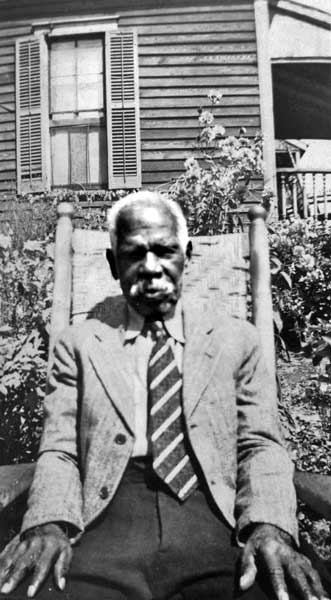
Uncle Robert Henry, an active 82, now lives with his daughter on Billups Street in Athens. At the time of our visit he was immaculate in dark trousers, a tweed sack coat, and a gayly striped tie. Naturally the question came to mind as to whether he found life more pleasant in his daughter's neat little cottage, with its well kept yards, or in the quarters on "Ole Marster's plantation." He seemed delighted to have an opportunity to talk about "slave'y days"; and although he could not have been more than 11 years old at the time, he has a very vivid recollection of the "year de war broke and freedom came."
His parents, Robert and Martha Henry, were born in Oglethorpe County and were later purchased by P.W. Sayles, who owned a 1,000-acre plantation about 18 miles from Washington, in Wilkes County. Ga. "Marster didn't have many niggers, not more'n 70," he stated.
Uncle Robert was the oldest of 8 children, 5 boys and 3 girls. "Pa wuz de butler at de big house," he declared with pride in his voice; and he went on to tell how his mother had been the head seamstress on the plantation and how, at the tender age of 8, his father had begun training him to "wait on Marster's table".
The picture of "Old Marster's" household, as the old man unfolds it to his listeners, is one of almost idyllic beauty. There was the white-pillared "big house" in a grove of white oaks on the brow of a hill with a commanding view of the whole countryside. A gravelled driveway led down to the dusty public road where an occasional stagecoach rattled by and which later echoed with the hoofbeats of Confederate Cavalry.
The master's house contained twelve rooms, each about 16 x 16 feet. The kitchen was in the back yard and food was carried to the dining room in the high basement to the big house by means of an underground passage. Two servants stood guard over the table with huge fans made of peacock feathers which they kept in continuous motion during meals to "shoo de flies away."
The slave quarters were on the banks of a creek down the hill behind the big house. Nearby were the overseer's cottage, the stables, and the carriage houses.
In the family were: "Marster, Mistis, Mis' Fannie, Mis' Sally, Mars' Thomas, Mars' Hickey, and Mars' Wyatt. Dey all 'tended a school on de plantation." Two of the boys went to the war but only one of them came back.
After the war the "Yanks" came by and took nearly all the stock that the servants hadn't hidden in the swamps and all the silver that "Ole Mistis" hadn't buried under the currant bushes.
Yes, in spite of the hard work required, life was very pleasant on the plantations. The field hands were at work at sun-up and were not allowed to quit until dark. Each slave had an acre or two of land which he was allowed to farm for himself. He used Saturday morning to cultivate his own crop and on Saturday afternoon he lolled around or went fishing or visiting. Saturday nights were always the time for dancing and frolicking. The master sometimes let them use a barn loft for a big square dance. The musical instruments consisted of fiddles; buckets, which were beaten with the hands; and reeds, called "blowing quills," which were used in the manner of a flute.
There were two churches on the plantation, "one for de white folks and one fer de niggers." The same preacher held forth in both congregations. When there were services in the white church there was no negro meetings; but negroes were allowed to sit in the gallery of the "white folk'" church.
The master regarded his slaves as valuable piece of [HW:] property and they received treatment as such. When they were ill the doctor would be sent for or "Old Mistis" would come to the cabins bringing her basket of oil, pills, and linament.
Food was always given out to the slaves from the commissary and the smokehouse. There was flour and corn meal, dried beans and other vegetables, and cured pork and beef in the winter. In season the servants had access to the master's vegetable garden and they were always given as much milk as they could use.
Life [HW:] was very pleasant in those times; but Uncle Robert, at ease in a comfortable rocker, would not agree that it was more to his liking than this present-day existence.
When the subject of signs and omens was broached he waxed voluble in denying that he believed in any such "foolishment." However, he agreed that many believed that a rooster crowing in front of the door meant that a stranger was coming and that an owl screeching was a sign of death. He suggested that a successful means of combatting the latter omen is to tie knots in the bed sheets or to heat a poker in the fire. In case of death, Uncle Robert says, to be on the safe side and prevent another death in the family, it is wise to stop the clock and turn its face to the wall and to cover all the mirrors in the house with white cloths. Uncle Robert's highly educated daughter smiled indulgently on him while he was giving voice to these opinions and we left him threatening her with dire punishment if she should ever fail to carry out his instructions in matters of this nature.
[HW: Robert Henry Ex-slave]
FEDERAL WRITERS' PROJECT W.P.A. OFFICE 787 COBB STREET ATHENS, GEORGIA OCTOBER 16, 1936 Mr. John L. Peters, Director W.P.A. District No. 2 708 Telfair Street Augusta, Georgia Attention: Mrs. Carolyn P. Dillard State Director Federal Writers' Projects Atlanta, Georgia
Dear Mr. Peters:
Attaching herewith story of an ex-slave prepared by Mr. John Booth from my notes and is in accordance with the instructions contained in your letter of October 13. The snap-shots are by Jaffee.
We have located a former slave of Dr. Crawford W. Long in Jackson county and we plan to interview the 'darky' in the very near future. We are anxious to get a very intimate picture of Dr. Crawford W. Long from the eyes of one of his personal servants.
Very truly yours, [HW: Joseph E. Jaffee] Joseph E. Jaffee Asst. District Supervisor Federal Writers' Project W.P.A. District No. 1 JEJ:H
JOHN HILL 1525 Broad Street Athens, Georgia PLANTATION LIFE, AS VIEWED BY AN EX-SLAVE Written By: Grace McCune Research Worker Federal Writers' Project Athens, Georgia Edited By: Leila Harris Editor Federal Writers' Project Augusta, Georgia JOHN HILL Ex-Slave, Age 74 1525 W. Broad St. Athens, Georgia
John Hill, an old Negro about 74 years old, was seated comfortably on the front porch of his little cabin enjoying the sunshine. He lives alone and his pleasure was evident at having company, and better still an appreciative audience to whom he could relate the story of his early days.
"My pa wuz George Washin'ton Hill. His old Marster wuz Mr. Aubie Hill, an' dey all lived on de Hill Plantation, in de Buncombe district, nigh whar Monroe, Georgia is now. My ma wuz Lucy Annie Carter, an' she b'longed to de Carter fambly down in Oglethorpe County, 'til she wuz sold on de block, on de ole Tuck plantation, whar dey had a regular place to sell 'em. Dey put 'em up on a big old block, an' de highest bidder got de Nigger. Marse George Hill bought my ma, an' she come to stay on de Hill plantation. Dar's whar my pa married her, an' dar's whar I wuz borned.
"When I wuz just a little tike, I toted nails for 'em to build de jailhouse. Dey got 'bout two by four planks, nailed 'em crossways, an' den dey drived nails in, 'bout evvy inch or two apart, just lak a checkerboard. When dey got it done, dat jail would evermo' keep you on de inside. Dere wuz a place wid a rope to let down, when de jailbirds would need somethin', or when somebody wanted to send somethin' up to 'em. No Ma'am, dat warn't de rope dey used to hang folkses wid.
"My pa stayed on wid old Marster 'bout ten years atter de War, den us moved to de farm wid de Walkers at Monroe, Georgia. Dat wuz Governor Walker's pa. Dere wuz a red clay bank on de side of de crick whar us chilluns had our swimmmin' hole, an' us didn't know when us wuz a frolickin' an' rollin' young Marse Clifford down dat bank, dat someday he would be gov'ner of Georgia. He evermo' wuz a sight, kivered wid all dat red mud, an' Mist'ess, she would fuss an' say she wuz goin' to whup evvyone of us, but us just stayed out of de way an' she never cotched us. Den she would forgit 'til de nex' time.
"When I wuz 'bout eight years old, dey 'lowed it wuz high time I wuz a larnin' somethin', an' I wuz sont to de little log schoolhouse down in de woods. De onliest book I had wuz just a old blue back speller. Us took corn an' 'tatoes 'long an' cooked 'em for dinner, for den us had to stay all day at school. Us biled de corn an' roasted 'tatoes in ashes, an' dey tasted mighty good.
"Us had corn pone to eat all de time, an' on de fust Sunday in de month us had cake bread, 'cause it wuz church day. Cake bread wuz made out of shorts, but dem biscuits wuz mighty good if dey wuz dark, 'stead of bein' white.
"Us had big gyardens, an' raised all sorts of vegetables: corn, peas, beans, 'tatoes, colla'ds, an' turnip greens. Us had plenty of milk an' butter all de time. An' Marster made us raise lots of cows, hogs, sheep, an' chickens, an' tukkeys.
"Dey warn't no ready made clo'es or no vittuls in cans at de sto'keepers' places, an' us didn't have no money to spend, if dey had a been dar. Us didn't have nothin' what us didn't raise an' make up. Cotton had to be picked offen de seed, an' washed an' cyarded, den ma spun de thread an' wove de cloth an' sometimes she dyed it wid ink balls, 'fore it wuz ready to make clo'es out of. De ink Marster used to write wid wuz made out of ink balls.
"I wuz still little when my ma died. De white folks' preacher preached her fun'ral from de tex' of Isaiah fifth chapter: fust verse, an' dey sung de old song, "Goin' Home to Die no Mo'." Den dey buried her on de place, an' built a rail fence 'roun' de grave, to keep de stock from trompin' on it. Sometimes several owners got together an' had one place to bury all de slaves, an' den dey built a rail fence all 'roun' de whole place.
"Hit wuz just lak bein' in jail, de way us had to stay on de place, 'cause if us went off an' didn't have no ticket de paddyrollers would always git us, an' dey evermore did beat up some of de Niggers.
"I 'members de Klu Klux Klan good. Dey kept Niggers skeered plum to death, an' when dey done sumpin' brash dey sho' got beat up if de Kluxers cotched 'em.
"One time de Kluxers come by our place on de way to beat a old Nigger man. I begged 'em to lemme go wid 'em, an' atter a while dey said I could go. Dere wuz horns on de mask dey kivvered up my head wid an' I wuz mighty skeered but I didn't say nothin'. Atter us got dar, dey tied de old man up by his hands to de rafters in his house. He wuz beggin' 'em to let him off an' yellin' 'O Lordy, have mussy!' Dere wuz a little gal dar an' I wanted to skeer her, so I started atter her, an' de old man tole her to hit me on de head. She picked up a shovel an' th'owed it an' cut my leg so wide open de blood just spilt down on de floor. I got so bad off dey had to take me back to old Marster, an' he fix me up. Hit wuz six months 'fore I could use dat leg good, an', I nebber did wanter go wid dem Kluxers no more.
"Us went to de white folkses church, but onct a year on de fust Sunday in Augus' de white folkses let de Niggers have dat day for camp meetin'. Dey fixed good dinners for us, an' let us go off in de woods an' stay all day. Dem chicken pies an' dem good old 'tato custards, 'bout one an' a half inches thick, made wid sea sugar, dey make your mouf water just to talk 'bout 'em. What wuz sea sugar? Why it wuz dat crawly, kind of grayish, lookin' sugar us used den. I wuz grown 'fore I ever seed no sho' 'nough white sugar.
"My pa hired me out to Mr. Ray Kempton to tote cotton to de gin on his plantation, when I wuz 'bout 16 years old. I wuz wukkin' dar when de fust railroad wuz laid, an' dey named de place Kempton station fer Marse Ray Kempton. I wuz paid five dollars a month an' board for my wuk, an' I stayed dar 'til I married.
"I wuz 'bout eighteen when I rode on de train for de fust time. Us rode from Social Circle to Washin'ton, Wilkes, to see my ma's folkses. Ma tuk a heap of ginger cakes an' fried chicken along for us to eat on de train, an' de swingin' an' swayin' of dat train made me so sick I didn't want to ride no more for a long time.
"Soon atter I wuz twenty years old, I married a gal from Washin'ton, Wilkes, an' us moved to Athens, an' I been livin' right here ever since. Us got here de last day de old whiskey house wuz open. Dey closed it down dat night. I wukked a long time wid de Allgood boys in de horse tradin' business an' den I wukked for Mr. an' Mrs. Will Peeples 'bout ten years. Dey runned a boardin' house, an' while I wuz dar, Dr. Walker come to board, an' I wuz mighty glad to wait on him, 'cause he wuz from Monroe an' had done been livin' on de old Walker place dat I stayed at when us wuz down dar.
"My uncle, Ambus Carter, wuz a preacher on Marse Jim Smith's place. He b'longed to Marse Jim durin' de War, an' he never did leave him. Atter freedom come, most of Marse Jim's Niggers lef' him, an' den he had what dey called chaingang slaves. He paid 'em out of jail for 'em to wuk for him. An' he let 'em have money all de time so dey didn't never git out of debt wid him. Dey had to stay dar an' wuk all de time, an' if dey didn't wuk he had 'em beat. He evermore did beat 'em if dey got lazy, but if dey wukked good, he wuz good to 'em. Sometimes dey tried to run away. Dey had dogs to trail 'em wid so dey always cotched 'em, an' den da whippin' boss beat 'em mos' to death. It wuz awful to hear 'em hollerin' an' beggin' for mussy. If dey hollered, 'Lord have mussy!' Marse Jim didn't hear 'em, but if dey cried, 'Marse Jim have mussy!' den he made 'em stop de beatin'. He say, 'De Lord rule Heb'en, but Jim Smith ruled de earth.'
"One time he cotched some Niggers down at de Seaboard Station, what had runned away from his place. He got de police, an' brung 'em back 'cause he 'lowed dey still owed him money. I wuz mighty sorry for 'em, for I knowed what dey wuz goin' to git when he done got 'em back on his place. Dat whippin' boss beat 'em 'til dey couldn't stan' up.
"But he wuz good to my uncle, an' treated him just lak one of de fambly. He helped him wid all his sermons, an' told him to always tell 'em to be observerant an' obejent to de boss man. He provided good fer his help an' dey always had plenty to eat. He used to try to git me to come an' stay wid him, but I didn't want to stay on dat place.
"Marse Jim used to have big 'possum hunts for his Niggers, an' he would sen' me word, an' I most always went, 'cause dem wuz good times den, when dey cooked de coons an' 'possums, an' eat an' drunk mos' of de night. Coon meat is most as good as lamb if you is careful to take out de musk sacs when you dress 'em to cook."
Smithsonia, the Jim Smith plantation, covered thousands of acres, but the words of the feeble old Negro showed that he could not imagine it possible for any farmer to own more than one hundred acres.
"Marse Jim had a hund'ud acre farm, an' he had to keep plenty of Niggers to look atter dat place, but I wuz 'fraid to go dar to stay, for it wuz sho' just lak de jailhouse.
"Dey ain't but four of our nine chilluns livin' now an' dey's all up Nawf. Dey done sont atter me when deir ma died, an' tried to git me to stay wid 'em, but its too cold up dar for dis old Nigger, so I just stays on here by myself. It don't take much for me to live on. In crop times I wuks in de fiel' a choppin' cotton, an' I picks cotton too. I'll just wait on here an' de waitin' won't be much longer, 'cause I'se a living right, an', 'Praise de Lawd,' I'se a gwine to Heb'en w'en I die."
Mary A. Crawford Re-search Worker Laura Hood Ex-Slave
Laura was born in Griffin December 23, 1850 on Mr. Henry Bank's place. Her mother, Sylvia Banks (called "Cely Ann" by the darkies) married her father, Joe Brawner, a carpenter, who was owned by Mr. Henry Brawner.
Joe and Sylvia were married in Mr. Henry Bank's parlor by this white preacher.
Mr. Banks, Laura's master, owned a tannery in Griffin and had "around fifty slaves" according to Laura's memory. Most of the slaves worked at the tannery, the others at Mr. Bank's home. Laura's mother was the cook in the Bank's home for over forty years. Joe, Laura's father, was a carpenter and the four little darkies of the family helped about the house and yard doing such work as feeding the chickens, sweeping the yards and waiting on the Mistress. Laura, herself was a "house girl", that is, she made the beds, swept the floors and sewed and helped the Mistress do the mending for the family.
When asked if the Master and Mistress were good to the slaves, Laura replied that they certainly were, adding, "Marse Henry was as good a man as ever put a pair of pants on his legs." As to the punishments used by the Banks, Laura was almost indignant at such a question, saying that Marse Henry never whipped or punished his darkies in any way, that he did not believe in it. The only whipping that Laura herself ever had was one lick across the shoulders with a small switch used by her Mistress to keep her mother, Celie Ann, from whipping her.
Laura relates that the darkies worked all the time except Sunday. On Sunday they could do as they pleased so long as they went to church. All the Bank's darkies attended service in the "cellar" (basement) of the First Baptist Church and had a colored preacher.
When any of the darkies were sick if 'ole Marster' and 'ole Miss' could not "set them straight" they called in "ole Marse's" white doctor.
Mr. Banks, himself, was too old "to fight the Yankees" but young 'Marse Henry' fought but did not "get a scratch" and when he came home all of them were sure glad to see him.
"After freedom, when 'ole Mars' was gone, 'young Marster' was as good as gold to all the darkies." Laura can remember when he gave her $5.00 to $20.00 at a time."
She also recalls that when the slaves were freed that her ole Marse called all of the darkies around him out in the yard and told them that they were as free as he was and could leave if they wanted to, but if they would stay 'till Christmas and help him that he would pay them wages. All of them stayed except one Negro named "Big John" who left with a bunch of Yankees that came along soon after.
As to what happened at the Bank's home when the Yankees came through, Laura does not remember, but she does recall that the Banks family "refugeed to Florida to get out of the path of the Yankees."
"No, mam," said Laura in reply to the question "Did your master have his slaves taught to read and write?" "We never had any school of any kind on the Bank's place. 'Marse Henry did not believe we needed that."
Laura has lived in her present home since 1867 and recalls when Griffin was "mostly a big woods full of paths here and there." She recalls the "auction block" which was on or near the site of the present Court House.
The old woman is very feeble, in fact, unable to walk but is cared for by a niece.
Laura Pood 432 E. Solomon Street Griffin, Georgia September 23, 1936
PLANTATION LIFE as viewed by Ex-Slave CARRIE HUDSON 258 Lyndon Avenue Athens, Georgia. Written by: Sadie B. Hornsby Athens — Edited by: Sarah H. Hall Athens — Leila Harris Augusta — and John N. Booth District Supervisor Federal Writers' Project Residencies 6 & 7. CARRIE HUDSON Ex-Slave—Age 75
Carrie was asked to relate her memories of childhood days on the old plantation. "I'se done most forgot 'bout dem days," she replied, "but if you ax me some questions hit mought come back to me. Hit's such a fur way back dat I don't never think 'bout dem times no more." After a few reminders, the old Negress began eagerly volunteering her recollections.
"Slave traders fotched my Pa, he was Phil Rucker, f'um Richmond, Virginny, and sold him to Marse Joe Squire Rucker. Ma, she was Frances Rucker, was borned on Marse Joe's place nigh Ruckersville, up in Elbert County, and all 10 of us chilluns was born on dat plantation too. Hester Ann, Loke Ann, Elizabeth, Mary, Minnie Bright, Dawson, Ant'ony, Squire and Philip was my sisters and brothers. Grandma Bessie done de cookin' at de big house. Grandpa Ant'ony had done died long 'fore I got big enough to know nothin' 'bout him.
"Miss, chilluns what was knee high to a duck had to wuk. 'Til dey was big and strong enough for field wuk, little Niggers done all sorts of piddlin' jobs. Dey toted water to de big house and to de hands in de fields, fotched in chips and wood, and watched de cows. Me? I nussed most of de time. If dere was any money give out for slaves' wuk de grown folkses got it all, for I never seed none and I never heared 'bout no Niggers gittin' none in slavery times.
"Us lived in log cabins scattered 'round de plantation. De biggest of 'em had two rooms and evvy cabin had a chimbly made out of sticks and red mud. Most of de chillun slept on pallets on de floor, but I slept wid my Pa and Ma 'cause I was so pettish. Most of de beds was made out of poles, dis a-way: Dey bored two holes in de wall, wide apart as dey wanted de bed, and in dese holes dey stuck one end of de poles what was de side pieces. Dey sharpened de ends of two more poles and driv' 'em in de floor for de foot pieces and fastened de side pieces to 'em. Planks was put acrost dis frame to hold a coarse cloth tick filled wid wheat straw. Ma had a ruffle, what was called a foot bouncer, 'round de foot of her bed. Beds up at de big house was a sight to see. Dey had high posties and curtains over de top and 'round de bottom of deir beds. Dem beds at de big house was so high dey had steps to walk up so dey could git in 'em. Oh, dey was pretty, all kivvered over wid bob' net to keep flies and skeeters off de white folkses whilst dey slept!
"Warn't nothin' short 'bout de eats. Our white folkses b'lieved in good eatin's. Dey give us bread and meat wid all de cabbage, colla'd and turnip greens us wanted, and us had 'matoes, 'tatoes, chickens and ducks. Yessum, and dere allus was plenty 'possums and rabbits cooked 'bout lak dey is now, only dere warn't no stoves in dem days. Pots for biling swung on racks dey called cranes, over de coals in big open fireplaces. Baking was done in ovens and skillets. Dere was allus lots of fishes in season, but I didn't do none of de fishin', 'cause I was too skeered of de water when I was a chap.