Volume 14 / Part 2 — ILLUSTRATIONS (continued 6)
Reading edition
Project #1655 W. W. Dixon Winnsboro, S.C. CORNELIUS HOLMES EX-SLAVE 82 YEARS OLD.
Cornelius Holmes lives with his wife, Nancy, in a two-room annex to the house that his son, David, occupies. It is on the old Harden place, nine miles northwest of Winnsboro, S.C. The land and the house belong to Mr. John Means Harden, a resident of Winnsboro. Cornelius is intelligent, courteous in manner, tidy in appearance, and polite. His occupation is that of basket-making, in which he is an adept. He picks up a little money by repairing chairs and putting split-bottoms in them.
"I was born in de town of Edgefield, South Carolina, November 29th, 1855, 'cordin' to de Bible, and was a slave of Marse Preston Brooks. Dat name seem to make you set up and take notice of me.
"How come I a slave of Marse Preston? Well, it was dis way. My grands b'long to de Means family of Fairfield County, 'round old Buckhead section. My grandpap, Wash, tell me Marse Preston come dere visitin' de Harpers, 'nother buckra family dat live further toward de Broad River side of de county. When he git up dere, it come over his 'membrance dat de Meanses was some punkins too, as well as him and de Harpers. Maybe he done heard 'bout Miss Martha, how her could ride a horse and dance a cotillion in Columbia, when Marse John Hugh was de governor. Well, de part goes, he comes over dere but didn't do lak they does now, bust right in and 'clare his 'fections to de gal. Him fust, solemn lak, ask to see de marster and ask him if he object to him pursuing Miss Martha, in de light of becomin' his son-in-law? Then, when dat was settled, Marse Preston and Miss Martha gallop and race all 'round de country but de hosses was always neck and neck. Dat fall, dat race ended in a tie. Dat what Grandpap Wash tell me.
"After they marry, my mother, Scylla, was give to Miss Martha and 'company her to Edgefield. Dere she marry de carriage driver, Hillard, who was my pappy. I was born in a room 'joinin' de kitchen and a part of de big kitchen. De plantation was out in de country. I never was dere, so I can't tell you nothin' 'bout dat. De fact is, I was just a small boy and most I know, comes from mother and grandpap. They 'low Marse Preston was in Washington most of de time. One day he marched right in de Senate, wid his gold head cane, and beat a Senator 'til him fainted, 'bout sumpin' dat Senator say 'bout him old kinsman, Senator Butler. Dat turn de world up side down. Talk 'bout 'peachin' Marse Preston. Marse Preston resign and come home. De town of Edgefield, de county of Edgefield, de state of South Carolina, and Miss Martha, rise to vindicate Marse Preston and 'lect him back to Washington.
"Marse Preston go back and stay dere 'til he die, in 1859. His body was brought back to Edgefield. De nex' year de war come on. I's too young to 'member much 'bout it but my pappy die while it was goin' on. Him have three chillun by mother: Me, Audie, and Nancy. They is dead now but I 'members them crawlin' 'round on de plank floor in de winter time and in de sand in de summer time.
"I never worked in slavery time. Us eat from de dairy and de kitchen, just what mistress and her chillun eat. One thing I lak then was 'matoes. They wasn't big 'matoes lak they is now. They was 'bout de size of marbles. Us cooked them wid sugar and they was mighty good dat way.
"My mistress had chillun by Marse Preston. Sho' I recollect them. Dere was Preston; de last I hear of him, him livin' in Tennessee. Then dere was Miss Mary; her marry Mr. George Addison of Edgefield. Miss Carrie; her marry Marse Capers Byrd. De youngest, Miss Martha, marry Col. McBee of Greenville, S.C.
"Does I 'members 'bout de Yankees? Not much. I 'members more 'bout Wheeler's men. They come and take nearly everything, wid de excuse dat de Yankees was not far behind and when they come, they would take all, so they just as well take most of what was in sight.
"When freedom come, my pappy was dead. Mother brought me back to Fairfield County and give me to my grandpap, Washington Holmes. Us live on 'Possum Branch; now own by Mr. Jim Young. I stay dere 'til I 'come twenty-one. Then I marry Maggie Gladden, 'cause I love her. Us had four chillun, in de twenty years her live. Henry is in Philadephia. David, de oldest, is fifty years old, livin' out in de county from Winnsboro. Lula died, unmarried. Carrie lives here, in Winnsboro; her husband is Arthur Rosboro, dat you white folks all know so well. When Maggie die, I marry Nancy Holmes, a widow. Us have had no chillun.
"Now you is finished wid me and you wants me to relax, you say, and talk to you freely 'bout de past and slavery, de present and social conditions, and de risin' generation and de future? Well, dat is a heap of territory. Now let's think. You see I got a heap a white blood in me, and a heap of de Negro too. Slavery did de white race a whole lot a good but it wasn't lastin' good. It did de Negro good, dat will be lastin' good forever. De Negro women protected de pure white woman from enticement and seduction of de white man in slavery time. My grandpap say he never heard of a bad white woman befo' freedom. I leave it wid you if dere's any dese times? Dat was worth more to de South, my grandpap say, dis santification of de white women, than all de cotton and corn dat de Negroes ever makes, in all de years of slavery times.
"Now it was de finest thing could have happen for de Negro, to have been snatched out of Africa and brought here in touch wid civilization and Christianity. It will work out untold benefit to de race. 'Bout social conditions? De Bible say, 'De poor you will have wid you always.' Tho' de slave question am settled, de race question will be wid us always, 'til Jesus come de second time. It's in our politics, in our justice courts, on our highways, on our side walks, in our manners, in our 'ligion, and in our thoughts, all de day and every day.
"De good Marster pity both sides. In de end, will it be settle by hate or by de policy of, love your neighbor, as you do yourself? Who knows? Dere's not much promise at de 'mediate moment of de risin' generation, of either side, and I means no disrespect to you. My grandpap say no race can rise higher than its women. De future of de Negro race, depends on its mothers. I leave you to answer de last half of de question."
Project #-1655 Mrs. Genevieve W. Chandler Murrells Inlet, S.C. Georgetown County FOLKLORE UNCLE BEN HORRY
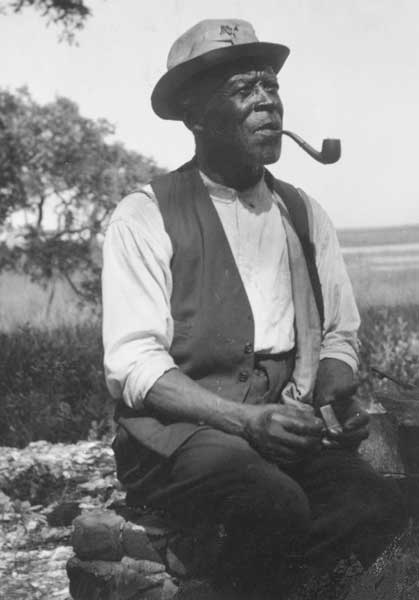
(Uncle Ben lives in his own cabin with his second wife, Stella. Formerly almost inaccessible, the new Coastal Highway has put Uncle Ben and Aunt Stella in the world. The rural electricity program has current right at their door. Aunt Stella was asked 'Why don't you have lights, Aunt Stella?' and she replied, 'White folks run me if I do that!' So you see the old couple still live with many old and odd beliefs one being that the white man only is entitled to the good things—the better things. Like most old ex-slaves in South Carolina low country, they love and revere the names and memories of their old masters.)
"Right now, I oldest one from Longwood to Prospect—see dere? (Pointing to forest wall—great pines and live-oaks in front of the cabin)—Look! I know when he cleared and plant! Josh Ward have potato there. I have manure and plant tater. I been here, daughter!" (He pronounces it 'Dater' with a short 'a')
(Aside: "Stella, mind now! Don't quarrel me to-night! What you do?"
Aunt Stella: The second wife—some years his junior—probably 65—"I do nuff!")
"Got to go up there and cook supper to the Schoolfield house." (This was Uncle Ben's announcement as he crawled into the car with a bucket in which were his shoes. He was walking down the Coastal Highway and not staying where he belonged—on the shoulder!) "Got to cook crab and ister (oyster). Ain't got much to cook. They don't eat much. Got a gal there to fry fish. They give me recommend for cook. Been get the sea foods for 'em for five year. Iron oven the way we raise." (Aside to his wife) "Stella, if that man come there, see that sack there? Tell that man I put fire there. Gie 'em fork and knife. Tell 'em eat all he want!" (Uncle Ben arranges oyster roasts.)
"That man to Schoolfield house want me to stay and sleep wid 'em. All women gone. Tell me keep the man and lock up the house when he gone. I tell 'em too much o' tief!"
Lillie: "Aunt Stella, ain't you fraid when Uncle Ben stay out all night?"
Uncle Ben: "Stella keep pot o' water boil and tief come she trow 'em!"
Visitor: "Uncle Ben tell Lillie bout your father and the whiskey jug."
Uncle Ben: "You see, to Brookgreen we nuster plant rice and my fadder had the barn key. He kinder boss man. He nuster (used to) take me and go out woods night time." (Aside to mother of child at pump—"Take care dat child!")
"Fadder take me out woods night time (What you say, Primus?) and I hold storch (torch) for him see for trash (thrash) out rice what he take out the barn. Rice been money dem time you know. And he take he rice and gone on down to town for get he liquor. And he come from town wid whiskey. Boss find it out. Five or six chillun and always give us rations. Broke that jug and when they call his name (put rations in pile you know—pile for every one been in fambly) when they call my fadder name but a piece o' broken jug there is discourage him from whiskey—. He come from town and been drop the jug and it break up. And Boss know. Far as I can remember he keep give 'em that broken jug bout a year. You see he sponsible for key. Seem like I member right where we go beat that rice. Pine tree saw off and chip out make as good a mortar as that one I got. Dan'l, Summer, Define! Define the oldest brother my fadder have. Young Missus Bess, Florence, Georgia, Alice. Those boys the musicianer—go round play for the girl."
Aunt Stella: Interrupting, "You orter be carry money with you. Get the meat. I ain't going no whey (where)."
Lillie: To Primus who has walked up. "Handful back yet?" (Handful his wife's basket name.)
Primus: "No. This man bacco barn burn up."
Lillie: "What?"
Primus: "Mr. Len barn. Must'er been asleep!"
Lillie: "Rich most cure all his'n. Taint mine! Rich tease me. He say, 'MY bacco; YOUR kitchen!'"
Lillie: "What you all think bout that tale the Elder tell Sunday bout his Great Uncle and the snakes!"
Stella: (To Uncle Ben) "What you tink bout it? You tink a man truss to go in cypress hollow wid rattle-snake?"
Uncle Ben: "Let me see how was it!" (Deep thought as he rubbed his face in his palm; smile as recollection came) "On Rutledge Plantation a man wouldn't take no beating. Found a large hollow cypress tree been rotten out long years. Gone in. Lie down sleep. Fore day wake up! Feel something crawl over him. Nother one crow like game chicken!" (Negroes all say rattlers crow!) "Smell him. Crawl over him. Crawl out. Get out."
Stella: "Revents had it wuz a man in a cypress tree and seven—how much wuz it? Twelve? These twelve monster snake crawl over him. If you move, he strike."
Uncle Ben: "Right there where Dr. Ward stay had a big old stable—see these two hole in my jaw. Had a stable high as that tree. Big Jersey bull gone in there eating that straw like we thrashing. Big rattle-snake pop 'um. Fell dead."
"How does we mark shoat? Under-bit; upper-bit. Swallow fork in the right year! And a square crop in the left!
"How much been task? A quarter (acre) if you mashing ground. Ten compass digging ground. Cutting rice one half acre a day." (awful job.)
Stella: "Plow; harrow 'em."
Ben: "Ain't you mash 'em?"
Stella: "Mash a bed a day three task deep."
Ben: "Mashing raw ground half acre—some quarter. Mash 'em—take hoe full up them hole, level dem, chop dem big sod!"
Stella: (age 65) "You got a mis-sheen (machine). Ox pull dat mis-sheen!"
Ben: "Dat mis-sheen come in YOU day, darling! My day I trenching hoe trench dat! I done dat, Stella. You come on sow in trench lak (like) dey sow turnip. YOU day got mis-sheen! Ox pull 'em. Great I AM! Missus, fifteen to old islant (island), twenty silver islant, (I been Silver Islant. Cross old islant go Silver islant.) Josh Ward one some four or five hundred acre. Something been here, darling! Something been here! Left Brookgreen go Watsaw; left Watsaw gone Longwood. Plant ALL DEM plantation. I work there. Cut rice there. Cutting rice task been half acre a day.
"Squirrel creek? Cedar tree and cypress hang low. Squirrel love dem ball. Tree work up wid dem. Good place for go shoot squirrel. Give 'em name Squirrel Creek.
"Bury live? I did hear some talk o' that. I didn't know whether they bury 'em to scay 'em (scare 'em) or what. I DID hear tell bout it. I most know that man name. Some these white people that day something! They either manage you or kill you."
Lillie: (To Primus who was a listener to Uncle Ben standing propped by a post of the porch where Uncle Ben, Aunt Stella, and the white visitor sat)
"Prime! Why you keep that church door lock Sunday and not let the Missus out?"
Primus: (Grinning—and he hadn't grinned Sunday but steadfastly shook his head when, after a three hour service, guests thought it time to go) "Second man next to me, Asham, Secretary, tell me keep door shet through sacrament.
Ben: (Who is quite deaf—ignoring interruption—when asked about Oregon Plantation which was owned by a family who, from all accounts, had a cruel overseer.)
"I didn't have to much to do to Oregon in them dark days. If I go from Brookgreen, I go Cap'n Josh git my mittment. Anybody bother me I say, 'I not a run-way nigger! I got mittment!'
"Very FUSS girl—FUSS one I go with name wuz Teena. How many girl? Great God! I tell you! FUSS one Teena; next Candis. Candis best looking but Teena duh largest! Go there every Sunday after school. (Oatland Plantation—blong to Marse Benjamine Allston.) Stay till sunset. Got to have paper. Got to carry you paper. Dem patroller put you cross a log! Beat you to death. I see them beat Ben Sharp. Beat 'em till Ben kin hardly git cross fence. Jump over fence give 'em last chop! Patroll jess like road men now! (Stella! That man ain't coming! I got to go! Got to cook my supper. Cook dem crab—) Blood! Christ! Yes, man. Listen me. Lemme tell you what I see wid my eye now! (here he pried both eyes wide with his ten fingers) If I much of age reckon they have to kill me! I see gash SO LONG (measuring on fore-finger) in my Mama—my own Mama! (aside to Lillie) I shame fore Miss Jinny! If one them driver want you (want big frame gal like you Lillie!) they give you task you CAN'T DO. You getting this beating not for you task—for you flesh!"
Lillie: "That why nation get mix up so!" (Races)
Ben: "Susan wuz a house woman, to buckra woman like a you to Miss Jin. (Susan worked in the house—no field hand—like Lillie works for Miss Jin) To my knowing she had three white chillun. Not WANT 'em. HAB 'em. Boy (you know 'em Lill) near bout clean as them boy of Missus! Tief chillun show up so! Woman over-power! My mother nuss (nurse.) Get up so high—natural nuss for white people.
"Place they call duh 'Bull Pen.' In 'Bull Pen' thing they call 'PONY'. Got to go on there—on the 'PONY.'
Lillie: "RIDE you on it, Uncle Ben?"
Ben: "Ain't going ride you on 'PONY'; going RIDE YOU! I stay there look wid DESE HERE (eyes)! Want you to know one thing—MY OWN DADDY DERE couldn't move! Couldn't venture dat ober-sheer! (Colored overseer) Everybody can't go to boss folks! (Meaning only house servants could contact Missus and Massa). Some kin talk it to Miss Bess. Everybody don't see Miss Bess. Kin see the blood of dat ober-sheer fuss year atter Freedom; and he blood there today! Atter Freedom mens come from French Broad and you know the colored people—we go there whey (where) they music. Agrippa—daddy name Parrish—Redmond one he child outside. (Outside chillun are those not born to a man's legal wife) He say, to gal, 'Go that barn!' YOU GO. You could yeddy him SLAP cross dat creek! When fowl crow (daylight) and you yeddy him SQUALL, you best git to flat! I stand dere and my Daddy HAVE to stand dere and see! Josh Ward from French Broad—hundred mile away. (Boss Massa 'summering it' in mountains) and negro over seer—just fresh out of Africa TURNED LOOSE. White obersheer a little different for one reason! White obersheer want to hold his job. (On Waccamaw—and same true of all south as all know—white overseers worst kind of 'White trash'—respected less by negroes than by whites) Nigger obersheer don't care too much. He know he going stay on plantation anyhow.
"Now, dater, I tell you bout the loom and weaving next time!"
And we left Uncle Ben Horry—age 87 Murrells Inlet, S.C. August 1937.
to go on 'to the Schoolfield house and cook supper for a house-party. This week he stepped up to Con-o-way. Says he had to walk it twice a week—formed the habit when he was on old river Steamer Burroughs and had to walk up to Conway Monday and back home Saturday. About thirty miles (or more from his place) to Conway. At 87 he still takes this little exercise almost weekly. Having such a struggle holding on to his land. All the lawyers saying 'sign here' and trying to rob him! Poor Uncle Ben needs desperately a Massa to help him out with his land. Not many Uncle Ben's left to be robbed—
(told that the cruel negro overseer was shot down after Freedom—blood still on ground (according to Uncle Ben) because he led Yankees to where silver, etc., was buried. Have heard story from other old livers.)
Project # 2570 Mrs. Genevieve W. Chandler, Murrell's Inlet, S.C. Georgetown county. Ex Slave Story. UNCLE BEN HORRY
Uncle Ben and his wife, aunt Stella, live in their two-room, white-washed cabin that sits sideways to the King's Highway, which Uncle Ben always calls 'the King Road,' near Murell's Inlet, S.C. Paving and straightening this old King's Road, now US 17, has put the two old people in the world. Around the cabin lie the fourteen and three quarter acres that were paid for by Uncle Ben and his father, six or eight acres cleared, the rest woodland. Uncle Ben earns a living by gathering oysters from the Inlet's waters, opening and roasting the oysters for white visitors. Uncle Ben is a great walker. He walks to Conway, the county seat of Horry (Murrell's Inlet is situated on the line between Horry and Georgetown counties), a distance of approximately thirty miles depending on whether one sticks to the paved highway or takes short cuts through the woods, in preference to riding. One day he had walked to Conway and back by eleven o'clock in the morning. Uncle Ben's scrappy conversation will tell how he earns his bread, fears and fights 'the Law', provides for Stella's future, and works for and honors white folks. Brookgreen, which he mentions as the plantation on which he was born and raised, is an open-air museum, donated to South Carolina by A.M. Huntingdon, and visited by thousands of tourists. (See US17, Tour 1).
"I the oldest liver left on Waccamaw Neck that belong to Brookgreen, Prospect, (now Arcadia), Longwood, Alderly Plantations. I been here! I seen things! I tell you. Thousand of them things happen but I try to forget 'em. Looker!" He pointed to what appeared to be primeval forest in front of his battered little porch. "That woods you see been Colonel Josh Ward's taters patch. Right to Brookgreen Plantation where I born. My father Duffine (Divine) Horry and my brother is Richard Horry. Dan'l and Summer two both my uncle. You can put it down they were Colonel Ward's musicianer. Make music for his dater (daughter) and the white folks to dance. Great fiddlers, drummers. Each one could play fiddle, beat drum, blow fife. All three were treat with the same education. You know, when you going to do anything for them big people you got to do it right. Before time (formerly) they danced different. Before strange city people fetched different steps here. But, then, they could use they feet all right!
"My father fore he dead been the head man for old Colonel Josh Ward. Lived to Brookgreen. They say Colonel Ward the biggest rice man been on Waccamaw. He start that big gold rice in the country. He the head rice Cap'n in dem time. My father the head man, he tote the barn key. Rice been money dem day and time. My father love he liquor. That take money. He ain't have money but he have the rice barn key and rice been money! So my father gone in woods (he have a head, my father!), take a old stump, have 'em hollow out. Now he (the stump) same as mortar to the barn yard. And my father keep a pestle hide handy. Hide two pestle! Them pestle make outer heart pine. When that pestle been miss (missed), I wuzn't know nothing! The way I knows my age, when the slavery time war come I been old enough to go in the woods with my father and hold a lightard (lightwood) torch for him to see to pestle off that golden rice he been tote out the barn and hide. That rice he been take to town Sat'd'y when the Colonel and my father go to get provision like sugar, coffee, pepper and salt. With the money he get when he sell that rice, he buy liquor. He been hide that sack o' rice fore day clean (daylight) in the prow of the boat and cover with a thing like an old coat. I members one day when he come back from town he make a miss (step) when he onloading and fell and broke he jug! The Big Boss see; he smell; and he see WHY my father make that miss step; he already sample that liquor! But the Boss ain't say too much. Sat'd'y time come to ration off. Every head on the Plantation to Brookgreen line up at smoke-house to draw he share of meat and rice and grits and meal. (This was fore my father been pint (appointed) head man. This when they had a tight colored man in that place by name Fraser. They say Fraser come straight from Africa). Well, Sat'd'y when time come to give my father he share of rations, the headman reach down in the corner and pull out a piece of that broke whiskey jug and put on top my father rations where all could see! Colonel Ward cause that to be done to broke him off from that whiskey jug. My father was a steady liquor man till then and the Boss broke him off.
"Slavery going in. I members Marse Josh and Miss Bess had come from French Broad (Springs) where they summered it. They brought a great deal of this cloth they call blue drilling to make a suit for every boy big enough to wear a suit of clothes and a pair of shoes for every one. I thought that the happiest 'set up' I had in boyhood. Blue drilling pants and coat and shoe. And Sund'y come we have to go to the Big House for Marse Josh to see how the clothes fit. And him and Miss Bess make us run races to see who run the fastest. That the happiest time I members when I wuz a boy to Brookgreen.
"Two Yankee gun boats come up Waccamaw river! Come by us Plantation. One stop to Sandy Island, Montarena landing. One gone Watsaw (Wachesaw landing). Old Marse Josh and all the white buckra gone to Marlboro county to hide from Yankee. Gon up Waccamaw river and up Pee Dee river, to Marlboro county, in a boat by name Pilot Boy. Take Colonel Ward and all the Cap'n to hide from gun boat till peace declare. I think Pilot Boy been a rear-wheeler. Most boats like the Old Planter been side wheeler.
"They say the Yankee broke in all the rice barn on Sandy Island and share the rice out to colored people. The big mill to Laurel Hill been burn right den. That the biggest rice mill on Waccamaw river. Twuzn't the Yankee burn dem mill. Dese white mens have a idea the Yankee mean to burn dese mill so they set 'em afire before the Yankee come. Nothing left to Laurel Hill today but the rice mill tower. That old brick tower going to BE there. Fire can't harm 'em.
"The worst thing I members was the colored oberseer. He was the one straight from Africa. He the boss over all the mens and womens and if omans don't do all he say, he lay task on 'em they ain't able to do. My mother won't do all he say. When he say, 'You go barn and stay till I come,' she ain't do dem. So he have it in for my mother and lay task on 'em she ain't able for do. Then for punishment my mother is take to the barn and strapped down on thing called the Pony. Hands spread like this and strapped to the floor and all two both she feet been tie like this. And she been give twenty five to fifty lashes till the blood flow. And my father and me stand right there and look and ain't able to lift a hand! Blood on floor in that rice barn when barn tear down by Huntingdon (A.M. Huntingdon). If Marse Josh been know 'bout that obersheer, the oberseer can't do 'em; but just the house servant get Marse Josh' and Miss Bess' ear. Them things different when my father been make the head man. What I tell you happen fore Freedom, when I just can remember.
"Father dead just before my mother. They stayed right to Brookgreen Plantation and dead there after they free. And all they chillun do the same, till the Old Colonel sell the plantation out. Where we going to? Ain't we got house and rations there?
"How many chillun I got? Lemme see. Lemme see how many head of chillun. You, Stella! Help me now! Don't let me tell the Missis wrong. Charles Henry, thirty eight, dere in New York. Ben Horry—I gie' 'em directly!" (Lifting cap and scratching high forehead and gray wool). "Twenty four. I going to give you all I got! All I know about! Bill Horry, that's a boy, he twenty. Dinah, that's a gal, twenty five. Christine, she bout twenty. Mary Horry, I would say fifteen. When the last war come, the last war deputize them boy and take 'em way up North and the gals follow, trail 'em on to New York. That the war when you can't get no sugar and have to put candy in your coffee.
"How old I is?" Slowly and deliberately "December 13th., 1852. Eighty five years or more. When my mother dead to Brookgreen I would say I 'bout thirty three year old.
"After Freedom, from my behavior wid my former owner, I wuz pinted (appointed) head man on Brookgreen Plantation. By that put drop in my hand (getting the drop on others). When kennel been dug out (canal dug) from the Oaks Plantation to Dr. Wardie Flagg house, I wuz pint (appointed) head man. Take that down, Missis. Kennel (canal) cut 1877. Near as I kin, I must task it on the kennel (canal) and turn in every man's work to Big Boss. That kennel (canal) bigger than one Mr. Huntingdon dig right now with machine.
"Missus, slavery time people done something."
Uncle Gabe Lance, born on Sandy Island the first year of the Civil War, a visitor at Uncle Ben's: "Yes sir. All them rice field been nothing but swamp. Slavery people cut kennel (canal) and dig ditch through the raw swamp. All these fields been thick woods. Ditching man task was ten compass."
Uncle Ben continues:
"Storm? Ain't I tell you I BEEN here? Yes, sir. More than one storm I live through! Been through the Flagg storm. Been turn over twice outside there in the sea. One time been have the seine. Been rough. Have weather. And the breakers take the boat. I swim till I get the rope hold. Two men on the shore have the rope end of the seine rope and I hold to that and that how I save THAT time.
"Member another time. Had a boat full of people this last go 'round. Wuz Miss Mary, he aunty and the lawyer. I take them fishing outside in oshun. Been in the Inlet mouth. Come half way to Drunken Jack Island. Breaker start to lick in the boat! I start to bail! Have a maters (tomatoes) can for bail with. And that been danjus (dangerous); have too much women in there; dey couldn't swim like a man. And it happen by accident, when the boat swamp and full with water, our FEET TOUCH BOTTOM. When he (the boat) turn over, I didn't aim to do no thing but swim for myself. Wasn't able to help nobody. But here out feet touch bottom. Only an accident from God!
"One time again I swamp outside, 'tween Georgetown and Charleston. Try to bail. Swim with one hand, hold boat with the other. Roughest time I ever see 'cause it been cold wedder (weather). Old before-time yawl boat, carry eight oar, four to each side. Young man then; 1877. After the wedder (weather) surrender, we we gone back in dere and find cork going up and down and save us net and all!
"When the Flagg storm been, 1893, I working for Ravanel and Holmes. I was taken up in that storm in a steamer boat. Leave Charleston generally about five in morning. That trip never reach Georgetown till nine that night. Meet a man on that trip got he wife hug to mast in a little kinder life boat. Had he two chillun; rope wrap 'em to that mast. Save man and wife and chillun and gone back and save he trunk. After that they quit call me 'Ben'; they call me 'Rooster'.
"After Flagg storm, Colonel Ward take me and Peter Carr, us two and ah horse, take that shore (follow the ocean shore line) to Little River. Search for all them what been drowned. Find a trunk to Myrtle Beach. Have all kinder thing in 'em; comb for you hair, thing you put on you wrist. Find dead horse, cow, ox, turkey, fowl—everything. Gracious God! Don't want to see no more thing like that! But no dead body find on beach outside Flagg family. Find two of them chillun way down to Dick Pond what drownded to Magnolia Beach; find them in a distance apart from here to that house. Couldn't 'dentify wedder Miss or who. All that family drown out because they wouldn't go to this lady house on higher ground. Wouldn't let none of the rest go. Servant all drown! Betsy, Kit, Mom Adele! Couldn't 'dentify who lost from who save till next morning. Find old Doctor body by he vest stick out of the mud; fetch Doctor body to shore and he watch still aticking. Dr. Wardie Flagg been save hanging to a beach cedar. When that tornado come, my house wash down off he blocks. Didn't broke up.
"Religion! Reckon Stella got the morest of dat. I sometimes a little quick. Stella, she holds one course. I like good song. One I like best?"
'Try us, Oh Lord, And search the ground Of every sinful heart! (Uncle Ben stopped to think). What 'eer of sin In us be found Oh, bid it all depart!'
"Reason I choose that for a favorite hymn, I was to Brookgreen doing some work for Dr. Wardie Flagg and I had to climb as high as that live oak tree, and I fell high as that tree! I lay there till I doze off in sleep. And I tell you what happen to me curious. While I was sleep I seen two milk white chickens. You know what them two white fowl do? They gone and sit on my mother dresser right before the glass and sing that song. Them COULD sing! And it seem like a woman open a vial and pour something on me. My spiritual mother (in dem day every member in the church have what they call a spiritual mother) say, 'That not natural fowl. That sent you for a token.' Since that time I serve the choir five or six years and no song seem strange to me since that day. God ain't ax about you color; God ax about you heart.
"Make my living with the ister (oyster). Before time (formerly) I get seventy five cents a bushel; now I satisfy with fifty cents. Tide going out, I go out in a boat with the tide; tide bring me in with sometimes ten, sometimes fifteen or twenty bushels. I make white folks a roast; white folks come to Uncle Ben from all over the country—Florence, Dillon, Mullins—every kind of place. Same price roast or raw, fifty cents a bushel.
"I bout to quit up with sell. All the lawyer. Turn all my papers over to Mr. Burris. I got too much of paper in that Con-o-way. Court House. Got more paper in there than the house worth! Have to step to Con-o-way all the time. Struggle and starve myself out for these fifteen acres. Thirty miles to Con-o-way. Thirty miles back by the course I travels. All them tricky mens try to go and get old Ben's land sign to 'em. That's the mainest thing take me to Con-o-way every week. They all talk so sugar mouth till my name down; then when my name write is another thing. When I in too much trouble, I just has to step up to Con-o-way and see Mr. Burris. He's a good man.
"They try to mix old Ben up in this whiskey business. It look too brutish to me.
"Missis, I want to tell you all I kin but the old man punish with this bone felom (felon). Worse'n I ever been punish in all my eighty five year. Crab bite 'em and ister (oyster) cut 'em (hand). Woman die and bury Sunday have hand just like this. If you say so, I'll go to doctor. Don't want no blood poison. He (bone felon) did act like he trying to dry up. I tie pea leaf on 'em. Can't put my hand to my head."
The next day Uncle Ben was found with the doctor's white bandage very muddy. Uncle Ben had gotten out of bed to go get oysters and even the bone felon did not stop him. Uncle Ben is still hale and hearty, having triumphed over the bone felon, and is one of the noted characters of that region.
Project #-1655 Mrs. Genevieve W. Chandler Murrells Inlet, S.C. Georgetown County FOLKLORE UNCLE BEN HORRY (REB'S TIME NIGGER—OVER 80) (UNCLE BEN AND VISITORS)
Uncle Ben: (To white children) "Go on see if you can find one or two plum on duh tree. I been want to go to town wid you—dat all right daughter. (He pronounces it Dater—long Italian 'A') Chillun, ain't find duh plum, enty? Dem Sandy Island people come and clean the tree. Too sorry wonneh ain't get them plum!
"Stella gone in creek fishing. Him and Lula gone—Lula McCoy. You say me?" (To neighbor walking up) "Four men been here load they car up wid hand. How come you ain't gone to the bacco?" (To work in the tobacco fields in truck sent to find hands)
Pauline Pyatt: "If they ain't pay my price, I ain't going leave home. I ain't gone for 75¢ a day. Feenie Deas gone yestiddy."
Uncle Ben: "Near bout blind. Couldn't see out no eye nor nare (neither) one o' my eye. Doctor put sumptin in 'em do me too much o' good. How I is? Fall out? Deth come I fix! Don't know bout you!"
Pauline: "I fix!"
Mary Gary: "You fix, Uncle Ben?"
Uncle Ben: "I gwine fix!"
Pauline: "You ain't fix?"
Uncle Ben: "I fix all right! I going fudder dan duh grave!"
Pauline: "I been Tarbox." (To Mr. Tarbox)
Uncle Ben: "Down by Gallie?" (Gallie's house)
Pauline: "I ain't see nobody. What you see?"
Uncle Ben: "Ain't see nobody tall—tall—."
Pauline: "Alice! I see Alice!"
Uncle Ben: "Ain't see nobody else?"
Pauline: "Nobody else!"
Uncle Ben: "Nobody else?"
Pauline: "Nobody else. She by herself!"
Uncle Ben Reminisces
"Fore freedom? Fore freedom? Well now, fore freedom we were treated by our former owners I will say good—cording to situation of time. Every year when Massa and Missus gone mountains, they call up obersheer (overseer) and say, 'Don't treat them anyway severe. Don't beat them. Don't maul them.' (Mr. Heminingway been severe.)
"Anybody steal rice and they beat them, Miss Bessie cry and say, 'Let 'em have rice! My rice—my nigger!'
"Brookgreen and Springfield every Sunday morning, every gal and the young one must dress up and go to the yard and Miss Bessis give 'em candy. Don't want too much o' beating. Glad to see young women dance. But some cruel to the colored. Some on 'Prospect,'—'Hermitage'—and 'Woodland' treat all right.
"I know the Yankee boat come to Inlet and went to Oaks sea-shore with load of cotton. Band of our sojer gone—(Rebs—'OUR sojer!), and Yankee sojer come off in a yawl boat and our sojer caught two of them men and they hang that man to Oaks sea-shore. And when the Yankee find out—do my Lord! A stir been! A stir here! Shell clean to Sandy Island! Knock hole through the sick-house (at Brookgreen!) Pump! Well, ain't it? Brick work pump. Well. Handle. You turn! Turn. One bucket gone up; one gone down. Ward take care of his nigger, sho! Best man own slave! Ward and Ploughdon sho treat they nigger right! Live 'Laurel Hill.'
"Ward had on Prospect and Brookgreen. You know what I see? Right there to Oaks sea-sho after them people done that murdering with that man? Take all the slave, get on flat and gone out way of shell. Gone sand hole. Take all the people from Brookgreen and Springfield—and carry dem to Marlboro. Boat tow flat. Carmichael came through and established the freedom through here. They come back from Marlboro where they refugee to and Maham Ward come back on the flat. And this Ward, share out the rice—broke open barn. We people? Anything like a silver, bury right there in that garden! Right to Brookgreen garden, what Hontington got now. All Ward thing bury there. Them old time people kill you—you meddle them thing. Cry out, 'Massa Ting!' You better let 'em stay there!
"After Freedom Miss Bessie gone to she house in Charston—Rutledge Street Charston. And you could see way out in ocean.
"My fadder—him and Uncle Dan'l and Uncle Summer uster been fiddler. Gone all round when the white people gone to Prospect to ball and sich as that. Dem white people didn't treat you so brutish! Dem obersheer!" (Aside) "Wonder Christ sake why Lula stay out that creek so long!"
Pauline: "Fine season for corn!"
Ben: "Sho is!"
(Uncle Ben keeps a little grocery and fruit for sell. Customer comes)
"Missus, Take twenty cent out a dollar."
Pauline: "My grand-mother in that storm. They leave that Thursday. I been to Oaks. When Flagg storm wuz. Richmond come off Magnolia beach to Oaks Plantation and get the washing—the missus clean clothes. Had to swim the horse off the beach to get the clothes. I been on the beach Thursday—and cousin Joshuaway. Pony Myers daughter born in Brookgreen street day of storm. Pony Myers wife name Adele. Marse Arthur had one little twin. Joshua Stuart and Ben find dem to the end of Myrtle Beach. Arthur twin baby—bout that high—little walking chillun. Look how curious thing is! Them two chillun drown and find to the foot of Myrtle Beach! (fifteen or twenty miles north). Find Tom Duncan mother. Find Francis mother—Francis Gadsden. Doctor Ward pa—find him by duh vest. Vest sticking out duh mud. Watch going. My grand-mother was keep a walking from door to door.
"Find a mer-maid and kept to Magnolia." (Pauline said, 'mere-maid') "Doctor Ward and dem shut 'em up a month. Mer-maid. Had a storm ball. Keep a turning round. Keep a telling him (Dr. Arthur) storm coming. He wouldn't b'lieve 'em. (Barometer—called by Uncle Isaac's wife, gatekeeper at Brookgreen, chronometer.) He wouldn't b'lieve. And a cussing man! All the time cuss! Mere-maid got a forked tail just like shark. From here down (illustrating by pantomine) all blue scale like a cat-fish. Pretty people! Pretty a white woman as you ever lay your eye on."
Ben: "Pretty, enty?"
Pauline: "Dem stay in sea. Dey walk—slide long on tail." (twisting from her waist to illustrate.) Pretty. From they waist down to tail blue scale. You got a bathing house on beach. Leave bread in there. They sho eat bread.
"Marse Allard say top of the barn fly off. Cat jump and on it! And horse too. And he jump too and tide bring 'em to Brookgreen.
"Joshuaway Stuart been plantation carpenter. He made one box for the twin what drown and Colonel Mortimer bring one from Georgetown."
(Aunt Stella and Lula arriving from fishing trip)
"What ketch?"
Lula: "Get some catty!" (cat-fish) "Mary, you dress down!"
Mary: "I gwine ketch me a fellow! (Looking in bucket) Gosh! Did got a good mess!"
Lula: "Little fellow."
Mary: "Rather eat them than large one."
Pauline: "What yinnah nuse for bait?"
Lula: "Swimp."
Pauline: "How you catch 'em?"
Lula: "Take a crocus and dip 'em up."
Pauline: "I gwine try to-morrow."
Lula: "To-morrow been Sundy! How old I is? Have to put a guess on 'em. Bout fifty I guess. Flagg storm? That big one? When the storm wuz, I wuz seven year old."
(Discuss Reb time and Flagg storm.)
Pauline: "Yes. Wind bring young Allard in to Uncle Joshuaway Stuart field right down there where Cindy Poinsett now. Joshuaway been Cindy Pa.
"Doctor Ward shut that mere-maid up. He been in that! When that storm wuz, he wuzn't old. I go there now and talk bout that storm and he eye get full o' water. Looker his Papa clothes. Got 'em all pack in trunk. I never shee 'um court myself. Every time I shee 'um with a crowd o' man.
"Long as he have mere-maid shut up, it rain! People gone there to look at 'em. Long as keep 'em shut up it rain. That time rain thirty days. That just fore Flagg storm." (Looking toward creek) "Yonder Stella, wonneh, now!"
(Uncle Ben gave each white child a little cake—then gave, from his hand, hunks of corn bread to each colored woman.)
Conversation taken down on Uncle Ben Horry's porch where he sat awaiting the return of Aunt Stella who had gone 'in the creek' to 'catch a mess o' fish.' Murrells Inlet, S.C. June 15, 1937.
Project 1655 Genevieve W. Chandler Georgetown County, S.C. FOLKLORE (VERBATIM) MISS GEORGIE AT WOODLAND EX-SLAVE STORY
"He was a full-blooded man—the Cap'n. Didn't disgrace. He put goat on Goat Island. Money was bury to Goat Island. People after people been sent. I dinnah know wedder they find or no.
"Mack McCosky was sent by the State to fetch molasses, meal and hominy and goat on Goat Island. He can't tell you! People can't know sumpin when they ain't born!
"After de war 'e come back and take into big drinkin' and was 'em (waste them) till 'e fall tru. He been fell tru wid his money (lost his property). Didn't bury so destent (decent).
"We smaller one didn't have chance to go to war. My Daddy have for go. Have to go ditch and all and tend his subshun. His subshun was waste and steal. Paris! He the man control all the Buckra ting. And, by God, he go and show Yankee all dem ting! Ole Miss git order to have him kill and don't harm none! She ain't one to see him tru all that thousand head o' nigger for get 'em.
"They come have big dinner. Cap'n come from Muldro. (Marlboro). Drum beatin' little one dancin'. Gone back to Muldro. (Maham Ward and these udder come from Muldro.) And they leave ting in Uncle William Gaillard hand. And he carry on till everting surrender. And then the Cap'n come home from Muldro and they try give you sumpin to make start on like cow and ting. They ain't treat you like a beast. Ain't take no advance o' you. What the Cap'n do he do for you good. I b'long Dr. Ward. I entitle to bring him two string o' bird. Rice bird come like jest as tick as dat (thick as that) Sometimes a bushel one shot.
"They put you in the flat and put you over there. When they tink Yankee comin' you take to Sandhole Crick for hide. Mr. Carmichael sent by the state. Go to Brookgreen, Longwood, Watsaw. Tell everting surrender. Go to any located place. He's a Gineral. Go open the barn door and give us all us need. He better to we nigger boy dan he Daddy been! Wouldn't beat you 'thout the lil' boy really fightin'.
"Time o' the war the colored people hear 'bout Yankee. Not a one eber understand to run way and go to Yankee boat from WE plantation. These Yankee people wuz walkin' 'bout on the beach. And while they come in to the hill, the Reb have a battery to Laurel Hill and they cut off them Yankee from the ocean. These they cut off they carry dem to Brookgreen barn. Hang one colored man and one white man to Oaks Seashore. White man musser be Sergeant or big Cap'n. Just as soon as the sun go down you see a big streak come over and they BUSS (bust) Duds. Woman in the street killed. (Street of negro Quarters—Brookgreen) Blacksmith killed. Cut off he brudder-in-law (Judy's) and kill Judy. Dem shell go clean to Sandy Island. Pump make out o' brick to Brookgreen. Dat boy (shell) come and hit the pump. De horn blow and they make for flat and gwine on to Sandhole down that black crick. There a man for dat—dat flat. Get everbody line up. Ain't gone there for PLAY. Gone for wuk (work). I was big 'nouf to do diss—go wid my fadder and hold light.
"It this way. You ain't LOW to eat the whole rice you kin make money outer. Beat dat rice. But my Daddy been a great whiskey man. Liquor. Didn't have 'em less he go to town. Money scase. ('E wuz a kind of musicianer for the Ward fambly). But he break he jug. He break he whiskey jug. En when de obersheer (overseer) git out de ration and gib'em to mah Ma and us chillun he hand mah Pa a piece o' dem break jug! That keep him in mind o' that whiskey jug.
"Yankee come here and butt us colored people. I 'member we youngun's just could 'tote up dem gold pitcher and bury dem in the garden. Not far from the flowers tank. Tank have on 'em a woman head (Flowers' tank was a fountain). All the master fine ting way down there bury! De Ward didn't loss nothin'. They move us out the plantation. Col. Ward took 'em in a flat to Mulbro.
"Dr. Heriot after the war took into big drinkin'. Didn't bury so decent. Fell tru wid all he money. Not bury so decent."
Source: Told by Uncle Ben Horry, Age 88, April 1938, Murrells Inlet, S.C.
Project #1655 Everett R. Pierce Columbia, S.C. INTERVIEW WITH EX-SLAVE MARGARET HUGHES, 82 YEARS.
"Missy, I likes to talk to de white folks, I gits awful lonesome for my massa and missus, and de white folks I used to be wid. Yes'm, I was born out here 'bout ten miles from Columbia, at a little place called Nipper Hill. My massa was named Daniel Finley, and my missus was named Elizabeth, but we called her Missy Betsy. My massa had a big plantation and a heap of slaves; he had so many he couldn't keep us faces in his mind. One day he see some of us over on another plantation, and he ask us who we b'long to, and we tell him, and he just smile and say he couldn't 'member all of us. De massa and de missus was so good to us 'til de slaves on other plantations was jealous; they call us free niggers befo' we was freed.
The grown-up slaves had to work in de field all day and then at night they spin cloth and make their clothes. We had one shoemaker what didn't do nothing else much 'cept make shoes for all of us. I was too young to do much work, so the missus mostly keep me in de house to nurse de chillun. When de chillun go to school, she make me go 'long wid them for to look after them and tote their books. I stayed wid them all day and brought their books home in de evening.
I got in trouble one day while I was at de school house; I was a right bad little gal, anyway. I got mad wid one of de little white chillun 'cause she talk mean to Sissy, dat's one of my missus little girls, and I took her books and put them in a bucket of water. The teacher punish me, and told my missus I couldn't come back to de school house, 'less she teach me how to behave more better. I was right good after that, 'cause I was scared of whippings. My missus had three chillun: Mary, we call her Sissy 'cause she de oldest, then Sally and Willie. I slept in de big house and play wid de white chillun. When de white folks went off in de carriage they always let me go too; I set up in de seat wid de driver. They had awful pretty horses to drive.
Massa Daniel had a overseer, named Jake Graddick. He kept de slaves at work and looked after de crops. He woke de slaves every morning by blowing a big cow horn, and called them to dinner the same way. We went to work at sunrise, had two hours for dinner, and stopped work at sundown.
The slaves had plenty to eat, and had their own gardens. I helped work de gardens. My old daddy worked in de garden and made chairs for de slaves, besides working in de fields.
My massa never whip de slaves very much, but he do sometime. Once I saw my poor old daddy in chains. They chained his feet together, and his hands too, and carry him off to whip him, 'cause he wouldn't tell who stole a trunk that was missing. He couldn't tell though, 'cause he didn't know, but they thought he did.
No ma'am missy, us slaves never had no church to go to. We was allowed to go to de white folks' church though. There was a low partition in de church wid a little gate in it; we set on one side of it, and de white folks on de other. We listen to de preaching and sung de songs right 'long wid de white folks. Us never had no baptizings though. I learned a heap of things in Sunday School.
Talking 'bout patrollers, I was awful scared of them. We had to have a pass from our massa to go from one plantation to another, and if we went without a pad the patrollers would ketch us and whip us. I never did get ketched though. De only time de massa ever let us ride de horses was when he want us to carry a message from one plantation to another.
Yes ma'am, 'bout these weddings you asked me 'bout; well, we had a big time when any of de slaves got married. De massa and de missus let them get married in de big house, and then we had a big dance at one of de slave house. De white folks furnish all kinds of good things to eat, and de colored peoples furnish de music for de dance. My mammy's brother been one of de best fiddlers there was; he teach de other niggers how to play.
The best times we had was 'long in summer time, 'tending them Camp Meetings. We had good men to preach de service, and then all of us women got together and spread a big picnic dinner, that we'd brought from home in baskets, and we sure had a good time. Sometime some of them eat so much they get sick. We ain't had so much sickness 'long them times though, not like we do now. Us used to wear garlic and asafetida 'round our neck to keep off diseases; never had many neither. We was vaccinated to keep from ketching smallpox.
Well little missy, I done told you just 'bout all I 'members 'cept 'bout de Yankees. When I used to hear de older niggers talking 'bout de Yankees coming, I was scared, 'cause I thought it was some kind of animal they was talking 'bout. My old aunty was glad to hear 'bout de Yankees coming. She just set and talk 'bout what a good time we was going to have after de Yankees come. She'd say; 'Child we going to have such a good time a settin' at de white folks table, a eating off de white folks table, and a rocking in de big rocking chair.'
Something awful happen to one of de slaves though, when de Yankees did come. One of de young gals tell de Yankees where de missus had her silver, money and jewelry hid, and they got it all. What you think happened to de poor gal? She'd done wrong I know, but I hated to see her suffer so awful for it. After de Yankees had gone, de missus and massa had de poor gal hung 'til she die. It was something awful to see. De Yankees took everything we had 'cept a little food, hardly 'nough to keep us alive.
When de slaves were freed de most of them didn't had nowhere to go, so we just stayed on wid de massa and missus and they was good to us as long as we stayed wid them. I wishes sometime I was a slave again, 'cause I likes being a slave, didn't have nothing to worry 'bout then."
Home address 3105 Asylum Road.
Code No. Project, 1885-(1) Prepared by Annie Ruth Davis Place, Marion, S.C. Date, May 18, 1937 No. ____ Reduced from ____ words Rewritten by ________ MOM HESTER HUNTER Ex-Slave, 85 years.
"Well, bless ye little heart, honey, ye say ye is wan' me to tell ye 'bout how de people lived way back dere in slavery time. Honey, I dunno wha' to tell ye cause I ain' never been treated no ways but good in me life by my Missus. I tell dese chillun here dat dey ain' never see no sech time uz dere been den. My Missus been marry Massa John Bethea en dey is raise dey flock up dere to de crossroads next Latta. Dat whey I been raise. Honey, my Missus see to it she self dat we look a'ter in de right way. Ain' never been made to do no work much den. Jes played dere in de back yard wid me dolls aw de time I wanna. Honey, I dunno nuthin to tell ye cause I is lib lak uh lamb in dem days."
"I wus born on de 25th uv December, right on de big Chrissmus day, dere on Massa John plantation en I was 14 year old when freedom declare. I is 85 year old now en, honey, me health jes uz good now uz ever it wuz. My Missus take sech good care uv us aw de time en see a'ter us she self when we sick en I is take sech good care uv me self a'ter I leab dere dat I 'spect to be here long time from now. Ain' know no ailment tall. Coase de rheumatism is worry me right smart on uh night. Honey, dis rheumatism ain' been cause from no bad teeth. I is hab eve'y tooth in me head wha' I hab when I wuz 7 year old en dey jes uz good uz dey was den. It jes dis way, jes uz long uz I is workin', I feels mighty smart, mighty smart, child!"
"I 'clare to goodness white folks come down here jes to hear me talk. Honey, I is wish I could stay wid yunnah aw de day. I could tell yunnah aw 'bout dem days cause I ain' know nuthin but big living den. I tell me grandchillun dat dem times 'ud be uh show for dem now. My Massa had uh big plantation, honey, uh big plantation! Right in de center wuz me Missus house en den dere wuz two long row uv we house to de right dere on de place close to de big house. I 'members when de plantation hand wha' work in de field been come to de house in de middle uv de day to ge' dey dinner, I been lub to stand 'round de big pot en watch em when dey ge' dey sumptin to eat. Yas'um, dey is cook aw de food for de field hand in de same big ole black pot out in de yard. Yas'um, dey is put aw de victual in one pot. Dey'ud go to de smokehouse en cut off uh whole half uh side uv bacon en drap it right in dat pot. Dat been flavor de pot jes right cause in dem days, us ration been season wid meat. Honey, dere 'ud be 'bout thirty uv dem hand wha' had to eat out dat pot. Dere been uh shelter built over de pot to keep de rain out en den dere was uh big scaffold aw 'round de pot whey de put de pans when dey dish de victual up. De field hands 'ud come dere en ge' dey pan uv ration offen dis scaffold."
"Now de chillun on de plantation ain' been 'low to eat outer dat pot wid de field hand. My auntie cook us victuals right dere in de kitchen on de Missus fireplace an we eat right dere outer us own separate pan. My Missus see she self dat we been fed right en she see dat de food been cook done, cook done, honey, en been seasoned right aw de time. My Missus ain' never stand fa me to go widout me meat fa break'ast. Al'ays had hominy en milk en meat fa me break'ast en when supper time come, dey is al'ays gi'e us uh big bowl uv corn bread en milk. Folks ain' eat den lak dey does nowadays. Dey been eat more meat den en it ain' hu't dem lak it hu'ts em now. Honey, peoples ain' lib peaceful lak dey been lib den. Den peoples ain' cook dey food done lak de food been cook den. My auntie cook aw de bread right dere in de kitchen on de fireplace. I is hab some uv dem spider right here in de yard now. (She showed us two iron spiders about 8 inches deep with three legs. One was being used in the yard as a drinking place for the chickens and the other was carelessly thrown just under the edge of her house.) When I come 'way from my Missus plantation, I been take care uv wha' I bring 'way wid me. Dere uh ole loom dere in de house right now. I 'members how I use 'er lub to lie down on de Missus floor under de loom en watch my auntie when she wuz spinning dere."
"Dey'ud hab gray sheep en white sheep den en dey'ud make sech nice cloth. Yas'um, dey'ud dye de cloth right dere on de plantation. I 'member aw 'bout dat. De Missus hab uh big patch uv indigo dat dey growed right dere en dey'ud gather it en boil it in de pot en den dey'ud take de cloth dat my auntie is help weave an put it in dat pot en dye it jes uz pretty. My Missus see to it she self dat de plantation peoples clothes been make right en dat we is hab nice clean place to sleep. De Missus never 'low none uv us to lay down in rags. She see 'bout aw dis she self. I know my Missus gone to Hebbun, honey, en I hope she restin' dere."
Source: Mom Hester Hunter, age 85, colored. (Personal interview, Marion, S.C., May 1937.)
Code No. Project, 1885-(1) Prepared by Annie Ruth Davis Place, Marion, S.C. Date, October 15, 1937 No. ____ Reduced from ____ words Rewritten by ________ MOM HESTER HUNTER Ex-Slave, 85 Years
"Yes, mam, I remember all bout slavery time just as good as I know you dis mornin. Remember de first time dem Yankees come dere, I was settin down in de chimney corner en my mammy was givin me my breakfast. Remember I been settin dere wid my milk en my bowl of hominy en I hear my old grandmammy come a runnin in from out de yard en say all de sky was blue as indigo wid de Yankees comin right dere over de hill den. Say she see more Yankees den could ever cover up all de premises bout dere. Den I hear my Missus scream en come a runnin wid a lapful of silver en tell my grandmammy to hurry en sew dat up in de feather bed cause dem Yankees was mighty apt to destroy all dey valuables. Old Missus tell all de colored people to get away, get away en take care of demselves en tell we chillun to get back to de chimney corner cause she couldn' protect us noways no longer. Yes, honey, I was a little child settin dere in dat chimney corner listenin to all dat scamperin bout en I remember dat day just as good as it had been dis day right here."
"Oh, my God, dem Yankees never bring nothin but trouble en destructiveness when dey come here, child. I remember I hear tell dat my old stepfather been gone to de mill to grind some corn en when he was comin down de road, two big Yankees jump out de bushes side de road en tell him stop dere. He say dey tell him if he want to save his neck, he better get off dat ox right den en get away from dere. He say he been so scared he make for de woods fast as he could get dere en tell dat he lay down wid knots under his head many a night fore he would venture to come out from dat woods. Never hear tell of his ox en corn no more neither. Oh, honey, my old Missus was a dear old soul en didn' none of her colored people have no mind to want to leave dere no time."
"We chillun never didn' know nothin bout no hard times in dat day en time. Seems like de Lord had just open up en fix de way for us to have everything we want. Oh, honey, we chillun never been harness up in no little bit of place to play like dese chillun bout here dese days. We had all de big fields en de pretty woods to wander round en bout en make us playhouse in. Seems like de Lord had made de little streams just right for we chillun to play in en all kind of de prettiest flowers to come up right down side de paths us little feet had made dere, but dat wasn' nothin. Dere was flowers scatter bout everywhe' you look in de woods en all kind of birds en squirrels en rabbits en honey, dey was live play things. Dat how-come we been so satisfy. I here to tell you my old Missus was a dear old soul en we chillun sho had a fine time comin up. She didn' never have her niggers cut up en slashed up no time. She was good to us en we stuck to her."
"In de mornin bout dis time, me en my Missus would take a walk in de woods down by de creek. I remember I would be dere wid my mammy en old Missus would say, 'Judy, whe' Hester? I want her to take a walk wid me dis mornin.' I been bout five or six years old den en I would get tired. I say, 'Mittie, I tired, I tired.' She say, 'Well, set down en rest awhile.' I remember dere been a big old sweet gum tree settin dere side de creek dat had a place hollow out in it dat looked just like a chair been made dere. Old Missus would set down dere en take me right down side her en stay dere till we was rested. I go wid her one day when de creek been rise way up high en dere been a heap of water in de road. I say, 'Mittie, I scared, I scared.' She tell me dere couldn' nothin hurt me en I remember we went on en see a big black fish just a jumpin in de road. Old Missus say, 'Hester, catch him, catch him.' I say, 'Mittie, I can', I can', I scared.' I recollects she caught dat fish en tied it wid her garter en let me drag it home en tell my mammy cook it for my supper. Honey, dat been a day. Never couldn' forget bout dat."
"I remember me en my old Missus went to de graveyard one mornin en we found a runaway nigger hidin in a house dat was standin in de graveyard. Dat was an old, old slavery time house to de graveyard en people would go dere en hide. It was just like dis, honey, generally people in de country be scared of a graveyard en wouldn' nobody go dere to hunt dem. I remember just as good when he see us, he squatted down right low. I say, 'Mittie, looka, looka, I scared.' Den she say, 'Hester, I notice de clouds are growin more en more gray en I fear we better be gettin back home. I never like for a rain to catch us away from home.' I know Missus say dat to make me think she wasn' scared, but I never had no mind to tell her I know what been de matter dat she want to hurry home. Yes'um, dat old house in de graveyard was one of dem kind dat been settin high off de ground. Dat de kind of house dey cook underneath in slavery time. Cose it was closed up when dey had de kitchen down dere. No, mam, Massa never didn' go to walk wid old Missus. He was seein over all de plantation en Missus didn have but one son, little John O. Bethea, en he was gone off to school. No, child, old Missus wouldn' never allow nobody to go wid her but just me."
"You see, it was like dis, my old Missus been name Sara Davis fore she marry Massa John Bethea en my mammy en grandmammy had come up wid her in de country en dat how-come dere been such a feelin twixt dem. Yes, mam, I love my old Missus better den I ever love honey en flour bread cause she was a dear old soul. You see, she was always lookin to me to do somethin for her. Say I was her favorite child to pick up things bout de house en yard for her. She always had my mammy preserve me en Bob as her favorite house chillun. She wouldn' never allow none of dem other nigger chillun to come nowhe' round whe' she was cause dem what went bout de Missus never didn' stay to de nigger quarter no time. My grandmammy, she had to get all dem other plantation chillun together en see dat dey do what de Missus look for dem to do."
"My God, child, people never know nothin but to go to church on de big Sunday in dat day en time. No, mam, dey know dat been dey Massa rule en didn' nobody have no mind to question nothin bout it. My old Missus was a dear old soul en she would see to it dat all her niggers wash en iron en cook on Saturday cause she never allow no work gwine on round whe' she was when Sunday come, be dat she know bout it. I remember my old Massa en Missus used to ride to church in dey big black carriage en dey always would carry me en Bob right dere in de carriage wid dem somehow another. Stuff us down 'tween de seats somewhe'. I recollects just as bright as de stars be shinin old Missus would carry me en Bob to de same little seats we been sit in every Sunday en den she en old Massa would go to dey certain pew in de front part of de church. Oh, honey, dat was a day for dem niggers to walk de road to church. Dat was a picnic for dem. Oh, dey never had to walk but bout four miles. Why, darlin, I used to walk fourteen miles to church every Sunday en didn' think nothin bout it. I think dat was de finest thing I know for me en my grandfather to walk 14 miles to church over dere on de hill every Sunday. I remember we would set out bout time de sun would be risin. Yes, mam, we would carry our dinner wid us cause we know we would be till night gettin back home again. It just like I been tell you, de peoples sho cook dey dinner for Sunday on Saturday in dat day en time. Dat been a mighty good thing, child, been a mighty good thing. Honey, it been de rule to follow what de Bible say do in dat day en time en now it seem like de rule must be, do like you see de other fellow is doin. Yes, mam, if you ain' been to church in dat day en time, you sho had to report how-come you ain' been dere."
"I tell you, child, I been here. If I live to see de Christmas day, I'll be past 85 years old. I ain' been up town in God knows when en I wants to go so bad back to see my white folks. Dem Evans chillun, dey comes to see me often. Dat child had took dat trip round de world en she come right back en tell me all bout it. Well, bless my heart, she done gone en get married last Sunday en I never know bout it. She tell me she was gwine marry one of dese days, but I never know. I hope dat man will take care of her en be good to my baby. I hope her older days won' be her worser days."
"Yes, mam, I remember just as good as it was yesterday what dey say when freedom come here. Oh, I hates to think bout dat day till dis one. Remember dey call all de niggers up to de yard en I hear old Missus say, 'You don' no more belong to me. You can go if you want to en if you want to, you can stay.' I say, 'Yes, mam, I do want to stay, I ain' gwine leave you.' Dat was my white mammy en I stay dere long as she live too. Didn' want no better livin den I was gettin right dere. It been a Paradise, be dat what I calls it."
Source: Hester Hunter, ex-slave, 85 years, Marion, S.C. Personal interview by Annie Ruth Davis, Oct., 1937.
Code No. Project, 1885-(1) Prepared by Annie Ruth Davis Place, Marion, S.C. Date, October 26, 1937 No. ____ Reduced from ____ words Rewritten by ________ MOM HESTER HUNTER Ex-Slave, 85 Years
"Bless my soul, honey, I tell you I been here a time. Been here a day. I tell dese chillun here de other week dere ain' no need for me to be frettin bout nothin no more cause my time bout out. I got my ducks en my chickens en my chair right dere in de yard en I stays out dere wid dem all de day till sundown. You see, I have such a hurtin in my back en such a drawin in my knees en seems like de sun does just help me along to bear de pain, but honey, I been walkin a long time. I remember I been a little child in de bed listenin on en I hear my aunt come in one day en say, 'Ma, I hear boss talkin bout dey gwine free de niggers.' Ma say, 'I don' have no mind for nothin like dat. I gwine be gone en you gwine be gone too fore den.' Child, I sho been here a time. Remember dey been four years buildin dem embankments en dey been four years fightin. Yes, mam, I been through a day since I come here."
"Honey, I was a hustlier when I was a young woman en dat de reason my chillun had such good schoolin. If it had been left to my husband, dey wouldn' been know A from B. I think bout how my old Massa used to try to learn me to spell en dat how-come I had such a feelin for my chillun to get some learnin. My daughter, she taught 20 years in dat school right over dere en when she see dat I wasn' able to carry on no longer, she throwed up her hands one day en say she wasn' gwine teach school no more. Tell Bill en dem chillun dat she was gwine stay here home en keep me from fallin in de pots. Den she put out de word dat she would do a washin for dis one en a washin for dat one en honey, I see her dere washin so hard sometimes, I have a feelin dat I would rather she be out en gone from here. Seems like it does hurt me so to see her wastin away like dat after I been worry so to give her such a good school learnin."
"I tell you when I come up, it de Lord's truth, I ain' know nothin but a decent livin all de time. My old Missus was a dear old soul en I been raise dat way. I hear talk bout how some of de white folks would bout torture dey niggers to death sometimes, but never didn' see my white folks allow nothin like dat. Dey would whip dey niggers dat runaway en stay in de woods, but not so worser. No, mam, my Missus wouldn' allow no slashin round bout whe' she was. I remember my boss had one of my old Missus niggers up dere in de yard one mornin en say he was gwine whip him en my Missus say, 'John O., you let my nigger alone.' You see, my Missus had her niggers en den old Boss had his niggers cause when old Missus been marry Massa John O. Bethea, she had brought here share of niggers from whe' she was raise in de country. It been like dis, old Missus father had scratch de pen for everyone of his chillun to have so many niggers apiece for dey portion of his property so long as dey would look after dem en treat dem good. Den if dere been talk dat dem chillun never do what he say do, dey was to take dem niggers right back to dey old Massa home. But, child, dey never didn' take no niggers away from my old Missus cause she sho took care of dem. Stuck to her niggers till she died."
"I remember just as good dere been two long row of nigger house up in de quarter en de Bethea niggers been stay in de row on one side en de Davis niggers been stay in de row on de other side. En, honey, dere been so much difference in de row on dis side en de row on dat side. My God, child, you could go through dere en spot de Sara Davis niggers from de Bethea niggers time you see dem. Won' no trouble no time. All old Missus niggers had dey bresh (brush) pile side dey house to sun dey beds on en dry dey washin cause my Missus would see to it herself dat dey never kept no nasty livin. We was raise decent, honey, en dat how-come me en my chillun is dat way to dis very day. Dere dat child in de house now, she does put fresh sheet on all us bed every week just like dey was white people bed. You see, if you raise dat way, you ain' gwine never be no ther way. Yes, mam, my old Missus sho took time to learn her niggers right. Honey, both dese hands here was raise not to steal. I been cook for heap of dese white folks bout here dat been left everything right wide open wid me en ain' nobody never hear none of dem complain bout losin nothin to dis day. No, mam, ain' nobody never didn' turn no key on me. I remember, if my old Missus would hear talk dat we been bother somethin dat didn' belong to us, she would whip us en say, 'I'm not mad, but you chillun have got to grow up some day en you might have to suffer worse den dis if you don' learn better while you young."
"Yes, mam, dat been a day. Dem niggers what been bred on Massa John C. Bethea's plantation never know nothin but big livin in dat day en time. Remember all bout dem days. Recollect dat dey would give all dey colored people so much of flour for dey Sunday eatin en den dey had a certain woman on de place to cook all de other ration for de niggers in one big pot out in old Massa's yard. All de niggers would go dere to de pot on Sunday en get dey eatin like turnips en collards en meat en carry it to dey house en make dey own bread. Den in de week time, dey would come out de field at 12 o'clock en stand round de pot en eat dey pan of ration en den dey would go back in de field en work. When dey would come home at night, dere would be enough cook up for dem to carry home to last till de next day dinner. Didn' eat no breakfast no time. Had meat en greens en corn bread en dumplings to eat mostly en won' no end to milk. Got plenty of dat en dey was sho glad to get it. Cose dem what been stay to de white folks house would eat to de Missus kitchen. En, my Lord, child, my white folks had de prettiest kind of rice dat dey made right dere on dey own plantation. Had plenty rice to last dem from one year to de other just like dey had dey hominy. Den old Massa had a big fish pond en in de summer time when it would get too hot to work, he would allow all his plantation niggers to catch all de pikes en jacks dey wanted en salt dem down in barrels for de winter. Didn' allow nobody to go nowhe' bout dat fish pond but us niggers. En another thing, dey wouldn' cure dey meat wid nothin but dis here green hickory wood en I speak bout what I been know, dere ain' never been nothin could touch de taste of dem hams en shoulder meat. Oo—oo—oo, honey, dey would make de finest kind of sausages in dem days. I tell my chillun I just bout turn against dese sausage de people make bout here dese days."
"Yes, mam, I been hearin bout dat thing call conjurin all my days, ever since I been in dis world, but I ain' never put no faith in nothin like dat. I say, I don' want no hand but what God give me. I remember I got de sore eyes one time en a woman come to me en say, 'Miss Hester, dere a woman in dis town poison you.' Tell me dey put somethin on de rag I had wipe my eyes wid. I tell her she was wastin her speech cause I know I never had nothin to worry bout. It de blessed truth I'm tellin you, dere some of dese people right bout here now got dese transfer driver gwine down in de country to get people to do somethin for dem all de time. Honey, if some people in dis town had dis rheumatism I got, dey would swear somebody do somethin to dem. Oh, my God, dere so much devilment gwine on in de world dese days. I sho has faith in God en I reckon dat how-come I gets along so good."
"Oh, de people, dey is awful worser den what dey used to be. I know by my comin on dat dey awful worser. De little tots bout here dese days know things de older people used to be de only ones dat know bout. Yes, mam, I sets down en prays when others sleep en I say, 'Lord, what gwine happen? Look like de young people on de straight road to hell gettin in so much devilment. When I was comin up, I didn' have nothin to grieve over, but seem like dere somethin all de time dese days. I does worry bout it so much sometimes, child, I goes along just a whistlin, 'Lord, I wish I had went fore I had so much to grieve over.'
Source: Hester Hunter, age 85, Marion, S.C. Personal interview by Annie Ruth Davis, October, 1937.