Volume 2 — A · Dictionary · of Slang · and · its · Analogues. (continued 12)
Reading edition
1609. Dekker, Lanthorne and Candlelight. If we … dup but the gigger of a country-cove’s ken, from thence at the chats we trine in the Lightmans.
1665. R. Head, English Rogue, pt. I., ch. v., p. 49 (1874), s.v.
1691. Academia, quoted in Notes and Queries, 6 S., xii., 416. Beside, it cost me twopence more, To one that sits to dup a dore.
1724. E. Coles, Eng. Dict. Dup = enter (the house).
Durham-Man, subs. (old).—A knock-kneed man.
Duria, subs. (old).—Fire.
1857. Ducange Anglicus, The Vulgar Tongue, s.v.
Durrynacker, subs. (thieves’).—A female hawker of lace; generally practised as an introduction to fortune-telling. Also Durrynacking. [Described in H. Mayhew’s London Labor and London Poor, vol. i., p. 472, 1851.]
Dust, subs. (common).—Money. [Said to be from ‘gold-dust,’ but this is a mere guess.]
1655. Fuller, Ch. Hist., vi., 299. My lord, quoth the king, presently deposit your hundred pounds in gold, or else no going hence all the daies of your life.… The abbot down with his dust; and glad he escaped so, returned to Reading.
1671. Eachard, Observations. If they did intend to trade with Christ they must down with the dust instantly, for to his knowledge the Papists did offer a vast sum of money for England’s Christ.
1748. T. Dyche, Dictionary (5 ed.). Dust … also a cant name for money, as down with your dust, put, pay, or lay down your money, etc.
1834. H. Ainsworth, Rookwood, bk. III., ch. xiii. You have thrown away a second chance. Play or pay, all the world over.… Down with the dust.
1840. Comic Almanack. ‘The Dust about the Gold Dust,’ p. 217. She cried, ‘Come, down, now, with your dust!’
1890. Welfare, March, p. 5, col. 1. ‘Strange Sermons.’ It is related of Dean Swift that, preaching of charity, he comprised his sermon within a single short sentence. His text was from Proverbs xix., 17: ‘He that hath pity upon the poor lendeth unto the Lord.’ His treatment of the subject consisted of the words: ‘If you approve the security, down with your dust!’
To dust one’s jacket, cassock, or coat, verb. phr. (colloquial).—To thrash; metaphorically, to criticise severely.—See quot., 1557, and cf., Baste.
1557. Tusser, Husbandrie, ch. 49, st. b., p. 107 (E.D.S.). What fault deserves a brushed cote.
1612. Passenger of Benvenuto. Observe, my English gentleman, that blowes have a wonderfull prerogative in the feminine sex; for if shee be a bad woman, there is no more proper plaister to mend her, then this: but if (which is a rare chance) she be good, to dust her often hath in it a singular, unknowne, and as it were an inscrutable vertue to make her much better, and to reduce her, if possible, to perfection.
1698. Farquhar, Love and a Bottle, Act v., Sc. ii. Tell me presently where your master is, sirrah, or I’ll dust the secret out of your jacket.
1771. Smollet, Humphry Clinker, l. 26. Prankley, shaking his cane, bid him hold his tongue, otherwise he would dust his cassock for him.
1837. Barham, I. L. (M. of Venice). Old Shylock was making a racket, and threatening how well he’d dust every man’s jacket, Who’d help’d her in getting aboard of the packet.
1865. Saturday Review, Ap. If he will turn to Theocritus, v., 119, he will learn that there is a good and respectable Greek ancestry for the cant phrase, to dust one’s jacket:—ὅκα μάνποκα τεῖδέτυδάσας Εὐμάριδας ἐκάθηρε, where ἐκάθηρε means, ‘purgavit te,’ ‘dressed you,’ ‘gave you a dressing,’ dusted your jacket. So great is the similarity of ideas in all nations and languages, of which, indeed, there is abundant illustration in other passages of Theocritus.
1872. Fun, Sept. The difference is I dusts his [coat] off his back, and he dusts mine on my back.
To get up and dust, or To dust out of, verb. phr. (American).—To move quickly; to leave hurriedly. For synonyms, see Absquatulate.
To have dust in the eyes, verb. phr. (colloquial).—To be sleepy; to draw straws (q.v.). Said mainly of children: e.g., ‘The dustman is coming.’
To kick up, or raise a dust, verb. phr. (colloquial).—To make a disturbance, or much ado.
1759. Smollett, Letter to Wilkes, quoted in D. Hannay’s Smollett (1887), p. 132. If the affair cannot be compromised, we intend to kick up a dust, and die hard.
1766. H. Brooke, Fool of Quality, ii., 41. Our lay and ecclesiastical champions for arbitrary power … have raised such a dust, and kept such a coil about the divine, hereditary, and indefeasible right of kings.
1815. Scott, Guy Mannering, ch. xxxiii. ‘Is there not a strong room up yonder in the old castle?’ ‘Ay, is there, sir; my uncle the constable once kept a man there for three days in Auld Ellangowan’s time. But there was an unco-dust about it—it was tried in the Inner-house afore the feifteen.’
To throw dust in the eyes, verb. phr. (colloquial).—To mislead; to dupe.—See Bamboozle.
To bite the dust, verb. phr. (colloquial).—To knock under; to be mortified, or shamed.
Dust-bin, subs. (common).—A grave.
Dusted, ppl. adj. (colloquial).—Drubbed; severely criticised.—See Dust one’s jacket and Tanning.
Duster, subs. (tailors’)—A sweetheart. For synonyms, see Jomer.
Dust-hole, subs. (theatrical).—1. The late Prince of Wales’ Theatre in Tottenham Court Road. [From the fact that, fifty years ago, under the management of Mr. Glossop, the sweepings of the house were deposited and suffered to accumulate under the pit.]
1886. John Coleman, in Temple Bar, Feb., p. 225. During his management of the dusthole (since known as ‘The Prince of Wales’s’), in Tottenham Court Road.
2. (University).—Sidney Sussex College, Cambridge. Obsolete.
Dustman, subs. (common).—1. A personification of sleep: ‘the dustman’s coming’ = you are getting sleepy. Cf., dust in the eyes.
1821. Pierce Egan, Tom and Jerry, p. 111. A social glass of wine beguiled an hour or two, till the dustman made his appearance and gave the hint to Tom and Jerry that it was time to visit their beds.
2. (old).—A dead man.
1811. Lexicon Balatronicum, s.v.
Dusty. Not so dusty, adv. phr. (common).—A term of approval; ‘not so bad’; ‘so-so.’
1854. F. E. Smedley, Harry Coverdale, ch. xlii. ‘Why is the fact of the contents of a backgammon-board having been thrown out of the window like Milton’s chef d’œuvre?’ Do you give it up? ‘Because it’s a pair o’dice lost.’ None so dusty that—eh? for a commoner like me?
1884. Hawley Smart, From Post to Finish, p. 28. ‘Well, my dear,’ said Butters in the most patronising way, ‘I know I’m not so dusty, and if it wasn’t for my disgusting weight I’d pretty soon let ’em see at Newmarket what I can do.’
Dusty-Bob, subs. (common).—A scavenger.
Dustypoll or Dusty-nob, subs. (old).—A miller. [Dusty, = floury, + poll, or nob = the head.]
Dutch. An epithet of inferiority. A witness, no doubt, to the long-standing hatred engendered by the bitter fight for the supremacy of the seas between England and Holland in the seventeenth century.
Subs. (common).—A wife. [Probably an abbreviation of Dutch clock.]
English Synonyms.—Mollisher; rib; grey-mare; warming-pan; splice; lawful blanket; autem-mort; comfortable impudence; comfortable importance; old woman; evil; missus; lawful jam; yoke-fellow; night-cap; legitimate, or legiti; weight-carrier; mutton-bone; ordinary; pillow-mate; supper-table; Dutch clock; chattel; sleeping-partner; doxy; cooler; mount; bed-fagot.
French Synonyms.—Une marque de cé (thieves’); une légitime (fam. = legitimate); mon gouvernement (pop. = my old woman); mon associée (printers’ = my partner); mon bien (popular, bien = chattel); une gerce (thieves’: also a mattress).
German Synonyms.—Keibe, Keibel, Keife (also = woman or concubine: from O.H.G. Chebisa, M.H.G. Kebese, Kebse = illegitimate); Krönerin (literally a ‘horneress’; Kröne = to be provided with horns); Rammenin (Hanoverian: from the gypsy romnin).
To do a dutch, verb. phr. (military).—To desert; to run away. For synonyms, see Amputate.
That beats the Dutch, phr. (common).—A sarcastic superlative.
1775. Revolutionary Song [New Eng. Hist., Reg. Ap. 1857], p. 191. And besides all the mortars, bombs, cannons, and shells, And bullets and guns, as the newspaper tells, Our cargoes of meat, drink, and cloaths beat the dutch; Now who would not tarry and take t’other touch?
To talk Dutch, Double-Dutch, or High-Dutch, verb. phr. (common).—To talk gibberish; by implication, nonsense.
1604. Marlowe, Faustus, Sc. iv. Wag. Villain—call me Master Wagner, and let thy left eye be diametarily fixed upon my right heel, with quasi vestigiis uostris insistere. Clown. God forgive me, he speaks dutch fustian.
1790. Dibdin, The Sweet Little Cherub. And, my timbers! what lingo he’d coil and belay, Why ’twas just all as one as high dutch.
1876. C. H. Wall, trans. Molière, vol. I., p. 116. He never taught me anything but my prayers, and though I have said them daily now these fifty years, they are still double dutch to me.
The Dutch have taken Holland, phr. (common).—A quiz for stale news. Cf., Queen Bess (or Queen Anne) is dead; the ark rested on mount Ararat, etc.
Dutch-Auction or Sale, subs. (cheap-jacks’).—A sale at minimum prices; a mock-auction.
1872. Daily Telegraph, 30 Nov. So thoroughly corrupt and vicious has the existing system become that it would be well-nigh a relief to fall back on the old dutch auction, by which an article was put up at a high price, and, if nobody accepted the offer, then reduced to a lower, the sum first required being gradually decreased until a fair value was attained.
1885. Punch, 21 Feb., p. 93. Gives up India to Russia, Africa to Germany, puts up garrisoned fortresses and coaling stations at dutch auction, and lets colonies run loose.
Dutch-Bargain, subs. (old).—A bargain all on one side.
‘In matters of commerce the fault of the Dutch, Is giving too little and asking too much!’
Dutch-Clock, subs. (music-hall).—1. A wife. Cf., Dutch and sense 2.
2. (common).—A bed-pan.
Dutch-Concert or Medley, subs. (common).—A sing-song whereat everybody sings and plays at the same time as everybody else; a hubbub.
1814. Scott, Waverley, ch. xi. And now the Demon of Politics envied even the harmony arising from this dutch concert, merely because there was not a wrathful note in the strange compound of sounds which it produced.
1871. Daily Telegraph, 23 Mar. ‘Lord Derby on Pauperism.’ It happens that instead of the harmony which should exist where good men and good women are, working together for a common object, you have something like what is popularly known as a dutch concert, or in other words, every man playing his own tune on his own instrument.
Dutch Consolation, subs. (common).—Job’s comfort; unconsoling consolation.
1888. All the Year Round, 9 June, p. 542. The expression often heard, ‘Thank Heaven, it is no worse,’ is sometimes called dutch consolation.
Dutch-Courage, subs. Pot-valiancy. Cf., Fielding’s Dutch-defence = sham-defence.
1872. Spencer, Study of Sociology, ch. viii., p. 185 (9th ed.). A dose of brandy, by stimulating the circulation, produces dutch courage, as it is called.
1887. Mrs. Lovett Cameron, Neck or Nothing, ch. iv., p. 50. Bob waited half a second for an answer, glancing uneasily at his friend’s face, and then he dashed on again with a sort of dutch courage, for, to tell the truth he wasn’t quite sure how Jack would take it.
Dutch-Feast, subs. (old).—See quot.
1888. All the Year Round, 9 June, p. 542. Dutch feast is a phrase now obsolete; it was formerly applied to an entertainment where the host got drunk before his guests.
Dutch-Gleek, subs. (old). Drinks.
1654. Gayton, Fest. Notes, p. 96. Nor could be partaker of any of the good cheer, except it were the liquid part of it, which they call dutch gleek, where he plaied his cards so well, and vied and revled so often, that he had scarce an eye to see withall.
Dutchman. I’m a Dutchman if I do, phr. (common).—A strong refusal. [During the wars between England and Holland, Dutch was synonymous with all that was false and hateful; therefore, ‘I would rather be a Dutchman’ = the strongest term of refusal that words could express.]
1855. Earl Russell, Memoirs of Thomas Moore. Cope mentioned a good specimen of English-French, and the astonishment of the French people who heard it, not conceiving what it could mean—‘Si je fais, je fais; mais si je fais, je suis un Hollandais.’ ‘If I do, I do; but if I do, I’m a Dutchman.’
Dutchman’s-Breeches, subs. (nautical).—Two streaks of blue in a cloudy sky.
Dutchman’s-Drink, subs. (common).—A draught that empties the pot.
Dutch-treat, subs. (common).—An entertainment where everyone pays his shot.
1887. Lippincott’s Mag., Aug., p. 191. ‘You’ll come along too, won’t you?’ Lancelot demanded of Ormizon! Dutch treat, vous savez!
Dutch Uncle. I will talk to you like a Dutch uncle, phr. (common).—I will reprove you smartly. [The Dutch were renowned for the brutality of their discipline. Uncle is the Latin notion of pat’ruus, ‘an uncle,’ ‘severe guardian,’ or ‘stern castigator.’ Hence Horace, 3 Od. xii. 3, Metuentes patruæ verbera linguæ (dreading the castigations of an uncle’s tongue); and 2 Sat. iii. 88, Ne sis patruus mihi (Don’t come the uncle over me). A Dutch uncle = therefore, an uncle of peculiar fierceness.]
1853. Notes and Queries, 1 S., vii., 65. In some parts of America, when a person has determined to give another a regular lecture, he will often be heard to say, I will talk to him like a dutch uncle; that is, he shall not escape this time.
1869. East Anglian, vol. III., p. 350. [In list of Suffolk sea words]: ‘There were the squires on the bench, but I took heart, and talked to ’em like a dutch uncle.’
Dutch-widow, subs. (old).—A prostitute. For synonyms, see Barrack-hack and cf., Grass-widow.
1608. Middleton, Trick to Catch the Old One, III., iii. Dra. Yes, a dutch widow. Hoa. How? Dra. That’s an English drab, sir.
Dutch-wife, subs. (common).—A bolster.
Dying in a Horse’s Nightcap. Dying by the rope; cf., Horse’s Nightcap.
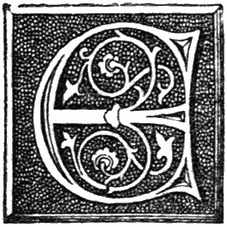
agle-takers, subs. (military).—The Eighty-Seventh Foot. [The title was gained at Barossa (1811), when it captured the eagle of the 8th French Light Infantry. Its colours also bear ‘the plume of the Prince of Wales’ and ‘the harp and crown,’ an eagle with a wreath of laurel.] It was also nicknamed ‘The Old Fogs’; also ‘The Faugh-a-Ballagh Boys,’ from Fag an bealac! = ‘Clear the Way,’ the regimental march, and the war-cry at Barossa.
Ear. To send away with a flea in the ear, verb. phr. (common).—To dismiss peremptorily and with a scolding. Fr., mettre la puce à l’oreille = to get angry.
1764–1817. J. G. Holman, Abroad and at Home, ii., 1. I could not think of Miss Hartley being troubled with such a brute of a fellow … so, an’t please you, my lady, I sent him away with a flea in his ear.
1841. Comic Almanack, p. 280. One thing is very clear, If they ain’t off of their own accord, the Lord Mayor will soon help ’em off with a flea in their ear.
1884. Hawley Smart, From Post to Finish, p. 202. Her husband had with difficulty restrained her from sending Forrest away with what in homely language is denominated a flea in his ear.
To bite the ear.—See Bite and Break Shins.
To get up on one’s ear, verb. phr. (American).—To bestir oneself; to rouse oneself for an effort.
1870. Richard Grant White. Words and their Uses. They called me bully boy, altho’ I’ve seen nigh three-score years, And said that I was lightning when I got up on my ear.
1888. Puck’s Library, May, p. 15. A man who walked on his ear out of a store said ‘he came out on the Erie route.’
Earl of Cork, subs. phr. (Irish).—The ace of diamonds.—[See quots.]
1830. W. Carleton, Traits and Stories of the Irish Peasantry. ‘What do you mean by the Earl of Cork?’ asked Mr. Squander. ‘The ace of diamonds, your honour. It’s the worst ace, and the poorest card in the pack, and is called the Earl of Cork, because he’s the poorest nobleman in Ireland.’
1864. Athenæum, 29 Oct. The ace of diamonds acquired the name of ‘the earl of cork’ because his lordship happened to be the poorest nobleman in Ireland.
Earl of Mar’s Grey Breeks, subs. phr. (military).—The Twenty-First Foot. [In allusion to the colour of the men’s breeches and to the original title of the regiment, The Earl of Mar’s Fuzileers.] Obsolete.
Early. To get up early, verb. phr. (common).—To be astute; ready; wide-awake. Cf., ‘It’s the early bird that catches the worm.’
1738. Swift, Polite Convers., Dial. 3. They must rise early that would cheat her of her money.
c. 1869. Vance, Broadside Ballad. For to get me on the hop, or on my ‘tibby’ drop, You must wake up very early in the morning.
1880. A. Trollope, The Duke’s Children, ch. xlvi. It was said of him that … if you wished to take him in you must get up early.
Early-riser, subs. (common).—An aperient. Cf., Custom-house officer and Two gunners and a driver.
Early-worm, subs. (common).—A man who searches the streets at daybreak for cigar stumps.
Earth-bath, subs. (old).—A grave. To take an earth-bath = to be buried; cf., ground sweat.
1785. Grose, Dict. Vulg. Tongue, s.v.
1859. Matsell, Vocabulum, or Rogue’s Lexicon, s.v.
Earthquake. Bottled earthquake, subs. phr. (American).—Intoxicating drinks.
Earth-stoppers, subs. (old).—Horse’s feet.
1823. Moncrieff, Tom and Jerry, i., 6. There’s action for you—there’s one to tip ’em the go-bye at a mill,—there’s earth-stoppers—quiet to drive, quiet in harness, trots fifteen miles in less than an hour.
Earthy, adj. (colloquial).—Gross; common; devoid of ‘soul.’
Ear-wig, subs. (old).—A private prompter or flatterer; also (thieves’) a clergyman. [From the popular delusion that the earwig lodges itself in the ear with a view to working its way into the brain when it causes death.]
1639. Beaumont and Fletcher, Bloody Brother. Dram. Personæ, Latorch Rollo’s Earwig.
1789. Geo. Parker, Life’s Painter p. 77. And the court, mercy on us! there are no words equal to the just painting of its ear-wigs, its sycophants, pensioners, placemen, scouters, masters of the ceremonies, etc.
1822. Scott, Fortunes of Nigel, A pack of mouthers, and flatterers, and ear-wigs.
Verb (common).—To prompt; to influence by covert statements; to whisper insinuations.
1842. Marryat, Percival Keene, xiii. And by way of a hint, make him your friend if you can, for he earwigs the captain in fine style.
1879. Jas. Payn, High Spirits (Confiscated Weeds). He is a sound divine and politician, but a little apt to be led away by specious arguments on the subject of education; and Carker was in the habit … of earwigging him.
Ease, verb (common).—1. To rob; Fr., soulager. Cf., Annex and Convey. To ease a bloke = to rob a man.
1630. Jonson, New Inn, I. Ease his pockets of a superfluous watch.
1817. Scott, Rob Roy, ch. viii. ‘The law’s hard—very severe—hanged poor Jack Winterfield at York, despite family connexions and great interest, all for easing a fat West-country grazier of the price of a few beasts.’
1840. Thackeray, Paris Sketch Book, p. 109. His was the place at the écarté table, where the Countess would ease him nightly of a few pieces.
1849. Punch, November, ‘The Swell Mobsman’s Almanack.’ Remember, wen you’ve eased a cove in a fogg, never cut away in an ’urry, or crushers stop you.
2. (venery).—To content a woman.
1861. A. C. Swinburne, Poems and Ballads. ‘Hermaphroditus.’ Hath made him man to ease a woman’s sighs.
To ease oneself, verb. phr. (colloquial).—1. To ‘rear.’ For synonyms, see Bury a Quaker.
2. (venery).—To ejaculate.
Eason, verb (American thieves’).—To tell.
1859. Matsell, Vocabulum, or Rogue’s Lexicon, s.v.
East-and-South, subs. (rhyming slang).—The mouth. Also Sunny South. For synonyms, see Potato-trap.
1857. Ducange Anglicus, The Vulgar Tongue, s.v.
Eastery, subs. (cheap-jacks’).—Private business.
1876. C. Hindley, Life and Adventures of a Cheap Jack, p. 107. At one eastery Aaron Jessell was going to cry the place.
Easy, To make easy, verb. phr. (old).—To gag or kill. [Grose, 1785.]
Easy as damn it, (or as my eye), adj. phr. (popular).—Excessively easy: ‘easy as lying’ [Shakspeare].
Easy does it! verb. phr. (popular).—An exclamation of encouragement and counsel = ‘Take your time and keep your coat on.’
Easy over the pimples, (or over the stones), verb. phr. (popular).—An injunction = ‘go slow,’ or ‘mind what you’re about.’
Easy Virtue.—See Lady of Easy Virtue.
Eat, verb (American).—To provision: e.g., a steamer is said to be able to eat 400 passengers and sleep about half that number.
ante 1871. Pickings from the Picayune, p. 47. Hoosier—‘Squire, what pay do you give?’ Contractor—‘Ten bits a day.’ Hoosier—‘Why, Squire, I was told you’d give us two dollars a-day and eat us.’
1887. R. A. Procter, on ‘Americanisms’ in Knowledge, s.v. Sometimes a host may eat his guests in another sense. I once, when staying at an hotel, found a finely coloured motto rather unfortunately spelt; it ran, ‘Watch and Prey.’ Its owner carried out the idea.
Eat coke.—See Coke.
Eat crow.—See Crow.
Eat a fig, verb. phr. (rhyming slang).—To ‘crack a crib’; to break a house.
To eat one’s head off, verb. phr. (colloquial).—To be retained for service and stand idle; also (quot., 1850) to cost more in ‘keep’ than one is worth.
1850. F. E. Smedley, Frank Fairleigh, ch. xiv. I’d rather keep her for a week than a fortnight, I can tell you; she’d eat her head off in a month, and no mistake.
1872. Times, 27 Aug. ‘The Autumn Manœuvres.’ The country never would stand the maintenance all the year round of some 1,500 horses which would have nothing to do for nine months out of the twelve but eat their heads off.
1874. Mrs. H. Wood, Johnny Ludlow, 1 S., No. xxv., p. 446. And I fit to eat my head off with having nothing to do.
Eat one’s head, hat, boots, etc., verb. phr. (common).—A locution of emphatic asseveration. [Probably Dickensonian, influenced by the proverbial saying, ‘To eat one’s heart out’—to undergo intense struggle, and also To eat one’s head off (q.v.).]—See Notes and Queries, 7 S., iii., 7, 94, 197, 352, 433.
1836. Dickens, Pickwick, xlii., 367. ‘Well, if I knew as little of life as that, I’D eat my hat and swallow the buckle whole,’ said the clerical gentleman.
1837. Dickens, Oliver Twist, ch. xiv. This was the handsome offer with which Mr. Grimwig backed and confirmed nearly every assertion he made; and it was the more singular in his case because, even admitting, for the sake of argument, the possibility of scientific improvements being ever brought to that pass which will enable a man to eat his own head in the event of his being so disposed, Mr. Grimwig’s head was such a particularly large one that the most sanguine man alive could hardly entertain a hope of being able to get through it at a sitting, to put entirely out of the question a very thick coating of powder.
1887. E. E. Money, Little Dutch Maiden, II., viii., 148. And if you don’t run up against him next day in Bond Street, you may eat your hat!
To eat one’s terms, verb. phr. (legal).—To go through the prescribed course of study for admission to the bar. [In allusion to the dinners a student has to attend in the public hall of his inn.]
To eat one’s words, verb. phr. (colloquial).—To retract a statement; to own a lie.
To eat up, verb. phr. (colloquial).—To vanquish; to ruin. [Originally Zulu.]
1890. National Observer, 13 Dec, p. 88, col. 2. But buttons tarnish, hot gospelling palls, the eating-up of white men is in strictest consonance with regal tradition and the regal habit.
Eaves, subs. (American).—A hen-roost.
1859. Matsell, Vocabulum, or Rogue’s Lexicon, s.v.
Eavesdropper, subs. (American).—A chicken thief; also generally, any petty pilferer.
1859. Matsell, Vocabulum, or Rogue’s Lexicon, s.v.
Ebenezer, subs. (Winchester College).—A stroke at fives: when the ball hits ‘line’ at such an angle as to rise perpendicularly into the air.
Ebony, subs. (common).—1. A negro; otherwise Blackbird (q.v.) and Black Ivory. Thomas Fuller (1608–1661) spoke of the negro race as ‘God’s images cut in ebony.’ For synonyms, see Snowball.
2. The publisher of Maga.: i.e., Blackwood.—(See Noctes Ambrosianæ passim.)
Ebony-optics, subs. (old).—Black eyes. Ebony-optics albonized = black eyes painted white.
Edgabac, subs. (back slang).—Cabbage.
Edge. Stitched off the edge, phr. (tailors’).—Said of a glass not filled to the top.
Side-edge, subs. (tailors’).—Whiskers.
Short top edge, subs. phr. (tailors’).—A turn-up nose or celestial (q.v.).
Edge in, verb. phr. (colloquial).—To slip in; insinuate: e.g., To edge in a word (or a remark).
Edge off (or out of), verb. phr. (colloquial).—To slink away; to gradually desist. To take the edge off [a thing, or person, or idea] = to become acquainted with; to enjoy to satiety. Cf., Hamlet, iii., 2. ‘It would cost you a groaning to take off my edge.’
Edgenaro, subs. (back slang).—An orange.
Edge-ways. Not able to get a word in edge-ways, phr. (colloquial).—Having but the barest opportunity of taking part in a discussion.
Eel-Skins, subs. (old).—Tight trousers. For synonyms, see Bags and Kicks.
1827. Bulwer Lytton, Pelham, ch. xlix., p. 190. He only filched a twopenny halfpenny gilt chain out of his master, Levy, the pawnbroker’s window, and stuck it in his eel-skin to make a show.
E-fink, subs. (back slang).—A knife.
Efter, subs. (thieves’).—A theatre thief.
Egg.—See Bad Egg.
Egg on, verb. phr. (colloquial).—To encourage.
Eggs. Sure as eggs is eggs, phr. (popular).—Of a certainty; without doubt. [From the formula, ‘x is x.’]
To teach one’s grandmother to roast or suck eggs, verb. phr. (colloquial).—To lecture elders and superiors; Fr., les oisons veulent mener les oies paître = the goslings want to drive the geese to pasture.
Egham, Staines, and Windsor, subs. phr. (common).—See quot.
1886. G. A. Sala, in Ill. Lon. News, 23 Oct., 418, 2. Is not the three-cornered hat of an English gentleman’s coachman in gala livery known as an ‘Egham, Staines, and Windsor’?
Egyptian-Hall, subs. (rhyming slang).—A ball.
Eighter, subs. (prison).—An eight-ounce loaf.
Ekame, subs. (back slang).—A make (q.v.), or swindle.
Ekom, subs. (back slang).—A moke (q.v.), or donkey.
Elbow, verb (American thieves’).—To turn a corner; to get out of sight.
1859. Matsell, Vocabulum, or Rogue’s Lexicon, s.v.
To shake the elbow, verb. phr.—To play dice. [From the motion of the arm in ‘casting.’]
1680. Cotton, Compleat Gamester [gaming is compared to] a paralytical distemper which, seizing the arm the man cannot chuse but shake his elbow.
1705. Vanbrugh, Confederacy, Act i. He’s always shaking his heels with the ladies and his elbows with the lords.
1709. Mrs. Centlivre, Gamester, I. (1872), i., 134. He is at shaking his elbows over a table … courting the dice like a mistress, and cursing them when he is disappointed.
1713. Guardian, No. 120. But what would you say, should you see the Sparkler shaking her elbow for a whole night together, and thumping the table with a dice-box?
1822. Scott, Fortunes of Nigel, ch. xvii. To eke out your living By the wag of your elbows.
To crook the elbow, verb. phr. (common).—To drink.—See Elbow-crooker. [From the action of the arm.] For synonyms, see Lush.
Elbow-Crooker, subs. (common).—A hard drinker. See infra and Drinks.
English Synonyms.—Borachio; boozington; brewer’s horse; bubber; budger; mop; lushington; worker of the cannon; wet-quaker; soaker; lapper; pegger; angel altogether; bloat; ensign-bearer; fiddle-cup; sponge; tun; toss-pot; swill-pot; wet subject; shifter; potster; swallower; pot-walloper; wetster; dramster; drinkster; beer-barrel; ginnums; lowerer; moist ’un; drainist; boozer; mopper-up; piss-maker; thirstington.
French Synonyms.—Un louave (thieves’); un litronneur (popular: litre = 1·760 pint); une grosse culotte (popular = big-breeches or fat-arse); un gavé (thieves’: gaver = to stuff); une lampe à mort (pop.: a confirmed drunkard; = a death-lamp); un zingueur (popular); un boyau rouge (pop. = red-guts); un marquant (thieves’: = conspicuous, striking, etc.); un canonneur (pop.: canon = a glass of wine; cf., English cannon); un camphrier (pop.: a dram-drinker; also = a camphor-tree); un fioleur (pop.: fiole = phial: cf., toss-pot and swill-pot); une éponge (pop.: = a sponge; also a paramour, a fool, an attorney); un bibard (thieves’: biberon = sucking-bottle); un buvard (popular: = blotting book); un pochard (colloquial); adroit du coude (pop. = artful elbowed); un artilleur (pop.: = a cannoneer; cf., cannon); un boissonneur (pop.: boisson = drink); un buvailleur or buvaillon (pop.: a man easily drunk); un chocaillon (pop.: a female drunkard); un poivrot (familiar); un sac à vin (pop. = a wine butt).
German Synonym.—Mattobolo (matto balo = a drunken pig: from the gypsy matto = drunk).
Italian Synonyms.—Fransoso (= a Frenchman); chiaritore; chiaristante.
Spanish Synonyms.—Cuero (= a goat-skin bag for wine or oil); coladra (= a wooden pail in which wine is measured and retailed); cuba (= a measure for wine); difunto de taberna (lit., a public-house corpse); odre (= a wine-skin); pellejo (= a liquor skin dressed and pitched); peneque; potista; odrina (= an ox-hide bottle).
Elbower, subs. (American thieves’).—A runaway. [Cf., elbow.]
Elbow-Grease, subs. (colloquial).—Energetic and continuous manual labour: e.g., ‘Elbow-Grease is the best furniture oil.’ Fr., huile de bras or de poignet; du foulage.
1779–1839. Galt [quoted in Imperial Eng. Dict.]. He has scartit and dintit my guid mahogany past a’ the power o’ beeswax and elbow-grease to smooth.
1785. Grose, Dict. Vulg. Tongue, s.v.
1859. G. Eliot, Adam Bede, bk. I., ch. vi. Nowhere else could an oak clock-case and an oak table have got to such a polish by the hand: genuine elbow-polish, as Mrs. Poyser called it, for she thanked God she never had any of your varnished rubbish in her house.
1870. London Figaro, 31 Oct. Often have I been … frequently admonished to put some elbow-grease into my work.
1876. M. E. Braddon, Joshua Haggard’s Daughter, ch. xi. There’s no such polish in Devonshire, I should think, as poor Phœbe’s elbow-grease.
Elbow-scraper, or Jigger, subs. (common).—A fiddler.
Elbow-shaker, subs. (old).—A gambler.—See Elbow.
1748. T. Dyche, Dictionary (5th ed.). Elbow-shaker (s.) a gamester, one that practises dice-playing.
Elbow-shaking, subs. (common).—Gambling.—See Elbow.
1849. Thackeray, Pendennis, ch. lx. ‘It’s been doosedly dipped and cut into, sir, by the confounded extravygance of your master, with his helbow shakin’, and his bill discountin’.’
Electrified, ppl. adj. 1. (American).—Moderately drunk. For synonyms, see Drinks and Screwed.
2. (colloquial).—Violently startled.
1837. Barham, Ingoldsby Legends. ‘The Lay of St. Gengulphus.’ Pig, pudding, and soup. The electrified groups, Pop under the sofa.
Elegant, adj. (colloquial).—Excellent.
Elegant-Extracts, subs. (military).—1. The Eighty-Fifth Foot. [This regiment was remodelled in 1812, after a long sequence of court-martials: when the officers were removed, and others set in their room.]
1871. Chambers’ Journal, 23 Dec., p. 803. ‘Elegant Extracts’ was the name given to the 85th on its being reformed with officers picked out from those of other regiments.
2. (Cambridge University).—Students who, though ‘plucked,’ were still given their degrees. A line was drawn below the poll-list, and those allowed to pass were nicknamed the elegant extracts. [There was a similar limbo in the honour-list, called the Gulf: for ‘Between them (in the poll) and us (in the honour lists) there is a great gulf fixed.’]
Elephant, subs. (American thieves’).—A wealthy victim. Cf., To see the Elephant.
1859. Matsell, Vocabulum, or Rogue’s Lexicon, s.v.
To see the Elephant, verb. phr. (American).—1. To see the world; to ‘go out for wool and come home shorn’; by implication, to ‘go on the loose.’ Sometimes, To see the King.
b. 1533, d. 1592. Montaigne, Arrien. Hist. Ind., ch. 17. Aux Indes Orientales la chasteté y estant en singulière recommandation, l’usage pourtant souffroit qu’une femme mariée se peust abandonner à qui luy presentoit un ÉlÉphant, et cela avec quelque gloire d’avoir esté estimée à si hault prix.
1841. Kendall, Narrative of the Texan Santa Fé Expedition, i., p. 109. When a man is disappointed in any thing he undertakes, when he has seen enough, when he gets tired and sick of any job he may have set himself about, he has seen the elephant.
1870. L. Oliphant, Piccadilly, pt. ii., p. 39. So had Mr. Wog, who went up to town to see what he called the elephant,—an American expression, signifying ‘to gain experience of the world.’
1872. Besant and Rice, R. M. Mortiboy, ch. xxxiv. Just like the Americans, when they go to see a great sight, say they are going to see the elephant.
1888. Boston Globe, 4 March. It was in a Hanover Street dispensary, where the tillers of the soil love to congregate, when they are down to Bosting, inspecting the Athenian white elephant.
1889. Puck’s Library, Ap., p. 25. Forepaugh says that elephants have a natural liking for whiskey. We have often wondered, when a man went out to see the elephant, why he always brought back such a strange odour with him. This seems to explain it.
2. (common).—To be seduced; Fr., avoir vu le loup. For synonyms, see Leg.
Elephant-dance.—See Cellar-flap and Double-Shuffle.
Elephant’s-trunk, subs. (rhyming slang).—Drunk. For synonyms, see Drinks and Screwed.
Elevate, verb (colloquial).—To make or become slightly drunk.—See Elevated.
Elevated, ppl. adj. (colloquial).—Slightly drunk. For synonyms, see Drinks and Screwed.
1664. Etherege, Comical Revenge, IV., iii. in wks. (1704), 51. The wine makes the rogue witty.… I will keep him thus elevated ’till he has married Grace.
1748. Smollett, Rod. Random, ch. xvii. The liquor mounted up to our heads, and made us all extremely frolicsome. I, in particular, was much elevated.
1748. T. Dyche, Dictionary (5th ed.). Elevated (a.) … sometime spoke of a person that has drank a little too freely.
1836. Dickens, Pickwick, ch. l., p. 434. Except when he’s elevated, Bob’s the quietest creature breathing.
1837. Disraeli, Venetia, p. 274.
Elevation, subs. (colloquial).—1. A phase of drunkenness.—See Elevated.
1823. Scott, Peveril, ch. iii. The unwonted agitation of her voice attracted the attention of the refractory steward, notwithstanding his present state of elevation.
2. (common).—Opium.
1849. C. Kingsley, Alton Locke, ‘What’s elevation?’ ‘Opium, bor alive.’
Elfen, verb (American thieves’).—To walk lightly; to go on tiptoe.
1859. Matsell, Vocabulum, or Rogue’s Lexicon, s.v.
Ellenborough Lodge, or Spike, or Park, subs. phr. (old).—The King’s Bench. [From Lord Chief-Justice Ellenborough.] For synonyms, see Cage. Ellenborough’s Teeth = the chevaux de frize round the prison wall.
Elrig, subs. (back slang).—A girl.
Elycampane or Elecampane.—See Allacompain and quot.
1823. W. T. Moncrieff, Tom and Jerry, ii., 4. Go and get a pennyworth of elycampane. Jerry. There’s a pair of men-milliners.
Emag, subs. (back slang).—Game: e.g., ‘I know your little emag.’
Embroider, verb (common).—To exaggerate; to add to the truth.
1877. S. L. Clemens (‘Mark Twain’), The Mississippi Pilot. Tom tried to make himself appear to be a hero too, and succeeded to some extent, but then he always had a way of embroidering.
Embroidery, subs. (common).—Exaggeration; the American sass and trimmin’s (q.v.).—[See Embroider.]
1890. Standard, 5 April, p. 2, col. 1. Fanny Burney had many good qualities, no doubt, but we fancy that when she tells us with such evident unction how great folks loved and admired her she puts a good deal of embroidery into her narrations.
Emma.—See Whoa Emma and Street-cries.
Emperor, subs. (American thieves’).—A drunken man. [An intensification of ‘drunk as a lord’; whence ‘drunk as an emperor.’]
1881. New York Slang Dict. ‘On the Trail.’ A pinch for an Emperor’s slang.
Drunk as an Emperor, phr. (common).—An intensitive of ‘drunk as a lord.’ Fr., saoul comme trente mille hommes, or un âne.
1785. Grose, Dict. Vulg. Tongue, s.v.
Empty the Bag.—See Bag.
Encumbrances, subs. (common).—Children.—See Certainties and Uncertainties.
End. To be all on end, verb. phr. (American).—To be very angry; irritated. Also expectant.
At loose ends, adv. phr. (common).—Neglected; precarious.
End on, adv. phr. (colloquial).—Straight; full-tilt.
To be end on, verb. phr. (venery).—To have an erection.
To keep one’s end up, verb. phr. (American).—To rub along.
End of the Sentimental Journey, subs. phr. (venery).—The female pudendum. For synonyms, see Monosyllable.
Enemy, subs. (common).—Time: e.g., ‘How goes the enemy’ = what’s o’clock? ‘To kill the enemy’ = to kill time.
1839. Dickens, Nich. Nickleby, ch. xix., p. 149. ‘How goes the enemy, Snobb?’ asked Sir Mulberry Hawke. ‘Four minutes gone.’
1864. Glasgow Citizen, 19 Nov. The swell who is bored by his efforts to ‘kill the enemy.’
English Burgundy, subs. phr. (old).—Porter.—See Drinks.
1785. Grose, Dict. Vulg. Tongue, s.v.
1859. Matsell, Vocabulum, or Rogue’s Lexicon, s.v.
Enif, adj. (back slang).—Fine.
Enin Gen, subs. phr. (back slang).—Nine shillings. Enin Yanneps = Ninepence.
Enjoy, verb (old).—To ‘possess’ a woman.
1594. Shakspeare, The Rape of Lucrece, st. 74. ‘Lucrece,’ quoth he, ‘this night I must enjoy thee; if thou deny, then force must work my way.’
Eno, adj. (back slang).—One.
1850. Lloyd’s Weekly, 3 Feb. ‘Low Lodging Houses of London.’ There’s people there will rob their own brother. There’s people there talk backward—for one they say eno, for two owt, for three eerht, for four ruof, for five evif, for six exis. I don’t know any higher.
Ensign-Bearer, subs. (old).—A drunkard; especially one with a red nose and blotchy face.—See Elbow-crooker.
1785. Grose, Dict. Vulg. Tongue, s.v.
Ephesian, subs. (old).—A boon companion; a ‘spreester.’ Cf., Corinthian.
1596. Shakspeare, Merry Wives of Windsor, iv., 5. Art thou there? it is thine host, thine Ephesian, calls.
1598. Shakspeare, 2 Henry IV., ii. 2. P. H. What company? Page. Ephesians, my lord, of the old church.
Epip, subs. (back slang).—A pipe.
Epsom-races, subs. (rhyming slang).—A pair of braces.
Equal to the Genuine Limburger.—See Limburger.
Equipped, ppl. adj. (American thieves’).—Rich; well-dressed; in good circumstances. Cf., well-ballasted.
Erif, subs. (back slang).—Fire.
Eriff, subs. (American thieves’).—A young thief.
1881. New York Slang Dict. ‘On the Trail.’ It’s the gait all them eriffs dances, observed the one-eyed man.
Errand. To send a baby on an errand, verb. phr. (common).—To undertake what is pretty sure to turn out badly.
Error.—See No Error.
Erth (back slang).—Three. Erth Gen = Three shillings. Erth-pu = Three-up, a street game, played with three halfpence. Erth Sith-Noms = Three months’ imprisonment; a ‘drag.’ Erth Yanneps = Threepence.
Esclop (back slang).—A police-constable; esclop is pronounced ‘slop’ the c is never sounded. For synonyms, see Beak and Copper.
Es-roch (back slang).—A horse. For synonyms, see Prad.
Essex-Lion, subs. (old).—A calf: e.g., ‘as valiant as an essex-lion.’ Cf., Cotswold Lion, Cambridgeshire Nightingale, etc.
1787. Grose, Prov. Glossary, s.v. Essex lions. Calves, great numbers of which are brought alive in carts to the London markets.
Essex-Stile, subs. (old).—A ditch.
1787. Grose, Prov. Glossary. Explained to be either real stiles which, because of the very small enclosures in Essex, are very frequent or the ‘narrow bridges, such as are laid between marsh and marsh in the hundreds of this county, only jocularly called stiles, as the loose stone walls in Derbyshire are ludicrously called hedges.’
Esuch (back slang).—A house. For synonyms, see Ken.
Eternity-Box, subs. (common).—A coffin.
English Synonyms.—Cold meat box; wooden surtout; coffee-shop; deal suit.
French Synonyms.—Boîte à dominos (popular); étui à lorgnette (popular); boîte à doche (thieves’); redingote de sapin (popular).
German Synonyms.—Pron (from the Hebrew); Teba (Hebrew leba).
Evaporate, verb (common).—To run away; to disappear. For synonyms, see Amputate and Skedaddle.
1852. Dickens, Bleak House, ch. xxii., p. 191. Upon which the young man, looking round, instantly evaporates.
1854. Ainsworth, Flitch of Bacon, pt. I., ch. x. You may evaporate if you think proper, Sir G.; but split me if I stir a step.
1857. Cuthbert Bede, Verdant Green, pt. II., ch. ix. Mr. Bouncer evaporates with a low bow, leaving the Ladies to play with their parasols, and converse.
Evatch, verb (back slang).—To have: e.g., ‘Evatch a kool at the elrig’ = Have a look at the girl.
Everlasting-Shoes, (also Everlastings), subs. (common).—The naked feet. For synonyms, see Creepers.
Everlasting-staircase, subs. (thieves’).—The treadmill. For synonyms, see Wheel of Life.
1851–61. H. Mayhew, London Lab. and Lon. Poor, vol. i., p. 300. Why we should be very soon taking reg’lar exercise on Colonel Chesterton’s everlasting staircase. We has a great respect for the law—O, certainly!
1874. H. Mayhew, London Characters, p. 349. I had ‘done’ my quarter of an hour on the everlasting staircase (treadmill).
Everton-toffee, subs. (rhyming slang).—Coffee.
Everything is lovely and the goose hangs high, phr. (American).—Everything is going swimmingly. [An allusion to the ‘sport’ of gander pulling. A gander was plucked, thoroughly greased, especially about the head and neck, and tied tight by the feet to the branch of a tree. The game was then to ride furiously at the mark, catch it by the head or neck, and attempt to bear it away. With every failure the fun would get more uproarious].
1867. Round Table, 30 July. I am not aware that any one has asked you the meaning of the slang phrase, everything goes lovely and the goose hangs high; but doubtless … it is derived from the Southern sport(!) of ‘Gander-pulling.’
Eve’s Custom-House, subs. phr. (venery).—The female pudendum.
Evif, adj. (back slang).—Five Evif-gen = A crown, or five shillings. Evif-yanneps = five pence.
Evil, subs. (old).—A wife. For synonyms, see Dutch.
1859. Matsell, Vocabulum, or Rogue’s Lexicon. Evil. A wife; a halter; matrimony.
Evlenet-gen, (back slang).—Twelve shillings. Evlenet sith-noms = twelve months: generally known as a ‘stretch.’
Ewe.—See White Ewe and Old Ewe.
Ewe-mutton, subs. (common).—An elderly strumpet or ‘piece.’
Exalted, ppl. adj. (old).—Hanged. For synonyms, see Ladder. Cf., elevated = drunk.
1836. Michael Scott, Cruise of the Midge, p. 226. Your great-grandfather was exalted, was he?—that is hanged, I suppose?
Exam, subs. (school).—An abbreviation of ‘Examination.’
1883. James Payn, Thicker than Water, ch. xxi. It’s a mere question of political economy; I read all about it for my exam.—the supply will exceed the demand.
Exasperate, verb (common).—To over-aspirate the letter H.
1857. Cuthbert Bede, Verdant Green, pt. II., ch. ix. Mr. Bouncer replies, with a footman’s bow, and a footman’s hexasperation of his h’s.
Excellers, subs. (military).—The Fortieth Foot. [A pun upon its number, xl + ers.]
Excruciators, subs. (common).—Tight boots; especially with pointed toes.
Execution-day, subs. (common).—Washing day.
Exes, subs. (common).—1. An abbreviation of ‘expenses.’
1871. Fun, 4 Nov. ‘The Policeman’s Complaint.’ Nay oft I’m told I’ve been deceived, And of my x’s I’m bereaved; So on the whole I muchly grieved By information I received.
1883. Referee, 18 March, p. 3, col. 3. The piece was ready, but the ‘pieces’ were not, and without the exes Morton would not allow the gas to be lighted or the curtain to go up. It was a case of no pay no play.
1890. Montagu Williams, Leaves of a Life, I., p. 153. He was out for a spree at the races, and I suppose he thought he’d like to pay his exes.
2. (colloquial).—An abbreviation of ‘ex-officials,’ ‘ex-ministers,’ and so forth. As in Tom Moore’s ‘We x’s have proved ourselves not to be wise.’
Exis-evif-gen, (back slang).—Six times five shillings, i.e., 30s. All monies may be reckoned in this manner, either with yanneps or gens. Exis-evif-yanneps, literally, ‘sixpence and fivepence = elevenpence.’ Exis gen = six shillings. Exis sith-noms = six months. Exis yanneps = Sixpence.
Expecting, ppl. (colloquial).—With child.
Experience Does it, phr. (common).—A dog-English rendering of Experienta docet.
Explaterate, verb (American).—To hold forth; explain in detail. [From O.E. Explate = to unfold.]
Explosion, subs. (common).—A delivery.
Exquisite, subs. (common).—A fop. For synonyms, see Dandy.
Extensive, adv. (common).—Formerly applied to a person’s appearance or talk; ‘rather extensive that!’ intimating that the person alluded to is showing off, or ‘cutting it fat.’
Extinguisher, subs. (common).—A dog’s muzzle.
1890. Standard, 12 May, p. 5, col. 4. I had to appear before Mr. Curtis-Bennett, at West Kensington, to answer the charge of the dog being at large without his extinguisher en évidence.
Ex Trumps, adv. phr. (Winchester College).—Extempore. To go up to books ex trumps = to go to class without preparing one’s lesson.
Eye.—See All My Eye.
To pull wool over the eyes.—See Pull Wool.
To keep the eyes clean, skinned, or peeled, verb. phr. (American).—To be watchful; alert; with all one’s wits about one.
1837. C. Gilman, Negro Domestic’s Recollections. Mans Ben ax ’em for sing one hymn for ’em, cause he eye clean.
1865. New York Herald. My son, afore you leave yer home, I want ter say ter you, Thar’s lots of pitfalls in the world ter let young roosters through; So keep a padlock on yer mouth and skin yer weather eye, But never advertise yerself as being monstrous fly.
To have a drop in the eye, verb. phr. (common).—To be drunk. For synonyms, see Drinks and Screwed.
1738. Swift, Pol. Convers., Dial. 1. You must own you had a drop in your eye; when I left you, you were half seas over.
1837. Barham, I. L. (Black Mousquetaire). In vain did he try With strong waters to ply His friend, on the ground that he never could spy Such a thing as a ghost with a drop in his eye.
In the twinkling of an eye.—See Bedpost.
To bet one’s eyes.—See Bet.
My eyes! intj. phr. (common).—An expression of surprise.
1837. Dickens, Oliver Twist, ch. viii. ‘My eyes, how green!’ exclaimed the young gentleman. ‘Why a beak’s a madgst’rate.’
Eyelashes. To hang on by the eyelashes or eyebrows, verb. phr. (common).—To be very tenacious; also, by implication, to be in a difficulty. Cf., Hang on by the splash-board.
Eye-limpet, subs. (common).—An artificial eye.
Eye-opener, subs. (American).—1. Drink generally; specifically, a mixed drink.
2. (general).—Anything surprising or out of the way.
1879. Notes and Queries, 5th S., xi., 140. His lecture must have been a lively and profitable eye-opener for the somnolence of a cathedral town.
1888. Cornhill Mag., March, p. 228. If Joanna was ever so blessed as to hear her sing ‘Houp la!’ it would be a regular eye-opener to her.
1889. Answers, 23 Feb., p. 194, col. 1. No doubt the enclosed will be an eye-opener for you.
3. (venery).—The penis. For synonyms, see Creamstick.
Eyeteeth. To have cut one’s eyeteeth, verb. phr. (colloquial).—To have learned wisdom.
1748. T. Dyche, Dictionary (5th ed). Eye-teeth (s.), those immediately under the eye; also quickness or sharpness of understanding and parts, are sometimes so called.
1835. Haliburton, Clockmaker 1 S., ch. xvi. Them ’ere fellers cut their eye-teeth afore they ever sot foot in this country, I expect.
Eye-water, subs. (common).—Gin. For synonyms, see Drinks.
1869. Whyte Melville, M. or N., p. 66. On this minnit, off at six, Buster; two bob an’ a bender, and a three of eye-water, in?
1886. Judy, 4 August, p. 58. He imbibed stupendous quantities of jiggered gin, dog’s nose, and Paddy’s eye-water.
ace, subs. (colloquial).—1. Confidence; boldness; also (more frequently) impudence: e.g., ‘I like your face’ = I like your cheek. Once literary; Cf., Cheek, Jaw, Gab, Brow, Mouth, Lip, etc.
1610. Ben Jonson, The Alchemist. ‘Dramatis Personæ.’—face.
1617. Middleton, A Faire Quarrell, II., ii. I that had face enough to do the deed, Cannot want tongue to speak it.
1668. Etherege, She Would if She Could, I., i. (1704), p. 95. I admire thy impudence, I could never have had the face to have wheadled the poor knight so.
1676. Etherege, Man of Mode, V., i., in wks. (1704), 265. I am amazed to find him here! How has he the face to come near you?
1702. Defoe, Shortest Way, in Arber’s Garner, vol. VII., p. 590. You have butchered one king! deposed another king! and made a mock king of a third! and yet, you could have the face to expect to be employed and trusted by the fourth.
1714. Spectator, No. 566. A man has scarce the face to make his court to a lady, without some credentials from the service to recommend him.
1854. F. E. Smedley, Harry Coverdale, ch. liii. I can hardly suppose even Phil Tirrett would have the face to throw me over and ride for O’Brien.
1870. London Figaro, 3 June. ‘Look at that girl in pink, Sancho,’ he said; ‘that’s Lord Rubric’s daughter. Ran away with the family organist—that’s he with her. I like their face, though, to come here; it’s awfully good.’
2. (common).—Credit. To push one’s face = to get credit by bluster.—[See sense 1 and cf., Face-Entry.]
1765. Goldsmith, Essays, VIII. There are three ways of getting into debt: first, by pushing a face; as thus: ‘You, Mr. Lutestring, send me home six yards of that paduasoy, damme; but, harkee, don’t think I ever intend to pay you for it, damme.’ At this the mercer laughs heartily; cuts off the paduasoy, and sends it home; nor is he, till too late, surprised to find the gentleman had said nothing but the truth, and kept his word.
1865. Bacon, Handbook of America, p. 365. To run one’s face, to make use of one’s credit, to run one’s face for a thing is to get it ‘on tick.’
1875. American English in Chamb. Journal, 25 Sept., p. 610. To run your face, which means, to go upon credit.
3. (common).—A qualification of contempt: e.g., ‘Now face! where are you a-shoving of?’
Verb (old).—To bully.—See all senses, especially To Face with a card of ten.
1593. Shakspeare, Taming of the Shrew, iv., 3. Face not me; thou hast brav’d many men; brave not me; I will neither be fac’d nor brav’d.
To face or out-face with a card of ten, verb. phr. (old).—To browbeat; to ‘bluff.’ [Nares: derived from some game (possibly primero) wherein the standing boldly upon a ten was often successful. The phrase originally expressed the confidence of one player who with a ten, as at brag, faced or outfaced one who had really a faced card against him.]
1460–1529. Skelton [quoted by Nares.] First pycke a quarrel and fall out with him then, And so out face him with a card of ten.
1593. Shakspeare, Taming of the Shrew, ii. A vengeance on your crafty wither’d hide, Yet I have fac’d it with a card of ten.
1630. B. Jonson, New Inn, i., 3. Some may be coats, as in the cards; but then Some must be knaves, some varlets, bawds, and ostlers, As aces, duces, cards o’ ten to face it Out, i’ the game which all the world is.
To face the knocker, verb. phr. (tailors’).—To go begging. For synonyms, see Cadge.
To have no face but one’s own, verb. phr. (old).—To be penniless; or (gamesters’) to hold no court cards. Fr., n’avoir pas une face = ‘not to have a sou.’
1785. Grose, Dict. Vulg. Tongue, s.v.
To make faces, verb. phr. (prison).—1. To go back, or ‘round’ upon a friend. [In allusion to the convicts’ habit of distorting their features under the lens.]
2. (old).—To beget children. Cf., Face-making.
To face the music, verb phr. (American).—To meet an emergency; also to show one’s hand. [J. Fenimore Cooper derived it from the green-room, whence actors go on the boards and literally face the music. Another traces it to militia musters, where every man is expected to appear equipped and armed, when in rank and file, facing the music. A third derives it from drumming out of the army.]
1857. Worcester Spy, 22 Sept. Although such reverses would seem to fall with crushing weight upon some of our most substantial citizens, a strong determination to face the music is everywhere manifested.
1888. Daily Inter-Ocean, 20 Feb. I am sure Fred can explain everything satisfactorily. I hope he hasn’t read the newspaper stories about him, for it might scare him, and he’d very foolishly skip out. That would be the worst thing he could do. He must face the music.
Face-entry, subs. (theatrical).—Freedom of access, the personal appearance being familiar to attendants.
Face-making, verb. subs. (old).—Begetting children. Cf., making feet for children’s stockings.
Facer, subs. (pugilistic).—1. A blow in the face.
1785. Grose, Dict. Vulg. Tongue, s.v.
1819. Moore, Tom Crib’s Memorial, p. 24. In short, not to dwell on each facer and fall, Poor Georgy was done up in no time at all.
1834. Harrison Ainsworth, Rookwood. ‘The Double Cross.’ No claret flows, No facers sound—no smashing blows.
1837. Barham, I. L. (The Ghost). Whom sometimes there would come on A sort of fear his spouse might knock his head off, Demolish half his teeth, or drive a rib in, She shone so much in facers and in ‘fibbing.’
1862. Athenæum, 1 Nov., p. 557, col. 1. Before his unknown adversary well knew what was coming, the skilled fist of the Professor had planted such a facer as did not require repetition.
1868. C. Reade, Foul Play, ch. ii. This was followed by a quick succession of staggering facers, administered right and left, on the eyes and noses of the subordinates.
2. (common).—A sudden check; ‘a spoke in one’s wheel.’ [By implication from sense 1.]
1860. Thackeray, Philip, ch. xl. In the battle of life every man must meet with a blow or two, and every brave one would take his facer with good humour.
1869. Whyte Melville, M. or N., p. 189. Dick Stanmore took his punishment with true British pluck and pertinacity. It was a facer.
3. (Irish).—A dram.
4. (old).—A bumper. [Grose, 1785.]
5. (common).—A tumbler of whiskey punch.
6. (American thieves’).—An accomplice; a stall (q.v.) or fence (q.v.).
1859. Matsell, Vocabulum, or Rogue’s Lexicon, s.v.
1881. New York Slang Dict., s.v.
Facey, subs. (tailors’).—A fellow workman vis-à-vis. Facey on the bias = one in front either to right or left; Facey on the two thick = one working immediately behind one’s opposite.
Facings.—To be put, or go, through one’s facings, verb. phr. (popular).—To be called to account or scolded; to exemplify capacity; to ‘show off.’ [Military.]
Silk-facings, subs. (tailors’).—Stains upon work caused by droppings of beer. [In allusion to the ‘watered’ silk trimmings in front of a regimental jacket or coat.]
Fad-cattle, subs. (old).—Easy women. For synonyms, see Barrack-hack and Tart. [Cf., Faddle = to toy + cattle (q.v.).]
Faddist (also Fadmonger), subs. (colloquial).—A person (male or female) devoted to the pursuit of public fads: as ‘social purity,’ moral art, free-trade in syphilis, and so-forth.
Faddle, verb (obsolete).—To toy or trifle: as a subs. = a busybody; a ‘nancified’ affected male. Also Faddy = full of fads.
Fadge, subs. (common).—A farthing.
English Synonyms.—Fiddler; farden; gig, or grig; quartereen.
1789. Geo. Parker, Life’s Painter, p. 178, s.v.
1811. Lexicon Balatronicum, s.v.
1848. Duncombe, Sinks of London, s.v.
Verb (old).—To suit; to fit; to agree with; to come off. [A.S., fégan, fégean, to join, to fit. Nares says, ‘probably never better than a low word: it is now confined to the streets.’]
1593. Nashe, 4 Lett. Conf., in wks. (Grosart) II., 215. They haue broght in a new kind of a quicke sight, which your decrepite slow-mouing capacitie cannot fadge with.
1594. Shakspeare, Love’s Labour’s Lost, V., i., 154. We will haue, if this fadge not, an Antique.
1599. Massinger, Old Law, IV., ii. Clean. My Lord! Sim. Now it begins to fadge.
1636. T. Heywood, Love’s Mistress, Act IV. Vulcan … I keep a dozen journeymen at least, besides my Ciclops and my Prentises, yet ’twill not fadge.
1639. Beaumont and Fletcher, Wit without Money, III., iv. Clothes I must get; this fashion will not fadge with me.
1678. Quack’s Academy; in Harl. Misc. (ed. Park), ii., 32. That could never make their untoward handicrafts fadge to purpose.
1750. Walpole, Lett. to Mann, 18 Oct. (1833), vol. II., p. 485. Alack! when I came to range them, they did not fadge at all.
1819. Scott, in C. K. Sharpe’s Correspondence (1888), ii., 197. Pray let me know … how matters fadge in the great city of Edinburgh.
1830. Scott, Doom of Devorgoil, Act II., Sc. 1. If this same gear fadge right, I’ll cote and mouth her, And then! whoop! dead! dead! dead!
1851. G. Borrow, Lavengro, ch. lv., p. 173 (1888). Any new adventure which I can invent will not fadge well with the old tale.
Fadger, subs. (glaziers’).—A glazier’s frame; otherwise a ‘frail.’
Fadmonger, subs. (colloquial).—A Faddist (q.v.). Fadmongering, verb. phr. (colloquial) = dealing as a Faddist (q.v.) with fads.
Fag, subs. (public schools’).—1. A boy who does menial work for a schoolfellow in a higher form. [From Fag, to grow weary.]
1855. Thackeray, Newcomes, ch. xviii. Bob Trotter, the diminutive fag of the studio, who ran on all the young men’s errands, and fetched them in apples, oranges, and walnuts.
1857. G. A. Lawrence, Guy Livingstone, ch. i. Is still enumerated among the feats of the brave days of old, by the fags over their evening small beer.
2. (Christ’s Hospital).—See quot.
1850. L. Hunt, Autobiography, ch. iii. Fag, with us [at Christ’s Hospital], meant eatables. The learned derived the word from the Greek phago, to eat.
3. (American thieves’).—A lawyer’s clerk.
1859. Matsell, Vocabulum, or Rogue’s Lexicon, s.v.
Verb (public schools’).—1. To do menial work for a schoolfellow in a higher form. Cf., Fag, subs., sense 1.
1884. Temple Bar, August, p. 514. He must have completely marred his chance of happiness at the school when he refused to fag and took countless thrashings, snivelling.
2. (old).—To beat.
1754. B. Martin, Eng. Dict. (2nd ed.).
1811. Lexicon Balatronicum, s.v. Fag the bloss, beat the wench.
Fagger, Figger, or Figure, subs. (old).—A boy thief whose duty is to enter houses by windows and either open the doors to his confederates (as Oliver Twist with Bill Sykes), or hand out the ‘swag’ to them; also little snakesman (q.v.); cf., Diver.
1785. Grose, Dict. Vulg. Tongue, s.v.
1848. Duncombe, Sinks of London, s.v.
Fagging, or Faggery, subs. (public schools’).—Waiting upon and doing menial work for a school-fellow in a higher form. Also used adjectively.
1853. De Quincey, Autob. Sketches, i., 210. Faggery was an abuse too venerable and sacred to be touched by profane hands.
1873. Pall Mall Gazette, 17 May. The Winchester ‘tunding’ system, with all its faults, is hardly less objectionable than the fagging system pursued in the Scotch endowed hospitals.
Faggot, subs. (common).—1. A term of opprobrium applied to women; a ‘baggage.’ [At one time a faggot was a popular symbol of recantation of opinions thought worthy only of burning (Bailey, 1728), and heretics who had thus escaped the stake were required either to bear a faggot and burn it in public, or to wear an imitation on the sleeve as a badge.] Also used in combination: e.g., Bed- (or Straw-) Faggot = a wife, or mistress; Tumble-faggot = a whoremaster; Carry-faggot = a mattress; and Spike- (or Tickle-) faggot (obsolete) = the penis.
1820. Reynolds (‘P. Corcoran’), The Fancy, p. 16. I have got a faggot here, Aye, and quite a bad one; Were I married, p’rhaps my dear Might think that he too had one.
2. (common).—See quot., 1851.
1851–61. H. Mayhew, London Lab. and Lon. Poor, vol. ii., p. 255. He then made his supper, or second meal, for tea he seldom touched, on fagots. This preparation … is a sort of cake, roll, or ball, a number being baked at a time, and is made of chopped liver and lights, mixed with gravy, and wrapped in pieces of pig’s caul. It weighs six ounces, so that it is unquestionably a cheap [it costs 1d. hot] and, to the scavager, a savoury meal, but to other nostrils it’s odour is not seductive.
1870. London Figaro, 2 July. Have you more than a penny? A glorious perspective opens out before you of all the delicacies of the season, commencing with trotters—the harmless mutton, or the succulent swine; ‘faggots,’ etc.
1884. Cornhill Mag., June, p. 615. They can obtain hot faggots, hot baked potatoes, hot fried fish, or a cut of pork with hot pease-pudding.
3. (old).—A ‘dummy’ soldier; one hired to appear at a muster to hide deficiencies. Many names of dummies would appear on the muster-roll: for these the colonel drew pay, but they were never in the ranks.
1672–1719. Addison [quoted in Imperial Dict.]. There were several counterfeit books which were carved in wood, and served only to fill up the number like fagots in the muster of a regiment.
1728. Bailey, Dict., s.v.
1785. Grose, Dict. Vulg. Tongue, s.v.
Verb (old).—1. To bind hand and foot; to tie [as sticks into a faggot]. Fr., un fagot = a convict, because bound to a common chain on their way to the hulks.
1728. Bailey, Dict., s.v.
1785. Grose, Dict. Vulg. Tongue, s.v. Faggot the culls, bind the men.
1859. Matsell, Vocabulum, or Rogue’s Lexicon, s.v.
2. (venery).—To copulate; also to frequent the company of loose women.
Faggot-briefs, subs. (political).—Bundles of dummy papers sometimes carried by briefless barristers. [Cf., Faggot, sense 3.]
1859. Sala, Twice Round the Clock, 10 a.m. Par. 10. The counsel chat and poke each other in the ribs; the briefless ones, in the high back rows, scribble caricatures on their blotting-pads, or pretend to pore over faggot briefs.
1887. Cornhill Mag., June, p. 627.
Faggot briefs … those bundles of dummy papers sometimes carried by the briefless ones.
Faggoteer, (also Faggot-master), subs. (venery).—A whoremonger. For synonyms, see Molrower.
Faggot-vote, subs. (political).—A vote secured by the purchase of property under mortgage, or otherwise, so as to constitute a nominal qualification without a substantial basis. [Derived by some from Faggot, sense 3; by others from the mode of manufacture, i.e., by the purchase of property which is divided into as many lots as will constitute separate votes, and given to different persons.]
1854. Notes and Queries, vol. X., p. 403. Faggot-vote.—Can you inform me of the origin of the term used to denote a spurious or fictitious vote, formed usually by the nominal transfer of a sufficient qualification to an otherwise unqualified man; this is called a faggot vote.
1879. Gladstone, 1st Midl. Speech, 25 Nov. Why, gentlemen, quite apart from every question of principle, nothing, I venture to say, can be so grossly imprudent as that which is familiarly known in homely but most accurate phrase as the manufacture of faggot votes.
1887. Cornhill Mag., June, p. 627. Faggot votes … the name is probably taken from an old military term.
Fains! Fainits! Fain it! intj. (schoolboys’).—A call for truce during the progress of a game without which priority or place would be lost; generally understood to be preferred ‘in bounds,’ or when out of danger. [Thought to be a corruption of ‘fend.’]—See Bags!
Fair-gang, subs. (old).—Gypsies. [From their habit of visiting fairs.]
Fair-rations, subs. (sporting).—Fair dealings.
Fair-shake, subs. (American).—A good bargain. [From a measure well shaken down.] Cf., Shake.
Fair-trade, subs. (nautical).—Smuggling.
Faithful. One of the faithful, subs. phr. (old).—1. A drunkard. For synonyms, see Elbow-crooker.
1609. The Man in the Moone. This fellow is one of the faithfull, as they prophanelie terme him, said Opinion; no Heliogabalus at meat, but he will drinke many degrees beyond a Dutchman.
2. (common).—A tailor giving long credit.
1785. Grose, Dict. Vulg. Tongue, s.v.
1859. Matsell, Vocabulum, or Rogue’s Lexicon. Faithful. A tailor that gives long credit. ‘I say, Sam, what kind of crib was that you cracked?’ ‘Oh! it belonged to one of the faithful.’
Faithful Durhams, subs. phr. (military).—The Sixty-Eight Foot.
Fake, subs. (common).—An action; a proceeding; a manœuvre; a mechanical contrivance—an affair of any kind irrespective of morals or legality: generally used in a sense specifically detrimental. In America, a swindler. [Origin dubious: Barrère says, ‘a very ancient cant word,’ but gives no evidence. Fakement (q.v.) appears to be the older subs. form (1785), while the verbal usage is traced to Ainsworth’s ‘fake away’! in Rookwood (1834). Conjecturally derived from the Latin facere, to make, to do: compare to which the French slang use of faire.]
1827. Maginn, in Blackwood’s Mag. … the fogle-hunters doing Their morning fake in the prigging lay.
[Circa 1850, but date uncertain.] ‘Bates’ Farm.’ I’m up to every little fake, But in me there’s no harm.
1851–61. H. Mayhew, London Lab. and Lon. Poor, vol. I., p. 237. After that we had a fine fake—that was the fire of the Tower of London—it sold rattling.
1871. London Figaro, 21 Oct. Yet they’ve been known for many a fake To coolly set a trap.
1883. Greenwood, Tag, Rag, and Co. Naming the house in the ridiculous way it was named was merely a fake to draw attention to it.
1888. New York Mercury. Both ladies then came to the conclusion that the fortune-teller was a fake, and they decided to notify the police.
1889. Globe, 23 July, p. 2, col. 2. Good Gladstonites, flock up and take One bottle of the Parnell fake.
Verb (common).—1. To do anything; to fabricate; to cheat; to deceive, or devise falsely; to steal; to forge. A general verb-of-all-work. In America fix (q.v.) is employed much in the same way, whilst the French slang has faire; maquiller; aquiger or quiger; and goupiner.
[In combination to fake a screeve = to write a begging letter; to fake one’s slangs = to file through one’s fetters; to fake a cly (q.v.) = to pick a pocket; to fake the sweetener = to kiss; to fake the duck = to adulterate, to dodge; to fake the rubber = to stand treat; to fake the broads = to pack the cards, or to work the three-card trick; to fake a line (theatrical) = to improvise a speech; to fake a dance, or a step, or a trip (theatrical) = to perform what looks like, but is not, dancing.]
1851–61. H. Mayhew, London Lab. and Lon. Poor, vol. I., p. 390. The ring is made out of brass gilt buttons, and stunning well: it’s faked up to rights, and takes a good judge even at this day to detect it without a test.
1861. Reade, Cloister and Hearth, ch. lv. There the folk are music-bitten, and they molest not beggars, unless they fake to boot, and then they drown us out of hand.
2. (sporting).—To hocus; to nobble; to tamper.
1872. Morning Post, 7 Nov. Since the faking of the scales in Catch-’em-alive’s year the oldest habitué of Newmarket cannot recall so sensational a Cambridgeshire week as the last one.
3. (theatrical).—Also to fake up. To paint one’s face; to make up a character.
1885. Sporting Times, 23 May. ‘The Chorister’s Promise.’ The landlady left, and the chorister fair Faked herself up, and frizzed her hair.
4. (American thieves’).—To cut out the wards of a key.
1859. Matsell, Vocabulum, or Rogue’s Lexicon, s.v.
Fake away! intj. phr. (common).—An ejaculation of encouragement.
1834. Harrison Ainsworth, Rookwood. The knucks in quod did my schoolmen play, Fake away!
1846. Punch’s Almanack, ‘Song of September.’ The partridge on its tender wing Is up at break of day, But down the bird my gun shall bring: Bang! fizz, boys! fake away!
Fake-boodle.—See Boodle.
Faked, ppl. adj. (common).—Counterfeit; sometimes faked-up. Fr., lophe.
1889. Answers, 15 June, p. 41, col. 1. In order to prevent any chance of a dishonest person winning by means of a faked puzzle we shall provide a number of puzzles ourselves, and these will be used by all competitors.
Fakement, subs. (old).—1. A counterfeit signature; a forgery; specifically a begging letter or petition. Fr., brasser des faffes = to forge documents, i.e., ‘to screeve fakements’; un fafiot (also a bank note, or shoe); and une luque or un luquet.
1785. Grose, Dict. Vulg. Tongue. Tell the macers to mind their fakements, desire the swindlers to be careful not to forge another person’s signature.
1856. H. Mayhew, Gt. World of London, p. 46. Dependents of beggars; as screevers or the writers of ‘slums’ (letters) and fakements (petitions).
1857. Ducange Anglicus, The Vulgar Tongue, p. 39. Lawyer Bob draws fakements up; he’s tipped a peg for each.
1889. Answers, 27 July, p. 137, col. 1. I have drawn up fakements for sham members of almost every trade, always using a leading name at the head of the list of donors.
2. (common).—Generic for dishonest practices; but applied to any kind of action, contrivance, or trade.—See Fake, subs., of which it is an older usage. Cf., Kidment.
1838. Glascock, Land Sharks and Sea Gulls, II., 4. That’s right; I see you’re fly to every fakement.
1857. Ducange Anglicus, The Vulg. Tongue, p. 44. For every day, mind what I say, Fresh fakements you will find.
1859. H. Kingsley, Geoffry Hamlyn, ch. v. I cultivated his acquaintance, examined his affairs, and put him up to the neatest little fakement in the world.
1876. C. Hindley, Life and Adventures of a Cheap Jack, p. 232. Stow your gab and gauffery, To every fakement I’m a-fly. Ibid., p. 233. I have got a pair of highly polished steel spring snuffers with extra fakement; they will either snuff a candle out or snuff a candle in.
1877. Five Years’ Penal Servitude, ch. iv., p. 254. You worked that little fakement in a blooming quiet way, … said my late neighbour.
1883. Daily Telegraph, 7 Aug., p. 6, col. 2. Pair of moleskins [trousers], any colour … with a double fakement down the sides, and artful buttons at the bottom.
3. (theatrical).—Small properties; accessories.
Fakement-Charley, subs. phr. (thieves’).—An owner’s private mark.
1864. Hotten, Slang Dict., s.v.
Faker, subs. (common).—1. One who makes, does, or ‘fakes’ anything; specifically a thief. Found in many combinations: e.g., Bit-faker; Flue-faker; Grub-faker; Sham-faker, Twat-faker, etc.
1851. G. Borrow, Lavengro, ch. xxxi., p. 112 (1888). We never calls them thieves here, but prigs and fakers.
1857. Ducange Anglicus, Vulg. Tongue. Faker, a jeweller (theatrical).
1869. George Macdonald, Robert Falconer, pt. III., ch. x. Them pusses is mannyfactered express for the convenience o’ the fakers.
1885. Daily Telegraph, 1 August, p. 2, col. 1. ‘I’ve turned faker of dolls and dolls’ furniture; like what you see us working on now.’ ‘And when you say faker you mean—‘Renowater,’ struck in Miss Menders.’
1887. Baumann, Londonismen, p. 5. Piratical fakers Of bosh by the acres.
2. (circus).—A circus rider or performer.
3. (venery).—A prostitute’s Fancy-man (q.v.).
Fakes and Slumboes, subs. phr. (theatrical).—Properties; accessories of any kind.
Faking, verb. subs. (common).—The act of doing anything. [From fake (q.v.) + ing.] Fr., le maquillage or le goupinage.
Fall, verb (thieves’).—1. To be arrested.
1883. Horsley, Jottings from Jail [in Echo]. A little time after this I fell again at St. Mary Cray for being found at the back of a house.
2. (venery).—To conceive. For synonyms, see Lumpy.
Fall of the Leaf, subs. phr. (old).—Hanging. [In allusion to the fall of the drop.] For synonyms, see Ladder.
1789. G. Parker, Variegated Characters. He was knocked down for the crap the last sessions. He went off at the fall of the leaf at Tuck’em Fair.
False-hereafter, subs. (American).—A bustle. For synonyms, see Bird-cage.
Fam.—See Fambling-cheat and Famble.
Famble, Fam, or Fem, subs. (old).—The hand. Cf., Fambling-cheat. For synonyms, see Bunch of fives and Daddle. [German slang has Fehm, Vehm, or Vehn, and is apparently the same word as the English Fam. A likely etymon is the Swed. and Dan. fem, five.]
1567. Harman, Caveat (1814), p. 64, s.v.
1610. Rowlands, Martin Mark-all, p. 38 (H. Club’s Repr., 1874). Fambles. handes.
1662. Fletcher, Beggar’s Bush, ii., 1. We clapt our fambles.
1724. E. Coles, Eng. Dict., s.v.
1815. Scott, Guy Mannering, ch. xxviii. If I had not helped you with these very fambles (holding up her hands).
1819. Moore, Tom Crib’s Memorial, p. 28. Allowing for delicate fams, which have merely Been handling the sceptre, and that, too but queerly.
1878. C. Hindley, Life and Times of James Catnach. So kiddy is my famble.
Verb (old).—To touch; to handle; especially with a view to ascertaining the whereabouts of valuables. Also termed to fam for the plant, and to run a rule over. To fam a donna = to take liberties with a woman; to firky-toodle (q.v.); to cross-fam (q.v.).
Famblers, Fambling-Cheats (q.v.) or Fam-snatchers (q.v.), subs. (old).—Gloves.
1610. Rowlands, Martin Mark-all, p. 38 (H. Club’s Repr., 1874), s.v.
Fambling-cheat, Famble, or Fam, subs. (old).—A ring; also (about 1694) gloves, which later still were also called Fam-snatchers (q.v.). [From Famble, a hand + a.s. chete (q.v.), a thing.]
1567. Harman, Caveat (1814), p. 64. A fambling chete, a ring on thy hand.
1610. Rowlands, Martin Mark-all, p. 38 (H. Club’s Repr., 1874). Fambling Cheates, Rings.
1688. Shadwell, Sq. of Alsatia, II., in wks. (1720), iv., 47. Look on my finger, sirrah, look here; here’s a famble.
1694. Dunton, Ladies’ Dict., s.v. Famble-cheats, rings or gloves.
1724. E. Coles, Eng. Dict. Famble cheats, rings or gloves.
1789. Geo. Parker, Life’s Painter, p. 180. Fam, A gold ring.
Fam-grasp, verb (old).—To shake hands. Also substantively, hand-shaking.
1785. Grose, Dict. Vulg. Tongue, s.v.
Familiars, subs. (common).—Lice. For synonyms, see Chates.
Familiar-way, subs. (common).—With child.
Family Disturbance, subs. (American).—Whiskey. For synonyms, see Drinks.
Family-hotel, subs. (old).—A prison. For synonyms, see Cage. [Cf., Family-man.]
1857. Punch, 31 Jan. In a ward with one’s pals, Not locked up in a cell, To an old hand like me its a fam-ly hotel.
Family-man, subs. (old).—A thief; specifically, a fence (q.v.). [In allusion to the fraternities into which thieves were at one time invariably banded.]—See Thieves.
1749. Bamfylde Moore-Carew., ‘Oath of the Canting Crew.’ No dummerar, or romany; No member of the family.
1788. G. A. Stevens, Adv. of a Specialist, i., 221. Let the people say what they will against gamesters, gamblers, Or family-men.
1838. Glascock, Land Sharks and Sea Gulls, II., 100. This house … was a favourite resort of the family, or, to speak with less reserve, it was a thieves’ house.
1857. Snowden, Mag. Assistant, [3rd ed.], p. 444. Thieves: Family-men.
Family of Love, subs. phr. (venery).—A company of prostitutes.
Family-plate, subs. (common).—Silver money. For synonyms, see Actual and Gilt.
Family-pound, subs. (common).—A family grave.
Fam-lay, subs. (thieves’).—Shop-lifting. [From fam, a hand + lay, a performance.]
1785. Grose, Dict. Vulg. Tongue, s.v.
1859. Matsell, Vocabulum, or Rogue’s Lexicon, s.v.
Fam-snatchers, subs. (old).—Gloves. Cf., Fambling-cheat.
c. 1824. Pierce Egan, Finish to Life in London. To Jerry Hawthorn, Esq., I resign my fam-snatchers, i.e., my gloves.
Fam-squeeze, subs. (old).—Strangulation.
Fam-struck, adj. and adv. (thieves’).—Baffled in ascertaining the whereabouts of valuables on the person of an intended victim; also handcuffed.
Fan, subs. (thieves’).—A waistcoat; said by Hotten (1864) to be a Houndsditch term, but quoted in Matsell (1859) as American.
English Synonyms.—Ben; benjie; M.B. waistcoat; Charley Prescot.
French Synonyms.—Un gilmont (thieves’); un georget (popular: = a breast-plate); un casimir (popular); une camisole (popular: properly, a kind of petticoat-bodice worn by women); un croisant (popular).
German Synonyms.—Brustmalbisch; Kreuzspanne (Hanoverian); Nefesch (Ave-Lallement suggests identity with the Fischness of Zimmermann, a word said to be derived from the English ‘fashion.’ Probably, however, the true etymon is the Hebrew nephesch, in allusion to a waistcoat covering the chest and heart, the seat of life. German ladies call a scarf or shawl [which protects the same region] Seelenwärmer; i.e., a soul-warmer); Zwängerling (= fitting closely to the body; cf., Weitling, Hanoverian Weitchen, the trousers = wide).
1857. Snowden, Mag. Assistant, 3rd ed., p. 444, s.v.
Verb (old).—1. To beat; to be-rate. For synonyms, see Baste and Tan.
1785. Grose, Dict. Vulg. Tongue. I fannd him sweetly, I beat him heartily.
1887. W. O. Tristram, in Eng. Ill. Mag., v., 228. The coachman now has recourse to all the dark arts of persuasion and the whip, fanning them, which, in the tongue of coachmen, is whipping them.
2. (thieves’).—To feel; to handle (with a view to ascertain if a victim has anything valuable about his person). [Cf. Fam, of which it is possibly a corruption.] Also to steal from the person.
1851–1861. H. Mayhew, Lon. Lab. and Lon. Poor, IV., 319. Before Joe said anything to me, he had fanned the gentleman’s pocket, i.e., had felt the pocket and knew there was a handkerchief.
Queen Anne’s Fan.—See Anne’s Fan.
Fancy, subs. (old).—The fraternity of pugilists: prize-fighting being once regarded as THE fancy par excellence. Hence, by implication, people who cultivate a special hobby or taste. Cf., Fancy-bloke.
1818. P. Egan, Boxiana, vol. I., p. 355. The various gradations of the Fancy hither resort, to discuss matters incidental to pugilism.
1848. Thackeray, Book of Snobs, ch. xiv. Mr. William Ramm, known to the Fancy as the Tutbury Pet.
1860. Chambers’ Journal, vol. XIII., p. 153.
Fancy-bloke, subs. (common).—1. A sporting man. [From Fancy (q.v.) + Bloke, a man.]
2. (venery).—See Fancy-man.
Fancy-house, subs. (venery).—A brothel; also a house of accommodation (q.v.). For synonyms, see Nanny-Shop.
Fancy-Joseph, subs. (venery).—A prostitute’s boy, or apple-squire, or cupid (q.v.). For synonyms, see Bully and Fancy-man.
Fancy-lay, subs. (old).—Pugilism. [From Fancy (q.v.) + Lay (q.v.) = an undertaking or pursuit.]
1819. Moore, Tom Crib’s Memorial, p. 36. We, who’re of the fancy-lay, As dead hands at a mill as they, And quite as ready, after it, To share the spoil and grab the bit.
Fancy-man or Bloke, subs. (venery).—A prostitute’s lover, husband, or pensioner. [There are two suggested derivations; (1) that fancy here bears its face value; (2) that it is a corruption of the Fr. fiancé.] Fancy-woman = a mistress or keep (q.v.). For synonyms, see Bully and infra.
1821. P. Egan, Tom and Jerry, p. 20. Although ‘one of the fancy,’ he was not a fancy man.
1839. Harrison Ainsworth, Jack Sheppard [1889], p. 70. ‘And me,’ insinuated Mrs. Maggot. ‘My little fancy man’s quite as fond of me as of you, Bess. Ain’t you, Jacky darling?’
1851–61. H. Mayhew, Lon. Lab. and Lon. Poor, vol. I., p. 186. The women of the town buy of me, when it gets late, for themselves and their fancy men.
1857. Snowden, Mag. Assistant. (3rd ed.), p. 446, s.v.
1885. Indoor Paupers, p. 38. The most degraded are the men who subsist by fastening upon street harlots and sharing their wretched earnings. When their mistresses come to grief, and are placed under lock and key, which happens frequently, the fancy man generally manages to skulk out of the mischief and escape scot-free.
English Synonyms. Apple-squire; faker; bully; ponce; pensioner; Sunday-man; fancy-Joseph; squire of the body; fucker; apron-squire; cunt-pensioner; petticoat pensioner; prosser; twat-faker; twat-master; stallion; mack; bouncer; bruiser; buck.
French Synonyms. Un Des Grieux (popular: the hero of Manon Lescaut); un aquarium (pop.: an assembly of fancy-men; cf., maquereau = a mackerel); un cousin de Moïse (pop.: a ‘fast’ man who has married a demi-mondaine; Delvau says, ‘dans l’argot du peuple, qui fait allusion aux deux lignes de feu dont sont ornées les tempes du législateur des Hébreux’); un caprice (pop.: un caprice sérieux = a man who keeps a mistress); un paillasson (pop.: = a mattress); un dos; un marlou.
German Synonyms. Balhoche (from Hebrew baal, a man + hocho, here, there. Literally, one in possession but removable); Strichler or Strichbube (Strich = a fast locality); Strawes; Straweszunder (Viennese: from strizeln = to run quickly).
Italian Synonym. Bramoso.
Spanish Synonyms. Comblezado (obsolete: applied to a married man whose wife lives in adultery with another); mandilejo (vulgar).
Fancy-piece, subs. (venery).—A prostitute. For synonyms, see Barrack-hack and Tart.
Fancy-work. To take in fancy work, verb. phr. (popular).—To play the prostitute on the sly; in the language of venery, ‘to work for one’s living and do the naughty for one’s clothes.’ Said of women (as milliners, dressmakers, shop girls, and so forth) in receipt of low wages yet dressing well and having plenty of money. ‘How does she do it?’ ‘Oh! she takes in fancy-work!’ Cf., Fancy-house and Ride.
Fang-faker, subs. (common).—A dentist. [From Fang, a long pointed tooth + Faker (q.v.).] Fang-chovey = a dental establishment.—See Chovey.
Fanning, verb. subs. (thieves’).—1. Stealing; Cross-fanning = robbery from the person, the arms of the manipulator being folded.
2. (old).—A beating. [From Fan (q.v.), to beat + ing.]
Fanny (also Fanny-Artful and Fanny-fair), subs. (venery).—The female pudendum. For synonyms, see Monosyllable.
Fanny Adams, subs. phr. (naval).—Tinned mutton.
Fanny Blair, subs. phr. (rhyming slang).—The hair. For synonyms, see Top-dressing.
1859. Matsell, Vocabulum, or Rogue’s Lexicon, s.v.
Fantail, subs. (common).—A sort of round hat with a long leathern fan-shaped flap at the back; worn by coal-heavers and dustmen; a sou’-wester (q.v.).
1851–61. H. Mayhew, London Lab. and Lon. Poor, vol. II., p. 199. He had good strong lace boots, gray worsted stockings, a stout pair of corduroy breeches, a short smockfrock and fantail.
1877. J. Greenwood, Dick Temple, ch. xiii. I fancy I see you, for example, with knee breeches and calves and a fantail, shouldering an inky sack and shooting its contents into a hole in the pavement.
Fanteague. On the fanteague, adv. phr. (colloquial).—On the ‘burst,’ or on the ‘loose.’
Far-back, subs. (tailors’).—An indifferent workman; an ignoramus.
Farden, subs. (common).—A farthing. For synonyms, see Fadge.
1880. Milliken, Punch’s Almanack, May. Otherwise don’t care one brass farden, For the best ever blowed in Covent Garden.
Farm, subs. (common).—1. An establishment where pauper children were lodged and fed at so much a head; also for illegitimate children. Also verbally = to contract to feed and lodge pauper or illegitimate children.
1838. Dickens, Oliver Twist, ch. ii. The parish authorities magnanimously and humanely resolved, that Oliver should be farmed, or, in other words, that he should be despatched to a branch workhouse some three miles off, where twenty or thirty other juvenile offenders against the poor-laws, rolled about the floor all day, without the inconvenience of too much food or too much clothing, under the parental superintendence of an elderly female, who received the culprits at and for the consideration of sevenpence-halfpenny per small head per week.
1869. Greenwood, Seven Curses of London. There can be no question that he has a better chance … though his treacherous ‘adopter’ deserts him on a doorstep, than if he were so kindly cruel as to tolerate his existence at the farm.
2. (prison).—The prison infirmary. To fetch the farm = to be ordered infirmary diet and treatment.—See Fetch.
Farmer, subs. (old).—1. An alderman.
1848. Duncombe, Sinks of London, s.v.
1859. Matsell, Vocabulum, or Rogue’s Lexicon, s.v.
2. (common).—One who contracts to lodge and feed pauper or illegitimate children.
1869. Greenwood, Seven Curses of London. These are not the farmers who append to their advertisements the notification that children of ill-health are not objected to.
Fart, subs. (vulgar).—An eruption of wind through the anus. [A.S. feort.] By implication a contemptible person. Also verbally = to discharge wind through the anus. Fr., lâcher une pastille.
1383. Chaucer, The Miller’s Tale. This Nicholas anon let fleen a fart As gret as it had been a thonder dint.
1610. Ben Jonson, The Alchemist, i., 1. Thy worst! I fart at thee.
1750. Fielding, Tom Jones. ‘I don’t give a fart for ’n,’ says the squire, suiting the action to the word.
1785. Burns, Death and Dr. Hornbook. But Dr. Hornbook with his art And cursed skill, Has made them baith no worth a f—t.
Fart-catcher, subs. (vulgar).—A footman. [That is, one who follows another closely; cf., Fart.] Other names are flunkey; John Thomas; James; catch-fart; and Calves (q.v.).
Fart-daniel, subs. (venery).—The female pudendum. For synonyms, see Monosyllable.
Farthing. Not to care a brass farthing, phr. (common).—To care nothing. Chaucer uses the expression ‘no farthing of grease’ as equivalent to a small quantity. [James II. debased the coinage and issued brass pence, halfpence, and farthings.]
Fartick (also Fartkin), subs. (vulgar).—A diminutive of Fart (q.v.).
Farting-crackers, subs. (old).—Breeches. For synonyms, see Bags and Kicks.
Farting-trap, subs. (Irish).—A jaunting car. [An allusion to the effects of the rough-driving character of these vehicles.]
Fartleberries, subs. (vulgar).—Excrement on the hair about the anus; also dilberries (q.v.) or clinkers (q.v.).
Fart-sucker, subs. phr. (common).—A vile parasite; an ‘arse-hole creeper.’
Fast, adj. and adv. (colloquial).—1. Embarrassed; ‘hard-up’; ‘in a tight place.’
2. (colloquial).—Dissipated; addicted to going the pace (q.v.): e.g., a fast man = a rake-hell, or spendthrift; a fast woman = a strumpet; a fast life = a life of debauchery; a fast house = a brothel, or a sporting tavern; to dress fast = to dress for the town; to live fast = to ‘go the pace,’ and so forth.
1751. Smollett, Peregrine Pickle ch. lxxxviii. He returned to his former course of fast living among the bucks of the town.
1846. Thackeray, V. F., vol. 1., ch. xxvi. ‘He’s going it pretty fast,’ said the clerk. ‘He’s only married a week, and I saw him and some other military chaps handing Mrs. Highflyer to her carriage after the play.’
1860. The Atlas, 7 July. Lord William belongs to the genus fast and we presume to the species soft—contradictions more apparent than real.
1870. Daily Telegraph, 11 July. Having a delightful air of being mildly fast and decorously on the loose.
1880. G. R. Sims, Three Brass Balls, Pledge xi. She knew he could not afford to gamble and keep fast company night after night.
3. (common).—Impudent; ‘cheeky’: e.g., ‘Don’t you be so fast’ = Mind your own business.
To play fast and loose, verbal phr. (colloquial).—To be variable; inconstant; to say one thing and do another. [From the ancient game now known as prick the garter (q.v.).]
1557. Tottel’s Miscellany, p. 157 (Arber’s ed.), ‘Of a new maried studient that plaied fast or lose’ [Title of Epigram].
1593. G. Harvey, New Letter, in wks., i., 274 (Grosart). If he playeth at fast and loose (as is vehemently suspected by strong presumptions) whom shall he cunny catch, or cros-bite, but his cast-away selfe?
1599. Jonson, Ev. Man out of his Hum., I. Nor how they play fast and loose with a poor gentleman’s fortunes, to get their own.
1632. Chapman and Shirley, The Ball, Act ii. Fr. Is’t come to this? if lords play fast and loose, What shall poor knights and gentlemen?
1710. Ward, Vulgus Britannicus, ch. iv., p. 50. On second Thoughts, we should excuse, The People’s playing Fast and Loose.
1852. Dickens, Bleak House, ch. lvii., p. 477. I’m a practical one, and that’s my experience. So’s this rule. Fast and loose in one thing, Fast and loose in everything.
Fastener, or Fastner, subs. (old).—A warrant.
1811. Lexicon Balatronicum, s.v.; 1859. Matsell, Vocabulum, or Rogue’s Lexicon, s.v.
Fast-fuck, subs. (prostitutes’).—An act of trade done standing, or at least in quick time: as opposed to trade with an all-night lodger.
Fat, subs. (thieves’).—1. Money; Fr., de la graisse (= grease or tallow). For synonyms, see Actual and Gilt.
1859. Matsell, Vocabulum, or Rogue’s Lexicon, s.v.
2. (printers’).—Composition full of blank spaces or in many lines. Verse is fat, while this dictionary, with its constant change of type, is lean (q.v.). Hence, work that pays well. Fr., une affaire juteuse = a ‘fat job.’
1811. Lexicon Balatronicum. Fat amongst printers means void spaces.
1856. Notes and Queries, 2 S., I., 283, s.v.
1868. O. W. Holmes, Guardian Angel, ch. xxiv., p. 203 (Rose Lib.). If collected and printed in large type, with plenty of what the unpleasant printers call fat ensuring thereby blank spaces upon … thick paper.
1885. Athenæum, 27 June, p. 817, col. 1. With the aid of wide margins and a liberal amount of fat, as the printers call it, the text is doled out in pages of but nineteen lines each, and thus the three articles are successfully expanded into a booklet of over two hundred pages.
3. (theatrical).—A good part; telling lines and conspicuous or commanding situations. [Cf., sense 2.] Fr., avoir des côtelettes = to have a bit of fat (Dictionnaire Historique et Pittoresque du Theâtre. Paris, 1884).
1883. Referee, 18 March, p. 2, col. 4. They look miserable because they have nothing to do, all the fat having been seized by Terry.
1888. Referee, 15 April, 3, 1. I don’t want to rob Miss Claremont of her fat, but her part must be cut down.
Adj. (general).—1. Rich; abundant; profitable.
1785. Grose, Dict. Vulg. Tongue, s.v. Fat cull, a rich fellow.
1888. Puck’s Library, May, p. 25. This would make the labour so much lighter, that every time a girl went to set a pound of candy she would consider that she had a good fat take.
2. (Australian).—Good. [An old English usage.]
d. 1626. Middleton [works, II., 422]. O, for a bowl of fat canary, Rich Aristippus, sparkling sherry! Some nectar else from Juno’s dairy, O, these draughts would make us merry.
1890. Speaker, 22 Feb., p. 212, col. 2. As ‘good’ in English is fat in Australian, the story is probably true about the missionary—not a story of Dr. Lumholtz’s. After many years of work in the field, this good missionary was taken apart by some anxious but meagre inquirers in his flock. Sir, said they, must a man be very fat to enter the Kingdom of Heaven? He was able to reassure them.
Cut it fat.—See Cut.
Cut up fat.—See Cut up.
Bit of fat, subs. phr. (popular).—See subs., senses 2 and 3; also adj. in both senses: and (venery) connection with a stout woman.
All the fat’s in the fire, phr. (common).—Said of failures and of the results of sudden and unexpected revelation; disappointments: i.e., it is all ‘over’ or ‘up’ with a person or thing. A late equivalent is, ‘And then the band played.’
Fat as a hen’s forehead, adv. phr. (old).—Meagre; skinny (q.v.).
Fat- (also Barge-, Broad- and Heavy-) Arsed, adj. phr. (common).—Broad in the breech; and, by implication, in Richard Baxter’s Shove to Heavy Arsed Christians, thick-witted and slow to move.
Fat- (also Thick-) Chops, subs. (common).—A contumelious epithet.
Fat-Cock, subs. (common).—An epithet rather jocular than derisive for a stout and elderly man; also (venery) a double-sucker (q.v.).
Fater, Faytor, or Fator, subs. (old).—A fortune-teller. Lexicon Balatronicum [1811]. In Spencer = a doer; in Bailey = an idle fellow; a vagabond. [From Fr. faiteur.]
Fat-Fancier, (or -Monger,) subs. (venery).—An amateur of stout women.
Fat-flab, subs. (Winchester School).—A cut off the fat part of a breast of mutton.—See Cat’s Head.
Fat- (or Full-) Guts, subs. (common).—An opprobrious epithet for a fat man or woman.
Fat-head, subs. (common).—A dolt.
Fat-headed, -skulled, -thoughted, -pated, -brained, and -witted (colloquial) = dull; stupid; slow.
1885. Mrs. J. H. Riddell, Mitre Court, ch. xix. He is a fathead—a great blundering John Bull.
Father, subs. (thieves’).—1. A receiver of stolen property; a fence (q.v.).
2. (general).—A chief in authority; an elder: e.g., the father of the house = the oldest member of the House of Commons (cf., Babe); among printers, the chairman of the chapel, the intermediary between master and men; in naval circles, the builder of a man-of-war or Government ‘bottom.’
Father Derbies’ Bands.—See Darbies.
Father’s Brother, subs. phr. (common).—A pawnbroker; my uncle (q.v.).
Fat Jack of the Bone-house, subs. phr. (common).—A contumelious epithet for a very stout man.
Fat-mutton, subs. (venery).—A fat bit (see Bit of Fat), i.e., a stout bed-fellow.
Fatness, subs. (common).—Wealth. Cf., Fat = rich.
Fatten-up, verb (theatrical).—To write fat (subs., sense 3) into a part.
Fat-un, subs. (common).—An emission of wind from the anus of peculiar rankness; a ‘roarer’ (Swift).
Fatty (or Fatymus, or Fattyma), subs. (colloquial).—A jocular epithet for a fat man; a comic endearment for a fat woman.
Faugh-a-Ballagh Boys, subs. phr. (military).—The Eighty-Seventh Foot; also known as the eagle-takers (q.v.), and the old fogs (q.v.). [From Fag an bealac = ‘Clear the Way,’ the name of the regimental march.]
Faulkner, subs. (old).—A tumbler; juggler. Lex. Balat. [1811] and Duncombe’s Sinks of London [1848].
Fawney, or Fauney, subs. (common).—1. A ring; Fr., une brobuante; une broquille; un chason; Fourbesque, cerchiosa.
2. A swindle (also called Fawney-dropping, or rig), worked as follows:—A ring (snide) is let drop in front of a passer-by, who picks it up, and is confronted by the dropper, who claims to share. In consideration of immediate settlement he offers to accept something less than the apparent value in cash. Also done with pocket-books, meerschaum pipes, etc. Fawney-dropper = one that practices the ring-dropping trick; Fawney-bouncing = selling rings for a pretended wager; Fawnied = ringed.
1789. Geo. Parker, Life’s Painter, p. 174. Fawny. An old, stale trick, called ring-dropping.
1851–61. H. Mayhew, London Lab. and Lon. Poor, vol. I., p. 471. He wears a stunning fawny (ring) on his finger.
1851–61. H. Mayhew, London Lab. and Lon. Poor, vol. I., p. 389. I do a little in the fawney dropping line; (fawneys are rings).
1857. Ducange Anglicus, The Vulgar Tongue, p. 39. Fawney-droppers gammon the flats and take the yokels in.
1859. Matsell, Vocabulum, or Rogue’s Lexicon, p. 124. And where … The Chips, the fawneys, Chatty-feeders, The bugs, the boungs, and well-filled readers.
Feager, subs. (old).—See quot. and cf., Feaker.
1610. Rowlands, Martin Mark-all, p. 38 (H. Club’s Repr., 1874). A Feager of Loges, one that beggeth with counterfeit writings.
Feague, verb (old).—To send packing; to whiff away.
1826. Scott, Journal [pub. 1890], I., 205. Though this be Monday, I am not able to feague it away, as Bayes says—[The reference, as furnished by Dr. Murray to Mr. David Douglas, editor of the Journal (1890), is to certain editions of Buckingham’s farce, The Rehearsal: ‘I lay my head close to it with a snuff-box in my hand, and feague it away.’]
Feak, subs. (old).—The fundament. Lex. Balat. [1811].
Feather, subs. (colloquial).—1. Kind; species; company; cf., Birds of a feather. For synonyms, see Kidney.
1608. Dekker, Belman of London, in wks. (Grosart), III., 140. And he delivers it either to a Broker or some Bawd (for they all are of one feather).
1609. Shakspeare, Timon of Athens, Act i., Sc. 1. I am not of that feather, to shake off My friend when he must need me.
2. in pl. (common).—Money; wealth.—[See Feather one’s nest.] For synonyms, see Actual and Gilt.
3. (venery).—The female pubic hair (Prior and T. Moore). For synonyms, see Fleece.
In full feather, adv. phr. (colloquial).—1. Rich.—[See sense 2.]
1871. Mrs. H. Wood, Dene Hollow. ch. xxx. And now things went on swimmingly. Captain Clanwaring, in feather as to cash, at least temporarily, was the gayest of the gay.
1886. Graphic, 30 Jan., p. 130, col. 2. On these generally convivial occasions, Watty, by reason of his office [butler], was of course always in full feather.
2. (colloquial).—In full costume; ‘with all one’s war paint on.’
In high or full feather, adv. phr. (colloquial).—Elated; brilliant; conspicuous.
1852. H. B. Stowe, Uncle Tom’s Cabin, ch. viii. Sam was in the highest possible feather, and expressed his exultation by all sorts of supernatural howls and ejaculations.
1856. T. Hughes, Tom Brown’s School-Days, pt. II., ch. iv. Martin leads the way in high feather; it is quite a new sensation to him, getting companions, and he finds it very pleasant, and means to show them all manner of proofs of his science and skill.
To feather one’s nest, verb. phr. (colloquial).—To amass money; specifically to enrich oneself by indirect pickings and emoluments. [From birds collecting feathers (see also sense 2) to line their nests.]
1590. Greene, Francesco’s Fortunes, in wks., viii., 138. She sees thou hast fethred thy nest, and hast crowns in thy purse.
1662. Pepys, Diary, 7 June. Mr. Coventry had already feathered his nest in selling of places.
1700. Congreve, Way of the World, Act v., Sc. 1. You have forgot this, have you, now you have feather’d your nest.
1705. Vanbrugh, Confederacy, I., ii., 25 (1734). If I don’t feather my nest, and get a good husband, I deserve to die.
1858. G. Eliot, Janet’s Repentance, ch. xiii. Dempster must have feathered his nest pretty well; he can afford to lose a little business.
To feather an oar, verb. phr. (aquatics).—In rowing, to turn the blade horizontally, with the upper edge pointing aft, as it leaves the water, for the purpose of lessening the resistance of the air upon it.
d. 1814. Dibdin, The Waterman. He feathered his oars with such skill and dexterity, Winning each heart and delighting each eye.
Whence High or Low in the feather.
1819. T. Moore, Tom Crib’s Memorial to Congress, p. 5. The swells in high feather.
1878. Lang, Ballad of the Boat-race. They catch the stroke and they slog it through, With Cambridge heavy and low in the feather, The standing sin of the fair Light Blue.
To show the white feather, verb. phr. (colloquial).—To turn cur; to prove oneself a coward. [Among game cocks a cross-bred bird is known by a white feather in the tail. Of old the breed was strictly preserved in England, for though birds of all descriptions were reared in the farm-yard, special care was taken that game fowls did not mix with them; but this would occasionally happen, and while the game birds were only red and black, white feathers would naturally appear when there was any cross. The slightest impurity of strain was said to destroy the bird’s courage, and the half-breeds were never trained for the pit. It became an adage that any cock would fight on his own dunghill, but it must be one without a white feather to fight in the pit.]