INDEX
Reading edition
Ægean Sea, 33
Africa, circumnavigation of, by the Phœnicians, 21;
in early map, 124;
geographical knowledge of, 130
Agricola, 67
Alectus, 78
Alfred, sailors in time of, 17
Algiers, pirates of, 224
Amber, Phœnicians and, 26
Ambleteuse, 73
America, North, the Vikings and, 90, 91
Amundsen, Capt. Roald, 204
Amyntas III and shipbuilding materials, 46
Anchor work, 258
Anchors, metal, Athenian Navy, 44;
of the king’s galleys, middle ages, 146;
Spanish iron for, 180;
of men-o’-war, early 19th century, 278
Andersen, Capt. Magnus, 90
Anglo-Dutch wars, 208, 229, 230, 235, 237–40, 267
Anne, Queen, seamen in days of, 249
Anson’s voyage round the world, 131, 251
Antipater of Sidon quoted, 32
Antiphilus quoted, 33
Arabians, the, as navigators, 122
Arctic Circle, voyaging to, 116
Argand lamp, 244
Armada, the great, and seamanship, 184;
wages of seamen at time of, 208;
tactics against, 218;
the pirate and, 222
Arthur’s, King, conquests, 116
Artillery introduced, 180;
knowledge of, 181;
of an Elizabethan ship, 191;
17th century, 228;
18th century, 261;
on men-o’-war, 276, 283
Asia, kings of, build large warships, 43
Askoma, 31
Assyrian sculptures, Phœnician biremes in, 19
Assyrians, the, and the sea, 16
Astrolabe, the, need for, 172;
its origin and name, 172;
its use described, 173;
improved for the sea, 174;
and Columbus, 175;
importance of those who could use it, 175;
superseded, 212
Astronomers, the ancients as, 115
Astronomical measurements in navigation, 27
Athenian Navy, the, 44;
inventories of Athenian dockyards, 47
Atlantic, the, Arab name for, 154
Atlas, the first (Wagenaer’s), 214
Audley, Thomas, “Book of Orders,” 182
Augustus, 68
Australia, rush to, 288
Avery, David, 244
Ayscue, Sir George, 239, 242
Azores, the, 212, 217
Baffin’s Bay, 88
Bailak Kibdjaki, 150
Ballast in ancient Greek ships, 32;
loose ballast, 289
Baltimore, piracy at, 223
Barometer, the, 259
Bayeux tapestry, ships in the, 137, 138
Beachy Head, battle of, 243
Beacons, 243
Beaver, Lieut. Philip, 267
Beazley, Mr. Raymond, quoted, 126
Bedford, Duke of, First Lord of Admiralty, and naval uniforms, 272
Behaim, Martin, improves the astrolabe, 174
Bells, ships’, 215, 254
Benbow, Admiral John, 266
“Better to break owners than orders,” 263
Birds, observations by, 88
Biremes, Phœnician, 19;
succeeded by trireme, 38;
number of oars, 40
Biscay, the Bay of, 117
“Bittacle” (i.e. binnacle), 214, 253
“Bitter end,” the, 278
Bitts, 278
Bitumen caulking, 19
“Black Book of the Admiralty,” 183
Black Deeps, the, 227
Blaeu, Wm. J., “The Sea Mirrour,” 215
Blake, Admiral Robert, and Tunisian pirates, 224;
sea commander, 229;
and discontent on his ships, 236;
defects in his ships, 237;
tactics, 238, 239;
battle off Portland, 240, 241
Boarding in naval warfare, 62, 183, 218
Boatswain, 146
Böckh’s “Corpus Inscriptionum Atticarum,” 47
Booms in Ancient Rhodes, 53
Borough, Admiral William, 217
Boteler’s “Dialogues,” 230
Boulogne (Gesoriacum), 67, 70, 72, 79
Bourne, William, on the cross-staff, 175;
“Arte of Shooting,” 191;
“Inventions or Devises,” 193;
“Regiment for the Sea,” 209;
first English book on navigation 211;
on the earth as a globe, 213;
“Treasure for Traueilers,” 216;
method of registering speed, 216
Bowline, to sail on a, 168
Boxhauling, 252
Bridport, Lord, 267
Brigg’s logarithms, 248
Bristol Channel pilot cutters, 31
Britain, Roman invasion of, 72–7
British fleet in Roman times (Classis Britannica), 67
British Navy, reorganised in 1618, 224;
under the Commonwealth, 229;
fashionable, 229;
captain’s pay at end of 17th century, 230;
probable strategy of to-day, 238;
ballast, 289.
See also Elizabethan, Tudor
British seamanship and British supremacy, 219
Buoys, 214, 226, 244
Burgh, Hubert de, 143
Bushnell, Edmund, “Complete Ship-Wright,” 224
Bytharne, Jehan, “Book of War,” 183
Cables of Viking ships, 108;
hemp and chain, 277, 278
Cabot, Sebastian, 133
Cadiz, 235;
mutiny of, 267
Cæsar and the invasion of Britain, 5;
and his fleet, 69;
its tactics, 70;
invasion of England, 70–7;
seamanship, 74;
landing, 76;
knowledge of Gaul and Britain, 77
Calais, 72
Calicut, 135
California gold rush, 288
Caligula, 81
Callis (pirate), 222
Cambridge, Trinity College, MS. of pilgrim voyage, 147
Canary Isles, 118, 121
Cannon. See Artillery
Cape Barfleur, 138
Cape Blanco, 134
Cape Bojador, 134
Cape Nun, 134
Cape of Good Hope, Vasco da Gama and, 22;
doubled, 134;
named, 136
Cape St. Vincent (Holy Promontory), 125, 127, 217
Cape Verde Islands, 134
Captains, tyrannical, 249
Carausius, 78, 79
Carpenter, 146
Cartagena, 266
Carthaginian fleet, the, 62
Cartography. See Map-making
Catholic Church, the Portuguese and the, 131
Catteville, the race of, 138
Chain cables, 277
Chanca, Dr., of Columbus’s fleet, 165
Chaplains on Elizabethan ships, 199;
of French Navy, 230;
18th century, 249
Charles I, mutinies of the Navy, 236
Charles II, Navy in time of, 229;
officers, 230;
and sea charts, 243
Charles V, 133, 170
Charts, compilation of, 171;
Wagenaer’s, 214, 219;
Charles II and James II and, 243;
of British coast, 18th century, 256;
English, 257
Chatham, 184;
dockyard, 226, 274
Chavez, Alonso and Hieronymo de, 138, 171
Chelsea pensioners on Anson’s voyage, 251
China tea trade, 288–9
Chinese, the, and the compass, 119;
voyages of, 119
Chios, battle of, 52
Chronometer, the coming of the, 178, 254
Church services in Navy, 17th century, 227
Cinque Ports, 140
Circle, great, sailing, 178, 211, 213
Civil War, the Navy during the, 236
Classis Britannica, 67, 79
Claudius, 67
Clerk, John, “Naval Tactics,” 269
Clinton (pirate), 222
“Close-fights,” 188
Clothing, seamen’s, 18th century, 264
Cockpit, 282
“Code de la Mer,” 151
Colbert, Jean B., 230
Colliers, London, of the 18th century, 251
Collins, Greenville, 243
Colonies, the, and seamanship, 230
Colosseum, the, 69
Colours of men-o’-war, 279;
internal, 246, 280
Columbus, Bartolomeo, 156
Columbus, Christopher, effect of Prince Henry’s work, 131;
his place, 136;
his log, 155;
his ships and navigation, 155;
his studies, 156;
and the Vikings, 156;
sets sail on first voyage, 157;
speed, 158;
his helmsman, 158;
reckonings, 159;
sights land, 160;
homeward bound, 160;
wreck of the Santa Maria, 161;
details of the ship, 163–4;
food, 164;
crew, 164;
religious atmosphere, 165;
subsequent voyages, 165;
third voyage, 166;
on the shape of the earth, 166;
fourth voyage, 167;
and navigating, 167;
as seaman and navigator, 169;
his achievements, 169;
reckoning by tonnage, 197
Compass, the, use by the Chinese, 119;
by Arabians, 119;
introduced to Europe, 119;
suspension of the needle, 120;
the fleur-de-lys, 120;
its early use, 124;
liquid compass anticipated, 150;
variation recorded by Columbus, 158;
variation, 212, 213;
Elizabethan names for the, 214
“Confessio Amantis,” 146
Congo River, 135
Constable, 146
Constantinople, 152
Cook, Capt., 263
Copper sheathing, 275
Corinth, triremes built at, 42;
shipbuilding at, 46
Corn-ships of Egypt, 57
Cortes, Martin, 171, 211
Court-martial instituted, 218
Craft, the working of, 5
Cretan pirates, 53
Crew, ship’s, of the 13th century, 141, 146
Cross-staff, the, 174;
its use described, 176;
improved, 212
Crusades, the, 117, 119, 121;
Crusaders’ journey from Dartmouth, 138–40
Cyprus, temple in, commemorating a large ship, 43
Dartmouth, 138
Davis, John, as navigator, 155;
and circle sailing, 178;
nautical expressions in his logs, 203;
extracts from his “Traverse-Booke,” 205;
“Seaman’s Secrets,” 210
Davis’s quadrant, 246
Davits, 226
Deal, Cæsar’s landing at, 73, 74
Deane, Admiral, 240
Decks, 142
Deptford, seamen’s guild, 133, 171;
dockyard, 181, 226, 274
Diaz, Bartholomew, 135
Dock, dry, the first, 180
Docks at Rome, 62
Dockyards, Royal, 181, 226, 274
Dover, 67, 72, 76;
Roman Pharos, 243
Dover, Straits of, 72, 77
Drake, Sir Francis, 5;
influence of Prince Henry the Navigator, 131;
as navigator, 155;
Cadiz expedition, 217;
as strategist, 217
“Drift-sail,” 226
Duff, Capt., of H.M.S. Mars, 279
Duncan, Admiral, 267, 270
Dungeness, 77, 236, 289, 290
Dungeness beacon, 243
Dunnage, 289
Dutch as shipbuilders, 231
Dutch and English seamen, 16th century, 206
Dutch wars. See Anglo-Dutch wars
East India Company’s service, 284–287;
monopoly abolished and fleet disbanded, 287
Ecnomus, battle of, 43, 62
Eddystone Lighthouse destroyed, 272
Edgar, King, 116
Edward II, 144
Edward III, poem on pilgrim ship of the time of, 147
Edward VI, 133
Egyptian corn-ships, 4, 57
Egyptian kings of the 4th and 3rd centuries B.C. build large warships, 43
Egyptians, the ancient, and the sea, 11, 12;
Egyptian ships, 13;
and naval warfare, 14;
navigation of, 14;
ships and boats in the life of the people, 14;
shipbuilding, 15;
not instinctively seamen, 16
Einar Thambarskelfir, 108
Elizabethan galleons, 5
Elizabethan Navy, training of the seamen, 184;
seamanship, 186;
supremacy and colonial expansion, 186;
clumsy warships, 186;
types of vessels, 186;
obstacles to boarding, 188;
the tumble-home, 188;
colours of ships, 188;
steering, 189;
arrangements of the ships, 188–91;
sails, 190;
armament, 191–4;
the captain, 194;
punishments of seamen, 194;
the lieutenant, 194;
duties of the crew, 195;
watches, 196;
food, 198–202;
health, 198;
chaplain and trumpeter, 199;
life on board, 199;
contemporary account of sailing, 199;
sea terms in Elizabethan literature, 203;
their slowness, 206;
life of a captain, 207;
neglect of the seamen’s comfort, 207;
bad treatment, 208;
wages at time of the Armada, 208;
men of the service, 208;
flag saluting, 208;
cause of the impetus of the time, 209;
navigation books, 211–16;
instruments, 211, 212;
strategy, tactics, and discipline, 217;
court-martial, 218;
fleet tactics, 218;
seamanship, 219–20
Elizabethan seamen as nautical experts, 171
Emigration sailing ships to U.S.A., 283, 284
English as shipbuilders, 231
English Channel, winds, 72;
the Romans in the, 72;
tides, 74, 76;
John Davis and, 211;
piracy, 222
Equator, the, 178
Eric, son of Hakon, 109
Ericson, Thorstein, 87
Erith Dockyard, 181
Erling Askew, 94, 101
Erling Skialgson, 94
Eruli, 91
Espagnols sur Mer, Les, battle of, 144
Eudoxus, 27
Euphrates, shipbuilding on the, 17
Euripides, terms in, 36
Eustace the Monk, 143
Exmouth, Admiral Lord, and pirates of Algiers, 224
Exploration, claims in, 121
Faroe Isles, 116
Fenner, Capt., 217
Fighting instructions, 270
Fighting tops, 110
Figureheads, 102, 280
Fire, braziers of, used by Rhodians, 53
Fireships, 53
Flag, national, use of, by ancient Greeks, 48
Flag saluting, 208
Flamborough, 243
Flamstead, John, 212
Flemming (pirate), 222
Fleur-de-lys on the compass, 120
Flintshire, 243
Flogging, 265, 286
Fog signalling, 228
Forelands, beacons on the, 243
Forest of Dean, 275
“Fothering,” 262
Francesco da Barberino, 151
Fraser, Edward, “Greenwich Royal Hospital,” 272
French as shipbuilders, 231
French Government and longitude, 254
Froissart quoted, 145
Galiotæ (galley-men), 141, 146
Gama, Vasco da, 22, 131, 132, 134, 136
Gambia, River, discovered, 134
Gaul, Cæsar and, 77
Genoa and the Genoese, 118, 121, 156, 180
Geography, Phœnician influence on Greek geography, 26;
Pytheas and geographical knowledge, 27;
Greek and Roman, 114;
Ptolemy and, 116
George II establishes Naval Academy, 250;
and naval uniform, 272
Germany, 238
Gibson, Richard, 240
Gillianez, 134
Gillingham Reach, 184
“Glorious First of June,” A.D. 1794, 270, 271, 279
Gloucester, 67
Gnomon, the, 27
Gogstad Viking ship replica, 90
Gonzales, A., 134
Goodwin Sands, 77
Grapnels for boarding, 63, 101, 103
Greece, Phœnician losses at invasion of, 20
Greek fire, 142
Greek ships, galley, 5;
how built, 29, 35;
warships and ramming, 30, 32;
colouring and sails, 30;
warships, oar-propelled, 31, 37;
ballast, 32;
their shape, 34;
timber employed, 35;
other details, 35–7;
sailing seasons, 37;
manning of warships, 37;
biremes and triremes, 38–40;
anchors, 44;
quickly built, 46;
materials for, 46;
shipbuilding yards, 46;
naval tactics, 47;
seamen, 47;
diekplous and periplous, 48;
admiral’s ships, 48;
signalling, 49;
seamanship, 50;
officers, 50;
a penteconter, 50–1;
summary, 51
Greek words used in connection with ships, 34–7, 39–41
Greeks, Phœnician influence on the, 26
Greenland, Venetian voyage to, 122
Greenwich Observatory founded, 230
Gregory, ship of, 101
Guilds, seamen’s, 133, 171
Gulf Stream, the, 88
Gunnery at time of Armada, 219;
at time of French wars, 280.
See also Artillery
Gunnstein, 109
Gunpowder, 262
Gunter’s scale, 248
Haddock, Capt., 242
Hadley’s quadrant, 254
Hadrian’s wall, 67
Hair, human, for ropes, 54
Hakluyt, Richard, quoted, 116, 171, 212
Hakon, King, 98, 101, 109, 110
Hales, Dr., 283
Halogaland, 97;
the Halogalanders as seamen, 105
Halley, Edmund, on lead, latitude, and look-out, 253;
quadrant, 212
Hamblyn, Robert, 244
Hammocks introduced by Columbus, 164
Hannibalian War, slaves as oarsmen, 64
Hanseatic League, 180
Harald, King, 93, 98, 112
Harald Hairfair, 93
Harek of Thiotta, 94, 100
Harrison, John and William, invent the chronometer, 254
Harwich beacon, 243
Hatsopsitu’s, Queen, expedition to Punt, 12
Hawke, Lord, 230, 268, 273
Hawkins, Sir John, and payment for his men, 222
Hawse-pipes, 278
Heave to, 160
Heimskringla, the, 105
Hellespont, bridge of boats across the, 23
Henry VII, 170;
encourages shipbuilding, 179
Henry VIII, 133, 170;
decoration of his ships, 181, 182
Henry, Prince, the Navigator, 6;
and Madeira, 122, 134;
his influence, 126, 132, 133;
settles at Sagres, 127;
and the reaching of India, 127;
his naval college, 128;
his work, 129;
sea route to India, 127, 129, 130;
and the spread of the Catholic Church, 130;
the results of his work, 131;
the work of his pupils, 132;
his discoveries, 134
Herodotus on the Phœnicians, 21
Hiero II of Syracuse, mosaics on ship of, 52
Hipparchus, 115, 175
Holland, States of, and longitude, 254
Holmes, Mr. T. Rice, quoted, 69
Homer, references in, to ships, 34;
ship of Homer, 35
Hood, Admiral, 265, 270
Houlding, Capt., 241
Hour-glass, Vikings and the, 89;
hour and half-hourly glasses, 215, 254
Howard, Lord, of Effingham, tactics of, 218;
and the plague on his ships, 222
Howe, Lord, tactics of, 270, 271
Hull, Kingston-on-, 133;
seamen’s guild, 171
Hutchinson, William (“Practical Seamanship”), on a tyrannical captain, 249;
on seamanship, 250;
on the men of the merchant service, 251;
on colliers, 252, 257;
on boxhauling, 252;
on the steering wheel, 256;
on the barometer, 259;
on squaresails, 260;
pilots, 260;
method of stopping leaks, 263;
of scrubbing ship’s bottoms, 263;
sails, 264
Hynmers, Richard, 215
Hypozomata, 30
Iceland, 116
India, sea path to, 118;
Prince Henry the Navigator and sea route to, 127, 129, 130;
the opening of the sea route to, 134;
Portuguese expeditions to, 135;
Vasco da Gama’s voyage, 136;
Drake and the East Indian trade, 217
Indian Ocean, 119
Ingi, King, 93
Irish Sea, pirates in the, 223
Jamaica trade, 249
James, St., shrine of, 147
James I and pirates, 223, 224;
ships of his time, 228
James II, Navy in the time of, 229;
and sea charts, 243
Jervis, Admiral. See St. Vincent, Lord
“Jimmy Green,” 265, 283
Jordaine, Sir Joseph, 242
Kempenfelt, Capt., 269
Keppel, Admiral, 266
Kingsdown, 76
Kingston-upon-Hull. See Hull
Knut, King, 94, 98, 106
Korumba, 46
L’s, the five, 252
Lagos, 127, 128
Lanterns, poop, of Stuart vessel, 246
Launching, 17th century, 225;
of the Prince Royal, 232 et seq.;
cf. “wooden walls,” 275
Laws, maritime, of Rhodes, 55;
Medieval codes, 151;
Venetian, 153
Lawson, Sir John, 241
Leaks, methods of stopping, 262
Lebanon timber for Phœnician ships, 18
Leif, son of Eric the Red, 91
Leonidas of Tarentum quoted, 33
Lestock, Richard, 266
Levant, The, 118
Liburnians, the, of Dalmatia, 66
Lieutenants, 17th century, 229;
18th century, 251
“Light of Navigation, The,” 228
Lightbody, James, “Mariner’s Jewel,” 189, 225;
on bittacles, 214
Lighthouses, ancient Greek, 45;
beacons, 243;
the Argand lamp, 244
Lights on promontories in the Middle Ages, 145, 243
Lightships, 244
Line of battle, 242
Lisbon, 156
Live stock on sailing ships, 283
Liverpool pilots, 260
Loadstone, the, 115
Log-book, 256
Log-line, introduction of the, 178, 216;
patent log, 217
Longitude, 211, 253;
rewards for instruments, 254;
by lunar observations, 254;
the chronometer invented, 254
Look-out, the, 228
Lotus plant, the, in Egyptian ships, 15
Lowestoft, battle of, 242;
beacon, 243
Lucian, 3, 57
Lulli, Raymond, 129
Macedonia, King of, builds large warships, 43
Macham, discoverer of Madeira, 122
Machico, 122
Madeira, discovery of, 122;
rediscovery, 134
Magazines on men-o’-war, 277
Magellan, Ferdinand, 131
Magister, 146
Magnus, ship of, 112
Magnusson, Dr. Eirikr, quoted, 105, 107
Mahan, Admiral, quoted, 268
Malaga, battle of, 267
Malocello, 118, 121
Man, Isle of, 243
Manger, 278
Map-making, Ptolemy and, 116;
early Venetian, 124;
portolani, 124
Marinelli (mariners), 141, 146
Maritime arts only among seafaring people, 11
Maritime discovery, the ancients and, 114
Maritime progress, Prince Henry the Navigator and, 133
Markham, Sir Clements, quoted on Seville training in navigation, 178
Martin V, Pope, 134
Maskelyne, Dr., Astronomer Royal, 254
Maspero, Prof., on the Egyptians and the sea, 11
Masts, length of, 17th century, 225
Match-tubs, 282
Matthews, Admiral Thomas, 266
Mediterranean, the, Egyptian ships on the, 12;
Phœnicians in the, 22
Medway, the, 184
Melinda, 136
Men-o’-war. See Wooden walls.
Mercator, Gerard, “Mappemonde,” 219;
chart, 248
Meridians, converging, Ptolemy and, 116
Messahala on the astrolabe, 175
Meteorology. Virgil’s description of weather, 83–4
Midshipmen, 18th century, 251
Minnes, Vice-Admiral, 242
Misenum, 66
Missionaries as geographical discoverers, 117
Monck, Admiral, 229, 241
Monson, Sir William, “Naval Tracts,” 194, 198, 226
Moon-dial, the, 248
Moore’s “Midshipman’s Vocabulary,” 263
Moorish pirates, 223
Mozambique, 136
Mutinies at Spithead, the Nore, etc., 267
Mykenæans, the, and decorated sails, 51
Myonnesos, battle of, 52
Nansen, Dr., on Pytheas, 28;
on the Vikings, 85, 90, 92
Napier, John, and logarithms, 224
Narrow Seas, the, 214, 219
Nature, man and the forces of, 10
Naumachia, 68
Nautæ (sailors), 141, 146
“Nautical Almanac,” 254
Nautical words. See Sea terms
Naval Academy, Portsmouth, 250
Naval education in Portugal, 128 et seq.;
in England, 229;
in France, 230;
17th century, 248;
18th century, 250
Naval warfare in England, early, 144;
as a science, 182;
18th-century tactics, 267, 268.
See also Tactics
Navigation, the beginning of, 5;
of the ancient Egyptians, 14;
of the Phœnicians, 19, 22;
Pytheas and, 27;
as described by Virgil, 83;
by instinct, 86;
of the Vikings, 86–90;
the ancients and, 114;
the Arabians and, 122;
Prince Henry the Navigator and, 128 et seq.;
first book on, by an Englishman, 211;
early English books, 211–16;
instruments of the Elizabethans, 211, 212;
in the 17th century, 224;
in the 18th century, 253;
methods of 18th-century coasters, 257
Navy, Royal. See British Navy
Neco, King of Egypt, and the circumnavigation of Africa, 21
Nelson, Lord, signal at Trafalgar, 271;
the battle of St. Vincent, 271;
the Victory, 275;
cost of a man-o’-war in his time, 276;
colours of his ships, 280
Nemi, Lake, Roman boats, 78, 81
Nesiar, battle of, 101
New Forest, 275
Newcastle colliers, 230, 251, 256
Newcastle-on-Tyne Seamen’s Guild, 133, 171
Nile, the, 12
Nile barge, huge, 43
Nocturnal, the, 248
Nore Lightship, 244
Nore, mutiny at the, 267
Norse discoveries, 117
Norsemen, the, and navigation, 2.
See also Vikings
North Foreland, battle off the, 242
North-West Passage, 204
Norwood, Richard, “Seaman’s Practice,” 216
Nunez, Pedro, 178
Oak for men-o’-war, 275
Oarsmen on triremes, 39 et seq.;
on Viking ships, 112
Octher, 116
Officers of Navy of 18th century, 266
Olaf Tryggvason, King, 94, 96, 100, 101, 103
Oleron, laws of, 151
Oppenheim, Mr. N., quoted, 182, 188
Orfordness, 243
Ostend, 241
Palinurus, the pilot, 83
Palos, 156
Pavia University, Columbus at, 156
Pay of Navy, mutinies, 267
Pedro, Prince, 127
Peloponnesian War, 38
Penn, Admiral Sir William, 241
Pentekontoroi (Greek warships), 37, 50, 51
Pepys, Samuel, 229
Petrie, Prof. Flinders, on shipbuilding in Egypt, 15, 51
Pett, Sir Phineas, 231
Petts, the, as shipbuilders, 231
Philip II, neglect of, in saluting, 209
Philip III of Spain, 254
Phœnicians, the, as seamen, 12, 16;
build a fleet for Sennacherib, 17;
a race of seamen, 18;
their ships and crews, 18;
their navigation, 19, 22;
biremes, 19;
their losses, 20;
piracy, 20;
their voyages, 21;
circumnavigation of Africa, 21;
the first great seamen, 23;
engineers, 23;
Xenophon’s record of their ships, 23;
influence on the Greeks, 26
Pilgrim ship of Edward III, 147
Pilgrims as discoverers, 117
Pilot, grand, of England, 133, 226
Pilot major, 133, 170
Pilots, 170; “loadsmen,” 172;
Mersey, 260;
Tyne, 260
Piracy, Phœnician, 20;
in Roman times, 66;
in Tudor times, 184
Pirates, Mediterranean, 152;
in Elizabethan times, 222;
17th century, 223;
Moorish, 223;
Tunisian, 224;
Algerian, 224
Plymouth Dockyard, 274
Plymouth Sound, brig in, 257
Pole, North, Pytheas and the, 27
Polo, Marco, 130
Popham, Admiral Edward, 229
Popham’s, Sir Home, code, 271
Portland, battle off, 1653, 240
Portland beacon, 243
Portolani, 124
Portsmouth, first dry dock at, 180;
dockyard established, 181;
ships from, wintered on Medway, 184;
dockyard, 226, 274;
Naval Academy, 250
Portuguese, their maritime knowledge, 125, 128;
influence of, on seamanship, 133;
concession to the King of Portugal, 134;
their discoveries, 134, 135;
discoverers able to keep at sea, 154;
enterprise in shipbuilding, 219;
as navigators, 219
Post, Roman imperial, 57
Powder-monkeys, 282
Premiums on speed of tea clippers, 289
Pressgang, the, 251
Prester John, 135
Privateering in Tudor times, 184;
in 18th century, 261;
tactics, 262
Prize, division of, Elizabethan times, 197
Provisioning by live stock, 283
Ptolemy, 115, 116
Ptolemy Philopator builds huge ship, 43
Punic Wars, 62, 64
Punt, Land of, 12
Purser, 146
Pursser (pirate), 222
Pytheas of Massilia, the pioneer of navigation, 6, 27;
his voyages of discovery, 28
Quadrant, Davis’s, 212;
Flamstead’s, 212;
Halley’s, 212
Quadriremes and quinquiremes, 38, 42–3
Rameses II, galleys of, 12
Ramming, Greek warships and, 30, 41;
method of, by Rhodians, 52;
in the Middle Ages, 143
Raud the Unchristened, 104
Ravenna, 66
Ravens used by the Vikings, 87
Rawlinson, Professor George, on biremes, 19;
on Phœnician navigation, 22
Reckonings, 256
Rectores (masters), 141, 146
Red Sea, the, 12
Reef, 145
Renaissance, the, and cartography, 124;
and shipping, 170
Rhodes, ancient, ships of, 52;
celoces, 52;
naval tactics, 52;
ramming, 52;
naval organisation, 53;
shipbuilding, 53;
sea prowess, 54;
as a port, 54;
sea law, 55;
“Code Navale des Rhodiens,” 151
Rhumb-lines, 213
Richard I and his Crusader fleet, 139;
his naval tactics, 143
Richardson, Wm., “A Mariner of England,” 264
Rigging, wire, 289
Rochelle, action off, 273
Rodney, Admiral Lord, 230;
signals, 266;
Battle of the Saints, 268;
victories of, 270
Roman boat found at Westminster, 78–81
Roman galley, 5;
shipowners, 56–7;
merchants and barge-owners, 57;
corn-ships, 57;
warships, 61, 65;
docks, 62;
the fleets, 62, 66, 67;
naval warfare, 62;
squadrons, 64;
standing navy abolished, 64;
Romans not seamen, 64;
naval officers, 64;
piracy, 66;
the classiarii, 67;
influence of the navy on land, 68;
Cæsar’s fleet, 69;
its tactics, 70;
invasion of Britain, 72–7;
as shipwrights, 77–82;
Romano-British ships, 79;
boat found at Westminster, 78–81;
Lake Nemi boats, 78, 81–2;
Virgil’s descriptions, 82–4
Roman pharos at Dover, 243
Rome, victualling of, 56;
docks at, 62
Romney Marsh, 77
Ropes, ancient Greek, 31
“Rosa Solis,” 207
Royal Naval College, 250
Royal Navy. See British Navy
Rudders of Viking ships, 107;
change of position of rudders, 146, 152
Rupert, Prince, 242
Ruyter’s, Admiral de, 242
Sagas, descriptions from the, 92 et seq.
Sagres, 127–9
Sailing season, 151
Sailors. See Seamen
Sails, ancient Greek, 30;
in the Middle Ages, 137, 145;
of the Elizabethan ships, 190;
18th century, 264;
spritsails, 265;
beginning of the 19th century, 283
St. Albans (Aldhelm’s) Head light, 145, 243
St. Andrew’s cross, 209
St. George’s ensign, 183, 209
St. Vincent, Admiral Lord, 230, 270
St. Vincent, battle of, 271
Saints, Battle of the (1782), 265, 268, 270
Salamis, battle of, triremes at, 38
Saluting by flag, 208
Sandgate, 76
Sandwich, Earl, 240, 242
Sandwich, 276
Scandinavians as sailors, 93
“Scarfing,” 282
Schey, Rear-Admiral, 243
Scribes on Mediterranean ships, 153
Scuppers, 278
Sea, humanity’s debt to the, 6;
fear of the, 11
Sea sayings, 263
Sea sense, the, 8
Sea terms in Homer, etc., 35 et seq.;
in Elizabethan literature, 203;
in current use, 206
Seamanship becoming a lost art, 4;
slowness of advance in early times, 120;
of the Middle Ages, 137 et seq.;
first book on, 151;
of time of Columbus, 160;
early treatises on, 171;
East India Company’s service and, 287;
in the 19th century, 274
Seamen, hardships of, 3, 7;
the want of consideration for, 7;
the seaman character, 8;
bond between, 8;
of the 18th century, 251, 266
Sennacherib and his fleet, 16
Senofern and shipbuilding in ancient Egypt, 15
Seppings, Sir Robert, 282
Sesostris, sacred barge of, 16;
huge Nile barge, 43
Seville, Contractation House, 170
Seville training in navigation, 178
Sextant, the, 174, 254
Seyffert, Dr. Oskar, and Greek ships, 38
Shakespeare and sea terms, 203
Sheathing with copper, 226, 275
Sheer hulk, 275
Sheerness Dockyard, 274
Ship of the 13th century described, 140;
fighting methods, 142
Shipbuilding in ancient Egypt, 15;
earliest English book on, 224;
of wooden ships under cover, 282
Shipowners, Roman, servants of the State, 52–3
Ships, ancient Egyptian, 13–16
Ships, measuring of, 224;
construction of, 17th century, 227;
painted red internally, 246, 280
Ship’s bottoms, scrubbing, 263
Ships named:
Association, 273
Assurance, 240
Bison, 103
Blanche Nef, 138
Capitana, 165
Centaur, 82
Chimæra, 82
Crane, 96, 101, 104
Dorsetshire, 273
Dragon, 104
Eagle, 273
Edinburgh, 273
Elizabeth, 204
Fairfax, 241
Falcon, 288
Fiery Cross, 288
George, 237
Goddess Isis, 59
Great Harry, 181
Helene, 204
Long Worm, 96, 101
Marigalante, 197
H.M.S. Mars, 279
Mary (Charles II), 5, 241
Mauretania, 4
H.M.S. Minerva, 264
Nina, 155, 157 et seq.
Olympic, 4
Pinta, 155, 157 et seq.
Prince Royal, 231–5
Pristis, 82
Radians, 79
Red Lion, 204
Royal James, 242
Ruby, 241
San Felipe, 217, 218
Santa Maria, 155 et seq.;
described, 163
Scylla, 82
Seaforth, 289
Short Worm, 97, 101, 103, 104
Sovereign of the Seas, 244
Speaker, 241
Sunneshine, 204
Swiftsure, 237
Taeping, 290
Triumph, 240, 241
Vanguard, 241
Victory (Nelson’s), 275
Worm, 97, 101, 103, 104
Ships, types of, named:
Aphraktos, 65
Barque, 204
Bireme, 19, 40, 66
Brig, 252, 257
Carabela (caravel), 128, 137, 157, 168
Carack, 219
Celox, 52
Ceol, 110
Clipper, 274, 288, 289
Cock-boat, 199
Collier, 251, 256
Dieres, 52
Dragon, 96, 112
Dromon, 94
East Indiaman, 249, 274, 284
Frigate, 276
Galleon, 199
Galley, 12, 46
Kataphraktos, 65
Kaupskip, 95
Keel, 110
Knörr, 95
Lateener, 168
Lembus, 65, 66
Liburnian, 66
Man-o’-war, “high charged,” 186;
“wooden walls,” 274
Navis aperta, 66
Navis tecta, 65
Pentekontoros, 37, 38, 50, 51, 65
Penteres, 52
Pinnace, 190
Privateer, 261
Quadrireme, 42, 51, 65
Quinquireme, 38, 43, 51, 62, 64–6
Skeid, 95
Skuta, 95
Snekkja, 95
Tea clipper, 274, 288, 289
Three-decker, 276, 283
Tetreres, 52
Triemiolia, 52
Triremes, 24, 38–40, 50, 51, 54, 62, 65, 66, 79
Shoreham, battle of, 183
Shovel, Sir Cloudesley, wreck of, 254;
on Great Storm, 272
Sicily, King of, builds large warships, 43
Sidney, Sir Philip, 190
Sidon, sailors of, 17, 20, 22
Signal book, 270
Signalling, ancient Greek, 49;
in Tudor times, 183;
17th century, 227
Signals, Rodney’s, 266, 268
Sigurd, King, 93, 95, 100, 106
Sigurd, Bishop, 104
“Skipper,” 206
Skopti, 109
Slave trade, Phœnician, 20
Sluys, battle of, 144
Smith, Capt. John, “Accidence,” 195;
account of life aboard an Elizabethan ship, 199;
on pirates, 222
Sofala, 136
Solebay, battle of, 242
Sounding lead, Vikings use, 89
South Pole, 204
Southampton Water, 263
Spain and iron supplies, Tudor times, 180;
jealousy of, in Elizabethan days, 209
Spaniards and gunnery, Armada, 219
Spanish warships, sailors cook for themselves on board, 153;
signalling in the, 183
Spars, steel, 289
Speed recording without log, 158
Spithead, mutiny at, 267
Spritmast, 283
Squaresails, 260
Starboard, 108
Statham’s “Privateers and Privateering,” 261
Steel, Robert, and Son, Greenock, 288
Steering wheels, 256, 272–3
Sterns, decorated, 280, 282
Stokes Bay, 239
Storm, great, of 1703, 272
Strabo on the Sidonian navigation, 22
Stuart seamanship, 235
Stuart warships, 244;
rig and sails, 244;
decks and armament, 245–6;
workmanship and decoration, 245–8
Sturmanni (steersmen), 141, 146
Suez Canal, 288
Surgeons, 282
Svein, King, 93, 101, 108
Swearing, 265
Swin Channel, 214, 258
Syria, 152
Tacking, the art of, 10
Tactics, naval, 17th century, 238;
in Anglo-Dutch war, 239;
line-ahead, 239;
schools of, 240;
18th century, 268;
French, 268;
Clerk’s “Naval Tactics,” 269;
Lord Howe’s changes, 270;
Jervis’s tactics, 271
Tampion’s portable barometer, 259
Tartaglia, Nicholas, “Arte of Shooting,” 216
Tea clippers, 288, 289
Tetricus the Elder, 78
Texel, mutiny off the, 267
Thames estuary, 77, 214, 258
Thames, Roman boat found in the, 78–81
Thames waterman as seaman, 12
Thanet, 77
Themistocles and a navy, 38
Thole-pins, 35
Thorburg Shavehewer, 96, 97
Thorleif the Sage, 109
Thorowgood, Capt. Thomas, 236
Tides, the, Pytheas and, 28;
in the English channel, 74, 76
Tigris, shipbuilding on the, 17
Tillers, steering, in use, 1703, 272
Timber of ancient Greek vessels, 35
Time as recorded by Elizabethans, 215
Tin, Phœnicians and, 21, 26
Tonnage, reckoning by, 197
Torr, Mr. Cecil, quoted, 45, 49, 54
Torres, Capt. Antonio de, 197
Torrington, Lord, 243
Tower of London, 184
Trade routes, ancient, and the Phœnicians, 26
“Trade” wind, 207
Trafalgar, battle of, 279;
Nelson’s signal, 271
“Trani, Loi de,” 151
Travel, desire for, 121
Traverse board, 256
Trestle-trees, 207
Triremes, Greek, 38;
arrangement of, 39;
number of oars, 40;
rigging, 42
Tristan, 134
Tromp, Marten, 238, 239
Trumpeter on Elizabethan ships, 199
Tudor colours, the, 181
Tudor period, sailors in the, 17
Tudor ships, life on, 179;
victualling, 179;
health, 179;
shipbuilding, 180;
naval weapons, 180;
foreign shipbuilding for Henry VIII, 180;
artillery, 181;
decorated ships, 181, 182;
crew of the Great Harry, 181;
rate of pay, 182;
fleet orders, 182;
signalling, 183;
tactics, 183
Tunisian pirates, 224
Tyne, the, 257;
Tyne pilots, 260
Uniforms originate in France, 230;
adopted in English Navy, 271;
how blue and white originated, 272
Union Jack, 245
United States, emigration sailing ships to, 283;
length of voyage, 284
Veneti, the, 69
Venetian maps, 124;
shipping season restricted, 152;
shipping laws, 153;
and the Atlantic, 154;
position on the sea, 154;
decline, 154
Venetians, the, 118, 122
Venice, Arsenal at, 180
Ventilation of ships, 283
Vikings, the, ships, 4, 5;
as seamen, 16;
as warriors and explorers, 85;
their sea sense, 86;
sense of time, 87;
navigation methods, 87–90;
and discovery of North America, 90;
replica of Gogstad ship’s voyage, 90;
extent of voyages, 90;
provisioning, 91;
descriptions from the Sagas, 92–5;
moving of ships, 93;
winter sailing, 92, 93;
species of craft, 95;
building a ship, 96;
fitting-out season, 100;
naval tactics, 101;
sails, 105;
steering, 107;
cables, 108;
precedence for berthing, 109;
row-boats, 109;
mooring, 110;
fighting tops, 110;
awnings, 110;
messing, 111;
bailing, 112;
oarsmen, 112;
fighters and seamen, 113;
as discoverers, 117, 121
Virgil’s description of ships and sea, 82–4
Vivaldi, 118
Volusenus, 72
Voyages without navigational methods, 6
Wagenaer’s atlas, 214;
charts, 219
War and shipbuilding, 85
War vessels, ancient, 43, 44
Wars of the Roses, 85
“Watches” in Elizabethan ships, 196
Water-compass, 119
West Indies, 170. See also Columbus
Westminster, Roman boat found at, 78–81
Whales, observations by, 88
Whipstaff, 189
William the Conqueror, 5, 138
Winds, waves, and tides, awe of, 10
Wissant, 75
Wolf the Red, 97
“Wooden walls,” 274;
oak for the, 275;
the life of, 275;
building, 275;
rig, description, and cost, 276;
cables, 277, 278;
colours of, 279, 280;
gunnery, 280
Woolwich Dockyard established, 181, 226, 274
Woolwich, launch at, in 1610, 232
Wright, Edward, “Haven-finding Art,” “Certaine Errors in Navigation,” 212
Xenophon on Phœnician ships, 23
Xerxes and the Phœnicians, 23
Yarmouth Roads, 257
Young, Capt., and neglect of Dutch to salute, 208
Zamorano, Roderigo, 133, 171
Zeno, the brothers, 122
WILLIAM BRENDON AND SON, LTD. PRINTERS, PLYMOUTH
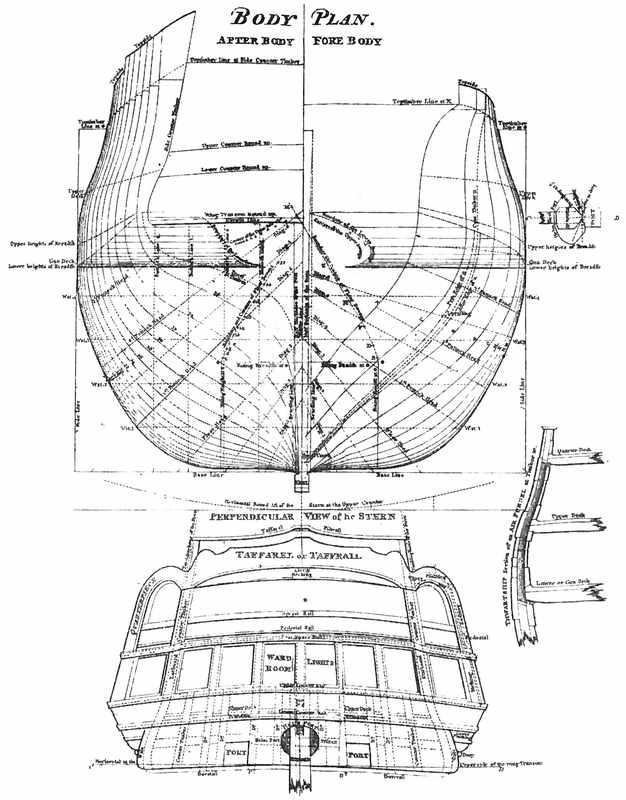
I. Body Plan, etc., of an Early Nineteenth-Century 74-Gun Ship.
(Larger)
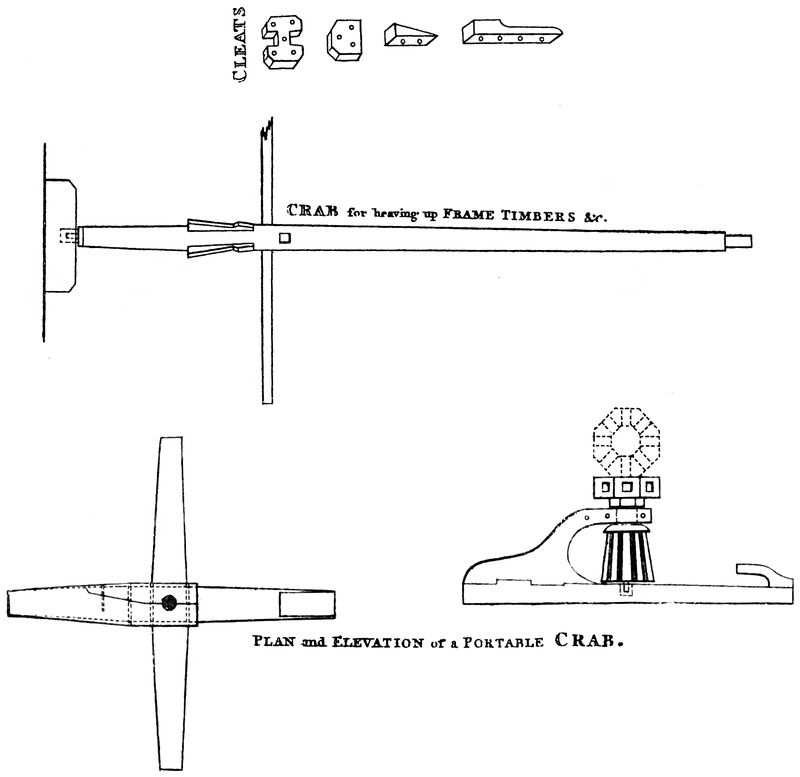
II. A Portable Crab Winch of the Early Nineteenth Century.
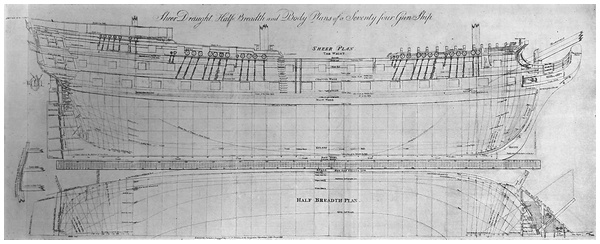
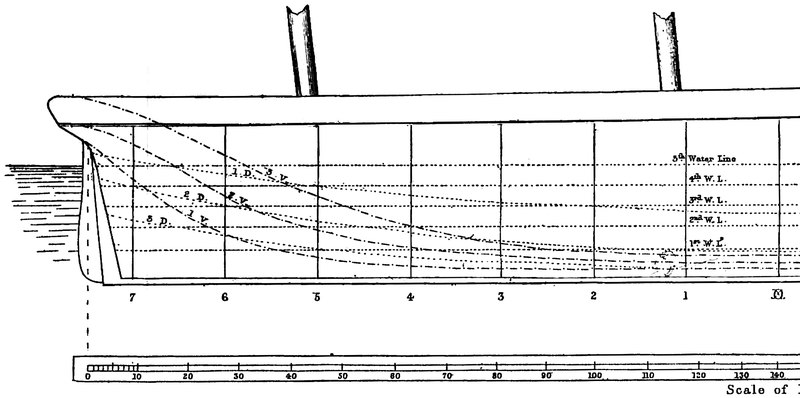
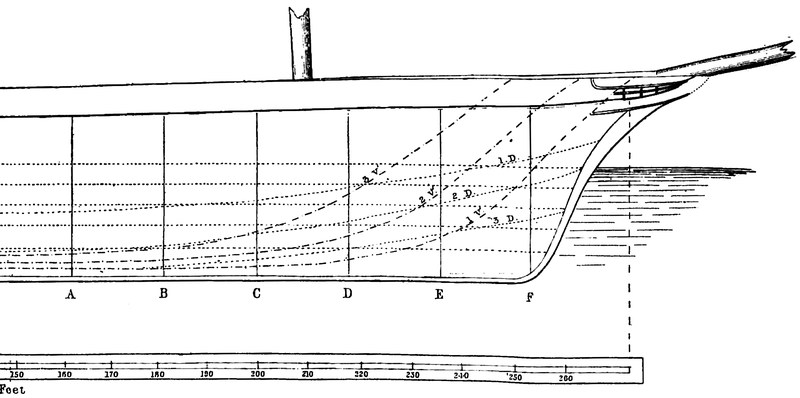
III. Longitudinal Plan of an Early Nineteenth-Century 74-Gun Ship.
(Larger)
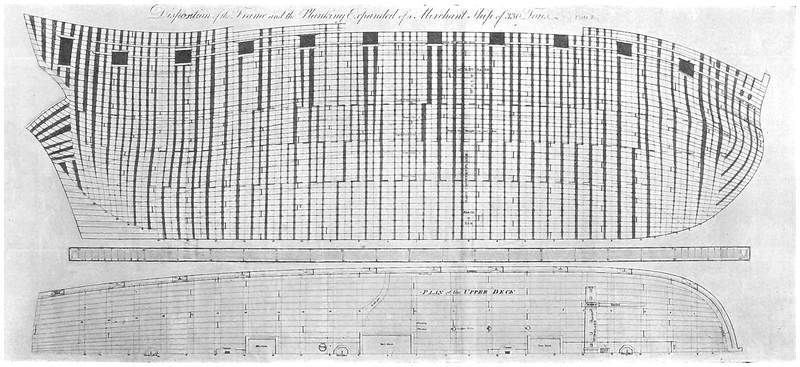
IV. A 330-Ton Merchant Ship of the Early Nineteenth Century.
Upper illustration shows method of framing. Lower illustration gives plan of upper deck, indicating positions of windlass, masts, hatches, capstan, pump, etc. (See Chapter X.)
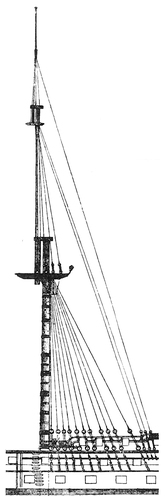
V. Shrouds of Mainmast, Early Nineteenth-Century Ship.
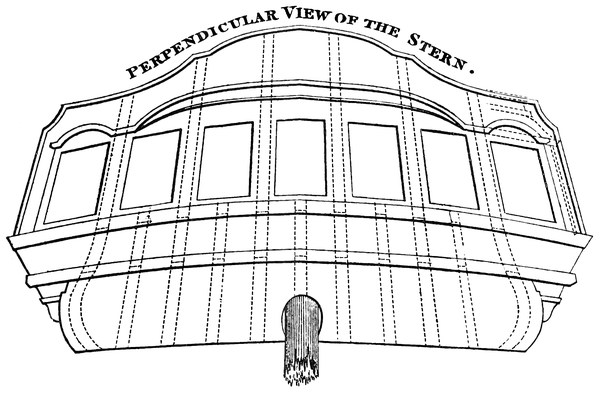
VI. Design of the Stern of an Early Nineteenth-Century 330-Ton Merchant Ship.
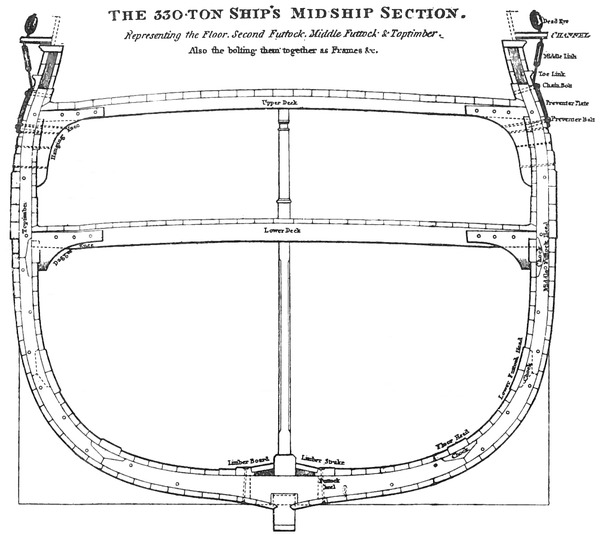
VII. Midship Section of 330-Ton Merchant Ship of the Early Nineteenth Century.
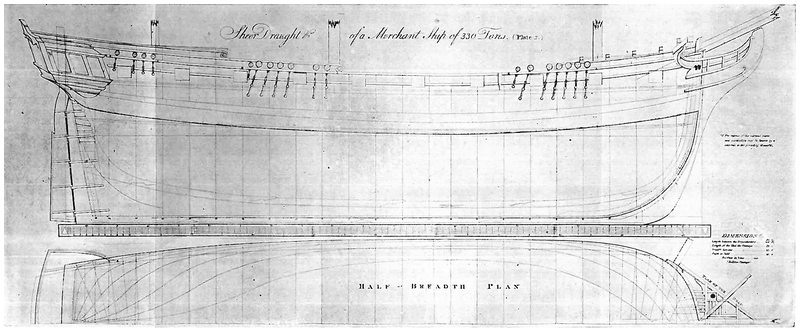
VIII. Longitudinal Plan of an Early Nineteenth-Century 330-Ton Merchantman.
Length between perpendiculars, 108 ft. 3¼ in. Extreme breadth, 27 ft. 6 in. Depth, 12 ft. Length on keel, 82 ft.
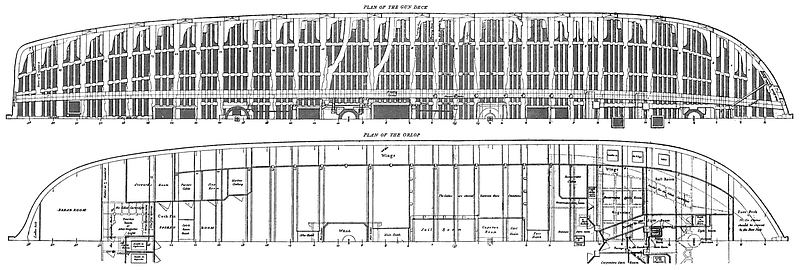
IX. Plans of an Early Nineteenth-Century 74-Gun Ship.
(Larger)
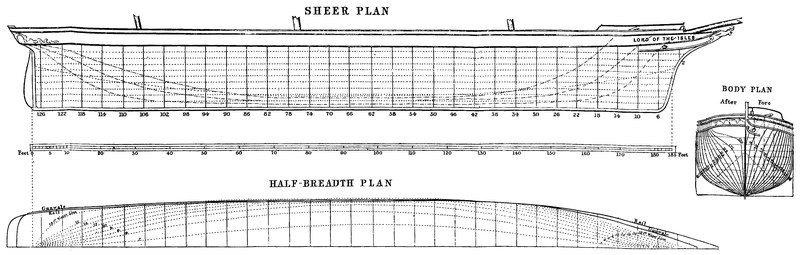
X. Iron Clipper Sailing Ship “Lord of the Isles.”
Length between perpendiculars, 185 ft. Extreme breadth, 29 ft. 1000 tons displacement.
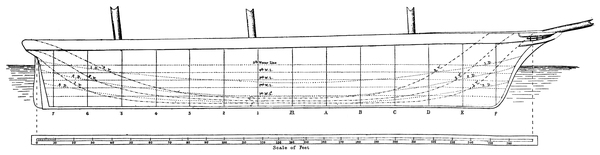
XI. The Wooden Clipper Ship “Schomberg.”
Length between perpendiculars, 262 ft. 6 in. Extreme breadth, 45 ft. 2600 tons burthen.
Plan XI, left and right sides