Front matter
Reading edition
Transcriber’s Note:
The cover image was created by the transcriber and is placed in the public domain.
THE METROPOLITAN MUSEUM
OF ART
SHAPES OF GREEK VASES
NEW YORK
1922
COPYRIGHT, 1922, BY
THE METROPOLITAN MUSEUM OF ART
3
SHAPES OF GREEK VASES
The appreciation of beautiful form, with the ability to create it, which was characteristic of the Greek people, is nowhere better illustrated than in the shapes of their pottery. These vases—the jars, dishes, and cups made for household and religious use—were designed with intelligent skill to serve their purpose in the most effective fashion, and are valued for their fine shapes no less than for their interesting and beautiful decoration.
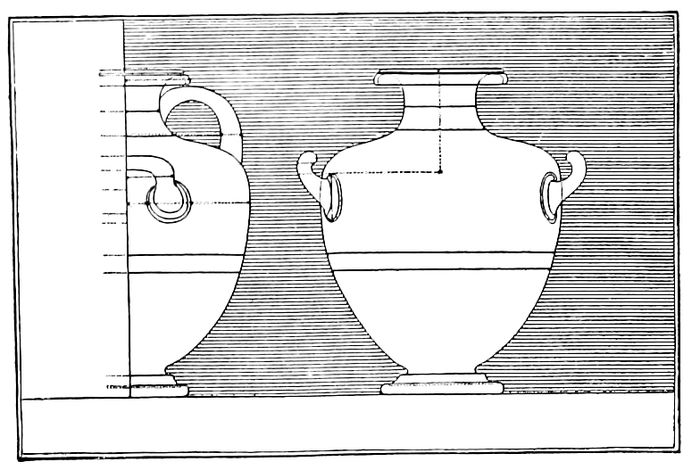
The following reproductions of the most important shapes in use among Athenian potters during the sixth and fifth centuries B. C. will show with what care the relation of the height to the width and the proportion of the parts to the whole were designed with a view to harmonious effect, and how skilfully the forms of the neck, the mouth, and the foot, and the position of the handles were planned for practical use.
The vases have been selected where possible from the collection in this Museum; but when a certain shape was not represented here or conspicuously better examples were available elsewhere, vases in other collections have been included. Unless otherwise stated the vases here illustrated are in this Museum.
5AMPHORA. Two-handled jar for holding provisions.
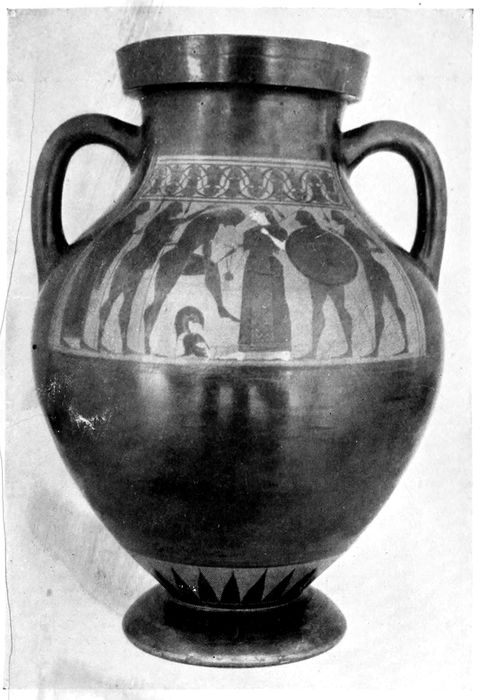
Black-figured type with heavy lip and cylindrical handles. The decoration is usually painted in panels, back and front, the rest of the body being black.
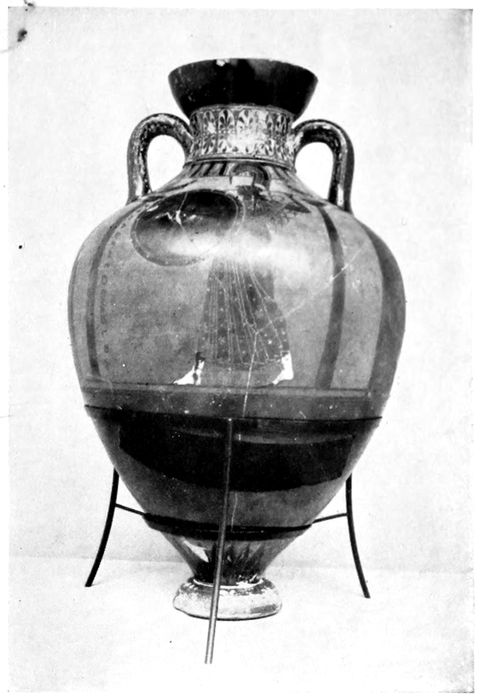
Panathenaic amphora given as a prize in the games at Athens.
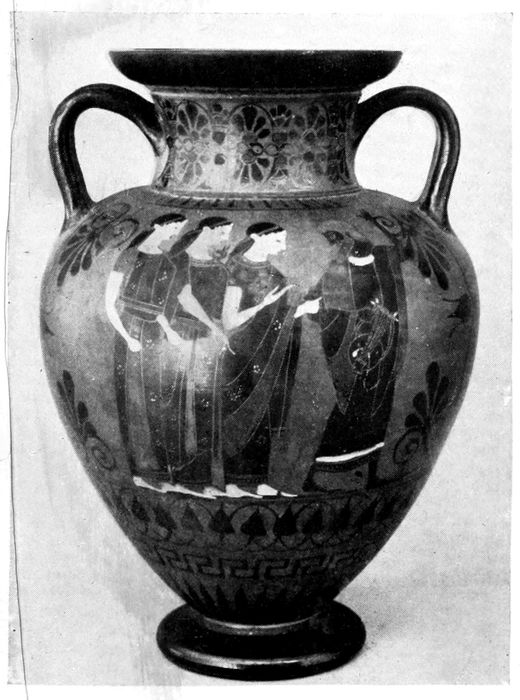
Black-figured type with curving lip and ribbed handles. The decoration extends over the surface of the vase.
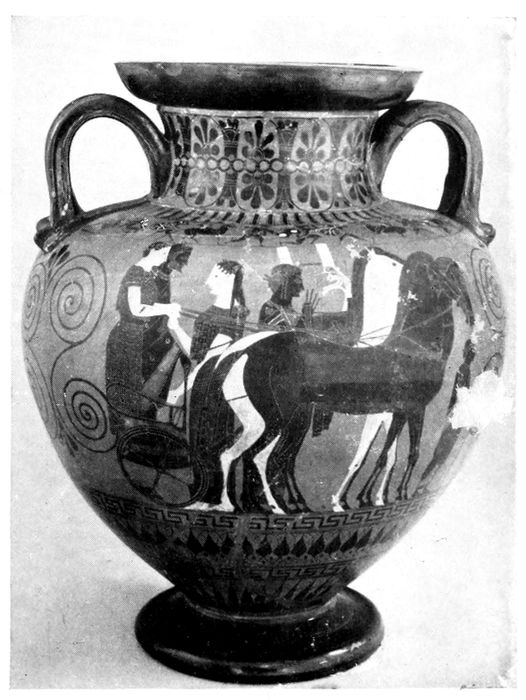
Black-figured amphora of the same general type as the preceding, but broader and heavier.
6
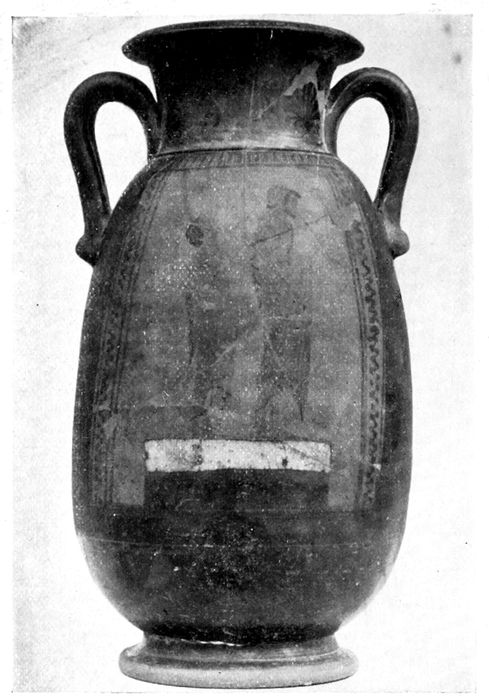
Amphora with short neck and long body. The form of the handles is copied from metal technique.
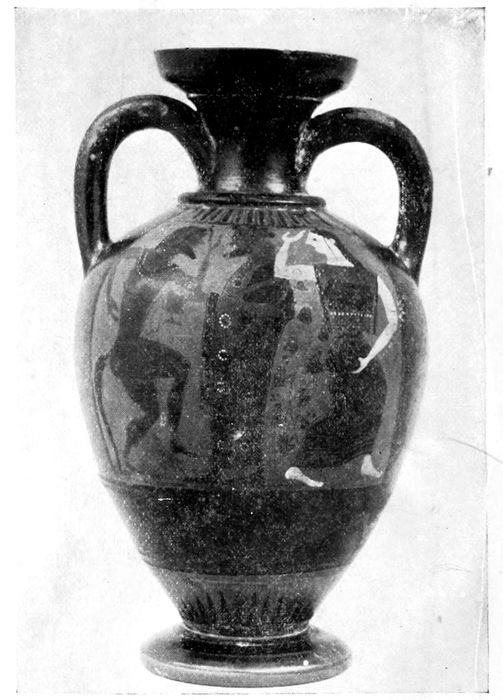
Amphora with high, finely curving handles and black figures on a white body. In the Museum of Fine Arts, Boston.
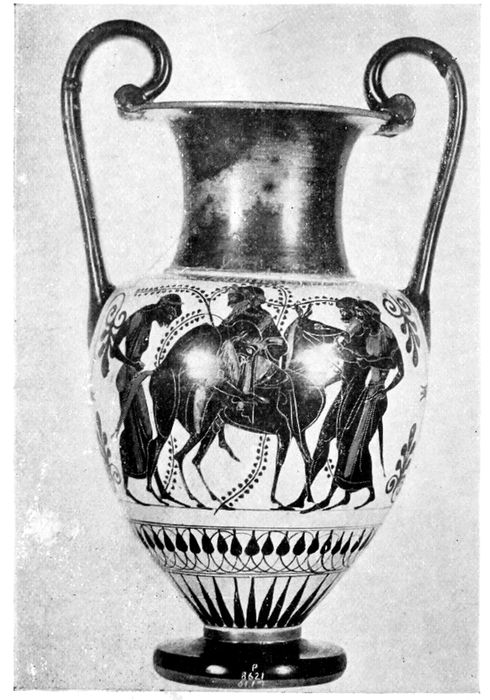
Black-figured amphora; slender neck and egg-shaped body. A rather unusual form. Owned by Albert Gallatin.
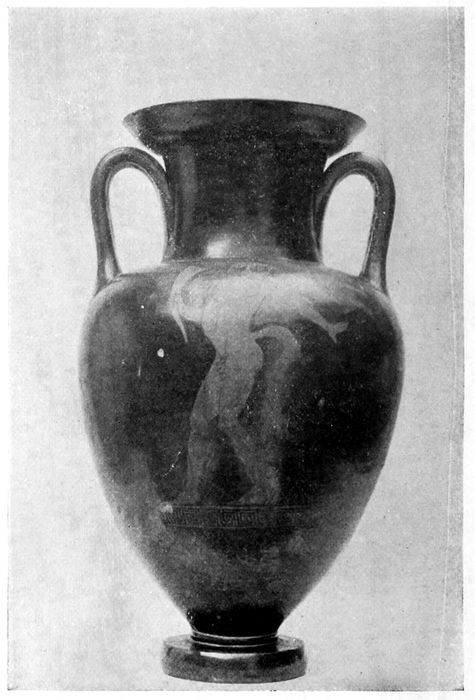
Nolan amphora with elongated neck and egg-shaped body. Form characteristic of the red-figured technique of the early fifth century.
7
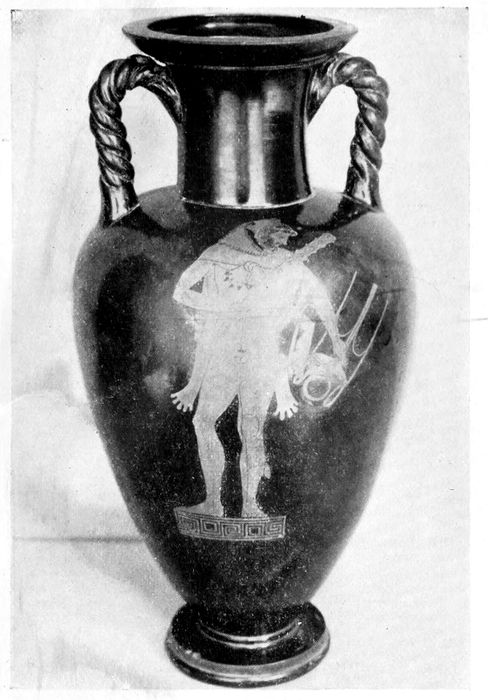
Red-figured amphora with twisted handles, of the first half of the fifth century. There is a decided advance toward slenderness and grace.
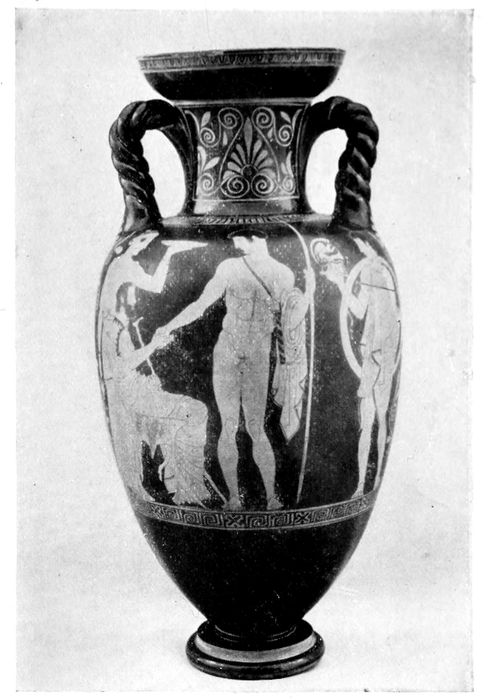
Amphora with narrow neck and pointed body.
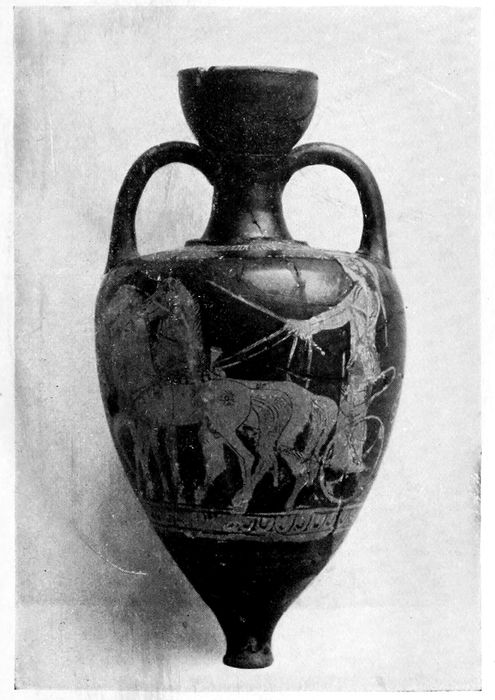
Red-figured amphora with twisted handles, of the second half of the fifth century.
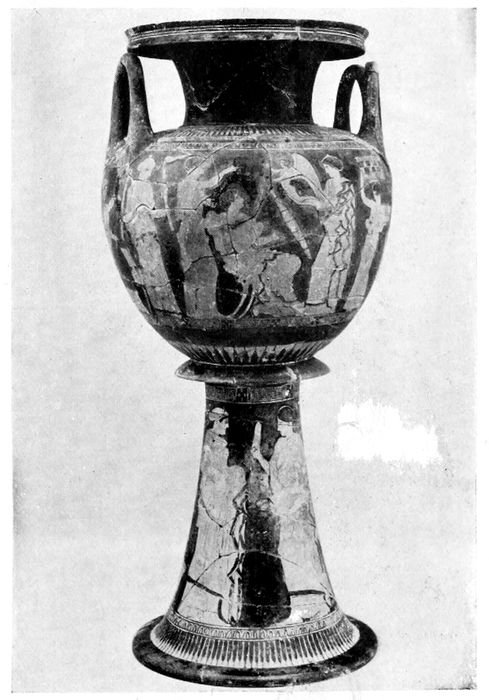
Marriage-lebes with stand, used to hold water for the nuptial bath.
8STAMNOS. A development of the amphora.
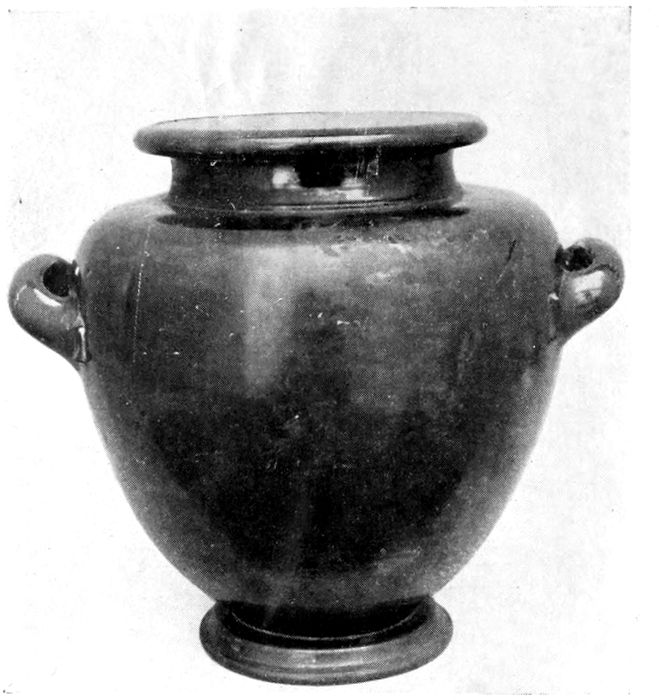
Stamnos. Type characteristic of the early fifth century, with rounded body and short neck.
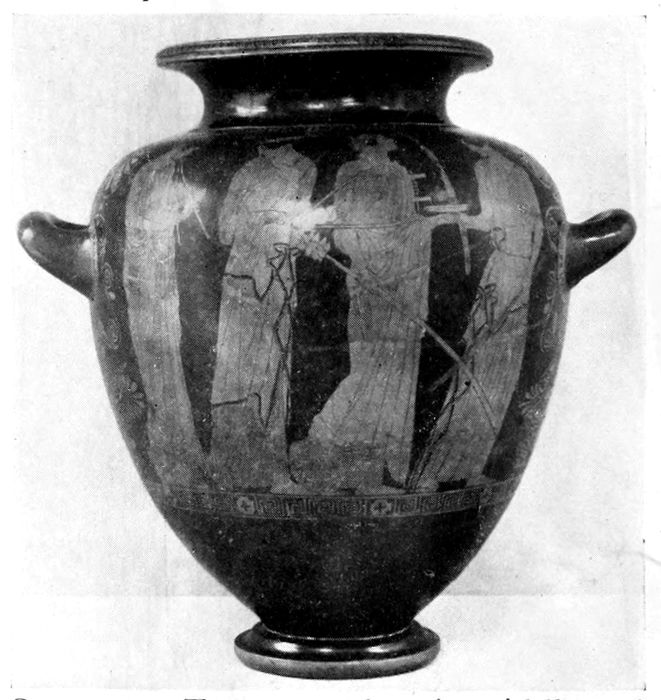
Stamnos. Type prevalent in middle and later fifth century, with more elongated body, smaller foot, and higher neck.
LOUTROPHOROS. Water-jar for the bride’s ceremonial bath.
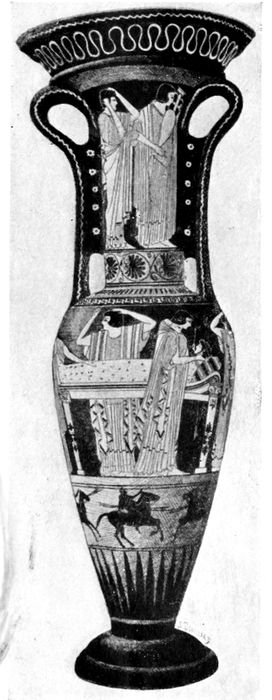
Earlier type with heavy mouth and foot, and handles joined midway to the neck. In the Louvre, Paris.
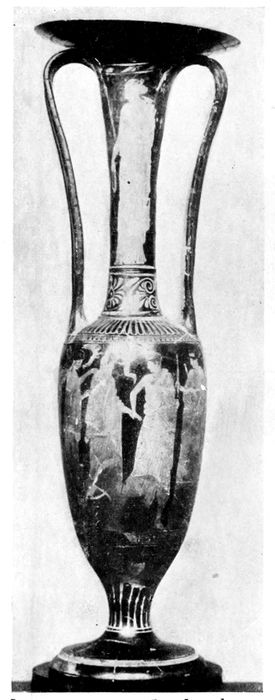
Later type of slenderer proportions, finely curved mouth, foot, and handles. In the Museum of Fine Arts, Boston.
9KRATER. Vessel for mixing water and wine. It was from the krater that the wine was ladled into the cups.
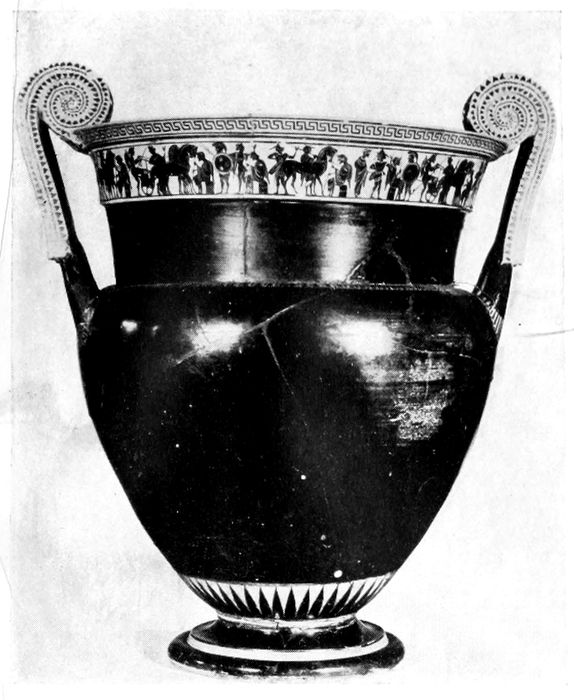
Krater with volute handles decorated in the black-figured technique. In the Museum of Fine Arts, Boston.
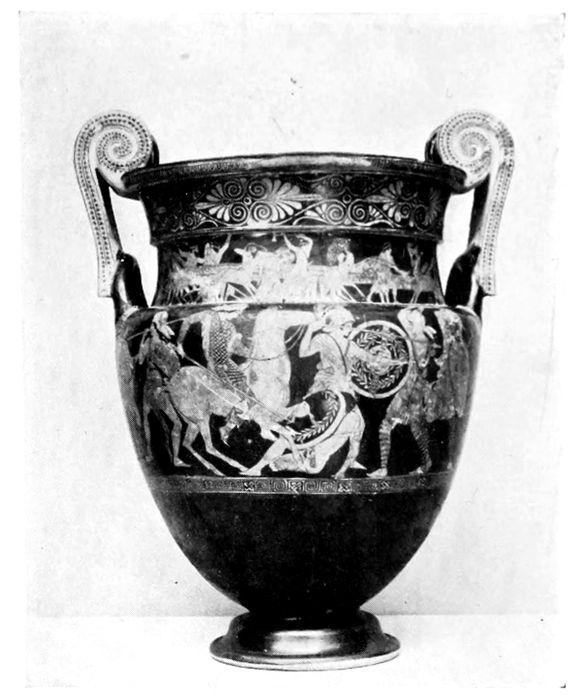
Column krater, so called from the columnar shape of the handles.
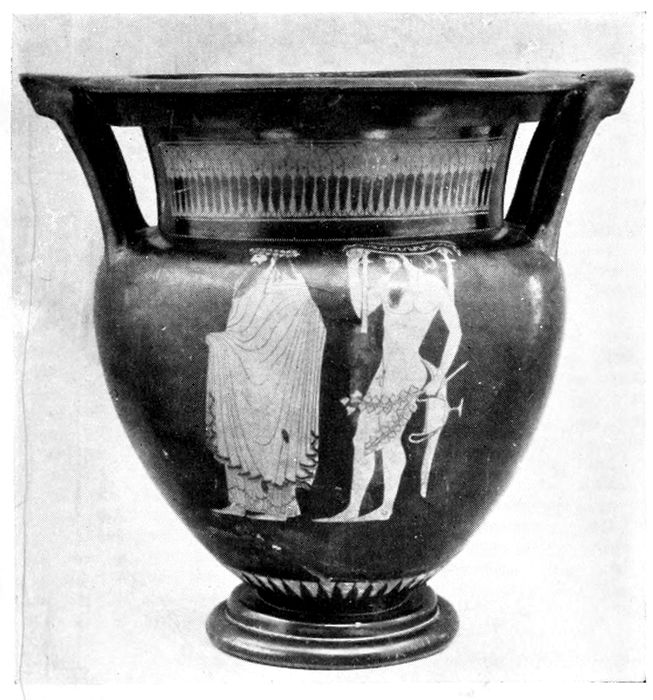
Krater with volute handles in the red-figured technique.
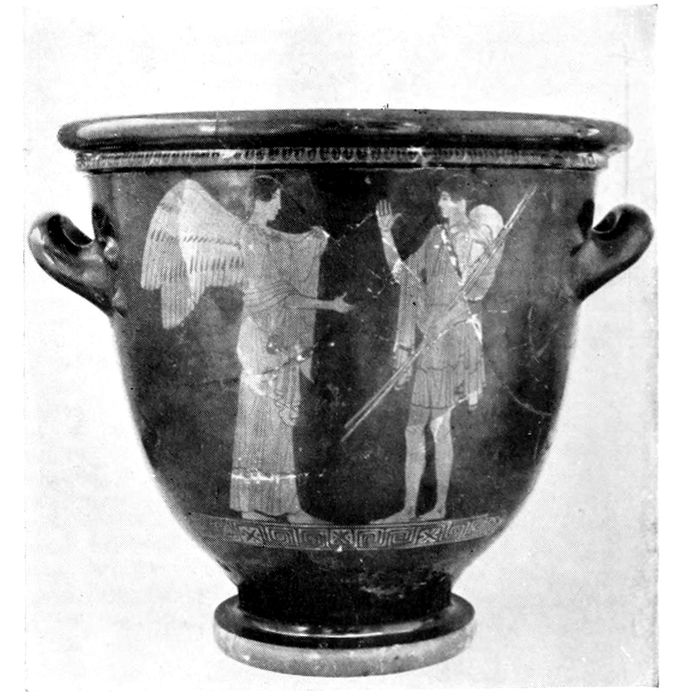
Bell krater, shaped like an inverted bell. This type and the following are characteristic of the red-figured style. Both have handles adapted for carrying the vessel when full.
10
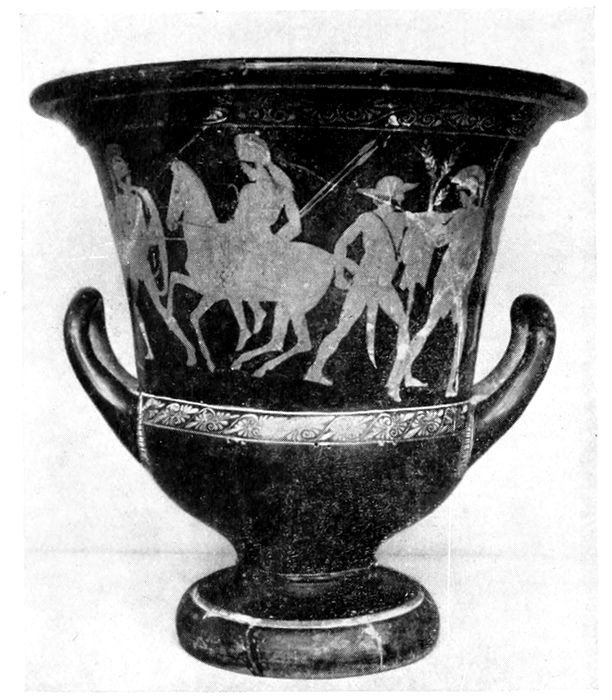
Kalyx krater.
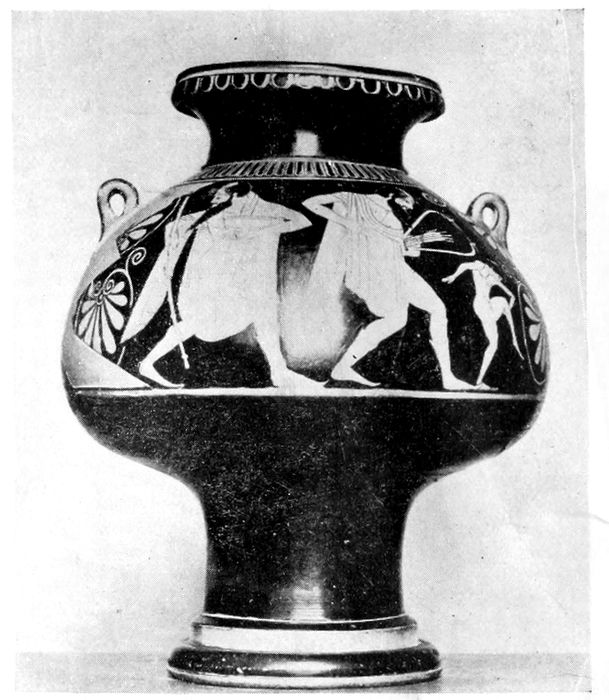
Psykter, vessel for cooling wine. It was placed in another receptacle filled with snow or cold water. In the British Museum.
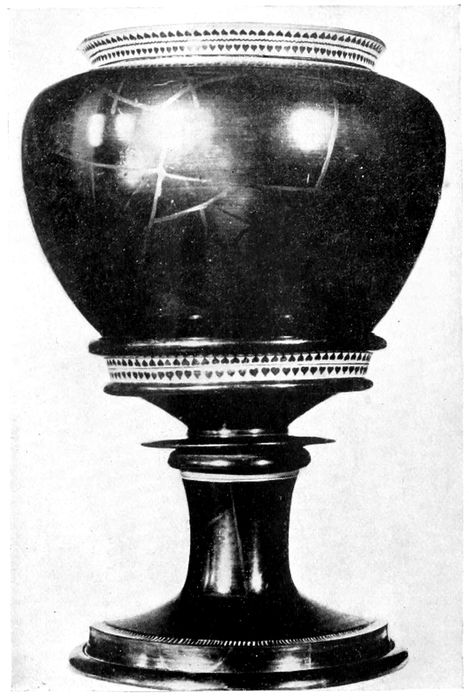
Deinos or lebes, vessel for wine or other liquids, set on a stand. The whole makes a harmonious composition. In the Museum of Fine Arts, Boston.
11HYDRIA. Water-jar having three handles. The handle at the back was used for pouring or for carrying the vessel; the handles at the sides, for lifting.
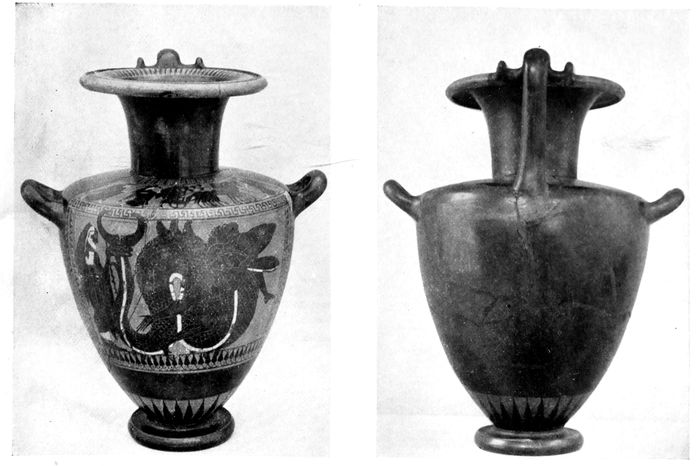
Hydria of the black-figured type having the handle at the back much larger than those at the sides, and the neck at a sharp angle with the body.
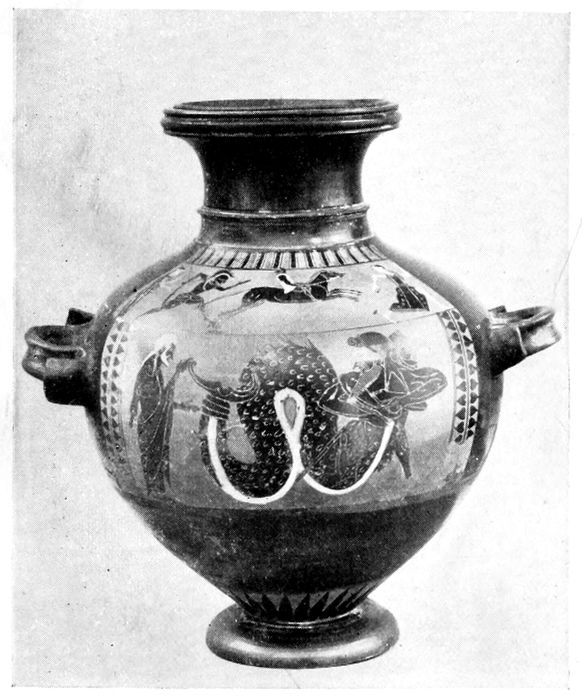
Hydria with rounded body. The handles and mouldings suggest imitation of metal technique.
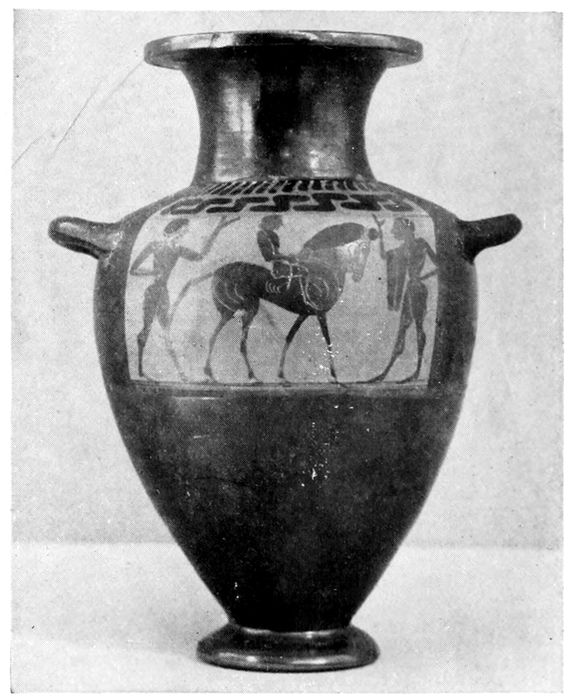
Hydria with more strongly curving shoulder and conical foot.
12
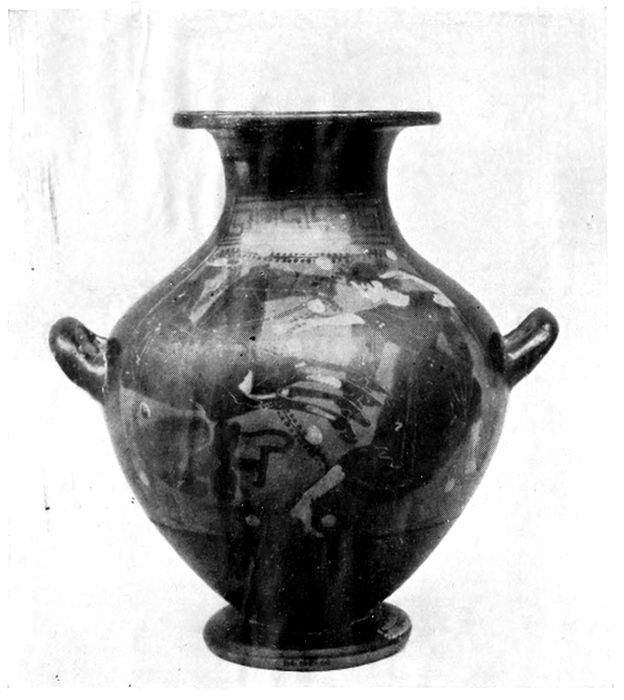
Black-figured hydria with continuous curve for neck and body, broad foot, and handles placed rather low.
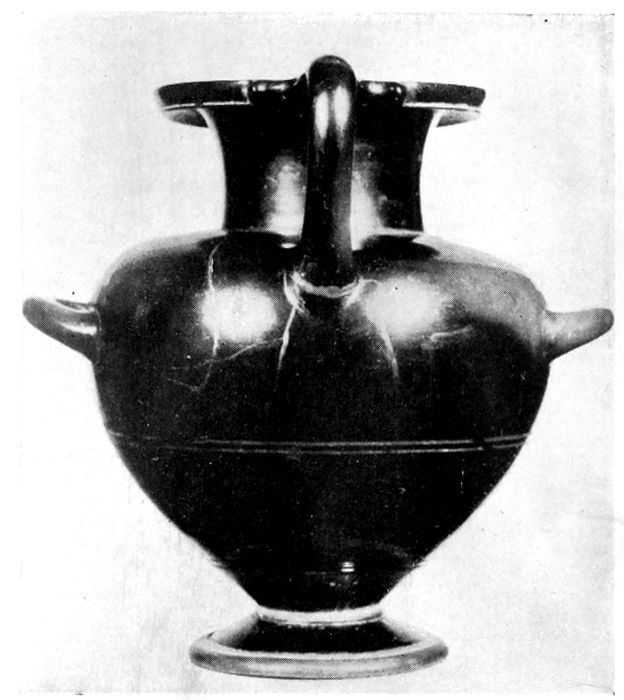
Black-figured hydria with neck distinctly marked and shoulder and body forming a continuous curve. In the Museum of Fine Arts, Boston.
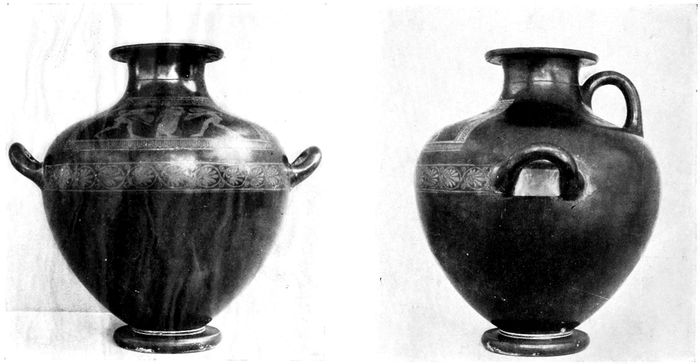
Hydria of red-figured type showing the acme of development of this shape.
13
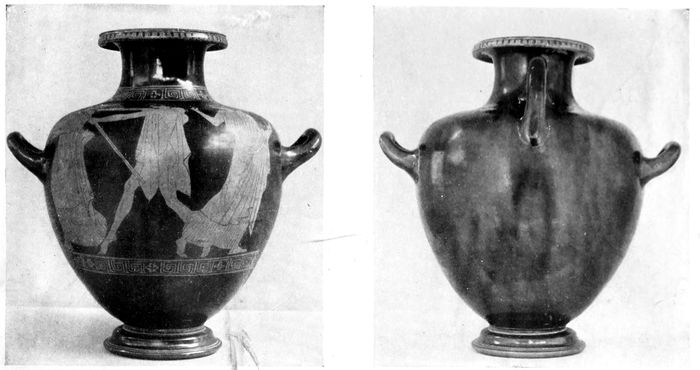
Hydria of the second half of the fifth century, slightly slenderer than the preceding, with finely curving foot.
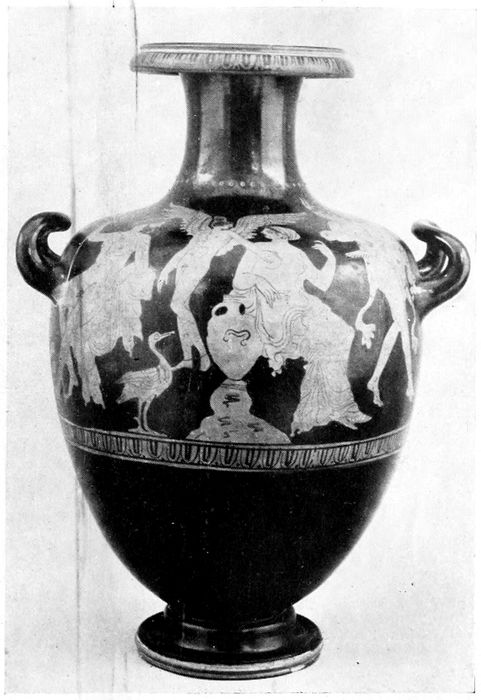
Hydria of the late red-figured type with egg-shaped body, broad lip, and side handles curving upward. Note the deterioration in the curve of the foot.
14OINOCHOË. Wine-jug.
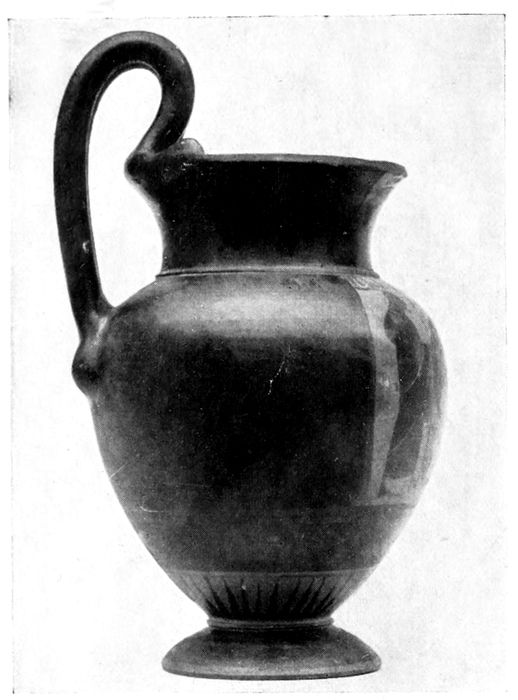
Oinochoë with round mouth and high handle, having the neck distinct from the body.
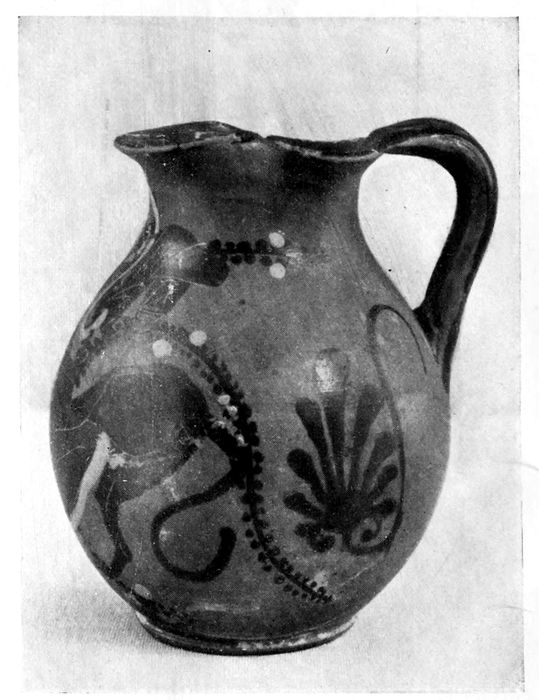
Oinochoë with trefoil lip, short handle, and continuous curve for neck and body.
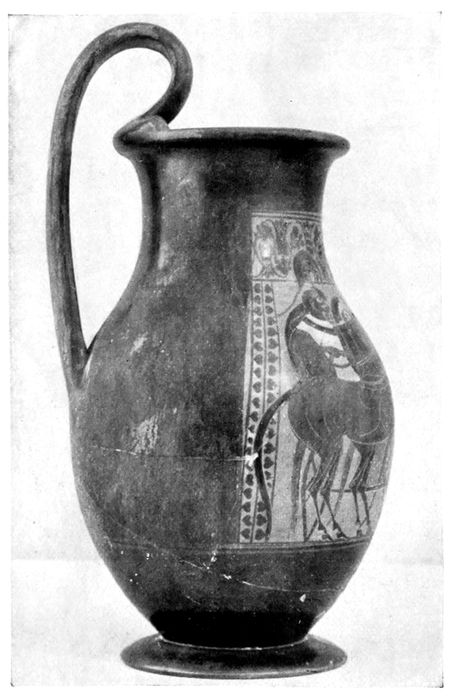
Oinochoë with round mouth and high handle. The neck and body form a continuous curve.
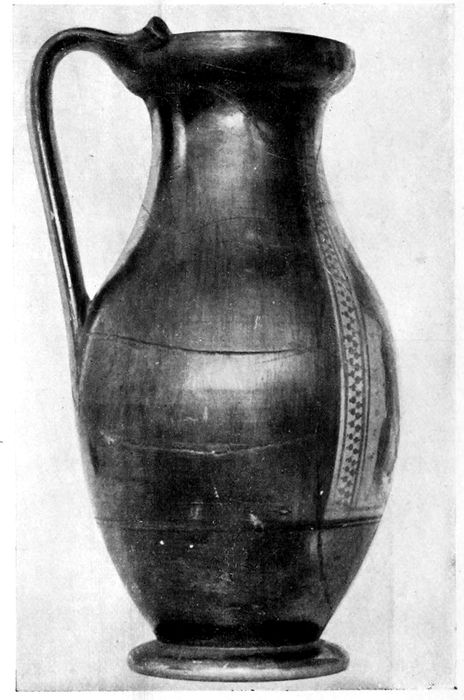
“Olpe,” oinochoë with round mouth and continuous curve for neck and body.
15
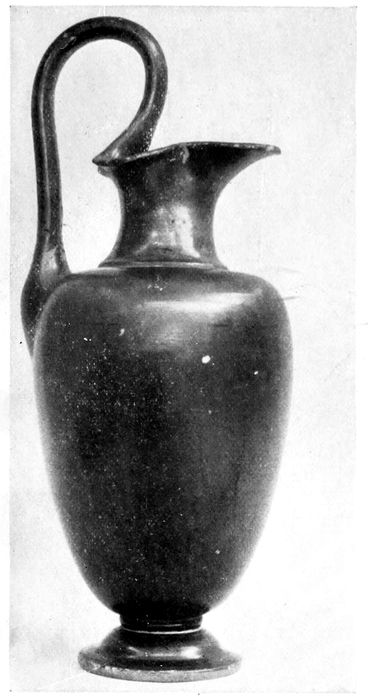
Oinochoë with high handle, trefoil lip, and egg-shaped body, a particularly graceful form. In a private collection, New York.
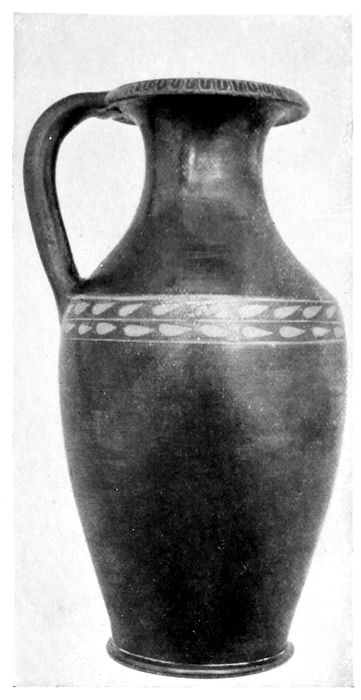
“Olpe,” oinochoë with round mouth and low foot.
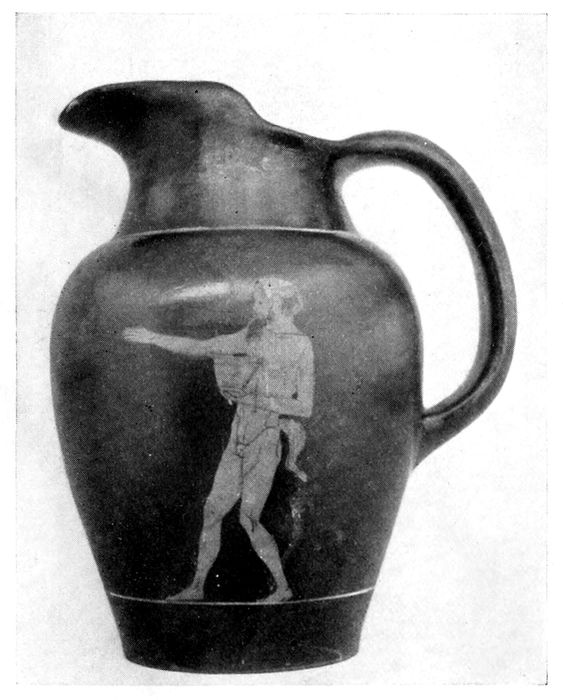
Oinochoë with central lobe of trefoil mouth accentuated, and no foot.
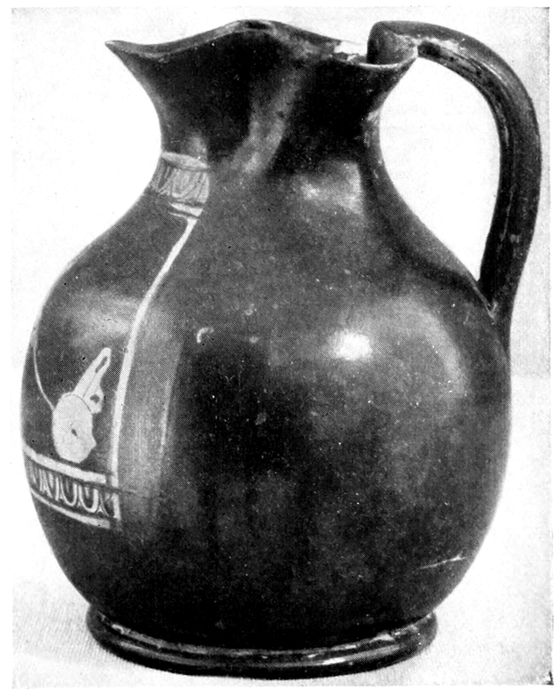
Oinochoë of the second half of the fifth century; squat body, delicately curved trefoil lip.
16
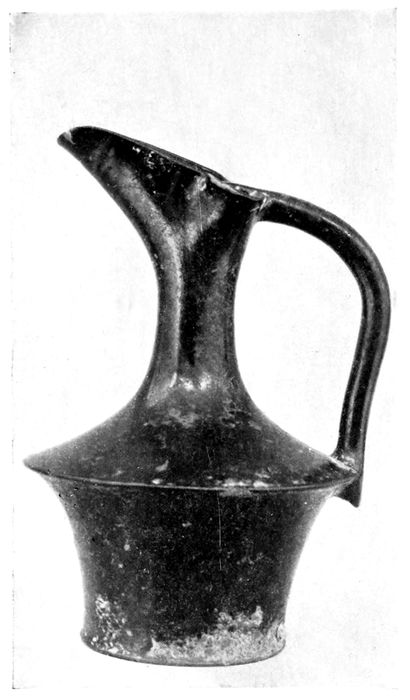
Oinochoë with sharp division between shoulder and body.
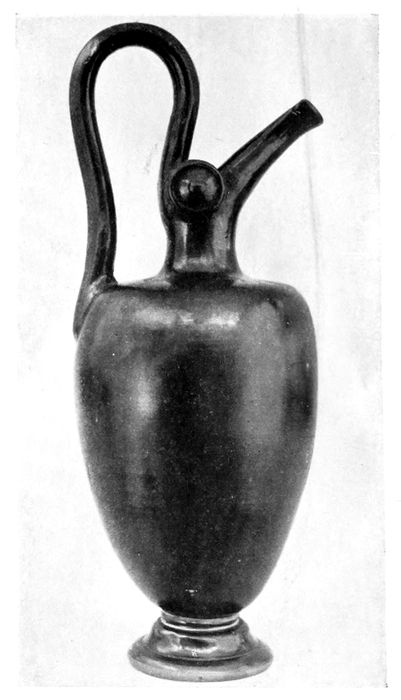
Oinochoë with finely shaped mouth and broad body.
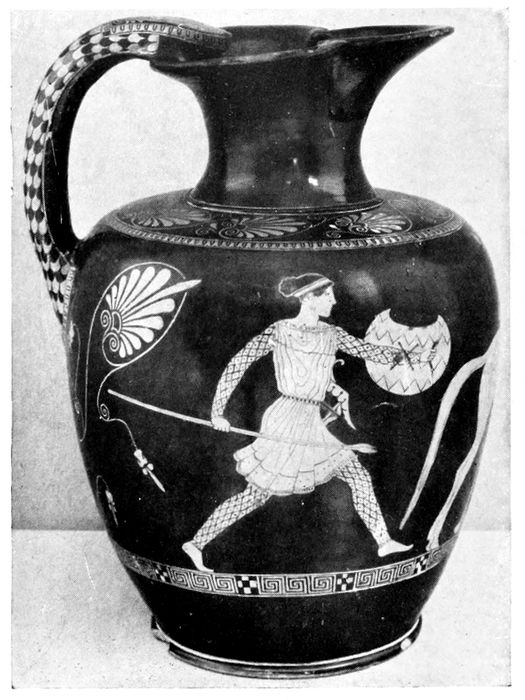
Oinochoë with beaked spout and disk at the side, a variation of the usual trefoil mouth.
17DRINKING CUPS—KYLIX. The kylix with two handles and high foot was the favorite cup shape of the Athenian potters. The difficulty of decorating the strongly curving surface of the body invited the best efforts of contemporary vase painters.
18
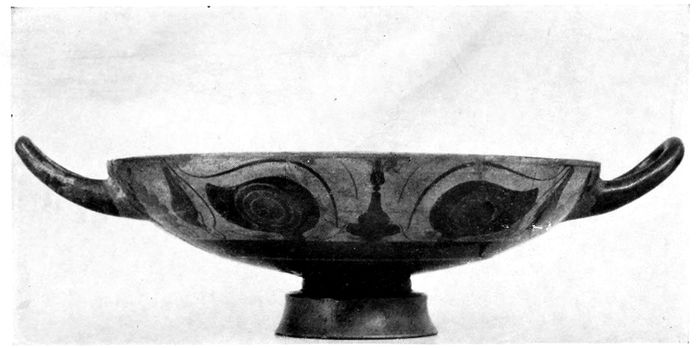
Kylix of “Ionic” form with short foot of rectangular profile connected with the body by a moulding.
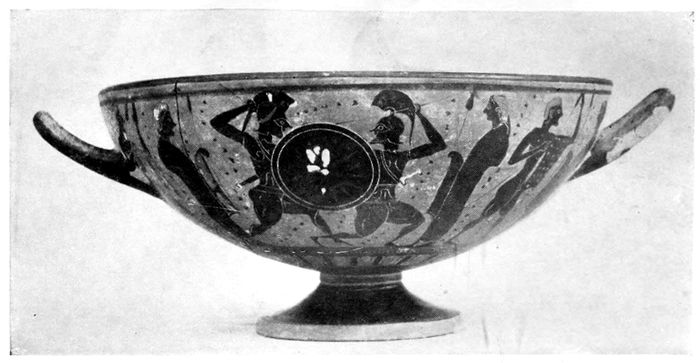
Black-figured kylix with low foot. The deep bowl has no separate lip.
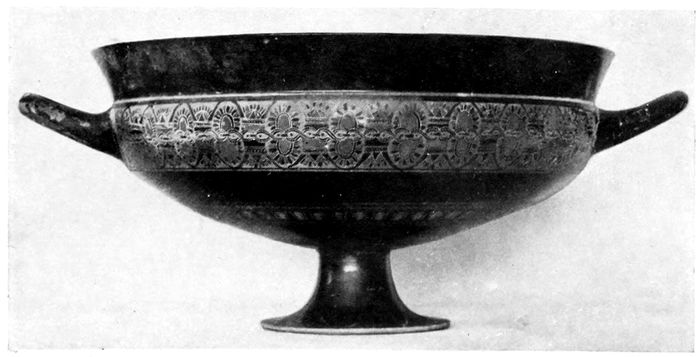
Black-figured kylix with deep bowl, offset lip, and low foot.
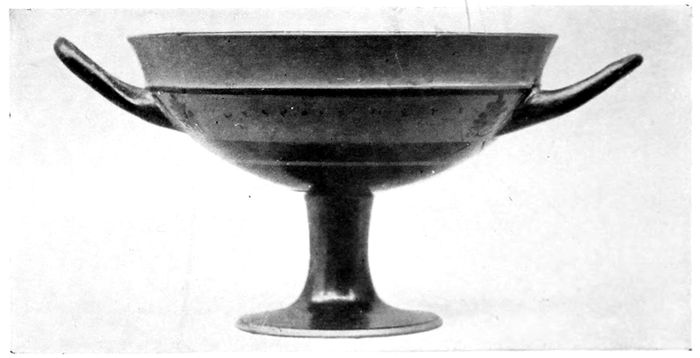
Black-figured kylix with offset lip and high foot.
19
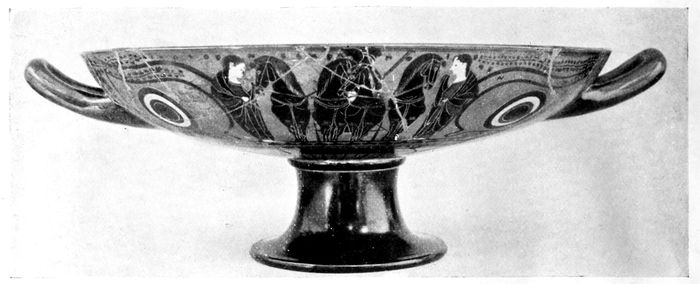
Black-figured kylix with graceful bowl and heavy foot.
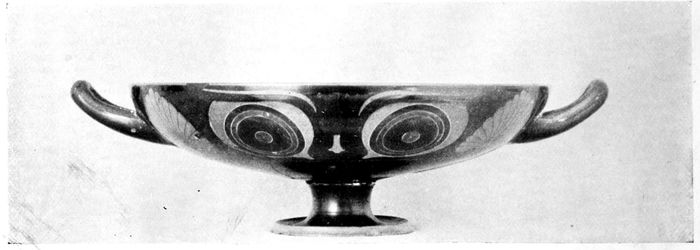
Kylix of form intermediate between the black-figured and red-figured types.
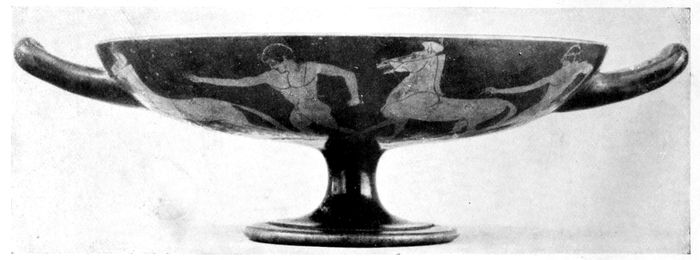
Kylix of red-figured type with flat bowl, slender high foot, and horizontal handles curving upward at the ends. The proportion of the bowl, foot, and handle to one another is more harmonious than in the preceding example.
21
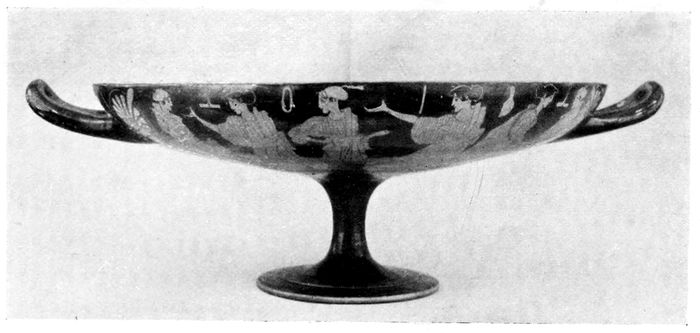
Kylix in use during the best period, showing the highest development of this shape. The beauty of the unbroken curve between the edge of the lip and the bottom of the foot is the result of a century of continued study.
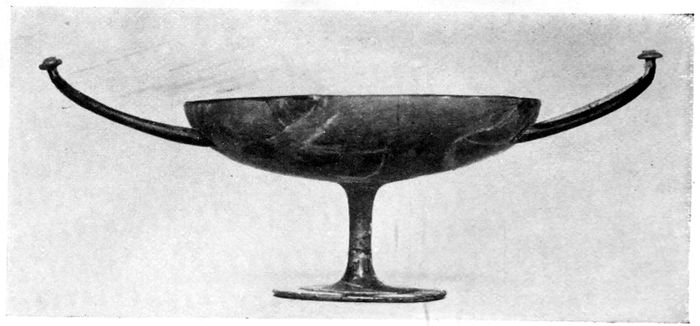
Kylix with “wishbone” handles, a very graceful, slender form in use in the later fifth century. In the British Museum.
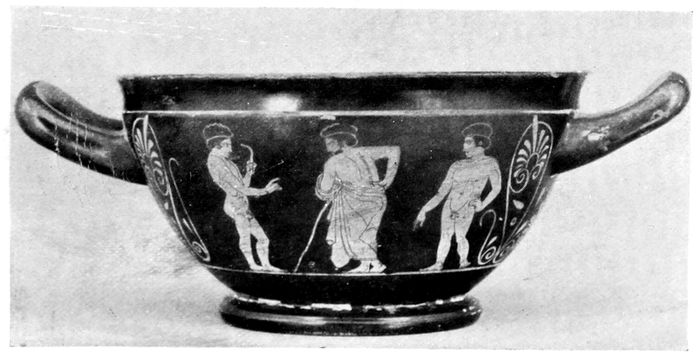
Red-figured kylix with deep bowl, offset lip, and flat foot. A shape intermediate between the kylix and the skyphos.
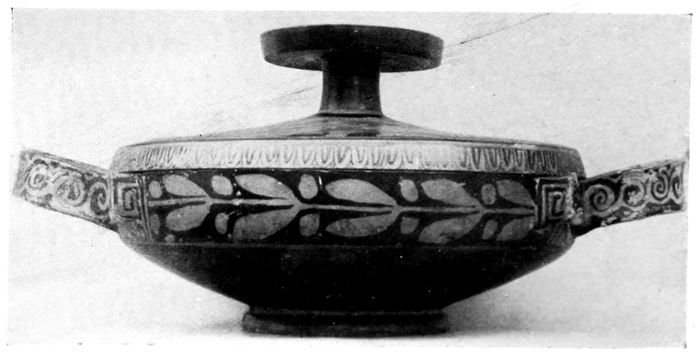
Lekane, covered dish of uncertain use. It often appears in vase paintings of toilet scenes.
22DRINKING CUPS—KANTHAROS.
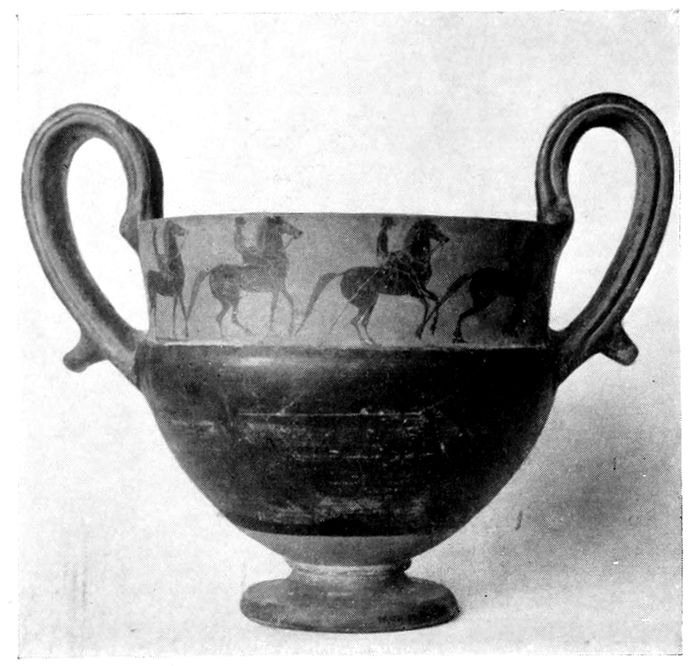
Kantharos of black-figured type with offset lip and high curving handles.
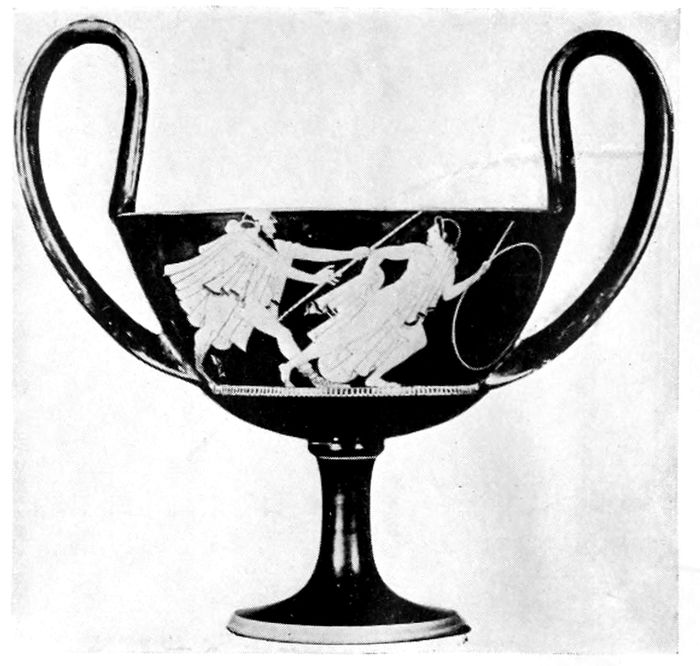
Kantharos with high foot, tall handles, and both bowl and lip forming a continuous curve. Perhaps one of the most beautiful shapes designed by the Athenian potters. In the Museum of Fine Arts, Boston.
DRINKING CUPS—SKYPHOS.
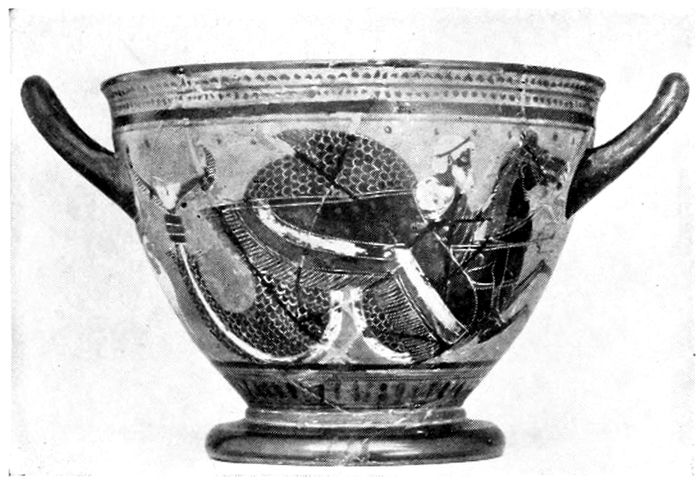
“Skyphos,” a deep drinking cup with a flat foot and strongly curving handle.
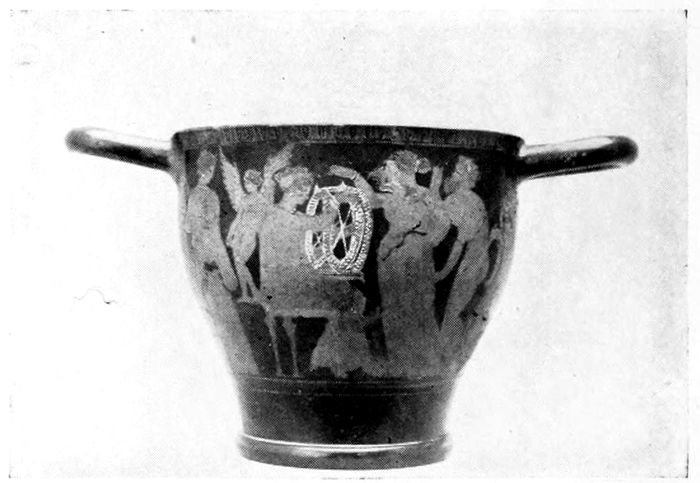
“Skyphos” or “Kotyle,” a deep drinking cup with flat foot and small horizontal handles.
23DRINKING CUPS—OTHER FORMS.
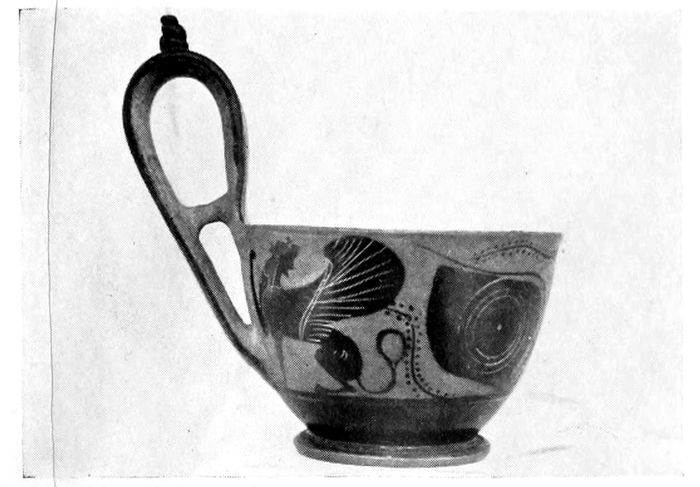
Kyathos, ladle used for dipping wine from the krater into the drinking cups.
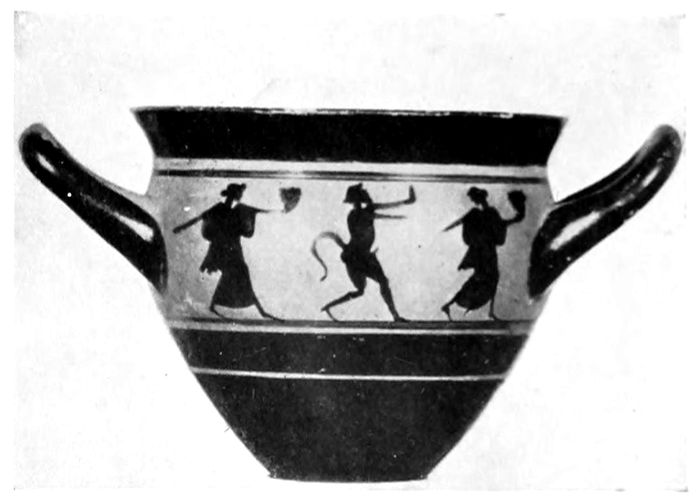
Small cup with offset lip, two handles, and no foot. In the Museum of Fine Arts, Boston.
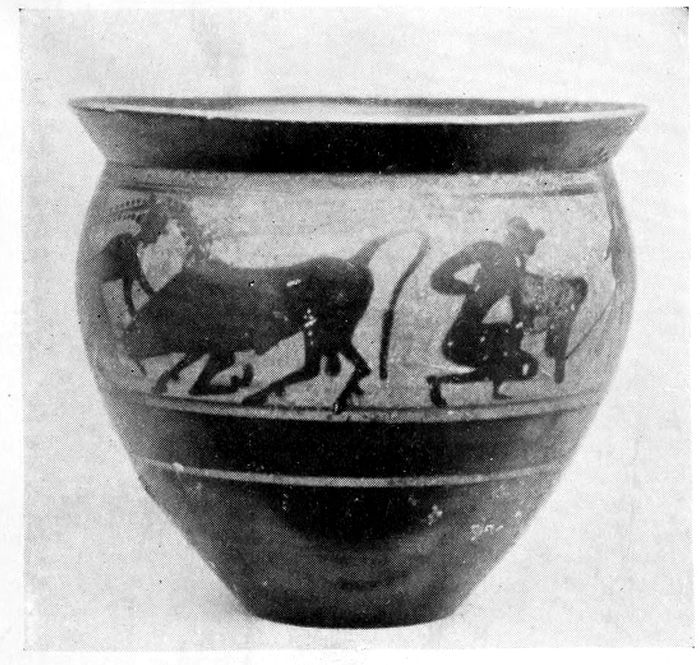
Small cup without handles.
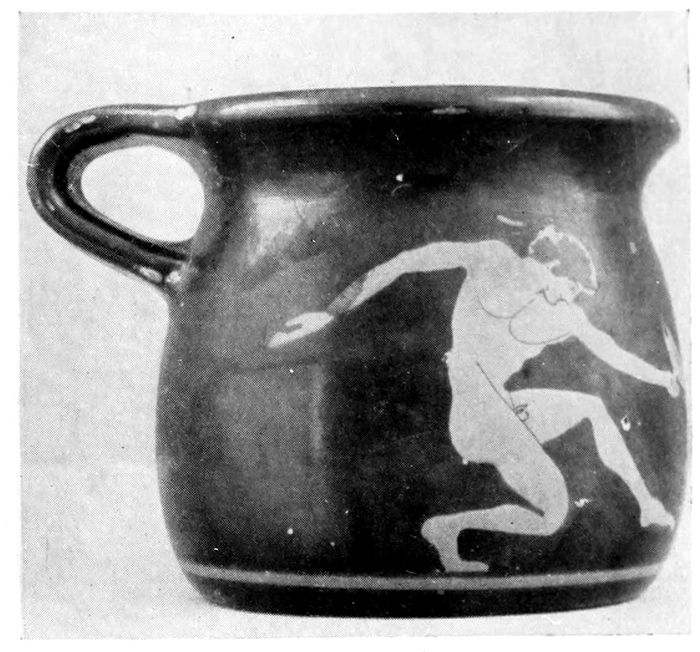
One-handled cup with offset lip and no foot.
25
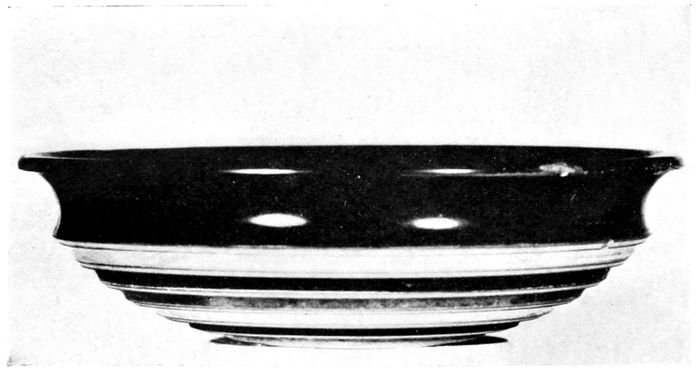
Phiale, shallow bowl with a central boss. This shape was used especially for libations. In the Museum of Fine Arts, Boston.
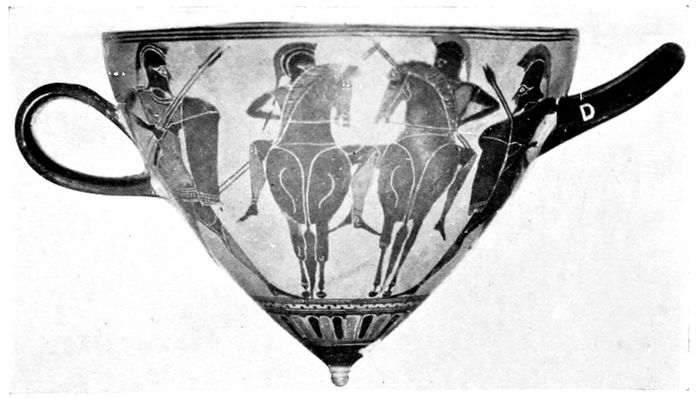
Mastos, so called because the shape resembles a woman’s breast. In the British Museum.
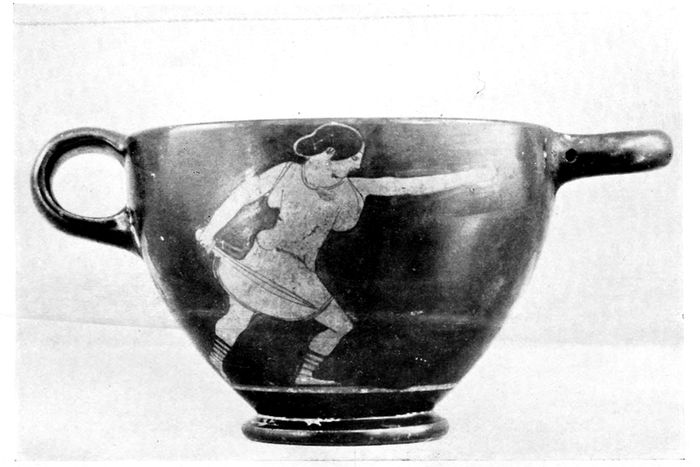
Cup with two handles, one horizontal and the other vertical.
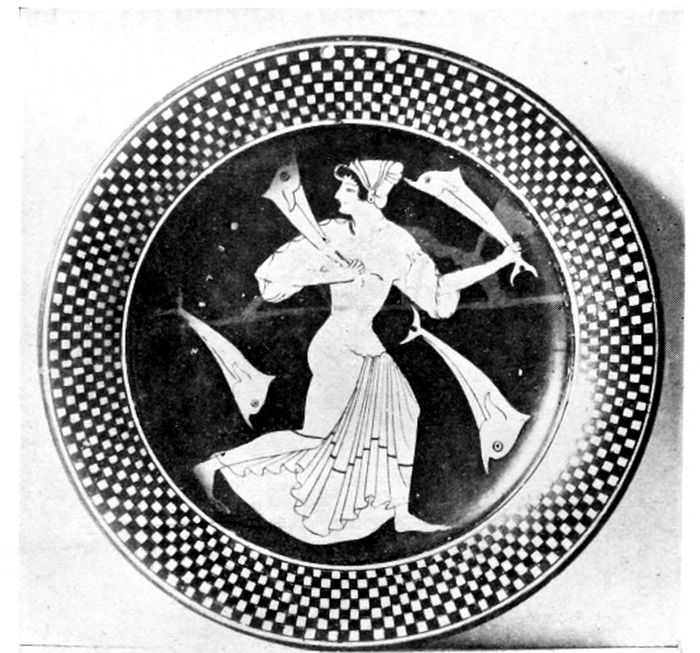
Pinax, a flat plate. Note how well the decoration is adapted to the space. In the Museum of Fine Arts, Boston.
26MOULDED VASES. The bodies of these vases were made in moulds in the form of human and animal heads while the mouths were shaped on the wheel. Such moulds, however, were not used for producing hundreds of identical vases, as nowadays.
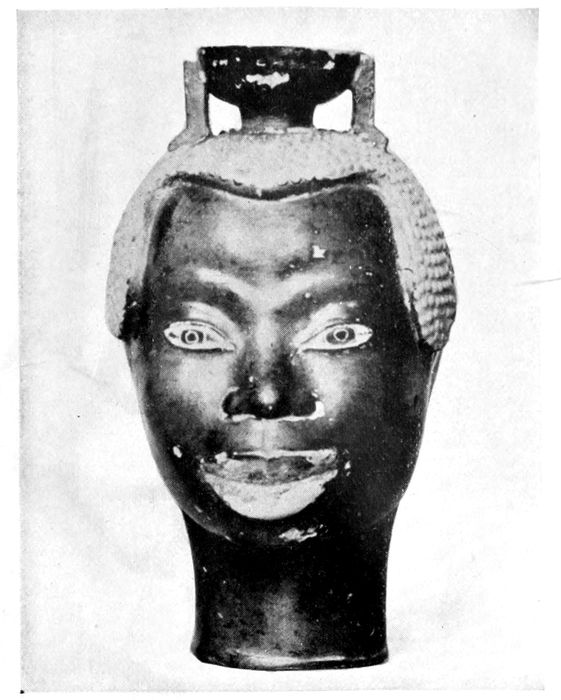
Aryballos in the shape of a negro’s head. In the Museum of Fine Arts, Boston.
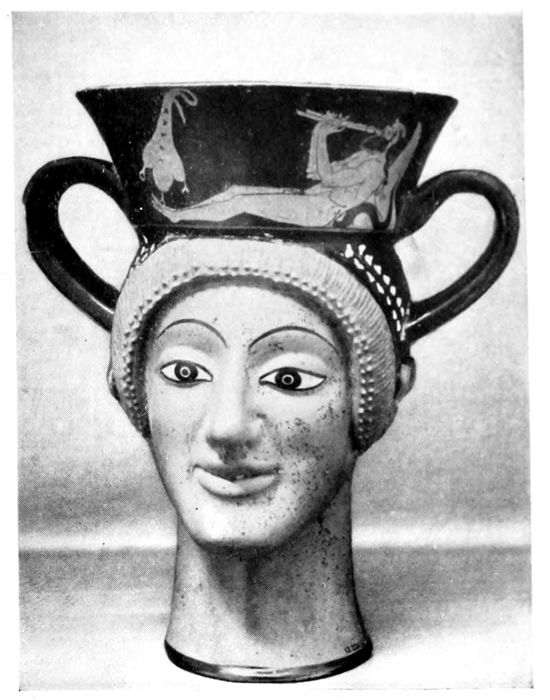
Cup in the form of two female heads, back to back.
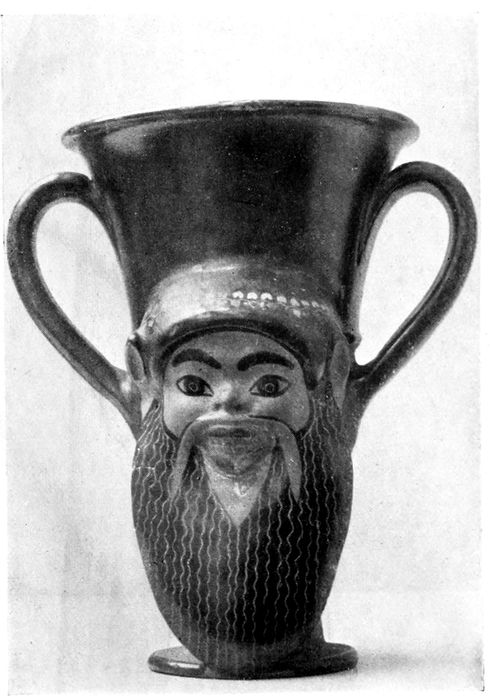
Cup in the form of a Seilenos head. Owned by Albert Gallatin, New York.
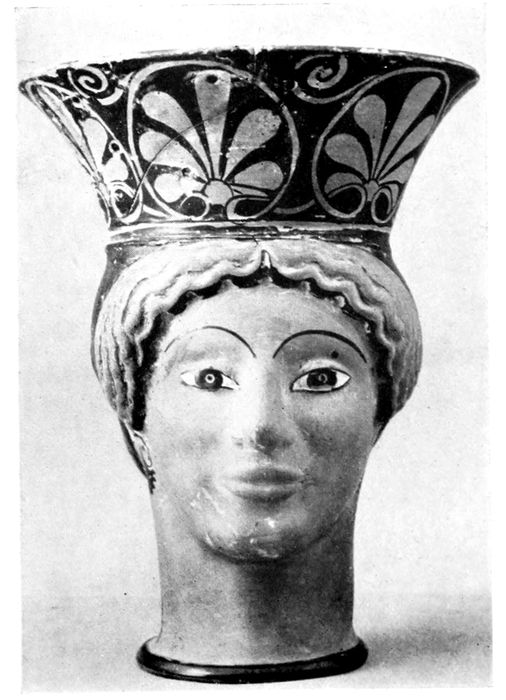
Cup without handles in the form of a woman’s head.
27
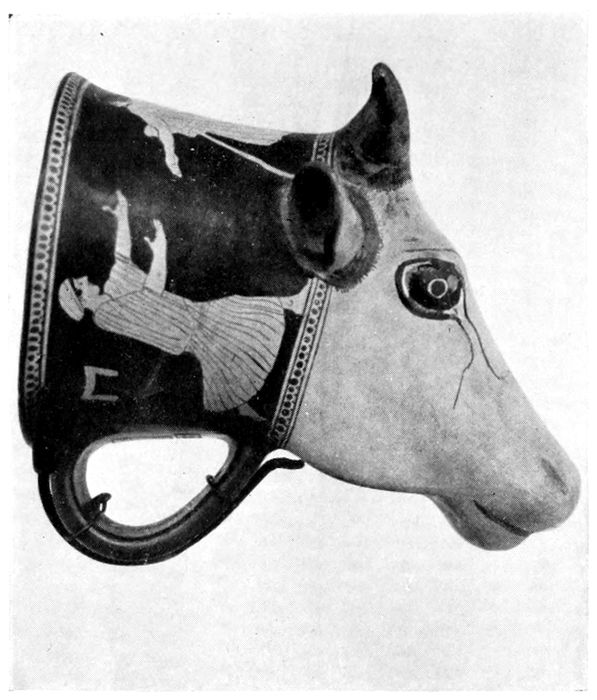
Cup in the form of a cow’s head.
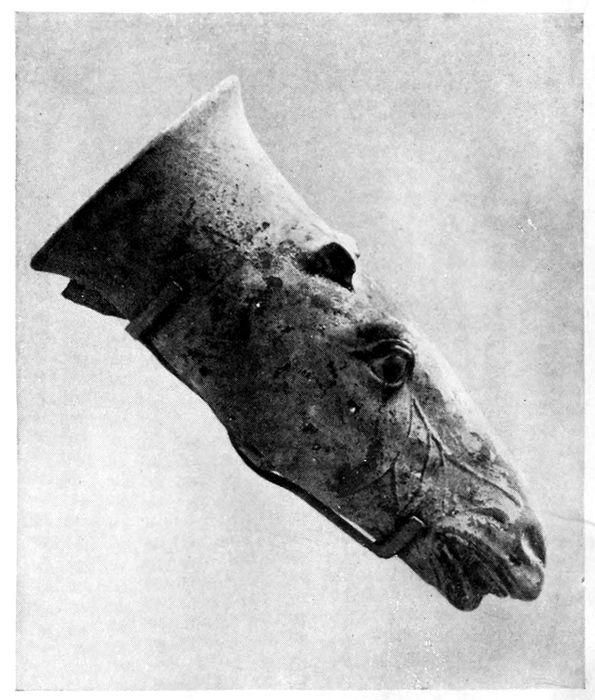
Cup in the form of a horse’s head.
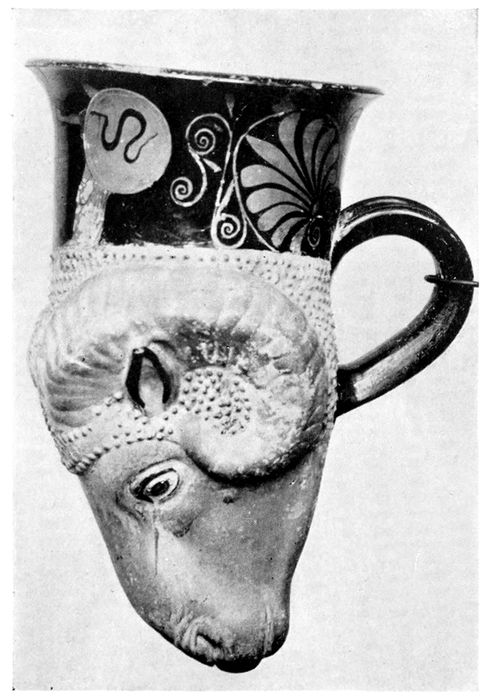
Cup in the form of a ram’s head. In the Museum of Fine Arts, Boston.
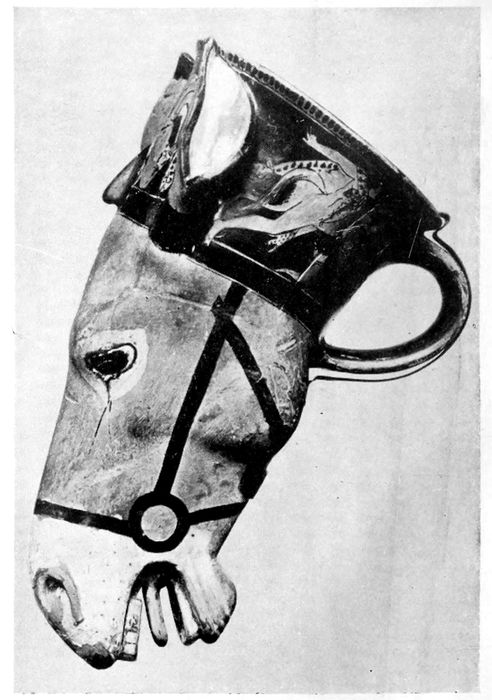
Cup in the form of a mule’s head. In the Museum of Fine Arts, Boston.
28LEKYTHOS. Oil-jug. The narrow neck and deep mouth were designed to make the liquid flow out slowly.
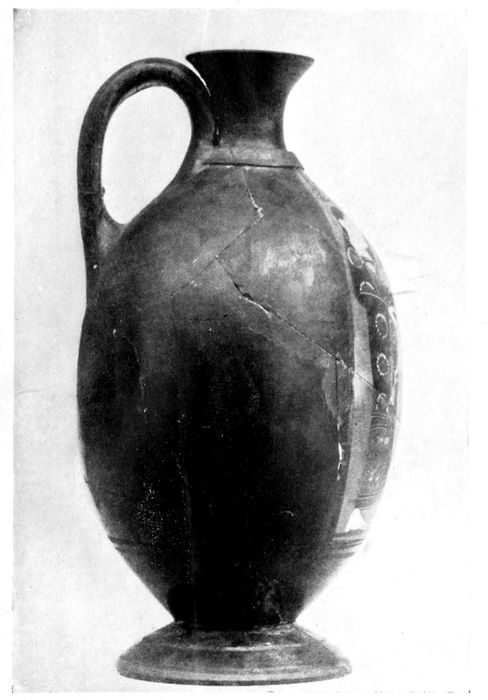
Early black-figured example with egg-shaped body and no distinct shoulder.
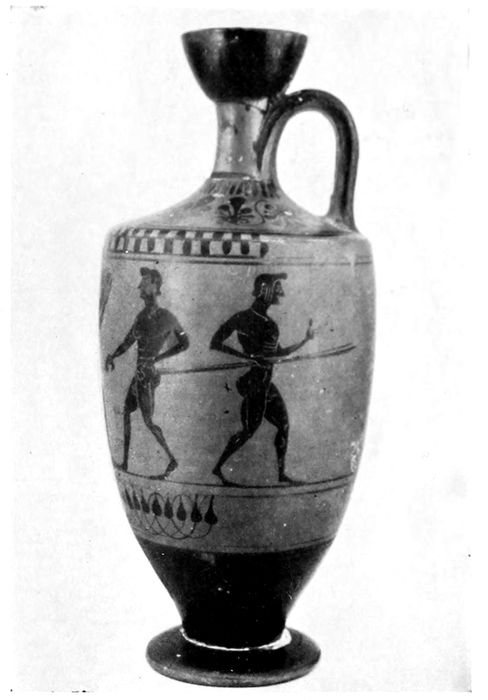
Later black-figured type with high neck and shoulder distinct from the body.
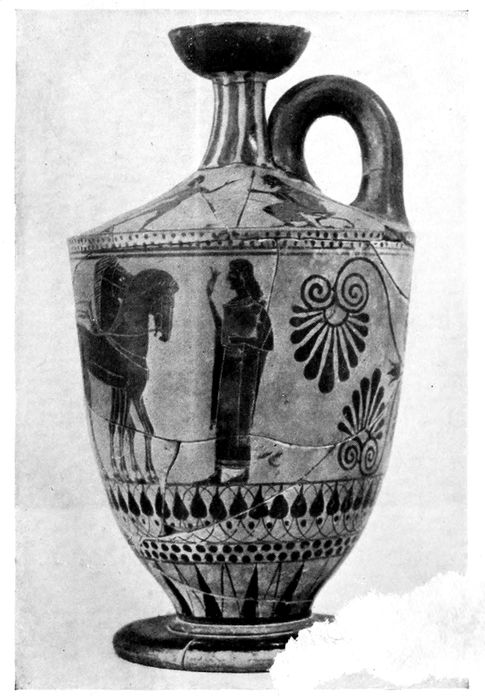
Black-figured lekythos with broad shoulder distinct from the body.
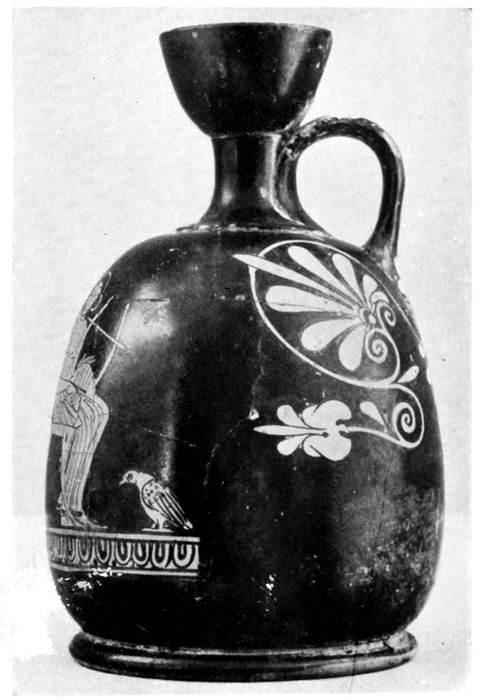
Early red-figured type of squat shape with large flat foot.
29
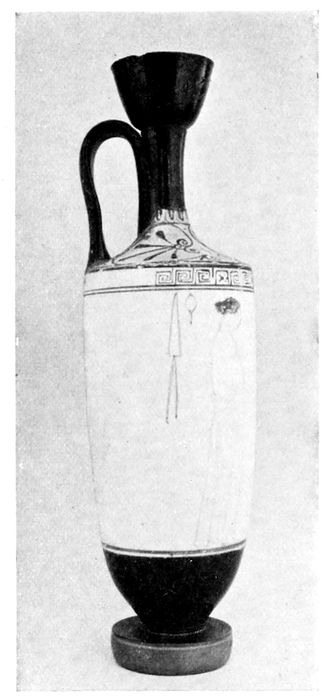
Lekythos of the finest type with slender body and high neck and handle.
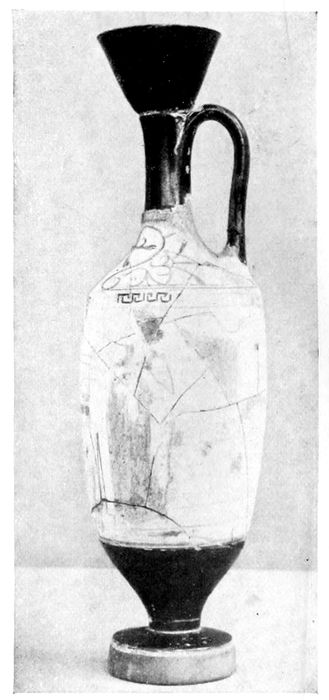
Lekythos of the later fifth century, of exaggerated slenderness.
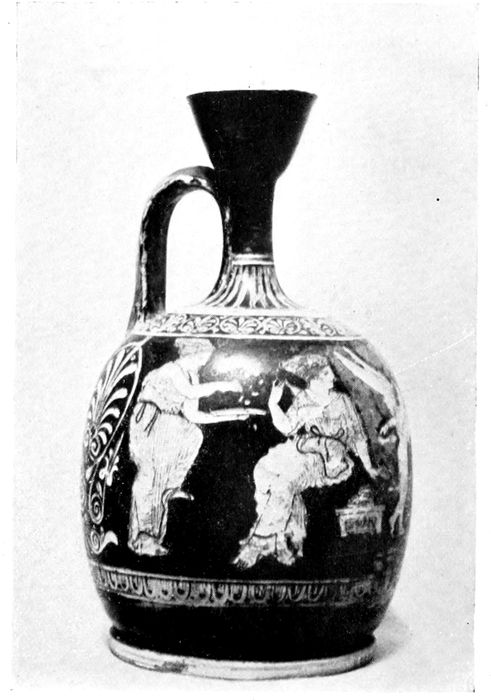
Squat lekythos with broad flat foot, a shape popular among the later Athenian potters.
30TOILET JARS.
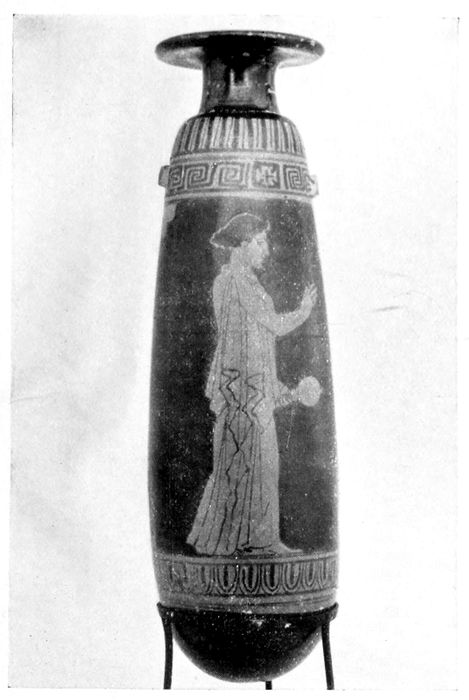
Alabastron, for holding oil or perfumes.
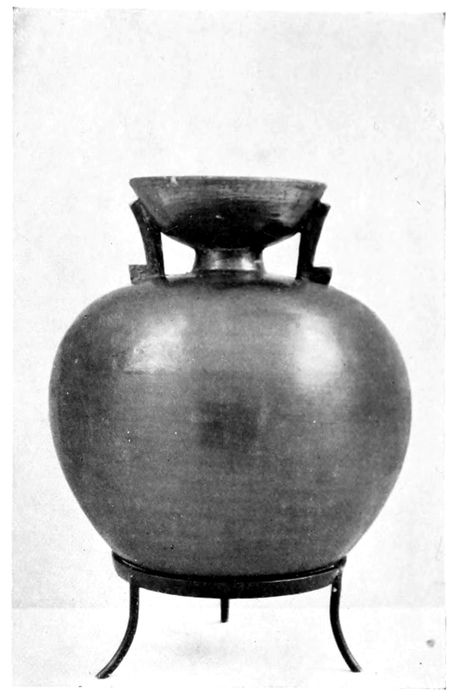
Aryballos, oil-jug. Vases of this shape are often seen suspended from the wrists of athletes.
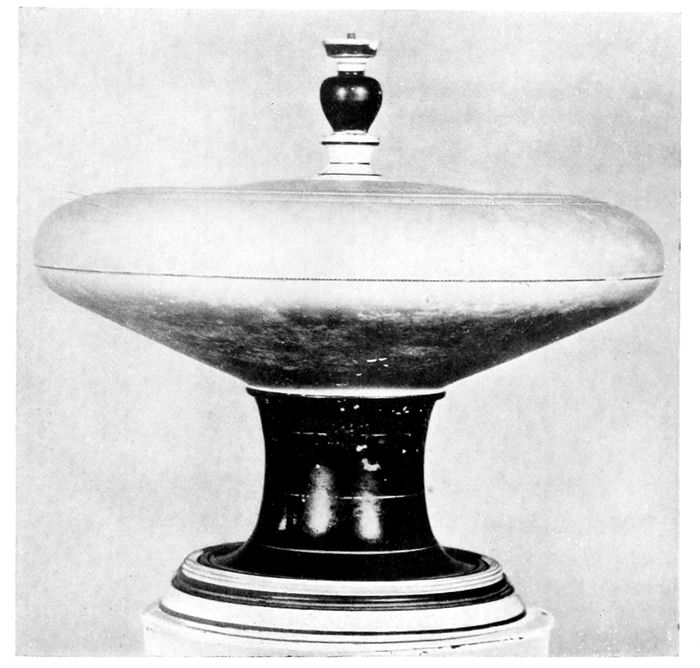
Vase (the ancient plemochoë?), probably used for holding perfumes, a shape intermediate between the pyxis and the lekane. Note the delicately executed knob serving as handle to the lid. In the Museum of Fine Arts, Boston.
31TOILET JARS—PYXIS. Small terracotta box for holding toilet articles. It regularly has a cover provided with a knob or a bronze ring for handle.
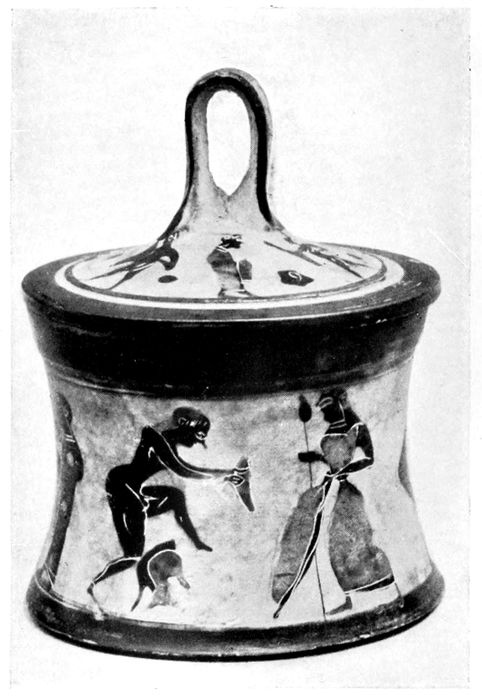
Black-figured pyxis with a loop handle on the cover.
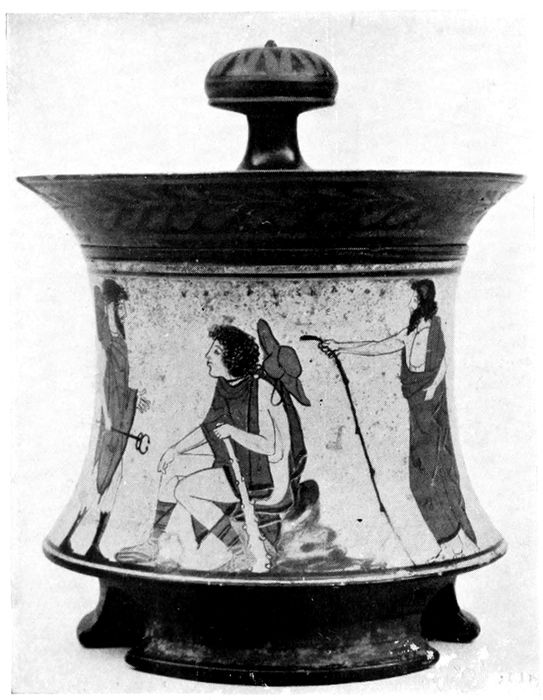
White pyxis of conspicuously beautiful design and execution, decorated with figures in color on a white ground. In the foot are three notches for easier handling.
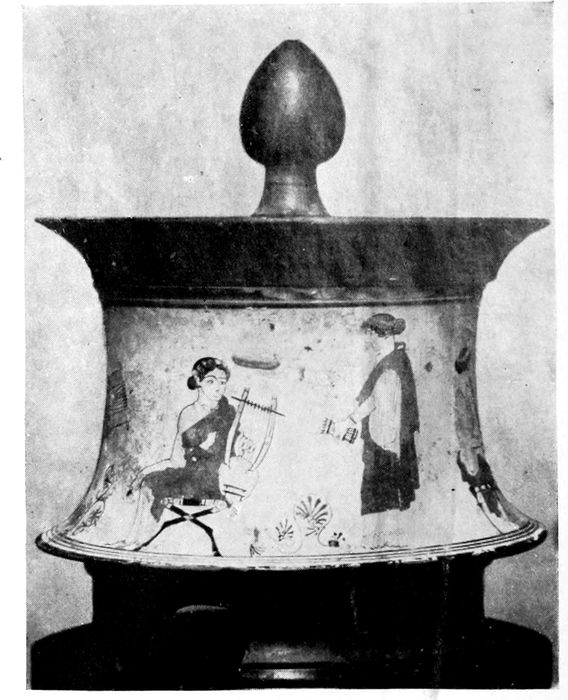
White pyxis of design similar to the preceding, but with elongated instead of arched knob. It also is an exceptionally fine product of the potter’s art. In the Museum of Fine Arts, Boston.
32
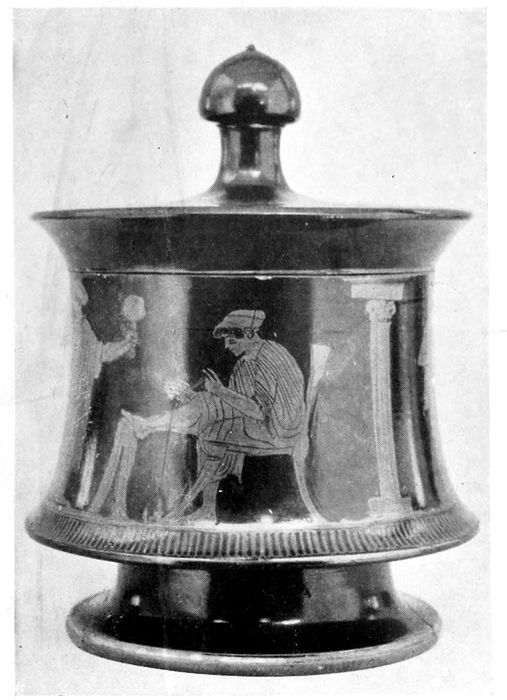
Red-figured pyxis with high foot and knob-shaped handle.
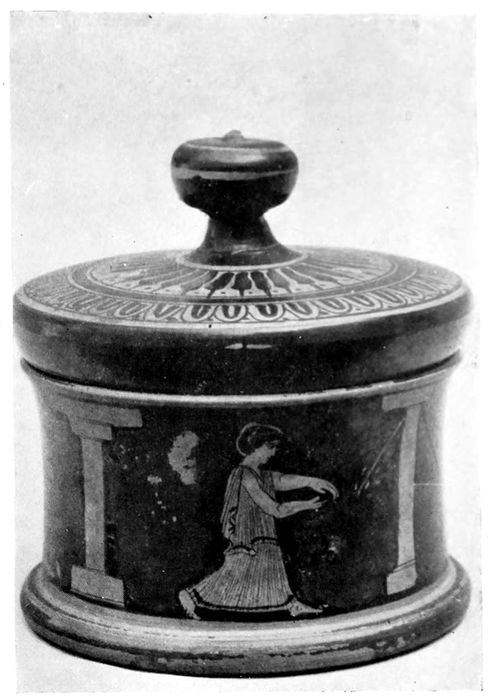
Red-figured pyxis with cylindrical body and low, broad foot.
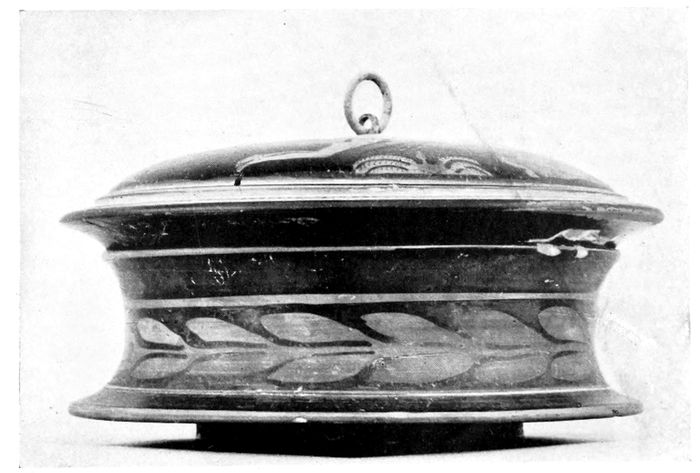
Red-figured pyxis of the late fifth century with low, broad body and a bronze ring on the cover.
33
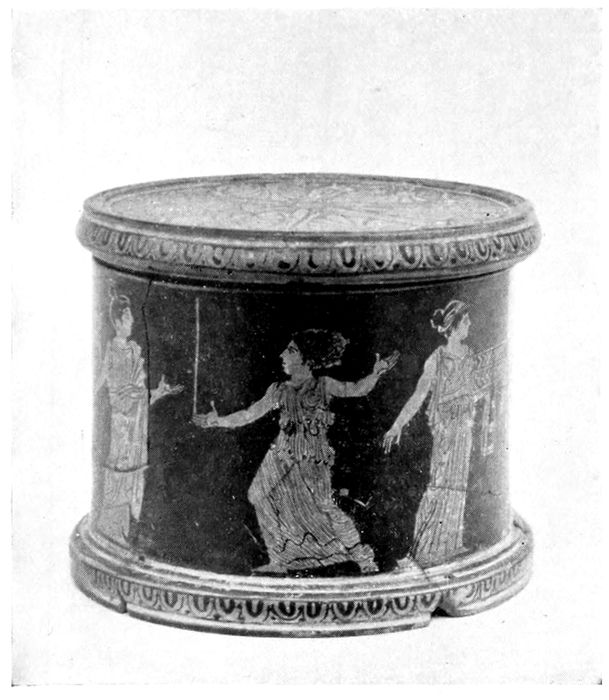
Red-figured pyxis of cylindrical shape and no handle on the lid.
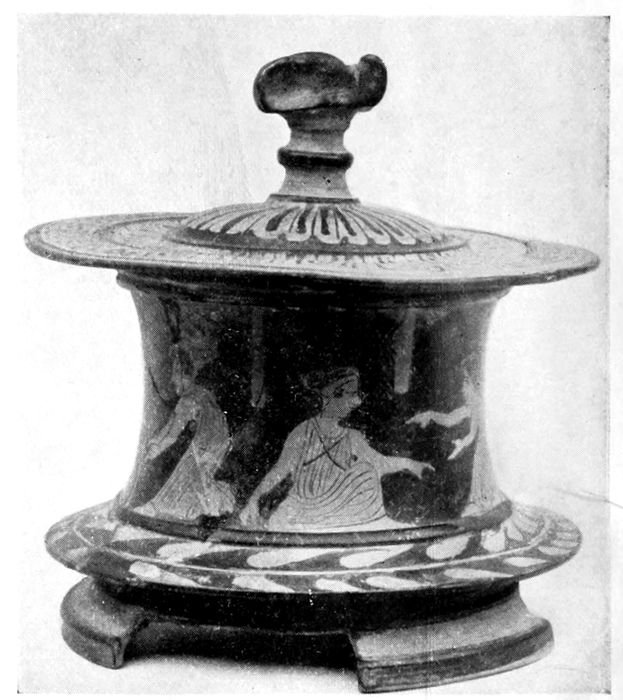
Red-figured pyxis of late date with the knob in the form of a knucklebone.
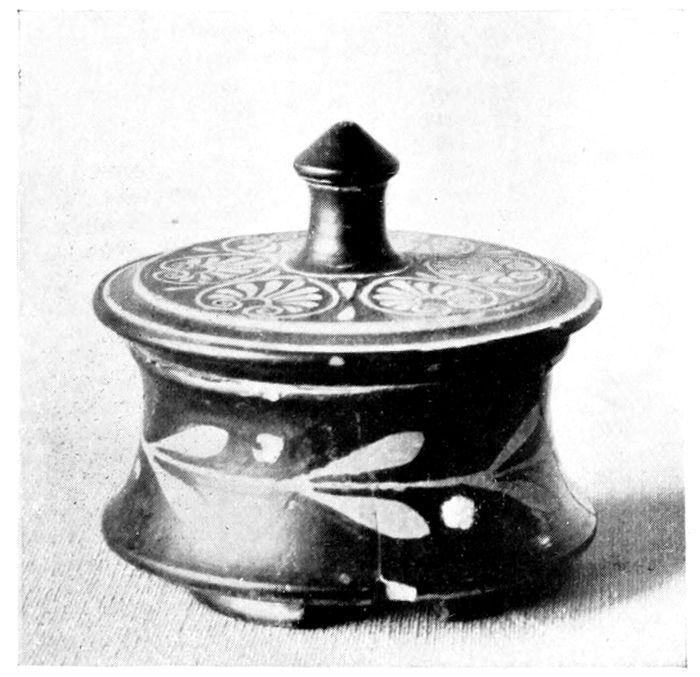
Small pyxis of attractive design delicately worked.
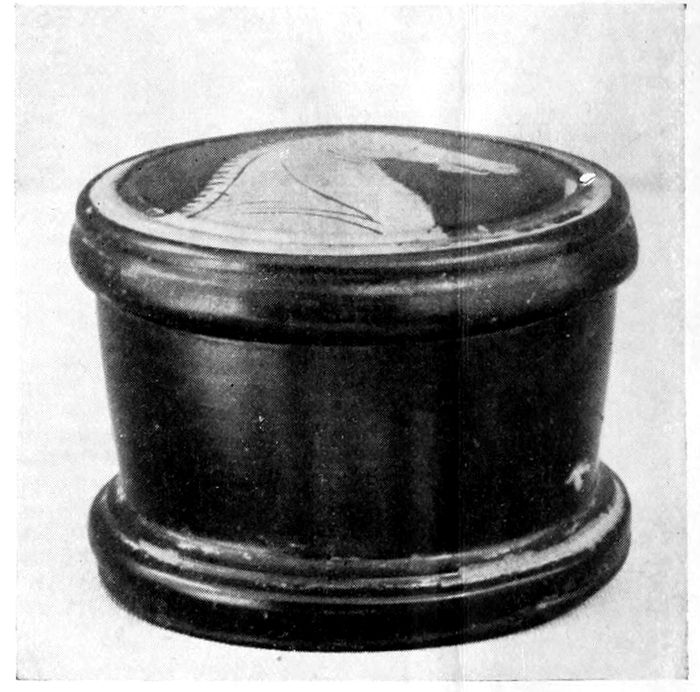
Small cylindrical pyxis without handle.
34ILLUSTRATIONS FROM ATTIC VASES. The theory has often been advanced that the painted black-figured and red-figured vases were made for decoration and for votive and funeral purposes but not for actual use. The following illustrations from Attic vases show some of the best-known types in use in the daily life of the Greeks, and thus furnish us with contemporary evidence that the vases were made to serve the purposes for which they are so well adapted.
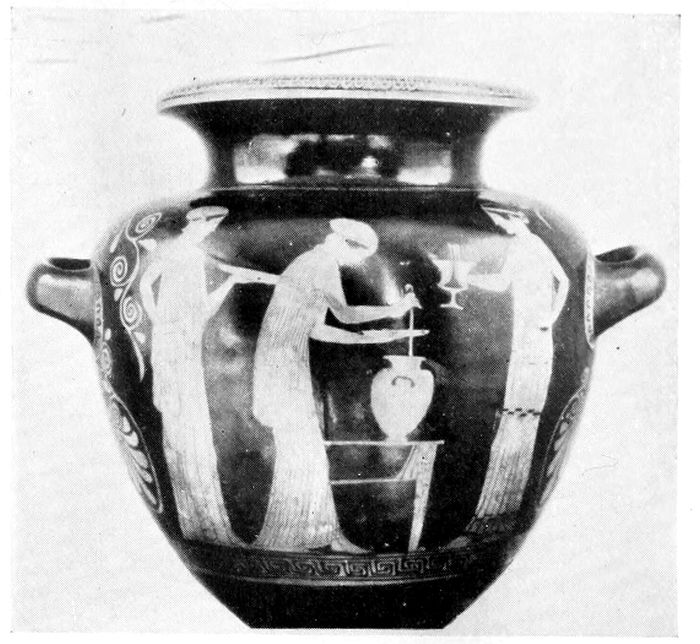
Scene on a red-figured stamnos. Three women are filling cups, a kantharos, and a phiale, from a stamnos placed on a table. The stamnos contains the mixture of wine and water which formed the regular drink of the Greeks.
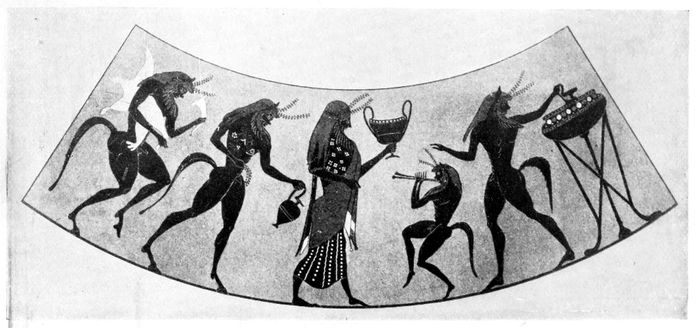
Scene on an Ionic amphora in the collection of the Marquis of Northampton. The god Dionysos and a company of satyrs are drinking and making merry. The wine is in a lebes on a tripod at the right. A satyr is dipping it out with an oinochoë without taking the trouble to use a ladle. Dionysos himself holds up his large kantharos, and the satyr at the left grasps a wine-skin and a drinking-horn.
35
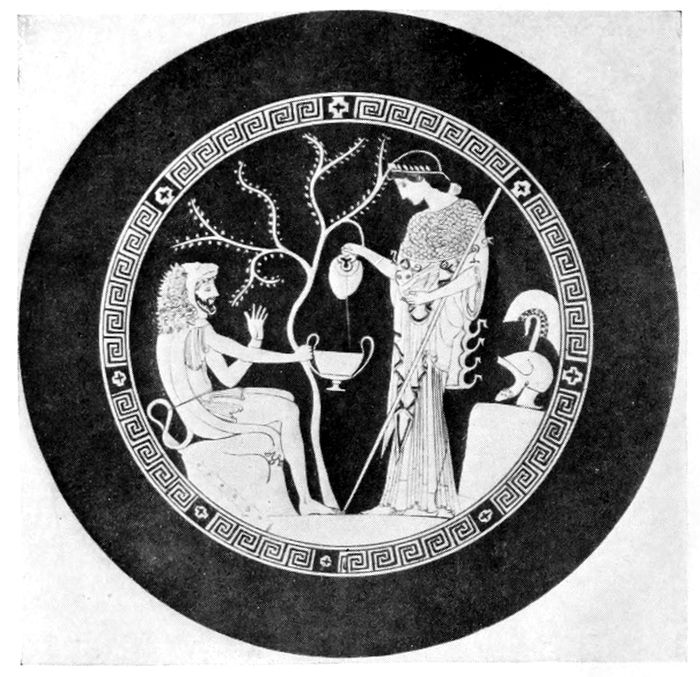
Scene on a red-figured kylix in the Antiquarium, Munich. Herakles, wearied with his labors, is seated on a rock, while Athena, his patroness, pours wine for him from an oinochoë into a kantharos. The trefoil-shaped mouth of the oinochoë can be plainly seen.
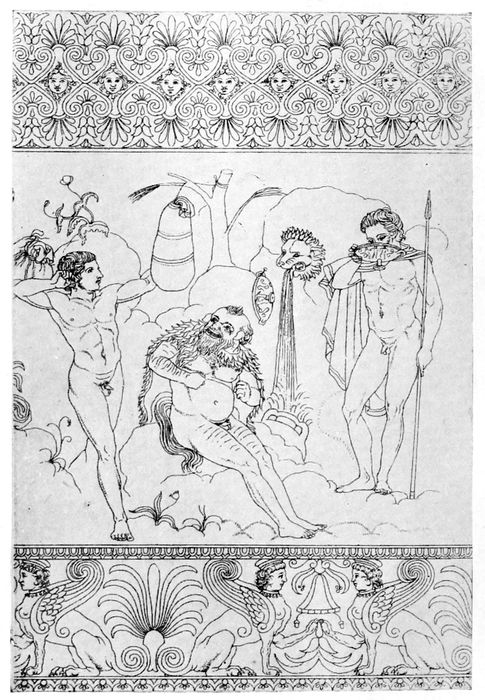
Detail from a scene on the Ficoroni Cista in the Museo Kircheriano in Rome. A young man is drinking from a kylix which he holds by one handle.
36
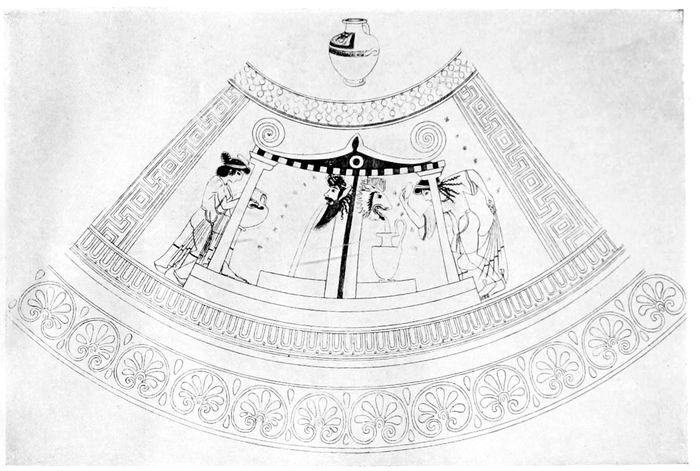
Scene on a hydria in the Torlonia Collection in Rome. Two girls are drawing water at a public fountain into large hydriai or water-jars. The girl at the left is lifting her jar upon her head. The other is putting a little cushion for protection on her head, meanwhile holding her dress away from the water.
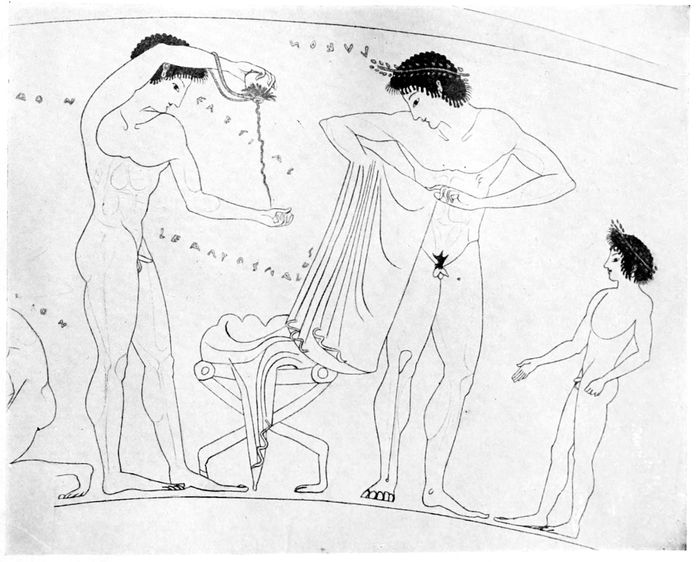
Scene on a red-figured krater in the Antiquarium, Berlin. Two young men are preparing for exercise in a gymnasium. One of them is pouring oil into his hand from an aryballos attached to his wrist by a cord, in order to rub the liquid over his body.
37
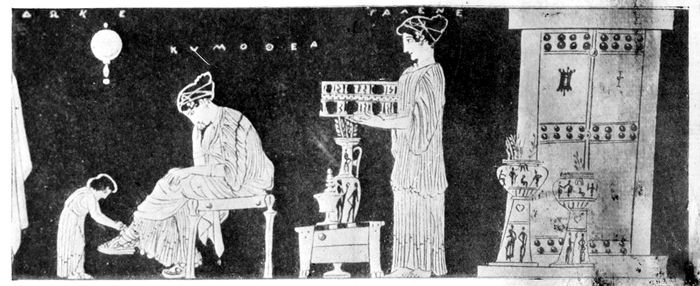
Scene on a red-figured pyxis in the British Museum. A bride is being dressed for her wedding; a little maid is fastening her shoes while another is bringing her jewelry in a box. At the door stand two marriage vases filled with twigs, and a loutrophoros nearby also contains branches or flowers. On a little chest stands a pyxis or perfume vase. A mirror hangs on the wall.
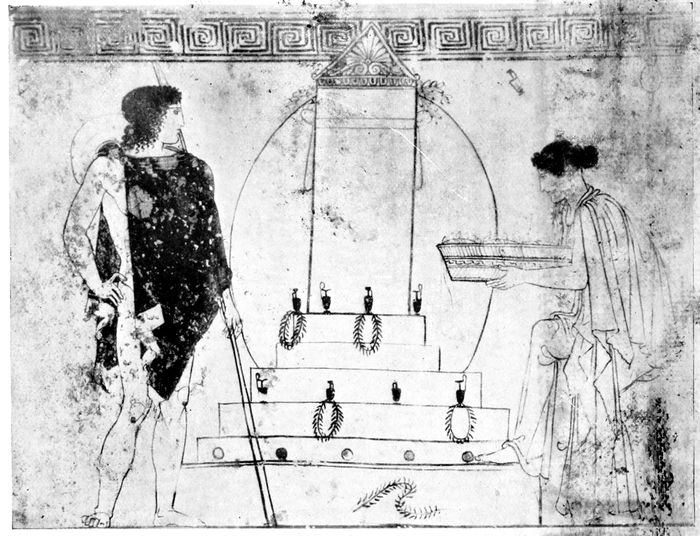
Scene from a polychrome lekythos in the National Museum, Athens. Such lekythoi were made especially for offerings to the dead. This picture shows a woman bringing wreaths in a basket to place on a gravestone on the steps of which are lekythoi and oinochoai. Behind the monument appears the mound over the grave.