THE OLD ROMAN CITY.
Reading edition
Moor and Spaniard have, between them, effaced almost all traces of the ancient Hispalis or Romula, the little Rome; but the sister-city of Italica, early deserted by man, has been dealt not too harshly with by time. Its remains—a Spanish league to the north-west of Seville—still attract the artist and the archæologist. There, where the wretched hamlet of Santi Ponce now stands, was in the dim past the Iberian village of Sancios. Scipio the Elder, after his long and victorious campaign, passed this way, and selected the spot as a place of rest and refreshment for his war-worn veterans. “Relicto utpote pacata regione valido præsidio, Scipio milites omnes vulneribus debiles in unam urbem compulit, quam ab Italia Italicam nominavit,” says Appian. Señor de Madrazo remarks that this must have been the first Latin-speaking town founded outside Italy. It was not at first a municipium, but a place for meeting and council of the Roman citizens. The municipal status it owed to Augustus. Subsequently, its citizens petitioned to be classed as a colony of Rome.
The colony proved not unworthy of the great capital. Hence sprang the illustrious line of the Ælii, and most of the eminent Roman Spaniards who conferred such lustre on the early Empire are believed to have been natives of the place. It is not, therefore, to be wondered at that the citizens should have preferred a nominal dependence on the Mother City to the quasi-independence of a provincial municipality. But Italica never seems to have been a city in the modern sense of the word. Excavations have revealed extremely few remains of private habitations or bazaars. The only vestiges are those of great public monuments—temples, palaces, amphitheatres, baths. The Emperors seem to have delighted to embellish this small town with ornaments quite out of proportion to its size and population, and it is clear that it never was a serious rival to its older neighbour, Hispalis.
Its downfall, like its history, is mysterious. Leovigild occupied it while besieging Seville, which was held by his son, Hermenigild. Later on, the Arabs are said to have demolished it almost completely, and to have carried off numerous statues, columns, and blocks of masonry to serve in the construction and adornment of the neighbouring city. Then Italica disappeared from history. Earthquakes finished the work of ruin, and the scattered stones went to the making of the miserable village of Santi Ponce—a name which some derive from that of San Geroncio, a Bishop of Italica in early times.
The amphitheatre is now all that remains to attest the erstwhile splendour of the darling colony of the Ælii. It is a melancholy and yet a pretty spot, approached through olive plantations. Some of the walls are still standing, and enable us to determine the dimensions, which are stated at 291 feet length and 204 feet breadth. You may still see the Podium or stone platform, whereon the civic dignitaries sate, and the upper tiers appropriated to the populace. You may pass down the vomitoria, through which the spectators streamed, glutted with the sight of blood, and penetrate to the dens and chambers, wherein gladiators and wild beasts were confined before the combat. Italica is more a place to muse in than to explore. The place has long since been rifled of all its treasures. Extensive ruins of what was believed to have been the palace of Trajan existed down till the great earthquake of 1755, and all that was spared were three statues preserved in the Museo Provincial or Picture Gallery.
Close to the ruins is the convent of San Isidoro del Campo, founded in 1301 by Don Alonso Perez de Guzman, as a place of sepulture for him and his family. The establishment was peopled first by the Cistercians, later by the Hermits of St Jerome. The edifice presents the appearance of a fortified abbey of the Middle Ages, though not without traces of Mudejar influence. The church is Gothic, and divided into two naves, united by a transept, and constituting each a distinct church. One of these structures was built by the hero of Tarifa, Guzman the Good, and contains his tomb and that of his wife, together with a fine retablo by Montañes; the other, founded by the hero’s son, Don Juan Alonso Perez de Guzman, contains his tomb, marked by a fine recumbent figure, and that of Doña Urraca Osorio, burnt by order of Pedro the Cruel. In the cloisters of the convent are some mural paintings of the fifteenth century, which though much damaged repay inspection.
With the excursion to Italica the traveller should combine a visit to the Cartuja, more properly called Santa Maria de las Cuevas. It lies close to the suburb of Triana. The monastery was founded in the first decade of the fifteenth century, at the instance of the great Archbishop Gonzalo de Mena, and became the burying-place of the Ribera family, whose magnificent tombs are now to be seen in the University Church. Of the original structure only a little antique chapel remains. The refectory, chapter-hall, and cloisters all date from a restoration effected by the first Marqués de Tarifa in the sixteenth century. The building became, in 1839, the seat of the pottery manufacture of the (then) English firm of Pickman & Co. The establishment has produced some fine porcelain, and is worth inspection by all those interested in the ceramic art. Pottery has been associated from time immemorial with this locality and the adjoining suburb of Triana, and it will be remembered that the patron saints of Seville, Justa and Rufina, were, according to tradition, potters by trade.
PLATE 1
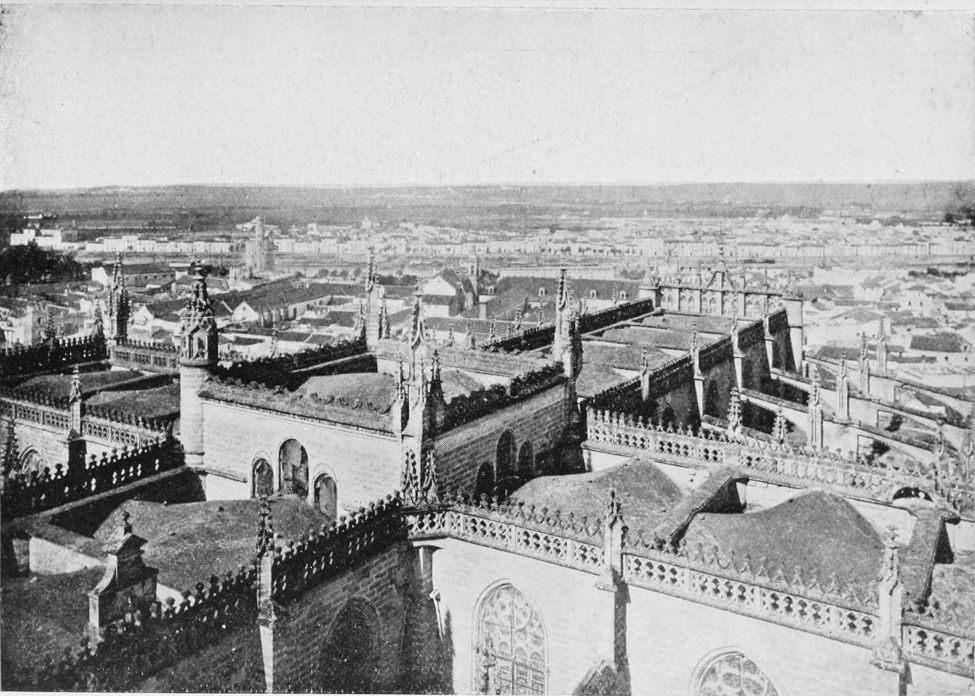
General View of Seville from the Giralda Tower, West Side of the City.
First View.
PLATE 2
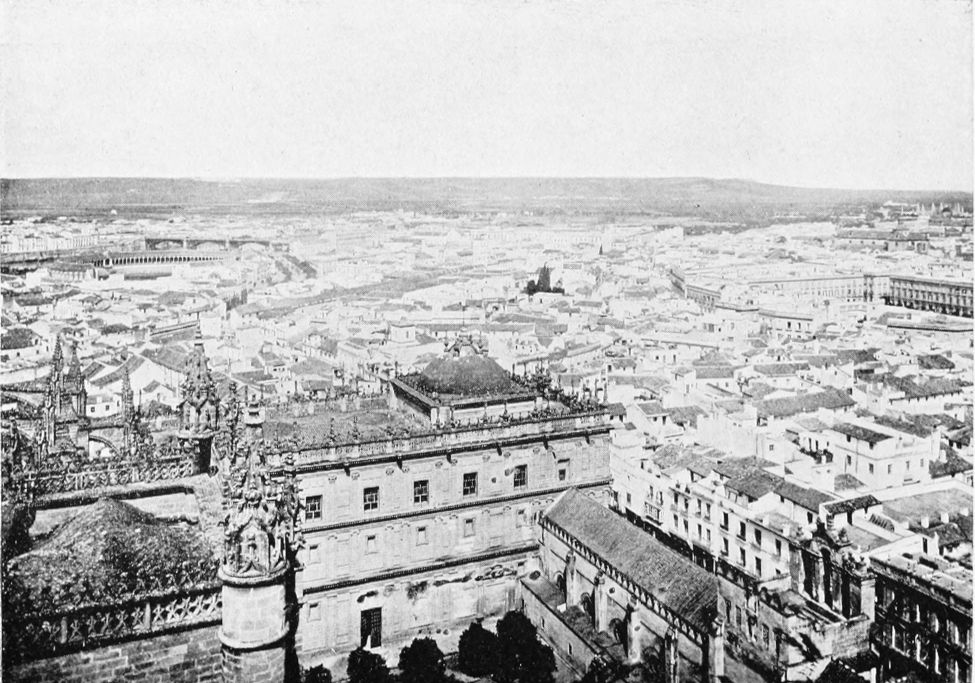
General View of Seville from the Giralda Tower, West Side of the City.
Second View.
PLATE 3
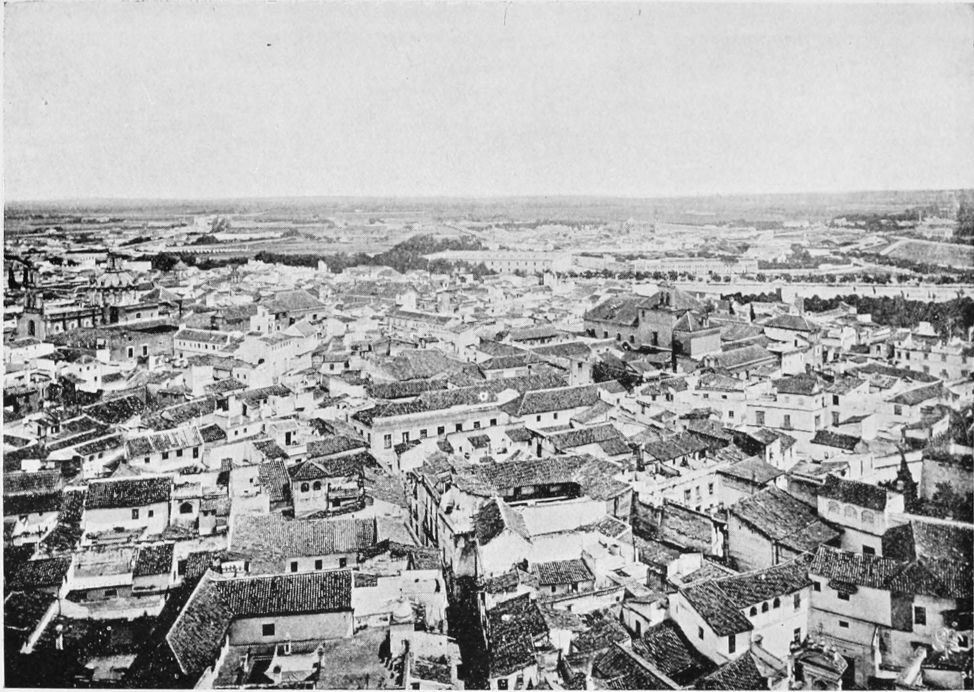
General View of Seville from the Giralda Tower, East Side.
PLATE 4
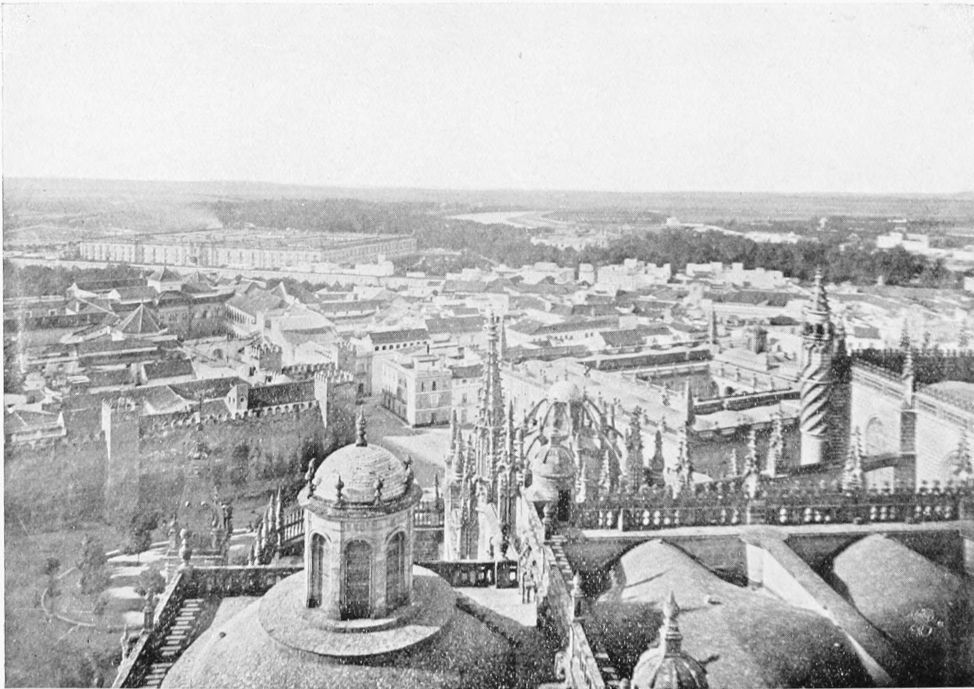
General View of Seville from the Giralda Tower, Central Part of the City.
PLATE 5
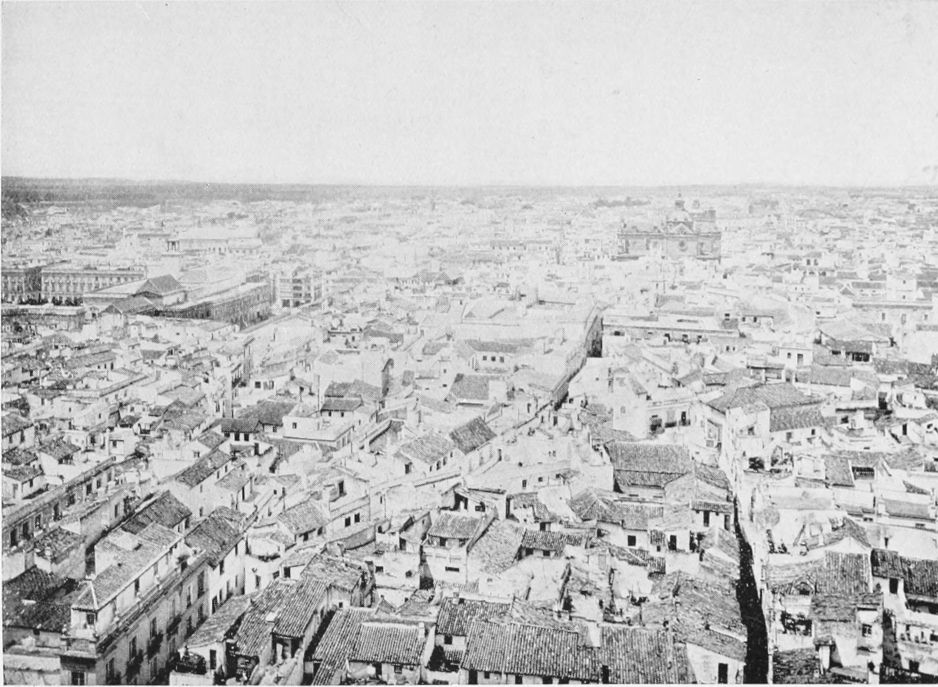
General View of Seville from the Giralda Tower, North Side.
PLATE 6
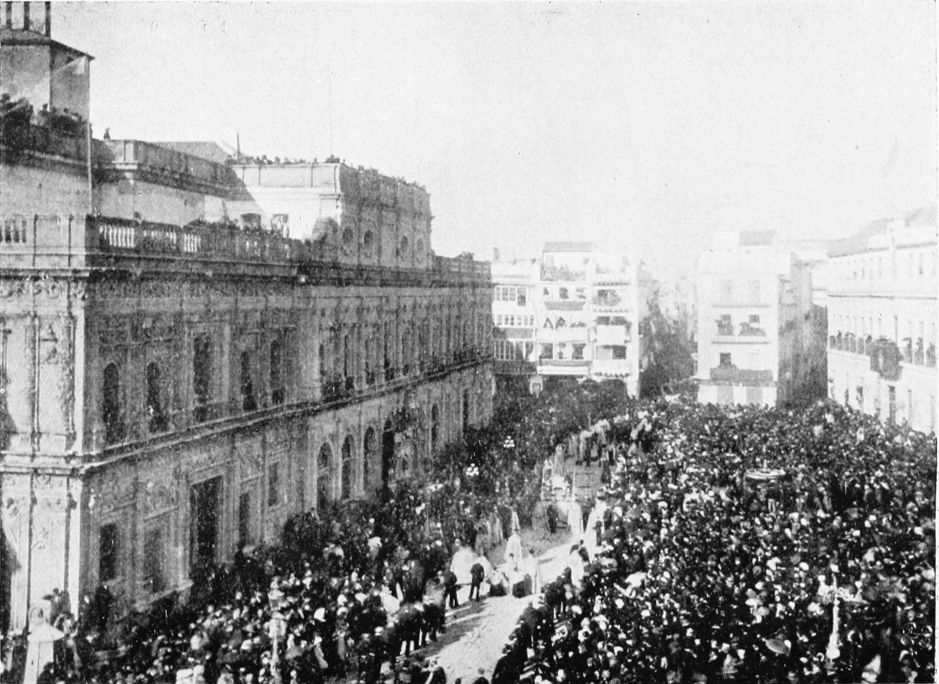
Procession of the Conception of the Virgin passing through the Plaza de San Francisco.
PLATE 7
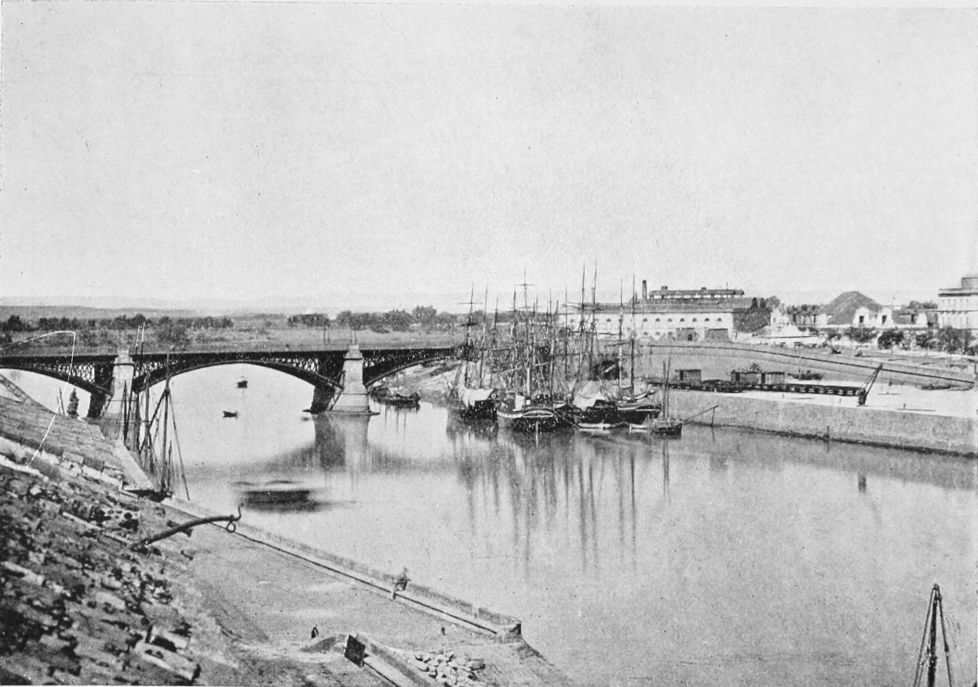
View of Seville.
PLATE 8
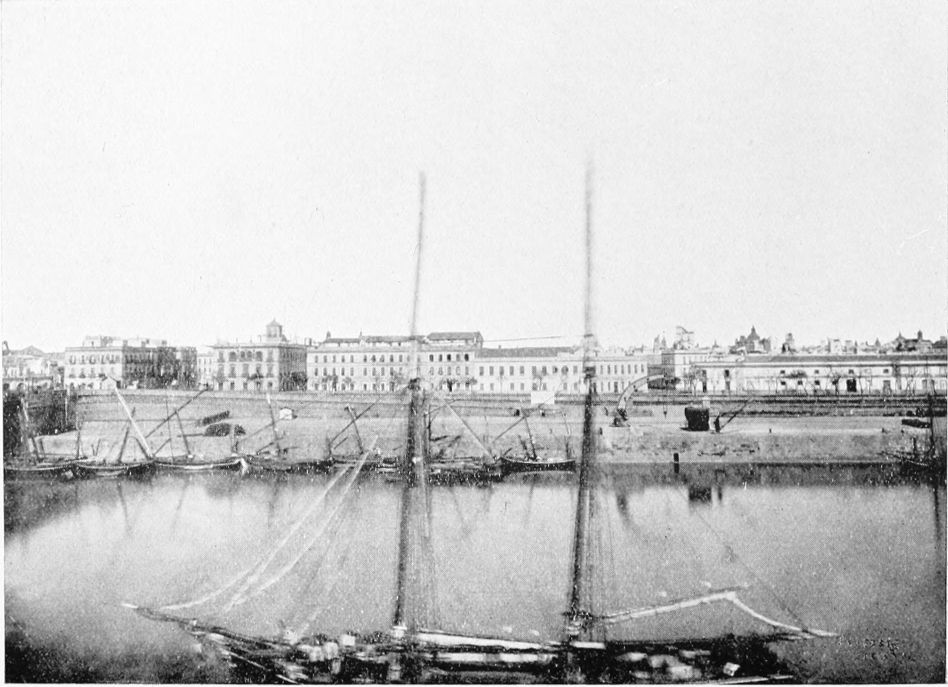
View of Seville.
PLATE 9
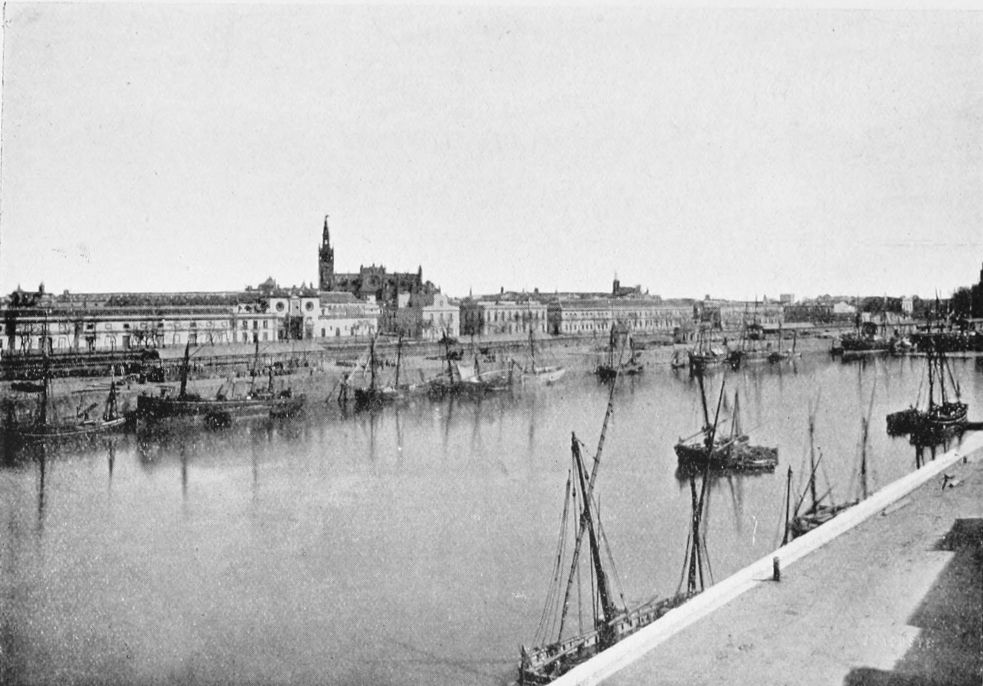
View of Seville.
PLATE 10
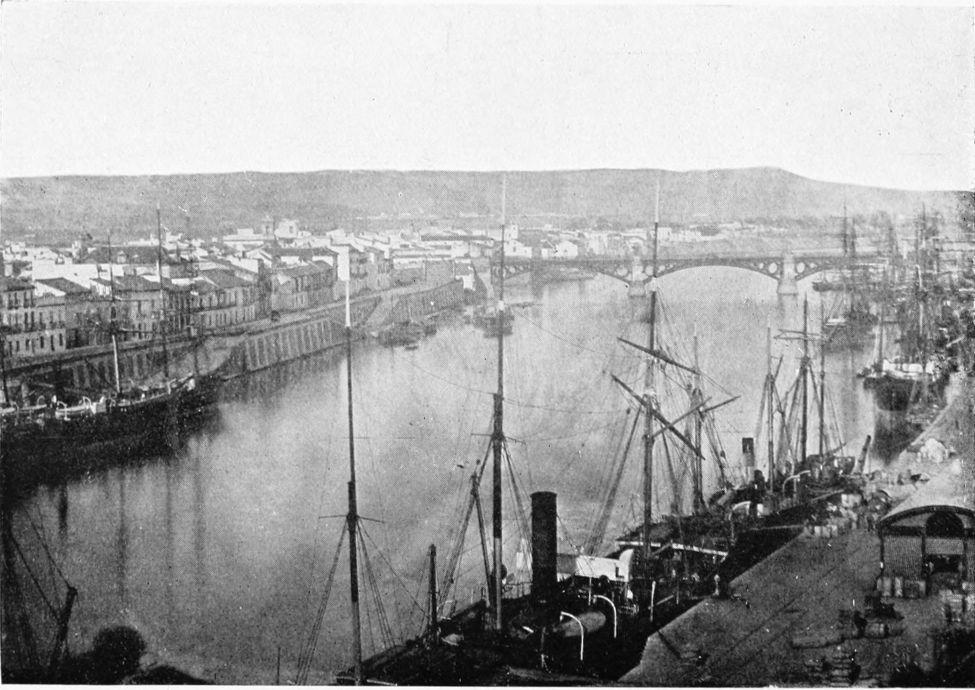
View of Seville.
PLATE 11
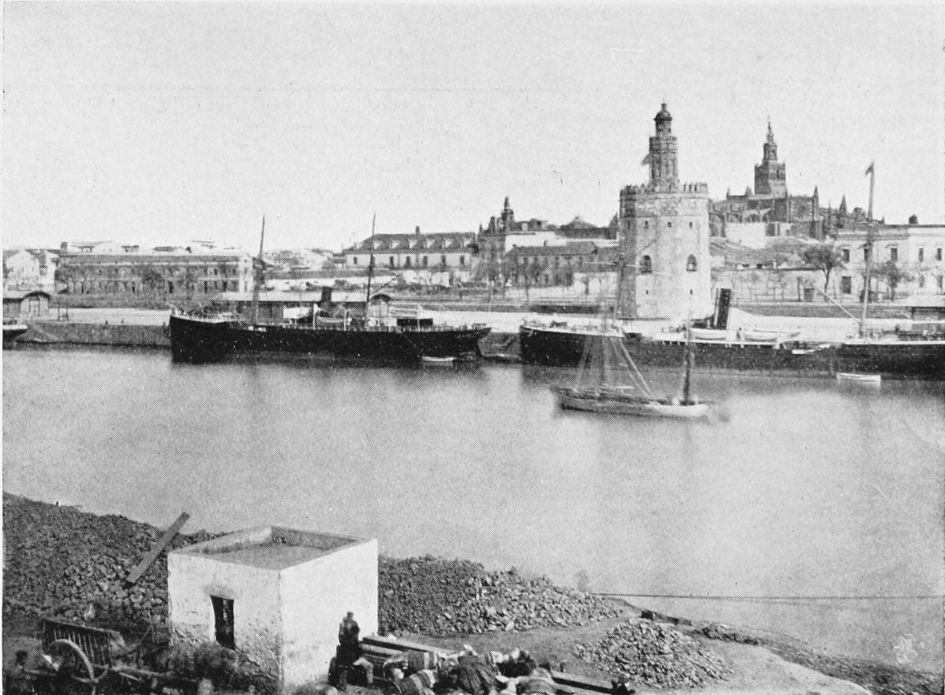
View of Seville.
PLATE 12
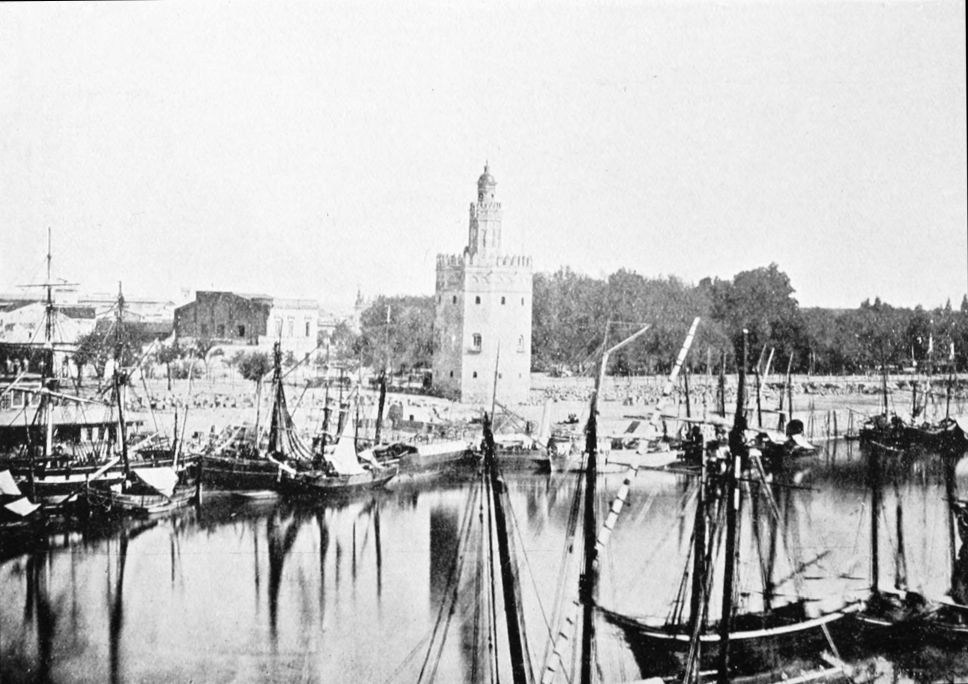
View of Seville.
PLATE 13
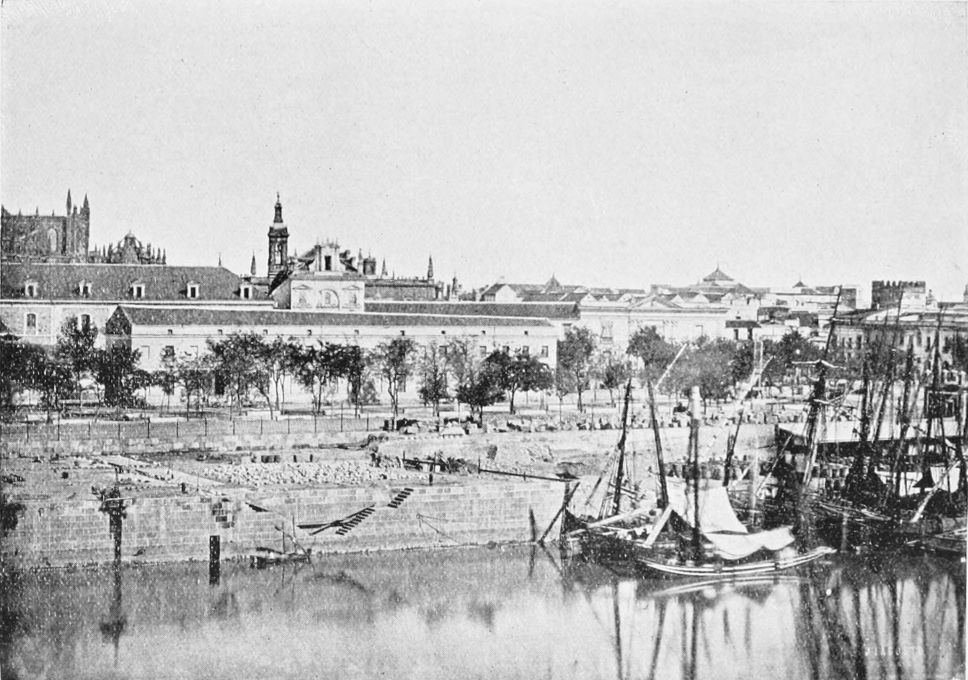
View of Seville.
PLATE 14
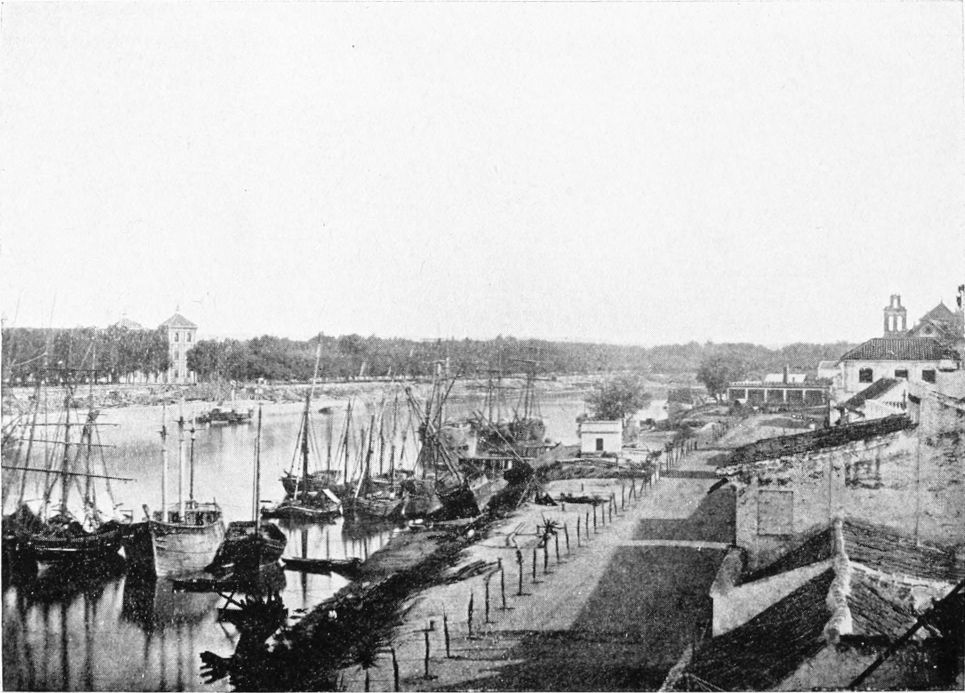
View of Seville.
PLATE 15
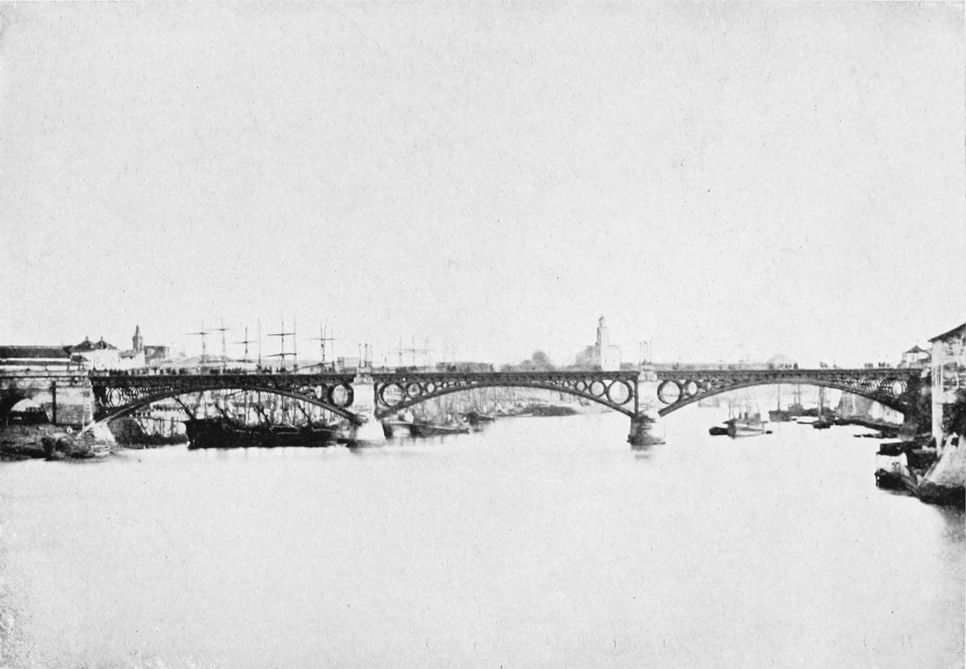
Bridge over the Guadalquivir.
PLATE 16
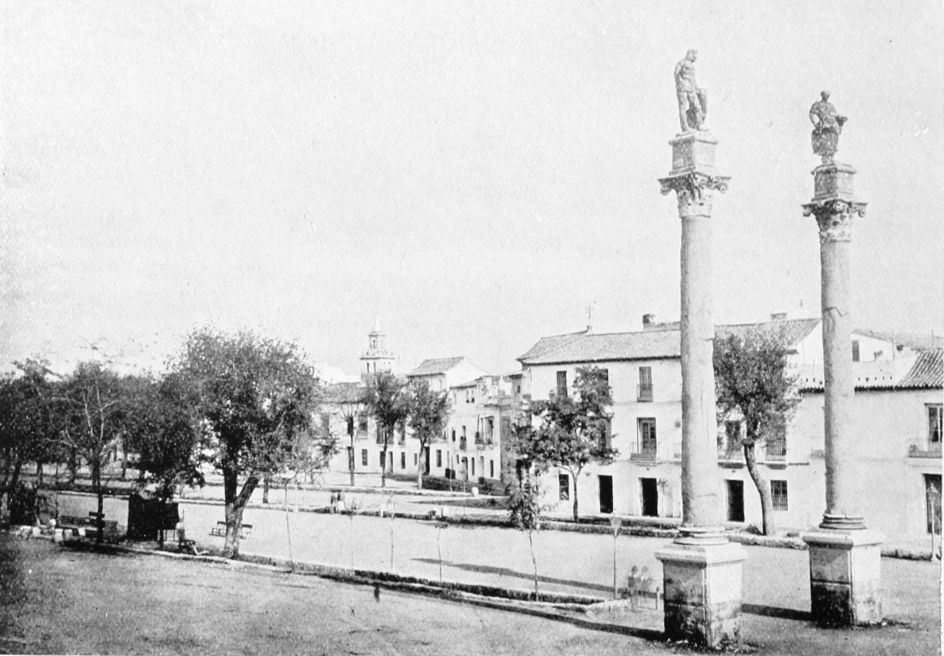
Hercules Avenue.
PLATE 17
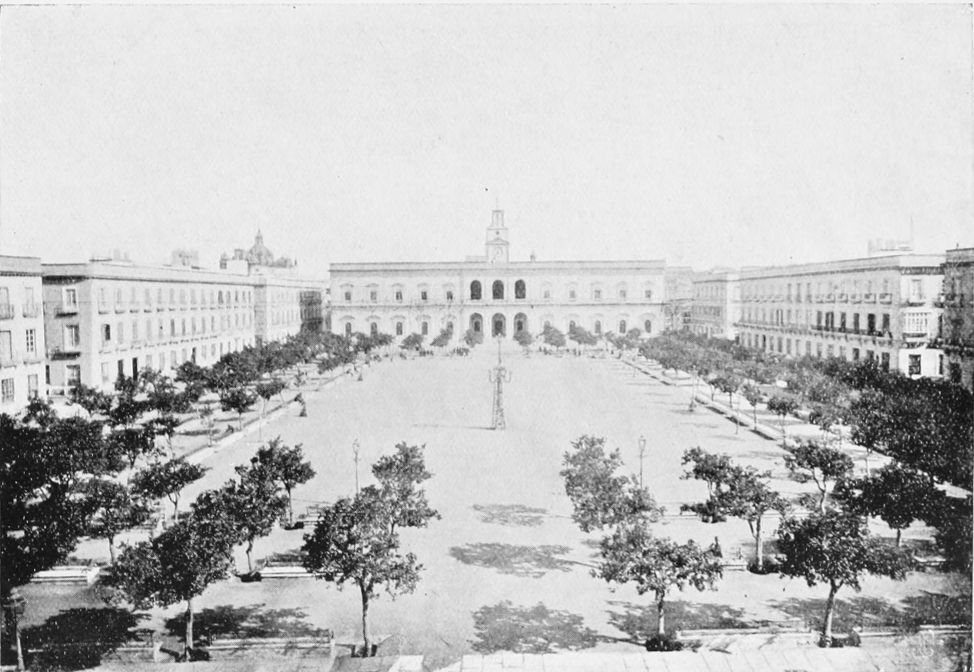
The Plaza Nueva.
PLATE 18
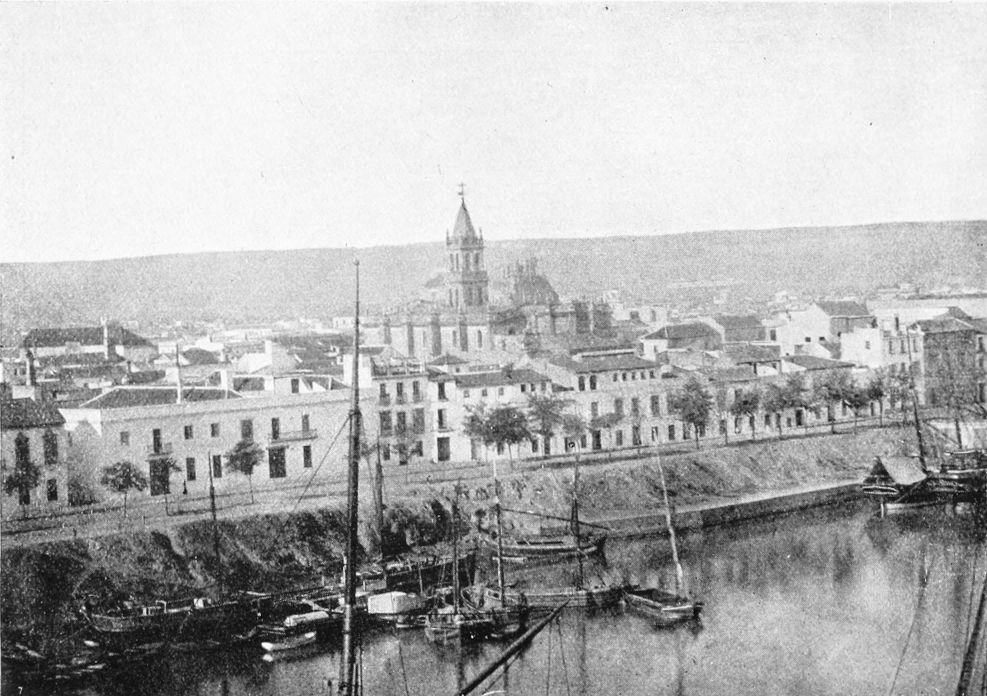
View of Triana from the Tower of Gold.
PLATE 19
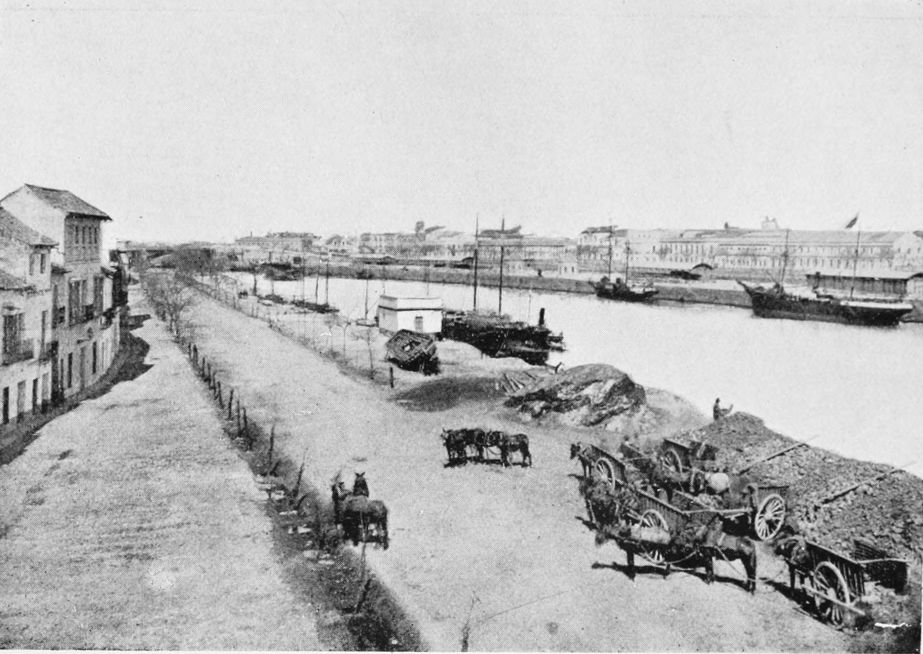
General View from Triana.
PLATE 20
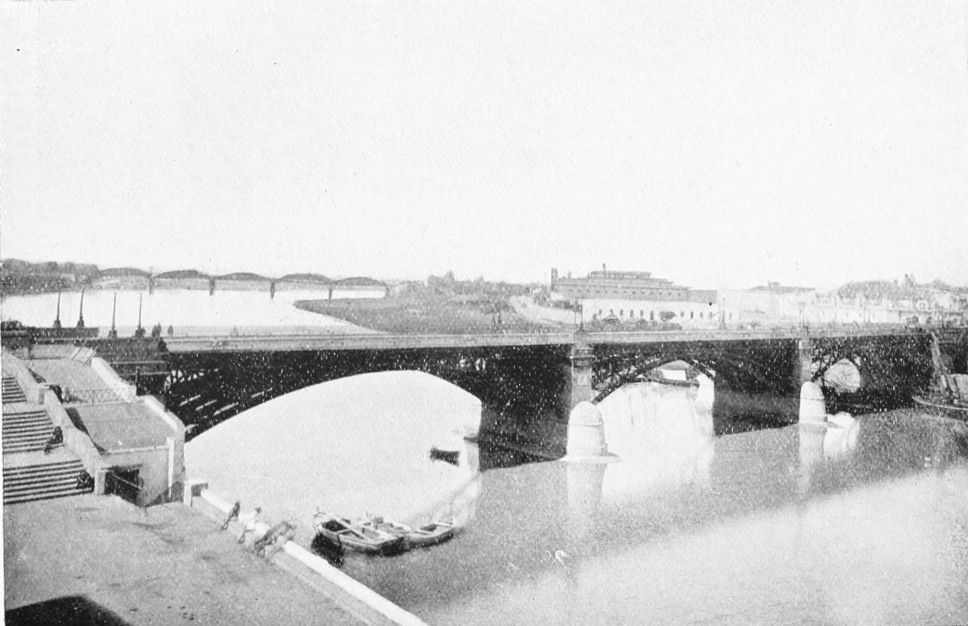
General View from Triana.
PLATE 21
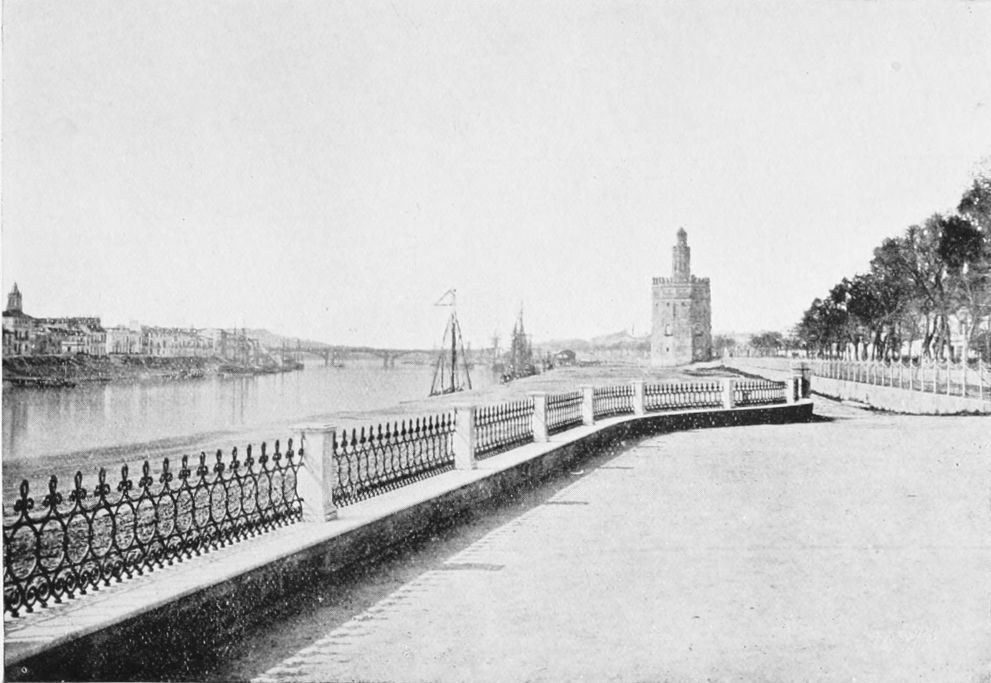
The Tower of Gold from San Telmo.
PLATE 22
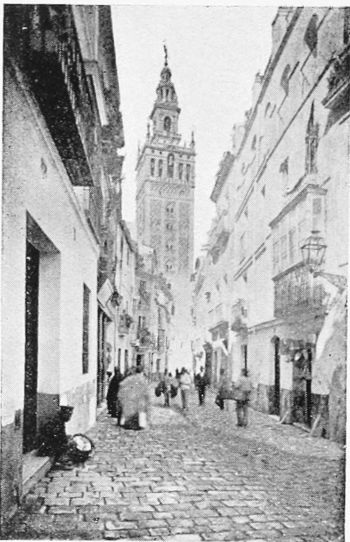
A Street in Seville.
PLATE 23
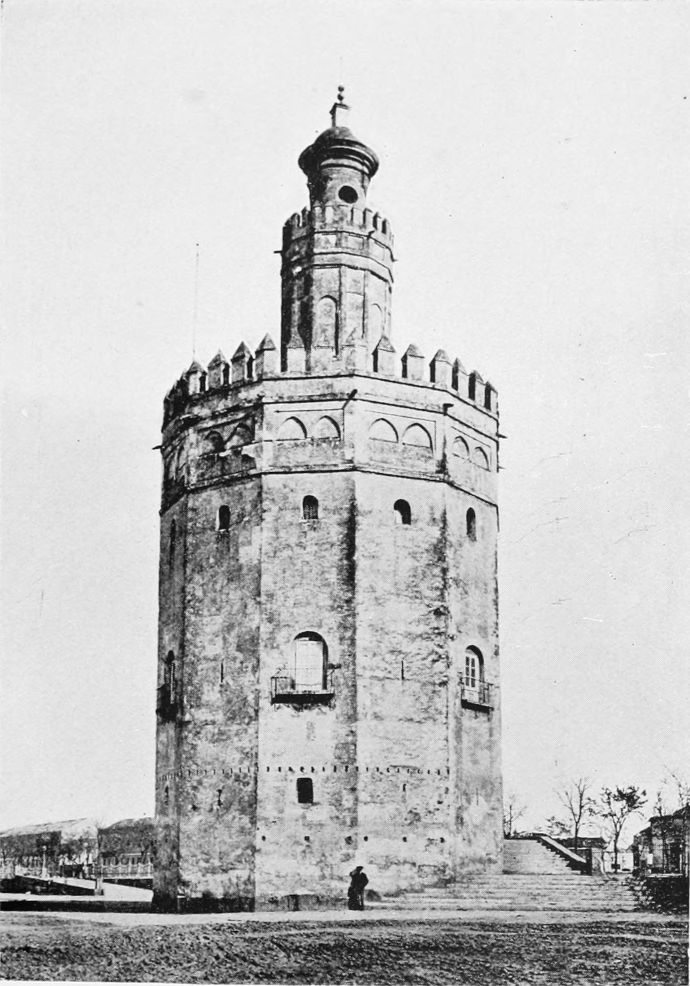
The Tower of Gold.
PLATE 24
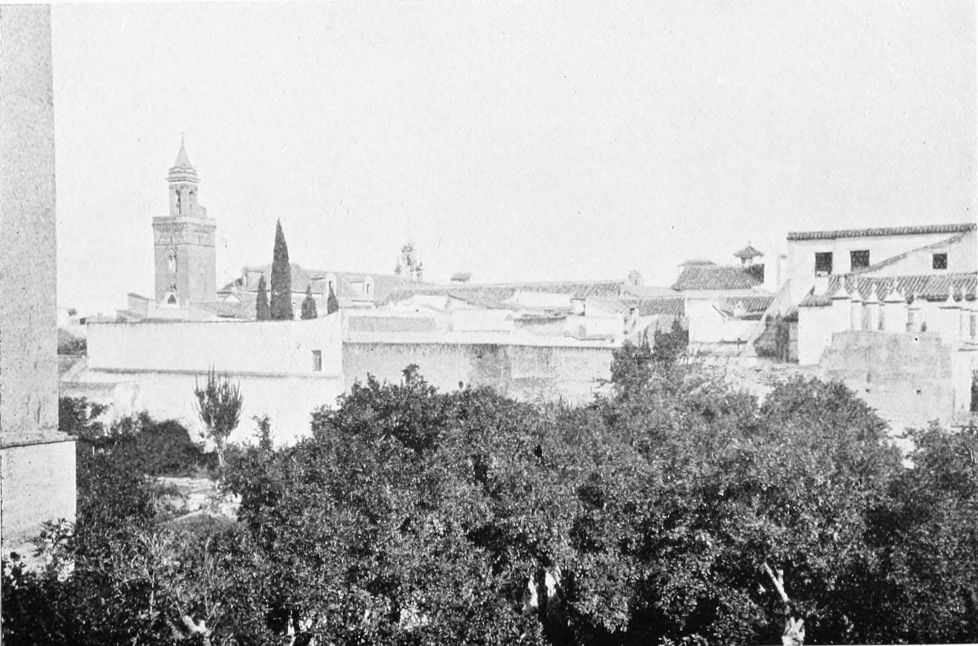
Church of San Marcos, from the Palace of the Dueñas.
PLATE 25
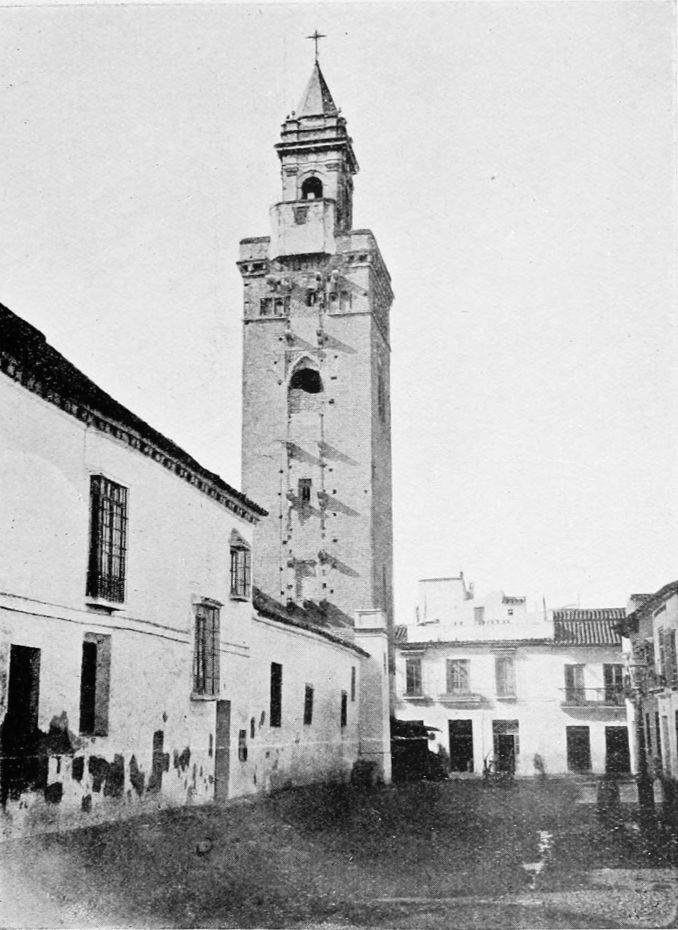
Church of San Marcos.
PLATE 26
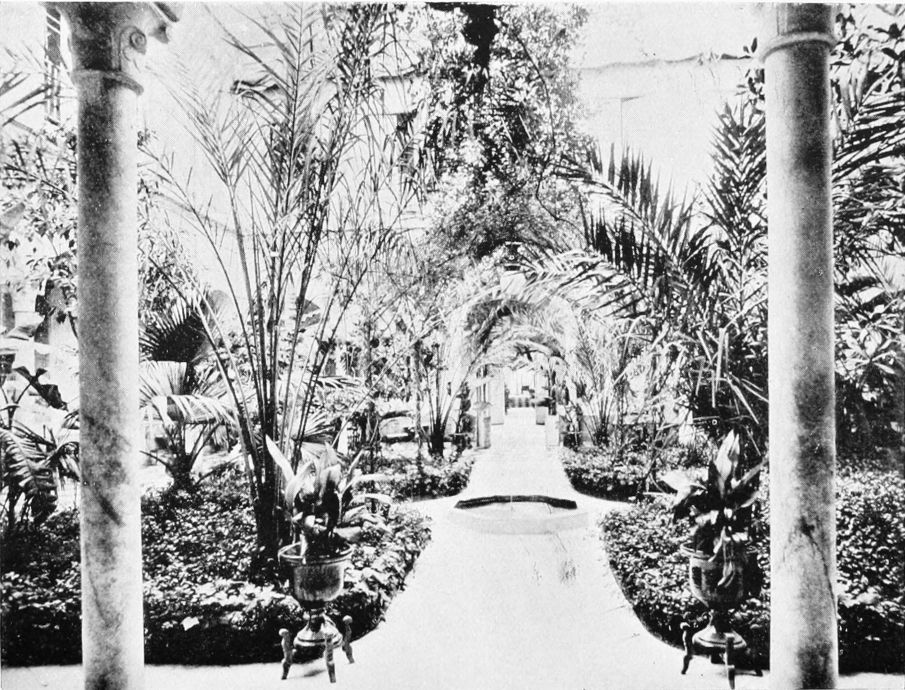
Court of the Hotel de Madrid.
PLATE 27
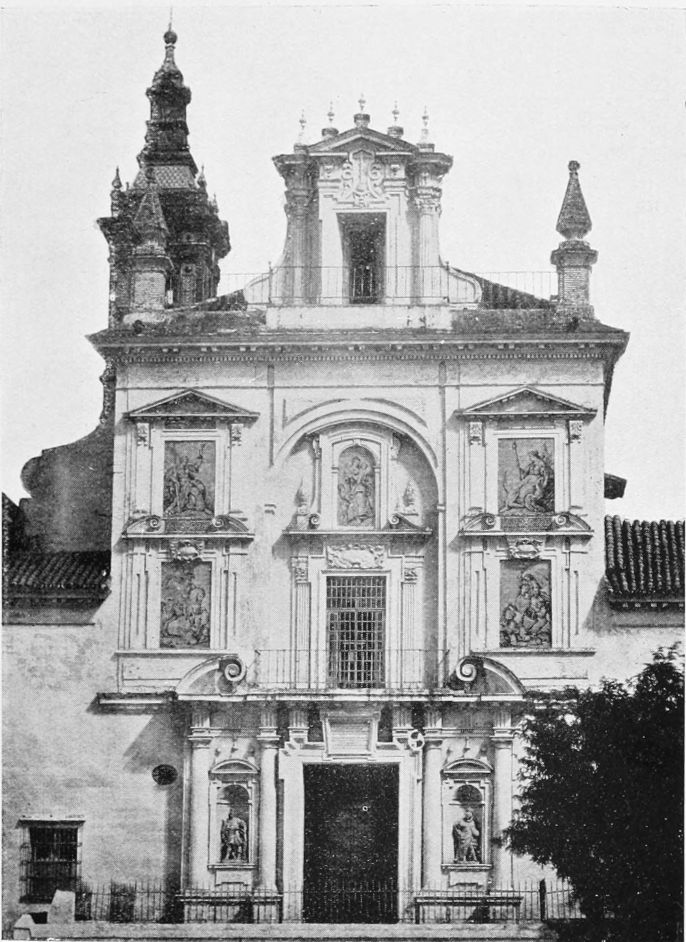
Hospital, with the Mosaics painted by Murillo.
PLATE 28
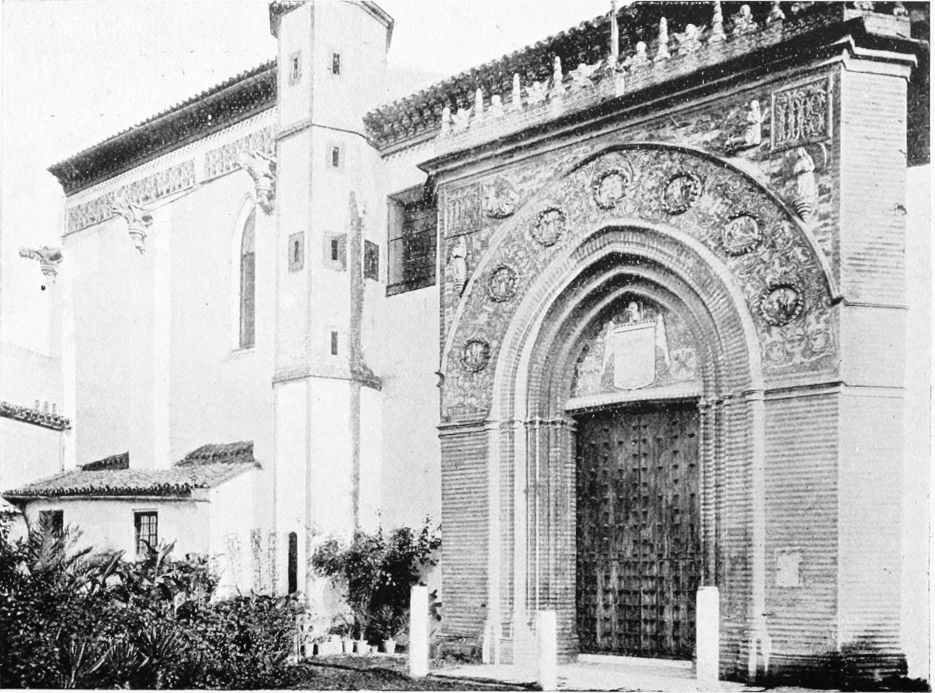
Portal of the Convent of Santa Paula.
PLATE 29
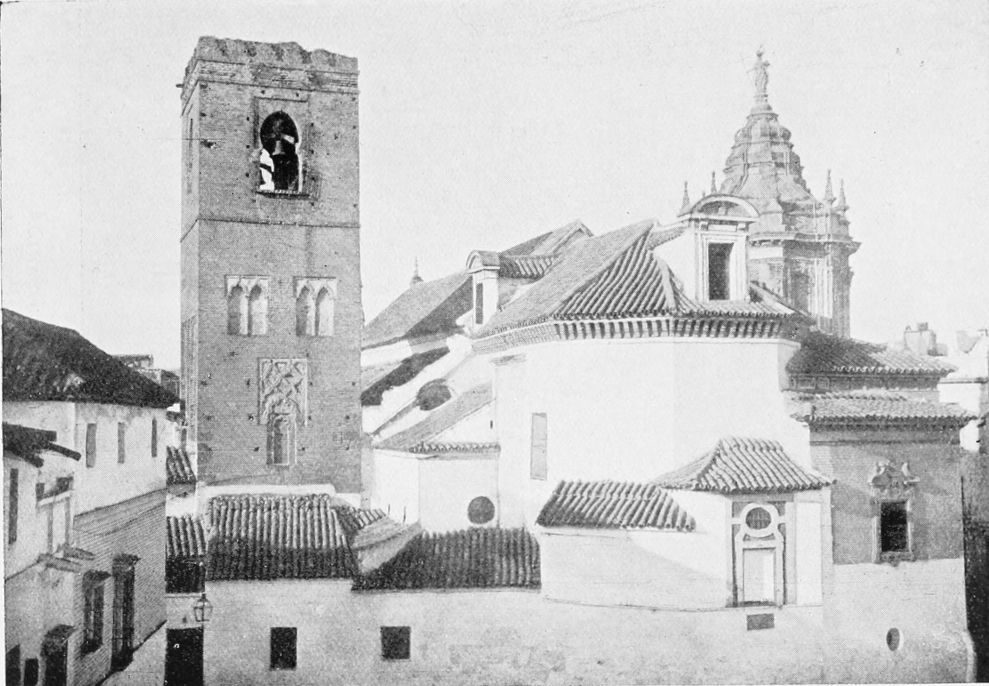
Church of Santa Catalina.
PLATE 30
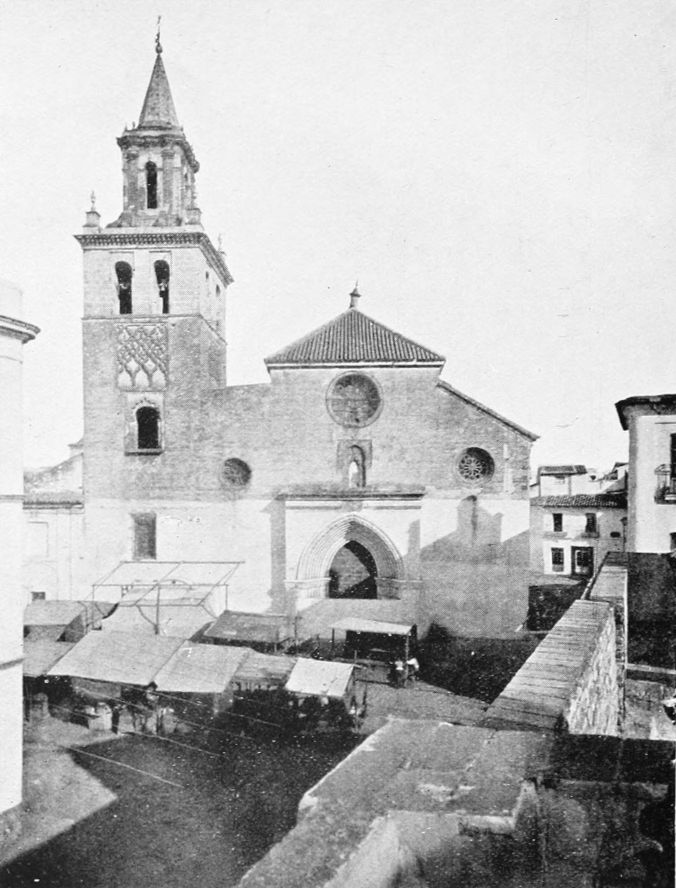
Church of Todos Santos.
PLATE 31
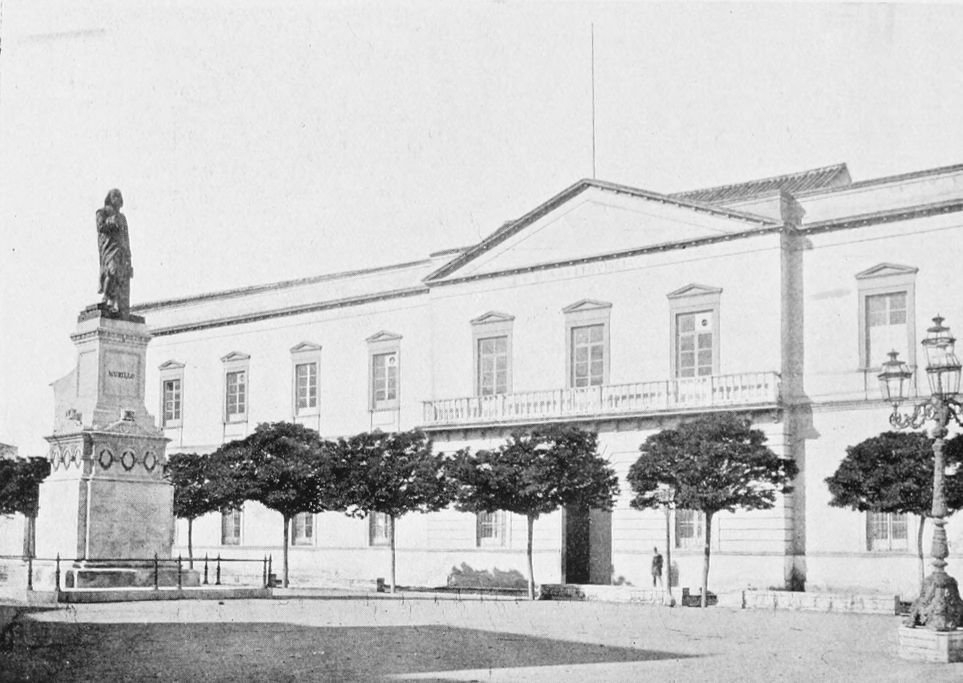
The Provincial Museum, with Murillo’s Statue.
PLATE 32
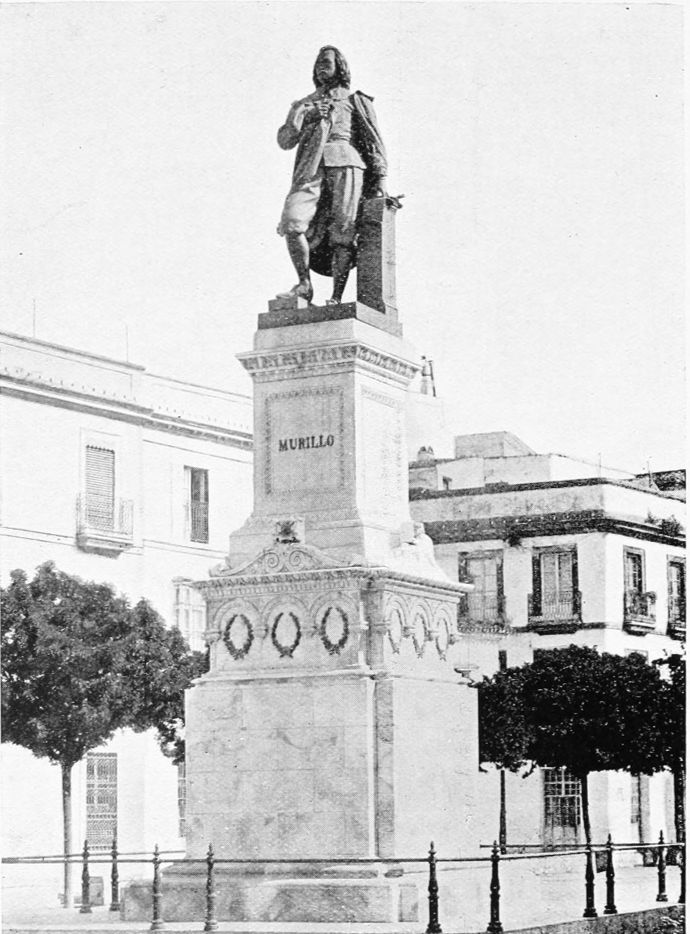
Statue of Murillo.
PLATE 33
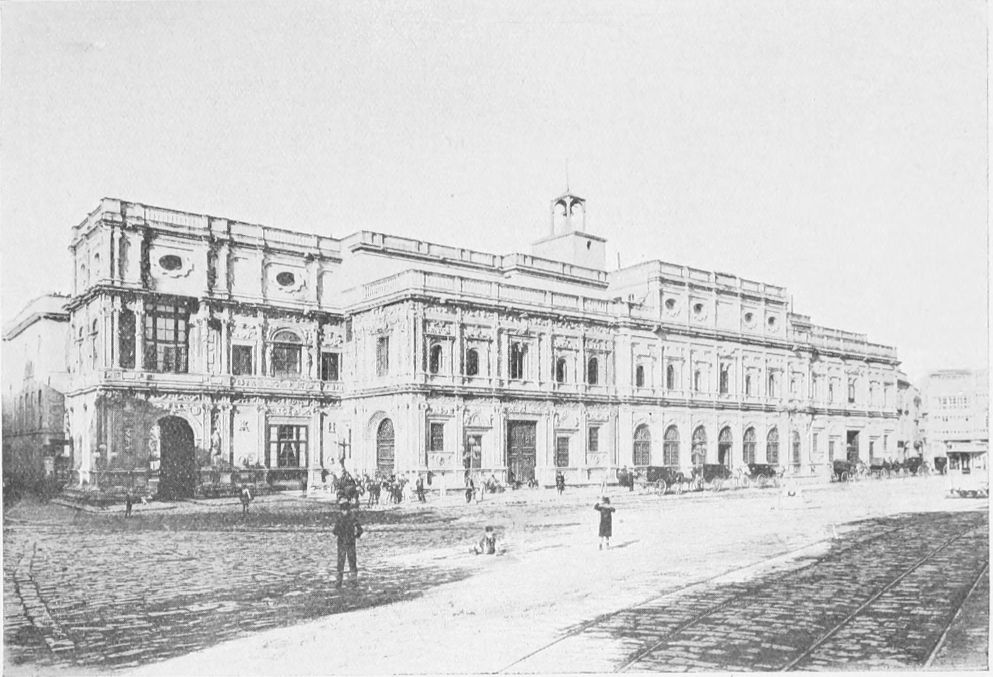
General View of the Town Hall.
PLATE 34
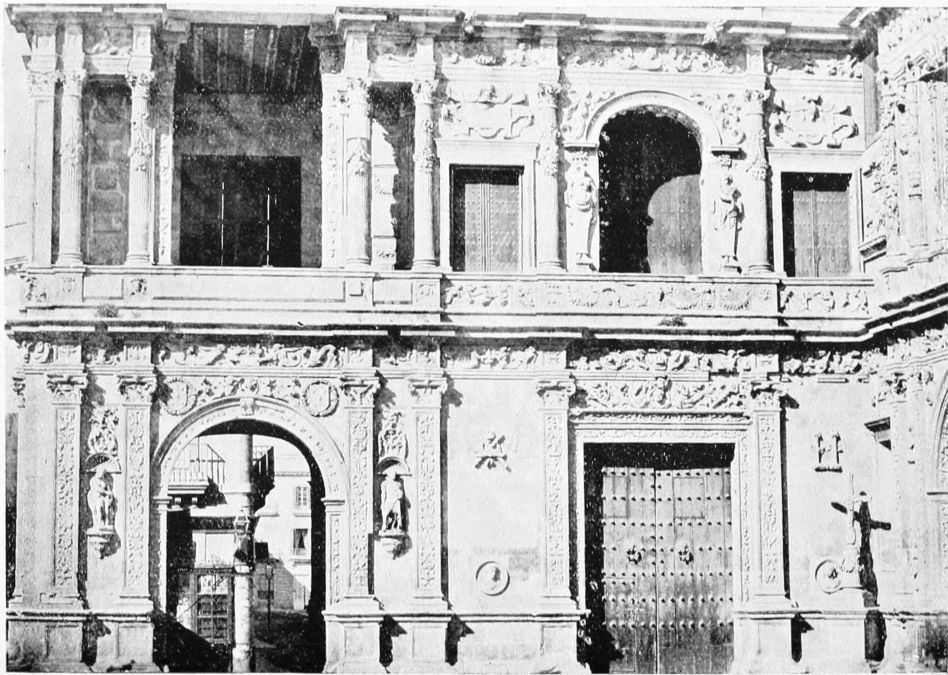
The Town Hall, Left Side.
PLATE 35
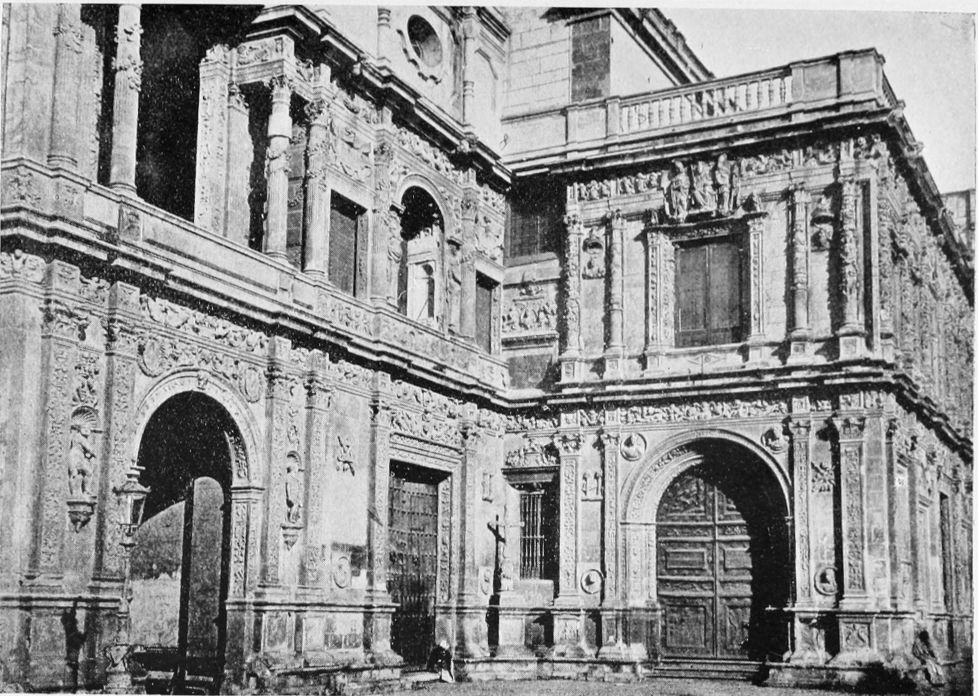
The Town Hall, Left Side, Detail of the Interior Angle.
PLATE 36
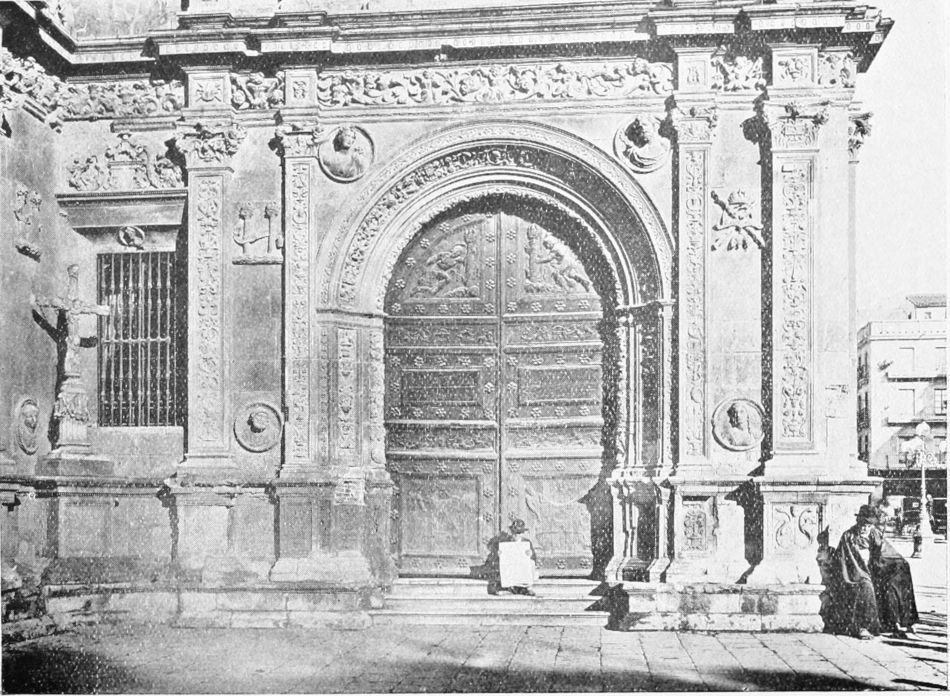
Door of the Town Hall.
PLATE 37
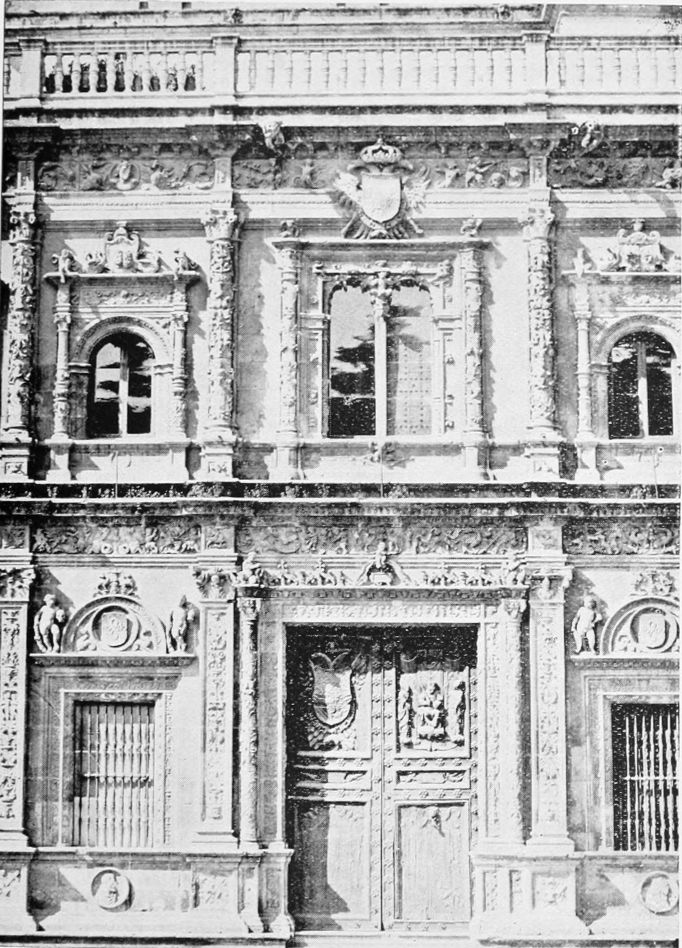
The Town Hall, Detail of the Principal Part.
PLATE 38
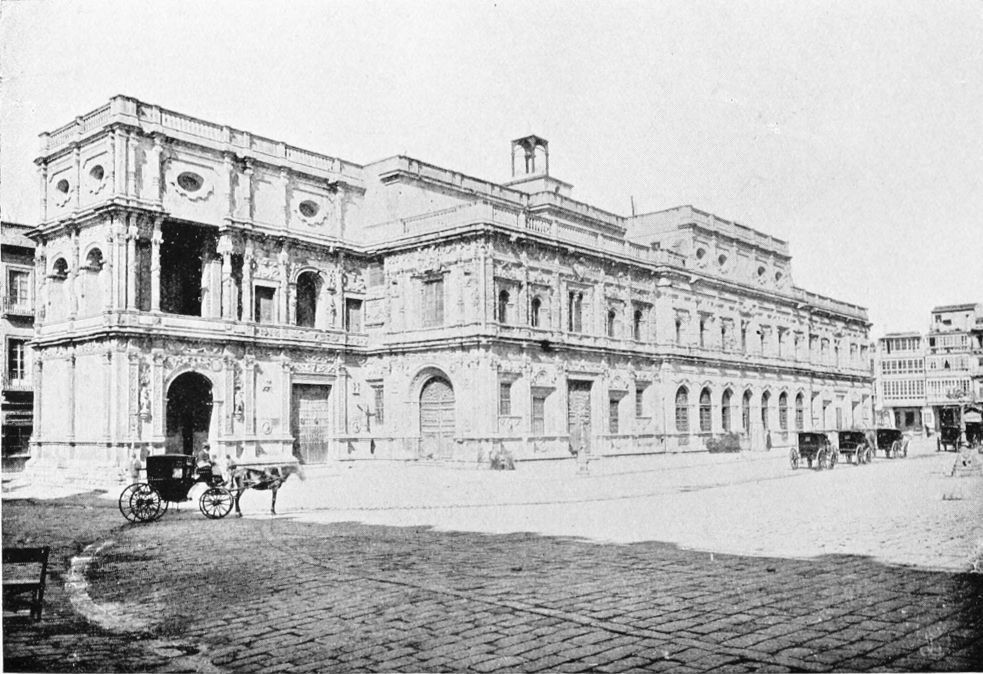
General View of the Town Hall.
PLATE 39
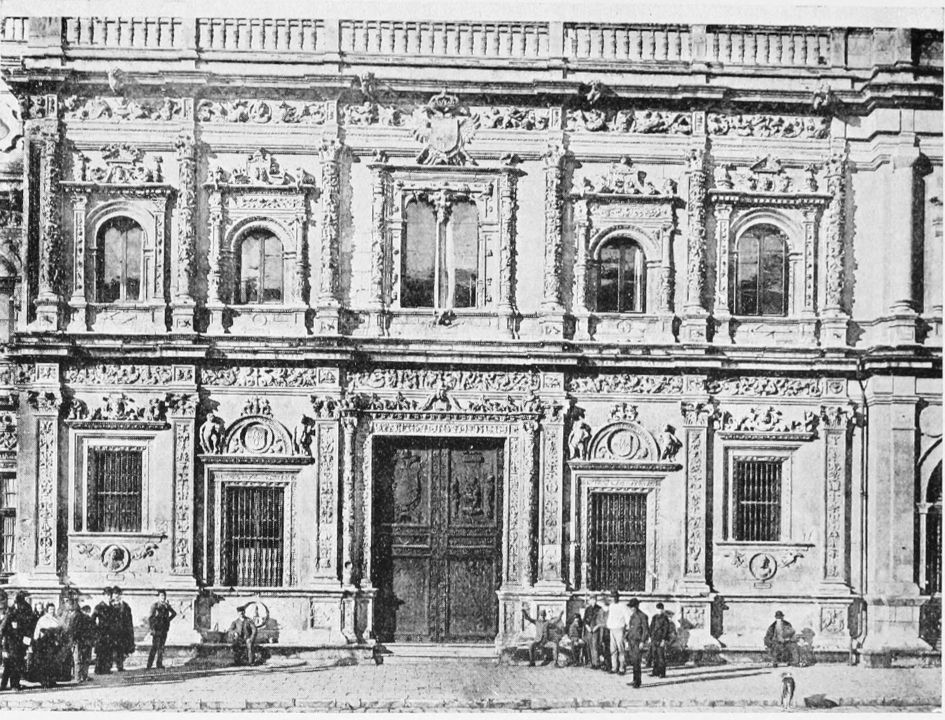
The Town Hall, Detail of the Façade.
PLATE 40
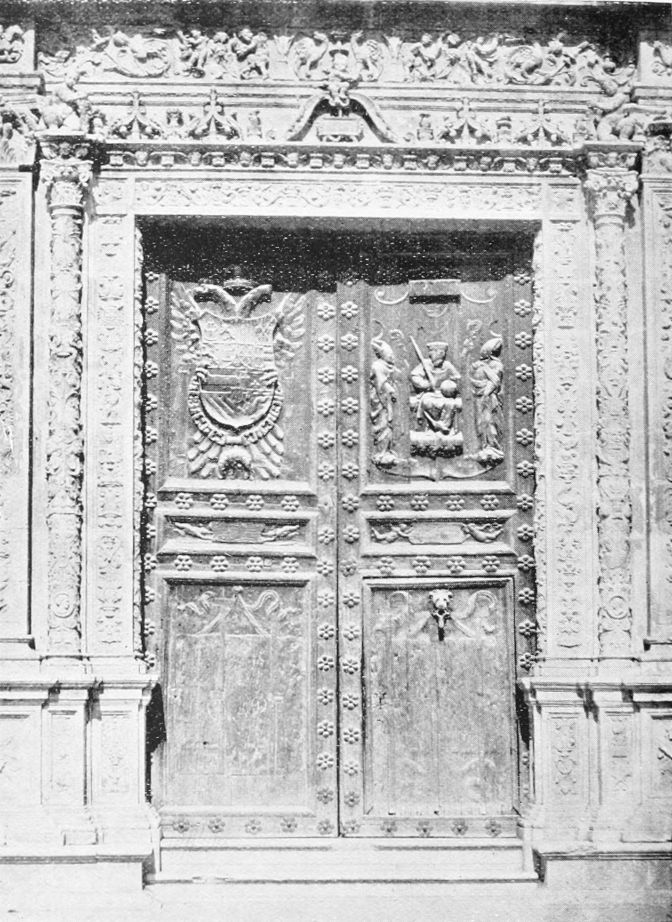
The Town Hall, Detail of the Principal Door.
PLATE 41
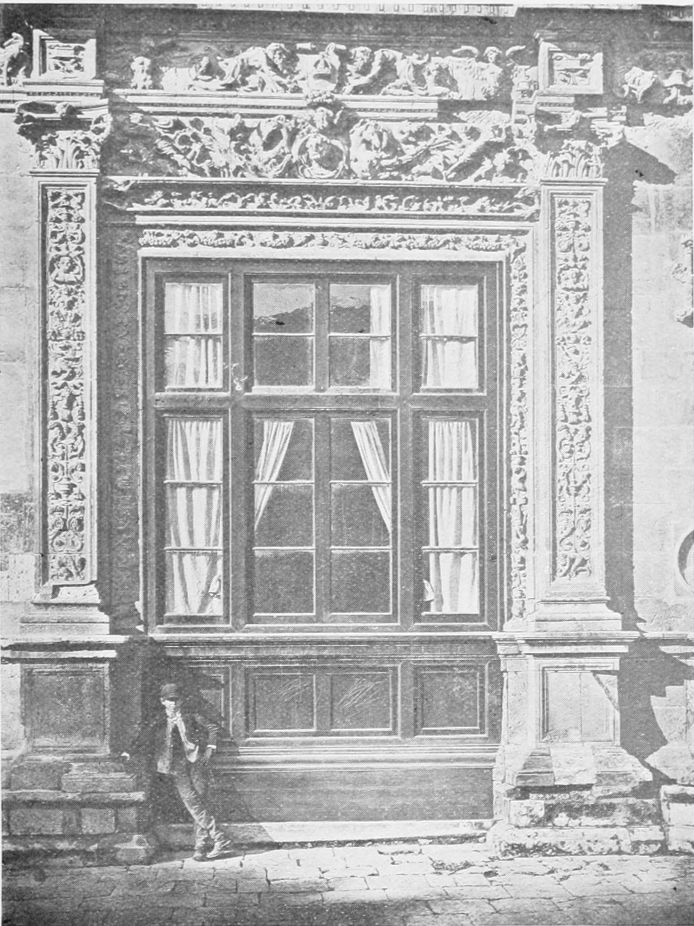
Window in the Town Hall.
PLATE 42
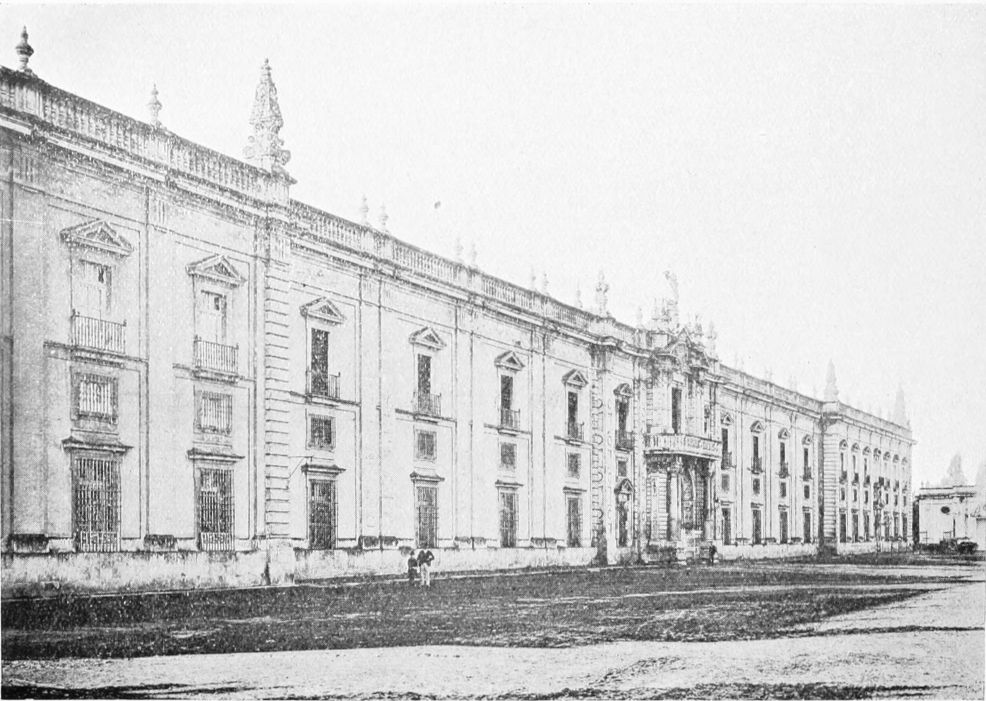
Principal Façade of the Tobacco Factory.
PLATE 43
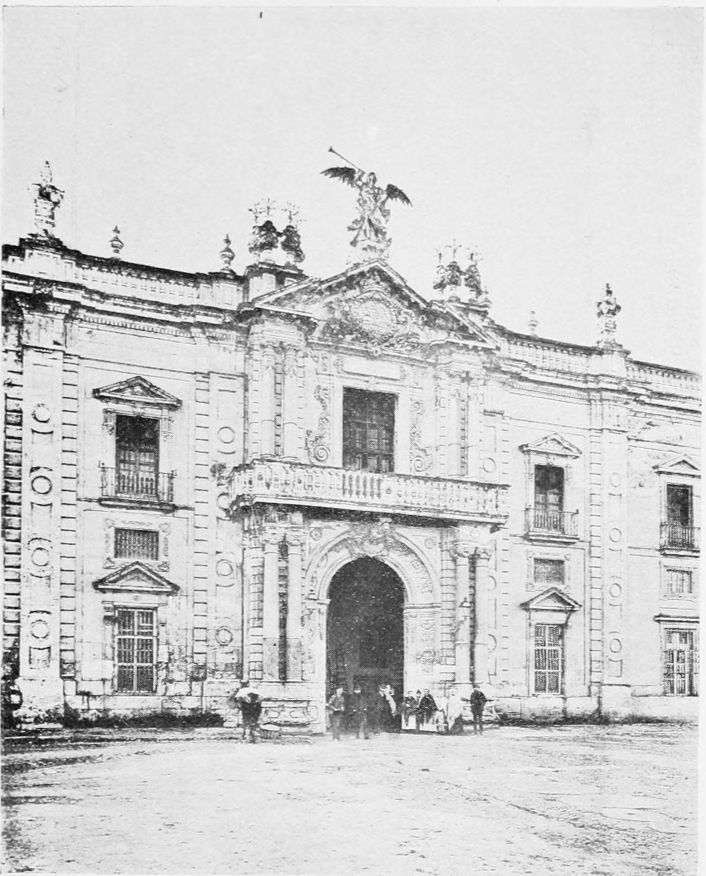
The Tobacco Factory.
PLATE 44
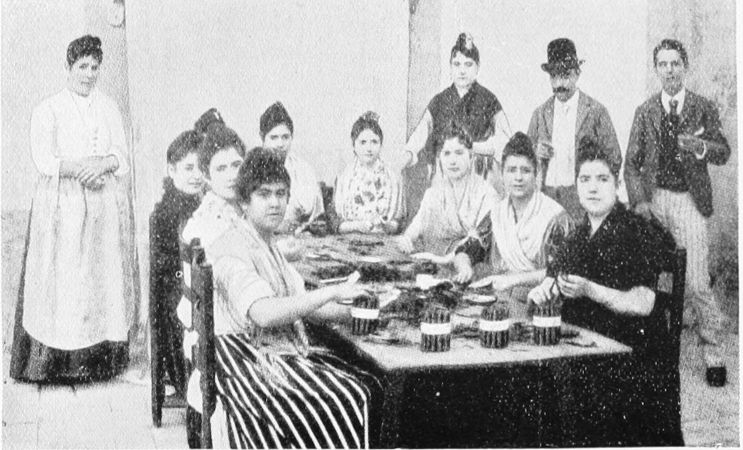
Cigar Makers, Seville.
PLATE 45
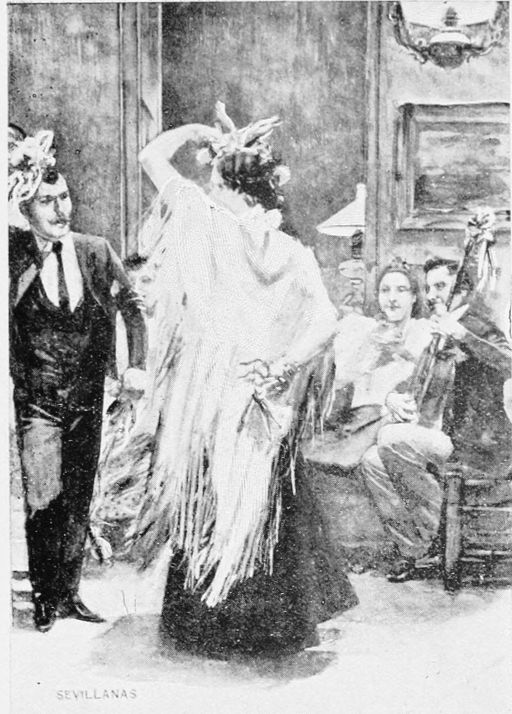
The “Sevillanas” Dance.
PLATE 46
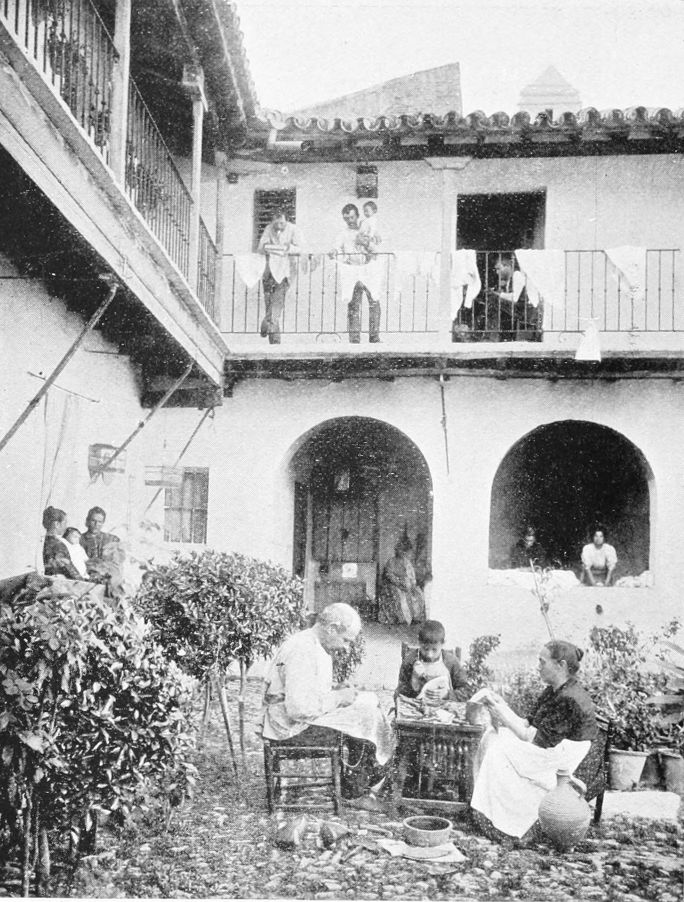
Sevillian Costumes—A Courtyard.
PLATE 47
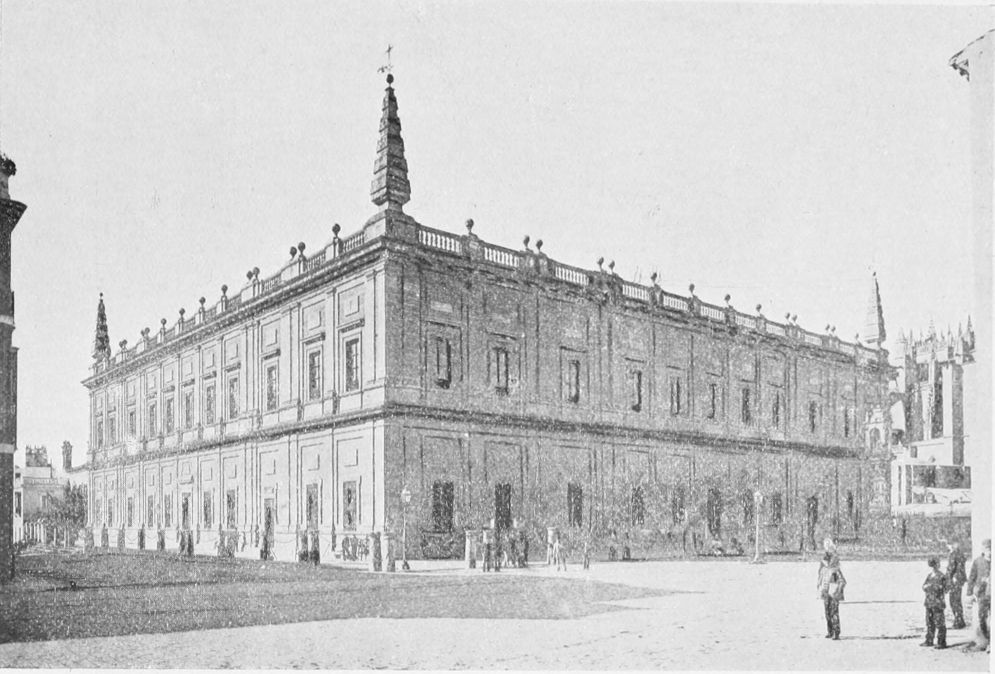
General View of the Exchange.
PLATE 48
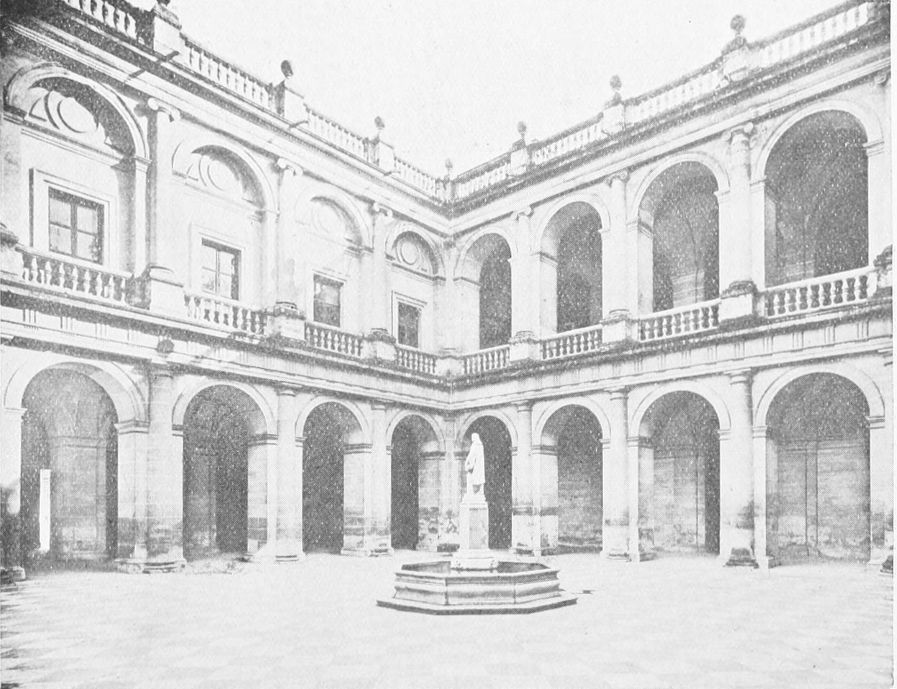
Court in the Exchange.
PLATE 49
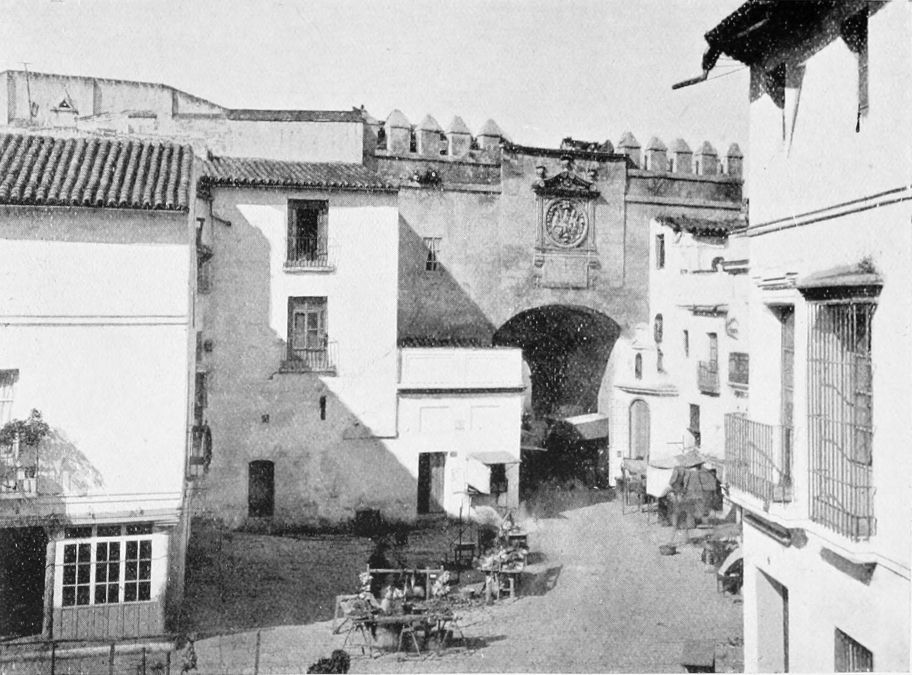
The Aceite Postern and Ancient Ramparts.
PLATE 50
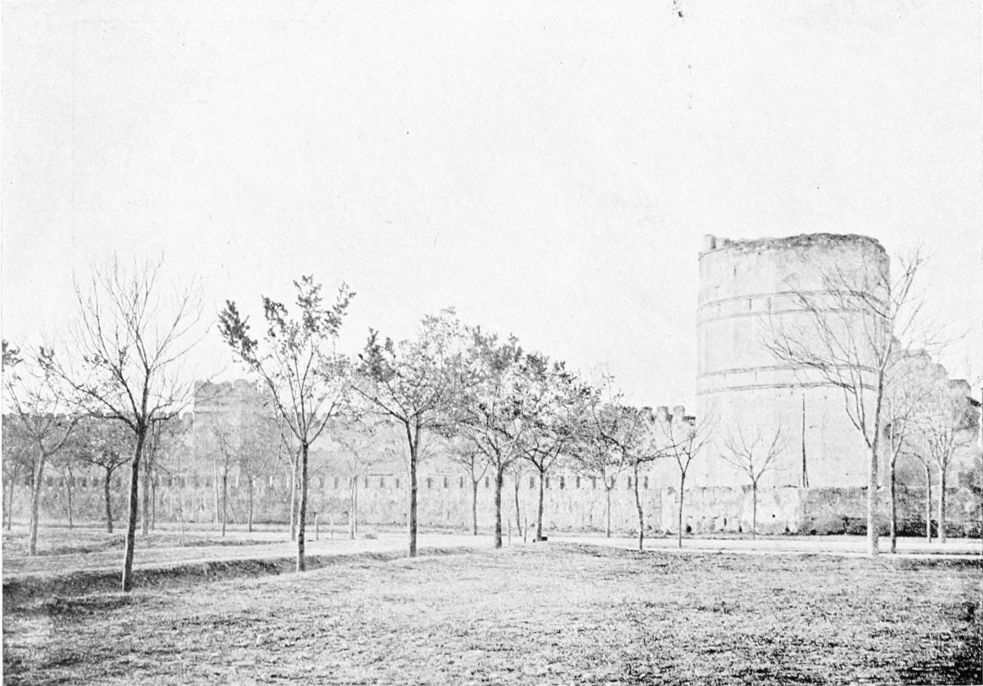
The Roman Walls near the Gate of the Macarena.
PLATE 51
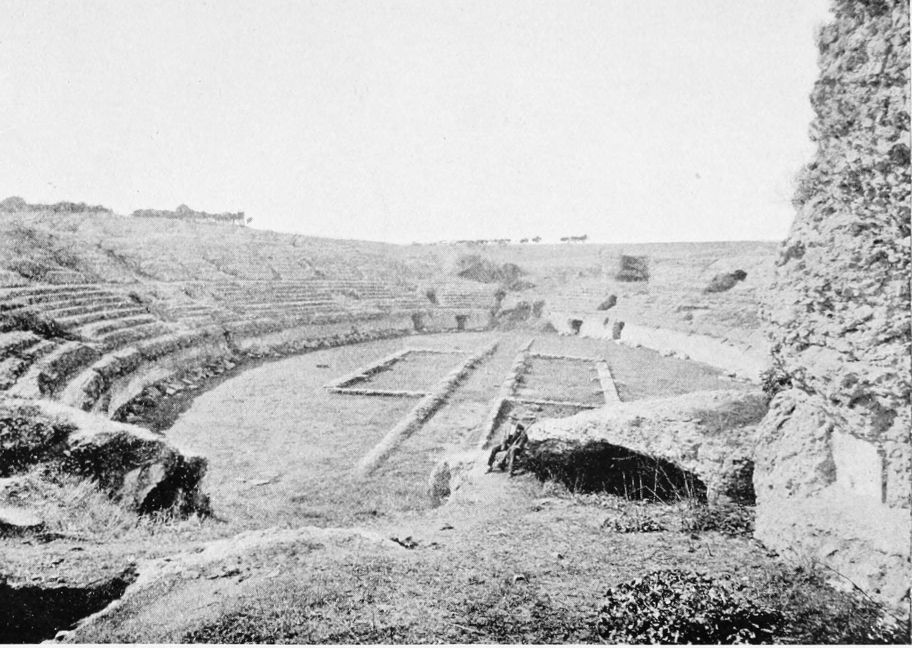
The Roman Amphitheatre of Italica.
PLATE 52
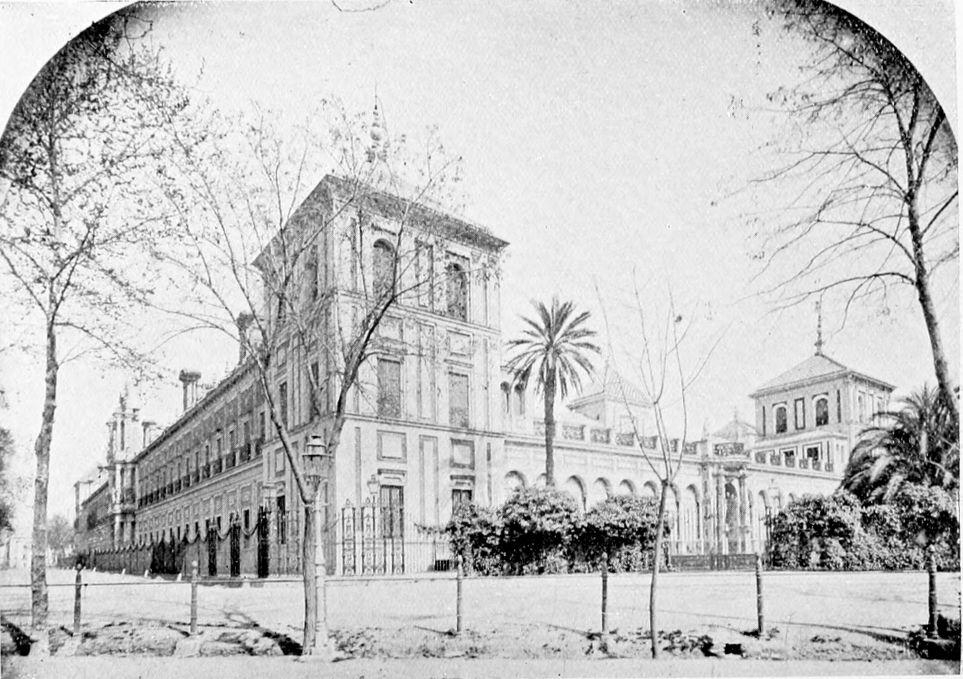
General View of the Palace of San Telmo from the River.
PLATE 53
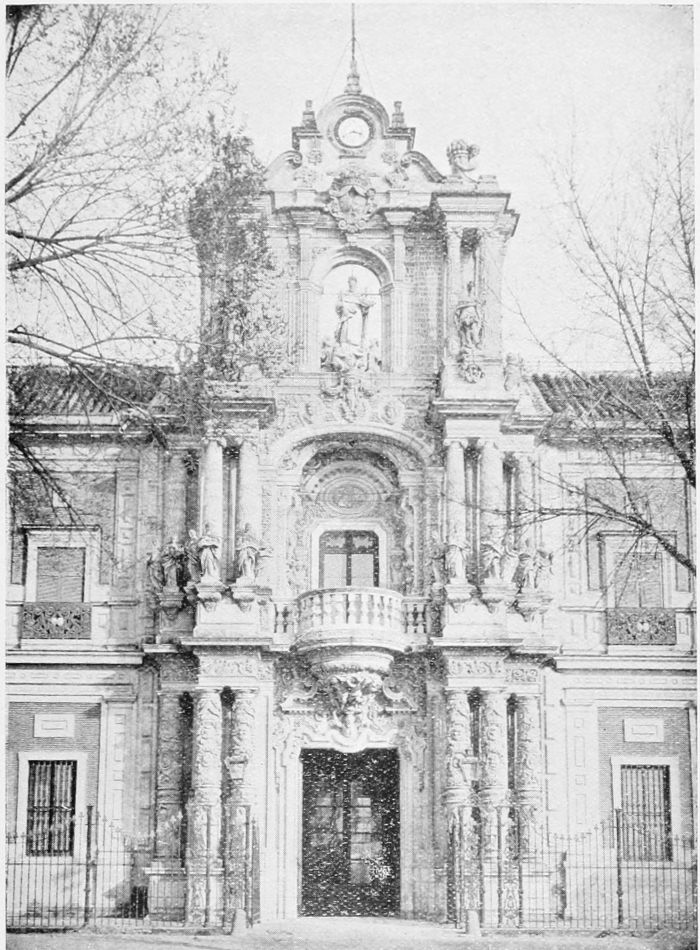
Principal Portal of the San Telmo Palace.
PLATE 54
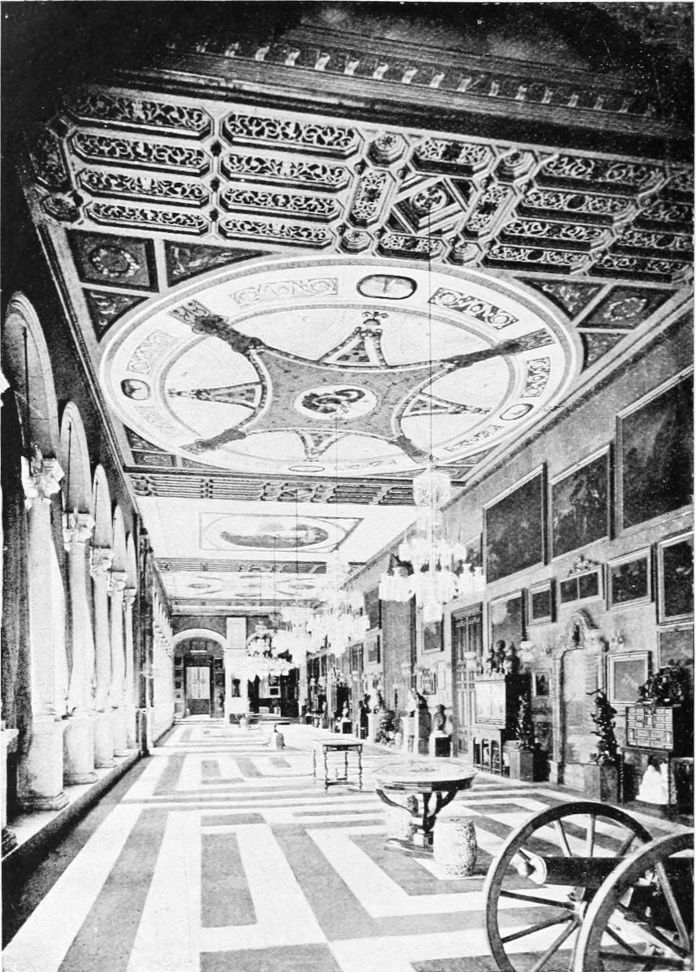
Interior of the Hall of Columns in the San Telmo Palace.
PLATE 55
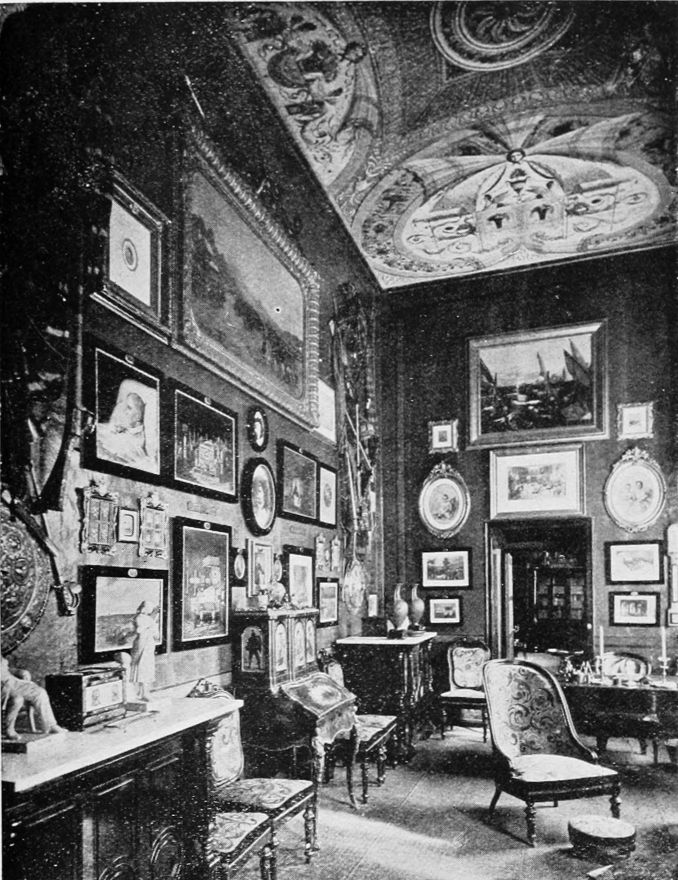
Interior View of the Duke of Montpensier’s Study In San Telmo.
PLATE 56
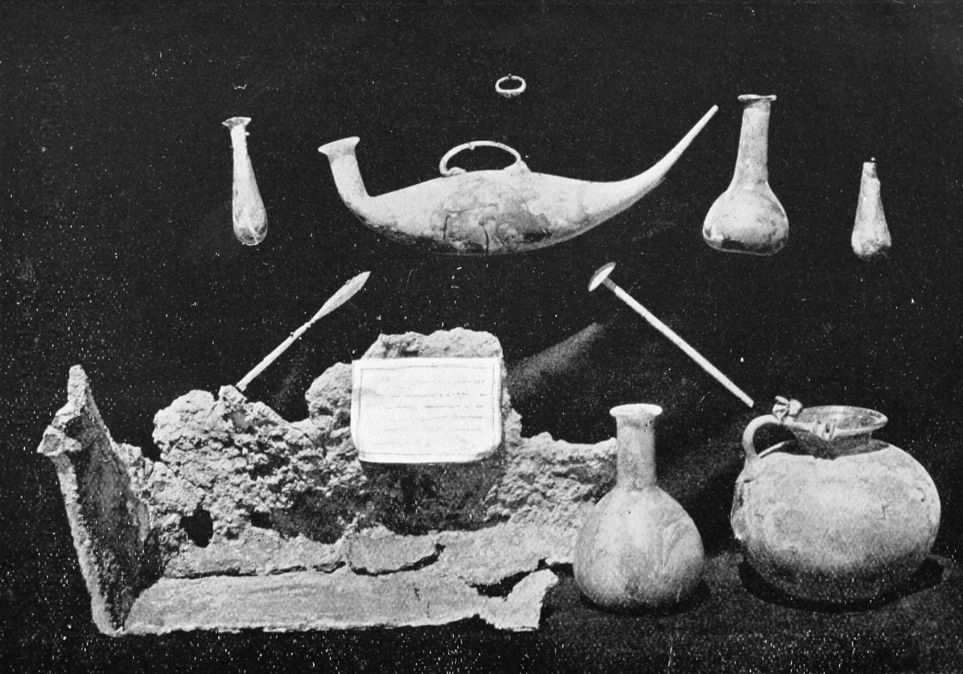
Various Objects found in the Sepulchres at San Telmo.
(In the Palace of San Telmo.)
PLATE 57
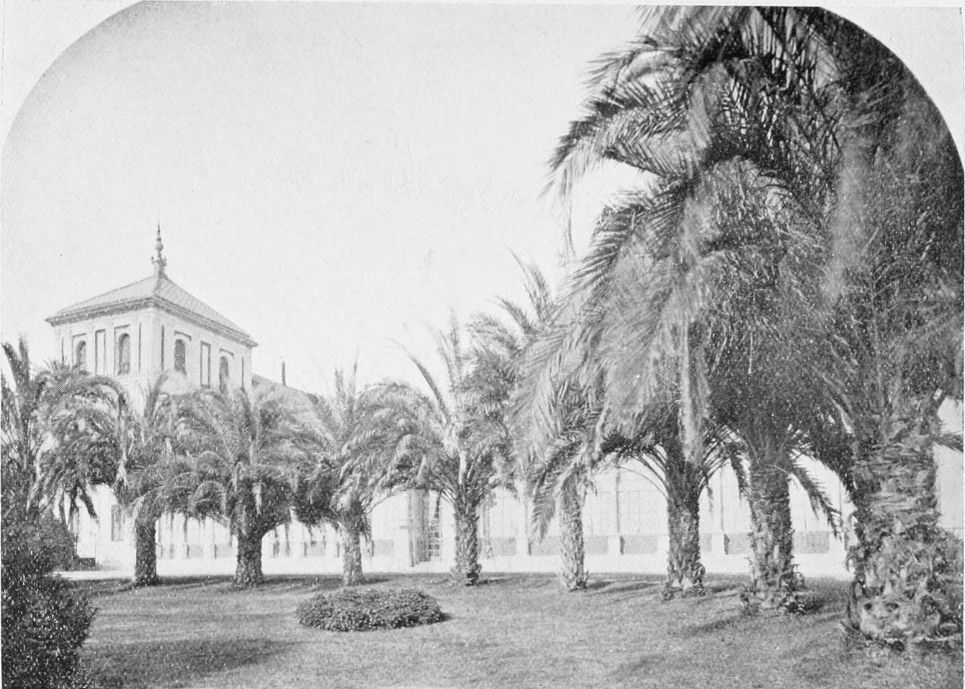
Palms in the Gardens of San Telmo.
PLATE 58
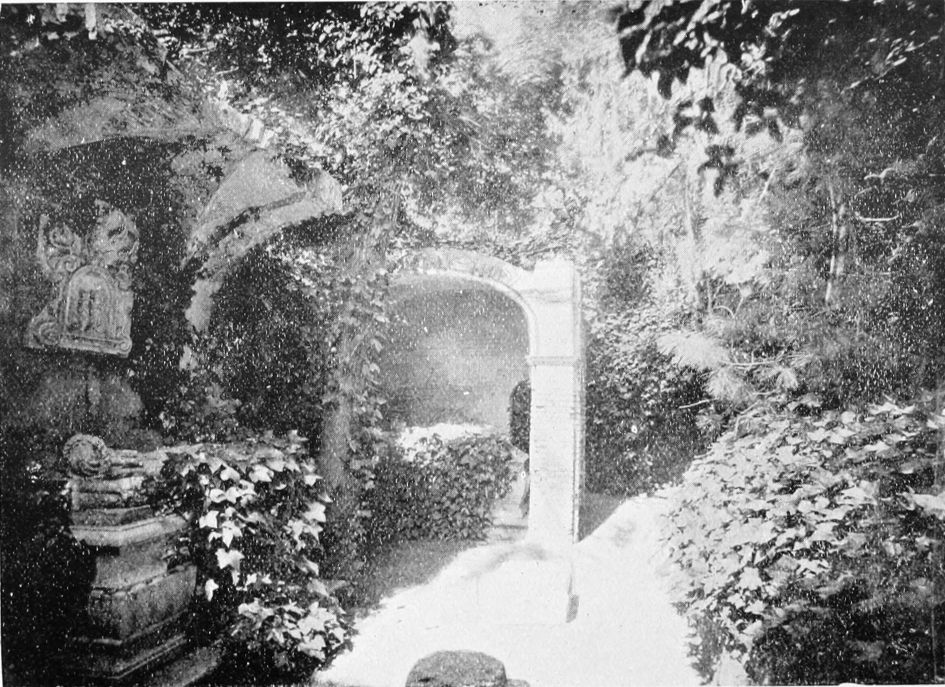
The Sepulchres of the Victims of Don Juan Tenorio in the Gardens of San Telmo.
PLATE 59
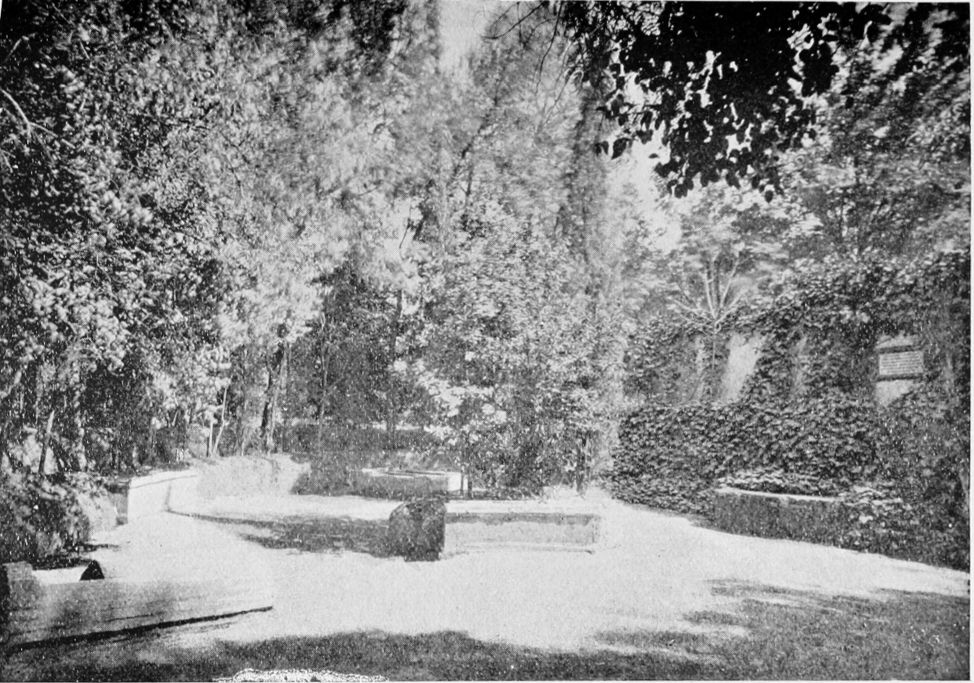
The Roman Sepulchres in the Gardens of San Telmo.
PLATE 60
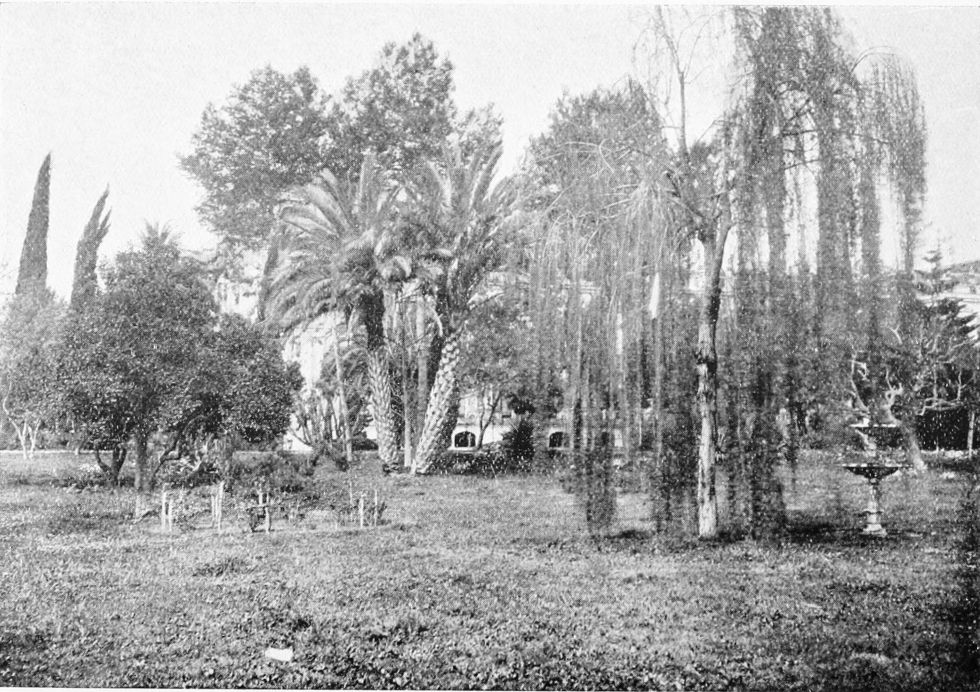
View in the Gardens of San Telmo.
PLATE 61
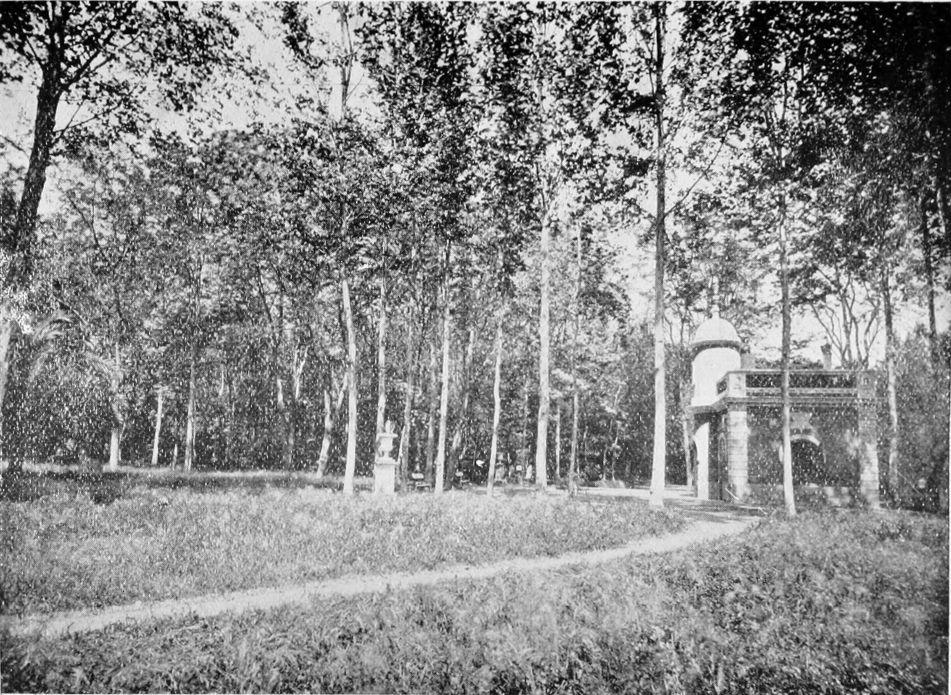
The Aviary in the Gardens of San Telmo.
PLATE 62
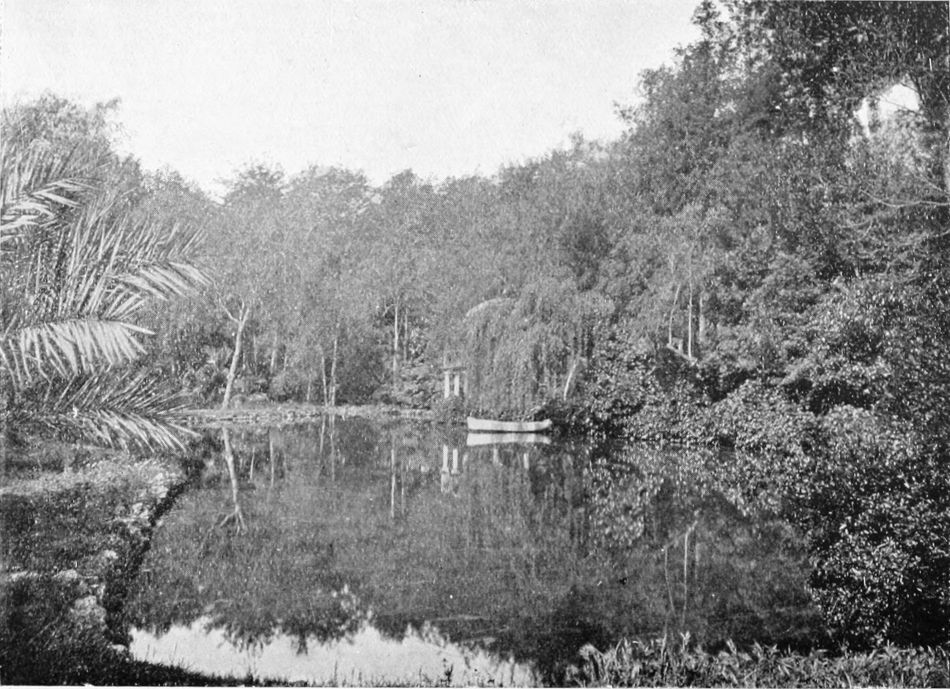
The River in the Gardens of San Telmo.
PLATE 63
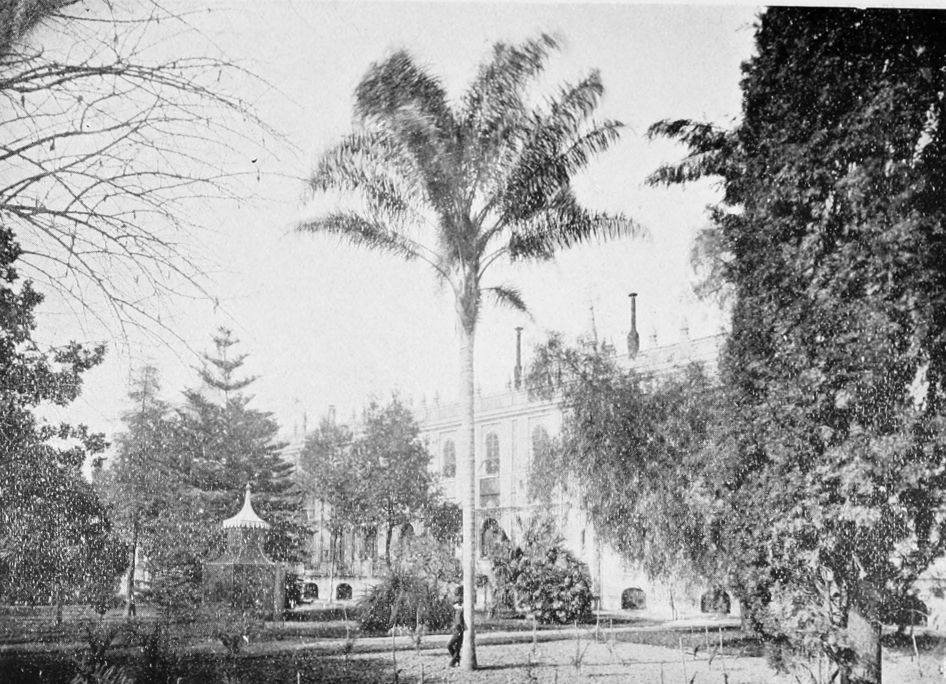
The Cocoa Tree and East Side of San Telmo.
PLATE 64
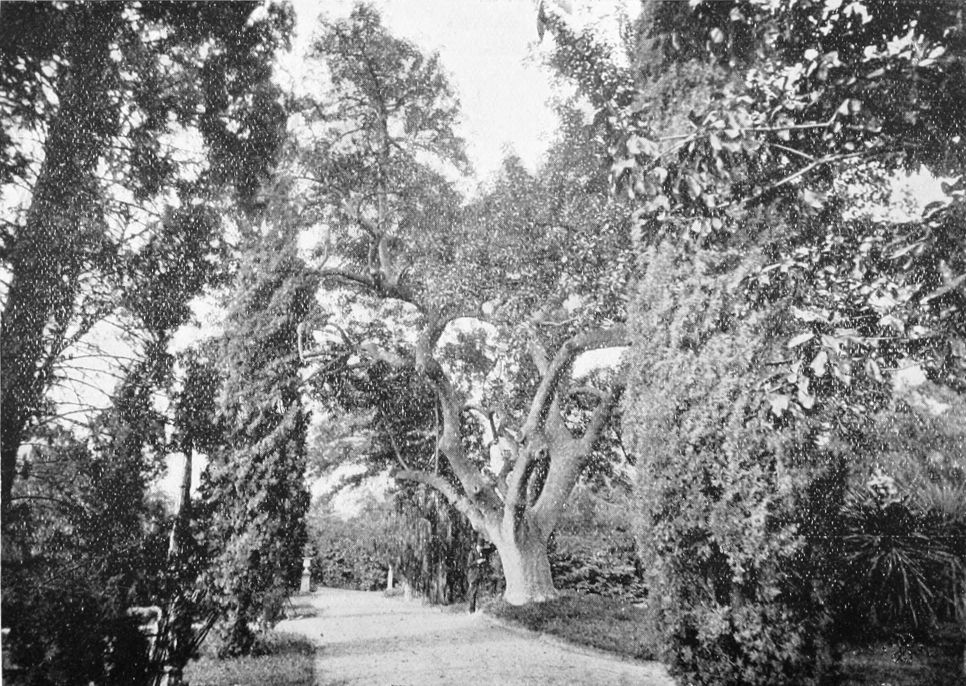
The Zapote, a Tree in the Gardens of San Telmo.
PLATE 65
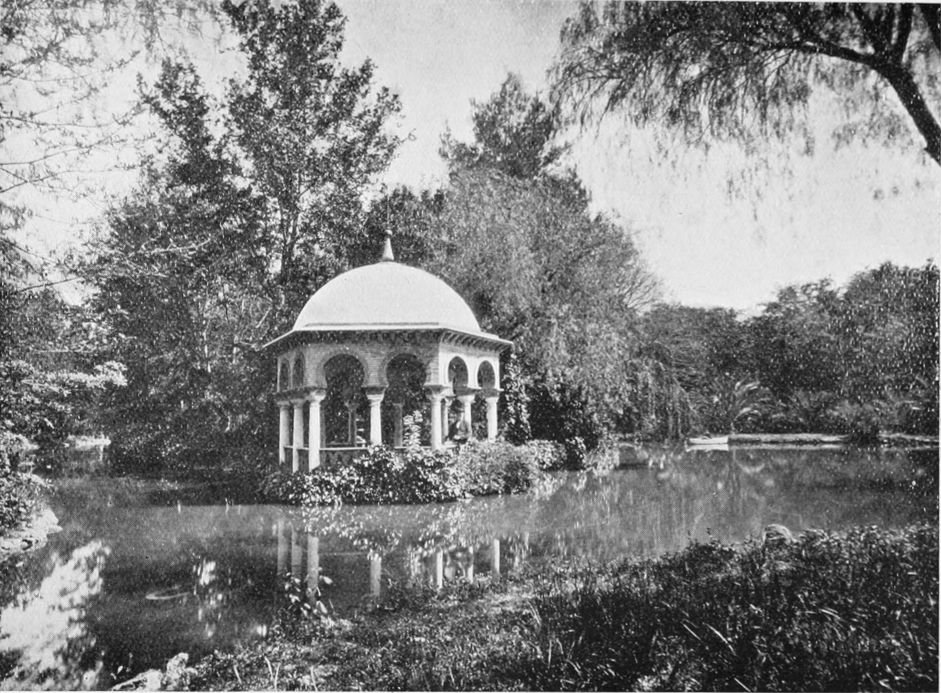
The Island and River in the Gardens of San Telmo.
PLATE 66
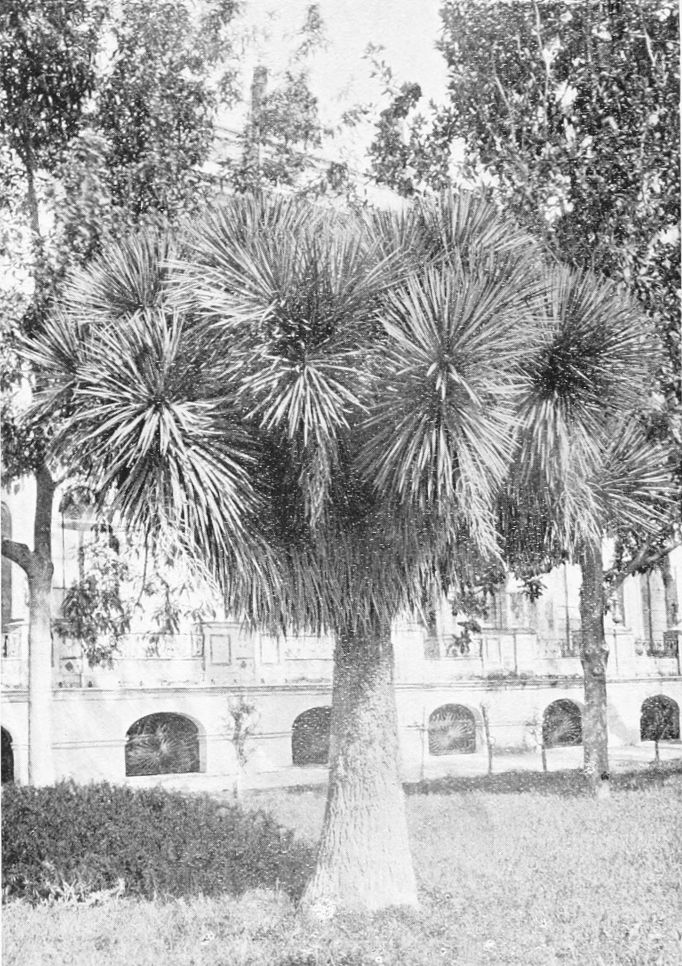
The Yucca, a rare Tree in the Gardens of San Telmo.
PLATE 67
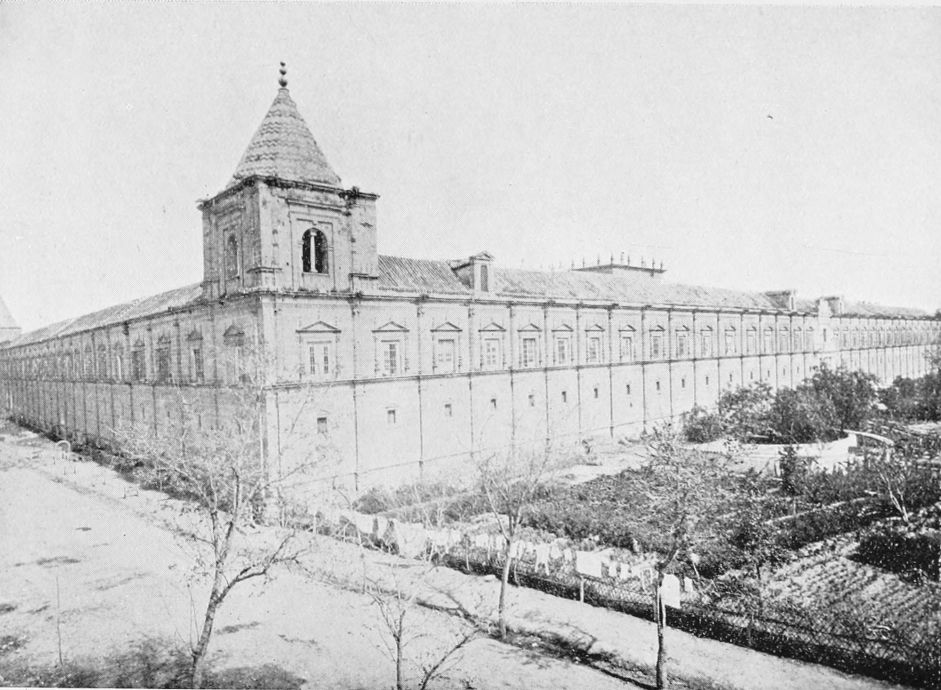
General View of the Hospital de la Sangre.
PLATE 68
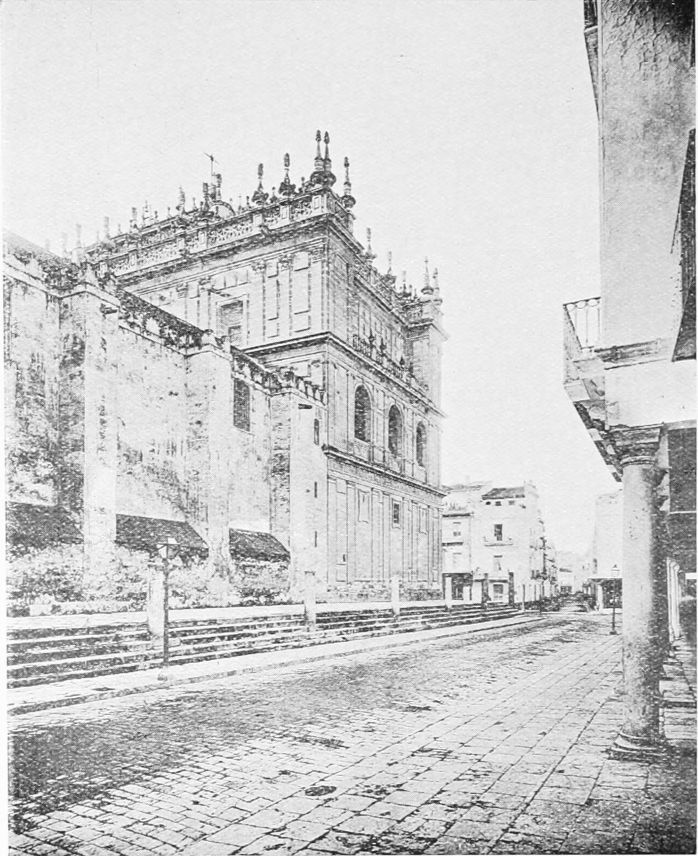
Church of the Sagrario, North Side.
PLATE 69
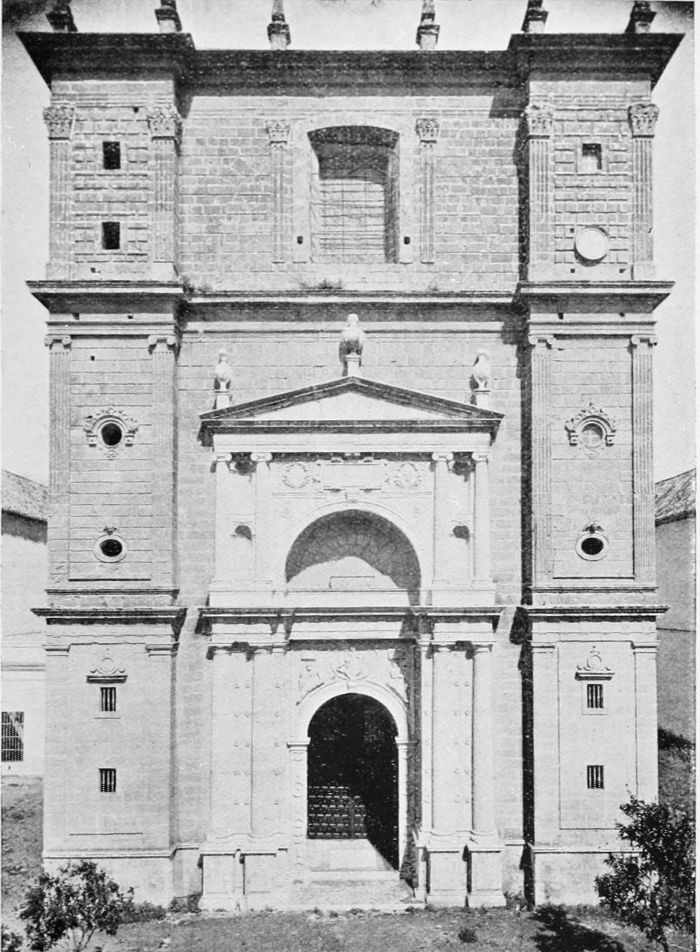
Principal Façade of the Hospital de la Sangre.
PLATE 70
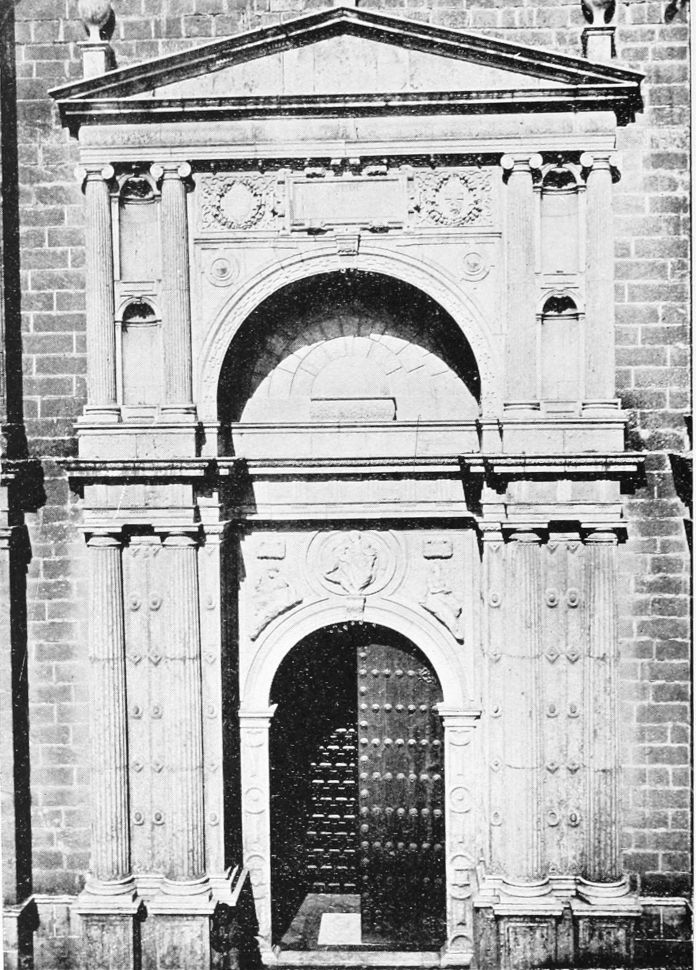
Porch of the Church of the Hospital de la Sangre.
PLATE 71
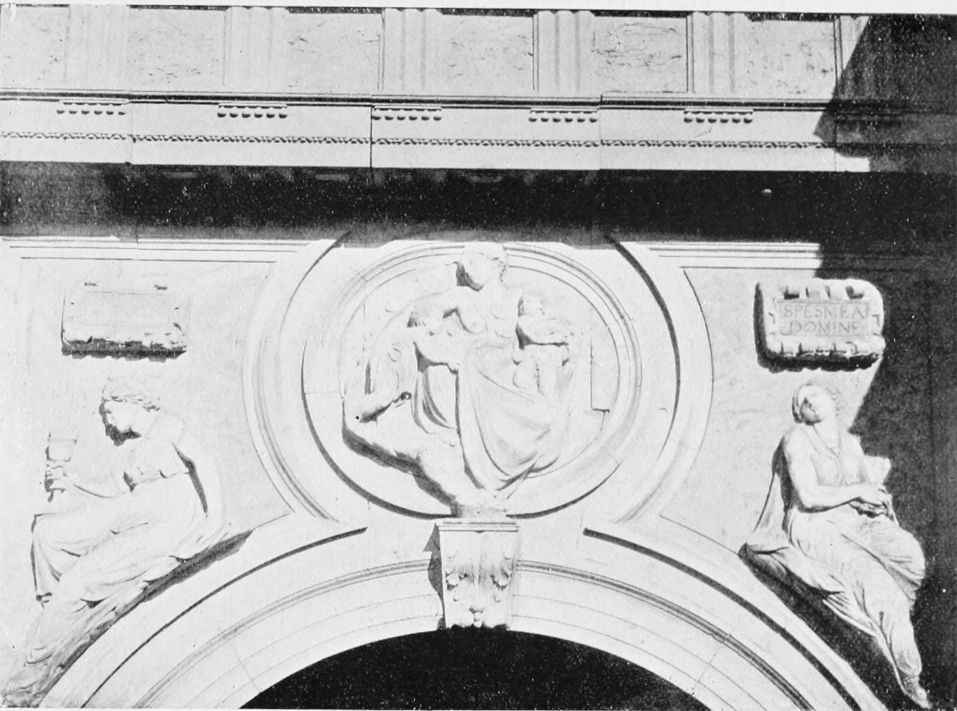
Bas-relief. Hospital de la Sangre, the Work of Torregiano.
PLATE 72
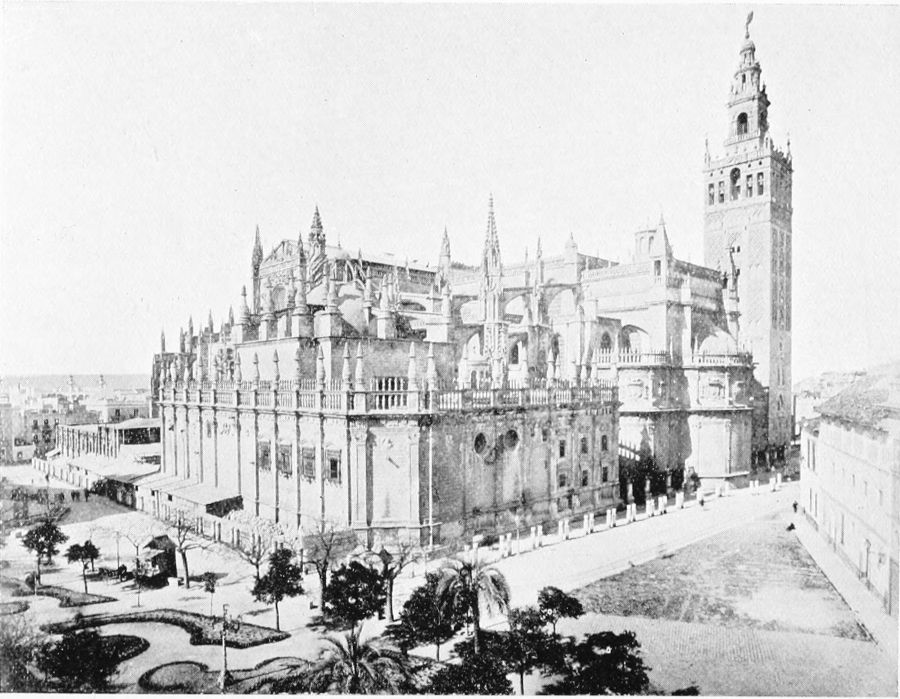
General View of the Exterior of the Cathedral.
PLATE 73
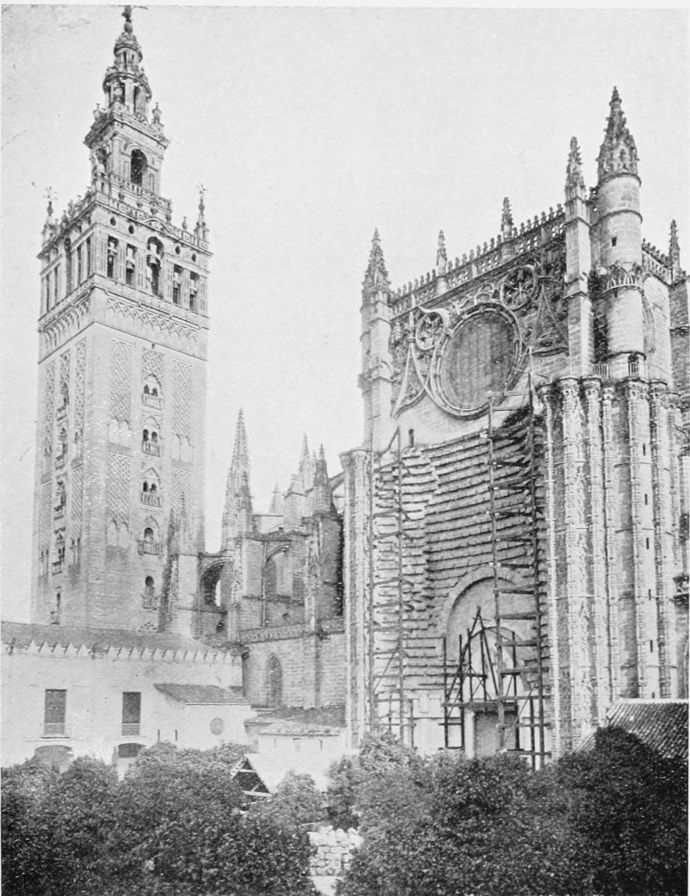
The Giralda, from the Patio de los Naranjos.
PLATE 74
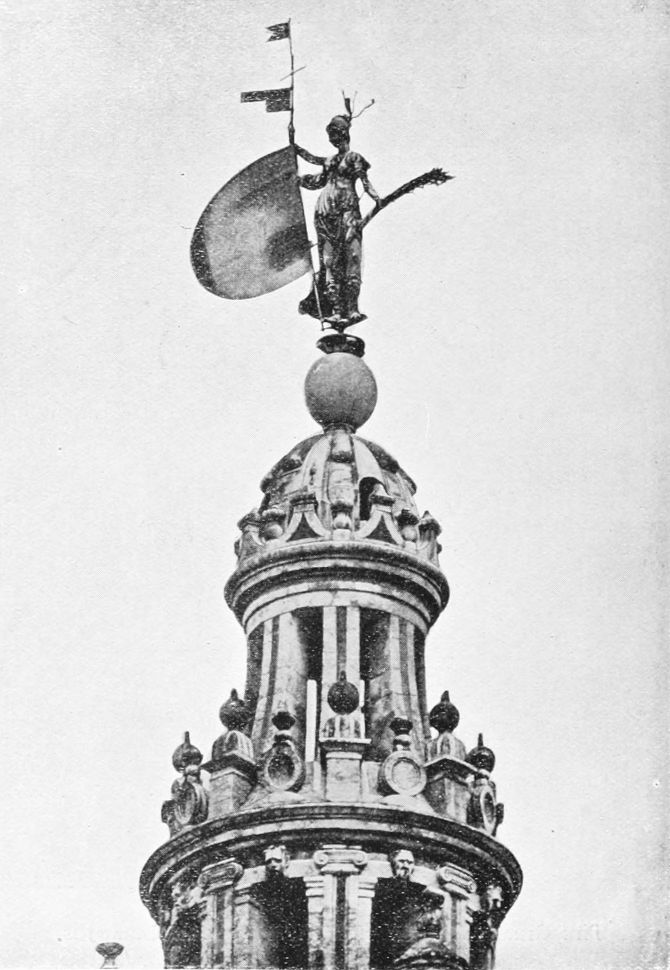
The Top of the Giralda.
PLATE 75
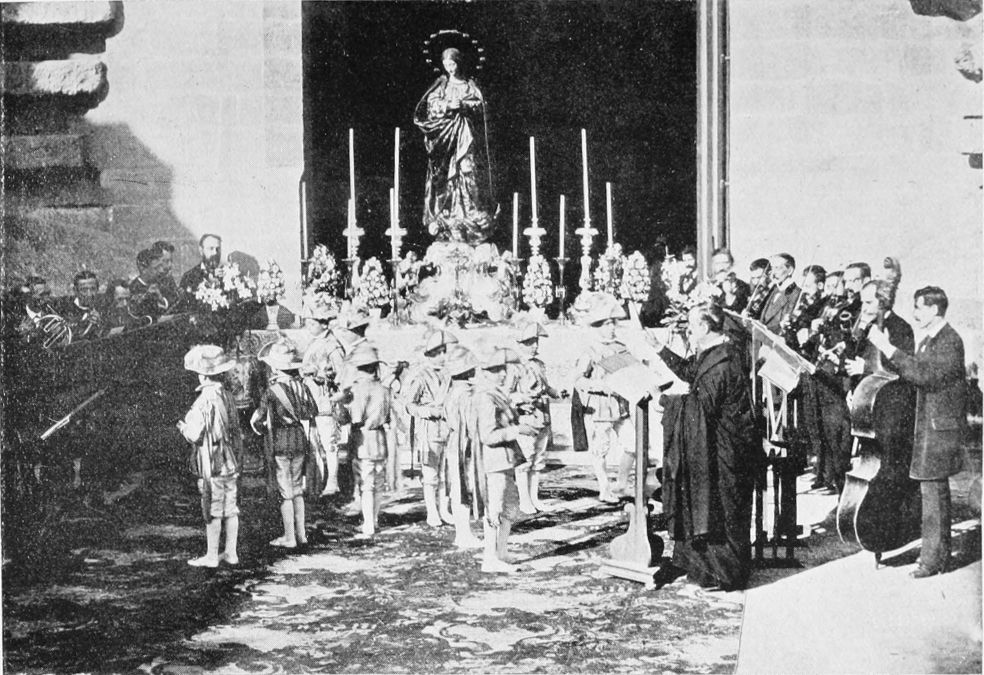
The Dancing Choir Boys, Seville Cathedral.
PLATE 76
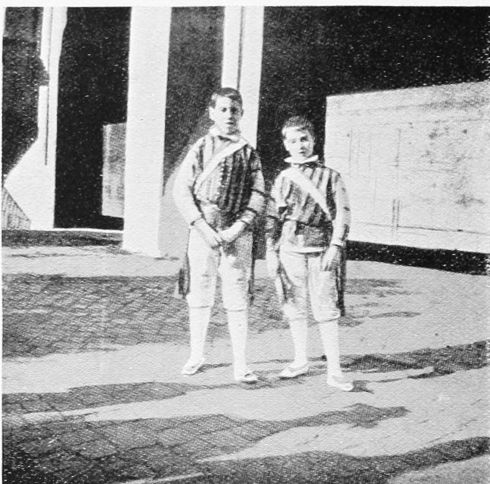
Dancing Boys, Seville Cathedral.
PLATE 77
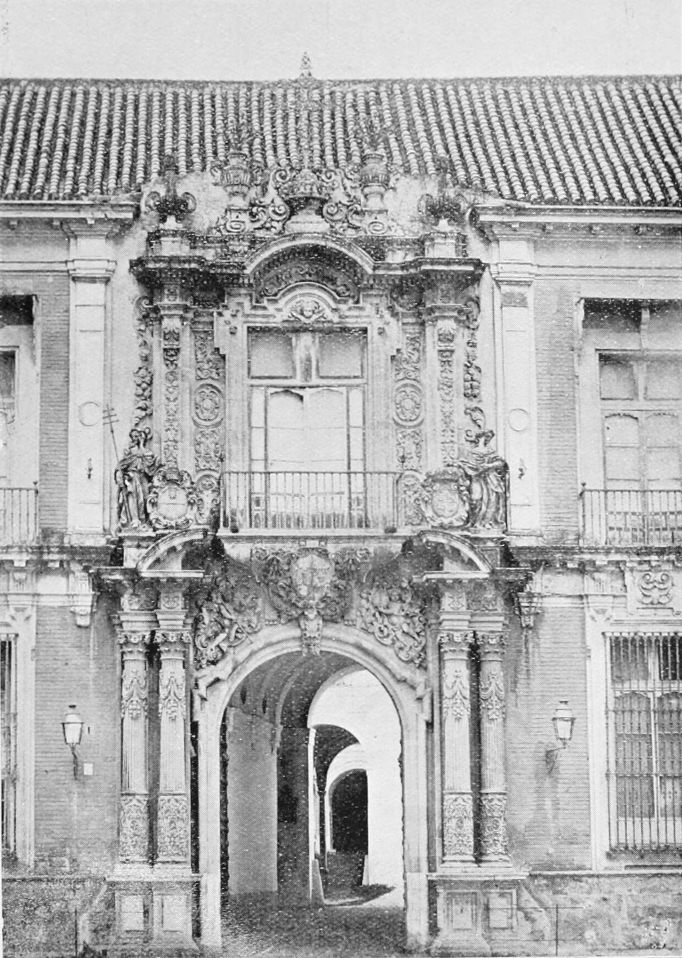
The Gate of the Archbishop.
PLATE 78
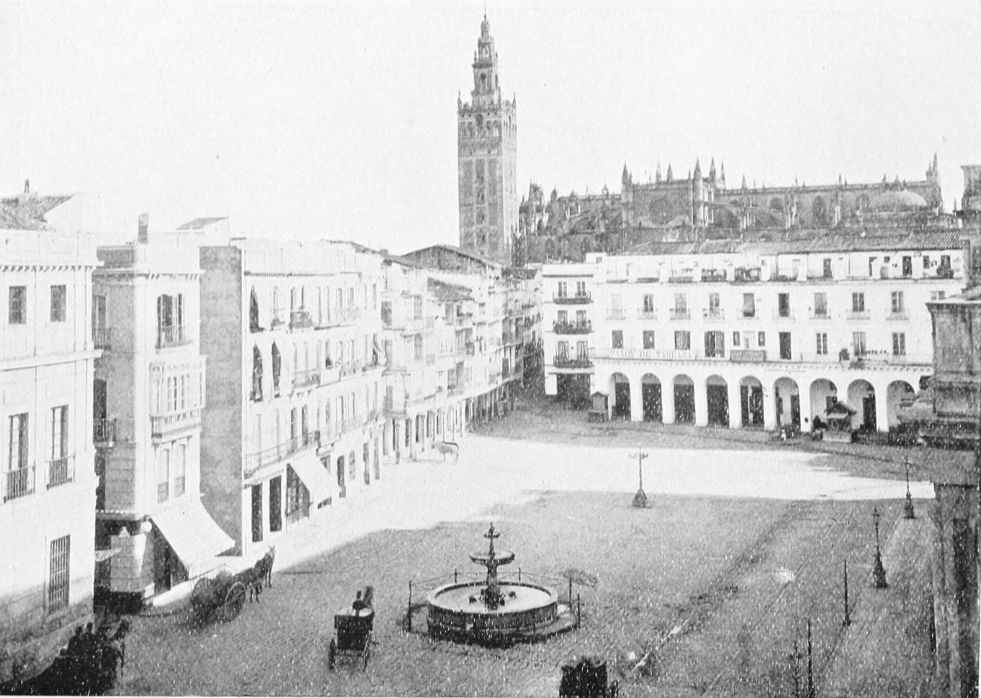
Plaza de San Francisco, with the Giralda and Cathedral.
PLATE 79
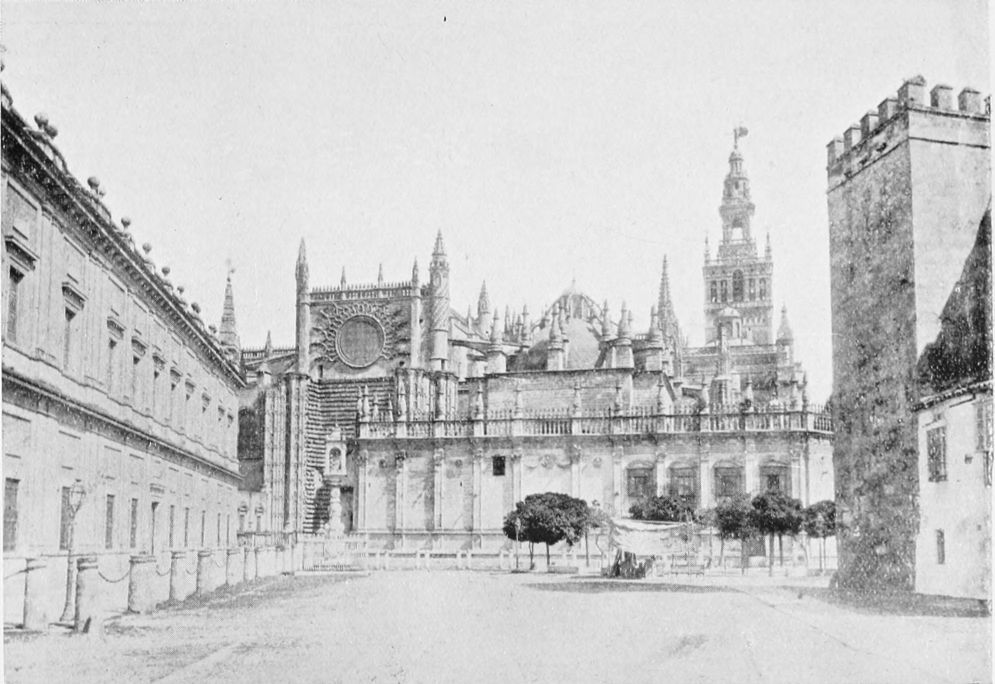
Plaza del Triunfo, the Cathedral, and the Exchange, from the Gate of the Lion.
PLATE 80
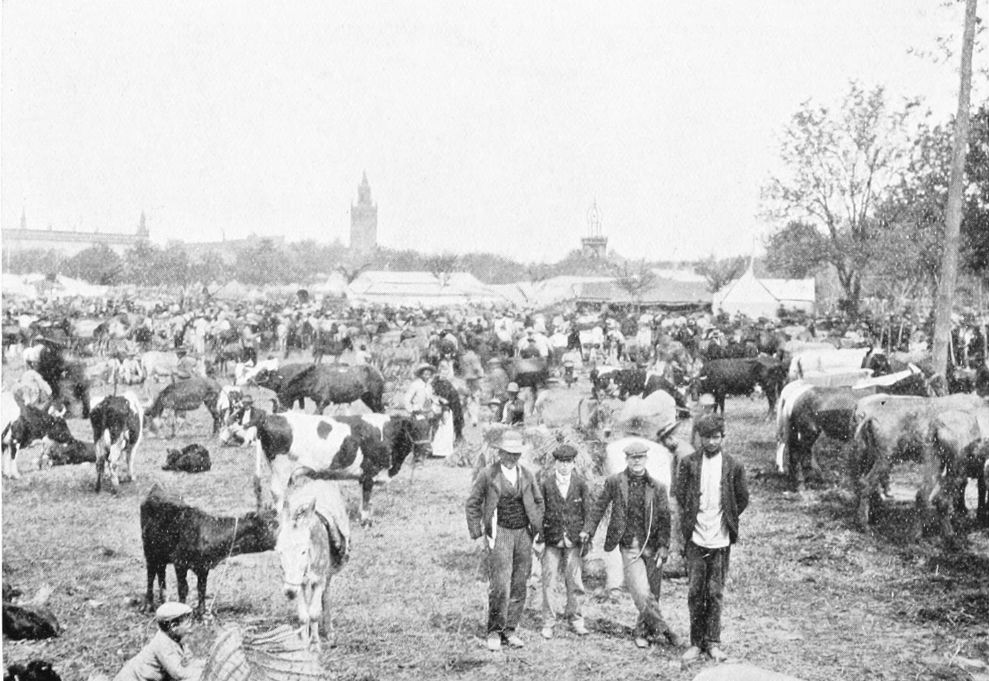
The Fête.
PLATE 81
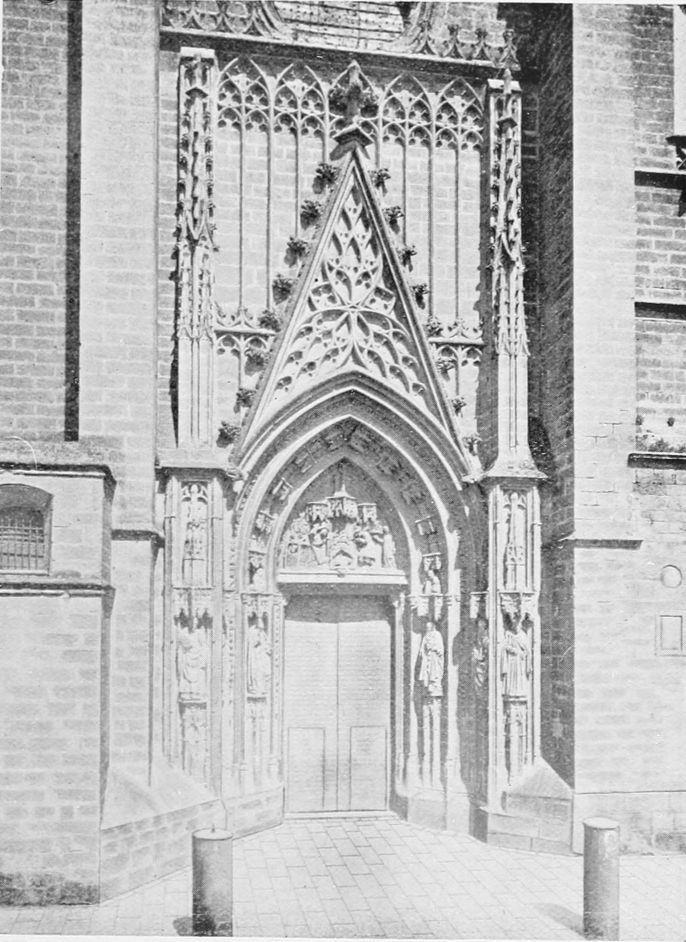
Gate of San Miguel in the Cathedral.
PLATE 82
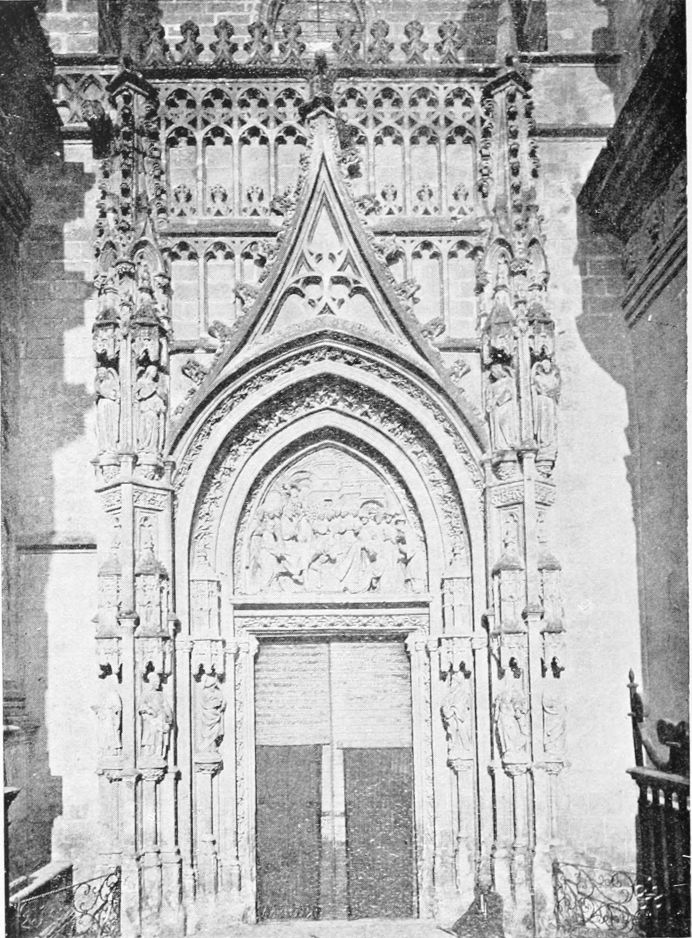
Gate of the Cathedral called de las Campanillas.
PLATE 83
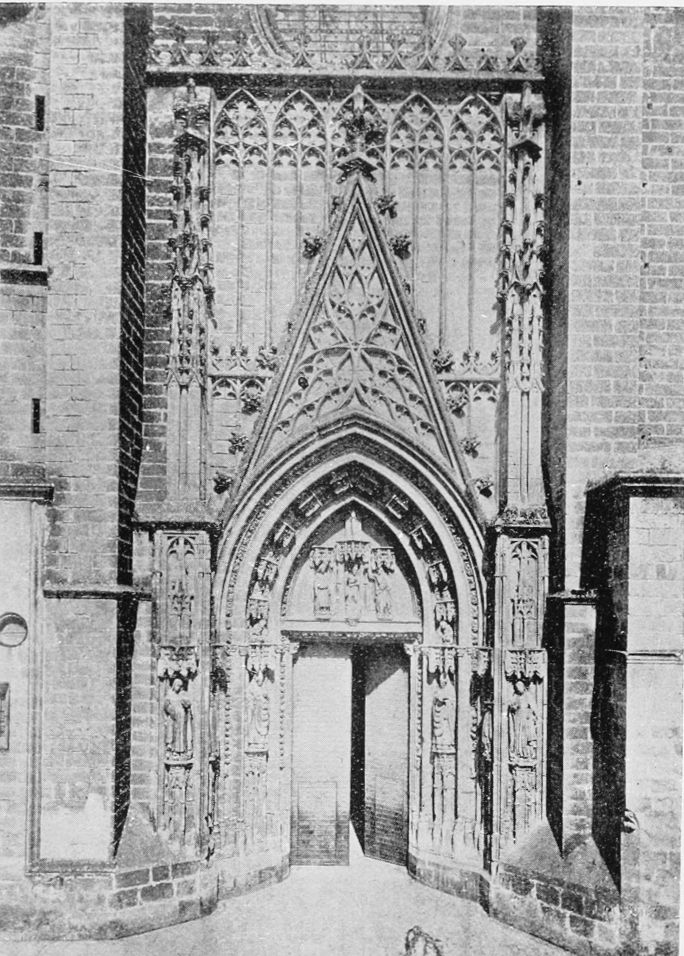
Gate of the Baptist in the Cathedral.
PLATE 84
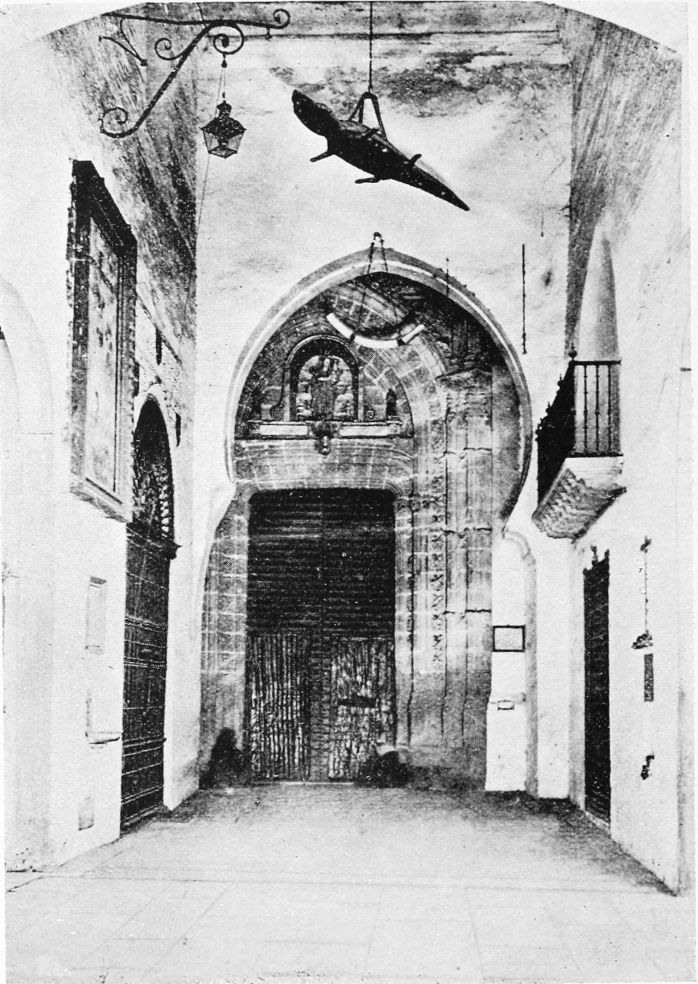
The Gate of the Lizard in the Cathedral.
PLATE 85
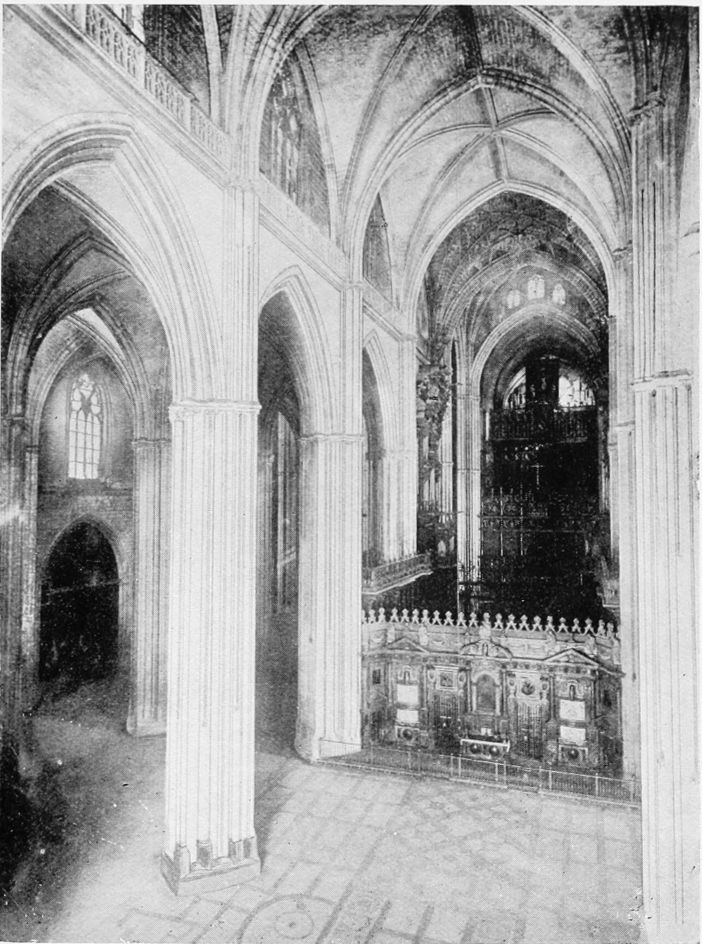
General View of the Cathedral From the Tribune of the Principal Door.
PLATE 86
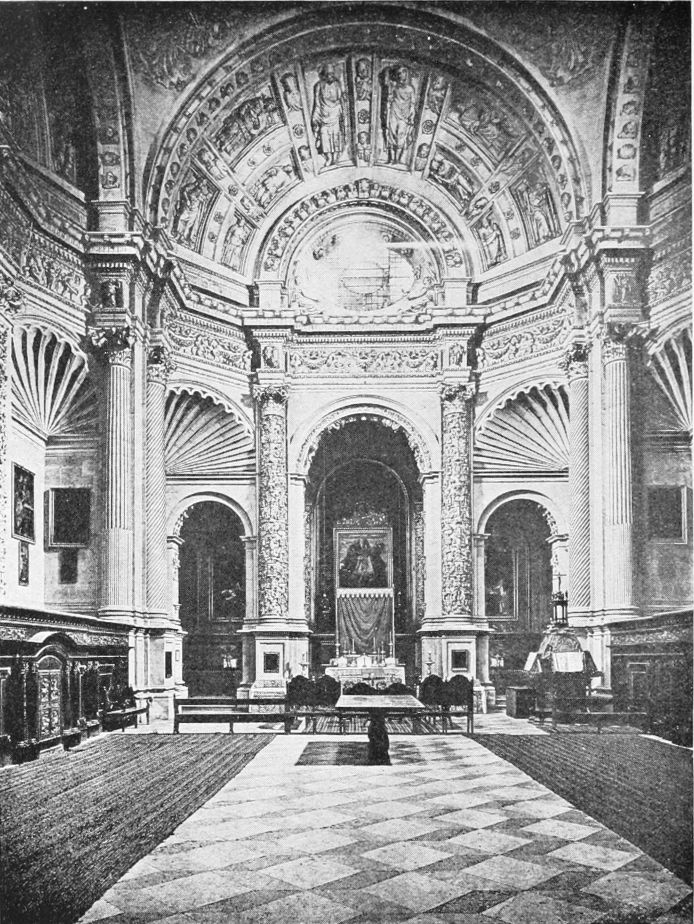
Principal Sacristy in the Cathedral.
PLATE 87
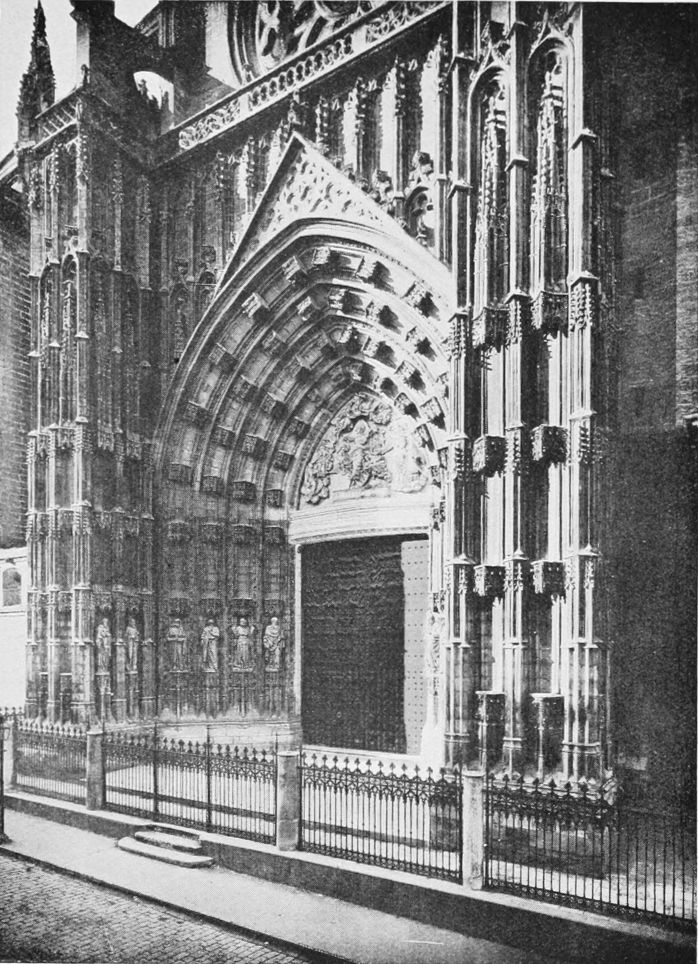
Principal Entrance to the Cathedral.
PLATE 88
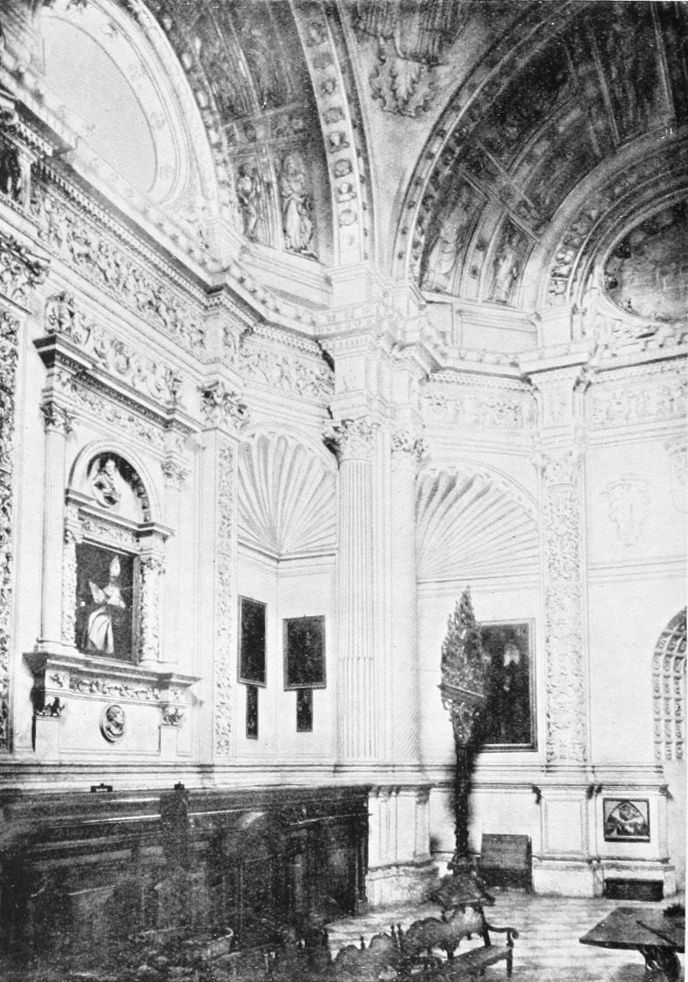
Interior View of the Principal Sacristy in the Cathedral.
PLATE 89
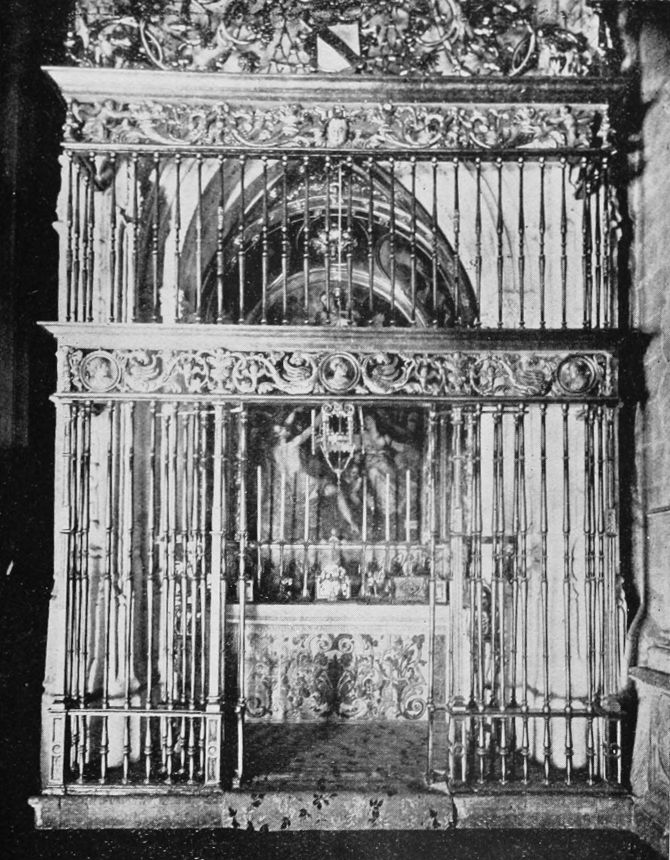
The Gamba Chapel.
PLATE 90
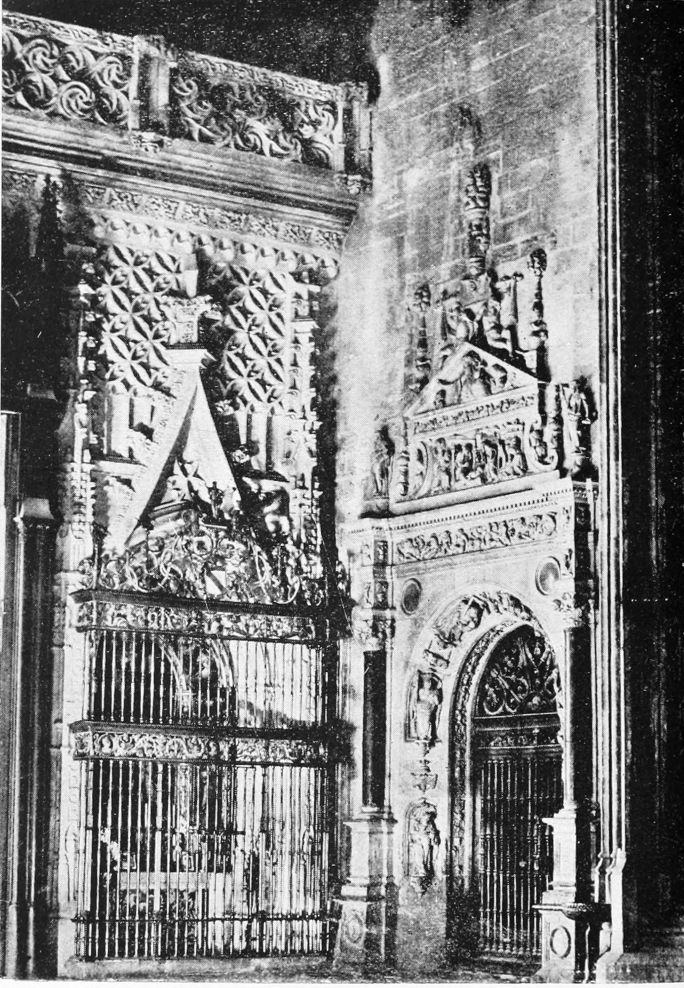
The Cathedral.
The Gamba Chapel and Entrance to that of the Antigua.
PLATE 91
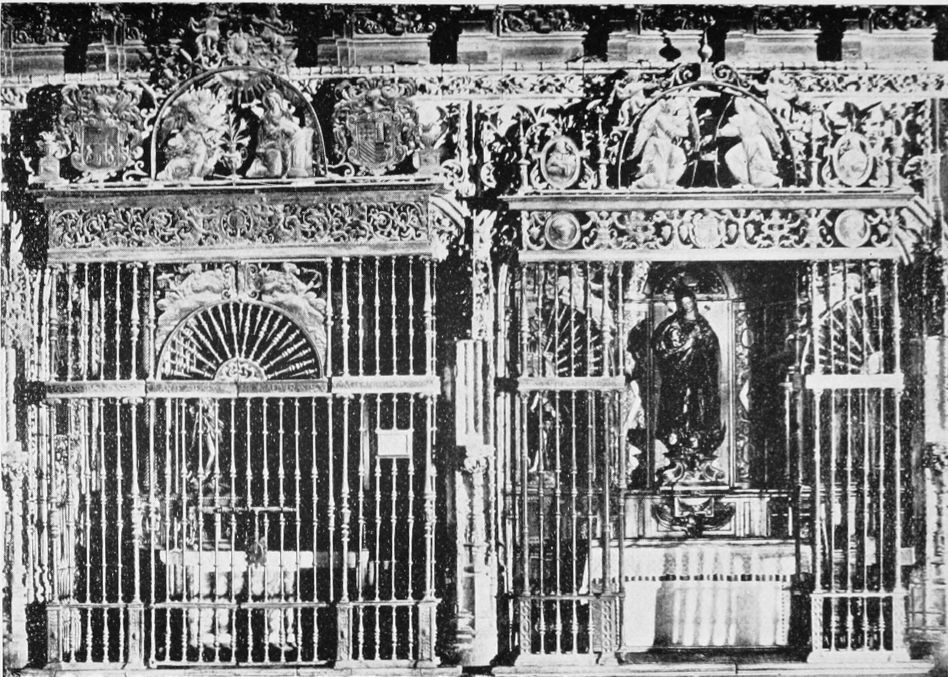
Chapels of the Conception and the Annunciation in the Cathedral.
PLATE 92
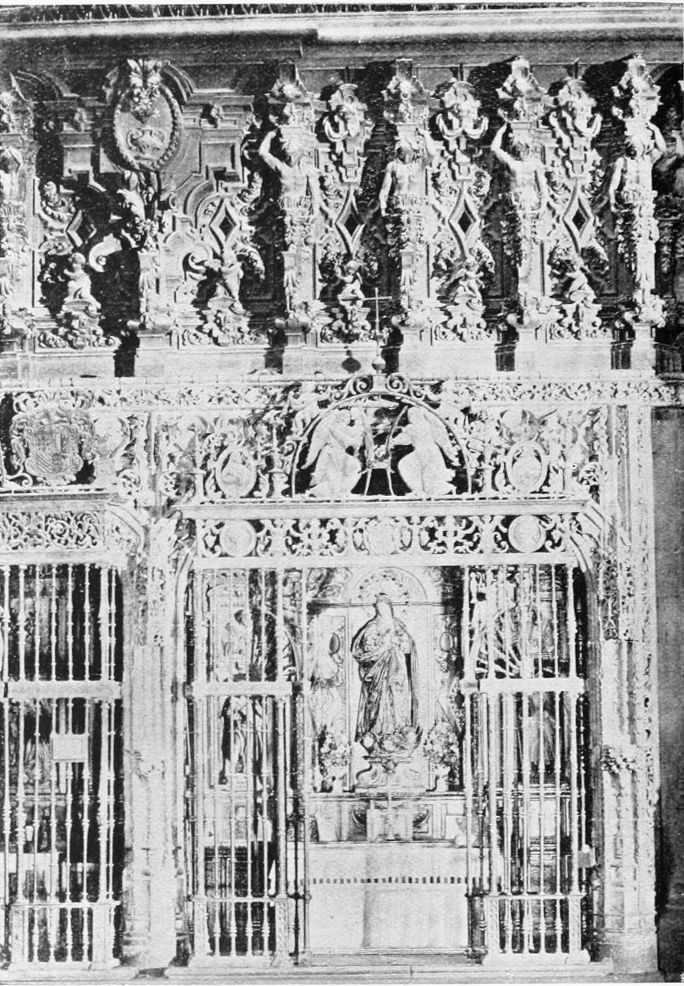
The Cathedral.
The Chapel of the Conception.
PLATE 93
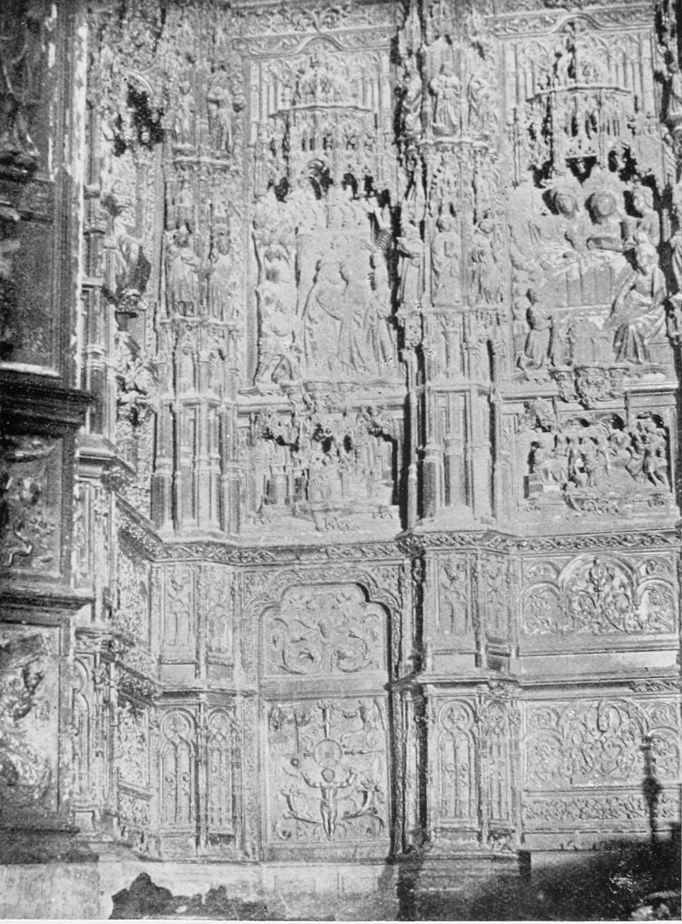
The Cathedral.
Detail of the High Altar.
PLATE 94
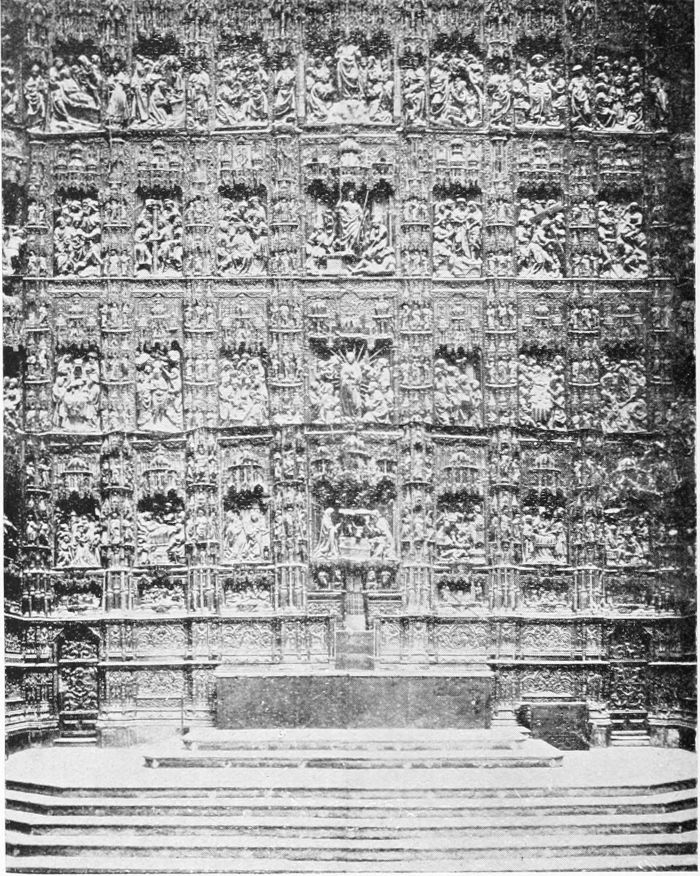
The Cathedral.
Retablo, or Altar-piece of the High Altar.
PLATE 95
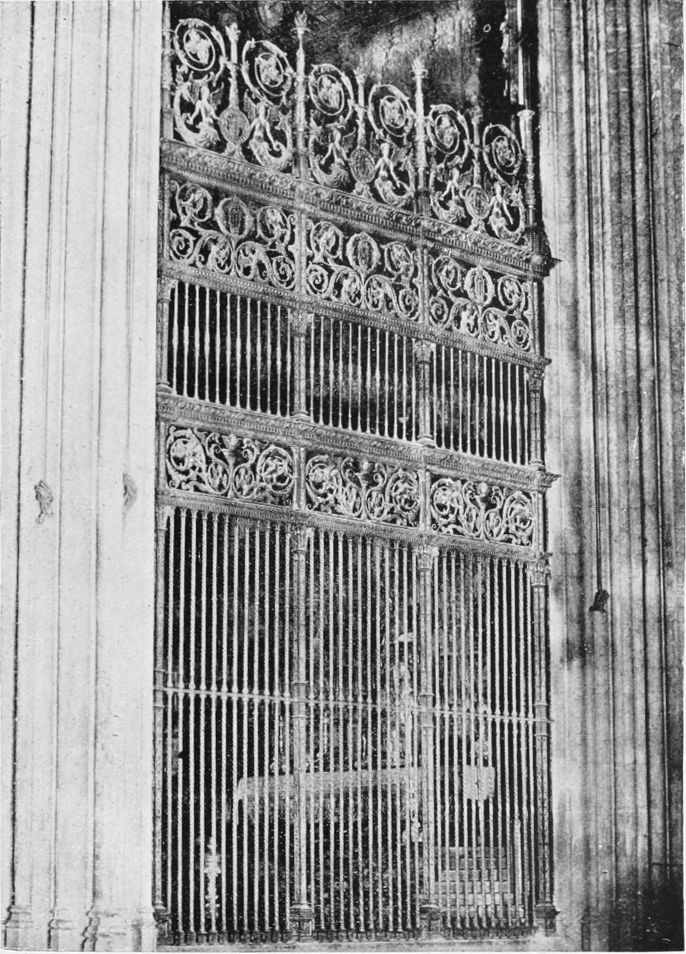
Iron Railings of the Lateral Part of the High Altar.
PLATE 96
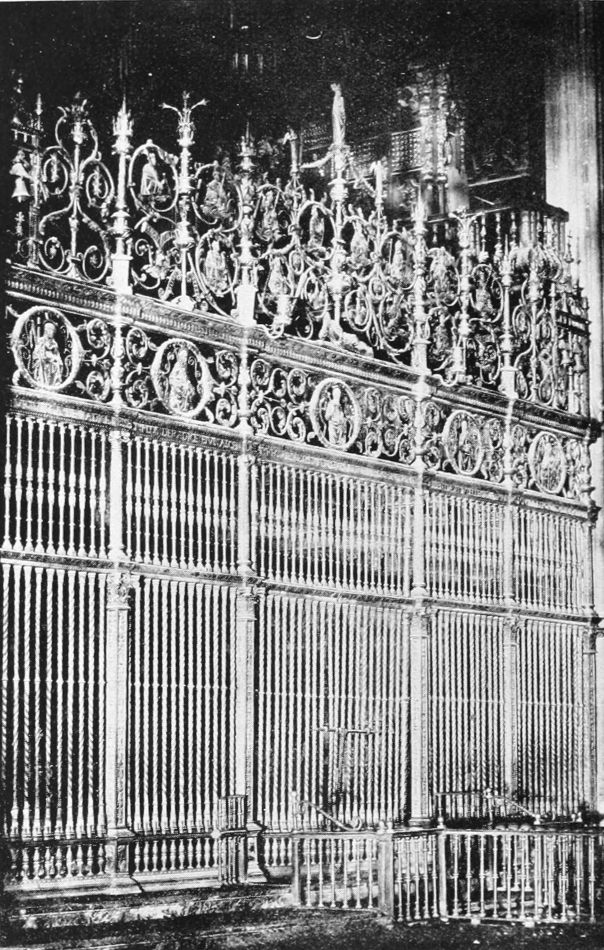
The Cathedral.
Wrought Iron Screen in the Choir.
PLATE 97
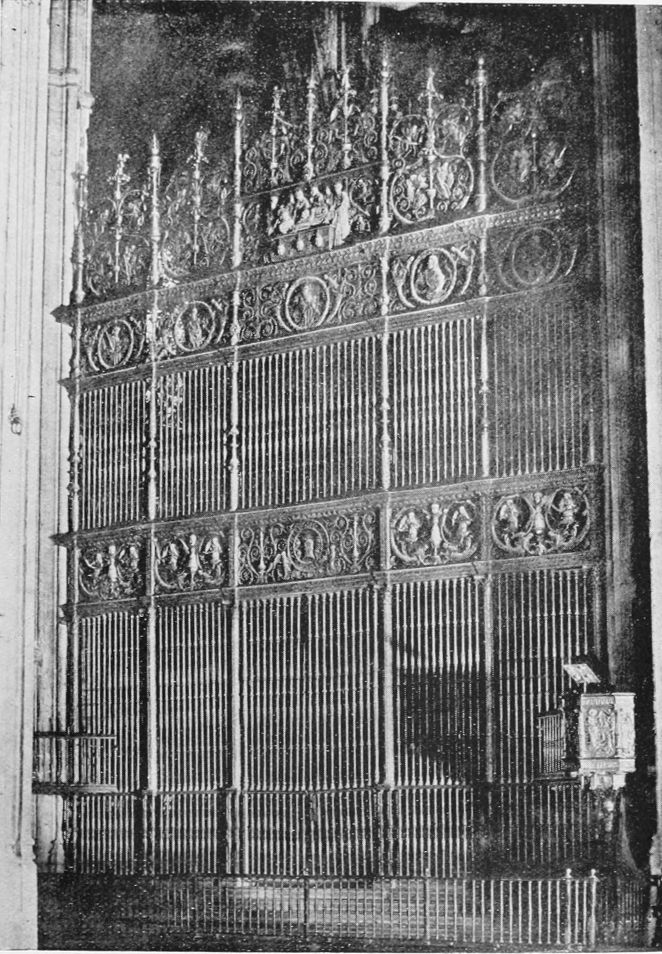
The Cathedral.
Wrought Iron Screen of the High Altar.
PLATE 98
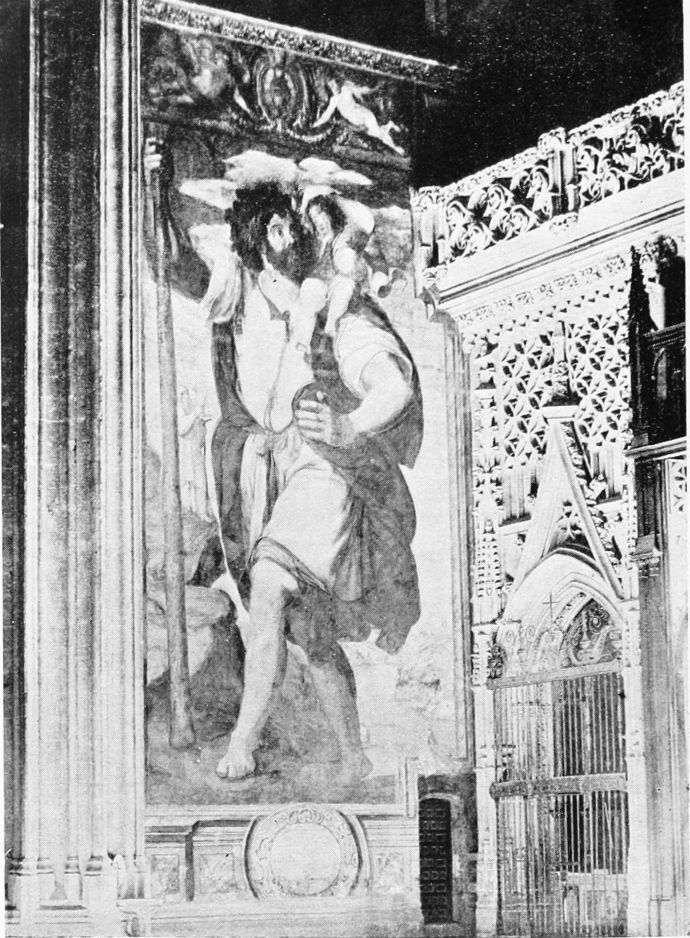
St Christopher carrying the Child Jesus, by Mateo Perez Alesio, in the Cathedral.].
PLATE 99
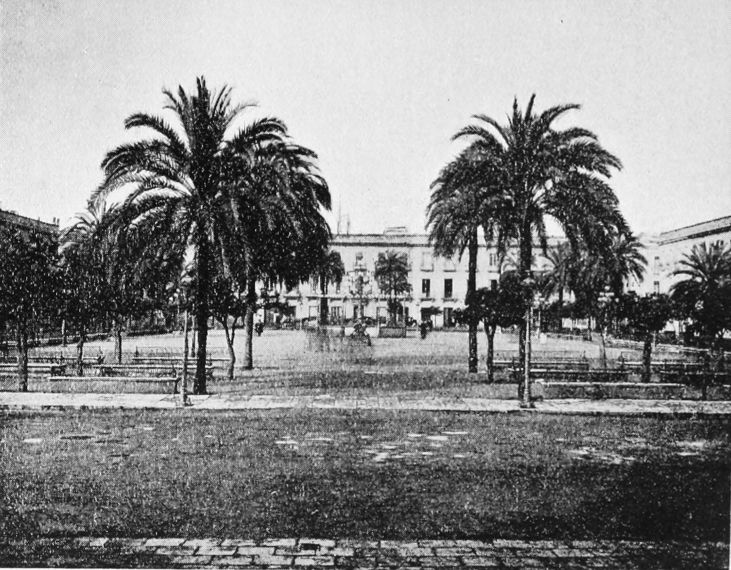
San Fernando Square.
PLATE 100
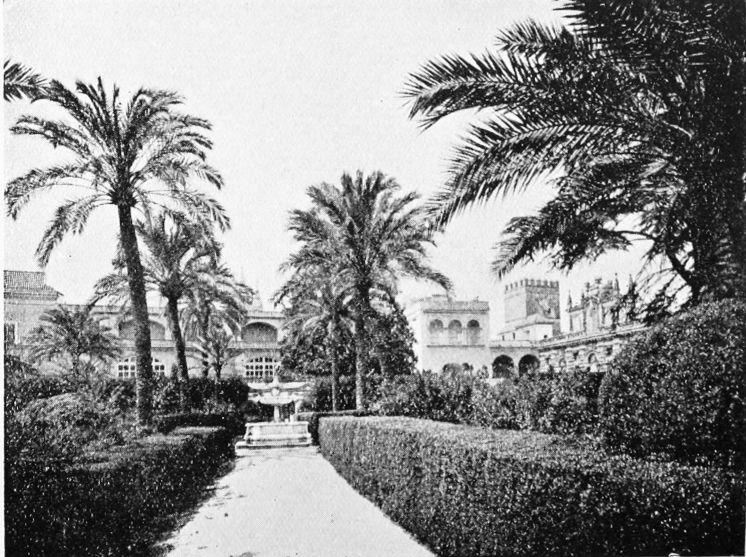
Gardens of the Alcazar.
PLATE 101
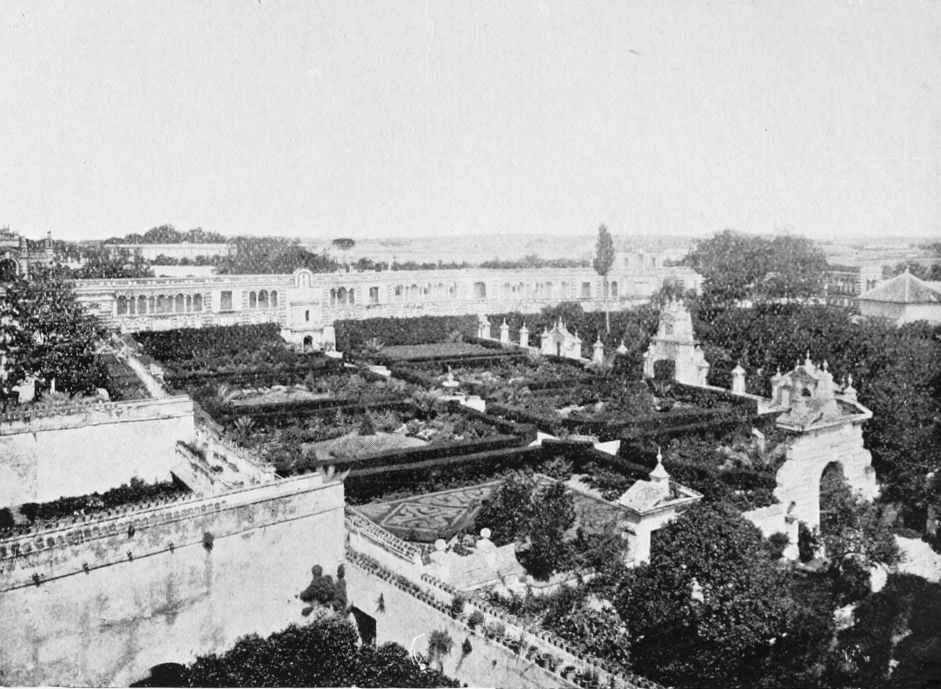
General View of the Gardens of the Alcazar.
PLATE 102
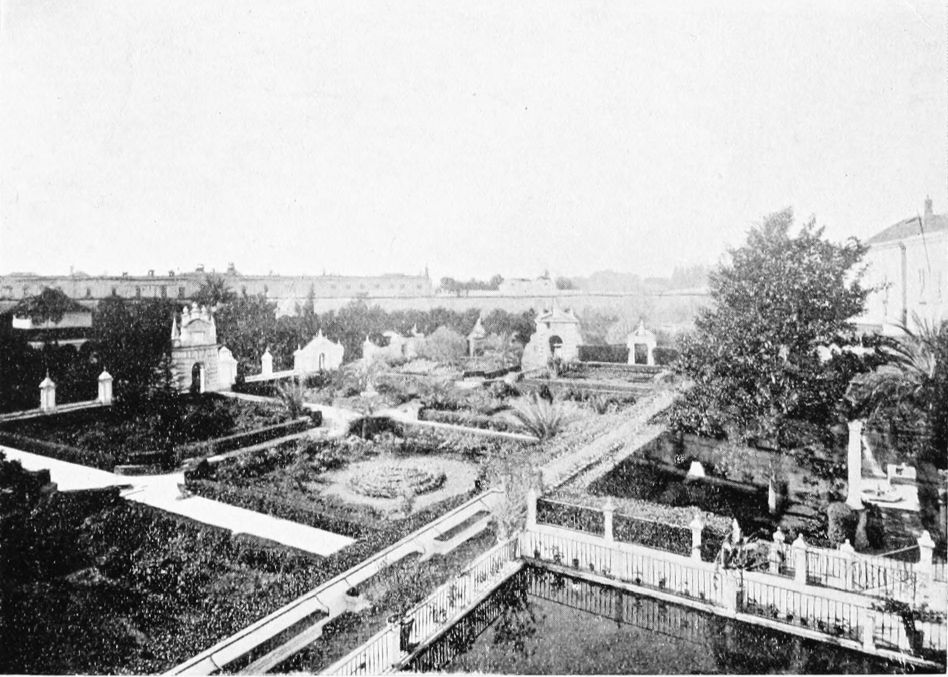
View of the Gardens of the Alcazar.
PLATE 103
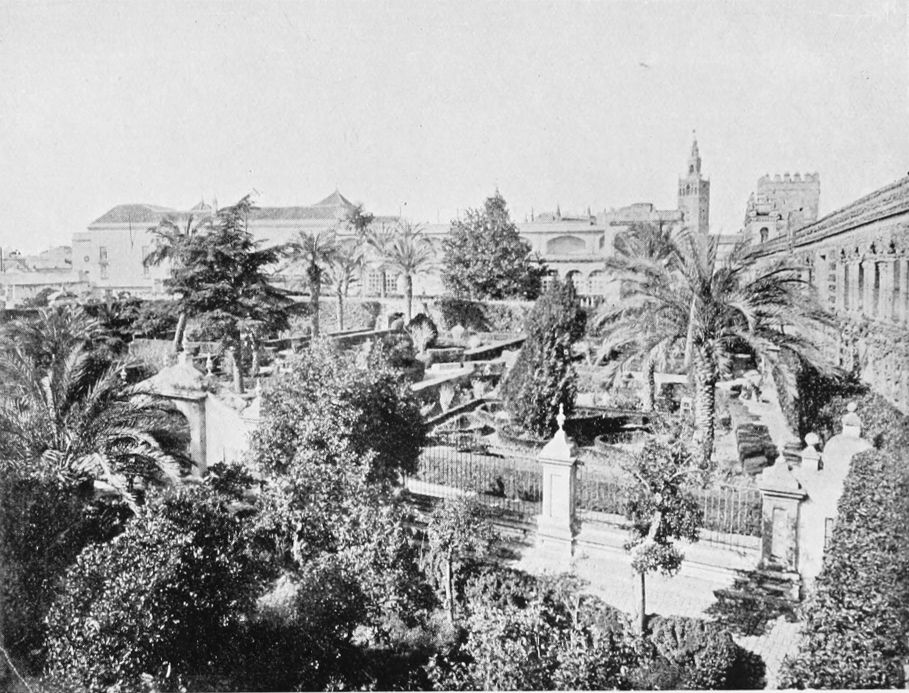
General View of the Gardens of the Alcazar.
PLATE 104
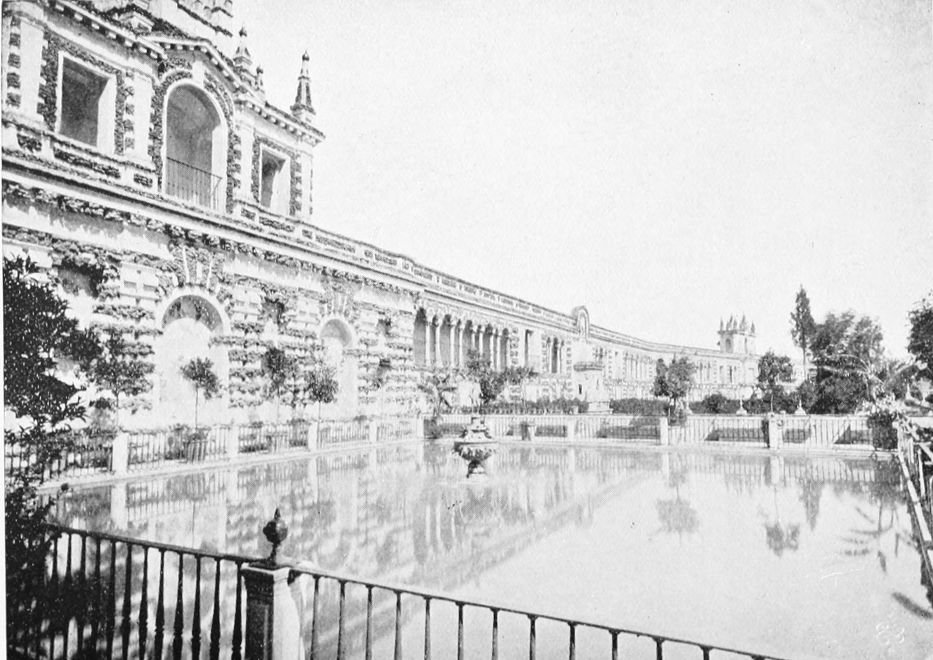
The Gardens of the Alcazar. Lake and Gallery of Don Pedro I. the Cruel.
PLATE 105
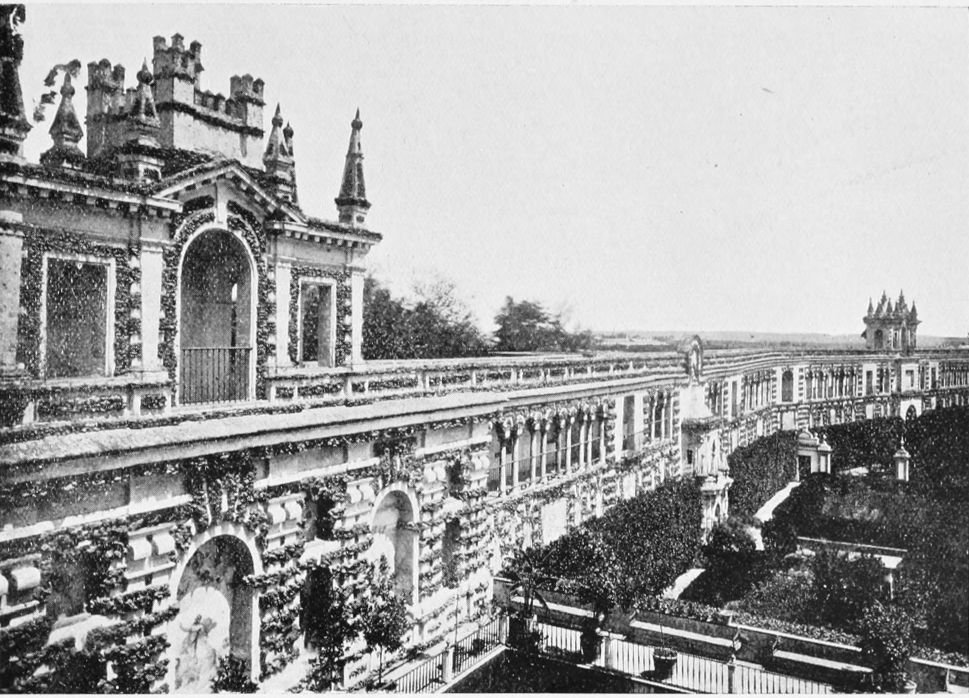
The Gardens of the Alcazar. View of the Gallery of Don Pedro I., the Cruel.
PLATE 106
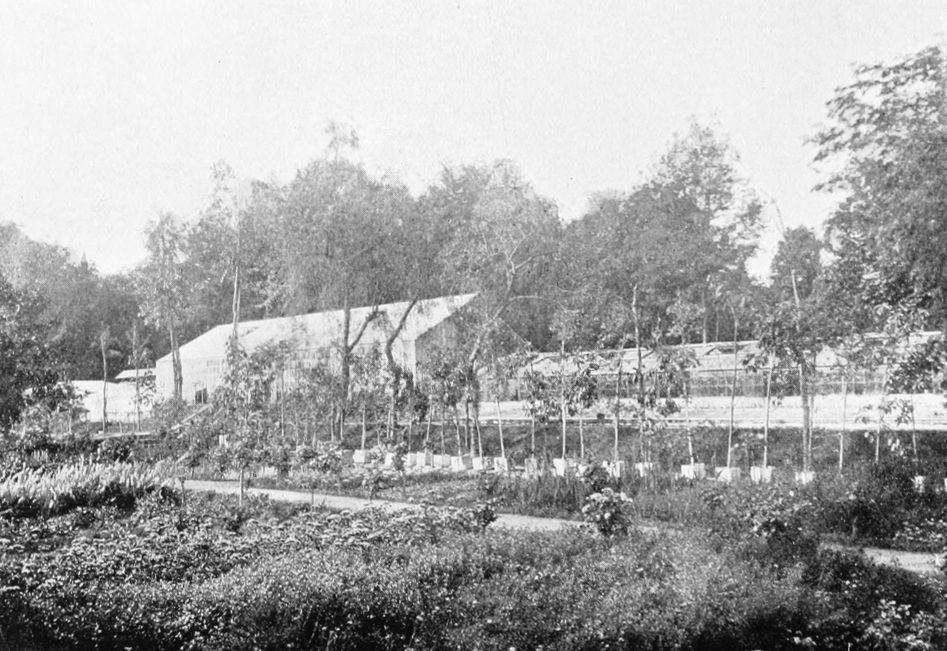
The Hothouses in the Gardens of the Alcazar.
PLATE 107
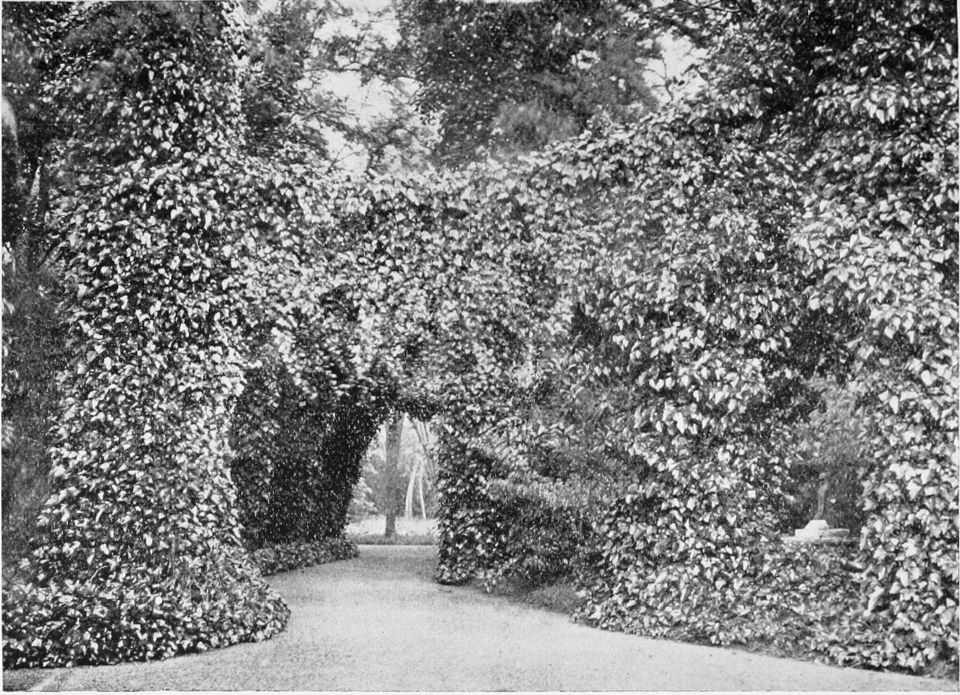
Calle de las Vedras in the Gardens of the Alcazar.
PLATE 108
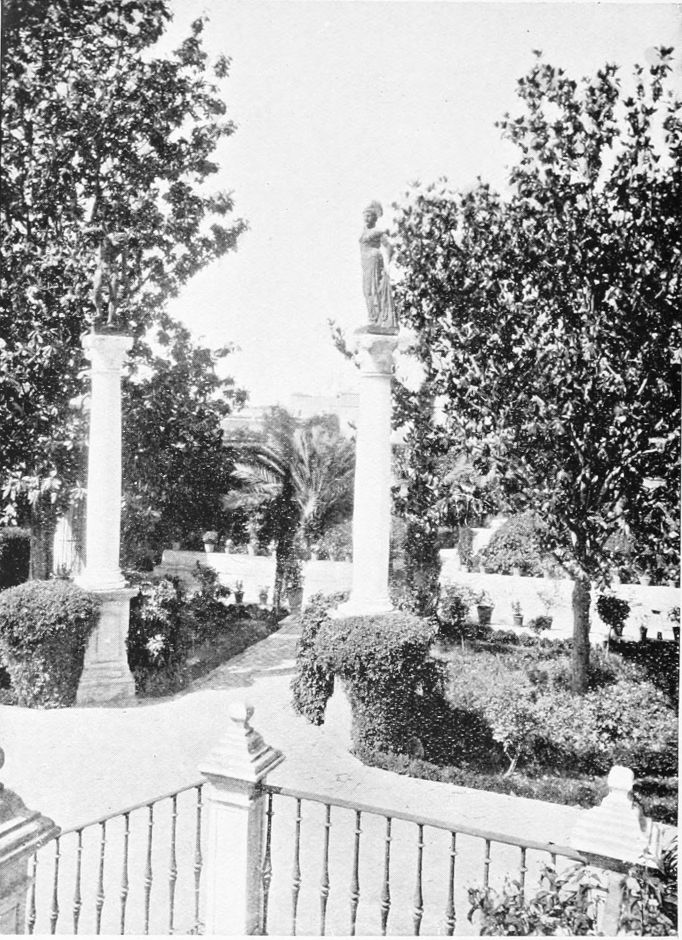
The Gardens of the Alcazar.
Parterre of Doña Maria de Padilla.
PLATE 109
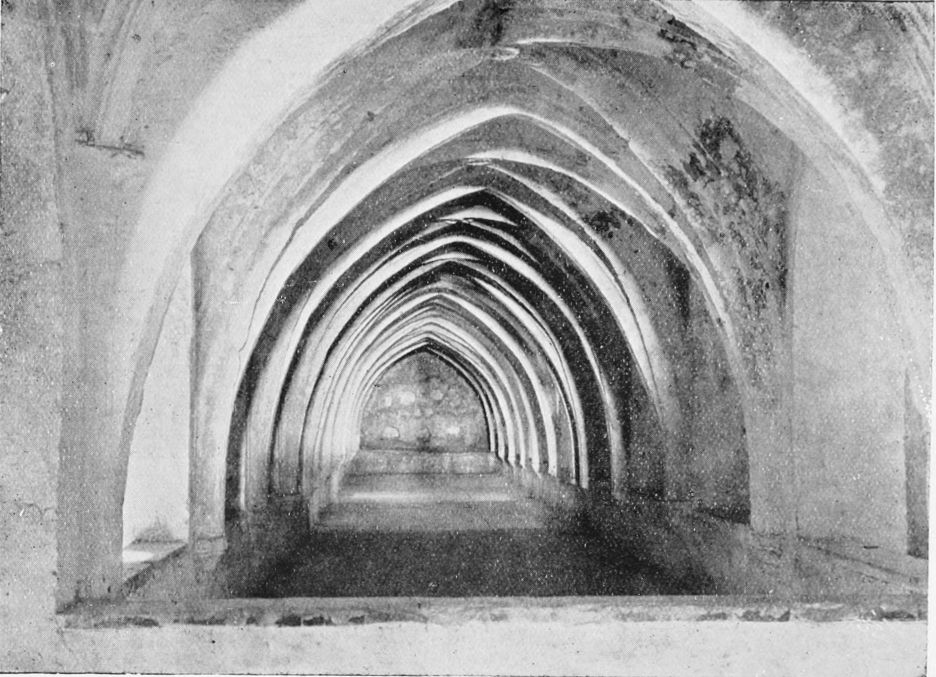
The Alcazar. Baths of Doña Maria de Padilla.
PLATE 110
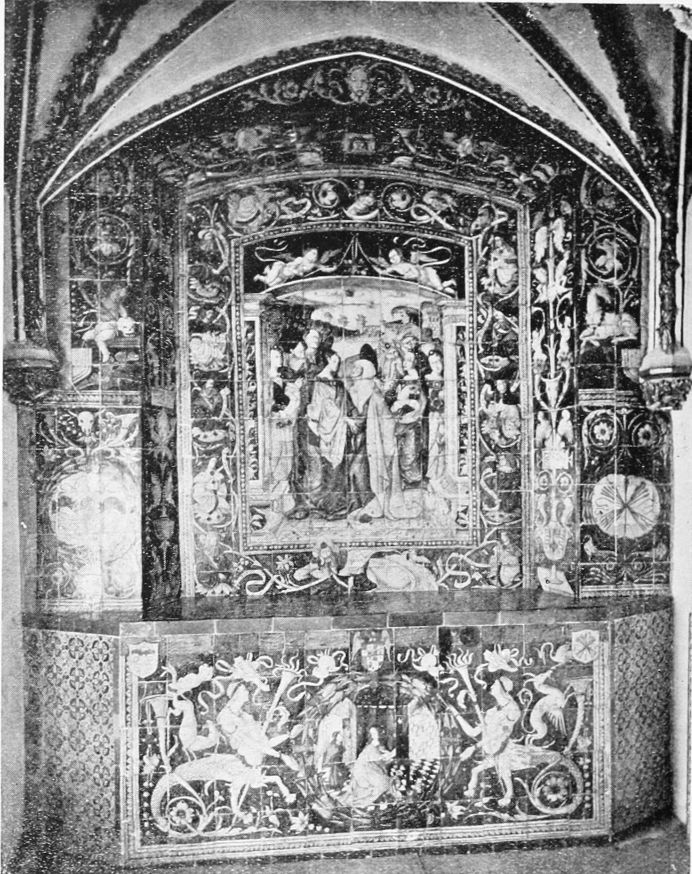
Magnificent Altar in Faience painted in the 15th Century.
In the Oratory of the Catholic Sovereigns in the Alcazar.
PLATE 111
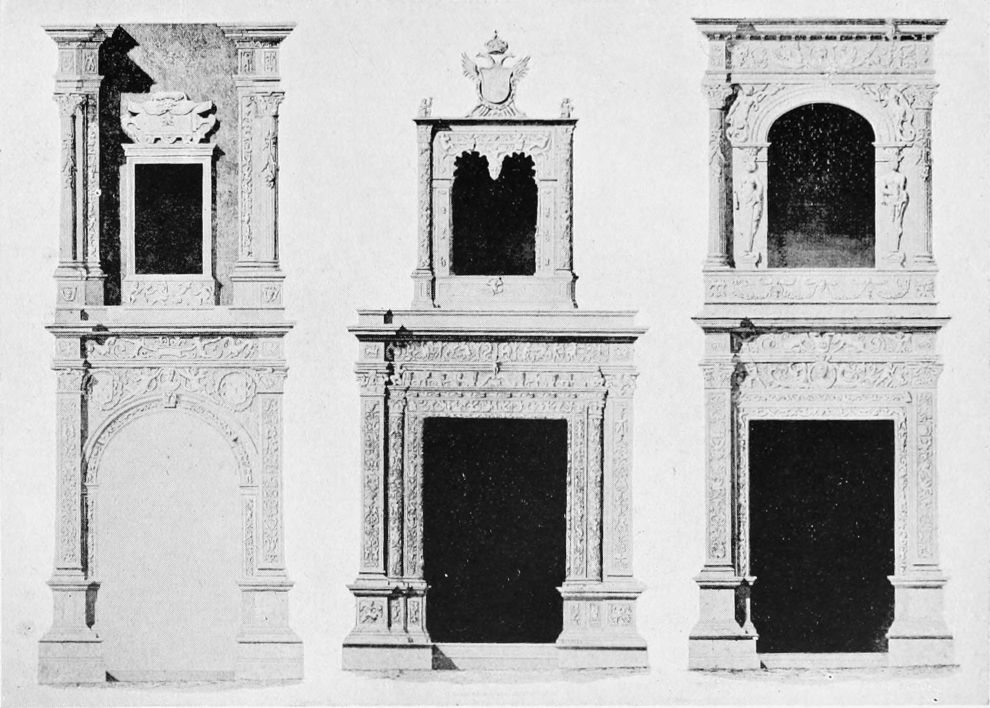
Town Hall of Seville.
Details of Doors and Balconies.
PLATE 112
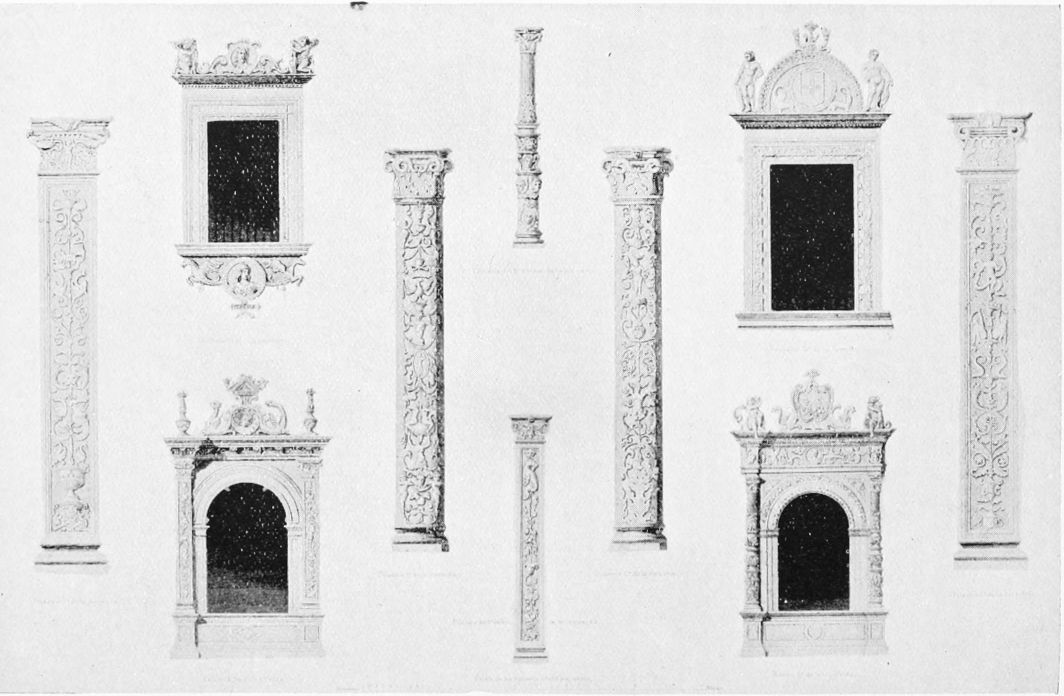
Town Hall of Seville. Details.
PLATE 113
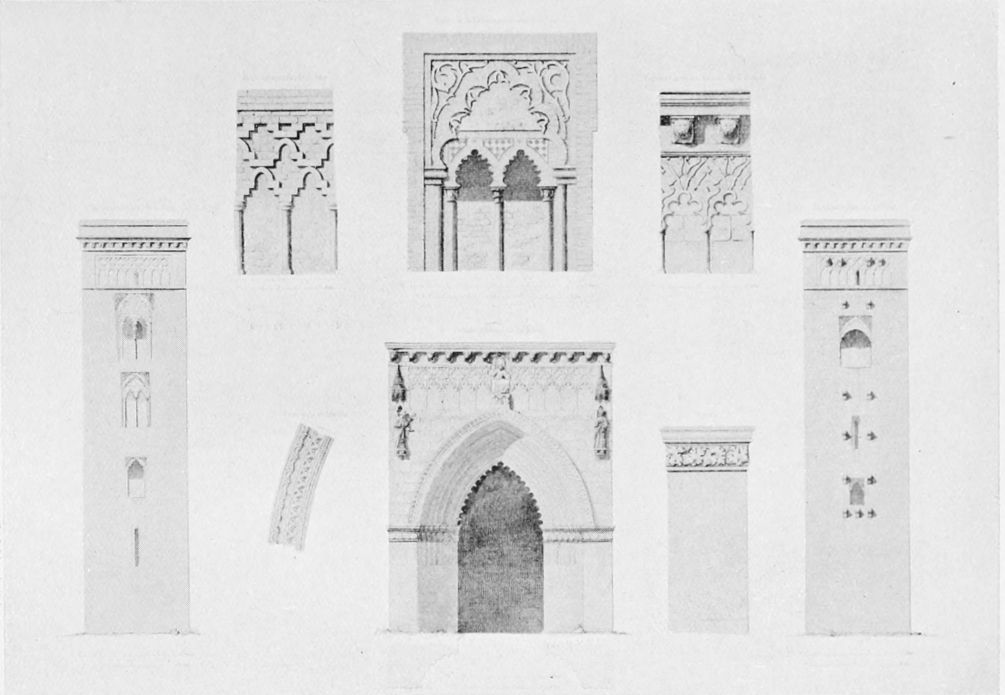
Parish Church of San Marcos.
PLATE 114
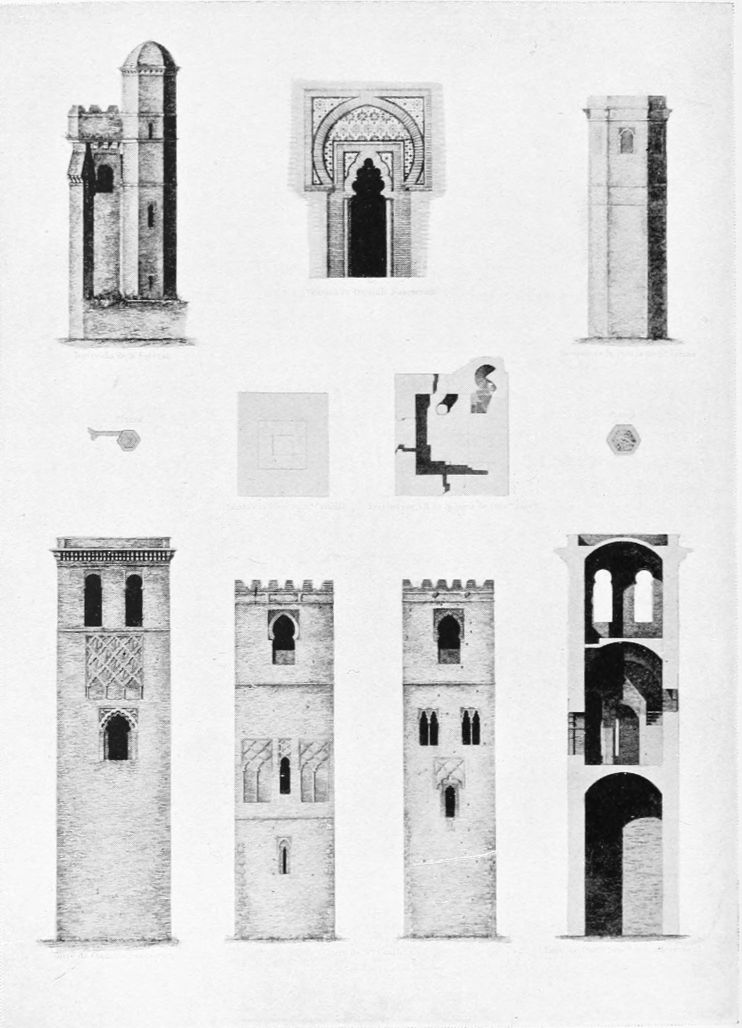
Various Towers of Seville.
PLATE 115
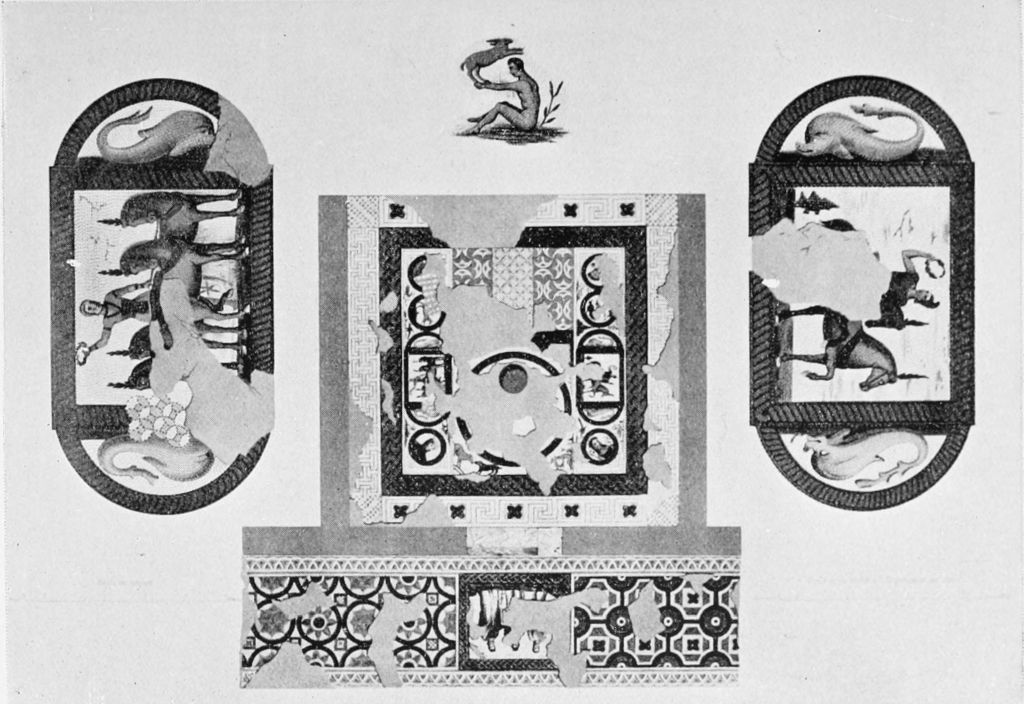
Details of the Mosaic commonly called El Grande.
PLATE 116
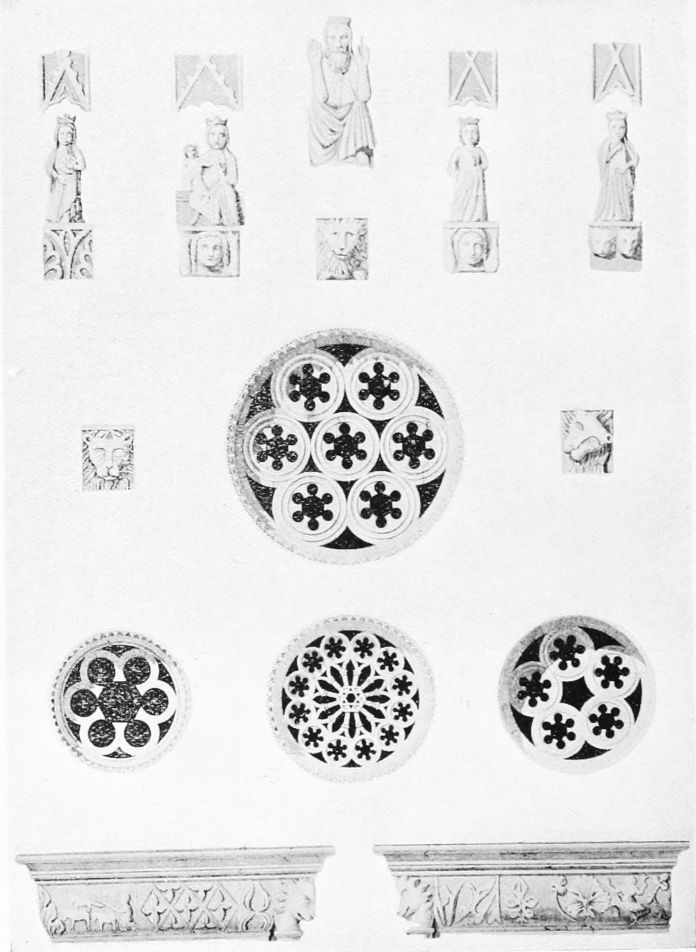
Sculpture and Details of Ancient Churches.
PLATE 117
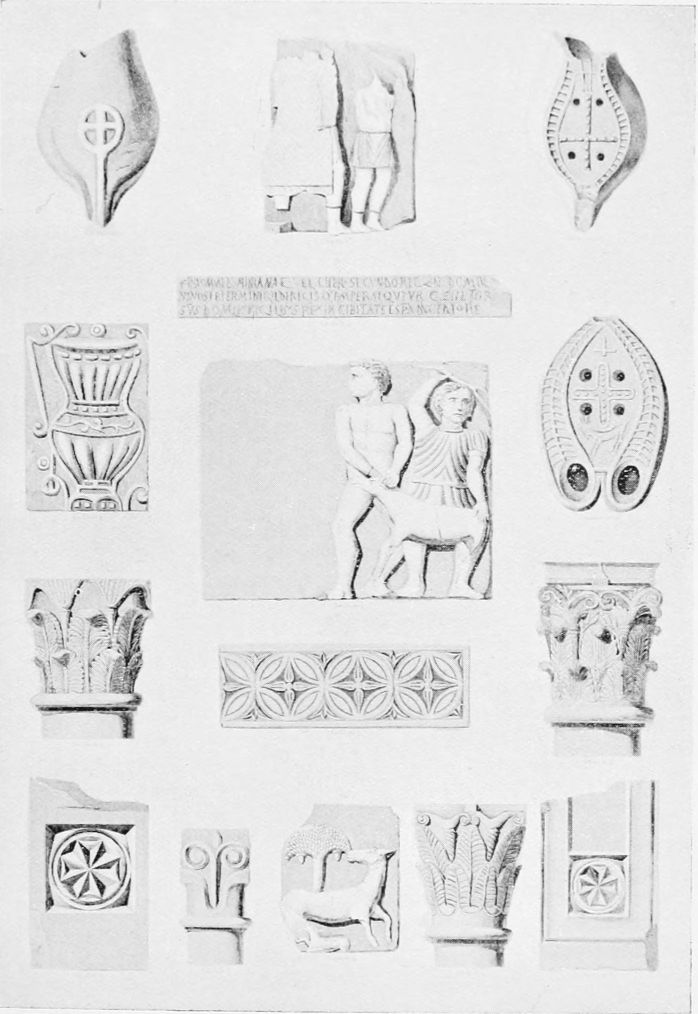
Architectural Parts, Bas-reliefs, and Ceramic Objects.
PLATE 118
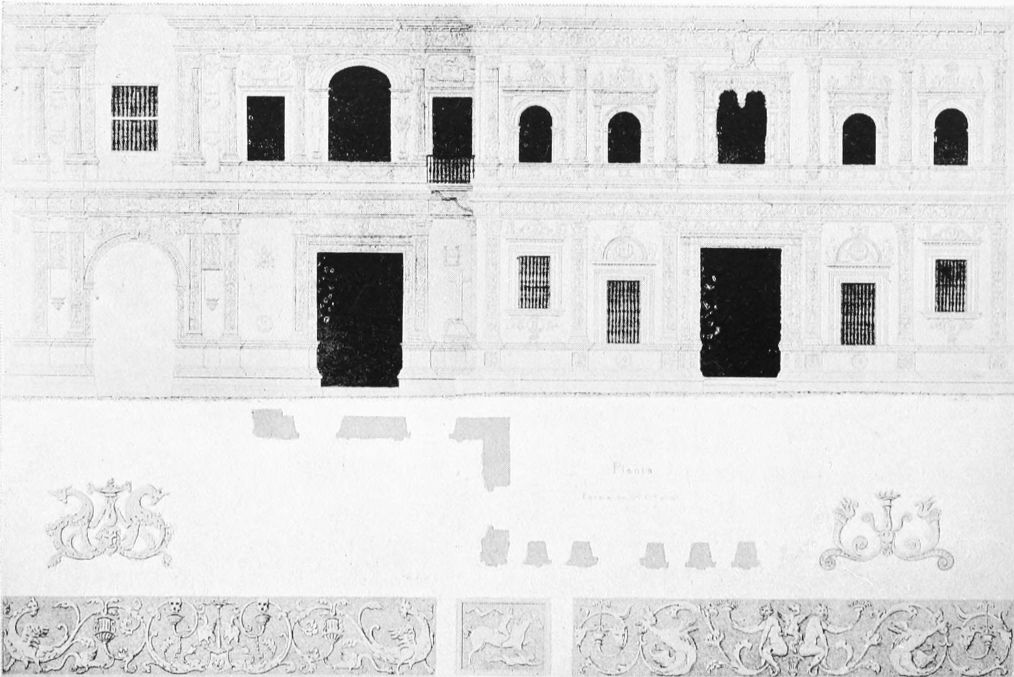
Façade of the Consistorial Houses.
PLATE 119
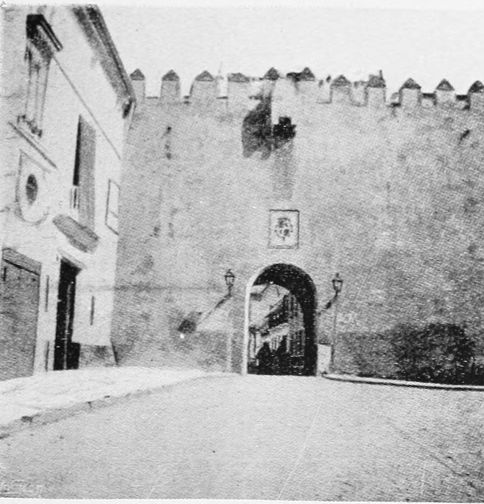
Entrance to the Alcazar, Seville.
PLATE 120
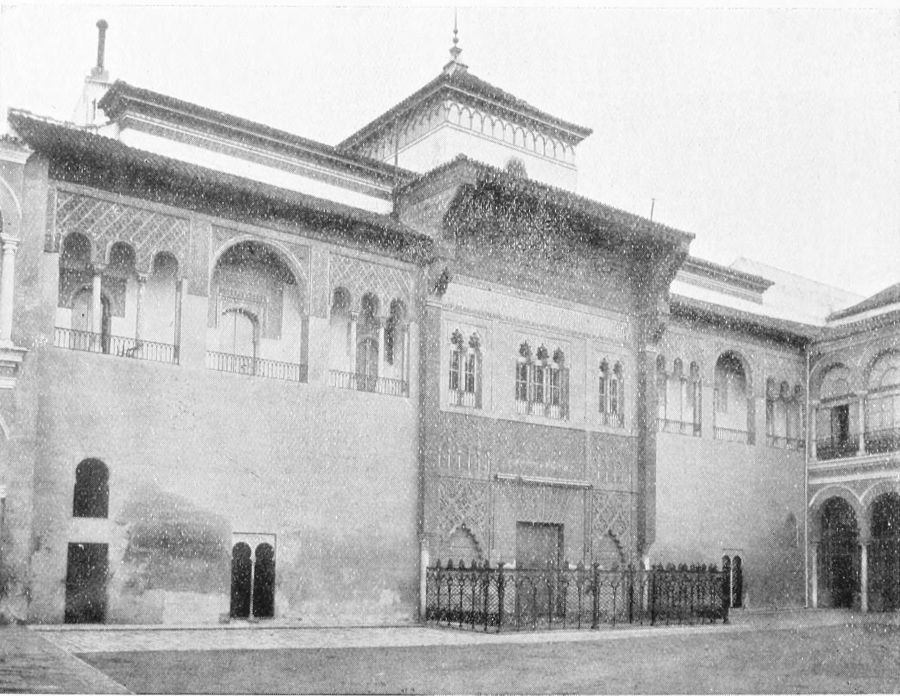
Principal Façade of the Alcazar.
PLATE 121
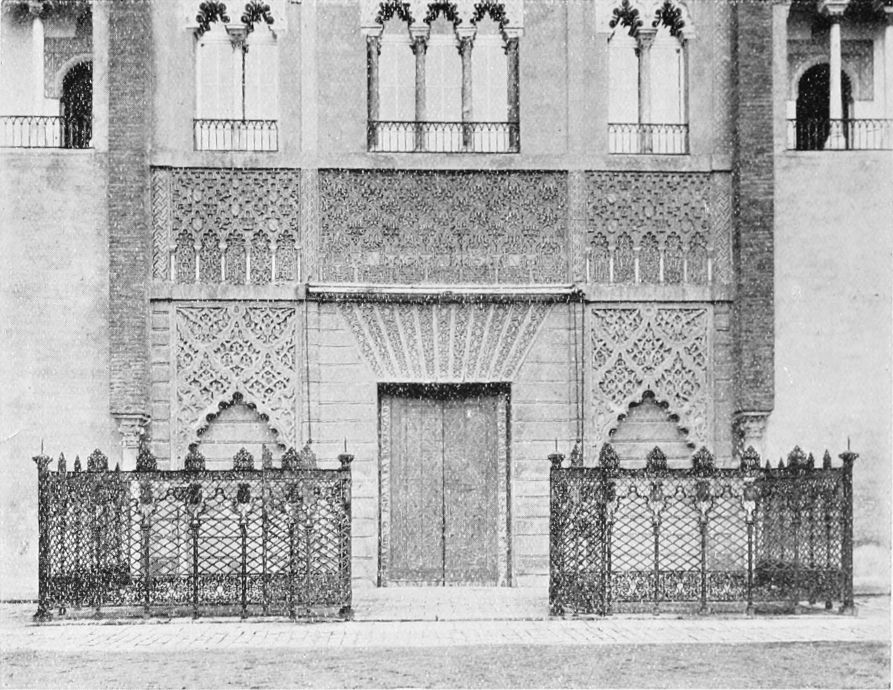
Gate of the Principal Entrance, Alcazar.
PLATE 122
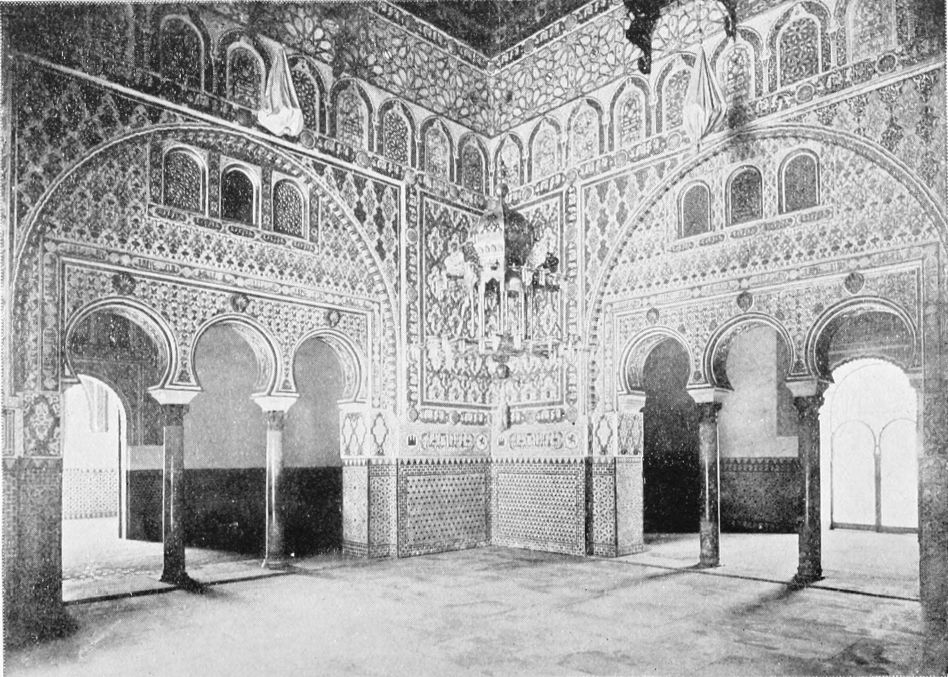
Interior of the Hall of Ambassadors, Alcazar.
PLATE 123
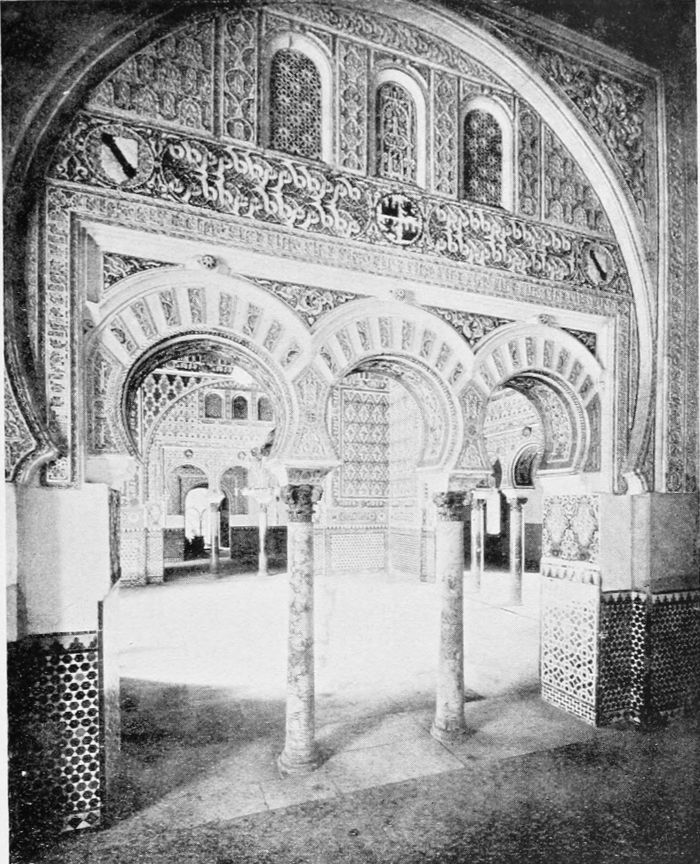
Hall of Ambassadors, Alcazar.
PLATE 124
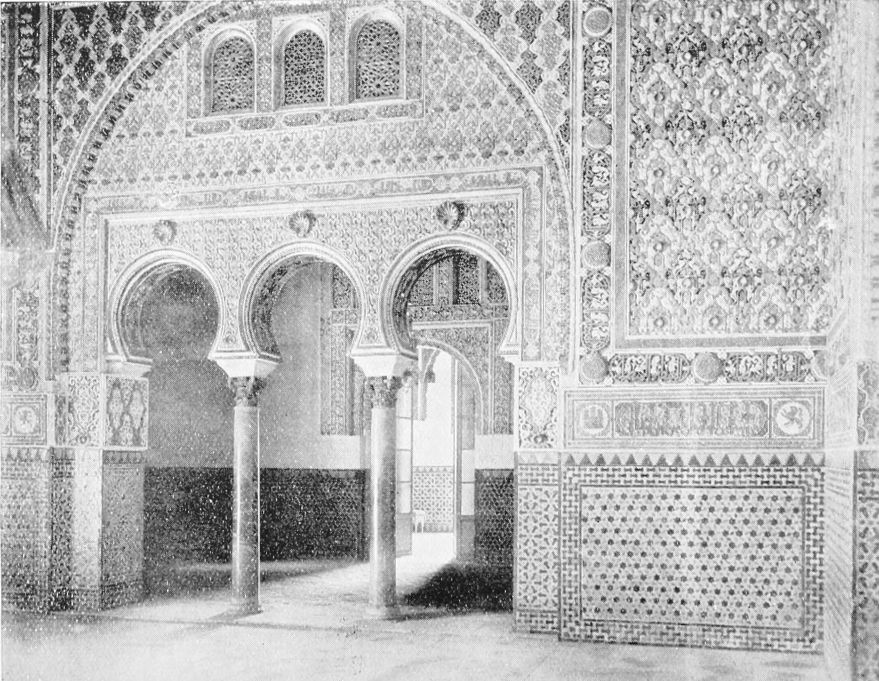
Interior of the Hall of Ambassadors, Alcazar.
PLATE 125
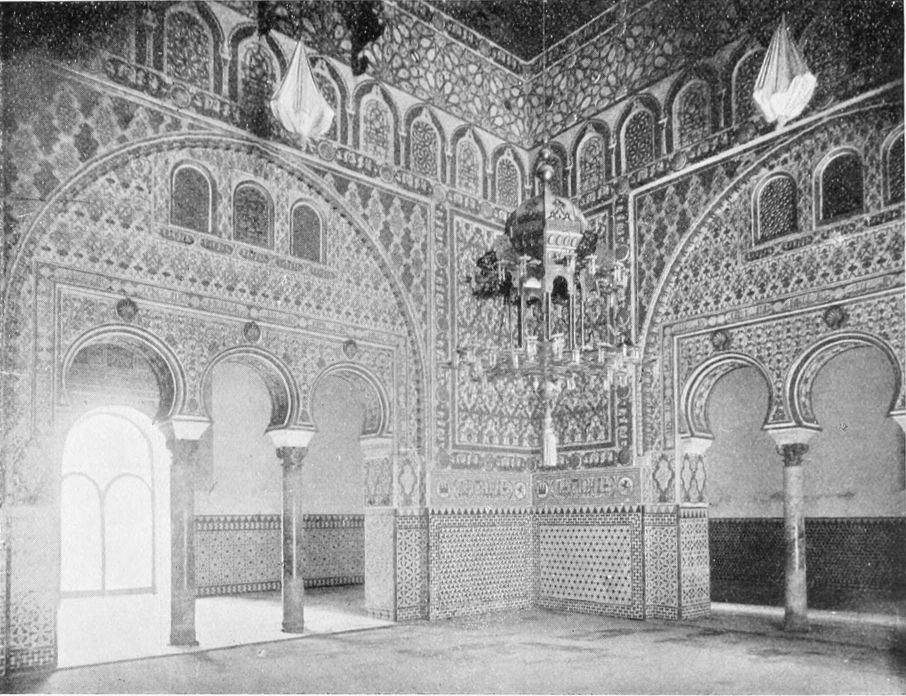
Interior of the Hall of Ambassadors, Alcazar.
PLATE 126
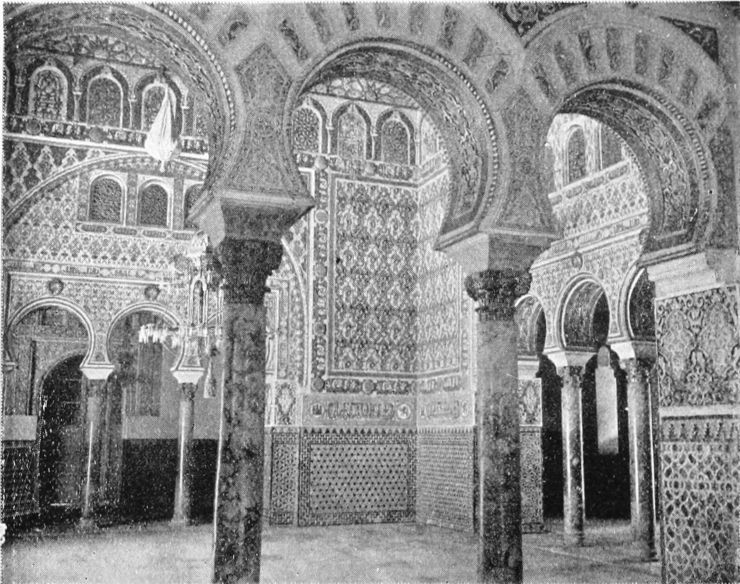
Hall of Ambassadors, Alcazar.
PLATE 127
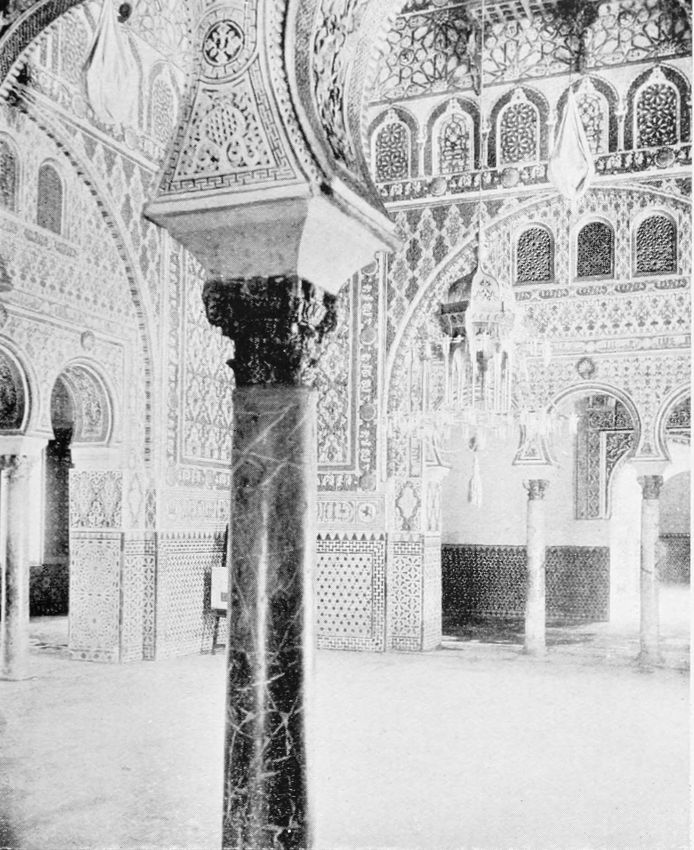
Hall of Ambassadors, Alcazar.
PLATE 128
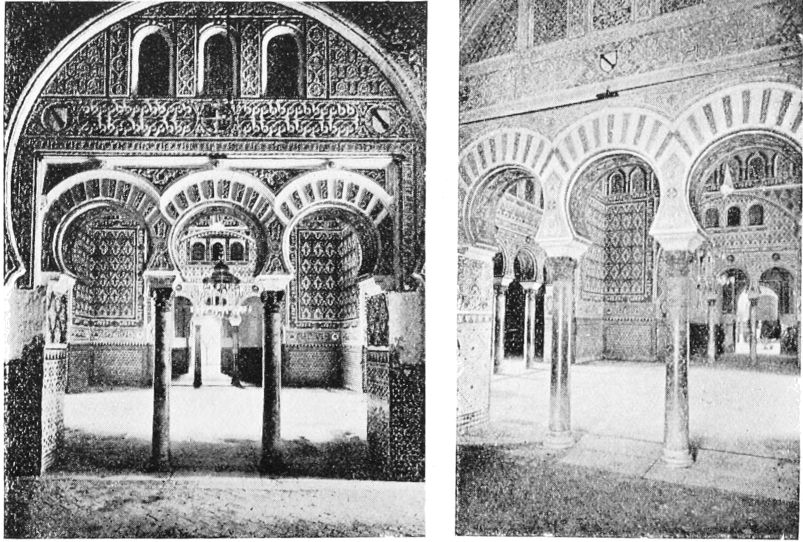
Hall of Ambassadors, Alcazar.
PLATE 129
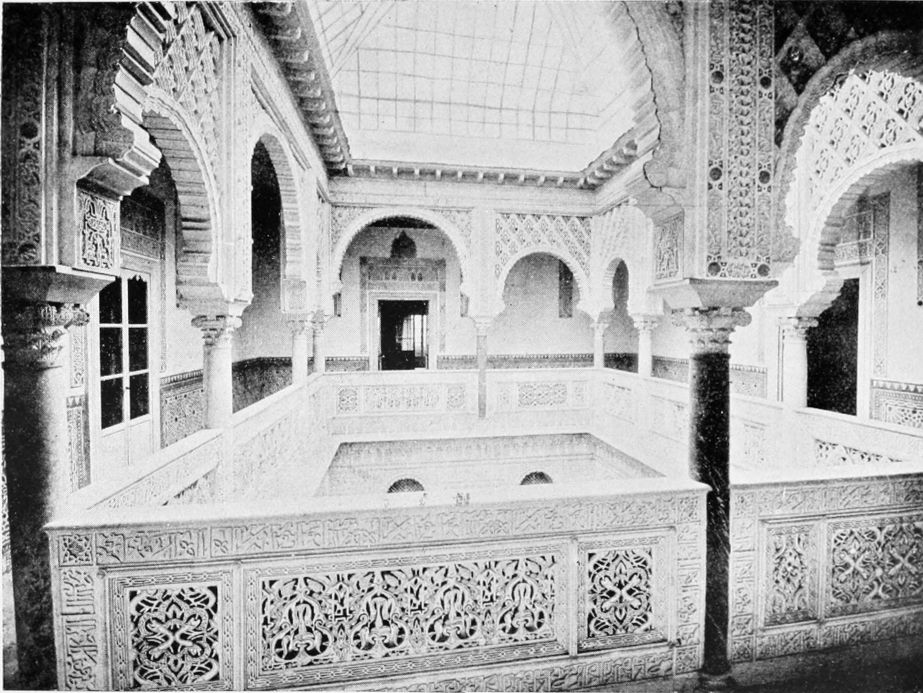
Upper Part of the Court of the Dolls, Alcazar.
PLATE 130
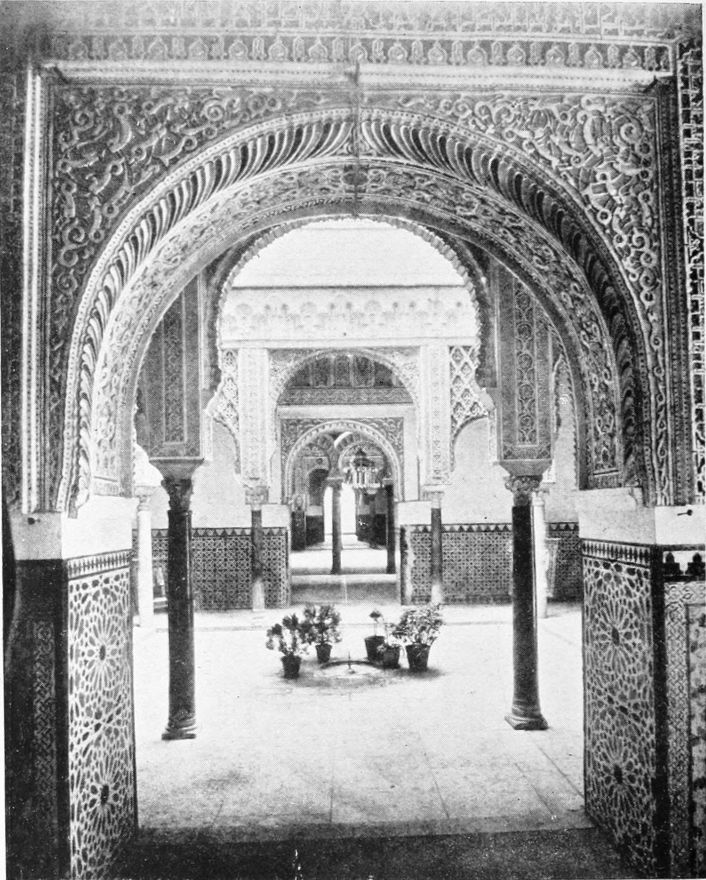
Court of the Dolls from the Room of the Prince, Alcazar.
PLATE 131
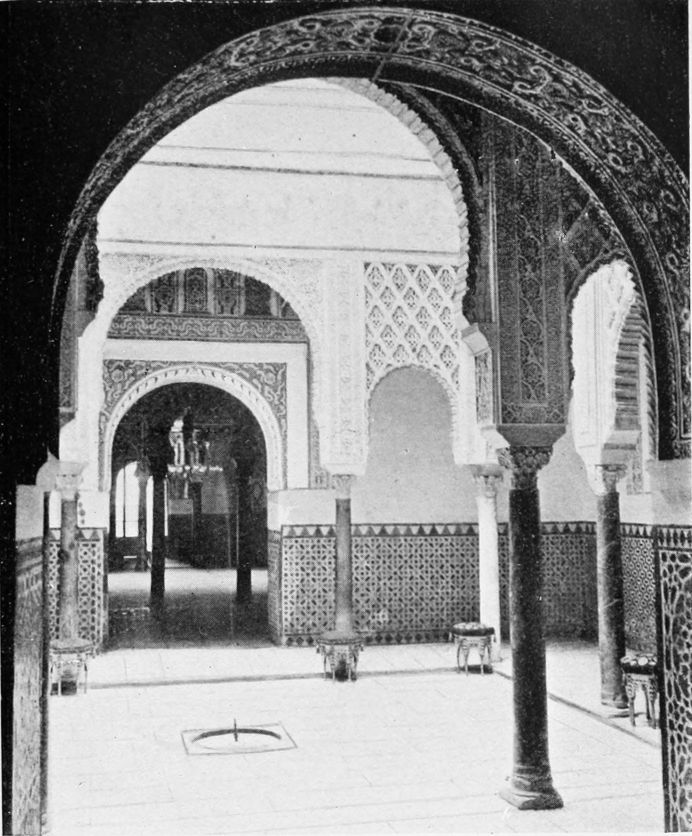
Court of the Dolls, Alcazar.
PLATE 132
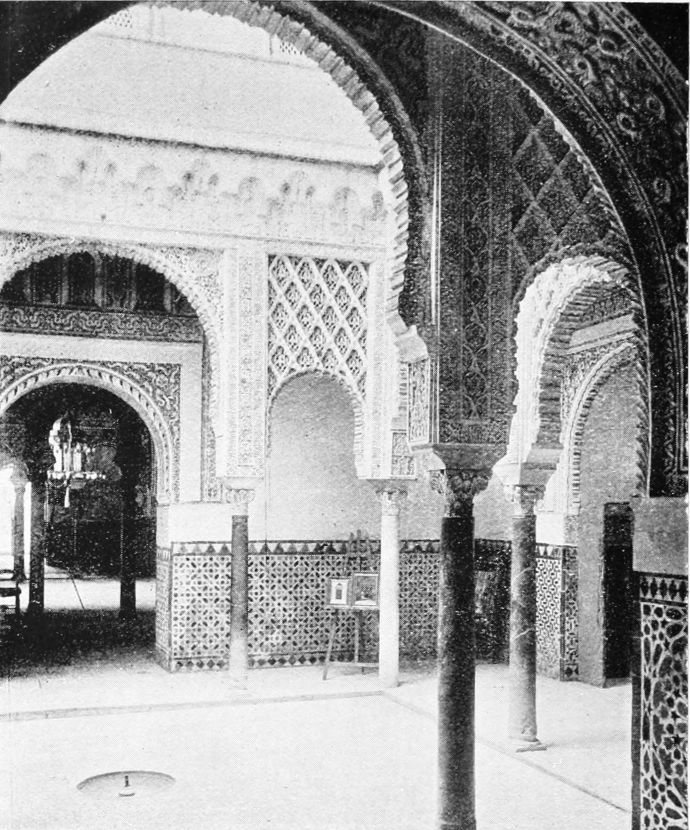
Angle in the Court of the Dolls, Alcazar.
PLATE 133
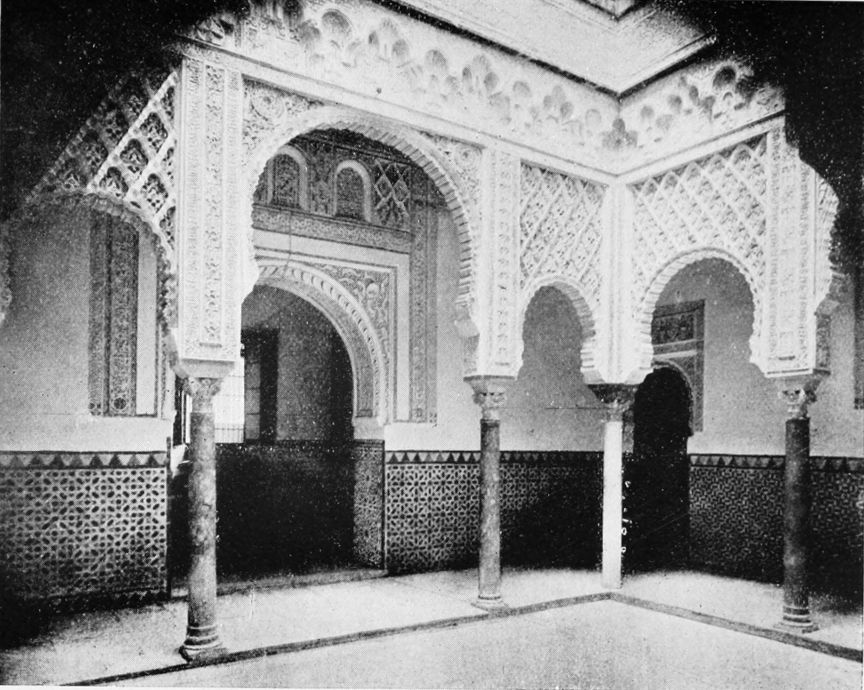
Court of the Dolls, Alcazar.
PLATE 134
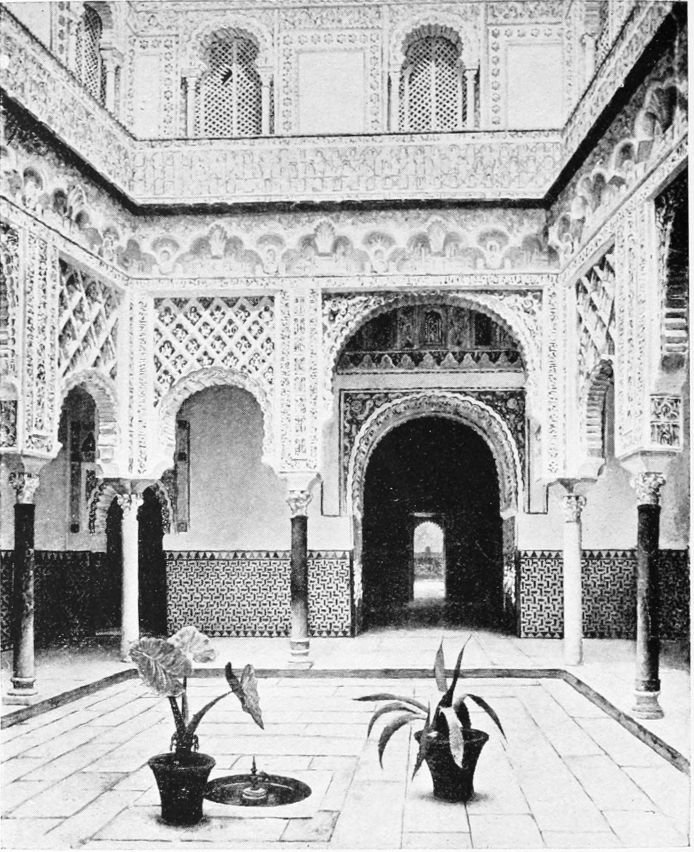
Court of the Dolls, Alcazar.
PLATE 135
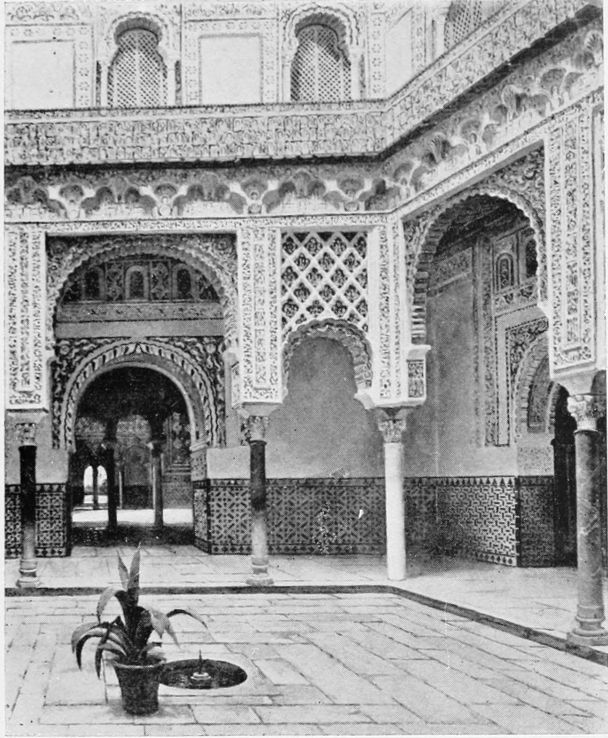
Court of the Dolls, Alcazar.
PLATE 136
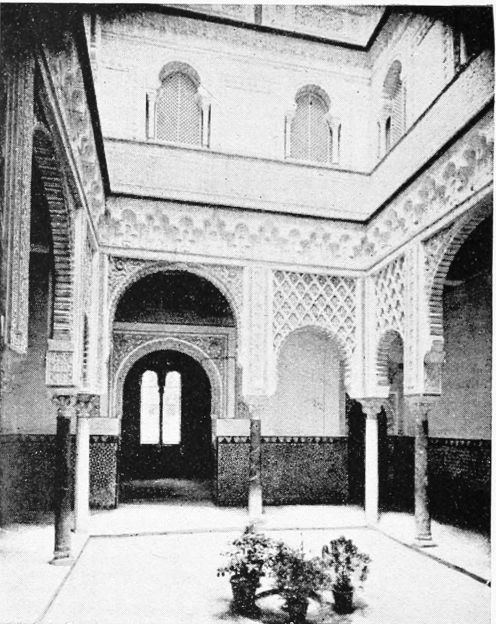
Court of the Dolls, Alcazar.
PLATE 137
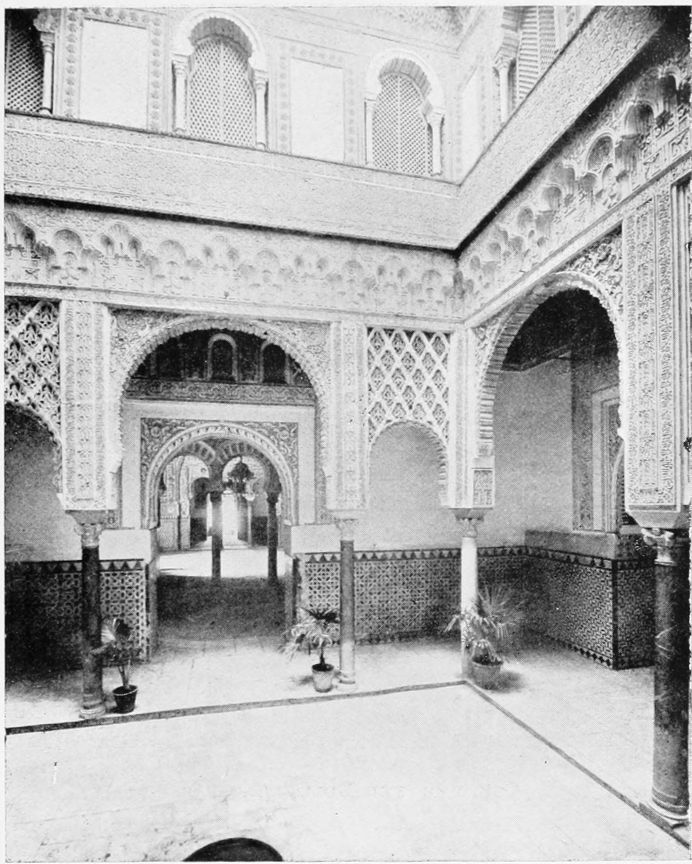
Court of the Dolls, Alcazar.
PLATE 138
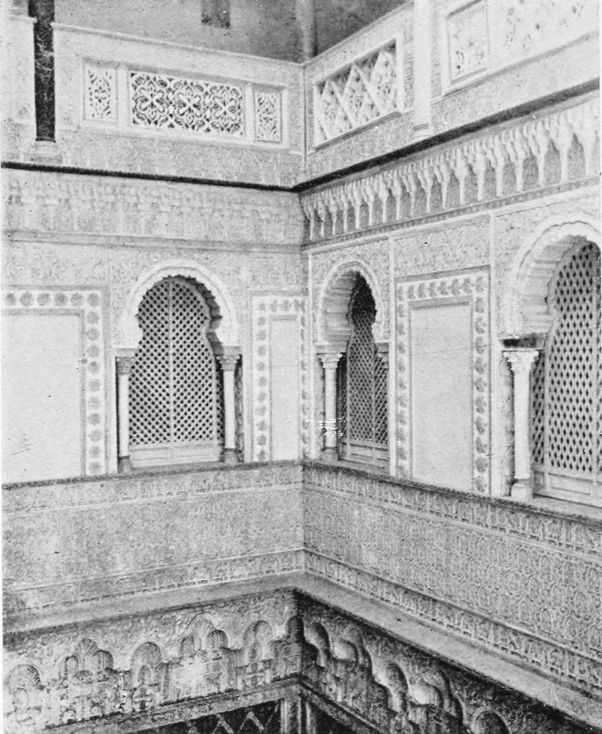
Court of the Dolls, Alcazar.
PLATE 139
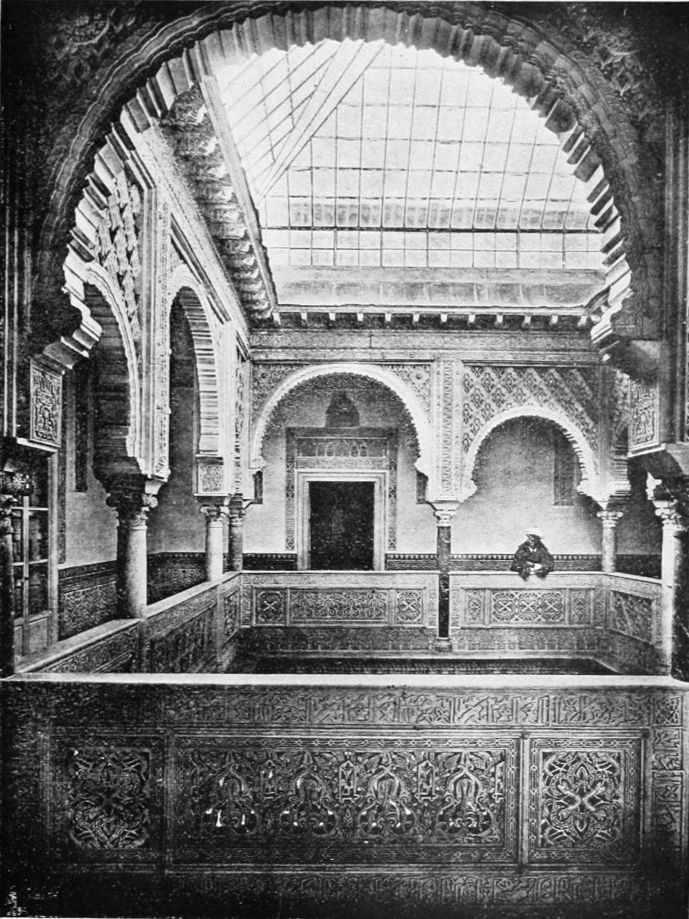
Gallery on the Second Storey of the Court of the Dolls, Alcazar.
PLATE 140
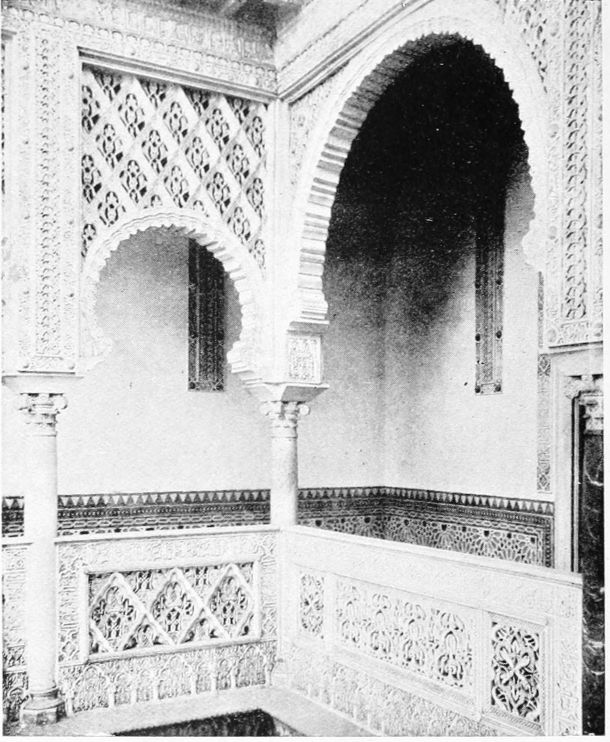
Upper Part of the Court of the Dolls, Alcazar.
PLATE 141
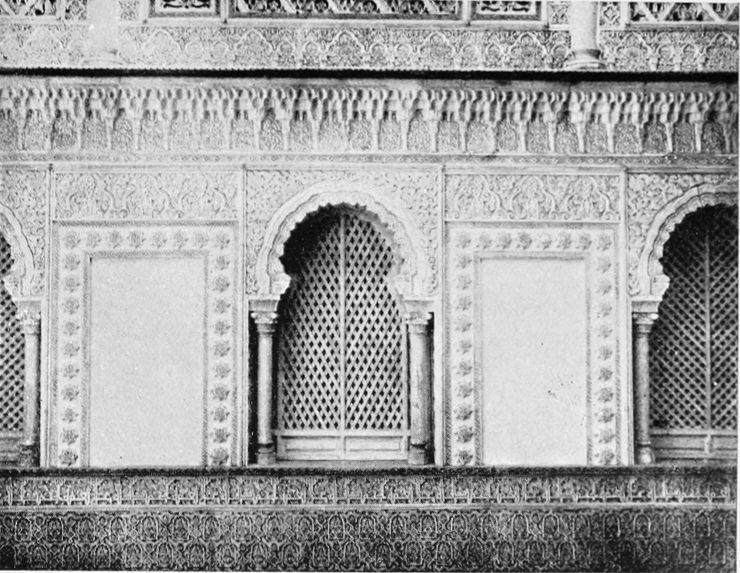
Upper Part of the Court of the Dolls, Alcazar.
PLATE 142
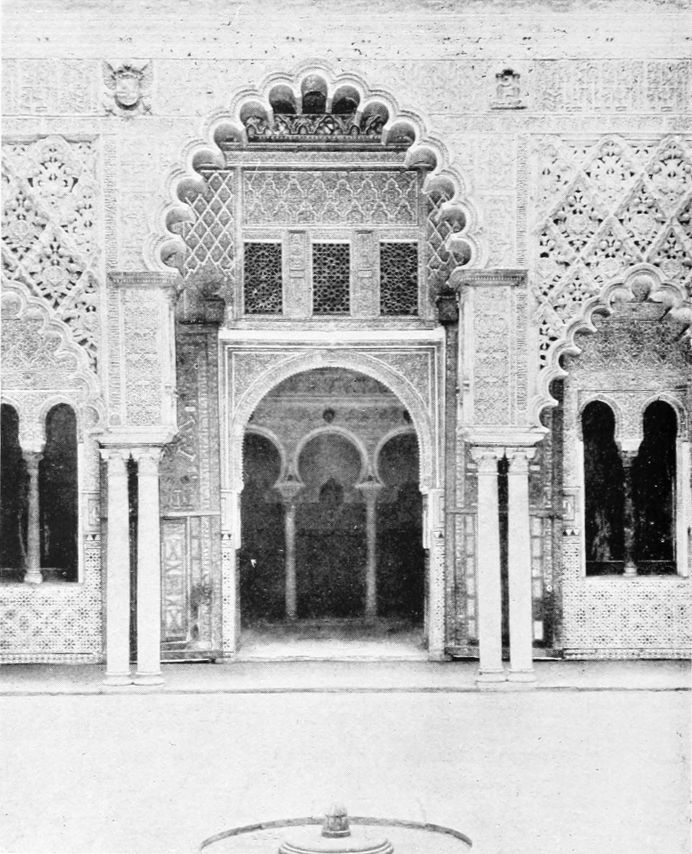
Entrance to the Dormitory of the Moorish Kings, Alcazar.
PLATE 143
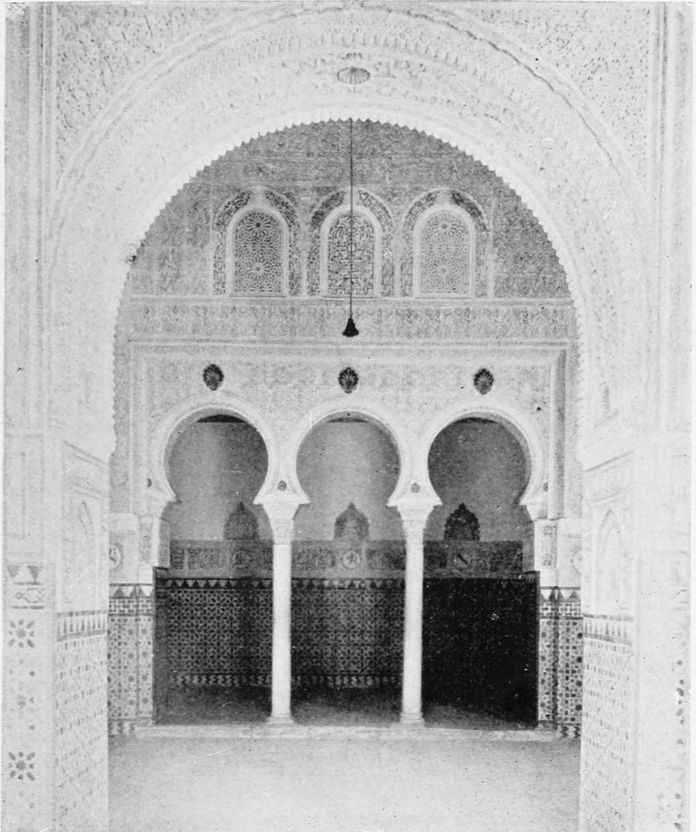
Dormitory of the Moorish Kings, Alcazar.
PLATE 144
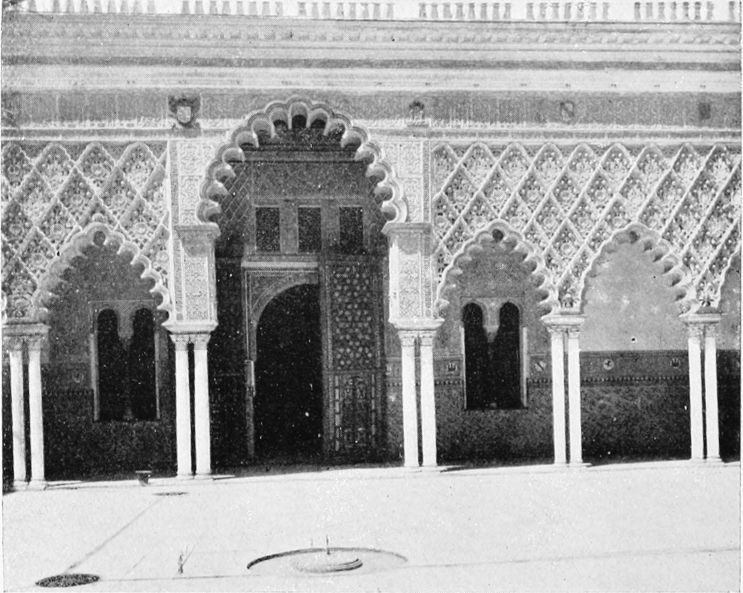
Front of the Sleeping Saloon of the Moorish Kings, Alcazar.
PLATE 145
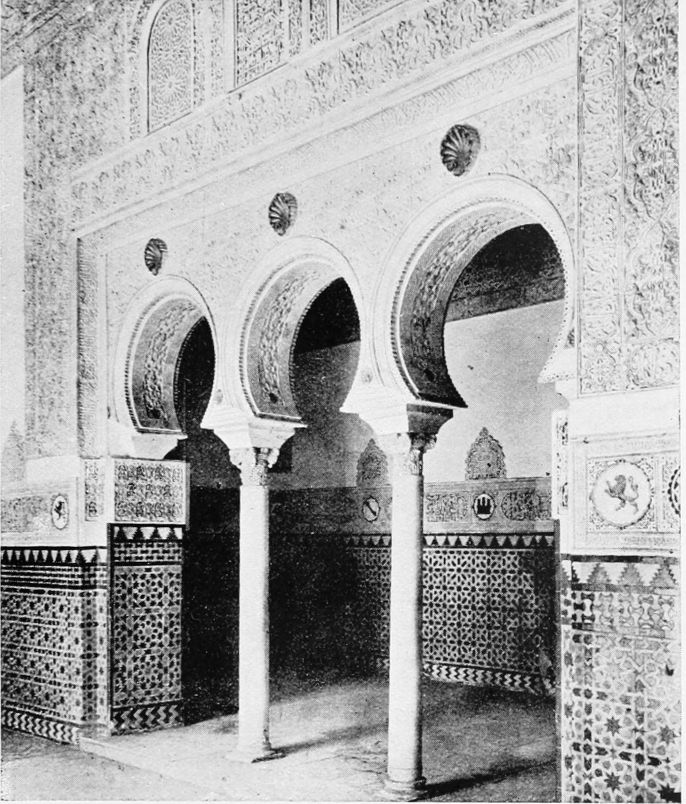
Sleeping Saloon of the Moorish Kings, Alcazar.
PLATE 146
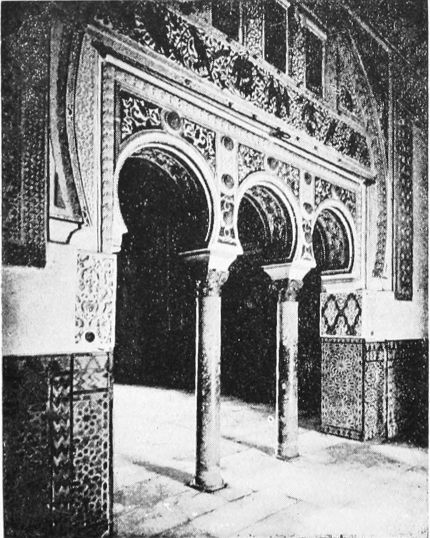
Intercolumniation, where Don Fadrique was Assassinated, Alcazar.
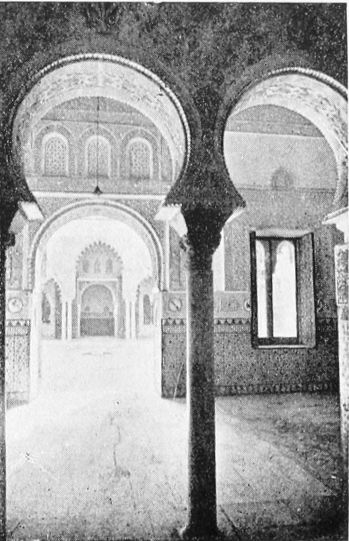
Sultana’s Quarters, Alcazar.
PLATE 147
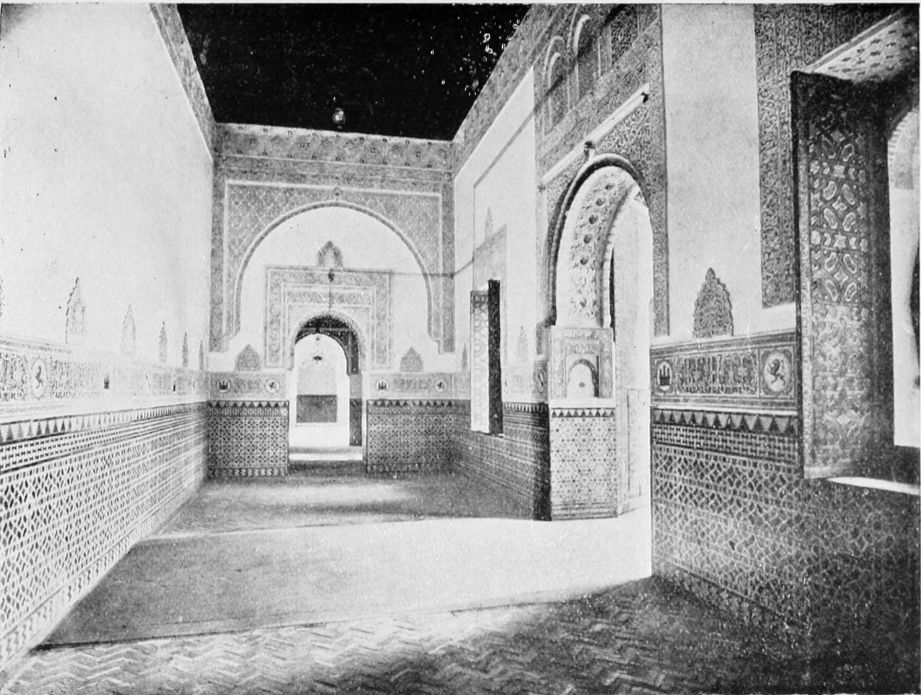
Room in which King St Ferdinand Died, Alcazar.
PLATE 148
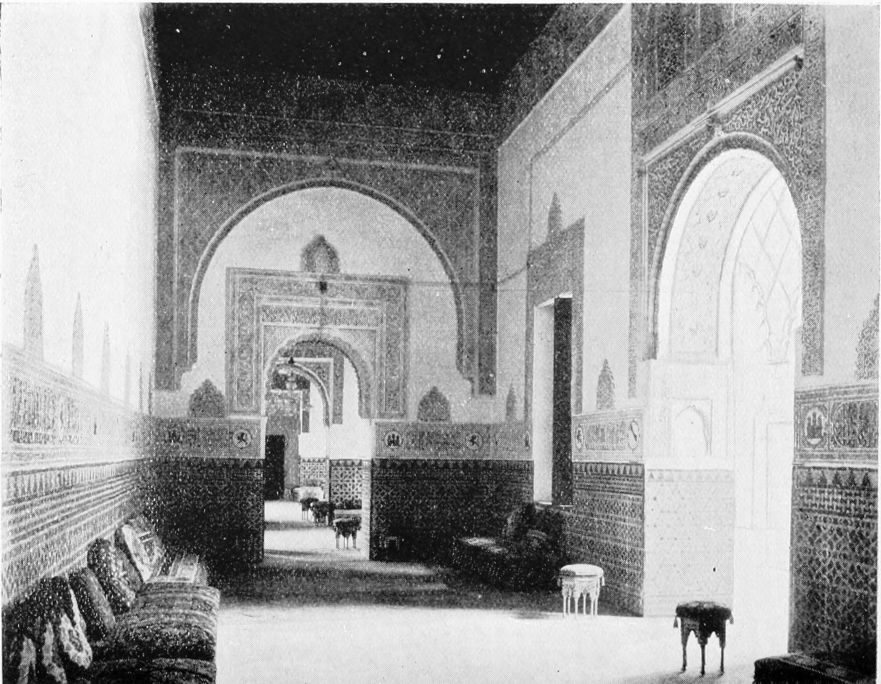
Interior of the Hall of St Ferdinand, Alcazar.
PLATE 149
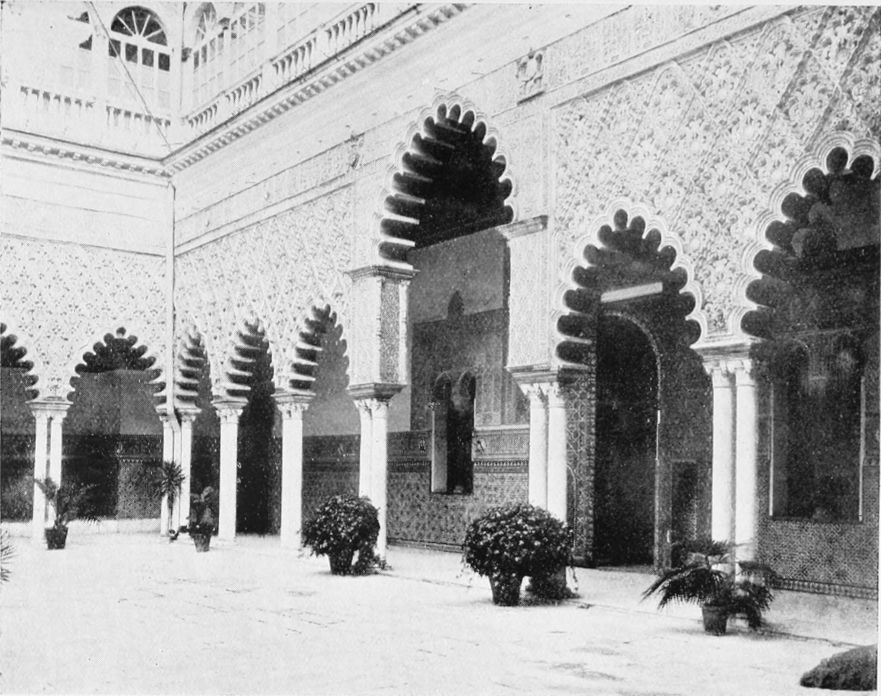
Front of the Hall of St Ferdinand, Alcazar.
PLATE 150
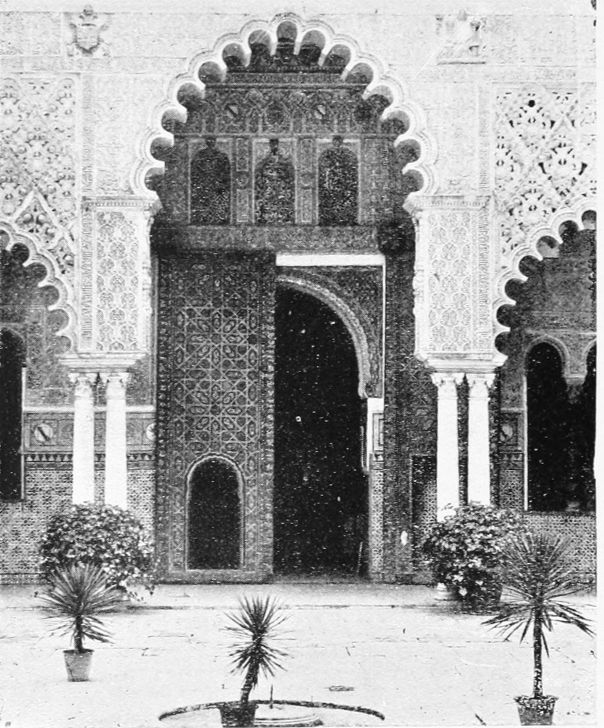
Gate of the Hall of St Ferdinand, Alcazar.
PLATE 151
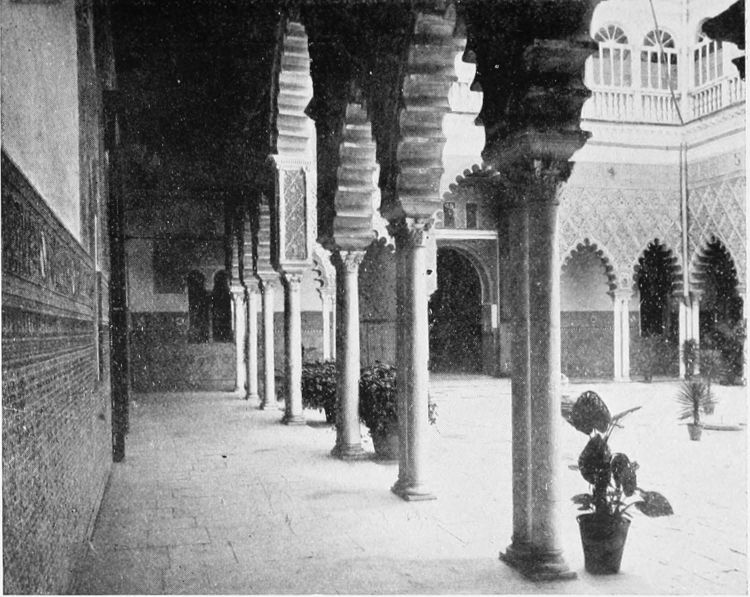
Gallery of the Hall of St Ferdinand, Alcazar.
PLATE 152
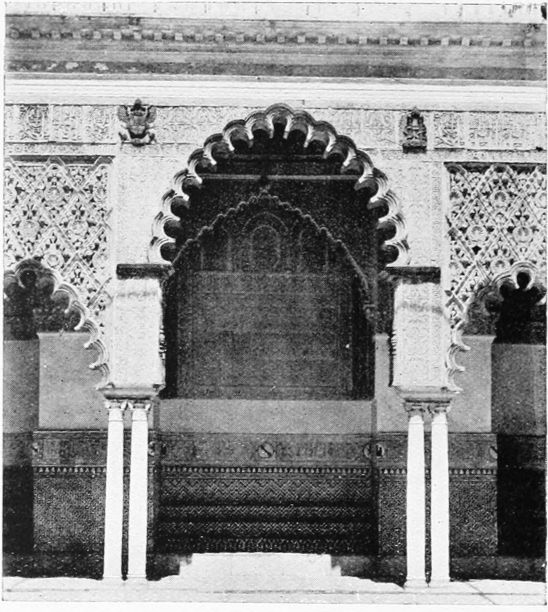
Throne of Justice, Alcazar.
PLATE 153
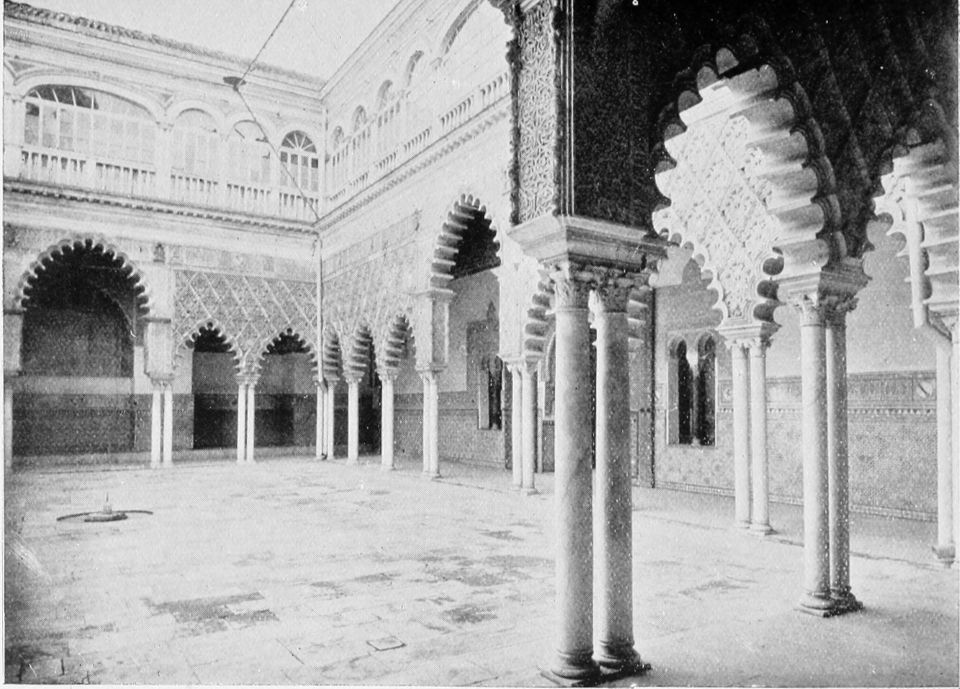
Court of the Hundred Virgins, Alcazar.
PLATE 154
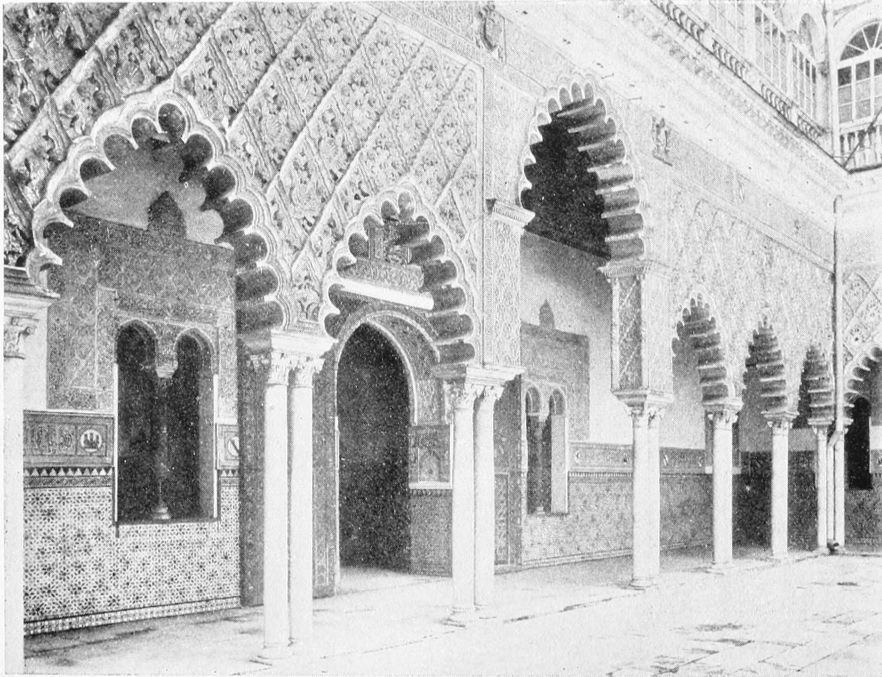
Court of the Virgins, Alcazar.
PLATE 155
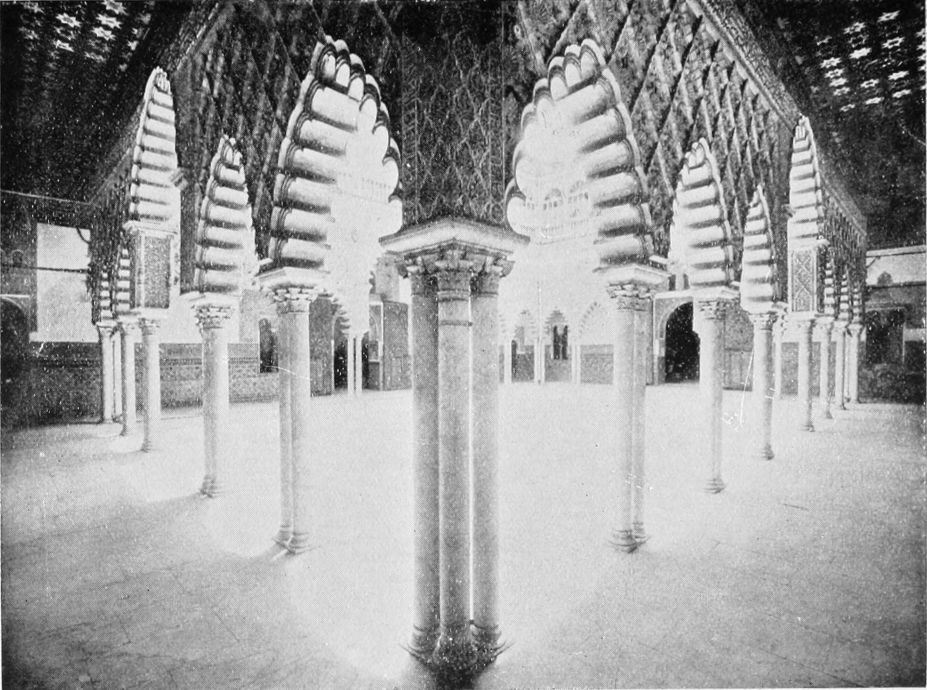
General View of the Court of the Hundred Virgins, Alcazar.
PLATE 156
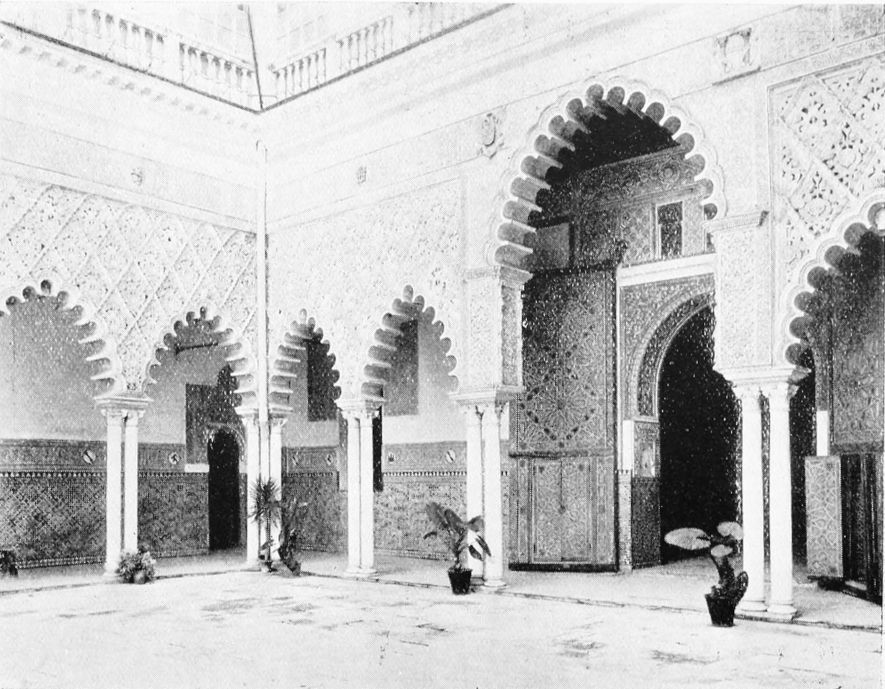
Court of the Virgins, Alcazar.
PLATE 157
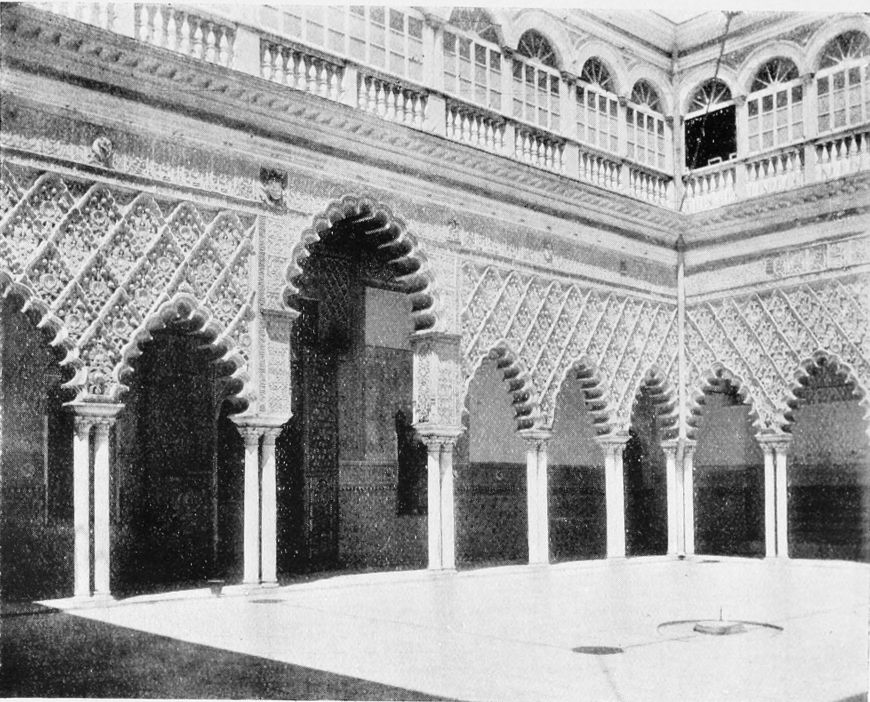
Front of the Dormitory of the Moorish Kings and the Court of the Virgins, Alcazar.
PLATE 158
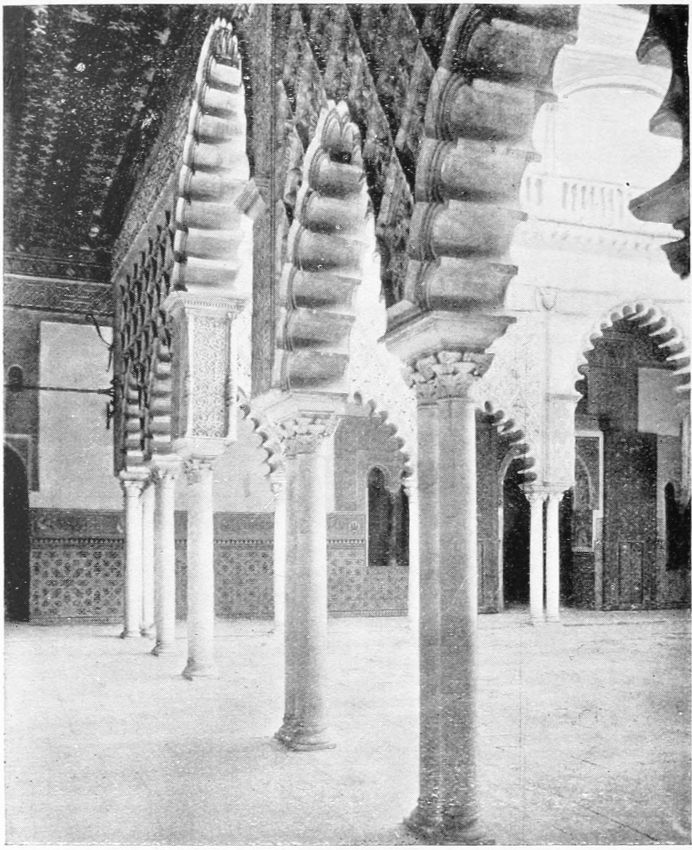
Gallery in the Court of the Virgins, Alcazar.
PLATE 159
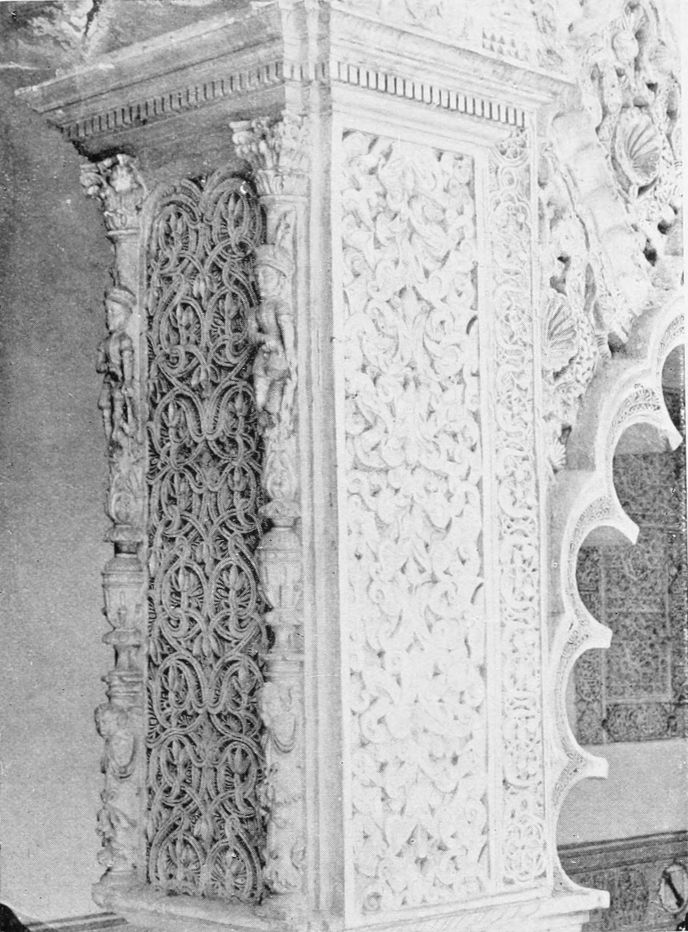
The Court of the Virgins. Capital of the Door of the Hall of Ambassadors, Alcazar.
PLATE 160
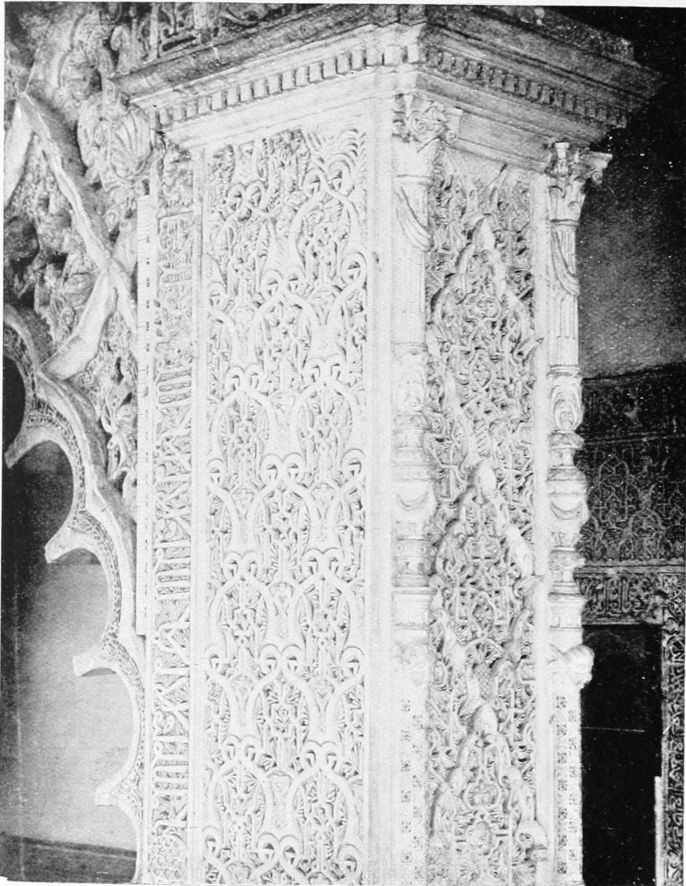
The Alcazar.
Court of the Virgins. Capital of the Gate of the Hall of Charles V.
PLATE 161
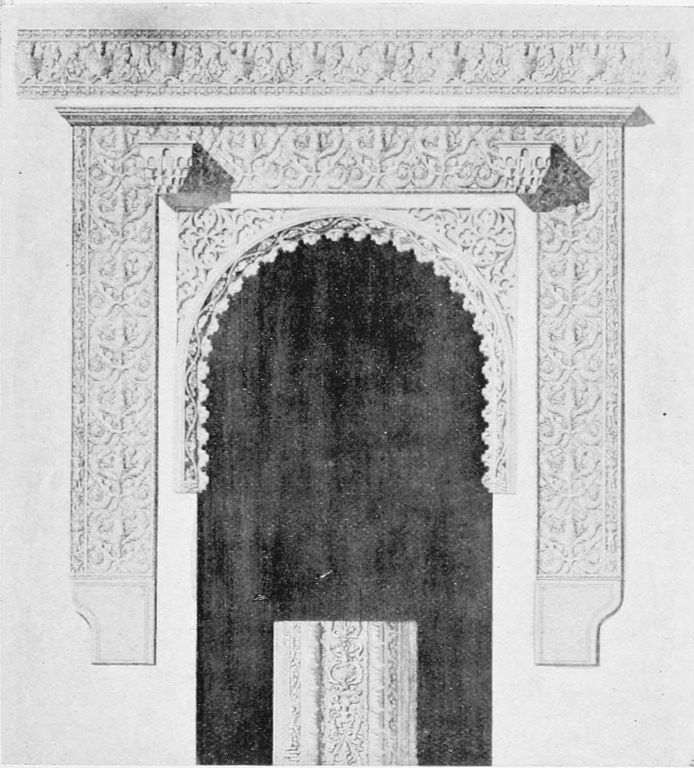
Palace of the Dueñas. Door of the Chapel.
PLATE 162
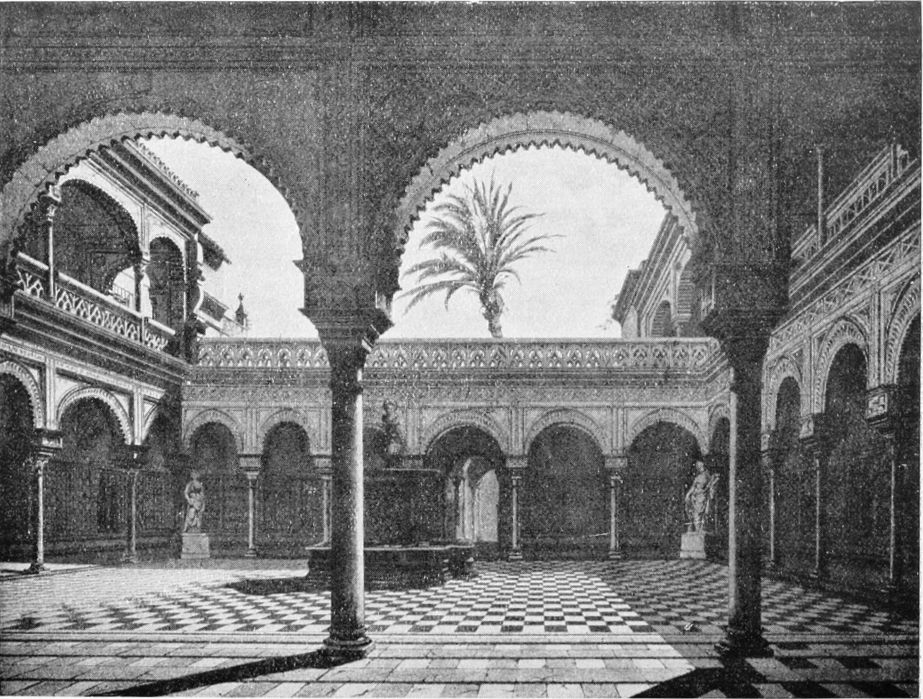
Palace of the Dukes of Alcala, Commonly called Casa de Pilatos.
PLATE 163
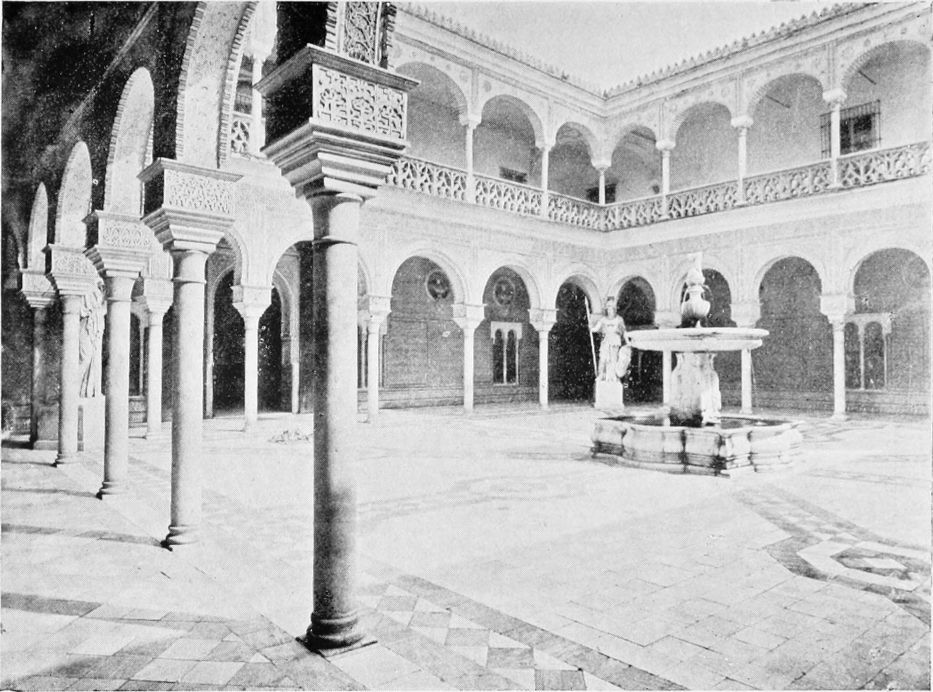
The Court in the House of Pilate.
PLATE 164
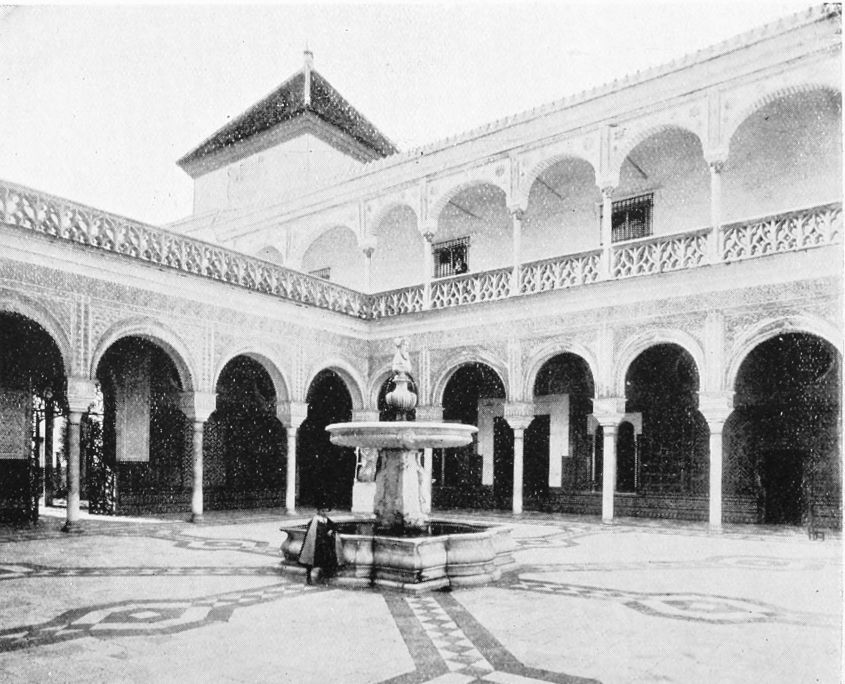
Court of the House of Pilate.
PLATE 165
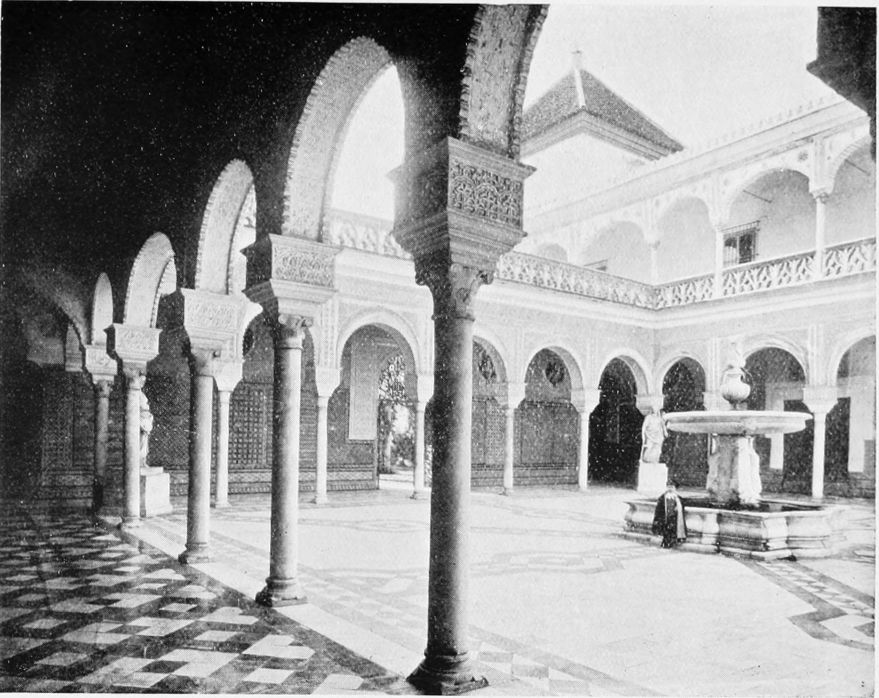
Gallery in the Court of the House of Pilate.
PLATE 166
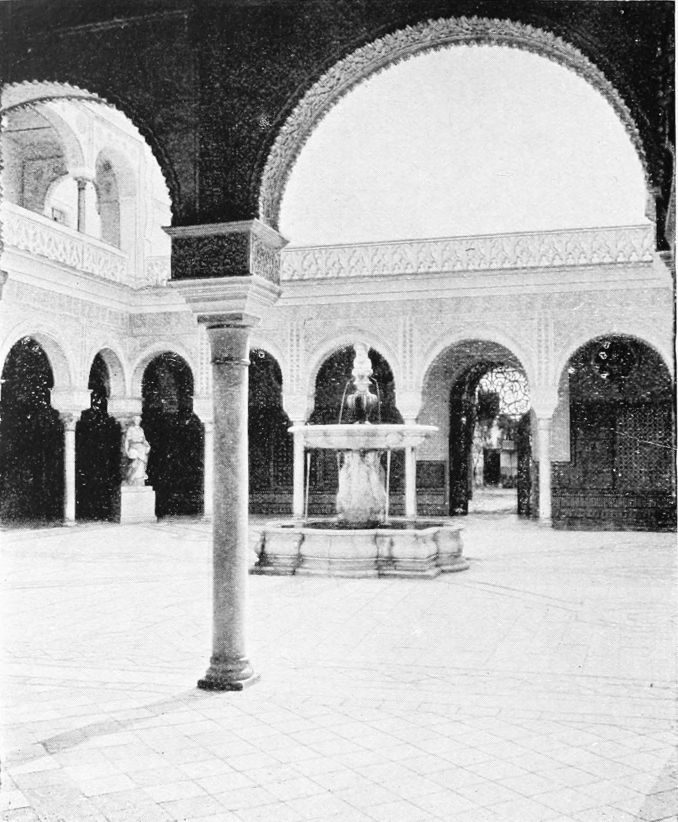
House of Pilate.
PLATE 167
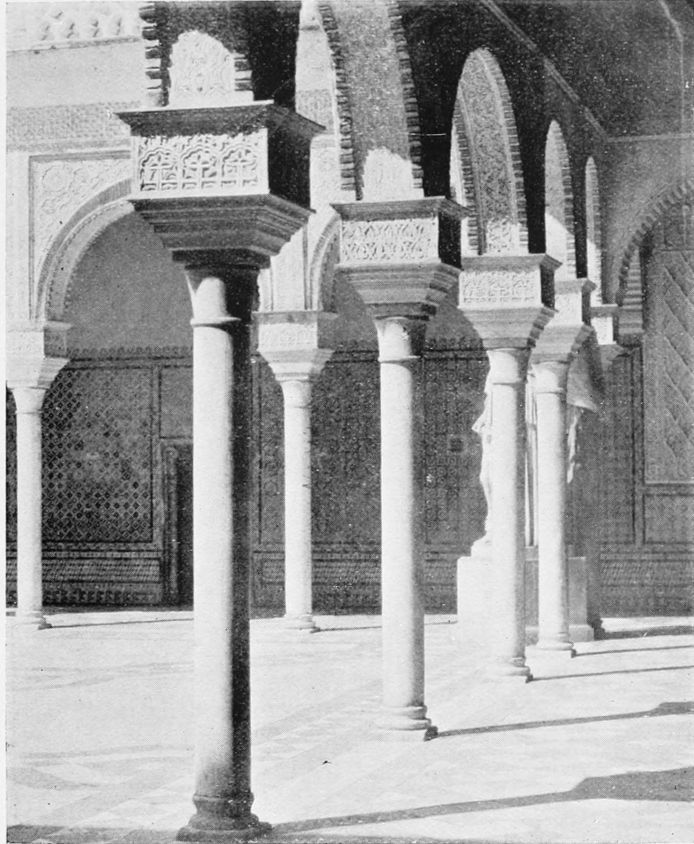
Gallery in the Court of the House of Pilate.
PLATE 168
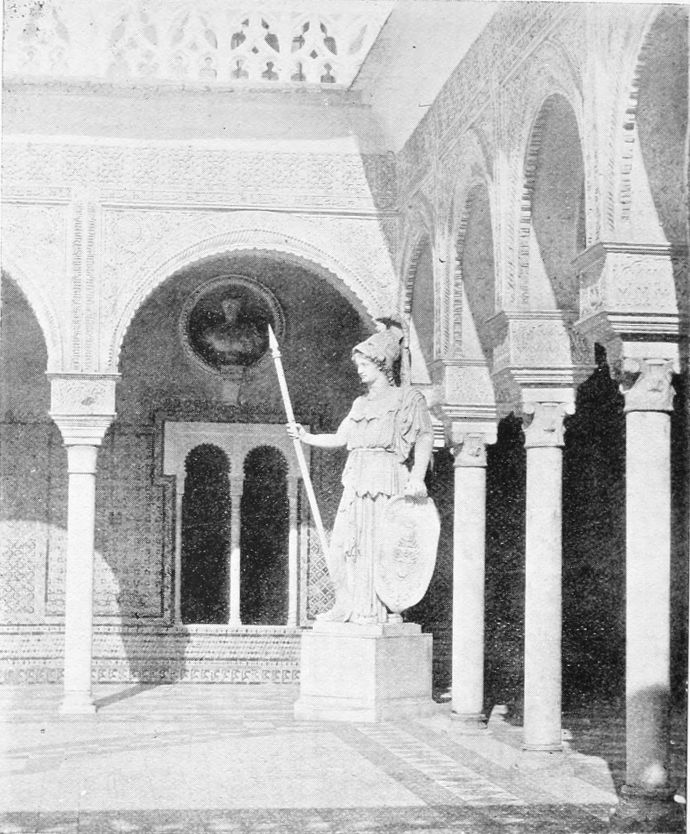
Angle and Statue in the House of Pilate.
PLATE 169
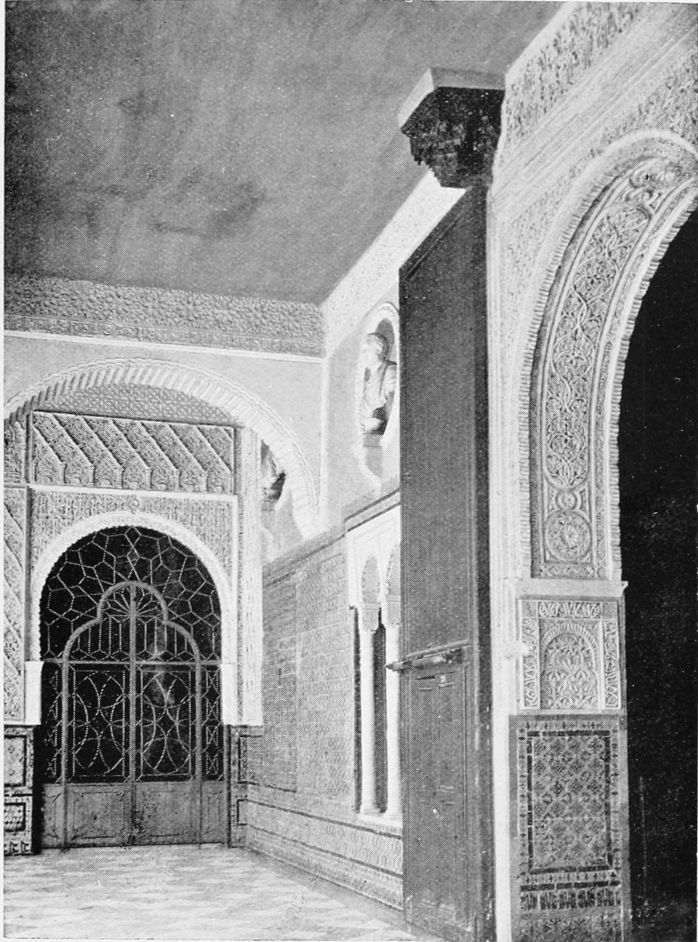
House of Pilate.
Entrance to the Ante-room of the Chapel.
PLATE 170
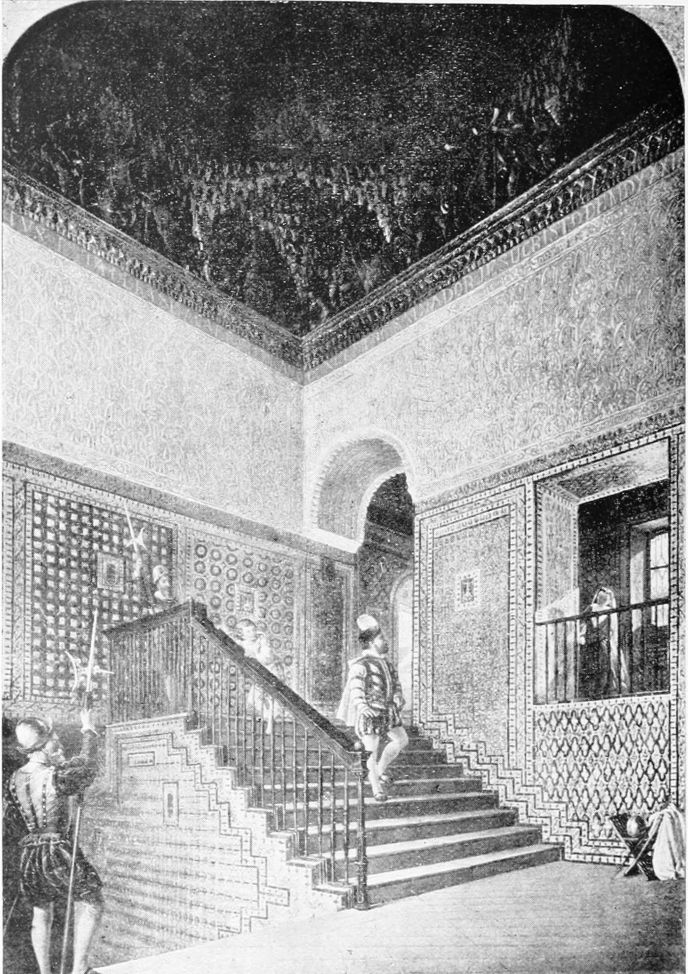
The Staircase in the House of Pilate, by Barrera.
PLATE 171
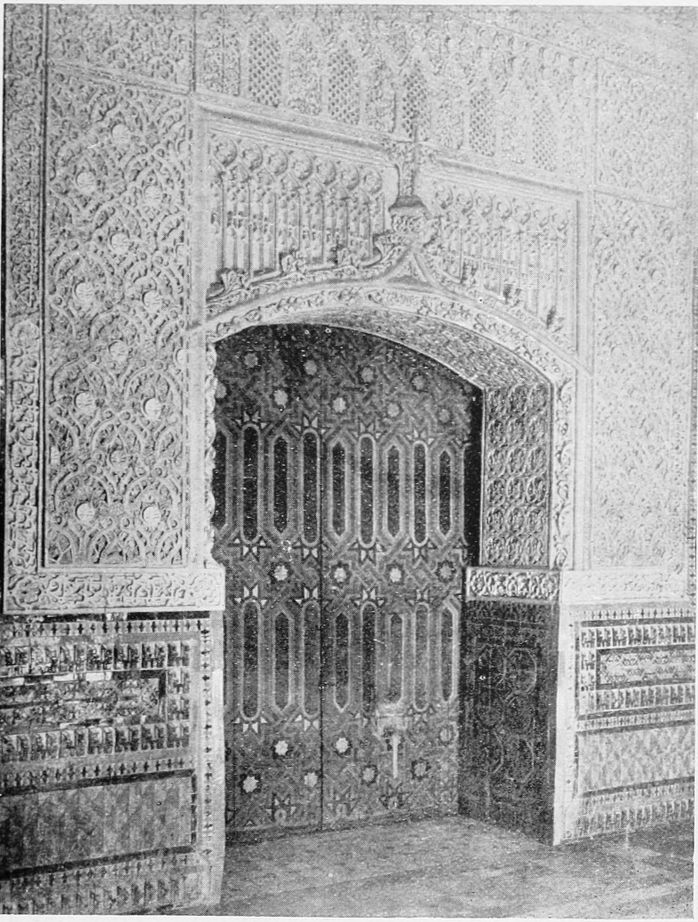
House of Pilate.
Entrance Door of the Oratory.
PLATE 172
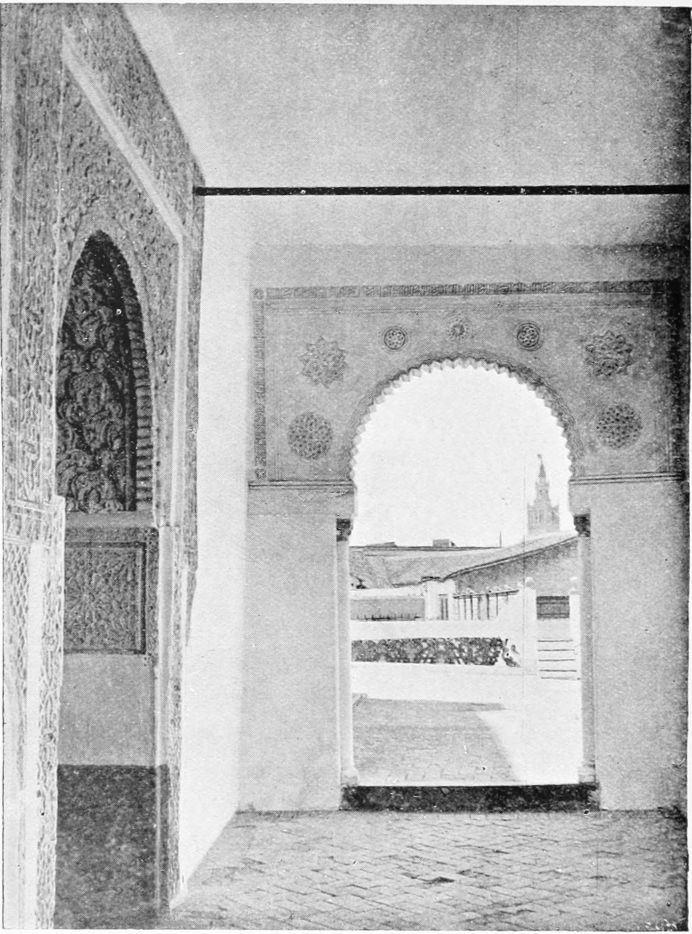
House of Pilate.
Way out to the Flat Roofs in the High Gallery.
PLATE 173
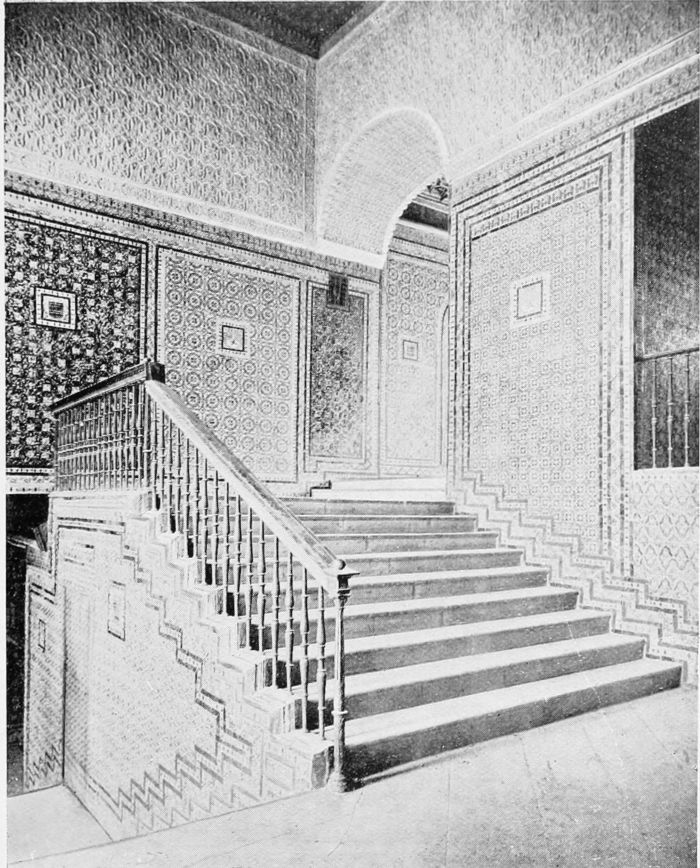
Staircase in the House of Pilate.
PLATE 174
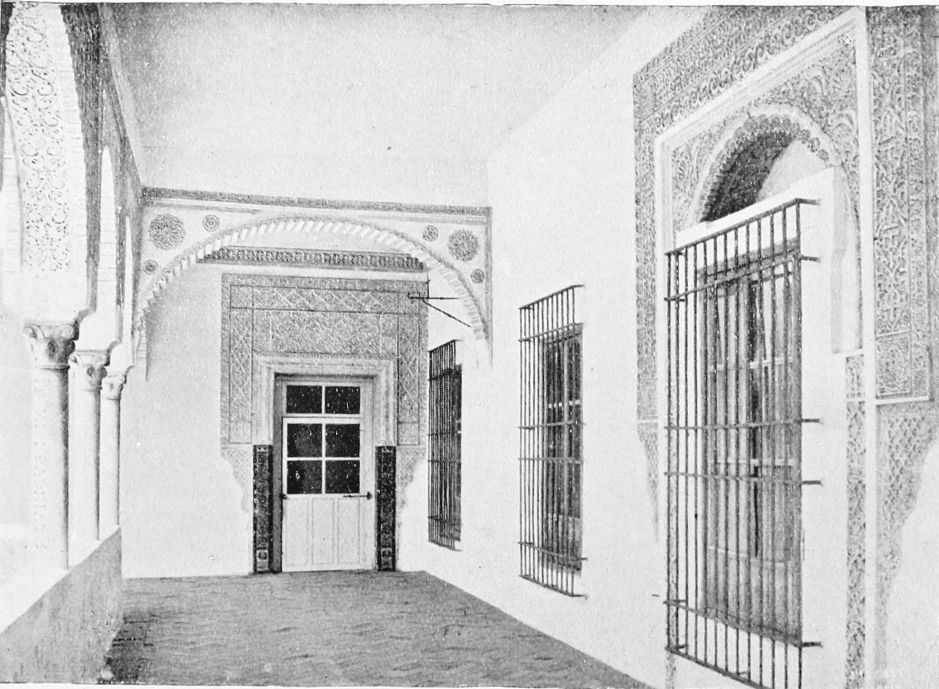
House of Pilate. Doors of the Offices in the High Gallery.
PLATE 175
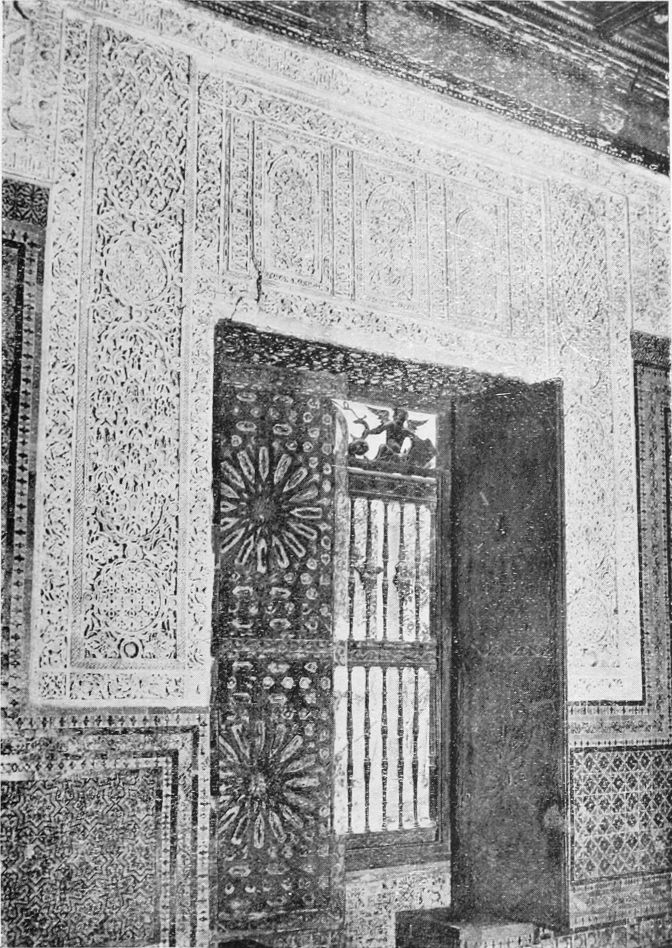
House of Pilate.
Window of the Prætor’s Hall leading to the Garden.
PLATE 176
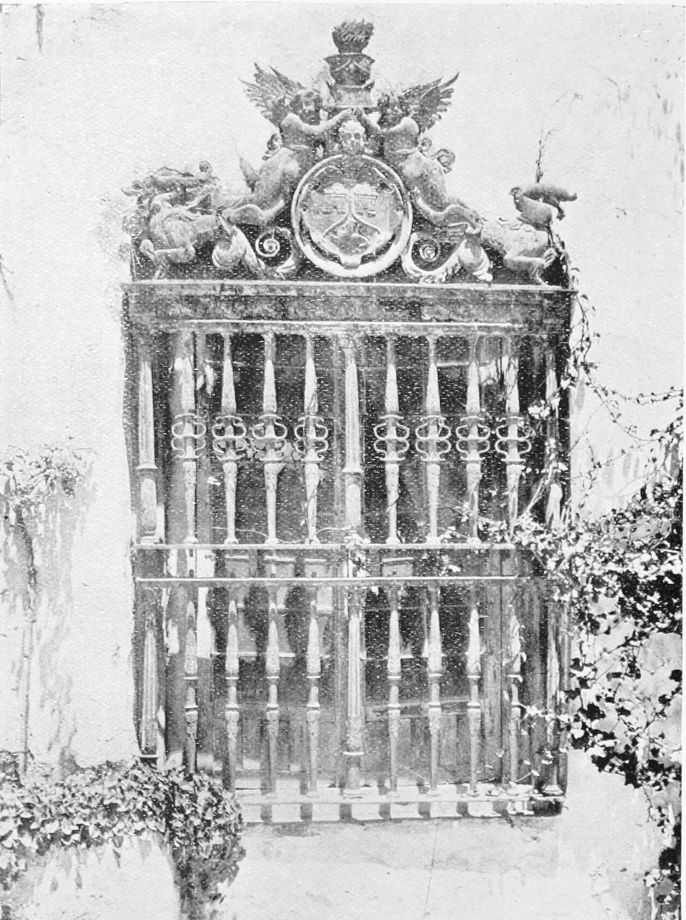
House of Pilate.
Barred Window in the Prætor’s Garden.
PLATE 177
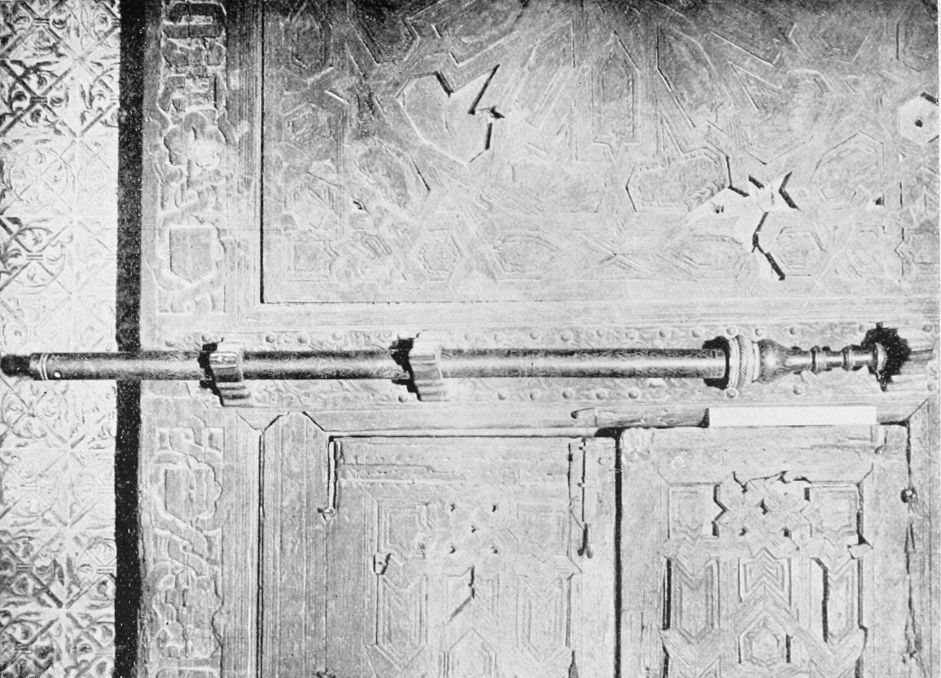
House of Pilate. Bolt on the Prætor’s Gate.
PLATE 178
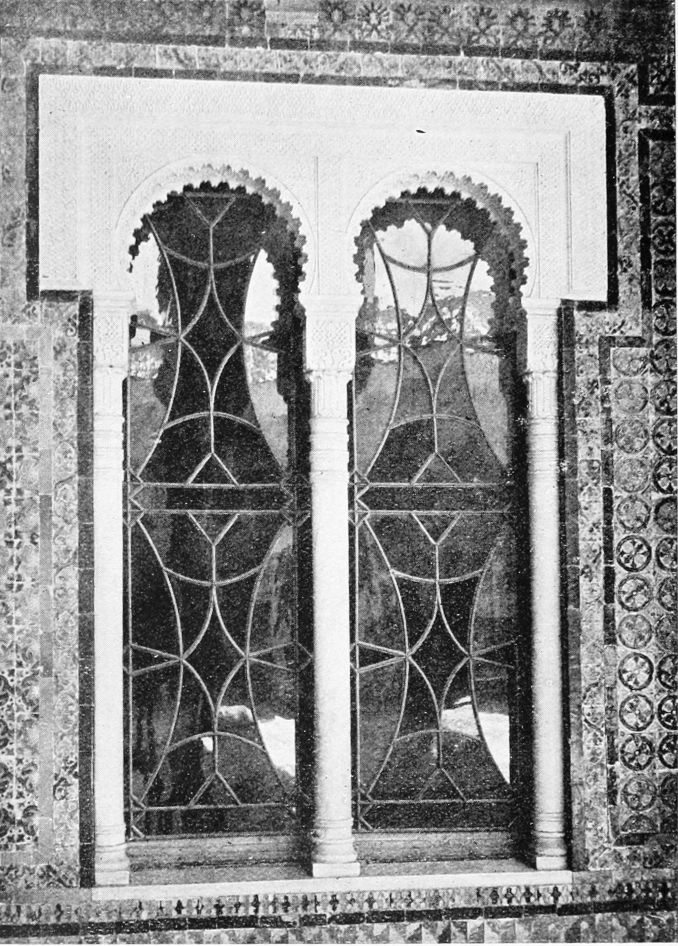
House of Pilate.
Window in the Ante-room of the Chapel.
PLATE 179
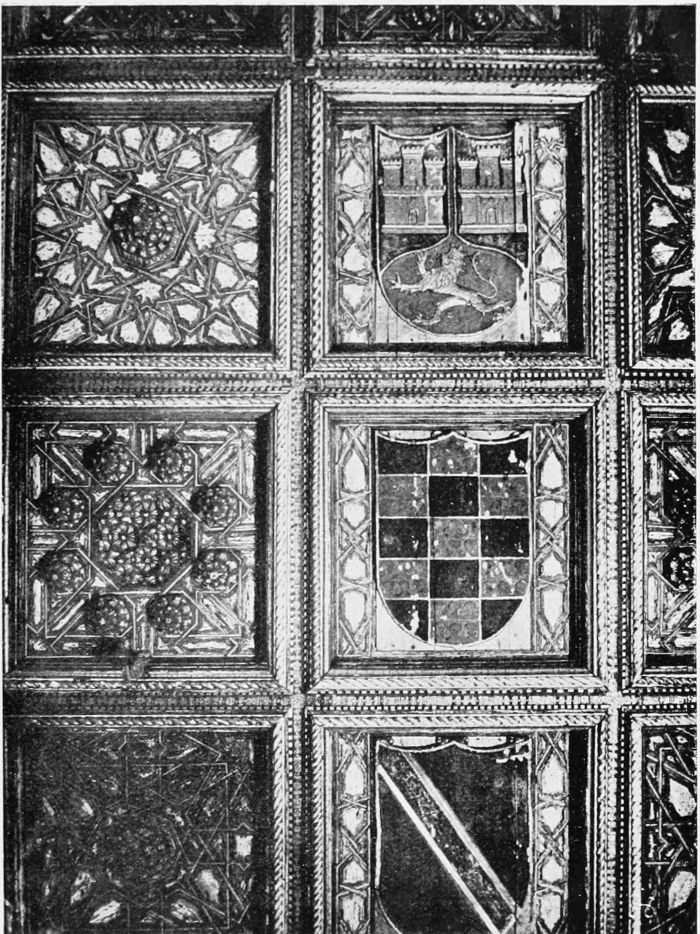
House of Pilate.
Section of the Ceiling in the Prætor’s Hall.
PLATE 180
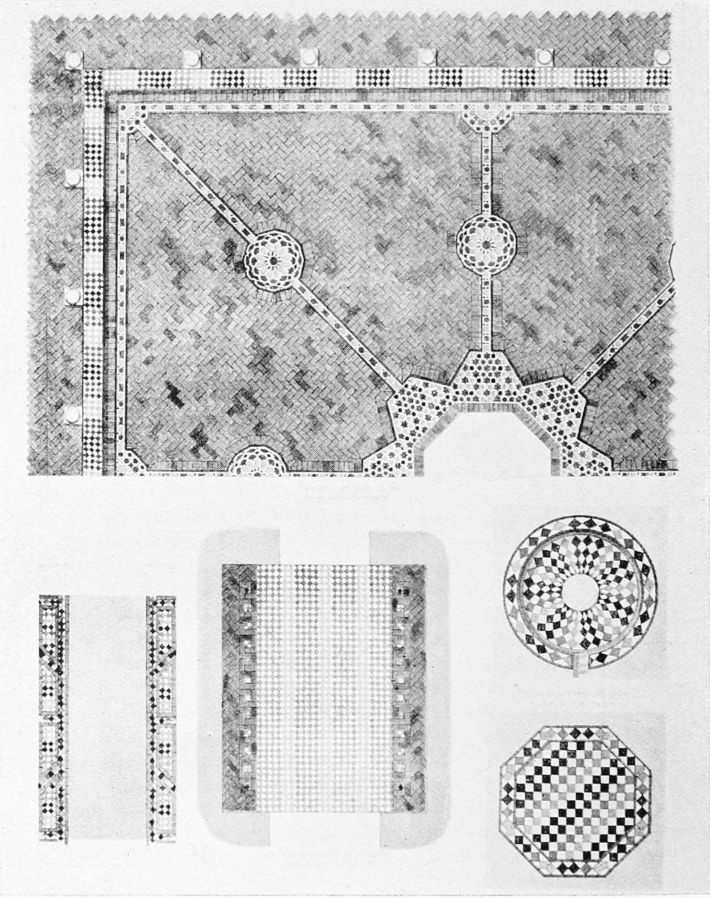
Palace of the Dueñas in Seville.
PLATE 181
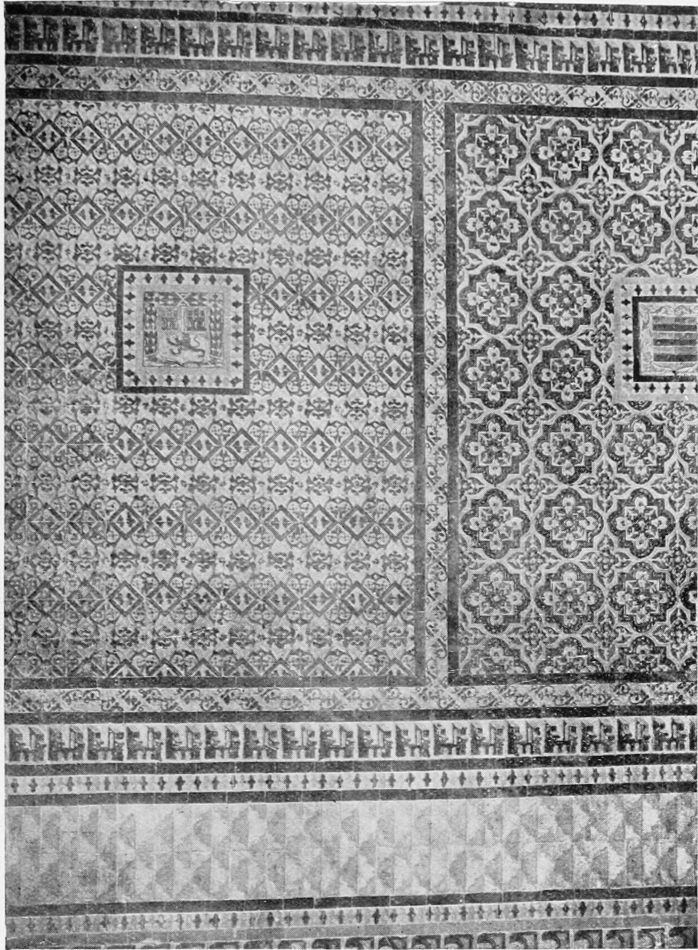
House of Pilate.
Mosaics in the Hall of the Fountain.
PLATE 182
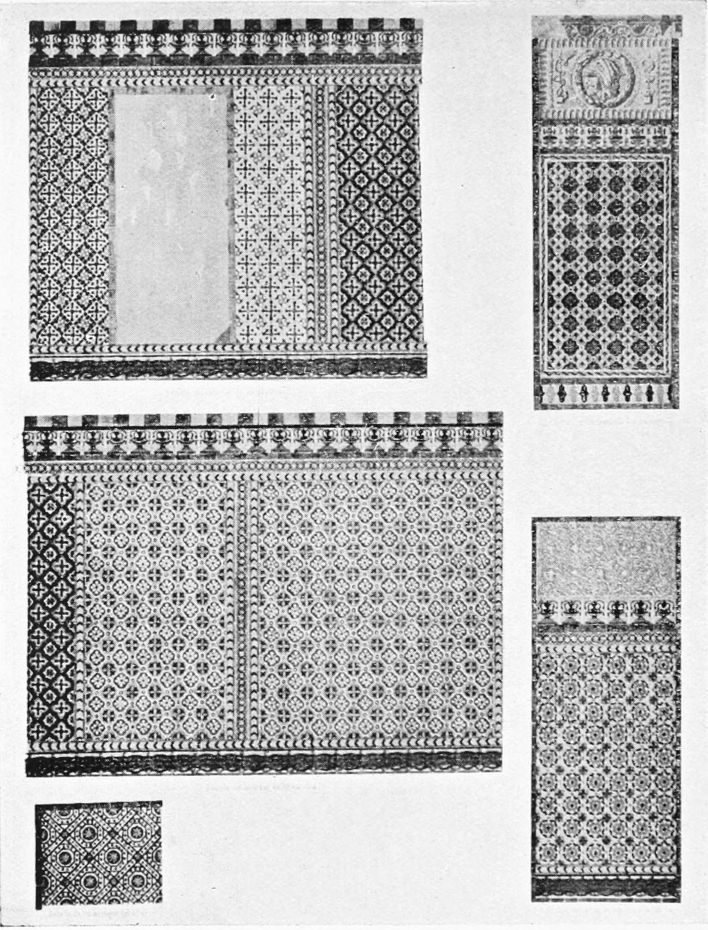
Palace of the Dueñas in Seville.
Glazed Tiles in the Socles of the Chapel and Arches.
PLATE 183
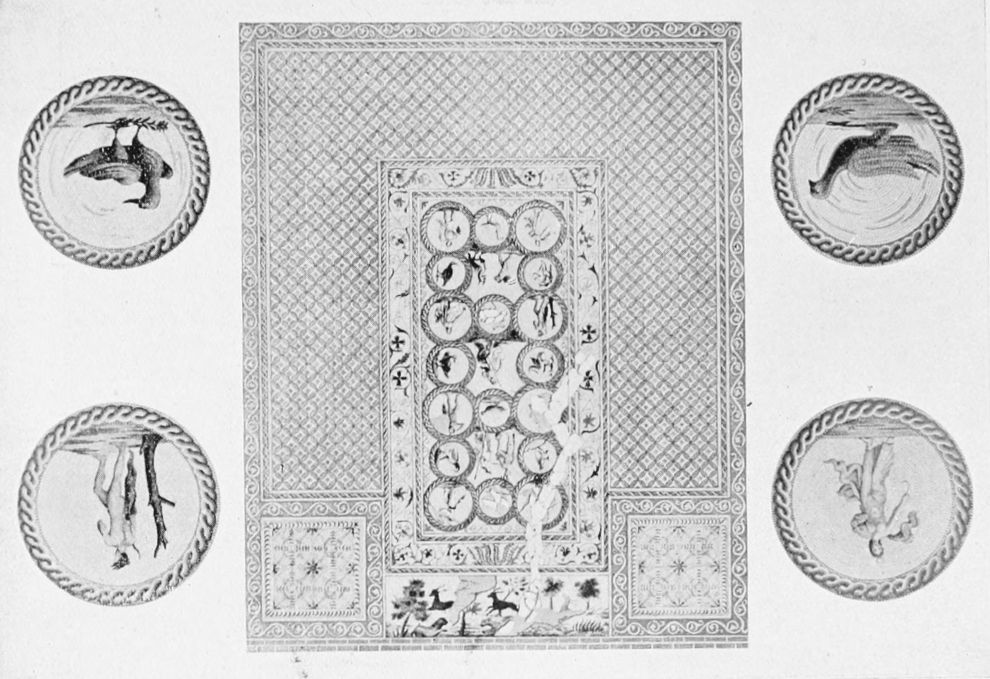
Mosaic of the Peristyle in the Palace.
PLATE 184
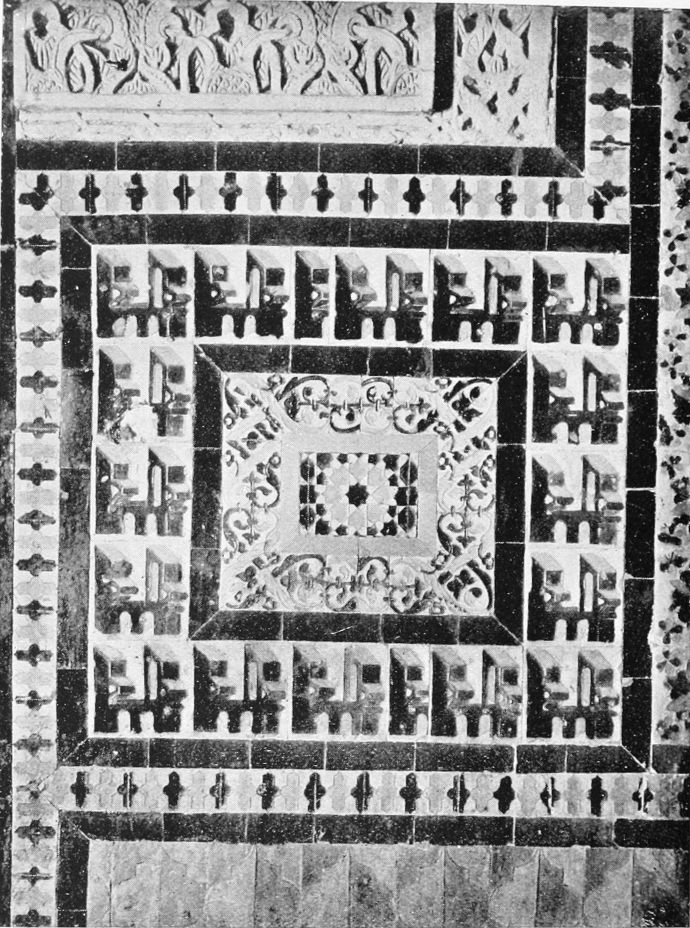
House of Pilate.
Mosaic in the Hall of the Fountain.
PLATE 185
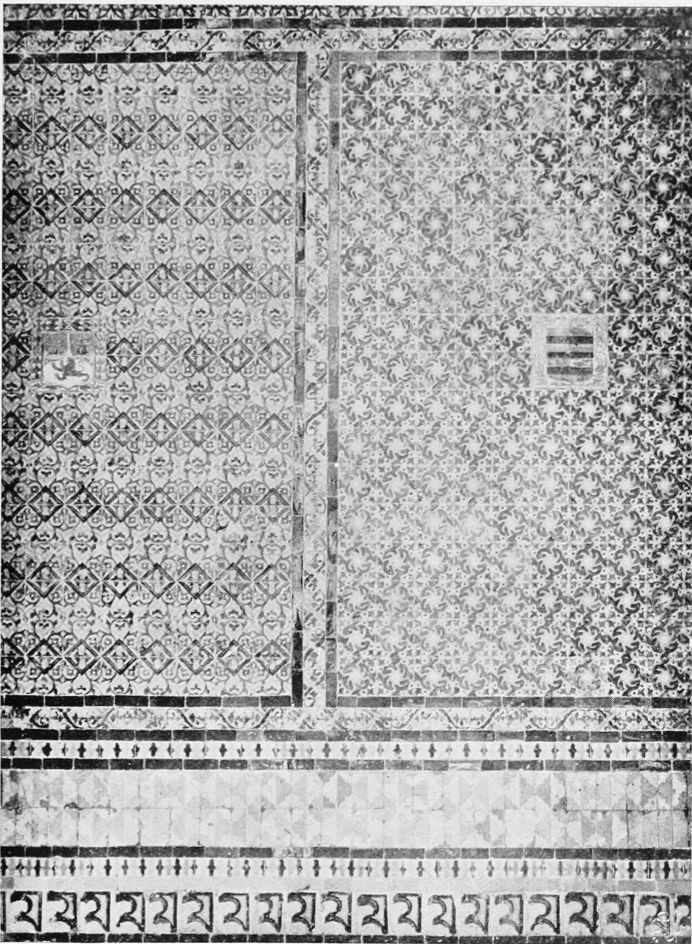
Mosaic in the Court of the House of Pilate.
PLATE 186
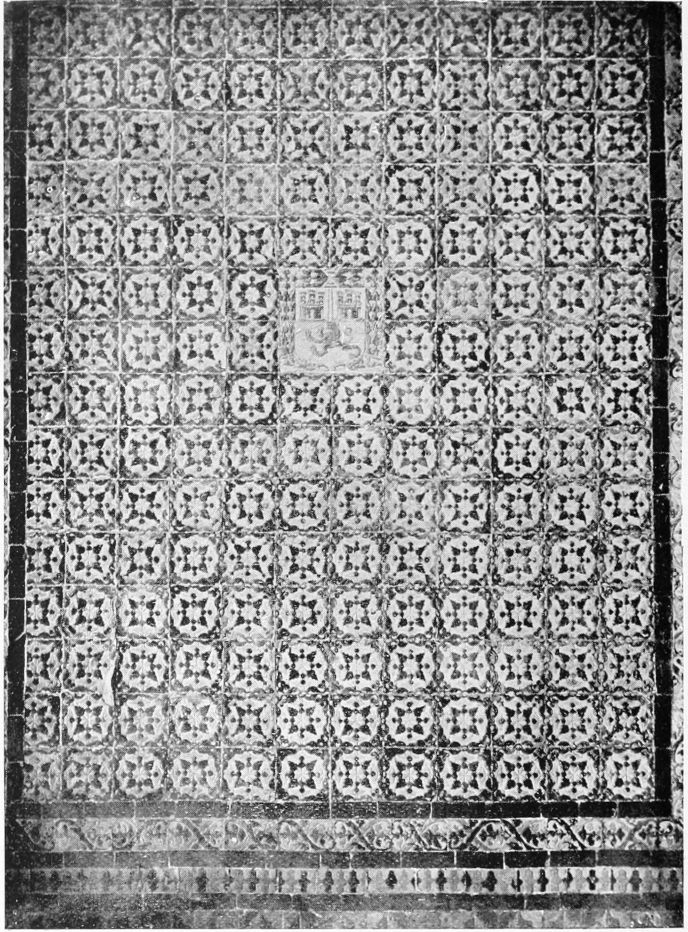
Mosaic in the Court of the House of Pilate.
PLATE 187
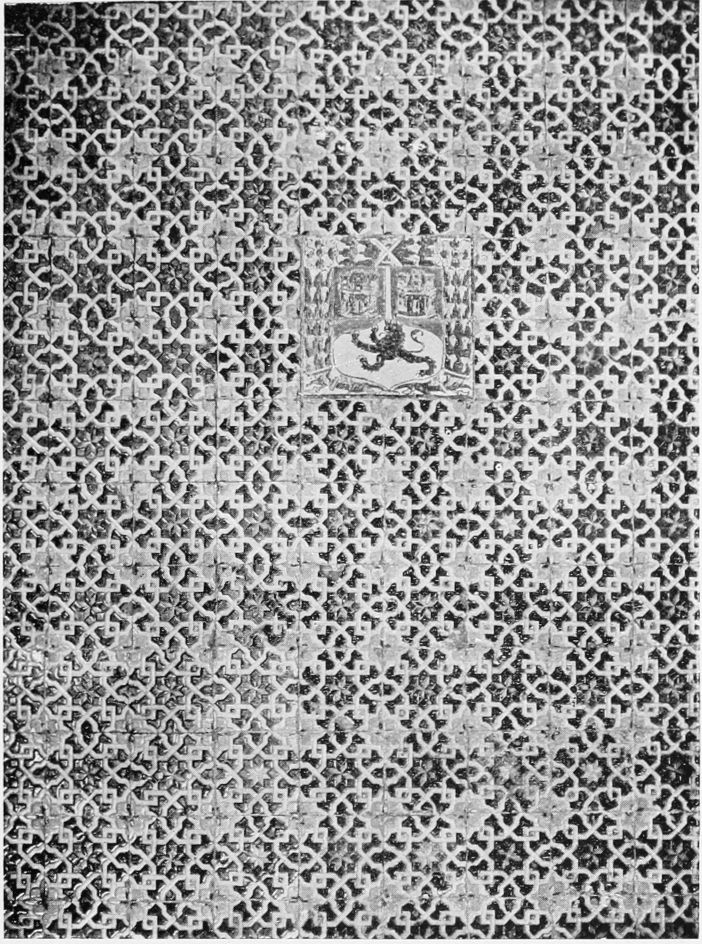
Mosaic in the Court of the House of Pilate.
PLATE 188
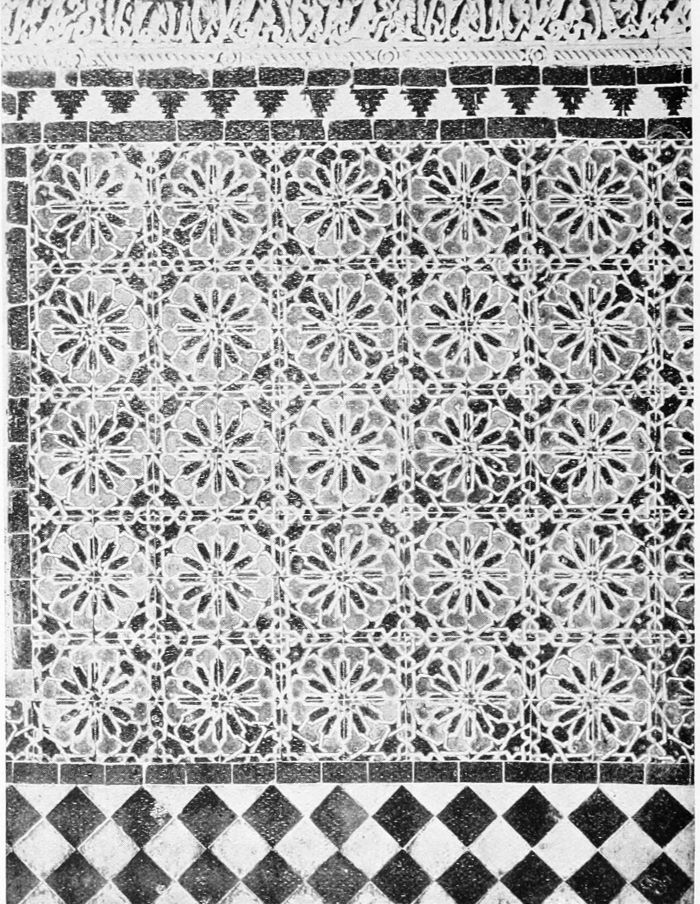
House of Pilate.
Mosaic in the Chapel.
PLATE 189
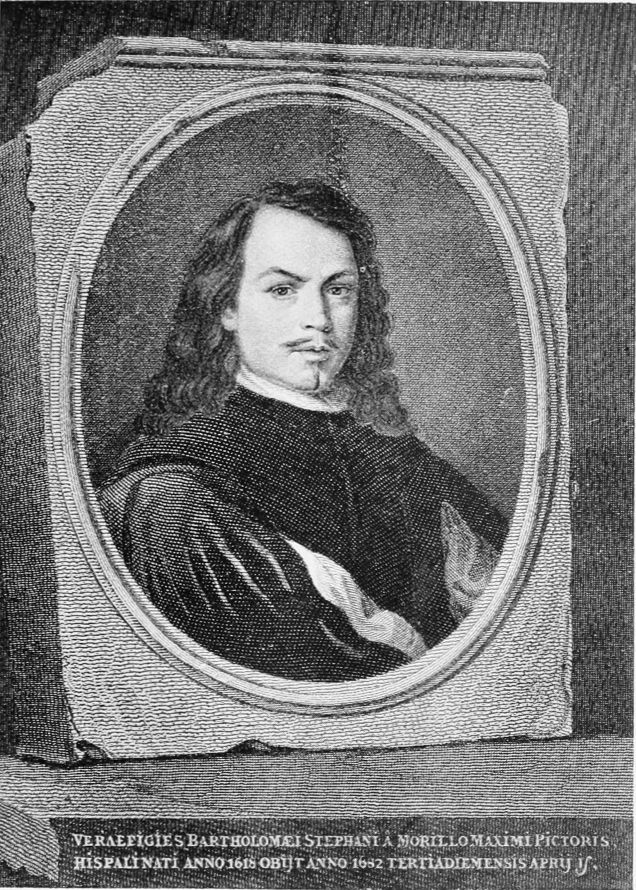
Bartolomé Esteban Murillo.
BORN IN SEVILLE, 1617.
PLATE 190
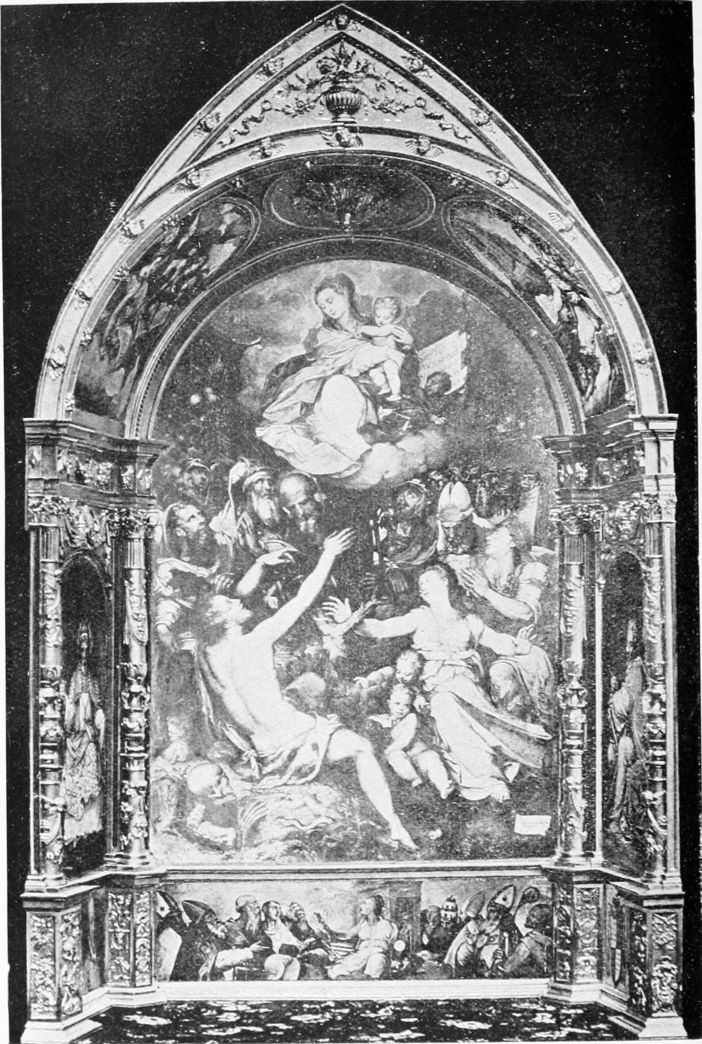
Altar-screen of the La Gamba, by Luis de Vargas.
SEVILLE CATHEDRAL.
PLATE 191
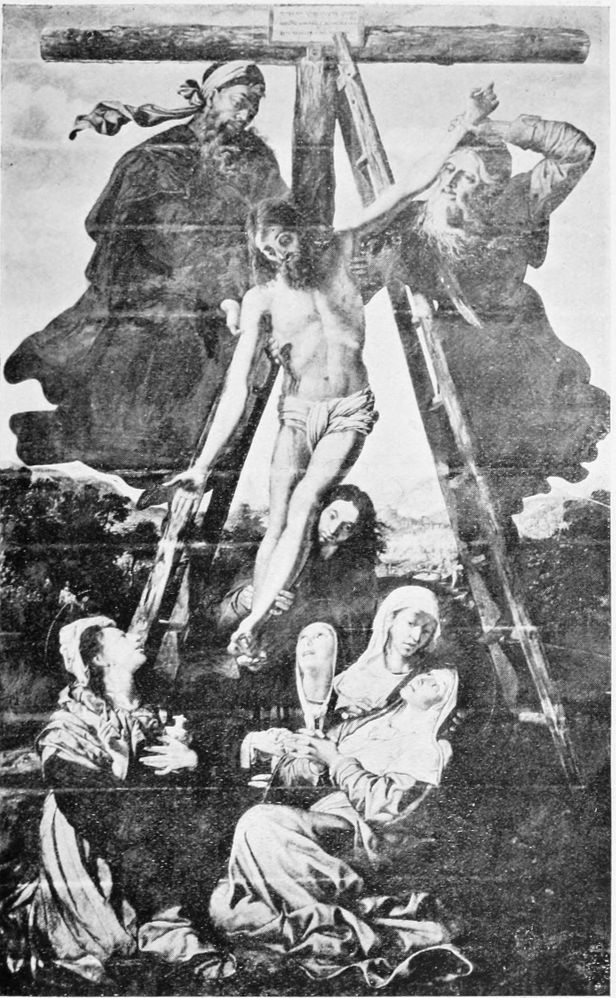
Descent from the Cross, by Pedro Campaña.
SEVILLE CATHEDRAL.
PLATE 192
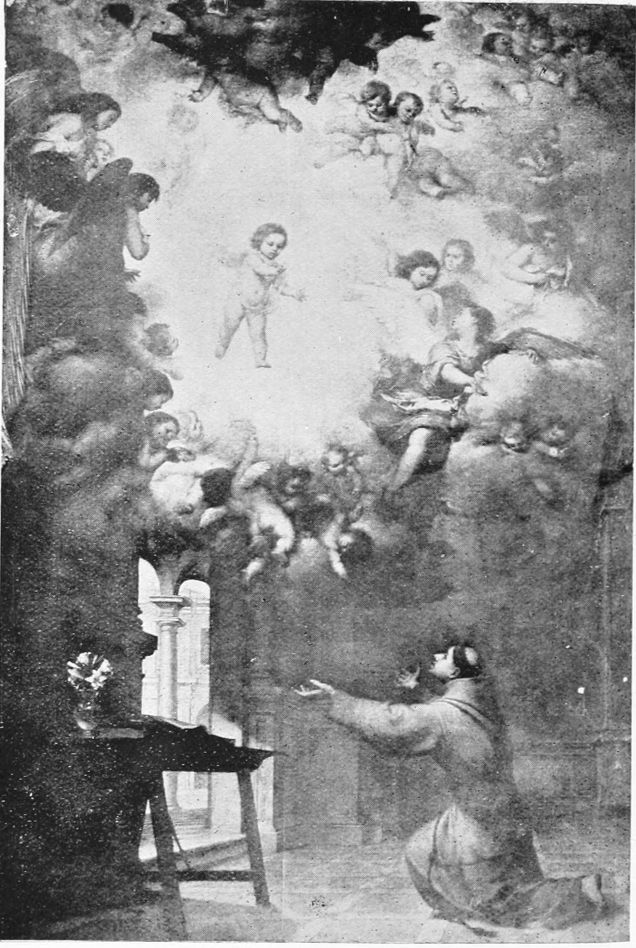
St Anthony of Padua visited by the Infant Saviour while kneeling at his Prayers, by Murillo.
SEVILLE CATHEDRAL.
PLATE 193
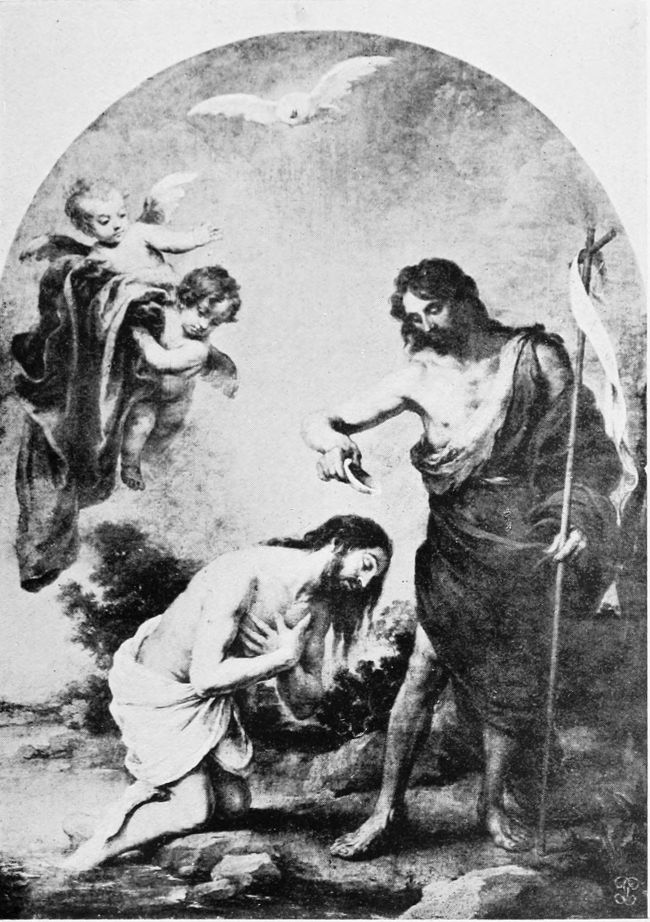
Our Lord Baptized by St John Baptist, by Murillo.
SEVILLE CATHEDRAL.
PLATE 194
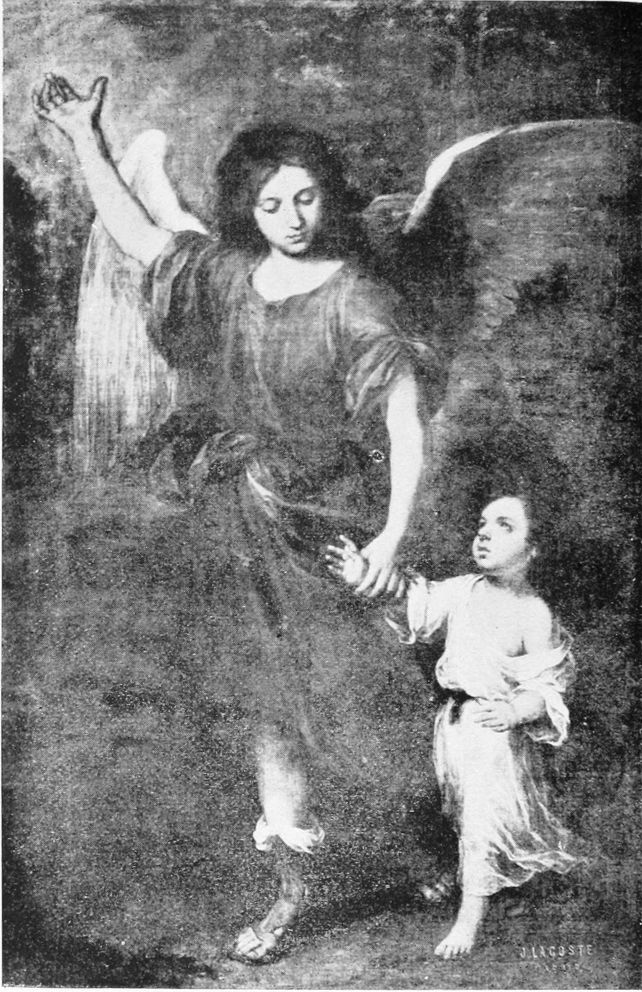
The Guardian Angel, by Murillo.
SEVILLE CATHEDRAL.
PLATE 195
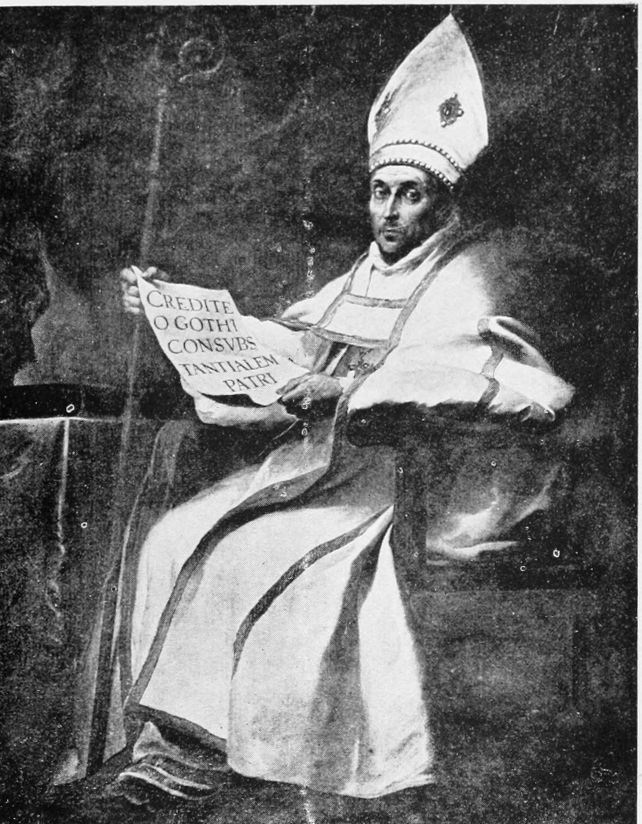
St Leander, by Murillo.
SEVILLE CATHEDRAL.
PLATE 196
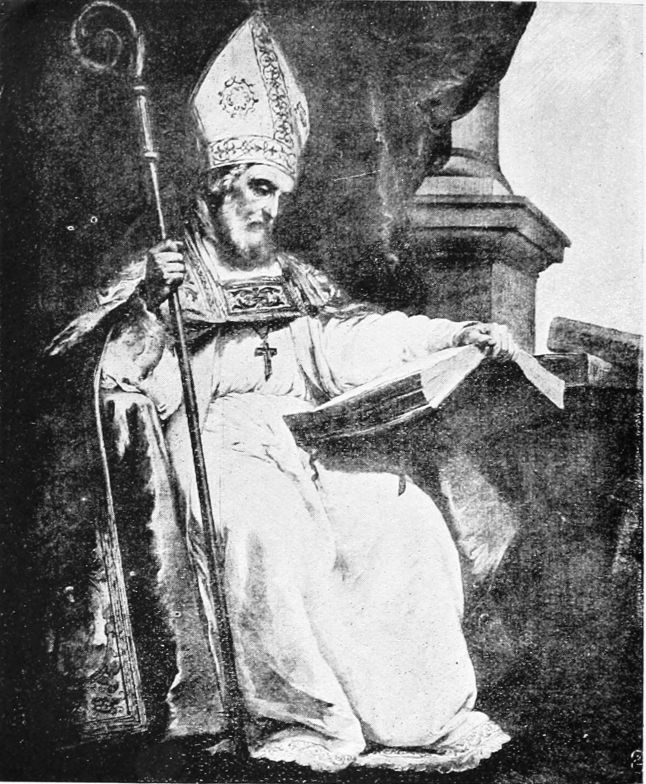
St Isidore, by Murillo.
SEVILLE CATHEDRAL.
PLATE 197
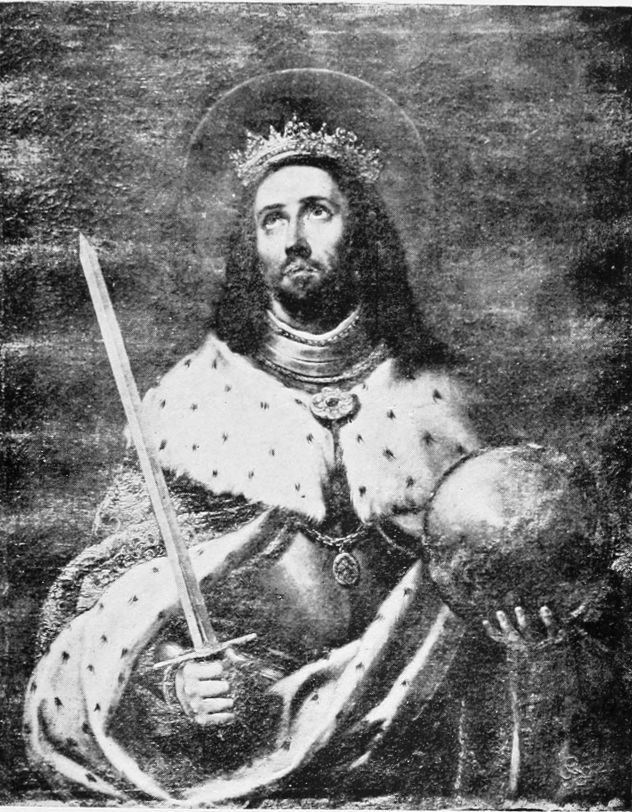
St Ferdinand, Crowned and Robed, by Murillo.
SEVILLE CATHEDRAL.
PLATE 198
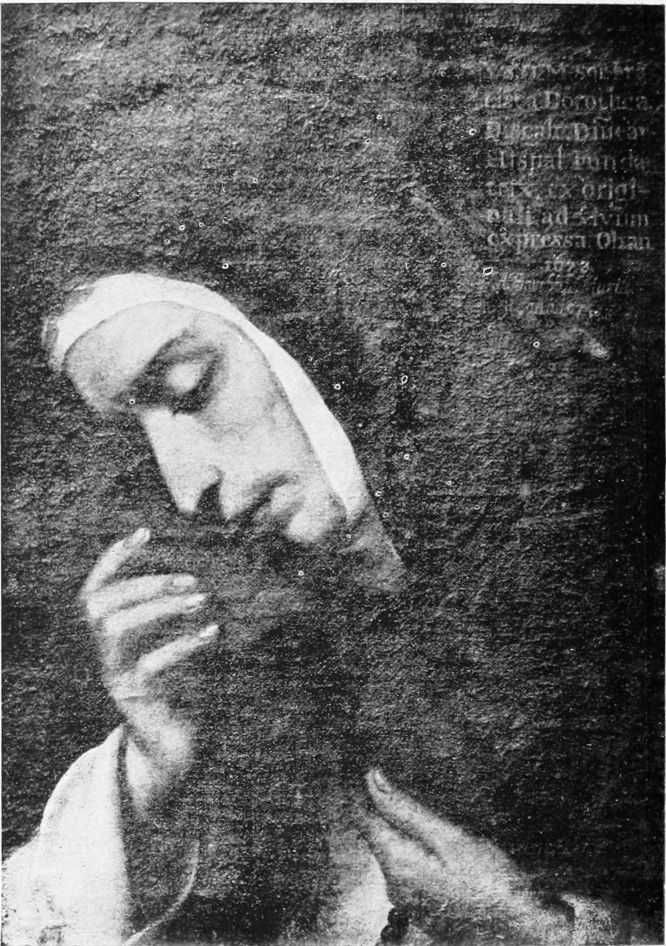
Madre Francisca Dorotea Villalda, by Murillo.
SEVILLE CATHEDRAL.
PLATE 199
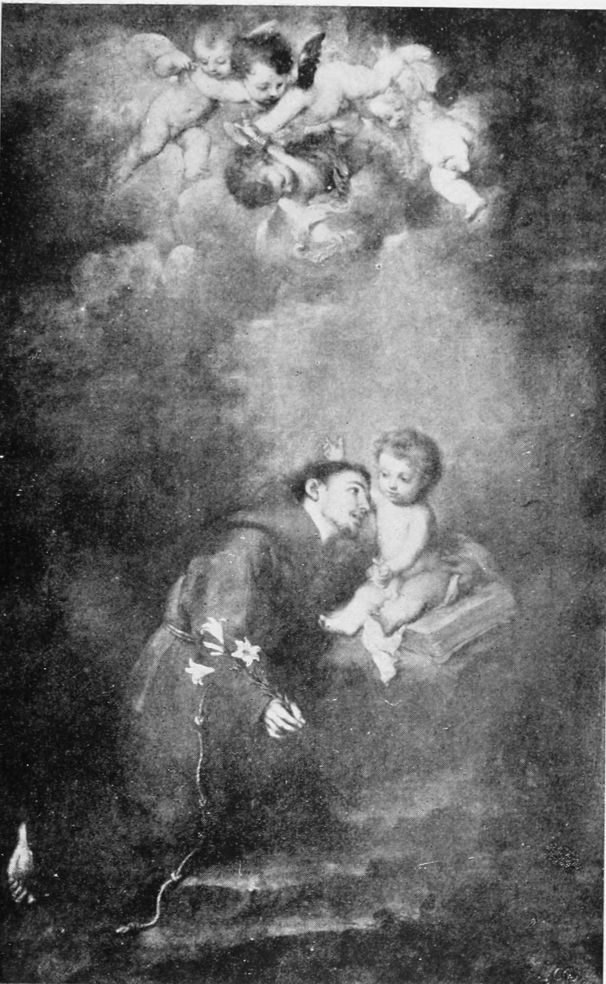
St Anthony with the Infant Saviour, by Murillo.
SEVILLE MUSEUM.
PLATE 200
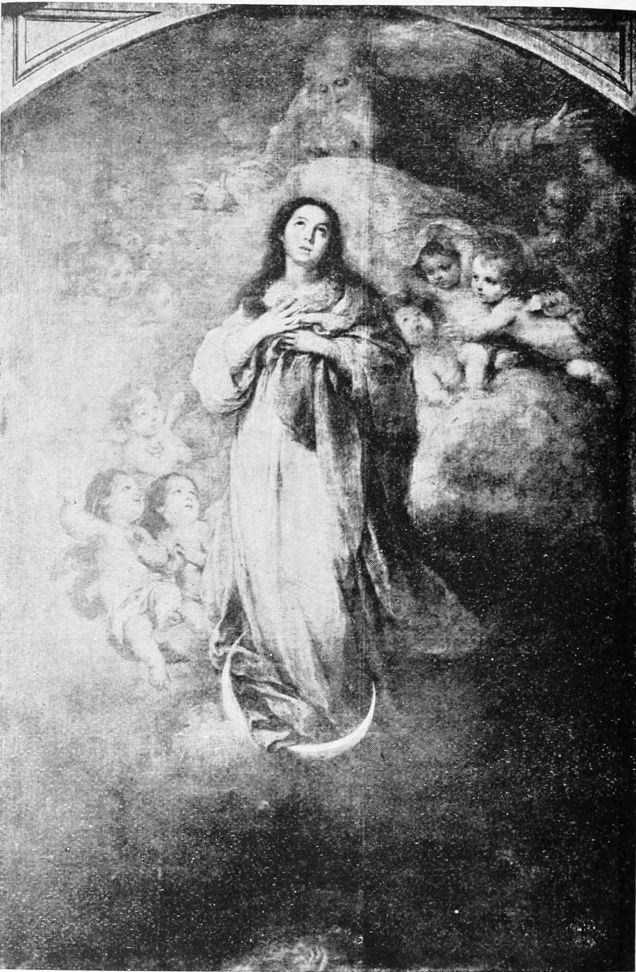
Our Lady of the Immaculate Conception, by Murillo.
SEVILLE MUSEUM.
PLATE 201
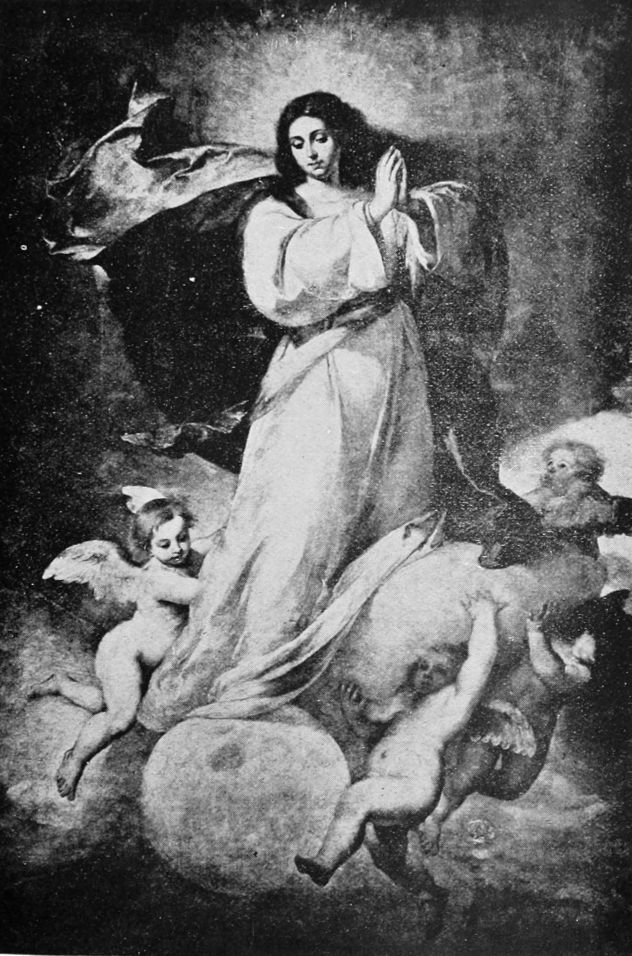
Our Lady of the Immaculate Conception, by Murillo.
SEVILLE MUSEUM.
PLATE 202
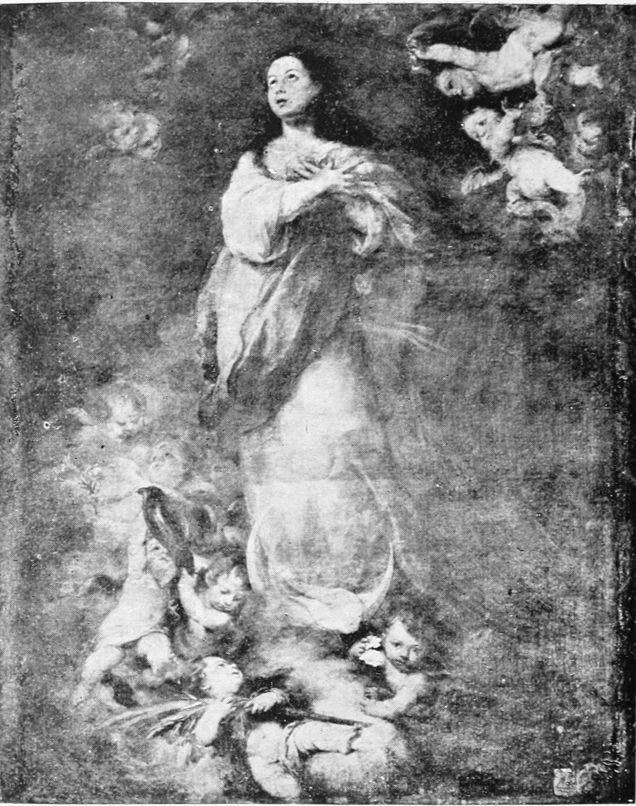
Our Lady of the Immaculate Conception, by Murillo.
SEVILLE MUSEUM.
PLATE 203
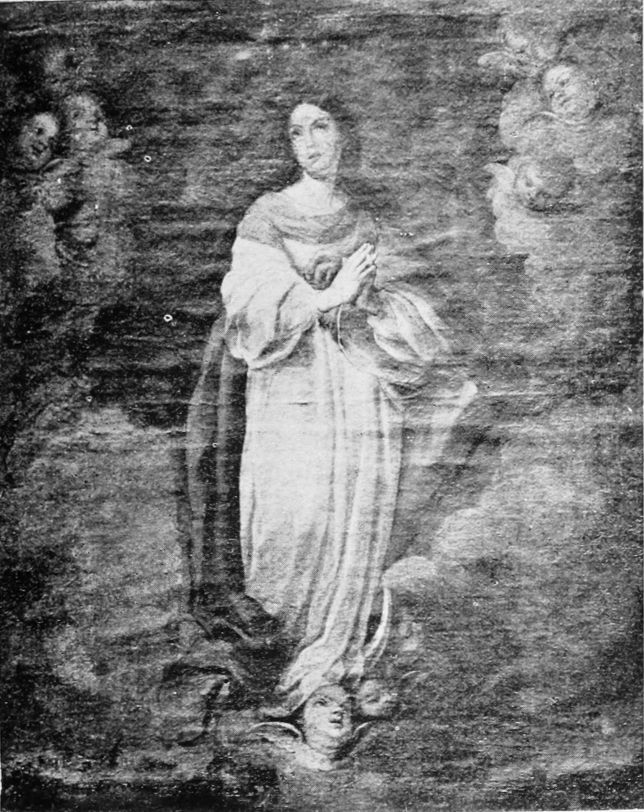
Our Lady of the Immaculate Conception, by Murillo.
SEVILLE MUSEUM.
PLATE 204
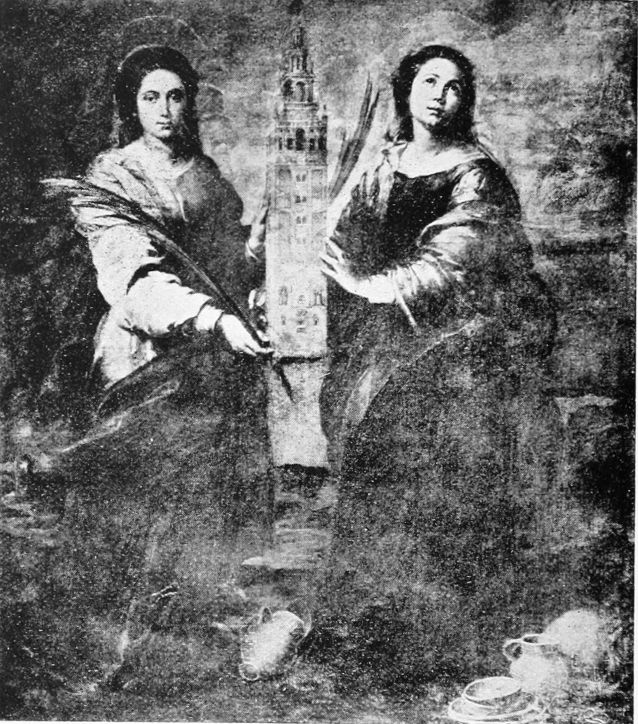
St Justa and St Rufina, Patron Saints of Seville, holding between them the Giralda Tower, by Murillo.
SEVILLE MUSEUM.
PLATE 205
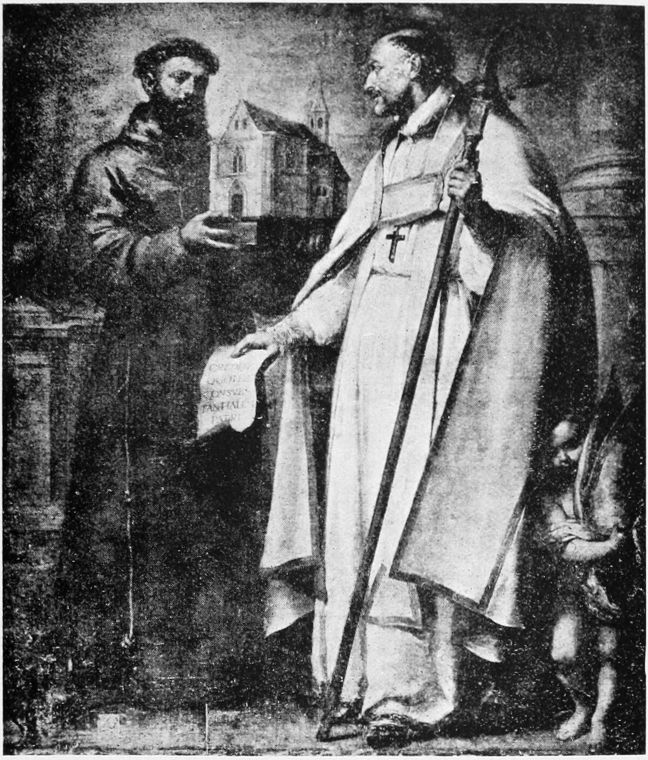
St Bonaventure and St Leander, by Murillo.
SEVILLE MUSEUM.
PLATE 206
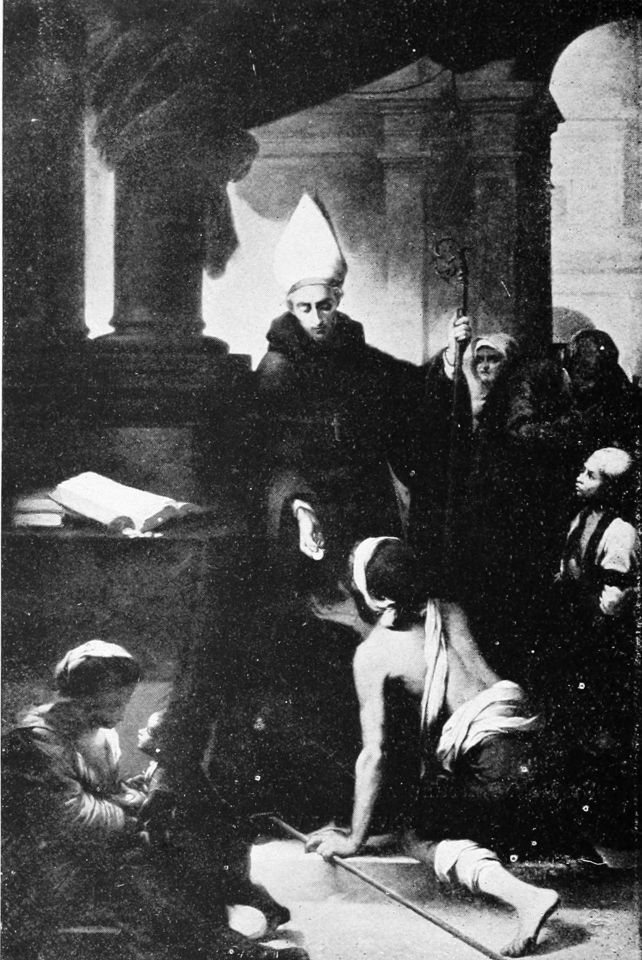
St Thomas of Villanueva giving Alms at the Door of his Cathedral, by Murillo.
SEVILLE MUSEUM.
PLATE 207
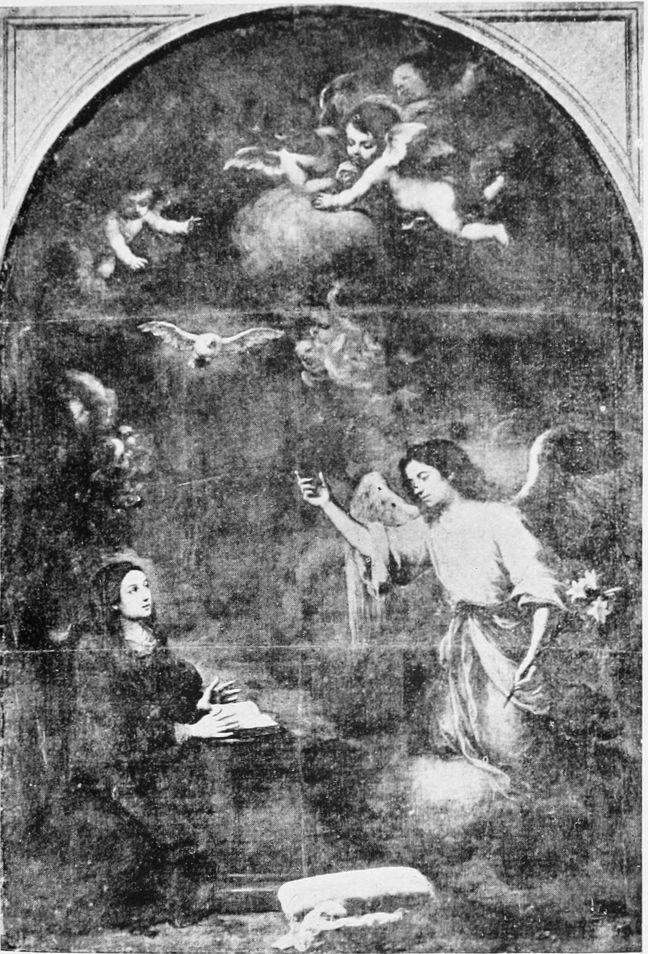
The Annunciation of our Lady, by Murillo.
SEVILLE MUSEUM.
PLATE 208
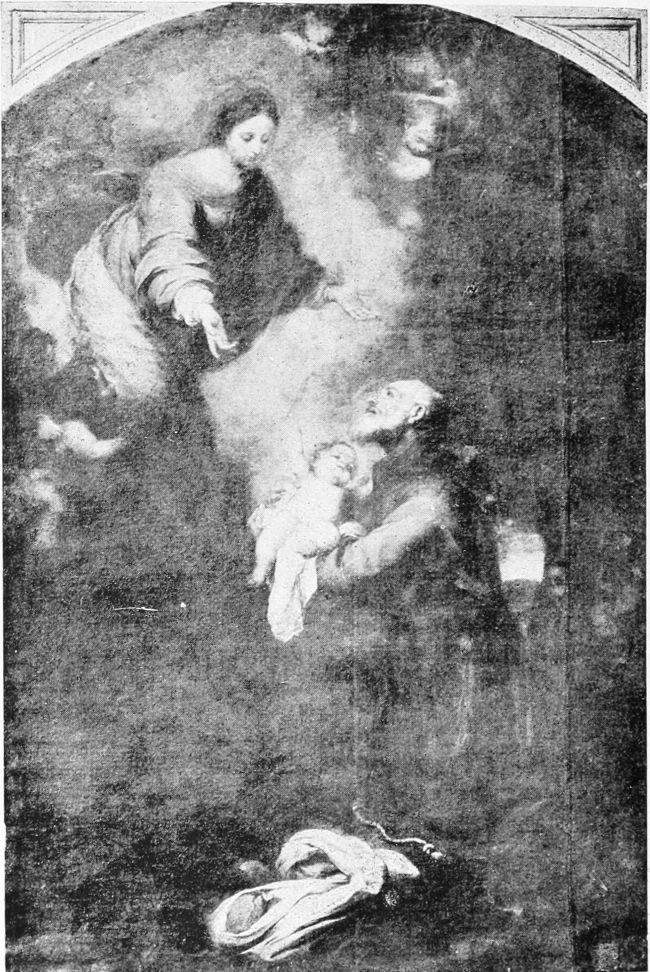
St Felix of Cantalisi restoring to Our Lady the Infant Saviour, whom she had placed in his Arms, by Murillo.
SEVILLE MUSEUM.
PLATE 209
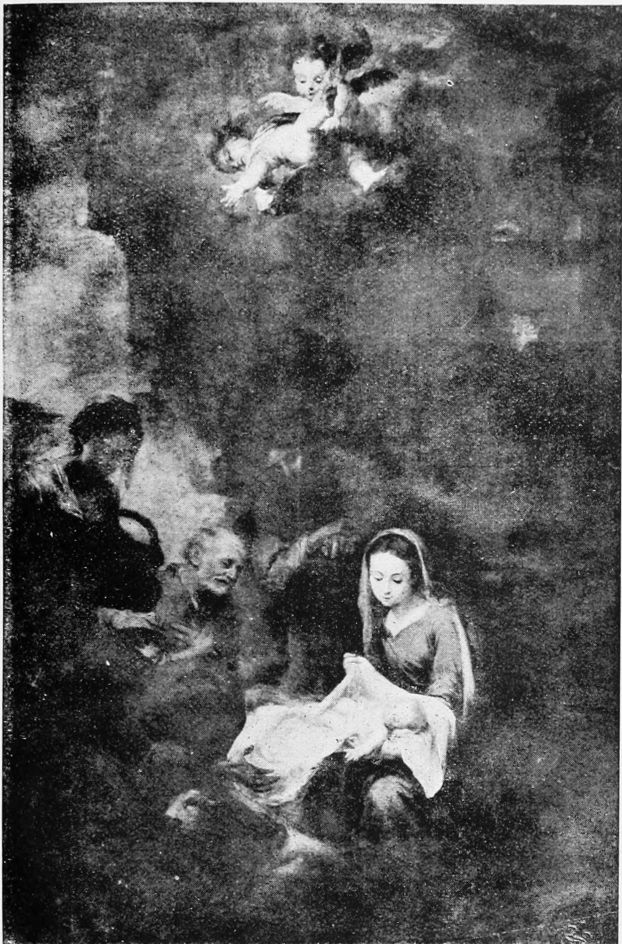
Adoration of the Shepherds of Bethlehem, by Murillo.
SEVILLE MUSEUM.
PLATE 210
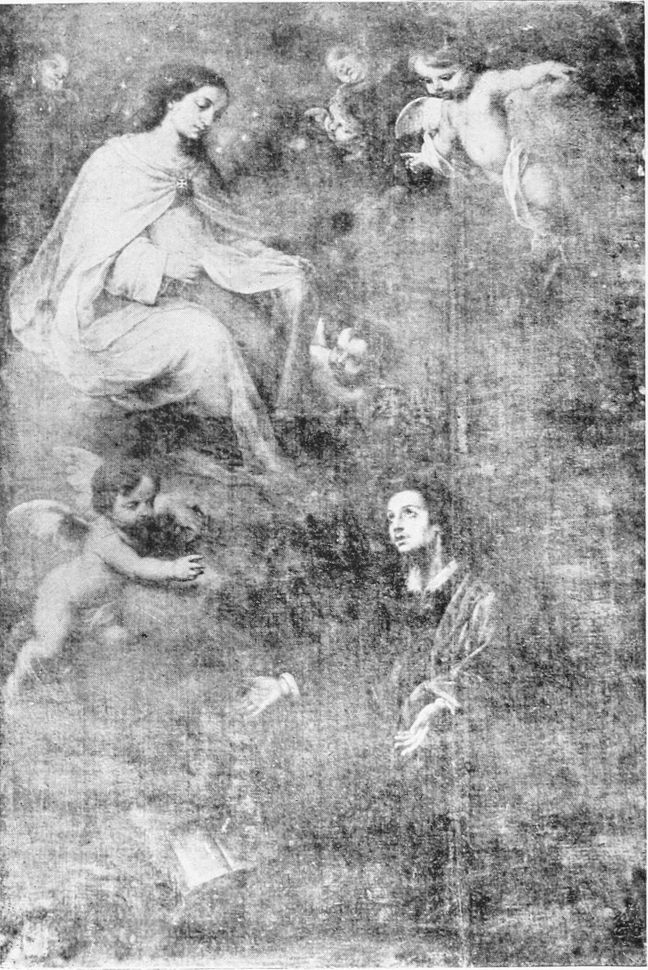
St Peter Nolasco kneeling before Our Lady of Mercy, by Murillo.
SEVILLE MUSEUM.
PLATE 211
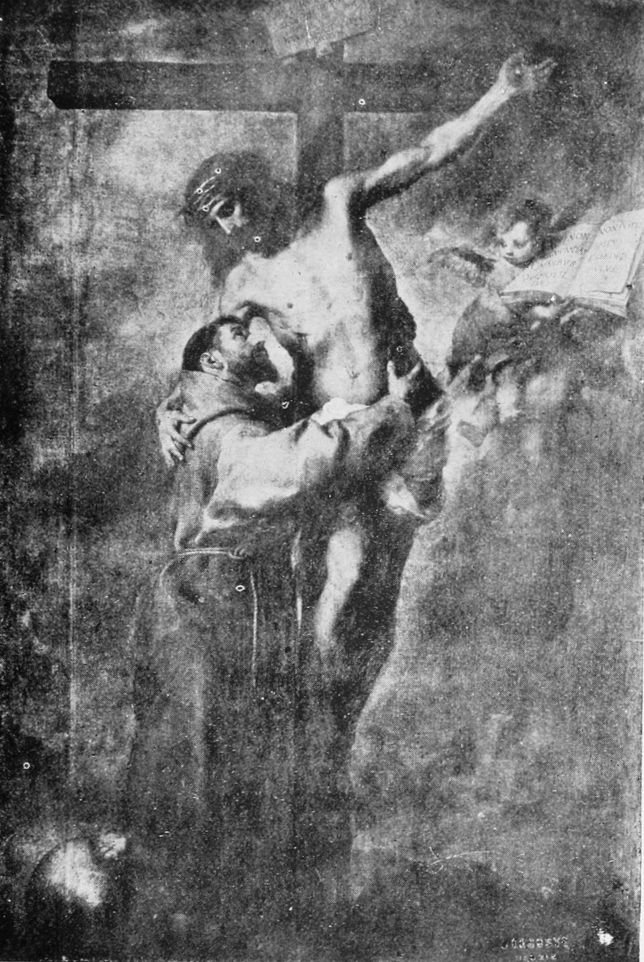
The Deposition—St Francis of Assisi supporting the Body of Our Lord nailed by the Left Hand to the Cross, by Murillo.
SEVILLE MUSEUM.
PLATE 212
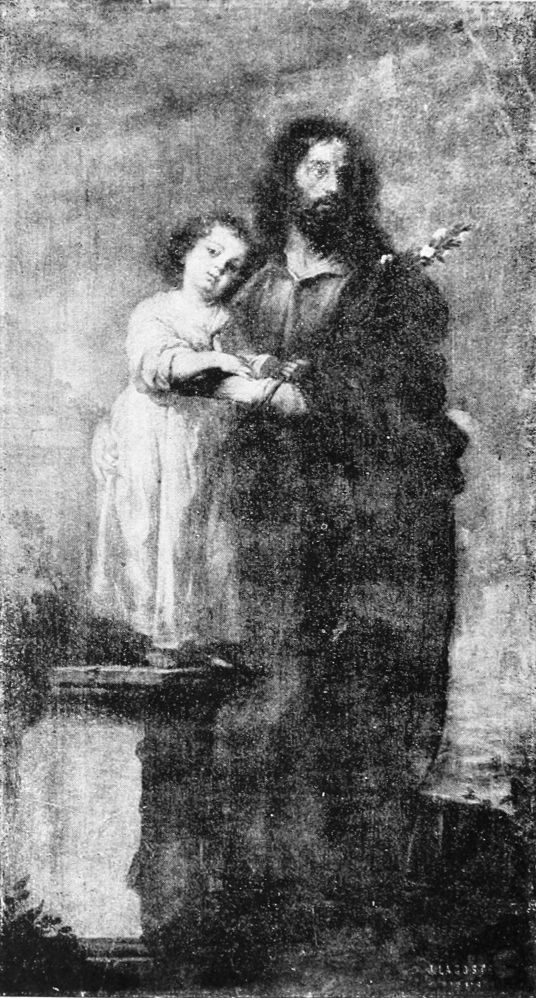
St Joseph and the Infant Saviour, by Murillo.
SEVILLE MUSEUM.
PLATE 213
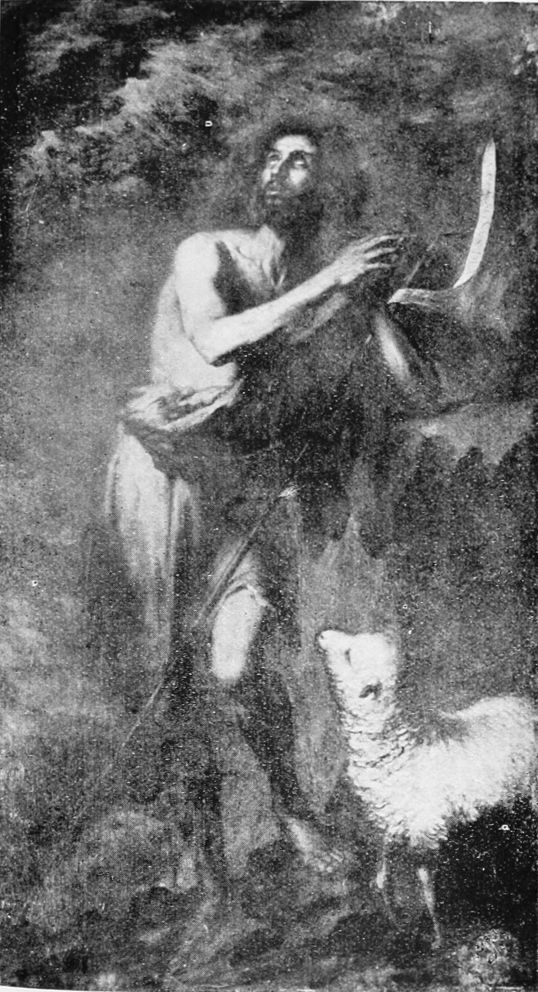
St John the Baptist in the Desert leaning against a Rock, by Murillo.
SEVILLE MUSEUM.
PLATE 214
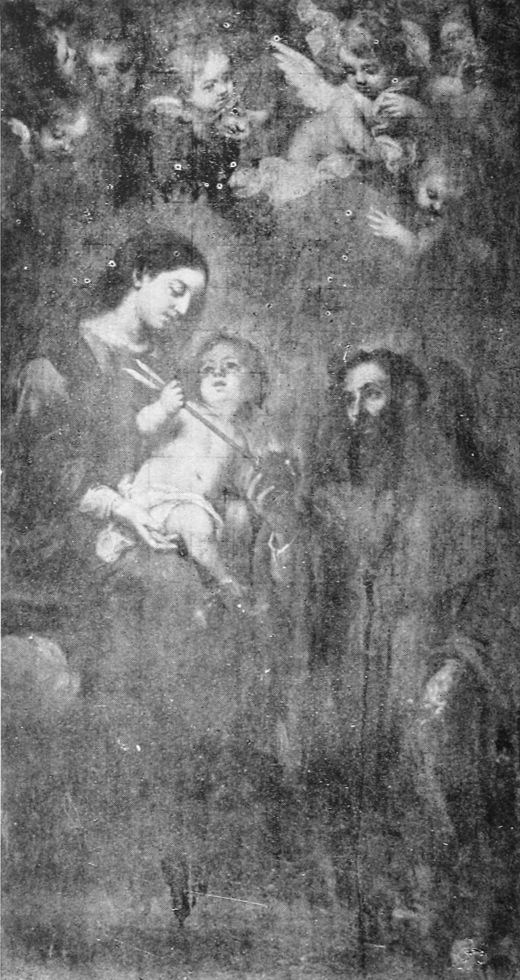
St Augustine and the Flaming Heart, by Murillo.
SEVILLE MUSEUM.
PLATE 215
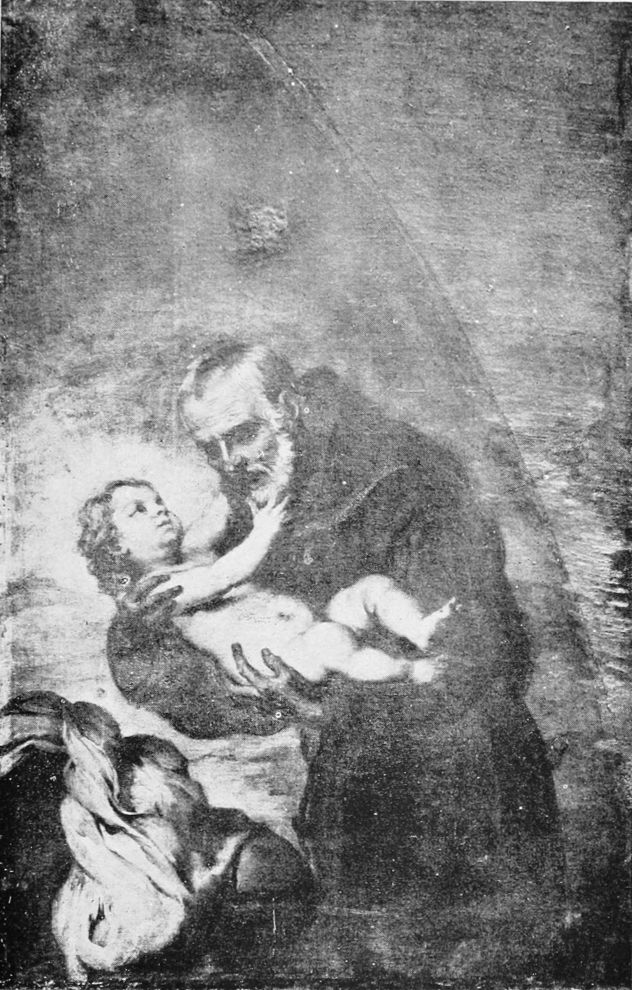
St Felix of Cantalisi and the Infant Jesus, known as, “San Felix de Las Arrugas,” by Murillo.
SEVILLE MUSEUM.
PLATE 216
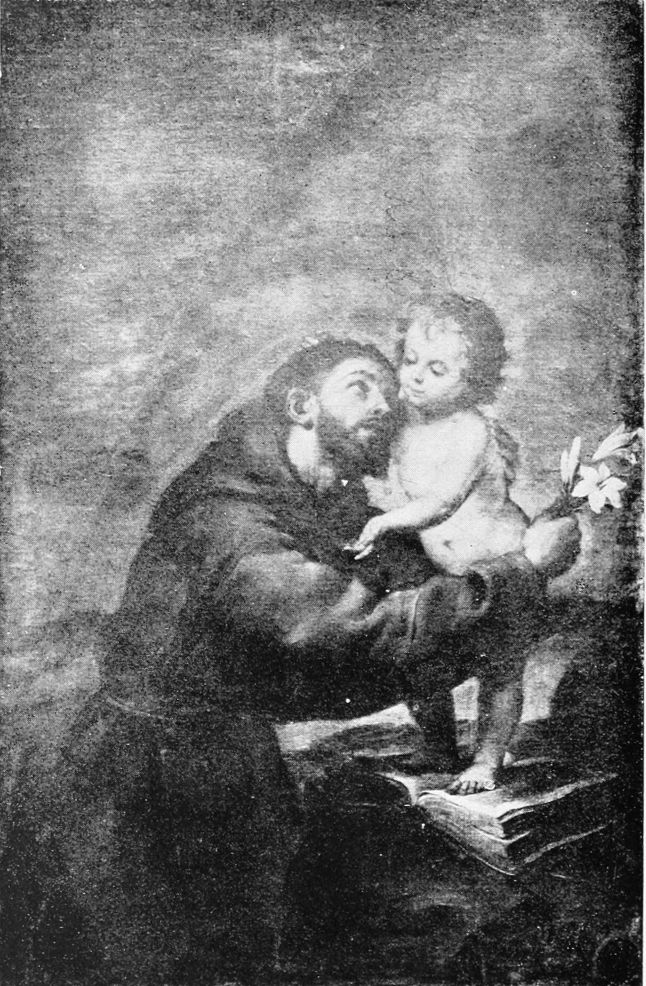
St Anthony with the Infant Saviour, by Murillo.
SEVILLE MUSEUM.
PLATE 217
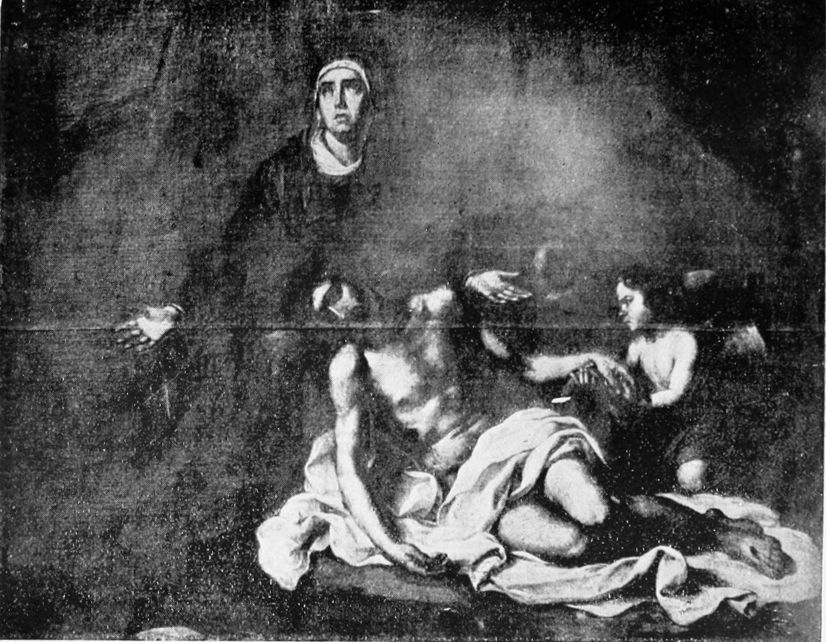
Deposition from the Cross, by Murillo.
SEVILLE MUSEUM..
PLATE 218
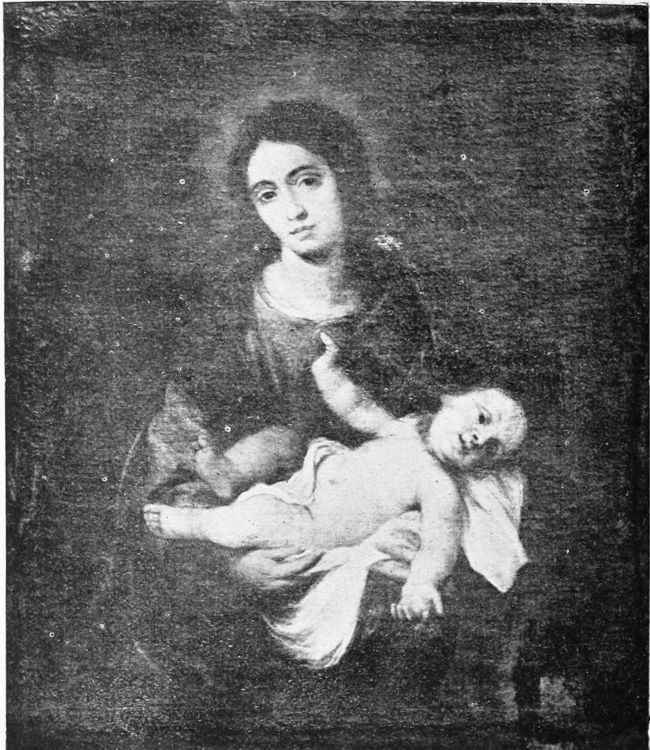
Our Lady with the Infant Saviour in her Arms, by Murillo.
(AN EARLY PICTURE.)
SEVILLE MUSEUM.
PLATE 219
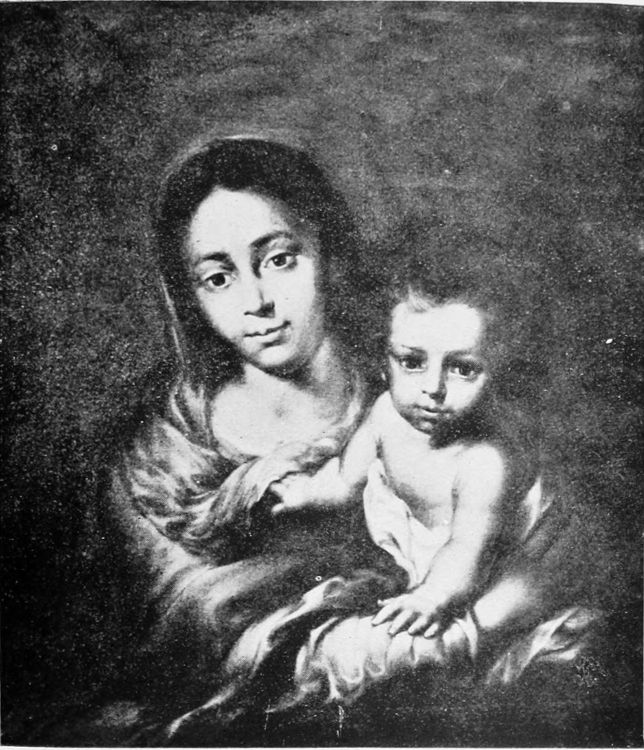
Our Lady and the Infant Saviour, known as “La Virgen de la Servilleta,” by Murillo.
SEVILLE MUSEUM.
PLATE 220
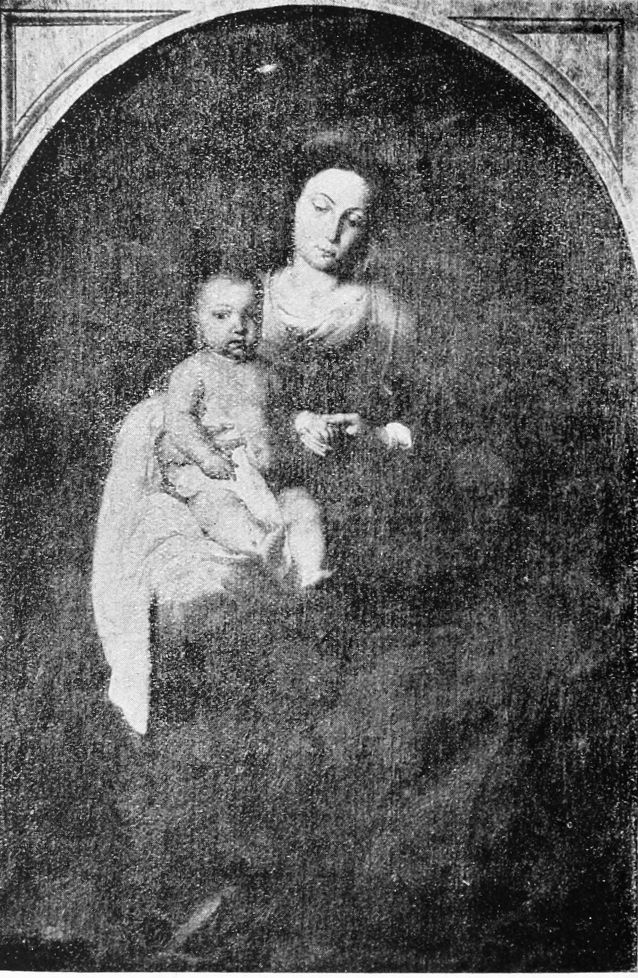
Our Lady seated, with the Infant Saviour in her Lap, by Murillo.
(AN EARLY PICTURE.)
SEVILLE MUSEUM.
PLATE 221
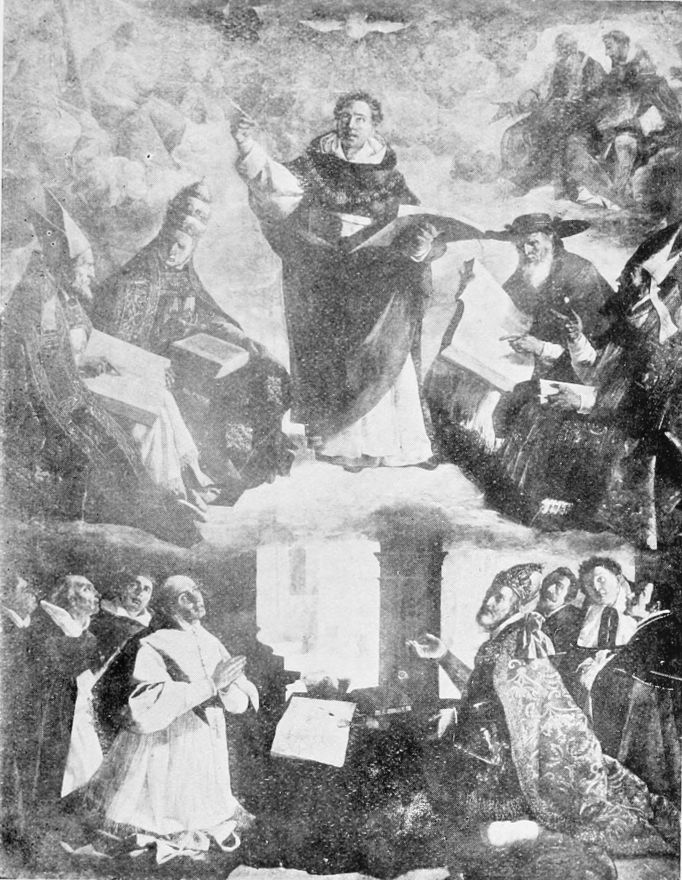
St Thomas of Aquin, by, Zurbarán.
SEVILLE MUSEUM.
PLATE 222
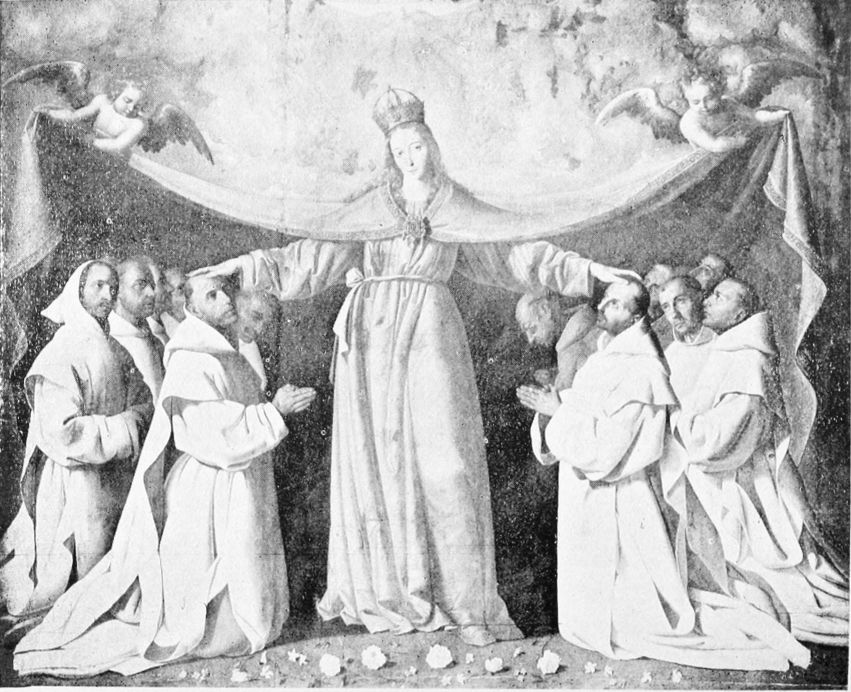
The Virgin of the Grotto, by Zurbarán.
SEVILLE MUSEUM.
PLATE 223
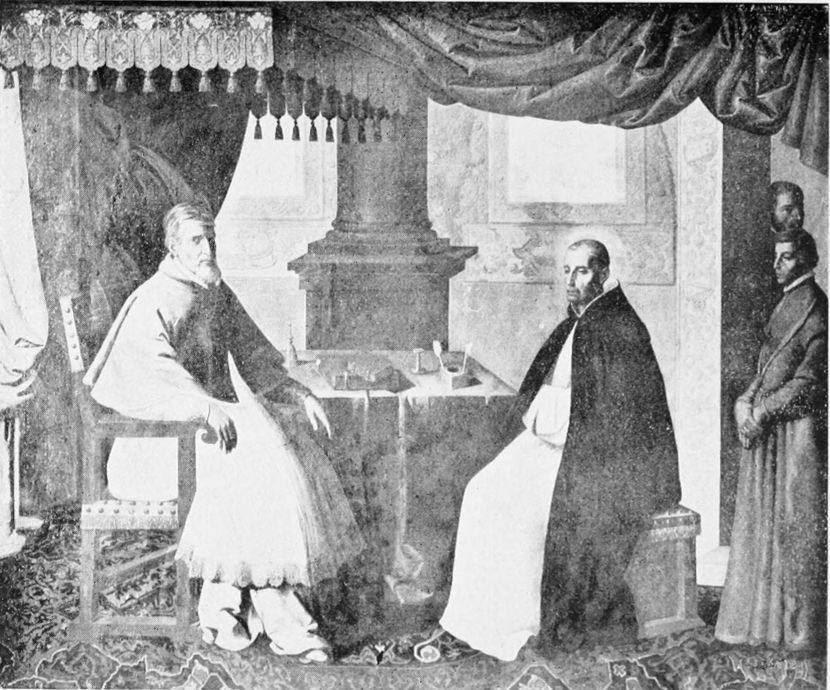
St Bruno talking to the Pope, by Zurbarán.
SEVILLE MUSEUM.
PLATE 224
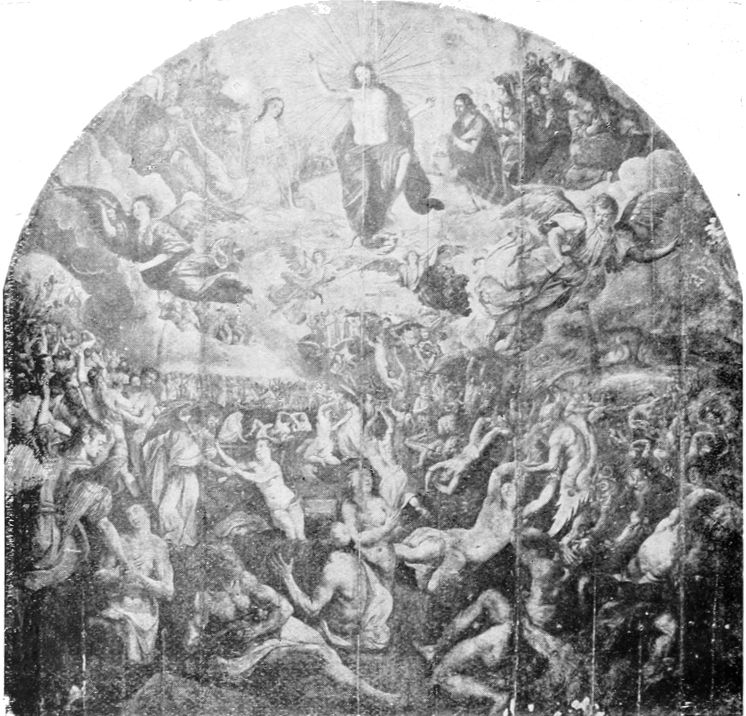
The Day of Judgment, by Martin de Vos.
SEVILLE MUSEUM.
PLATE 225
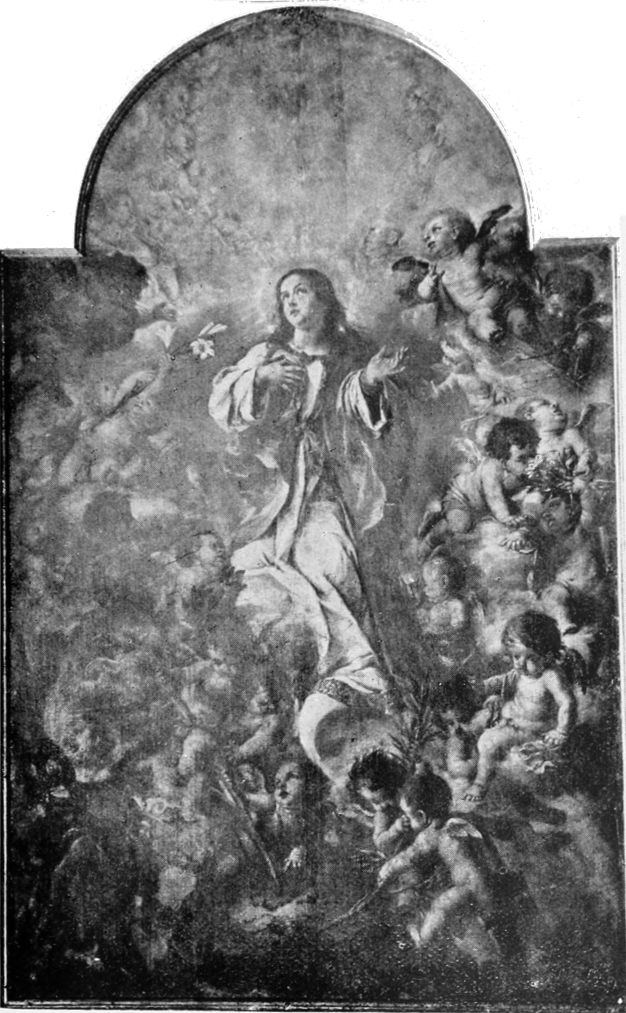
Our Lady of the Immaculate Conception, by J. Valdes Leal.
SEVILLE MUSEUM.
PLATE 226
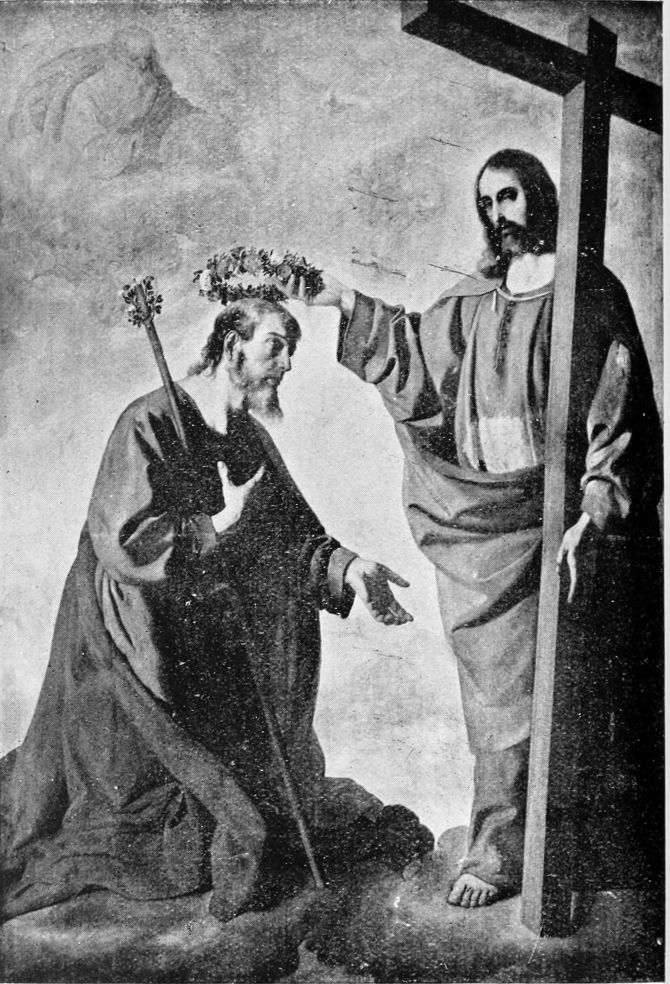
Jesus crowning St Joseph, by Zurbarán.
SEVILLE MUSEUM.
PLATE 227
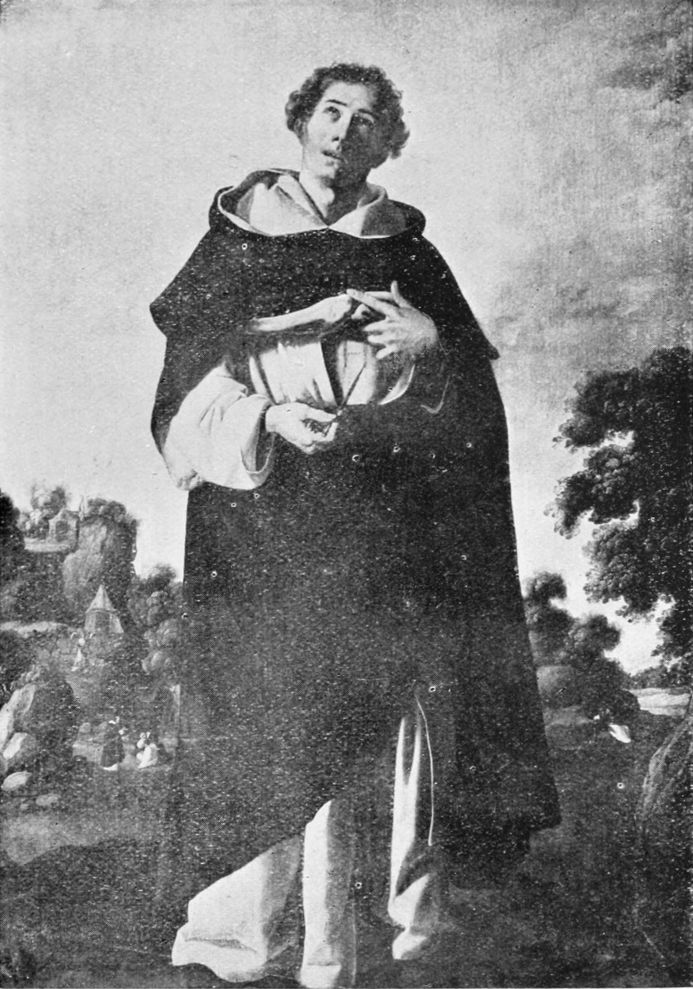
The Devout Punyon, by Zurbarán.
SEVILLE MUSEUM.
PLATE 228
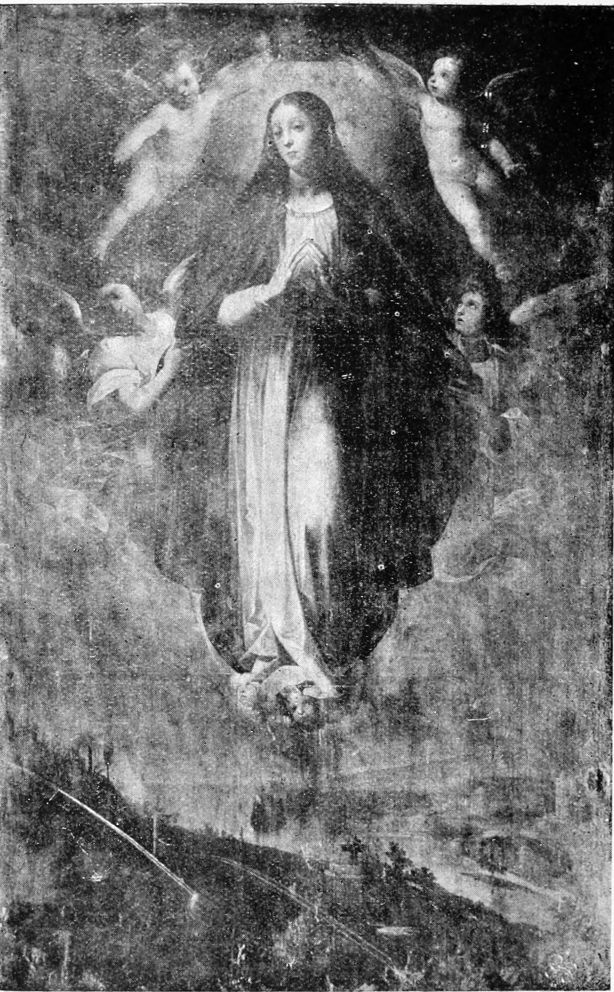
Our Lady of the Immaculate Conception. The Virgin surrounded by Cherubim. By Fr. Pacheco.
SEVILLE MUSEUM.
PLATE 229
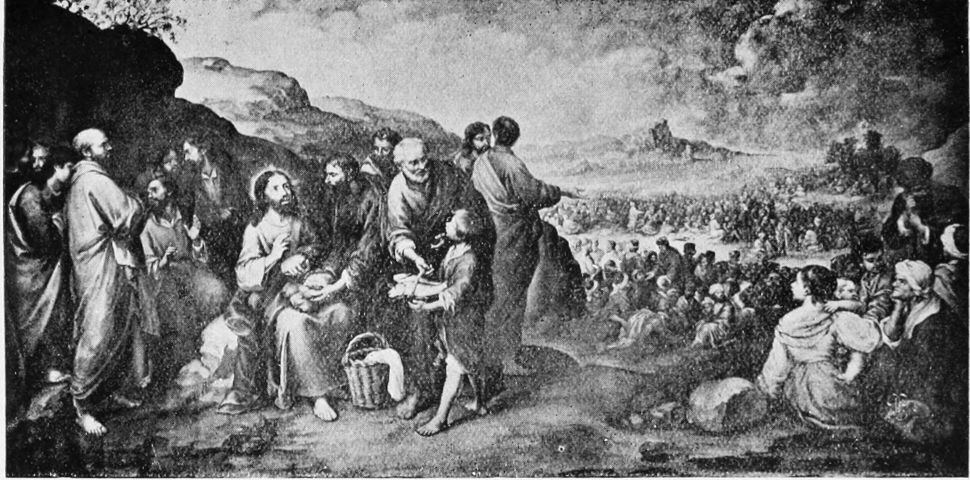
Our Lord’s Miracle of the Loaves and Fishes, by Murillo.
SEVILLE HOSPITAL.
PLATE 230
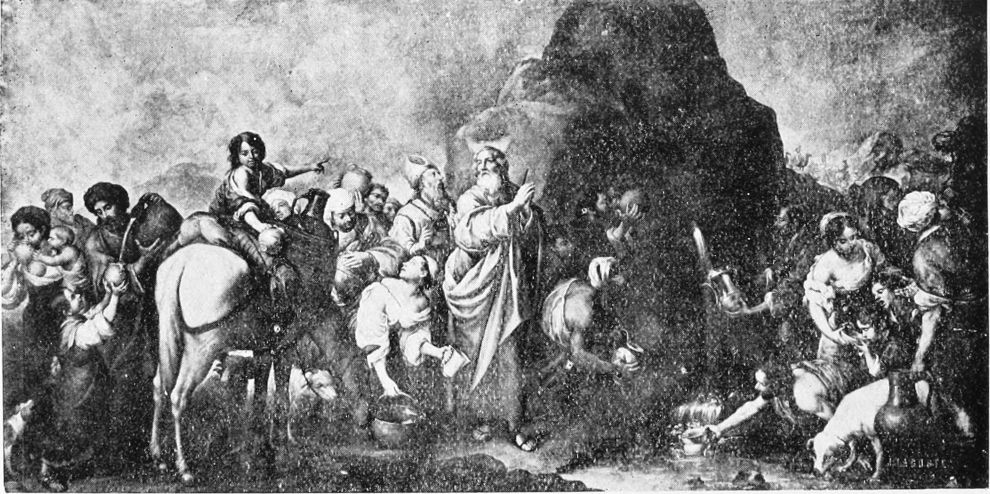
Moses striking the Rock in Horeb, by Murillo.
LA CARIDAD, SEVILLE.
PLATE 231
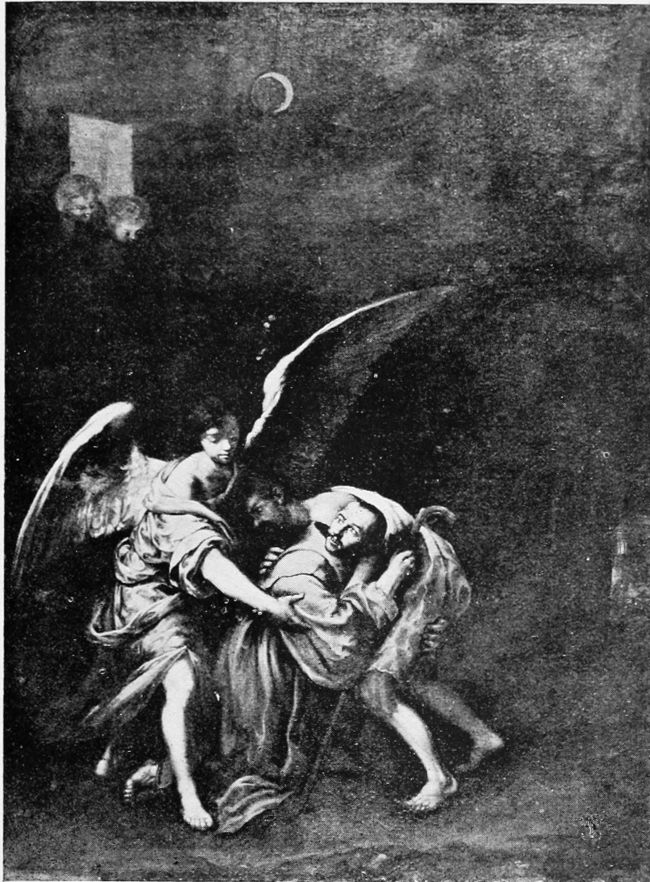
St John of God, sinking under the Weight of a Sick Man, assisted by an Angel, by Murillo.
LA CARIDAD, SEVILLE.
PLATE 232
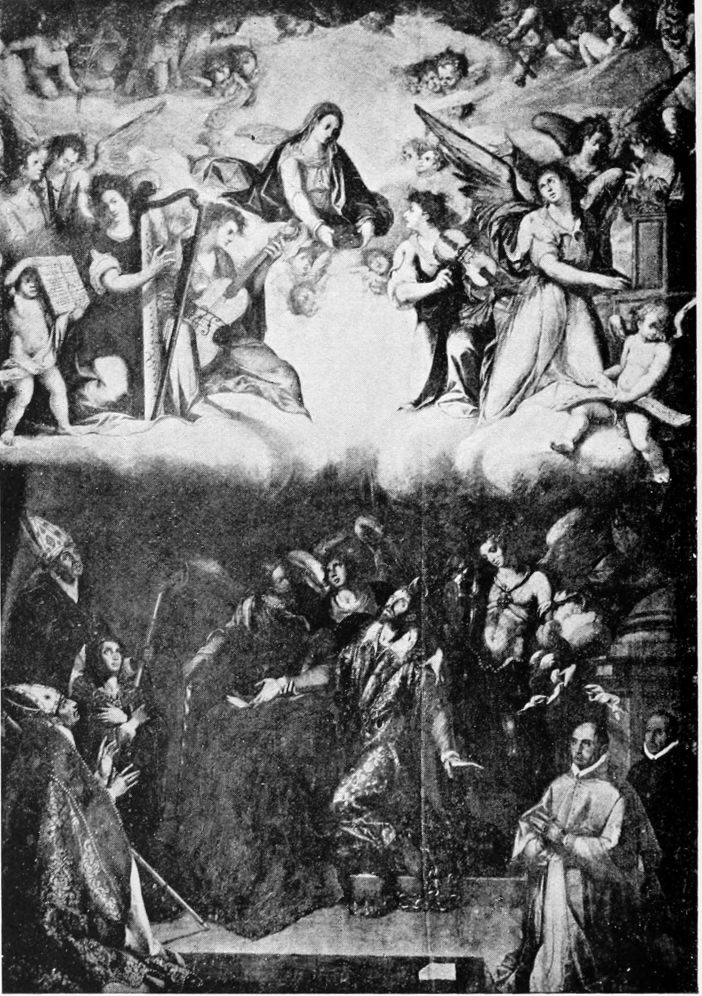
The Death of St Hermenigild, by J. de las Roelas.
HOSPITAL DE LA SANGRE, SEVILLE.
PLATE 233
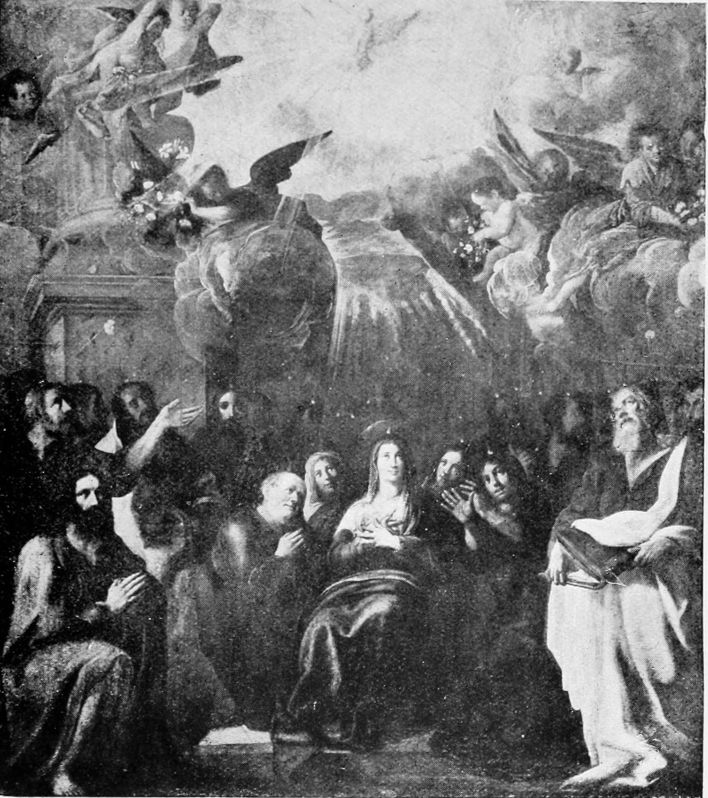
The Apostleship, by Juan de las Roelas.
HOSPITAL DE LA SANGRE, SEVILLE.
PLATE 234
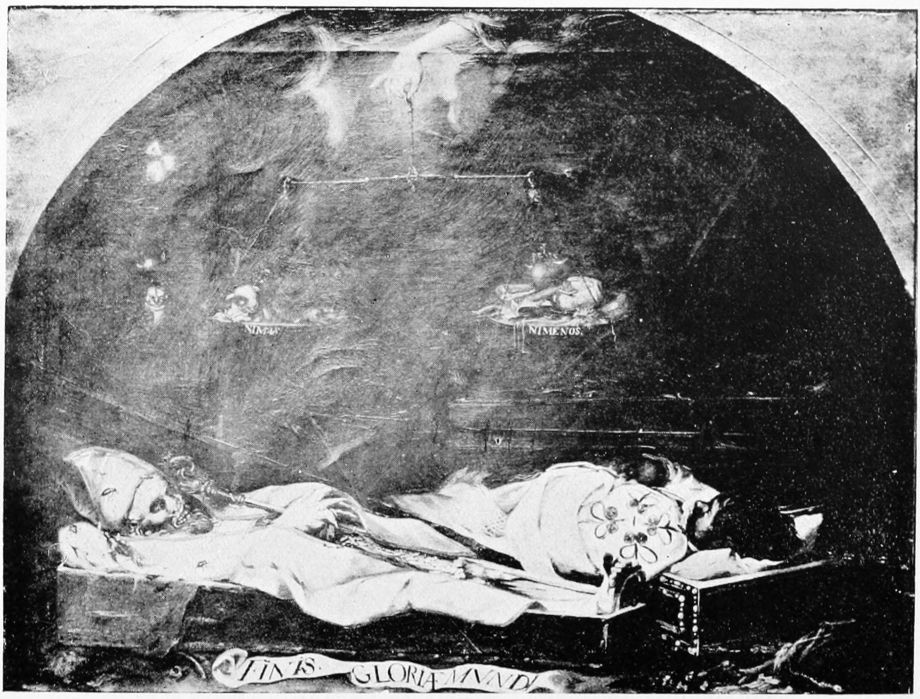
The End of this World’s Glories, by Valdes Leal.
LA CARIDAD, SEVILLE.
PLATE 235
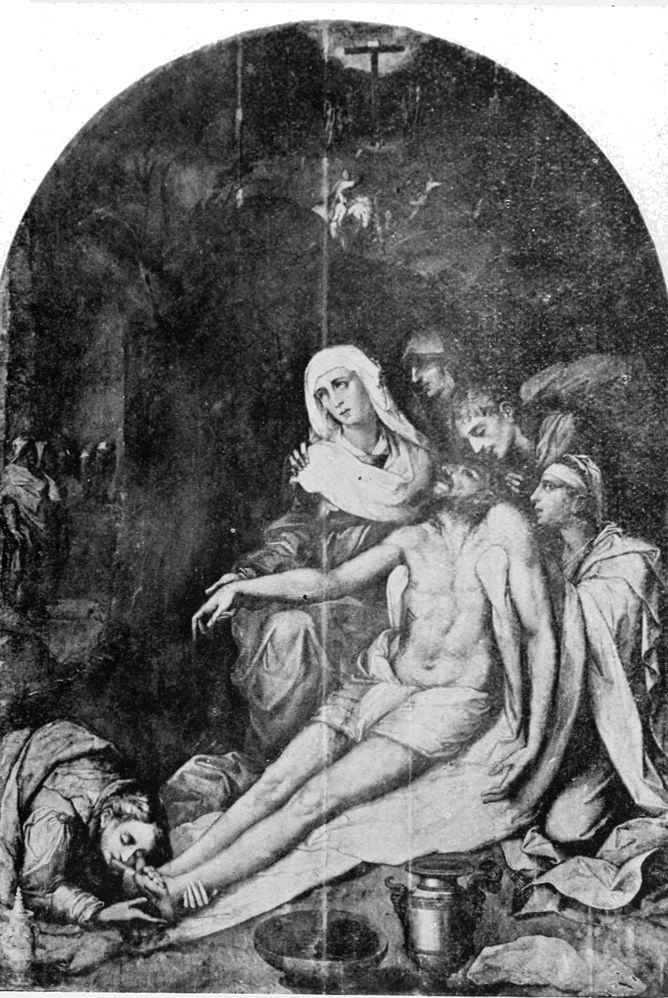
The Pietà, or the Virgin supporting the Dead Body of her Divine Son, Altar-screen, by Luis de Vargas.
SANTA MARIA DE LA BLANCA, SEVILLE.
PLATE 236
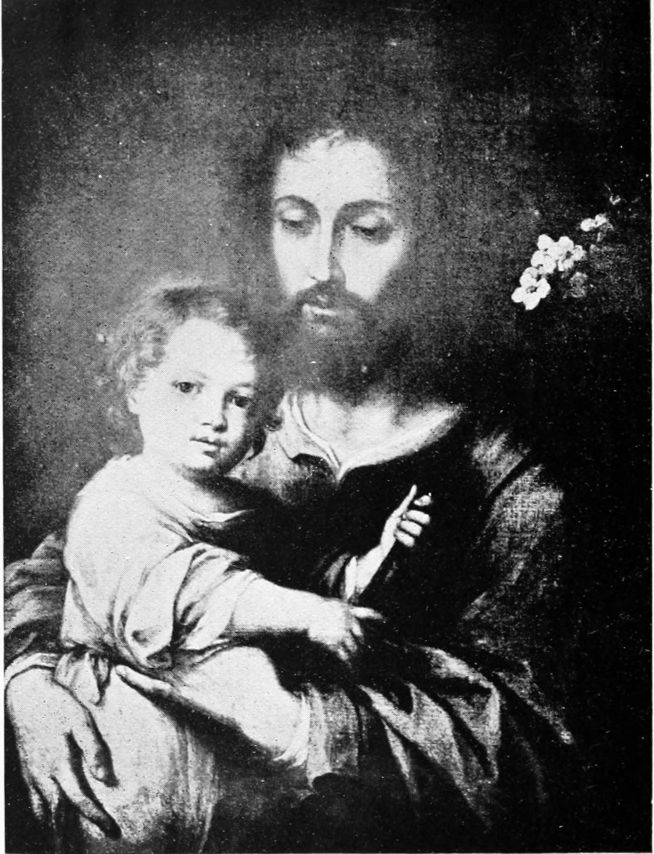
St Joseph holding the Infant Saviour in His Arms, by Murillo.
SAN TELMO, SEVILLE.
PLATE 237
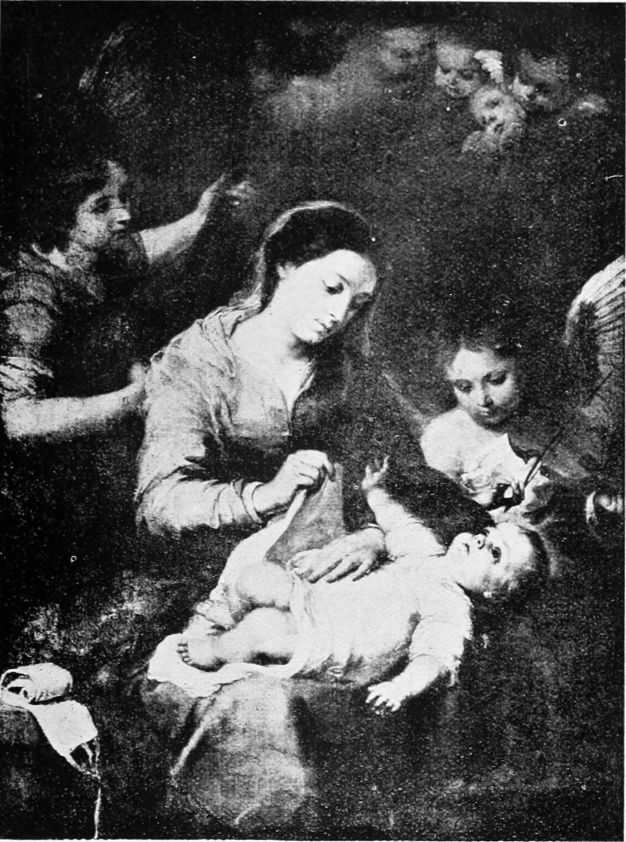
Our Lady of the Girdle, by Murillo.
SAN TELMO, SEVILLE.
PLATE 238
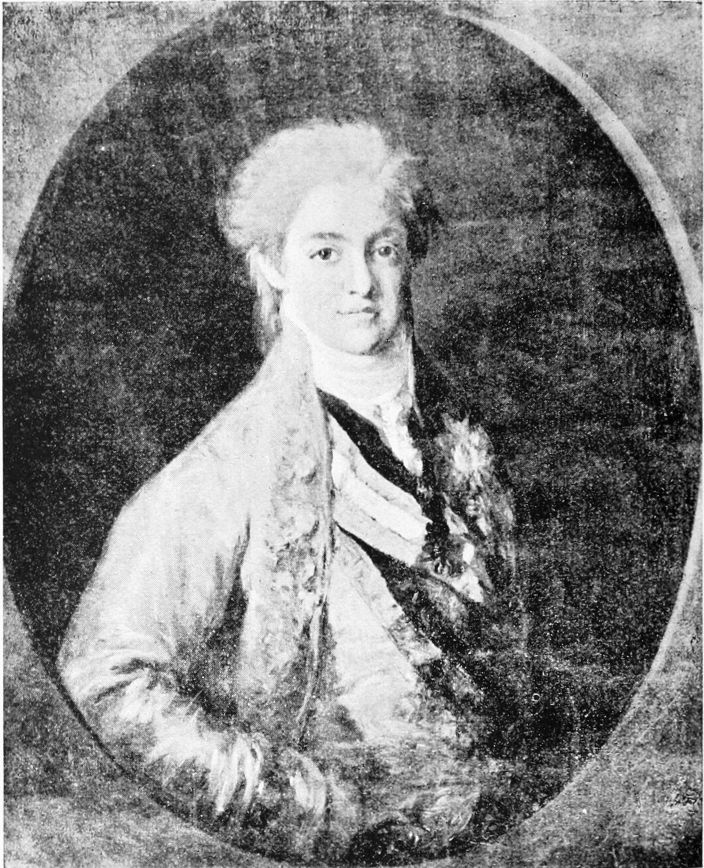
Portrait of Ferdinand VII., by Goya.
SAN TELMO, SEVILLE.
PLATE 239
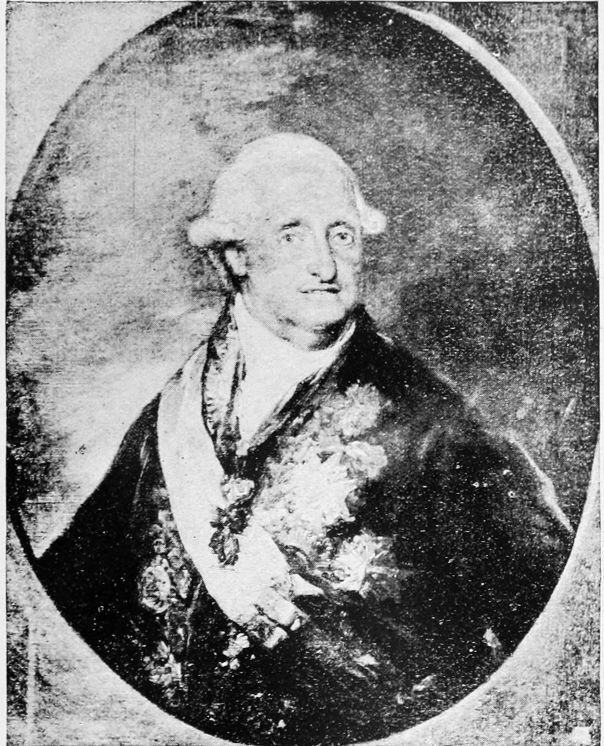
Portrait of Charles IV., by Goya.
SAN TELMO, SEVILLE.
PLATE 240
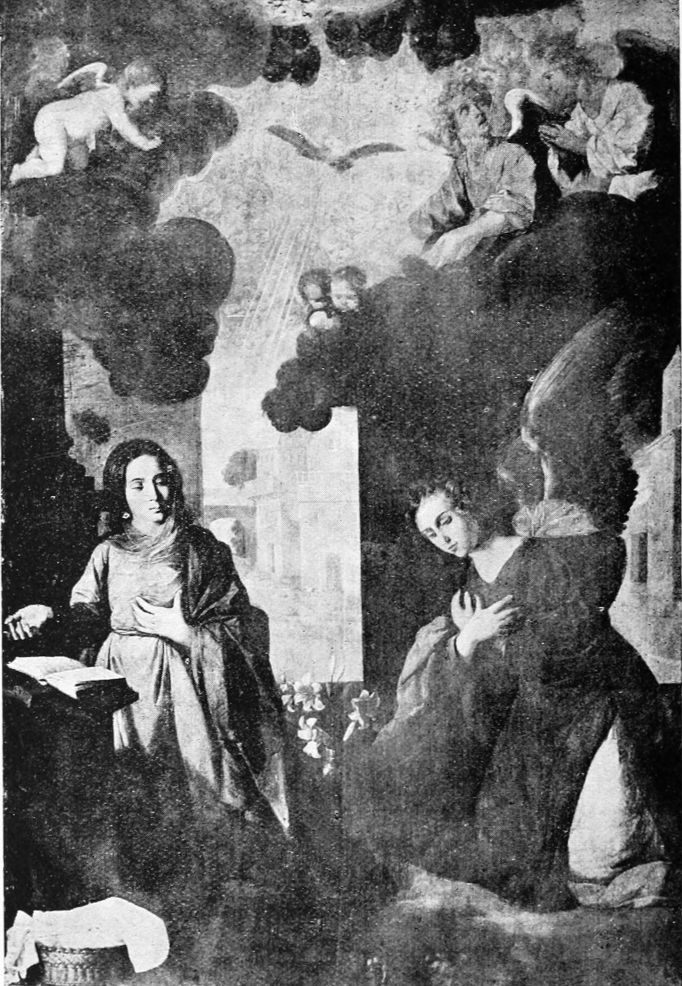
The Annunciation, by F. Zurbarán.
SAN TELMO, SEVILLE.
PLATE 241
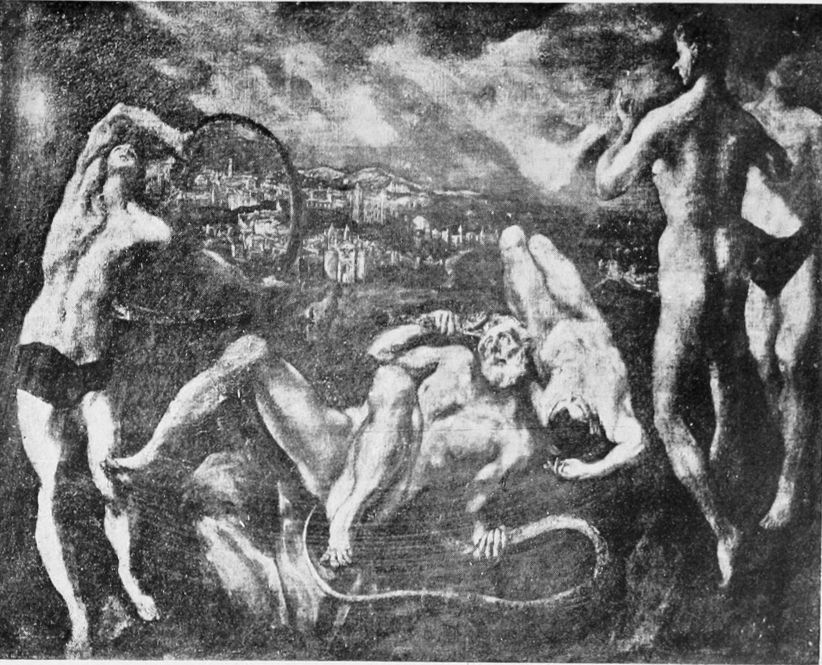
The Death of Laocoön and his Sons at the Siege of Troy, by El Greco.
SAN TELMO, SEVILLE.
PLATE 242
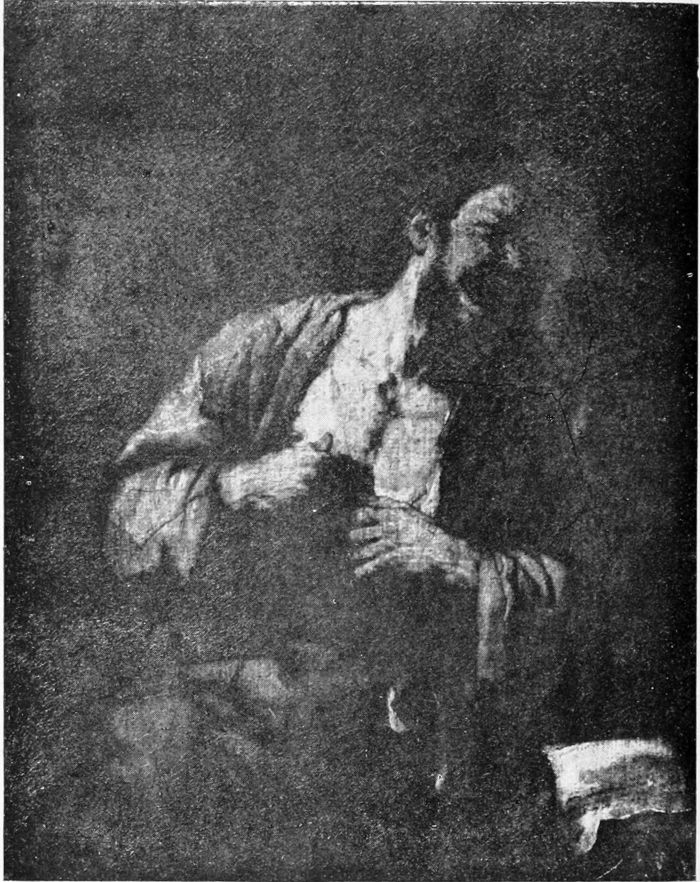
Caton of Utique tearing open his wounds, by Josef Ribera.
SAN TELMO, SEVILLE.
PLATE 243
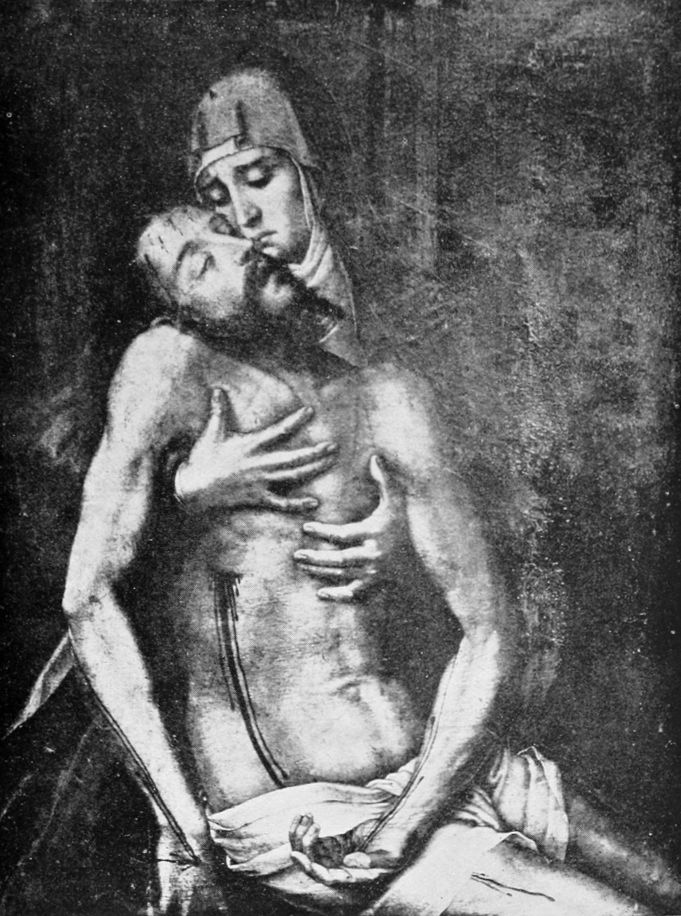
Pietà. The Virgin holding the Dead Saviour in her Arms, by Morales.
SAN TELMO, SEVILLE.
PLATE 244
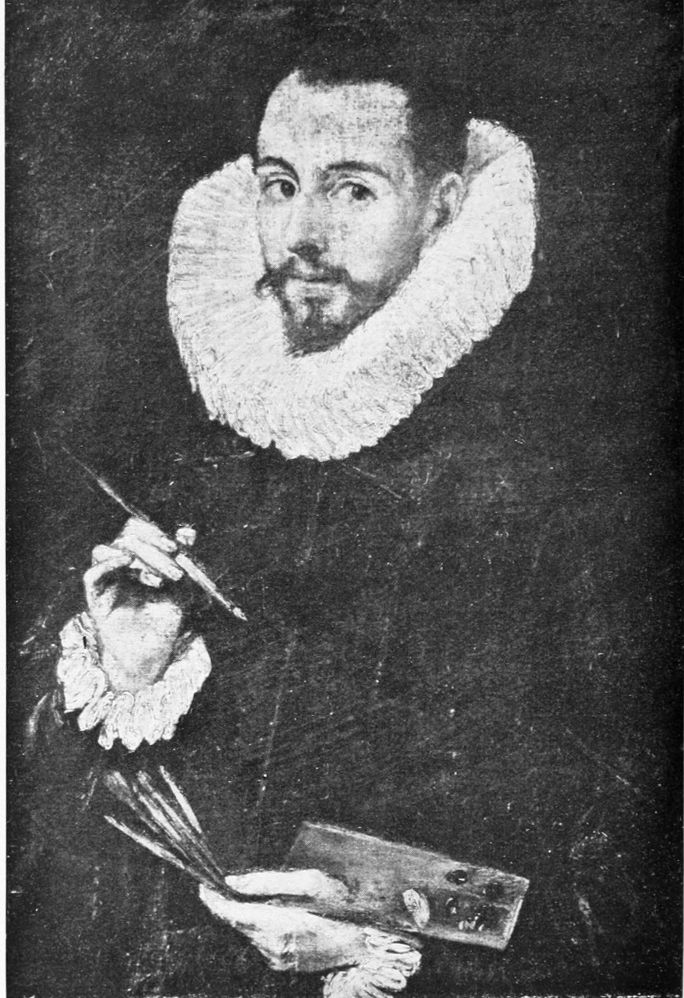
Portrait of El Greco, by Himself.
GALLERY OF SAN TELMO, SEVILLE.
PLATE 245
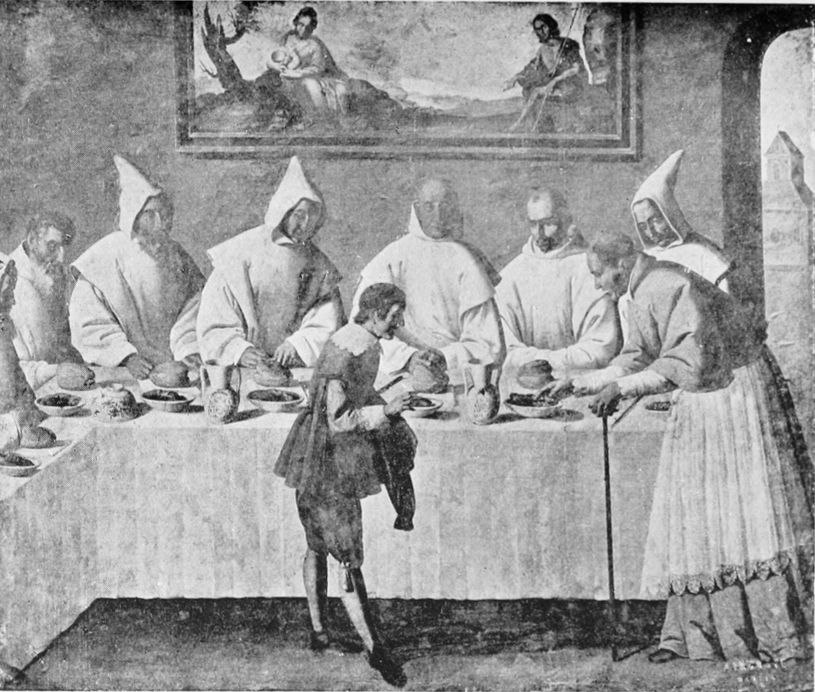
The Miracle of St Vœu. St Hugo in the Refectory with several Chartreux, by Zurbarán.
SEVILLE MUSEUM.
PLATE 246
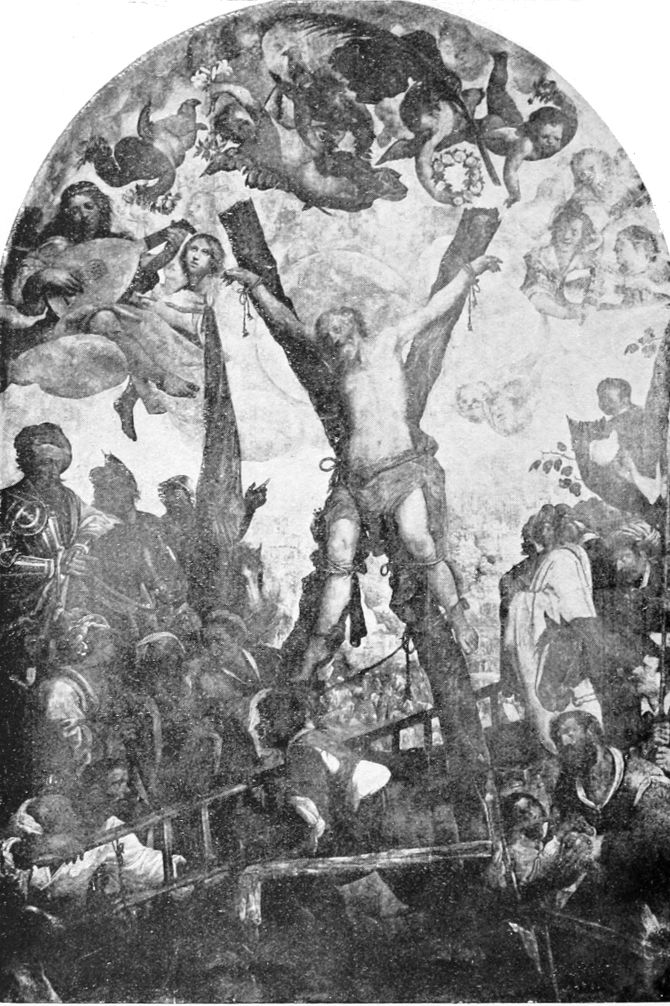
The Martyrdom of St Andrew, by J. de las Roelas.
SEVILLE MUSEUM.
PLATE 247
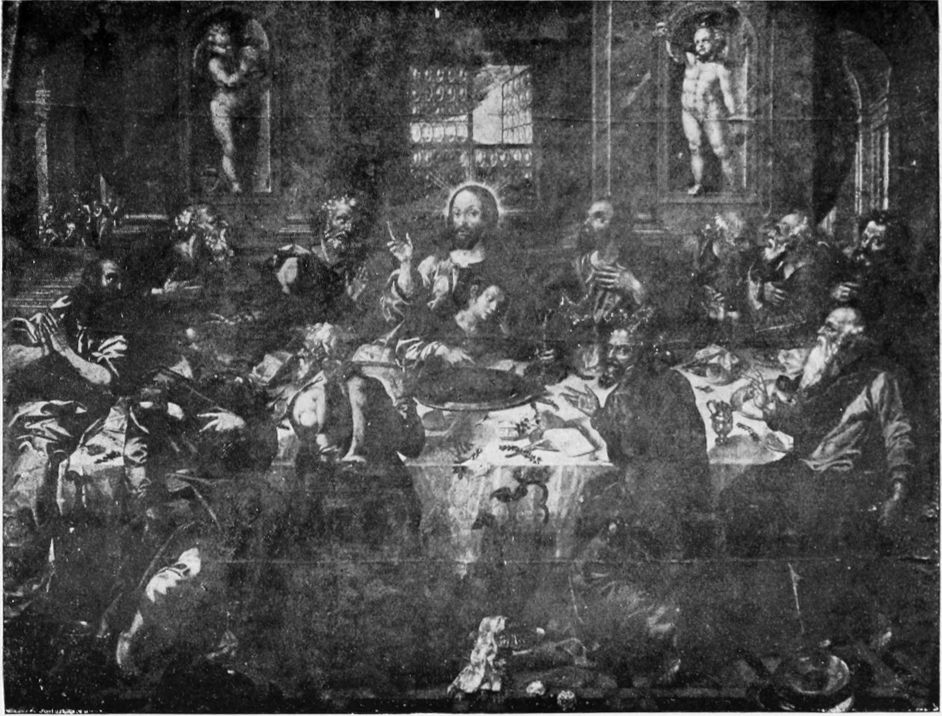
The Last Supper, by P. de Cespedes.
SEVILLE MUSEUM.
PLATE 248
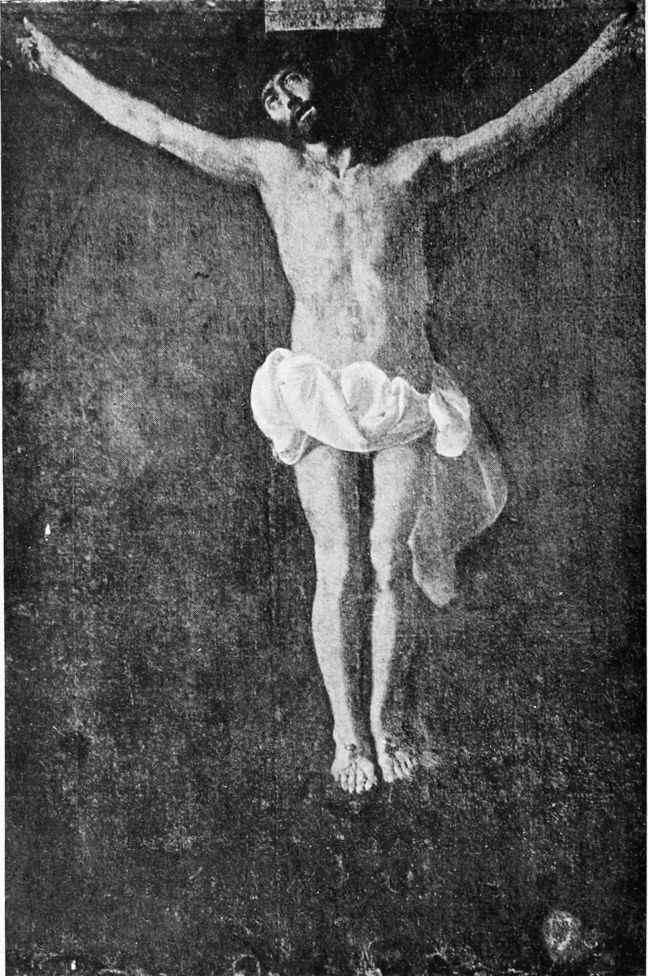
Christ on the Cross, by Zurbarán.
SEVILLE MUSEUM.
PLATE 249
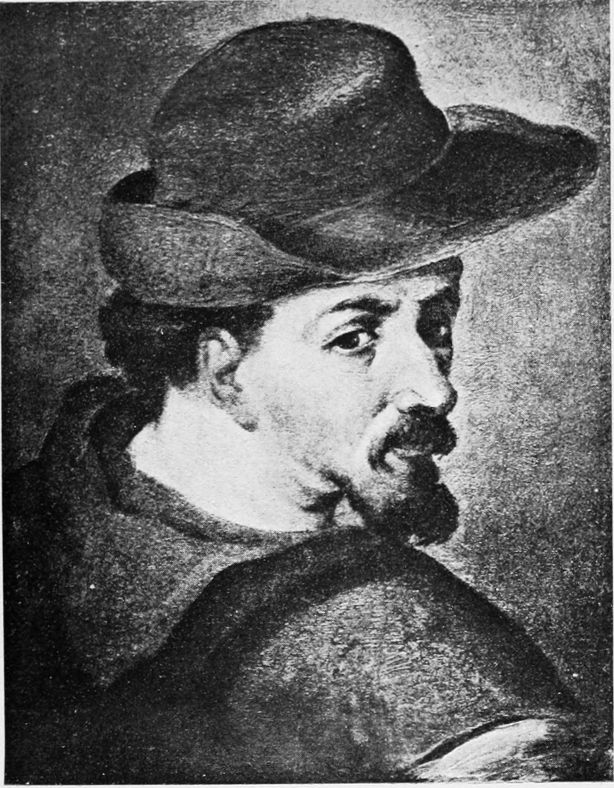
Portrait of the Figure in Pacheco’s Picture at Seville, supposed to represent Cervantes.
PLATE 250
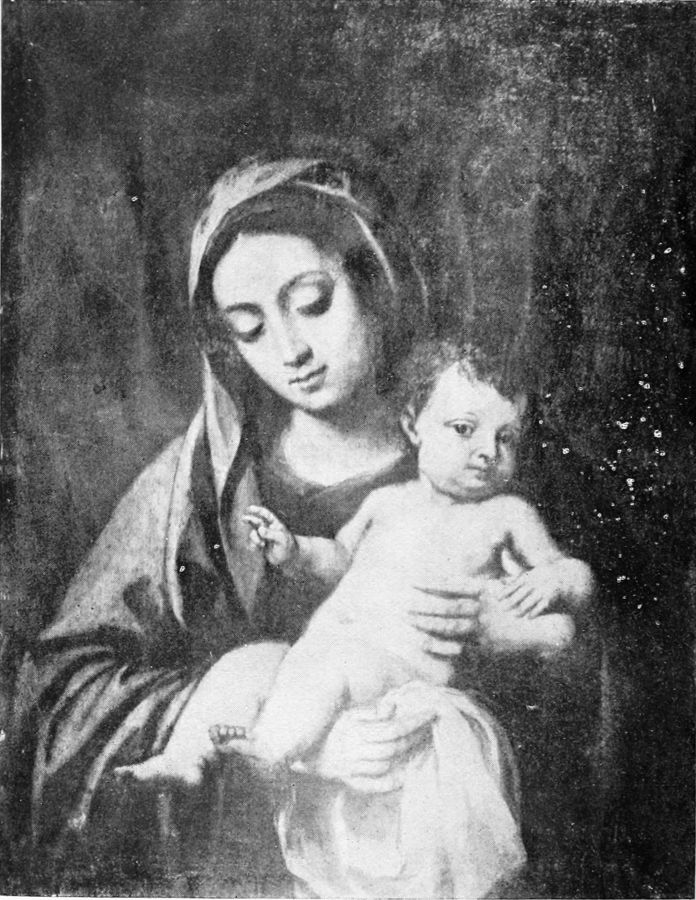
The Virgin and the Child Jesus, by Alonso Cano.
SEVILLE CATHEDRAL.
PLATE 251
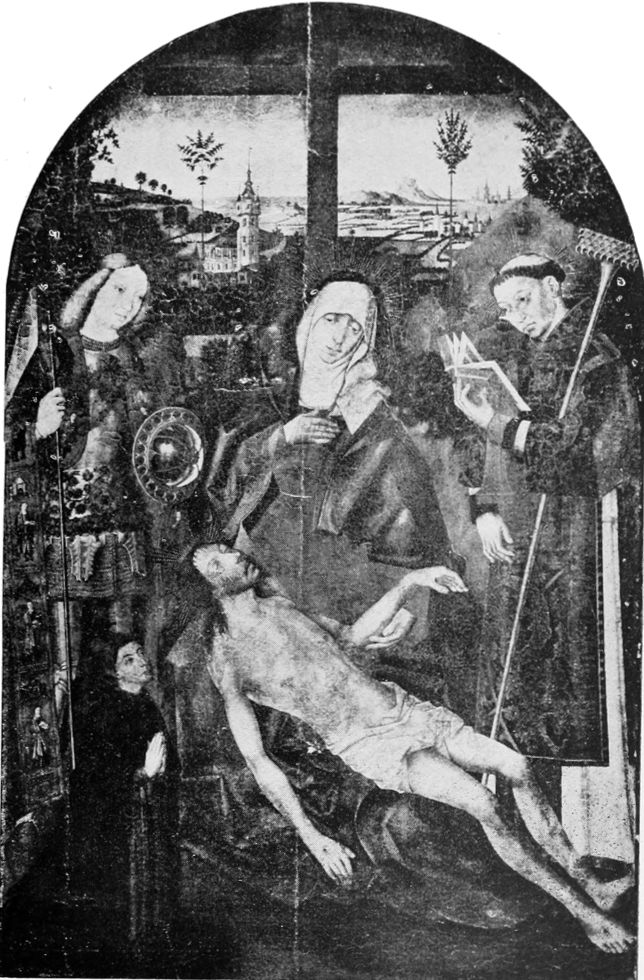
The Descent from the Cross, by Alejo Fernandez.
SEVILLE CATHEDRAL.
PLATE 252
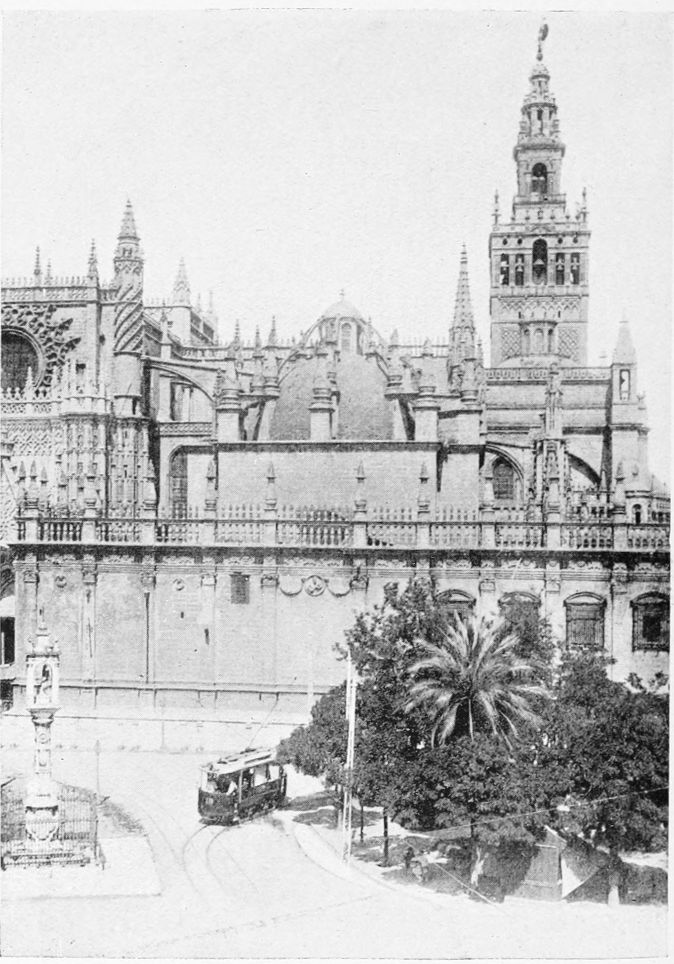
The Cathedral.
PLATE 253
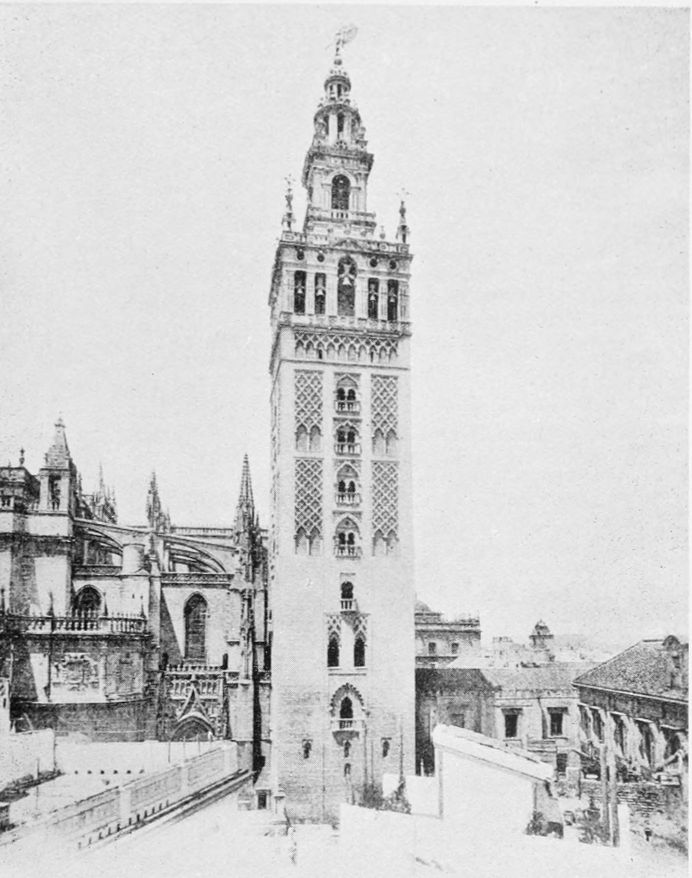
The Giralda.
PLATE 254
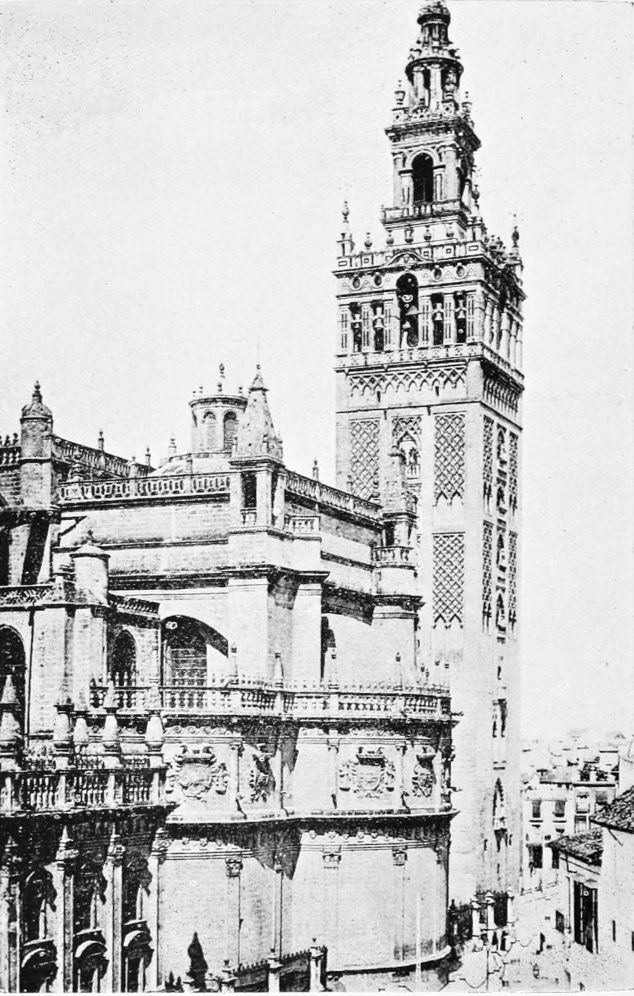
The Giralda.
PLATE 255
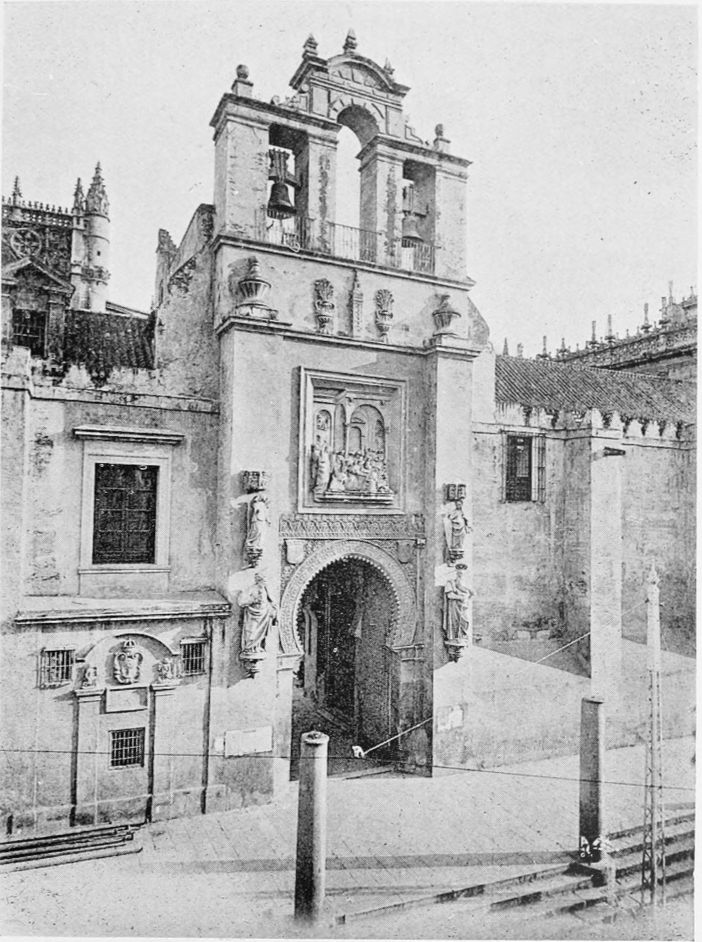
Cathedral. The Gate of Pardon.
PLATE 256
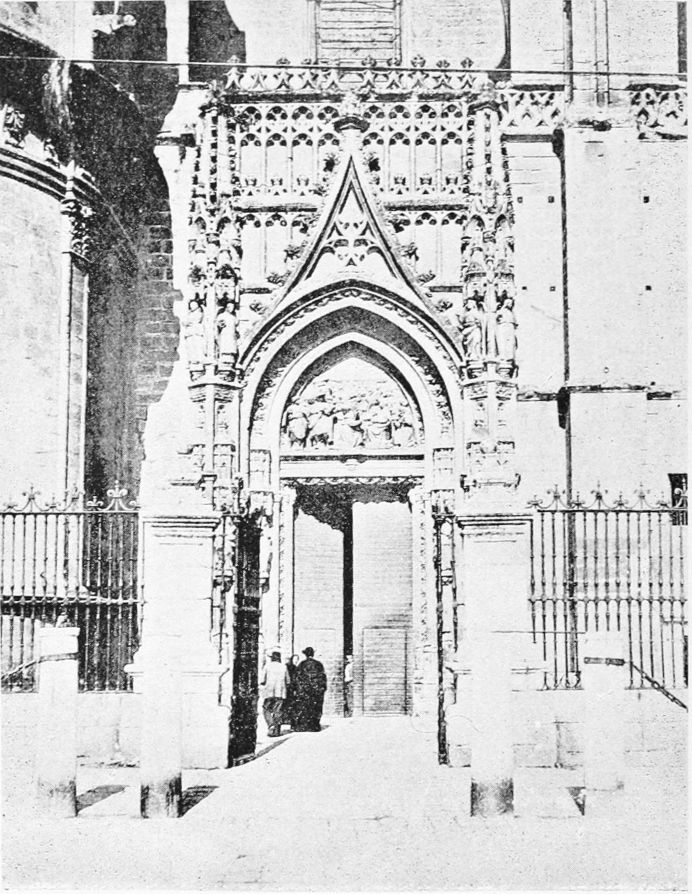
Cathedral. Puerta de los Palos.
PLATE 257
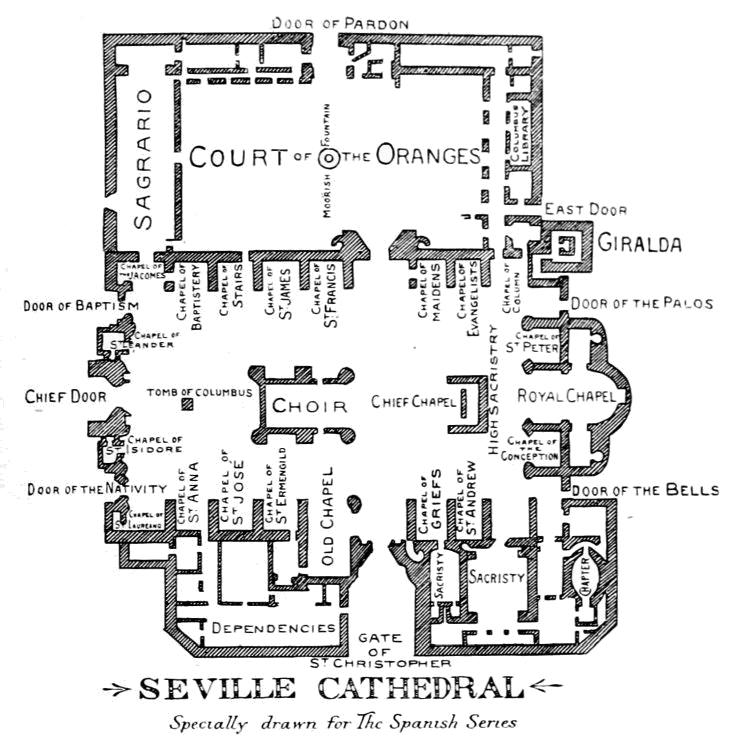
SEVILLE CATHEDRAL
Specially drawn for The Spanish Series
PLATE 258
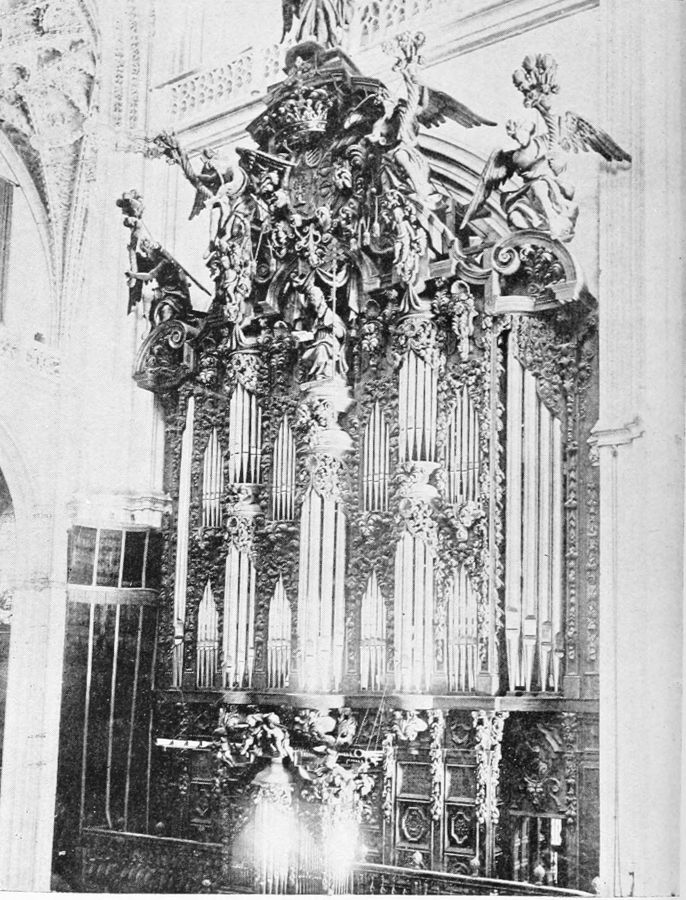
Cathedral. View of an Organ.
PLATE 259
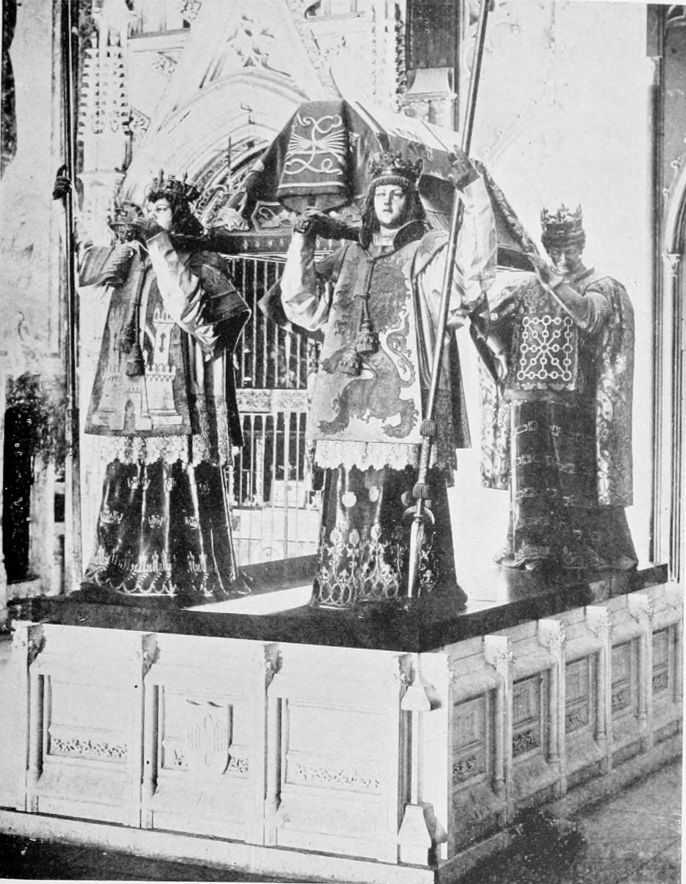
Cathedral. Monument to Columbus.
PLATE 260
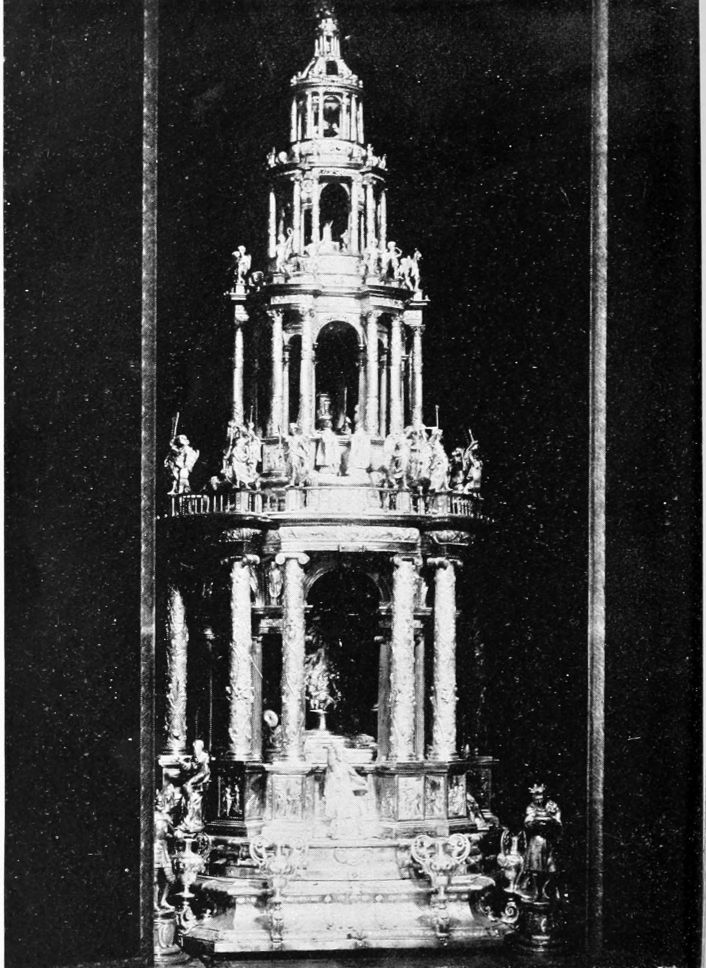
Cathedral. Silver Tabernacle (weighing 45 arrobas).
PLATE 261
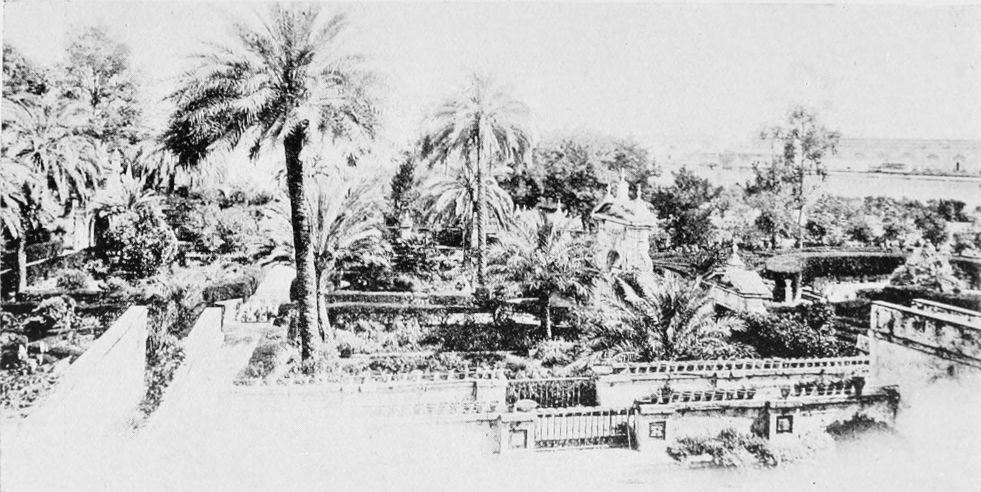
Alcazar Gardens.
PLATE 262
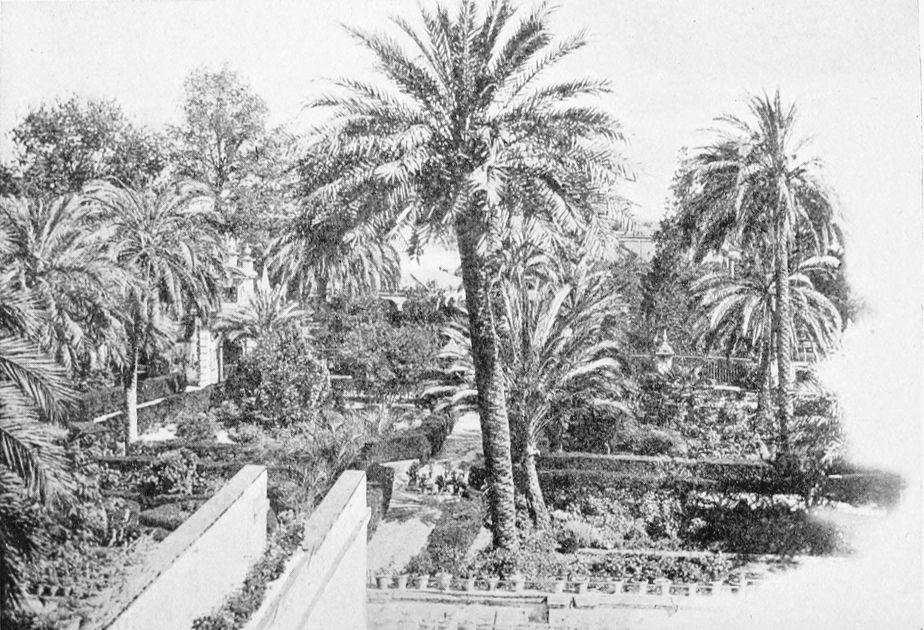
Alcazar Gardens.
PLATE 263
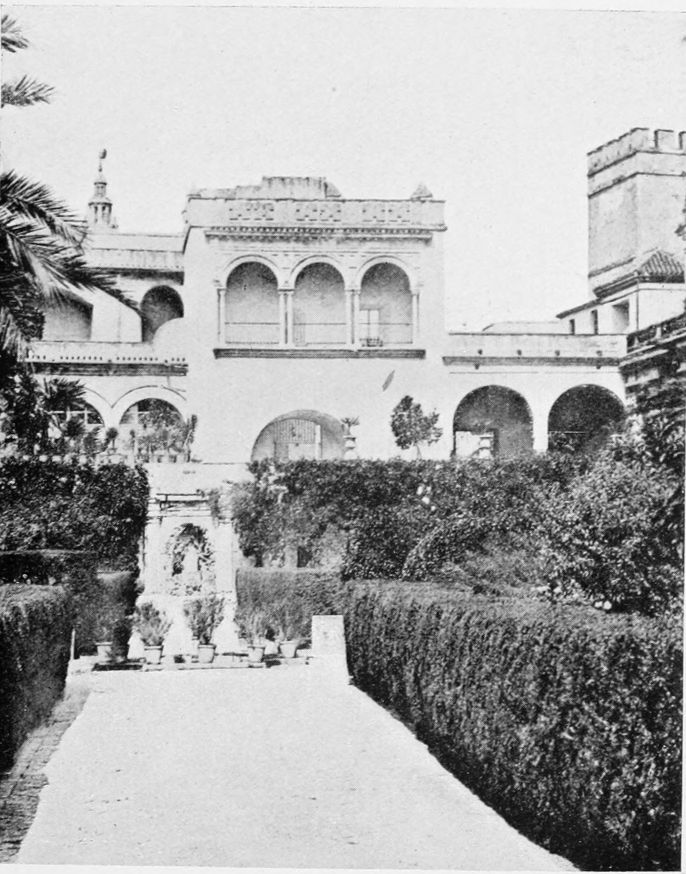
Alcazar Gardens.
PLATE 264
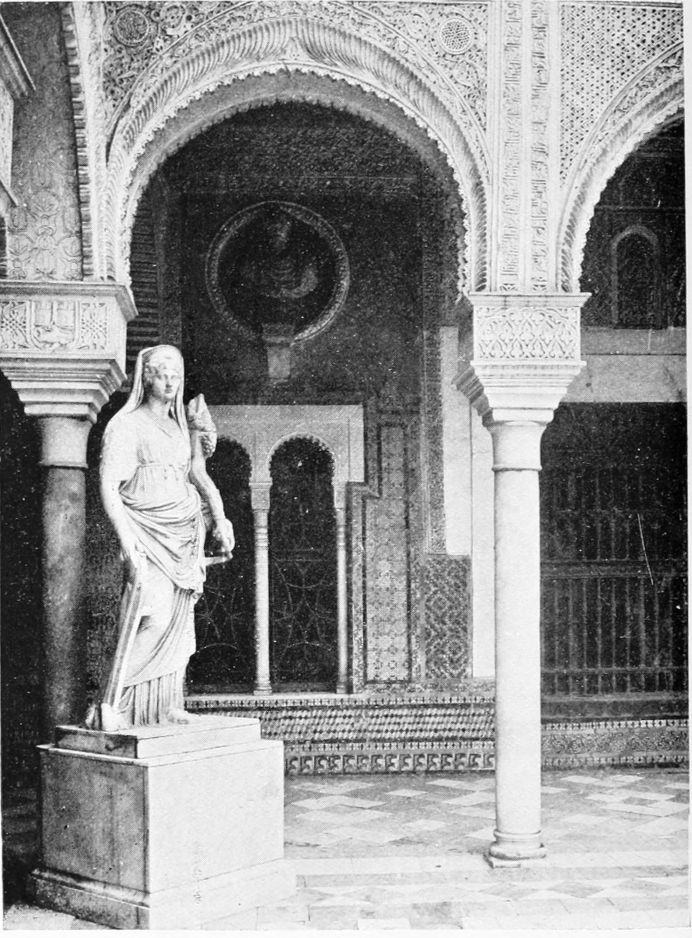
House of Pilate. The Goddess Ceres.
PLATE 265
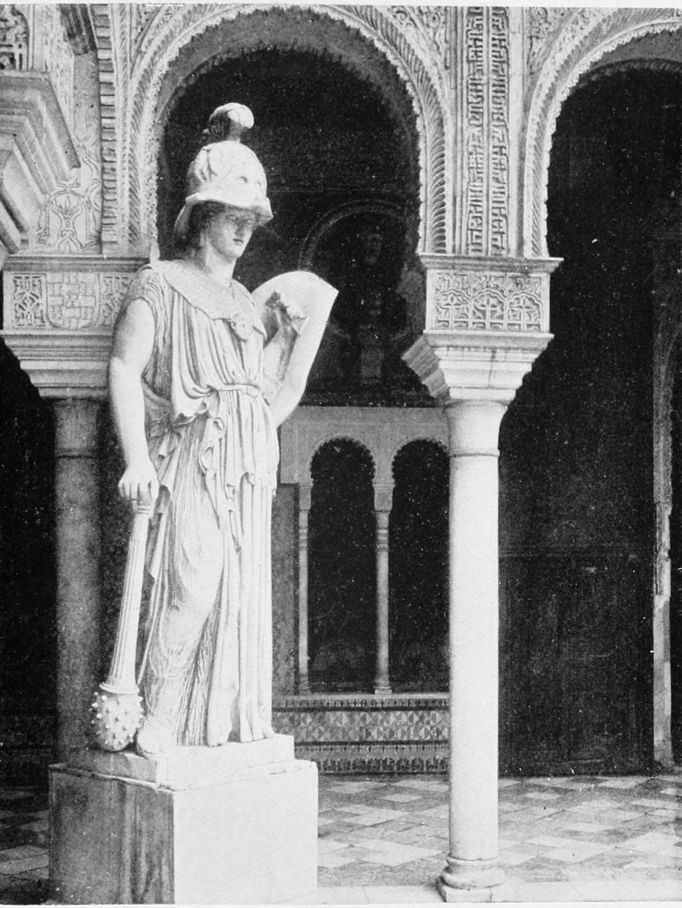
House of Pilate. The Goddess Pallas Pacifer.
PLATE 266
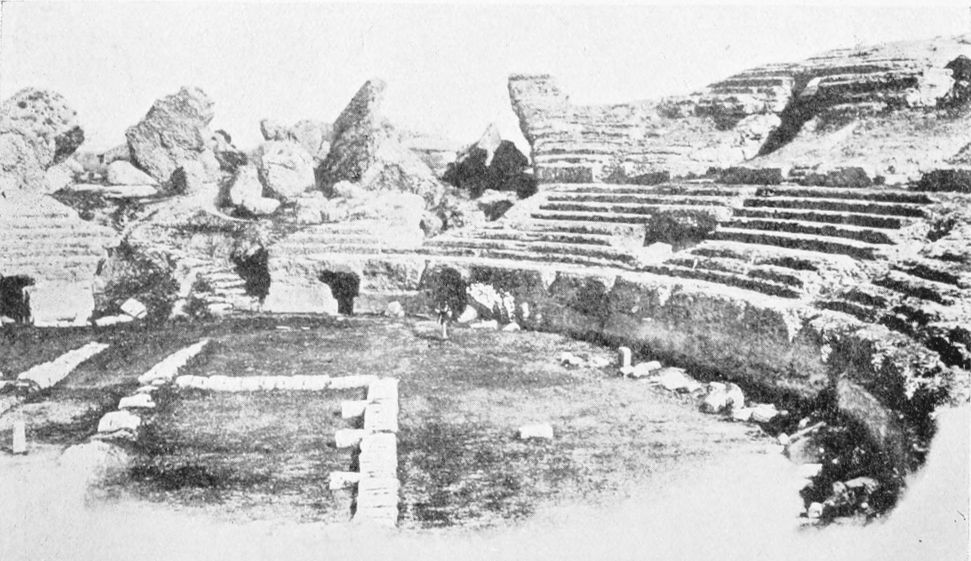
Italica.
PLATE 267
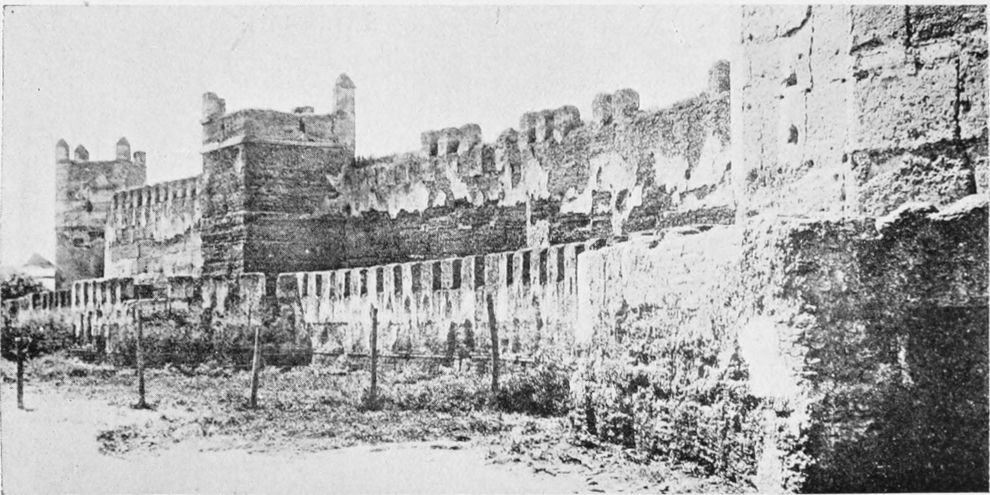
Roman Walls.
PLATE 268
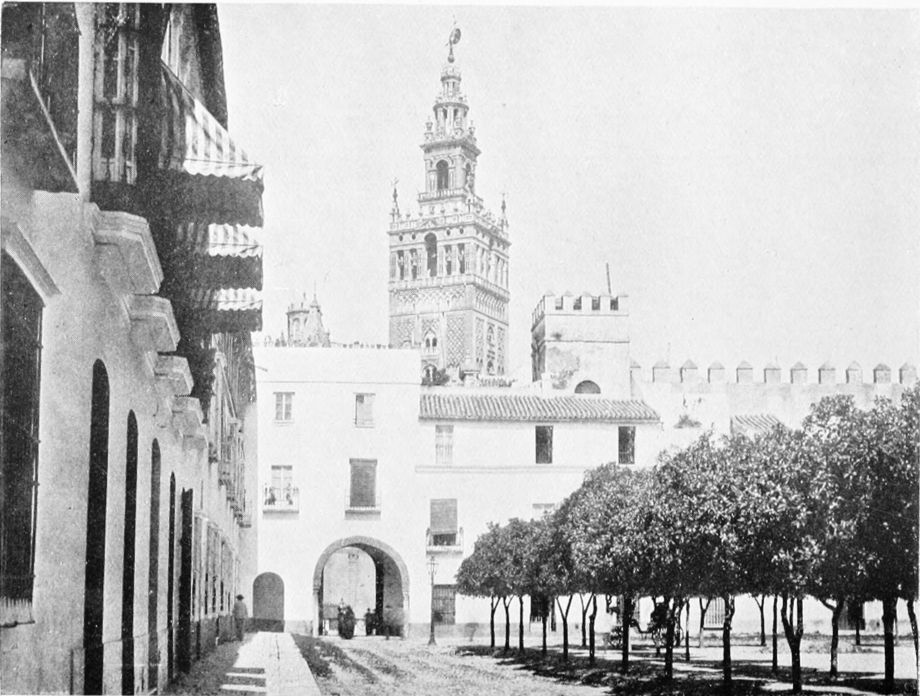
Patio de Banderas and the Giralda.
PLATE 269
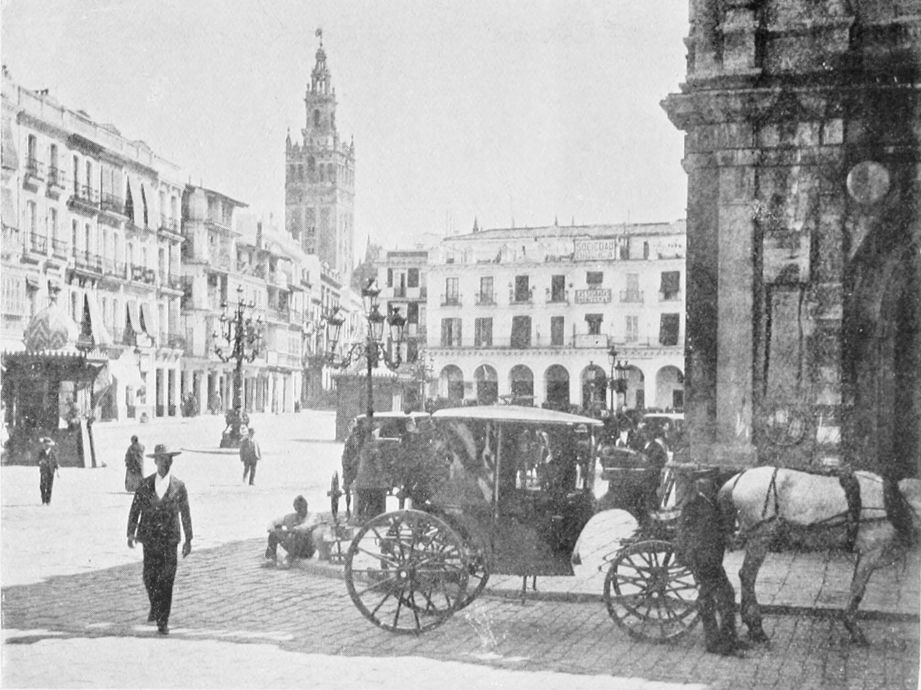
Plaza de San Francisco.
PLATE 270
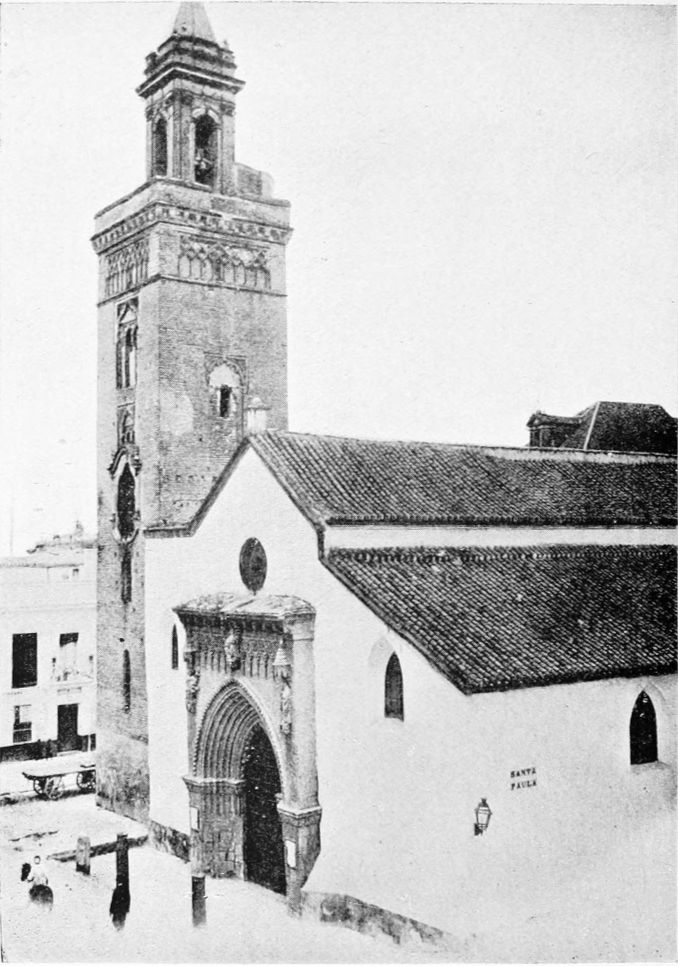
St Mark’s Church.
PLATE 271
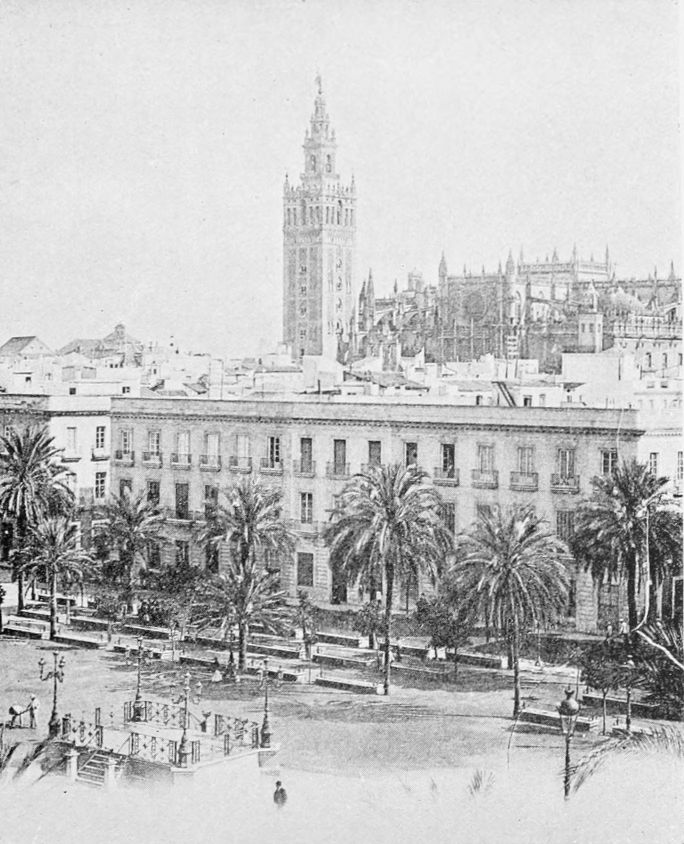
Plaza de San Fernando.
PLATE 272
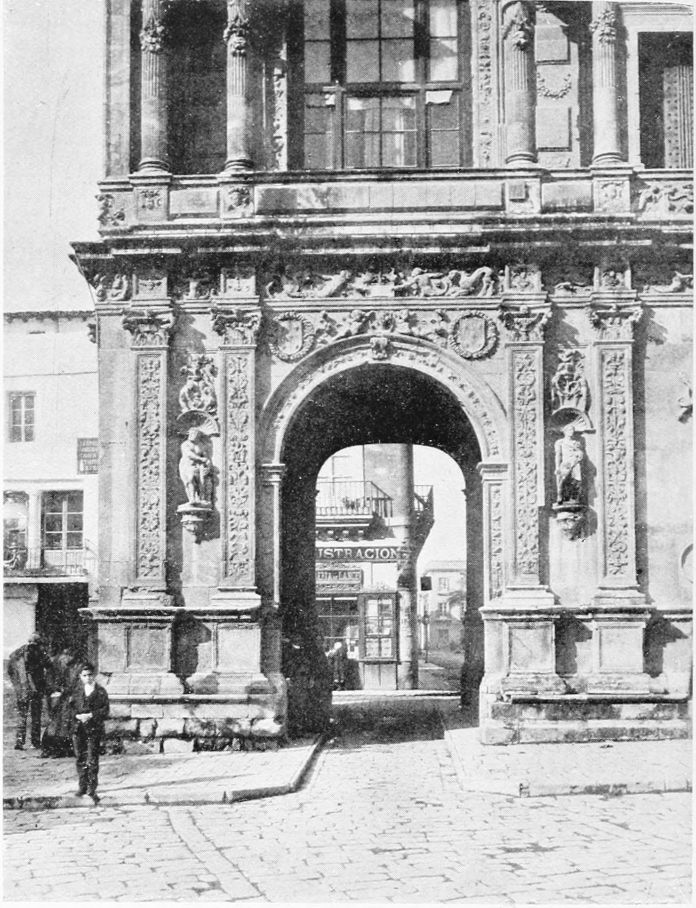
The Town Hall. Details of the Old Part.
PLATE 273
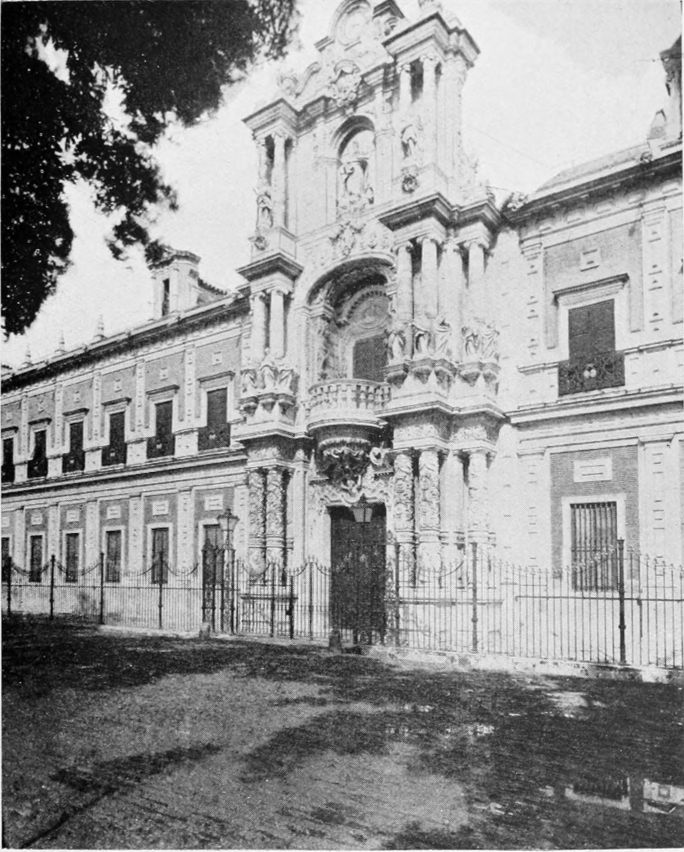
Façade of the Palace of San Telmo.
PLATE 274
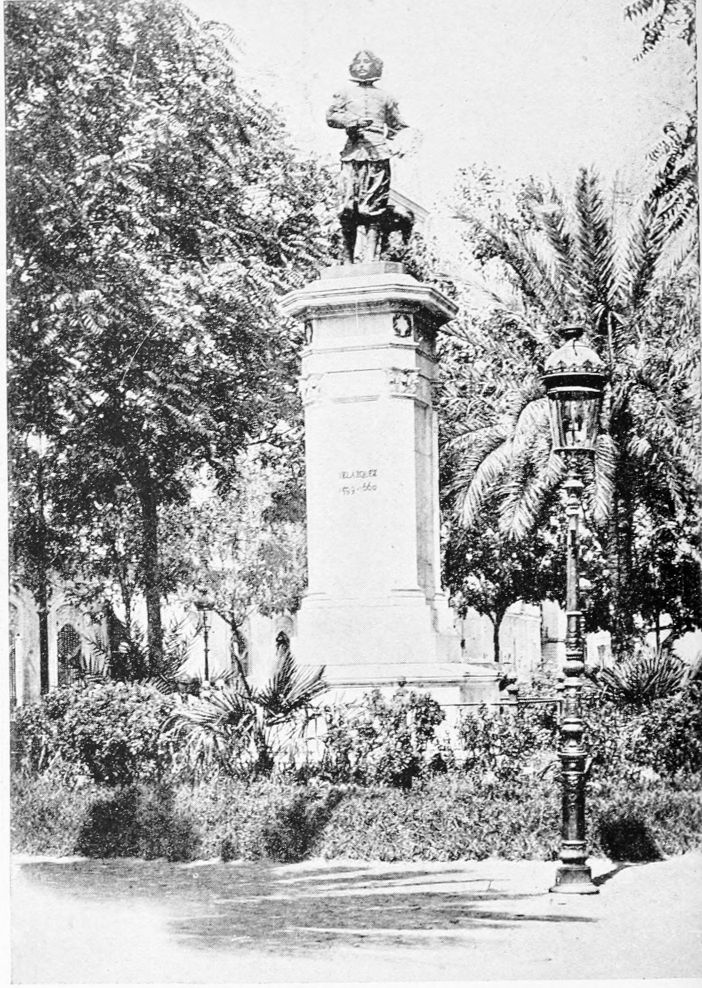
Statue of Velaquez.
PLATE 275
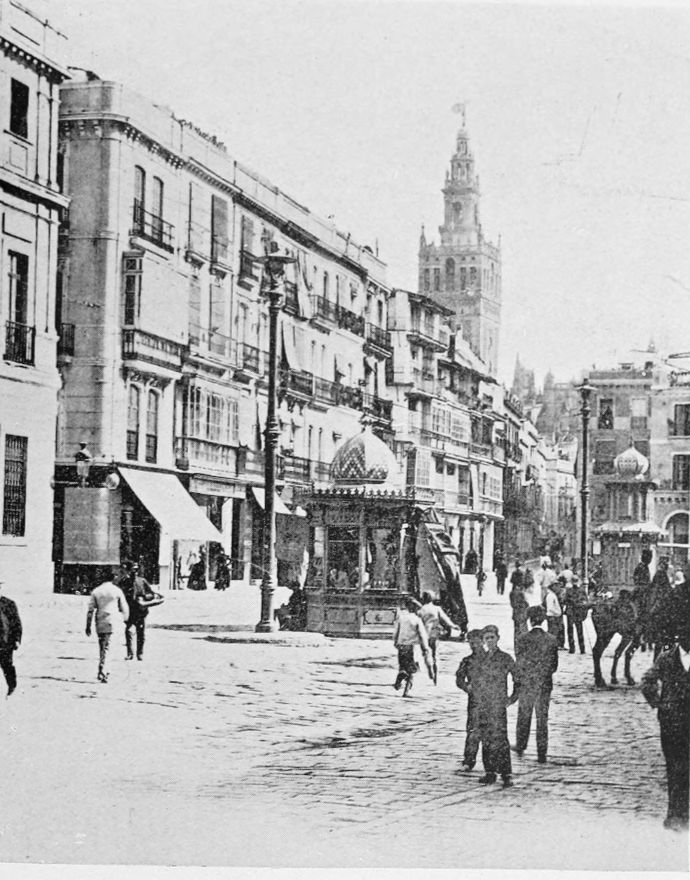
Plaza de la Constitución.
PLATE 276
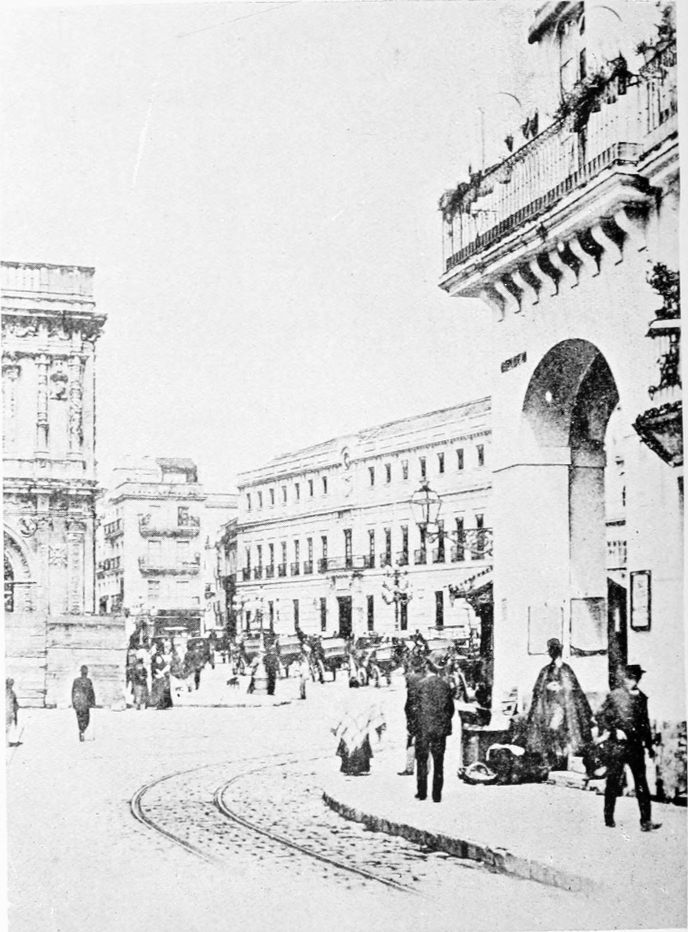
Plaza de la Constitución.
PLATE 277
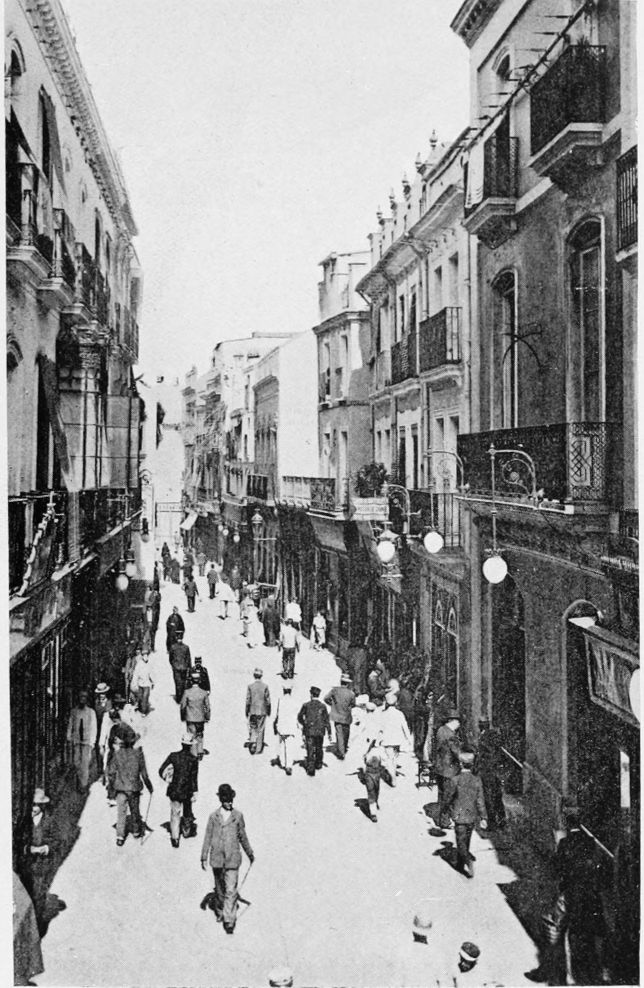
Calle de Sierpes.
PLATE 278
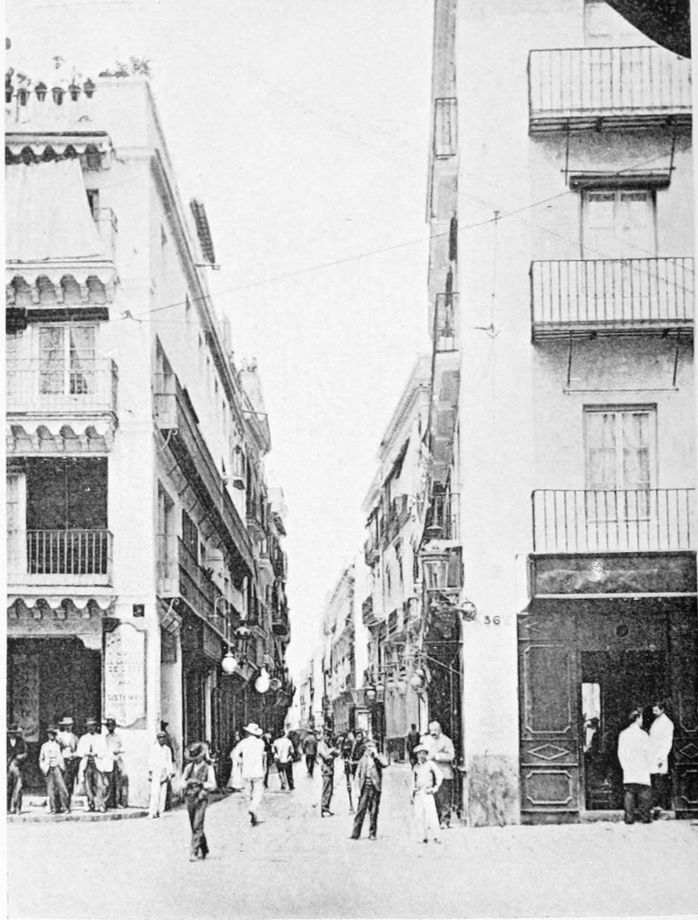
Calle de Sierpes.
PLATE 279
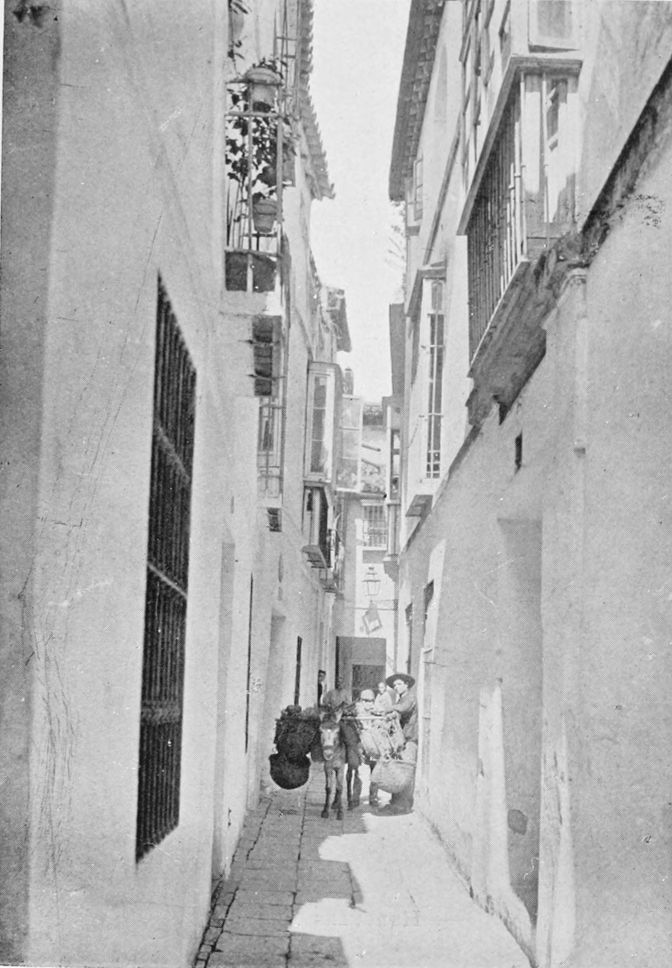
A Street in Seville.
PLATE 280
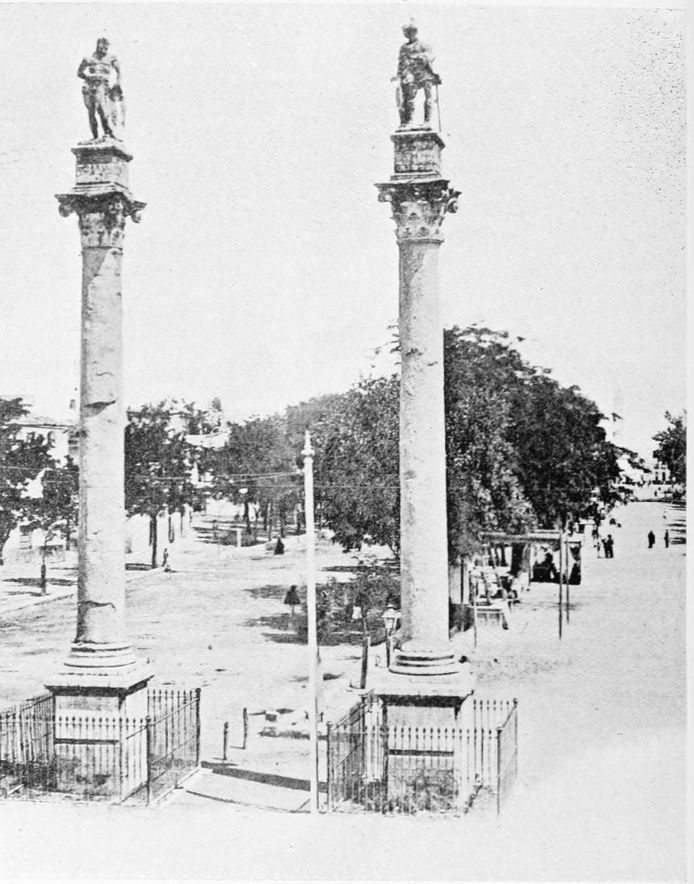
Hercules Avenue.
PLATE 281
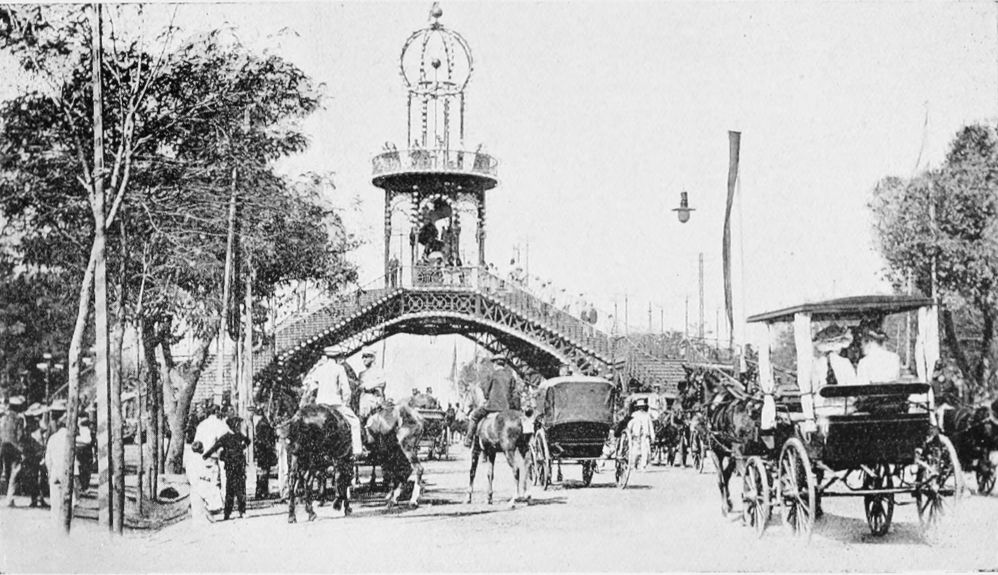
The Pasadera.
PLATE 282
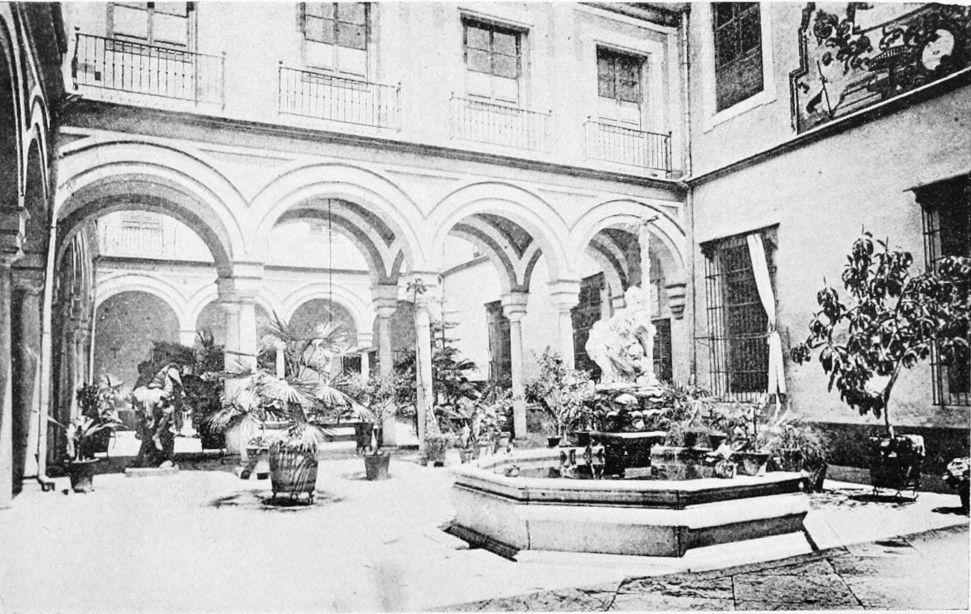
Courtyard of La Caridad.
PLATE 283
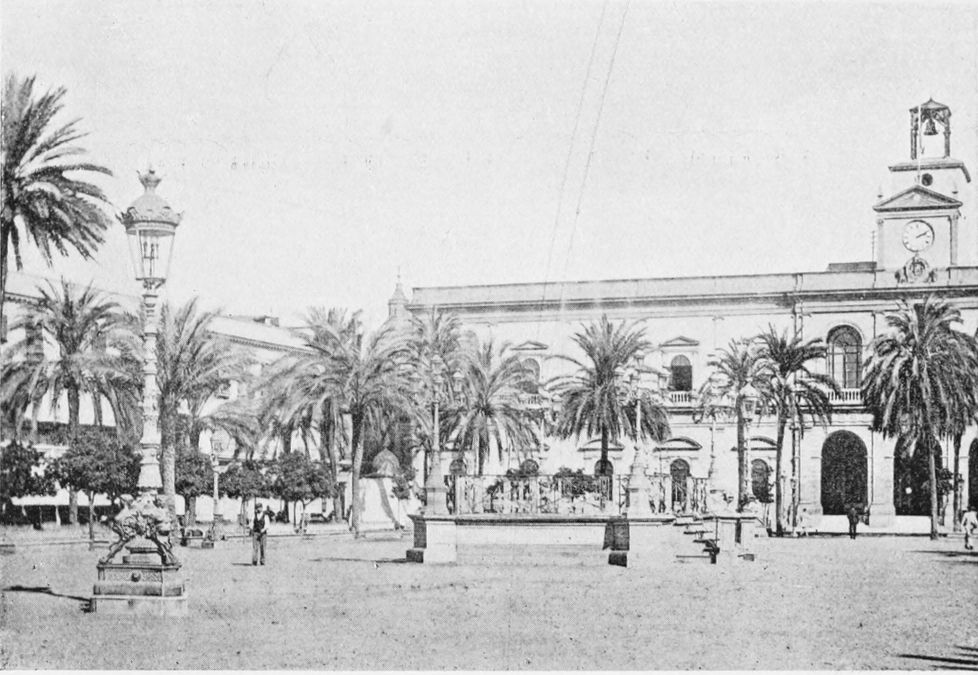
Plaza de San Fernando.
PLATE 284
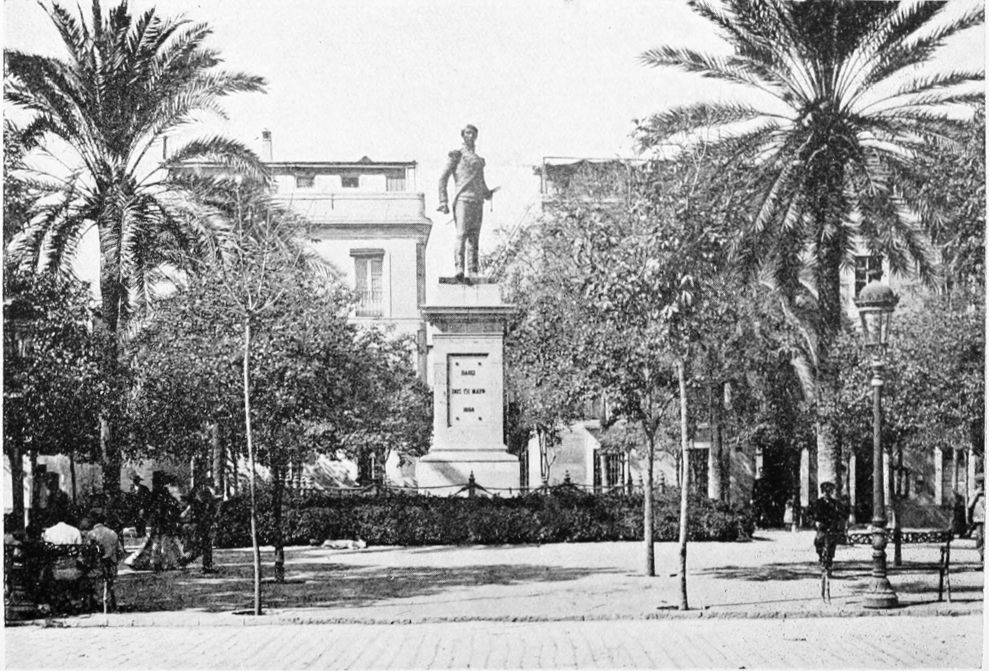
Plaza de Gavidia.
PLATE 285
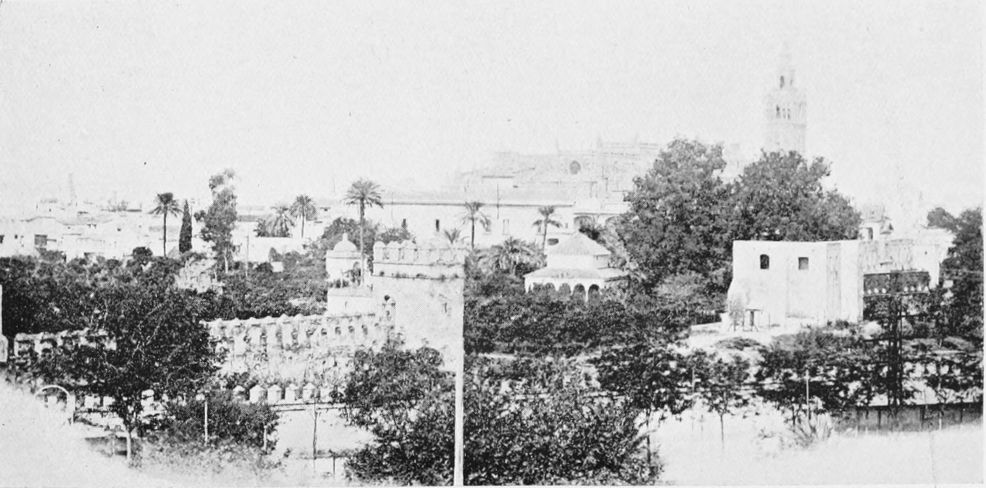
View from the Pasadera.
PLATE 286
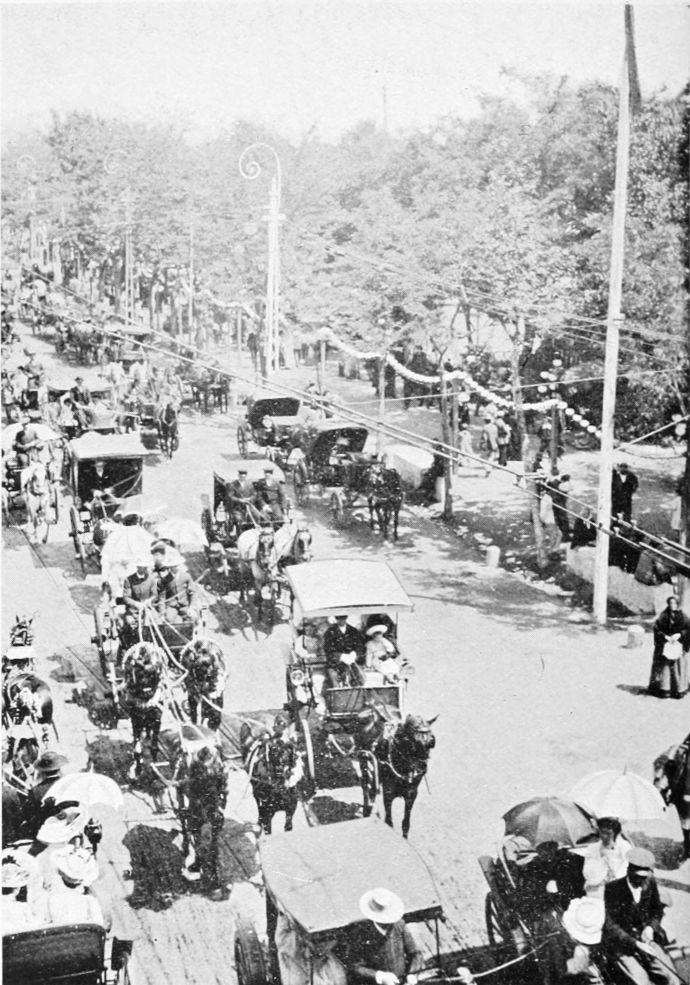
The Drive.
PLATE 287
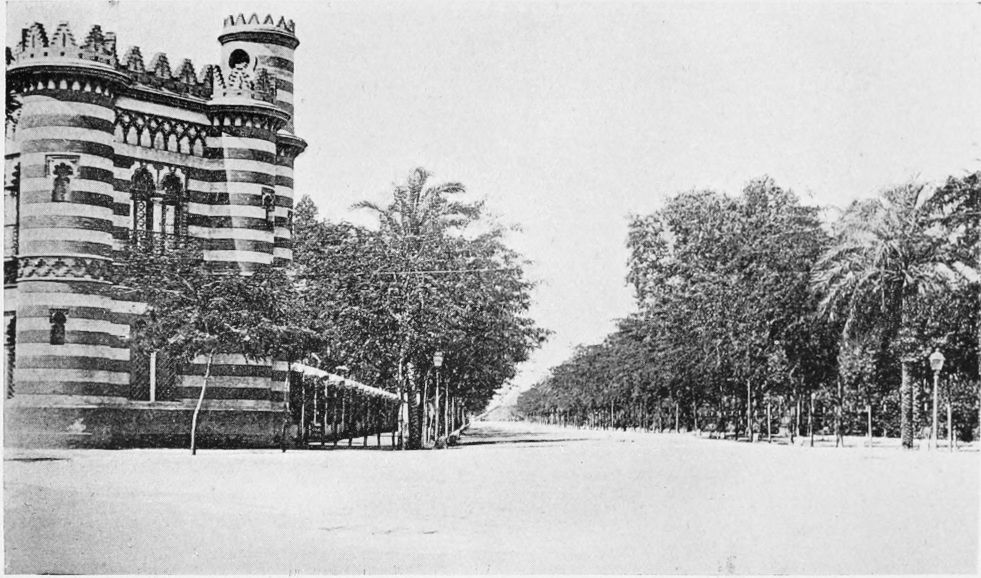
Paseo de las Delicias.
PLATE 288
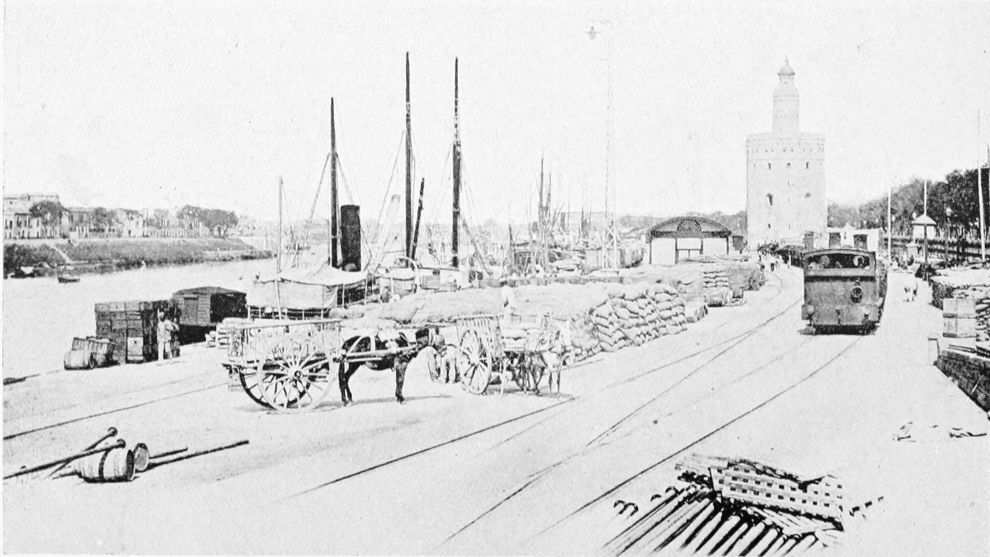
The Quay.
PLATE 289
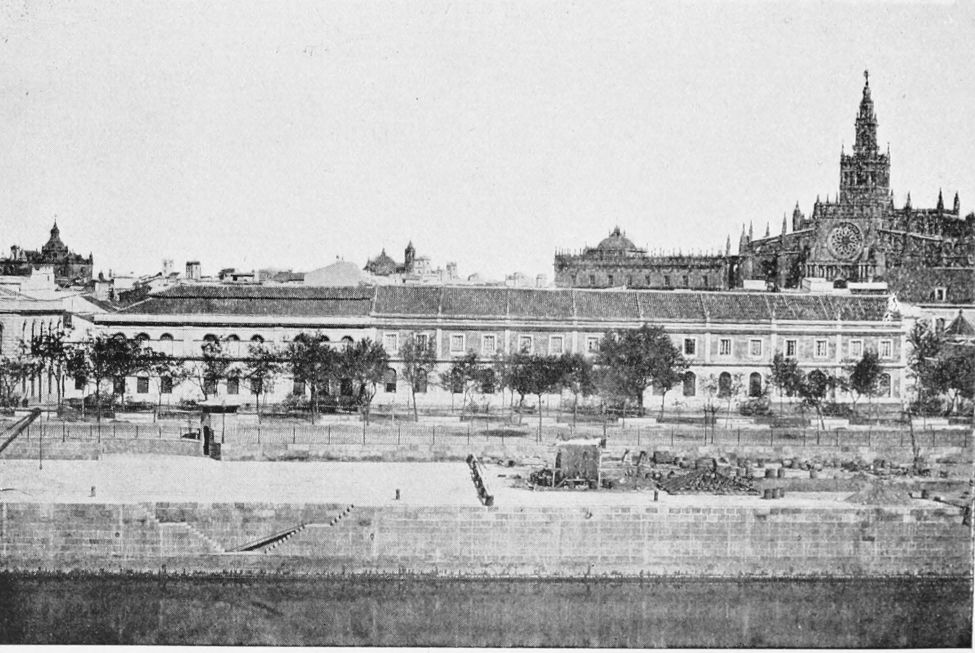
Partial View of Seville.
PLATE 290
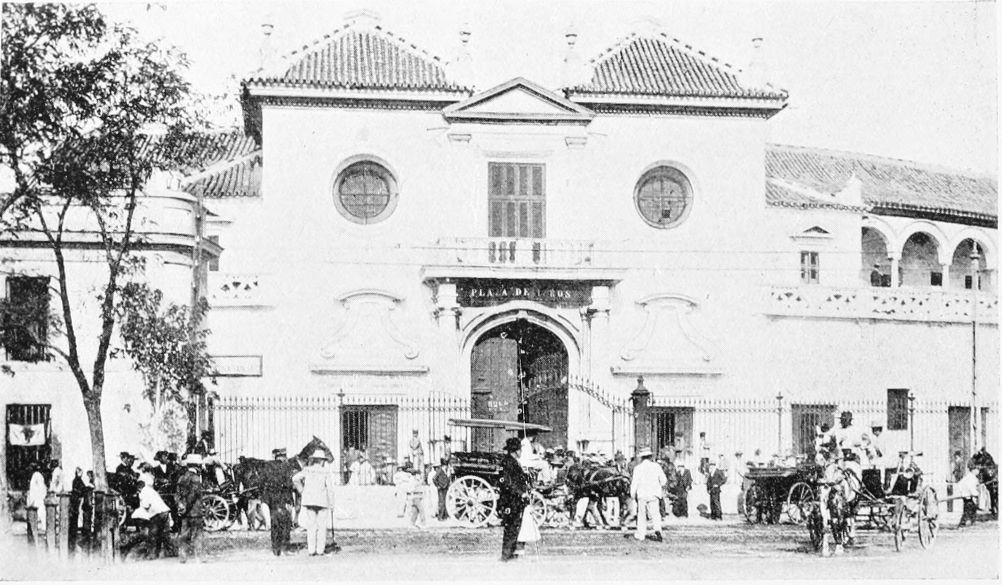
Plaza de Toros.
PLATE 291
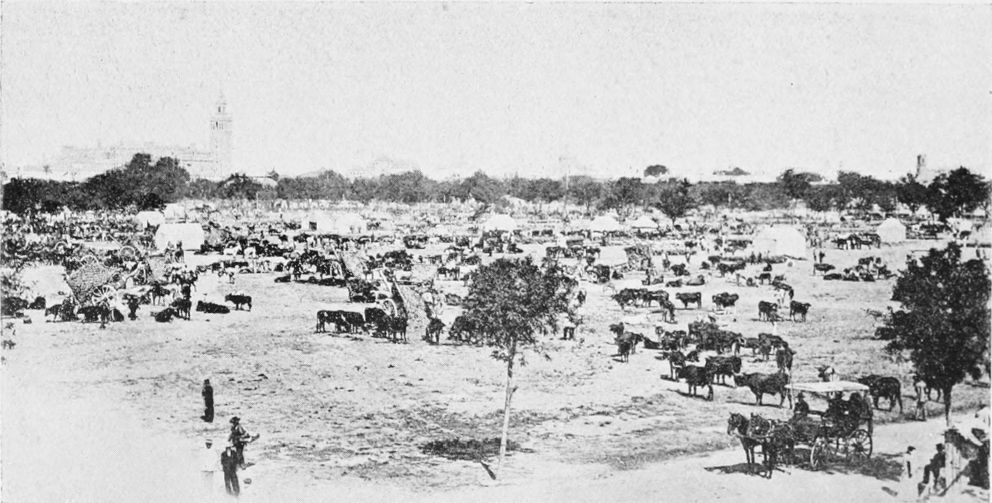
Fields of San Sebastian.
PLATE 292
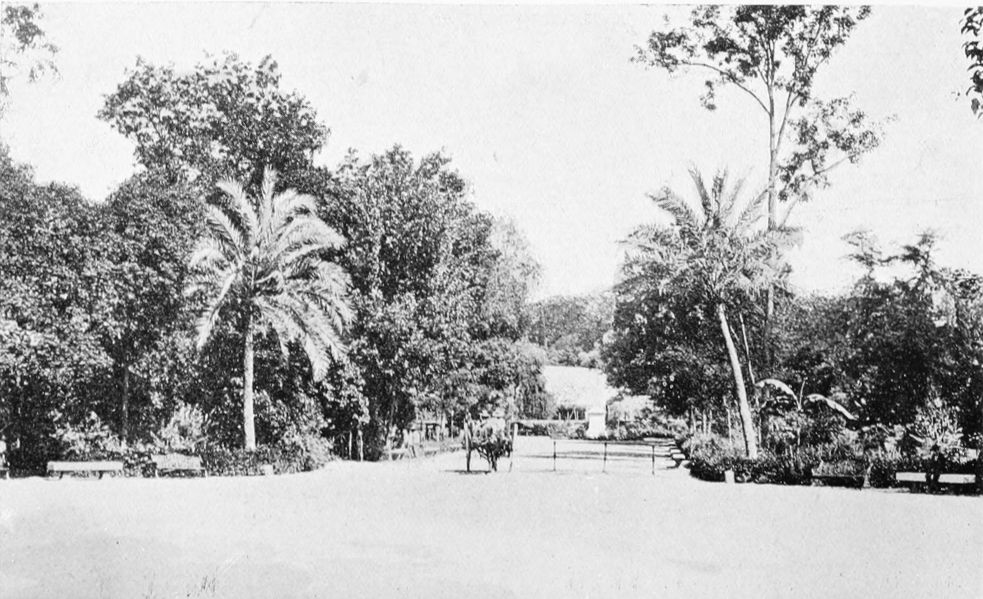
Park of Maria Luisa.
PLATE 293
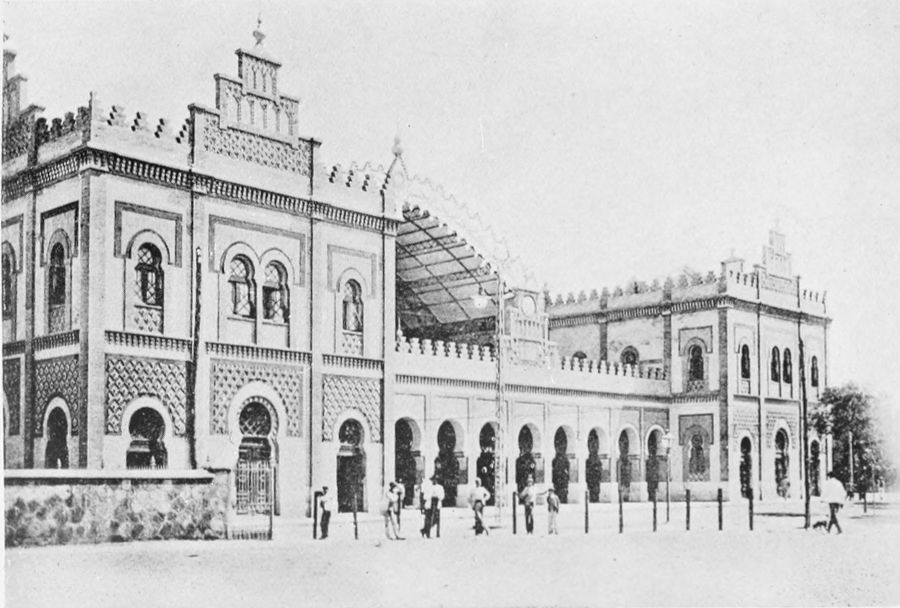
Railway Station of M.Z.A. Principal Façade.
PLATE 294
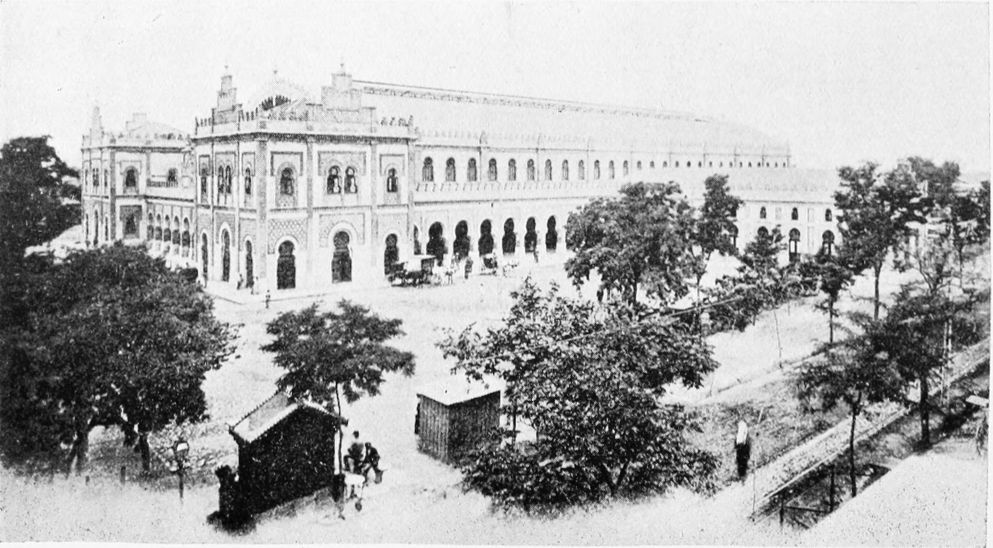
Railway Station of M.Z.A. General View.
PLATE 295
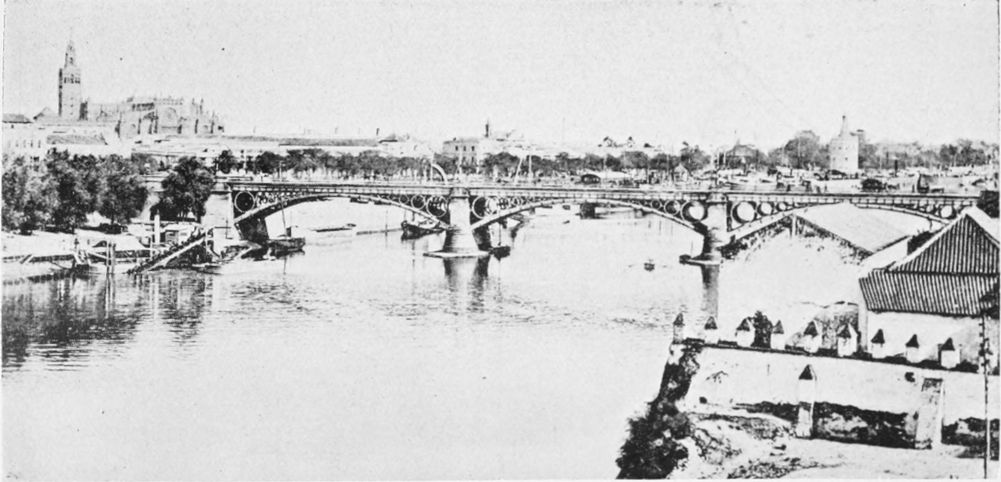
Triana Bridge.
PLATE 296
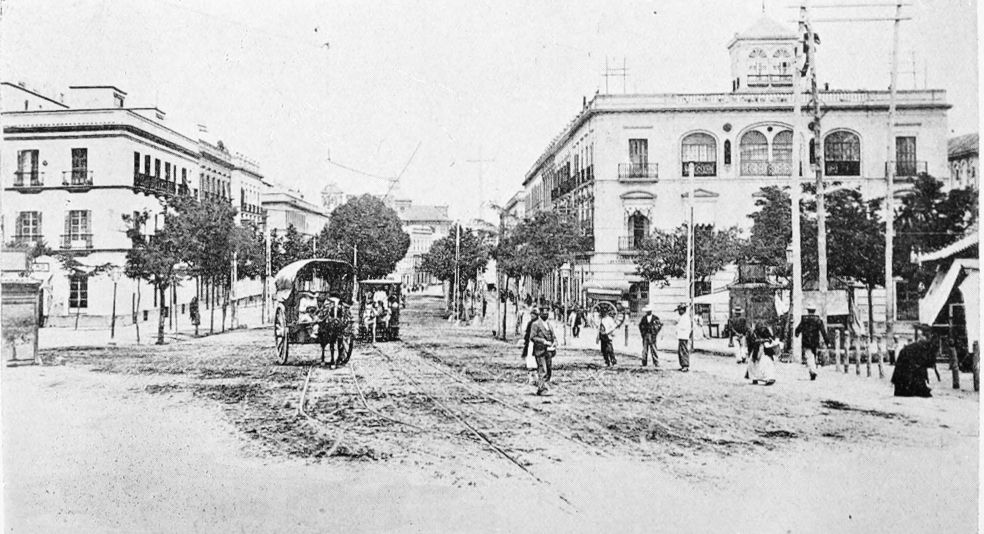
View from Triana Bridge.
PLATE 297
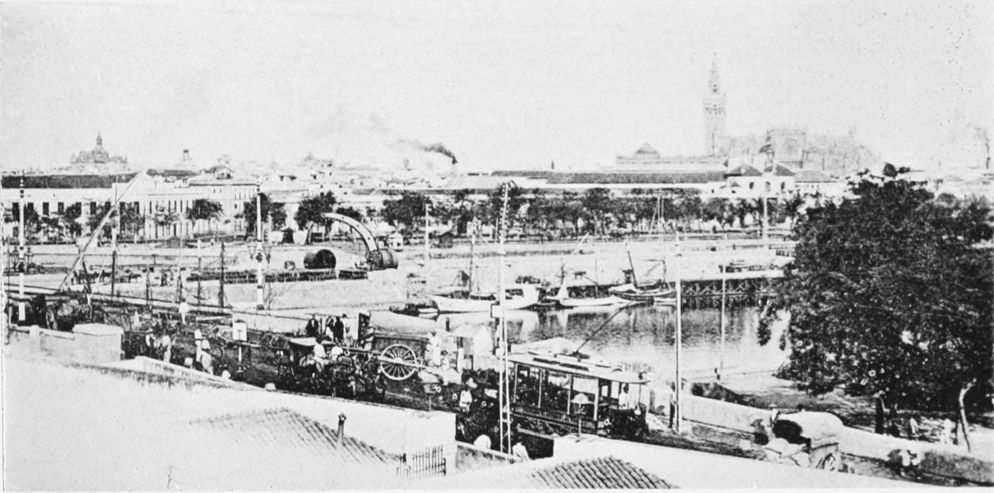
View from Triana.
PLATE 298
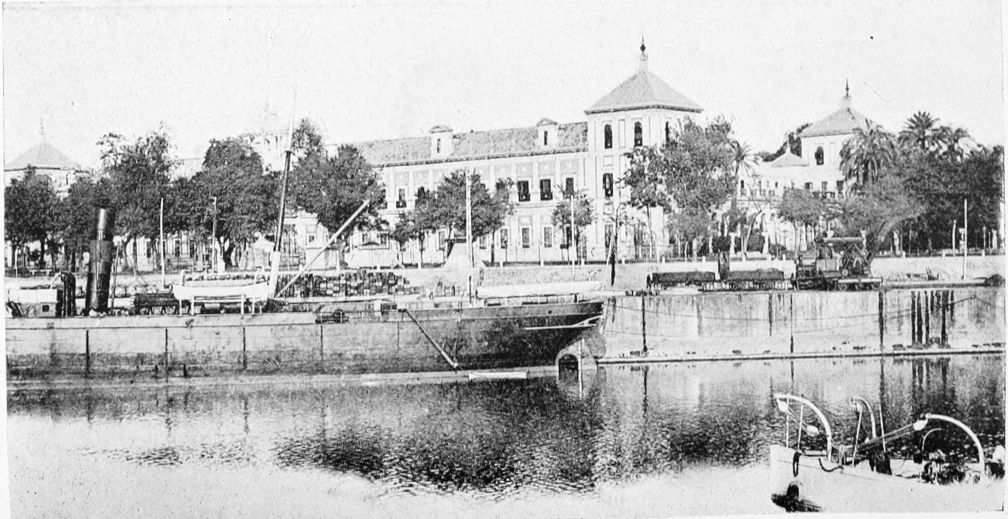
San Telmo from Triana.
PLATE 299
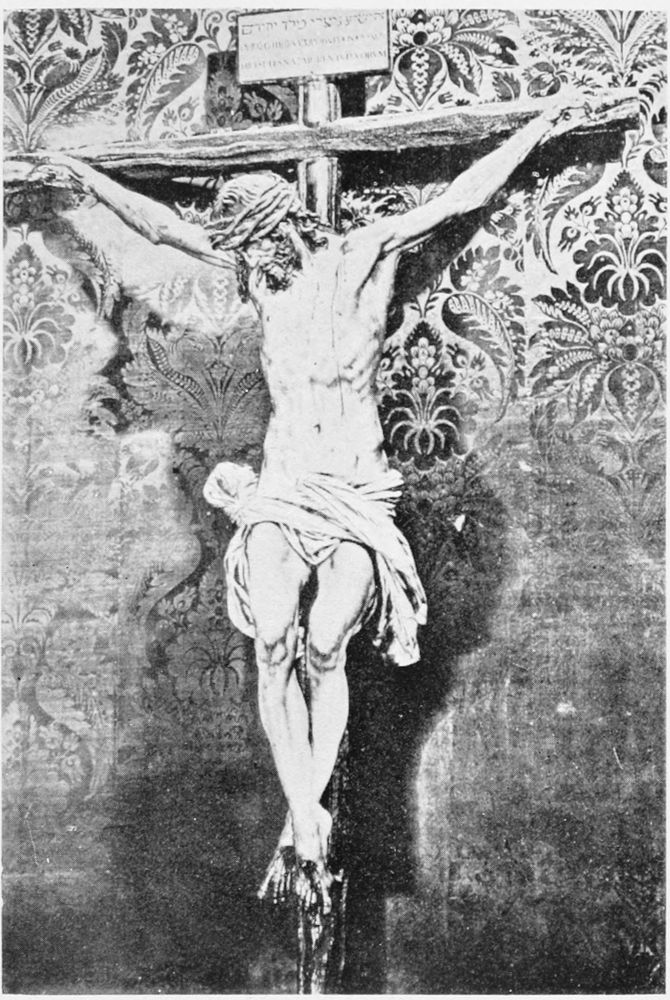
The Cathedral. Our Lord Crucified. Sculpture in the Sacristy.
PLATE 300
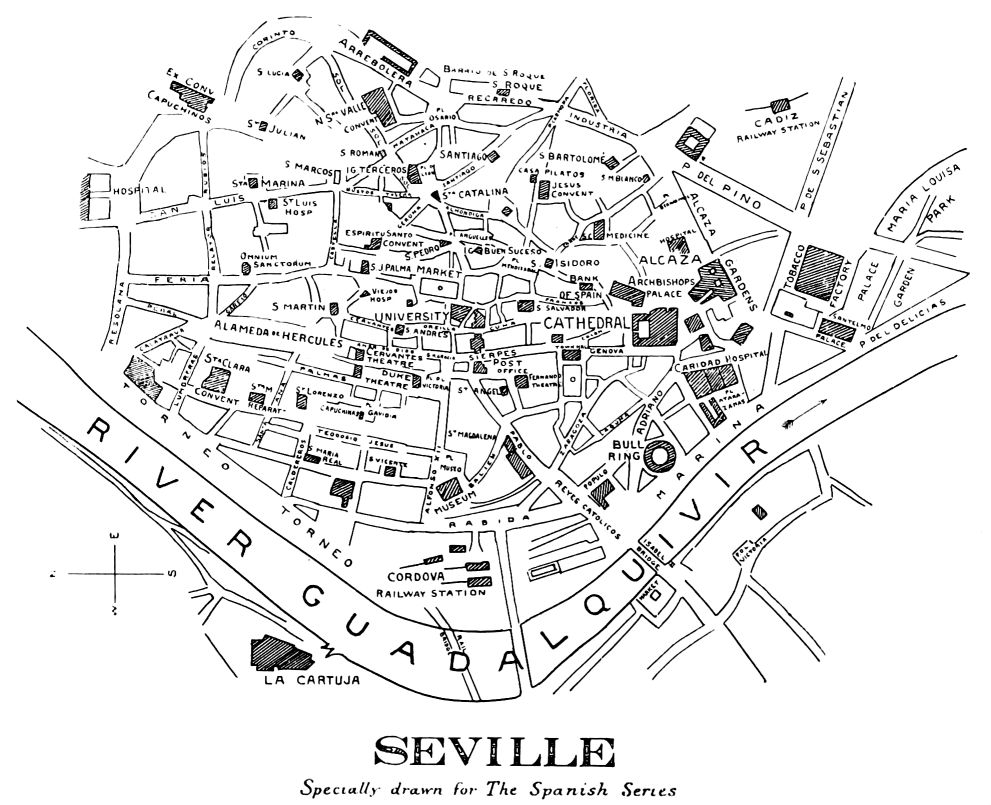
SEVILLE
Specially drawn for The Spanish Series
FOOTNOTES: