PHILOS AND LICIA.
Reading edition
o sooner had the Sun chas'd night away, And that the Worlds discouerer, bright-eyd day, Poasting in triumph through the enameld skie, Had to the people showne this victorie, But that poore Philos (in himselfe forlorne) Hasted to tell his Loue that it was morne. The milke-white path that leadeth vnto Ioue, Whereon the Gods continually doe moue, Compar'd with that, which leadeth to her bed, Was not so white, nor so enameled. A paire of milke-white staires, whiter than white, Was the next way vnto his chiefe delight: Vp those he mounted; and as by he paste, Vpon a wall were sundry stories plaste: Sweet weeping Venus, crying out amaine For the dear boy that by the bore was slaine: Skie-ruling Ioue lamenting ore a Cow, That seemd to weepe with him the sweetest Io: And there the picture of proud Phaeton, Mounting the chariot of the burning Sun, Was portraied, by which Apollo stood, Who seemd to check his hot sonnes youthful blood: One hand had holde, and one legge was aduanst, To climbe his longing seat; but yet it chanst, That warned by his father so, he staid A while, to heare whose teeres might well perswade; Which with such plenty answerd his desires, As though they striu'd to quench ensuing fires: Hanging so liuely on the painted wall, That standers by haue sought to make them fall. The chamber, where his hearts delight did lie, Was all behung with richest Tapistrie; Where Troies orethrow was wrought, & therwithall The goddesses dissent about the ball. Bloud-quaffing Hector all in compleat steele, Coping Achilles in the Troian feeld, Redoubling so his sterne stroaks on his head, That great Achilles left the field, and fled; Which was so liuely by the Painter done, That one would sweare the very cloth did runne. Trecherous Vlysses bringing in that horse, Which proued a fatall coffin for Troies corse. False-hearted Synon groueling on the mire, Whose oily words prou'd fewell to Troies fire. Flint-brested Pyrrhus with an iron mace Murdring the remnants of great Priams race. Vertuous Æneas, with the armes of Greece, Venturing for Troy as Iason for his fleece. And vpward if you lookt, you might behold The roofe of it all wrought in burnisht gold: Whereon was figur'd heauen; and there anent The Gods in state riding to Parliament. Gold-showring Ioue vpon a milke-white steed Rode first in ranke; on whose imperiall head A triple crowne was plac't, at which before Two matchlesse diamonds for worth he wore: On whose right hand Idalian Ganymed A massie scepter strongly carried: But on his left, swift-winged Mercurie A dreadfull thunderbolt (earths feare) did whurrie. Next Ioue, Apollo came: him followed Fame Baring a lawrell, on which sweet Sydneys name In golden letters, plainly to be read, By the Nine Muses had beene charrectred: On whose each side Eternitie and Praise Enroll'd mens deeds, and gaue them fame to raise. Then furious Mars came next with sulphure eies, Flashing forth fire as lightning from the skies; Whose vncontrolled crest and battered shield Greeke-wounding Hector and Æneas held. Light-headed Bacchus with a cup of golde Brimfull of wine, next Mars his place did holde; The which quaft off, one reeling on before Filled againe, and still supplied more. Him followed sicknesse, by excesse, being lead, With faint weake hands holding his pained head. Thus was the roofe adorn'd: but for the bed, The which those sacred limmes encanaped, I could say much: yet poised with her selfe, That gorgeous worke did seeme but drossy pelfe. All-conquering Loue inspire my weaker Muse, And with thy iocund smiles daigne to infuse Heauen-prompted praises to my vntaught story, That I may write her worth, and tell thy glory. Vpon her backe she lay (ô heauenly blisse!); Smiling like Ioue, being couzend of a kisse; The enuious pillow, which did beare her head, Was with it selfe at warre, and mutined: For if the midst receiu'd her chaste impression, Then the two ends would swell at such a blessing; And if she chanst to turne her head aside, Gracing one end with natures only pride, The rest for enuy straight would swell so much, As it would leape asunder for a touch. Her Sun-out-shining eyes were now at set, Yet somewhat sparkling through their cabinet; Her scorne white forehead was made vp by nature, To be a patterne to succeeding creature Of her admiring skill: her louely cheeke, To Rose, nor Lyllie, will I euer leeke, Whose wondrous beautie had that boy but prou'd, Who died for loue, and yet not any lou'd, Neuer had riuer beene adorned so, To burie more then all the world could shew. Her sweetest breath from out those sweeter lips, Much like coole winde which from the valleys skips In parching heat of Summer, stealeth forth, Wandring amongst her haire; her wel formd mouth: No art hath left vs such proportion, To modell out so true perfection. Her smoothe moist hands the sheets kept from his sight, Lest by comparing, they should staine their white. As thus she lay like Venus in her pride, (Tempting sweet Adon, lowring by her side) Philos approcht, who with this sight strooke dumbe Came stealing on to see, and being come, His greedie eye, which on the sudden meets So many various and delicious sweets, As rackt with pleasure (neuer hauing fill) Would faine looke off, and yet would looke on still. Thus do we surfet on our sudden ioyes, And ranck-fed pleasure thus it selfe destroyes: For when his eye doth light vpon her hand, He then protests, that that is whitenesse land; But when the whitenesse of her whiter brow Doth steale his eye from thence, he sweareth now Her brow is fellowlesse without all peere; When being snatcht off vnto her fairer haire, He vowes, the Sun, which makes trees burnisht gold, Is not so faire, nor glorious to behold: The viewing the strains which through those cheeks appeare, And that pure whitenesse which triumpheth there, Mixt with those azure Saphire passing vaines, Which are insert like siluer running streames, Watring those golden apples of the brests, Where heauens delight & earths contentment rests, His full-fed eye orecome with such excesse, Sweares and forsweares, denies and doth confesse: Then doth he touch her lips, Natures rich treasure, And musing thinks which is the greatest pleasure To kisse or see; for to resolue which doubt, Againe he kisses, whence comes stealing out So sweet a breath as doth confound his sence; For rarest obiects hurt with excellence: Then doth he seise her hand with softest straine, Whose moist rebound doth easily detaine A willing guest, who purposely could wish Noother food, but such a well-grac't dish. Whiles thus poore Philos kisses, feeles and sees, Heauen-staining Licia opes her sparkling eyes, And askt the hopelesse Louer, if mornes eye Had out-stript night. Philos made answer, I. And thus the Louer did continuallie: For why, such lustre glided from her eie, Which darkt the Sun, whose glory all behold, So that she knew not day, till some man told. Which office she to Philos had assign'd, Because she had him alwayes most in mind: Which had he knowne, he would not so haue spent The restlesse nights in drery languishment, Tumbling and tossing in his lothsome bed, To flie from griefe, yet that still followed. Then rising vp, and running here and there, As if he could outrun or lose his care; But being vp, and finding no reliefe, Lookt in his heart, and there he found out griefe. How cam'st thou hither (then amaine he cries) To kil my heart? Griefe answerd, Through his eyes. Mine eyes (quoth he) subornd to murder me? Well, for their treason they no more shall see. With that a floud of teeres gush out amaine; But griefe sends sighs to beat them backe againe: So that the hurt he meant to do his eies, Heart-murdring griefe resists, and it denies. Whereat amazd, as one bereft of sence, His eies fixt fast on her, as if from thence His soule had gone, he cri'd: ôh, let this moue, Loue me for pitie, or pitie me for loue. Though I am blacke, yet do me not despise, Loue looks as sweet in blacke as faire mens eies. The world may yeeld one fairer to your view; Not all the world fairer in loue to you. A iewell dropt in mire to sight ilfauoured, Now, as before, in worth is valued; An orient pearle hung in an Indians eare, Receiues no blemish, but doth shew more faire; One Diamond, compared with another, Darks his bright lustre, & their worth doth smother; Where poised with a thing of light esteeme, Their worth is knowen, and their great beauty seene. Set white to white, and who commendeth either? Set white to blacke, and then the white's the fairer. The glorious Sunne, when in his glittring pride, Scowring the heauens, in progresse he doth ride, Who runnes to see? or who his sight doth lacke? But if he chance to shute himselfe in blacke, Then the earths people couet him to see, As if he were some wondrous prodegie. The worlds perfection, at the highest rated, Was of a blacke confused thing created. The sight, wherewith such wonders we behold, The ground of it all darke, and blacke the mold. Since then by blacke, perfection most is knowne, Loue, if not for my sake, yet for your owne. Mole gracing Venus neuer shewed so faire, When as Vulcan the black-fac'd god was there, As thou by me: the people, as we pace, By my defects shall wonder at thy grace; And seeing me so swarthie and so tawnie, Shall haue more cause for to admire thy beautie: And all shall thinke (by whom our charriots go) That tis thy beautie which hath tann'd me so. Thy dangling tresses, if compar'd with mine, Glitter like heauen with lustre from thine eine: And those immortall eies, which like the Sunne, The lookers on with his bright rayes doth burne, If mine be nie, will seeme to shine more cleere, Than glittering Venus in her Hemisphere. So thy rich worth, compared with my pelfe, Will in excelling others match thy selfe: Euen as Merchant that hath out at sea His wealth, the hope of his posteritie, And hauing heard by flying newes, at home, That all is lost by some tempestuous storme; Comming to after-knowledge in the bay, It is arriu'd, and nothing cast away, But with redoubled wealth is backe returnd, For whose supposed losse he oft hath mournd; Is scarse himselfe, with ioy of what he heares, And yet retaines some of his former feares It should proue false, recalling to his mind The certaine tokens which some had assign'd Of his more certaine wracke: So fareth she, Possest with ioy (euen to the highest degree) Of what she heard; and yet in this extreame, Was halfe affrayd she was but in a dreame: For well she knew, that some nights did present As pleasing visions to her owne content; Yet in the morne, when golden sleepe had left her, Of her supposed ioyes it had bereft her. With this conceit, her iuory hand put forth, Drawes wide the curtaines which eclips'd her worth, And then she surely thinks she sees his face, (For none but his could glory of such grace) The same maiesticke courage which was wont To place it selfe vpon his gracefull front; That speaking cheeke, and that same sparkling eie; That powrfull arme, and that same lustie thie; With all those parts, so well compact together, That Nature erd in all for him, or rather Some higher power concurr'd to beautifie So sweet a patterne of humanitie: For neuer Nature (since the world began) Could shew so true a perfect well shap't man. While these conceits busi'd her wit-fraught braine, Poore Philos, who imagines through disdaine She will not speake, in these words doth beseech, She will transforme her breath into her speech: Natures chiefe wonder, and the worlds bright eie, Which shrowds Elysium in humanitie, Idea of all blisse, ôh let me heare Those well tun'd accents which thy lips do beare: Pronounce my life or death: if death it be, Thrise happy death, the which proceeds from thee. O let those corall lips inricht with blisses, A while forbeare such loue-steept amourous kisses, And part themselues, to story to mine eares The sad misfortune which my poore heart feares. If all my loue must be repayd with hate, And I ordaind to be vnfortunate; If my poore heart being consecrate to thee, (Where thy sweet image sits in maiestie) Must turne to ruine; and my teere-spent eies Wholly possest with gripple auarice, Hourding the riches of the blessed sight Which they haue stolne from thee, must shade in night Their deerest chrystals of vnualued price, Since they haue glassd themselues within thine eies: Yet let me craue one happy-making boone, Though farre too worthy for so meane a groome, That thine owne voice may swanlike (ere I die) Relate the storie of my miserie. Poore Licia fain would speake, & faine would tell him He needs not doubt, for she well doth loue him; Yet fearing he (as Chapmen vse to doo) Would hold aloofe, if Sellers gin to woo, Her tongue entreats of her vnwilling heart, She may a while forbeare, and not impart Her loue-sicke passions to his couetous minde, Lest he disdainfull proue, and so vnkinde. O wonder worker (Loue) how thou doest force Our selues against our selues! and by that course Seem'st to erect great Trophies in our brests, By which thou tak'st away our easefull rests, Nurse to thy passions, making seeming-hate Fewell to loue, and iealousie the bate To catch proud hearts, fearefull suspition Being forerunner to thy passion! Who most doth loue, must seeme most to neglect it, For he that shews most loue, is least respected. What vertue is inioyd, thats not esteemd; But what meane good we want, thats highly deemd: Which is the cause that many men do rate Their owne wiues vertues at a meane estate; Their matchlesse beautie and vnualued worth Seemes nothing in their eyes, nor bringeth forth Effects of loue, when to a meaner farre, Whose birth nor beautie comparable are; With that he's cloid, his passions will admire The very place whereon her footsteps were. The life of sweets is kild without varietie, One beautie still enioyd, breeds loathd satietie; And kindnesse, whose command lies in our power, We seldome relish; but if labourd for, Our very soule is rauisht with delight, It is so pleasing to our appetite. Vrg'd by these reasons, she would faine conceale The hid affection which her heart did feele; And yet compassion of her louers state (Whose outward habit shewd his inward fate) Perswade with her to lend him some by-taste, Lest through his loues griefe she his loues life waste. Thrise happy daies (quoth she) and too soone gone, When as the deed was coupled with the tongue, And no deceitfull flattry nor guile Hung on the Louers teere-commixed stile; When now-scornd vertue was the golden end, By which all actions were performd and scand; And nothing glorious held, but what was free From vassall guilt and staind impietie. In those gold-times poore maidens might relie (Heauens sweetest treasure, dearer chastitie) Vpon mens words: but since that age is fled, And that the staining of a lawfull bed Is youths best grace, and all his oaths and passion Must still be taken on him as a fashion, To busie idle heads: ôh, who can blame If maids grow chary, since slie men want shame! Say I should loue, and yet I know not why I should make any such supposes, I; Not that I am of such relentlesse temper, Whose heart nor vowes, nor sighs, nor teeres can enter; Nor am I only she, who thinks it good To sprinckle Loues rites with their Louers blood. Poore women neuer yet in loue offended, But that too quicke to loue they condescended: Their fault is pitie, which beleeues too soone Mens heart void tongue-delighted passion. Could women learne but that imperiousnesse, By which men vse to stint our happinesse, When they haue purchac'd vs for to be theirs By customary sighs and forced teeres, To giue vs bits of kindnesse lest we faint, But no abundance; so we euer want, And still are begging, which too well they know Endeares affection, and doth make it grow. Had we these sleights, how happy were we then, That we might glory ouer loue-sicke men! But arts we know not, nor haue any skill To faine a sower looke to a pleasing will; Nor couch our secretst loue in shew of hate: But if we like, must be compassionate. Say that thy teere-discoloured cheeke should moue Relenting pitie and that long liu'd loue. If ere thy faith should alter, and become Stranger to that which now it oft hath sworne, How were I wrapt in woe! No time to be Would euer end my datelesse miserie. Ay me (quoth Philos) what man can despise Such amourous looks, sweet tongues, & most sweet eies? Or who is glutted with the sight of heauen, Where still the more we looke, the more is seene? To the world of beauties Nature lent, And in each beautie worlds of loues content, Wherein delight and state moues circuler, Pleasure being captaine to thy Hemisphere. Say that the eie, wandring through white and red, Long hauing viewd Loues tower, thy wel built head, Passing those iuory walks where gentlest aire Fannes the sweet tresses of thy scorn-gold haire, Admiring oft those redder strawberries, Ript by the Sun-shine of thy loue-blest eyes, Should in this maze of pleasure, being led, Grow weary, with much time satisfied: Then might the eare be rapt with melodie Surpassing farre the seuen-spheard harmonie Deliuerd from thy pearle-enuirond tongue, Each word being sweeter then a well tun'd song. But for the touch, all ages that are past, And times to come, would steale away, and waste Euen like a minute; and no time suffice To melt the Louer in such rarities: Each day would adde to other such excesse Of Nectar-flowing sweets, that Happinesse Would be too meane a word for to dilate The enuied blisse of his vnequall state. No more (quoth Licia) thou enough hast sayd Fo to deceiue a sillie witted maid: But to the God of Loue I will reueale, How that thou keepst a tongue maids harts to steale, Whose fatall arrow with the golden head, Which (as some write) makes all enamoured, May be compared well (without offence) Vnto thy sweet tongue guilt with eloquence, Whose powrfull accents, so constraining loue, Had they beene knowen to Thunder-darting Ioue, He neuer needed to haue vs'd such shapes For to commit his slie stolne headdy rapes: Or to Apollo, when his harebraind sonne, The proud aspiring lucklesse Phaeton, Would guide the lampe of heauen he then had staid, And to his Sires graue counsels had obaid: Beast-mouing Orpheus, and stones void of sence, Ore which his musicke had preheminence, Did not inchant so by his power diuine, As doth that Adamantine tongue of thine. Iudge me not light, that I so soone do yeeld To part from that which I so deerely held; For where a likely beautie doth request, Euen at the first, Loue ransacketh the brest: And though maids seem coy, yet the heart is strooke At the first glancing of an amourous looke: For from the Louer to the loued eie Passeth the visuall beames, which gendred nie Vnto the heart, they thither hie amaine, And there her bloud do secretly inflame With strange desires, faint hopes, and longing feares, Vnheard of wishes, thoughts begetting teares, That ere she is aware she's farre in loue, Yet knowes no cause that should affection moue. I could be froward, techie, sullen, mute, And with loue-killing looks repell thy sute; Contemne the speaking letters which thou sends; Command thine absence, and reiect thy friends; Neglect thy presents, and thy vowes despise; And laughing at thy teeres, force teeres arise; Making thee spend a deale of precious time To get that heart which at the first was thine. More I could say. But he content with this, Closd vp the sentence with a sugred kisse. She seemd displeasd, till kissing her againe, Achilles like, he tooke away her paine: And then in close coucht termes would faine desire Loues highest blisse, than which there is no higher: But yet the bashfull boy knew not what art, What termes to vse, or how for to impart His secret meaning; for he blusht for shame To thinke what he should aske; & then would faine Haue made his bolder hand supply the roome Of his tongues office, which was mute and dumbe; The which he layes vpon her siluer brest, Where little Cupid slumbring takes his rest; Betweene the which an amourous streame doth run, That leads the way vnto Elysium. I wonder much (quoth he) when Ioue did make A treble night for faire Alcmenaes sake, She nere perceiued that the night was long, Since all eyes wait vpon the rising sunne: But sure some melting pleasure did detaine Her willing senses, and did so enchaine Her captiue minde, that time vnthought of fled, Long nights in sweets being swiftly buried. Might I such dalliance craue, as great Ioue did Of faire Alcmena; or when he lay hid In the swannes shape; how happy were I then, And how farre blest aboue all other men! For this, the gods themselues haue often woed, Courted, adored, kneeld vnto and sued, Left heauen, their glory, pompe and maiestie, And put aside their glittring deitie, To get this iewell, which yeelds true content. When that seuerer state perhaps gan ornament Of inward woe, let mortals be excus'd, When deities such amourous tricks haue vs'd. O wit abusing boy (sweet Licia cried;) The gods for that were neuer deified: Though they did vse it, and obserue it well, When ere they did it (as all Poets tell) They from their godheads long before were turnd, And to some monstrous beast they were transformd, And in that shape did act lasciuiousnesse: For lust transformes vs beasts, and no whit lesse Do we than they, but yet deserue more blame, We hauing reason, whose reproofe should tame Rebell-affection, and not to let it grow, To worke his owne vntimely ouerthrow. Insatiate lust as Spring-frosts nips the growth Of Natures fairest blossomes, crops the worth Of her best hopes, nay's foe vnto delight, Dulling the keene edge of our appetite, Whose rancke desire, much like the Ocean, Whose swelling ridges no bound can containe, Oreflowes whole sands, and in her emptie wombe Buries them all; Euen so doth lust intombe All disrancke thoughts, sin-breeding interuiewes, Disordred passions, all dishonest shewes Of what may fatten vice; like thriftlesse heires Lusts champians are, which kill their dearest Sires For their possessions, to giue both life and growth To helborne riot. So lasciuious youth, Courting our beauties, cares not to pollute Our soules for that, though left heauens substitute To bridle passion. Gentle boy refraine, And quench vnlawfull heat till Hymens flame With sacred fire hath warmd vs, and her rites Fully performd do warrant those delites. By this the Soueraigne of heauens flaming beame Had got the full height of the starrie heauen, And she requests the boy, that for a while He will depart the roome, she may beguile The clothes of her blest presence. He obaid, And in a chamber next to hers he staid. He being gone, the sheets away she flung, Which loth to let her go, about her clung; And as she stroue to get out from the sheet, The vpper clothes imprisond both her feet; Yet out she whips, and them away she throwes, Couering her beauties with the ioyfull clothes: Her purple veluet gowne with gold-starres mixt, And euery starre with spangles set betwixt Of purest siluer, with a twist of gold, Would much amaze the gazers to behold. This starrie garment did she first put on, Which tooke light from her face as from the Sun. Her mantle was of richest taffatie, Where Iupiter was seruing Danae, So liuely wrought by Vestaes chastest Nun, As much delighted the sweet lookers on. Her stomacher was all with diamonds set, Ore which a fall was plac'd with pearles with net, And at each pearle (which seemd to darke the skie) Hung glistring Rubies and rich Porpherie. A bracelet all of pearle her hands did grace; For to her hands all orients are but base. A scarfe of maiden-blush did seeme to hide her, Wherein Diana when Acteon spide her, Herselfe had wrought, looking with such disdaine, As witnest well his after-following paine; One end whereof had yong Leanders shape, When through the swelling main (whose waues did gape) He sought his chastest Hero, beating from him The waues, which murmuring stroue for to com nere him: And at the other, matchlesse Hero stood Viewing Leander tossed by the flood, And how the churlish billowes beat that head On which herselfe was so enamoured; Praying to Neptune, not to be so cruell, But to deliuer vp her dearest iewell: To figure to the world whose shining eies She set two diamonds of highest prise. Vpon her head she ware a vaile of lawne, Eclipsing halfe her eyes, through which they shone As doth the bright Sun, being shadowed By pale thin clouds, through which white streaks are spred. Poore Philos wondred why she staid so long, And oft lookt out and mus'd she did not come. What need she decke her selfe with art (quoth he) Or hide those beauties with her brauerie, Which addeth glory to the meanst attire? What if she went in her loose flagging haire, Spread at his full length, that the Easterne winde Might tie loue-knots for Cupid to vntwinde, With some trasparent garment ore her skin, Through which her naked glory might be seene: Then as Diana a hunting might she goe; But she nor needs her arrowes nor a bow: For all the beasts that should but see her passe, With wōdring straight would leaue the perled grasse And feed their eyes, while with her snowy hand She take what beasts she please; nor more command Needs she to keepe them: for her iuory palme Commandeth more than any iron chaine. But now she's come, at whose thrise radiant light As all amazd he shunnes her glorious sight, Like those which long in darke, chance to espie A candles glimmering, if it come but nie, Can not endure that weake and feeble shine, But straightway shut their dim and dazled eine. No maruell then, though in great extasie His spirits are, at glittring maiestie. She feares the worst, and to her Louer skips, Claps his plumpe cheeks, and beats his corall lips, And seeing him fall breathlesse to the earth, She seeks with kisses to inspire his breath. At last his eye-lids he vp heaues againe, And feeling her sweet kisses, gins to faine; Shuts his bright eyes, and stops his rosie breath, And for her kisses counterfeits his death. With that poore Licia both her hands vpholds, And those let fall, her wofull armes enfolds, With cast vp eyes in labour with her teares, Which ioy did weep for woe to leaue those spheares Which downe her face made paths vnto her necke, And setling there shewd like a carquenet; Anon she teares her haire, away it flings, Which twining on her fingers shewd like rings; Then she assayes to speake, but sighs and teares Eats vp her words and multiplies her feares. Why wert thou borne (quoth she) to die so soone, And leaue the world poore of perfection; Or why did high heauen frame thee such a creature, So soone to perish: ô selfe-hurting Nature, Why didst thou suffer death to steale him hence, Who was thy glory and thy excellence. What are the Roses red, now he is gone, But like the broke sparks of a diamond, Whose scattred pieces shadow to the eye What the whole was, and adde to miserie? Such this faire casket of a fairer iem, Whose beautie matchlesse now, what was it then When that his precious breath gaue life and sent To those dead flowers whose feruor now is spent? O starueling Death, thou ruiner of Kings, Thou foe to youth and beautie-sealed things, Thou friend to none but sepulchers and graues, High reared monuments, lasting Epitaphs, Poore Clearks & Sextons, and some thriftlesse heires, Depriued Priests, and a few Courtiers, Who hauing liuings in reuersion, Do dayly pray for quicke possession; Who had offended thee, that blinde with rage Thou strookst at him, for whom succeeding age Will curse thy bones? Physitians be thy baine, And chase thee hence to lowest hell againe. He hearing this, from pleasing death reuiues, And drunke those teeres from her immortall eies, Which drop by drop sought other to displace, That each might kisse that sweet and daintie face. Nor doth the Soueraigne of heauens golden fires, After a storme so answer mens desires, When with a smiling countenance he orelooks The flowrie fields and siluer streaming brooks, As Licia in his life was comforted, Whom new before she thought for to be dead: She locks her fingers in his crisped haire, And pulles it out at length, which leauing there, The haire bands backe at it for ioy had leapt, To be a prisoner to hand so white: And then she stroaks his alabaster skin, And chucks the boy on his immortall chin, Glassing herselfe within his matchlesse eyes, Where little Cupids conquering forces lies. Faire Deere (quoth he) to night now wil I leaue you, But in your charge my heart I will bequeath you; Securely sleepe, lest in your troubled brest If you chance sigh, you keepe my heart from rest; Which I protest hath many a tedious night Counted times minutes for your absent sight: What for the nuptials will seeme requisit, That to your charge (faire creature) I commit, Which ere the bright Sun with his burning beame Hath twice more coold his tresses in the maine, Shall be performd. This sayd, away he's gone. Farewell (quoth she:) and at that word a groane Waited with sighs and teeres, which to preuent, For feare his sweet heart she should discontent, Vnto her needle in all haste she goes, For to beguile her passions and her woes. She first begins a smocke, of greater cost Than Helen wore that night when as she lost Her husbands fame and honour, and thereby Had almost kept our now lost dignitie: For Paris first, when as he came to bed, On that rich smocke was so enamoured, And so attentiuely beheld the same, That he forgot almost for what he came: For on the coller and the seame before Was big-bon'd Hercules and the Minetaure, Both wrought so liuely, that the bloud which came From that deformed beast, did seeme to staine Her smocke below; which running here and there Workt in red silke, did new and fresh appeare; Which made yong Paris doubt, and thinke indeed She was not well, and askt and she did bleed; And would needs see: but wide the curtains drawn, There was some iewell sparkled through the lawn, Which pleasd him so, that he had quite forgot The curious working of the rich wrought smocke. But loue-blest Licia in her smocke delights To worke of pleasing tales and marriage rites, Of louers sweet stolne sports, and of the rapes Of gods immortall, and of maidens scapes: There might you see Mars conquering Venus shrowd, Sea-torne Æneas in a foggie cloud Making for Carthage; entring all vnseene To the rich temple where the Tyrian Queene (Flashing forth beautie from her star-like eies) Sate in her throne to heare the Troians cries. Beneath this same she wrought a boistrous storme, Whereas the mercy-wanting winds had torne The tops of loftie trees, and rent the roots Of stately Cedars and of aged oakes: The horrid thunder with his dreadfull claps Made yawn the mouth of heauen, from whose great gaps The fearefull lightning flasht: and then againe Ioue squeesd the clouds, & powrd down snow & rain. In this same storme she wrought the Tyrian Queene And great Æneas, who that day had beene Hunting the fallow deere, and thither camex To shrowd themselues from tempest and raine. Into a bushie caue hard by they got, Which thicke set trees did couer ore the top; In which the Carthage Queene Æneas led, Who there deceiu'd her of her maidenhead. A scarfe besides she made of cunning frame, Whereas Alcides club and armour throwne, His lion skin put off, in maids attire He grad the wheele at Omphales desire. And all this night she banisht sleepe by worke, Who in her chamber priuily did lurke, Tempting her eye-lids to conspire with him, Who often times would winke and ope again: But now bright Phœbus in his burning car Visits each mortall eye and dimmes each star, The nights sole watch-man, when she casts aside Her curious worke, and doth in haste prouide: For the faire fountaine which not far off stands, Whose purling noise vpon the golden sands Inuites each weary wandring passenger To see and taste those streames which are so cleare. The louing banks like armes seeme to embrace it, Vpon the which there grew (the more to grace it) All sorts of coloured flowers, which seemd to looke And glasse themselues within that siluer brooke. Plentie of grasse did euery where appeare, Nurst by the moisture of the running riuer, Which euer flourishing still a beautious greene, Shewd like the palace of the Summers Queene: For neither frost nor cold did nip those flowers, Nor Sunburnt Autumne parch those leafie bowers: And as she goes to bathe, the tender grasse Twineth about her, loth to let her passe: Here loue-strucke brambles plucke her by the gown, There roses kisse her as she walks along. When being come vnto the riuer side, Looking about, for feare she should be spide, She stript her naked, standing on the brinke, When the deere water, who ten yeeres did thinke Till she was in, conspired with the banke, That downe it fell, and all vnwares she sanke Vp to the brests; then it inclos'd her round, Kisses each part, and from the purling ground The vnder-streames made haste to come and view Those beauties which no earth could euer shew. The slimy fishes with their watry finnes Stand gazing on her, and close by her swimmes, And as she mou'd they mou'd, she needs no bait, For as when Orpheus plaid, so do they wait. And purple Titan, whom some fogs did shrowd, Perforce brake forth from his imprisond cloud To gaze vpon her, whose reflecting beames When hot she felt, she leaues the watry streames; Which they perceiuing, lessened her strength, To make her stay; yet out she got at length: For which the waters are at enmitie With the Sunnes bright and glorious maiestie, And euery morning, ere Apollo rise, They send blacke vapours vp to his darke eies, And maske his beautie, that he be not seene To hinder them of such a blessed blessing. Now vp she gets, and homeward fast she goes, And by the way is musing of the ioyes To morrowes day should yeeld, and wisht it come; But her swift wishes ouergoe the Sunne, Which to her thinking, like a tired man Heauily loaden, vp a hill doth come. Ay me (quoth she) had Thetis Daphnes grace, Then wouldst thou ierke thy horses, and apace Scowre through the azurd skie: but for she's old, Wanting white snowy armes for to enfold Thy golden body, therefore thou doest moue (As though new parted from some amorous loue) Not like a man trudging with more than haste, That he might clip his louers melting waste. Were I the ruler of that fierie teame, Bloud would I fetch, and force them leape amaine Into the sea, and ouerspread the skie With pitchie clouds, their darkesome liuerie. Yet home she hies in hope to finde the boy Which soone would turne those sorrowes into ioy: But he was absent; for much time he spent To make his horse fit for the Turnament, Which with his curtelax and drery lance He meant to holde her beautie to aduance: When missing him, she knew not how to spend The weary day, nor bring it to end; But calls her maid to beare her companie, And willed her to tell some historie Which she had read or heard, to mocke the time; Who with a sober smile did thus beginne: In Crete there dwelt a boy of so good grace, So wondrous beautie, such a louely face, An eye so liuely, such a cherrie lip, So white a belly and so strait a hip, So well shapt, faire, in euery part and lim, That Nature was in loue with making him. This boy would oft resort vnto the Lawnes, To rouse the Satyres and the nimble fawnes, That he might chase them; but the fearefull deere Loue-taken by his presence, would not stirre: So he was faine (when he would haue some play) Himselfe to run, and then they scud away And follow him, and in the place he stands Come lightly tripping for to licke his hands: And if the lion chanst for to espie him, He would away, looke back, but not come nie him, Lest he should feare him, and complaine of Nature, That she had made him such a horrid creature, And wish himselfe to be the gentle hare, The timorous sheepe, or any beast that were, So he might gaze on him, and not beasts king, To be depriu'd of so endeerd a blessing. And many times the wood nymph in a ring Would girt the boy about, and being hemd in, Ere he get out, a kisse to each must giue, Or being so inchaind, so must he liue. As thus the boy did often times resort Vnto the woods to finde some friendly sport, One day amongst the rest he chanst to spie A virgin huntresse comming that way by, With light thin garments tuckt vp to the knees, Buskins about her legs, through which he sees A skin so white, that neuer did his eie Beholde so chaste, so pure, so sweet a die: Her vpper bodies when he did beholde, They seemd all glistring to be made of gold, But he perceiued, being somewhat nere, It was the beautie of her dangling haire, Which from her head hung downe vnto her waste, And such a bright and orient colour cast. About her necke she ware a precious stone, A high pris'd, matchlesse, sparkling diamond, But poising it with her transpiercing eye, Shewd like a candle when the Sun is by. The louely boy was taken with the hooke, The more he gazd, the more still was he strooke; A thousand amourous glances he doth throwe, And those recoild, seconds a thousands moe. At last the boy being danted by her feature, Makes his speech prologue to so admir'd a creature: Celestiall goddesse, sprung from heauenly race, Ioues sweetest offpring, shew me but what place Thou doest inhabit, where thy Temple stands, That I may offer with vnspotted hands On thy deere Altar; and vpon thy praise Sing glorious hymnes and sweet tun'd roundelays; But ô most happy if I were thy Priest, To celebrate thy vigils and thy feast. If it be Paphos and thou loues sweet Queene, Rose cheekt Adonis would that I had beene; Or if nights gouernesse, the pale-fac'd Moone, For thy sake would I were Endymion: But if no goddesse, yet of heauenly birth, And not disdainst poore men that liue on earth, If thou hast any Loue, would I were he, Or if thou wantst one, fix thy loue on me. With that she blusht, and smiling lookt vpon him; But here she left: for Philos comming in, Brake off her tale, and then they all deuise For state and show, how they may solemnise Their nuptials: each minute seemes a day, Till the slow houres had stolne the night away: But morne being come, theres none can tell the blis That they conceiu'd, without the like were his. The golden Sun did cherish vp the day, And chas'd the foggie mists and slime away, And gentle Zephyre with perfumed breath Stealing the sweets from off the flowry earth, Doth mildly breathe among the enamord trees, Kissing their leafie locks, which like still seas Waue vp and downe: and on the sprigs there stood The feathred Quiristers of the shadowy wood, Warbling forth layes of piercing melodie, Measuring the dances of the wind-wau'd tree. Swift-winged Mercurie hearing the report Of these same nuptials, trudg'd vnto the Court, And there vnto the bench of Deities Vnfolds this newes, who altogether rise, And on the battlements of the azure skie They seat themselues to see these two passe by. Afore him went a troupe of gallant youth, Of the best feature and of perfect growth; He followed in a cloake of cloth of gold, Larded with pearles, with diamonds enrold; His vpper vestment was cut out in starres, (Such wore great Mars when as he left the warres, And courted Venus) vnder which was drawne Cloth all of tyssue couered ore with lawne. Next came the Bride, like to the Queene of light, Drawne by her dragons to adorne the night: When she is richly dect and all things on, Going to court her sweet Endymion, Attended by a shining companie Of louely damsels, who together hie Vnto the Temple, where the sacred Priest In all his hallowed vestments being drest, With each consent, ioyning the louers hands, Knit them together in Hymens sacred bands.
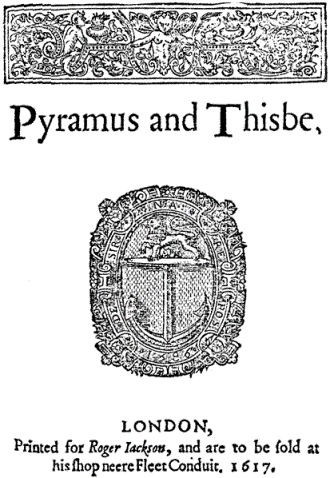
Text of Title Page

TO THE WORSHIPFVLL
his veric friend, D. B. H. Dvnstan
Gale, wisheth all happinesse.
he worthinesse (good Captaine) of your demerits, with the benefit of your friendly curtesies, incites mee to make profer vnto you of this my vnpolished Pamphlet, humbly intreating you to vouchsafe it acceptance, in that amongst many whom I haue knowne, I could finde none more meete for the patronizing it then your self. Which if it please you, I hope it wil be the better welcom to others for your sake: and if vnconstant fortune do but once more enable me for better, then shall you find a gratefull minde ready to requite you with a double guerdeon for your former kindnesse. Thus crauing pardon for this my rash attempt, I humbly take my leaue this 25. of Nouember, 1596. Your Worships euer devoted, Dunstan Gale.
1 Neere to the place where Nilus channels runne, There stood a town by loue long since vndone; For by a chance that hapned in the same, The town's forgot, & with the towne the name. Within which towne (for then it was a towne) Dwelt two commanders of no small renowne, Daughter to one, was Thisbe smooth as glasse: Fairer then Thisbe never woman was. Sonne to the other, Pyramus the bright: Yong Thisbes play-feare, Thisbe his delight: Both firme in loue, as constant and were any, Both crost in loue, as proud Loue crosseth many. 2 For in the pride of sommers parching heat, When children play and dally in the street, Yong Thisbe seuerd from the common sort, As gentle nurture lothes each rusticke sport, Went to an arbour, arbours then were greene, Where all alone, for feare she should be seene, She gatherd violets and the Damaske rose, And made sweet nosegaies, from the which she chose, One of the sweetest. Sweet were all the rest, But that which pleasd her wanton eye the best. And this (quoth she) shall be my true loues fauor: Her tender nonage did of true love sauor. 3 No sooner spake, but at her speech she blusht: For on the sudden Pyramus in rusht, Hauing but newly cropt the spredding pine, And other branches that were greene and fine, Of which to passe his idle time away, The boy made wreaths and garlands that were gay, And spying Thisbe, Thisbe made him start, And he her blush, so tender was her heart: She blusht, because another was so neere, He started, for to finde another there; Yet looking long, at last they knew each other, For why, they lov'd like sister and like brother. 4 When they left looking, for they lookt awhile, First Pyramus, last Thisbe gan to smile, I was afraide, thus Thisbe straight began: Faint (he replied) a maid and feare a man? I feard (quoth she) but now my feare is past. Then welcome me (quoth Pyramus) at last. Welcome (quoth she) and then she kist his lips, And he from her, sweet Nectar drops out sips: She pats his lips, he puls her milke white skin. Thus children sport, and thus true loue begins: But they as children, not as louers gamed, For loue (alas) twixt them was neuer named. 5 Oft would he take her by the lillie hand, Cirkling her middle, straight as any wand, And cast her downe, but let her lye alone, For other pastime Pyramus knew none. Then vp she starts and takes him by the necke, And for that fall giues Pyramus a checke: Yet at the length she chanst to cast him downe, Though on the green she neuer gaind a gowne, But rose againe, and hid her in the grasse, That he might tract the place where Thisbe was, And finding her (as children vse) imbrace her, For being children nothing could disgrace her. 6 But marke the issue, of their sportiue play, As this sweet couple in the coole shade lay, Faire Venus posting whom to Paphos Ile, Spied their sports, nor could she chuse but smile, Wherefore she straight vnyok't her siluer teame, And walkt on foot along the Chrystall streame, And enuying that these louers were so bold, VVith iealous eyes she did them both behold. And as she lookt, casting her eye awry, It was her chance (vnhappy chance) to spy, VVhere squint-eyd Cupid sate vpon his quiuer, Viewing his none-eyd body in the riuer. 7 Him straight she cald, being cald he made no stay, But to his mother tooke the neerest way. Yet ere he came, she markt the tother two, Playing as oft tofore th'er wont to do: And then she sware, yong Pyramus was faire, Thisbe but browne, as common women are: Anon she wisht yong Pyramus was neere, That she might bind loue in his golden haire, And loue him too, but that she cald to mind, That yong Adonis proued so vnkinde. But Cupid came, his comming causd her hate them, And in a heat, proud Venus gan to rate them. 8 Seest thou my sonne (quoth she) and then she fround, Those brattish elues, that dally on the ground? They scorne my kingdome, and neglect my minde, Contemne me as inconstant as the winde. Then shoot (quoth she) and strike them so in loue, As nought but death, their loue-dart may remoue. At this he lookt, the boy was loth to shoot, Yet strucke them both so neere the hearts sweet root, As that he made them both at once to cry (Quoth he) I loue, for loue (quoth she) I die. Of this both Venus, and her blind boy bosted, And thence to Paphos Isle in triumph posted. 9 Now was the time, when shepheards told their sheep, And weary plow-men ease themselues with sleepe, When loue-prickt Thisbe no where could be found, Nor Pyramus, though seruants sought them round. But newes came straight, that Pyramus was seene, Sporting with Thisbe lately in the euen: Like newes to both their Parents soone was brought; Which newes (alas) the louers downfals wrought. For though they lov'd, as you haue heard of yore, Their angry parents hate was ten times more, And hearing that their children were together, Both were afraide least each had murthered other. 10 When they came home, as long they staid not forth, Their storming parents fround vpon them both, And charged them neuer so to meet againe, Which charge to them, God knows was endles paine: For yeres came on, and true loue tooke such strength, That they were welnigh slaine for loue at length: For though their parents houses ioynd in one, Yet they poore peats, were ioynd to liue alone. So great and deadly was the daring hate, Which kept their moody parents at debate, And yet their hearts as houses ioynd together, Though hard constraint, their bodies did disseuer. 11 At length they found, as searching louers find, A shift (though hard) which somwhat easd their mind: For Io a time worne creuis in the wall, Through this the louers did each other call, And often talke, but softly did they talke, Least busie spy-faults should find out their walke: For it was plast in such a secret roome, As thither did their parents seldome come. Through this they kist, but with their breath they kist, For why the hindring wall was them betwixt, Somtimes poor souls, they talkt till they were windles And all their talke was of their friends vnkindnes. 12 When they had long time vsd this late found shift, Fearing least some should vndermine their drift, They did agree, but through the wall agreed, That both should hast vnto the groue with speed, And in that arbour where they first did meet, With semblant loue each should the other greet, The match concluded, and the time set downe, Thisbe prepar'd to get her forth the towne, For well she wot, her loue would keepe his houre, And be the first should come vnto the bowre: For Pyramus had sworne there for to meete her, And like to Venus champion there to greet her. 13 Thisbe and he, for both did sit on bryers, Till they enioyd the height of their desires: Sought out all meanes they could to keep their vow, And steale away, and yet they knew not how. Thisbe at last (yet of the two the first) Got out, she went to coole loues burning thirst, Yet ere she went (yet as she went) she hide, She had a care to decke her vp in pride, Respecting more his loue to whom she went, Then parents feare, though knowing to be shent, And trickt her selfe so like a willing louer, As purblind Cupid tooke her for his mother. 14 Her vpper garment was a robe of lawne, On which bright Venus siluer doues were drawne: The like wore Venus, Venus robe was white, And so was Thisbes not so faire to sight, Nor yet so fine, yet was it full as good, Because it was not stain'd with true loues bloud. About her waste, she wore a scarfe of blew, In which by cunning needle-worke she drew Loue-wounded Venus in the bushie groue, VVhere she inheated, Adon scornd her loue. This scarfe she wore, (Venus wore such another) And that made Cupid take her for his mother. 15 Nymph-like attyr'd (for so she was attyr'd) She went to purchase what true loue desyr'd, And as she trode vpon the tender grasse, The grasse did kisse her feet as she did passe: And when her feet against a floure did strike, The bending floures did stoope to doe the like: And when her feet did from the ground arise, The ground she trod on, kist her heele likewise. Tread where she would, faire Thisbe could not misse, For euery grasse would rob her of a kisse. And more the boughs wold bend, for ioy to meet her And chanting birds, with madrigals would greet her. 16 Thus goes this maidlike Nimph, or Nimphlike maid, Vnto the place afore appointed laid, And as she past the groues and fountaines cleere, Where Nymphs vsd hunting, for Nymphs hunted there, They sware she was Diana, or more bright. For through the leauie boughs they tooke delight, To view her daintie footing as she tript: And once they smil'd, for once faire Thisbe slipt, Yet though she slipt, she had so swift a pace, As that her slipping wrought her no disgrace. For of the Nymphs (whose coy eyes did attend her) Of all was none, of all that could amend her. 17 VVhen she had past Dianes curious traine, The crooked way did bending turne againe, Vpon the left hand by a forrest side, Where (out alas) a woe chance did betide: For loue-adoring Thisbe was so faire, That bruitish beasts at her delighted are: And from the rest as many beasts did rome, A lamb deuouring Lion forth did come, And hauing lately torne a sillie Lambe, The full gorg'd Lion sported as it came, To him a sport, his sport made Thisbe hie her, For why, she durst not let the beast come nie her. 18 Yet still it came, to welcome her it came, And not to hurt, yet fearefull is the name, The name more then the Lion, her dismayd, For in her lap the Lion would haue playd. Nor meant the beast to spill her guilelesse bloud, Yet doubtfull Thisbe in a fearefull moode, Let fall her mantle, made of purest white, And tender heart, betooke her straight to flight, And neere the place where she should meet her loue, Shee slipt, but quickely slipt into a groue, And lo a friendly Caue did entertaine her, For feare the bloudy Lion should haue slaine her. 19 Thisbe thus scap't, for thus she scap't his force, Although (God wot) it fell out farther worse: The Lion came yet meant no harme at all, And comming found the mantle she let fall, Which now he kist, he would haue kist her too, But that her nimble footmanship said no. He found the robe, which quickly he might find, For being light, it houered in the winde: VVith which the game-some Lion long did play, Till hunger cald him thence to seeke his prey: And hauing playd, for play was all his pleasure, He left the mantle, Thisbes chiefest treasure. 20 Yet ere he left it, being in a mood, He tore it much, and stain'd it ore with bloud, Which done, with rage he hasted to his prey, For they in murther passe their time away. And now time-telling, Pyramus at last, (For yet the houre of meeting was not past) Got forth (he would haue got away before) But fate and fortune sought to wrong him more: For euen that day, more fatall then the rest, He needs must giue attendance at a feast, Ere which was done (swift time was shrewdly wasted) But being done, the louely stripling hasted. 21 In hast he ran, but ran in vaine God wot, Thisbe he sought, faire Thisbe found he not, And yet at last her long loue robe he found All rent and torne vpon the bloody ground. At which suspicion told him she was dead, And onely that remained in her stead: Which made him weepe, like mothers, so wept he, That with their eyes their murthered children see; And gathering vp the limbes in peecemeale torne, Of their deare burthen murtherously forlorne: So Pyramus sicke thoughted like a mother, For Thisbes losse, more deare then any other. 22 Or who hath seene a mournefull Doe lament For her young Kid, in peecemeale torne and rent, And by the poore remainders sit and mourne, For loue of that which (out alas) is gone? Let him behold sad Pyramus, and say, Her losse, his loue, doth equall euery way. For as a man that late hath lost his wits, Breakes into fury and disaster fits, So Pyramus in griefe without compare, Doth rend his flesh, and teare his golden haire, Making the trees to tremble at his mourning, And speechlesse beasts to sorrow with his groaning. 23 Alas (quoth he) and then he tore his flesh, Gone is the sunne that did my Zone refresh, Gone is the life, by which I wretch did liue, Gone is my heauen, which hopefull blisse did giue, To giue me heat, her selfe lyes nak't and cold, To giue me life, to death her selfe she sold, To giue me ioy, she bale alas did gaine, My heat, life, ioy, procur'd her death, bale, paine: Had I beene here, my loue had not beene dead, At least the beasts had torne me in her stead, Or would they yet teare me for company, Their loue to me would slacke their tyranny. 24 And then he cast his eyes vpon the ground, And here and there where bloudie grasse he found; Sweet bloud (quoth he) and then he kist the bloud, And yet that kisse God wot did little good, Couldst thou being powr'd into my halfe slaine brest, Reuiue againe, or purchase Thisbes rest, This hand should teare a passage through the same, And yet that bloud from Thisbe neuer came, And then be gatherd vp the bloudie grasse, And looking grieu'd, and grieuing cryde alas, Where shall I hide this bloud of my deare louer, That neither man nor beast may it discouer? 25 Then in the mantle he the grasse vp tide, And laid it close vnto his naked side: Lie there (quoth he) deare to me as my hart, Of which thy mistresse had the greater part. Tut she is dead, and then he vow'd and swore, He would not liue to murther loue no more: Which spoke, he drew his Rapier from his side, Of which the loue-slaine youth would then haue dy'd, But that he thought, that pennance too too small, To pacifie faire Thisbes Ghost withall: Wherefore he rag'd, and ragingly exclaimed, That he true loue, and true loue him had maimed. 26 And then his Rapier vp againe he tooke, Then on the mantle cast a grieuous looke. For me (quoth he) faire Thisbe lost this bloud, She dead, my life would doe me little good, And well he thought he could endure the smart Of death, and yet he could not harme his heart: For why his hand being guiltlesse of the deed, Deny'd to make his harmelesse heart to bleed, And like a trembling executioner, Constrain'd to slay a guiltelesse prisoner, His hand retired still, further backe and further, As lothing to enact so vile a murther. 27 But Pyramus like to a raging Iudge, Seeing his executioner flinch, and grudge To do the duty he enioyn'd him do, Reply'd, dispatch, or Ile cut thee off too: At which the trembling hand tooke vp the blade, But when the second profer it had made, It threw it downe, and boldly thus replyed, He was not cause that louely Thisbe dyed, Nor would I slay thee, knew I she were dead: Then be the bloud vpon thy guiltie head. Of these last words young Pyramus dispences, And cald a synodie of all his seuer'd sences. 28 His conscience told him, he deserv'd not death, For he deprav'd not Thisbe of her breath: But then suspicion thought, he causd her dye, But conscience swore, suspition told a lye. At this suspicion prompted loue in th'eare, And bad him shew his verdict, and come neare, Which soone he did, and fate among the rest, As one whom Pyramus esteemed best: For when proud Loue gaue in his faultie plea, He askt if he were guiltie, Loue said yea, And with the youth, fond youth by loue entangled, Agreed his guiltlesse body should be mangled. 29 Resolv'd to die, he sought the pointed blade, Which erst his hand had cast into the shade, And see, proud Chance, fell Murthers chiefest frend, Had pitcht the blade right vpwards on the end, Which being loth from murther to depart, Stood on the hilt, point-blanke against his hart: At which he smil'd, and checkt his fearefull hand, That stubbornely resisted his command. And though (quoth he) thou scorn'd to doe my will, What lets me now my minde for to fulfill? Both Fate and Fortune to my death are willing, And be thou witnesse of my minds fulfilling. 30 With that he cast himselfe vpon the sword, And with the fall his tender brest through gor'd: The angry bloud, for so his bloud was sheed, Gusht out, to finde the author of the deed, But when it none but Pyramus had found, Key cold with feare it stood vpon the ground, And all the bloud, I meane that thus was spilt, Ran downe the blade, and circled in the hilt, And presently congeald about the same, And would haue cald it by some murtherous name, Could it haue spoke, nere sought it any further, But did arrest the Rapier of the murther. 31 And as the child that seeth his father slaine, Will runne (alas) although he runne in vaine, And hug about the shedder of his bloud, Although God wot, his hugging do small good, Euen so his bloud, the ofspring of his heart, Ran out amaine, to take his fathers part, And hung vpon the rapier and the hilt, As who should say, the sword his bloud had spilt: Nor would depart, but cleaue about the same, So deare it lov'd the place from whence it came: For sure it was poore Pyramus was murthered, Nor by pursute, could his poore bloud be furthred. 32 When this was done, as thus the deed was done, Begun, alas, and ended too too soone, Faire Thisbe strucken pale with cold despaire, Came forth the Caue into the wholsome aire: And as she came, the boughs would giue her way, Thinking her Venus in her best array. But she (alas) full of suspicious feare, Least that the late feard Lion should be there, Came quaking forth, and then start backe againe, Fearing the beast, and yet she fear'd in vaine. She fear'd the Lion, Lions then were feeding, And in this feare, her nose gusht out a bleeding. 33 Her sudden bleeding argued some mischance, Which cast her doubtfull senses in a trance, But of the Lion troubled Thisbe thought, And then of him, whom fearefully she sought: Yet forth she went, replete with iealous feare, Still fearing, of the Lion was her feare: And if a bird but flew from forth a bush, She straightwaies thought, she heard the Lion rush. Her nose left bleeding, that amaz'd her more Then all the troublous feare she felt before: For sudden bleeding argues ill ensuing, But sudden leauing, is fell feares renewing. 34 By this she came into the open wood, Where Pyramus had lost his dearest bloud, And round about she rolles her sun bright eyes For Pyramus, whom no where she espies; Then forth she tript, and nearly too she tript, And ouer hedges oft this virgin skipt. Then did she crosse the fields, and new mown grasse, To find the place whereas this arbour was: For it was seated in a pleasant shade, And by the shepheards first this bowre was made. Faire Thisbe made more haste into the bower, Because that now was iust the meeting hower. 35 But comming thither, as she soone was there, She found him not, which did augment her feare: But straight she thought (as true loue thinks the best) He had beene laid downe in the shade to rest, Or of set purpose hidden in the reeds, To make her seeke him in the sedgie weeds, For so of children they had done before, Which made her thoughts seeme true so much the more: But hauing sought whereas she thought he was, Shee could not finde her Pyramus (alas) Wherefore she back return'd vnto the arbor, And there reposd her after all her labor. 36 To one that's weary drowsie sleepe will creepe, Weary was Thisbe, Thisbe fell asleepe, And in her sleepe she dreamt she did lament, Thinking her heart from forth her brest was rent, By her owne censure damn'd to cruell death, And in her sight bereft of vitall breath. When she awak't, as long she had not slept, She wept amaine, yet knew not why she wept: For as before her heart was whole and sound, And no defect about her could be found, She dreamt she hurt, no hurt could she discouer, Wherefore she went to seeke her late lost louer. 37 Suspicious eyes, quick messengers of wo, Brought home sad newes ere Thisbe farre could go: For lo, vpon the margent of the wood, They spy'd her loue, lye weltring in his bloud, Hauing her late lost mantle at his side, Stained with bloud, his hart bloud was not dry'd. VVisty she lookt, and as she lookt did cry, See, see, my hart, which I did iudge to dye: Poore hart (quoth she) and then she kist his brest, VVert thou inclosd in mine, there shouldst thou rest: I causd thee die poore heart, yet rue thy dying, And saw thy death, as I asleepe was lying. 38 Thou art my hart, more deare then is mine owne, And thee sad death in my false sleepe was showne: And then she pluckt away the murtherous blade, And curst the hands by whom it first was made, And yet she kist his hand that held the same, And double kist the wound from whence it came. Him selfe was author of his death she knew, For yet the wound was fresh, and bleeding new, And some bloud yet the ill-made wound did keepe, VVhich when she saw, she freshly gan to weepe, And wash the wound with fresh tears down distilling, And view'd the same (God wot) with eyes vnwilling. 39 She would haue spoke, but griefe stopt vp her breath, For me (quoth she) my Loue is done to death, And shall I liue, sighes stopt her hindmost word, When speechlesse vp she tooke the bloudy sword, And then she cast a looke vpon her Loue, Then to the blade her eye she did remoue. And sobbing cride, since loue hath murthred thee, He shall not chuse but likewise murther me: That men may say, and then she sigh'd againe, I him, he me, loue him and me hath slaine. Then with resolue, loue her resolue did further: With that same blade, her selfe, her selfe did murther. 40 Then with a sigh, she fell vpon the blade, And from the bleeding wound the sword had made, Her fearefull bloud ran trickling to the ground, And sought about, till Pyramus it found: And hauing found him, circled in his corse, As who should say, Ilegard thee by my force. And when it found his bloud, as forth it came, Then would it stay, and touch, and kisse the same, As who should say, my mistresse loue to thee, Though dead in her, doth still remaine in me, And for a signe of mutuall loue in either, Their ill shed bloud congealed both together.
FINIS.
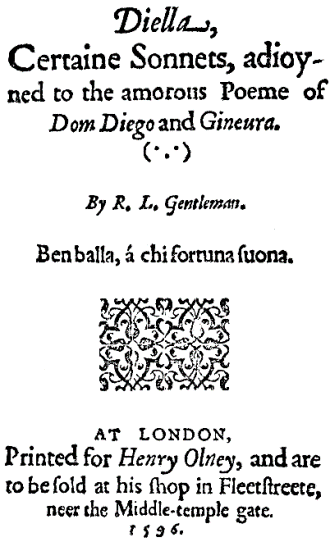
Text of Title Page
In Catheloygne, o'repeerd by Pyren Mountaines, (a Prouince seated in the East of Spaine, Famous for hunting sports & cleerest fountains) a young heroyck gallant did remaine; Hee, Signior Dom Diego had to name, Who for his constant faith had got such fame. Nature had tryde her deepest skill on him, (for so the heauen-borne powers had her desired) With such perfection framed shee each lim, that at her owne worke shee herselfe admired. Maiestick Ioue gaue him a Princely grace, Apollo wit, and Venus gaue his face. This loue-some youth, kinde Natures fairest child, what for his beautious loue-alluring face, And for he was so gracious and so milde; was deem'd of all to be of heauenly race; Men honord him, and Maydens gaue him loue, To make him famous Men and Maydens stroue. Hunting he lou'd, nor did he scorne to loue, (a truer-louing hart was neuer knowne) Which well his Mistres cruelly did proue, whose causelesse rigor Fame abroad hath blowne. But now lets tell, how hee on hunting went, And in what sports such pleasant time he spent. Soone as the sunne had left his watry bed. (blushing for shame that he so long had slept) Reuiuing those which duskie Night made dead, when for his welcom Lambes on mountains lept. Vp starts Diego, and with shrill-voyc'd horne. Tells hounds & huntsmen of a cleere-fac'd morne. Cloth'd all in Greene, (Syluanus lyuery) he wore a low-crown'd hat of finest silke, Whose brim turnd vp, was fastned with a Ruby, and vnderneath, a Pearle as white as milke, A sleeueles coate of Damaske, richly laced With Indian pearle, as thicke as could be placed. A glistring Cutlax pendent by his side, (he much esteem'd yt beast-dismembring blade) And halfe-leg'd Buskins curiously ytide with loopes of burnisht gold full finely made, Thus goes Diego, chiefest of his name, With siluer-headed speare to finde some game. Long while it was ere any sport began, at last a Hart his big-growne hornes did shew, VVhich (winding straight the huntsmen) gan to run as fast as arrow from a Parthyan bow: In whose pursute (by wil of powreful Fates) Diego lost himfelfe, and all his mates. Left thus alone in midst of vnknowne place, he inuocates the fauourable ayde Of Ariadne, who with smalest lace, freed Monster-killing Theseus, so dismaid, In worser Laborinth did he now remaine, For none saue trees or beasts, could heare him plain. In these Meanders, stragling heere and there, goes faire Diego, listning to each sound, Musing twixt purple hope, and palish feare, he thought to rest him (wearied) on the ground, But see, he heares a farre some forced noyse, A horne, a hound, or els some human voyce. VVith that, Desire, which scornes least tedious let, directed him vnto that very place, Where loe to hunt the tymerous Hare, were met as Knights, so Ladies, fittest for that chase: Mongst which, there came a Grace of heauēly faire, Her name Gyneura, with the golden hayre. Her hayre of such corruscant glitterous shine, as are the smallest streames of hottest sunne, Like starres in frostie night, so looke her eyne, within whose Arches Christall springs doe run, Her cheekes faire show of purest Porphyrie, Full curiously were typt with roseall die. Her lips like ripened Cherries seem'd to be, from out whose concaue Corrall-seeming Fount, Came sweeter breath then muske of Araby, whose teeth ye white of blanched pearle surmount Her necke the Lillies of Lyguria Did much exceed; Thus looked fayre Gyneura. These Dryades Diego then bespake, with sugred tearmes of mildest curtesie, And crau'd to know which way he best might take with shortest cut, to such a Signiory, Whereat he nam'd himselfe; when presently The Ladies knew him (as a Neyghbour by.) Gyneuras Mother (cheefe of all the rest) (for that shee knew his birth and his discent) Desir'd him home, he grants her such request, and thanks the Fates that him such hap had lent, For still on faire Gyneura were his eyes, And shee reciprocally on his replyes. These dumbe Embassadors, Loues chiefe combatants tell (softly whispring in each others hart) Her of humble seruice; him of acceptance; his craued loue, hers wisht they nere might part, Much talk they had wt tongues, more wt their eyes, But (oh) most with their harts, where true loue lies. Now were they come whereas the good old Lady might boldly welcome her inuited guest, Where after little talke, (Hunters are hungry) they all sat downe vnto a soone-made feast, The Louers fed on glaunces of their eyes, Tis heauenly food when both do simpathize. At last, the Lady of the house espied the intercourse of those bright Messengers, Who inwardly reioycing, as fast plied hers on her daughter, fittest Harbengers, To bid her keepe the fairest and the best Place in her hart, to entertaine this guest. Word back againe was sent by her faire light, how that was done already; and replied, The Land-lord o're his Tennant hath such might, that he to enter in is nere denied. I, in a little corner of my hart Doe liue, (quoth she) he hath the greatest part. Diego wisht thys supper nere would end, (and yet he long'd to be in priuate place, To ruminate vpon his fairest friend, and to recount the beauties of her face) So wisht Gyneura, were neuer such two, That lou'd so deerely as these Louers doe. The gloomy Curtaines of the tongue-lesse night, were drawne so close as day could not be seene, Now leaden-thoughted Morpheus dyms each sight, now, murder, rapes, and robberies begin: Nature crau'd rest, but restlesse Loue would none, Diego, Loues young prentice, thus gan mone. Oh heauens, what new-founde griefes possesse my mind, what rare impassionated fits be these? Cold-burning Feuers in my hart I find, whose opposite effects worke mee no ease, Then loue assailes the hart with hotest fight, VVhen beauty makes her conqust at first sight. I little dreamed of thys strange euent, (this harts-inthraller, mindes-disturbing Loue, VVhen with my Huntsmen to the woods I went, Oh neere till now did I his greatnes proue, Whose first impression in the Louers hart, Till then nere tainted, bringeth deepest smart. Thus lay Diego tossing in his bed, bound to the will of all commaunding beauty, Whom angry Cupid now in tryumph led, expecting from his slaue all seruile duty, Hee might haue freed his prysoner so dismaid, For sighes and grones had double ransome paide. In like extreames, (Loue loues extremity) did faire Gyneura passe the long-thought night, Shee raild against fell Cupids crueltie, that so would tyrannize o're a Maydens spright. There needes no blowes, quoth she, when foes doe yield, Oh cease, take thou the honor of the field. The valiant Greekes (faire Ilyons fatall Foes) their tedious ten yeres siedge for Spartaes Queen Nere thought so long; (yet long it was) as those loue-scorcht enamored (so restles) now ween This night to be; A night if spent in care, Seemes longer then a thousand pleasant are. Thus lay they sleeplesse, thoughtfull, euer thinking on sluggish humor of expected Morne, They thought that Louers eyes were neuer winking nor sleepe they e're in whom Loues newly borne. Hee vow'd, when day was come, to woo his deere, Shee swore such wooing she would gladly heare. At last, the guyder of the firie Coach, drying his locks wet in Eurotas floud, Gan resalute the world with bright approch, angry he seem'd, for all his face was bloud: Auroraes hast had made him looke so red, For loath he was to leaue faire Thetis bed. Scarce were his horses put in readines, and he himselfe full mounted on his seate, VVhen Dom Diego full of heauines, abroade did walke, his night talke to repeate Some two howres spent, he in againe retires, And sees his Mistres, whom he now admires. Whereat inflam'd, (loue brookes no base delay, whose fruite is danger, whose reward is paine) With fine-fil'd termes he giues her the good day, and blushing, she returnes it him againe. Endimeons blush her beauty did eclypse, His causd by Cynthiaes, hers Adonis lyps. Boldly encourag'd by her milde aspect, he told her that which Louers vse to tell, How he did liue by her faire eyes reflect, and how his hart in midst of hers did dwell. Much eloquence he vsd, twas needles done, To win that hart which was already won. Ne're did the dungeon thiefe condemn'd to dye with greater pleasure heare his pardon read, Then did Gyneura heare his Oratorie, (of force sufficient to reuiue the dead) Shee needes must yield; for sure he had the Art, VVith amorous heate to fixe Dianaes hart. These Louers (thus in this both-pleasing parly) were interrupted by Geneuraes Mother VVho newly vp, (age seldome ryseth early) gan straight salute her guest, so did he her, Some termes of kindnes mutually past, Shee friendly leades him in, to breake his fast. VVhich done, (as all good manners did require) hee thankt his Hostis for her curtesie, And now at length went home for to retire, where hee was looked for so earnestly, The Lady crau'd if ere hee came that way, To see her house, and there to make some stay. Then heauily, and with a dying eye, (ioylesse) hee takes his leaue of his faire Loue, VVho for to fauour him, full graciously, with louing count'nance gaue to him her Gloue. Keepe this (quoth shee) till better fortune fall, My Gloue, my Loue, my hand, my hart, and all. At this large offer, bashfull modestie, with pure Vermilion stain'd her all faire face, So lookt Calystone at her great bellie, when chast Ilythia spi'd her in such case; Let Louers iudge how grieuous tis to part, From two, twixt whom, there lyueth but one hart. Nowe is hee gone, who after little travell attain'd his house (not pleasing thought desired) At whose late absence each one much did maruell, but (come) at his sad lookes they more admired, Great Cupids power, such sadnes in him bred, VVho (erst) all louing harts in tryumph led. One month (consum'd in pensiuenes) expir'd; to recreate and reuiue his tyred spright, Hee now on hunting goes, which hee desir'd, not for the (once well-pleasing) sports delight; But for he might some fit occasion finde, To see his Loue, on whom was all his minde. Where being come (suppose his sports prou'd bad) Gyneura gaue him welcome from her hart, The Sea-tost Lord of Ithica ne're had, after his twentie yeares turmoile and smart, More ioyfull welcome by his constant wife Then had Diego from his loue, his lyfe. Two dayes he stay'd, whence he would ne're depart but custome wil'd that he should now returne, Yet though he went he left with her his hart, which for their parting heauily gan mourne, But for worse newes had it poore hart to greeue, In that Gyneura would so soone beleeue. For sooner was hee not departed thence but straight there comes a Riuall of his Loue, VVho vnder true fidellities pretence wrought wondrous hard Diego to remoue, Nor could at first his oaths or vowes preuaile, To make Gyneuraes loue one whit to faile. For yet they lyu'd fast bound in Fancies chaines, stryuing to passe each other in pure loue, But (as there's nothing that for aye remaines without some change.) so do these Louers proue, That hottest loue hath soon'st the cold'st disdaine, And greatest pleasures, haue their greatest paine. For now no longer could shee so perseuer, shee turnes to deadly hate her former kindnes, Which still had lasted; but that Nature euer strikes into womens eyes such dim-sight blindnes, And such obdurate hardnes in their harts, They see, nor knowe, not truest loues desarts. Gyneura this confirmes against her Louer, whom now (all guiltlesse) she condemnes to die, That in his deede or thought did nere offend her, vnlesse by louing her so wondrous deerelie. Such Loue, such hate, such lyking, such disdains, Was neuer knowne in one hart to remaine. Thus twas; Diego had an enemie, (immortall vertue euer lincked is, With that pale leane-fac'd meager-hewed enuie) who secretly (so falsely) tells his Mis. How shee was mockt; Diego lou'd another, And storm'd & rag'd what madnes so should moue her. To dote on him that else where sets his Loue, hee makes you thinke (quoth he) what ere he list, That this is true, you easily may proue for still he weares her fauour on his fist, A Hawke it is; which shee (so stands the Mart) Giues him, he you faire words, but her his hart. VVith this incenst, (that sex will soone beleeue) soonest when enuies broode to them display it, I'st true (quoth shee) for true loue doth he giue, such smooth-fac'd flattry, doth he thus repay it? Shee neuer scan'd, the truth of this her griefe, Loue in such cases, is of quicke beliefe. Her loue to him was neuer halfe so great, (though once shee lou'd him) as is now her hate, This Momus breath (like bellowes) to her heate, did kindle firie coales of hote debate. Hee plyes her; and exasperates his spight, And sweares, and vowes, hee tells her but the right. Shee (like a franticke Froe of Thessaly madded with Bacchus brayne-distempring liquor) Runs here, and there, exclayming furiously with hideous, vncouth mind-affrighting terror. Swearing reuenge on false Diegoes head, VVhose lying lookes in her such madnes bred. VVherewith shee inuocates great Nemesis, and begs the power of her deitie, Shee tells her case, to Iustice-doing Themis, and shewes how shee is wronged mightily. Shee leaues no power vnsought for, or vnpraide, That vse to helpe distressed with their aide. VVronged Diego (little this suspecting) now thought it time to see his deerest faire, And (other matters of import neglecting, hee presently to her makes his repaire. VVhere being come, such welcome he did finde, As at the first did much disturbe his minde. For faire Gyneura would not now be seene, she sent him word she scorn'd his fauning flattrie, And much did greeue that shee so fond had beene, to yield her hart to such deceitfull battrie: Bid him (quoth shee) goe flatter where he list, I like not I, that fauour on his fist. Such hap it was, Diego then had brought his Hawke; (the author of this fell debate) Which well confirm'd her euer doubtfull thought, that nowe shee was resolu'd on deadly hate, Bid him (quoth she) depart hence from my sight, His loath-some presence brings me irksome spight. Twas hard; that he whose loue was neuer tainted whose sincere faith was kept inuiolate, Nay, in whose face all truest loue was painted, should for his spotlesse truth be paid with hate, Hee stone-astonied, like a Deare at gaze, Admir'd these speeches in a wondrous maze. At last hee crau'd this fauour he might haue, that shee her selfe would heare what he could say, So Neptunes Towne (quoth shee) such lycense gaue to smooth-fac'd Synon (Ilions lost decay) So Syrens sing vntill they haue their will, Some poore mistrustlesse Passenger to kill. Shee would not heare him speake (oh cruell shee) that causelesse this would kill him with disdaine, Hee sweares he's guiltlesse, vowes innocencie, & in such vowes, tears down his cheeks did raine, Those cheeks which staine the blushing of ye morne Gyneura now most hatefully doth scorne. Tis strange that Maides should ere be so abused, to credit each malicious-tongued slaue, And to condemne a man (if once accused) before or proofe, or tryall, hee may haue. Too many such there be; wo's mee therefore, Such light credulitie, I must deplore. When sighes, salt tears, & vowes could do no good, nor sighes, nor teares, nor vowes could pierce her hart, In which, disdaine triumphant victor stood holding in eyther hand a sable dart, VVherewith he strikes true loue, & stainlesse truth, Condemning them vnto eternall ruth. Home goes Diego with a cheereless face, whose steps were led by leaden-footed griefe, VVho neuer goes but with a dead-slowe pace, vntill hee finde some ease, or some reliefe; Twould melt a marble hart to see that man, (Earst, fresh as a new-blowne Rose) so ashie wan. VVhere being come, he straight for four daies space, locks him in his chamber, and there did poure Huge shewers of christall rayne adowne his face, (for sure he lou'd her deerely at this howre) All ouerwhelm'd in waues of sea-salt teares, Some fatall shipwrack of his life he feares. Wherewith he calls for paper, pen, and ynck, and for his Hawke, which presently he kild, Die thou (quoth he) so shall my loue nere thinke, that for thy sake to any else I yield. And plucking of her head, straight way hee writes, VVho (sending it as token) thus indites. Loe heere (thou cruell faire) that gracious fauour, the Ensigne (as thou saist) of my vntruth, Behold in what high-priz'd esteeme I haue her that gaue me it, the cause of all my ruth: Looke as this Hawke, faire Loue, so is my hart, Mangled and torne; cause thou so cruell art. I sweare to thee by all the rites of loue, by heauens faire head, by earth, & black-fac'd hel, I nere meant other loue but thine to proue, nor in my hart that any else should dwell; Let this suffize, my ioy, my deere, my chiefe, My griefes are too too long, though letter briefe. Twas time to ende, for floods gusht out amaine, out came the springtide of his brinish teares, VVhich whatsoere hee writ blot out againe all blubred so to send it scarce hee dares: And yet hee did; goe thou (quoth hee) vnto her, And for thy maister, treate, sollicite, woo her. And pray thee (if thy Fortune be so good as to be viewd by sunshine of her eyes) Bid her take heede in spilling guiltlesse blood, tell her there's danger in such cruelties: VVith this, hee gaue it to the messenger, Who (making speed) in short time brought it her. Shee, when shee heard from whom the Letter came, returnes it backe againe, and straight replied, My friend (quoth she) hadst thou not told his name perhaps thy Letter, had not beene denied: VVhereat shee paus'd; but yet ile see (quoth shee) With what perswading termes, he flatters mee. Twas quickly read; (God knowes it was but short) griefe would not let the wryter tedious be, Nor would it suffer him fit words to sort, but pens it (chaos-like) confusedly. Yet had it passion to haue turn'd hard stones To liquid moisture, if they heard his moanes. But cruell shee, more hard then any flint, worse then a Tygresse of Hyrcania, Would not be mou'd, nor could his lines take print in her hard hart, so cruell was Gyneura. Shee which once lou'd him deerly, (too too well) Now hates him more then any tongue can tell. Oh Nature, chiefest Mother of vs all, why did you giue such apt-beleeuing harts To women-kind, that thus poore men inthrall, and will not dulie waie true loues desarts? O had their harts been like vnto their face, They sure had been of some celestiall race. Shee pittiles, sends backe to Dom Diego, and sayes, his words cannot inchant her hart, Vlisses-like, shee will not heare Calypso, nor lend her eares to such intising arte. Bid him (quoth she) frō henceforth cease to write, Tell him his Letters agrauate my spight. Full heauie newes it was to stainelesse loue, to him that had enshrin'd her in his thought, And in his hart had honor'd her aboue the world; to whō all else saue her seem'd nought. Nay, vnto him, whose person, wit, and faire, Might surely with the best make iust compare. But (blinded as shee was) shee steemes him not, hate and disdaine doe neuer brooke respect, Shee did not knowe that beauties foulest blot consisted in true-louing harts neglect. No, she (more stubborne thē the North-east wind) VVould not admit such knowledge in her mind. Let those who guiltleslie haue felt disdaine, whose faithfull loue hath beene repaid with hate, Giue rightfull iudgement of Diegoes paine who bought his fauours at the highest rate. This newes such pleasure in his soule had bred, As hath the thiefe that heares his iudgement read. After some time, hee writes againe vnto her, hee could not thinke shee would perseuer so, But when hee sawe her aunswere like the other hee then surceas'd to send her any moe. But did resolue to seeke some vncouth place, VVhere he might (vnfound out) bewaile his case. Thinking indeede shee by his absence might at length intenerate her flintfull hart, And metamorphize her conceaued spight into true loue regardaunt of his smart; Hee seekes all meanes (poore Louer) how to gaine His rigorous Lady from such fell disdaine. At last, hee calls to mind the Pyren Mountaines, those far-fam'd, woody hills of wealthy Spaine, Which for wild Beasts, & siluer visag'd Fountaines, hath got the praise of all that there remaine; Hether postes Dom Diego fraught with griefe, Hoping those woods would yield him some reliefe. VVhere, being come, all Pilgrim-like attir'd, hee pryes about to see if hee could finde, Some house-like Caue, for rest hee much desir'd, his body now was wearie, as his minde. O Gods (quoth hee) if youth finde such distresse, VVhat hope haue I, of future happines. VVith that hee sees a Rocke made like a Cabin all tapistred with Natures mossie greene, VVrought in a frizled guise, as it had been made for Napæa, Mountaines chiefest Queene, At mouth of which grew Cedars, Pines, & Firs, And at the top grew Maple, Yough, and Poplers. So, heere (quoth hee) ile rest my wearied bodie in thee (delightfull place of Natures building) VVill I erect a griefe-fram'd Monasterie, where night & day my prayers ile ne're cease yielding, To thee my deere; (no other Saint I haue) Oh lend thine eares, to him that his hart gaue. Two dayes were spent in this so pleasant seate, (this stone-built Pallace of the King content) Before Diego tasted any meate, or once did drinke, more then his eyes had lent. O irresisted force of purest Loue, Whom paines, thirst, hunger, can no whit remoue. Sometimes, when as he scans her crueltie, & feeles his paines (like Hydreas head) increasing, Hee wisht the Scithian Anthropophagie did haunt these woods that liue by mans flesh eating; Or else the Thracian Bessi, so renound, For cruell murdring, whom in woods they found. That so the Gordyon knot of his paine indissoluble e'rewhiles he did lyue, Might be vntide when as his hart were slaine, when he (ô restfull time) shold cease to grieue; But yet the Sisters kept his vitall breath, They would not let him dye so base a death. Some other times when as he waies her beautie, her Venus-stayning face so wondrous faire, Hee then doth thinke to waile tis but his dutie sith caus'd by her that is without compaire, And in this moode vnto high Ioue hee prayes, And praying so, hee thus vnto him sayes. Great Gouernour of (wheele-resembling) Heauen, commaund thy vnder Princes to mayntaine, Those heauēly parts which to my loue th'aue giuen, ô let her ne're feele death, or deaths fell paine. And first vpon thy Sister lay thy mace, Bid her maintayne my Loues maiestick grace. Inioyne the strange-borne mother-lesse Mynerua, and her to whom the fomie Sea was Mother, Still to vphold their giftes in my Gyneura: let wit and beautie lyue vnited with her; With sweete mouth'd Pytho I may not suspence, Great Goddesse; still increase her eloquence. Thou musicall Apollo gau'st her hand, and thou her feete (great Sun-Gods deerest loue) To such your rare-knowne gyfts all gracious stand; and now at last this doe I craue great Ioue, That when they dye (perhaps they dye aboue) Thou wilt bequeath these gyfts vnto my Loue. On euery neighbour Tree, on euery stone (hee durst not far range from his secure Caue) VVould he cut out the cause of all his moane, and curiouslie with greatest skill ingraue: There needed no Leontius, his Art, Griefe carueth deepest, if it come from th'hart. VVhen some stone would not impression take hee straight compares it to his Mistris hart, But stay, (quoth he) my working teares shall make thee penetrable with the least skil'd art. Oh had my teares such force to pierce her mind, These sorrowes I should loose, and new ioyes find. Thou euer-memorable stone (quoth hee) tell those whom fate or fortune heere shall lead, How deerely I haue lou'd the cruel'st shee that euer Nature or the world hath bred. Tell them her hate, and her disdaine was causelesse, Oh, leaue not out to tell how I was guiltlesse. Whereat, the very stone would seeme to weepe, whose wrinkled face wold be besmeard with tears O man what ere thou be, thy sorrowes keepe vnto thy selfe, quoth hee; ile heare no cares. Tell them that care not, tell Gyneura of thee, We stones are ruthfull, & thy plaints haue pierc'd mee. VVith this, hee seekes a russet-coated Tree, & straight disclothes him of his long-worne weed And whilest hee thus disroabes him busilie, hee felt his halfe-dead hart a fresh to bleed. Greeuing that hee should vse such crueltie, To turne him naked to his foe, windes furie. But now vncas'ed, hee gins to carue his cares, his passions, his constant-lyuing Loue, When (loe) there gushes out cleere sap like teares which to get forth from pryson mainly stroue, Since pitty dwells (quoth hee) in trees and stone, Them will I loue; Gyneura, thou hast none. Yet needs I must confesse thou once didst loue mee, thy loue was hotter then Nimphæum hill, But now whē time affords me, means to proue thee, thy loue then Caucase is more cold and chill, And in thy cold, like Aethiopyan hue, Thou art not to be chang'd from false to true. O looke (faire Loue) as in the springing Plant one branch intwines and growes within another, So growe my griefes; which makes my hart to pant when thicke-fetcht sighes my vitall breath doth smother, I spoild my cruelty am adiudg'd to death, Thus all alone to yield my lyuing breath. Thou hast the fayrest face that e're was seene, but in thy breast (that Alablaster Rocke) Thou hast a fouler hart; disdaine hath beene accounted blacker then the Chimnies stocke. O purifie thy soule my dearest Loue, Dislodge thy hate, and thy disdaine remoue. But all in vaine I speake vnto the wind, then should they carry these my plaints vnto her, Mee thinks thou still shouldst beare a gentle mind, (deere-louing Zephire) pray, intreate, & woo her; Tell her twere pittie I should dye alone, Here in these woods wher non can heare me mone. But tis no matter, shee is pittylesse like the Scycilian stone that more tis beate Doth waxe the harder; stones are not so ruthlesse, which smallest drops doe pierce though nere so great: If Seas of teares would weare into her hart, I had ere this beene eased of my smart. Thus in these speeches would Diego sit bathing his siluer cheekes with trickling teares, VVhich (often running downe) at last found fit channells to send them to their standing meares, VVho at his feete (before his feete there stood A poole of teares) receau'd the smaller flood. Ne're had the world a truer louing hart, Abydos cease to speake of constant loue, Por sure (thou Sygnior Dom Diego) art the onely man that e're hates force did proue; Thy changelesse loue hath close inrol'd thy name, In steele-leau'd booke of euer-lyuing fame. That wide-mouth'd time wc swallows good desarts shall shut his iawes, & ne're deuoure thy name, Thou shalt be crown'd with bayes by louing harts, and dwell in Temple of eternall Fame; There, is a sacred place reseru'd for thee, There, thou shalt liue with perpetuitie. So long liu'd poore Diego in this case that at the length hee waxed somwhat bold, To search the woods where hee might safely chase, (necessitie, thy force cannot be told) The fearefull Hare, the Connie, and the Kid, Time made him knowe the places where they bid. This young-year'd Hermit, one day mong the rest as hee was busilie prouiding meate, VVhich was with Natures cunning almost drest, dri'd with the Sunne new readie to be eate, Inrag'd vpon a suddaine throwes away His hard-got foode; and thus began to say. O cruell starres, Step-mothers of my good, & you, you ruthlesse Fates what meane you thus, So greedely to thirst for my harts blood, why ioy you so in vnuniting vs? Great powres infuse some pitty in her hart That thus hath causelesse caus'd in me this smart. I ne're was wont to vse such Cookerie, to drudge & toile whē pesants take their pleasure, My noble birth scornes base-borne slauerie, this easelesse lyfe hath neither end nor measure; Thou great Sosipolis looke vpon my state, Be of these nere-hard griefes compassionate. I feele my long-thought life begin to melt as doth the snowe gainst midday heate of Sunne, (Faire loue) thy rigour I haue too much felt, oh, at the last with crueltie haue done, If teares thy stonie hart could mollifie, My brinish springs should floe eternallie. Sweet loue, behold those pale cheekes washt in woe that so my teares may as a mirror be, Thine owne faire shaddowe liuely for to shoe, and portraite forth thy Angel-hued beautie. Narcissus-lyke then shouldst thou my face kisse, More honny sweete, then Venus gaue Adonis. Feare not Gyneura, faire Narcissus hap; thy necke, thy breast, thy hand is Lilly-white, They all are Lillies tane from Floraes lap; ne're be thou chang'd vnlesse to loue from spite, Oh that thou wer't but then transformed so, My Sommers blisse, would change my winters woe. If thou did'st knowe in what a loathsome place, I spend my dayes sad and disconsolate, VVhat foggie Stigian mists hang o re my face, thou would'st exile this thy conceaued hate; This Hemisphere is darke, for Sol him shroudes, My sighes doe so conglomerate the cloudes. I tolde thee, I, (thou cruell too seuere) when hate first gan to rise how I was guiltlesse, Thine eares were deaffe, ye wouldst not harken ere thy hart was hardned, rockie, pittilesse. Oh had mine eyes been blind whē first they view'd thee, Would God I had been tonglesse whē I sew'd thee. But thou wast then as readie to receaue as I to craue; ô great inconstancie, O twas that fatall houre did so bereaue my blisfull soule of all tranquillitie: Thou then didst burne in loue, now froz'd in hate, Yet pittie mee, sweete mercy ne're comes late. Looke as the crazen tops of armelesse Trees or latest down-fall of some aged building, Doe tell thee of the North-windes boistrous furies, and how that Eolus lately hath beene stirring; So in my thin-cheekt face thou well maist see, The furious storme of thy black crueltie. But thou inexorable art, ne're to be wone, though Lyons, Bears, & Tigers haue been tam'd, Thy wood borne rigour neuer will be done, which thinks for this thou euer shalt be fam'd; True, so thou shalt, but fam'd in infamie, Is worse then lyuing in obscuritie. If thou didst knowe howe greeuous tis to me to lyue in this vnhabited aboade, Where none (but sorrowe) keepes me companie, I know thou wouldst thy harts hate then vnload, Oh, I did ne're deserue this miserie, For to denie the truth were heresie. I tell thee (Loue) when secret-tongued night puts on her mistie sable-coloured vayle, My wrangling woes, within them selues do fight, they murder hope, which makes their Captaine wayle, And wailing so, can neuer take his rest, That keepes such vnrul'd Souldiers in his brest. So when the cleere nights-faults-disclosing day peepes forth her purple head, from out the East, These woes (my Souldiers) crie out for their pay, (and if deni'd) they stab mee, with vnrest; My teares are pay, but all my teares are dride Therefore I must their fatall blowes abide. In these laments did Dom Diego liue long time; till at the last by pourefull fate, A wandring Huntsman ignorance did driue vnto the place whence hee return'd but late; Who viewing well the print of humaine steps Directly followed them, and for ioy leaps. At last hee came vnto Diegoes Caue in which he sawe a sauadge man (hee thought) Who much did looke like the Danubyan slaue, such deep-worn furrows in his face were wrought, Diego much abashed at this sight Came running forth, him in his armes to plight. For glad hee was (God knowes) to see a man, who (wretch) in two yeres space did ne're see any Such gladnes, ioy, such mirth, such triumph can not be set downe, suppose them to be many. But see, long had they not confer'd together, When (happie time) each one did know the other. VVith that Diego shewes him all his loue, his pennance, her first loue, & now her hate, But hee requested him hence to remoue, and at his house the rest hee should dilate, Which hee deni'd, onely hee now doth write By this his friend, vnto his harts delight. Deere Loue (quoth he) when shall I home returne, whē will the coales of hate be quencht with loue, VVhich now in raging flames my hart do burne, oh, when wilt thou this thy disdaine remoue; Aske of this bearer, be inquisitiue, And hee will tell thee in what case I liue. Inquire of her, whose Hawke hath caus'd this woe, if for that fauour euer I did loue her, And shee will curse mee that did vse her so, and shee will tell thee how I lou'd another; Twas thee Gyneura, twas thy fairest selfe, I hel'd thee as a Pearle, her drossie pelfe. Then, when thou hast found out the naked truth, thinke of thy Diego, and his hard hap, Let it procure in thee some mouing ruth, that thus hast causelesse cast him from thy lap: Fare-well my deere, I hope this shall suffize, To ad a period to thy cruelties. The Messenger to spurre forth her desires, and hasten her vnto his well-lou'd friend, Tells her, how hee lyes languishing in fires of burning griefes, which neuer will haue end: Bids her to flye to him with wings of zeale, And thus Diegoes paines hee doth reueale. Oh Adamantick-minded Mayde (quoth hee) why linger you in this ambiguous thought, Open thine eyes, no longer blinded bee, those wounding lookes, thy Louer, deere hath bought. Vnbolt thy harts strong gate of hardest steele, O let him nowe the warmth of pittie feele. Oh let him now the warmth of pittie feele, that long hath knockt cold-staruen at thy dore; Wanting loues foode hee here & there doth reele lyke to a storme-tost Ship that's far from shore. Feede him with loue that long hath fed on cares, Be Anchor to his soule that swims in teares. Gyneura, let him harbour in thy hart rig and amend his trouble-beaten face, O calme thy hate, whose winds haue rais'd his smart see him not perrish in this wofull case. And for in Sea-salt teares hee long hath liu'd, Let him by thy fresh water be relieu'd. Oh, shall I tell thee how I found him there, his house wherein hee liu'd (if lyue hee did, Or rather spend his time in dying feare) was built within the ground, all darksom hid. From Phœbus light, so vgly, hell-lyke Caue, In all the world againe you cannot haue. All made of rug'd hard-fauour'd stones, whose churlish lookes afford the eye no pleasure, In whose concauity winds breath'd horce grones, to which sad musicke Sorrow daunc'd a measure. O'regrowne it was with mighty shadefull Trees, VVhere poore Diego Sun nor Moone nere sees. To this black place repaired euery morne, The fayre Oreades pitty-moued gerles, Bringing the poore Diego so forlorne, Mosse to dry vp his teares, those liquid pearles: Full loath they were to loose such christall springs, Therfore this Spunge-like Mosse each of thē brings. Here dry (say they) thou loue-forsaken man, those glassy Conduits, which do neuer cease On this soft-feeling weede; and if you can, we all intreate, your griefes you would appease, Else wilt thou make vs pine in griefe-full woe, That nere knewe care, or loue, or friend, or foe. Straight (like a shooting Commet in the ayre) away depart these sorrow-peirced maydes, Leauing Diego in a deepe dispaire, who now, his fortune, now his fate vp-braides. O heauens (quoth he) how happy are these trees, That know not loue, nor feele his miseries. Melts not thy hart (Gyneura) at his cares? are not thy bright transparent eyes yet blinde VVith monstrous diluge of o'reflowing teares? remaines there yet disdaines within thy mind? Disgorge thy hate, O hate him not that loues thee, Maids are more milde thē men, yet pitty moues me. Breake, breake in peeces that delicious chest, whiter then snow on Hyperboreall hyll, Chase out disdaine, depriue him of his rest, murder and mangle him that rules thy will. Be it nere sayd that faire Gyneuraes beauty, Was ouer-peiz'd by causelesse cruelty. Cruell to him that merrits curtesie, loathed of thee that doth deserue all loue, Basely reiected, scorn'd most churlishly, that honors thee aboue the Saints aboue. True loue is pricelesse, rare, and therefore deere, VVe feast not royall Kings with homely cheere. Too long it were to tell thee all his merits, for in delay consists his long-lookt death, Post-hast of thine must now reuiue his spirits, or shortly he will gaspe his latest breath; Speake faire Gyneura, speake as I desire, Or let thy vaine-breath'd speeches back retyre. Looke, as a man late taken from a trance, standes gazing heere and there in sencelesse wise, Not able of himselfe his head t'aduance, but standeth like a stone in death-like guise, So lookt Gyneura, hanging downe her head, Shaming that folly her so much had led. Repentant sorrow would not let her speake, the burning flames of griefe did dry her teares, Yet at the last, words out of prison breake, that long'd to vtter her harts inward cares: And stealingly there glides with heauy pace A Riuolet of Pearle along her face. O cease (quoth she) to wound me any more, with oft repeating of my cruelties, Thou of thy teares (kind man) hast shed great store, when I (vnkinder mayde) scarce wet mine eyes. O let me now bewaile him once for all, Twas none but I that causd his causelesse thrall. Eternall Ioue, rayne showers of vengeance on me, plague me for this blacke deed of wrongful hate, Be blind mine eyes, they shall not looke vpon thee Diego, till thou be compassionate: And when thou doost forgiue what I haue done, Then shall they shine like shortest-shaded sunne. O slacke thy swift-pac'd gallop winged Tyme, turne backe, and register this my disdaine; Bid Poets sing my hate in ruthfull ryme, and pen sad Iliads of Diegoes paine: Let them be writ in plain-seene lines of glasse, To shew how louing he, I, cruell was. Hereat shee pausd, tell me sweet sir quoth shee, how I might see my deere-embosom'd friend, That now (if what is past may pardned be) vnto his griefes I may impose an end; Where-with they both agreed, that the next day, They would eniourney them without more stay. Long were they not, Desire still goes on Ice, and nere can stay tell that he hath his wish, Mens willing mindes each thing doth soone intice, to hast to yt which they would faine accomplish. But that they came (as hauing a good guide) Vnto the place where they Diego spide. Sacred Pymplæides endip my quill within the holy waters of your spring, Infuze into my braine some of your skill, that ioyfully of these I now may sing: These Louers now twixt whom late dwelt annoy, Swymming in seas of ouer-whelming ioy. But, pardon mee you Dames of Helycon, for thus inuoking your diuinest ayde, Which was by me (vnworthy) call'd vpon, at your rare knowledge I am much dismaide; My barren-witted braines are all too base, To be your sacred learnings resting place. Thus, of themselues, in pleasures extasie, these Louers now embrace them in theyr armes, Speechlesse they are, eye counterfixt on eye, like two that are coniur'd by magique charmes. So close their armes were twin'd, so neer they came As if both man and woman were one frame. In th'end, (as doth a Current lately stayd, rush mainly forth his long-imprisoned flood) So brake out words; and thus Dyego sayd, what my Gyneura? O my harts chiefe good, Ist possible that thou thy selfe should'st daigne In seeing me to take so wondrous paine. Oh, speake not of my paine (my deerest loue) all paine is pleasure that I take for thee, Thou that so loyall and so true doost proue, might scorne mee now, so credulous to be: Then sweet Diego, let vs now returne, And banish all things that might make vs mourne. Twere infinite to tell of their great gladnes, theyr amorous greetings, & their soules delight, Diego now had exil'd griefe and sadnes, rauisht with ioy whilst he enioyde her sight. Let it suffise, they homeward now retire, Which suddaine chance both men & maids admire. Gyneura now delights but in his presence, shee cannot once endure him from her sight, His loue-ful face is now her soules sole essence, and on his face shee dotes both day and night. She nere did once disdaine him halfe so much, As now she honors him, loues force is such. Diego now wrapt in a world of pleasure, imparadiz'd in hauing his desire, Floting in Seas of ioy aboue all measure, sought means to mittigate loues burning fire, VVho walking with his loue alone one day, Discharg'd his minde, and thus began to say. O faire Gyneura, how long wil't be ere safron-robed Hymen doe vnite vs? My soule doth long that happy howre to see. O let the angry Fates no longer spight vs, Lingring delays will teare my greeued hart, Let me no longer feele so painefull smart. Gyneura, which desir'd it as her life, tells him that paine shall shortly haue a cure, Shortly quoth she, Ile be thy married wife, ty'de in those chaynes which euer wil endure, Be patient then, and thou shalt plainly see, In working it, how forward I will be. And so she was; no time dyd she mispend, wherein shee gets not things in readines, That might to Hymens rites full fitly tend, or once conduce to such theyr happines, All things prepar'd, these Louers now are chayned In marriage bands, in which they long remained. These, whilst they liu'd, did liue in all content, contending who should loue each other most, To wc pure loue, proude Fame her eares down lent, and through the world, of it doth highly boast. O happy he to whom loue comes at last, That will restore what hate before did wast. { Then (deerest loue) Gyneuryze at the last, } { And I shall soone forget what ere is past. } And now farewel, when I shal fare but ill, flourish & ioy, whē I shal droope and languish, All plentious good awaite vpon thy will, whē extreame want shal bring my soule deaths anguish. Forced by thee (thou mercy-wanting mayd) must I abandon this my natiue soyle, Hoping my sorrowes heate will be allayd by absence, tyme, necessity or toyle. So, nowe adiew; the winds call my depart. Thy beauties excellence, my rudest quill Shall neuer-more vnto the world impart, so that it know thy hate, I haue my will; And when thou hear'st that I for thee shall perrish, Be sorrowfull. And henceforth true loue cherrish.