NOTES. (continued 2)
Reading edition
24. The terror. This is the reading of the first ed. and also of that of 1768. Most of the modern eds. have "terrors."
25. "Power of harmony to produce all the graces of motion in the body" (Gray).
26. Temper'd. Modulated, "set." Cf. Lycidas, 33: "Tempered to the oaten flute;" Fletcher, Purple Island: "Tempering their sweetest notes unto thy lay," etc.
27. O'er Idalia's velvet-green. Idalia appears to be used for Idalium, which was a town in Cyprus, and a favourite seat of Venus, who was sometimes called Idalia. Pope likewise uses Idalia for the place, in his First Pastoral, 65: "Celestial Venus haunts Idalia's groves."
Dr. Johnson finds fault with velvet-green, apparently supposing it to be a compound of Gray's own making. But Young had used it in his Love of Fame: "She rears her flowers, and spreads her velvet-green." It is also among the expressions of Pope which are ridiculed in the Alexandriad.
29. Cytherea was a name of Venus, derived from Cythera, an island in the Ægean Sea, one of the favourite residences of Aphrodite, or Venus. Cf. Virgil, Æn. i. 680: "super alta Cythera Aut super Idalium, sacrata sede," etc.
30. With antic Sports. This is the reading of the 1st ed. and also of the ed. of 1768. Some eds. have "sport."
Antic is the same word as antique. The association between what is old or old-fashioned and what is odd, fantastic, or grotesque is obvious enough. Cf. Milton, Il Pens. 158: "With antick pillars massy-proof." In S. A. 1325 he uses the word as a noun: "Jugglers and dancers, anticks, mummers, mimicks." Shakes. makes it a verb in A. and C. ii. 7: "the wild disguise hath almost Antick'd us all."
31. Cf. Thomson, Spring, 835: "In friskful glee Their frolics play."
32, 33. Cf. Virgil, Æn. v. 580 foll.
35. Gray quotes Homer, Od. ix. 265: [Greek: marmarugas thêeito podôn thaumaze de thumôi]. Cf. Catullus's "fulgentem plantam." See also Thomson, Spring, 158: "the many-twinkling leaves Of aspin tall."
36. Slow-melting strains, etc. Cf. a poem by Barton Booth, published in 1733:
"Now to a slow and melting air she moves, So like in air, in shape, in mien, She passes for the Paphian queen; The Graces all around her play, The wondering gazers die away; Whether her easy body bend, Or her fair bosom heave with sighs; Whether her graceful arms extend, Or gently fall, or slowly rise; Or returning or advancing, Swimming round, or sidelong glancing, Strange force of motion that subdues the soul."
37. Cf. Dryden, Flower and Leaf, 191: "For wheresoe'er she turn'd her face, they bow'd."
39. Cf. Virgil, Æn. i. 405: "Incessu patuit dea." The gods were represented as gliding or sailing along without moving their feet.
41. Purple light of love. Cf. Virgil, Æn. i. 590: "lumenque juventae Purpureum." Gray quotes Phrynichus, apud Athenæum:
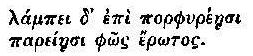
See also Dryden, Brit. Red. 133: "and her own purple light."
42. "To compensate the real and imaginary ills of life, the Muse was given to mankind by the same Providence that sends the day by its cheerful presence to dispel the gloom and terrors of the night" (Gray).
43 foll. See on Eton Coll. 83. Cf. Horace, Od. i. 3, 29-33.
46. Fond complaint. Foolish complaint. Cf. Shakes. M. of V. iii. 3:
"I do wonder, Thou naughty gaoler, that thou art so fond To come abroad with him at his request;"
Milton, S. A. 812: "fond and reasonless," etc. This appears to be the original meaning of the word. In Wiclif's Bible. 1 Cor. i. 27, we have "the thingis that ben fonnyd of the world." In Twelfth Night, ii. 2, the word is used as a verb=dote:
"And I, poor monster, fond as much on him, As she, mistaken, seems to dote on me."
49. Hurd quotes Cowley:
"Night and her ugly subjects thou dost fright, And Sleep, the lazy owl of night; Asham'd and fearful to appear, They screen their horrid shapes with the black hemisphere."
Wakefield cites Milton, Hymn on Nativity, 233 foll.: "The flocking shadows pale," etc. See also P. R. iv. 419-431.
50. Birds of boding cry. Cf. Green's Grotto: "news the boding night-birds tell."
52. Gray refers to Cowley, Brutus:
"One would have thought 't had heard the morning crow, Or seen her well-appointed star. Come marching up the eastern hill afar."
The following variations on 52 and 53 are found in the MS.:
Till fierce Hyperion from afar Pours on their scatter'd rear, | Hurls at " flying " | his glittering shafts of war. " o'er " scatter'd " | " " " shadowy " | Till " " " " from far Hyperion hurls around his, etc.
The accent of Hyperion is properly on the penult, which is long in quantity, but the English poets, with rare exceptions, have thrown it back upon the antepenult. It is thus in the six instances in which Shakes. uses the word: e.g. Hamlet, iii. 4: "Hyperion's curls; the front of Jove himself." The word does not occur in Milton. It is correctly accented by Drummond (of Hawthornden), Wand. Muses:
"That Hyperion far beyond his bed Doth see our lions ramp, our roses spread;"
by West, Pindar's Ol. viii. 22:
"Then Hyperion's son, pure fount of day, Did to his children the strange tale reveal;"
also by Akenside, and by the author of the old play Fuimus Troes (A.D. 1633):
"Blow, gentle Africus, Play on our poops when Hyperion's son Shall couch in west."
Hyperion was a Titan, the father of Helios (the Sun), Selene (the Moon), and Eos (the Dawn). He was represented with the attributes of beauty and splendor afterwards ascribed to Apollo. His "glittering shafts" are of course the sunbeams, the "lucida tela diei" of Lucretius. Cf. a very beautiful description of the dawn in Lowell's Above and Below:
"'Tis from these heights alone your eyes The advancing spears of day can see, Which o'er the eastern hill-tops rise, To break your long captivity."
We may quote also his Vision of Sir Launfal:
"It seemed the dark castle had gathered all Those shafts the fierce sun had shot over its wall In his siege of three hundred summers long," etc.
54. Gray's note here is as follows: "Extensive influence of poetic genius over the remotest and most uncivilized nations; its connection with liberty and the virtues that naturally attend on it. [See the Erse, Norwegian, and Welsh fragments; the Lapland and American songs.]" He also quotes Virgil, Æn. vi. 796: "Extra anni solisque vias," and Petrarch, Canz. 2: "Tutta lontana dal camin del sole." Cf. also Dryden, Thren. August. 353: "Out of the solar walk and Heaven's highway;" Ann. Mirab. st. 160: "Beyond the year, and out of Heaven's highway;" Brit. Red.: "Beyond the sunny walks and circling year;" also Pope, Essay on Man, i. 102: "Far as the solar walk and milky way."
56. Twilight gloom. Wakefield quotes Milton, Hymn on Nativ. 188: "The nymphs in twilight shade of tangled thickets mourn."
57. Wakefield says, "It almost chills one to read this verse." The MS. variations are "buried native's" and "chill abode."
60. Repeat [their chiefs, etc.]. Sing of them again and again.
61. In loose numbers, etc. Cf. Milton, L'All. 133:
"Or sweetest Shakespeare, Fancy's child, Warble his native wood-notes wild;"
and Horace, Od. iv. 2, 11:
"numerisque fertur Lege solutis."
62. Their feather-cinctur'd chiefs. Cf. P. L. ix. 1115:
"Such of late Columbus found the American, so girt With feather'd cincture."
64. Glory pursue. Wakefield remarks that this use of a plural verb after the first of a series of subjects is in Pindar's manner. Warton compares Homer, Il. v. 774:

Dugald Stewart (Philos. of Human Mind) says: "I cannot help remarking the effect of the solemn and uniform flow of verse in this exquisite stanza, in retarding the pronunciation of the reader, so as to arrest his attention to every successive picture, till it has time to produce its proper impression."
65. Freedom's holy flame. Cf. Akenside, Pleas. of Imag. i. 468: "Love's holy flame."
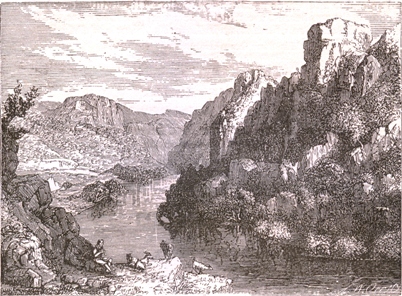
THE VALE OF TEMPE.
66. "Progress of Poetry from Greece to Italy, and from Italy to England. Chaucer was not unacquainted with the writings of Dante or of Petrarch. The Earl of Surrey and Sir Thomas Wyatt had travelled in Italy, and formed their taste there; Spenser imitated the Italian writers; Milton improved on them: but this school expired soon after the Restoration, and a new one arose on the French model, which has subsisted ever since" (Gray).
Delphi's steep. Cf. Milton, Hymn on Nativ. 178: "the steep of Delphos;" P. L. i. 517: "the Delphian cliff." Both Shakes. and Milton prefer the mediæval form Delphos to the more usual Delphi. Delphi was at the foot of the southern uplands of Parnassus which end "in a precipitous cliff, 2000 feet high, rising to a double peak named the Phædriades, from their glittering appearance as they faced the rays of the sun" (Smith's Anc. Geog.).
67. Isles, etc. Cf. Byron:
"The isles of Greece, the isles of Greece! Where burning Sappho loved and sung," etc.
68. Ilissus. This river, rising on the northern slope of Hymettus, flows through the east side of Athens.
69. Mæander's amber waves. Cf. Milton, P. L. iii. 359: "Rolls o'er Elysian flowers her amber stream;" P. R. iii. 288: "There Susa by Choaspes, amber stream." See also Virgil, Geo. iii. 520: "Purior electro campum petit amnis." Callimachus (Cer. 29) has [Greek: alektrinon hudôr].
70. Ovid, Met. viii. 162, describes the Mæander thus:
"Non secus ac liquidis Phrygiis Maeandros in arvis Ludit, et ambiguo lapsu refluitque fluitque."
Cf. also Virgil's description of the Mincius (Geo. iii. 15):
—"tardis ingens ubi flexibus errat Mincius."
"The first great metropolis of Hellenic intellectual life was Miletus on the Mæander. Thales, Anaximander, Anaximines, Cadmus, Hecatæus, etc., were all Milesians" (Hales).
71 foll. Cf. Milton, Hymn on Nativ. 181:
"The lonely mountains o'er, And the resounding shore, A voice of weeping heard and loud lament; From haunted spring and dale, Edged with poplar pale, The parting Genius is with sighing sent:" etc.
75. Hallowed fountain. Cf. Virgil, Ecl. i. 53: "fontes sacros."
76. The MS. has "Murmur'd a celestial sound."
80. Vice that revels in her chains. In his Ode for Music, 6, Gray has "Servitude that hugs her chain."
81. Hales quotes Collins, Ode to Simplicity:
"While Rome could none esteem But Virtue's patriot theme, You lov'd her hills, and led her laureate band; But staid to sing alone To one distinguish'd throne, And turn'd thy face, and fled her alter'd land."
84. Nature's darling. "Shakespeare" (Gray). Cf. Cleveland, Poems:
"Here lies within this stony shade Nature's darling; whom she made Her fairest model, her brief story, In him heaping all her glory."
On green lap, cf. Milton, Song on May Morning:
"The flowery May, who from her green lap throws The yellow cowslip and the pale primrose."
85. Lucid Avon. Cf. Seneca, Thyest. 129: "gelido flumine lucidus Alpheos."
86. The mighty mother. That is, Nature. Pope, in the Dunciad, i. 1, uses the same expression in a satirical way:
"The Mighty Mother, and her Son, who brings The Smithfield Muses to the ear of kings, I sing."
See also Dryden, Georgics, i. 466:
"On the green turf thy careless limbs display, And celebrate the mighty mother's day."
87. The dauntless child. Cf. Horace, Od. iii. 4, 20: "non sine dis animosus infans." Wakefield quotes Virgil, Ecl. iv. 60: "Incipe, parve puer, risu cognoscere matrem." Mitford points out that the identical expression occurs in Sandys's translation of Ovid, Met. iv. 515:
"the child Stretch'd forth its little arms, and on him smil'd."
See also Catullus, In Nupt. Jun. et Manl. 216:
"Torquatus volo parvulus Matris e gremio suae Porrigens teneras manus, Dulce rideat."
91. These golden keys. Cf. Young, Resig.:
"Nature, which favours to the few All art beyond imparts, To him presented at his birth The key of human hearts."
Wakefield cites Comus, 12:
"Yet some there be, that with due steps aspire To lay their hands upon that golden key That opes the palace of eternity."
See also Lycidas, 110:
"Two massy keys he bore of metals twain; The golden opes, the iron shuts amain."
93. Of horror. A MS. variation is "Of terror."
94. Or ope the sacred source. In a letter to Dr. Wharton, Sept. 7, 1757, Gray mentions, among other criticisms upon this ode, that "Dr. Akenside criticises opening a source with a key." But, as Mitford remarks, Akenside himself in his Ode on Lyric Poetry has, "While I so late unlock thy purer springs," and in his Pleasures of Imagination, "I unlock the springs of ancient wisdom."
95. Nor second he, etc. "Milton" (Gray).
96, 97. Cf. Milton, P. L. vii. 12:
"Up led by thee, Into the heaven of heavens I have presumed, An earthly guest, and drawn empyreal air."
98. The flaming bounds, etc. Gray quotes Lucretius, i. 74: "Flammantia moenia mundi." Cf. also Horace, Epist. i. 14, 9: "amat spatiis obstantia rumpere claustra."
99. Gray quotes Ezekiel i. 20, 26, 28. See also Milton, At a Solemn Music, 7: "Aye sung before the sapphire-colour'd throne;" Il Pens. 53: "the fiery-wheeled throne;" P. L. vi. 758:
"Whereon a sapphire throne, inlaid with pure Amber, and colours of the showery arch;"
and id. vi. 771:
"He on the wings of cherub rode sublime, On the crystalline sky, in sapphire throned."
101. Blasted with excess of light. Cf. P. L. iii. 380: "Dark with excessive bright thy skirts appear."
102. Cf. Virgil, Æn. x. 746: "in aeternam clauduntur lumina noctem," which Dryden translates, "And closed her lids at last in endless night." Gray quotes Homer, Od. viii. 64:

103. Gray, according to Mason, "admired Dryden almost beyond bounds."3
3 In a journey through Scotland in 1765, Gray became acquainted with Beattie, to whom he commended the study of Dryden, adding that "if there was any excellence in his own numbers, he had learned it wholly from the great poet."
105. "Meant to express the stately march and sounding energy of Dryden's rhymes" (Gray). Cf. Pope, Imit. of Hor. Ep. ii. 1, 267:
"Waller was smooth: but Dryden taught to join The varying verse, the full-resounding line, The long majestic march, and energy divine."
106. Gray quotes Job xxxix. 19: "Hast thou clothed his neck with thunder?"
108. Bright-eyed. The MS. has "full-plumed."
110. Gray quotes Cowley, Prophet: "Words that weep, and tears that speak."
Dugald Stewart remarks upon this line: "I have sometimes thought that Gray had in view the two different effects of words already described; the effect of some in awakening the powers of conception and imagination; and that of others in exciting associated emotions."
111. "We have had in our language no other odes of the sublime kind than that of Dryden on St. Cecilia's Day; for Cowley (who had his merit) yet wanted judgment, style, and harmony, for such a task. That of Pope is not worthy of so great a man. Mr. Mason, indeed, of late days, has touched the true chords, and with a masterly hand, in some of his choruses; above all in the last of Caractacus:
'Hark! heard ye not yon footstep dread!' etc." (Gray).
113. Wakes thee now. Cf. Elegy, 48: "Or wak'd to ecstasy the living lyre."
115. "[Greek: Dios pros ornicha theion]. Olymp. ii. 159. Pindar compares himself to that bird, and his enemies to ravens that croak and clamour in vain below, while it pursues its flight, regardless of their noise" (Gray).
Cf. Spenser, F. Q. v. 4, 42:
"Like to an Eagle, in his kingly pride Soring through his wide Empire of the aire, To weather his brode sailes."
Cowley, in his translation of Horace, Od. iv. 2, calls Pindar "the Theban swan" ("Dircaeum cycnum"):
"Lo! how the obsequious wind and swelling air The Theban Swan does upward bear."
117. Azure deep of air. Cf. Euripides, Med. 1294: [Greek: es aitheros bathos]; and Lucretius, ii. 151: "Aëris in magnum fertur mare." Cowley has "Row through the trackless ocean of air;" and Shakes. (T. of A. iv. 2), "this sea of air."
118, 119. The MS. reads:
"Yet when they first were open'd on the day Before his visionary eyes would run."
D. Stewart (Philos. of Human Mind) remarks that "Gray, in describing the infantine reveries of poetical genius, has fixed with exquisite judgment on that class of our conceptions which are derived from visible objects."
120. With orient hues. Cf. Milton, P. L. i. 546: "with orient colours waving."
122. The MS. has "Yet never can he fear a vulgar fate."
123. Cf. K. Philips: "Still shew'd how much the good outshone the great."
We append, as a curiosity of criticism, Dr. Johnson's comments on this ode, from his Lives of the Poets. The Life of Gray has been called "the worst in the series," and perhaps this is the worst part of it:4
"My process has now brought me to the wonderful 'Wonder of Wonders,' the two Sister Odes, by which, though either vulgar ignorance or common-sense at first universally rejected them, many have been since persuaded to think themselves delighted. I am one of those that are willing to be pleased, and therefore would gladly find the meaning of the first stanza of 'The Progress of Poetry.'
"Gray seems in his rapture to confound the images of spreading sound and running water. A 'stream of music' may be allowed; but where does 'music,' however 'smooth and strong,' after having visited the 'verdant vales, roll down the steep amain,' so as that 'rocks and nodding groves rebellow to the roar?' If this be said of music, it is nonsense; if it be said of water, it is nothing to the purpose.
"The second stanza, exhibiting Mars's car and Jove's eagle, is unworthy of further notice. Criticism disdains to chase a schoolboy to his commonplaces.
"To the third it may likewise be objected that it is drawn from mythology, though such as may be more easily assimilated to real life. Idalia's 'velvet-green' has something of cant. An epithet or metaphor drawn from Nature ennobles Art; an epithet or metaphor drawn from Art degrades Nature. Gray is too fond of words arbitrarily compounded. 'Many-twinkling' was formerly censured as not analogical; we may say 'many-spotted,' but scarcely 'many-spotting.' This stanza, however, has something pleasing.
"Of the second ternary of stanzas, the first endeavours to tell something, and would have told it, had it not been crossed by Hyperion; the second describes well enough the universal prevalence of poetry; but I am afraid that the conclusion will not arise from the premises. The caverns of the North and the plains of Chili are not the residences of 'Glory and generous Shame.' But that Poetry and Virtue go always together is an opinion so pleasing that I can forgive him who resolves to think it true.
"The third stanza sounds big with 'Delphi,' and 'Ægean,' and 'Ilissus,' and 'Mæander,' and with 'hallowed fountains,' and 'solemn sound;' but in all Gray's odes there is a kind of cumbrous splendour which we wish away. His position is at last false: in the time of Dante and Petrarch, from whom we derive our first school of poetry, Italy was overrun by 'tyrant power' and 'coward vice;' nor was our state much better when we first borrowed the Italian arts.
"Of the third ternary, the first gives a mythological birth of Shakespeare. What is said of that mighty genius is true; but it is not said happily: the real effects of this poetical power are put out of sight by the pomp of machinery. Where truth is sufficient to fill the mind, fiction is worse than useless; the counterfeit debases the genuine.
"His account of Milton's blindness, if we suppose it caused by study in the formation of his poem, a supposition surely allowable, is poetically true and happily imagined. But the car of Dryden, with his two coursers, has nothing in it peculiar; it is a car in which any other rider may be placed."
4 Sir James Mackintosh well says of Johnson's criticisms: "Wherever understanding alone is sufficient for poetical criticism, the decisions of Johnson are generally right. But the beauties of poetry must be felt before their causes are investigated. There is a poetical sensibility, which in the progress of the mind becomes as distinct a power as a musical ear or a picturesque eye. Without a considerable degree of this sensibility, it is as vain for a man of the greatest understanding to speak of the higher beauties of poetry as it is for a blind man to speak of colours. To adopt the warmest sentiments of poetry, to realize its boldest imagery, to yield to every impulse of enthusiasm, to submit to the illusions of fancy, to retire with the poet into his ideal worlds, were dispositions wholly foreign from the worldly sagacity and stern shrewdness of Johnson. As in his judgment of life and character, so in his criticism on poetry, he was a sort of Free-thinker. He suspected the refined of affectation, he rejected the enthusiastic as absurd, and he took it for granted that the mysterious was unintelligible. He came into the world when the school of Dryden and Pope gave the law to English poetry. In that school he had himself learned to be a lofty and vigorous declaimer in harmonious verse; beyond that school his unforced admiration perhaps scarcely soared; and his highest effort of criticism was accordingly the noble panegyric on Dryden."
W. H. Prescott, the historian, also remarks that Johnson, as a critic, "was certainly deficient in sensibility to the more delicate, the minor beauties of poetic sentiment. He analyzes verse in the cold-blooded spirit of a chemist, until all the aroma which constituted its principal charm escapes in the decomposition. By this kind of process, some of the finest fancies of the Muse, the lofty dithyrambics of Gray, the ethereal effusions of Collins, and of Milton too, are rendered sufficiently vapid."
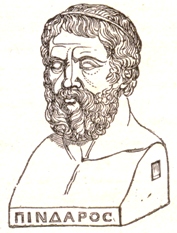
PINDAR.
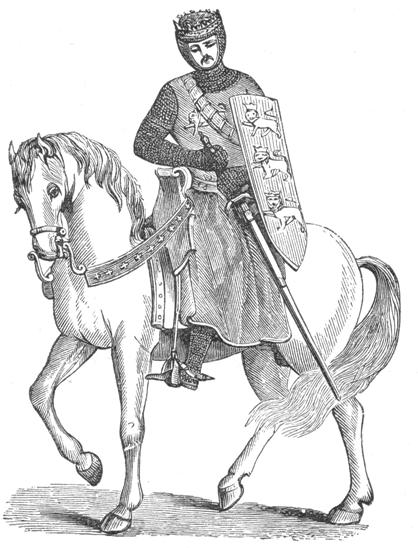
EDWARD I.
THE BARD.
"This ode is founded on a tradition current in Wales that Edward the First, when he completed the conquest of that country, ordered all the bards that fell into his hands to be put to death" (Gray).
The original argument of the ode, as Gray had set it down in his commonplace-book, was as follows: "The army of Edward I., as they march through a deep valley, and approach Mount Snowdon, are suddenly stopped by the appearance of a venerable figure seated on the summit of an inaccessible rock, who, with a voice more than human, reproaches the king with all the desolation and misery which he had brought on his country; foretells the misfortunes of the Norman race, and with prophetic spirit declares that all his cruelty shall never extinguish the noble ardour of poetic genius in this island; and that men shall never be wanting to celebrate true virtue and valour in immortal strains, to expose vice and infamous pleasure, and boldly censure tyranny and oppression. His song ended, he precipitates himself from the mountain, and is swallowed up by the river that rolls at its feet."
Mitford, in his "Essay on the Poetry of Gray," says of this Ode: "The tendency of The Bard is to show the retributive justice that follows an act of tyranny and wickedness; to denounce on Edward, in his person and his progeny, the effect of the crime he had committed in the massacre of the bards; to convince him that neither his power nor situation could save him from the natural and necessary consequences of his guilt; that not even the virtues which he possessed could atone for the vices with which they were accompanied:
'Helm nor hauberk's twisted mail, Nor e'en thy virtues, tyrant, shall avail.'
This is the real tendency of the poem; and well worthy it was of being adorned and heightened by such a profusion of splendid images and beautiful machinery. We must also observe how much this moral feeling increases as we approach the close; how the poem rises in dignity; and by what a fine gradation the solemnity of the subject ascends. The Bard commenced his song with feelings of sorrow for his departed brethren and his desolate country. This despondence, however, has given way to emotions of a nobler and more exalted nature. What can be more magnificent than the vision which opens before him to display the triumph of justice and the final glory of his cause? And it may be added, what can be more forcible or emphatic than the language in which it is conveyed?
'But oh! what solemn scenes on Snowdon's height, Descending slow their glittering skirts unroll? Visions of glory, spare my aching sight! Ye unborn ages, crowd not on my soul!'
The fine apostrophe to the shade of Taliessin completes the picture of exultation:
'Hear from the grave, great Taliessin, hear; They breathe a soul to animate thy clay.'
The triumph of justice, therefore, is now complete. The vanquished has risen superior to his conqueror, and the reader closes the poem with feelings of content and satisfaction. He has seen the Bard uplifted both by a divine energy and by the natural superiority of virtue; and the conqueror has shrunk into a creature of hatred and abhorrence:
'Be thine despair, and sceptred care; To triumph, and to die, are mine.'"
With regard to the obscurity of the poem, the same writer remarks that "it is such only as of necessity arises from the plan and conduct of a prophecy." "In the prophetic poem," he adds, "one point of history alone is told, and the rest is to be acquired previously by the reader; as in the contemplation of an historical picture, which commands only one moment of time, our memory must supply us with the necessary links of knowledge; and that point of time selected by the painter must be illustrated by the spectator's knowledge of the past or future, of the cause or the consequences."
He refers, for corroboration of this opinion, to Dr. Campbell, who in his "Philosophy of Rhetoric," says: "I know no style to which darkness of a certain sort is more suited than to the prophetical: many reasons might be assigned which render it improper that prophecy should be perfectly understood before it be accomplished. Besides, we are certain that a prediction may be very dark before the accomplishment, and yet so plain afterwards as scarcely to admit a doubt in regard to the events suggested. It does not belong to critics to give laws to prophets, nor does it fall within the confines of any human art to lay down rules for a species of composition so far above art. Thus far, however, we may warrantably observe, that when the prophetic style is imitated in poetry, the piece ought, as much as possible, to possess the character above mentioned. This character, in my opinion, is possessed in a very eminent degree by Mr. Gray's ode called The Bard. It is all darkness to one who knows nothing of the English history posterior to the reign of Edward the First, and all light to one who is acquainted with that history. But this is a kind of writing whose peculiarities can scarcely be considered as exceptions from ordinary rules."
Farther on in the same essay, Mitford remarks: "The skill of Gray is, I think, eminently shown in the superior distinctness with which he has marked those parts of his prophecies which are speedily to be accomplished; and in the gradations by which, as he descends, he has insensibly melted the more remote into the deeper and deeper shadowings of general language. The first prophecy is the fate of Edward the Second. In that the Bard has pointed out the very night in which he is to be destroyed; has named the river that flowed around his prison, and the castle that was the scene of his sufferings:
'Be thine despair, and sceptred care; When Severn shall re-echo with affright The shrieks of death thro' Berkeley's roofs that ring, Shrieks of an agonizing king.'
How different is the imagery when Richard the Second is described; and how indistinctly is the luxurious monarch marked out in the form of the morning, and his country in the figure of the vessel!
'The swarm that in thy noontide beam were born? Gone to salute the rising morn. Fair laughs the morn,' etc.
The last prophecy is that of the civil wars, and of the death of the two young princes. No place, no name is now noted: and all is seen through the dimness of figurative expression:
'Above, below, the rose of snow, Twin'd with her blushing foe, we spread: The bristled boar in infant gore Wallows beneath the thorny shade.'"
Hales remarks: "It is perhaps scarcely now necessary to say that the tradition on which The Bard is founded is wholly groundless. Edward I. never did massacre Welsh bards. Their name is legion in the beginning of the 14th century. Miss Williams, the latest historian of Wales, does not even mention the old story."1
1 The Saturday Review, for June 19, 1875, in the article from which we have elsewhere quoted (see above, foot-note), refers to this point as follows: "Gray was one of the first writers to show that earlier parts of English history were not only worth attending to, but were capable of poetic treatment. We can almost forgive him for dressing up in his splendid verse a foul and baseless calumny against Edward the First, when we remember that to most of Gray's contemporaries Edward the First must have seemed a person almost mythical, a benighted Popish savage, of whom there was very little to know, and that little hardly worth knowing. Our feeling towards Gray in this matter is much the same as our feeling towards Mitford in the matter of Greek history. We are angry with Mitford for misrepresenting Demosthenes and a crowd of other Athenian worthies, but we do not forget that he was the first to deal with Demosthenes and his fellows, neither as mere names nor as demi-gods, but as real living men like ourselves. It was a pity to misrepresent Demosthenes, but even the misrepresentation was something; it showed that Demosthenes could be made the subject of human feeling one way or another. It is unpleasant to hear the King whose praise it was that
'Velox est ad veniam, ad vindictam tardus,'
spoken of as 'ruthless,' and the rest of it. But Gray at least felt that Edward was a real man, while to most of his contemporaries he could have been little more than 'the figure of an old Gothic king,' such as Sir Roger de Coverley looked when he sat in Edward's own chair."
1. A good example of alliteration.
2. Cf. Shakes. K. John, iv. 2: "and vast confusion waits."
4. Gray quotes K. John, v. 1: "Mocking the air with colours idly spread."
5. "The hauberk was a texture of steel ringlets, or rings interwoven, forming a coat of mail that sat close to the body, and adapted itself to every motion" (Gray).
Cf. Robert of Gloucester: "With helm and hauberk;" and Dryden, Pal. and Arc. iii. 603: "Hauberks and helms are hewed with many a wound."
7. Nightly. Nocturnal, as often in poetry. Cf. Il Pens. 84, etc.
9. The crested pride. Gray quotes Dryden, Indian Queen: "The crested adder's pride."
11. "Snowdon was a name given by the Saxons to that mountainous tract which the Welsh themselves call Craigian-eryri: it included all the highlands of Caernarvonshire and Merionethshire, as far east as the river Conway. R. Hygden, speaking of the castle of Conway, built by King Edward the First, says: 'Ad ortum amnis Conway ad clivum montis Erery;' and Matthew of Westminster (ad ann. 1283), 'Apud Aberconway ad pedes montis Snowdoniae fecit erigi castrum forte'" (Gray).
It was in the spring of 1283 that English troops at last forced their way among the defiles of Snowdon. Llewellyn had preserved those passes and heights intact until his death in the preceding December. The surrender of Dolbadern in the April following that dispiriting event opened a way for the invader; and William de Beauchamp, Earl of Warwick, at once advanced by it (Hales).
The epithet shaggy is highly appropriate, as Leland (Itin.) says that great woods clothed the mountain in his time. Cf. Dyer, Ruins of Rome:
"as Britannia's oaks On Merlin's mount, or Snowdon's rugged sides, Stand in the clouds."
See also Lycidas, 54: "Nor on the shaggy top of Mona high;" and P. L. vi. 645: "the shaggy tops."
13. Stout Gloster. "Gilbert de Clare, surnamed the Red, Earl of Gloucester and Hereford, son-in-law to King Edward" (Gray). He had, in 1282, conducted the war in South Wales; and after overthrowing the enemy near Llandeilo Fawr, had reinforced the king in the northwest.
14. Mortimer. "Edmond de Mortimer, Lord of Wigmore" (Gray). It was by one of his knights, named Adam de Francton, that Llewellyn, not at first known to be he, was slain near Pont Orewyn (Hales).
On quivering lance, cf. Virgil, Æn. xii. 94: "hastam quassatque trementem."
15. On a rock whose haughty brow. Cf. Daniel, Civil Wars: "A huge aspiring rock, whose surly brow."
The rock is probably meant for Penmaen-mawr, the northern termination of the Snowdon range. It is a mass of rock, 1545 feet high, a few miles from the mouth of the Conway, the valley of which it overlooks. Towards the sea it presents a rugged and almost perpendicular front. On its summit is Braich-y-Dinas, an ancient fortified post, regarded as the strongest hold of the Britons in the district of Snowdon. Here the reduced bands of the Welsh army were stationed during the negotiation between their prince Llewellyn and Edward I. Within the inner enclosure is a never-failing well of pure water. The rock is now pierced with a tunnel 1890 feet long for the Chester and Holyhead railway.
17. Rob'd in the sable garb of woe. It would appear that Wharton had criticised this line, for in a letter to him, dated Aug. 21, 1757, Gray writes: "You may alter that 'Robed in the sable,' etc., almost in your own words, thus,
'With fury pale, and pale with woe, Secure of Fate, the Poet stood,' etc.
Though haggard, which conveys to you the idea of a witch, is indeed only a metaphor taken from an unreclaimed hawk, which is called a haggard, and looks wild and farouche, and jealous of its liberty." Gray seems to have afterwards returned to his first (and we think better) reading.
19. "The image was taken from a well-known picture of Raphael, representing the Supreme Being in the vision of Ezekiel. There are two of these paintings (both believed originals), one at Florence, the other in the Duke of Orleans's collection at Paris" (Gray).
20. Like a meteor. Gray quotes P. L. i. 537: "Shone like a meteor streaming to the wind."
21, 22. Wakefield remarks: "This is poetical language in perfection; and breathes the sublime spirit of Hebrew poetry, which delights in this grand rhetorical substitution."
23. Desert caves. Cf. Lycidas, 39: "The woods and desert caves."
26. Hoarser murmurs. That is, perhaps, with continually increasing hoarseness, hoarser and hoarser; or it may mean with unwonted hoarseness, like the comparative sometimes in Latin (Hales).
28. Hoel is called high-born, being the son of Owen Gwynedd, prince of North Wales, by Finnog, an Irish damsel. He was one of his father's generals in his wars against the English, Flemings, and Normans, in South Wales; and was a famous bard, as his poems that are extant testify.
Soft Llewellyn's lay. "The lay celebrating the mild Llewellyn," says Hales, though he afterwards remarks that, "looking at the context, it would be better to take Llewellyn here for a bard." Many bards celebrated the warlike prowess and princely qualities of Llewellyn. A poem by Einion the son of Guigan calls him "a tender-hearted prince;" and another, by Llywarch Brydydd y Moch, says: "Llewellyn, though in battle he killed with fury, though he burned like an outrageous fire, yet was a mild prince when the mead-horns were distributed." In an ode by Llygard Gwr he is also called "Llewellyn the mild."
29. Cadwallo and Urien were bards of whose songs nothing has been preserved. Taliessin (see 121 below) dedicated many poems to the latter, and wrote an elegy on his death: he was slain by treachery in the year 560.
30. That hush'd the stormy main. Cf. Shakes. M. N. D. ii. 2:
"Uttering such dulcet and harmonious breath, That the rude sea grew civil at her song."
33. Modred. This name is not found in the lists of the old bards. It may have been borrowed from the Arthurian legends; or, as Mitford suggests, it may refer to "the famous Myrddin ab Morvyn, called Merlyn the Wild, a disciple of Taliessin, the form of the name being changed for the sake of euphony."
34. Plinlimmon. One of the loftiest of the Welsh mountains, being 2463 feet in height. It is really a group of mountains, three of which tower high above the others, and on each of these is a carnedd, or pile of stones. The highest of the three is further divided into two peaks, and on these, as well as on another prominent part of the same height, are other piles of stones. These five piles, according to the common tradition, mark the graves of slain warriors, and serve as memorials of their exploits; but some believe that they were intended as landmarks or military signals, and that from them the mountain was called Pump-lumon or Pum-lumon, "the five beacons"—a name somehow corrupted into Plinlimmon. Five rivers take their rise in the recesses of Plinlimmon—the Wye, the Severn, the Rheidol, the Llyfnant, and the Clywedog.
35. Arvon's shore. "The shores of Caernarvonshire, opposite the isle of Anglesey" (Gray). Caernarvon, or Caer yn Arvon, means the camp in Arvon.
38. "Camden and others observe that eagles used annually to build their aerie among the rocks of Snowdon, which from thence (as some think) were named by the Welsh Craigian-eryri, or the crags of the eagles. At this day (I am told) the highest point of Snowdon is called the Eagle's Nest. That bird is certainly no stranger to this island, as the Scots, and the people of Cumberland, Westmoreland, etc., can testify; it even has built its nest in the peak of Derbyshire [see Willoughby's Ornithology, published by Ray]" (Gray).
40. Dear as the light. Cf. Virgil, Æn. iv. 31: "O luce magis dilecta sorori."
41. Dear as the ruddy drops. Gray quotes Shakes. J. C. ii. 1:
"As dear to me as are the ruddy drops That visit my sad heart."
Cf. also Otway, Venice Preserved:
"Dear as the vital warmth that feeds my life, Dear as these eyes that weep in fondness o'er thee."
42. Wakefield quotes Pope: "And greatly falling with a fallen state;" and Dryden: "And couldst not fall but with thy country's fate."
44. Grisly. See on Eton Coll. 82. Cf. Lycidas, 52:
"the steep Where your old bards, the famous Druids, lie."
48. "See the Norwegian ode that follows" (Gray). This ode (The Fatal Sisters, translated from the Norse) describes the Valkyriur, "the choosers of the slain," or warlike Fates of the Gothic mythology, as weaving the destinies of those who were doomed to perish in battle. It begins thus:
"Now the storm begins to lower (Haste, the loom of hell prepare), Iron sleet of arrowy shower Hurtles in the darken'd air. "Glittering lances are the loom, Where the dusky warp we strain, Weaving many a soldier's doom, Orkney's woe, and Randver's bane. * * * * * * "Shafts for shuttles, dipt in gore, Shoot the trembling cords along; Swords, that once a monarch bore, Keep the tissue close and strong. * * * * * * "(Weave the crimson web of war) Let us go, and let us fly, Where our friends the conflict share, Where they triumph, where they die."
51. Cf. Dryden, Sebastian, i. 1:
"I have a soul that, like an ample shield, Can take in all, and verge enough for more."
55. "Edward the Second, cruelly butchered in Berkeley Castle" (Gray). The 1st ed. and that of 1768 have "roofs;" the modern eds. "roof."
Berkeley Castle is on the southeast side of the town of Berkeley, on a height commanding a fine view of the Severn and the surrounding country, and is in a state of perfect preservation. It is said to have been founded by Roger de Berkeley soon after the Norman Conquest. About the year 1150 it was granted by Henry II. to Robert Fitzhardinge, Governor of Bristol, who strengthened and enlarged it. On the right of the great staircase leading to the keep, and approached by a gallery, is the room in which it is supposed that Edward II. was murdered, Sept. 21, 1327. The king, during his captivity here, composed a dolorous poem, of which the following is an extract:
"Moste blessed Jesu, Roote of all vertue, Graunte I may the sue, In all humylyte, Sen thou for our good, Lyste to shede thy blood, An stretche the upon the rood, For our iniquyte. I the beseche, Most holsome leche, That thou wylt seche For me such grace, That when my body vyle My soule shall exyle Thou brynge in short wyle It in reste and peace."
Walpole, who visited the place in 1774, says: "The room shown for the murder of Edward II., and the shrieks of an agonizing king, I verily believe to be genuine. It is a dismal chamber, almost at the top of the house, quite detached, and to be approached only by a kind of foot-bridge, and from that descends a large flight of steps, that terminates on strong gates; exactly a situation for a corps de garde."
56. Cf. Hume's description: "The screams with which the agonizing king filled the castle."
57. She-wolf of France. "Isabel of France, Edward the Second's adulterous queen" (Gray). Cf. Shakes. 3 Hen. VI. i. 4: "She-wolf of France, but worse than wolves of France;" and read the context.
60. "Triumphs of Edward the Third in France" (Gray).
61. Cf. Cowley: "Ruin behind him stalks, and empty desolation;" and Oldham, Ode to Homer:
"Where'er he does his dreadful standard bear, Horror stalks in the van, and slaughter in the rear."
63. For victor the MS. has "conqueror;" also in next line "the" for his; and in 65, "what ... what" for no ... no.
64. "Death of that king, abandoned by his children, and even robbed in his last moments by his courtiers and his mistress" (Gray).
67. "Edward the Black Prince, dead some time before his father" (Gray).
69. The MS. has "hover'd in thy noontide ray," and in the next line "the rising day."
In Agrippina, a fragment of a tragedy, published among the posthumous poems of Gray, we have the same figure:
"around thee call The gilded swarm that wantons in the sunshine Of thy full favour."
71. "Magnificence of Richard the Second's reign. See Froissard and other contemporary writers" (Gray).
For this line and the remainder of the stanza, the MS. has the following:
"Mirrors of Saxon truth and loyalty, Your helpless, old, expiring master view! They hear not: scarce religion does supply Her mutter'd requiems, and her holy dew. Yet thou, proud boy, from Pomfret's walls shalt send A sigh, and envy oft thy happy grandsire's end."
On the passage as it stands, cf. Shakes. M. of V. ii. 6:
"How like a younger, or a prodigal, The scarfed bark puts from her native bay," etc.
Also Spenser, Visions of World's Vanitie, ix:
"Looking far foorth into the Ocean wide, A goodly ship with banners bravely dight, And flag in her top-gallant, I espide Through the maine sea making her merry flight. Faire blew the winde into her bosome right; And th' heavens looked lovely all the while That she did seeme to daunce, as in delight, And at her owne felicitie did smile," etc.;
and again, Visions of Petrarch, ii.:
"After, at sea a tall ship did appeare, Made all of heben and white yvorie; The sailes of golde, of silke the tackle were: Milde was the winde, calme seem'd the sea to bee, The skie eachwhere did show full bright and faire: With rich treasures this gay ship fraighted was: But sudden storme did so turmoyle the aire, And tumbled up the sea, that she (alas) Strake on a rock, that under water lay, And perished past all recoverie."
See also Milton, S. A. 710 foll.
72. The azure realm. Cf. Virgil, Ciris, 483: "Caeruleo pollens conjunx Neptunia regno."
73. Note the alliteration. Cf. Dryden, Annus Mirab. st. 151:
"The goodly London, in her gallant trim, The phoenix-daughter of the vanish'd old, Like a rich bride does to the ocean swim, And on her shadow rides in floating gold."
75. Sweeping whirlwind's sway. Cf. the posthumous fragment by Gray on Education and Government, 48: "And where the deluge burst with sweepy sway." The expression is from Dryden, who uses it repeatedly; as in Geo. i. 483: "And rolling onwards with a sweepy sway;" Ov. Met.: "Rushing onwards with a sweepy sway;" Æn. vii.: "The branches bend beneath their sweepy sway," etc.
76. That hush'd in grim repose, etc. Cf. Dryden, Sigismonda and Guiscardo, 242:
"So, like a lion that unheeded lay, Dissembling sleep, and watchful to betray, With inward rage he meditates his prey;"
and Absalom and Achitophel, 447:
"And like a lion, slumbering in the way, Or sleep dissembling, while he waits his prey."
77. "Richard the Second (as we are told by Archbishop Scroop and the confederate Lords in their manifesto, by Thomas of Walsingham, and all the older writers) was starved to death. The story of his assassination by Sir Piers of Exon is of much later date" (Gray).
79. Reft of a crown. Wakefield quotes Mallet's ballad of William and Margaret:
"Such is the robe that kings must wear When death has reft their crown."
82. A baleful smile. The MS. has "A smile of horror on." Cf. Milton, P. L. ii. 846: "Grinn'd horrible a ghastly smile."
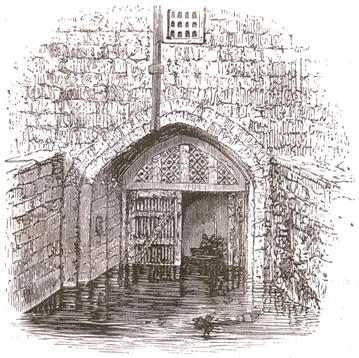
THE TRAITOR'S GATE OF THE TOWER.
83. "Ruinous wars of York and Lancaster" (Gray). Cf. P. L. vi. 209: "Arms on armour clashing brayed."
84. Cf. Shakes. 1 Hen. IV. iv. 1: "Harry to Harry shall, hot horse to horse;" and Massinger, Maid of Honour: "Man to man, and horse to horse."
87. "Henry the Sixth, George Duke of Clarence, Edward the Fifth, Richard Duke of York, etc., believed to be murdered secretly in the Tower of London. The oldest part of that structure is vulgarly attributed to Julius Cæsar" (Gray). The MS. has "Grim towers."
88. Murther. See on murthorous.
89. His consort. "Margaret of Anjou, a woman of heroic spirit, who struggled hard to save her husband and her crown" (Gray).
His father. "Henry the Fifth" (Gray).
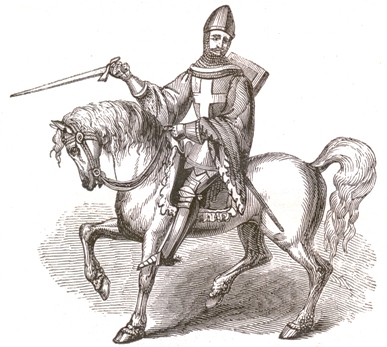
HENRY V.
90. The meek usurper. "Henry the Sixth, very near being canonized. The line of Lancaster had no right of inheritance to the crown" (Gray). See on Eton Coll. 4. The MS. has "hallow'd head."
91. The rose of snow, etc. "The white and red roses, devices of York and Lancaster" (Gray).
Cf. Shakes. 1 Hen. VI. ii. 4:
"No, Plantagenet, 'Tis not for shame, but anger, that thy cheeks Blush for pure shame, to counterfeit our roses."
93. The bristled boar. "The silver boar was the badge of Richard the Third; whence he was usually known in his own time by the name of the Boar" (Gray). Scott (notes to Lay of Last Minstrel) says: "The crest or bearing of a warrior was often used as a nom de guerre. Thus Richard III. acquired his well-known epithet, 'the Boar of York.'" Cf. Shakes. Rich. III. iv. 5: "this most bloody boar;" v. 2: "The wretched, bloody, and usurping boar," etc.
98. See on 48 above.
99. Half of thy heart. "Eleanor of Castile died a few years after the conquest of Wales. The heroic proof she gave of her affection for her lord is well known.2 The monuments of his regret and sorrow for the loss of her3 are still to be seen at Northampton, Geddington, Waltham, and other places" (Gray). Cf. Horace, Od. i. 3, 8: "animae dimidium meae."
2 See Tennyson, Dream of Fair Women:
"Or her who knew that Love can vanquish Death, Who kneeling, with one arm about her king, Drew forth the poison with her balmy breath, Sweet as new buds in spring."
3 Gray refers to the "Eleanor crosses," erected at the places where the funeral procession halted each night on the journey from Hardby, in Nottinghamshire (near Lincoln), where the queen died, to Westminster. Of the thirteen (or, as some say, fifteen) crosses only three now remain—at Northampton, Geddington, and Waltham. The one at Charing Cross in London has been replaced by a fac-simile of the original. These monuments were all exquisite works of Gothic art, fitting memorials of la chère Reine, "the beloved of all England," as Walsingham calls her.
101. Nor thus forlorn. In MS. "nor here forlorn;" in next line, "Leave your despairing Caradoc to mourn;" in 103, "yon black clouds;" in 104, "They sink, they vanish;" in 105, "But oh! what scenes of heaven on Snowdon's height;" in 106, "their golden skirts."
107. Cf. Dryden, State of Innocence, iv. 1: "Their glory shoots upon my aching sight."
109. "It was the common belief of the Welsh nation that King Arthur was still alive in Fairyland, and would return again to reign over Britain" (Gray).
In the MS. this line and the next read thus:
"From Cambria's thousand hills a thousand strains Triumphant tell aloud, another Arthur reigns."
110. "Both Merlin and Taliessin had prophesied that the Welsh should regain their sovereignty over this island; which seemed to be accomplished in the house of Tudor" (Gray).
111. Many a baron bold. Cf. L'Allegro, 119: "throngs of knights and barons bold."
The reading in the MS. is,
"Youthful knights, and barons bold, With dazzling helm, and horrent spear."
112. Their starry fronts. Cf. Milton, Ode on the Passion, 18: "His starry front;" Statius, Theb. 613: "Heu! ubi siderei vultus."
115. A form divine. Elizabeth. Wakefield quotes Spenser's eulogy of the queen, Shep. Kal. Apr.:
"Tell me, have ye seene her angelick face, Like Phoebe fayre? Her heavenly haveour, her princely grace, Can you well compare? The Redde rose medled with the White yfere, In either cheeke depeincten lively chere; Her modest eye, Her Majestie, Where have you seene the like but there?"
117. "Speed, relating an audience given by Queen Elizabeth to Paul Dzialinski, ambassador of Poland, says: 'And thus she, lion-like rising, daunted the malapert orator no less with her stately port and majestical deporture, than with the tartnesse of her princelie checkes'" (Gray). The MS. reads "A lion-port, an awe-commanding face."
121. "Taliessin, chief of the bards, flourished in the sixth century. His works are still preserved, and his memory held in high veneration among his countrymen" (Gray).
As Hales remarks, there is no authority for connecting him with Arthur, as Tennyson does in his Holy Grail.
123. Cf. Congreve, Ode to Lord Godolphin: "And soars with rapture while she sings."
124. The eye of heaven. Wakefield quotes Spenser, F. Q. 1. 3. 4,
"Her angel's face As the great eye of heaven shined bright."
Cf. Shakes. Rich. II. iii. 2: "the searching eye of heaven."
Many-colour'd wings. Cf. Shakes. Temp. iv. 1: "Hail, many-colour'd messenger;" and Milton, P. L. iii. 642:
"Wings he wore Of many a colour'd plume sprinkled with gold."
126. Gray quotes Spenser, F. Q. Proeme, 9:
"Fierce warres and faithful loves shall moralize my song."
128. "Shakespeare" (Gray). Cf. Il Penseroso, 102: "the buskin'd stage;" that is, the tragic stage.
129. Pleasing pain. Cf. Spenser, F. Q. vi. 9, 10: "sweet pleasing payne;" and Dryden, Virg. Ecl. iii. 171: "Pleasing pains of love."
131. "Milton" (Gray).
133. "The succession of poets after Milton's time" (Gray).
135. Fond. Foolish. See on Prog. of Poesy, 46.
On the couplet, cf. Dekker, If this be not a good play, etc.:
"Thinkest thou, base lord, Because the glorious Sun behind black clouds Has awhile hid his beams, he's darken'd forever, Eclips'd never more to shine?"
137. Cf. Lycidas, 169: "And yet anon repairs his drooping head;" and Fletcher, Purple Island, vi. 64: "So soon repairs her light, trebling her new-born raies."
141. Mitford remarks that there is a passage (which he misquotes, as usual) in the Thebaid of Statius (iii. 81) similar to this, describing a bard who had survived his companions:
"Sed jam nudaverat ensem Magnanimus vates, et nunc trucis ora tyranni, Nunc ferrum adspectans: 'Nunquam tibi sanguinis hujus Jus erit, aut magno feries imperdita Tydeo Pectora; vado equidem exsultans et ereptaque fata Insequor, et comites feror expectatus ad umbras; Te Superis, fratrique.' Et jam media orsa loquentis Abstulerat plenum capulo latus."
Cf. also a passage in Pindar (Olymp. i. 184), which Gray seems to have had in mind:
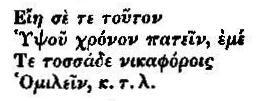
143. Cf. Virgil, Ecl. viii. 59:
"Praeceps aërii specula de montis in undas Deferar; extremum hoc munus morientis habeto."
As we have given Johnson's criticism on The Progress of Poesy, we append his comments on this "Sister Ode:"
"'The Bard' appears, at the first view, to be, as Algarotti and others have remarked, an imitation of the prophecy of Nereus. Algarotti thinks it superior to its original; and, if preference depends only on the imagery and animation of the two poems, his judgment is right. There is in 'The Bard' more force, more thought, and more variety. But to copy is less than to invent, and the copy has been unhappily produced at a wrong time. The fiction of Horace was to the Romans credible; but its revival disgusts us with apparent and unconquerable falsehood. Incredulus odi.
"To select a singular event, and swell it to a giant's bulk by fabulous appendages of spectres and predictions, has little difficulty; for he that forsakes the probable may always find the marvellous. And it has little use; we are affected only as we believe; we are improved only as we find something to be imitated or declined. I do not see that 'The Bard' promotes any truth, moral or political.
"His stanzas are too long, especially his epodes; the ode is finished before the ear has learned its measures, and consequently before it can receive pleasure from their consonance and recurrence.
"Of the first stanza the abrupt beginning has been celebrated; but technical beauties can give praise only to the inventor. It is in the power of any man to rush abruptly upon his subject, that has read the ballad of 'Johnny Armstrong,'
'Is there ever a man in all Scotland—'
"The initial resemblances, or alliterations, 'ruin, ruthless, helm or hauberk,' are below the grandeur of a poem that endeavours at sublimity.
"In the second stanza the Bard is well described; but in the third we have the puerilities of obsolete mythology. When we are told that 'Cadwallo hush'd the stormy main,' and that 'Modred made huge Plinlimmon bow his cloud-topt head,' attention recoils from the repetition of a tale that, even when it was first heard, was heard with scorn.
"The weaving of the winding-sheet he borrowed, as he owns, from the Northern Bards; but their texture, however, was very properly the work of female powers, as the act of spinning the thread of life is another mythology. Theft is always dangerous; Gray has made weavers of slaughtered bards by a fiction outrageous and incongruous. They are then called upon to 'Weave the warp, and weave the woof,' perhaps with no great propriety; for it is by crossing the woof with the warp that men weave the web or piece; and the first line was dearly bought by the admission of its wretched correspondent, 'Give ample room and verge enough.' He has, however, no other line as bad.
"The third stanza of the second ternary is commended, I think, beyond its merit. The personification is indistinct. Thirst and Hunger are not alike; and their features, to make the imagery perfect, should have been discriminated. We are told, in the same stanza, how 'towers are fed.' But I will no longer look for particular faults; yet let it be observed that the ode might have been concluded with an action of better example; but suicide is always to be had, without expense of thought."
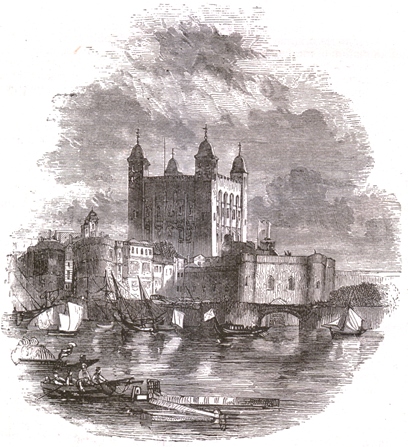
"Ye towers of Julius, London's lasting shame!"
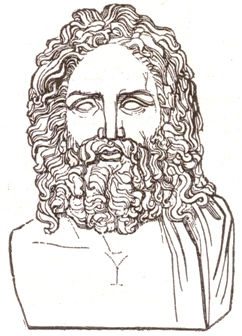
HEAD OF OLYMPIAN JOVE.
HYMN TO ADVERSITY.
This poem first appeared in Dodsley's Collection, vol. iv., together with the "Elegy in a Country Churchyard." In Mason's and Wakefield's editions it is called an "Ode," but the title given by the author is as above.
The motto from Æschylus is not in Dodsley, but appears in the first edition of the poems (1768) in the form given in the text. The best modern editions of Æschylus have the reading, [Greek: ton (some, tôi) pathei mathos]. Keck translates the passage into German thus:
"Ihn der uns zur Sinnigkeit leitet, ihn der fest den Satz Stellet, 'Lehre durch das Leid.'"
Plumptre puts it into English as follows:
"Yea, Zeus, who leadeth men in wisdom's way, And fixeth fast the law Wisdom by pain to gain."
Cf. Mrs. Browning's Vision of Poets:
"Knowledge by suffering entereth, And life is perfected by death."
1. Mitford remarks: "[Greek: Atê], who may be called the goddess of Adversity, is said by Homer to be the daughter of Jupiter (Il. [Greek: t.] 91: [Greek: presba Dios thugatêr Atê, hê pantas aatai). Perhaps, however, Gray only alluded to the passage of Æschylus which he quoted, and which describes Affliction as sent by Jupiter for the benefit of man." The latter is the more probable explanation.
2. Mitford quotes Pope, Dunciad, i. 163: "Then he: 'Great tamer of all human art.'"
3. Torturing hour. Cf. Milton, P. L. ii. 90:
"The vassals of his anger, when the scourge Inexorable, and the torturing hour, Calls us to penance."
5. Adamantine chains. Wakefield quotes Æschylus, Prom. Vinct. vi.: [Greek: Adamantinôn desmôn en arrêktois pedais]. Cf. Milton, P. L. i. 48: "In adamantine chains and penal fire;" and Pope, Messiah, 47: "In adamantine chains shall Death be bound."
7. Purple tyrants. Cf. Pope, Two Choruses to Tragedy of Brutus: "Till some new tyrant lifts his purple hand." Wakefield cites Horace, Od. i. 35, 12: "Purpurei metuunt tyranni."
8. With pangs unfelt before. Cf. Milton, P. L. ii. 703: "Strange horror seize thee, and pangs unfelt before."
9-12. Cf. Bacon, Essays, v. (ed. 1625): "Certainly, Vertue is like pretious Odours, most fragrant when they are incensed [that is, burned], or crushed:1 For Prosperity doth best discover Vice;2 But Adversity doth best discover Vertue."
1 So in his Apophthegms, 253, Bacon says: "Mr. Bettenham said: that virtuous men were like some herbs and spices, that give not their sweet smell till they be broken or crushed."
2 Cf. Shakespeare, Julius Cæsar, ii. 1: "It is the bright day that brings forth the adder."
Cf. also Thomson:
"If Misfortune comes, she brings along The bravest virtues. And so many great Illustrious spirits have convers'd with woe, Have in her school been taught, as are enough To consecrate distress, and make ambition E'en wish the frown beyond the smile of fortune."
16. Cf. Virgil, Æn. i. 630: "Non ignara mali, miseris succurrere disco."
18. Folly's idle brood. Cf. the opening lines of Il Penseroso:
"Hence, vain deluding Joys, The brood of Folly, without father bred!"
20. Mitford quotes Oldham, Ode: "And know I have not yet the leisure to be good."
22. The summer friend. Cf. Geo. Herbert, Temple: "like summer friends, flies of estates and sunshine;" Quarles, Sion's Elegies, xix.: "Ah, summer friendship with the summer ends;" Massinger, Maid of Honour: "O summer friendship." See also Shakespeare, T. of A. iii. 6:
"2d Lord. The swallow follows not summer more willing than we your lordship.
"Timon [aside]. Nor more willingly leaves winter; such summer-birds are men;"
and T. and C. iii. 3:
"For men, like butterflies, Shew not their mealy wings but to the summer."
Mitford suggests that Gray had in mind Horace, Od. i. 35, 25:
"At vulgus infidum et meretrix retro Perjura cedit; diffugiunt cadis Cum faece siccatis amici Ferre jugum pariter dolosi."
25. In sable garb. Cf. Milton, Il Pens. 16: "O'erlaid with black, staid Wisdom's hue."
28. With leaden eye. Evidently suggested by Milton's description of Melancholy, Il Pens. 43:
"Thy rapt soul sitting in thine eyes; There, held in holy passion still, Forget thyself to marble, till With a sad leaden downward cast Thou fix them on the earth as fast."
Mitford cites Sidney, Astrophel and Stella, song 7: "So leaden eyes;" Dryden, Cymon and Iphigenia, 57: "And stupid eyes that ever lov'd the ground;" Shakespeare, Pericles, i. 2: "The sad companion, dull-eyed Melancholy;" and L. L. L. iv. 3: "In leaden contemplation." Cf. also The Bard, 69, 70.
31. To herself severe. Cf. Carew:
"To servants kind, to friendship dear, To nothing but herself severe;"
and Dryden: "Forgiving others, to himself severe;" and Waller: "The Muses' friend, unto himself severe." Mitford quotes several other similar passages.
32. The sadly pleasing tear. Rogers cites Dryden's "sadly pleasing thought" (Virgil's Æn. x.); and Mitford compares Thomson's "lenient, not unpleasing tear."
35. Gorgon terrors. Cf. Milton, P. L. ii. 611: "Medusa with Gorgonian terror."
36-40. Cf. Ode on Eton College, 55-70 and 81-90.
45-48. Cf. Shakespeare, As You Like It, ii. 1:
"these are counsellors That feelingly persuade me what I am. Sweet are the uses of adversity, Which, like the toad, ugly and venomous, Wears yet a precious jewel in his head;"
and Mallet:
"Who hath not known ill-fortune, never knew Himself, or his own virtue."
Guizot, in his Cromwell, says: "The effect of supreme and irrevocable misfortune is to elevate those souls which it does not deprive of all virtue;" and Sir Philip Sidney remarks: "A noble heart, like the sun, showeth its greatest countenance in its lowest estate."
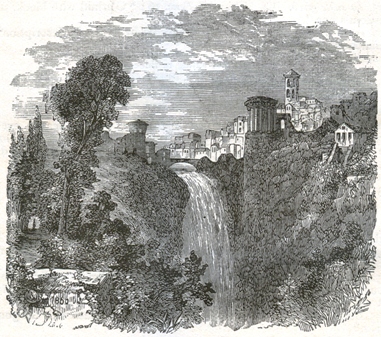
"Now rolling down the steep amain, Headlong, impetuous, see it pour; The rocks and nodding groves rebellow to the roar."
The Progress of Poesy, 10.
APPENDIX TO NOTES.
Just as this book is going to press we have received The Quarterly Review (London) for January, 1876, which contains an interesting paper on "Wordsworth and Gray." After quoting Wordsworth's remark that "Gray was at the head of those poets who, by their reasonings, have attempted to widen the space of separation between prose and metrical composition, and was, more than any other man, curiously elaborate in the construction of his own poetic diction," the reviewer remarks:
"The indictment, then, brought by Wordsworth against Gray is twofold. Gray, it seems, had in the first place a false conception of the nature of poetry; and, secondly, a false standard of poetical diction. To begin with the first count, Gray, we are told, sought to widen the space of separation betwixt prose and metrical composition. What this charge amounts to we shall see hereafter. Meantime, did Wordsworth think that between prose and poetry there was any line of demarcation at all? In the Preface [to the "Lyrical Ballads"] from which we have quoted we read:
"'There neither is nor can be any essential difference between the language of prose and metrical composition. We are fond of tracing the resemblance between Poetry and Painting, and accordingly we call them sisters; but where shall we find bonds of connection sufficiently strong to typify the connection betwixt prose and metrical composition?'
"Now this question admits of a very definite answer. Take the Iliad of Homer and a proposition of Euclid. Is it conceivable that the latter could have been expressed at all in metre, or the former expressed half so well in prose? If not, what is the reason? Is it not plain that the poem contains a predominant element of imagination and feeling which is absolutely excluded from the proposition? And in the same way it may be shown that whenever a man expresses himself properly in metre, the subject-matter of his composition belongs to imagination or feeling; whenever he writes in prose his subject belongs to or (if the prose be fiction) intimately resembles matter of fact. We may decide then with certainty that the sphere of poetry lies in Imagination, and that the larger the amount of just liberty the Imagination enjoys, the better will be the poetry it produces. But then a further question arises, and this is the key of the whole position, How far does this liberty extend? Is Imagination absolute, supreme, and uncontrolled in its own sphere, or is it under the guidance and government of reason? That its dominion is not universal is obvious, but of its influence we are all conscious, and there is no exaggeration in the eloquent words of Pascal:
"'This mighty power, the perpetual antagonist of reason, which delights to show its ascendency by bringing her under its control and dominion, has created a second nature in man. It has its joys and its sorrows; its health, its sickness; its wealth, its poverty; it compels reason, in spite of herself, to believe, to doubt, to deny; it suspends the exercise of the senses, and imparts to them again an artificial acuteness; it has its follies and its wisdom; and the most perverse thing of all is that it fills its votaries with a complacency more full and complete even than that which reason can supply.'
"If such be the force of Imagination in active life, how absolute must be its dominion in poetry! And absolute it is, if we are to believe Wordsworth, who defines poetry to be 'the spontaneous overflow of powerful emotion.' This definition coincides well with modern notions on the nature of the art. But how different is the view if we turn from theory to practice! It would surely be a serious mistake to describe the noblest poems, like the 'Æneid' or 'Paradise Lost,' as the product of mere spontaneous emotion. And even in lyric verse, to which it may be said Wordsworth is specially alluding, we find the greatest poets, like Pindar and Simonides, composing their odes for set occasions like the public games, in honour of persons with whom they were but little acquainted, and (most significant fact of all) in the expectation of receiving liberal rewards. We need not say that such considerations detract nothing from the genius of these great poets; but they prove very conclusively that poetry is not what Wordsworth's definition asserts, and what in these days it is too often assumed to be, the mere gush of unconscious inspiration. The definition of Wordsworth may perhaps suit short lyrics, such as he was himself in the habit of composing, but it would be fatal to the claims of poetry to rank among the higher arts, for it would exclude that quality which, in poetry as in all art, is truly sovereign, Invention. The poet, no less than the mechanical inventor, excels by the exercise of reason, by his knowledge of the required effect, his power of adapting means to ends, and his skill in availing himself of circumstances. Consider for a moment the external difficulties which restrict the poet's liberty, and require the most vigorous efforts of reason to subdue them. To begin with, in order to secure the happy result promised by Horace,
'Cui lecta potenter erit res Nec facundia deseret hunc nec lucidus ordo,'
he has to take the exact measure of his own powers. How many a poet has failed for want of judgment by trespassing on a subject and style for which his genius is unfitted! Again, he is confronted by the most obvious difficulties of language and metre, which limit his freedom to a degree unknown to the prose-writer. And beyond this, if he wishes to be read—and a poem without readers is no more than a musical instrument without a musician—he has to consider the character of his audience. He must have all the instinct of an orator, all the intuitive knowledge of the world, as well as all the practical resource, which are required to gain command over the hearts of men, and to subdue, by the charms of eloquence, their passions, their prejudices, and their judgment. To achieve such results something more is required than 'the spontaneous overflow of powerful feeling.'
"How far Wordsworth's own poetry illustrates his principles we shall consider presently; meantime his definition helps us to understand what he meant by Gray's fault of widening the space of separation betwixt prose and metrical composition. Neither in respect of the quantity nor the quality of his verse could Gray's manner of composition be described as spontaneous. Compared with Wordsworth's numerous volumes of poetry, the slender volume that contains the poetry of Gray looks meagre indeed; yet almost every poem in this small collection is a considered work of art. To begin with 'The Bard.' Few readers, we suppose, would rise from this ode without a sense of its poetical 'effect.' The details may be thought to require too much attention; the allusions, from the nature of the subject, are, no doubt, difficult; but a feeling of loftiness, of harmony, of proportion, remains in the mind at the close of the poem, which is not likely to pass away. How, then, was this effect produced? First of all we see that Gray had selected a good subject; his raw materials, so to speak, were poetical. The imagination, unembarrassed by common associations, breathes freely in its own region, and is instinctively elevated as it moves among the great events of the past, dwelling on the misfortunes of monarchs, the rise of dynasties, and the splendours of literature. But, in the second place, when he has chosen his subject, it is the part of the poet to impress the great ideas derived from it on the feelings and the memory by the distinctness of the form under which he presents it; and here poetical invention first begins to work. By the imaginative fiction of 'The Bard,' Gray is enabled to cast the whole course of English history into the form of a prophecy, and to excite the patriotic feelings of the reader, as Virgil roused the pride of his own countrymen by Anchises' forecast of the grandeur of Rome. Finally, when the main design of the poem is thus conceived, observe with what art all the different parts are made to emphasize the beauty of the general conception; with what dramatic propriety the calamities of the conquering Plantagenet are prophesied by his vanquished foe; while on the other hand, the literary glories of the Tudor Elizabeth awaken the triumph of the patriot and the poet; how martial and spirited is the opening of the poem! how lofty and enthusiastic its close! Perhaps there is no English lyric which, animated by equal fervour, displays so much architectural genius as 'The Bard.'
"Take, again, the 'Ode on the Prospect of Eton College.' A subject better adapted far the indulgence of personal feeling, or for those sentimental confidences between the reader and the poet, in which the modern muse so much delights, could not be imagined. But what do we find? The theme is treated in the most general manner. Though emphasizing the irony of his reflection by the beautiful touch of memory in the second stanza, the poet speaks throughout as a moralist or spectator; from first to last he seems to lose all thought of himself in contemplating the tragedies he foresees for others; the subject is in fact handled with the most skilful rhetoric, and every stanza is made to strengthen and elaborate the leading thought. In the 'Progress of Poesy,' though the general constructive effect is perhaps inferior to 'The Bard,' we see the same evidence of careful preconsideration, while the course of the poem is particularly distinguished by the beauty of the transitions. Of the form of the 'Elegy' it is superfluous to speak; a poem so dignified and yet so tender, appeals immediately, and will continue to appeal, to the heart of every Englishman, so long as the care of public liberty and love of the soil maintain their hold in this country. In this poem, as indeed in all that Gray ever wrote, we find it his first principle to prefer his subject to himself; he never forgot that while he was a man he was also an artist, and he knew that the function of art was not merely to indulge nature, but to dignify and refine it.
"Yet, in spite of his love of form, there is nothing frigid or statuesque in the genius of Gray. A vein of deep melancholy, evidently constitutional, runs through his poetry, and, considering how little he produced, the number of personal allusions in his verses is undoubtedly large. But he is entirely free from that egotism which we have had frequent occasion to blame as the prevailing vice of modern poetry. For whereas the modern poet thrusts his private feelings into prominence, and finds a luxury in the confession of his sorrows, Gray's references to himself are introduced on public grounds, or, in other words, with a view to poetical effect. He, like our own bards, is 'condemned to groan,' but for different reasons—
'The tender for another's pain, The unfeeling for his own.'
"We have already remarked on the public character of the 'Ode on Eton College;' but the second stanza of this poem is a pure expression of individual feeling:
'Ah, happy hills! ah, pleasing shade! Ah, fields belov'd in vain! Where once my careless childhood play'd, A stranger yet to pain! I feel the gales that from ye blow A momentary bliss bestow, As waving fresh their gladsome wing, My weary soul they seem to soothe, And, redolent of joy and youth, To breathe a second spring.'
Every one will perceive the art which enforces the truth of the general reflections that follow by the personal experience of the speaker. Again, the 'Progress of Poesy' closes with a personal allusion which, as it is a climax, might, if ill-managed, have appeared arrogant, but which is, in fact, a masterpiece of oratory. After confessing his own inferiority to Pindar, the poet proceeds:
'Yet oft before his infant eyes would run Such forms as glitter in the Muse's ray, With orient hues, unborrow'd of the sun; Yet shall he mount, and keep his distant way, Beyond the limits of a vulgar fate, Beneath the Good how far—but far above the Great!'
There is something very noble in the elevated manner in which the self-complacent triumph of genius, expressed by so many poets from Ennius downwards, is at once justified and chastened by the reflection in these lines. We see in them that the poet alludes to himself in the third person, and he repeats this style in the 'Elegy,' where, after the fourth line, the first personal pronoun is never again used. How just and beautiful is the turn where, after contemplating the general lot of the lowly society he is celebrating, he proceeds to identify his own fate with theirs:
'For thee, who, mindful of th' unhonour'd dead, Dost in these lines their artless tale relate, If, chance, by lonely contemplation led, Some kindred spirit shall inquire thy fate, 'Haply some hoary-headed swain may say,' etc.
"The two great characteristics of Gray's poetry that we have noticed—his self-suppression and his sense of form and dignity—are best described by the word 'classical.' What we particularly admire in the great authors of Greece and Rome is their public spirit. Their writings are full of patriotism, good-breeding, and common-sense, and have that happy mixture of art and nature which is only acquired by men who have learned from liberty how to discipline individual instincts by social refinement. Their style is masculine, clear, and moderate; they seem, as it were, never to lose the sense of being before an audience, and, like orators who know that they are always exposed to the judgment of their intellectual equals, they aim at putting intelligible thoughts into the most natural and forcible words. Precisely the same qualities are observable in all the best English writers of the eighteenth century. Addison, Pope, and Goldsmith are perhaps the most shining examples, but the rest are 'classical' in the sense which we have just indicated; and we can hardly be wrong in ascribing this common rhetorical instinct to the intimate connection between the men of thought and the men of action, which existed both in the free states of antiquity, and in England under the rule of the aristocracy. With the advance of the eighteenth century the instinct in English literature seems to grow weaker; the style of our authors becomes more formal and constrained, and symptoms of that dislike of society encouraged by the philosophy of Rousseau more frequently betray themselves. As the poetry of Cowper shows less social instinct than that of Gray, so Gray himself is inferior in this respect to Pope and Goldsmith. But his style has the same lofty public spirit that distinguishes his favourite models, and no worthier form could be imagined to express the ardour excited in the heart of a patriotic poet by the rising fortunes of his native country. We feel that it is in every way fitting that the author of the 'Elegy' should have been the favourite of Wolfe and the countryman of Chatham."
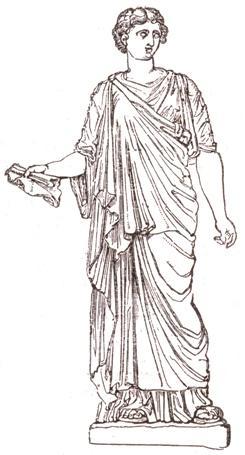
CLIO, THE MUSE OF HISTORY.